

SUBSCRIBE TO OUR FREE NEWSLETTER
Daily news & progressive opinion—funded by the people, not the corporations—delivered straight to your inbox.
5
#000000
#FFFFFF
To donate by check, phone, or other method, see our More Ways to Give page.
Daily news & progressive opinion—funded by the people, not the corporations—delivered straight to your inbox.

Christine Mbithi, christine.mbithi@350.org
On Tuesday, November 2nd, climate defenders from Ghana presented a Climate Clock and a set of demands to President Akufo-Addo, during a ceremony at the Ghana Pavilion inside the formal negotiating space at COP26.
Informed by the latest IPCC science, the Climate Clock will display a deadline of 7.75 years as our critical time window for climate action if we are to stay under 1.5degC warming, as well as the current percentage of the world's total energy consumption generated by renewable resources -- currently only at 12.5%.
On Tuesday, November 2nd, climate defenders from Ghana presented a Climate Clock and a set of demands to President Akufo-Addo, during a ceremony at the Ghana Pavilion inside the formal negotiating space at COP26.
Informed by the latest IPCC science, the Climate Clock will display a deadline of 7.75 years as our critical time window for climate action if we are to stay under 1.5degC warming, as well as the current percentage of the world's total energy consumption generated by renewable resources -- currently only at 12.5%.
The Ghanaian youth climate defenders also presented President Afuko-Addo with a set of demands, including the call for the government of Ghana to commit to 30% renewable energy within its energy mix by 2030. During COP26, the climate defenders are putting pressure on the government to commit to lower emissions and mobilizing support for the Renewable Energy for Communities campaign, to put Ghana well on its way to a clean energy future.
Landry Ninteretse, 350Africa.org:
"We are running out of time to take action towards reducing carbon emissions in order to avert some of the worst climate impacts of our time. At COP26, it is crucial that governments across the world, especially those in the Global North responsible for historic and current emissions take real action towards lowering greenhouse gas emissions, to slow the rate of global heating. It is crucial that Ghana and other African countries scale up clean energy for the sake of our planet and humanity. The lives of community members and the state of our environment are at stake. We cannot afford new climate impacts, human costs and economic risks due to climate inaction."
Portia Adu Mensah, Ghana Renewable Energy for Communities campaign:
"Since the days when we opposed the coal-fired power plant that was to be built in Ekumfi to date, we, as youth, will continue to stand and speak up to ensure our communities have access to clean energy. We not only need to break free from fossil fuels, but also need to lead in ensuring small scale, off-grid community-friendly renewable energy is accessible to all. In our petition, we are appealing to the government to scale up renewable energy to at least 30% of the country's energy mix by the year 2030."
Jerome Ringo, Climate Clock Global Ambassador:
"This climate clock has travelled from New York City to Accra, to Lagos. Apart from Ghana, we will soon deliver more clocks to other countries, including to President Buhari of Nigeria. Everywhere they go, the clocks will carry the message of the people with them. Through the clock we are drawing the world's attention to the urgency for action."
Okyeame Kwame, Climate Clock Ghana Ambassador:
"We must turn away from fossil fuels - the energy of destruction and death - and towards clean, renewable energy, the energy of nature, future and of life. With inclusion, climate justice, real and urgent actions, we can overturn our deadline into a lifeline, but we must work towards it."
Laura Berry, Climate Clock Research and Advocacy Director:
"The science is clear: we are in a climate emergency. The Climate Clock makes explicit the speed and scope of action that governments must take now in order to limit the worst impacts of climate devastation. From Ghana to Glasgow, we need real solutions to reach zero emissions as quickly as possible and build the renewable energy future that climate justice demands.
350 is building a future that's just, prosperous, equitable and safe from the effects of the climate crisis. We're an international movement of ordinary people working to end the age of fossil fuels and build a world of community-led renewable energy for all.

"BreakThrough News is not the first, nor will it be the last, to come under official attack," said one press freedom advocate.
Press freedom groups are issuing dire warnings on Thursday that House Republicans' efforts to subpoena the nonprofit left-wing news organization BreakThrough News represent a dangerous new step in a McCarthyite war on political dissent.
On Wednesday, Fox News reported that BreakThrough, a New York-based outlet, was one of three nonprofits that had been issued subpoenas by the GOP-controlled House Ways and Means Committee as part of an investigation into $39 million worth of donations from tech mogul Neville Roy Singham, a self-described socialist who has used his wealth to fund left-wing nonprofits.
In letters sent Tuesday, the committee, led by Rep. Jason Smith (R-Mo.), said that BreakThrough, as well as two other organizations—the People’s Forum Inc., a New York-based activist hub, and Tricontinental: Institute for Social Research—had not turned over any documents that had been requested as part of an investigation into whether rules around tax exempt status for nonprofits should be tightened to protect against foreign influence.
The committee has accused Singham, an American who now lives in Shanghai, of exploiting the tax code and using shell companies and donor-advised funds to hide foreign money that has been used to promote the interests of the Chinese Communist Party. It does not, however, make any specific accusation of legal wrongdoing.
The subpoena requires BreakThrough News to turn over records about its finances, foreign donors and grant recipients, fiscal-sponsorship arrangements, and communications with Singham and any foreign entities.
In a statement on Wednesday, BreakThrough News said it was "under attack."
"For years, Republican lawmakers have painted a target on our backs, falsely claiming that our political views and reporting are part of some foreign plot," the outlet said. "Now, the MAGA-dominated House Ways and Means Committee has issued us a subpoena—demanding internal communications, financial records and more. Make no mistake, this is a flagrant abuse of power, and a direct attack on our work as journalists and on the First Amendment generally."
BreakThrough said it does not receive any funding from foreign governments or institutions and that it already complies with all the tax and public reporting requirements that nonprofits have to follow.
"We are not charged with any crime, because our only 'crime' has been to tell the truth–by covering the activities of the Palestine solidarity movement, unmasking the truth of ICE’s terror in our streets, and exposing Washington’s crimes around the world, from Cuba to the Congo," the outlet said. "That’s the journalism they want to shut down. Their goal is to saddle us with legal proceedings and hostile media to drain our resources and stop this important work."
While the committee stated that they are investigating BreakThrough over its financing rather than its politics, letters sent to the organization have treated the content of its reporting as circumstantial evidence of malign foreign influence, referring to it as "anti-American" and claiming that its negative coverage of Israel was "sowing division within the United States."
Chip Gibbons, the policy director of the free speech advocacy group Defending Rights & Dissent, told Common Dreams that the subpoena of BreakThrough was a "deeply chilling assault on the First Amendment."
"Such tactics are, quite literally, a throwback to the House Un-American Activities Committee, which today is mostly viewed as a disgrace," Gibbons said. "I say mostly, because just three days ago [Secretary Marco] Rubio's State Department released a report preposterously attacking the US left, including some of these groups, as Cuban fronts that cited old HUAC reports."
He further emphasized in a press release that there was "no plausible need" for a news organization to provide documents as part of a broad congressional inquiry.
"The only thing these groups are accused of is essentially receiving donations from a US citizen who has been the subject of an intensive campaign of demonization," Gibbons said. "It is lawful for Americans to donate to activist causes and media projects while holding views disfavored by Congress. This is clearly not a valid legislative inquiry at all, but an attempt to intimidate and chill dissenting opinions."
Seth Stern, the chief of advocacy for the Freedom of the Press Foundation, agreed that “Congress shouldn’t be using a tax investigation as a pretext to dig through a newsroom’s internal communications or financial records.
"Freedom of the press," he said, "applies to all journalists, regardless of whether politicians like their editorial slant or their politics."
In what it has portrayed as a fight against "left-wing terrorism," the Trump administration has increasingly blurred the lines between violent activity and protected political speech that they claim "incites" violence.
National Security Presidential Memorandum 7, signed by Trump in September, designates large swathes of left-wing viewpoints on race, gender, immigration, and other topics as "indicators" of domestic terrorism that have been used to link entire groups of people to violent acts they themselves did not commit.
Rubio said last week that the administration would soon be designating more left-wing organizations as terrorist groups, while senior Trump adviser Stephen Miller said that the full force of the state would be used to "disrupt, identify, defund, de-bank, arrest, prosecute" those deemed to "foment" political violence, not just those who actually commit it.
He has previously pledged to use the law to "dismantle" organizations that use heated rhetoric to refer to their right-wing opponents, including calling them "fascist" or "authoritarian."
Nora Benavidez, senior counsel at Free Press, described the subpoena of BreakThrough as an extension of a "retaliatory ethos" Trump has taken towards critical journalists "with the goal of shutting down criticism and dissent."
She told Common Dreams, "BreakThrough News is not the first, nor will it be the last, to come under official attack for bringing people alternative and useful news coverage about ICE abuses, foreign policy, Palestinian rights, and other topics."
"Allowing a congressional committee to harass an independent newsroom with a broad subpoena sets an awful precedent," Stern said. "If lawmakers can abuse tax oversight to single out outlets whose reporting offends them today, no newsroom in America is safe from government intimidation tomorrow.”

"Trump’s decision to go to war with Iran drove up the cost of diesel fuel just as farmers were set to start their spring planting."
President Donald Trump's illegal war with Iran is putting significant financial stress on US farmers, according to a report issued on Thursday by Democrats on the Joint Economic Committee.
The report finds that US farmers spent $1.4 billion more on diesel fuel this year when planing corn, soybeans, wheat, cotton, and rice than they did a year ago, representing a 63% yearly increase.
The six states to get hit with the biggest yearly percentage increases in diesel costs all voted for Trump in three consecutive presidential elections: Florida (90.6% yearly increase in diesel costs), Alabama (86.2%), Oklahoma (85.9%), West Virginia (85.8%), Kansas (83.8%), and Indiana (79.5%).
Diesel prices in 2026 hit their peak right in the middle of planting season, and the report estimates that "the average farmer spent $1,500 more to refil their farm's onsite fuel tank... compared to the same high point during the 2025 planting season."
The report notes that it doesn't capture the full extent of economic damage caused the president's unlawful assault on Iran, as its analysis "doesn’t take into account other war-related increases such as the increased costs of running diesel generators that power some greenhouses or the increases at the pump that farmers and truckers face when they drive products to market."
The report adds that the economic pain being felt by farmers thanks to Trump's war will soon hit US grocery shoppers.
"Trump’s decision to go to war with Iran drove up the cost of diesel fuel just as farmers were set to start their spring planting," the report says. "This comes after Trump’s tariffs have already significantly increased costs for farmers and made it more difficult for them to plan for the future. These increased costs... are likely to further contribute to rising grocery costs."
According to data published by the US Energy Information Administration, diesel prices peaked in May this year when they averaged $5.60 per gallon.
While prices initially fell after Trump announced a ceasefire agreement with Iran in June, the war's resumption this month has sent them jumping upward again.
Data published by the American Automobile Association on Thursday showed that the average price of diesel in the US is now back up to $5.20 per gallon, an increase of $0.20 from one week ago.
Despite the economic turmoil caused by his illegal war of choice, Trump has shown little sign of backing off. In an interview with Axios published Thursday, the president said that he was “close” to making a decision on whether to authorize what he described as a “massive attack” on Iran that he vowed would be “bigger than ever before.”
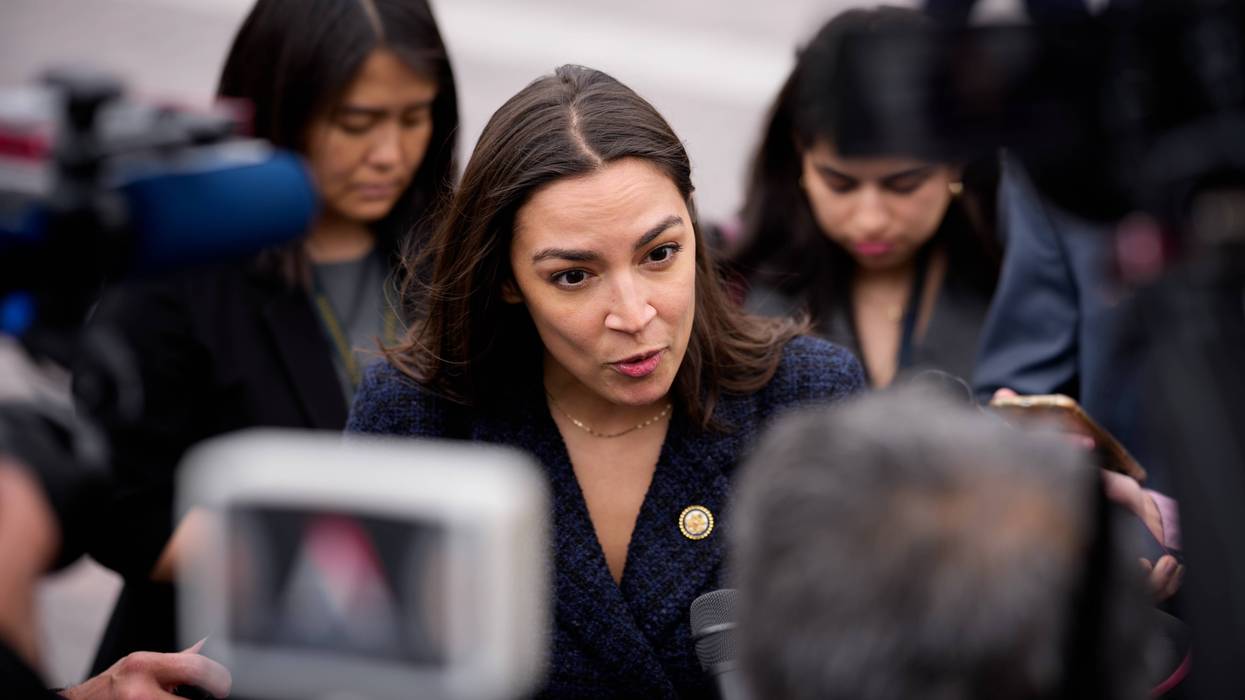
"We can’t even raise the minimum wage. Do Republicans really think this stuff is going to happen?"
Republican fearmongering that communism is on its way to the United States is a perennial feature of US political discourse—despite the fact that their warnings proved wrong in the 1930s when President Franklin Roosevelt passed Social Security and other New Deal programs and recently when Mayor Zohran Mamdani neglected to usher in a communist era in New York City, even as he moved forward with plans for universal childcare and a network of city-run grocery stores.
On Thursday, progressive Rep. Alexandria Ocasio-Cortez (D-NY) mocked the GOP's latest claims that Democratic politicians who support Medicare for All and other broadly popular universal proposals are putting the US on what House Speaker Mike Johnson (R-La.) recently called a "dark road of death to communism."
"We can’t even raise the minimum wage. Do Republicans really think this stuff is going to happen?" Ocasio-Cortez told a reporter on Capitol Hill after they'd asked whether the recent victories of democratic socialists and other progressives could end up "as full-blown communism."
Reporter: Isn’t there concern that this slippery slope to socialism inevitably ends up as full-blown communism?
AOC: I mean, no. I think that’s very silly. We can’t even raise the minimum wage. Do they really think communism is going to happen? No. They’re trying to scare people… pic.twitter.com/RiFhqpwd6T
— Acyn (@Acyn) July 23, 2026
With 78% of Democratic voters supporting an expansion of the Medicare program to everyone in the US—which would end healthcare's treatment as a for-profit endeavor in the US and put the medical system on equal footing with those in other wealthy countries—a number of Democratic House candidates who support the proposal have won primary races in recent months, including Melat Kiros in Colorado, Claire Valdez in New York, and Adam Hamawy in New Jersey. In Michigan, US Senate candidate Abdul El-Sayed, a Medicare for All advocate, has polled ahead of his centrist opponent Rep. Haley Stevens in numerous recent surveys.
As Republicans aim to maintain control of the Senate and House in the midterm elections—having ripped nutrition assistance and Medicaid away from millions of Americans, driven up healthcare costs for people who have insurance through the Affordable Care Act, supported the invasion of Iran as it has sent gas prices soaring, backed billions of dollars in Pentagon spending and military aid for Israel as Americans struggle to afford essentials, and supported a president who says he doesn't "think about Americans’ financial situation"—they've attempted to revive old claims that the new crop of progressive Democrats "are a danger to you and your family," as Johnson said this week.
The House speaker called the progressive primary winners "crazy little mini-Mamdanis who are popping up all around the country," while House Republican Conference Chair Lisa McClain (R-Mich.) warned that "the radical left feels they need to hide what their policies are... Let’s call it what it is: It’s communism.”
Ocasio-Cortez, who is said to be a potential 2028 presidential or Senate candidate, called the warnings "very silly" and suggested they came from lawmakers who are dead-set against healthcare being treated as a right in the US instead of a profit-making business.
"They’re trying to scare people because they don’t want us talking about the fact that we all have a right to healthcare," said the congresswoman. "So they want to call everything they don’t like communist because if people actually wake up to the fact that their elected officials are screwing them over when they get here, then they’re going to realize they deserve better and that healthcare as a right isn’t crazy, it isn't pie-in-the-sky."
"They want to call this stuff communist because they don’t want us to realize that the rest of the developed world has guaranteed healthcare," she added. "So they want to call it communist because they don’t want you to know that Germany, Italy, the UK, Canada—everybody else—has it better than us, and we spend the most money for the worst care in the modern, developed world."
In another interview Thursday, Ocasio-Cortez expanded on her condemnation of Republicans' healthcare policies.
"This administration is killing Americans," she said. "They are killing people by taking away their healthcare. They are killing women by having them bleed out in parking lots. They are killing seniors by imposing cuts to Medicaid and to Medicare recipients... The fact of the matter is they are for UnitedHealth. They are for Big Pharma. They are for these corporations, and they are cutting your healthcare."
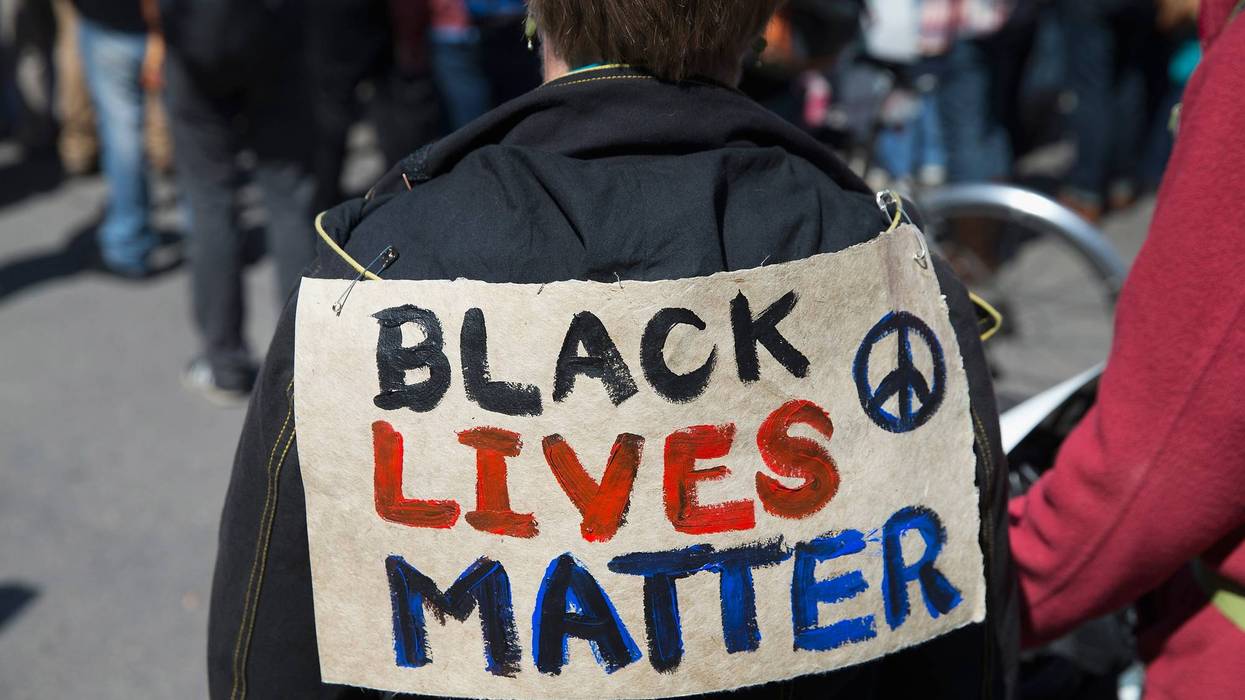
Noting that "this is not the first, not the second, but the third life that was taken" by police in the area over the past decade, one local candidate declared that "this is no longer an accident or a tragedy. It is a choice."
WARNING: The following article contains graphic content that some people may find disturbing…
Protesters have taken to the streets in Madison, Wisconsin since Wednesday afternoon to decry violence by law enforcement, especially against people of color, since police fatally shot a man, whom they said had a knife, while attempting to arrest him in an intersection.
"Madison Police Department officers typically don't wear body cameras," The Cap Times reported, and MPD Chief John Patterson said there are no bodycam videos of the shooting. However, bystander footage swiftly spread online, spurring alarm and outrage.
The footage shows four officers trying to wrestle a Black man—identified by residents and multiple elected officials as Corey Ruiz—to the ground. At least one officer shouts "taser," and three gunshots can be heard when Ruiz is already on the ground.
Patterson said during a Wednesday press conference that an officer deployed a taser, but was "unsuccessful," and an officer injured by the knife "fired his weapon" at the intersection of South Baldwin and Williamson, or "Willy," around 1:30 pm Central time.
The police chief did not name any of the officers—who were placed on administrative leave after the killing—and did not confirm Ruiz's identity, only describing him as a man in his 30s. However, he said that "I want to take a moment to honestly and sincerely offer my heartfelt sympathies to his family for this loss."
Patterson also acknowledged that the deadly shooting "occurred in a neighborhood that has experienced a lot of trauma in the past." As Madison-based Isthmus detailed, "Tony Robinson was shot and killed by Madison police officer Matt Kenny in 2015 a block and a half away; Paulie Heenan was fatally shot by a police officer in 2012, on nearby South Baldwin Street."
Noting that "this is not the first, not the second, but the third life that was taken" by police in the past decade, Juliana Bennett, a democratic socialist running to represent District 76 in the Wisconsin State Assembly, said that "this is no longer an accident or a tragedy. It is a choice."
In addition to community members, people around the world who have seen the various videos of the shooting—that "looks like a gang execution" by police, according to one critic—are demanding the arrest of the officer who fired the shots on Wednesday.
"Madison police killed Corey Ruiz, shooting him three times in the head at point-blank range after tasing him, while he was constrained on the ground," said the Party for Socialism and Liberation on social media. "Despite MPD's attempts to distort the truth, the people of Madison immediately took to the streets to demand transparency and justice."
"Corey Ruiz's life matters, and he should be alive today! The police and ICE are the biggest threats to public safety!" the party continued, referring to US Immigration and Customs Enforcement, which has also fatally shot several people nationwide this year. "The cops who carried out this execution in broad daylight should be jailed! End all racist police terror!"
As The Cap Times detailed:
Protesters who first gathered on Williamson Street chanted, "Arrest that cop." They later marched to the Capitol, where they took over the area where the Wisconsin Chamber Orchestra typically performs during the free weekly summer series Concerts on the Square.
Joe Loehnis, CEO of the Wisconsin Chamber Orchestra, announced the orchestra would stand in solidarity with Madison's Black community and canceled the concert Wednesday as hundreds of people listened to protesters while waiting for the event to start. There are currently no plans to reschedule.
The concert series takes place on the lawn of the Wisconsin State Capitol. Protesters outside the building chanted, "Black Lives Matter!"
Later Wednesday, mourners gathered at the intersection—where candles and flowers were laid on the ground—and came together in song.
The memorial remained in the road as of Thursday morning, according to footage shared on social media by local press.
Among the politicians who have weighed in are Democratic Gov. Tony Evers, who said after being briefed on the shooting that "there must be transparency and accountability in any investigation moving forward."
"We will continue to keep the loved ones and family of the individual who was killed in our hearts and prayers. His life mattered," Evers added. "As folks exercise their First Amendment rights tonight and in the days ahead, we urge them to do so peacefully and respectfully."
Evers declined to seek a third term this cycle. The Democratic primary is next month. Multiple candidates running to replace him also spoke out on Wednesday. Mandela Barnes said he was "deeply disturbed and pained by the video footage," and called for an "independent and transparent" investigation.
A similarly "horrified" David Crowley said that "while the details are still emerging and a full accounting of what happened is still needed, these reports are painfully reminiscent of the tragedies we have witnessed in Kenosha, Minneapolis, and far too many communities across our country."
Candidate Joel Brennan noted that "this neighborhood carries a deep pain and a history of all too recent similar violence," and demanded a probe by the Wisconsin Department of Justice to provide the community with "a full, transparent, and independent accounting of what happened."
At the site of the shooting, another gubernatorial hopeful, Francesca Hong, faced calls from the crowd to condemn the shooting as "murder." She said into a bullhorn, "This state-sanctioned violence was an execution."
State Rep. Shelia Stubbs (D-78) said that "I am deeply saddened and disturbed to hear of the death of Corey Ruiz after he was fatally shot by a member of the Madison Police Department. This never should have happened. Mr. Ruiz should still be alive. My heart and my prayers go out to Mr. Ruiz's family, friends, and loved ones in their time of unimaginable grief. Madison has been profoundly shaken by this tragic incident."
"My thoughts are also with our community members who witnessed and were traumatized by this shocking and distressing event, especially the brave individuals who recorded footage with their phone cameras," she continued. "This is a grave example of the need for body-worn cameras. If Madison Police Department had body cameras, we wouldn't need to look to civilian footage for answers."
After pointing to her record of pushing for racial justice and "more community-based approaches to our justice system," Stubbs stressed that in the wake of this latest shooting, "it is critical that community members are kept informed and receive updates in a timely manner. There must be a thorough, impartial investigation into the circumstances that resulted in a man unnecessarily losing his life."
Madison's Democratic mayor, Satya Rhodes-Conway, said she was "angered and saddened by what happened," adding that "it's an absolute tragedy when a member of our community is killed by anyone, but especially by the police. I understand the anger, grief, and fear people are feeling—because I am feeling that too."
"The State Department of Criminal Investigation will be conducting an independent investigation, and the officers involved have been put on administrative leave until the investigation is concluded," according to the mayor. "The Madison Police Department is cooperating fully and is not in charge of the investigation."
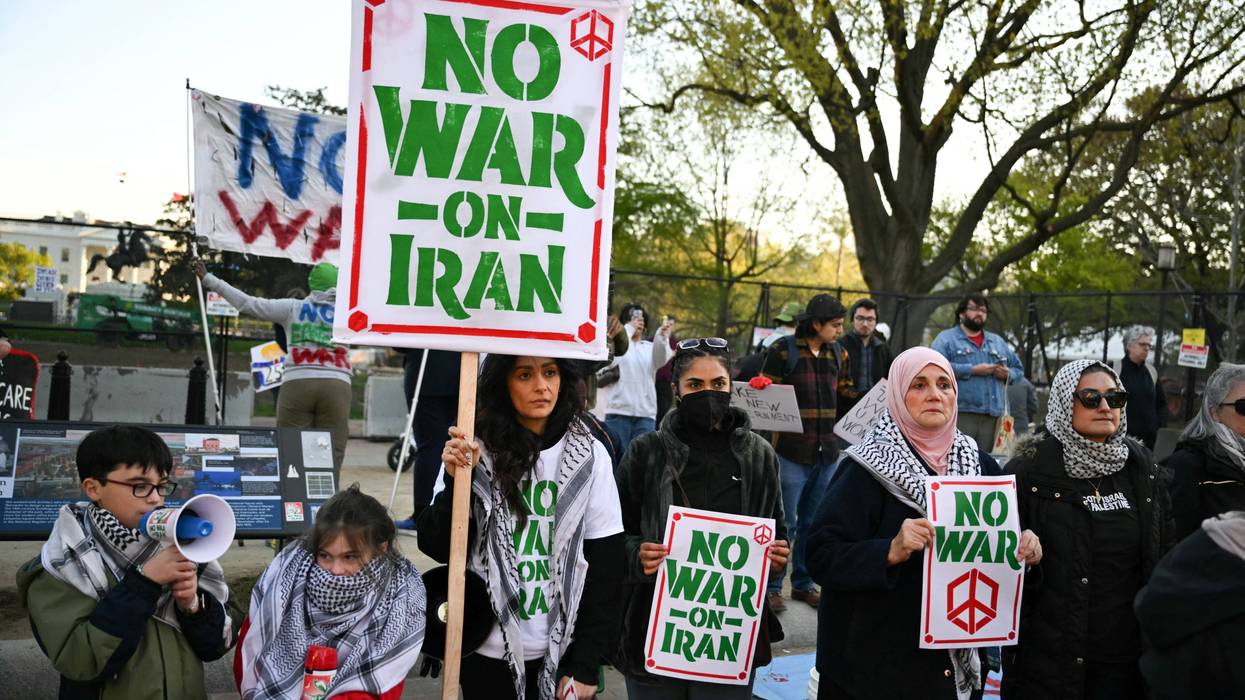
"We cannot allow this illegal, unconstitutional war in Iran to continue," said Rep. Pramila Jayapal, who introduced the House resolution.
For the second time in as many months, the Republican-controlled House of Representatives narrowly passed a war powers resolution directing President Donald Trump to end his illegal war on Iran, but later on Thursday GOP senators and Democrat John Fetterman blocked a similar measure in the upper chamber.
H.Con.Res.89, introduced by Rep. Pramila Jayapal (D-Wash.) and sponsored by 15 Democrats and one Republican, passed by a vote of 214-208, with co-sponsor Rep. Thomas Massie (R-Ky.) and three other GOP lawmakers—Reps. Tom Barrett (Mich.), Warren Davidson (Ohio), and Brian Fitzpatrick (Pa.)—breaking ranks to cast "yes" votes.
“Today’s bipartisan vote on my war powers resolution to end this war in Iran was a big victory for the vast majority of the American people who want President Trump to end this illegal war and focus on their lives right here at home," Jayapal said in a statement. "A majority of this Congress voted to end the war yet again, and sent yet another clear order to the president that Congress will not continue to tolerate this illegal war."
"The vote also put pressure on Republicans to stand up for their constituents and the Constitution," the congresswoman continued. "Out of respect for our US servicemembers, civilian lives in Iran and Lebanon, the American taxpayers, and our Constitution, we cannot allow this illegal, unconstitutional war in Iran to continue."
Massie said ahead of Thursday's vote: "American servicemen and women are dying, and gas and fertilizer prices are soaring. It’s time to end this war."
At least 18 US troops have been killed and more than 430 others have been wounded during the 145-day US-Israeli war of choice. Iran's Health Ministry said earlier this week that more than 3,500 Iranians, including at least 496 women and 384 children and infants, have been killed by US and Israeli attacks. More than 26,500 Iranians, including at least 4,000 women and 1,621 children, have been wounded.
Around 30 people have been killed by Iranian counterattacks targeting US-allied Mideast nations, while a simultaneous Israeli war on Lebanon has killed or wounded upward of 15,000 people, according to Lebanese officials.
"Trump needs to end his illegal war now," Rep. Yassamin Ansari (D-Ariz.) said on social media.
Jayapal said in her statement: “From the beginning, this war has had no clear mission, no strategy, no end goal. Congress has not been consulted. And hostilities have been driven over and over again by a president who won his election by promising to end forever wars. This administration has clearly gotten us into a war they have no clue how to get us out of."
Later on Thursday, US senators voted 47-49 against advancing a similar war powers resolution introduced by Sen. Chris Van Hollen (D-Md.) out of the Senate Foreign Relations Committee. Sen. Susan Collins (R-Maine) crossed the aisle to vote with nearly all Democratic caucus members, while Fetterman (D-Pa.) joined all other present Republicans in voting against the measure. GOP Sens. Katie Britt (Alabama), Mitch McConnell (Ky.), Lisa Murkowski (Alaska), and Rand Paul (Ky.) missed the vote.
"When are Senate Republicans going to stand up?" Senate Minority Leader Chuck Schumer (D-NY) said on the chamber floor. "Senate Republicans lose credibility with the American people with every vote they take against ending Trump's war."
Minority Leader @SenSchumer (D-NY) urges GOP to support Iran war powers resolution: "When are Senate Republicans going to stand up? … Senate Republicans lose credibility with the American people with every vote they take against ending Trump's war." pic.twitter.com/XyCTq1TdKj
— CSPAN (@cspan) July 23, 2026
During his second term, Trump has ordered US military attacks or operations in Ecuador, Iran, Iraq, Nigeria, Somalia, Syria, Venezuela, and Yemen and a campaign of high-seas boat bombings in the Caribbean Sea and Pacific Ocean. The self-described "peace president" has ordered attacks on 11 countries through his two terms in office—the aforementioned nations, plus Afghanistan, Libya, and Pakistan during his first administration.
Trump has also threatened to attack, seize, or acquire by other means Canada, Colombia, Cuba, Greenland, and Mexico. He is also reportedly weighing strikes on Mali targeting al-Qaeda-affiliated militants.
The War Powers Resolution of 1973—also known as the War Powers Act—requires the president to notify Congress within 48 hours of committing troops to military action and limit such action to 60 days, with a 30-day withdrawal period, unless lawmakers declare war or issue an authorization for the use of military force.
Congressional Democrats and legal experts have rejected Trump’s dubious argument that quitting his negotiated ceasefire with Iran resets the War Powers Resolution’s 60-day limit; absent congressional authorization, the statutory clock generally starts from the first US strike and continues uninterrupted until military action ends.
The first war powers resolutions passed during Trump's presidency came in 2019, when the House and Senate ordered the president to end unauthorized US military involvement in the Saudi-led war in Yemen. The Senate subsequently failed to override Trump's veto of the directive.
Last month, both the House and Senate passed resolutions directing Trump to halt his war on Iran. The president has almost entirely ignored the directives, prompting Rep. Gregory Meeks (D-NY)—who authored both an unsuccessful war powers resolution in a bid to stop the US boat bombings and the successful Iran order passed last month—to say Thursday that he will try to sue the administration for failing to obey Congress.
"I'm dropping a resolution today... that we should be suing the administration for not following... the resolution that was passed in both the House and Senate," Meeks told reporters outside the Capitol, where lawmakers are set to go on summer recess.
"When we get back next week, I'm going to force a vote on that, so that we can now go to the courts and sue the administration for not following the will of Congress."
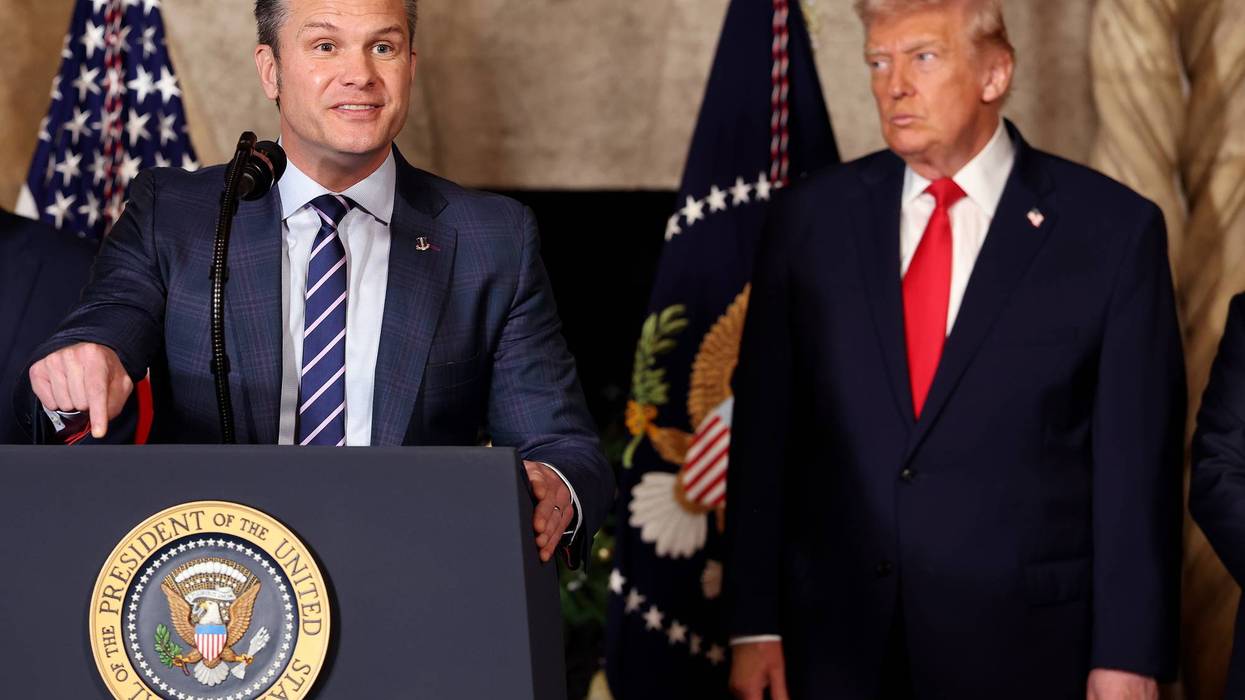
"Congress has already directed the removal of US armed forces under the War Powers Act, and the president must comply."
The US House of Representatives on Thursday passed a new war powers resolution aimed at forcing President Donald Trump to halt his illegal war with Iran without congressional authorization.
But with Trump showing every indication that he plans to escalate his unlawful assault on Iran despite lawmakers’ repeated expressions of disapproval, a large coalition of organizations is urging Congress to take more aggressive steps to end the war.
In a letter sent to members of Congress, the groups—including civil liberties, human rights, good governance, faith-based, anti-war, Iranian-American, veteran, and military family organizations—said that it was time to take the administration to court to "reaffirm Congress’s constitutional prerogatives" over the power to declare war.
The groups noted that the US Constitution explicitly gives the legislative branch war declaration powers, adding that the 1973 War Powers Act reasserted congressional control over decisions to commit American armed forces to combat in the wake of the Vietnam War.
Given that the Trump administration has blown off past war powers resolutions, the groups said, members of Congress should team up with "experienced constitutional litigators" to enforce the law.
"This may include helping to identify appropriate plaintiffs," the groups explained, "advancing House and Senate resolutions to explicitly authorize congressional litigation over the unlawful Iran War, or, in the House, calling for a vote of the Bipartisan Legal Advisory Group to authorize litigation."
The groups also urged lawmakers to deny Trump's request for an additional $87.6 billion in supplemental war funding and then enact legislation "to bar the administration from using funds to continue" the war.
"Congress has already directed the removal of US armed forces under the War Powers Act, and the president must comply," the groups concluded. "Our democracy, the American people, and particularly US servicemembers deserve a Congress that will fight for the rule of law and an end to the unauthorized Iran war."
Rep. Gregory Meeks (D-NY), ranking member of the House Foreign Relations Committee, indicated while talking with reporters outside the US Capitol on Thursday that he was prepared to take legal action to enforce the will of Congress to end the war.
"We should be suing the administration for not following the... privileged resolution that was passed in both the House and the Senate," said Meeks. "When we get back next week, I'm going to force a vote on that, so that we can now go to the courts and sue the administration for not following the will of Congress."
.@RepGregoryMeeks (D-NY) says he will try to sue the Trump administration for not adhering to the Iran war powers resolution: "We can now go to the courts and sue the administration for not following the will of Congress." pic.twitter.com/F3EV5QwwSS
— CSPAN (@cspan) July 23, 2026
Shortly after Meeks' remarks to reporters, the New York Democrat filed a resolution that would require House Speaker Mike Johnson (R-La.) to "initiate or intervene in litigation" to enforce the war powers resolution.
In an interview with Axios published Thursday, Trump said that he was "close" to making a decision on whether to authorize what he described as a "massive attack" on Iran that he vowed would be "bigger than ever before."
Cavan Kharrazian, senior policy adviser at Demand Progress, which co-led the coalition letter, accused Trump of "insulting Congress, the Constitution, and the American people" with his defiance.
“Congress already voted to reassert its constitutional role as the arbiter of war," said Kharrazian, "now they must follow through by using every single tool they have to ensure that the president complies with the law."
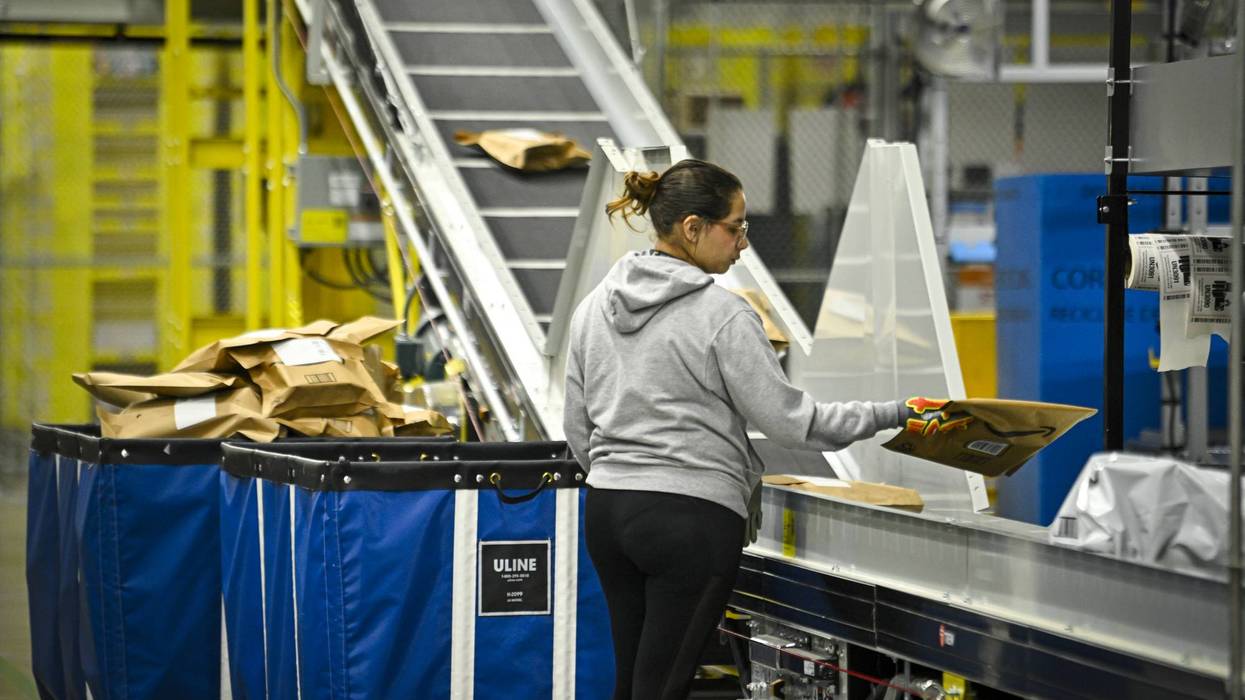
"No one who works for a company making billions in profits should be living in poverty," said Sen. Bernie Sanders.
US Sen. Bernie Sanders recently commissioned a government analysis of federal aid programs and how much employees of some of the largest and most politically influential corporations in the country are relying on food and healthcare benefits due to the chronically low wages paid by Amazon, Walmart, and other firms.
On Wednesday, the nonpartisan Government Accountability Office (GAO) released the results of its research, revealing trends that Sanders (I-Vt.), a longtime critic of economic inequality and poverty wages and the ranking member of the Senate Health, Education, Labor, and Pensions Committee, called "beyond unacceptable."
Six years after the GAO first analyzed low-wage workers' use of Medicaid and the Supplemental Nutrition Assistance Program (SNAP), the report found that the number of Amazon employees who required federal assistance has nearly tripled since 2020, despite the fact that the e-commerce giant has increased its annual profits from $11.59 billion to $77.67 billion in that time.
The analysis focused on 11 states—Arkansas, Georgia, Indiana, Maine, Massachusetts, Nebraska, North Carolina, Oklahoma, Rhode Island, Tennessee, and Washington—whose combined populations comprise about one-fifth of the US population.
Last year, 12,346 of Amazon's employees needed SNAP assistance, for which households must earn less than 130% of the federal poverty level to qualify. A family of three would have to make around $35,000 or less to qualify for the program. Millions of people were shut out of the crucial program by the One Big Beautiful Bill Act (OBBBA), which required states to impose strict limits on eligibility.
More than 11,000 Amazon workers also relied on Medicaid last year in the states surveyed.
"Corporations underpay workers, don't provide healthcare, and outsource core worker needs to the government," said the labor-focused media organization More Perfect Union.
While Walmart topped the list of corporations whose employees used Medicaid benefits, as it did in 2020, its share of workers who rely on the two federal programs went up only slightly over the five-year period, while Amazon's share grew significantly.
Amazon spokesperson Rachael Lighty told The Washington Post—owned by billionaire Amazon founder Jeff Bezos—that the company's hiring spree since the coronavirus pandemic contributed to its increased share of Medicaid and SNAP beneficiaries, and noted that Amazon offers "part-time options for those who want them," which makes more employees eligible for the benefits.
But the Post noted that many people who may want full-time employment and the higher wages it offers can only find part-time work. The Federal Reserve Bank of St. Louis has found an increase in part-time employment since the pandemic.
Sanders noted that Walmart increased its annual profits from $14.88 billion in 2020 to $21.89 billion in 2025, but the number of workers who relied on Medicaid grew by 55% to more than 16,000 people in the 11 states sampled by the GAO.
“American taxpayers should not be forced to subsidize the starvation wages of large corporations like Walmart and Amazon," said the senator. "These corporations are making record-breaking profits, paying their CEOs exorbitant compensation packages, and spending billions of dollars on stock buybacks to enrich their wealthy shareholders. It is beyond unacceptable that these corporations, owned by some of the wealthiest people on the planet, are receiving corporate welfare from the federal government."
Rideshare and delivery apps like Uber and DoorDash, which were not significantly featured in the GAO's 2020 report, are now the top employers of people who use SNAP benefits and are in the top three employers of workers on Medicaid.
Nicole Moore, president of Rideshare Drivers United, told the Post that gig workers across the country struggle to make ends meet with "absolutely precarious income."
The analysis comes a year after the passage of the OBBBA, which delivered $4.5 trillion in tax cuts to corporations and the rich and which Republican proponents said was partially focused on eliminating waste and fraud in government programs like Medicaid. The law includes work requirements for the program and is expected to slash $1 trillion from Medicaid over the next decade.
Republicans have intensified their fixation on "fraud" in social services in recent months after fraudulent payments were found in Minnesota's public programs.
Warren Gunnels, the minority staff director for the Senate HELP Committee, said the GAO analysis shows that "the problem isn't the single mom getting $6 a day in food stamps."
"The problem is Jeff Bezos, worth $269 billion, more than doubled his wealth since 2020 while paying wages so low the number of Amazon workers on food stamps and Medicaid nearly tripled," said Gunnels. "Bezos is the welfare queen."
Sanders called on Bezos and the Walton family, which owns Walmart, "to get off of welfare and pay their workers a living wage with good benefits."
"No one who works for a company making billions in profits should be living in poverty," said the senator. "This is especially true after these corporations and their multibillionaire owners received a massive tax break from President Trump’s so-called ‘Big, Beautiful Bill,’ paid for by the largest cuts to Medicaid and nutrition assistance in history.”

"The picture now coming into focus is that the intervention has been... little more than a pretext for extracting economic wealth that rightfully belongs to the people of Venezuela," said one economist.
Since President Donald Trump's operation in January to overthrow Venezuelan President Nicolás Maduro, the US has taken more than $13 billion in revenue from Venezuelan oil sales. But nobody, including Congress, is entirely sure where the money has gone.
The Financial Times, which reported the figure on Wednesday based on estimates of oil sales out of Venezuela since January, pointed out that the Trump administration has given vague and contradictory answers about who currently controls the revenues from the Latin American nation's largest export and source of wealth.
Trump said in the days after the US attack that Venezuela's oil wealth would be "controlled by me." At a rally on Wednesday, he boasted that the US "won in Venezuela" and had paid for the operation "many many times over" by "taking tremendous amounts of oil" from the country.
He added that "Venezuela is doing better than they've ever done before." But economic data from the country tells a very different story.
According to economist Francisco Rodríguez of the Center for Economic and Policy Research, in the first quarter of this year, Venezuela had just 2.5% growth in its gross domestic product—its worst in five years. This is despite the fact that its oil exports grew by 25% during the first quarter.
He said this was likely "because the US didn’t transfer to the Venezuelan government the totality of its increased oil revenues."
While the executive order signed by Trump in January describes the proceeds from oil sales as nominally belonging to Venezuela, they are being held in accounts controlled by the US Treasury Department. It prohibits Venezuela from independently withdrawing from the accounts without approval from the secretary of state, Marco Rubio.
At a Congressional hearing this week, Michael Kozak, a senior State Department official, acknowledged that "it's their money, but they have to get our permission" to receive it.
While the State Department has claimed that “billions of dollars have been disbursed to the Venezuelan economy” and that “financial monitoring is under way to ensure funds benefit the Venezuelan people," the FT found little evidence that this is the case.
A website set up by the Venezuelan government to track exports from US-run oil sales shows just a single transfer of $300 million in March.
The administration has made explicitly clear that it is using the oil revenues as a tool to exert leverage over Venezuelan policy. In January, Vice President JD Vance said that the administration would allow Venezuela to sell oil as long as its policies "serve America's national interest."
A senior US official told The New Yorker that the administration has authorized about $6 billion to be disbursed to the government of Venezuela's interim president, Delcy Rodríguez, though there was no indication it had actually been transferred or spent.
Francisco Rodríguez said that even if it was, this "leaves an obvious question: where are the remaining $7 billion?"
He speculated that some of it might have been paid directly to joint venture partners, but noted that this would only account for a "fraction" of the difference and said there could be "other more complex explanations, beyond the possibility that the US is simply sitting on the money."
However, he said, "what is becoming increasingly clear is that the main reason Venezuela's economic recovery has been so sluggish is that, while the country is generating more oil revenue, it is not collecting on it."
In April, Kozak said the administration would provide quarterly reports on where the funds have gone. But Democrats on the Foreign Affairs Committee said they had not received them.
The lack of transparency has drawn concern from members of both parties in Congress, which Rep. Joaquin Castro (D-Texas) said has been “kept in the dark.”
“Trump’s invasion of Venezuela has been about oil, power, and graft from the very beginning, with billions of dollars in Venezuelan oil revenue being controlled by the Trump administration without transparency or safeguards,” Castro told the Financial Times.
Even María Elvira Salazar (R-Fla.)—who promoted a Trump-led regime change effort in Venezuela by saying it would be a "field day" for US oil companies—has called for the administration to publicize reports on where the money is going.
The question of what has happened to Venezuela's wealth is made more urgent by the twin earthquakes the country suffered in June, which killed about 5,000 people, injured 17,000, and left 18,000 homeless, according to government figures.
A World Bank report released Thursday estimated that reconstruction could cost close to $50 billion.
The earthquake has been met with calls for the US to lift its harsh sanctions on Venezuela, which have cost the country tens, if not hundreds, of billions of dollars in lost revenue since 2015 and which advocates have said are further hobbling the nation’s recovery.
Trump ratcheted up these sanctions in the months leading up to his operation to overthrow Maduro, and many have remained in place following the earthquake.
The US has provided more than $386 million in earthquake-related assistance to Venezuela. But it's just a fraction of the oil wealth it appears to be holding.
Francisco Rodríguez said the apparent hoarding of Venezuela’s oil wealth does further damage to Trump’s claim that his intervention was meant to benefit its people, as well as the US.
“The bottom line is that this arrangement is not proving advantageous to Venezuelans,” Rodríguez said. "The picture now coming into focus is that the intervention has been, as its critics have long accused such actions of being, little more than a pretext for extracting economic wealth that rightfully belongs to the people of Venezuela."

"Susan Collins is directly responsible for handing ICE a blank check," said a top Maine Democratic official.
With Troy Jackson securing enough delegates to become the Maine Democratic Party's nominee for the US Senate at an unprecedented convention this coming weekend, party strategists and leaders have intensified their efforts to tie incumbent Republican Sen. Susan Collins to the Trump administration's grave abuses.
In an interview with The New Republic published Thursday, Devon Murphy-Anderson, executive director of the Maine Democratic Party, singled out Collins' votes to fund US Immigration and Customs Enforcement (ICE) as a significant vulnerability.
Anti-ICE protests in Maine erupted earlier this month after the fatal shooting of 25-year-old Colombian national Joan Sebastian Guerrero, who was killed by federal immigration agents in front of his six-year-old daughter during a traffic stop.
While Collins lobbied the US Department of Homeland Security to pause traffic stops in the wake of the shooting, President Donald Trump rebuffed her request and said the stops should continue.
Murphy-Anderson told The New Republic that Collins can't escape blame for ICE violence given her role in voting to hand the agency a record amount of money.
Last week, days after Guerrero was killed by a federal agent, Collins declined to say she regretted voting for additional ICE funding.
" Susan Collins is directly responsible for handing ICE a blank check," said Murphy-Anderson. "This is front and center now in our communities. And we are going to hold her accountable in November."
While attacking Collins' votes to fund ICE won't be the entirety of Maine Democrats' strategy for taking on Collins, Murphy-Anderson emphasized that the shooting of Guerrero is "viscerally" affecting voters "across broad segments of our electorate."
Jackson on Tuesday targeted Collins' votes for ICE in a social media post.
"Susan Collins lied to Mainers," Jackson wrote. "She helped destroy Roe v. Wade, she advanced Trump's $990 billion Medicaid cuts, and she gave ICE $70 billion continue its rogue terror campaign."
Susan Collins lied to Mainers. She helped destroy Roe v. Wade, she advanced Trump's $990 billion Medicaid cuts, and she gave ICE $70 billion continue its rogue terror campaign.
Together, we will replace her with a Senator who gives a damn about working people in this country. pic.twitter.com/2B8VmQJsuB
— Troy Jackson (@TroyJackson207) July 21, 2026
Maine Democrats' plan to make Collins' support for ICE an anchor around her neck drew praise from Nicholas Grossman, professor of international relations at the University of Illinois.
"Anti-ICE is pro-freedom," Grossman wrote in a social media post. "That stance is moral, patriotic, and a political winner. Susan Collins' pro-ICE votes are an electoral liability she didn't have in previous races. And an ICE officer with a history of domestic abuse recently killed an innocent man in Maine. Definitely campaign on that."
Adam Gurri, founder and publisher of Liberal Currents, said that pinning ICE's actions directly on Collins was a smart tactic to undermine her image as a "moderate" Republican.
"We can’t let her play this game she’s been doing her whole damn career," wrote Gurri, "where she gives her vote to every evil policy but then play acts being the mediator for how the policy is deployed."
Journalist Jason Sattler argued that Collins' support for ICE funding opens up a new line of attack on her.
"ICE is her running mate," Sattler wrote.

One advocate warned that new Medicaid rules issued by the Trump administration would have "disastrous impacts on individuals and healthcare systems."
The Trump administration earlier this week unveiled a new rule that advocates said would make it harder for states to fund their Medicaid programs, compounding damage caused by expanded work requirements and other changes enacted under the 2025 Republican budget law.
The law bars states from creating new provider taxes—levies on hospitals and other healthcare providers—and limits existing ones. The new Centers for Medicare and Medicaid Services (CMS) rule, which is open for public comment until September, would codify the GOP law's changes.
Anthony Wright, executive director of Families USA, said Wednesday that the CMS rule "goes beyond the harsh restrictions already imposed by Congress to further narrow the options that states have to fund Medicaid services and providers."
"Along with Congress’ other restrictions on taxing healthcare providers—restrictions that gut Medicaid funding in all states—CMS estimates this new proposed rule will cut $198.7 billion in state Medicaid funding over 10 years," Wright noted. "This rule comes at a time when states are already under significant budgetary pressure to foot the bill for the cost of implementing complex and unnecessary work reporting requirements; in tandem with a proposed rule that slashes Medicaid provider payments and further eliminates state flexibility."
“Taken together," Wright warned, "these three rules serve as a coordinated dismantling of the Medicaid program, including its eligibility systems, payment structures and financing mechanisms, with disastrous impacts on individuals and healthcare systems."
The Republican budget measure, which President Donald Trump signed into law last summer, includes roughly $900 billion in Medicaid cuts over the next decade. Millions of Americans have lost Medicaid coverage since the GOP law took effect.
Earlier this week, the entire House Democratic caucus implored CMS to "reconsider" its recently published Medicaid work requirement rule, warning it "will create an undue burden for beneficiaries with serious healthcare needs and put people at risk of losing coverage, while also creating significant implementation challenges for states."
"This rule will require beneficiaries to frequently prove and verify their exemptions in order to maintain coverage, which will cause confusion, create bureaucratic burdens for patients seeking care, and, as a result, will lock patients out of lifesaving treatments," the lawmakers wrote. "Forcing vulnerable patients to exhaustively document their symptoms simply to maintain access to basic
healthcare is both imprudent and inconsistent with federal law."