

SUBSCRIBE TO OUR FREE NEWSLETTER
Daily news & progressive opinion—funded by the people, not the corporations—delivered straight to your inbox.
5
#000000
#FFFFFF
To donate by check, phone, or other method, see our More Ways to Give page.
Daily news & progressive opinion—funded by the people, not the corporations—delivered straight to your inbox.
For inquiries to the Standing Rock Sioux Tribe, contact Nick Pelosi, Director of Corporate Engagement, First Peoples Worldwide: standingrockdapl@gmail.com, 540-899-6545
For inquiries to the Indigenous Coalition at Standing Rock, contact Tara Houska, National Campaign Director, Honor the Earth: tara@honortheearth.org, 612-226-9404
For inquiries about the week of action and event logistics contact Vanessa Green, Individual Campaign Director, DivestInvest: vanessa@divestinvest.org, 617-230-8942
For inquiries about Amazon Watch's participation in this campaign, contact Moira Birss, Media and Communications Manager: moira@amazonwatch.org, 510-394-2041
Over 700,000 people have signed one of six petitions demanding that the banks financing the Dakota Access Pipeline (DAPL) remove their support of the project. The figure includes individuals who collectively report having over US$2.3 billion invested in these banks through checking, mortgage, and credit card accounts, which they are ready to divest if the banks continue financing DAPL. Thousands have already closed their accounts at those banks, removing over US$55 million and counting.
With the Trump government exerting massive pressure on the US Army Corps of Engineers to ignore its own procedures and immediately issue the last permit needed to construct the final part of the Pipeline, and with Energy Transfer Partners expressing its intention to "complete construction of the pipeline without any additional rerouting in and around Lake Oahe", pressure is mounting on the banks involved.
The 17 banks involved in directly financing the construction of the Dakota Access Pipeline, and the many others providing credits to the companies behind the project, continue to find themselves targeted by campaigners demanding an end to their support for the project. Activists this week showed up in person at bank headquarters in New York, Montreal, Munich, Madrid, Amsterdam, San Francisco and elsewhere, demanding the withdrawal of the 17 banks involved in the construction loan to ETP. More actions are planned for next week in Washington DC, and Palo Alto, CA. A full list of ongoing #NoDAPL 2017 actions can be found here.
The 17 banks directly funding the construction of the DAPL are: Bank of Tokyo Mitsubishi UFJ, BayernLB, BBVA, BNP Paribas, Citigroup, Credit Agricole, DNB ASA, ICBC, ING, Intesa Sanpaolo, Mizuho Bank, Natixis, SMBC, Societe Generale, SunTrust Robinson Humphrey, TD Bank, Wells Fargo.
In response, banks including ABN AMRO and ING have made public statements that they are ready to reconsider their relation with ETE. However, at the same time campaigners noted with dismay the renewed involvement of a number of banks in a new $2.2 billion refinancing loan to Energy Transfer Equity, led by Credit Suisse.
As pressure is mounting on the financiers of the project, The Sacred Stone Camp and their allies have vowed to stand their ground as long as DAPL construction equipment remains on Oceti Sakowin treaty land. The global coalition targeting the DAPL financiers has vowed to continue pressure on all banks funding fossils throughout 2017.
In support of these actions, leaders from the movements to stop DAPL made the following statements:
Leila Salazar Lopez, Executive Director, Amazon Watch:
" Indigenous peoples across the Americas, from Standing Rock to the Amazon, have for years been standing up against the destructive, racist practices of the fossil fuel industry. The number of people withdrawing their money from the banks supporting the Dakota Access pipeline is a clear signal to those banks that destructive fossil fuel projects are a bad financial, social, and environmental investment."
Standing Rock Sioux Tribal Chairman Dave Archambault II:
"By attempting to fast track DAPL, President Trump has made it clear that his priorities lie with his wealthy contributors rather than the public interest. Banks now have an opportunity to take a stand against this reckless assault on our treaty rights and water, or be complicit and continue to lose millions."
Dallas Goldtooth, Keep It In the Ground Campaigner, Indigenous Environmental Network:
"President Trump wishes to fast-track the construction of the Dakota Access pipeline, against federal law and tribal treaty rights. Indigenous nations and communities will not be the sacrifice zones for President Trump's fossil fuel regime. We remain steadfast in our defense of our inherent rights and the protection of Mother Earth and we implore our allies to stand with us. We must remind the investors of this pipeline that they, via their financing, are threatening the lives of water protectors and it's time to be held accountable for that."
Judith LeBlanc, Director, Native Organizers Alliance and member of the Caddo Tribe of Oklahoma:
"The decision to build the Dakota Access Pipeline was made in the halls of power by a handful representing banks and corporations willing to sacrifice Mother Earth for profit. The decision to stop it will be made by the many, all across the world, who know that Mother Earth and water give us life. Time is now for investors to also stand for Mother Earth. We started at Standing Rock, now Standing Rock is everywhere."
Chase Iron Eyes, lead attorney, Lakota People's Law Project:
"It's inspiring to see the power of global currency being leveraged in the frontline movement at Standing Rock. Separate fights - defending clean drinking water, upholding constitutional freedoms, creating a new energy economy - are becoming one as people recognize and respond to the problem of banks using their money to finance human rights violations and brutality. If money rules the day then we will bring compassion to our capital by divesting."
Angus Wong, Campaign Manager, SumOfUs:
"Trump's green light of the destructive Dakota Pipeline is a corporate scheme to enrich himself and his corporate friends. But we know targeting banks to stop financing this dangerous pipeline works - two days after we delivered hundreds of thousands of SumOfUs members' signatures to Norway-based DNB bank headquarters in November, it pulled its assets in the pipeline. We hope DNB will again demonstrate leadership by committing to withdraw its project funding."
Erich Pica, President, Friends of the Earth US:
"The voices of Indigenous peoples have been ignored for too long - by the US government, corporations and big banks. By not acknowledging Indigenous peoples, these banks are perpetuating a pattern of colonialism and failing to respect Indigenous peoples' rights to Free, Prior and Informed Consent."
Vanessa Green, Director of DivestInvest Individual:
"DAPL is simply the wrong kind of investment, and people don't want their money behind it. With government mandates to scale up clean energy investments, a market increasingly supportive of a low carbon future, and unprecedented consumer and investor interest in moving money into climate and community solutions, the question now is which banks will lose the most in this historic energy transition."
Mary Sweeters, Climate Campaigner with Greenpeace USA:
"People across the world have pledged their solidarity with the Indigenous communities who reject this dirty pipeline and the threat it poses to the water and climate. The banks must choose whether they want to continue to invest their money in yesterday or listen to the millions of people who stand with Standing Rock."
Fran Teplitz, Executive Co-director of Green America:
"Now more than ever we need to move away from destructive fossil fuel pipelines and pursue a clean energy future. Indigenous communities are demonstrating heroic leadership by protecting water, the source of life, from the dangers of pipelines. We call on the government and banks to halt support for the Dakota Access Pipeline immediately."
Kristen Perry, Climate Justice Montreal Organizer:
"We need to stop funding projects which endanger water, land, and our communities, and instead follow the lead of defenders calling for direct action and support. It is crucial that we center justice for communities on the frontline of the crisis and the forefront of solutions, and pushing for divestment and the defunding of destructive projects is a tangible way for us to take action in solidarity with Indigenous communities across colonial borders."
Yago Martinez from Ecologistas en Accion:
"DAPL is not only a clear violation of Indigenous people's rights but also a major climate threat. We believe in the importance of international solidarity to achieve goals leading to global and climatic justice, and therefore we cannot fail to stand with Standing Rock. We must raise our voices. Banks from all over the world are involved in this destructive project and they must be held accountable."
Ruth Breech, Campaigner, Rainforest Action Network:
"The Dakota Access Pipeline is a morally and financially bankrupt project. If banks value Indigenous rights and free, prior and informed consent, they will leave this project immediately. We don't need another pipeline. We need financial institutions that are willing to take a stand and do the right thing-divest from the Dakota Access Pipeline."
Regine Richter of the German organisation urgewald:
"European banks involved in financing DAPL might think they are far enough away and can get off the hook from the protests. But here as well people are enthusiastic to stand with Standing Rock and protest against the loan, as we do this week at BayernLB."
Johan Frijns, Director BankTrack:
"The Dakota Access Pipeline is becoming a litmus test for all banks involved on how they let environmental, social and human impacts weigh in when considering finance for a particular project. In this case, the ongoing violation of the rights of the Sioux Tribe leave them no other option but to withdraw from the project."
Amazon Watch is a nonprofit organization founded in 1996 to protect the rainforest and advance the rights of indigenous peoples in the Amazon Basin. We partner with indigenous and environmental organizations in campaigns for human rights, corporate accountability and the preservation of the Amazon's ecological systems.

"Outside of armed conflict, premeditated killing is referred to as murder," said one expert.
US President Donald Trump and Pentagon Secretary Pete Hegseth announced in social media posts late Friday that American forces, in coordination with Venezuelan authorities, killed the alleged leader of the Tren de Aragua gang in a strike on a compound inside Venezuelan territory.
"At my direction, the United States Southern Command delivered a swift and lethal kinetic strike to successfully execute Niño Guerrero, the infamous leader of Tren de Aragua," the president wrote on his Truth Social platform, posting what appears to be footage of the strike. Hegseth later specified that the attack took place inside Venezuela earlier this week and that Héctor Rusthenford Guerrero Flores—known as Niño Guerrero—was "confirmed killed."
The strike that purportedly killed Guerrero, whom the US Justice Department charged last year with multiple crimes including "facilitating acts of terrorism," came in the context of the Trump administration's broader, deadly military campaign in South America and off its coast. Dozens of US bombings of boats in the Caribbean and eastern Pacific Ocean since last September have killed more than 200 people—including possible victims of human trafficking—with the stated goal of stemming the flow of drugs to the US (an objective that experts say has not been achieved).
Leading human rights organizations have characterized the boat bombings as "murder."
Brian Finucane, senior adviser to the US Program at the International Crisis Group, called the strike that allegedly killed Guerrero Flores "more lawless, performative killing by the Trump administration."
"Outside of armed conflict, premeditated killing is referred to as murder," Finucane wrote on social media. "There is no indication this strike occurred in an armed conflict. Including because, as best we can tell, TdA doesn't constitute an 'organized armed group.'"
The government of Venezuela, whose president was kidnapped by US forces earlier this year, issued a statement confirming its involvement in the strike this week.
“During the operation, clashes occurred with members of criminal groups, resulting in the death of Héctor Rusthenford Guerrero Flores, alias ‘Niño Guerrero,’ the leader of one of these criminal organizations,” the statement reads.
It was not immediately clear if others were killed in the military attack.
"We extend our gratitude to the Venezuelan security forces for their support to the successful joint operation against a Tren de Aragua compound that resulted in the death of the narco-terrorist organization’s leader," said Gen. Francis Donovan, the head of the US Southern Command.
The Associated Press noted that "Trump and administration officials have consistently blamed Tren de Aragua for being at the root of the violence and illicit drug dealing that plague some US cities."
"The president spent months repeating the claim—contradicted by a declassified U.S. intelligence assessment—that Tren de Aragua had operated under Venezuelan President Nicolás Maduro’s control," the AP added.

Congresswoman Summer Lee renewed her call to abolish US Immigration and Customs Enforcement on Friday after the Allegheny County Office of the Medical Examiner ruled the death of Daphy Michel, a Haitian immigrant who died after being released from ICE custody, a homicide.
"Michel died on March 2, four days after departing the Washington County Correctional Facility, where she spent six months awaiting a preliminary hearing on misdemeanor charges of terroristic threats and harassment, which were ultimately dismissed," Pittsburgh's Public Source reported in April. "She was turned over to Immigration and Customs Enforcement, which fitted her with an ankle bracelet and released her under the agency's Alternatives to Detention Program."
The 31-year-old Charleroi resident then "spent around 24 hours across the last two days of her life in sub-freezing weather in a bus shelter on the South Shore," according to the the outlet, which cited visual records released by Pittsburgh Regional Transit.
The medical examiner's office said in a Friday statement that she died of hypothermia, and "the opinion of the forensic pathologist in this case is that Ms. Michel was a vulnerable adult, suffering from untreated severe mental health issues, and a significant language barrier when she was released from federal custody."
"Based on all available information during the investigation, the pathologist ruled Ms. Michel's death a homicide," the office said. The finding means "the death was caused by the actions of another individual," but is "not to be interpreted as a declaration of criminal guilt."
Emma Federkeil, a spokesperson for Allegheny County District Attorney Stephen A. Zappala Jr., told the Pittsburgh Post-Gazette that the office hasn't yet seen a copy of the report and opinion.
"As such," she Federkeil, "we must obtain a copy of the official report and opinion and any and all records relied on by the report, in order to determine the basis for the finding of homicide as the manner of death which requires a finding the death occurred 'at the hand of another.'"
"As we gather the necessary investigation documentation and reports," she added, "we cannot comment further."
ICE is part of the US Department of Homeland Security. In response to the newspaper's request for comment, DHS acting Assistant Secretary Lauren Bis reiterated the text of a March statement and added that "all illegal aliens who are processed have access to phones to call family, friends, and attorneys."
Regardless of any criminal charges, Joseph Murphy, an attorney who has represented Michel's family since her death, told Public Source that he expects a civil lawsuit in the weeks ahead.
Lee (D-Pa.), who has joined other progressives in calling for an end to ICE throughout President Donald Trump's deadly crackdowns on immigrants across the United States, stressed in a Friday statement that "Daphy Michel was a human being. She happened to be born on the other side of a border, but she was no less worthy of care, safety, and dignity. That should not have been a death sentence. Daphy's death was preventable and is the result of a violent system that cages people, surveils them, abandons them, dehumanizes them in life, and smears them in death to escape accountability."
"She deserved care, shelter, language access, and medical support. ICE and every agency that failed her must answer for this," Lee continued. "And now, as more people die in and around ICE custody, their answer is not transparency, accountability, or care, but to stop reporting the deaths of recently released detainees altogether. We may never know how many more stories like Daphy's have been hidden by a system built to disappear people. Rather than pour billions more into the agency that murdered her, we must abolish ICE and build systems rooted in equity and basic human dignity."
Daphy Michel was a human being who happened to be born on the other side of a border. That did not mean she was any less worthy of care, safety, and dignity. Her death was preventable. We must abolish ICE.www.publicsource.org/haitian-immi...
[image or embed]
— Rep. Summer Lee (@repsummerlee.bsky.social) June 12, 2026 at 5:49 PM
As Trump has pursued his mass deportation agenda since returning to office last year, at least dozens of people have died in ICE custody or shortly after being released. Earlier this month, ICE announced that it was rescinding a 2021 Biden administration policy requiring a report to Congress and an investigation any time a detainee died within 30 days of their release.
Following that announcement, the Republican-controlled Congress sent a bill with nearly $70 billion in new DHS funding to Trump's desk. The legislation, which the president signed on Wednesday, includes $38 billion for ICE and $26 billion for US Customs and Border Protection (CBP).
"House Republicans handed ICE and CBP billions more while families struggle to afford rent, groceries, childcare, and healthcare," Lee said on social media after the chamber's vote. "Congress shouldn't be writing blank checks for cruelty while everyday people are being crushed by rising costs."
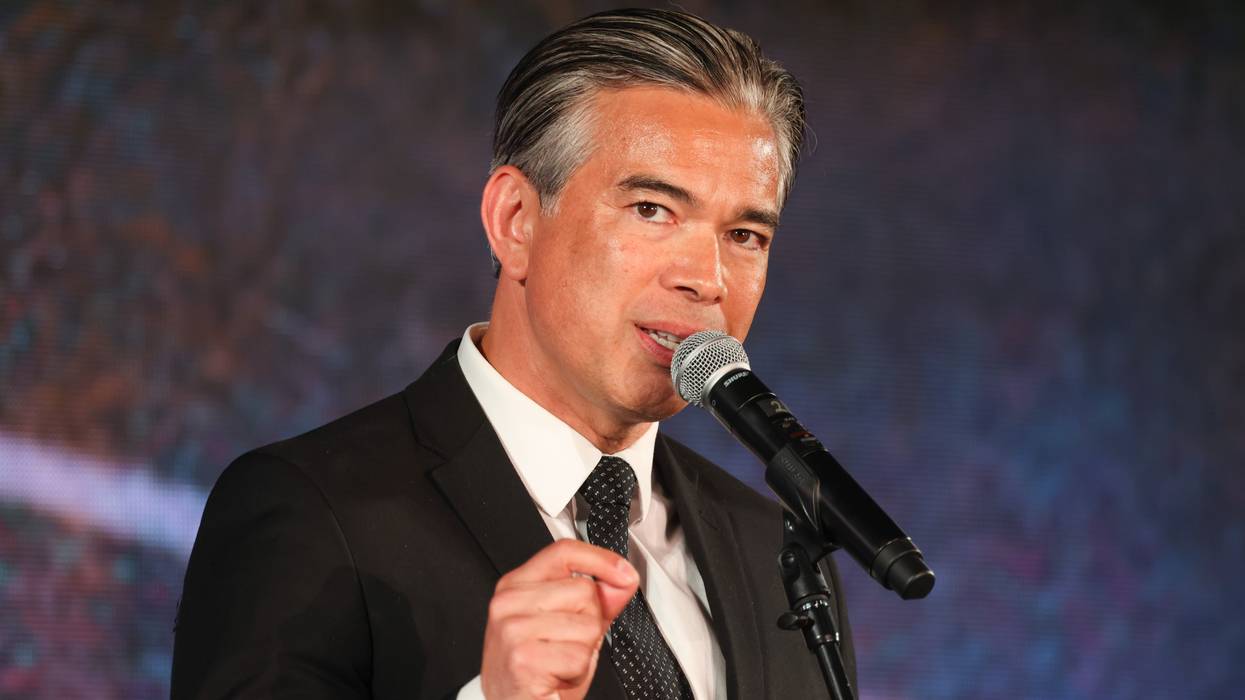
"Now that the federal government has abandoned antitrust enforcement in favor of cronyism and runaway consolidation, state attorneys general must step in to block this deal," said one critic.
The US Department of Justice on Friday approved Paramount Skydance Corporation's megamerger with Warner Bros. Discovery, prompting opponents of the $110 billion deal to place their hopes of blocking it in the hands of Democratic state attorneys general.
The DOJ's Antitrust Division approved the merger without requiring divestitures or behavioral remedies—a significant win for billionaire Paramount CEO David Ellison. Analysts and critics had suggested the DOJ might require sales of some of the corporation's numerous cable networks, streaming services, film and television studios, sports programming rights, or media outlets.
The DOJ also reportedly declined to impose conduct restrictions on bundling, distribution, licensing commitments, and other areas.
“If we had an uncorrupted Department of Justice, Paramount would not even have tried to merge with Warner Bros. Discovery, in plain violation of the law," Robert Weissman, co-president of the consumer advocacy group Public Citizen, said in response to the news of the DOJ approval. "If it had, a Department of Justice that was doing its job would have rushed to court to block the merger the moment it was announced."
“Now, however, a compromised DOJ has rubber-stamped a merger that consolidates power for the Ellisons, one of [President Donald]Trump’s preferred oligarch families," Weissman added. “This merger will jack up prices for consumers, cost workers their jobs and, most importantly, limit the range of viewpoints permitted to air on the major media or appear in movies and creative outlets. Put simply, this is an anti-free speech merger."
This is terrible news for every American who doesn't want Trump-aligned billionaires to control what they watch and how much they pay.The Paramount-Warner Bros. deal has reeked of corruption and influence-peddling.This fight isn't over. State AGs must block this merger.
[image or embed]
— Elizabeth Warren (@warren.senate.gov) June 12, 2026 at 1:48 PM
Craig Aaron, co-CEO of the advocacy group Free Press, said in a statement: “Despite all the talk about conducting a thorough investigation, the fix was in at the Trump Justice Department from the start. Paramount Skydance has fêted, flattered, and promised sweeping changes to news coverage to win the administration’s approval, despite evidence that giving one corporation this much media power—all the movie studios, cable channels, and newsrooms—will undermine competition, destroy jobs, slant the news, and endanger our democracy."
“We've already seen how far Paramount and the Ellison family are willing to go to diminish a once-proud network and news organization like CBS, and they promise to do worse if they get their hands on Warner Bros., HBO, CNN, and all the rest," he added. "The Ellisons aren’t hiding their intentions, and no weak concessions will make this deal any better."
Congressman Jamie Raskin of Maryland, the top Democrat on the House Judiciary Committee, warned earlier this week that approval of the merger would result in "the same kind of unprecedented pro-MAGA editorial control we have seen at CBS News and '60 Minutes.'"
Raskin also contended that the merger could mean that "American consumers, who already pay an average $69 a month for streaming on top of $100 a month for cable and $78 for internet," will pay "even more for sports, news, and entertainment."
As Politico's Yasmin Khorram reported Friday:
The [DOJ] decision... paves the way for Paramount to combine with the entertainment and media company behind a vast film and television studio, CNN, and the HBO Max streaming service, which would be combined with Paramount+ to create a new offering boasting about 200 million subscribers. The deal, which would upend the Hollywood ecosystem by combining two historic rival studios, is opposed by many in the entertainment industry who fear it could lead to mass layoffs, among other concerns.
The DOJ's reported approval of the merger does not necessarily mean the deal is done. Several states are weighing antitrust challenges, most notably California, where the office of Democratic Attorney General Rob Bonta is conducting what he called a "vigorous" review of the proposed merger to determine how it would impact competition in entertainment, streaming, advertising, and labor markets. Reuters reported earlier this month that California, New York, and other states are preparing a lawsuit aimed at blocking the merger.
“The good news is, this is not the last word on the matter," Weissman said. "Competition authorities in the states and other countries can still follow the law and stand up for the public interest against this media consolidation. Now that the federal government has abandoned antitrust enforcement in favor of cronyism and runaway consolidation, state attorneys general must step in to block this deal."
Aaron said that states "have strong case for blocking this merger, and many brave journalists, filmmakers, and workers in the entertainment industry have spoken out against the dangers of this deal despite threats to their livelihoods."
"They are warning us what will happen if this deal goes through, and we must listen," he added. "The attorney generals have the evidence they need to stop this deal; now the public needs them to take action.”
Last year's merger between Paramount Global, Skydance Media, and National Amusements was itself opposed by critics who sounded similar alarms over corruption, antitrust issues, labor concerns, and attacks on editorial independence.
CBS, a Paramount Global company, announced the cancellation of "The Late Show with Stephen Colbert" during the merger review period. While Paramount claimed the cancellation was a financial decision, critics said its timing suggested at least indirect political pressure, given Colbert's vocal criticism of Trump and the need for merger approval from the Federal Communications Commission. FCC Chair Brendan Carr was appointed by Trump and has been dogged by allegations that he's more loyal to the president's agenda than to his agency's stated mission.
One of the biggest recurring flashpoints involves claims of corporate pressure and censorship at CBS' venerable "60 Minutes" weekly current affairs program. Numerous former "60 Minutes" journalists and others have accused Bari Weiss—the right-wing podcaster who became CBS News editor-in-chief after the merger—of political censorship.
Earlier this month, a coalition of press freedom groups warned that recent firings of "60 Minutes" journalists were a “grotesque effort taken straight from an authoritarian handbook” that posed a much wider threat to democracy, and highlighted that an approved Paramount Skydance-Warner Bros. Discovery merger would hand control of CNN, a Warner Bros. company, to the same billionaire family that now owns CBS.
The coalition argued that the merger “would open the door to improper political meddling in journalists’ editorial decisions" and "alter CNN’s editorial direction (not to mention meddle with HBO’s documentaries) to be more friendly to the [Trump] administration, threatening press freedom."