

SUBSCRIBE TO OUR FREE NEWSLETTER
Daily news & progressive opinion—funded by the people, not the corporations—delivered straight to your inbox.
5
#000000
#FFFFFF
To donate by check, phone, or other method, see our More Ways to Give page.
Daily news & progressive opinion—funded by the people, not the corporations—delivered straight to your inbox.
As a physician, my life’s goal is to practice medicine in a country where everyone has healthcare, everybody in and nobody out. Why not do battle with the insurance industry and their billionaire backers? There has to be a fight. Let's have it.
Paul Krugman won the Nobel Prize for Economics in 2008 and must be a smart fellow. He wrote on Substack August 11, “The U.S. Healthcare System is Already Mostly Socialized, and there’s nothing radical about wanting to end insurance company parasitism.”
Krugman explained that taxpayers currently pay two-thirds of US healthcare costs. It’s not just the costs of Medicare, Medicaid, the Indian Health Service, the VA, and the Affordable Care Act premium subsidies, but also employers deduct their contribution for their employees’ private insurance as a tax-deductible expense, while the employees owe no income tax on the value of employers’ contribution. Maybe that’s a bit wonky, but the point is simple - when we give tax breaks that subsidize heath insurance for employees, then the rest of us taxpayers have to make up the difference.
US taxpayers shelling out 2/3 of the cost of our healthcare system is more per capita than taxpayers in any other nation. Krugman says, “Much of U.S. healthcare is already ‘socialist’. In fact, the government’s role is so large that U.S. healthcare is better described as partially privatized socialism than as anything resembling a free market.”
Krugman goes on, “How should we think about this system? First of all, is Medicare socialist? Don’t tell anyone, but the way Medicare operates—it covers every senior’s medical expenses, whatever they turn out to be, while being funded by taxes that depend on one’s income—could be summarized by the old Marxist slogan “From each according to his ability, to each according to his need.” And back in 1961, when Ronald Reagan was the face of a last-ditch effort by the American Medical Association to block the creation of Medicare, he denounced Medicare as “socialized medicine” and warned that it would destroy our freedom.”
Krugman continues: “The case for viewing insurers as parasites is strong. Many Medicare benefits are now delivered via Medicare Advantage, that is, plans paid for by the government but run through insurance companies. MedPAC, an independent advisory commission, estimates that last year Medicare Advantage plans were overpaid by $84 billion, thanks to practices such as “upcoding,” in which patients’ health problems are overstated to get larger sums from Medicare.”
Krugman’s conclusion on August 11: “So let’s be clear: Abdul El-Sayed’s healthcare platform is perfectly reasonable on the merits of cost, fairness and health efficacy. And with private insurers never more hated, while millions of Americans are losing their health insurance, 2026 may be its time.”
Then, on August 14 he published another piece: “The Case for a Medicare Buy-In Option, Mandates vs options: The good, the bad, and the feasible.”
Just three days later and he is back-peddling like crazy. Suddenly, Medicare for All is not politically feasible: “There’s a strong case for a soft transition in which people can choose to be covered by Medicare via a Public Option… Why won’t making the legitimate case that Medicare for All is the best system be enough to win the political argument? The pervasive corruption of our political environment by corporate and right-leaning money is part of the answer. Health insurers may be parasites, but parasites make campaign contributions.”
From there, Krugman is in full retreat. He admits “No major government program is as popular as Medicare, which has an 82 percent favorable rating.” He continues by noting that “Americans have strongly negative views, verging on hatred, about the insurance industry.” Despite that, Krugman now wants a Public Option, or Medicare Buy-In as it is also called, which he claims would be less of a political lift. He describes, “A healthcare system in which many Americans under 65 buy into Medicare would not immediately deliver all the advantages of full Medicare for All. Some people and employers, despite the disadvantages, might retain private insurance… It would lack the clarity of a system in which every citizen knows that they are entitled to care. But it would be far better than what we currently have. Moreover, a system in which private health insurance is a rump industry, covering a dwindling fraction of the population, would be a better starting point for a full transition to universal coverage… There’s no obvious reason a public option would be any harder to implement than payments to the Medicare Advantage plans offered by private insurers.”
Medicare Advantage is a model for the Medicare Buy In? Remember in Krugman’s August 11 Substack he noted that "an independent advisory commission estimates that last year Medicare Advantage plans were overpaid by $84 billion.”
Medicare Advantage is the poster child for how privatized Medicare is corrupted by private for-profit insurance companies. I’m worried about Krugman’s memory.
Does Krugman remember 2009? We have been down this Public Option/Medicare Buy-In road before.
Does anyone remember the Blue Dog Caucus?
When the Affordable Care Act was being formulated in the summer of 2009, Democrats had a 257 to 178 majority in the House of Representatives, but there was a block of moderate Dems known as the Blue Dogs, and Baron Hill, Indiana’s 9th district Congressman, had a leadership role in the group. It included a number of skeptics about the ACA whose votes were going to be needed. I persuaded Baron to have me make a presentation, along with binders to distribute with the facts, figures and citations about the advantages of a Medicare for All system, even though few if any of them were singe payer supporters.
The meeting on June 18th in the Longworth Office Building was well attended, and with my wife Karen Green Stone, we had 20 minutes to make our pitch. They were engaged, had good questions, and let the time run over until they all had to leave to cast a vote. The idea was to present the “ideal system” and then work out the best achievable compromise.
As the ACA took shape in the House, the Public Option was under attack as soon as it was proposed. The entrenched healthcare industry deployed thousands of lobbyists to Capitol Hill to frame the Public Option as a costly “government takeover” and funded studies predicting severe disruptions to insurance markets. They partnered with conservative groups to run intense national advertising campaigns targeting vulnerable lawmakers. The Public Option was amended and weakened repeatedly until the version that passed out of the House was almost unrecognizable.
Then the Senate put it out of its misery. Democratic US Senators like Joe Lieberman of Connecticut and Evan Bayh of Indiana insisted that any Public Option/Medicare Buy-In be removed completely in order for them to provide filibuster-proof support to pass the Senate.
The Public Option proponents had insisted it would “keep insurance companies honest.” They used language similar to Krugman that a Public Option would be an easier way to eventually eliminate private insurance.
How could they think they could pass a bill that was intended to create a slippery slope to eliminate the insurance industry, and somehow the insurers wouldn’t notice, wouldn’t see it as just as much an existential threat as Medicare for All?
In 1998, 20 years before Paul Krugman was awarded his Nobel Prize, he predicted that the internet’s economic influence would be insignificant, “no greater than the fax machine’s,” because “most people have nothing to say to each other.” He has been wrong before.
My life’s goal is to practice medicine in a country where everyone has healthcare, everybody in and nobody out. I think expanding traditional American Medicare is the obvious way to get there. It has already been taking care of the oldest, sickest, most expensive patients for the past 60 years. It makes no sense to take that option off the table before we even start negotiating.
Why not take on the insurance industry and their billionaire backers?
Why not take them on?
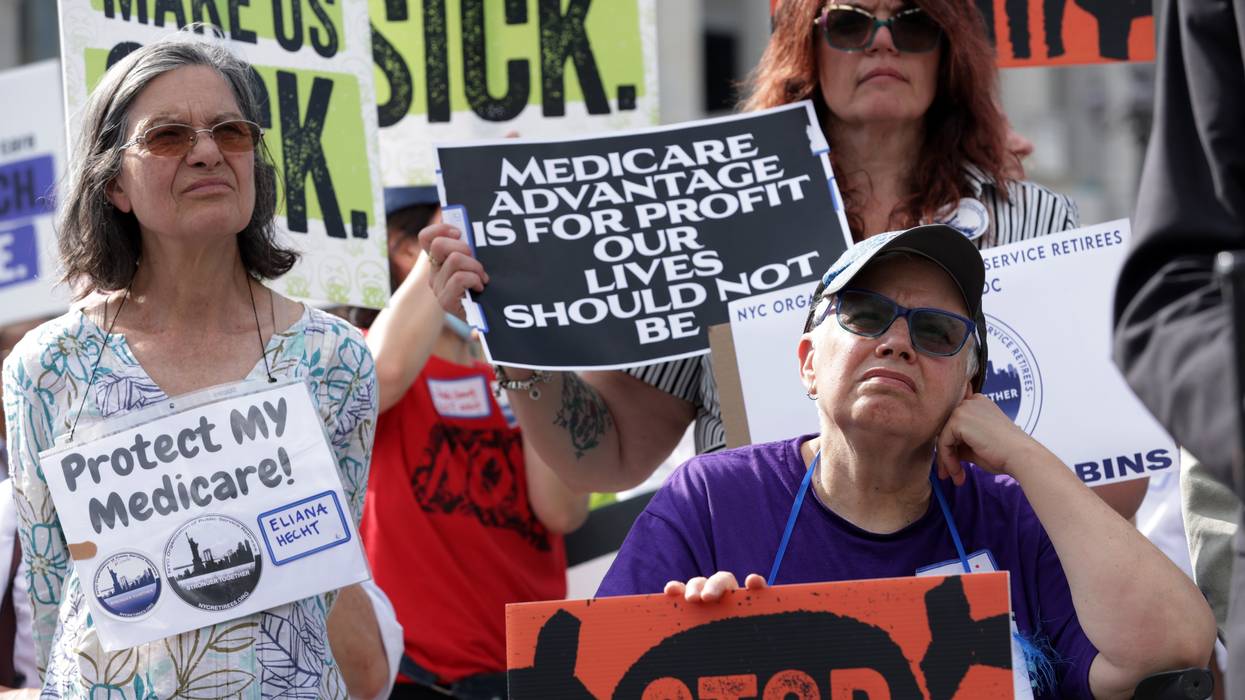
"Medicare Advantage is just another example of the endless greed of the insurance industry poisoning American healthcare," says a new report from Physicians for a National Health Program.
A report published Wednesday estimates that privately run, government-funded Medicare Advantage plans are overcharging U.S. taxpayers by up to $140 billion per year, a sum that could be used to completely eliminate Medicare Part B premiums or fully fund Medicare's prescription drug program.
Physicians for a National Health Program (PNHP), an advocacy group that supports transitioning to a single-payer health insurance system, found that Medicare Advantage (MA) overbills the federal government by at least $88 billion per year, based on 2022 spending.
That lower-end estimate accounts for common MA practices such as upcoding, whereby diagnoses are piled onto a patient's risk assessment to make them appear sicker than they actually are, resulting in a larger payment from the federal government.
But when accounting for induced utilization—"the idea that people with supplemental coverage are likely to use more health care because their insurance pays for more of their cost"—PNHP estimated that the annual overbilling total could be as high as $140 billion.
"This is unconscionable, unsustainable, and in our current healthcare system, unremarkable," says the new report. "Medicare Advantage is just another example of the endless greed of the insurance industry poisoning American healthcare, siphoning money from vulnerable patients while delaying and denying necessary and often lifesaving treatment."
Even if the more conservative figure is accurate, PNHP noted, the excess funding that MA plans are receiving each year would be more than enough to expand traditional Medicare to cover dental, hearing, and vision. Traditional Medicare does not currently cover those benefits, which often leads patients to seek out supplemental coverage—or switch to an MA plan.
The Congressional Budget Office has estimated that adding dental, vision, and hearing to Medicare and Medicaid would cost just under $84 billion in the most costly year of the expansion.
"While there is obvious reason to fix these issues in MA and to expand traditional Medicare for the sake of all beneficiaries," the new report states, "the deep structural problems with our healthcare system will only be fixed when we achieve improved Medicare for All."
Properly spent, these overpayments could make a huge difference in the lives of Medicare beneficiaries. We could either:
💰 Totally eliminate Medicare Part B premiums
💊 Fund the entire Medicare Part D prescription drug program
🦷 Establish dental, hearing, and vision coverage pic.twitter.com/Q2zEBMMnaZ
— Physicians for a National Health Program (@PNHP) October 4, 2023
Bolstered by taxpayer subsidies, Medicare Advantage has seen explosive growth since its creation in 2003 even as it has come under fire for fraud, denying necessary care, and other abuses. Today, nearly 32 million people are enrolled in MA plans—more than half of all eligible Medicare beneficiaries.
Earlier this year, the Biden administration took steps to crack down on MA overbilling, prompting howls of protest and a furious lobbying campaign by the industry's major players, including UnitedHealth Group and Humana. Relenting to industry pressure, the Biden administration ultimately agreed to phase in its rule changes over a three-year period.
Leading MA providers have also faced backlash from lawmakers for handing their top executives massive pay packages while cutting corners on patient care and fighting reforms aimed at rooting out overbilling.
As PNHP's new report explains, MA plans are paid by the federal government as if "their enrollees have the same health needs and require the same levels of spending as their traditional Medicare counterparts," even though people who enroll in MA plans tend to be healthier—and thus have less expensive medical needs.
"There are several factors that potentially contribute to this phenomenon," PNHP's report notes. "Patients who are sicker and thus have more complicated care needs may be turned off by limited networks, the use of prior authorizations, and other care denial strategies in MA plans. By contrast, healthier patients may feel less concerned about restrictions on care and more attracted to common features of MA plans like $0 premiums and additional benefits (e.g. dental and vision coverage, gym memberships, etc.). Insurers can also use strategies such as targeted advertising to reach the patients most favorable to their profit margins."
A KFF investigation published last month found that television ads for Medicare Advantage "comprised more than 85% of all airings for the open enrollment period for 2023."
"TV ads for Medicare Advantage often showed images of a government-issued Medicare card or urged viewers to call a 'Medicare' hotline other than the official 1-800-Medicare hotline," KFF noted, a practice that has previously drawn scrutiny from the U.S. Senate and federal regulators.
PNHP's report comes days after Cigna, a major MA provider, agreed to pay $172 million to settle allegations that it submitted false patient diagnosis data to the federal government in an attempt to receive a larger payment.
Dr. Ed Weisbart, PNHP's national board secretary, told The Lever on Wednesday that such overpayments are "going directly into the profit lines of the Medicare Advantage companies without any additional health value."
"If seniors understood that the $165 coming out of their monthly Social Security checks was going essentially dollar for dollar into profiteering of Medicare Advantage, they would and should be angry about that," said Weisbart. "We think that we pay premiums to fund Medicare. The only reason we have to do that is because we're letting Medicare Advantage take that money from us."

The private insurance industry has spend millions on advertising in order to hide the ugly truth: Their MA plans raid taxpayer funds and routinely fail to deliver the care that patients expect and deserve.
Wendell Potter, a New York Times bestselling author, highly respected healthcare and campaign finance reform advocate, and authority tackling corporate and special interest propaganda, alerts us to the dangers of Medicare Advantage plans now offered by the private health insurance industry.
“In just a few weeks,” says Potter, “we’re once again going to be bombarded with ads featuring healthy and happy-looking seniors playing tennis and telling us how wonderful their Medicare Advantage plan is and how much of a no-brainer it is to shun traditional Medicare and opt instead for a plan operated by a big corporation like Humana and Cigna. We’ll hear insurers’ shills tell us about the extra benefits we’ll get, like discounts on gym memberships; $900 for groceries; and some coverage for dental, vision, and hearing. They’re short on details of course, and we never hear that coverage for those extra things can be pretty meager.”
Potter adds, “We also never hear about the potentially deadly side effects of Medicare Advantage plans. Make sure that insurers’ pitchmen—like ‘Broadway Joe’ Namath—are more forthcoming about what we’ll be getting ourselves into if we do as he suggests. Why should he be allowed to leave out important (Medicare Advantage) details we better know about before we sign on the dotted line?”
The for- profit, private insurance industry thoroughly dominates our national health insurance system and defines the basic concept and purpose of health insurance . The U.S. private business model of health insurance defines insurers as commercial entities, and maximize profits by mainly limiting benefits, maximizing health policy premiums, or by not covering people with health problems. Like all businesses, their goal is to make money. Under the business model, the greed of casual inhumanity is built in and the common good of the citizens and nation is ignored; excluding the poor, the aged, the disabled, and the mentally ill is sound business policy since it maximizes profit.
Because our government permits private health insurance companies to exact large profit from its citizens, Wall Street banks and investors who back Big Insurance turn public money into a bonanza of private riches. High health insurance costs are the result of a political decision to essentially allow Big Insurance to do what they want and charge whatever they want. It’s no wonder so many beholden members of Congress want to protect the interests of their donors, Big Insurance and Big Pharma, industries that spent $371 million on lobbying in 2017.
The website/blog The Lever reported that The Better Medicare Alliance, an advocacy group for Medicare Advantage plans,
spent $570,000 lobbying Congress in the first quarter of this year, nearly double the $330,000 spent in the prior quarter. All told, the four major publicly traded health insurance companies that operate Medicare Advantage plans, as well as the insurance lobby America’s Health Insurance Plans, spent nearly $19 million on federal lobbying in the first quarter of 2023, a 66% increase from the prior quarter, according to a Lever analysis of data from OpenSecrets.
U.S. political and oligarch support for privatization of health insurance is grounded in the philosophy espoused by University of Chicago economist the late Milton Friedman. Friedman said, “The corporations should not take into account the public interest,” and added that “the government itself should not take into account the public interest. The job of the government is to simply let everybody make as much money as they can, however they can.”
In contrast, classical economist Michael Hudson notes that Big Insurance doesn’t want any kind of anti-monopoly legislation:
Essentially you have what is called a free market, as advocated by Milton Friedman. A free market means the wealthiest people dominate the market and the supply of credit, the management of the economy that allocates credit, and who gets what shifts from Washington to Wall Street. It shifts from the government to the private financial sector, and allows the financial sector to do the planning. One problem with this is the financial sector lives in the short run. So, it means that they only look for the next three months, the next year’s balance sheet, because the free market is so complex you don’t know what’s going to happen. Well, of course, since you’re managing it from Wall Street you in reality do know what’s going to happen, but you don’t want to tell people exactly what’s going to happen.
Wendall Potter reports on recent profiteering by Medicare Advantage plans:
The voters don’t matter because the American definition of democracy is oligarchy, where a small group exercises control especially for selfish purposes. Polls have shown large popular support by citizens for Medicare for All, but neither political party nor Wall Street donors have supported it. Michael Hudson writes that by “conquering the brains of a country by shaping how people think, you can twist their view into ‘unreality economics’ and make them think you are there to help them and not to take money out of them, then you’ve got them hooked.” This is how Big Insurance and Big Pharma maintain control of U.S. health insurance. Our system is privatized, financialized, and unregulated so that private, big insurance companies can make money.
The assumption that whatever the market produces is rational and functional is the bedrock of Western economies. “And it’s wrong,” says Hudson, “because It negates the fact that you really need some government power strong enough to override the self-serving special interests of oligarchs and other 1% corporate interests. And that takes a very strong government, which is why the free market /privatization people have always opposed strong government and why their economic models don’t give any acknowledgement for government investment in infrastructure that Biden wants or any government activity that is able to override that of the 1% rentier class, the financial class, the property-owning class, and the corporate monopolists. That’s the problem we have.”
Private profit “Medicare Advantage” and “REACH” plans present new threats to Traditional Medicare.
Medicare Advantage is a program offering private health insurance plans as options to replace traditional Medicare. Medicare Advantage plans differ from traditional Medicare in that they are paid with capitation (per member), they are required to limit enrollees’ out-of-pocket spending, and can offer extra benefits (e.g. gym memberships, $900 worth of groceries, dental benefits). They almost always offer prescription drug coverage and use a defined and often restricted network of providers that can require enrollees to pay more for out-of-network care. Utilization management techniques are used, such as prior authorization, and they can also fund special programs such as rewards for beneficiaries to encourage healthy behaviors. The hope is that these differences will lead to improved care at lower cost compared to Traditional Medicare.
In reality, “Medicare Disadvantage” is a better, more accurate name for the programs however, as insurance companies push Congress to corporatize all of Medicare, yet keep the name for the purposes of marketing, deception, and confusion.
Dismantling Medicare With Medicare Advantage: Over 50% of Medicare beneficiaries now have for-profit corporations in charge of their care through Medicare Advantage (MA). Insurance companies are paid handsomely for these plans, and much of that money goes to corporate profits instead of care. The companies running MA plans want to take over Medicare entirely, leaving patients with no option but to give their money to private insurers.
Denying Treatment: Investigations into claim denials in MA found that insurers were inappropriately denying treatments and tests that should be covered under Medicare. Physician surveys show that these practices often cause patients to suffer unnecessarily, and can even be life-threatening. In some cases, MA insurers were found to spend just seconds on each claim, and even denied claims using artificial intelligence instead of medical experts.
Deceiving Patients and Taxpayers: Reports from journalists, researchers, and government agencies have shown that health insurance companies like UnitedHealth and Cigna overcharge Medicare by giving patients exaggerated or entirely false diagnoses. Several companies have been fined, or sued, and agreed to large settlements. MA insurers are taking citizens’ tax dollars for conditions they aren’t even treating.
Bottom Line: Medicare Advantage is not the same Medicare program that Americans have come to know and love. The private insurance industry has spend millions on advertising in order to hide the ugly truth: Their MA plans raid taxpayer funds and routinely fail to deliver the care that patients expect and deserve.
Terminate Medicare Advantage: Physicians for a National Health Program, concludes that the Center for Medicare Services (CMS) should terminate the Medicare Advantage program. It would be far more cost-effective for CMS to improve traditional Medicare by capping out-of-pocket costs and adding improved benefits within the Medicare fee-for-service system than to try to indirectly offer these improvements through private plans that require much higher overhead and introduce profiteers and perverse incentives into Medicare, enabling corporate fraud and abuse, raising cost to the Medicare Trust Fund, and worsening disparities in care. These problems are not correctable within the competitive private insurance business model, and the Medicare Advantage program should be terminated.
This program hands traditional Medicare to Wall Street by inserting a profit-seeking middlemen in Traditional Medicare to “manage” care for seniors and people with disabilities, allowing companies to keep up to 40% of what they don’t spend on care as overhead and profit. Beneficiaries are assigned. without their knowledge or consent. automatically to a ‘Direct Contracting Entity’ (DCE) if their primary care physician has joined one. The only way for beneficiaries to opt out is to find a different primary care physician.
Profits Over Patient Care: Profits are put ahead of patient care by virtually any type of company to be a Direct Contracting/REACH middleman, including commercial insurance companies, private equity investment firms, and other Wall Street profiteers. DCE’s expand profiteering to all of Medicare. Direct Contracting companies have already enrolled 1.8 million beneficiaries, with plans to take over all of Traditional Medicare in the next decade.
Terminate DCE’S and REACH: It would be far more cost-effective for CMS to improve traditional Medicare by capping out-of-pocket costs and adding improved benefits within the Medicare fee-for-service system than to try to indirectly offer these improvements through private plans that require much higher overhead and introduce profiteers and perverse incentives into Medicare, enabling corporate fraud and abuse, raising cost to the Medicare Trust Fund, and worsening disparities in care. These problems are not correctable within the competitive insurance business model, and the DCE/REACH program should be terminated.
We now have several decades of experience with the conversion of health and mental healthcare into a business. Our healthcare is being rationed, with care guidelines determined by profitability and secrecy decided in private Wall Street corporate boardrooms. To realize large profits demanded by Wall Street investors, our health system must attract the healthy and turn away the sick, disabled, the poor, many of the old, and the mentally ill.
To maintain corporate control of U.S. healthcare insurance, our system is privatized and unregulated. Private, big insurance companies are in the business of making money, not providing full healthcare, and when they undertake the latter, it is likely not to be in the best interests of patients or to be efficient. Administrative costs (and immense profiteering) are greater in the private healthcare insurance system, and even Medicare itself is weakened by having to work through the private system.
The USA is a country where health insurance for medical and mental healthcare is a function of socioeconomic status. Everyone knows that this inhumane system should have been corrected long ago. We must immediately end our moral crime of having the greatest health system in the world, but only for those who can afford it. We must support the common principles that healthcare is a human right, must be free from corporate profit, and must be achieved through national legislation.
Let’s never forget that universal Medicare for All is a solid investment in all citizens of our country by simply promoting a social service for universal access to affordable healthcare insurance for all. Aren’t we a society that cares enough to see that everyone receive the healthcare they need? That’s the basic purpose of Medicare for All. The history of our most successful national health insurance program, Medicare, provides one of the best arguments for expanding the program to cover everyone. It’s time to end inadequate and dangerous health insurance programs. Insist on real health insurance reform essential for individuals and families.
Contact your legislators asking them to oppose and end Medicare Advantage, DCE’s, and REACH plans . Most importantly, ask them to strongly support new legislation now filed in Congress, “The Medicare for All Act of 2023” House Bill (H.R. 3421) and Senate Bill (S. 1655) that would establish this badly needed reform.
The program "presents a threat to the integrity of traditional Medicare, and an opportunity for corporations to take money from taxpayers while denying care to beneficiaries," said Physicians for a National Health Program.
A national physician group this week called for the complete termination of a Medicare privatization scheme that the Biden White House inherited from the Trump administration and later rebranded—while keeping intact its most dangerous components.
Now known as the Accountable Care Organization Realizing Equity, Access, and Community Health (ACO REACH) Model, the experiment inserts a for-profit entity between traditional Medicare beneficiaries and healthcare providers. The federal government pays the ACO REACH middlemen to cover patients' care while allowing them to pocket a significant chunk of the fee as profit.
The rebranded pilot program, which was launched without congressional approval and is set to run through at least 2026, officially began this month, and progressive healthcare advocates fear the experiment could be allowed to engulf traditional Medicare.
In a Tuesday letter to Health and Human Services Secretary Xavier Becerra and Centers for Medicare and Medicaid Services Administrator Chiquita Brooks-LaSure, Physicians for a National Health Program (PNHP) argued that ACO REACH "presents a threat to the integrity of traditional Medicare, and an opportunity for corporations to take money from taxpayers while denying care to beneficiaries."
The group, which advocates for a single-payer healthcare system, voiced alarm over the Biden administration's decision to let companies with records of fraud and other abuses take part in the ACO REACH pilot, which automatically assigns traditional Medicare patients to private entities without their consent.
CMS said in a press release Tuesday that "the ACO REACH Model has 132 ACOs with 131,772 healthcare providers and organizations providing care to an estimated 2.1 million beneficiaries" for 2023.
"As we have stated, PNHP believes that the REACH program threatens the integrity of traditional Medicare and should be permanently ended," Dr. Philip Verhoef, the physician group's president, wrote in the new letter. "Whether or not one agrees with this statement, we should all be able to agree that companies found to have violated the rules have no place managing the care of our Medicare beneficiaries."
Among the concerning examples PNHP cited was Clover Health, which has operated so-called Direct Contracting Entities (DCEs)—the name of private middlemen under the Trump-era version of the Medicare pilot—in more than a dozen states, including Arizona, Florida, Georgia, and New York.
PNHP noted that in 2016, CMS fined Clover—a large Medicare Advantage provider—for "using 'marketing and advertising materials that contained inaccurate statements' about coverage for out-of-network providers, after a high volume of complaints from patients who were denied coverage by its MA plan. Clover had failed to correct the materials after repeated requests by CMS."
Humana, another large insurer with its teeth in the Medicare privatization pilot, "improperly collected almost $200 million from Medicare by overstating the sickness of patients," PNHP observed, citing a recent federal audit.
"It appears that in its selection process [for ACO REACH], CMS did not prevent the inclusion of companies with histories of such behavior," Verhoef wrote. "Given these findings, we are concerned that CMS is inappropriately allowing these DCEs to continue unimpeded into ACO REACH in 2023."
While the Medicare pilot garnered little attention from lawmakers when the Trump administration first launched it during its final months in power, progressive members of Congress have recently ramped up scrutiny of the program.
Last month, Sen. Elizabeth Warren (D-Mass.) and Rep. Pramila Jayapal (D-Wash.) led a group of lawmakers in warning that ACO REACH "provides an opportunity for healthcare insurers with a history of defrauding and abusing Medicare and ripping off taxpayers to further encroach on the Medicare system."
"We have long been concerned about ensuring this model does not give corporate profiteers yet another opportunity to take a chunk out of traditional Medicare," the lawmakers wrote, echoing PNHP's concerns. "The continued participation of corporate actors with a history of fraud and abuse threatens the integrity of the program."
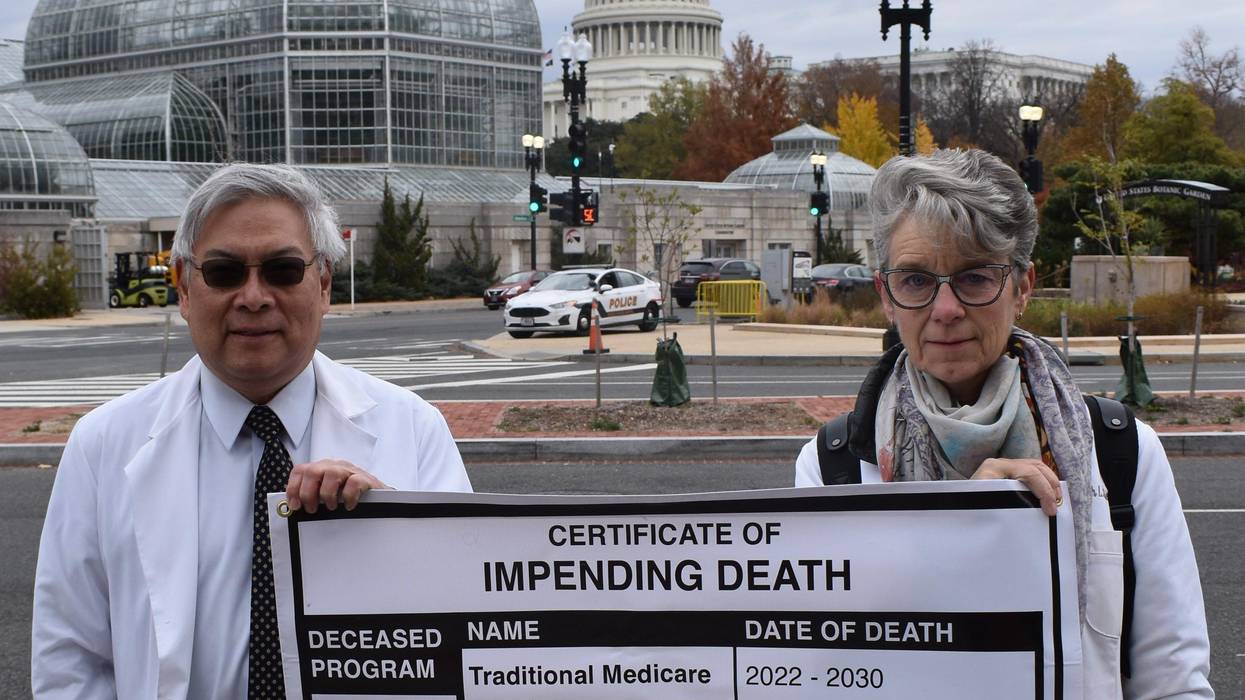
Senior citizens, doctors, progressive lawmakers, and activists gathered virtually on Monday to launch a "summer of action" to prevent the back-door privatization of traditional Medicare.
"If Wall Street firms are allowed to make decisions about your healthcare, their profits will always come first."
At issue is Direct Contracting, which is set to be renamed ACO REACH--an acronym for Accountable Care Organization Realizing Equity, Access, and Community Health--in 2023.
As the campaign to protect traditional Medicare explains, the Direct Contracting scheme "invites profit-seeking middlemen to 'manage' care for seniors and people with disabilities, allowing companies to keep up to 40% of what they don't spend on care as overhead and profit."
All sorts of corporate actors can become middlemen, including Medicare Advantage insurance companies, private equity firms, and other Wall Street profiteers.
Seniors who picked traditional Medicare are being enrolled without their knowledge or consent, as the program automatically assigns beneficiaries to a Direct Contracting Entity (DCE) as long as their primary care physician has joined one. Given that finding a different primary care doctor is the only way to opt out, dozens of DCEs have already enrolled 1.8 million seniors nationwide.
These profit-maximizing third parties have plans to completely take over Medicare by the end of the decade, but progressives are gearing up to fight back, as detailed during Monday's Protect Medicare event, organized by Physicians for a National Health Program (PNHP) and titled "Turning Up the Heat on Direct Contracting and REACH."
Turning up the heat on Direct Contracting and REACHWatch LIVE on Monday, May 23 at 1pm Eastern as we discuss the latest threat to Traditional Medicare: the recently announced ...
"Despite undeniable evidence that Wall Street middlemen drive up costs and deny care, the Center for Medicare and Medicaid Services has begun to move traditional Medicare beneficiaries into a program called Direct Contracting or ACO REACH, which inserts profit-driven middlemen between seniors and their healthcare," said Rick Timmins, a member of Puget Sound Advocates for Retirement Action.
"I learned the hard way," said Timmins. He picked Medicare Advantage because of its promise to cover vision, hearing, and dental expenses but eventually experienced a life-threatening delay in treating malignant melanoma. That's because his private insurance company limited which providers he could see and even lost his doctor's request to authorize a referral to a dermatologist when it subcontracted the process to another company.
Bill Bianchi, a board member and leader with Jane Addams Senior Caucus in Chicago, meanwhile, said that "I was able to make the choice to be on traditional Medicare, and I don't want to be moved to REACH."
"Seniors are angry and afraid of what we are hearing about the REACH program," said Bianchi. "People are terrified of being transferred, without their will or consent, to a third party middleman that is allowed to keep as profit what they don't spend on our care. We know that means that Wall Street investors will be involved in our care, and they are more worried about their bottom lines than our well-being."
Timmins echoed Bianchi, warning that "if Wall Street firms are allowed to make decisions about your healthcare, their profits will always come first. Our healthcare needs will be a distant second. Please join me and do everything you can to end this dangerous program before it is too late."
Dr. Susan Rogers, president of PNHP, shared a four-part action plan:
During Monday's event, Rep. Pramila Jayapal (D-Wash.) described Direct Contracting and ACO REACH as "Medicare privatization hidden in layers of bureaucracy."
The chair of the Congressional Progressive Caucus said that "even though Medicare is relied on by millions of seniors across the country, and precisely because it is so necessary and cost-effective, it is under threat today from the constant efforts of private insurance companies and for-profit investors who want to privatize it and turn it into yet another shameful opportunity to make money off of peoples' health problems."
"The Progressive Caucus is calling on the Biden administration to fully end this program," said Jayapal. "Our call has been gaining steam with the help of seniors and activists around the country."
One of them, Dee Dorsey, a board member and leader with Jane Addams Senior Caucus, said that what seemed like a simple decision 20 years ago to sign up for a Medicare Advantage plan "has meant that my pocketbook has been hit harder and harder every year."
"I know, firsthand, how inserting a profit-driven middleman in senior healthcare hurts us. That's why we need to fight REACH," said Dorsey. "I want to protect traditional Medicare for the millions of seniors who had a chance to choose it, and I want to improve and expand it to everyone in the form of Medicare for All."
"Medicare for All means no copays and drug costs for seniors and would include hearing, dental, and vision care," she added. "I am dedicated to fighting for Medicare for All because I don't want to see any other seniors--or anyone else--be forced into the same position [of] having to deal with a profit-driven middleman in our healthcare."
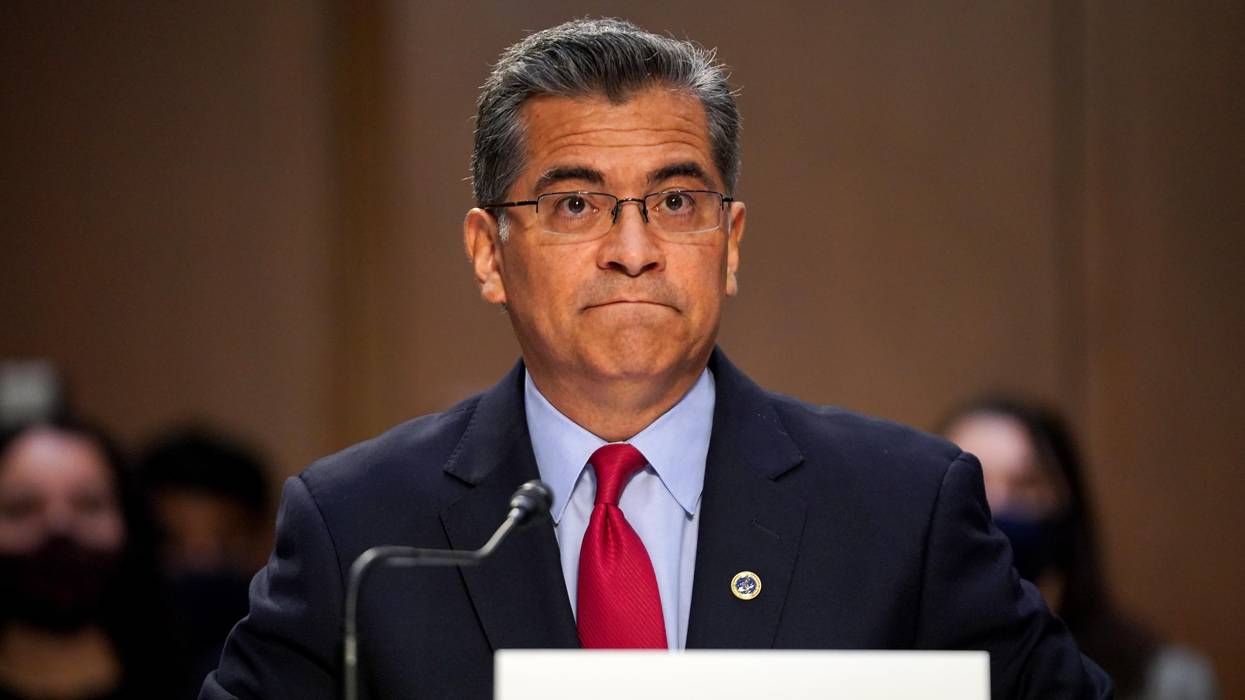
Rejecting pressure to terminate the program in its entirety, the Biden administration on Thursday announced it is redesigning a Trump-era experiment that physicians and progressive lawmakers have criticized as a scheme to fully privatize Medicare.
"This dangerous experiment must be stopped before it further harms the health of vulnerable seniors."
Instead of ending what's known as the Direct Contracting model, which the Trump administration officially launched in 2020, the Centers for Medicare and Medicaid Services (CMS) gave the program a new name: ACO REACH, which stands for Accountable Care Organization Realizing Equity, Access, and Community Health.
In addition to the name change and fresh veneer--a step in line with the healthcare industry's call for a "rebranding"--CMS said the program will now span four years instead of eight and will include requirements aimed at ensuring "transparency" and "equity."
The changes are slated to take effect on January 1, 2023.
Physicians for a National Health Program (PNHP), a doctor-led group that has spearheaded the opposition to Direct Contracting, was far from satisfied with the Biden administration's changes, which the organization argued are more cosmetic than substantive.
"ACO REACH is Direct Contracting in disguise," said Dr. Susan Rogers, an internal medicine physician and president of PNHP. "This new model doubles down on Direct Contracting's fatal flaws, inserting a profit-seeking middleman between beneficiaries and their providers."
Under Direct Contracting, so-called Direct Contracting Entities (DCEs) were paid monthly by CMS to cover a specified portion of a patient's medical care. DCEs--the majority of which are currently controlled by investors, not healthcare providers--are allowed to pocket funds they didn't spend on care.
In a statement, PNHP--which has implored the Department of Health and Human Services (HHS) to fully halt the program--outlined how the revamped pilot "perpetuates the dangerous flaws" of the Trump administration's Direct Contracting experiment:
"You can't slap a band-aid on a tumor and call it cured," said Rogers. "Direct Contracting--and now ACO REACH--threatens the health of beneficiaries and the future of Traditional Medicare. As physicians committed to the health of our patients, we urge HHS to abandon this rebranding effort and focus the agency's efforts towards strengthening and protecting Traditional Medicare."
CMS unveiled its raft of changes to the Medicare experiment just over a week after a coalition of industry groups--including active participants in the Direct Contracting program--requested that the Biden administration "fix" the model instead of ending it.
The industry organizations suggested that "a rebranding and name change would... help communicate how this model is part of the evolution to accountable care."
"Trump-era Direct Contracting is a major threat to Medicare coverage, hidden in bureaucracy."
CMS is headed by Elizabeth Fowler, who has previously worked at Johnson & Johnson and WellPoint, Inc.--now known as Anthem, one of the largest private health insurance companies in the United States.
While CMS said Thursday that it took into account "feedback received from participants and stakeholders," the new ACO REACH program is more in line with industry demands than those of physicians, grassroots advocacy groups, and progressive lawmakers.
"Changing the name doesn't change the fact that the Direct Contracting program is backdoor privatization of Medicare," Alex Lawson, executive director of Social Security Works, said in a statement. "This dangerous experiment must be stopped before it further harms the health of vulnerable seniors, eats into the Medicare Trust Fund, and destroys traditional Medicare."
"DCEs and their investors--which include private equity firms--are focused on generating profits," added Lawson. "They are incentivized to deny and delay care as much as possible. There are no changes that can address that fundamental flaw at the heart of the program. President Biden must protect older adults and people with disabilities by ending the direct contracting program immediately."
Rep. Pramila Jayapal (D-Wash.), who earlier this month led more than 50 House Democrats in urging Biden to cut off the program, said Thursday that she will "continue to fight tooth and nail against any and all efforts to privatize Medicare."
"Trump-era Direct Contracting is a major threat to Medicare coverage, hidden in bureaucracy," said Jayapal, the chair of the Congressional Progressive Caucus. "While I'm glad to see the administration taking steps to redesign this flawed program, I am disappointed that these changes will not be enacted for 10 months and that there are no limits on how many seniors are funneled into this experimental model. More needs to be done."
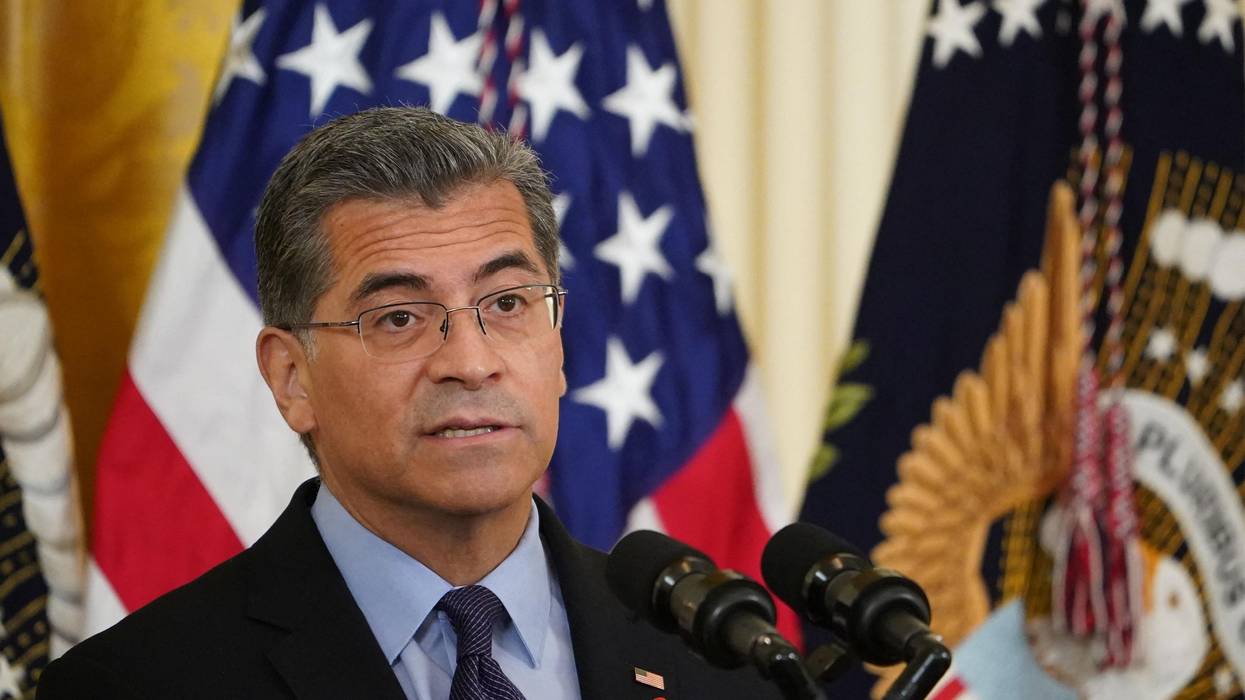
Physicians and progressive advocates on Tuesday urged the Department of Health and Human Services to reject an industry appeal to tweak and rebrand--not end altogether--a Medicare privatization scheme known as Direct Contracting, which the Trump administration launched in 2020.
Members of Physicians for a National Health Program (PNHP), which represents 24,000 doctors and other health professionals, has been working for months to bring lawmakers' attention to the DC program and pressure the Biden administration to terminate it while it's still in an experimental phase.
"The Biden administration must completely eliminate Direct Contracting--nothing less than that is acceptable."
As a result of PNHP's efforts, dozens of Democrats--including Rep. Pramila Jayapal (D-Wash.) and Sen. Elizabeth Warren (D-Mass.)--have spoken out against the DC pilot, opposition that appears to have caught the notice of healthcare industry groups that stand to benefit from the program.
In a letter sent earlier this week, more than 220 healthcare organizations--including active participants in the DC program known as Direct Contracting Entities (DCEs)--implored HHS Secretary Xavier Becerra "to not cancel" the privatization scheme and dismissed recent criticism of the experiment as "misleading and flat out false."
"Fix, don't end, the Direct Contracting Model," reads the letter. "For example, you can limit participation to certain types of DCEs, such as provider-led DCEs, and place additional guardrails and add more beneficiary protections. A rebranding and name change would also help communicate how this model is part of the evolution to accountable care."
But PNHP countered in a letter of its own on Tuesday that such "superficial tweaks and cosmetic changes will not alter DC's fundamental flaws."
The industry coalition's proposal to increase provider control over DCEs--the majority of which are currently controlled by investors--would do little to alter the DC program's core imperatives, PHNP president Dr. Susan Rogers argued in the new letter to Becerra.
"Even with more provider governance, DCEs are ultimately accountable to investors, which include private equity firms and commercial insurers active in [Medicare Advantage]," Rogers wrote. "Investors want a return on their investment, creating a dangerous incentive for DCEs to both maximize revenues through upcoding, and minimize medical expenditures by restricting patient care."
As for the industry recommendation of additional "guardrails" for the DC program, Rogers wrote, "Our experience from Medicare's other managed care experiment, Medicare Advantage, shows that when regulators install new guardrails that threaten profits, the industry will simply build a bigger truck to run them over."
"The DCE industry represents its own interests and that of its investors, and does not speak for physicians," Rogers continued. "As physicians, we urge you to end the dangerous DC program and work tirelessly to strengthen and protect Traditional Medicare, both for today and for generations to come."
The Trump administration quietly announced the DC pilot in April 2019 despite internal legal concerns about the program, under which the federal government pays DCEs to cover a specified portion of a patient's medical care.
DCEs are allowed to keep as profit the funding they don't spend on care, a set-up that critics say incentivizes DCEs to skimp on patients.
"Direct Contracting Entities and their Wall Street investors hoped they could fly under the radar."
"Direct contracting is nothing more than privatizing Medicare," Alex Lawson, executive director of the progressive advocacy group Social Security Works, said in a statement Tuesday. "It inserts a corporate bureaucrat between a patient and their doctor in order to deny care and make Wall Street money. The Biden administration must completely eliminate Direct Contracting--nothing less than that is acceptable."
The DC experiment, which the Biden administration has thus far refused to cancel, was developed by Adam Boehler, who served as director of the Center for Medicare and Medicaid Innovation (CMMI) during Donald Trump's presidency.
Prior to his tenure at CMMI, Boehler was the CEO of Landmark Health, a venture capital-backed startup that was selected in late 2020 to participate in the DC pilot.
CMMI is currently headed by Elizabeth Fowler, the former vice president of public policy and external affairs for WellPoint, Inc.--a firm that later became Anthem, one of the largest for-profit insurance companies in the U.S. and a major player in the Medicare Advantage industry.
"We can't afford even more for-profit middlemen getting between America's seniors and the care they need, especially seniors that chose to avoid Medicare Advantage for a variety of reasons," argued Eagan Kemp, a health policy advocate for Public Citizen. "HHS should be working to strengthen Medicare, not pushing seniors into an untested program where for-profit companies can benefit by denying care. There are much more savings to be had by cracking down on Medicare Advantage than through pushing seniors into Direct Contracting."
Advocates and healthcare professionals fear that if the DC program is allowed to run its course, traditional Medicare could be fully privatized by the end of the decade--without the consent of patients or a vote in Congress.
"Direct Contracting Entities and their Wall Street investors hoped they could fly under the radar of seniors, healthcare advocates, and members of Congress," Rogers said in a statement Tuesday. "Now that HHS is feeling pressure to end this backdoor privatization of Medicare, the industry thinks they can save it with minor tweaks and cosmetic fixes. But we won't back down until Direct Contracting is shut down, for good."
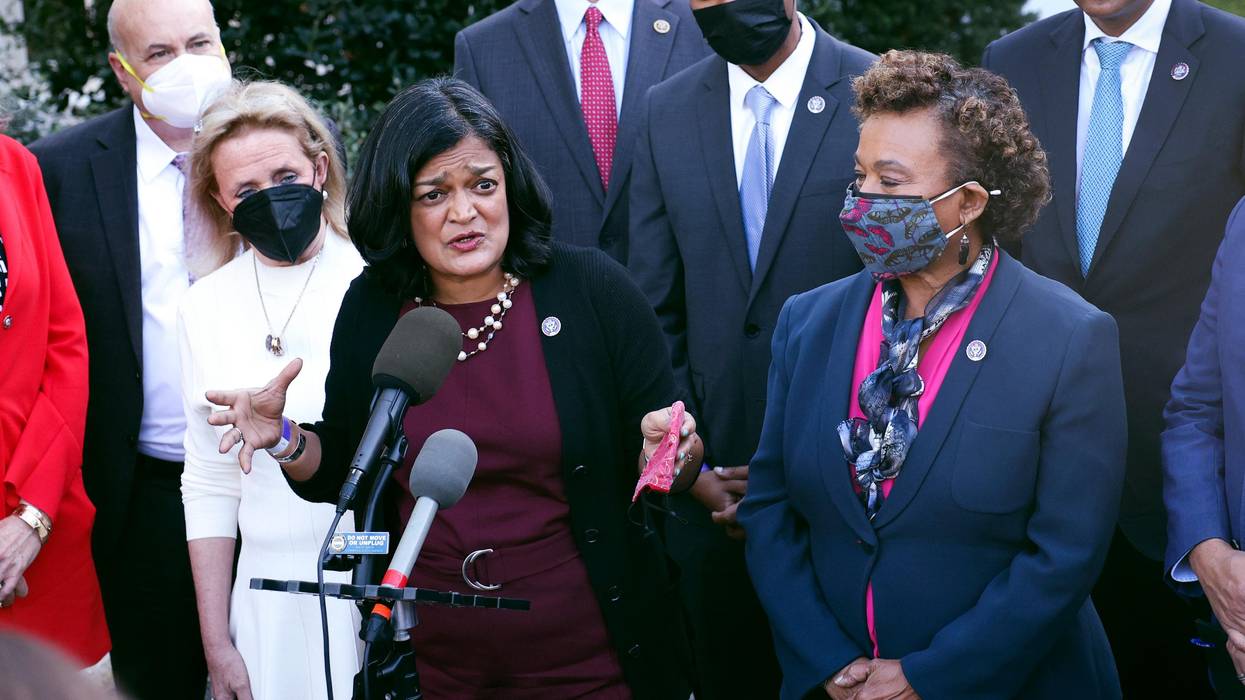
The physician-led effort to kill a Trump-era Medicare privatization scheme gained fresh momentum Wednesday as Rep. Pramila Jayapal--the chair of the Congressional Progressive Caucus--led more than 50 House Democrats in urging the Biden administration to cancel the Direct Contracting pilot program.
In a letter addressed to Health and Human Services (HHS) Secretary Xavier Becerra and Centers for Medicare and Medicaid Services (CMS) head Chiquita Brooks-LaSure, the lawmakers warned that the under-the-radar DC experiment poses a grave "threat to patient care and outcomes due to the encroachment of profit-driven organizations."
"If left unchecked, Medicare Direct Contracting will hand traditional Medicare to Wall Street investors."
Launched during the final months of the Trump administration, the pilot program is similar to Medicare Advantage in that it inserts a private middleman--be it a Wall Street-backed startup or a for-profit insurance giant--between traditional Medicare and healthcare providers.
Under the DC pilot, the middlemen are known as Direct Contracting Entities (DCEs), and they're paid monthly by CMS to cover a specified portion of a patient's medical care. DCEs are then allowed to pocket what they don't spend on care, prompting concerns that Medicare recipients will see the quality of their coverage decline as private firms seek to boost profits.
"These models ultimately aim to privatize traditional Medicare by funneling beneficiaries, without their knowledge, into a DCE," the 54 House Democrats wrote in their letter to the Biden administration on Wednesday. "Unfortunately for patients in these entities, DCEs are incentivized to funnel patients to providers within their networks to maximize profits which can limit patients' care options."
"These models transform the care of a traditional Medicare beneficiary to care typically seen in a private Medicare Advantage (MA) plan despite the fact that the patient chose not to enroll in an MA plan," the lawmakers added. "We ask that you permanently end the programs and coordinate the transition of traditional Medicare beneficiaries currently in these programs back into the traditional Medicare model by July 1, 2022."
Signatories to the new letter include prominent progressives such as Reps. Alexandria Ocasio-Cortez (D-N.Y.), Ilhan Omar (D-Minn.), Rashida Tlaib (D-Mich.), Cori Bush (D-Mo.), and Barbara Lee (D-Wash.) as well as more moderate members of the House Democratic caucus, including Reps. Don Beyer (D-Va.) and Jim Cooper (D-Tenn.).
Despite mounting pressure to cut off the legally dubious pilot program, the Biden administration has allowed much of it to proceed as planned.
The 54 House Democrats sent their letter weeks after a group of doctors with Physicians for a National Health Program (PNHP) traveled to Washington, D.C. in an attempt to bring lawmakers' attention to the little-discussed DC pilot and demand that HHS stop the experiment in its tracks.
Thus far, the pilot includes 53 DCEs in 38 states, Washington, D.C., and Puerto Rico. A majority of the current DCEs--which are approved by CMS without input or oversight from Congress--are controlled by investors, not healthcare providers.
Physicians fear that if the Biden administration doesn't act, the DC pilot could result in the full-scale privatization of Medicare by 2030--without so much as a vote in Congress.
"HHS allows Direct Contracting Entities to keep as profit what they don't pay for in medical services, establishing a dangerous incentive to ration and restrict seniors' care," Dr. Susan Rogers, president of the 24,000-member PNHP, said in a statement Wednesday. "If left unchecked, Medicare Direct Contracting will hand traditional Medicare to Wall Street investors, without input from seniors, doctors, or even Congress."
"We applaud Rep. Jayapal and the more than 50 members of Congress who stood up to protect Medicare today and for future generations," Rogers added.
Calls are mounting for President Joe Biden to terminate an under-the-radar Trump-era pilot program that--if allowed to run its course--could result in the complete privatization of traditional Medicare by the end of the decade.
"The Biden administration is moving the DCE program forward, threatening the future of Medicare as we know it."
A petition recently launched by Physicians for a National Program (PNHP) has garnered more than 10,000 signatures as doctors and other advocates work to raise public awareness of the Medicare Direct Contracting program, which the Trump administration rolled out during its final months in power.
"Under this model," the petition warns, "the Centers for Medicare and Medicaid Services (CMS) could move more than 30 million traditional Medicare beneficiaries into mostly commercial, for-profit plans called Direct Contracting Entities (DCE) without the enrollees' understanding or consent."
"In ways similar to commercial Medicare Advantage plans, DCEs have the potential to interfere with care decisions and waste taxpayer money when compared with the efficiency of traditional Medicare," the appeal continues. "The Biden administration is moving the DCE program forward, threatening the future of Medicare as we know it. We, the undersigned, demand that CMS immediately stop the DCE program to keep Medicare public and nonprofit for future generations."
Late last month, as Common Dreams reported, a group of physicians from across the U.S. traveled to the headquarters of the Health and Human Services Department in Washington, D.C. to demand that HHS Secretary Xavier Becerra halt the pilot program in its tracks.
The doctors were ultimately blocked from delivering a petition signed by around 1,500 physicians calling for an end to the privatization scheme, which inserts profit-seeking companies between traditional Medicare and healthcare providers.
"Just like corporate middlemen stand between patients and the healthcare they need, security staff stood between PNHP doctors and the policymakers who want to privatize Medicare," PNHP tweeted during the demonstration at the nation's capital.
While the doctor-led protest was followed by a brief uptick in reporting on the obscure initiative, Biden's HHS has yet to act and few members of Congress have publicly spoken out against the Direct Contracting program despite the massive implications for the future of Medicare and its tens of millions of beneficiaries.
"People don't know that it's happening," Dr. Ed Weisbart, chair of PNHP's Missouri chapter, told Common Dreams in an interview last month. "Most people in Congress don't know that it's happening. We've started having some of these conversations with congressional staff... but it's not on their radar either."
One notable exception is Rep. Pramila Jayapal (D-Wash.), chair of the Congressional Progressive Caucus. Earlier this month, Jayapal penned an op-ed with PNHP president Dr. Susan Rogers urging Biden to stop the Direct Contracting program "while we have the chance."
According to PNHP, Jayapal is collecting signatures from fellow lawmakers' for a letter pressuring Biden to shut down the pilot, which sparked legal concerns and general revulsion among career CMS staff when it was launched toward the end of former President Donald Trump's White House tenure.
"This shit is so fucking gross," one staffer wrote in a group text viewed by The Intercept.
In their op-ed for The Hill earlier this month, Jayapal and Rogers warned that the Direct Contracting program "could radically transform Medicare within a few years, without input from seniors or even a vote by Congress."
"After our experience with commercial Medicare Advantage plans," they added, "we already know that inserting a profit-seeking middleman into Medicare ends up costing taxpayers more, with fewer choices and worse outcomes for seniors."
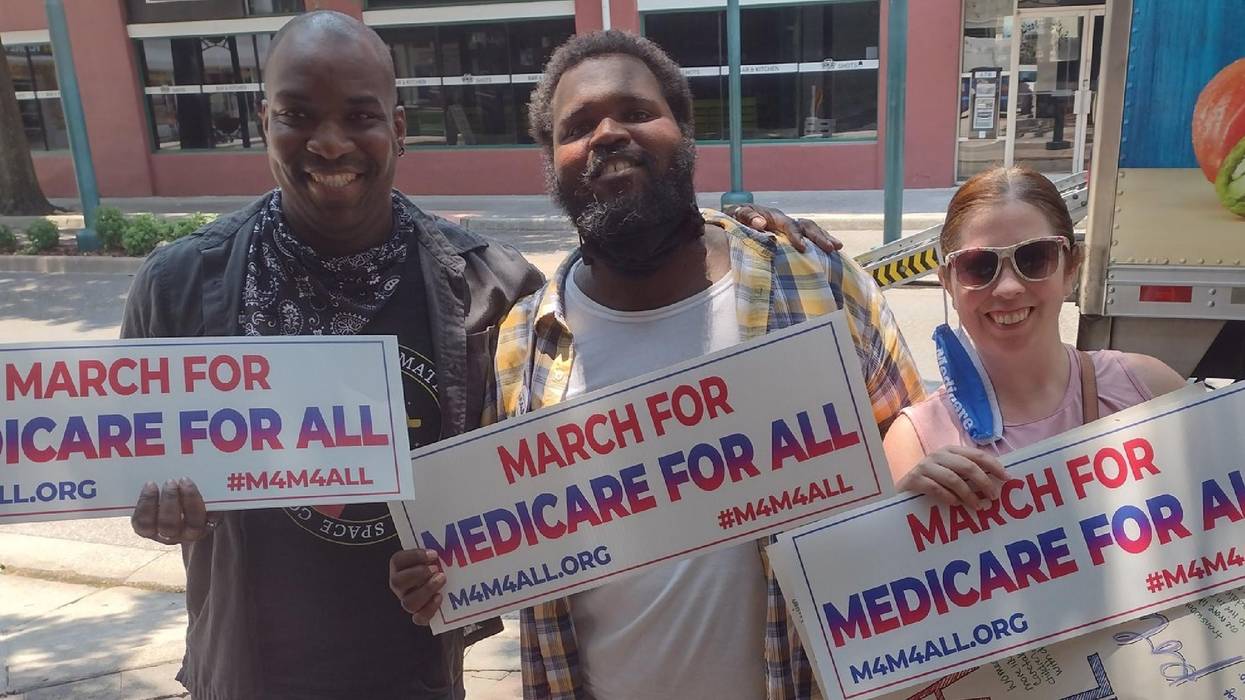
Just days before the 56th anniversary of Medicare being signed into law, advocates for creating a public, universal health insurance program in the United States to replace the largely private, for-profit system held marches in more than 50 cities across the country on Saturday.
The day of action was organized by a coalition of over 100 groups, from Mainers for Accountable Leadership, the Chicago Teachers Union, and Sunrise Movement Seattle to various arms of Democratic Socialists of America, Physicians for a National Health Program (PNHP), and Our Revolution.
"Our movement was founded from a place of compassion and love," the coalition's website explains. "We came together out of frustration with the lack of action from the powers that be."
"Many of us have our own personal stories as to why we are in this fight," the coalition continues. "All of us know that healthcare is a right, not a privilege. It is a basic freedom. How can we have life, liberty, and the pursuit of happiness when we live in constant fear of illness, bankruptcy, or homelessness because of the outrageous for-profit healthcare system?"
Highlighting that "universal healthcare isn't radical," the coalition points to more than 30 other countries that have it--from Australia, Canada, Germany, and Iceland, to Japan, Kuwait, South Korea, and the United Kingdom.
"Like most Americans, when the Covid pandemic shut down our country, we thought this was it--America would finally catch up to the rest of the developed world and have a healthcare system that is free at the point of service," says a petition from the coalition. "As we all know, this did not happen... yet!"
The coalition's petition--which is open for signature--has three key demands for the U.S. government:
"If all three demands are not met on or before Friday, August 6, 2021," the petition says, "we the Medicare for All Movement will file a human rights violation complaint with the United Nations."
In cities nationwide--including Atlanta, Austin, Chicago, Detroit, Honolulu, Kansas City, Las Vegas, Los Angeles, Louisville, Nashville, New York, Orlando, Philadelphia, Phoenix, Salt Lake City, San Francisco, Seattle, Tampa, and Washington, D.C.--Medicare for All supporters carried signs and chanted slogans directed at federal lawmakers.
"Don't drop the ball on Medicare for All," they shouted. "Healthcare, not warfare!"
One D.C. marcher's sign declared, "Medical debt is unjust!"
As Common Dreams reported earlier this week, a new study shows that Americans owe collection agencies $140 billion because of unpaid medical bills--meaning that healthcare is the nation's largest source of debt in collections.
Some signs shared personal stories--one said, "Heart attack, could not afford in$ulin."
A marcher in Austin noted that "people die" when insurance companies deny coverage.
"Patients not profits!" read a sign from a man in New York wearing a white lab coat.
Rep. Cori Bush (D-Mo.) showed up at the #M4M4ALL rally in D.C. She is one of the 117 co-sponsors of the Medicare for All Act of 2021 (H.R. 1976).
Reps. Pramila Jayapal (D-Wash.) and Debbie Dingell (D-Mich.) introduced the Medicare for All Act in March, at a time when the U.S. death toll from the Covid-19 pandemic had topped half a million.
"While this devastating pandemic is shining a bright light on our broken, for-profit healthcare system, we were already leaving nearly half of all adults under the age of 65 uninsured or underinsured before Covid-19 hit," Jayapal said at the time. "And we were cruelly doing so while paying more per capita for health care than any other country in the world."
"There is a solution to this health crisis--a popular one that guarantees healthcare to every person as a human right and finally puts people over profits and care over corporations," added the Congressional Progressive Caucus chair. "That solution is Medicare for All--everyone in, nobody out--and I am proud to introduce it today alongside a powerful movement across America."
As F. Douglas Stephenson--a retired psychotherapist, former instructor of social work in the University of Florida, and member of PNHP--wrote Saturday for Informed Comment, "Since 1965, Medicare has become living proof that public, universal health insurance is superior to private insurance in every way."
Stephenson continued:
When Medicare was enacted 56 years ago, following a broad grassroots campaign, many believed the dream of a full national health insurance system was right around the corner. Five decades later, Medicare still has not been expanded. Most of the changes have been contractions with higher out-of-pocket costs for beneficiaries and repeated attempts at privatization by Big Pharma, the health insurance industry, and its champions in the White House and Congress.
"Everyone knows that this inhumane system should have been corrected long ago, but the death and illness ravages of the pandemic crisis makes it impossible to any longer avoid reality," he asserted. "We must immediately end our moral crime of having the greatest health system in the world, but only for those who can afford it."