

SUBSCRIBE TO OUR FREE NEWSLETTER
Daily news & progressive opinion—funded by the people, not the corporations—delivered straight to your inbox.
5
#000000
#FFFFFF
To donate by check, phone, or other method, see our More Ways to Give page.
Daily news & progressive opinion—funded by the people, not the corporations—delivered straight to your inbox.
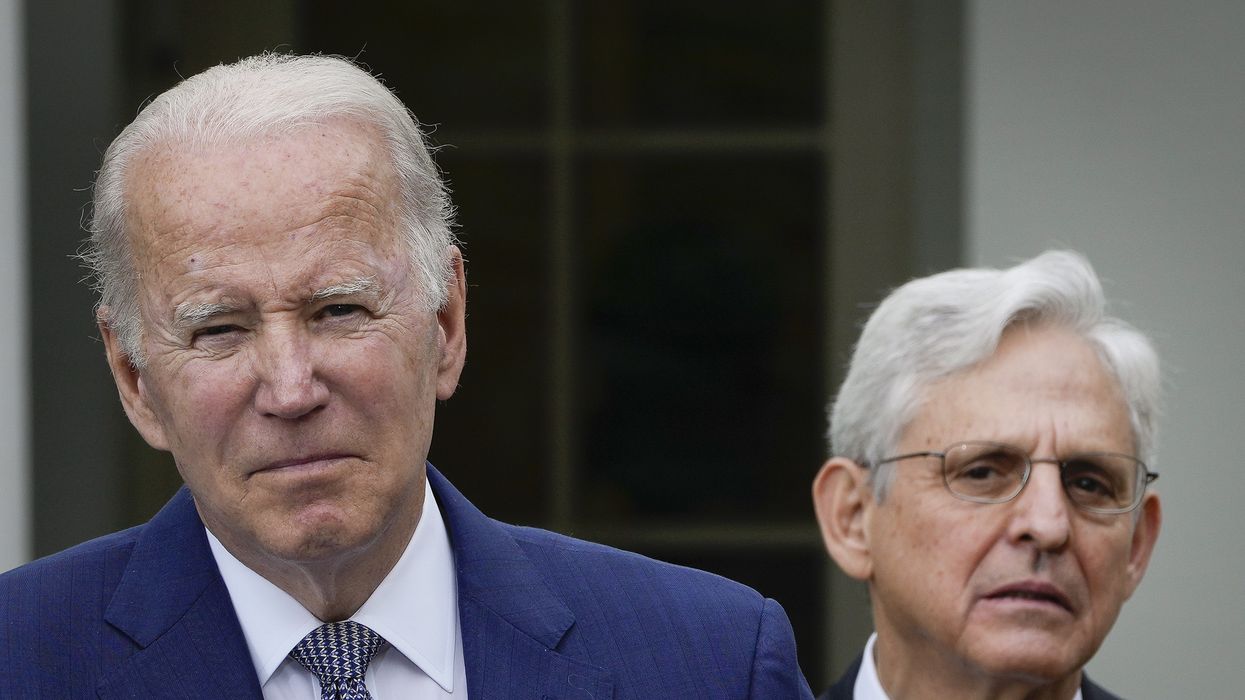
"Why is the Biden administration trying to rob itself of a clear opportunity to protect American workers and the economy from being roiled by MAGA saboteurs?" asked the head of the Revolving Door Project.
A government watchdog on Thursday called out the Biden administration for attempting to kill a lawsuit filed in May by a union representing about 75,000 workers across U.S. agencies that challenges the federal debt ceiling law.
"Why is the Biden administration trying to rob itself of a clear opportunity to protect American workers and the economy from being roiled by MAGA saboteurs?" asked Jeff Hauser, executive director of the Revolving Door Project.
A federal judge canceled plans to hear arguments for the National Association of Government Employees (NAGE) case when President Joe Biden and congressional Republicans who were holding the economy hostage announced a negotiated deal to suspend the nation's borrowing limit until 2025—signed into law in early June as the Fiscal Responsibility Act (FRA).
Biden then ordered his aides to create a working group intended to prevent similar crises in the future. As the White House said last month, "Now that the latest debt ceiling crisis is behind us, it is necessary to explore all legal and policy options to prevent Congress from ever again holding hostage the full faith and credit of the United States."
Now, as Government Executive reported earlier this week, even though "federal employees are still facing the prospect of delayed paychecks when the debt ceiling is reinstated in 2025," the U.S. Department of Justice "asked Judge Richard Stearns of the U.S. District Court for the District of Massachusetts to dismiss the case, suggesting the FRA has made the case moot and NAGE members lack standing because their claims are 'wholly speculative.'"
"After calling for just such a case to be brought, the Biden administration now fights it, demonstrating a truly remarkable willingness to shoot itself in the foot."
Hauser said that "the Justice Department's notion that the federal employees' claims of injury are 'wholly speculative, as they depend on a future chain of events that may never occur,' is absurd: The crisis is scheduled to recur precisely on January 1, 2025, as it has recurred repeatedly this century."
"In the meantime, uncertainty continues to trouble hundreds of thousands of federal workers, who have no guarantee of how their jobs, salaries, and pensions will be affected," he noted. "Indeed, the stance that [Attorney General] Merrick Garland's Justice Department is advancing creates an unfortunately sound case against workers considering taking a job in what has become an unstable federal government."
During the drawn-out fight earlier this year, as Republicans in Congress signaled their willingness to force the first-ever U.S. default despite warnings of a resulting economic catastrophe, Biden even suggested that while he wasn't planning to invoke the 14th Amendment—which states that the validity of the nation's public debt "shall not be questioned"—to end the current crisis, he would be open to challenging the debt ceiling law in the future.
"Rather than use the existing case as a means to that end, however, the administration is seeking to have it dismissed. The Justice Department declined to weigh in further on the merits of the case, reducing its argument only to the union's lack of standing," Government Executive explained, noting that a hearing on the motion to dismiss the case is set for August 29.
Hauser said that "after calling for just such a case to be brought, the Biden administration now fights it, demonstrating a truly remarkable willingness to shoot itself in the foot."
"The administration has every authority to take a different tack in this lawsuit and make space for the constitutionality of the debt limit to be worked out in the famously slow-moving U.S. legal system before the clock runs out on preventing the next crisis," he stressed.
The NAGE complaint names as defendants Biden and Treasury Secretary Janet Yellen in their official capacities.
Biden is seeking reelection next year and is expected to face the Republican nominee; former President Donald Trump is currently leading a crowded field of GOP candidates in spite of his legal issues, including the recent indictment related to his efforts to overturn his 2020 loss, which led to the January 6, 2021 attack on the U.S. Capitol.
Even if Biden wins in 2024 and Democrats keep control of the Senate and regain a majority in the House of Representatives, they may lack the votes needed to extend the suspension or raise the debt ceiling in early 2025. Democratic lawmakers notably declined to take action on the borrowing limit after the last midterm elections, despite warnings that Republicans would use their House takeover this year to hold the economy hostage to extract concessions.
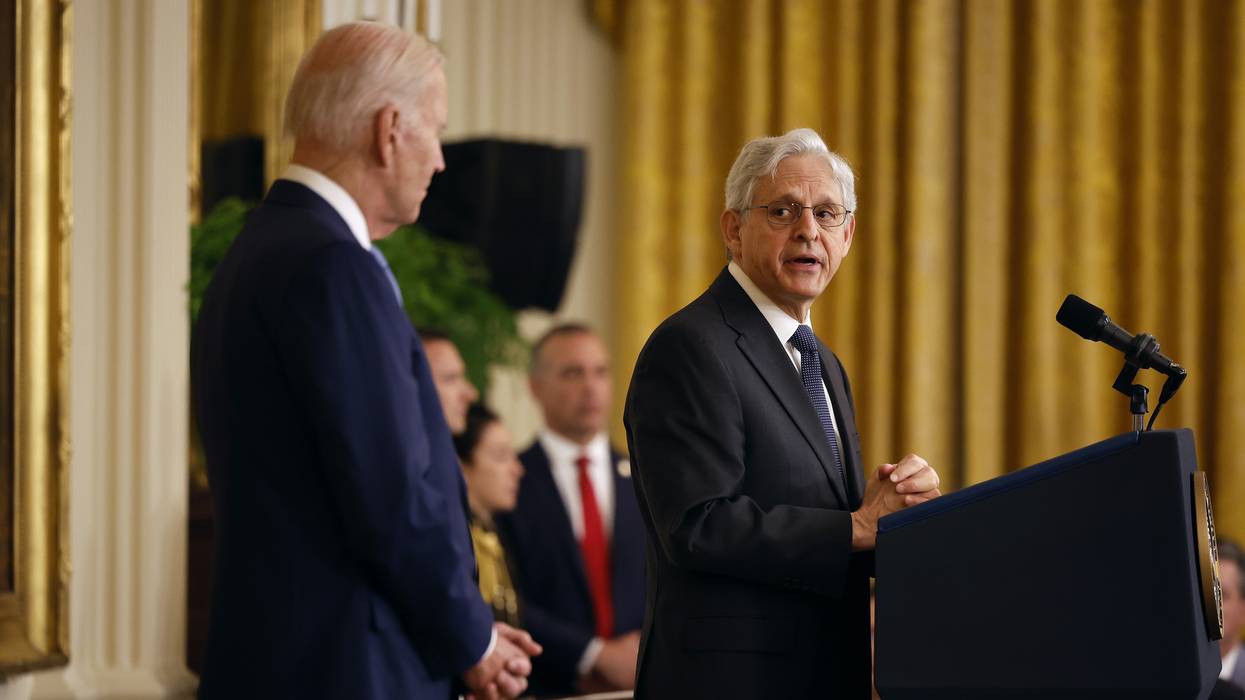
While a DOJ attorney declined to disclose the government's position, one observer said it seems to be: "Stop trying to make us... get rid of the debt ceiling. That sort of thing is for high-level insiders only, not pesky labor unions that are going about it all wrong."
With a "significant gap" remaining between what House Republicans and White House negotiators want to resolve the debt limit fight, a federal judge on Tuesday scheduled a hearing next week for a related lawsuit brought by a union for government workers.
Attorneys for the National Association of Government Employees (NAGE)—which represents about 75,000 workers across federal agencies—sued President Joe Biden and Treasury Secretary Yellen in the U.S. District Court for the District of Massachusetts earlier this month. The union's legal team requested emergency action by the court in a filing on Friday.
During a Tuesday videoconference, Judge Richard Stearns gave the U.S. Department of Justice (DOJ) until May 30 to file a response detailing the department's position on presidential authority relating to the public debt and scheduled a hearing for May 31—the eve of the so-called X-date, or when Yellen warns the government could run out of money.
While NAGE wants a decision from the court before the X-date, Stearns, an appointee of former President Bill Clinton, "sounded skeptical of arguments from the union's lawyers that disaster for the nation is impending if he did not put the case on an even faster track," according to Politico.
"If the emergency is as dire as you think it is, I would think that it's within the power of the president to address it using executive branch authority," the judge said. He added that "I understand there are time constraints, given that events are developing probably even as we're meeting, that probably make a decision prior to June 1st impossible."
Politico also noted that during the conference, DOJ lawyer Alexander Ely declined to disclose the department's position on whether the 14th Amendment's declaration that "the validity of the public debt of the United States... shall not be questioned" means the president can disregard the debt limit on constitutional grounds.
Thomas Geoghegan, an attorney for NAGE, said that "what we're faced with, I fear, is that the government doesn't really have a position on this, but there is no time to prevent irreparable injury."
As Common Dreams reported Monday, Revolving Door Project executive director Jeff Hauser argued that not only should U.S. Attorney General Merrick Garland "refuse to defend the unconstitutional legal incoherence that is the debt ceiling," but also the DOJ should "file papers supporting the National Association of Government Employees' request, and should do so as soon as possible."
"NAGE's argument is sound," Hauser said. "While President Biden may be willing to keep channels open until the very last minute with nihilistic, bad-faith Republican lawmakers, the Justice Department's obligation is to the Constitution, which is unequivocal."
The American Prospect executive editor David Dayen—who has been closely following the case—noted on Twitter that the DOJ and NAGE's formal request for the Tuesday conference states that "defendants intend to file an opposition to plaintiff's emergency motion for preliminary injunction."
Law Dork's Chris Geidner responded that "it's not necessarily opposition to the underlying arguments. It's possible that their opposition is either to a court ordering this or employees, through litigation, ordering them to do so. I'd think it would be unusual for any executive to argue otherwise."
The Tuesday conference came as the head of another union representing federal workers sent a letter to the White House.
"Many federal agencies that deliver services directly to the public, like the Social Security Administration, are already at the breaking point from years of inadequate funding," American Federation of Government Employees national president Everett Kelley wrote to Biden, warning the House GOP's proposed spending cuts "would be an economic and humanitarian calamity."
"I urge you not to yield to threats but instead to heed the advice of many legal scholars who have concluded that you have the inherent power, and indeed the duty, to avoid a default under the Constitution's 14th Amendment," Kelley added. "You have additional authorities to mint platinum coins under 31 USC § 5112. Please use these authorities now before it is too late."
As Matt Bruenig, president of the think tank People's Policy Project, highlighted in a blog post Tuesday, minting the coin isn't Biden's only option—he could also have the Treasury "issue bonds with a face value of $0 that only paid its holders a set amount of interest each year for a certain number of years. In this scenario, people would still buy the bonds in order to receive the interest, but there would be no principal and thus no face value."
"My current thinking on the best way for Biden to deal with the debt limit is to sell zero-principal bonds," Bruenig wrote. "These would not count as debt under the wording of the debt limit statute because they have a $0 face value. If this was challenged, then the administration has three different defenses to the challenge: that zero-principal bonds do not contribute to the debt limit, that the debt limit is unconstitutional, and that illegally selling bonds is no more unconstitutional than illegally raising taxes, selling assets, or cutting spending.
"But whichever course of action Biden chooses," he concluded, "we should be clear that he has other options than agreeing to crack the whip against America's poor."
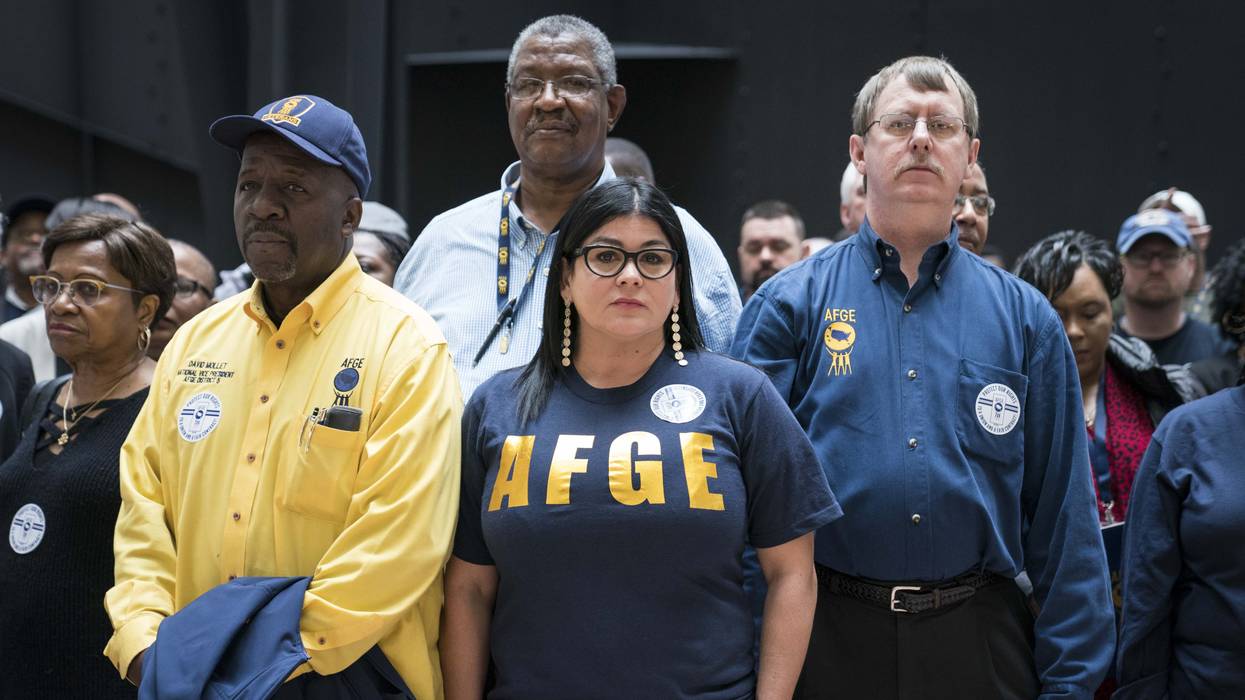
"I urge you not to yield to threats but instead to heed the advice of many legal scholars who have concluded that you have the inherent power, and indeed the duty, to avoid a default," wrote AFGE's leader.
A union leader representing over 750,000 government employees on Tuesday pressured U.S. President Joe Biden to reject congressional Republicans' demands for spending cuts in exchange for raising the debt ceiling and to avert an economically devastating default by invoking the 14th Amendment to the Constitution.
As Treasury Secretary Janet Yellen has continued to warn that the federal government could run out of money to pay its bills as early as June 1, some legal scholars and progressive lawmakers have encouraged Biden to combat the GOP's economic hostage-taking by invoking the section of the amendment which states that "the validity of the public debt... shall not be questioned."
The American Federation of Government Employees, AFL-CIO (AFGE) joined those calls on Tuesday, with national president Everett Kelley writing to Biden to call for "unilateral action to ensure that the government continues to pay its bills and fulfill its obligations after the Treasury exhausts all extraordinary debt measures within the next several days."
"Our union members are the doctors, nurses, firefighters, border patrol agents, corrections officers, federal police, food safety inspectors, transportation security officers, and other public servants who keep the government running around the clock," Kelley noted. "They served tirelessly throughout the pandemic, defending the public, often at great personal risk. More than a few gave their lives to their country. It would be unconscionable now to agree to a budget deal that once again sacrifices their well-being on the altar of fiscal austerity."
"We urge you not to agree to spending caps because, inevitably, they undermine the ability of federal agencies to carry out their missions."
"We urge you not to agree to spending caps because, inevitably, they undermine the ability of federal agencies to carry out their missions and result in further unwarranted cuts to federal jobs and compensation," the union leader stressed, taking aim at a key demand of House Speaker Kevin McCarthy (R-Calif.) and fellow Republicans, who passed their so-called Limit, Save, Grow Act late last month.
Noting that "many federal agencies that deliver services directly to the public, like the Social Security Administration, are already at the breaking point from years of inadequate funding," Kelley warned that they "can in no way withstand further budget cuts of the magnitude proposed by House Republicans in the morally bankrupt 'Limit, Save, Grow Act.' This bill, even in the most diluted form, would be an economic and humanitarian calamity."
"Clearly a default must be avoided at all costs," he added. "I urge you not to yield to threats but instead to heed the advice of many legal scholars who have concluded that you have the inherent power, and indeed the duty, to avoid a default under the Constitution's 14th Amendment. You have additional authorities to mint platinum coins under 31 USC § 5112. Please use these authorities now before it is too late."
Before returning to Washington, D.C. to continue negotiations with McCarthy, Biden told reporters on Sunday that "I think we have the authority" to invoke the 14th Amendment but given the potential for a legal challenge," the question of whether it could be done in time to prevent a default "is unresolved."
Politico reported Friday that some Biden aides worry that "even the appearance of more seriously considering the 14th Amendment could blow up talks that are already quite delicate," and actually doing so could "trigger a pitched legal battle, undermine global faith in U.S. creditworthiness, and damage the economy."
Kelley's letter came as a federal judge scheduled a debt limit lawsuit hearing for May 31, the day before the so-called X-date. That case—filed by another union, the National Association of Government Employees, against Biden and Yellen—cites the 14th Amendment and aims to have the debt limit statute deemed unconstitutional.
"Garland has no reason to defend the nonsense which is the debt ceiling, besides a vague sense of formality and tradition driven by elite political etiquette," said Jeff Hauser of the Revolving Door Project.
A government watchdog on Monday urged the U.S. Justice Department not to defend the debt ceiling statute against a lawsuit recently filed by a union of federal employees and to support the group's effort to expedite its case as the crucial June 1 deadline nears.
"Attorney General Merrick Garland must refuse to defend the unconstitutional legal incoherence that is the debt ceiling," Jeff Hauser, executive director of the Revolving Door Project, said in a statement. "The Justice Department should file papers supporting the National Association of Government Employees' request."
Hauser's demand came days after the National Association of Government Employees (NAGE) filed for an emergency injunction in their case, which was initially brought on May 8.
The union's new filing declares the debt limit, first established in 1917, a "violation of the separation of powers and the Presentment Clause as set forth in Articles I and II of the United States Constitution" and seeks to bar Treasury Secretary Janet Yellen from "limiting the borrowing of the United States pursuant to the debt limit statute."
The request for an emergency injunction was submitted as debt ceiling talks between the White House and congressional Republicans faltered, with the House GOP pushing for spending cuts that would devastate key social programs and undermine the government's ability to respond to an economic downturn.
Hauser said Monday that NAGE's argument against the constitutionality of the debt limit is "sound" and noted that Biden himself has effectively endorsed it.
Speaking to reporters on Sunday, Biden said he believes "we have the authority" under the 14th Amendment to unilaterally avert a default and a possible global recession.
However, Biden went on to express doubt about whether the 14th Amendment could be "invoked in time," pointing to legal challenges that would follow the move.
But as The American Prospect's David Dayen noted Monday, the president wouldn't technically "invoke" the 14th Amendment in court if he opts to use his constitutional authority to prevent a U.S. default.
"If you're the president and you want to keep borrowing money after the debt ceiling is hit because you think you are legally bound to do so by the Constitution," Dayen wrote, "you just keep borrowing money until somebody stops you."
Pointing to the NAGE lawsuit, Dayen added that the "notion of litigation is no longer theoretical."
"The Justice Department's obligation is to the Constitution, which is unequivocal: the president cannot pick and choose what congressionally appropriated obligations to meet, and the debt of the United States shall not be questioned."
Yellen and Biden, the defendants in the NAGE lawsuit, have both been served with a summons and must respond by June 6 at the latest—five days after Yellen says that, in the absence of congressional action, U.S. will run out of money to pay its obligations.
Hauser said Monday that Garland should intervene in the case "as soon as possible," arguing the Biden administration has "no justification" to "dither."
"Garland has no reason to defend the nonsense which is the debt ceiling, besides a vague sense of formality and tradition driven by elite political etiquette," said Hauser. "The cost of prioritizing tradition for tradition's sake would be irreparable harm to the U.S. and global economies, caused by a first-ever U.S. default as soon as June 1—or else complete capitulation to the ultra-MAGA faction of the House Republican caucus that marionettes Kevin McCarthy."
Biden and McCarthy are expected to meet again on Monday evening as the House speaker faces pressure from the far-right House Freedom Caucus to accept nothing less than the extreme legislation Republicans passed last month.
But Hauser said that while Biden "may be willing to keep channels open until the very last minute with nihilistic, bad-faith Republican lawmakers, the Justice Department's obligation is to the Constitution, which is unequivocal: the president cannot pick and choose what congressionally appropriated obligations to meet, and the debt of the United States shall not be questioned."
"Garland may be constitutionally reluctant to seek the spotlight, but this crisis threatens the stability of the nation, and indeed, the global economy," Hauser added. "He should not prioritize his own sense of formality over the language of the Constitution he swore to uphold."

"MAGA House Republicans are threatening a default that could cost us millions of jobs and trigger a recession," said the president. "All because they are demanding deep cuts that will hurt hardworking families—even while they protect tax breaks for the wealthy and corporations."
Before a meeting with U.S. House Speaker Kevin McCarthy planned for Monday, President Joe Biden on Sunday renewed his criticism of what GOP lawmakers are demanding in exchange for raising the debt ceiling to prevent an economically catastrophic default.
"I've done my part," Biden told reporters—pointing to his trillions of dollars in proposed spending cuts and new sources of revenue—before heading back to Washington, D.C. from Hiroshima, Japan, where he attended a three-day Group of Seven summit.
"Now it's time for the other side to move... from their extreme positions, because much of what they've already proposed is simply, quite frankly, unacceptable," Biden said of McCarthy (R-Calif.) and the other House Republicans holding the economy hostage.
The president continued:
Let me be clear: I'm not going to agree to a deal that protects, for example, a $30 billion tax break for the oil industry, which made $200 billion last year—they don't need an incentive of another $30 billion—while putting healthcare of 21 million Americans at risk by going after Medicaid.
I’m not going to agree to a deal that protects $200 billion in excess payments for pharmaceutical industries and refusing to count that while cutting over 100,000 schoolteachers and assistants' jobs, 30,000 law enforcement officers' jobs cut across the entire United States of America.
And I'm not going to agree to a deal that protects wealthy tax cheats and crypto traders while putting food assistance at risk for... nearly 1 million Americans.
"It's time for Republicans to accept that there is no bipartisan deal to be made solely... on their partisan terms," Biden added, while also declaring that "America has never defaulted... on our debt, and it never will."
However, Treasury Secretary Janet Yellen has warned that if Congress doesn't raise the debt limit soon, the federal government could run out of money to pay its bills by June 1. Growing fears of a default have prompted some legal scholars and progressive lawmakers to pressure Biden to stop negotiating with GOP hostage-takers and invoke the 14th Amendment to the U.S. Constitution, which says in part that "the validity of the public debt... shall not be questioned."
Among them is Sen. Bernie Sanders (I-Vt.), who wrote in a Sunday email to supporters: "In a manner that is unprecedented and incredibly reckless and cruel, these Republicans have hijacked the debt ceiling process. Their position: If the Congress does not agree to impose savage cuts on the needs of working people, the elderly, the children, the sick, and the poor, they will push the U.S. government to default on its debt. In other words, they are prepared to wreck our economy if they don't get their way."
"In my view, President Biden has the authority and the responsibility under the 14th Amendment of the Constitution to make sure that we continue to pay our bills. The language in that amendment is quite clear," Sanders said, urging anyone who agrees to sign a petition "calling on President Biden to exercise that authority in order to protect the country from the savage Republican budget."
In response to a reporter's question Sunday, Biden said that "I'm looking at the 14th Amendment, as to whether or not we have the authority. I think we have the authority. The question is: Could it be done and invoked in time that it... would not be appealed and, as a consequence, pass the date in question, and still default on the debt? That's a question that I think is unresolved."
The American Prospect executive editor David Dayen suggested in a pair of tweets that rather than inquiring if Biden will invoke the 14th Amendment, journalists should be asking how he plans to respond to an existing lawsuit that involves it.
Earlier this month, lawyers for the National Association of Government Employees (NAGE)—which represents roughly 75,000 workers across federal agenices—filed a suit against Biden and Yellen in the U.S. District Court for the District of Massachusetts.
NAGE, which has endorsed Biden for reelection in 2024, aims to have the debt ceiling law declared unconstitutional, and on Friday—after Dayen publicly pointed out lack of progress with the case—the union's legal team requested emergency action by the court.
Meanwhile, Politico reported Friday that some Biden aides fear invoking the 14th Amendment "would trigger a pitched legal battle, undermine global faith in U.S. creditworthiness, and damage the economy," and "officials have warned that even the appearance of more seriously considering the 14th Amendment could blow up talks that are already quite delicate."
After departing Japan on Sunday, Biden spoke with McCarthy by phone from Air Force One. Following the call, the GOP speaker confirmed plans to meet with the president on Monday but also said that "my position has not changed."
Sanders, in his email Sunday, wrote that "Republicans' willingness to hold the world's economy hostage to their draconian and cruel demands, and their refusal to consider one penny in new revenue from the wealthy and large corporations, has made it seemingly impossible to enact a bipartisan budget deal at this time."
"The debt ceiling is about paying money that has already been appropriated and spent. It has nothing to do with future budgets and future spending," he stressed. "And throughout the history of our country, the U.S. government has always done what it is supposed to do—we pay our debts."

"DOJ can and SHOULD admit that the plaintiff is right," one political observer said of NAGE's case that takes aim at the debt limit statute. "The administration is not required to defend the legally indefensible."
As the White House and congressional negotiators fail to stop the U.S. from hurtling toward an economically "catastrophic" default, a labor union representing nearly 75,000 government workers on Friday asked a federal court to take emergency action.
Treasury Secretary Janet Yellen has warned that if Congress doesn't raise the debt ceiling—which House Speaker Kevin McCarthy (R-Calif.) and other GOP lawmakers refuse to do without spending cuts targeting working people—the government could run out of money to pay its bills as early as June 1.
That rapidly approaching deadline and fruitless negotiations have led a growing number of lawmakers and legal scholars to urge President Joe Biden to invoke the 14th Amendment to the U.S. Constitution, which states that "the validity of the public debt... shall not be questioned."
Friday's request for judicial intervention stems from a lawsuit—which cites the 14th Amendment—that attorneys for the National Association of Government Employees (NAGE) filed in the U.S. District Court for the District of Massachusetts on May 8. While Biden and Yellen are named as defendents, the aim of the case is to have the debt limit law declared unconstitutional.
"This litigation is both an effort to protect our members from illegal furloughs and to correct an unconstitutional statute that frequently creates uncertainty and anxiety for millions of Americans."
"This litigation is both an effort to protect our members from illegal furloughs and to correct an unconstitutional statute that frequently creates uncertainty and anxiety for millions of Americans," NAGE national president David Holway said earlier this month. "The debt ceiling has become a political football for certain members of Congress. If Congress will not raise the debt limit as it has nearly 80 times before without condition, it leaves no constitutional choice for the president."
"Congress' failure of will to act is not justification to violate the Constitution," added Holway, just days after his union endorsed Biden for reelection. "But it is the reason this case had to be filed to protect the American public, federal employees, and our Constitution."
The New Republic staff writer Timothy Noah wrote a couple of days after the first filing that "the NAGE lawsuit invites us to think of Congress as a body that's not merely able but obliged to govern. You don't like how the president spends the taxpayer's money, Mr. Speaker? Then pass a budget, for Chrissakes, and stop playing childish games."
As The American Prospect executive editor David Dayen noted later that week—citing University of Missouri law professor Tommy Bennett—because the president "has the option of minting the trillion-dollar coin to cover obligations, or issuing premium bonds known as consol bonds," he has "a way out of the lose-lose choice of violating one law or the other," which could imperil the case.
Still, Dayen has advocated for the lawsuit to move forward quickly. Early Friday, he highlighted that if the case could be decided soon, "there would be no legal chaos," but lawyers for NAGE "inexplicably" have not sought a temporary restraining order or preliminary injunction that would force Judge Richard Stearns—an appointee of former President Bill Clinton—to act urgently.
Later Friday, the union's legal team did just that—asking the court for an order of preliminary injunction.
Dayen broke down the filing in a series of tweets, then concluded by pointing out that representatives for Biden and Yellen aren't currently required to even respond to the case until days after June 1, the so-called "X-date."
As Biden met with other world leaders at the Group of Seven summit in Hiroshima, Japan on Friday, debt ceiling talks in Washington, D.C. stalled for a bit, then resumed. But negotiators' evening meeting ended without a deal, according to CNN, and "sources at the White House and on Capitol Hill said there were no debt ceiling meetings scheduled for Saturday."
Biden, who is set to head back to D.C. on Sunday, struck an optimistic tone, reportedly saying during a Saturday press conference in Hiroshima that "I still believe we'll be able to avoid a default and we'll get something decent done."
The president said earlier this month that he had been "considering" the 14th Amendment, but "the problem is, it would have to be litigated," so "I don't think that solves our problem now."
Despite growing demands that Biden swiftly end the GOP's economic "hostage-taking" by invoking the amendment—including from at least 11 senators and 66 House progressives this week—Politico's Adam Cancryn reported Friday that publicly, "the White House remains resistant... And privately, its message has been even blunter."
In line with reporting earlier this month by Washington Post White House economics reporter Jeff Stein, Cancryn wrote:
Senior Biden officials have told progressive activists and lawmakers in recent days that they do not see the 14th Amendment... as a viable means of circumventing debt ceiling negotiations. They have argued that doing so would be risky and destabilizing, according to three people familiar with the discussions.
The White House has studied the issue for months, with some aides concluding that Biden would likely have the authority to declare the debt limit unconstitutional as a last-ditch way to sidestep default. But Biden advisers have told progressives that they see it as a poor option overall, fearing such a move would trigger a pitched legal battle, undermine global faith in U.S. creditworthiness, and damage the economy. Officials have warned that even the appearance of more seriously considering the 14th Amendment could blow up talks that are already quite delicate.
"They have not ruled it out," one White House adviser told Politico. "But it is not currently part of the plan."
As McCarthy left the U.S. Capitol Saturday evening, he said that "I don't think we're going to be able to move forward until the president can get back in the country," according to ABC News.
The White House press secretary, Karine Jean-Pierre, said in a statement Saturday evening that after agreeing with Biden that any budget deal would need to be bipartisan, "last night in D.C., the speaker's team put on the table an offer that was a big step back and contained a set of extreme partisan demands that could never pass both Houses of Congress."
"The president has over and over again put deficit reduction proposals on the table, from limits on spending to cuts to Big Pharma profits to closing tax loopholes for oil and gas," she added. "Let's be clear: The president's team is ready to meet any time. And, let's be serious about what can pass in a bipartisan manner, get to the president's desk, and reduce the deficit. It is only a Republican leadership beholden to its MAGA wing—not the president or Democratic leadership—who are threatening to put our nation into default for the first time in our history unless extreme partisan demands are met."
Ahead of Jean-Pierre's statement Saturday, Stein and his Post colleagues reported—citing sources with knowledge of the talks—that "Republican negotiators rejected a White House offer to limit spending next year on both the military and a wide range of critical domestic programs as part" and "are instead pushing for higher defense spending and more significant domestic spending reductions."
This article has been updated with additional comment from the White House and reporting by ABC News and The Washington Post.