

SUBSCRIBE TO OUR FREE NEWSLETTER
Daily news & progressive opinion—funded by the people, not the corporations—delivered straight to your inbox.
5
#000000
#FFFFFF
To donate by check, phone, or other method, see our More Ways to Give page.
Daily news & progressive opinion—funded by the people, not the corporations—delivered straight to your inbox.
The amount of untaxed wealth hidden offshore by the richest 0.1 percent exceeds the entire wealth of the poorest half of humanity (4.1 billion people), reveals new Oxfam analysis published today ahead of the 10th anniversary of the Panama Papers. The findings show that, a decade later, the super-rich continue to exploit offshore systems to evade taxes and conceal assets, highlighting the urgent need for coordinated international action to tax extreme wealth and end the use of tax havens.
Oxfam estimates that $3.55 trillion in untaxed wealth was stashed offshore in tax havens and unreported accounts in 2024. This sum exceeds the GDP of France and is more than twice the combined GDP of the world’s 44 least developed countries.
The richest 0.1 percent holds approximately 80 percent of all untaxed offshore wealth, or around $2.84 trillion. Within this tiny group, the ultra-wealthiest 0.01 percent holds roughly half ($1.77 trillion).
“The Panama Papers pulled back the veil on a shadow world where the richest quietly move immense fortunes beyond the reach of taxes and scrutiny. Ten years on, the super-rich are still sequestering oceans of wealth in offshore vaults,” said Christian Hallum, Oxfam International’s Tax Lead.
“This isn’t just about clever accounting —it’s about power and impunity. When millionaires and billionaires stash trillions of dollars in offshore tax havens, they place themselves above the obligations that bind the rest of society. The consequences are as predictable as they are devastating: we see our public hospitals and schools starved of funds, our social fabric shredded by rising inequality, and ordinary people forced to shoulder the costs of a system rigged to enrich a tiny few.”
While progress has been made in reducing untaxed offshore wealth, it remains stubbornly high at approximately 3.2 percent of global GDP. Progress also remains highly uneven: most countries in the Global South are excluded from the Automatic Exchange of Information system (AEOI) despite their urgent need for tax revenue. The AEOI is credited with reducing the share of untaxed offshore wealth in recent years.
Oxfam calls on governments to:
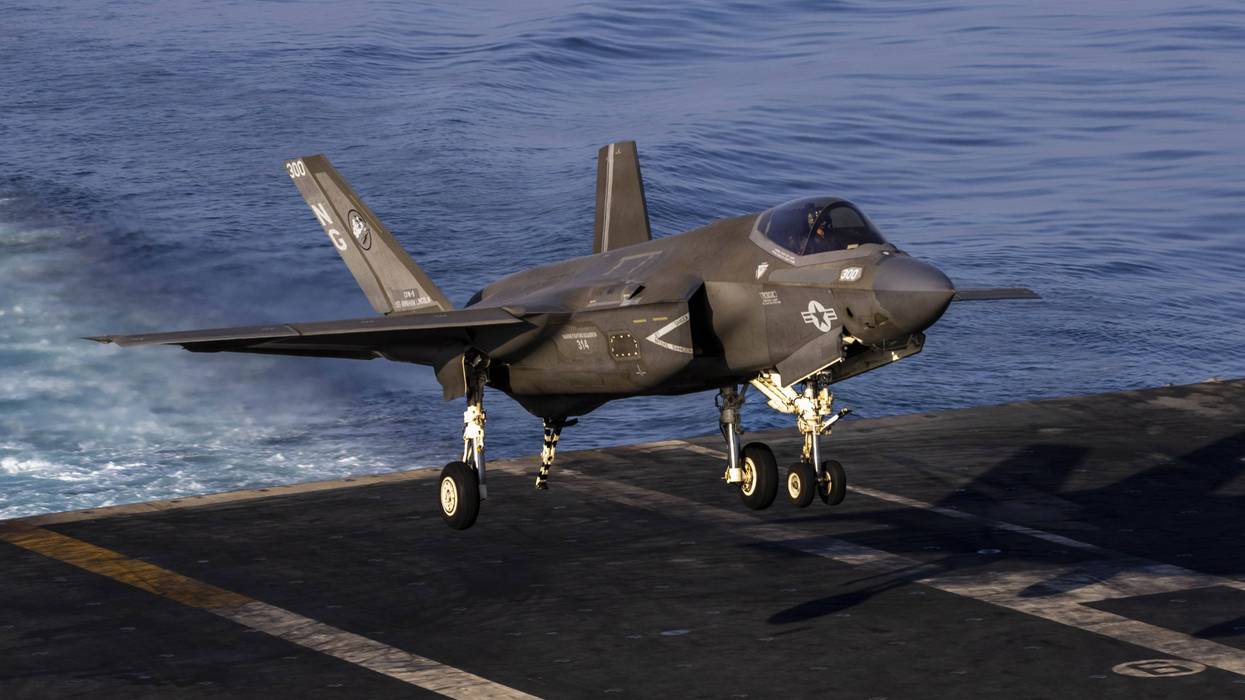
In addition to reducing our security and jeopardizing the well-being of people around the world, his belligerence will cost us a huge amount of money. But at least he and his friends will get even richer.
Our Secretary of Defense (or War) Pete Hegseth seems to be having a really great time killing people in Iran, but his live action video games come at a big cost, not just in lives, but in budget dollars. To be clear, the main reason to be opposed to this pointless war is its impact on the people of Iran and elsewhere in the region. But it also has a huge economic cost that is seriously underappreciated.
The short-term cost is the shortage of oil, natural gas, fertilizers, and other items that would ordinarily travel through the Straits of Hormuz. This shortage has already sent prices of many items soaring. The impact is not just on the goods themselves, but there is a large secondary impact due to higher shipping costs, and if fertilizer supplies are not resumed soon, higher food prices, due to lower crop yields. This is a big hit to people in wealthy countries, but it is life-threatening to people living on the edge in Sub-Saharan Africa and South Asia.
But in addition to the short-term cost, there is also a longer-term cost insofar as we are making new enemies and therefore will have higher bills for military spending long into the future. We already got the first taste of this as the Trump administration floated the idea of a $200 billion special appropriation to cover the cost of the war.
There is remarkably little appreciation of how much money is at stake with wars and the military. This is because the media have a deliberate policy of uninformative budget reporting. They just write huge numbers in the millions or billions, knowing they are completely meaningless to almost everyone who sees them.
Trump seems determined to raise military spending even further. He has said he wants the country to spend 5% of GDP, or $1.5 trillion a year, on the military. This comes to $12,000 per household. That’s real money.
It would be virtually costless to provide some context for these numbers, for example, expressing them as a percentage of the budget. That would take any competent reporter 10 seconds and add maybe 10 words to a news article. This would tell you that the $200 billion (2.7% of the budget) Trump wants for his Iran war is a relatively big deal, while the $550 million (0.008% of the budget) Trump saved us by defunding public broadcasting was not.
It is striking to see that Congress might be willing to quickly cough up this money when it has refused far smaller sums that could have made a huge difference in the lives of tens of millions of people. For example, the extension of the Covid-19 relief enhancement of the Earned Income Tax Credit would have cost around $40 billion (0.6% of the budget) annually. Extending the more generous Obamacare subsidies would have cost $27 billion (0.4% of the budget) annually.
And it is important to remember that these increased costs are not likely to be just a one-year expenditure. The military budget was 3.0% of GDP in 2001, before the war in Afghanistan, and projected to fall to 2.7% over the next several years. Instead, we got the Afghan War followed by the invasion of Iraq. By 2010, spending was up to 4.6% of GDP. The difference between actual and projected spending comes to almost 2.0% of GDP, or more than $600 billion annually in today’s economy.
In contrast to the Trump administration’s efforts to seek enemies, in the 1980s and 1990s, the United States looked to diffuse tensions with the Soviet Union and saved a huge amount of money on military spending as a result. Military spending hit a post-Vietnam War peak of 6.1% of GDP in 1986. It then fell sharply as Presidents Ronald Reagan and George Bush I negotiated arms control agreements with the Soviet Union. It was down to 4.7% of GDP in fiscal 1992, when the Soviet Union collapsed. It continued to fall through the 1990s, when the United States faced no major enemies.
At that point, Russia was actually a limited ally. There were many people in the foreign policy establishment who wanted to keep it that way, looking to accommodate post-Soviet Russia in a post-Cold War world.
Instead, we took the direction of expanding NATO eastward, incorporating the former East Bloc countries into NATO, starting with Hungary. Eventually, all the former East Bloc countries were added to NATO, and then former Soviet republics such as Estonia, Latvia, and Lithuania were added. In 2008, President George W. Bush pushed for the addition of Ukraine and Georgia as well.
It is worth noting that it was not pre-ordained that NATO would be expanded eastward. NATO was formed as an anti-Soviet alliance. With the Soviet Union out of business, it was reasonable to think that NATO would be disbanded.
This was not just the dream of fringe peaceniks; many fully credentialled cold warriors also argued against expanding NATO eastward. This list includes Jack Matlock and Richard Pipes, both of whom held high-level positions under Reagan. It also included George Kennan, the godfather of the Cold War doctrine of containment. Even Henry Kissinger opposed including Ukraine in NATO.
It’s not clear whether Russia would have developed into a hostile state and potential enemy if NATO had not continued to exist and expand Eastward. We can all share our speculations on that counterfactual, but one thing that is not debatable is that having a major enemy is costly.
President Barack Obama negotiated an agreement to restrain Iran from developing nuclear weapons in 2015. While there were issued raised with the monitoring of the deal, rather than trying to work through these problems, Trump withdrew from the deal in 2018. That decision, along with President Joe Biden’s failure to restore the agreement, created the conditions under which a second Trump administration could be pushed by Israeli President Benjamin Netanyahu into this war. The war has already proved incredibly costly for the country and the world, and the costs could well go far higher.
But apart from this war, Trump seems determined to raise military spending even further. He has said he wants the country to spend 5% of GDP, or $1.5 trillion a year, on the military. This comes to $12,000 per household. That’s real money.
That is a lot of money to spend for no obvious reason. It means less money for healthcare, childcare, education, and many other items that people care about.
If the point is to put taxpayer dollars into the pockets of his family and friends, it can work out just fine. Until there is evidence otherwise, we should assume this is Trump’s real agenda for his big military budget.
The question people should be asking is who is this spending supposed to defend us against? Perhaps Trump has Russia in mind, but he is supposed to be good buddies with its President Vladimir Putin. Besides, Russia’s GDP is less than a quarter the size of the US economy. Do we really need to spend an amount that is more than 20% of Russia’s GDP to protect us against them? Can our military be that inefficient and corrupt?
Maybe Trump is thinking of China. That would be a problem, since China’s economy is already one-third larger than ours and growing far more rapidly. If Trump’s plan is to have a New Cold War with China, that is one we are likely to lose, especially since he just told all our allies to go to hell.
As with the Iran War, Trump’s push towards a newly militarized economy does not seem well-considered. Or at least it doesn’t seem well-considered as a defense strategy. If the point is to put taxpayer dollars into the pockets of his family and friends, it can work out just fine. Until there is evidence otherwise, we should assume this is Trump’s real agenda for his big military budget.
In addition to reducing our security and jeopardizing the well-being of people around the world, Donald Trump’s belligerence will cost us a huge amount of money. But at least his family and friends will get even richer. Who knows, maybe he will even get the Nobel Peace Prize this year.

"The absolute disregard for his well-being by the DHS agents is ghastly. He should be alive today," said one advocate for refugees.
The Trump administration's response was swift following the news that the death of a nearly blind New York man who was left by US Border Patrol agents in the freezing cold was ruled a homicide—and it made clear that the Department of Homeland Security has no intention of taking accountability for the agents' actions that preceded the 56-year-old's death.
But state Attorney General Letitia James warned that despite the deflections of the administration, her office would continue to review "the circumstances and treatment that led" to the death of Nurul Amin Shah Alam, a Rohingya refugee, in February.
"Mr. Shah Alam fled genocide to build a life in this country," James said. “Instead, he was abandoned and left to suffer alone in his final hours. No New Yorker should be treated this way.”
As Common Dreams reported, Shah Alam was found dead on a Buffalo, New York street five days after Border Patrol agents dropped him off at a closed coffee shop. They had not informed Shah Alam's family or lawyer where he was, making it impossible for him to find his way home as extreme winter weather hit Buffalo. In addition to being visually impaired, Shah Alam was unable to speak or read English.
The "manner of death," said the county medical examiner's office, "was homicide."
The medical examiner emphasized that on death certificates, "homicide" refers to "death resulting from the volitional act of another, which may include negligent acts or omissions," and does not imply the intent to cause someone's death.
The designation does "not indicate criminality, which is the purview of the judicial system," said the office.
Dr. Gale Burstein, the Erie County Department of Health commissioner, announced Wednesday that Shah Alam's death had been directly caused by complications from a perforated ulcer that had formed when hypothermia decreased blood flow and weakened the lining of his intestines.
Shah Alam experienced “severe stress” and that “stress was felt to be hypothermia, being in very cold temperatures, and dehydration, so no access to liquids," said Burstein.
The perforated ulcer doubtlessly caused "severe pain," the health commissioner added at a news conference.
“If that is not repaired in a short period of time, it can cause death, which is what we have, we felt we’ve seen in this instance,” said Burstein. “It’s a medical emergency.”
On Thursday morning, hours after the officials announced the homicide determination and described the health crisis Shah Alam experienced in his last days as he walked through the streets of Buffalo in subfreezing temperatures, DHS said on social media that the account of Shah Alam's death was "another hoax being peddled by the media and sanctuary politicians to demonize our law enforcement."
“This death had NOTHING to do with Border Patrol. Mr. Shah Alam passed almost A WEEK AFTER he was released by Border Patrol," said the agency before listing a number of allegations regarding the man's "serial violent criminal rap sheet."
The charges DHS referred to were related to an incident in February 2025, when Shah Alam was detained after getting lost on the way home from a store where he had purchased two curtain rods to use as walking sticks. He ended up on the porch of a woman who called the police, who later accused him of swinging a rod “in a menacing manner," which his lawyer denies.
Police body camera footage shows him saying, “OK” and dropping one end of the curtain rod when an officer told him to put it on the ground.
Shah Alam was charged with assault, trespassing, and possession of a weapon and taken to Erie County Holding Center, where he was held for a year.
He was released in late February after his family posted bail. The local police alerted Border Patrol, which sent two agents to pick Shah Alam up from jail. His son was waiting outside the jail to take him home, The New York Times reported, but the agents took him to a closed Tim Hortons location instead and left him there, describing their actions as giving Shah Alam a "courtesy ride."
The agency claimed after Shah Alam's death was reported in February that he had shown “no signs of distress, mobility issues, or disabilities requiring special assistance."
After officials announced their findings regarding Shah Alam's death on Wednesday, his son, Mohamad Faisal Nurul Amin, told The Guardian: “When I got the call from the medical examiner, my body went into shock. I felt like I was going to throw up. I couldn’t move. Someone told my mother, and she was devastated. I am still depressed.”
Jeremy Konyndyk, president of Refugees International, said Shah Alam's fate amounted to "death-by-policy."
"In Minnesota, DHS often released detainees in secluded areas in freezing evening conditions with no alert to family. It seemed calculated to endanger people. Very similar to what they did here," he said.
Afaf Nasher, executive director of the New York chapter of the Council on American-Islamic Relations, said the medical examiner's ruling confirms what Shah Alam's "family and community feared from the beginning: This was not a tragic accident, but a preventable and deeply disturbing loss of life."
“We call for an immediate, independent criminal investigation into the actions of the US Border Patrol agents who abandoned a nearly blind refugee miles away from his home in freezing conditions," said Nasher. "No one, regardless of immigration status, should ever be treated with such disregard for their safety and basic human dignity.”
The Erie County district attorney's office told The Guardian it had requested the autopsy report regarding Shah Alam's death.
“We are committed to seeking the truth and upholding justice,” the office said.
Gov. Kathy Hochul, a Democrat, said in a statement that "the cruelty and inhumanity" of the actions that preceded Shah Alam's death "should shock the conscience of every American."
“As more details of this case emerge, I want to be crystal clear: Every individual involved in the death of Mr. Shah Alam must be held fully accountable," said Hochul. "To ensure a fair and impartial investigation, the Erie County district attorney must continue his investigation and, if warranted by the evidence, prosecute to the fullest extent of the law.”

"If it was possible for Trump to have spent the last 14 months on the golf course, we would be in a better place," said one expert.
Thursday marks the one-year anniversary of President Donald Trump unleashing a sweeping package of global tariffs on imported products, which has prompted many critics to reflect on how much economic damage the president has caused.
The Tax Foundation on Monday published an analysis examining the promises Trump made about the benefits of the tariffs, including a claim that "jobs and factories will come roaring back," as foreign investments would pour in.
This particular promise, the Tax Foundation found, has completely failed to materialize.
"Foreign direct investment (FDI) into the United States has seen no such dramatic spikes," the Tax Foundation explained. "In 2025, FDI totaled $288.4 billion—more than an order of magnitude smaller than President Trump’s claims. Total FDI in 2025 was below the prior 10 years’ average of $320.7 billion and lower than the annual totals in 2021, 2022, 2023, and 2024 ($405.5 billion, $338.4 billion, $297.4 billion, and $292.3 billion, respectively)."
The analysis also found manufacturing jobs continued to decline after the tariffs went into effect, with a net 89,000 jobs lost between April 2025 and February 2026.
Dario Perkins, head of global research at the consultancy TS Lombard, said in an interview with The Guardian that Trump's chaotic tariff scheme, which was ruled unconstitutional by the US Supreme Court in February, was a signal to foreign firms that they should avoid making investments in the country for the foreseeable future.
"If you think that discouraging investors from buying assets in the US is a victory, then you don’t believe in a growing economy," Perkins explained. "If it was possible for Trump to have spent the last 14 months on the golf course, we would be in a better place."
Russ Mould, investment director of the British stockbroker AJ Bell, wrote in a Monday research note flagged by CNBC that Trump's tariffs have caused global investors to shy away from pouring money into the US, instead seeking nations with more stable economic policies.
"Investors do seem to have thought carefully about where to allocate capital in a post-liberation day world, and one where presidential social media posts carry heft politically, economically and militarily,” Mould wrote. "The US stock market may have bounced back strongly from the liberation day low, but it has not been the first destination of choice... In other words, it is no longer a case of America first and the rest nowhere."
Nigel Green, CEO of deVere Group, told CNBC that Trump's trade war chaos had dented America's image as a financial safe haven.
"Investors are no longer treating the US as a uniform opportunity; they’re picking sectors that align with policy tailwinds and avoiding those exposed to trade disruption,” Green explained. "Liberation day accelerated a bifurcation in markets. On one side, companies aligned with domestic production, AI and energy security are attracting capital. On the other, globally exposed firms with complex supply chains are facing higher scrutiny and, in some cases, valuation compression."
Groundwork Collaborative on Thursday released a fact sheet about the Trump tariffs that highlighted how the president has used international trade policy to boost his own finances.
"Tariff policy has been used as leverage to secure favorable treatment for Trump’s personal business interests, such as a Trump-linked golf development," explained Groundwork Collaborative. "Trump turned U.S. trade policy into a transactional system, using tariff leverage to help Trump-linked and -favored business ventures win special treatment from foreign governments rather than prioritizing fixes to help balance US trade and help US workers."
In a Thursday social media post, the Democratic Party marked the one-year anniversary of Trump's tariffs by counting ways they had made the US economy weaker.
"One year ago, Trump announced sweeping tariffs that completely fucked the economy," the party wrote. "Since then: Americans have faced 1+ million layoffs; inflation has soared; the job market is the weakest it’s been in decades. Trump's economy is a complete failure."