

SUBSCRIBE TO OUR FREE NEWSLETTER
Daily news & progressive opinion—funded by the people, not the corporations—delivered straight to your inbox.
5
#000000
#FFFFFF
To donate by check, phone, or other method, see our More Ways to Give page.
Daily news & progressive opinion—funded by the people, not the corporations—delivered straight to your inbox.
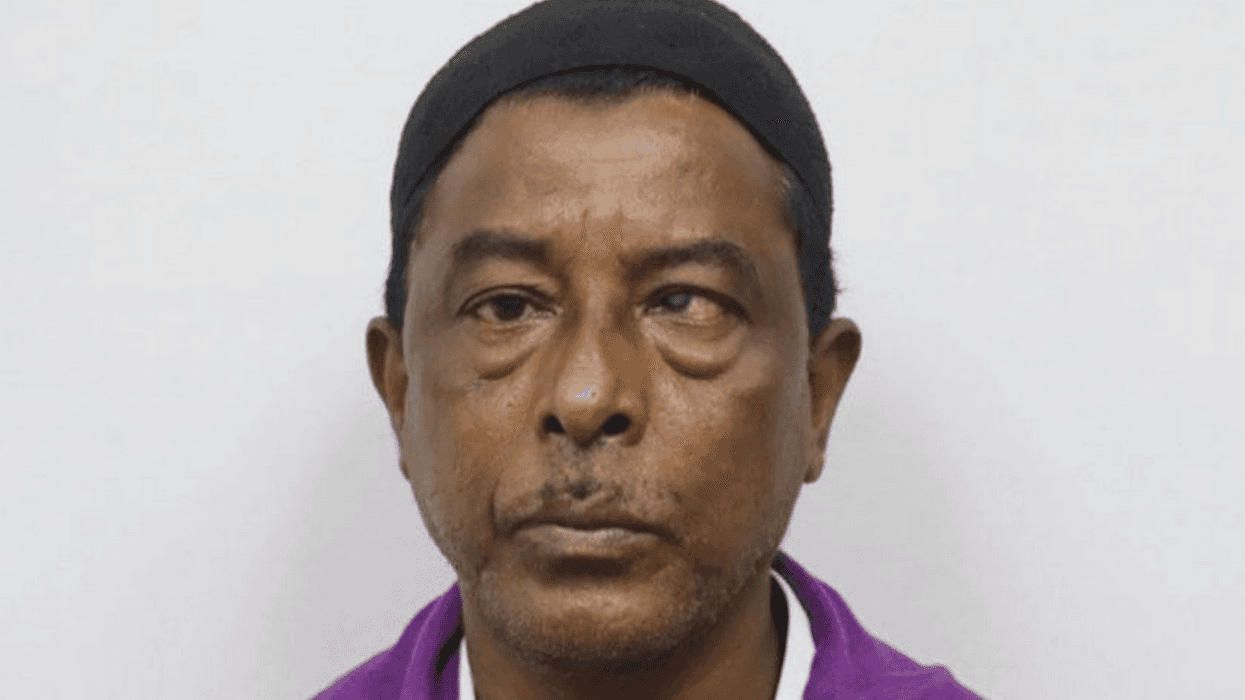
"The absolute disregard for his well-being by the DHS agents is ghastly. He should be alive today," said one advocate for refugees.
The Trump administration's response was swift following the news that the death of a nearly blind New York man who was left by US Border Patrol agents in the freezing cold was ruled a homicide—and it made clear that the Department of Homeland Security has no intention of taking accountability for the agents' actions that preceded the 56-year-old's death.
But state Attorney General Letitia James warned that despite the deflections of the administration, her office would continue to review "the circumstances and treatment that led" to the death of Nurul Amin Shah Alam, a Rohingya refugee, in February.
"Mr. Shah Alam fled genocide to build a life in this country," James said. “Instead, he was abandoned and left to suffer alone in his final hours. No New Yorker should be treated this way.”
As Common Dreams reported, Shah Alam was found dead on a Buffalo, New York street five days after Border Patrol agents dropped him off at a closed coffee shop. They had not informed Shah Alam's family or lawyer where he was, making it impossible for him to find his way home as extreme winter weather hit Buffalo. In addition to being visually impaired, Shah Alam was unable to speak or read English.
The "manner of death," said the county medical examiner's office, "was homicide."
The medical examiner emphasized that on death certificates, "homicide" refers to "death resulting from the volitional act of another, which may include negligent acts or omissions," and does not imply the intent to cause someone's death.
The designation does "not indicate criminality, which is the purview of the judicial system," said the office.
Dr. Gale Burstein, the Erie County Department of Health commissioner, announced Wednesday that Shah Alam's death had been directly caused by complications from a perforated ulcer that had formed when hypothermia decreased blood flow and weakened the lining of his intestines.
Shah Alam experienced “severe stress” and that “stress was felt to be hypothermia, being in very cold temperatures, and dehydration, so no access to liquids," said Burstein.
The perforated ulcer doubtlessly caused "severe pain," the health commissioner added at a news conference.
“If that is not repaired in a short period of time, it can cause death, which is what we have, we felt we’ve seen in this instance,” said Burstein. “It’s a medical emergency.”
On Thursday morning, hours after the officials announced the homicide determination and described the health crisis Shah Alam experienced in his last days as he walked through the streets of Buffalo in subfreezing temperatures, DHS said on social media that the account of Shah Alam's death was "another hoax being peddled by the media and sanctuary politicians to demonize our law enforcement."
“This death had NOTHING to do with Border Patrol. Mr. Shah Alam passed almost A WEEK AFTER he was released by Border Patrol," said the agency before listing a number of allegations regarding the man's "serial violent criminal rap sheet."
The charges DHS referred to were related to an incident in February 2025, when Shah Alam was detained after getting lost on the way home from a store where he had purchased two curtain rods to use as walking sticks. He ended up on the porch of a woman who called the police, who later accused him of swinging a rod “in a menacing manner," which his lawyer denies.
Police body camera footage shows him saying, “OK” and dropping one end of the curtain rod when an officer told him to put it on the ground.
Shah Alam was charged with assault, trespassing, and possession of a weapon and taken to Erie County Holding Center, where he was held for a year.
He was released in late February after his family posted bail. The local police alerted Border Patrol, which sent two agents to pick Shah Alam up from jail. His son was waiting outside the jail to take him home, The New York Times reported, but the agents took him to a closed Tim Hortons location instead and left him there, describing their actions as giving Shah Alam a "courtesy ride."
The agency claimed after Shah Alam's death was reported in February that he had shown “no signs of distress, mobility issues, or disabilities requiring special assistance."
After officials announced their findings regarding Shah Alam's death on Wednesday, his son, Mohamad Faisal Nurul Amin, told The Guardian: “When I got the call from the medical examiner, my body went into shock. I felt like I was going to throw up. I couldn’t move. Someone told my mother, and she was devastated. I am still depressed.”
Jeremy Konyndyk, president of Refugees International, said Shah Alam's fate amounted to "death-by-policy."
"In Minnesota, DHS often released detainees in secluded areas in freezing evening conditions with no alert to family. It seemed calculated to endanger people. Very similar to what they did here," he said.
Afaf Nasher, executive director of the New York chapter of the Council on American-Islamic Relations, said the medical examiner's ruling confirms what Shah Alam's "family and community feared from the beginning: This was not a tragic accident, but a preventable and deeply disturbing loss of life."
“We call for an immediate, independent criminal investigation into the actions of the US Border Patrol agents who abandoned a nearly blind refugee miles away from his home in freezing conditions," said Nasher. "No one, regardless of immigration status, should ever be treated with such disregard for their safety and basic human dignity.”
The Erie County district attorney's office told The Guardian it had requested the autopsy report regarding Shah Alam's death.
“We are committed to seeking the truth and upholding justice,” the office said.
Gov. Kathy Hochul, a Democrat, said in a statement that "the cruelty and inhumanity" of the actions that preceded Shah Alam's death "should shock the conscience of every American."
“As more details of this case emerge, I want to be crystal clear: Every individual involved in the death of Mr. Shah Alam must be held fully accountable," said Hochul. "To ensure a fair and impartial investigation, the Erie County district attorney must continue his investigation and, if warranted by the evidence, prosecute to the fullest extent of the law.”
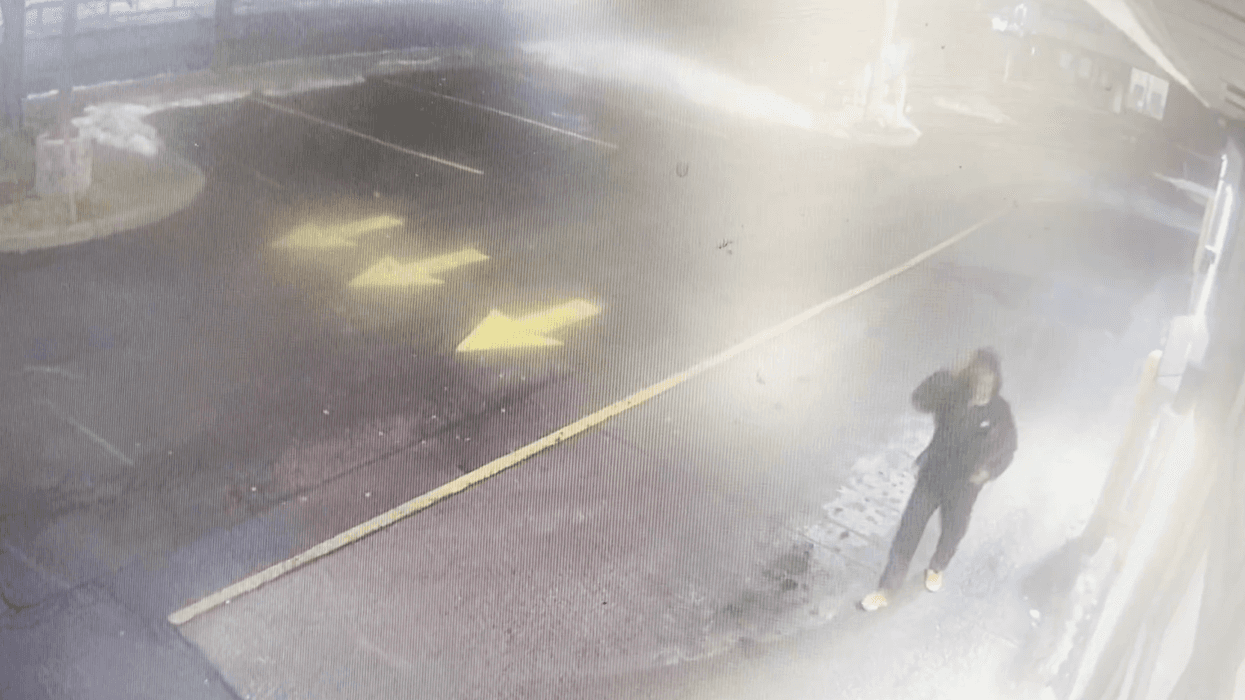
Nurul Shah Alam was found dead on a Buffalo street this week, days after being released from a county jail and dropped at a closed coffee shop by Border Patrol agents.
Surveillance footage taken at a Tim Hortons donut shop in Buffalo, New York contradicts the US Department of Homeland Security's claim that Border Patrol agents dropped Nurul Shah Alam, a 56-year-old nearly blind Rohingya refugee, at a "warm, safe location" after he was released from jail last week, days before he was found dead.
The video obtained by the Buffalo-based outlet Investigative Post late Wednesday showed a white van pulling up to the shop at about 8:18 pm Eastern, more than an hour after the store—except its drive-thru window—had closed for the night.
A man identified by the Investigative Post as Shah Alam is seen walking by the drive-thru window and then approaching the locked door before walking across the parking lot.
Breaking: IPost has obtained footage showing a Border Patrol van dropping off Nurul Shah Alam at a closed Tim Hortons last Thursday.
Shah Alam, nearly-blind & unable to enter the shop, then wandered the city for days. He was found dead Tuesday.https://t.co/fCtRtaxaU9 pic.twitter.com/VkEqgiAUVe
— Investigative Post (@ipostnews) February 27, 2026
The Border Patrol agents who dropped off Shah Alam—who spoke no English and was blind in one eye with partial, blurry vision in the other—appeared to make no attempt to ensure the Tim Hortons was actually a "safe, warm location" that he could access. The van pulled out of the parking lot less than a minute after Shah Alam was seen exiting it.
When the news broke Wednesday that Shah Alam's body had been found on a Buffalo street days after he was dropped off following his release—and after subfreezing temperatures hit the Western New York city over the weekend—a spokesperson for Border Patrol said the agents had "offered him a courtesy ride, which he chose to accept to a coffee shop" that was "determined to be a warm, safe location near his last known address."
They also claimed that Shah Alam, who used a walking stick to get around before his arrest last year, "showed no signs of distress, mobility issues, or disabilities requiring special assistance."
The agents never notified Shah Alam's wife and children or his lawyers that he had been dropped off.
"So when [the Department of Homeland Security] says they 'offered him a courtesy ride to a warm, safe location'... they mean they abandoned him in the parking lot of a closed Tim Hortons in the middle of a winter evening in Buffalo," said Jeremy Konyndyk, president of Refugees International. "They lie about EVERYTHING."
Shah Alam had been detained at the Erie County Holding Center since February 2025, when he got lost on the way home from a store where he'd purchased a curtain rod to use as a walking stick. He ended up in the backyard of a woman who called the police, who later reported Shah Alam was swinging the rod "in a menacing manner"—a claim his lawyer denies.
The Investigative Post also obtained police body camera footage of the arrest, which shows Shah Alam saying, "OK" and dropping one end of the curtain rod when an officer told him to put the stick on the ground. The footage also showed the officers Tasering Shah Alam and tackling him to the ground.
After the incident, Shah Alam was charged with assault, trespassing, and possession of a weapon—his walking stick—and held at Erie County Holding Center until last Thursday, after he took a plea deal. He agreed to plead guilty to trespassing and possession of a weapon and was able to avoid immigration detention even though Border Patrol had issued a detainer on him after the arrest, saying he was eligible for deportation.
Buffalo Mayor Sean Ryan told the Investigative Post Thursday that upon finding the Tim Hortons closed last week, Border Patrol should have taken Shah Alam back to the Erie County Holding Center, where sheriff's deputies who knew his family from their frequent visits to the jail could have called them.
“The lawyer was not informed, and the family is just saying, ‘You had our contact information, you had our address,'” a family friend named Khaleda Shah, told the outlet. “Why not drop him at the address that’s on file for him? Why not bring you back to the holding center, rather than Tim Hortons?”
When New York Times columnist Nicholas Kristof posted on X about Shah Alam's death on Thursday, DHS responded with its claim that the agents had brought him to a safe location.
"Video shows that it was night and the coffee shop was closed, so he never entered it," Kristof replied, "Instead, mostly blind and in need of a cane, unable to speak English, he tried to walk home through the freezing night—because your agents never called his family or lawyer but seem to have left him to die. Do you see how your credibility is undermined when you repeatedly make claims that are later contradicted by video evidence? Why should we trust statements from an agency with such a record of deceit?"
DHS had not publicly responded at press time.
Refugees International was among those calling for a full investigation into Border Patrol's "abandonment" of Shah Alam.
Daniel P. Sullivan, the group's director Africa, Asia, and the Middle East, noted that the US determined in 2022 that the Myanmar military had committed genocide against the Rohingya people, and Shah Alam was resettled in the US in 2024 after surviving the violence and persecution.
"The death of Shah Alam comes in the midst of ongoing violent immigration enforcement operations by [Customs and Border Protection and Immigration and Customs Enforcement] agents that have led to widespread abuse and neglect of legally resettled refugees as well as deaths of immigrants and American citizens alike," said Sullivan.
"Refugees International, once again, strongly condemns the Trump administration’s hateful and dehumanizing targeting of those who seek refuge," he said. "We express solidarity with Mr. Shah Alam’s family, the broader Rohingya community, and all of our neighbors who face increased uncertainty and risks of harm due to the Trump administration’s current policies.”
He also said that one member of the Rohingya community had told the organization that Shah Alam's "safe haven became a tragedy for him.”
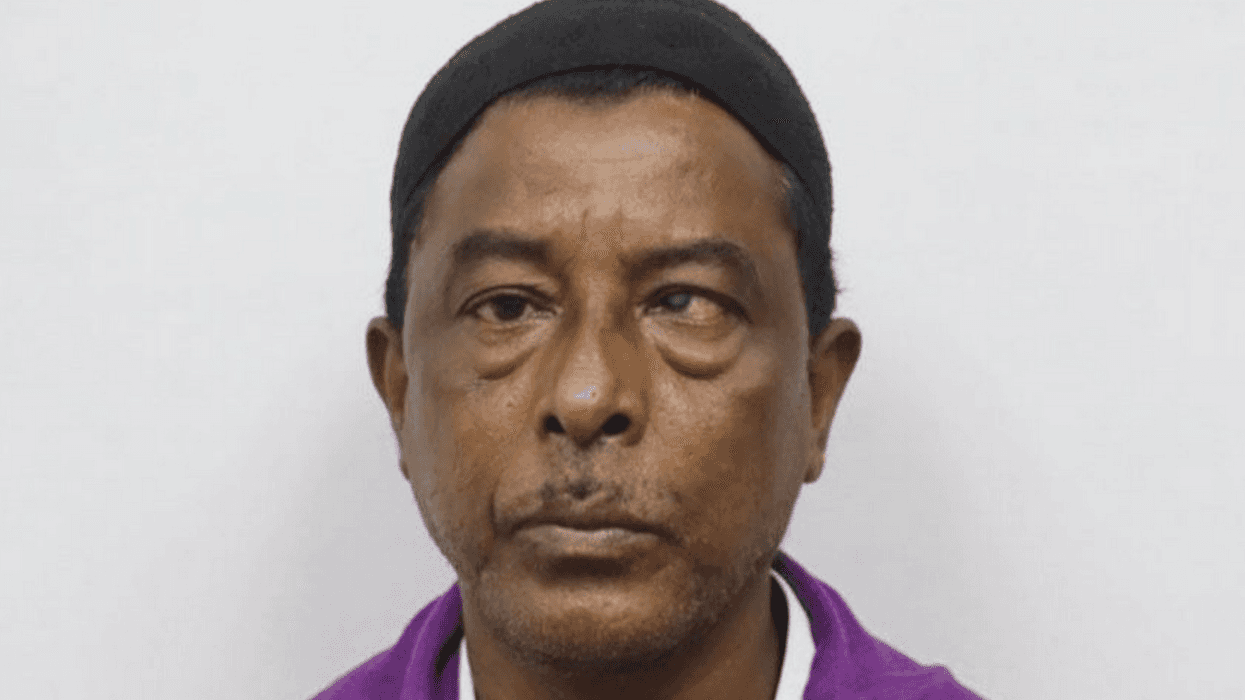
"There must be a full investigation and real accountability from US Customs and Border Protection," said one lawmaker.
The latest chapter in what one historian called "the ongoing horror story of American immigration enforcement" unfolded in Buffalo, New York this week after Nurul Amin Shah Alam, a 56-year-old Rohingya refugee from Myanmar, was released from a county jail where he'd been held for a year.
As Buffalo-based outlet the Investigative Post reported Wednesday, the nearly blind man was found dead on Tuesday evening, five days after US Border Patrol agents who had picked him up from the jail dropped him off at a coffee shop. They neglected to inform his lawyer or family where he was, making it impossible for Shah Alam to find his way home in sub-freezing temperatures.
Shah Alam, who was blind in one eye and had partial, blurry vision in the other, had gotten lost one day in February 2025 and ended up on a woman's porch with a curtain rod he used as a walking stick.
The woman called the police, who ordered Shah Alam to drop his "weapon"—the walking stick—and then Tasered, beat, and arrested him.
Shah Alam, who could not speak English and did not understand the police officers' orders, was charged with assault, trespassing, and possession of a weapon and taken to Erie County Holding Center.
His family, which includes a wife and two sons, chose not to bail him out of the county jail. His arrest had come a month into President Donald Trump's second term, and they feared US Immigration and Customs Enforcement would detain him if he was released and send him to a detention center out of state.
Benjamin Macaluso, an attorney with Legal Aid Bureau who was representing Shah Alam, told the Investigative Post that he had been released on bail last week after reaching a deal with the Erie County District Attorney’s office, agreeing to plead guilty to trespassing and possession of a weapon. The agreement allowed him to avoid detention by federal immigration agents even though authorities had previously placed an immigration detainer on Shah Alam.
Despite that, the Erie County Sheriff’s Office contacted US Border Patrol to pick Shah Alam up from the Holding Center. When the agents determined Shah Alam was not eligible for immigration detention, Border Patrol told the Investigative Post, they "offered him a courtesy ride, which he chose to accept to a coffee shop.”
An agency spokesperson claimed the nearly blind man "showed no signs of distress, mobility issues, or disabilities requiring special assistance."
Mohamad Faisal, one of Shah Alam's two sons, told Al Jazeera that his father was not able to read, write, or use electronic devices.
Macaluso told the Investigative Post that Shah Alam's family spent days searching for him in the cold before his body was found. The lawyer also said he had expected Shah Alam to be taken to an ICE detention center in Batavia, New York to be released.
A spokesperson for City Hall in Buffalo told the Investigative Post that homicide detectives were "investigating the circumstances and timeframe of events leading up to his death, following his release from custody," but said homicide and exposure to the elements had been ruled out as the cause of death by a medical examiner.
US Rep. Grace Meng (D-NY) was among those who called for a "full investigation" into Border Patrol's decision to leave Shah Alam miles from his home despite his disability.
Buffalo Mayor Sean Ryan, a Democrat, accused US Customs and Border Protection, which oversees Border Patrol, of a "dereliction of duty" and said the agency's treatment of Shah Alam was "inhumane."
"US Customs and Border Protection must answer for how and why this happened," said Ryan. "Buffalo is a city that welcomes refugees and believes government should protect human dignity, not endanger it. US Customs and Border Protection failed that basic standard."
Chuck Park, a Democrat who is running for Congress in New York's 6th District, said the New York for All Act, which would prohibit state and local law enforcement from collaborating with federal immigration agencies, would have prevented the sheriff's office from calling Border Patrol upon Shah Alam's release.
Alexandre Burgos of the New York State Hate and Bias Prevention Unit invited community members to a gathering to demand accountability to Shah Alam's death.
"We are coming together to demand accountability and transparency in the case of Nurul Amin Shah Alam," reads a flyer for the event, scheduled for Thursday evening at 5:30 pm Eastern at Lafayette High School in Buffalo.

Others in the Trump administration have walked back the lie that Pretti was a "would-be-assassin." Vance isn't sorry.
Vice President JD Vance is refusing to apologize to the family of Alex Pretti after defaming the Minnesotan in order to justify his killing by Customs and Border Protection agents late last month on the streets of Minneapolis.
Video shows Pretti, a 37-year-old intensive care unit nurse, was shot at least ten times by a pair of agents after being disarmed of a handgun, which he was carrying legally according to local police.
Within hours of the incident, the Trump administration had already begun to run with false claims that Pretti had "brandished" his weapon at agents, which were immediately disproven by video. Homeland Security Secretary Kristi Noem, who first made the claim, has since backed off that characterization following criticism.
On social media, Vance shared a post in which senior White House adviser Stephen Miller described Pretti as a "would-be-assassin" who sought to "murder federal agents," a claim for which they have still not provided any evidence weeks later.
President Donald Trump himself told reporters last week that he did not believe Pretti was an assassin, even acknowledging that the shooting was a "mistake."
Even Miller, who rarely backs down from even the most extreme and outrageous statements, has since acknowledged that agents may not have been following protocol when they shot Pretti.
But Vance is not sorry. During an interview with the Daily Mail on Tuesday, when interviewer Philip Nieto asked if the vice president would apologize to Pretti's family, he retorted, "For what?" with a smirk.
"For, you know, labeling him an assassin with ill intent," Nieto answered.
“I just described to you what I said about Alex Pretti, which is that he’s a guy who showed up with ill intent to an ICE protest,” Vance responded, referring to Immigration and Customs Enforcement.
Nieto then asked if Vance would apologize if an FBI probe opened last week found that the officers involved in the shooting had violated Pretti's civil rights.
Vance, appearing exasperated, sighed, “So if this hypothetical leads to that hypothetical leads to another hypothetical—”
Nieto then interjected, "It's a real case that's open."
"Like I said, we're gonna let the investigation determine," Vance said.
Then, in the ultimate dose of irony, he continued: "I don’t think it’s smart to prejudge the investigation, I don’t think it’s fair to those ICE officers,” he said, misidentifying the agency responsible for the shooting as ICE rather than CBP.
He notably did not give his thoughts on whether it was similarly unfair to "prejudge" Pretti as an attempted murderer within hours of his killing.
A clip of the interaction garnered immediate disgust online.
Ken Martin, the chair of the Democratic National Committee, said that "JD Vance had the opportunity to be a normal human being and show some empathy for the family of a man who was murdered. To nobody's surprise, he’s doubling down on being an asshole."
Pedro Gonzalez, a right-wing activist who has since become fiercely critical of the Trump administration, said that with his "little smile after 'for what,'" Vance appeared to be "relishing the opportunity to seem cold-blooded."
He added, "What Vance really is at heart is a hollow shell of a man who defends the murderers of American citizens more vigorously than he has ever defended his own family from the bigots he's trying to court for 2028."
John Ganz, the author of the newsletter Unpopular Front, simply said Vance is the "most repulsive person in politics, and there is stiff competition."
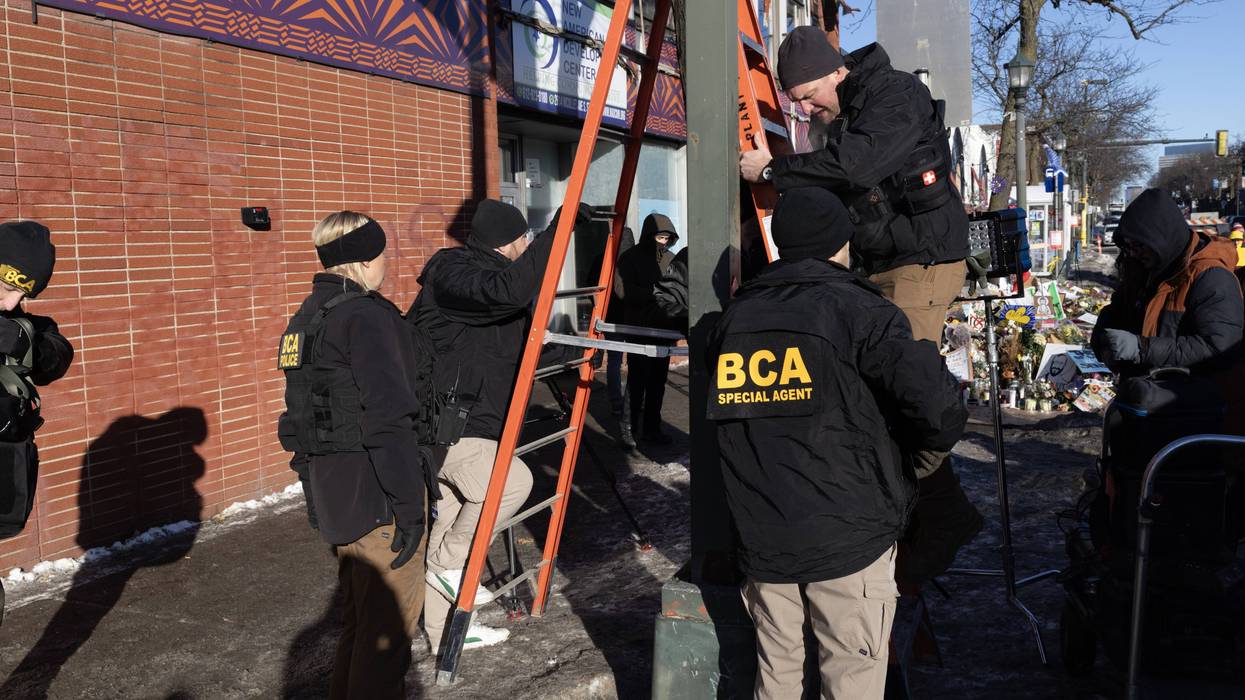
"It seems we may be looking at a bona fide cover-up," said one reporter.
As it attempts to shield immigration agents from responsibility for killing Alex Pretti, the Trump administration is asking a court to dismiss an order preventing the destruction of evidence in the case.
Shortly after a gang of agents shot and killed the 37-year-old intensive care unit nurse in Minneapolis on Saturday, agents reportedly rounded up witnesses to the killing and transported them to the nearby Whipple Building, where they were detained for several hours, according to a review of court affidavits by CBS News.
Agents also ordered local police to leave the scene of the shooting, but the order was ignored by Minneapolis Police Chief Brian O'Hara, who instructed local officers to preserve the crime scene.
US District Judge Eric Tostrud swiftly issued an order barring federal agents from “destroying or altering evidence” related to the shooting, including evidence “removed from the scene” or “taken into [the federal government’s] exclusive custody.”
It came following a request from Drew Evans, the superintendent of the Minnesota Bureau of Criminal Apprehension (BCA), who said his officers had been turned away by agents with the US Department of Homeland Security (DHS).
The Trump administration has already preemptively declared that agents’ shooting of Pretti was justifiable, as it has done in at least 16 DHS shooting cases, according to an investigation published Tuesday by the Washington Post.
Members of the administration have stated that Pretti was a "domestic terrorist" and an "assassin" who intended to "massacre law enforcement," despite ample video evidence of the encounter leading to his death showing nothing of the sort.
On Monday, lawyers for the Department of Justice filed a legal motion, first reported on by the New York Times, opposing Tostrud's order preventing federal agencies from destroying evidence. The agencies, the DOJ argued, “are already obligated by agency policy to preserve the evidence at issue.”
"While it’s not uncommon for the Trump administration to oppose judges’ orders against it, this case seems particularly unnecessary—and suspicious," wrote Edith Olmsted in the New Republic.
Radley Balko, a journalist who covers criminal justice, pondered why the administration would need to oppose the motion at all if it was making no effort to destroy evidence.
"In a sane country, the DOJ response to a motion asking a judge to stop the government from destroying evidence after federal officers shot and killed a man in broad daylight would be, 'Of course, we wouldn't destroy evidence. We agree with this motion,'" he wrote on social media. "That is not what happened."
The motion comes as the administration is shielding many other pieces of information from the public, leaving the series of events to be pieced together through video footage shot by bystanders.
DHS spokesperson Tricia McLaughlin has said multiple agents were recording body camera footage during the shooting, but has announced no plans to release it.
Meanwhile, the administration has refused to publicly name the agents involved in the shooting, with the recently sacked Border Patrol commander Gregory Bovino asserting that publicizing their names was tantamount to "doxing."
"Clearly, DHS is taking unprecedented actions to control the investigation into the second broad daylight killing of a civilian by its agents in just the past month," Olmsted wrote. "When coupled with Customs and Border Patrol’s efforts to shield its officers from accountability, and Trump officials’ desperation to change the subject, it seems we may be looking at a bona fide cover-up."
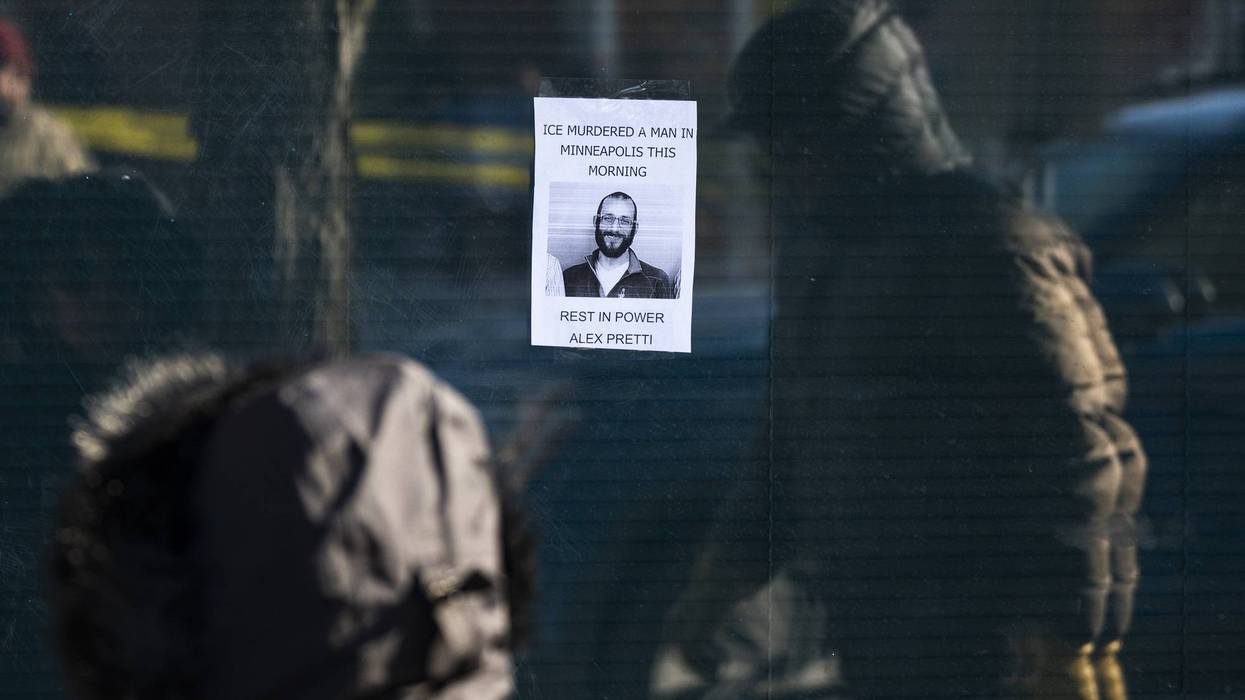
"We have an unaccountable secret police force that answers only to Trump," said one White House reporter.
It has been more than 55 hours since an immigration officer's fatal shooting of Alex Pretti on the streets of Minneapolis on Saturday, and still the US government has refused to provide the public with answers about the identity of the agent, or agents, who shot him.
Just as in the case of Renee Good, who was shot by an agent earlier this month, the Trump administration has circled the wagons around the narrative that Pretti, a 37-year-old intensive care unit nurse, was a "terrorist" planning to “massacre law enforcement” a claim they have provided no evidence for aside from the fact that he was carrying a handgun, which local police have said he owned legally.
Video of Pretti's killing, recorded from multiple angles, directly contradicts the claims of Homeland Security Secretary Kristi Noem, who alleged that Pretti was "brandishing a weapon" and that agents fired "defensive shots" after Pretti "violently resisted" arrest.
The Department of Homeland Security has not released any identifying information about the people who shot Pretti. Video evidence appears to show two agents firing at least ten shots at Pretti as he lay on the ground. According to an analysis of the shooting by ABC News, "one of the agents is seen in multiple verified videos emerging from the scrum with a handgun that appears to match the weapon federal officials say Pretti was carrying."
Pretti had been shoved to the ground after attempting to film officers with a cellphone. Video shows him being shoved and later pepper-sprayed by officers, even after holding up his hands in an apparent attempt to signal that he was not a threat.
In what was described as a stunning break from the usual protocol for a law enforcement-involved shooting, Border Patrol Commander-at-Large Greg Bovino said during a press conference on Sunday that all of the agents involved are "still working," though they had been moved out of Minneapolis. Bovino himself is reportedly expected to leave Minneapolis soon, along with other top agents.
David J. Bier, the director of immigration studies at the Cato Institute, described the fact that the agents were still on duty one day after a shooting as "unreal."
"Bovino spirited the murderer out of Minnesota's jurisdiction, yet they are still 'working,'" he said. "I've never heard of that in any real police department. Never heard of that in the federal government either."
He added that "cops shot at people in seven different jurisdictions this year," and that, "in every case, the jurisdiction put the officers on admin leave as part of standard protocol."
During the same press conference, told reporters that the agents had been moved out of Minneapolis "for their safety." He then explained: "There's this thing called doxxing."
Legally speaking, the term "doxxing" refers to the public disclosure of private information like addresses, phone numbers, and other sensitive information with the intent to harm the subject.
However in an effort to justify keeping the identities of US Immigration and Customs Enforcement (ICE) and other federal officers a secret, including through the wearing of masks to hide their identities, the Trump administration and Republican members of Congress have adopted a much broader definition of the term that considers any attempt to identify an agent, even one involved in a shooting, as doxxing.
Last week, Noem harangued a CBS News anchor for even speaking the name of Jonathan Ross, the man who reporters identified as the shooter of Renee Good, live on the air, saying "we shouldn't have people continue to dox law enforcement."
She has previously pledged to prosecute those who reveal the identities of federal agents to the "fullest extent of the law," though so far no charges have been filed.
According to the Foundation for Individual Rights and Expression (FIRE), publishing the name of a law enforcement officer is generally considered First Amendment-protected speech under Supreme Court rulings that protect the publishing of truthful information.
S.V. Date, a White House correspondent at HuffPost, said that the federal government's refusal to identify the agent who shot Pretti essentially "means we have an unaccountable secret police force that answers only to Trump."
"This person has still not been identified," he said, referring to the agent who shot Pretti while wearing a mask to obscure his identity. "In a real police force, that piece of information is released in the very first incident report."
Members of Congress have called for a transparent investigation into the shooting, including some Republicans who are otherwise supportive of ICE.
Sen. Thom Tillis (R-NC), who is not running for reelection in this year's cycle, called for a "thorough and impartial investigation" and said "any administration official who rushes to judgment and tries to shut down an investigation before it begins is doing an incredible disservice to the nation and to President Trump's legacy."
Of course, the Trump administration itself has already shut down an investigation into the shooting of Good, stating repeatedly that it would not pursue a probe into wrongdoing by Ross, while freezing out state-level investigators from information.
Sen. Tina Smith (D-Minn.) said that the Trump administration has ignored a court order that would allow state investigators to access evidence in Pretti's killing.
"Our state investigators had to get a warrant to have access to the evidence of the shooting of Alex Pretti," Smith said. "And even then, the federal agents refused to give them access to the evidence. So this looks very much like another cover-up."
Correction: An earlier version of this story mischaracterized what may have happened with the gun that appeared to be Pretti's removed from the scrum by one of the federal agents. The article has been updated to better describe those events.
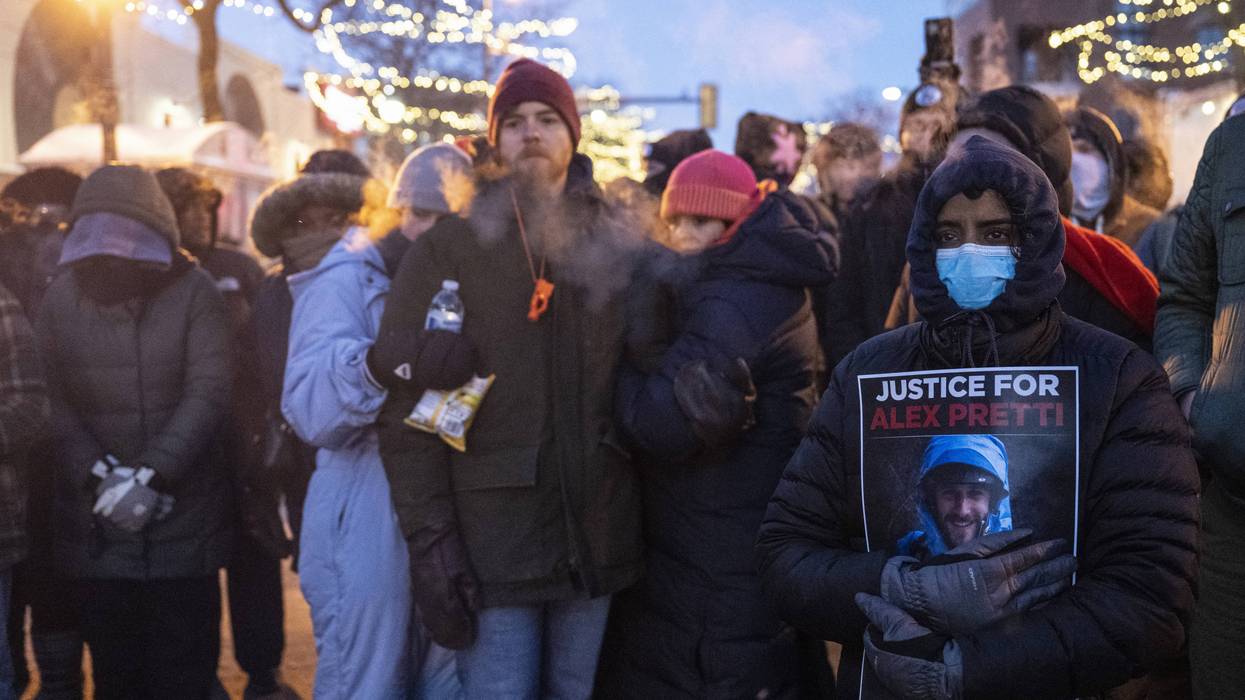
"Either the American people are able to wrest power from the current fascist leaders or those leaders will continue to radicalize, using violence and terror to dismantle democracy."
As hundreds of Minneapolis residents assembled in Whittier Park Saturday evening to demand once again that federal immigration agents leave Minnesota following the second fatal shooting of a legal observer in less than three weeks, one speaker demanded that the gathering must not simply be "another damn vigil."
"This is a turning point," said Edwin Torres DeSantiago of the Immigrant Defense Network.
He spoke to the crowd hours after several federal officers were filmed surrounding Alex Pretti, 37, after he attempted to help a woman one of them had pushed to the ground, and fatally shooting him.
Torres DeSantiago's words were echoed by the Lemkin Institute for Genocide Prevention, which did not mince words about the agents of US Immigration and Customs Enforcement (ICE) and Customs and Border Protection who have for months roamed the streets of cities including Minneapolis, Chicago, and Los Angeles, arresting immigrants and US citizens and opening fire nearly two dozen times—killing at least six people including Pretti.
The federal agents recruited by the Trump administration with flyers imploring them to choose between their "homeland" and an "invasion," said the Lemkin Institute, "are loyal agents of Nazis and white supremacists within the Republican Party. They are behaving as enemies both of the Constitution and of the American people and they must be treated as such."
"The United States is at a crossroads: Either the American people are able to wrest power from the current fascist leaders or those leaders will continue to radicalize, using violence and terror to dismantle democracy and commit even greater mass atrocities," said the organization. "History is clear about this."
The warning came as the Department of Homeland Security (DHS) said it would be investigating the shooting involving its own officers instead of the FBI. The Minnesota Bureau of Criminal Apprehension said DHS representatives had blocked them from accessing the crime scene late Saturday, even though officials had obtained a judicial search warrant.
The bureau joined the Hennepin County Attorney's Office in filing a lawsuit to prevent the "destruction of evidence" by DHS.
Edward Ahmed Mitchell, national deputy director of the Council on American-Islamic Relations, called on Minneapolis Mayor Jacob Frey to order the city's police department to "take control of the scene of the latest deadly ICE shooting, launch an independent criminal probe, and protect peaceful protesters at the scene from ICE violence."
"Calling for ICE to leave is not enough. This shooting happened on a city street in the jurisdiction of the Minneapolis law enforcement and they must lead an independent investigation into what appears to be another horrific, unnecessary execution of a Minneapolis resident," said Mitchell. "ICE should immediately end its deadly and disastrous siege of Minnesota and turn over all evidence and information about this shooting and the prior shooting of Renee Good to local authorities."
Meanwhile, Trump administration officials continued pushing a narrative which was contradicted by numerous videos of the shooting and the moments leading up to it, claiming Pretti had "approached" federal agents with a gun. Footage shows Pretti holding only a phone, not a firearm, and one of agents involved in wrestling him to the ground after he was pepper-sprayed reaches into the scuffle empty-handed and then pulls out a gun before the multiple shots were fired.
Third angle of today’s shooting of a 37-year-old male by agents with U.S. Immigration and Customs Enforcement (ICE) in Minneapolis, Minnesota, clearly shows one of the agents running away from the scuffle before the shooting carrying the victim's handgun, a Sig P320. pic.twitter.com/97atyCozQP
— OSINTdefender (@sentdefender) January 24, 2026
Pretti was armed with a gun that he was carrying lawfully and had a permit for, local authorities said.
Despite the video evidence, Homeland Security Secretary Kristi Noem repeated almost verbatim the claim she made earlier this month when an ICE agent fatally shot Renee Good in another incident that did not match the administration's description in footage taken by bystanders: "Fearing for his life and the lives of his fellow officers around him, an agent fired defensive shots."
Stephen Miller, President Donald Trump's homeland security adviser and deputy chief of staff, said without any evidence soon after the shooting that Pretti was a "domestic terrorist" who "tried to assassinate federal law enforcement," and Trump called Pretti a "gunman."
The shooting came days after seven Democrats in the US House joined Republicans in passing a funding bill for DHS without securing restrictions on ICE, despite growing national outrage over federal immigration agents' operations and Trump's mass deportation agenda.
The bill still needs to go through the Senate and is one of several funding measures that need to pass by January 30 to keep the government open.
Senate Minority Leader Chuck Schumer (D-NY) said in a statement after Pretti was killed that “Senate Democrats will not provide the votes to proceed to the appropriations bill if the DHS funding bill is included."
"What's happening in Minnesota is appalling—and unacceptable in any American city," said Schumer. "Democrats sought common sense reforms in the Department of Homeland Security spending bill, but because of Republicans' refusal to stand up to President Trump, the DHS bill is woefully inadequate to rein in the abuses of ICE."
Democratic senators who had been expected to support the $64.4 billion in DHS funding, which includes $10 billion for ICE, said after the shooting that they would not do so.
"I cannot and will not vote to fund DHS while this administration continues these violent federal takeovers of our cities," said Sen. Mark Warner (D-Va.).
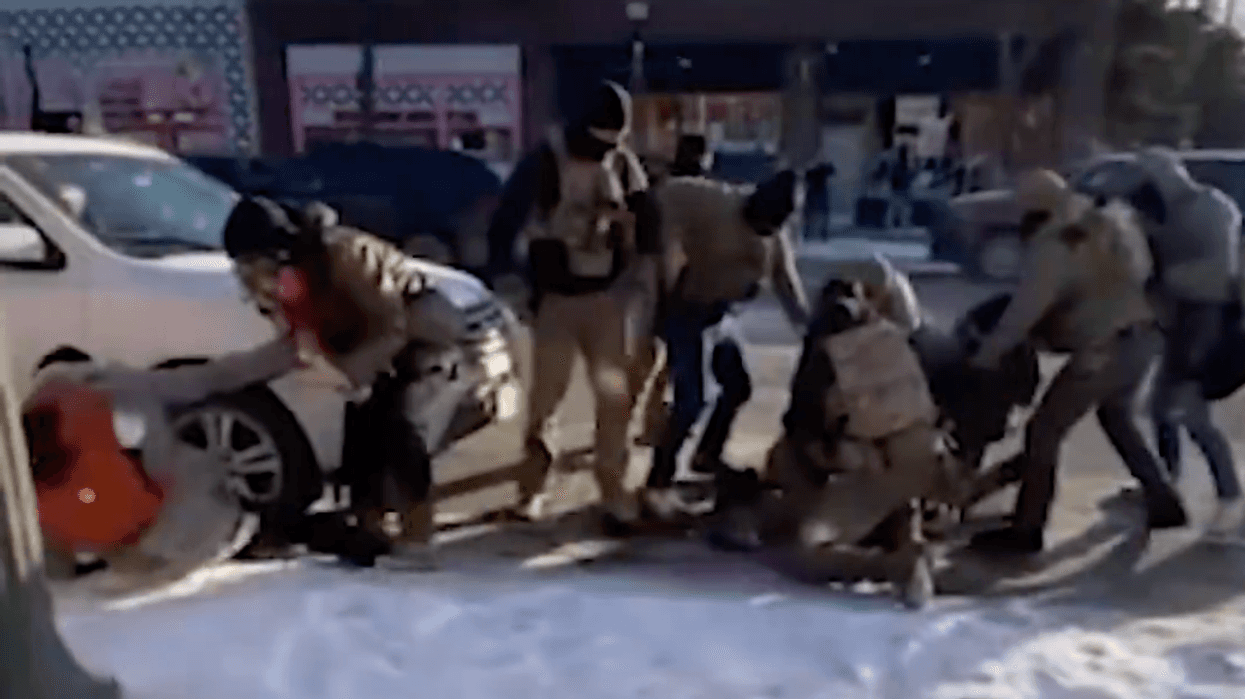
The footage of the fatal shooting of Alex Jeffrey Pretti, said one journalist, "shows that the final act of his life was trying to help a woman who was being physically assaulted by the masked agents who would then kill him."
WARNING: The following article contains graphic video.
In the original video of the shooting of a man in Minneapolis, identified by the Minneapolis Star Tribune at 37-year-old Alex Jeffrey Pretti, a woman in a pink coat was seen in the background filming the incident with her phone.
Drop Site News obtained footage that appeared "to come from the direction of the woman in pink filming from the sidewalk" and showed the shooting at a closer distance than the footage taken from inside Glam Doll Donuts.
In the video, the shooting victim, dressed in a brown coat and pants, is seen filming a federal agent with his phone. He's then seen guiding another person toward the sidewalk as the agent forcefully shoves a third person to the ground.
Another angle of federal agents killing a Minnesota legal observer, which appears to come from the direction of the woman in pink filming from the sidewalk.
Obtained by Drop Site News pic.twitter.com/IT56ftPkYP
— Drop Site (@DropSiteNews) January 24, 2026
The agent appears to pepper-spray Pretti and pull him away from the other person as a group of several other officers approach and surround him.
They wrestle him to the ground and struggle with him for several seconds before he appears to try to get up. Roughly 10 gun shots ring out and Pretti falls to the ground.
"What the fuck did you do? What the fuck did you do?" yells the woman behind the camera repeatedly.
"Cowards," said US Rep. Rashida Tlaib (D-Mich.) in response to the footage.
The video, said journalist Susan Glasser, "shows that the final act of his life was trying to help a woman who was being physically assaulted by the masked agents who would then kill him."
The video contradicted the Department of Homeland Security's claim that Pretti had approached immigration officers with a gun.
In a press conference, Border Patrol Commander Gregory Bovino doubled down on the assertion and claimed Pretti had aimed to "massacre" Border Patrol agents while they conducted operations, but then did not explain when the victim had threatened the officers with his gun.
Minutes after claiming the victim wanted to "massacre" law enforcement, Bovino is asked to specify when exactly the individual allegedly pulled his gun on ICE agents
Bovino then ducks the question and says the incident is "under investigation" pic.twitter.com/My6MQm2n6M
— nikki mccann ramírez (@NikkiMcR) January 24, 2026
"Why did... Commander Bovino only take two questions, then abruptly shut down the press conference?" asked US Rep. Jimmy Gomez (D-Calif). "Because he knows he can’t defend cold-blooded murder."

The shooting took place a day after tens of thousands of people took to the streets in Minneapolis in the freezing cold to demand an end to President Donald Trump's mass deportation operation.
This is a developing story. Please check back for possible updates...
Update (1:00 pm ET):
Federal agents repeatedly tear-gassed a crowd of protesters that gathered near the site of the shooting. They also deployed pepper spray, including at a man who "either dropped or threw his sunglasses, which landed on the ground" as he was backing away from the officers. At least two flash-bang grenades were heard going off, the Minneapolis Star Tribune reported.
The outlet reported that "several witnesses" had been "transported to the Whipple building," a federal building where immigration agents have been working and which houses a detention center.
The Star Tribune also reported that "ICE attempted to order local police from the scene" but Police Chief Brian O'Hara refused and ordered his officers to preserve the crime scene.
Update (12:15 pm ET):
Minneapolis Police Chief Brian O'Hara reported that the victim of the shooting was killed.
The Department of Homeland Security (DHS) reported that the man was armed with a firearm and two magazines.
Fox News correspondent Bill Melugin posted a photo on social media of a firearm, saying that DHS had told the outlet federal agents had recovered the gun.
DHS said the man "approached US Border Patrol officers with a 9mm semi-automatic handgun... The officers attempted to disarm the suspect but the armed suspect violently resisted. More details on the armed struggle are forthcoming. Fearing for his life and the lives and safety of fellow officers, an agent fired defensive shots."
Hennepin County Attorney Mary Moriarty said in a statement that her office was working with the Minnesota Bureau of Criminal Apprehension, which was blocked from the investigation into the fatal shooting of Renee Good by an ICE agent.
“The scene must be secured by local law enforcement for the collection and preservation of evidence,” Moriarty said. “We expect the federal government to allow the BCA to process the scene.”
Earlier:
Federal immigration agents reportedly shot another person in Minneapolis Saturday morning.
Local and federal officials were among those reporting the shooting on social media, where a video taken from inside Glam Doll Donuts at 26th Street and Nicollet Avenue showed several agents beating a person on a sidewalk.
David J. Bier of the Cato Institute posted a video of another angle of the shooting, from the Minnesota outlet Bring Me the News.
Whistles were heard outside in the video as observers inside the store expressed shock at the beating, which happened weeks after a US Immigration and Customs Enforcement (ICE) agent fatally shot Renee Good, and 10 days after an immigration officer shot a Venezuelan man in the leg during an enforcement operation.
"They're doing too much, man," one man was heard saying as the agents surrounded the person.
The person appeared to be trying to get up when an agent shot them.
"Oh shit," another observer in the store said. "Did they fucking kill that guy?"
The person's condition and details about what had occurred before the encounter was filmed were not immediately reported.
Around 100 protesters gathered at the site of the shooting soon after, chanting anti-ICE slogans, having learned about the incident through neighborhood rapid response networks set up across the city.
Minnesota Gov. Tim Walz, a Democrat, called the incident "sickening" and repeated a demand for President Donald Trump to end his deployment of armed, masked federal agents in the state.
The shooting took place a day after tens of thousands of people filled Minneapolis' streets demanding an end to Trump's mass deportation operation.

The president's declaration came as new reports documented brutality and other abuses carried out by federal immigration agents.
President Donald Trump vowed on Tuesday that "reckoning and retribution is coming" to the state of Minnesota as new reports documented the brutal actions of federal immigration agents throughout the US.
In a Truth Social post that was amplified by the official White House rapid response account on X, Trump addressed Minnesota residents and asked them if they "really want to live in a community in which their (sic) are thousands of already convicted murderers, drug dealers and addicts, rapists, violent released and escaped prisoners, dangerous people from foreign asylums and mental institutions and insane asylums, and other deadly criminals too dangerous to even mention."
In reality, the operations being done in Minneapolis and across the US by federal immigration agents have little to do with taking violent criminals off the streets.
Recently released data flagged by Aaron Reichlin-Melnick, a senior fellow at the American Immigration Council, shows that a plurality of people detained by ICE in recent months have no prior criminal convictions.
Trump ended his message with an all-caps declaration to "FEAR NOT, GREAT PEOPLE OF MINNESOTA, THE DAY OF RECKONING & RETRIBUTION IS COMING!"
Trump's vow of retribution came just hours after ProPublica published a lengthy investigation documenting 40 instances in which federal immigration agents across the country used "chokeholds and other moves that can block breathing," including nearly 20 instances where agents "appeared to use chokeholds and other neck restraints that the Department of Homeland Security prohibits 'unless deadly force is authorized.'"
The publication also identified several videos in which federal immigration agents were kneeling on the backs of people's necks, similar to the way that former Minneapolis police officer Derek Chauvin knelt on the neck of George Floyd as he suffocated to death in 2020.
Eric Balliet, a former law enforcement official who worked at both Homeland Security Investigations and Border Patrol, told ProPublica that he has never seen immigration agents use such tactics before, even if they were arrested people suspected of serious crimes.
"I arrested dozens upon dozens of drug traffickers, human smugglers, child molesters—some of them will resist," he said. "I don’t remember putting anybody in a chokehold. Period."
Arnoldo Bazan, a 16-year-old US citizen who was put into a chokehold by federal immigration agents last year, told ProPublica that he "felt like I was going to pass out and die" because of it.
MPR News reported on Tuesday that immigration agents in Minneapolis have apparently been using license plate readers to identify local activists who have been observing and documenting operations in their neighborhoods.
John Boehler, a policy counsel with the ACLU of Minnesota, told MPR News that the agents' actions appear to violate Minnesota state law, which says accessing people's personal data in this manner can only be done if they are suspects in an active criminal investigation.
There is no reason, Boehler emphasized, that observers should be under any kind of criminal probe.
“Following or observing or reporting on federal agencies or federal activities is not a criminal activity—it's protected First Amendment activity,” Boehler explained. "To be using those cameras, to use those license plate readers, to surveil protesters has a chilling effect on First Amendment rights, and that's what we think the goal is."