

SUBSCRIBE TO OUR FREE NEWSLETTER
Daily news & progressive opinion—funded by the people, not the corporations—delivered straight to your inbox.
5
#000000
#FFFFFF
To donate by check, phone, or other method, see our More Ways to Give page.
Daily news & progressive opinion—funded by the people, not the corporations—delivered straight to your inbox.
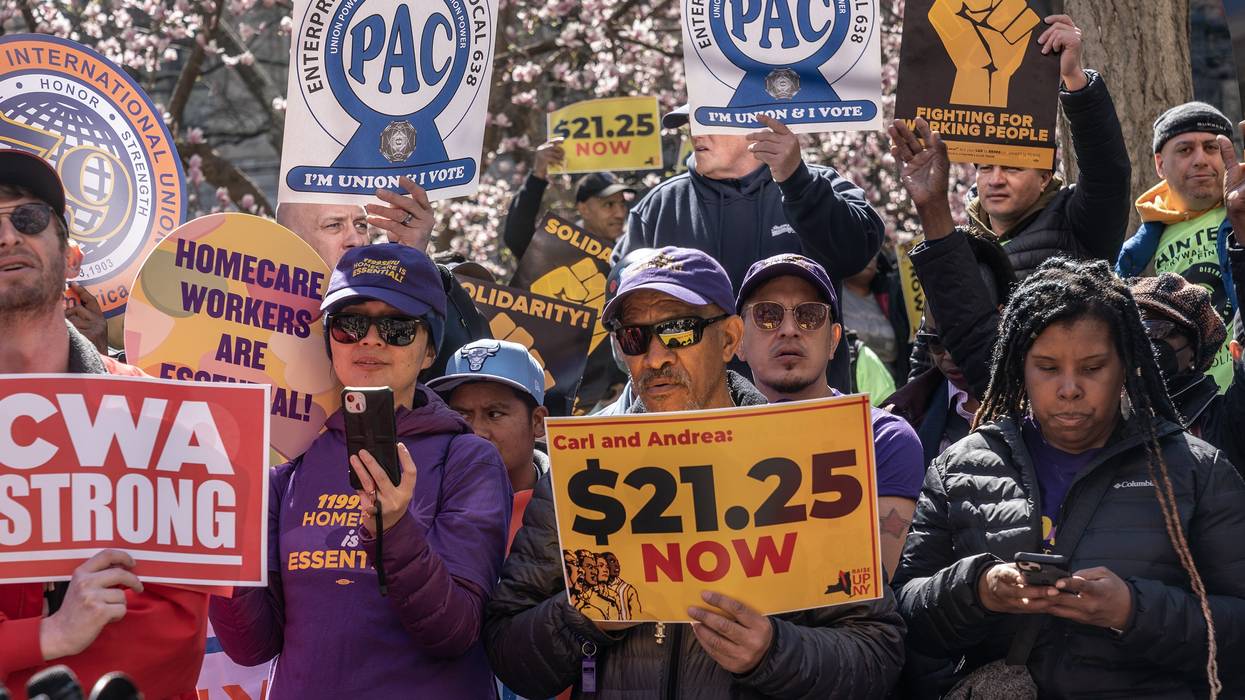
"Voters understand that raising the minimum wage is the right thing to do, even if their elected officials in state legislatures and Washington, D.C. remain inactive."
Former U.S. President Barack Obama had been in office for just over six months when the federal minimum wage was raised to a paltry $7.25 an hour—where it remains today, 15 years later.
Wednesday marked exactly a decade and a half since the federal wage floor was last lifted, an occasion that advocates used to tout state-level pay hikes and make the case for a long-overdue national increase, particularly as the nation's billionaires and corporations do better than ever.
"Workers can't afford to wait for Congress to act; they need to feed their families, pay their bills, and take care of their loved ones," said Kelly Hall, executive director of the Fairness Project, a group that has backed ballot measures across the U.S. that have resulted in over $22 billion in additional earnings for workers.
"This year, we see a clear path to victory in Alaska and Missouri because when voters have the chance, they choose higher wages," Hall continued, referring to minimum wage ballot initiatives in the two states. "Voters understand that raising the minimum wage is the right thing to do, even if their elected officials in state legislatures and Washington, D.C. remain inactive."
"It's been 15 years since the federal minimum wage was increased," Hall added, "and while this is both an economic and moral failing, we believe the solution lies in direct democracy through the ballot box."
A lot's changed since July 24, 2009. Barack Obama was president. Netflix was still mailing out DVDs in red envelopes.
What hasn't changed? The federal minimum wage of $7.25/hr. It is long past time to raise it. pic.twitter.com/gCY6FTWs9t
— Robert Reich (@RBReich) July 24, 2024
Years of inaction and obstruction by corporate-backed lawmakers in the U.S. Congress have spurred states and localities to raise their minimum wages well above the federal floor.
This year alone, according to the National Employment Law Project (NELP), 25 states and 65 localities across the U.S. will raise their minimum wages, providing pay boosts for millions of workers.
"November 2024's election will provide even more opportunities for progress, as Arizona, Alaska, and Oklahoma will all likely have questions on the ballot on whether or not their state minimum wages should increase," Kyle Ross of the Center for American Progress noted Wednesday. "Voters in these states should take advantage of this chance to give workers a much-needed raise."
Twenty U.S. states still have minimum wages pegged to the federal floor, which is worth less today than "at any time since 1949," Axios' Emily Peck observed Wednesday.
Some lawmakers at the federal level have pushed, without success, for legislation that would raise the federal minimum wage. Last year, Sen. Bernie Sanders (I-Vt.) and Rep. Bobby Scott (D-Va.) introduced a bill that would incrementally hike the national wage floor to $17 an hour by 2028 and index it to median wages in subsequent years.
The measure did not receive a vote in the House or Senate. According to the Economic Policy Institute, 31 million U.S. workers are paid less than $17 an hour.
"The minimum wage has fallen so far behind the cost of living that millions of workers are earning wages too low to live on at the minimum wage and above it," Holly Sklar, CEO of Business for a Fair Minimum Wage, said in a statement. "That's bad for workers and businesses."
"Local businesses depend on customers who make enough to buy their products and services," Sklar added. "Raising the minimum wage boosts consumer spending and helps businesses hire and retain employees. Businesses that are more invested in their employees benefit from lower turnover and increased productivity, and the kind of customer service that keeps customers coming back."

Tuesday’s vote has broader implications for direct democracy and its ability to reshape state policy across the country.
Ohio voters amended their state constitution Tuesday to protect reproductive rights, including the right to abortion. They also passed a law legalizing marijuana possession and use by adults 21 and older. This watershed election underscores the vital role that direct democracy plays in enabling voters to shape their own laws when their elected representatives ignore their preferences.
To enshrine reproductive rights in the state constitution by passing Issue One, proponents had to overcome multiple hurdles thrown up in the past several months by anti-abortion politicians. They also had to overcome voters’ general reluctance to change the constitution: In the past 15 years, out of more than 60 campaigns in Ohio, only three amendments had passed before this one.
Ohio is one of 16 states that allows voters to put constitutional amendments up for a popular vote if they collect enough signatures. As in most of these states, Ohio voters fought for this form of direct democracy to counteract political cartels that captured the legislature in the late 19th century. As one contemporary account described, when delegates to the 1912 Ohio constitutional convention adopted a new amendment to create the citizen initiative process and referred the measure to voters, “every ruse and trick known to Big Business politicians was employed to frighten the people of Ohio from adopting” it. It passed with 58% of the vote.
In enacting these policies, voters are overcoming various barriers to democracy—not just gerrymandering but also the incumbency advantage and the distorting effects of campaign financing rules that give undue influence to the wealthy and special interests.
This year, true to history, anti-abortion politicians like Gov. Mike DeWine and Secretary of State Frank LaRose used “every ruse and trick” available to block Issue One. First, they cynically engineered an off-season summer election to propose a constitutional amendment that would have made it far harder to amend the constitution in the future. Rather than disclose to voters that the proposed amendment would reduce opportunities for direct democracy, the plan’s proponents described it as “elevating” standards. Voters saw through the dishonesty and overwhelmingly rejected the measure.
Next, these politicians set to work using their state authority to discourage voters from passing the abortion rights amendment. They drafted a confusing and argumentative ballot description for voters to read just before voting. They ran misleading ads, passed a legislative resolution rife with misinformation, and warned that the amendment would bring about “atrocities.” Once again, voters weren’t tricked, approving the amendment 57–43.
It’s no accident that this constitutional amendment passed in Ohio, where one of the most gerrymandered legislatures in the country had enacted a draconian and wildly unpopular abortion ban that—before being temporarily blocked by a court—forced a 10-year-old rape victim to travel to Indiana for care and denied women treatment for dangerous pregnancy complications.
But Tuesday’s vote has broader implications for direct democracy and its ability to reshape state policy across the country, particularly in states where gerrymandered legislatures have for years insulated themselves from the will of the voters. Even now, voting rights advocates are readying an initiative to reform Ohio’s redistricting process. They are not backing down from their vision of a legislature that actually reflects the political balance in the state, even after Republican lawmakers pushed through unfair maps in violation of voter-approved constitutional requirements, then flouted multiple court orders to fix them, and even after the attorney general has repeatedly thwarted current reform efforts.
Citizens in other states have enacted major policies in a number of areas where legislatures had refused to act. They created independent redistricting commissions in Arizona, California—and in Michigan, where they also passed automatic voter registration and other voting rights measures. In Florida, they restored voting rights for individuals with felony convictions who have served their sentences. In Missouri, they banned lobbyist gifts to lawmakers. Voters have made policy in other areas as well, enacting wage increases in states like Arizona, Arkansas, Florida, Maine, and Nebraska; expanding Medicaid in Idaho, Missouri, Nebraska, Oklahoma, and Utah; and securing reproductive rights in Michigan.
In enacting these policies, voters are overcoming various barriers to democracy—not just gerrymandering but also the incumbency advantage and the distorting effects of campaign financing rules that give undue influence to the wealthy and special interests. Looking ahead, citizens are planning paid sick leave initiatives in Missouri, Nebraska, and Alaska, as well as open primaries and ranked choice voting in Nevada.
Perhaps unsurprisingly, politicians in several of these states, as in Ohio, have been trying to make initiatives harder to pass—most egregiously in Missouri, Arizona, North Dakota, Florida, and Wisconsin. Tuesday’s results represent a spectacular failure of that approach. People care about their right to govern themselves. And Ohio voters have shown that direct democracy remains a vital tool for voters to make themselves heard over the noise of moneyed and powerful special interests.
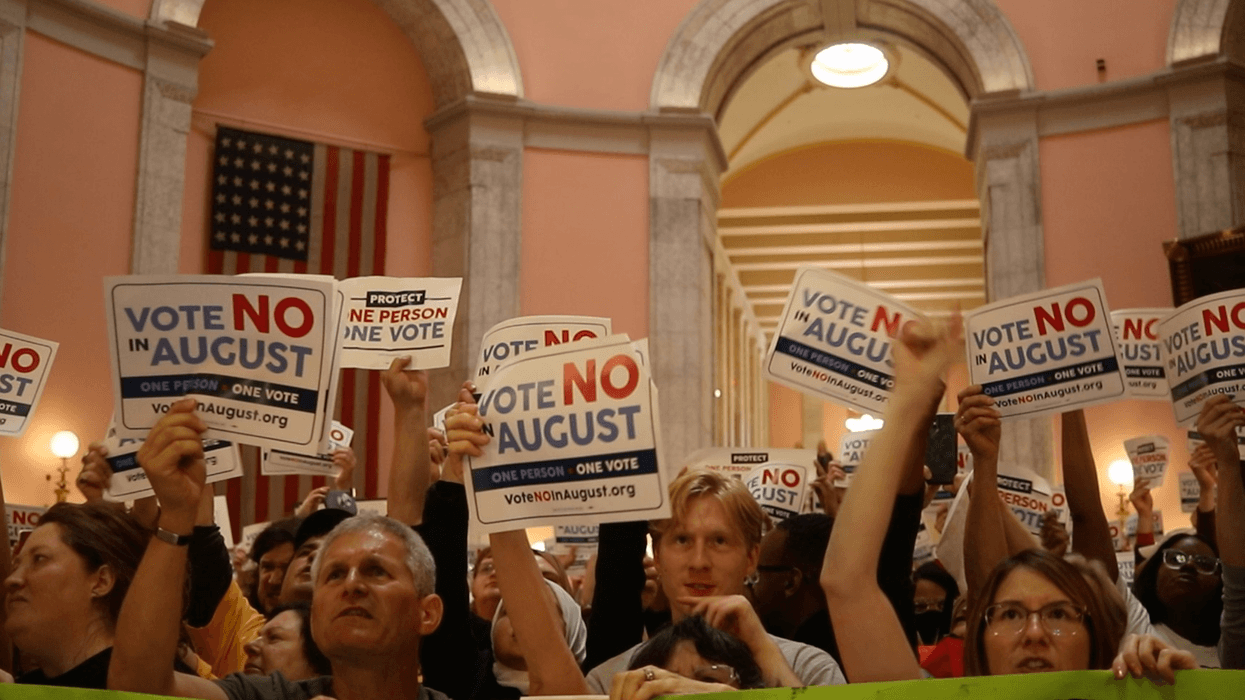
For years, extremists and the special interests who fund them have made it clear that they are willing to shut down the use of ballot measures if it means making short-term gains to restrict progress on issues like reproductive rights.
Early last month, Ohioans delivered a resounding victory for both reproductive rights and democracy. Voters handily rejected Issue 1, a bad-faith effort to limit voters’ right to propose and enact their constitutional amendments—like the one headed to the ballot this November to ensure Ohioans have control over their reproductive freedoms.
The proposal would have undone majority rule in Ohio, allowing just 41% of voters to veto the will of the majority. It also would have required petitioners to collect signatures in all 88 counties to qualify a measure, effectively giving a single county veto power over an entire ballot question.
Ohio Republicans were transparent that Issue 1 was intended to block the constitutional amendment on reproductive rights that will be voted on this November. Anti-abortion groups spent millions on the special election, and Ohio Secretary of State Frank LaRose went so far as to boast that the question was “100%” about abortion.
Since the Dobbs decision, and as advocates for reproductive freedom have sought to use the ballot measure process to protect their rights in more states, legislatures in red states are fired up to strip voters of their right to direct democracy.
Unsurprisingly, Ohioans did not take kindly to being asked to vote their rights away. In an off-year special election in the middle of the summer, turnout more closely mirrored that of a midterm, and opposition to Issue 1 spanned party lines. Issue 1 fell short in a number of counties that Trump won, and it underperformed Trump’s 2020 margin nearly everywhere, according to an Associated Press analysis.
Ohio politicians tried every trick in the book—including putting misleading language on the ballot and breaking their law to schedule the election in August—yet the effort crashed and burned. This follows the failures of politicians in Arkansas and South Dakota, both of which proposed 60% thresholds for ballot measures last year and were soundly rejected by voters in back-to-back elections.
Issue 1 also continues the inspiring trend of voters turning out directly at the ballot box in red, blue, and purple states to defend reproductive rights after the fall of Roe v. Wade. Last year, voters defeated anti-abortion measures in Kansas, Kentucky, and Montana, and enshrined proactive reproductive freedom measures in California, Vermont, and Michigan.
The news out of Ohio is undoubtedly positive, but the fact that this election happened at all is symptomatic of a much larger problem. We’ve seen repeatedly that ballot measures are an incredibly effective antidote to political institutions acting against voters’ interests. On few issues is that contrast more pronounced than reproductive rights; more than 8 in 10 Americans believe that abortion should be legal in some or all circumstances, even as the Supreme Court has ended federal protections for abortions and more than 24 states have active abortion bans or are likely to pass them.
For years, extremists and the special interests who fund them have made it clear that they are willing to shut down the use of ballot measures, an essential piece of our democracy, if it means making short-term gains to restrict progress on issues like Medicaid expansion, minimum wage, paid leave benefits, and criminal justice reform—and since Dobbs v Jackson Women’s Health Organization, that list now includes abortion access.
Politicians in more than a dozen states have made myriad attempts, some successful, to undermine direct democracy in recent years. In addition to Ohio, The Fairness Project, where I am deputy executive director and campaigns director, has tracked attacks in Arizona, Arkansas, Florida, Idaho, Utah, Missouri, Montana, Oklahoma, North Dakota, South Dakota, and Wyoming.
These attacks often take the shape of the 60% threshold like Ohio’s. They also include building up tedious signature and circulation requirements for petitions, limiting how many subjects a ballot measure can address, and passing counter-legislation to hinder or slow-roll the implementation of successful ballot measures.
Since the Dobbs decision, and as advocates for reproductive freedom have sought to use the ballot measure process to protect their rights in more states, legislatures in red states are fired up to strip voters of their right to direct democracy. We saw it in Ohio, and we will no doubt see it again.
2024 may produce the highest number of issues put directly to voters we’ve seen in recent years, and organizers in several states are already working to qualify reproductive rights measures for next year. But restoring and defending reproductive rights at the ballot box—among many other issues—now necessitates a two-pronged strategy that includes defending the ballot measure process itself.
Thankfully, Ohio shows us that there is promise and that the people are ready to fight back.
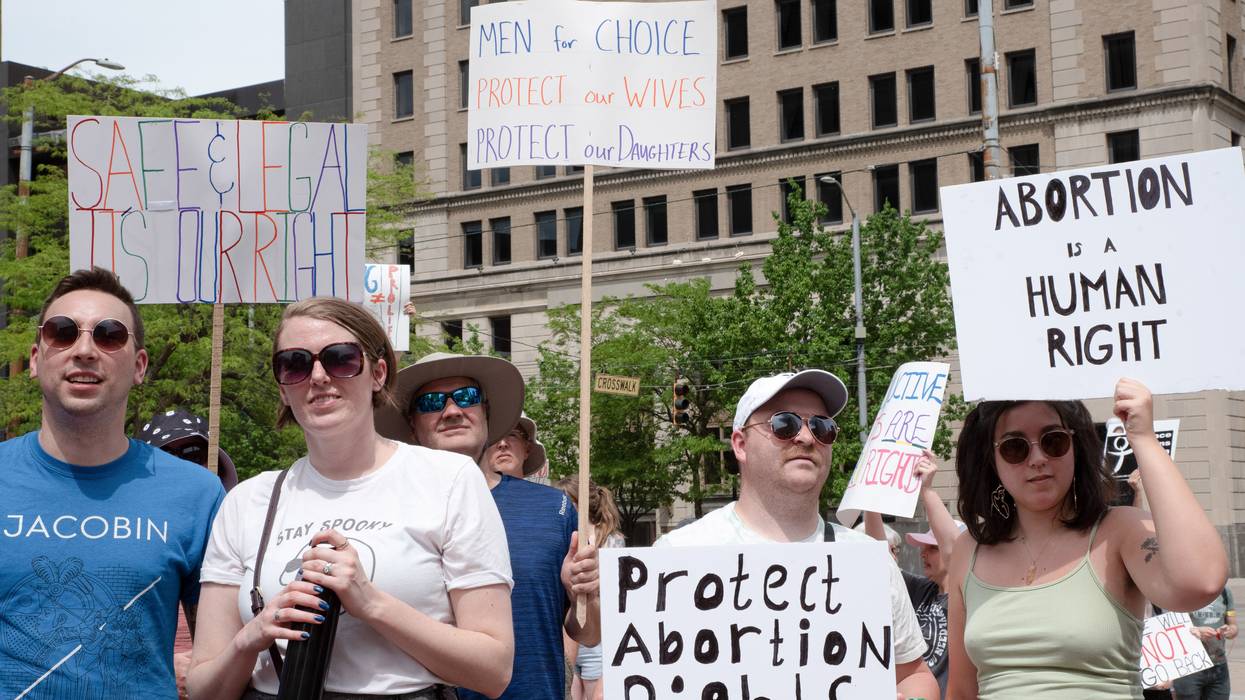
"This overwhelming show of support for reproductive freedom by Ohio voters is historic," said one advocate.
A nonpartisan coalition on Wednesday submitted more than 700,000 signatures from Ohio residents across all 88 counties in a bid to qualify a referendum on whether to enshrine reproductive rights and abortion access in the state constitution.
Ohioans United for Reproductive Rights, which is backed by the Fairness Project, seeks to ensure that the Right to Reproductive Freedom with Protections for Health and Safety Amendment is on the ballot for the November 2023 election.
The measure was filed earlier this year in response to the 6-3 ruling by the U.S. Supreme Court's reactionary majority in Dobbs v. Jackson Women's Health Organization. That June 2022 decision overturned Roe v. Wade of 1973, eliminating the constitutional right to abortion. In the absence of federal protections, several GOP-controlled state legislatures, including Ohio's, have moved to prohibit or restrict abortion care, unleashing a life-threatening crisis condemned by United Nations experts as a violation of international human rights law.
"We have seen unprecedented levels of enthusiasm to defend abortion rights across the country through ballot measures—and now that movement has come to Ohio."
"This overwhelming show of support for reproductive freedom by Ohio voters is historic and inspiring," Kelly Hall, executive director of the Fairness Project, said Wednesday in a statement. "The Dobbs decision was a dark day in our history that continues to have dire consequences on the health and well-being of countless Americans."
"But since that day, we have seen unprecedented levels of enthusiasm to defend abortion rights across the country through ballot measures—and now that movement has come to Ohio," said Hall. "The Fairness Project stands with Ohioans United for Reproductive Rights and is ready to support this critical ballot measure campaign however we can."
Ohio Secretary of State Frank LaRose (R) and county boards of elections have until July 25 to review the signatures submitted by the campaign. At least 413,487 valid signatures are required for the referendum to be placed on the November ballot.
Although Ohio's abortion ban is currently enjoined, there's an ongoing risk that the state Supreme Court's right-wing majority could reinstate it. However, if voters approve the Right to Reproductive Freedom with Protections for Health and Safety Amendment in November, any potential decision would be rendered moot.
Because the proposed ballot measure is a constitutional amendment, it would nullify existing abortion bans in Ohio and codify reproductive freedom throughout the state.
The Fairness Project warned that "special interests and extreme politicians including... LaRose—who is expected to announce a run for the U.S. Senate imminently—are already working to preempt the reproductive freedom amendment."
Last month, as Common Dreams reported, the Ohio Supreme Court handed down a 4-3 opinion allowing a special election scheduled for August 8 to proceed despite the fact that Republican Gov. Mike DeWine signed a law earlier this year banning August elections in most cases.
The Ohio General Assembly called the August special election in an attempt to ram through Issue 1—a legislatively referred ballot measure that would increase the threshold required to amend the state constitution via referendum from a simple majority to a 60% supermajority—before November.
"Special interests and extreme politicians... are already working to preempt the reproductive freedom amendment."
A poll conducted last year by Baldwin Wallace University found that 59% of Ohio residents were in favor of a constitutional amendment to safeguard abortion access.
"Their true motivation" for holding the August election, Ohio House Minority Whip Jessica Miranda (D-28)
told Bolts last month, "aside from their insatiable desire for power, is to stop women from having the reproductive freedom that we so deserve."
The potential impacts of Issue 1—which would also make it more difficult for voters to get citizen-led initiatives onto future ballots—go beyond abortion rights. Efforts to raise the minimum wage, for example, could also be negatively affected.
Mia Lewis, associate director of Common Cause Ohio, told Bolts that the Republican proposal is "an attempt to fool voters into giving away their power."
The Fairness Project is actively supporting the One Person, One Vote: Vote No in August campaign to defeat the Ohio GOP's assault on popular democracy as part of its Ballot Measure Rescue Campaign.
Last year, the group helped the Michigan Reproductive Freedom for All campaign and the Vermont for Reproductive Liberty campaign to pass constitutional amendments in each state upholding reproductive rights through ballot initiatives.
The Foundation for Government Accountability, which aims to make ballot initiatives harder to pass, is being bankrolled by Illinois billionaire Richard Uihlein.
When Ohio voters go to the polls in August for a special election to decide on the threshold needed to pass a constitutional referendum, they will be voting on whether to weaken direct democracy in their own state—but the push to do so is coming in large part from a Florida-based right-wing group whose biggest donor is Illinois billionaire Richard Uihlein.
As The Guardian reported Thursday, the Foundation for Government Accountability (FGA) originally focused its efforts on influencing state policy but in recent months has testified, issued legal memos, and posted on social media about proposals in a number of states to raise the threshold needed to amend state constitutions by referendum.
Uihlein, a key promoter and funder of lies about the 2020 presidential election, has donated $17.6 million to FGA since 2014, contributing to its efforts regarding ballot initiatives as well as its attempts to block ranked-choice voting in states and towns and ban outside financial support for under-resourced election offices.
In Ohio, Arkansas, South Dakota, and other states the FGA has promoted the passage of requirements for a supermajority—rather than a simple majority—to enact ballot initiatives. In Ohio, Republican legislators have pushed for a 60% majority to amend the state constitution, with the GOP aiming to impose the new rules before the November election in order to thwart the passage of an amendment codifying abortion rights in the state.
FGA and its lobbying arm, the Opportunity Solutions Project (OSP), have lobbied lawmakers, testified, and taken other steps to promote the passage of supermajority requirements in at least four states, The Guardian reported.
"Claims about protecting our constitution from outside influence fall flat when the effort is itself supported by more than $1 million of ads paid for by Illinois billionaire Richard Uihlein."
When Republicans in Ohio first proposed the new voting threshold requirement, the only person who testified in favor of the rule was a representative of the OSP. The group argued that the supermajority requirement would "make it more difficult for out-of-state billionaires and dark money groups," a claim that the editorial board of the Dayton Daily News found dubious earlier this month as it called on voters to oppose the measure in the August election.
"Claims about protecting our constitution from outside influence fall flat when the effort is itself supported by more than $1 million of ads paid for by Illinois billionaire Richard Uihlein," wrote the board.
Uihlein donated $1.1 million in the last year to the Save Our Constitution PAC, whose ads called on state lawmakers to support a higher threshold requirement to change the state constitution.
The Statehouse News Bureau in Ohio reported in April that "Uihlein's big donation is just the first installment in the effort to push the amendment," suggesting the billionaire plans to spend more ahead of the August special election.
The Guardian noted that despite Uihlein's bankrolling of FGA and OSP, the organizations have not been successful in all its efforts to gut direct democracy.
OSP published an op-ed, a fact sheet, and social media content calling for the passage last year of Issue 2, which would have required all ballot initiatives to garner at least 60% of the vote to pass. The group spent at least $65,000 on the campaign, but Arkansas voters rejected the measure by 19 percentage points.
The Dayton Daily News editorial board advised Ohioans to do the same last week.
"Very simply, Issue 1 [in the August special election] is about taking power away from you," wrote the board. "Don't disarm yourselves of the 'greatest tools democracy ever had.'"
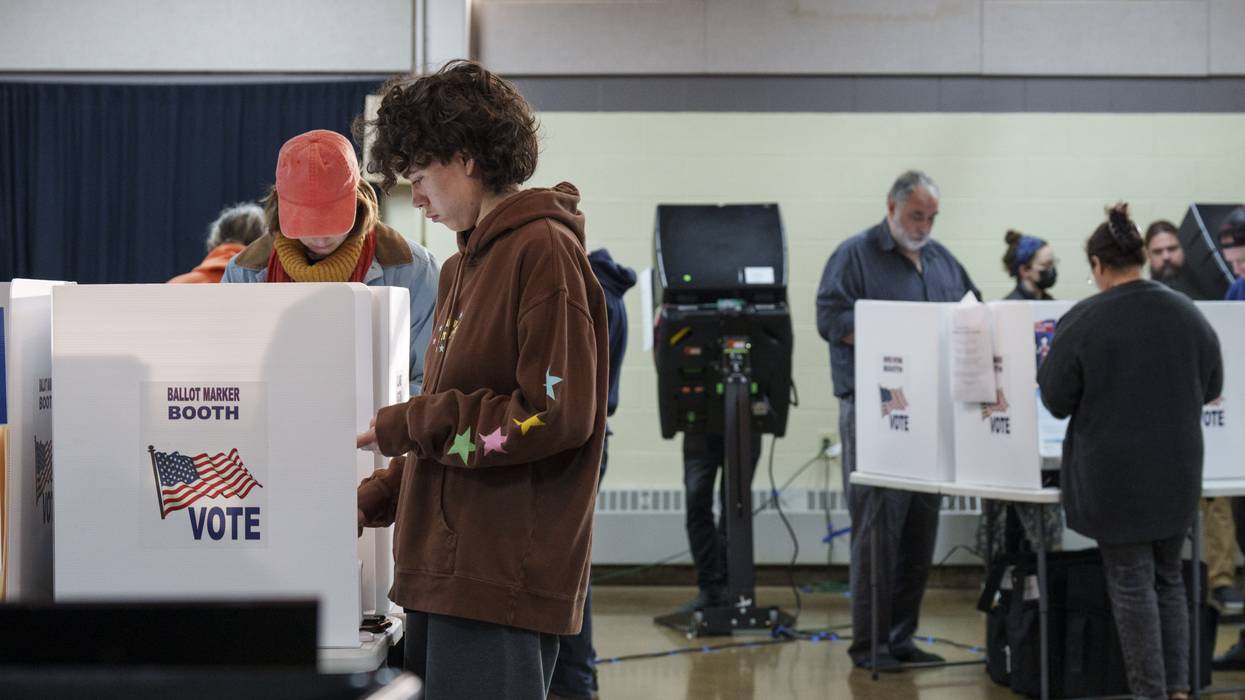
Republicans' "true motivation, aside from their insatiable desire for power, is to stop women from having the reproductive freedom that we so deserve," said one state lawmaker.
The Ohio Supreme Court's right-wing majority on Friday handed down a ruling that critics said will ultimately make it more difficult for residents to participate in popular democracy by introducing ballot initiatives in future elections—including the one coming up in November, in which reproductive rights advocates aim to hold a referendum on abortion rights.
The court ruled 4-3 in favor of allowing a special election scheduled for August 8 to go forward, even though Republican Gov. Mike DeWine signed a law earlier this year banning August elections in most cases.
The majority said that the state Constitution "authorizes the General Assembly to impose or direct a special election in furtherance of a proposed constitutional amendment."
In the election, Ohioans will vote on a proposal put forward by Republican legislators to increase the threshold needed to amend the state Constitution via referendum from a simple majority to 60%. The proposal would also make it harder for voters to get citizen-led initiatives onto ballots.
"If it passes, the measure would dramatically curtail a tool of direct democracy that has existed in the state for more than a century," wrote Cameron Joseph at Bolts earlier this month.
Mia Lewis, associate director of Common Cause Ohio, told the outlet that the Republican proposal is "an attempt to fool voters into giving away their power."
The special election, which is being held at a time of year that's typically plagued by low voter turnout, will take place as abortion rights advocates are pushing to hold a referendum during the November elections on whether to enshrine the right to abortion care in Ohio's Constitution. States including California and Michigan have affirmed that abortion is a constitutional right since the U.S. Supreme Court overturned Roe v. Wade a year ago.
"Their true motivation" for holding the August election, Ohio House Minority Whip Jessica Miranda (D-28) told Bolts, "aside from their insatiable desire for power, is to stop women from having the reproductive freedom that we so deserve."
Ohio Republicans have joined GOP lawmakers in several other states in attempting to make it harder for ballot measures to be put to a popular vote. Arkansas Republicans passed a law earlier this year making it harder for residents to place proposals on ballots and the Utah GOP passed a similar law in 2021.
Abortion is currently legal in Ohio up to 22 weeks of pregnancy, but Republicans have attempted to ban the procedure at six weeks of pregnancy.
A poll by Baldwin Wallace University last year found that 59% of Ohio residents supported a constitutional amendment that would enshrine abortion access as a right for all Ohioans.
Kelly Hall, executive director of the pro-democracy group Fairness Project, said the question being put to voters in August "is a blatant attempt to undermine direct democracy and diminish voters' rights to make their own decisions on issues that matter to them."
"Despite this unfortunate ruling," Hall said, "we’re confident in the strong, pro-democracy coalition that has formed" to mobilize against the Republican proposal.