

SUBSCRIBE TO OUR FREE NEWSLETTER
Daily news & progressive opinion—funded by the people, not the corporations—delivered straight to your inbox.
5
#000000
#FFFFFF
To donate by check, phone, or other method, see our More Ways to Give page.
Daily news & progressive opinion—funded by the people, not the corporations—delivered straight to your inbox.
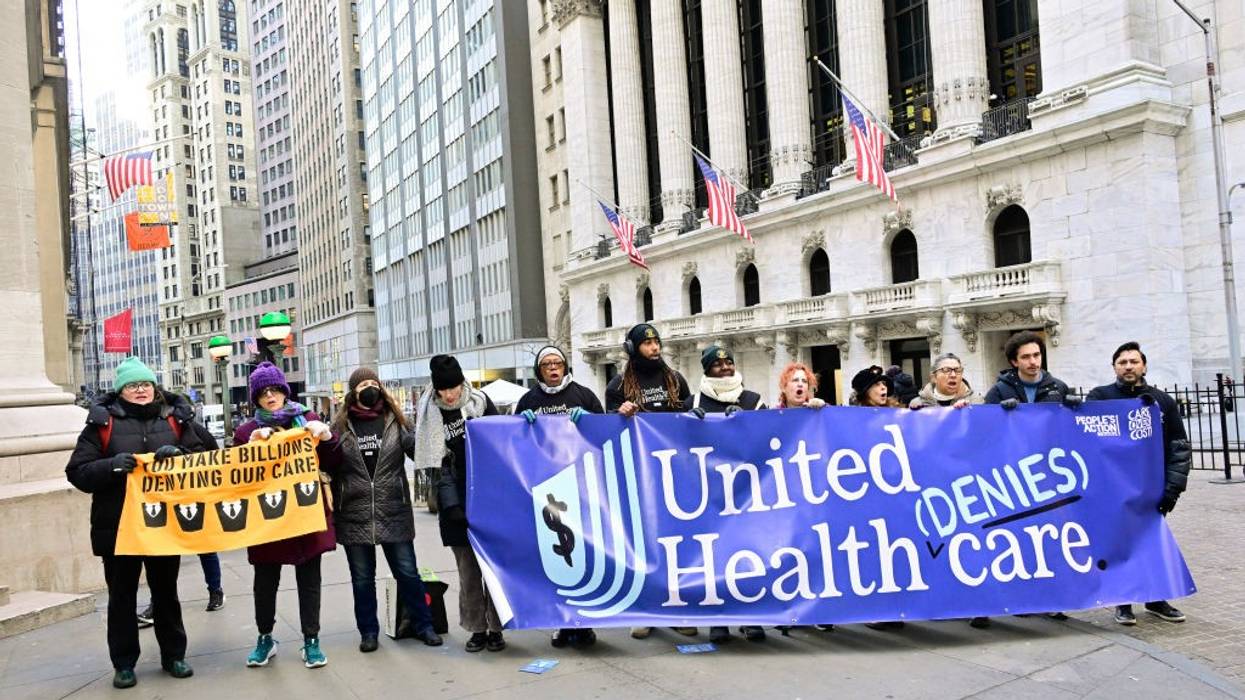
Meanwhile, 17% of Americans say they're using buy now, pay later services for medical or dental care.
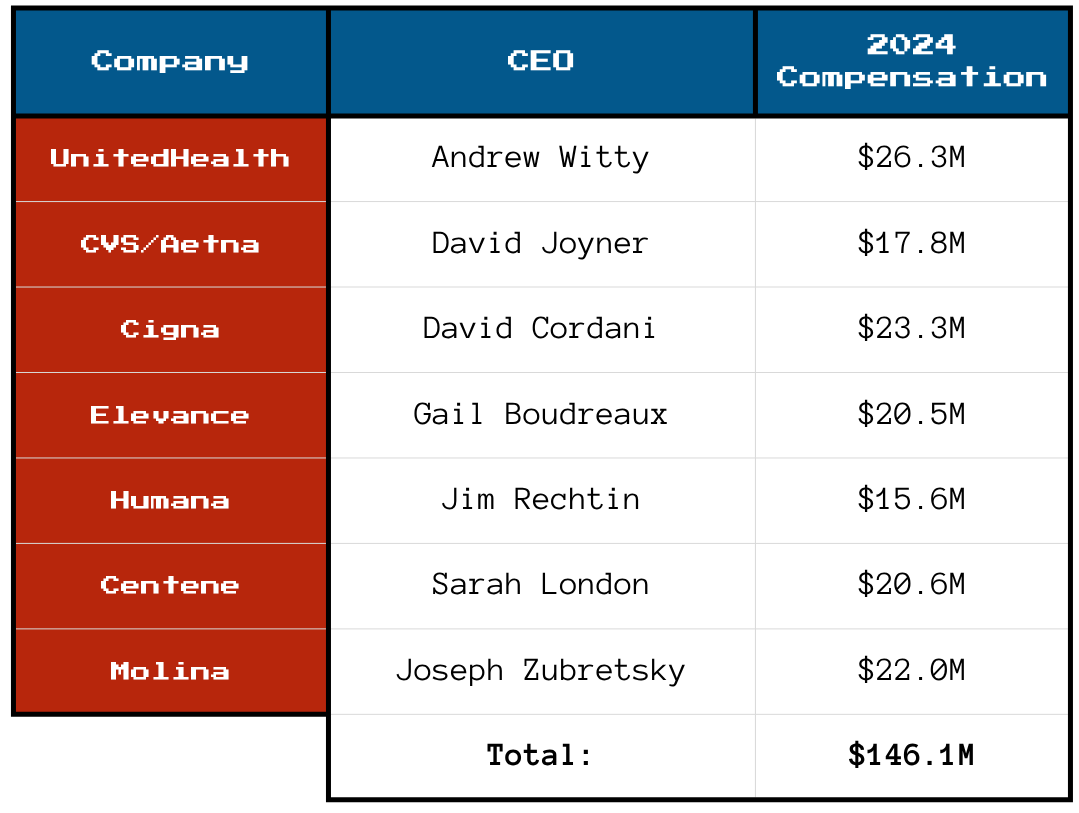
The seven largest publicly traded U.S. health insurance companies made a collective $71.3 billion in profits last year, and their CEOs took home a total of $146.1 million in compensation, according to an analysis released Wednesday by an ex-industry executive.
Wendell Potter, a former vice president for corporate communications at Cigna who now leads the nonprofit Center for Health and Democracy, compiled the data ahead of his recent testimony before the Senate Committee on Health, Education, Labor, and Pensions.
As Potter detailed for his newsletter, Health Care un-covered, the companies—UnitedHealth, CVS/Aetna, Cigna, Elevance, Humana, Centene, and Molina—boosted their profits by more than half a billion dollars from 2023 to 2024.
 (Image: Health Care un-covered)
Alongside a chart detailing the companies' 2023 and 2024 revenues and profits, Potter published one showing each CEO's compensation. He also pointed out that their collective take-home pay is "enough to cover annual premiums for thousands of American families."
 (Image: Health Care un-covered)
"So, what's driving the revenue surge?" Potter wrote. "Gouging. Insurers continued to jack up premiums for their commercial customers and overcharge the government."
He highlighted how investigations have exposed rampant fraud and upcoding with private Medicare Advantage plans and noted that "Medicaid managed care is a gold mine, too."
Potter further noted that "to the dismay of shareholders, the big seven insurers have had to admit that so far in 2025, they've paid more medical claims than they had expected, which means their profits were down somewhat during the first months of the year."
The expert warned that the American public should "expect even more financial pain (and difficulty getting the care you need) as these companies do all they can to get their profit margins back to where Wall Street wants them."
His warning comes as new polling makes clear that Americans are already feeling the pain from healthcare bills. Results released Monday by the Associated Press-NORC Center for Public Affairs Research show that 17% of U.S. adults have used buy now, pay later services for medical or dental care.
Most Americans are also stressed by healthcare costs. According to the poll, 42% of adults identified that as a major stressor, and another 36% said it's a minor stressor. Other sources of stress include grocery prices, housing, savings, and wages.
Healthcare could become an ever bigger source of stress soon, as Republicans' recently signed budget reconciliation package starts to strip millions of people of their insurance coverage, thanks to the law's attacks on Medicaid and the Affordable Care Act (ACA).
"Cuts to the ACA will raise premiums for almost 23M Americans by hundreds of dollars each year," Congressman Ro Khanna (D-Calif.) said on social media Monday. "Working and middle-class families can't afford that. We need to pass Medicare for All and make sure health insurance stays affordable for all Americans."
While more than 100 Democratic members of the U.S. House of Representatives and over a dozen senators support the Medicare for All Act, led by Rep. Pramila Jayapal (D-Wash.) and Sen. Bernie Sanders (I-Vt.), the proposal remains opposed by not only Republicans—who control both chambers—but also some corporate Democrats.
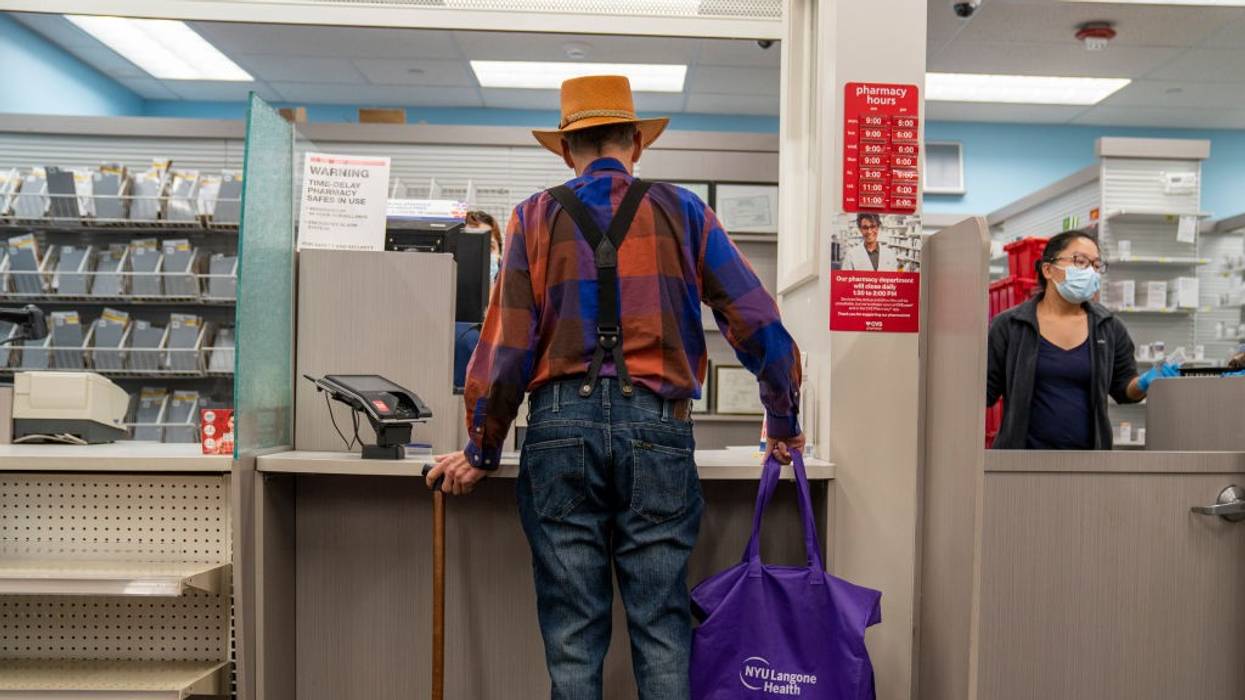
"Caremark, ESI, and Optum—as medication gatekeepers—have extracted millions of dollars off the backs of patients who need lifesaving medications," said one agency leader.
The Federal Trade Commission on Friday initiated a legal process against middlemen that collectively administer about 80% of all prescriptions in the United States, accusing them of artificially inflating the list price of insulin drugs and blocking patients from accessing cheaper products.
The FTC action targets the "Big Three" pharmacy benefit managers (PBMs): CVS Health's Caremark Rx, Cigna's Express Scripts (ESI), and UnitedHealth Group's OptumRx. It also involves their affiliated group purchasing organizations (GPOs): Zinc Health Services, Ascent Health Services, and Emisar Pharma Services.
"Millions of Americans with diabetes need insulin to survive, yet for many of these vulnerable patients, their insulin drug costs have skyrocketed over the past decade thanks in part to powerful PBMs and their greed," said Rahul Rao, deputy director of the FTC's Bureau of Competition.
"Caremark, ESI, and Optum—as medication gatekeepers—have extracted millions of dollars off the backs of patients who need lifesaving medications," Rao continued. "The FTC's administrative action seeks to put an end to the Big Three PBMs' exploitative conduct and marks an important step in fixing a broken system—a fix that could ripple beyond the insulin market and restore healthy competition to drive down drug prices for consumers."
The FTC's vote to begin the legal process by filing a complaint was 3-0. Led by Chair Lina Khan, the Democrats supported the move while the two Republicans, Commissioners Melissa Holyoak and Andrew N. Ferguson, recused.
The American Prospect executive editor David Dayen noted that "the complaint, which was filed in an administrative court, has not yet been made public, as it is undergoing redactions. Agency officials expect it to be made public on Monday."
However, in a statement after the vote, the FTC shared some details about the complaint's arguments that "Caremark, ESI, and Optum and their respective GPOs engaged in unfair methods of competition and unfair acts or practices under Section 5 of the FTC Act by incentivizing manufacturers to inflate insulin list prices, restricting patients' access to more affordable insulins on drug formularies, and shifting the cost of high list price insulins to vulnerable patient populations."
Rao emphasized that while the commission on Friday "exercised its discretion to move forward with suing only the PBMs and GPOs now, FTC staff's investigation has also shed light on the concerning and active role that the insulin manufacturers—Eli Lilly, Sanofi, and Novo Nordisk—play in the challenged conduct."
"All drug manufacturers should be on notice that their participation in the type of conduct challenged here can raise serious concerns, with a potential for significant consumer harm, and that the Bureau of Competition reserves the right to recommend naming drug manufacturers as defendants in any future enforcement actions over similar conduct," he said.
Emma Freer, senior policy analyst for healthcare at the American Economic Liberties Project, pointed out that "the FTC's case adds to the mounting, bipartisan criticism of the 'Big Three' PBMs, which for far too long have exploited their monopoly power to inflate drug prices and enrich shareholders at the expense of patients' health and pocketbooks."
"The lawsuit also exposes their industrywide abuse, using insulin—the price of which has soared over 1,200% since 1999—as a flagship example of how PBMs' rebate schemes distort markets and drive up costs for lifesaving drugs," Freer said. "While PBMs bear much of the blame, the FTC is right to also put brand-name manufacturers like Eli Lilly, Novo Nordisk, and Sanofi on notice for their role in this crisis. We're thrilled to see the commission bring this long overdue challenge against healthcare's most notorious middlemen, and hope to see it result in concrete reform and accountability."
As The New York Times reported:
Just weeks before the presidential election, the agency is tackling an issue that Vice President Kamala Harris has signaled an interest in. Campaigning at a community college in Raleigh, North Carolina, in August, Ms. Harris promised to "demand transparency from the middlemen who operate between Big Pharma and the insurance companies, who use opaque practices to raise your drug prices and profit off your need for medicine."
Former President Donald J. Trump has not campaigned on the issue, but in 2018, his administration proposed a sweeping change that would have threatened the benefit managers' business model. The proposal was never enacted. Mr. Trump's administration also created a model for capping Medicare patients' out-of-pocket costs for some insulin products that was later expanded under President [Joe] Biden.
The Times also noted that "some Republicans in Congress have proposed curbing some of the benefit managers' business practices. But other top Republicans have defended PBMs and said the FTC is overreaching."
Among the GOP's critics of PBMs is House Committee on Oversight and Accountability Chairman James Comer (R-Ky.), who highlighted his panel's investigations into the companies and praised the FTC move.
Another leading congressional critic of PBMs—and the country's failing for-profit healthcare system more broadly—is Senate Committee on Health, Education, Labor, and Pensions (HELP) Chair Bernie Sanders (I-Vt.), who caucuses with Democrats.
After a public pressure campaign led Eli Lilly, Novo Nordisk, and Sanofi to cut list prices of insulin products last year, Sanders held a hearing with their CEOs as well as PBM executives. At the time, he welcomed the voluntary reductions but also stressed that as "Americans pay outrageously high prices for prescription drugs, the pharmaceutical industry and the PBMs make enormous profits."
While the FTC's Friday action was widely praised—other than by the PBMs, who denied the allegations—some advocates hope the commission and other decision-makers will go even further in the future.
Stacy Mitchell, co-executive director of the Institute for Local Self-Reliance, called PBMs "some of the most predatory corporations in healthcare" and highlighted that "these companies have incredibly long rap sheets and convictions at the state level."
"I'm thrilled the FTC is going after these criminal enterprises," she said. "I hope this lawsuit, with its focus on kickbacks, is just the beginning. We also need action on how PBMs harm local pharmacies. Ultimately, these corporations need to be broken up."
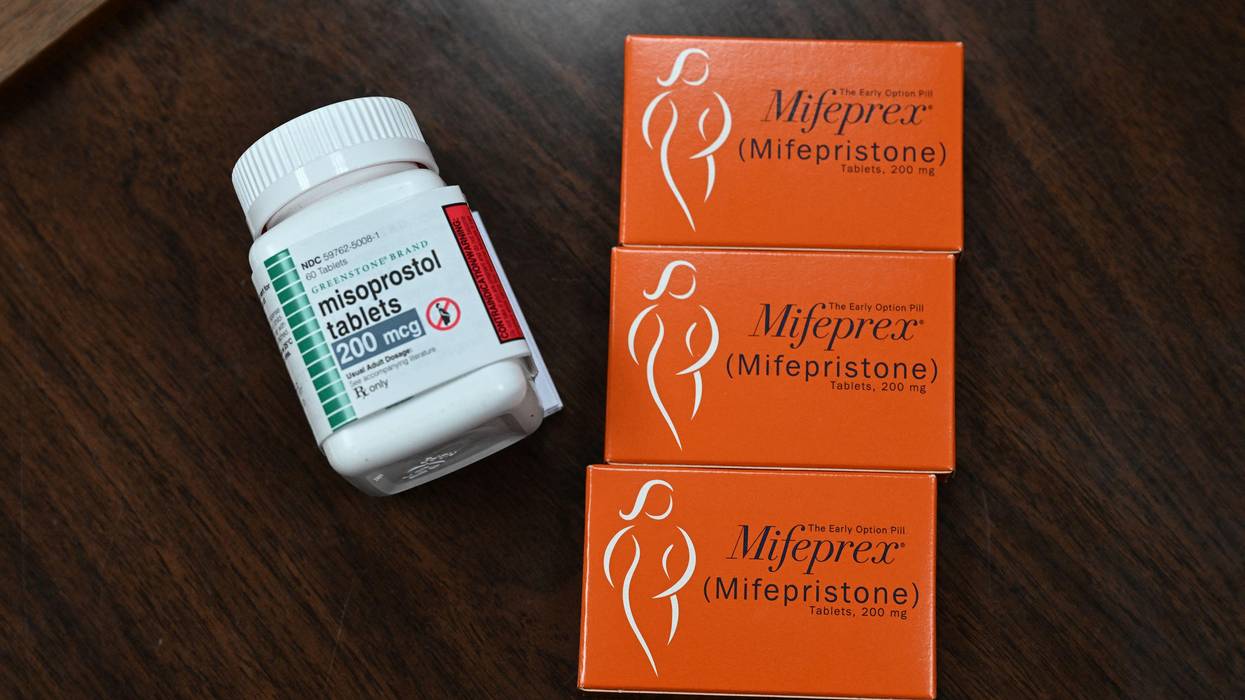
"I encourage all pharmacies that want to pursue this option to seek certification," said President Joe Biden.
CVS and Walgreens will soon start offering the abortion pill mifepristone in certain states, including New York, Pennsylvania, Massachusetts, California, and Illinois.
It's not yet clear how many pharmacies in those states will sell the drug. Walgreens is considering expanding this offering to Kansas, Montana, and Wyoming.
The U.S. Food and Drug Administration announced a rule change in January of last year that made it so retail pharmacies like CVS and Walgreens would be permitted to sell the abortion pill. Retail pharmacies that would like to be able to sell mifepristone have to certify that they know how to treat abortion patients and require that patients fill out a consent form before obtaining the drug.
🥳 Huge W for abortion access 🎉
CVS and Walgreens can now offer #mifepristone - one of the pills used in medication abortion - in states where abortion is legal!
This is ✨great news✨, but let's be clear - everyone deserves access to abortion care, no matter where they live. https://t.co/aieNA4PAO5
— Planned Parenthood (@PPFA) March 1, 2024
"With major retail pharmacy chains newly certified to dispense medication abortion, many women will soon have the option to pick up their prescription at a local, certified pharmacy—just as they would for any other medication. I encourage all pharmacies that want to pursue this option to seek certification," President Joe Biden said in a statement.
Mifepristone is the subject of an upcoming Supreme Court case that could see access to the drug limited. U.S. District Judge Matthew Kacsmaryk, a former anti-abortion activist, issued a nationwide ban on the sale of mifepristone in April of last year in response to a lawsuit in his district that was brought by right-wing activists.
Kacsmaryk argued the FDA was wrong to approve the drug in 2000—which is very safe and has been used for decades. The Supreme Court put a hold on the ban in late April and then agreed to take the case in December.
It remains to be seen what the Supreme Court will do, but it could very well affect retail pharmacies' ability to sell mifepristone. Considering this is the court that overturned Roe, pro-choice voters are very worried about what the outcome might be. A ruling is expected in late June.
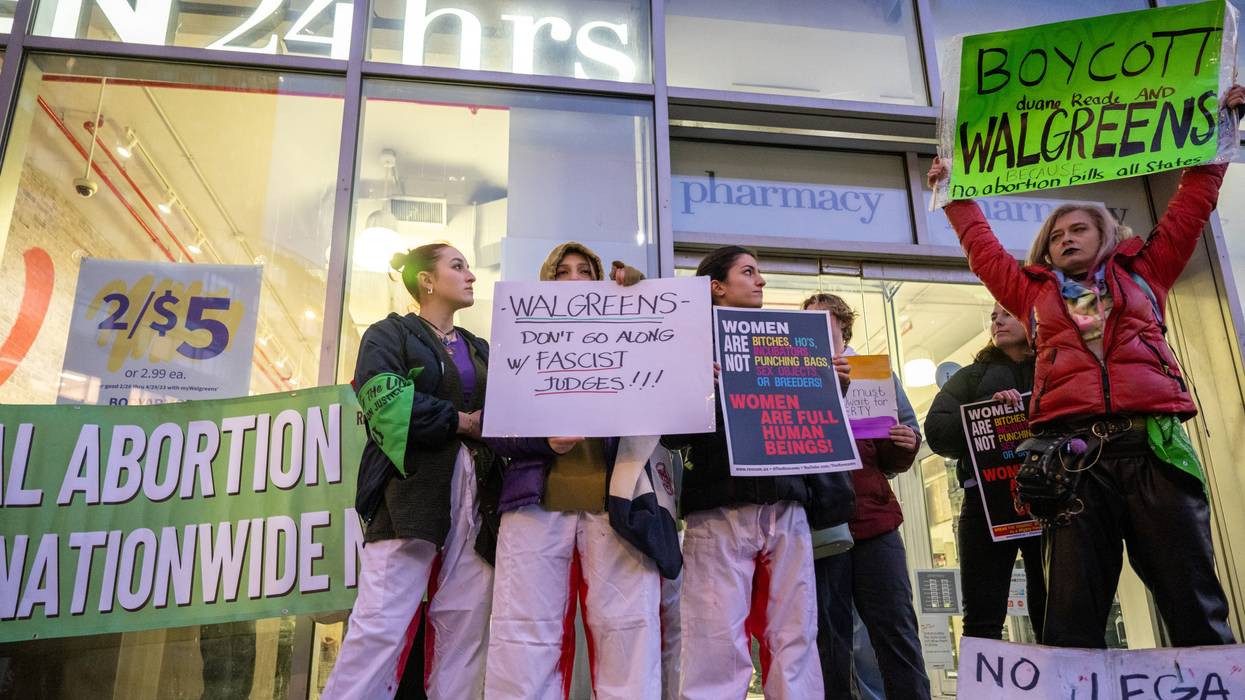
"As companies that dispense critical, lifesaving medications, we urge that your decisions continue to be guided by well-established science and medical evidence and a commitment to the health and well-being of patients—not politics or litigation threats," wrote 14 governors.
With Walgreens under fire for its new abortion pill policy, 14 Democratic U.S. governors on Tuesday asked the corporate leaders of seven other major pharmacies to clarify their plans to lawfully distribute abortion medication like mifepristone.
The Food and Drug Administration (FDA) in January announced a regulatory change to allow retail pharmacies to dispense mifepristone, one of two medications commonly taken in tandem to induce abortion. The move came after the U.S. Supreme Court last summer reversed Roe v. Wade with its 6-3 ruling in Dobbs v. Jackson Women's Health Organization.
In the wake of the high court decision, patients have had to contend with trigger laws, new efforts to enact abortion bans, and other attempts by right-wing political leaders to cut off access to healthcare, including 20 GOP state attorneys general who last month threatened legal action against Walgreens and CVS if they dispense abortion medication by mail.
While shortly after the FDA announcement both pharmacy giants confirmed they planned to seek certification to distribute mifepristone, Walgreens later clarified it won't offer the drug in states where Republican AGs have threatened legal action—prompting California Gov. Gavin Newsom last week to not renew his state's $54 million contract with Walgreens.
Newsom is spearheading the Reproductive Freedom Alliance and on Tuesday joined the Democratic governors of Illinois, Maine, Maryland, Massachusetts, Michigan, Minnesota, North Carolina, New Jersey, New Mexico, New York, Oregon, Washington, and Wisconsin in sending letters to the leaders of Costco, CVS, Health Mart, Kroger, Rite Aid, Safeway, and Walmart.
As the governors wrote:
We are deeply committed to protecting and expanding reproductive freedom and the health and well-being of all of our residents. As governors of 14 states, we not only represent over 141 million residents with a combined economy of over $11 trillion, but we are also direct customers who have partnered with many of your companies for years on a variety of issues and initiatives. We understand you are carefully reviewing the new mifepristone certification process. We look forward to receiving your plans for dispensing mifepristone in states where such care is legal, as well as any other actions you plan to take to safeguard access to reproductive healthcare.
"As companies that dispense critical, lifesaving medications, we urge that your decisions continue to be guided by well-established science and medical evidence and a commitment to the health and well-being of patients—not politics or litigation threats," the governors added.
Meanwhile, Sens. Patty Murray (D-Wash. ) and Debbie Stabenow (D-Mich.) revealed a series of letters—backed by several Senate Democrats—sent to various pharmacy leaders in recent days. They wrote to Walgreens' chief executive officer "with grave concerns about the misunderstanding and confusion your company has created with regard to patients' access to mifepristone from retail pharmacies."
Walgreens' response to Republican attorney generals' pressure "was unacceptable and appeared to yield to these threats—ignoring the critical need to ensure patients can get this essential healthcare wherever possible," the senators continued. "As you work through the FDA certification process, we urge you to fully assess the laws in each state and ensure your policies provide the strongest possible legal access to this critical patient care."
Stabenow told NBC News, which first reported on the senators' letters Tuesday, that "in no way, shape, or form should businesses deny legal healthcare to women who have the right to access this vital medication. All businesses should follow the FDA certification process and fully comply with applicable state and federal law."
The Senate Democrats wrote to the CEOs of Albertsons, Costco, Kroger, and Walmart "with great frustration" that none of them has publicly indicated whether they plan to allow customers to access mifepristone through their pharmacies across the country.
After expressing concern that GOP intimidation tactics could "lead companies like yours to continue to sit on the sidelines and undermine critical care for your customers," the senators urged those four chains "to pursue policies that provide the strongest possible access to the full range of essential healthcare they need, including mifepristone, and to communicate clearly to your customers about how they can access this care."
"We look forward to hearing back from you by March 21, 2023 about your intentions to ensure access to this critical FDA-approved product," the lawmakers added.
In letters to CVS and Rite Aid leadership, the Senate Democrats expressed appreciation for both chains' ongoing efforts to become distributors of mifepristone while also stressing that "at a time of great confusion about abortion access, it is imperative that no company adds to it."
The senators asked both companies' leaders to respond to three questions by March 21:
"Medication abortion is how most women across our country get abortion care," Murray told NBC, "and it's absolutely critical patients can access this safe, FDA-approved drug without being forced to jump through medically unnecessary hoops or drain their bank accounts to travel hundreds of miles."
The questions and concerns about accessing mifepristone at retail pharmacies come as patients and providers nationwide prepare for a secretive Wednesday hearing before right-wing U.S. District Court Judge Matthew Kacsmaryk regarding an anti-choice group's effort to limit abortion access by arguing that the FDA never should have approved the drug over two decades ago.

"In a time when reproductive healthcare is under attack, our group of 23 attorneys general strongly believe we should be encouraging companies and providers to offer easily accessible, safe, and confidential healthcare as broadly as possible."
Warning that Republican-led states have launched an effort to keep millions of people from accessing lifesaving medications, 23 Democratic state attorneys general on Thursday sent a letter to officials at CVS and Walgreens to assure the pharmacies that they can legally dispense and mail mifepristone and misoprostol, the pills used in medication abortions.
The attorneys general of Oregon, California, and Washington spearheaded the letter two weeks after their Republican counterparts in 20 states
told the pharmacies that they could be in violation of the Comstock Act, dating back to the 1870s, if they deliver the pills to patients by mail.
"This claim is misguided and disregards over a century's worth of legal precedent," wrote the Democratic attorneys general. "As extensively detailed in the [Food and Drug Administration] Office of Legal Counsel's recent memorandum opinion, since the early 20th century, federal courts have repeatedly and consistently held that the Comstock Act does not categorically prohibit mailing items that can be used to terminate a pregnancy, and does not apply unless the sender intends the recipient to use them unlawfully."
The Republican attorneys general, led by Andrew Bailey of Missouri, issued their warning to the two largest pharmacy chains in the U.S. a month after the FDA announced that certified retail drugstores can dispense misoprostol and mifepristone, reversing longtime regulations that required patients to obtain the latter pill only at health clinics. Health professionals had long advocated for the change, saying the restrictions unnecessarily reduced access to the medications.
Both CVS and Walgreens announced shortly after the rule was changed that they intended to apply for certification to dispense the pills.
Oregon Attorney General Ellen Rosenblum denounced Republican states for attempting "to scare retail pharmacy chains away from offering these critical medications," which are used to treat miscarriages, ectopic pregnancies, and gastric ulcers as well as inducing abortions.
"Mifepristone and misoprostol are safe, effective medications that are prescribed by doctors for many purposes, including abortion," said Rosenblum. "In a time when reproductive healthcare is under attack, our group of 23 attorneys general strongly believe we should be encouraging companies and providers to offer easily accessible, safe, and confidential healthcare as broadly as possible."
In addition to highlighting the safety and effectiveness of the pills, the attorneys general emphasized that:
Medication abortions accounted for 51% of all abortions in the U.S. in 2020, according to the Centers for Disease Control and Prevention. Misoprostol and mifepristone have been approved for use in abortion care through 10 weeks of gestation since 2000.
"Increasing access to safe and affordable reproductive healthcare is critically important to the health and well-being of millions of people across the country," said New York Attorney General Letitia James. "The evidence is clear: Medication abortion is safe and effective, and decades of clinical research back that up. Pharmacies that offer this lifesaving medication have the full support of my office."
The attorneys general sent the letter as reproductive rights advocates brace for a ruling on abortion pills by U.S. District Judge Matthew Kacsmaryk in Texas. The judge, who was appointed by former Republican President Donald Trump, has given attorneys arguing a case brought by an anti-abortion group until February 24 to finish filing legal briefs, indicating that a ruling could come soon.
The plaintiffs have asked Kacsmaryk to reverse the FDA's approval of mifepristone, which would cut off access to the drug across the nation.
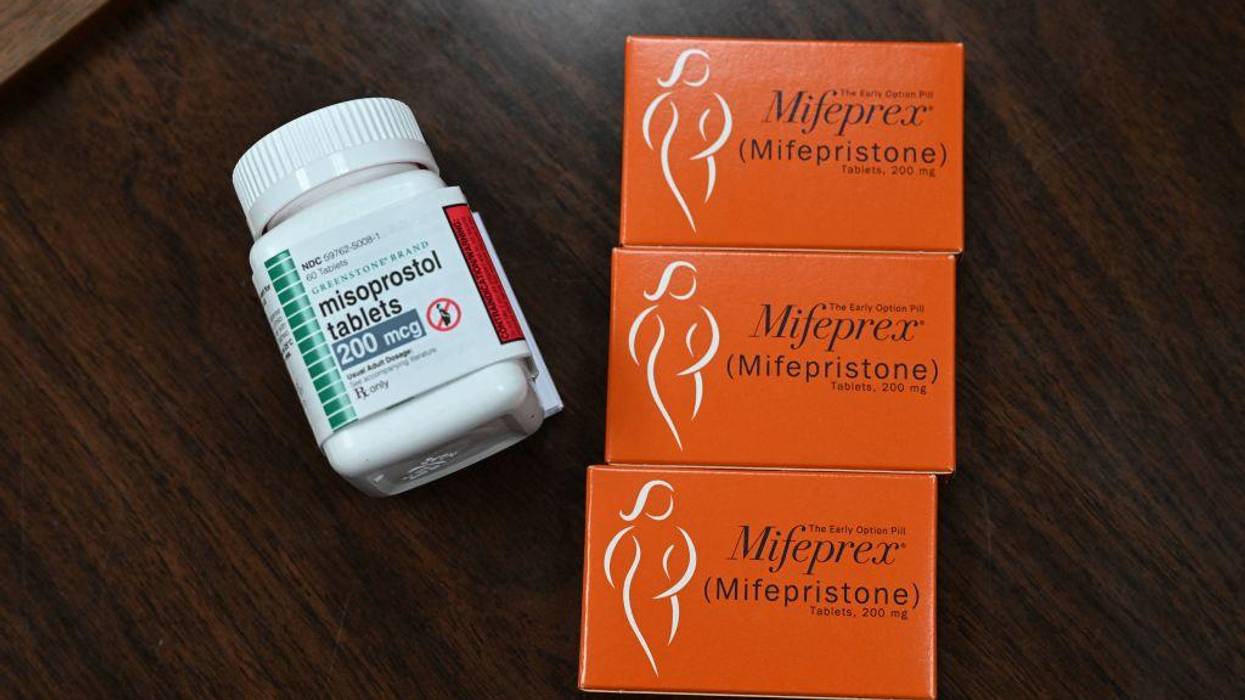
"This is the most important government action today and it didn't involve Kevin McCarthy," said one journalist.
The Food and Drug Administration late Tuesday formalized a regulatory change that will allow retail pharmacies in the U.S. to dispense abortion pills for the first time, removing a major barrier to access as Republican lawmakers wage all-out war on abortion throughout the country.
Prior to the newly finalized change, the provision of mifepristone was heavily restricted, with only certified doctors or clinics allowed to offer the drug—one of two medications that can be taken in tandem to induce an abortion. In 2020, medication abortion accounted for more than half of all abortions in the U.S.
The New York Times, which first reported the FDA's move Tuesday, noted that "in December 2021, the FDA said it would permanently lift the requirement that patients obtain mifepristone in person from a health provider, a step that paved the way for telemedicine abortion services which conduct medical consultations with patients by video, phone or online questionnaires and then arrange for them to receive the prescribed pills by mail."
"On Tuesday, the FDA officially removed the in-person requirement from its regulatory rule book for mifepristone, leaving in place the remaining two requirements: that health providers be certified to show they have the knowledge and ability to treat abortion patients and that patients complete a consent form," the Times added.
Patients will still need a prescription to obtain abortion pills from CVS, Walgreens, and other retail pharmacies.
Mini Timmaraju, the president of NARAL Pro-Choice America, applauded the FDA for "following the science and taking this much-welcome step to permanently lift the in-person dispensing requirement for medication abortion care and expand access through pharmacies."
"For more than 20 years, millions of people have used medication abortion," Timmaraju said in a statement. "It is a safe, effective option. With abortion access being more restricted now than ever before, it is all the more important that we continue expanding access to care. This was a science-based decision that will empower folks to get the care they need in the way that best works for them. We look forward to continuing our work with the Biden administration to restore the right to abortion and expand abortion access for all."
The regulatory move was made public by the FDA with little fanfare amid the absurd spectacle of Republicans trying—and repeatedly failing—to decide who will lead their narrow majority in the House of Representatives.
"This is the most important government action today and it didn't involve Kevin McCarthy," The American Prospect's David Dayen wrote of the FDA news.
"With abortion access being more restricted now than ever before, it is all the more important that we continue expanding access to care."
Despite the FDA's change, retail pharmacies located in Republican-controlled states where abortion is heavily restricted or illegal will likely still be unable to offer abortion pills.
"State laws that ban or restrict abortion apply to medication abortion just as they apply to abortion procedures," the Kaiser Family Foundation (KFF) explains. "Even though the federal FDA has approved mifepristone as safe and effective, following the Dobbs decision, the availability of medication abortion today depends on state laws. Even before the Dobbs decision, however, some states restricted access to medication abortion either by blocking the use of telehealth abortions by mandating in-person visits for abortions, imposing requirements for in-person dispensing, or limiting the kinds of clinicians who could dispense the pills (only permitting MDs to dispense). In many states, these laws are now superseded by state laws that ban abortion."
The reproductive rights group UltraViolet lamented that fact Tuesday, writing on Twitter that "in abortion-hostile states, retail pharmacies may not be able to dispense mifepristone due to abortion bans like Texas' S.B. 8, which criminalizes and punishes those who help others access abortion."
In a separate decision Tuesday, the Justice Department's Office of Legal Counsel said federal law "does not prohibit the mailing, or the delivery, or receipt by mail of mifepristone or misoprostol where the sender lacks the intent that the recipient of the drugs will use them unlawfully"—a legal opinion that will allow the U.S. Postal Service to carry abortion pills into red states.
"There are manifold ways in which recipients in every state may use these drugs, including to produce an abortion, without violating state law," the OCL opinion reads. "Therefore, the mere mailing of such drugs to a particular jurisdiction is an insufficient basis for concluding that the sender intends them to be used unlawfully."
Kirsten Moore, director of the Expanding Medication Abortion Access Project, told Politico on Tuesday that "in a post-Roe world, patients need all available options to get the care they need, whether in-person, by mail, or at the local pharmacy."
"Millions of people still live in states where abortion care is banned entirely," said Moore. "The kind of care you get shouldn't depend on where you live, but that's the reality anti-abortion politicians have created."
This story has been updated to correct the spelling of NARAL Pro-Choice America's president.