

SUBSCRIBE TO OUR FREE NEWSLETTER
Daily news & progressive opinion—funded by the people, not the corporations—delivered straight to your inbox.
5
#000000
#FFFFFF
To donate by check, phone, or other method, see our More Ways to Give page.
Daily news & progressive opinion—funded by the people, not the corporations—delivered straight to your inbox.
"When it comes to the DOJ's proposal to reschedule marijuana, public opinion could not be clearer," said a campaigner with Drug Policy Alliance, which analyzed public comments on the pending change.
Shortly after the public comment period for the Biden administration's proposed rule to reschedule marijuana closed, a reform group on Tuesday released an analysis showing that the majority of submissions advocate for federal decriminalization.
When President Joe Biden pardoned U.S. citizens and lawful permanent residents convicted of simple federal marijuana possession in October 2022, he also ordered the departments of Justice (DOJ) and Health and Human Services to review how cannabis is treated under the Controlled Substances Act.
Marijuana is currently Schedule I, the federal law's most restrictive category, despite dozens of states allowing adult recreational or medicinal use. In May, the Drug Enforcement Administration (DEA), which is part of the DOJ, proposed a shift to Schedule III and initiated the public comment period that ended Monday.
"Participation in public comment processes gives the American public a chance to speak from personal experience and provide feedback on proposed legal changes—and it gives the federal government an opportunity to adjust their proposals to reflect public opinion," said Cat Packer of the Drug Policy Alliance (DPA), which reviewed submissions.
"When it comes to the DOJ's proposal to reschedule marijuana, public opinion could not be clearer," added Packer, DPA's director of drug markets and legal regulation. "Rescheduling is simply not enough."
As DPA detailed in a statement, after analyzing the 42,910 public comments, the group found:
"The people are demanding the Biden administration do more to deliver on the marijuana reforms that communities deserve," Packer said, pointing to previous promises from Biden and Vice President Kamala Harris, the presumptive Democratic nominee to face former Republican President Donald Trump and U.S. Sen. JD Vance (R-Ohio) in the November election.
Packer highlighted that nearly half of the comments "recognize that ending federal criminalization is key to achieving racial justice and social equity," and "this is something that the Biden administration has repeatedly identified as a priority in their marijuana reform efforts."
"However, under Schedule III, communities of color would still face disproportionate harms and lifelong consequences from federal marijuana criminalization," she explained. "Under Schedule III, people could still be jailed or deported for marijuana violations, even in states where it is legal. Under Schedule III, people could lose their jobs, their housing, their... food stamp benefits, or even lose custody of their children for marijuana violations."
Earlier this month, DPA and Human Rights Watch released a 91-page report detailing how the U.S. War on Drugs has impacted the lives of immigrants, "punishing people with deep connections to the United States, where they have formed families, attained education, and built their lives."
Packer argued Tuesday that "if the Biden administration wants to be responsive to public opinion and live up to their own stated values of racial justice and repair, marijuana must be federally decriminalized and additional actions must be taken to end the lifelong collateral consequences that result from marijuana criminalization."
"This is a galvanizing moment for our movement for drug policies grounded in health, equity, and reinvestment," she stressed. "Even if marijuana is ultimately rescheduled through this process, there are additional actions that President Biden and Congress can take. In the coming weeks and months, we will continue working with our allies to urge President Biden to take a whole government approach to advance equity in federal marijuana policy and mitigate the harms of criminalization."
"That means expanding pardons and commutations, protecting state marijuana programs, and directing federal agencies to cease punishing people for marijuana use," she said. "We know that the people and the evidence are on our side. It is time that our federal government listened."
Despite support from top figures including Senate Majority Leader Chuck Schumer (D-N.Y.), there is little hope that the current divided Congress would decriminalize marijuana. As Marijuana Moment reported shortly before House Speaker Mike Johnson (R-La.) was voted into his role last year, he "has consistently voted against cannabis-related legislation."
The cannabis industry analytics firm Headset on Tuesday also reviewed public submissions for the new proposal and noted that "this comment period has shattered previous DEA records, surpassing even the highly contentious 2020 telemedicine rules that garnered approximately 38,000 comments."
"To put this into perspective, that's roughly equivalent to the entire population of Juneau, the capital city of Alaska," the firm highlighted. "It's as if every resident of a small state capital took the time to voice their opinion on this crucial issue."
Headset found that 92.45% of comments were in favor of changing cannabis' schedule, with 61.7% of them advocating for descheduling and 38.3% supporting a shift to a less restrictive category. Just 7.55% wanted to retain Schedule I.
"Those supporting rescheduling emphasized potential medical benefits, increased research opportunities, and alignment with state laws," Headset said. "Proponents of descheduling, the largest group, advocated for complete legalization, citing social justice concerns, economic opportunities, and personal liberty."
The decision "validates the experiences of tens of millions of Americans, as well as tens of thousands of physicians, who have long recognized that cannabis possesses legitimate medical utility," said one advocate.
As Democratic lawmakers push for the federal decriminalization of marijuana, U.S. President Joe Biden on Thursday announced the Department of Justice was formalizing a proposal to remove the substance from Schedule I—the legal classification which for decades has placed marijuana in the same category as heroin.
The Drug Enforcement Administration's (DEA) proposal to reschedule marijuana under Schedule III—which would place it alongside substances like testosterone and steroids—was submitted as a Notice of Formal Rulemaking in the Federal Register, commencing a 60-day public comment period.
After the comment period and any public hearings that are requested by interested parties, the DEA is expected to issue a final order on reclassifying marijuana.
In a video message posted to social media, Biden called the step his administration has taken "monumental" and said marijuana's current classification suggests it is more dangerous than "fentanyl and methamphetamine—the two drugs driving America's overdose epidemic."
"That just doesn't add up," said the president. "Today's announcement builds on the work we've done to pardon a record number of federal offenses for simple possession of marijuana, and it adds to the action we've taken to lift barriers to housing, employment, small business loans, and so much more for tens of thousands of Americans."
"Far too many lives have been upended because of a failed approach to marijuana and I'm committed to righting those wrongs," added Biden.
With marijuana classified under Schedule III, the federal government would for the first time officially acknowledge the medical benefits of the substance, which is approved for medical use in 43 U.S. states and territories as well as the District of Columbia.
Federal scientists will be able to research the medical benefits of the drug for the first time since 1971, when the Controlled Substances Act placed marijuana under Schedule I.
The new classification could also eliminate tax burdens for legal cannabis businesses.
Paul Armentano, deputy director of the National Organization for the Reform of Marijuana Laws (NORML), said Biden's decision "validates the experiences of tens of millions of Americans, as well as tens of thousands of physicians, who have long recognized that cannabis possesses legitimate medical utility."
"As a first step forward, this policy change dramatically shifts the political debate surrounding cannabis," Armentano added. "Specifically, it delegitimizes many of the tropes historically exploited by opponents of marijuana policy reform. Claims that cannabis poses unique harms to health, or that it's not useful for treating chronic pain and other ailments, have now been rejected by the very federal agencies that formerly perpetuated them. Going forward, these specious allegations should be absent from any serious conversations surrounding cannabis and how to best regulate its use."
Biden's announcement came a week after Senate Majority Leader Chuck Schumer (D-N.Y.) was joined by 17 other Democratic senators in reintroducing S. 4226, the Cannabis Administration and Opportunity Act (CAOA), which would remove marijuana from the Controlled Substances Act and allow states to regulate the substance.
Schumer applauded the White House for "recognizing that draconian cannabis laws need to change to catch up to science and the majority of Americans," but said marijuana must now be decriminalized at the federal level.
"The proposed change fails to harmonize federal marijuana policy with the cannabis laws of most U.S. states," said Armentano, "particularly the 24 states that have legalized its use and sale to adults."
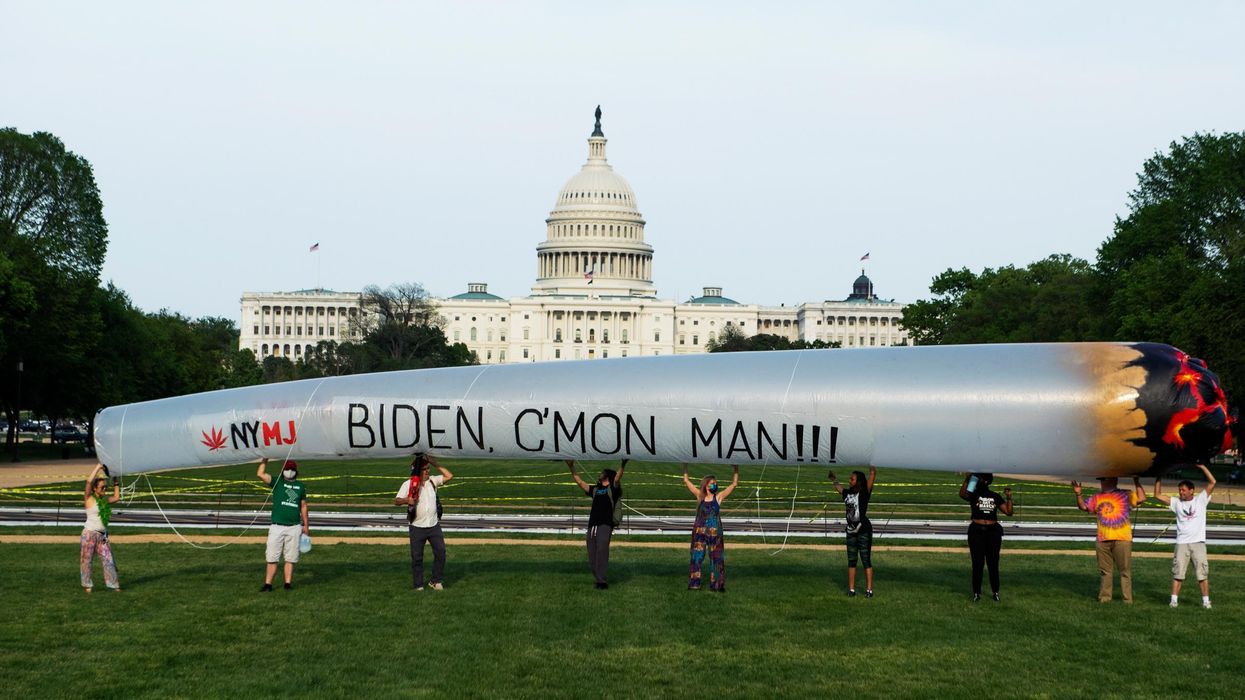
Sen. Cory Booker urged fellow lawmakers to "follow the lead of states around the country and legalize cannabis for adult use and create a comprehensive taxation and regulatory scheme."
U.S. marijuana legalization advocates greeted Tuesday's news that the Drug Enforcement Administration is proposing rescheduling cannabis to a less restrictive class by calling on President Joe Biden to fully deschedule the plant, which is approved for recreational or medicinal use in the vast majority of states.
The Associated Press reported the DEA is proposing rescheduling marijuana from Schedule I—which includes heroin, MDMA, and LSD—to Schedule III, a far less restrictive class that includes ketamine, anabolic steroids, testosterone, and over-the-counter products containing less than 90 milligrams of codeine per dose. According to the DEA, Schedule I drugs have "no currently accepted medical use and a high potential for abuse."
While it would not legalize cannabis for recreational use, the DEA proposal—which is subject to review by the White House Office of Management and Budget—would affirm medicinal marijuana and recognize that the plant has a lower potential for abuse than other widely used recreational drugs.
The Drug Policy Alliance (DPA)—which works to end the failed 53-year War on Drugs—warned that "under this proposed shift, marijuana criminalization would continue at the federal level and most penalties, including those for simple possession, would continue as long as marijuana remains anywhere on the Controlled Substances Act (CSA)."
While running for president in 2020, Biden repeatedly vowed to decriminalize marijuana and expunge the criminal records of people convicted of cannabis possession. In 2022 the president issued a "full, complete, and unconditional pardon to all current United States citizens and lawful permanent residents" convicted of simple federal marijuana possession—a move that affected thousands of people but excluded those who are in the United States without authorization.
The following year, Health and Human Services (HHS) Secretary Xavier Becerraconfirmed that his department would recommend rescheduling cannabis to Schedule III.
Sen. Cory Booker (D-N.J.) on Tuesday urged Congress to "follow the lead of states around the country and legalize cannabis for adult use and create a comprehensive taxation and regulatory scheme."
"Thousands of people remain in prisons around the country for marijuana-related crimes. Thousands of people continue to bear the devastating collateral consequences that come with a criminal record," the senator continued. "Legal marijuana businesses, especially those in communities hardest hit by the War on Drugs, still have to navigate a convoluted patchwork of state laws and regulatory schemes."
"I hope that my colleagues on both sides of the aisle, especially those who represent constituents benefiting from medical or adult-use programs, join me to pass federal legislation to fix these problems," Booker added.
Senate Majority Leader Chuck Schumer (D-N.Y.) said that "it is great news that DEA is finally recognizing that restrictive and draconian cannabis laws need to change to catch up to what science and the majority of Americans have said loud and clear."
"While this rescheduling announcement is a historic step forward, I remain strongly committed to continuing to work on legislation like the SAFER Banking Act as well as the Cannabis Administration and Opportunity Act, which federally deschedules cannabis by removing it from the Controlled Substances Act," he added.
Booker and Schumer were among the 21 senators who last week sent a letter to U.S. Attorney General Merrick Garland and DEA Administrator Anne Milgram noting that it's been 18 months since Biden ordered HHS October to review cannabis scheduling and eight months since the agency's rescheduling recommendation.
"While we understand that the DEA may be navigating internal disagreement on this matter, it is critical that the agency swiftly correct marijuana's misguided placement in Schedule I," the letter states.
Legalization advocates, meanwhile, pushed the Biden administration to go much further, as 24 states plus the District of Columbia have approved adult-use recreational marijuana and 38 states have legalized medicinal cannabis.
"Supporting federal marijuana decriminalization means supporting the removal of marijuana from the Controlled Substances Act, not changing its scheduling," DPA director of drug markets and legal regulation Cat Packer said in a statement. "We all deserve a federal framework for marijuana that upholds the health, well-being, and safety of our communities—particularly Black communities who have borne the brunt of our country's racist enforcement of marijuana laws."
"Rescheduling marijuana is not a policy solution for federal marijuana criminalization or its harms, and it won't address the disproportionate impact that it has had on Black and Brown communities," Packer added.
Dasheeda Dawson, chair of the Cannabis Regulators of Color Coalition and founder of Cannabis NYC, said: "The time for descheduling cannabis is not just a matter of policy; it's an imperative for justice and equity. Rescheduling would undermine the hard-fought progress made by cannabis equity and policy reform leaders like the Cannabis Regulators of Color Coalition, jeopardizing the livelihoods and futures of those entrepreneurs and communities disproportionately affected by past criminalization."
"We cannot afford to backtrack on our commitment to repair the harm inflicted by outdated policies," Dawson added. "Descheduling is not just about legality; it's about rectifying historic injustices and ensuring a fair and inclusive future for all."
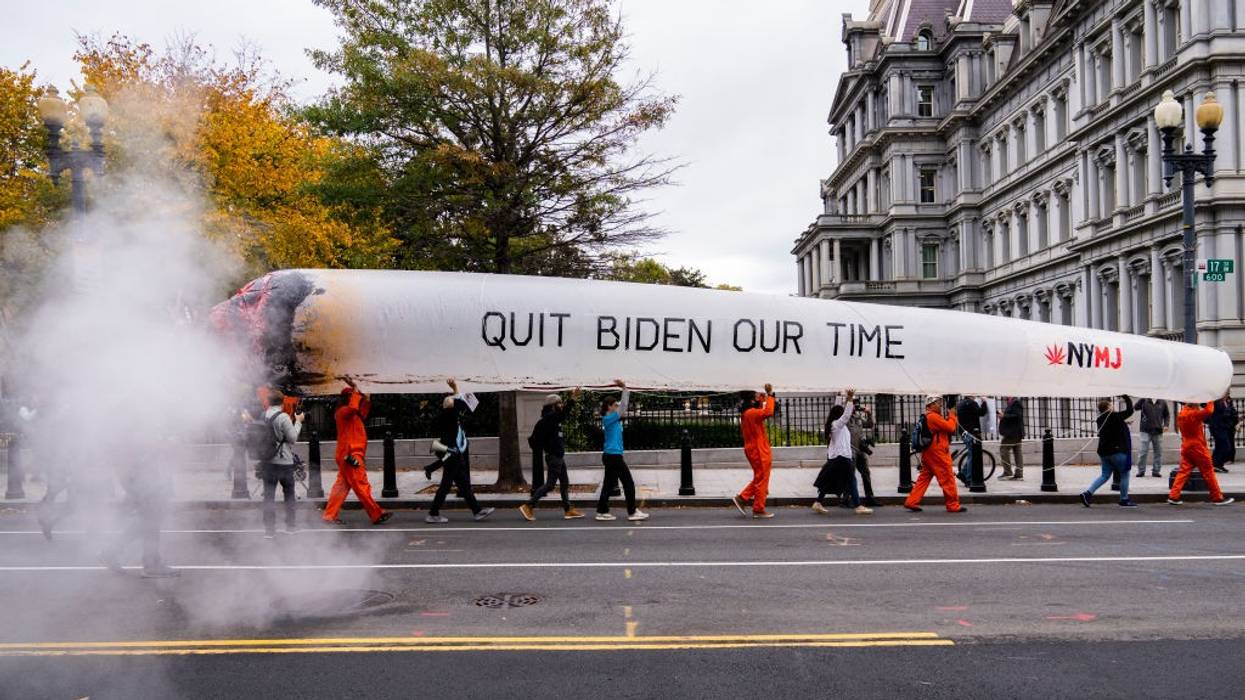
The lawmakers asserted that the continued listing of cannabis under the Controlled Substances Act has a "devastating impact on our communities and is increasingly out of step with state law and public opinion."
A dozen U.S. senators on Tuesday urged the Biden administration to "swiftly deschedule" marijuana, which remains in the most restrictive federal criminalization category despite being legal for recreational or medicinal use in a majority of states.
In a letter to U.S. Attorney General Merrick Garland and Drug Enforcement Agency (DEA) Administrator Anne Milgram led by Sens. Elizabeth Warren (D-Mass.) and John Fetterman (D-Pa.), the lawmakers reject the Department of Health and Human Services' August 2023 recommendation to reclassify cannabis from Schedule I to Schedule III under the Controlled Substances Act (CSA).
According to the DEA, Schedule I drugs—which in addition to marijuana include heroin, MDMA, LSD, and peyote—have "no currently accepted medical use and a high potential for abuse." Schedule III drugs include Tylenol with codeine, ketamine, and anabolic steroids.
"While rescheduling to Schedule III would mark a significant step forward, it would not resolve the worst harms of the current system. Thus, the DEA should deschedule marijuana altogether," the senators wrote. "Marijuana's placement in the CSA has had a devastating impact on our communities and is increasingly out of step with state law and public opinion."
A record 7 in 10 voting-age Americans believe marijuana should be legal, according to Gallup polling published last November, a day after voters made Ohio the 24th state to legalize adult recreational use of the plant.
While thousands of people—exclusively U.S. citizens and permanent residents—have been pardoned for simple federal marijuana possession convictions following presidential proclamations issued in 2022 and last month, Biden has been criticized for refusing to take more meaningful steps to legalize a plant used by half of Americans at least once in their lives.
"The Biden administration has a window of opportunity to deschedule marijuana that has not existed in decades and should reach the right conclusion—consistent with the clear scientific and public health rationale for removing marijuana from Schedule I, and with the imperative to relieve the burden of current federal marijuana policy on ordinary people and small businesses," the senators wrote.
Last September, the U.S. Senate Banking Committee voted 14-9 for the Secure and Fair Enforcement Regulation Banking Act, which would legally protect banks and credit unions that serve cannabis businesses and bar federal regulators from ordering financial institutions to close their accounts.
In addition to Warren and Fetterman, the senators who signed Tuesday's letter are: Majority Leader Chuck Schumer (D-N.Y.), Cory Booker (D-N.J.), Jeff Merkley (D-Ore.), Bernie Sanders (I-Vt.), Kirsten Gillibrand (D-N.Y.), Ron Wyden (D-Ore.), John Hickenlooper (D-Colo.), Peter Welch (D-Vt.), Chris Van Hollen (D-Md.), and Alex Padilla (D-Calif.).
"Classifying marijuana as a Schedule I drug—something more dangerous than cocaine or fentanyl—has harmed communities and denied critical relief to vulnerable patients," Gillibrand said on social media Sunday. "It's time to legalize and deschedule marijuana altogether."
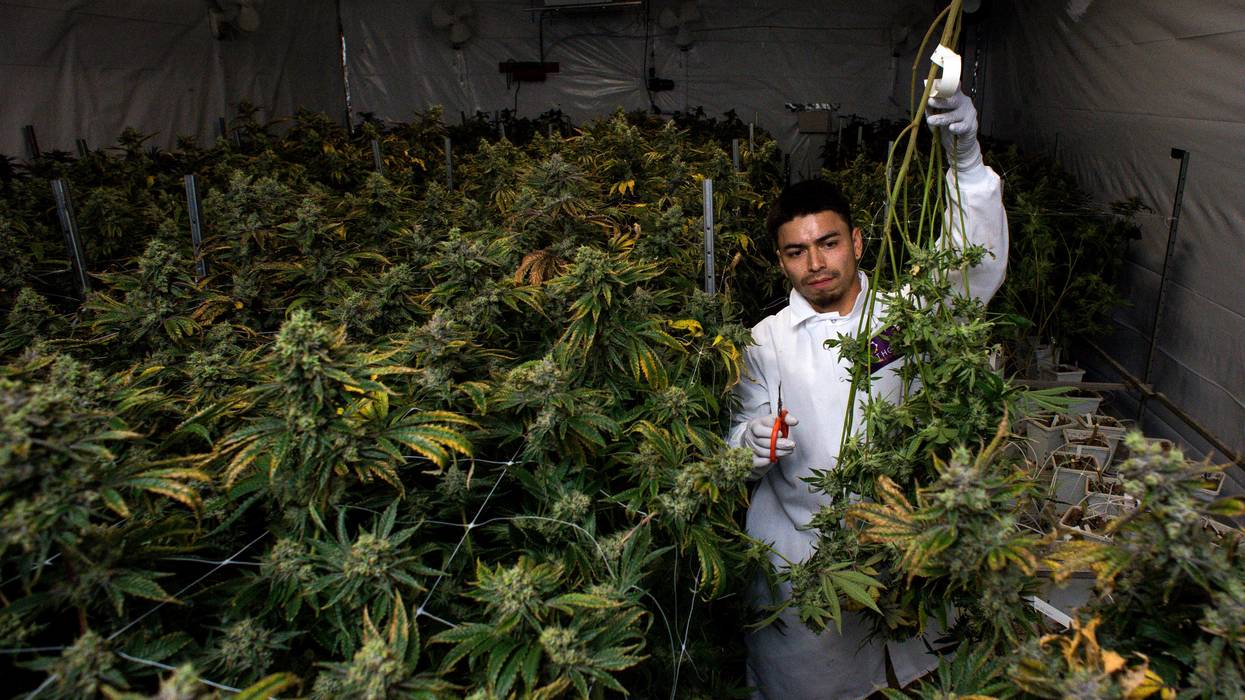
"The goal of any federal cannabis policy reform ought to be to address the existing, untenable chasm between federal marijuana policy and the cannabis laws of the majority of U.S. states," said NORML's deputy director.
Cannabis reform advocates and industry representatives on Wednesday renewed demands for legalizing marijuana at the federal level as U.S. Health and Human Services Secretary Xavier Becerra confirmed his department's rescheduling recommendation.
Marijuana is currently a Schedule I drug—the most restricted category under the Controlled Substance Act (CSA)—but President Joe Biden ordered Becerra and Attorney General Merrick Garland to initiate a review last October, when he issued a mass pardon for simple federal cannabis possession.
Bloomberg initially reported Wednesday that a Department of Health and Human Services (HHS) official on Tuesday wrote to Drug Enforcement Administration (DEA) chief Anne Milgram to recommend reclassifying cannabis Schedule III, a development Becerra confirmed on social media at 4:20 pm ET.
"Following the data and science, HHS has expeditiously responded to President Biden's directive to HHS Secretary Becerra and provided its scheduling recommendation for marijuana to the DEA on August 29, 2023," an HHS spokesperson told Marijuana Moment. "This administrative process was completed in less than 11 months, reflecting this department's collaboration and leadership to ensure that a comprehensive scientific evaluation be completed and shared expeditiously."
A DEA spokesperson confirmed to the outlet that it received the HHS letter and said: "DEA has the final authority to schedule or reschedule a drug under the Controlled Substances Act. DEA will now initiate its review."
Asked about Bloomberg's reporting on Wednesday, White House Press Secretary Karine Jean-Pierre stressed to reporters that Biden requested the scheduling review, "it's going to be an independent process," and "it's going to be guided by evidence." She declined to comment regarding Biden's position on decriminalization.
NORML declared in an email that "rescheduling is not enough," and in response to the letter, deputy director Paul Armentano said that "it will be very interesting to see how DEA responds to this recommendation, given the agency's historic opposition to any potential change in cannabis' categorization under federal law. Further, for decades, the agency has utilized its own five-factor criteria for assessing cannabis' placement in the CSA—criteria that as recently as 2016, the agency claimed that cannabis failed to meet. Since the agency has final say over any rescheduling decision, it is safe to say that this process still remains far from over."
Armentano argued that "the goal of any federal cannabis policy reform ought to be to address the existing, untenable chasm between federal marijuana policy and the cannabis laws of the majority of U.S. states," and rescheduling "fails to adequately address this conflict."
"Just as it is intellectually dishonest to categorize cannabis in the same placement as heroin, it is equally disingenuous to treat cannabis in the same manner as anabolic steroids," he added. "The majority of Americans believe that cannabis ought to be legal and that its hazards to health are less significant than those associated with federally descheduled substances like alcohol and tobacco. Like those latter substances, we have long argued the cannabis plant should be removed from the Controlled Substances Act altogether, thereby proving state governments—rather than the federal government—the ability to regulate marijuana in the manner they see fit without violating federal law."
Medicinal use of cannabis is allowed by 38 states, three U.S. territories, and the District of Columbia while recreational adult use is permitted in 23 states, two territories, and D.C., according to the National Conference of State Legislatures.
Under the HHS plan, "state medical and adult-use marijuana programs will still remain federally illegal, meaning patients, consumers, and workers would remain subject to federal arrest; noncitizens would remain subject to deportation simply for possessing marijuana or working in the industry; and federal marijuana arrests and prosecutions will continue, previous arrests will not be expunged, and thousands will remain incarcerated in federal prison for marijuana violations," emphasized Cat Packer, director of drug markets and legal regulation at the Drug Policy Alliance.
"It also means that federal benefits, such as housing and nutritional assistance, will still be denied to certain people with previous marijuana convictions and the federal government will continue to be unable to foster a fair business environment that allows small and minority-owned marijuana businesses to compete with large corporate marijuana operators," noted Packer, urging the president to "limit the harms of marijuana criminalization" and work with Congress to pass the Cannabis Administration and Opportunity Act (CAOA).
U.S. Senate Majority Leader Chuck Schumer (D-N.Y.)—an advocate of federally legalizing cannabis and an original CAOA co-sponsor—said in a statement that "HHS has done the right thing and DEA should now quickly follow through on this important step to greatly reduce the harm caused by draconian marijuana laws."
"While this is a step forward, there is still much more that needs to be done legislatively to end the federal prohibition on cannabis and roll back the War on Drugs," Schumer added. "I am committed to continuing to work in Congress to pass important marijuana legislation and criminal justice reform."
U.S. Cannabis Council "enthusiastically" welcomed the HHS recommendation, saying on social media: "We believe that rescheduling to Schedule III will mark the most significant federal cannabis reform in modern history. President Biden is effectively declaring an end to [former President Richard] Nixon's failed war on cannabis and placing the nation on a trajectory to end prohibition."
While recognizing the range of benefits from the potential rescheduling—from making research easier to tax deductions for businesses—the industry group also emphasized its commitment to full cannabis legalization at the federal level.
National Cannabis Industry Association CEO Aaron Smith said that "moving cannabis to schedule III could have some limited benefit but does nothing to align federal law with the 38 U.S. states which have already effectively regulated cannabis for medical or adult use. The only way to fully resolve the myriad of issues stemming from the federal conflict with state law is to remove cannabis from the Controlled Substances Act and regulate the product in a manner similar to alcohol."
This post has been updated with comment from the Drug Policy Alliance.
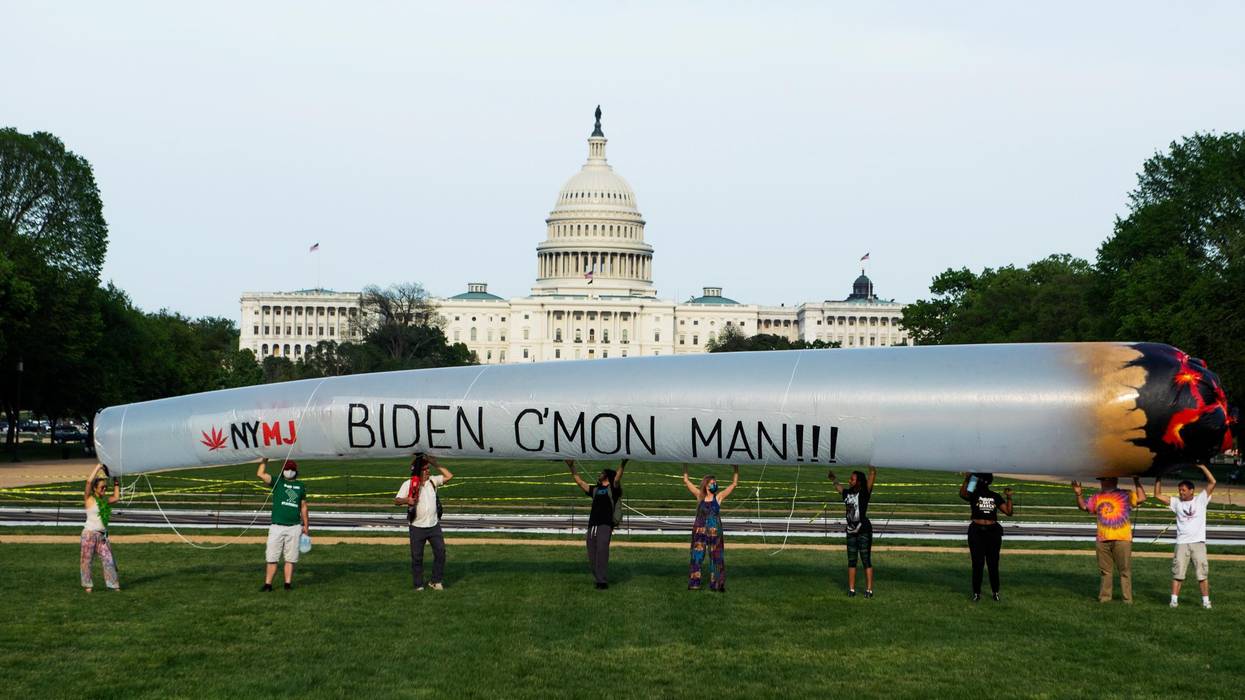
"Take whatever steps are necessary to make sure marijuana is descheduled and encourage Congress to pass comprehensive legislation that includes criminal justice reform."
As cannabis enthusiasts across the United States and around the world celebrated 4/20 Thursday, more than 80 advocacy groups urged the administration of President Joe Biden to remove marijuana from the Controlled Substances Act and to back comprehensive legal reform.
In a letter to the president and key administration officials, the groups—led by the Drug Policy Alliance—acknowledged Biden's October 2022 pardon of all U.S. citizens and legal residents convicted of simple federal marijuana possession—less than 100 people in total—and other moves like encouraging state governors to forgive cannabis offenses and launching an administrative review of the plant's listing in the most severe category on the Controlled Substances Act (CSA).
"Nonetheless, these actions alone will neither fully end future harms of marijuana criminalization nor repair past harms," the letter states. "Accordingly, we urge you and your administration to take the steps necessary to deschedule marijuana in conjunction with other administrative actions that center Black, Indigenous, and people of color (BIPOC) communities."
"Additionally," the groups wrote, "we implore your administration to support comprehensive marijuana reform legislation in Congress, such as the Cannabis Administration and Opportunity Act (CAOA), a bill that deschedules marijuana, repairs the past harms of prohibition, and provides a regulatory framework for marijuana markets."
"Marijuana must be fully removed from the CSA and descheduled," the letter argues. "Rescheduling marijuana to a less restrictive schedule in the CSA would do little to address the harms of federal criminalization. As long as marijuana remains anywhere in the CSA, the majority of the problems associated with its criminalization will persist."
Acknowledging that Biden cannot unilaterally end federal cannabis prohibition, the letter's signers urged the president to "take whatever steps are necessary to make sure marijuana is descheduled and encourage Congress to pass comprehensive legislation that includes criminal justice reform, repairing and centering communities most harmed by prohibition and criminalization, and a regulatory framework that is rooted in equity, justice, and public health."
Over a year after the then-Democratic-controlled House of Representatives passed the Marijuana Opportunity Reinvestment and Expungement (MORE) Act—which would decriminalize marijuana nationwide and expunge federal cannabis convictions—numerous members of Congress also called for an end to cannabis criminalization.
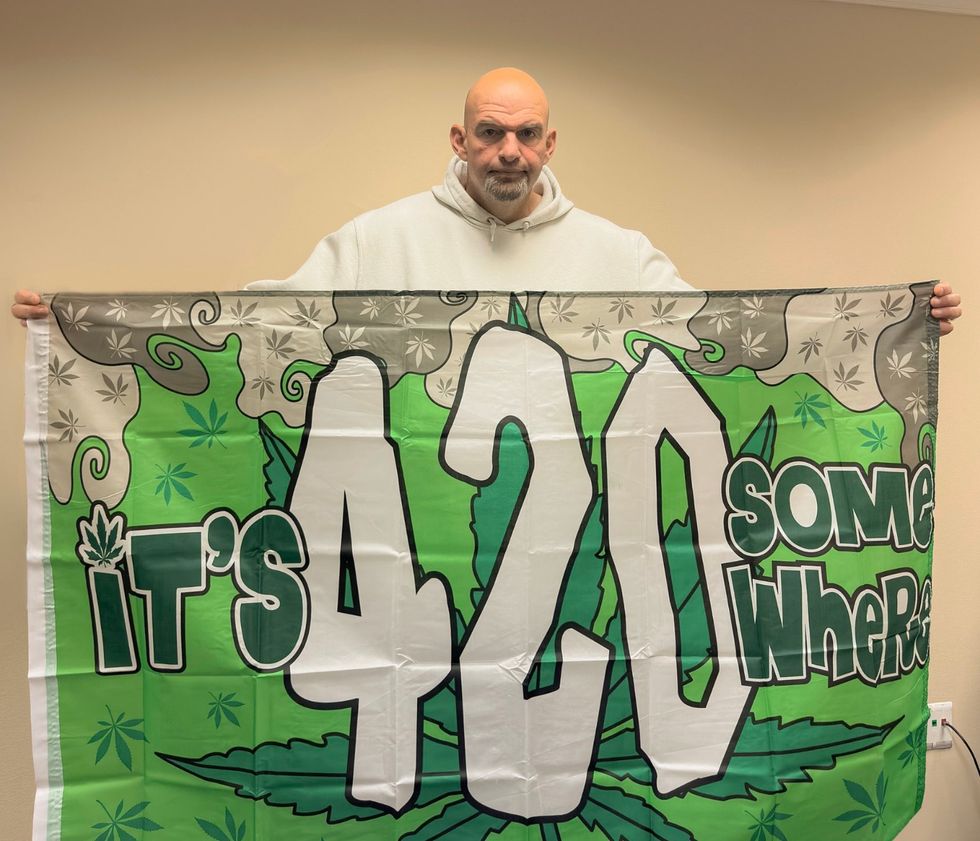 U.S. Sen. John Fetterman posted this photo with the caption "It's 4:20 on 4/20. That's the tweet" on his Twitter page on April 20, 2023.
"We need to legalize marijuana AND make the industry more accessible to those who have been unjustly criminalized at its hands so that Black and Brown communities aren't being incarcerated while others are making millions," Rep. Jamaal Bowman (D-N.Y.) tweeted.
Noting that Black people are around five times more likely than whites people to be arrested in Pennsylvania for marijuana possession, Rep. Summer Lee (D-Pa.) asserted that "it's time to legalize cannabis, expunge all marijuana convictions, and release everyone incarcerated on nonviolent marijuana-related charges."
On Tuesday, Reps. Dave Joyce (R-Ohio) and Alexandria Ocasio-Cortez (D-N.Y.) reintroduced bipartisan legislation—the Harnessing Opportunities by Pursuing Expungement (HOPE) Act—that, if passed, would incentivize states to offer people with nonviolent marijuana convictions federal grants.