

SUBSCRIBE TO OUR FREE NEWSLETTER
Daily news & progressive opinion—funded by the people, not the corporations—delivered straight to your inbox.
5
#000000
#FFFFFF
To donate by check, phone, or other method, see our More Ways to Give page.
Daily news & progressive opinion—funded by the people, not the corporations—delivered straight to your inbox.
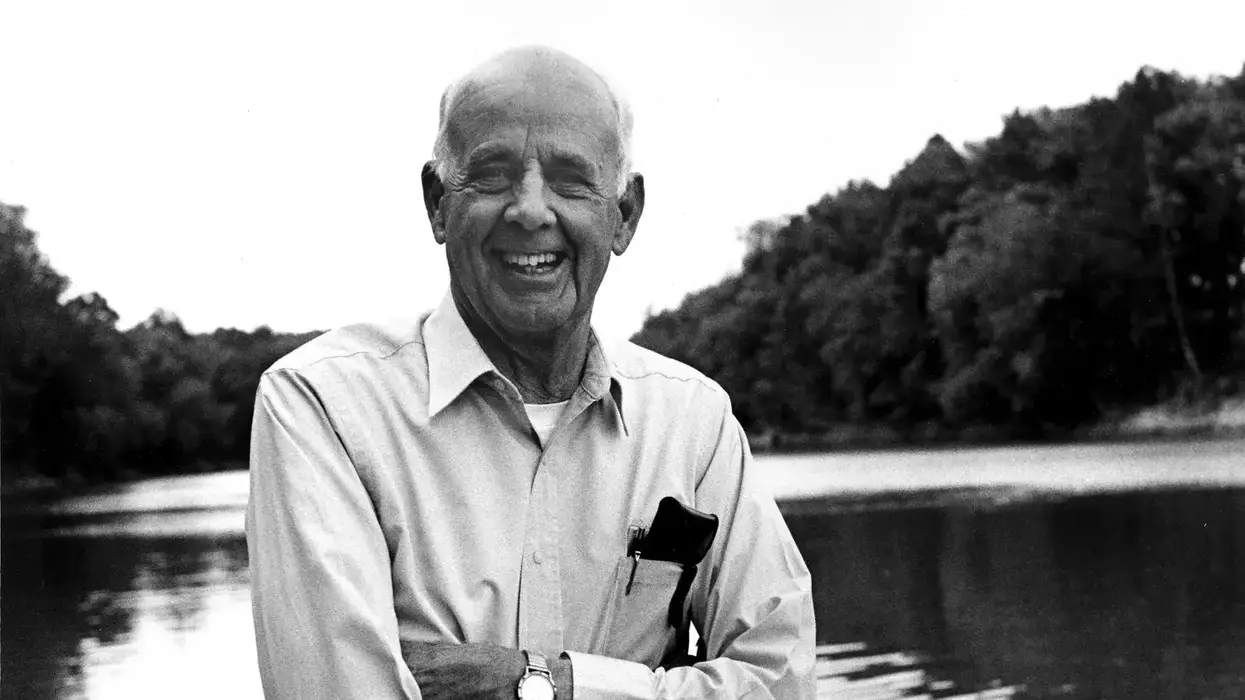
We lost a writer and poet this week who talked about how modern life is not only ecologically destructive but also traps us in a manufactured world, cut off from other living things. He suggested we slow down and learn to be quiet—to observe.
I think of Wendell Berry every time I use my chainsaw.
Berry, the novelist, essayist, and unofficial poet laureate of the sustainable agriculture movement, died this week at 92. I met him several times through my association with The Land Institute and visited their Kentucky home to write a profile of his wife, Tanya. But my main connection to Berry is through his writing.
Back to my chainsaw. I lived in cities most of my life, including when I was a professor at the University of Texas at Austin. No matter what the subject of a course, I always found ways to bring Berry’s words into my lectures, both to give students examples of elegant writing and to prod them to think about what we take for granted in high-energy and high-technology societies.
Any hope for a decent future requires us to understand we don’t face discrete problems to be solved but rather a predicament to be confronted.
Berry called out the cruelty of the masters of the modern world, especially the ways they denigrated his neighbors and devalued the land in rural America. But he understood that we all are implicated in the degradation of the ecosystems on which our own lives depend. He connected the real costs of our many labor-saving and pleasure-seeking devices to that degradation. Yes, there are corrupt individuals and corrupting social systems to hold accountable, but part of the problem is our species’ acquisitiveness—what Berry’s mentor Wallace Stegner called “the things that once possessed could not be done without.”
In a 1989 essay, Berry didn’t exempt himself from this critique of the destructive habits that draw down the ecological capital of the planet.
“I still fly on airplanes, which have nothing to recommend them but speed; they are inconvenient, uncomfortable, undependable, ugly, stinky, and scary,” he wrote. “I still cut my wood with a chainsaw, which has nothing to recommend it but speed, and has all the faults of an airplane, except it does not fly.”
We need to live with less, which is surprisingly hard.
“We are going to have to learn to give up things that we have learned (in only a few years, after all) to ‘need,’” Berry wrote. “I am not an optimist; I am afraid that I won’t live long enough to escape my bondage to the machines.”
But Berry doesn’t counsel despair: “I knew a man who, in the age of chainsaws, went right on cutting his wood with a handsaw and an axe. He was a healthier and a saner man than I am. I shall let his memory trouble my thoughts.”
I live in a rural area today and cut firewood with a battery-powered chainsaw to help heat our home. I don’t kid myself that I’m environmentally friendly because my machine doesn’t run on gasoline; the mining and manufacturing that created that chainsaw are ecologically expensive. I am part of the problem, like almost everyone else.
I’ve learned that even with a chainsaw, cutting a winter’s worth of wood is hard work. (OK, full disclosure: I also have an electric log-splitter that a friend gave me and now feels essential.) But as I cut and split and stack, I think about the extra effort required by the handsaw and axe of Berry’s acquaintance. And I also think about something else I regularly read to students, his poem “How to Be a Poet,” which I told students could be titled “How to Be a Human Being.” Berry wrote about how modern life is not only ecologically destructive but also traps us in a manufactured world, cut off from other living things. He suggested we slow down and learn to be quiet, to observe: “Stay away from anything/that obscures the place it is in.”
Every time I read the next lines from that poem, I felt myself on the edge of tears: “There are no unsacred places;/there are only sacred places/and desecrated places.”
No one knows how to get there, including Wendell Berry. But his words help me face reality and live in some kind of equanimity.
We have desecrated most of the world to make possible all the things we imagine that we need, including my chainsaw and log-splitter. We’ve built a world in which our material comfort obscures the cost of that comfort. I agree with Berry: Either every part of Earth is sacred or none of it is, and the modern world treats the entire planet as either a mine or a dump.
Back to bad people and bad systems. Yes, we can point to the actions of greedy corporate executives and self-serving politicians, and to capitalism’s perverse practices that glorify consumption. Yes, the affluent do the most damage. But most of the people around the world now embrace and chase that affluence, and we shouldn’t turn away from our own role in Earth-destruction. We won’t solve the problem by pointing fingers at others. In fact, any hope for a decent future requires us to understand we don’t face discrete problems to be solved but rather a predicament to be confronted. We’ve created ways of living that can’t be sustained unless we embrace what my coauthor Wes Jackson (cofounder of The Land Institute and a longtime friend of Berry) and I call the policy of “fewer and less”: fewer people consuming less energy and stuff.
No one knows how to get there, including Wendell Berry. But his words help me face reality and live in some kind of equanimity.
One of my fondest memories from 26 years of college teaching is standing in front of students, encouraging them to appreciate the elegance of Berry’s writing and face the fear it can bring up. I will let that memory trouble my thoughts and comfort me.
If there is to be a decent human future—perhaps if there is to be any human future—it will be fewer people consuming less energy and creating less stuff.
For the next few weeks, the buzzword in US debates on the liberal/left about economics and ecology will be “abundance” after the release of the book with that title by Ezra Klein (New York Times) and Derek Thompson (The Atlantic magazine).
The book poses politically relevant questions: Have policies favored by Democrats and others on the political left impeded innovation with unnecessary red tape for building projects? Can regulatory reform and revitalized public investment bring technological progress that can solve problems in housing, infrastructure, energy, and agriculture? The book says yes to both.
Those debates have short-term political implications but are largely irrelevant to the human future. The challenge is not how to do more but how to live with less.
All societies face multiple cascading ecological crises—emphasis on the plural. There are many crises, not just climate change, and no matter what a particular society’s contribution to the crises there is nowhere to hide. The cascading changes will come in ways we can prepare for but can’t predict, and it’s likely the consequences will be much more dire than we imagine.
If that seems depressing, I’m sorry. Keep reading anyway.
Rapid climate disruption is the most pressing concern but not the only existential threat. Soil erosion and degradation undermine our capacity to feed ourselves. Chemical contamination of our bodies and ecosystems undermines the possibility of a stable long-term human presence. Species extinction and loss of biodiversity will have potentially catastrophic effects on the ecosystems on which our lives depend.
Why aren’t more people advocating limits? Because limits are hard.
I could go on, but anyone who wants to know about these crises can easily find this information in both popular media and the research literature. For starters, I recommend the work of William Rees, an ecologist who co-created the ecological footprint concept and knows how to write for ordinary people.
The foundational problem is overshoot: There are too many people consuming too much in the aggregate. The distribution of the world’s wealth is not equal or equitable, of course, but the overall program for human survival is clear: fewer and less. If there is to be a decent human future—perhaps if there is to be any human future—it will be fewer people consuming less energy and creating less stuff.
Check the policy statements of all major political players, including self-described progressives and radicals, and it’s hard to find mention of the need to impose limits on ourselves. Instead, you will find delusions and diversions.
The delusions come mainly from the right, where climate-change denialism is still common. The more sophisticated conservatives don’t directly challenge the overwhelming consensus of researchers but instead sow seeds of doubt, as if there is legitimate controversy. That makes it easier to preach the “drill, baby, drill” line of expanding fossil fuel production, no matter what the ecological costs, instead of facing limits.
The diversions come mainly from the left, where people take climate change seriously but invest their hopes in an endless array of technological solutions. These days, the most prominent tech hype is “electrify everything,” which includes a commitment to an unsustainable car culture with electric vehicles, instead of facing limits.
There is a small kernel of truth in the rhetoric of both right and left.
When the right says that expanding fossil energy production would lift more people out of poverty, they have a valid point. But increased production of fossil energy is not suddenly going to benefit primarily the world’s poor, and the continued expansion of emissions eventually will doom rich and poor alike.
When the left says renewable energy is crucial, they have a valid point. But if the promise of renewable energy is used to prop up existing levels of consumption, then the best we can expect is a slowing of the rate of ecological destruction. Unless renewables are one component of an overall down-powering, they are a part of the problem and not a solution.
Why aren’t more people advocating limits? Because limits are hard. People—including me and almost everyone reading this—find it hard to resist what my co-author Wes Jackson and I have called “the temptations of dense energy.” Yes, lots of uses of fossil fuels are wasteful, and modern marketing encourages that waste. But coal, oil, and natural gas also do a lot of work for us and provide a lot of comforts that people are reluctant to give up.
That’s why the most sensible approach combines limits on our consumption of energy and rationing to ensure greater fairness, both of which have to be collectively imposed. That’s not a popular political position today, but if we are serious about slowing, and eventually stopping, the human destruction of the ecosphere, I see no other path forward.
In the short term, those of us who endorse “fewer and less” will have to make choices between political candidates and parties that are, on the criteria of real sustainability, either really hard-to-describe awful or merely bad. I would never argue that right and left, Republican and Democrat, are indistinguishable. But whatever our immediate political choices, we should talk openly about ecological realities.
That can start with imagining an “abundance agenda” quite different than what Klein and Thompson, along with most conventional thinking, propose. Instead of more building that will allegedly be “climate friendly,” why not scale back our expectations? Instead of assuming a constantly mobile society, why not be satisfied with staying home? Instead of dreaming of more gadgets, why not live more fully in the world around us? People throughout history have demonstrated that productive societies can live with less.
Instead of the promise of endless material abundance, which has never been consistent with a truly sustainable future, let’s invest in what we know produces human flourishing—collective activity in community based on shared needs and reduced wants. For me, living in rural New Mexico, that means being one of the older folks who are helping younger folks get a small-scale farm off the ground. It means being an active participant in our local acequia irrigation system. It means staying home instead of vacationing. It means being satisfied with the abundant pleasures of this place and these people without buying much beyond essentials.
I’m not naïve—given the house I live in, the car I drive, and the food I buy from a grocery store, I’m still part of a hyper-extractive economy that is unsustainable. But instead of scrambling for more, I am seeking to live with less. I know that’s much harder for people struggling to feed a family and afford even a modest home. But rather than imagining ways to keep everyone on the consumption treadmill, only with more equity, we can all contribute ideas about how to step off.
Our choices are clear: We can drill more, which will simply get us to a cruel end game even sooner. We can pretend that technology will save us, which might delay that reckoning. If we can abandon the delusions and diversions, there’s no guarantee of a happy future. But there’s a chance of a future.
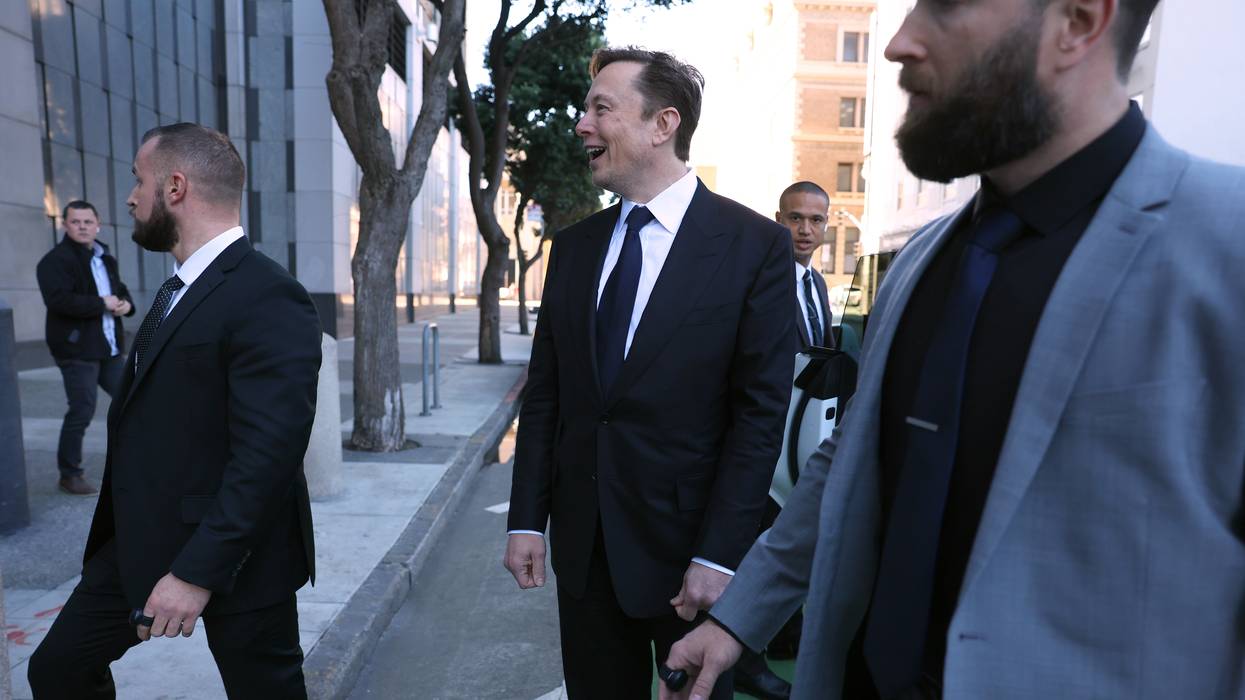
Budding entrepreneurs worldwide are devoting their time and talents to making our Earth as safe as possible for our planet’s top 1% that now holds more wealth than the entire bottom 95% combined.
Have our world’s super rich become absolutely paranoid about the future? Or do they, deep down, understand that our exceedingly unequal global distribution of income and wealth has placed them—and everyone else—in ever-present danger?
The Robb Report, a news service that offers our most awesomely affluent the ultimate in consumption advice, has no interest in psychoanalyzing what the wealthiest among us believe. But Robb Report analysts certainly do enjoy chronicling how these rich behave.
“Forget Butlers,” a Robb Report headline has just pronounced. “Private Security” has now become “the Ultimate Service for the Ultra-Wealthy.”
Real progress on the environmental and every other major problematic front, the new Oxfam report sums up, “will require all countries—both in the Global North and Global South—to realize that they have a common interest in tackling extreme concentrations of wealth.”
The Samphire Risk insurance firm, the Robb coverage goes on to relate, specializes in policies that insure the rich against the dangers that our world visits only upon them. Say, for instance, two monied motorcyclist pals get involved in a crash that leaves one of them badly injured and the other kidnapped amid the accident’s chaos. Samphire prides itself on providing “the connective tissue between the problem and the expertise needed” to solve whatever dilemma the rich may encounter.
The AHNA Group run by a Dubai-based former military operative from South Africa last year provided top corporate execs protective services for over 500 trips into more than four dozen countries. AHNA, says its mover and shaker Mac Segal, always goes the extra mile and even takes the time to prep its operatives on how to make conversation with their rich clients.
“You should speak in short sentences,” Segal advises, “so the client can stop the conversation whenever they want to.”
Still another new security service available for the fretful rich offers “a bodyguard in your pocket,” an artificial intelligence-powered mobile phone app that can tell if a deep pocket’s limo is following its normal daily route.
Budding entrepreneurs worldwide, in short, are devoting their time and talents to making our Earth as safe as possible for our planet’s most comfortable, that top 1% that now holds more wealth, relates a just-released report from the global humanitarian group Oxfam, than the entire bottom 95% combined.
This “immense concentration of wealth,” notes Oxfam’s new Multilateralism in an Era of Global Oligarchy analysis, has allowed large corporations and the ultra-rich “who exercise control over them to use their vast resources to shape global rules in their favor, often at the expense of everyone else.”
How dramatic has this wealth concentration become? Since 1987, as economist Gabriel Zucman has detailed, the combined wealth of the world’s 3,000 richest households—in effect, our richest 0.0001%—now stands at about $14 trillion. Their share of the world’s wealth has over that timespan more than quadrupled.
About 46% of the world’s population, meanwhile, lives on less than the local equivalent of $6.85 per day.
Our contemporary wealth inequality, Oxfam’s research details, connects up neatly with growing global corporate concentration. Seven of the world’s 10 largest corporations now have a billionaire either as CEO or top shareholder. Our wealthiest, Oxfam shows, don’t just benefit passively from all the corporate stock they hold. They’re increasingly shaping—in sectors ranging from pharmaceuticals to global digital advertising—exactly how corporations exercise their market and political power.
The ultra-wealthy and the corporations they dominate, as Oxfam puts it, are using “their vast resources to pressure governments”—through everything from lobbying and campaign contributions to influence over the media and threats to withhold investment—to lower the taxes rich people pay, weaken labor protections, and privatize public services.
In 2022, Oxfam points out, 182 of America’s largest corporations, spent $746 million on lobbying alone. For every lobbying dollar the nation’s 50 largest publicly traded corporations spent, they averaged back $130 in tax breaks and over $4,000 in federal loans, loan guarantees, and bailouts.
One consequence of this ultra-rich political influence: The Covid-19 pandemic, observes Oxfam, left in its wake at least 40 new billionaires.
The most dangerous long-term consequence of ultra-rich influence? That may well be environmental. The dollars of our global ultra-rich, notes Oxfam, continue to be “disproportionately invested in the companies driving climate breakdown.”
What can we do to break down this climate breakdown threat? Real progress on the environmental and every other major problematic front, the new Oxfam report sums up, “will require all countries—both in the Global North and Global South—to realize that they have a common interest in tackling extreme concentrations of wealth.”
“A more equitable international order,” as Oxfam’s latest research powerfully reminds us, “benefits everyone.”
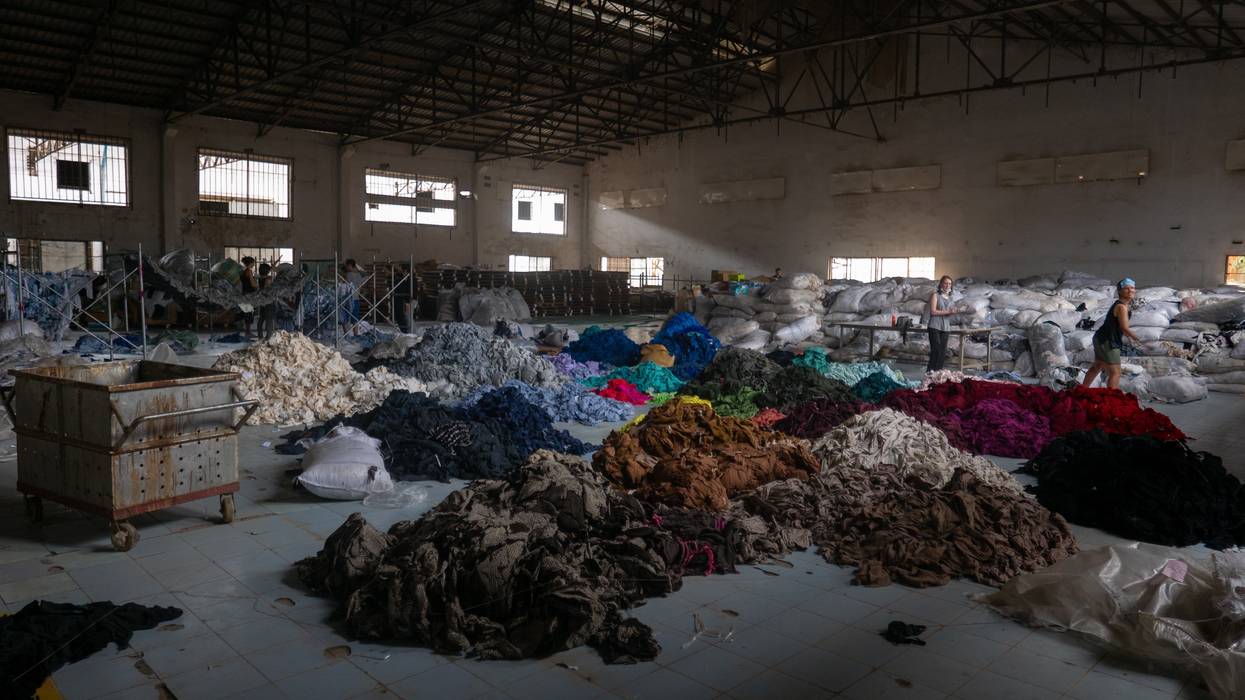
To cheaply and quickly reproduce the latest styles, manufacturers contract to companies in some of the poorest countries in the world where wages are low and standards of protection for the workers and the environment are ignored.
We all like to get something new, be it clothes, a house, a car, or something for the home. It gives us a feeling of a new start. And with the many forms of shopping through commercial centers, stores, catalogs, and the internet, we have an enormous selection from which to choose. To make buying even easier, there are numerous ways to pay. We have credit cards, debit cards, and digital and telephone transfers so that we don’t have to worry about not having money. Our happiness is guaranteed.
The most common purchases are clothes, and now we have Fast Fashion, a system where we can be up to date on all the latest styles. What does this mean and how does it impact us and the rest of the world?
It’s natural for us, at any age, to want the “latest” model, a sign to others that we are modern, in-the-know, and prepared for the world of work, recreation, the beach, or the city. To that end textile manufacturers can rush into production the same styles worn by influencers and people of fashion in the most rapid way and keep the prices low so that you will be tempted to buy. Also supporting the Fast Fashion trend are the free trade treaties that reduce or eliminate tariffs, which also keep down prices. But in reality is Fast Fashion a benefit?
Fast Fashion may seem like a good thing in providing a constant supply of the newest designs, but it takes its toll on the environment, labor practices, and our own comfort.
A report in Treehugger, an environmental magazine, says that Americans buy an average of 70 items of clothing a year, and later much of it remains forgotten in the closet. A similar study by a German university estimated that 60% of clothing purchases are not necessary and are seldom worn. In rapid time the style passes and the garment loses it’s charm.
Fast Fashion may seem like a good thing in providing a constant supply of the newest designs, but it takes its toll on the environment, labor practices, and our own comfort. Fast Fashion means that manufacturers contract to companies in some of the poorest countries in the world—Bangladesh, Vietnam, Cambodia, and others where wages are low and standards of protection for the workers and the environment are ignored—and they use the cheapest of synthetic materials. The waste products—the dyes and chemicals and byproducts—are often pitched into the environment, the waterways, and the air, causing health problems for the people and the environment of the area. Workers, mostly women, work long hours without benefits or safety measures.
Because the fabrics and the process of producing all these new clothes are of poor quality, they soon lose their “fresh look.” They stretch out of shape, and the colors deteriorate. Synthetic fabrics cause skin allergies for many wearers. The cloth traps heat inside, making the garments uncomfortable. Styles pass, the items are no longer worn. Low prices are offset by the product’s short life span.
Fast Fashion has also created an environmental hazzard. Tons of discarded, unwanted clothes have become a serious problem as the synthetic materials do not break down. Tons of used, unwanted apparel are shipped to poor countries to be distributed, but much is waste because of its poor condition. Areas in Kenya and Chile and other poor countries have become dumping grounds for those formerly high-fashion products.
How can we help create a more postive environment and still be “well dressed?” By being prudent when shopping, whether it’s for clothes or household products such as curtains or bedsheets. Ask yourself if the purchase is really necessary, or do you buy on impulse? Look for quality. Check labels for fabric content and where the garment was made. Is it an item that will last?
Buying in “used shops” can yield quality items at comfortable prices. It’s a form of recylcing. Buy clothing made of natural fibers, although cotton and denim also contaminate from their use of fertilizers and water in production. Parents can teach their children that they do not need to have the latest style all the time.
A good sign is that there is a growing consciousness among major stores and brands to check the abuses caused by Fast Fashion by carrying only products made under just and safe conditions for workers and the environment. Through the use of careful buying habits we can help improve conditions for workers and the environment.
Processed meats have been placed in the same health risk category as smoking and asbestos by the cancer research body of the World Health Organization (WHO) on Monday.
Products salted, cured, or otherwise processed to enhance flavor are "carcinogenic to humans," the Paris-based International Agency for Research on Cancer (IARC) found in its report, published in the Lancet Oncology. That puts processed meat in the Group 1 carcinogenic category alongside substances like tobacco, alcohol, and plutonium. And non-processed fresh meats like beef, pork, and lamb, among others, are "probably carcinogenic to humans," the agency said.
According to the IARC's report, Carcinogenicity of Consumption of Red and Processed Meat, each 50-gram portion of processed meat eaten daily—including bacon, sausages, and ham, as well as canned meat and meat-based sauces—increases the risk of colorectal cancer by 18 percent. The report was crafted by 22 international health experts for the IARC Monograph Program, which evaluates environmental causes of cancer in humans.
"For an individual, the risk of developing colorectal cancer because they consume processed meat remains small, but this risk increases with the amount of meat consumed," said Dr. Kurt Straif, head of the IARC Monograph Program. "In view of the large number of people who consume processed meat, the global impact on cancer incidence is of public health importance."
The IARC's findings (pdf) come just months after the top U.S. nutritional panel, the Dietary Guidelines Advisory Committee, reported that Americans must reduce their meat intake and switch to sustainable, plant-based diets to curb greenhouse gas emissions and stave off the rise of preventable chronic diseases like diabetes and certain types of cancer.
President Obama responded to that report in February by vowing to consider the environment in the 2015 Dietary Guidelines for Americans (DGA), due later this year. However, heavy lobbying by the meat industry in the intervening months led the Obama administration to rescind its promise, a move that climate and public health advocates called "disappointing" and "politically motivated."
The IARC stated on Monday that meat consumption is increasing in low—and middle-income countries (pdf). Citing the Global Burden of Disease Project, an independent research organization, the IARC reported that diets with a heavy intake of processed meat can cause about 34,000 deaths per year.
"These findings further support current public health recommendations," said IARC director Dr. Christopher Wild. He added that global governments and regulatory agencies should also use them to provide the best dietary guidelines.
In an ad for a major phone company blanketing TV this year, a circle of doe-eyed children is asked: "who thinks more is better than less?" You know the one--an eager kindergartener answers, "we want more, we want more," before the commercial voice intones "It's Not Complicated..."
After all, what kind of loser wouldn't want more?
That's the question I try to answer in my new movie, The Story of Solutions.
The Story of SolutionsThe Story of Solutions explores how we can move our economy in a more sustainable and just direction, starting with orienting ...
You see, when it comes to our economy, most Americans also believe that more is always better. More, in this case, is what economists call growth and we're told that a bigger GDP--the way we measure economic activity--means we're winning.
But unlike in the commercial, it's a little more complicated.
To economists, there's no distinction between money spent on Stuff that makes life better and money spent on Stuff that makes life worse. GDP treats both the same. If GDP goes up, we're told we're golden--even though it doesn't actually tell us a thing about how we're really doing as a society. In what I call the 'Game of More', politicians cheer a steadily growing economy at the same time as our health indicators are worsening, income inequality is growing and polar icecaps are melting.
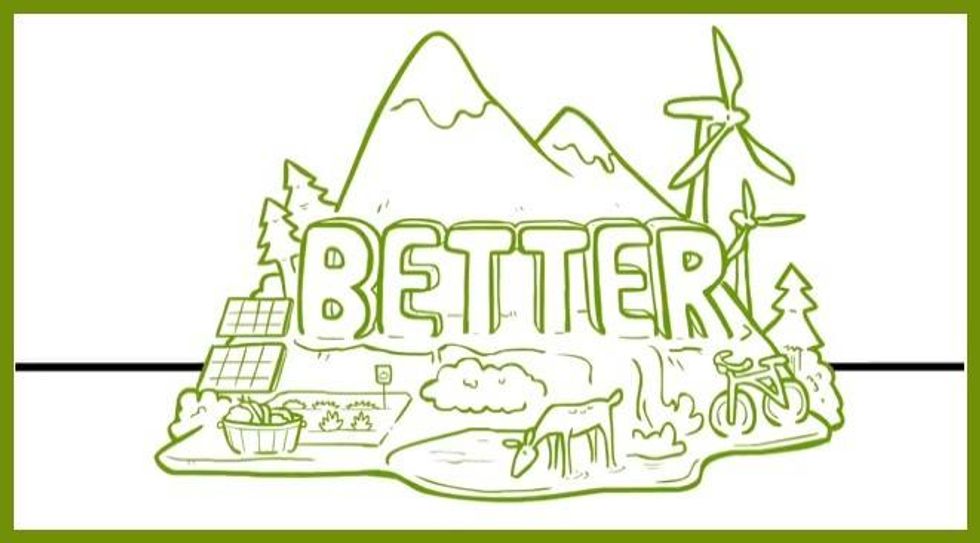
But what if we changed the point of the game? What if the goal of our economy wasn't more, but better--better health, better jobs and a better chance to survive on the planet? Shouldn't that be what winning means?
Changing the goal of the entire economy--from more to better--is a huge task. We can't do it all at once. But by focusing on game-changing solutions, we can steadily build an economy that values things like safer, healthier and more fair as much as we currently value faster, cheaper, and newer.
"What if the goal of our economy wasn't more, but better--better health, better jobs and a better chance to survive on the planet? Shouldn't that be what winning means?"
So what's a game-changing solution look like?
It's a solution that gives people more power by taking power back from corporations. It accounts for all the costs it creates, including the toll it takes on people and the planet -- in other words it internalizes costs instead of externalizing them as most businesses do today. It lessens the enormous wealth gap between those who can't even meet their basic needs and those who consume way more than their fair share. And it values the truth that happiness and well-being don't come from buying more Stuff but from our communities, our health and sense of purpose.
When I see a solution that does all that, I'm in. And they're popping up everywhere:
Like the Evergreen Cooperatives in Cleveland, where worker-owners are running green businesses--a laundry, a solar company and a super productive urban farm--that are healthy, safe...and democratically-run.
Or in Capannori, Italy, a so-called Zero Waste town where local citizens, businesses and government aren't just aiming to manage waste better, they're questioning the very inevitability of waste by working together as a community to reclaim compost for the soil, to find reusable substitutes for disposable products and put discarded material to good use.
And how about the new trend of "collaborative consumption"--formerly known as sharing? Sharing may sound like the theme of a Barney song, but it's a huge challenge to the old game. Things like bike share programs and online platforms that let us share everything from our cars to our homes get us off the treadmill of more, more, more; conserve resources, give people access to stuff they otherwise couldn't afford, and build community. Nice!
Like I said, it's hard to change the goal of the economy all at once. But as transformational solutions like these gain traction, I think we'll reach a tipping point--if we keep focused on the new goal of better. I believe that within a generation it's possible we'll be hearing way less about the share price of the latest start-up or the battery life of the latest iPhone and way more about the health of our planet and neighbors.
So next time you hear someone preaching the virtues of more, tell them you choose better.