
Wendell Berry: 'Stay Away From Anything That Obscures the Place It Is In'
We lost a writer and poet this week who talked about how modern life is not only ecologically destructive but also traps us in a manufactured world, cut off from other living things. He suggested we slow down and learn to be quiet—to observe.
I think of Wendell Berry every time I use my chainsaw.
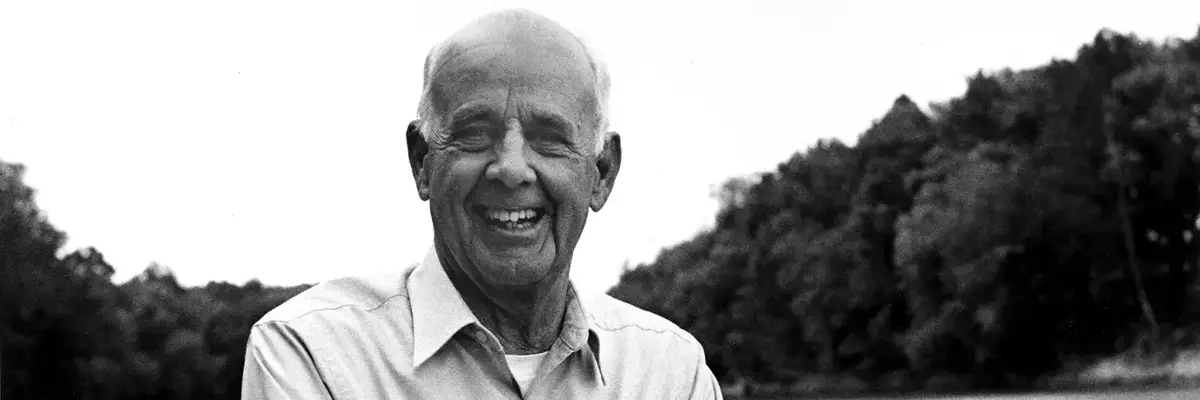
Berry, the novelist, essayist, and unofficial poet laureate of the sustainable agriculture movement, died this week at 92. I met him several times through my association with The Land Institute and visited their Kentucky home to write a profile of his wife, Tanya. But my main connection to Berry is through his writing.
Back to my chainsaw. I lived in cities most of my life, including when I was a professor at the University of Texas at Austin. No matter what the subject of a course, I always found ways to bring Berry’s words into my lectures, both to give students examples of elegant writing and to prod them to think about what we take for granted in high-energy and high-technology societies.
Any hope for a decent future requires us to understand we don’t face discrete problems to be solved but rather a predicament to be confronted.
Berry called out the cruelty of the masters of the modern world, especially the ways they denigrated his neighbors and devalued the land in rural America. But he understood that we all are implicated in the degradation of the ecosystems on which our own lives depend. He connected the real costs of our many labor-saving and pleasure-seeking devices to that degradation. Yes, there are corrupt individuals and corrupting social systems to hold accountable, but part of the problem is our species’ acquisitiveness—what Berry’s mentor Wallace Stegner called “the things that once possessed could not be done without.”
In a 1989 essay, Berry didn’t exempt himself from this critique of the destructive habits that draw down the ecological capital of the planet.
“I still fly on airplanes, which have nothing to recommend them but speed; they are inconvenient, uncomfortable, undependable, ugly, stinky, and scary,” he wrote. “I still cut my wood with a chainsaw, which has nothing to recommend it but speed, and has all the faults of an airplane, except it does not fly.”
We need to live with less, which is surprisingly hard.
“We are going to have to learn to give up things that we have learned (in only a few years, after all) to ‘need,’” Berry wrote. “I am not an optimist; I am afraid that I won’t live long enough to escape my bondage to the machines.”
But Berry doesn’t counsel despair: “I knew a man who, in the age of chainsaws, went right on cutting his wood with a handsaw and an axe. He was a healthier and a saner man than I am. I shall let his memory trouble my thoughts.”
I live in a rural area today and cut firewood with a battery-powered chainsaw to help heat our home. I don’t kid myself that I’m environmentally friendly because my machine doesn’t run on gasoline; the mining and manufacturing that created that chainsaw are ecologically expensive. I am part of the problem, like almost everyone else.
I’ve learned that even with a chainsaw, cutting a winter’s worth of wood is hard work. (OK, full disclosure: I also have an electric log-splitter that a friend gave me and now feels essential.) But as I cut and split and stack, I think about the extra effort required by the handsaw and axe of Berry’s acquaintance. And I also think about something else I regularly read to students, his poem “How to Be a Poet,” which I told students could be titled “How to Be a Human Being.” Berry wrote about how modern life is not only ecologically destructive but also traps us in a manufactured world, cut off from other living things. He suggested we slow down and learn to be quiet, to observe: “Stay away from anything/that obscures the place it is in.”
Every time I read the next lines from that poem, I felt myself on the edge of tears: “There are no unsacred places;/there are only sacred places/and desecrated places.”
No one knows how to get there, including Wendell Berry. But his words help me face reality and live in some kind of equanimity.
We have desecrated most of the world to make possible all the things we imagine that we need, including my chainsaw and log-splitter. We’ve built a world in which our material comfort obscures the cost of that comfort. I agree with Berry: Either every part of Earth is sacred or none of it is, and the modern world treats the entire planet as either a mine or a dump.
Back to bad people and bad systems. Yes, we can point to the actions of greedy corporate executives and self-serving politicians, and to capitalism’s perverse practices that glorify consumption. Yes, the affluent do the most damage. But most of the people around the world now embrace and chase that affluence, and we shouldn’t turn away from our own role in Earth-destruction. We won’t solve the problem by pointing fingers at others. In fact, any hope for a decent future requires us to understand we don’t face discrete problems to be solved but rather a predicament to be confronted. We’ve created ways of living that can’t be sustained unless we embrace what my coauthor Wes Jackson (cofounder of The Land Institute and a longtime friend of Berry) and I call the policy of “fewer and less”: fewer people consuming less energy and stuff.
No one knows how to get there, including Wendell Berry. But his words help me face reality and live in some kind of equanimity.
One of my fondest memories from 26 years of college teaching is standing in front of students, encouraging them to appreciate the elegance of Berry’s writing and face the fear it can bring up. I will let that memory trouble my thoughts and comfort me.
We are at a crossroads
This country and this world are at a monumental crossroads. In a few short weeks, US voters will have an opportunity to beat back the forces of fascism and confront the billionaires who are rigging the economy, our media system, and our democracy, making it increasingly impossible for ordinary people to get by. We’re not just talking about the election. We’re talking about what must be done once these fascist elements are vanquished from power. We need a bolder set of solutions than what either major party has so far been willing to offer and a working-class movement ready to fight like hell for it. Trump didn't emerge from nowhere. The conditions that fueled MAGA authoritarianism were created by decades of radical neoliberal economic policies and a corrupt political system dominated by corporate interests. They slashed taxes on the super-rich, promising that the benefits would trickle down. They said giveaways to the corporate titans would make life more affordable for the rest of us. It was all bullshit. And when a bitter, betrayed populace searches for someone to blame, right-wing demagogues have little trouble finding scapegoats. People know when they're being lied to, but you won't hear any of this from the corporate media. Only independent journalism—powered and funded by people who believe in building a better world—can deliver truly trustworthy daily news. Our Fall Campaign is underway, and we need your help. To power our newsroom through the rest of the year, we need to raise $125,000 by midnight on October 31. So if you share our vision, please contribute whatever you can to sustain our work. |
I think of Wendell Berry every time I use my chainsaw.
Berry, the novelist, essayist, and unofficial poet laureate of the sustainable agriculture movement, died this week at 92. I met him several times through my association with The Land Institute and visited their Kentucky home to write a profile of his wife, Tanya. But my main connection to Berry is through his writing.
Back to my chainsaw. I lived in cities most of my life, including when I was a professor at the University of Texas at Austin. No matter what the subject of a course, I always found ways to bring Berry’s words into my lectures, both to give students examples of elegant writing and to prod them to think about what we take for granted in high-energy and high-technology societies.
Any hope for a decent future requires us to understand we don’t face discrete problems to be solved but rather a predicament to be confronted.
Berry called out the cruelty of the masters of the modern world, especially the ways they denigrated his neighbors and devalued the land in rural America. But he understood that we all are implicated in the degradation of the ecosystems on which our own lives depend. He connected the real costs of our many labor-saving and pleasure-seeking devices to that degradation. Yes, there are corrupt individuals and corrupting social systems to hold accountable, but part of the problem is our species’ acquisitiveness—what Berry’s mentor Wallace Stegner called “the things that once possessed could not be done without.”
In a 1989 essay, Berry didn’t exempt himself from this critique of the destructive habits that draw down the ecological capital of the planet.
“I still fly on airplanes, which have nothing to recommend them but speed; they are inconvenient, uncomfortable, undependable, ugly, stinky, and scary,” he wrote. “I still cut my wood with a chainsaw, which has nothing to recommend it but speed, and has all the faults of an airplane, except it does not fly.”
We need to live with less, which is surprisingly hard.
“We are going to have to learn to give up things that we have learned (in only a few years, after all) to ‘need,’” Berry wrote. “I am not an optimist; I am afraid that I won’t live long enough to escape my bondage to the machines.”
But Berry doesn’t counsel despair: “I knew a man who, in the age of chainsaws, went right on cutting his wood with a handsaw and an axe. He was a healthier and a saner man than I am. I shall let his memory trouble my thoughts.”
I live in a rural area today and cut firewood with a battery-powered chainsaw to help heat our home. I don’t kid myself that I’m environmentally friendly because my machine doesn’t run on gasoline; the mining and manufacturing that created that chainsaw are ecologically expensive. I am part of the problem, like almost everyone else.
I’ve learned that even with a chainsaw, cutting a winter’s worth of wood is hard work. (OK, full disclosure: I also have an electric log-splitter that a friend gave me and now feels essential.) But as I cut and split and stack, I think about the extra effort required by the handsaw and axe of Berry’s acquaintance. And I also think about something else I regularly read to students, his poem “How to Be a Poet,” which I told students could be titled “How to Be a Human Being.” Berry wrote about how modern life is not only ecologically destructive but also traps us in a manufactured world, cut off from other living things. He suggested we slow down and learn to be quiet, to observe: “Stay away from anything/that obscures the place it is in.”
Every time I read the next lines from that poem, I felt myself on the edge of tears: “There are no unsacred places;/there are only sacred places/and desecrated places.”
No one knows how to get there, including Wendell Berry. But his words help me face reality and live in some kind of equanimity.
We have desecrated most of the world to make possible all the things we imagine that we need, including my chainsaw and log-splitter. We’ve built a world in which our material comfort obscures the cost of that comfort. I agree with Berry: Either every part of Earth is sacred or none of it is, and the modern world treats the entire planet as either a mine or a dump.
Back to bad people and bad systems. Yes, we can point to the actions of greedy corporate executives and self-serving politicians, and to capitalism’s perverse practices that glorify consumption. Yes, the affluent do the most damage. But most of the people around the world now embrace and chase that affluence, and we shouldn’t turn away from our own role in Earth-destruction. We won’t solve the problem by pointing fingers at others. In fact, any hope for a decent future requires us to understand we don’t face discrete problems to be solved but rather a predicament to be confronted. We’ve created ways of living that can’t be sustained unless we embrace what my coauthor Wes Jackson (cofounder of The Land Institute and a longtime friend of Berry) and I call the policy of “fewer and less”: fewer people consuming less energy and stuff.
No one knows how to get there, including Wendell Berry. But his words help me face reality and live in some kind of equanimity.
One of my fondest memories from 26 years of college teaching is standing in front of students, encouraging them to appreciate the elegance of Berry’s writing and face the fear it can bring up. I will let that memory trouble my thoughts and comfort me.
I think of Wendell Berry every time I use my chainsaw.
Berry, the novelist, essayist, and unofficial poet laureate of the sustainable agriculture movement, died this week at 92. I met him several times through my association with The Land Institute and visited their Kentucky home to write a profile of his wife, Tanya. But my main connection to Berry is through his writing.
Back to my chainsaw. I lived in cities most of my life, including when I was a professor at the University of Texas at Austin. No matter what the subject of a course, I always found ways to bring Berry’s words into my lectures, both to give students examples of elegant writing and to prod them to think about what we take for granted in high-energy and high-technology societies.
Any hope for a decent future requires us to understand we don’t face discrete problems to be solved but rather a predicament to be confronted.
Berry called out the cruelty of the masters of the modern world, especially the ways they denigrated his neighbors and devalued the land in rural America. But he understood that we all are implicated in the degradation of the ecosystems on which our own lives depend. He connected the real costs of our many labor-saving and pleasure-seeking devices to that degradation. Yes, there are corrupt individuals and corrupting social systems to hold accountable, but part of the problem is our species’ acquisitiveness—what Berry’s mentor Wallace Stegner called “the things that once possessed could not be done without.”
In a 1989 essay, Berry didn’t exempt himself from this critique of the destructive habits that draw down the ecological capital of the planet.
“I still fly on airplanes, which have nothing to recommend them but speed; they are inconvenient, uncomfortable, undependable, ugly, stinky, and scary,” he wrote. “I still cut my wood with a chainsaw, which has nothing to recommend it but speed, and has all the faults of an airplane, except it does not fly.”
We need to live with less, which is surprisingly hard.
“We are going to have to learn to give up things that we have learned (in only a few years, after all) to ‘need,’” Berry wrote. “I am not an optimist; I am afraid that I won’t live long enough to escape my bondage to the machines.”
But Berry doesn’t counsel despair: “I knew a man who, in the age of chainsaws, went right on cutting his wood with a handsaw and an axe. He was a healthier and a saner man than I am. I shall let his memory trouble my thoughts.”
I live in a rural area today and cut firewood with a battery-powered chainsaw to help heat our home. I don’t kid myself that I’m environmentally friendly because my machine doesn’t run on gasoline; the mining and manufacturing that created that chainsaw are ecologically expensive. I am part of the problem, like almost everyone else.
I’ve learned that even with a chainsaw, cutting a winter’s worth of wood is hard work. (OK, full disclosure: I also have an electric log-splitter that a friend gave me and now feels essential.) But as I cut and split and stack, I think about the extra effort required by the handsaw and axe of Berry’s acquaintance. And I also think about something else I regularly read to students, his poem “How to Be a Poet,” which I told students could be titled “How to Be a Human Being.” Berry wrote about how modern life is not only ecologically destructive but also traps us in a manufactured world, cut off from other living things. He suggested we slow down and learn to be quiet, to observe: “Stay away from anything/that obscures the place it is in.”
Every time I read the next lines from that poem, I felt myself on the edge of tears: “There are no unsacred places;/there are only sacred places/and desecrated places.”
No one knows how to get there, including Wendell Berry. But his words help me face reality and live in some kind of equanimity.
We have desecrated most of the world to make possible all the things we imagine that we need, including my chainsaw and log-splitter. We’ve built a world in which our material comfort obscures the cost of that comfort. I agree with Berry: Either every part of Earth is sacred or none of it is, and the modern world treats the entire planet as either a mine or a dump.
Back to bad people and bad systems. Yes, we can point to the actions of greedy corporate executives and self-serving politicians, and to capitalism’s perverse practices that glorify consumption. Yes, the affluent do the most damage. But most of the people around the world now embrace and chase that affluence, and we shouldn’t turn away from our own role in Earth-destruction. We won’t solve the problem by pointing fingers at others. In fact, any hope for a decent future requires us to understand we don’t face discrete problems to be solved but rather a predicament to be confronted. We’ve created ways of living that can’t be sustained unless we embrace what my coauthor Wes Jackson (cofounder of The Land Institute and a longtime friend of Berry) and I call the policy of “fewer and less”: fewer people consuming less energy and stuff.
No one knows how to get there, including Wendell Berry. But his words help me face reality and live in some kind of equanimity.
One of my fondest memories from 26 years of college teaching is standing in front of students, encouraging them to appreciate the elegance of Berry’s writing and face the fear it can bring up. I will let that memory trouble my thoughts and comfort me.