SUBSCRIBE TO OUR FREE NEWSLETTER
Daily news & progressive opinion—funded by the people, not the corporations—delivered straight to your inbox.
5
#000000
#FFFFFF
To donate by check, phone, or other method, see our More Ways to Give page.
Daily news & progressive opinion—funded by the people, not the corporations—delivered straight to your inbox.

Demonstrators were pictured during a protest demanding higher taxes on the rich on May 1, 2023.
"The ultra-wealthy and the mega-corporations they control are shaping global rules to serve their interests at the expense of people everywhere."
A report published Monday by the humanitarian group Oxfam warns that decades of intensifying inequality have left the world in the grip of a "global oligarchy" under which the richest sliver of humanity owns more wealth than nearly everyone else combined—a state of affairs that undermines democratic institutions and international cooperation on climate, pandemics, and other crises.
Oxfam's
analysis of data from the investment banking giant UBS found that the fortune controlled by the top 1% is now larger than the collective wealth of the bottom 95%.
Such inequality pervades the global economy, Oxfam noted, with a small number of corporations dominating key sectors. Nearly half of the global seed market, for example, is controlled by just two corporations, Bayer and Corteva. At the same time, just three U.S.-based financial behemoths—Blackrock, State Street, and Vanguard—oversee nearly 20% of the world's investable assets, around $20 trillion.
What's more, such massive corporations are increasingly run by billionaires: According to Oxfam, a billionaire either heads or is the top shareholder of more than a third of the world's leading 50 corporations.
"While we often hear about great power rivalries undermining multilateralism, it is clear that extreme inequality is playing a massive role," Oxfam executive director Amitabh Behar said in a statement. "In recent years the ultra-wealthy and powerful corporations have used their vast influence to undermine efforts to solve major global problems such as tackling tax dodging, making Covid-19 vaccines available to the world, and canceling the albatross of sovereign debt."
"Enabled by rich nations, the ultra-wealthy individuals and corporations they control that benefit from and perpetuate extreme inequality have long impeded international efforts to create a more equitable society."
Oxfam released its new report, titled Multilateralism in an Era of Global Oligarchy, ahead of the United Nations' annual high-level general debate, whose 2024 theme is "leaving no one behind: acting together for the advancement of peace, sustainable development, and human dignity for present and future generations."
The extreme concentration of global wealth at the very top directly undercuts such objectives, Oxfam argues in its new report, with the ultra-rich using the wealth they've accumulated to influence policy decisions that fuel destructive inequities.
"Extreme inequality is, consequently, both a cause and effect of a movement toward global oligarchy, broadly defined here as the ability of the ultra-wealthy to shape political decision-making in ways that increase their wealth," the report notes. "Democracies are afflicted, as the ultra-rich—often through the powerful corporate interests that act on their behalf—can tilt policymaking in their favor at the expense of the majority. Nor is the movement toward oligarchy confined by national borders. It is global, impacting political decision-making within countries and at the international level."
Behar said Monday that "the shadow of global oligarchy hangs over this year's U.N. General Assembly."
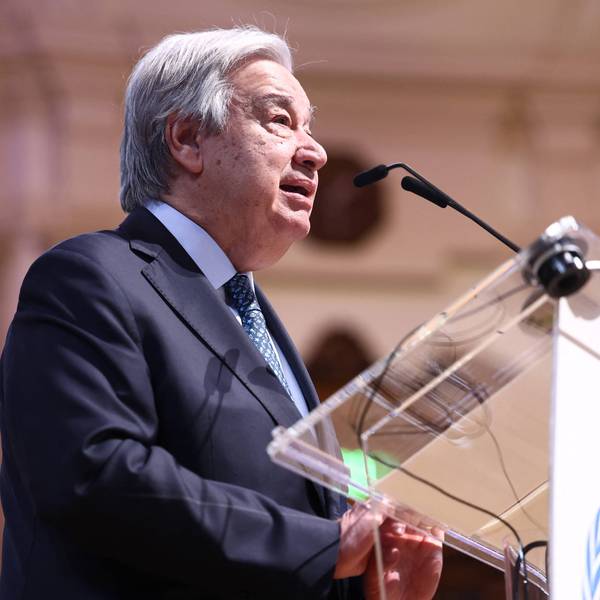
"The iconic U.N. podium is increasingly feeling diminished in a world in which billionaires are calling the shots," Behar added.
Oxfam argued the massive wealth gap between the rich and everyone else—as well as the chasm between the so-called Global North and Global South—is antithetical to the kinds of international cooperation needed to tackle existential emergencies, including the worsening climate crisis.
The report points to longstanding efforts by multinational corporations, ultra-wealthy individuals, and rich countries to obstruct efforts to establish more progressive global tax structures, depriving lower-income countries of revenue that could be used to combat the climate emergency and improve healthcare and education systems.
Corporations have also wielded their influence to tank efforts to reform patent laws that give pharmaceutical companies monopoly control over lifesaving therapeutics and vaccines, which had
devastating consequences during the Covid-19 pandemic.
"Enabled by rich nations, the ultra-wealthy individuals and corporations they control that benefit from and perpetuate extreme inequality have long impeded international efforts to create a more equitable society, especially those led by Global South countries," the new report states. "The movement toward global oligarchy ultimately perpetuates neocolonial relationships, shaping policy in ways that further increase the wealth of ultrarich individuals, mostly in the Global North, at the expense of the Global South."
Oxfam argued Monday that only global solidarity "can reverse the movement toward global oligarchy."
"Global South governments and civil society organizations are leading the push for a [World Health Organization] pandemic treaty with strong provisions on technology transfer and benefit-sharing, a U.N. tax convention with ambitious standards on taxing corporations and the rich, and a new international debt architecture that facilitates comprehensive debt restructuring," the report states. "These initiatives are critical opportunities for the international community to replace division with solidarity, a necessity for addressing other pressing issues such as climate change."
"Ultimately," the report adds, "a more equitable international order without extreme concentrations of wealth—where corporations pay their fair share, global public health is prioritized, and where all countries can invest in their own people—benefits everyone."
Dear Common Dreams reader, It’s been nearly 30 years since I co-founded Common Dreams with my late wife, Lina Newhouser. We had the radical notion that journalism should serve the public good, not corporate profits. It was clear to us from the outset what it would take to build such a project. No paid advertisements. No corporate sponsors. No millionaire publisher telling us what to think or do. Many people said we wouldn't last a year, but we proved those doubters wrong. Together with a tremendous team of journalists and dedicated staff, we built an independent media outlet free from the constraints of profits and corporate control. Our mission has always been simple: To inform. To inspire. To ignite change for the common good. Building Common Dreams was not easy. Our survival was never guaranteed. When you take on the most powerful forces—Wall Street greed, fossil fuel industry destruction, Big Tech lobbyists, and uber-rich oligarchs who have spent billions upon billions rigging the economy and democracy in their favor—the only bulwark you have is supporters who believe in your work. But here’s the urgent message from me today. It's never been this bad out there. And it's never been this hard to keep us going. At the very moment Common Dreams is most needed, the threats we face are intensifying. We need your support now more than ever. We don't accept corporate advertising and never will. We don't have a paywall because we don't think people should be blocked from critical news based on their ability to pay. Everything we do is funded by the donations of readers like you. When everyone does the little they can afford, we are strong. But if that support retreats or dries up, so do we. Will you donate now to make sure Common Dreams not only survives but thrives? —Craig Brown, Co-founder |
A report published Monday by the humanitarian group Oxfam warns that decades of intensifying inequality have left the world in the grip of a "global oligarchy" under which the richest sliver of humanity owns more wealth than nearly everyone else combined—a state of affairs that undermines democratic institutions and international cooperation on climate, pandemics, and other crises.
Oxfam's
analysis of data from the investment banking giant UBS found that the fortune controlled by the top 1% is now larger than the collective wealth of the bottom 95%.
Such inequality pervades the global economy, Oxfam noted, with a small number of corporations dominating key sectors. Nearly half of the global seed market, for example, is controlled by just two corporations, Bayer and Corteva. At the same time, just three U.S.-based financial behemoths—Blackrock, State Street, and Vanguard—oversee nearly 20% of the world's investable assets, around $20 trillion.
What's more, such massive corporations are increasingly run by billionaires: According to Oxfam, a billionaire either heads or is the top shareholder of more than a third of the world's leading 50 corporations.
"While we often hear about great power rivalries undermining multilateralism, it is clear that extreme inequality is playing a massive role," Oxfam executive director Amitabh Behar said in a statement. "In recent years the ultra-wealthy and powerful corporations have used their vast influence to undermine efforts to solve major global problems such as tackling tax dodging, making Covid-19 vaccines available to the world, and canceling the albatross of sovereign debt."
"Enabled by rich nations, the ultra-wealthy individuals and corporations they control that benefit from and perpetuate extreme inequality have long impeded international efforts to create a more equitable society."
Oxfam released its new report, titled Multilateralism in an Era of Global Oligarchy, ahead of the United Nations' annual high-level general debate, whose 2024 theme is "leaving no one behind: acting together for the advancement of peace, sustainable development, and human dignity for present and future generations."
The extreme concentration of global wealth at the very top directly undercuts such objectives, Oxfam argues in its new report, with the ultra-rich using the wealth they've accumulated to influence policy decisions that fuel destructive inequities.
"Extreme inequality is, consequently, both a cause and effect of a movement toward global oligarchy, broadly defined here as the ability of the ultra-wealthy to shape political decision-making in ways that increase their wealth," the report notes. "Democracies are afflicted, as the ultra-rich—often through the powerful corporate interests that act on their behalf—can tilt policymaking in their favor at the expense of the majority. Nor is the movement toward oligarchy confined by national borders. It is global, impacting political decision-making within countries and at the international level."
Behar said Monday that "the shadow of global oligarchy hangs over this year's U.N. General Assembly."
"The iconic U.N. podium is increasingly feeling diminished in a world in which billionaires are calling the shots," Behar added.
Oxfam argued the massive wealth gap between the rich and everyone else—as well as the chasm between the so-called Global North and Global South—is antithetical to the kinds of international cooperation needed to tackle existential emergencies, including the worsening climate crisis.
The report points to longstanding efforts by multinational corporations, ultra-wealthy individuals, and rich countries to obstruct efforts to establish more progressive global tax structures, depriving lower-income countries of revenue that could be used to combat the climate emergency and improve healthcare and education systems.
Corporations have also wielded their influence to tank efforts to reform patent laws that give pharmaceutical companies monopoly control over lifesaving therapeutics and vaccines, which had
devastating consequences during the Covid-19 pandemic.
"Enabled by rich nations, the ultra-wealthy individuals and corporations they control that benefit from and perpetuate extreme inequality have long impeded international efforts to create a more equitable society, especially those led by Global South countries," the new report states. "The movement toward global oligarchy ultimately perpetuates neocolonial relationships, shaping policy in ways that further increase the wealth of ultrarich individuals, mostly in the Global North, at the expense of the Global South."
Oxfam argued Monday that only global solidarity "can reverse the movement toward global oligarchy."
"Global South governments and civil society organizations are leading the push for a [World Health Organization] pandemic treaty with strong provisions on technology transfer and benefit-sharing, a U.N. tax convention with ambitious standards on taxing corporations and the rich, and a new international debt architecture that facilitates comprehensive debt restructuring," the report states. "These initiatives are critical opportunities for the international community to replace division with solidarity, a necessity for addressing other pressing issues such as climate change."
"Ultimately," the report adds, "a more equitable international order without extreme concentrations of wealth—where corporations pay their fair share, global public health is prioritized, and where all countries can invest in their own people—benefits everyone."
A report published Monday by the humanitarian group Oxfam warns that decades of intensifying inequality have left the world in the grip of a "global oligarchy" under which the richest sliver of humanity owns more wealth than nearly everyone else combined—a state of affairs that undermines democratic institutions and international cooperation on climate, pandemics, and other crises.
Oxfam's
analysis of data from the investment banking giant UBS found that the fortune controlled by the top 1% is now larger than the collective wealth of the bottom 95%.
Such inequality pervades the global economy, Oxfam noted, with a small number of corporations dominating key sectors. Nearly half of the global seed market, for example, is controlled by just two corporations, Bayer and Corteva. At the same time, just three U.S.-based financial behemoths—Blackrock, State Street, and Vanguard—oversee nearly 20% of the world's investable assets, around $20 trillion.
What's more, such massive corporations are increasingly run by billionaires: According to Oxfam, a billionaire either heads or is the top shareholder of more than a third of the world's leading 50 corporations.
"While we often hear about great power rivalries undermining multilateralism, it is clear that extreme inequality is playing a massive role," Oxfam executive director Amitabh Behar said in a statement. "In recent years the ultra-wealthy and powerful corporations have used their vast influence to undermine efforts to solve major global problems such as tackling tax dodging, making Covid-19 vaccines available to the world, and canceling the albatross of sovereign debt."
"Enabled by rich nations, the ultra-wealthy individuals and corporations they control that benefit from and perpetuate extreme inequality have long impeded international efforts to create a more equitable society."
Oxfam released its new report, titled Multilateralism in an Era of Global Oligarchy, ahead of the United Nations' annual high-level general debate, whose 2024 theme is "leaving no one behind: acting together for the advancement of peace, sustainable development, and human dignity for present and future generations."
The extreme concentration of global wealth at the very top directly undercuts such objectives, Oxfam argues in its new report, with the ultra-rich using the wealth they've accumulated to influence policy decisions that fuel destructive inequities.
"Extreme inequality is, consequently, both a cause and effect of a movement toward global oligarchy, broadly defined here as the ability of the ultra-wealthy to shape political decision-making in ways that increase their wealth," the report notes. "Democracies are afflicted, as the ultra-rich—often through the powerful corporate interests that act on their behalf—can tilt policymaking in their favor at the expense of the majority. Nor is the movement toward oligarchy confined by national borders. It is global, impacting political decision-making within countries and at the international level."
Behar said Monday that "the shadow of global oligarchy hangs over this year's U.N. General Assembly."
"The iconic U.N. podium is increasingly feeling diminished in a world in which billionaires are calling the shots," Behar added.
Oxfam argued the massive wealth gap between the rich and everyone else—as well as the chasm between the so-called Global North and Global South—is antithetical to the kinds of international cooperation needed to tackle existential emergencies, including the worsening climate crisis.
The report points to longstanding efforts by multinational corporations, ultra-wealthy individuals, and rich countries to obstruct efforts to establish more progressive global tax structures, depriving lower-income countries of revenue that could be used to combat the climate emergency and improve healthcare and education systems.
Corporations have also wielded their influence to tank efforts to reform patent laws that give pharmaceutical companies monopoly control over lifesaving therapeutics and vaccines, which had
devastating consequences during the Covid-19 pandemic.
"Enabled by rich nations, the ultra-wealthy individuals and corporations they control that benefit from and perpetuate extreme inequality have long impeded international efforts to create a more equitable society, especially those led by Global South countries," the new report states. "The movement toward global oligarchy ultimately perpetuates neocolonial relationships, shaping policy in ways that further increase the wealth of ultrarich individuals, mostly in the Global North, at the expense of the Global South."
Oxfam argued Monday that only global solidarity "can reverse the movement toward global oligarchy."
"Global South governments and civil society organizations are leading the push for a [World Health Organization] pandemic treaty with strong provisions on technology transfer and benefit-sharing, a U.N. tax convention with ambitious standards on taxing corporations and the rich, and a new international debt architecture that facilitates comprehensive debt restructuring," the report states. "These initiatives are critical opportunities for the international community to replace division with solidarity, a necessity for addressing other pressing issues such as climate change."
"Ultimately," the report adds, "a more equitable international order without extreme concentrations of wealth—where corporations pay their fair share, global public health is prioritized, and where all countries can invest in their own people—benefits everyone."