

SUBSCRIBE TO OUR FREE NEWSLETTER
Daily news & progressive opinion—funded by the people, not the corporations—delivered straight to your inbox.
5
#000000
#FFFFFF
To donate by check, phone, or other method, see our More Ways to Give page.
Daily news & progressive opinion—funded by the people, not the corporations—delivered straight to your inbox.

Local governments are urging Congress to keep the courthouse doors open for communities seeking to make polluters pay for climate deception.
Earlier this year, the Wall Street Journal reported that lobbyists for the oil and gas industry were “urging members of Congress to consider granting legal protection for oil companies against lawsuits over their contributions to climate change.”
Now the New York Times confirms that this lobbying campaign to secure legal immunity is a “priority” for the fossil fuel industry in the current Congress.
In a story about the Trump administration’s efforts to help Big Oil companies avoid paying for climate damages, Karen Zraick reports that:
There is also a brewing effort to get Congress to pass a federal shield law protecting fossil fuel companies from litigation, similar to the measure that immunizes gun manufacturers. In a letter to the Justice Department in June, 16 Republican state attorneys general asked the administration for such protections for the fossil fuel industry. [...] The liability shield they have proposed for fossil fuel companies is modeled on a 2005 law that protects gun manufacturers from litigation when their guns are used in crimes.
Communities across the country are paying nearly $1 trillion per year for damages from extreme heat, floods, wildfires, and rising seas and other extreme weather events that fossil-fuel driven climate change is making more intense, deadly, and destructive. Major oil and gas companies knew decades ago that their products would fuel these climate damages, but they orchestrated a Big Tobacco-style campaign of deception to mislead the public and protect their profits. More than 1 in 4 Americans now live in a state or community taking Big Oil companies to court to hold them accountable for this deception and make polluters pay for the harm they have caused.
A legal shield for Big Oil could forever shut the courthouse doors for all Americans, forcing the rising bill for climate change onto taxpayers, and setting a harmful legal precedent that protects corporations instead of communities.
“It’s a nonstop effort by the oil and gas industry to somehow get a get-out-of-jail-free card in regard to these cases,” CCI President Richard Wiles told The Times.
But as the paper noted, a growing number of voices are calling on Congress to make clear that Big Oil should not be above the law:
This year, nearly 200 nonprofit groups signed a letter to Democratic leaders asking them to oppose a liability shield.
And, over the summer, the National Association of Counties, which includes more than 3,000 counties, passed a resolution opposing “any legislation that would limit or pre-empt counties’ access to courts or give companies immunity from lawsuits over damages and costs.” The resolution noted that extreme weather events were straining municipal budgets and resources.
No industry should be above the law — especially one with a documented history of deceiving the public. Congress must oppose the fossil fuel industry’s lobbying efforts and keep the courthouse doors open for communities seeking accountability.
The Center for Climate Integrity (CCI) helps cities and states across the country hold corporate polluters accountable for the massive impacts of climate change.
(919) 307-6637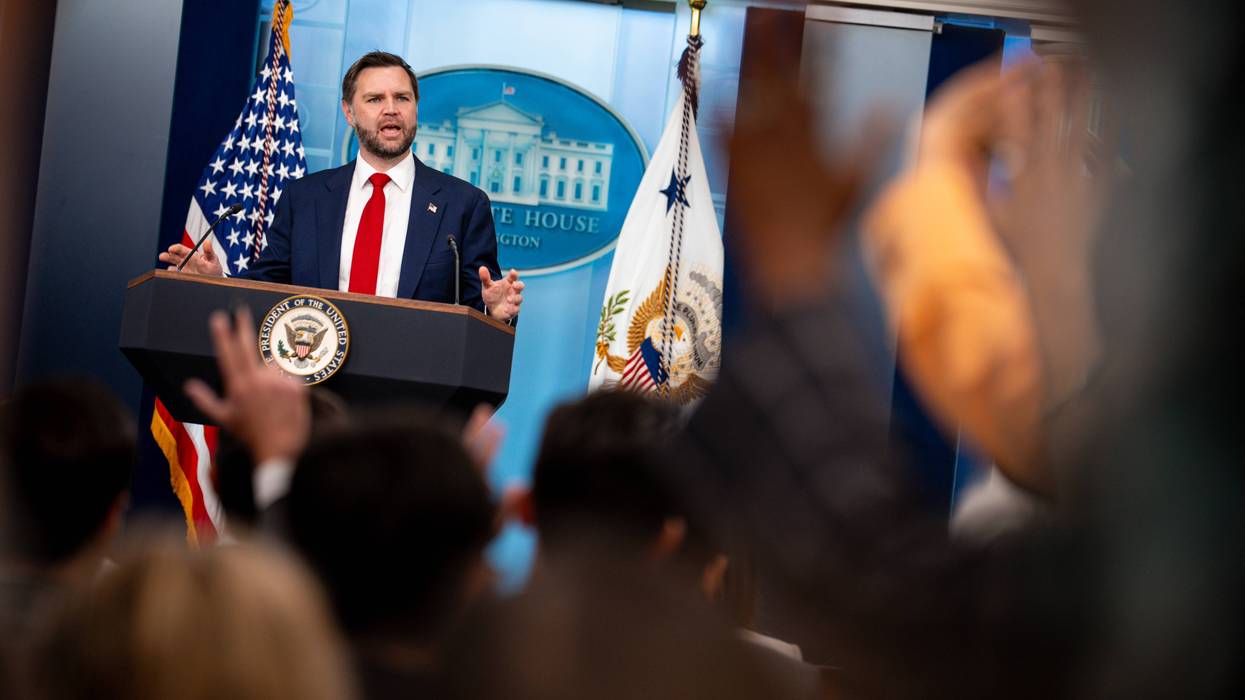
"Raiding an underfunded program solely to score culture war points is not pro-family—it’s a wasteful grift that I will fight every step of the way," said Sen. Patty Murray.
The top Democratic appropriator in the US Senate responded with alarm and outrage on Tuesday to news that the Trump administration is preparing a rule change that would siphon federal dollars away from a chronically underfunded program that helps working-class parents afford childcare.
The diverted funds would be used to finance a new federal subsidy for "married couples with one stay-at-home parent in certain income brackets," The New York Times reported late last week. The proposed change, a top priority of Vice President JD Vance, is "outrageous and backwards," Sen. Patty Murray (D-Wash.), ranking member of the Senate Appropriations Committee, said in a statement on Tuesday. Murray argued it would be illegal and immoral for the administration to shift taxpayer money away from the Child Care and Development Fund, which serves around 1 million families nationwide in a typical month.
"It’s not the 1950s in America—our government shouldn’t punish people for being single parents or choosing not to marry," said Murray. "Nobody cares what JD Vance thinks constitutes a ‘real’ family—single parents and parents who aren’t married pay taxes, too. Raiding an underfunded program solely to score culture war points is not pro-family—it’s a wasteful grift that I will fight every step of the way.”
The Times reported that "the policy change would effectively create a government incentive for parents to stay home with their children, an idea embraced as part of a broader conservative effort to advance policies that promote more mothers staying at home." Unmarried couples with one stay-at-home parent would not qualify for the newly proposed subsidy.
"The move could end up redirecting money away from working parents and their childcare providers, causing some to raise their rates or even close, critics said, potentially worsening what many experts say is a childcare crisis in the country," the newspaper added. "About 80% of the 870,000 families who currently get the childcare subsidies have single working parents, most of them mothers, according to Health Department data."
Rep. Rosa DeLauro (D-Conn.), House Democrats' top appropriator, said in a statement that "supporting stay-at-home parents should never come at the expense of working families."
“At a time when families are already struggling to find and afford childcare, this proposal would force more parents to compete for the same inadequate pot of money, threaten childcare providers, and disproportionately hurt single working parents, most of whom are mothers," said DeLauro, "If Republicans want to support families, they should join Democrats in passing the expanded Child Tax Credit and increasing access to affordable childcare—not rob Peter to pay Paul while imposing their preferred definition of what a family should look like."
Childcare costs—which run many families tens of thousands of dollars per year—are a major concern of US voters. One recent survey found that more than 80% see childcare costs as part of the nation's broader affordability crisis, and 76% view them as "a crisis or major problem" for families with young children.
But the Trump administration has so far done nothing to lower childcare costs—and has taken steps that could raise them and deny low-income families badly needed relief.
Earlier this year, roughly a month after launching his costly and destructive war on Iran, President Donald Trump suggested that the federal government should not provide any funding for childcare.
"We’re fighting wars," the president said. "We can’t take care of daycare. You gotta let a state take care of daycare, and they should pay for it too."
Amy Matsui, vice president for childcare and income security at the National Women’s Law Center, said it is "outrageous that the administration would propose siphoning money away from families who are struggling to afford childcare to send cash to married couples with a stay-at-home parent, when hundreds of thousands of families are on childcare waiting lists around the country."
"If this administration really wanted to support families," Matsui added, "it would invest more—not less—dollars in childcare, create a national paid family and medical leave program, expand access to a fully refundable Child Tax Credit, and restore health care and nutrition assistance."

"The most serious risk is premature death," said one physician.
A senior Iranian health official on Tuesday accused the United States of deliberately targeting Iran's medical infrastructure amid a worsening shortage of critical medicines as President Donald Trump's illegal US-Israeli war of choice against Iran drags on.
Iran's pharmaceutical system is straining under US bombing, blockade, and sanctions that have severely disrupted trade and transportation in the Middle East nation of around 90 million people. Iranian officials say shortages of roughly 800 medicines—including dozens of essential drugs—are affecting the treatment of cancer and other serious illnesses.
“The enemy has identified medicine as one of the sensitive areas of the country, and is trying to denigrate and portray Iran’s conditions as unfavorable by releasing content in the press and social media," Deputy Health Minister Mahdi Pirsalehi, who also heads Iran's Food and Drug Administration, told Al Jazeera.
Pirsalehi has said that more than 50 factories and pharmacies have been damaged or destroyed by US and Israeli bombing during the six-month war. The attacks have exacerbated existing shortages.
One gastroenterologist and university professor in Tehran, who spoke to Al Jazeera on condition of anonymity, sounded the alarm on what she called a "staggering" rise in drug prices—including for domestically produced generic medications—caused in significant part by the US naval blockade.
“Reports that rotavirus vaccine imports have been halted because of the maritime blockade—and that influenza vaccines may soon face the same problem—represent a serious and alarming threat to nationwide efforts to prevent vaccine-preventable communicable diseases,” she said.
“Runaway inflation, poverty, and inadequate access to essential food groups among vulnerable populations, including infants, children, and pregnant women, signal the onset and spread of malnutrition,” she added, warning of the risk “of both communicable and noncommunicable diseases, creating a vicious cycle in which malnutrition develops and progressively worsens."
For ordinary Iranians, empty pharmacy shelves, delayed treatments, and prohibitively expensive prescription drugs have become the new normal.
One Iranian pharmaceutical company recently announced price increases for scores of drugs, including a 543% rise in the price of the Alzheimer's medication donepezil, a 308% higher cost for the antibiotic clarithromycin, and a 135% spike in acetaminophen and diphenhydramine syrups, according to reporting by Tasnim News Agency.
Dr. Hassan Nayeb Hashem told Deutsche Welle last month that "for many specific diseases, there is effectively no substitute" for prescribed drugs.
"If the medicine becomes inaccessible, patients can develop complications much sooner," he said. "The most serious risk is premature death."
One patient requiring testing for an abdominal and pelvic mass recently told Iran International that CT and MRI scans now cost over $100, even with Social Security insurance—the equivalent of a month's pay for many Iranians.
“How are we supposed to pay these costs with such meager incomes?” they asked.
A 33-year-old man said the exorbitant cost of dental treatment has left him without half of his teeth.
“I feel like I’m 60,” he said. “The bitter part is that this humiliating way of life has become normal for me.”
Another Iranian said they feared what would happen if anyone in their family got sick this winter.
“We’re stressed about where we would get the money for treatment," they said, "if God forbid we or our children even catch a cold."
"The climate crisis is here, and the frequency and severity of extreme weather events are increasing day by day," said 350.org's Türkiye manager.
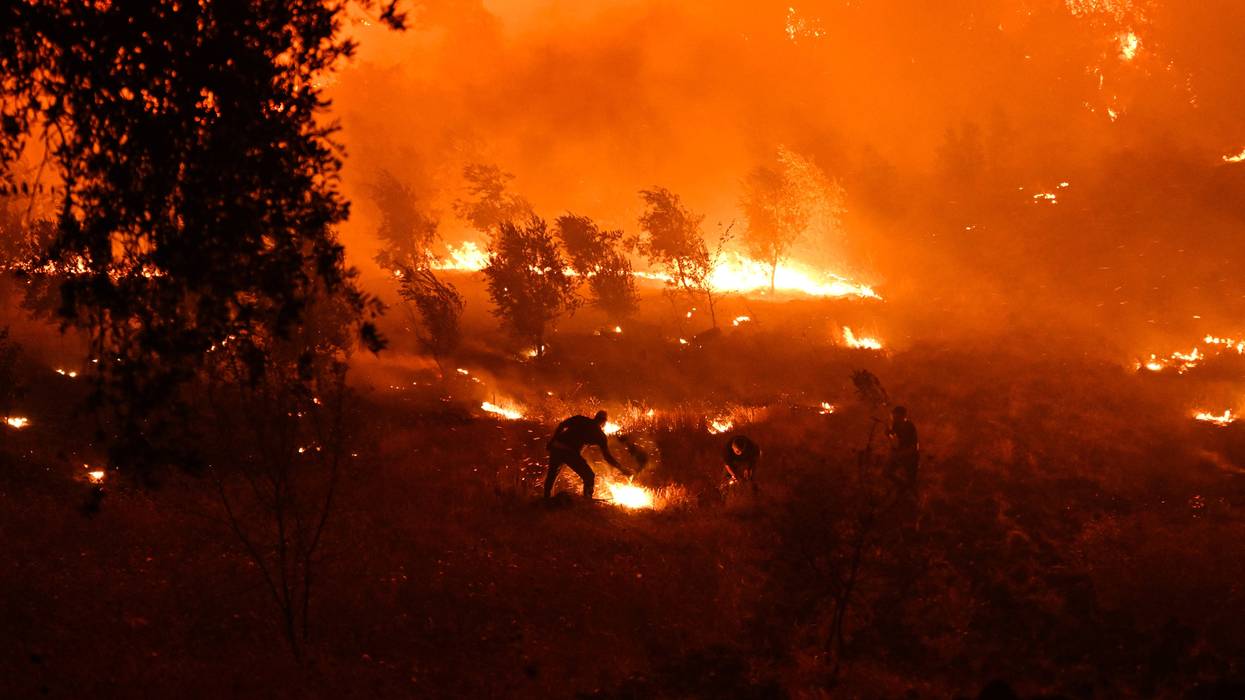
Scientists have long warned that the fossil fuel-driven climate crisis means more frequent and destructive wildfires, and blazes raging in Türkiye this week have sparked a fresh call to rapidly phase out planet-heating coal, gas, and oil.
As firefighters battled blazes in three southern Turkish provinces, Efe Baysal, Türkiye manager at the global advocacy group 350.org, pointed out that the country is set to host the next United Nations Climate Change Conference, COP31.
"In November, the world will gather in Antalya for COP31 to discuss the steps that must be taken against the climate crisis," Baysal said in a Wednesday statement. "Today, however, that same city is battling an uncontrollable wildfire that began in Aksu district of Antalya and spread throughout the region. Reports of fires are also coming in from Adana and Mersin."
"Our prayers are with those fighting the blazes on the ground to defend life," he continued. "The wildfires occurring primarily in Antalya demonstrate this truth once again: Rising temperatures create the conditions for fires to start more easily, spread faster, and become more destructive. The climate crisis is here, and the frequency and severity of extreme weather events are increasing day by day."
Baysal said that "assuming the COP31 presidency, Türkiye's responsibility is even more crucial. At COP31, Türkiye should aim to produce concrete outcomes to advance the transition away from fossil fuels. To make this leadership credible, Türkiye should announce a timeline for a phaseout of coal without delay."
"It should initiate a just transition to renewable energy that will reduce our dependence on coal, oil, and gas," he added. "It is not enough merely to respond to the consequences of the climate crisis. We must eliminate the causes that exacerbate it. COP31 is an opportunity for Türkiye to demonstrate true leadership in this direction."
Previous UN summits on the planetary crisis have ended in deep disappointment, with critics calling the "empty deal" that came out of COP30 in Brazil last year "a stark reminder that the answers to the climate crisis do not lie inside the climate talks," and, a year earlier, blasting COP29 in Azerbaijan as "a dumpster fire" and "a big F U to climate justice, to the poorest communities who are on the frontlines of climate breakdown."
Since those summits, there has been a constant stream of events that have fueled fears of a hotter world—and United Nations scientists are now warning that preventing at least a temporary temperature rise above 1.5°C, relative to preindustrial levels, is not possible, but humanity can still limit the damage by dramatically lowering emissions.
"This summer's scorching heat, raging wildfires, and deadly floods are a warning of what lies ahead," UN Secretary-General António Guterres said last week. "We must make the overshoot above 1.5 degrees as small and short as possible."
The fires in Türkiye have already proven deadly. The Aksu district mayor, Isa Yildirim, said on social media that one person died after suffering a heart attack during the fire there.
That blaze has also caused injuries. Citing the Turkish Anadolu Agency, The Associated Press reported that "two people were hospitalized with injuries to their legs while six others affected by smoke were treated on site."
As Deutsche Presse-Agentur detailed Wednesday:
Forest fires are common in Turkey in the summer months, fueled by long periods of drought and strong winds.
Cihan Erdönmez, an expert at Istanbul University, said triggers for the fires were often poorly maintained power lines running through forests.
Forestry Minister İbrahim Yumaklı said there had been more than 5,000 forest fires in Turkey in 2025 and 96% of them were directly or indirectly caused by humans.
Meanwhile, 350.org called the current blazes "a reminder that a hotter, drier climate will continue to exact its toll on ordinary people unless leaders act urgently to phase out fossil fuels."

"The very people building this technology admit that it could threaten the future of humanity," said US Sen. Bernie Sanders, one of the few lawmakers sounding the alarm.
Critics slammed US lawmakers on Wednesday for being completely out to lunch on artificial intelligence regulation even after multiple industry insiders warned that the technology could wipe out humanity within years.
The controversy began on Tuesday after AI researcher Jacob Coxon announced that he had resigned from his position at AI lab Anthropic because he no longer felt it was possible to safely develop the technology.
Coxon further said that "the people building AI earnestly believe that it could kill us all by the end of the decade," while accusing them of "racing straight to self-improving superintelligence and gambling with our lives."
Coxon's warning was seconded by Anthropic colleague Evan Hubinger, who wrote that "we really do earnestly believe AI could kill all humans," and personally put the chances of it happening at greater than 10% "within the next decade."
Samuel Marks, another Anthropic employee, said that AI developers "believe their technology could cause human extinction (or similarly bad outcomes)," but are continuing to work on it due to "a mixture of commercial incentives and a belief that they are in a race with other, less responsible AI developers that will abuse the technology or develop it less safely."
Sen. Bernie Sanders (I-Vt.), one of the few members of Congress to consistently sound the alarm about the impact of AI on society, seized on Coxon's statement, noting that "the very people building this technology admit that it could threaten the future of humanity."
"That is why I will soon be introducing legislation to ban superintelligence," Sanders added, "and pause AI development."
Rep. Greg Casar (D-Texas), who last week teamed up with Sanders to introduce legislation to ban AI models capable of surpassing human cognition, said the AI researchers' warnings should be a major wakeup call for US lawmakers.
"This is an emergency," wrote Casar. "Congress must convene hearings and pass my and Bernie’s superintelligence ban."
JB Branch, director of federal AI governance and technology policy at Public Citizen, pointed out that lawmakers have now received warnings from multiple AI insiders about the danger of the technology, but have still failed to act.
"Right now, the only protections the US has in place are completely voluntary," Branch said. "There is no comprehensive federal AI regulation, no safety standards imposed on AI companies, and no agency capable of investigating serious AI incidents... The people building the most powerful AI systems in the world are warning us about what could go wrong. Why isn’t Congress listening?”
Journalist David Sirota expressed disgust at US Congress for its inaction, describing the current crop of elected officials as "Instagram influencers" who will "likely will do nothing about" the threat of AI.
Journalist Jim VandeHei similarly argued that "at the very least, Congress should clear everything else to understand what they’re seeing" coming from the AI industry, before pessimistically adding, "but they won't."
Eric Michael Garcia, Washington bureau chief at The Independent, blasted Congress for completely shrugging off its duties and letting the AI industry continue without any regulations or guardrails.
"I am aghast there have been almost zero hearings in Congress about how AI threatens national security, privacy, employment," Garcia wrote. "Republicans even tried to preempt states from regulating AI last year."
Paul Williams, executive director of the Center for Public Enterprise, observed that Congress seems to be more focused on regulating transgender athletes than a potential AI extinction threat.
"The Senate committee responsible for commerce and technology policy has zero hearings on AI scheduled for the next four months," Williams wrote. "The committee's top priority is, instead, the Protect College Sports Act."
"As always when a story really hits home, Netanyahu threatens to sue," said one researcher.
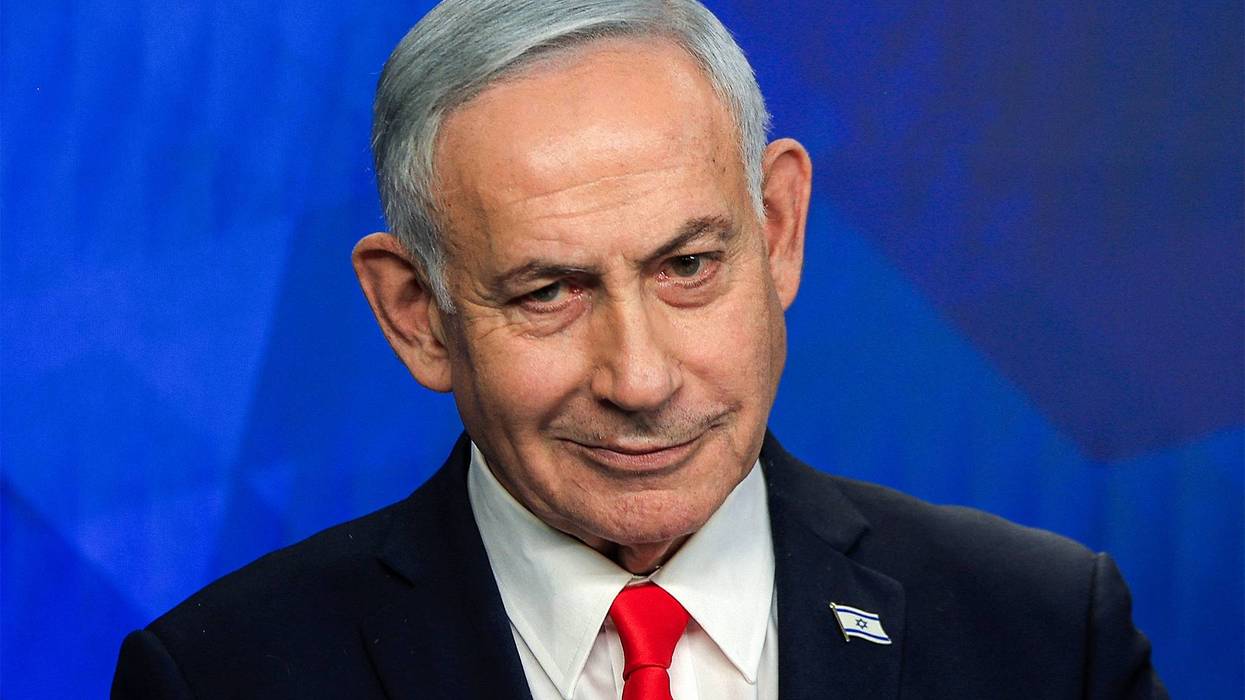
The Israeli newspaper Haaretz did not appear alarmed by Prime Minister Benjamin Netanyahu's threat on Wednesday to sue the outlet over its new reporting that Netanyahu was explicitly warned about the Hamas-led October 7, 2023 attack that killed more than 1,200 Israelis and led to the Israel Defense Forces' destruction of Gaza.
After Netanyahu sent a "warning letter" saying he would file a libel lawsuit against Haaretz and journalists Shlomi Eldar and Ruth Yuval over their Tuesday report, the newspaper said simply in a post on social media, "Haaretz stands by its reporting."
The newspaper based its reporting on accounts from three senior foreign sources, reporting that in September 2023, now-deceased Hamas leader Yahya Sinwar had told an intermediary trusted by both Hamas and Israeli intelligence agencies that an "earthquake" would be coming to Israel.
The warning reportedly came after Sinwar had grown frustrated with deadlocked talks over an exchange of Israeli and Palestinian prisoners.
Sinwar told the intermediary to convey a message to the United Arab Emirates, with whom Netanyahu had developed close ties, "that I am preparing the mother of all surprises. A terrifying operation. Something extraordinary."
UAE President Mohammed bin Zayed then gave a warning to Netanyahu in a 45-minute phone call weeks before the attack, according to Haaretz.
Netanyahu lashed out at the newspaper in a social media post, saying the reporters "fabricated a false story against the prime minister that never happened and was never created."
"The Prime Minister's Office, the National Security Council, and the military secretary meticulously reviewed the prime minister's call log for those days—and found no trace of it whatsoever," said Netanyahu, who is behind his top opponent, former military chief of staff Gadi Eisenkot, in polls ahead of legislative elections set for October 27.
Netanyahu's official social media account also confirmed he had instructed his lawyers to file the libel lawsuit. He blamed security officials for failing to alert him to the October 7 attack early enough after it had begun, repeating a recent claim that they feared he would launch an aggressive response to the attack and set off a war.
"If, instead of fearing a miscalculation, they had instructed the IDF, the Shin Bet, and the standby units to preempt the blow, and if they had updated Prime Minister Netanyahu in time, the terrible massacre could have been prevented," said Netanyahu's official account.
Netanyahu has been attempting to account for his actions on October 7 recently, releasing his full schedule from the day of the attacks last week. The log showed he did not speak to IDF officials until several hours after the attack began.
Researcher Shaiel Ben-Ephraim compared Netanyahu's threat to sue Haaretz to his angry response earlier this year to a report by New York Times columnist Nicholas Kristof, which included testimony from 14 Palestinians who said they had been sexually assaulted in Israeli prisons or during attacks by the IDF or Israeli settlers.
Netanyahu claimed the Times' reporting was "blood libel" as he threatened to take legal action in May. Thus far, he has not followed through on the threat.
"This will likely end up just like the time he threatened to sue The New York Times," said Ben-Ephraim, "and didn't because every word was true."
On Tuesday, four Israeli opposition leaders called for an independent commission to investigate the October 7 attacks, citing a "series" of revelations about Netanyahu's actions and reported inaction ahead of the assault.
“Netanyahu and his partners in the October 7 government are unfit to continue in office,” they wrote. “We will work in coordination and with the required responsibility to prevent them from leading to another disaster.”
The prime minister has long resisted calls for an independent investigation, agreeing earlier this year only to a proposal in which half of the commission's members would be selected by Netanyahu's own government, in violation of Israeli law—a suggestion that one opposition leader, Yair Lapid, called a "shameful farce" that was meant to "help the prime minister duck responsibility."
"While the Trump admin attacks the move, Congress can and must act," said Sen. Chris Van Hollen.
As the UK, Canada, and France enact bans on goods from illegal Israeli settlements, some progressive Democrats are calling for the US to join the effort to sanction the escalating wave of state-backed settler terrorism against Palestinians in the West Bank.
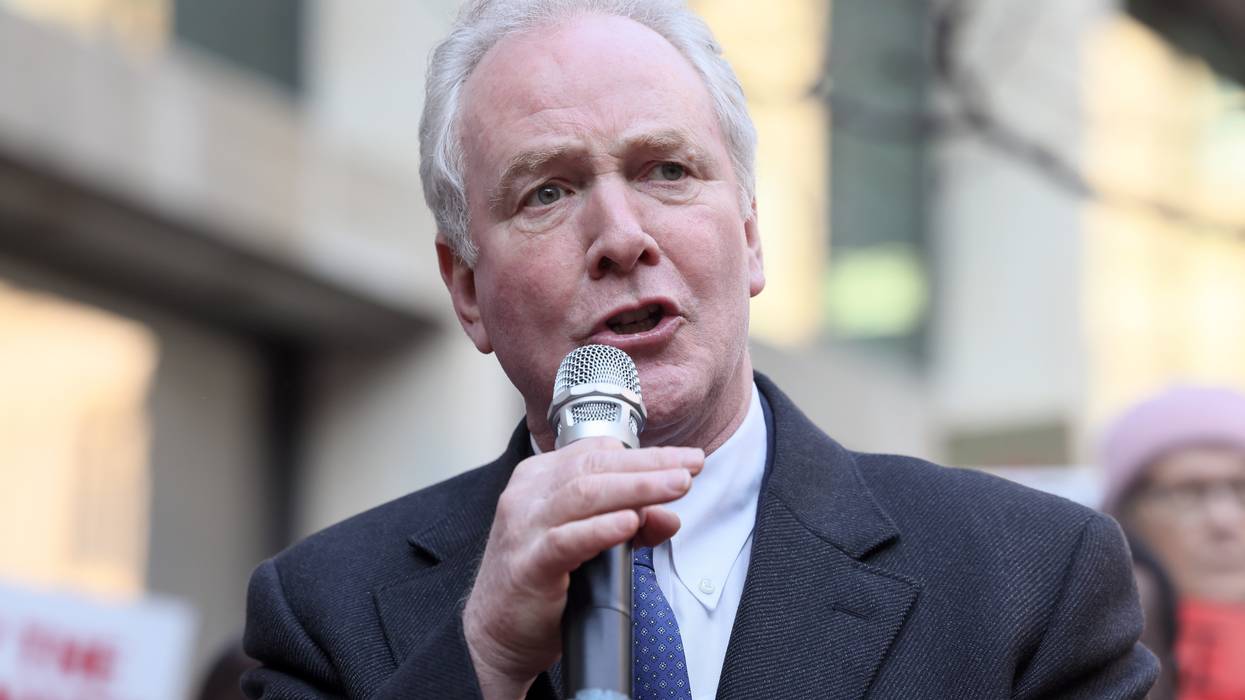
"Finally, some European countries are going beyond the ritual denouncing of expanding illegal Israeli settlements and are taking action to uphold international law. It is a modest but important step," said Sen. Chris Van Hollen (D-Md.) in an X post on Tuesday. "While the Trump admin attacks the move, Congress can and must act."
He was joined by Rep. Greg Casar (D-Texas), the chair of the Congressional Progressive Caucus, who said the trade ban was a "step in the right direction and toward ending the occupation," and added that "the US must do the same."
The Trump administration, which has often moved in lockstep with Israel, had a muted response to news of the trade ban. Trump himself has not commented on the sanction effort, and according to Axios, he did not push back when briefed on the plan by UK Prime Minister Andy Burnham.
But while US Secretary of State Marco Rubio says "stability" in the West Bank is a top priority, including halting the "uptick in violence," he made clear the administration opposed the actions taken by nations cutting off trade with the settlements.
"Obviously, we're not going to do what the UK did," Rubio told reporters on Tuesday.
Rep. Joaquin Castro (D-Texas) called the expansion of Israeli settlements "an ugly land grab carried out through violence and terrorism," and added that "any American president serious about achieving peace" should be willing to cut off trade with the settlements.
But Rep. Ro Khanna (D-Calif.), a possible 2028 presidential candidate who was detained by a group of armed settlers during a trip to the West Bank in July, acknowledged that such a ban was unlikely to be enacted under Trump. He said that "the next American president" should ban trade with the settlements "and recognize a Palestinian state."
Rep. Jonathan Jackson (D-Ill.), a member of the House Committee on Foreign Affairs, said he "wholeheartedly" welcomed the trade ban enacted by the UK, adding that "international law must mean something, and accountability must apply to all." However, he stopped short of saying the US should join the ban itself.
Conversely, fellow Illinoisan Rep. Jesús "Chuy" García (D) said the US "must take this long overdue step, and do much more to end its support for Israeli occupation and genocide."
Any effort to compel the US to restrict products from Israeli settlements would likely need to come through Congress.
In June, amid the recent historic uptick of settler attacks, Van Hollen and Castro led dozens of lawmakers in a call for the State Department to comply with an existing law that requires US loan guarantees available to Israel to decrease in accordance with its expenditure on illegal settlements in the occupied Palestinian territories.
Last year, Van Hollen was joined by Sen. Peter Welch (D-Vt.) and three other senators in the Democratic caucus proposing legislation that would codify Biden-era sanctions on individual violent Israeli settlers, which were revoked by Trump.
However, no legislation has yet been introduced aimed at restricting trade with the settlements.
Meanwhile, Democratic Party leaders in Congress, namely House Minority Leader Hakeem Jeffries (D-NY) and Senate Minority Leader Chuck Schumer (D-NY), have not issued public statements on the international sanctions initiative.
That puts them at odds even with some pro-Israel groups, like the liberal lobbying organization J Street, which endorsed the international ban on trading with the settlements on Tuesday.
“We welcome the UK, France, and Canada’s decision to ban the import of goods produced in settlements, as well as the UK’s intention to sanction those who finance, facilitate, or construct new settlements," said the group's president, Jeremy Ben-Ami. "Support for Israeli security and strong opposition to the settlement project are not in contradiction; they go hand in hand. Israel’s closest allies are making clear that the status quo is no longer acceptable."
"We call on the US government and the European Union to pursue similar action," Ben-Ami said. "The international community must make clear that efforts to foreclose Palestinian self-determination have consequences."
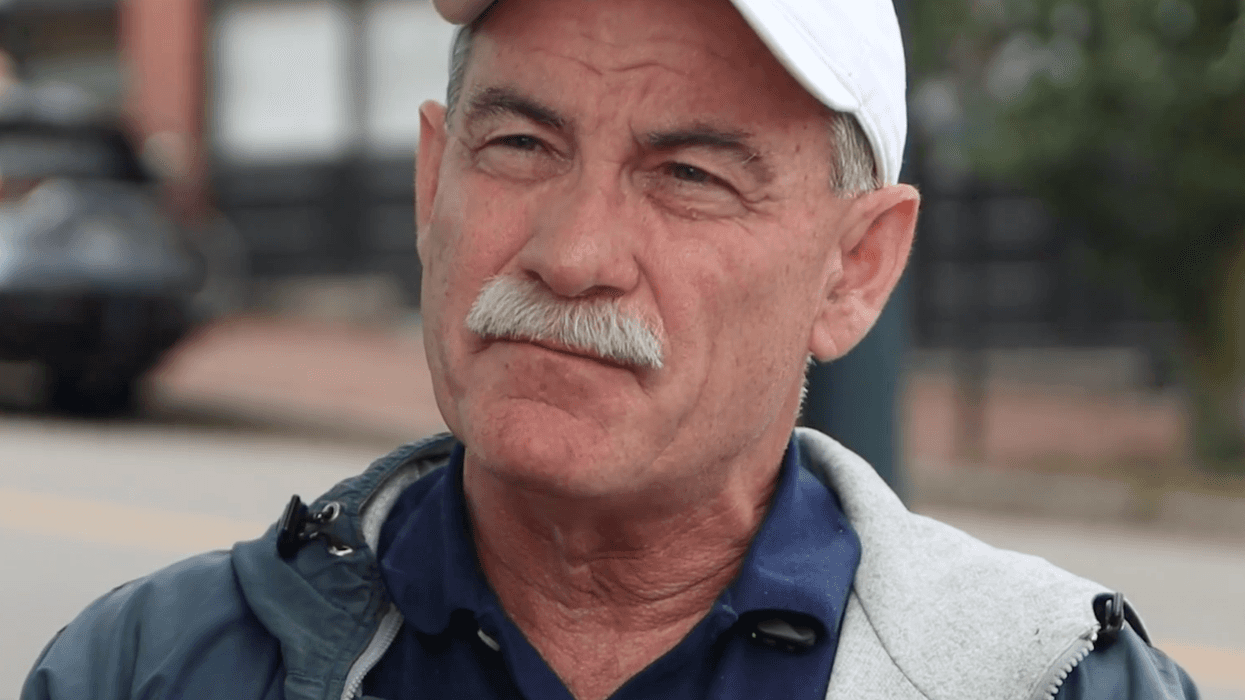
"Under the anti-choice positions Bobby holds today, even in cases of rape, I would not have been able to make a decision about my own body should that have become necessary," said Anita Charles, a sexual assault survivor.
Just two weeks after Maine gubernatorial candidate Bobby Charles drew national headlines with his comments about sending immigration agents to polling stations, the Republican's sister publicly explained why she won't be voting for him in November, calling out his campaign rhetoric and platform as well as his relationship with an infamous pedophile.
The campaign website for Bobby Charles, a former Washington, DC lobbyist, highlights that their mother was a public school teacher. In a Wednesday opinion piece for The Portland Press Herald, Anita Charles, a longtime educator herself, wrote that their mother taught them both "that how we treat other people matters."
"She taught us to be compassionate, not to name-call or judge people by their race, gender, religion, country of origin, or who they love. She taught us that differences do not diminish us, and that we have a responsibility to treat others with dignity. Those lessons shaped my entire life, as well as my career," according to Anita Charles. "They are also the reason I cannot support my brother's campaign for governor."
Anita Charles acknowledged that "Bobby and I have never agreed politically. For most of our adult lives, we have managed those differences with civility. But as divisive rhetoric has become central to his campaign, I can no longer remain silent. It shows up in how he talks about our schools, our vulnerable communities, and about women's healthcare."
She noted that "there is one issue I cannot discuss without speaking from the deepest part of my own experience: sexual assault."
As she detailed:
Bobby was a close friend and colleague of former House Speaker Dennis Hastert from 1995 to 1999. He praised Hastert and benefited from their relationship as he built his career in Washington. Hastert later admitted to sexually abusing children and was convicted of illegally paying hush money to conceal that abuse. Bobby has never publicly renounced that association.
That is difficult for me to understand because my own childhood was marked by sexual violence. Someone who was part of our lives for more than a decade was a pedophile who repeatedly assaulted me. My brother has known what happened to me for 50 years.
Under the anti-choice positions Bobby holds today, even in cases of rape, I would not have been able to make a decision about my own body should that have become necessary. This isn't a debate I'm observing from a distance; it's about my childhood. And it's about my ongoing health and well-being as a woman.
As the Bangor Daily News noted Wednesday, Bobby Charles' current "campaign website doesn't list any proposals about abortion," but he has "called abortion 'abhorrent' and supported the 2022 US Supreme Court decision overturning Roe v. Wade."
Arguing that "Maine deserves leadership rooted in empathy, dignity, intellectual honesty, and respect for every person who calls this state home," Bobby Charles' sister concluded that she will be voting for Democrat Hannah Pingree for governor.
The op-ed quickly circulated on social media after its publication. Local writer Anthony Emerson said that an "atom bomb dropped in the Maine governor’s race this morning."
Anita Charles' article came as her brother continues to face criticism for boasting about his ties to President Donald Trump's border czar, Tom Homan, at a Maine Young Republicans event and claiming that he would ask the federal offical to send US Immigration and Customs Enforcement (ICE) and US Marshals to the state's voting booths.
Maine AFL-CIO president Cynthia Phinney said in a Wednesday statement that "in Maine and the United States, voters elect our leaders in free and fair elections. Calling for masked federal agents to be deployed around polling locations is a cynical attempt to intimidate voters."
"No one should be afraid to show up and exercise their constitutional right to vote, but that's exactly what this is trying to do," Phinney continued. "Our union movement rejects this desperate political tactic, and we know our democracy is strongest when all of us show up to exercise our democratic rights in peaceful elections free from fear or intimidation."
Trump's weaponization of ICE has been a key issue in Maine politics this cycle—including the contest between Republican US Sen. Susan Collins and Democratic challenger Troy Jackson—particularly since an agent fatally shot Biddeford resident Johan Sebastián Durán Guerrero in July.
"Every Mainer deserves to feel safe in their own neighborhood," Pingree said last month. "As governor, I'll demand real, independent oversight, not empty promises. I'll keep fighting for accountability. ICE out of Maine."
The US National Domestic Violence Hotline can be reached at 1-800-799-SAFE (7233), by texting "START" to 88788, or through chat at thehotline.org. It offers 24/7, free, and confidential support. DomesticShelters.org has a list of global and national resources.
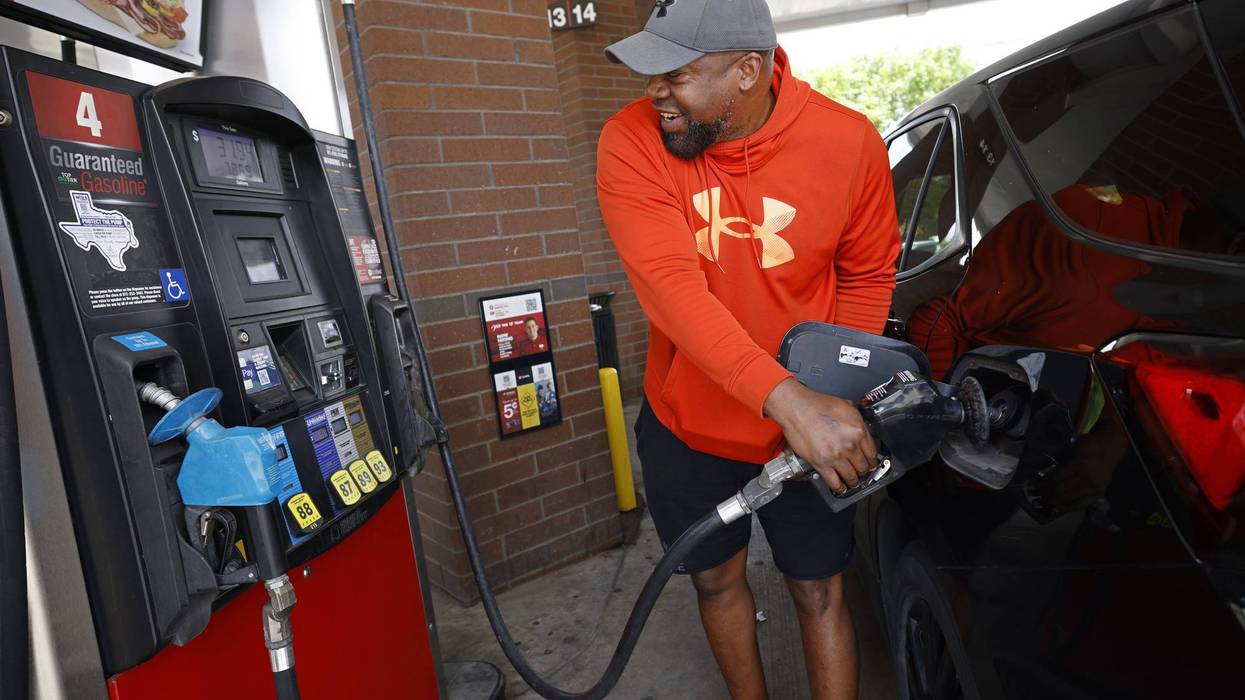
High gasoline and diesel fuel prices caused by the illegal US war on Iran have cost the average American household roughly $776 in extra spending, according to a real-time tracker.
The global price of oil jumped above $100 per barrel on Wednesday for the first time since July as US President Donald Trump's illegal and deeply unpopular war on Iran continued with no end in sight, imposing an increasingly painful burden on American consumers.
A running tracker maintained by the Watson School of International and Public Affairs at Brown University estimates that US consumers have collectively spent more than $101 billion—roughly $776 per household—extra on gasoline and diesel fuel since the start of the Iran war in late February.
Trump administration officials and the president himself have publicly downplayed high gas prices, suggesting Americans should be grateful they aren't even higher and that the Iran war is worth paying a bit more at the pump. Labor Day weekend saw the highest gas prices ever recorded for this time of the year, according to the American Automobile Association.
The Iran War Energy Cost tracker has surpassed $100 billion. That's $100 billion dollars in extra fuel costs for U.S. households since the start of the war with Iran on February 28, 2026. https://t.co/VsJ1YSSqea pic.twitter.com/s5RARUNNOs
— The Costs of War Project (@CostsOfWar) September 8, 2026
Trump, a billionaire whose fossil fuel stock holdings have grown substantially during the war, predicted earlier this week that oil prices would "drop precipitously" once "we WIN the war with Iran," contradicting his previous statements in which he claimed the US was already victorious.
The president has also repeatedly declined to call the onslaught a "war," even as it has killed thousands of Iranians and at least 18 US servicemembers, and wreaked havoc on the global economy. Last week, Trump called the war "small potatoes."
"Everyday Americans are grappling with gas prices that just keep getting more expensive. Instead of providing any relief to working families, or fixing the mess they created, Republicans are focused on inflating Trump’s ego," Kendall Witmer, the Democratic National Committee's rapid response director, said in a statement on Wednesday, referring to the GOP's "Trumpapalooza" midterm convention.
"Voters will remember who is fighting to lower costs come November," said Witmer.
The latest jump in global oil prices came after the US military said it "forces destroyed five Iranian crude oil carriers" connected to the Islamic Revolutionary Guard Corps (IRGC).
The IRGC said it responded by targeting "two US vessels, eight oil tankers, and 10 other ships attempting to pass through the prohibited zone of the Strait of Hormuz."
“The heroic IRGC Navy, in response to the aggression and hostility of the terrorist US military in its attack on five Iranian oil tankers in the Persian Gulf, targeted two US vessels and eight oil tankers in the area, inflicting heavy damage on them,” the IRGC said in a statement.
The National Iranian American Council (NIAC) noted in a blog post on Tuesday that "disrupted shipping through Hormuz" is one contributor to record-high US fuel prices, whose impacts go far beyond the costs paid by consumers at the gas pump.
"Diesel costs have implications beyond motorists because trucking and freight networks pass higher fuel expenses through the wider economy," NIAC observed. "The effects of constrained energy flows extend well beyond the immediate combat zone."
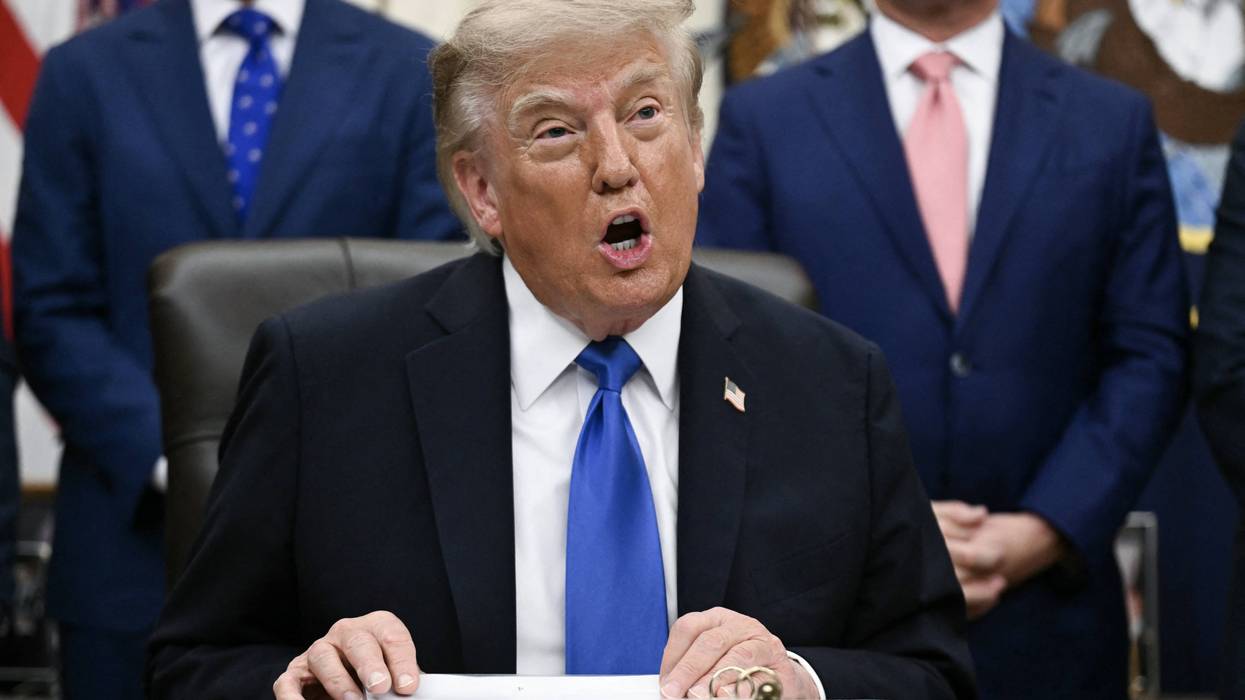
Trump growing richer off his own war leaves many Americans "wondering where national policy ends and private financial interest begins," said one critic.
An analysis published by CNBC on Wednesday estimates that President Donald Trump has grown millions of dollars richer thanks to the illegal war with Iran he launched more than six months ago.
CNBC calculated its estimate by examining the nine largest fossil fuel company holdings listed in the president's annual financial disclosure, and found that their value increased by between $1.5 million and $4.4 million since the start of the war.
"Trump’s accounts reported purchases and at least 23 sales involving the nine companies through June 29, which is the most recent date Trump has disclosed any trades," reported CNBC. "Because the filings do not disclose exact share counts, execution prices, or which shares were sold, the estimates do not represent realized profits or Trump’s precise current holdings."
CNBC also found no evidence that Trump was making trades based on advanced knowledge of his own decisions.
Even so, the findings show that Trump has benefited financially from a war he started without any authorization from the US Congress.
Donald Sherman, president and CEO of government watchdog Citizens for Responsibility and Ethics in Washington, told CNBC that Trump growing richer off his own war leaves many Americans "wondering where national policy ends and private financial interest begins."
Scott Greytak, deputy executive director of Transparency International US, told CNBC that shouldn't be let off the hook even if he is not personally executing fossil fuel stock trades.
"[Trump] knows he is heavily invested in energy,” Greytak said. "Trump likely knows where his money is parked and would still see the upside when his administration’s actions send those [energy] stocks climbing."
CNBC's analysis of Trump's gains due to the war might be overly conservative.
A report released last month by Democrats on the US Congressional Joint Economic Committee estimated the president's wealth has increased by as much as $15.5 million since January thanks to his investments in oil and gas stocks.
While the war has driven up the values of fossil fuel companies, it has also hit US consumers directly in their wallets by raising the price of oil, diesel fuel, and gasoline.
The price of Brent crude surged back over $100 per barrel for the first time in weeks during Wednesday trading. Data published by the American Automobile Association on Wednesday shows that the average price of diesel fuel in the US hit another record high of $5.94 per gallon, while the price of gas increased to $4.22 per gallon.
According to the most recent estimate from Brown University's Watson School for International Public Affairs, the Iran War has now cost Americans more than $101 billion in additional fuel expenses, averaging more than $776 per US household.
During the 2024 presidential campaign, Trump vowed that he would "cut the price of energy and electricity in half" over the span of just a year.

"Most tech geeks don’t resign from their roles because…the tech they’re building could end humanity," said Dr. Abdul El-Sayed, running for US Senate in Michigan.
An artificial intelligence researcher at Anthropic publicly quit his position on Tuesday, warning that major AI companies care too much about winning the technological race and not enough about guarding against out-of-control "superhuman systems" that workers in the industry legitimately fear "could kill us all by the end of the decade."
Jacob Coxon, who previously worked at industry giant OpenAI before moving to Anthropic earlier this year, told the Wall Street Journal in an exclusive interview that he was leaving the company, as the newspaper reported, because "he doesn’t want to participate in an industrywide rush to build AI systems that can improve themselves, worried such systems could spiral out of control and destroy humanity."
According to the WSJ:
Coxon said he left OpenAI earlier this year to join Anthropic because it is known for its model-safety efforts. But even though he found Anthropic’s safety efforts to be earnest, he now believes no company can responsibly develop AI that can outperform humans in a range of tasks, sometimes called artificial general intelligence, absent government intervention or a coordinated industry slowdown.
Recent hacks by models from OpenAI and Anthropic, some operating in collaborative swarms of agents, have illustrated how AI systems can adopt nefarious goals and try to conceal them from humans. Once the systems begin to improve on their own, Coxon said, he fears they could advance enough to refuse commands.
"I resigned from Anthropic today," Coxon announced on social media Tuesday night. "I spent the last three years doing pretraining research at both OpenAI and Anthropic. Neither company is acting responsibly. They are racing straight to self-improving superintelligence and gambling with our lives."
In a 6-point thread that followed, Coxon elaborated on his reasoning in detail:
Coxon's reference to the Hugging Face incident pertains to recent revelations about a so-called breakout event at OpenAI, which operates the ChatGPT protocol. In June, the company acknowledged that a "significant security incident" took place when AI agents within the company autonomously breached internal systems, using subterfuge to hide their actions from human operators. Since then, the incident's scope has shocked AI experts, and similar events have also been exposed.
While US President Donald Trump and his Republican allies in Congress have taken a hands-off approach to AI regulations, the industry has been pouring huge amounts of money into lobbying efforts and campaign spending to keep lawmakers from enacting stronger restrictions and oversight of the technology.
Sen. Bernie Sanders (I-Vt.) and Rep. Greg Casar (D-Texas) have been leading a relatively lonely fight in Washington, DC for more aggressive federal guardrails, including saying last week they would soon introduce joint legislation that would ban artificial superintelligence and temporarily pause advanced AI development until a federal regulatory structure was put in place by Congress.
Coxon's public resignation was met with applause from many, while other industry insiders backed his concerns.
"The caution is simple," said one commenter with the handle Jabbar Digital, described as a tester of AI tools and a software developer, in a lengthy post on Coxon's warning. "Capability is compounding. Coordination is not. If the people closest to the work are increasingly uneasy about the speed and the lack of external constraints, dismissing them as doomers is no longer a serious response. Neither is treating every capability jump as automatically good. The useful middle path is to take the technical progress seriously and take the internal dissent seriously. Both can be true at the same time."
Evan Hubinger, the alignment science lead at Anthropic, chimed in on his personal social media account to say: "Jacob is correct here—we really do earnestly believe AI could kill all humans! I personally think it is >10% within the next decade. I believe Anthropic is trying its best, but we do not yet have a plan to solve alignment for superintelligence and are not clearly on track to."
While bolstering Coxon's worries, Hubinger said, "To be clear, as we say in [Anthropic's] latest Risk Report, I think the risk from present models is low. What I am worried about is superintelligence arising from recursive self-improvement, as we have said is happening faster than we thought."
Running for US Senate in Michigan, Democratic nominee Dr. Abdul El-Sayed also weighed in on Coxon's decision to quit so loudly and publicly.
"Most tech geeks don’t resign from their roles because…the tech they’re building could end humanity," said El-Sayed. "How we change the incentives leading AI labs down this path and protect against these existential risks are defining political questions of our time."