

SUBSCRIBE TO OUR FREE NEWSLETTER
Daily news & progressive opinion—funded by the people, not the corporations—delivered straight to your inbox.
5
#000000
#FFFFFF
To donate by check, phone, or other method, see our More Ways to Give page.
Daily news & progressive opinion—funded by the people, not the corporations—delivered straight to your inbox.

Grace Chang, 909-706-5147,
gchang@rabengroup.com
Gwen Fitzgerald, 240-462-9076, gfitzgerald@aiusa.org
Today, Amnesty International USA (AIUSA) released
a ground-breaking report on the failure of local, state, and federal governments
to protect the rights of poor and minority Gulf Coast residents in the
wake of hurricanes Katrina and Rita in 2005. The report, Un-Natural Disaster:
Human Rights in the Gulf Coast, finds that "recovery" efforts in the
region have often excluded people whose families have generations-deep
roots in their local communities, particularly low-income communities and
communities of color. It demonstrates that the basic human rights
of these people--rights to adequate housing, health services, and equal
access to the justice system--have been neglected by the officials who
were meant to protect their interest. "The hurricanes represented a tragic
moment in American history," explained AIUSA Executive Director Larry
Cox. "The comprehensive recovery program could have helped people
rebuild their lives with dignity. Instead the botched recovery effort has
exacerbated the discrimination and inequality present in many Gulf Coast
communities."
The report documents how several factors, including bureaucracy, opportunism,
and lack of leadership and accountability contributed to the human rights
crisis that persists in the region. It also faults federal law, especially
the Robert T. Stafford Disaster Relief and Emergency Assistance Act, which
guides federal disaster response, for failing to guide a robust recovery
and rebuilding effort. "In the absence of federal leadership, ad-hoc
local efforts have further marginalized those who are least able to bear
the costs of reconstruction and relocation," Cox said. "The Stafford
Act must be revised to bring it in line with international law and standards,
particularly the U.N. Guiding Principles on Internal Displacement."
The report makes specific proposals to improve federal response when a
significant percent of a population is displaced, and to protect the rights
of displaced people to access education, healthcare, housing, food, vocational
training, and other public services.
The release of the report coincides with AIUSA's annual general meeting,
All Rights for All People, which this year is being held in New Orleans
from April 9 - 11. The conference highlights AIUSA's new global
campaign against human rights abuses that keep people in poverty, Demand
Dignity.
For more information on human rights
in the Gulf Coast and to read the report, please visit https://www.amnestyusa.org/katrina
and https://www.amnestyusa.org/dignity/pdf/Un-Natural_Disaster_report.pdf
Amnesty International is a global movement of millions of people demanding human rights for all people - no matter who they are or where they are. We are the world's largest grassroots human rights organization.
(212) 807-8400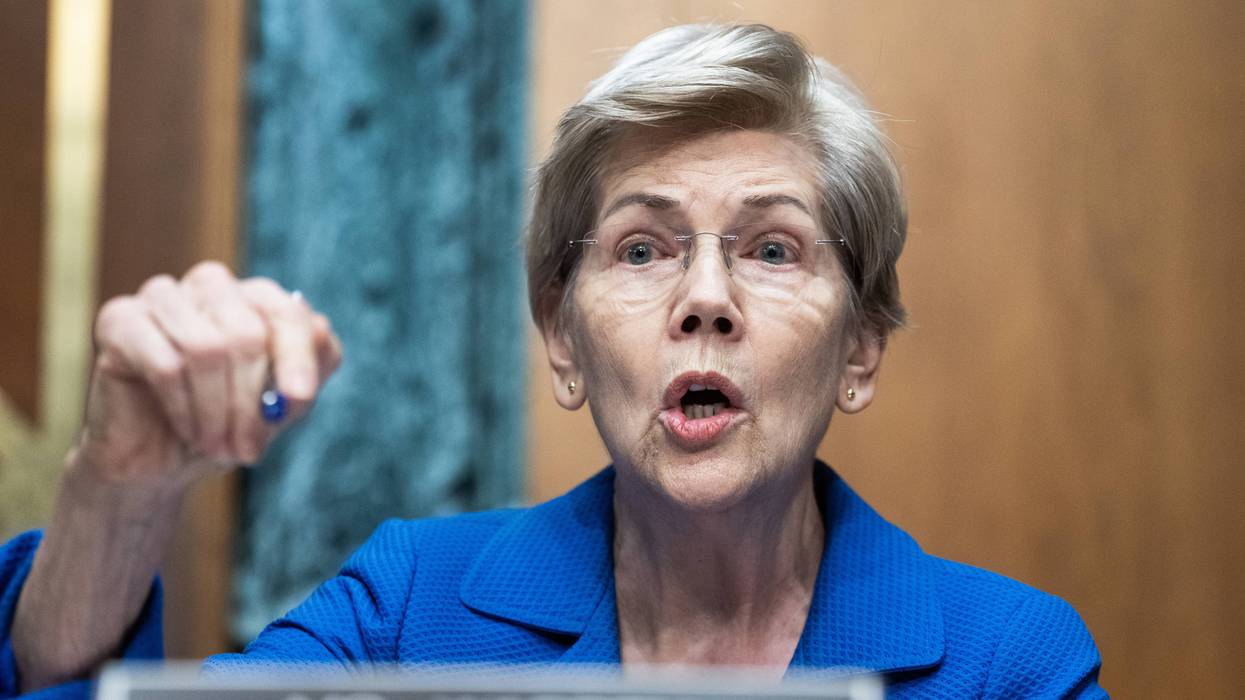
"Donald Trump promised to lower costs on day one. Instead, he has spent his presidency creating an affordability crisis, and now he's calling his self-made crisis a hoax."
With the US midterm elections just weeks away and control of Congress up for grabs, the top Democrat on the Senate Banking, Housing, and Urban Affairs Committee on Wednesday released a tool tracking inflation under Republican President Donald Trump.
"Donald Trump promised to lower costs on day one. Instead, he has spent his presidency creating an affordability crisis, and now he's calling his self-made crisis a hoax," said Ranking Member Elizabeth Warren (D-Mass.) in a statement. "The Trumpflation Tracker will show families across the country exactly how much of a price they are paying for Trump's and Republicans' failed economic agenda."
The tracker shows not only cumulative inflation since December 2024, the month before Trump returned to office—it's up 5.2%— but also limited job growth during his second term, the impact of his broken promise to cap credit card interest rates, falling wages since he launched an illegal war on Iran in February, mortgage rate increases, and rising household debt.
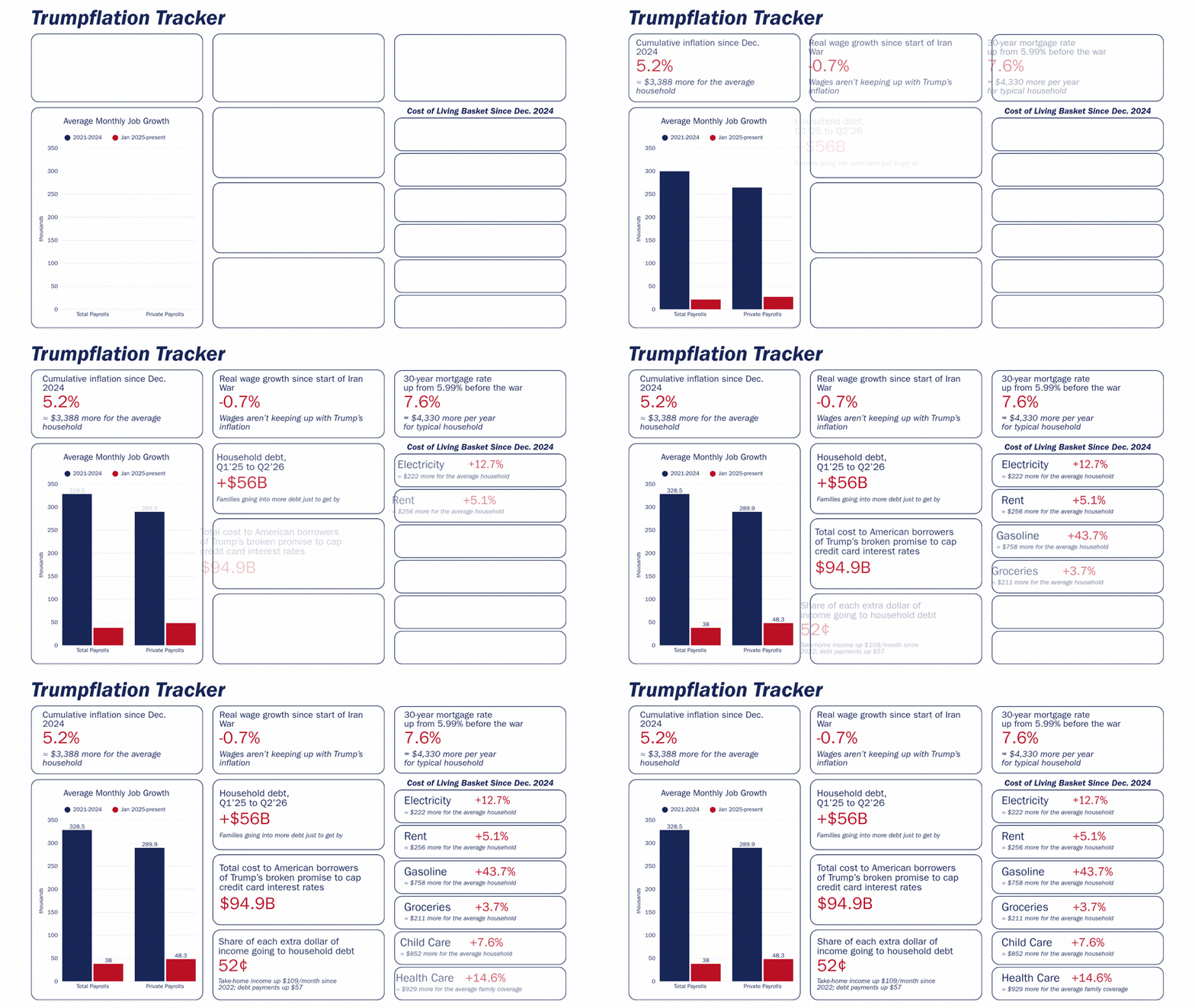
The tool also highlights the country's affordability crisis, detailing how costs have skyrocketed for childcare, electricity, gasoline, groceries, healthcare, and rent, with the average US household paying over $3,000 more.
As Trump rallies behind efforts to build more energy-sucking artificial intelligence data centers, Warren's tracker shows that residential electricity prices are up 12.7% during this term, with the average US household paying $222 more.
Last year, congressional Republicans passed and Trump signed a budget package that cut government healthcare programs and did not extend expiring Affordable Care Act subsidies. Now, per the new tool, healthcare costs are up 14.6%.
Prices for gas and diesel have skyrocketed since Trump and the Israeli military started bombing Iran, but the US president has dismissed concerns, claiming that paying $4 at the pump is "not very high" and is worthwhile to prevent the Middle Eastern nation from building a nuclear weapon—which the US intelligence community concluded, before the war, that Tehran wasn't trying to do.
Warren's tracker puts the gas surge at 43.7% since December 2024, with an average cost of over $750 per household. The senator plans to have the panel's economic experts update the figures on a monthly basis, as more data becomes available.
The Century Foundation's president, Julie Margetta Morgan, applauded the committee "for doing the math on this," writing on social media that "the Trump administration continues to claim that the economy is strong, but this tracker shows clearly just how much families are being squeezed."
"Americans should expect fair application of the rule of law to ensure even the most powerful and well-connected can be held accountable."
A report released by government watchdog Public Citizen Wednesday reveals how, under the Trump administration, a donation to or partnership with President Donald Trump "could make your legal matters disappear."
When Trump took office in January 2025, he inherited from the Biden administration hundreds of enforcement actions that were supposed to be carried out against law-breaking corporations.
But as Public Citizen research director Rick Claypool wrote in the report, titled "Trump’s Cascade of Canceled Corporate Enforcement Against Over 200 Corporations," the president and his top officials have rolled back 212 enforcement actions against 205 corporations since taking office—closing dozens of federal investigations, dismissing 67 lawsuits that federal agencies were actively litigating, and terminating numerous other consequences for wrongdoing.
Ninety of the companies that have avoided enforcement actions—44%—were ones with ties to Trump, including 53 that contributed to the president's inaugural committee, super political action committees (PACs) that supported him, or the demolition of the East Wing of the White House to make way for Trump's ballroom.
“Trump’s retreat from law enforcement against corporate crime is a signal to Big Business that if you’re big enough, rich enough, and connected enough with Trump’s inner circle, there are no consequences for breaking the law,” said Claypool. “The reckless experiments of AI corporations, the proliferation of scammy financial fraudsters, and the outbreaks of tainted food show that the message has clearly been received.”
Elon Musk, the CEO of Tesla and SpaceX, is one of the largest beneficiaries of Trump's retreat, following his pouring of $400 million into the president's campaign and those of other Republicans in 2024. He also gave $1 million to the president's inaugural fund and $5 million to the MAGA, Inc. super PAC.
Tesla has benefited from four canceled enforcement actions, with the National Highway Traffic Safety Administration canceling three investigations and the Department of Labor canceling an inspection into contract compliance. Lawsuits that had been filed against SpaceX by the Department of Justice and the National Labor Relations Board were also closed, as was an Environmental Protection Agency investigation into data center pollution.
Musk himself also avoided a lawsuit over alleged misconduct when he purchased the social media platform X, when the Securities and Exchange Commission suit was dismissed.
Pfizer, which employed former Attorney General Pam Bondi before she joined the Trump administration—only to be fired earlier this year—also had three enforcement actions canceled. The pharmaceutical giant contributed $1 million to Trump's inaugural fund.
Wall Street giant Wells Fargo has also benefited from the cancellation of five enforcement actions, and Amazon, Bank of America, Meta, and Polymarket are among the corporations that have had at least two canceled.
The report explains how other corporations across the Big Tech, finance, and cryptocurrency sectors have seen investigations and lawsuits vanish after contributing to Trump's reelection efforts, including:
"Americans should expect fair application of the rule of law to ensure even the most powerful and well-connected can be held accountable," reads the report. "But with 44% (90 out of 205) of corporations with publicly known ties to the administration receiving the benefit of canceled enforcement, the pattern of favoritism toward corporate insiders is clear."
Claypool emphasized that by working unilaterally and wielding his executive power instead of collaborating with Congress, Trump has granted the "corporate wish" of canceled enforcement actions "with relative ease."
"Unlike passing friendly legislation, which requires coordination and cooperation with congressional majorities, or formal deregulation, which can require formal processes including outside input intended to ensure careful and deliberate decision making, agency leaders derelict in their duties claim canceling enforcement is a matter merely of prosecutorial discretion," reads the report.
The analysis details several executive actions and policies Trump has unilaterally adopted "to reduce enforcement against corporate crime and lawbreaking," including:
The administration has also been able to cancel enforcement in a "top-down" fashion through its "dismissal of DOJ independence" and the Supreme Court's ruling in Trump v. Slaughter, which permitted the White House to seize authority from regulators.
"The result," wrote Claypool, "is that power over federal agencies is more concentrated than ever with the president’s inner circle—and that courting favor with President Trump is a distinctly powerful lever for taking advantage of the enforcement retreat."

A new ad features Rogers saying, "You can’t have your privacy violated if you don’t know your privacy is violated," and bragging about his role in creating the PATRIOT Act.
As Flock cameras and the data firm Palantir dominate headlines, Michigan’s Democratic US Senate nominee Abdul El-Sayed is spending the final weeks of the race hammering his Republican opponent, former Rep. Mike Rogers, for his role in expanding the surveillance state.
On Tuesday, El-Sayed's campaign unveiled a new campaign ad with the tagline "Mike Rogers is watching you."
The ad, first reported by WIRED, features clips of Rogers, who chaired the House Intelligence Committee from 2011-15, boasting of his role in passing the infamous PATRIOT Act, which dramatically expanded government spying powers in the wake of the 9/11 terrorist attacks, including the mass gathering of Americans' telephone records.
The video repeatedly shows a clip of Rogers from a 2013 intelligence committee hearing, where he downplayed explosive revelations about the National Security Agency's (NSA) warrantless spying powers.
"You can’t have your privacy violated if you don’t know your privacy is violated, right?" Rogers said.
Another clip shows Rogers, during a 2016 Heritage Foundation speech, saying, "We would love to get one-tenth of what Google has on you." The comment was made as Rogers lamented that aggressive intelligence gathering on US citizens had been curtailed somewhat in the wake of what he said was a "completely undeserv[ed]" backlash against intelligence agencies.
The new ad campaign comes amid broad public unease about government surveillance. A YouGov poll earlier this year found that 76% of Americans were concerned about technology's impact on state spying capabilities, while a separate survey from the Center for Democracy and Technology found 74% were concerned about the security of personal information held by government agencies.
The rapid adoption of Flock's artificial intelligence-powered license plate readers by police departments around the country has sparked bipartisan concern: 62% of voters say they are concerned by the use of Flock cameras, including majorities of Democrats, Republicans, and independents, according to a Navigator survey in September—many expressed fears that the technology was being used to collect information on innocent people without their consent.
A spokesperson for Rogers has said he “vehemently opposes unchecked use of Flock cameras to track law-abiding citizens” and emphasized that he departed from Congress before the company was founded in 2017.
Since he won the Democratic primary in August, El-Sayed has sought to lay voters' spying fears at the feet of Rogers, joking in August that the Republican had spent his career courting the "peeping Tom vote."
In addition to digital ads and billboards, El-Sayed's campaign also published a website titled "MikeIsWatching.com," which examines Rogers' record during his 14 years in Congress.
It notes Rogers' self-described role in helping to "author" the PATRIOT Act and its renewals, as well as his support for other legislation that expanded the government's reach into Americans' private lives:
In Ohio, former Democratic Sen. Sherrod Brown has attacked Republican Sen. John Husted for promoting AI data centers, while Democratic Texas state Rep. James Talarico (D-50) has done the same to his opponent, Republican Attorney General Ken Paxton.
But others have leaned harder on the issue of mass surveillance. Also in Texas, Democratic state Rep. Gina Hinojosa (D-49) is trying to take down Republican Gov. Greg Abbott by hammering on a $28.5 million state contract with Flock, which now has over 13,000 cameras in the state, according to the group DeFlock.
"When it's over $6 per gallon for diesel... people are feeling the pinch."
Ken Paxton, the Republican Party's nominee for the US Senate in Texas, blamed President Donald Trump's illegal war with Iran for his political woes in a leaked recording published by Axios on Wednesday.
In the recording, which was made during a private meeting with donors and lobbyists last month, Paxton was asked by an attendee which issues were "dragging" his campaign.
"It's the war, it's gas prices, it's diesel," the Texas attorney general responded. "When it's over $6 per gallon for diesel... people are feeling the pinch."
Paxton added that concerns about affordability were "by far our biggest problem" and "why we're having a hard time with the numbers."
Later in the recording, an attendee pointed out to Paxton that he "can't stop the war," to which Paxton replied, "Right."
"So many factors in this federal race are uncontrollable," Paxton explained. "I don't make the decisions, and I don't... know what's behind some of the decisions."
If Paxton were elected to the US Senate, he could vote for a war powers resolution to compel Trump to end the war, which was launched in February without congressional authorization.
This is now the third leaked recording of Paxton to emerge in recent weeks. Paxton is facing Democratic nominee James Talarico in November.
In a recording leaked to Politico on Monday, Paxton lamented that he has lost control of his campaign's messaging, which he said was being dictated from Washington, DC.
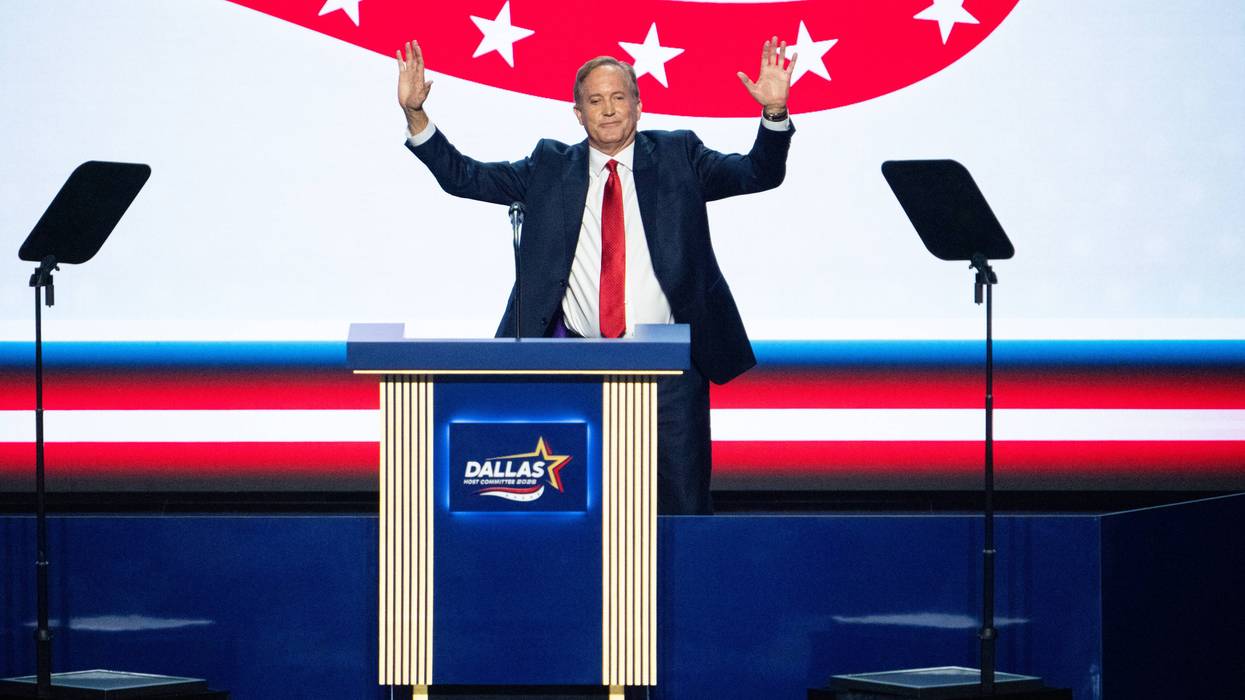
The New York Times last month published a Paxton recording in which he admitted that Trump's big midterm convention held in Dallas hurt his campaign.
“The numbers—when we did that convention—it dropped our numbers,” Paxton said. “Everybody’s numbers dropped. Right now, yeah, not good.”
Veteran Democratic strategist David Axelrod predicted that Trump would not be pleased by Paxton once again placing blame on the president's decisions for his political misfortunes.
"Next to the war and the tariffs," Axelrod wrote in a Wednesday social media post, "anointing Ken Paxton as the GOP candidate for the US Senate in Texas may turn out to be [Trump's] worst political decision and the one he most regrets."
John Huffman, the former Republican mayor of Southlake, Texas, wrote that, while Trump may not want to hear it, Paxton's assessment of the political environment was correct.
"The war, gas prices, higher cost of living etc., are all making this cycle very difficult for Republicans," Huffman argued. "In a normal year, even a candidate as broken as Paxton could eke out a W in Texas."

"If not for the laws that protect the public’s right to know what their government is doing, the public likely would have never known about these concerning schemes."
Documents obtained and released on Wednesday by the advocacy group Democracy Forward show that the investigative arm of US Immigration and Customs Enforcement has gathered tens of millions of voter records ahead of the midterm elections as part of a purported effort to combat "voter fraud."
Democracy Forward, which obtained the ICE documents through the Freedom of Information Act, said records from the agency's Homeland Security Investigations (HSI) branch underscore how the Trump administration is "using the power of the government to try to silence eligible voters and prevent them from accessing the ballot."
The 166-page document that ICE turned over to Democracy Forward shows that HSI has considered sending undercover agents to investigate nonprofit organizations accused of illegally registering noncitizens to vote. President Donald Trump and his allies have repeatedly and baselessly claimed that noncitizen voting is a significant problem in the US.
HSI admits in one of the newly released documents that its "review" of more than 40 nonprofits in New Jersey uncovered "no derogatory information."
"The information revealed in the documents should concern all Americans and is further evidence of an alarming attempt by the executive branch to undermine our elections. It appears the president and his allies want to pick their voters, as opposed to the way things are supposed to function in a democracy where voters pick their leaders," said Skye Perryman, president and CEO of Democracy Forward. “If not for the laws that protect the public’s right to know what their government is doing, the public likely would have never known about these concerning schemes. We will continue to use all legal tools to expose threats to our elections and to challenge them swiftly.”
Democracy Forward noted that the records also show that HSI has "obtained 26,235 US Citizenship and Immigration Services (USCIS)-derived records, and 50.6 million voter roll records from the US Department of Justice, for investigating so-called voter fraud."
"Notably, ICE listed out priority states for each set of these records, including Texas, Pennsylvania, California, New Jersey, Minnesota, Michigan, Arizona, Florida, Georgia, and Ohio," the group said. "Alarmingly, certain state voter roll data may have been entered into Palantir’s ELITE app, which is used by ICE to identify, prioritize, and locate targets for deportation. HSI may also be investigating voting machines and seeking to prove voter fraud in 'counties with 2020 results.'"
ICE's efforts are part of what watchdogs and election experts have characterized as a sweeping, lawless attempt by the Trump administration to disrupt the 2026 midterms, which will determine control of the US Congress.
Hart Wood, senior oversight counsel at Democracy Forward, said the ICE documents provide "chilling new insights into the breadth and depth of the Trump-Vance administration’s efforts to pursue baseless claims of widespread election fraud and assert greater federal control over elections ahead of the 2026 midterms."
"These records also expose the influence of election denier Heather Honey at both [the Department of Homeland Security] and ICE—including her working in partnership with activists and feeding nearly 50 million records from ‘independent sources’ into DHS voter fraud data collection," said Wood. "They also show, for the first time, that HSI may be using undercover agents to investigate non-profits for purely political reasons.”

"Mainers can't afford to pay their bills with a press release or a strongly worded letter," said Jackson.
Democratic US Senate candidate Troy Jackson took his Republican opponent, incumbent Sen. Susan Collins, to task during a Tuesday debate for her role in Maine's worsening healthcare crisis, accusing her of paving the way for the disaster while attempting to take credit for an inadequate relief fund.
"Senator Collins is like an arsonist who helped set the fire, and then she wants credit for bringing a cup of water to put it out," Jackson said after Collins touted her role in securing a $50 billion fund for rural hospitals. The fund was part of a Republican budget package that includes the largest Medicaid cuts in the program's history—roughly $900 billion over the next decade.
Collins, who is running for a sixth term, voted against final passage of the Republican budget legislation, but she played a key role in advancing the bill through the Senate.
"She could have stopped it," Jackson, the former president of Maine's Senate, said of the budget law, which is fueling hospital staffing cutbacks and closures across the US, including in Maine. "What she brought back is a pittance to what we're losing in this state. I mean, we're watching our healthcare system crash right in front of us."
Watch:
Tuesday's debate came weeks ahead of the November general election, which polling indicates is a tight race. A survey conducted at the end of September by the Maine People’s Resource Center found Jackson leading Collins 49.3% to 46.5%—an advantage that was within the poll's margin of error.
During the debate, Jackson hammered Collins over her pro-Trump voting record and repeatedly accused her of playing up minuscule or largely symbolic opposition to the president's unpopular actions, including his tariffs on Canada and his illegal war on Iran.
After Collins noted that she "got concrete, pulp, and road salt removed from the tariff list," Jackson responded: "We can't eat road salt."
"Mainers can't afford to pay their bills with a press release or a strongly worded letter," said Jackson.
Jackson also highlighted recent ProPublica reporting that placed Collins at the center of a “sprawling pay-to-play operation” involving a Hawaii-based defense contractor accused of funneling donations to lawmakers in exchange for federal contracts.
"As late as 2024, the FBI was circling around Senator Collins," Jackson noted, citing the federal investigation that ProPublica revealed. "Then, whenever President Trump came back, his administration dismantled the investigation. Now, she votes with Donald Trump 96% of the time."
"I don't owe Trump. I don't owe the billionaires nothing. In fact, I've spent my life fighting back against billionaires," Jackson added. "But I do owe the people of Maine everything. I refuse corporate PAC money, I want to ban congressional stock trading. I fight for working Mainers every day. I'm not taking money from corporations like Susan Collins does."
"And from what I understand, this is happening both to Democrats and Republicans when they are traveling to the Middle East."
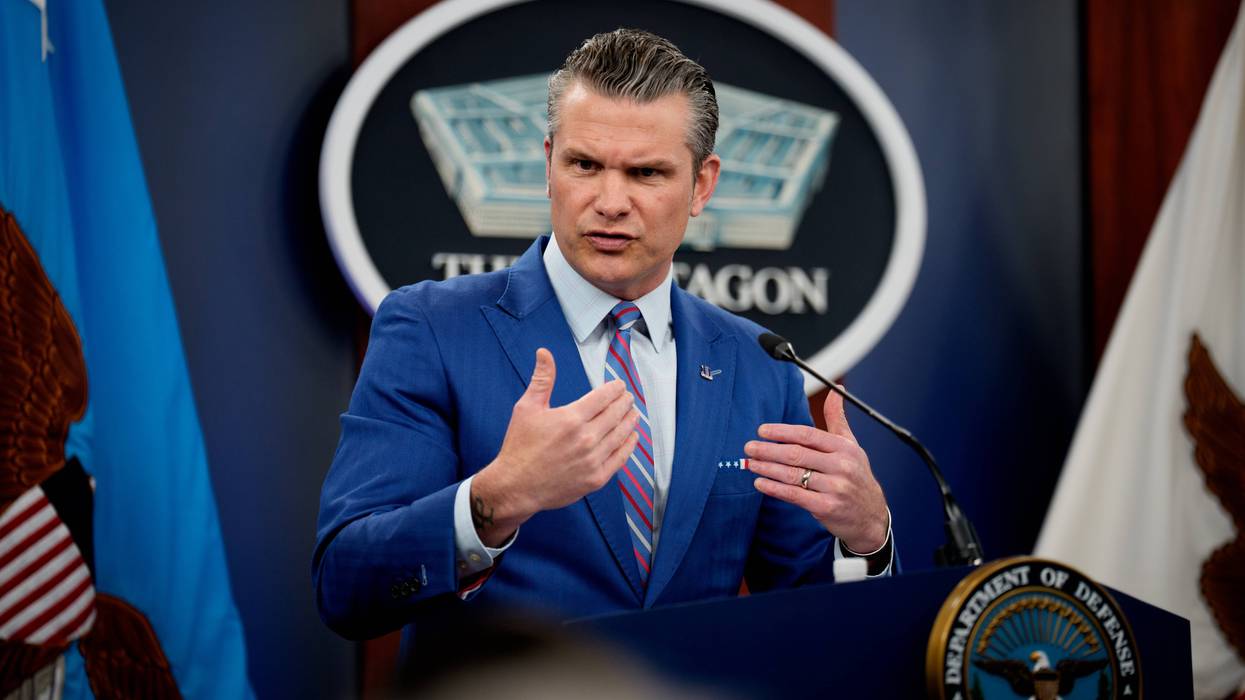
A US senator visiting the Persian Gulf said Tuesday that the Pentagon blocked him from inspecting a heavily damaged American military installation and refused to arrange a briefing on the Iran War, accusing Defense Secretary Pete Hegseth of mounting an "unprecedented" effort to conceal the conflict's costs and consequences from lawmakers and the public.
“This trip confirmed for me that there is an active, unprecedented, unconstitutional effort underway to hide the costs of this war and the implications of this war from Congress and the American people,” Sen. Chris Murphy (D-Conn.) told reporters Tuesday in Riyadh, Saudi Arabia.
Murphy said he sought to inspect Al Udeid Air Base in Qatar, the largest US military installation in the Middle East and a crucial hub for American operations in the region. The base was struck by Iranian missiles during the opening days of the war and sustained heavy damage, including a direct hit to its Combined Air Operations Center.
“I've never encountered anything like this in my time in the Senate,” the senator said, describing the Pentagon's actions as “part of a deliberate campaign of obfuscation that my Republican colleagues in Congress should demand an end to."
"We appropriate the money for that military action, and it is an ordinary function of members of Congress to travel around the world and talk to our generals and to our troops about military activities, especially during a time of war," Murphy continued.
"Adding insult to injury, the Department of Defense, under orders from [Defense Secretary] Pete Hegseth, even denied me access to talk to military leadership," he alleged. "They would not provide me even a briefing at the [US] Embassy."
According to Murphy:
Never before has this happened. Never before has a member of Congress been denied access to military facilities and been refused briefings by generals in theater. And from what I understand, this is happening both to Democrats and Republicans when they are traveling to the Middle East.
So just understand what this is: This is Secretary Hegseth deliberately trying to cover up the extent of damage, likely in the billions of dollars, trying to cover up the true cost of this war, trying to hide from you, from the American public, not just from members of Congress, the actual consequences of a war that is spiraling out of control by the day.
"This should be unacceptable to every member of Congress—Republicans and Democrats—and this should be unacceptable to the American public," he added.
The Pentagon defended the decision, saying the senator's office had been informed before his trip that the department would not support his access to Al Udeid. A senior Pentagon official cited a March 3 directive issued by Hegseth restricting travel to the region.
The dispute comes as the Trump administration faces mounting scrutiny over the increasingly protracted war's human and financial costs.
The illegal US-Israeli war of choice has cost the lives of thousands of Iranians, dozens of citizens and residents of Gulf states, and more than 20 US troops.
The 220-day war has already cost US taxpayers more than $40 billion, according to the nonpartisan Congressional Budget Office. It has driven up gasoline and energy prices, transportation and food costs, and is having broader inflationary effects caused largely by the disruption to global oil supplies and shipping.
Last week, President Donald Trump ordered the deployment of thousands more troops and another aircraft carrier to the Middle East.
"You know, by the way, we’re kicking Iran’s ass. You do know that, right? And that’ll end soon," the president told a Nebraska rally during a Monday speech in which he suggested he wouldn't mind Iran bombing California cities. "It’s gonna end one way or the other. It’s gonna end very soon.”
"Americans are done with a healthcare system that puts profits before people," said Congresswoman Ilhan Omar.
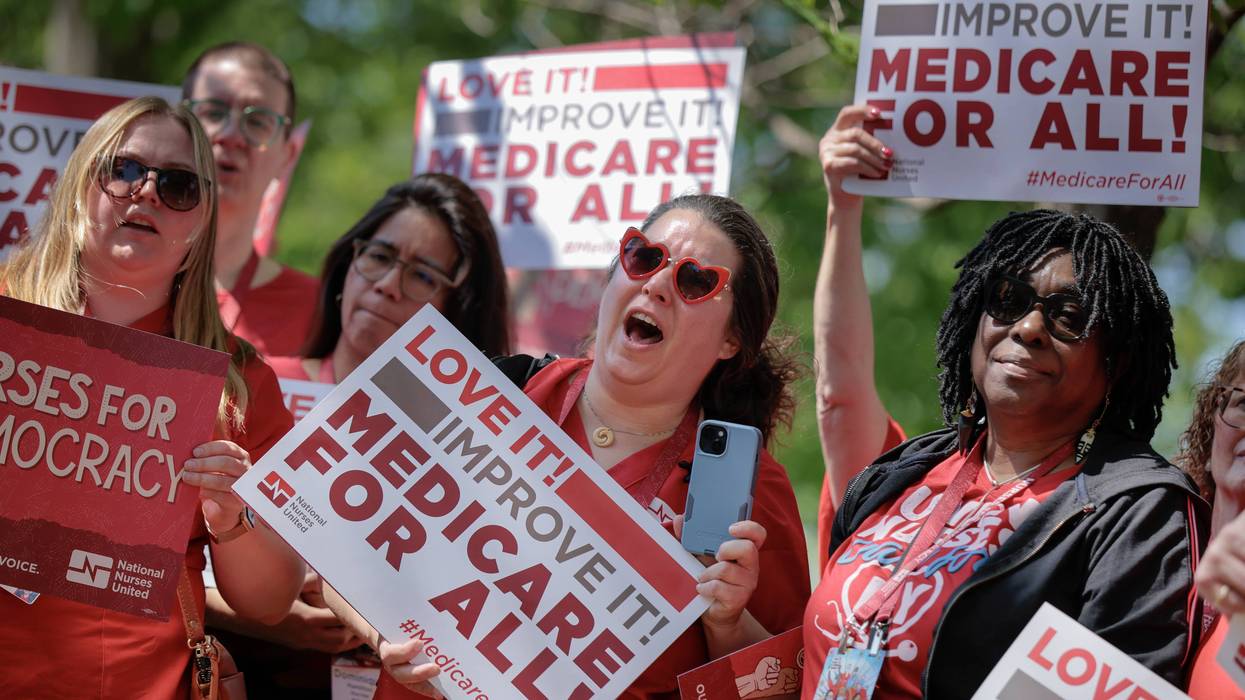
Two-thirds of Americans now support a national health insurance program commonly known as Medicare for All, according to a new poll released Tuesday by KFF, marking the highest level of support recorded since the public health policy group began tracking the proposal a decade ago.
The latest KFF Health Tracking Poll, conducted between September 16-21, found that 66% of US adults favor Medicare for All, up substantially from the 53% who supported the idea when KFF last asked the question in October 2020. Just 34% now oppose it.
KFF's findings come as healthcare affordability has emerged as a major concern heading into November's midterm elections. Health costs and gasoline prices are tied as Americans' top economic worries, while voters now trust Democrats over Republicans by a 20-point margin to handle healthcare costs, according to the poll.
Two-thirds of the public favor Medicare-for-All — the highest share since KFF began polling on the topic in 2016 — but public opinion is highly malleable and support shifts when competing claims from critics and proponents are heard: https://on.kff.org/4zgJv6z
[image or embed]
— KFF (@kff.org) October 6, 2026 at 11:04 AM
The poll results also underscore growing public frustration with the nation's costly and fragmented healthcare system, with progressives increasingly arguing that voters want more than incremental reforms.
"People are sick of a broken healthcare system driven by the greed of the insurance industry and Big Pharma," Sen. Bernie Sanders (I-Vt.)—who twice ran for president as a Democrat on a Medicare for All platform—said Tuesday on social media. "The time to pass Medicare for All is NOW."
Congresswoman Ilhan Omar (D-Minn.) said: "Two-thirds of Americans support Medicare for All. Americans are done with a healthcare system that puts profits before people."
"Medicare for All can save 114,000 lives and $1 trillion a year," Omar noted, referring to a recently published study out of Yale University and adding, "Turns out, progressive policies can be good politics AND good policy."
Audrey Kearney, a senior survey analyst at KFF, told Reuters that “all year, KFF polls have shown that the public is frustrated with the high cost of healthcare, and that may be leading to a desire for change."
As The Guardian reported Sunday, 1,500 unionized nurses gathered in San Francisco last week to rally for Medicare for All, a policy their unions have championed for many years.
Michigan Democratic Senate nominee Abdul El-Sayed, one of the proposal's most prominent 2026 advocates, asked the nurses: “Medicare for who?”
"All!” they shouted back.
El-Sayed then described Medicare for All as addressing “the very simple idea that in the richest, most powerful country in the world you should not have to suffer for your healthcare.”
I believe in Medicare for All like I believe in public schools. There for you no matter what.
[image or embed]
— Abdul El-Sayed (@abdulelsayed.bsky.social) October 4, 2026 at 6:16 AM
The California Nurses Association's Michelle Gutierrez Vo, meanwhile, pointed to the costs and failures of the existing system.
“There’s too many unnecessary illnesses and unnecessary costs,” she said. “What are we doing?”
"Here’s a tip: Always bet that he did the thing."
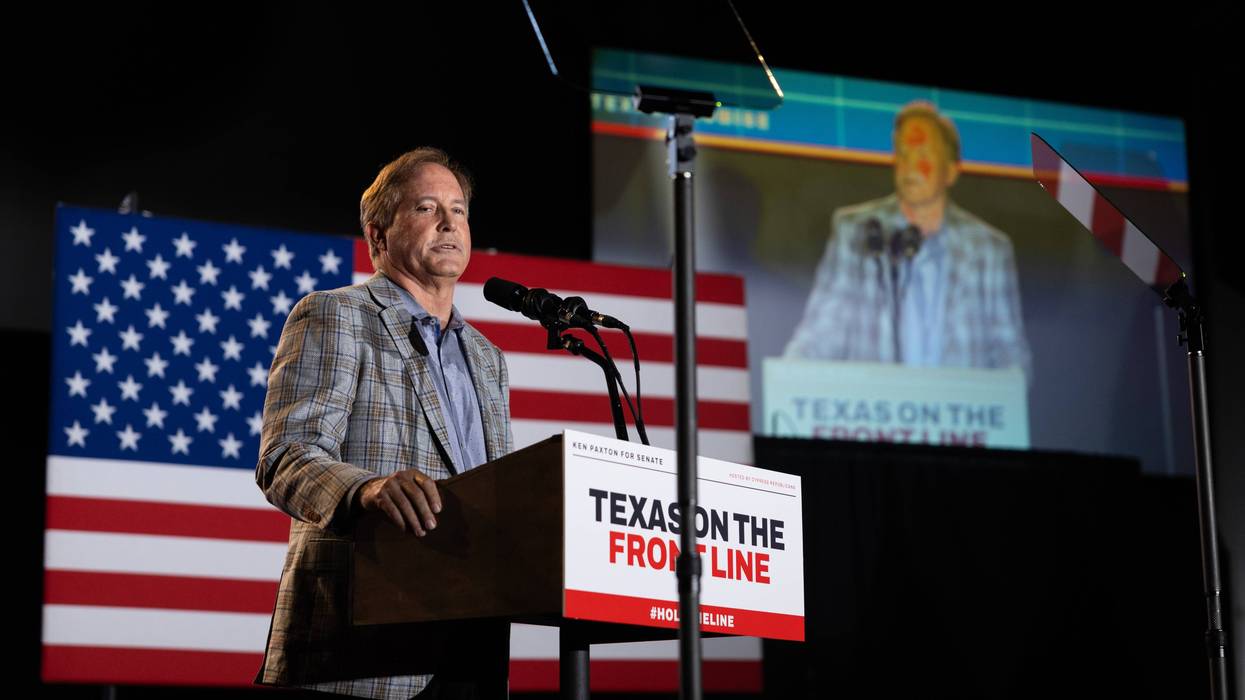
The campaign of Texas Democratic US Senate candidate James Talarico on Tuesday unleashed a new attack ad against his Republican rival, Texas Attorney General Ken Paxton, that targeted his long history of outrageous scandals.
The ad, titled "ScanDuel," is a parody of mobile betting apps such as FanDuel and DraftKings, and it invites viewers to place bets on whether Paxton really engaged in a wide range of scandalous behavior.
In an unsurprising twist, the narrator of the mock ad suggests would-be bettors will always make money if they wager that the Paxton scandal is true.
NEW AD: Introducing SCANDUEL! The only betting app where you can parlay Ken Paxton’s scandals — and get paid! Here’s a tip: Always bet that he did the thing. 💰 https://t.co/Hir2F2UALC
— Team Talarico (@TeamTalaricoHQ) October 6, 2026
The ad starts by touting ScanDuel as "the only betting app where you can parlay Ken Paxton offering a plea deal to a pedophile with Ken Paxton voting to protect puppy abusers."
The plea deal mentioned in the ad refers to the case of Adam Hoffman, an attorney based in Waco, Texas, who had been indicted on a charge of continuous sexual abuse of a minor.
After Hoffman's first trial ended with a hung jury, Paxton's office reached a bargain with the accused child molester in which he would plead guilty to lesser charges and serve a single day in prison. Additionally, Hoffman would not have to register as a sex offender.
The judge overseeing the case mandated that Hoffman serve 60 days in jail, but he ultimately served only half that time.
Paxton's protection of puppy abusers, meanwhile, refers to Paxton's 2015 legal opinion used by university Texas A&M to deny public records requests from animal rescue organizations about hundreds of dogs that faced abusive treatment at one of its research labs.
As reported by The Houston Chronicle at the time, Paxton's opinion held that Texas A&M was under no obligation to release its records because doing so would violate "the confidential relationship between the veterinarian and the veterinarian's client."
Legal experts raised objections to this reasoning, given that the animals obtained by the research lab came from shelters, and thus had no owners who could give consent for the records' release.
Other Paxton scandals referenced in the Talarico ad include sworn testimony from a process server who said the Texas AG fled in a truck driven by his wife to avoid being served a subpoena, and Paxton mysteriously receiving regular income cumulatively worth more than $1 million from a cellphone tower located on the property of a hospital where he was previously a board member.
"Here's a tip," the ad says. "Always bet that he did the thing."

“We don’t have to choose between protecting our most endangered animals and plants and building a clean energy future."
More than 200 environmental groups are calling on US lawmakers to halt a bipartisan permitting reform bill they say would gut protections for endangered species.
The Bipartisan American Affordability and Jobs Act of 2026—introduced last week by Sens. Sheldon Whitehouse (D-RI), Martin Heinrich (D-NM), Shelley Moore Capito (R-WV), and Mike Lee (R-Utah)—is aimed at speeding up the federal permitting process to accelerate clean energy and infrastructure development.
One way the bill does this is by shortening permitting and environmental consultation timelines, including reviews under Section 7 of the Endangered Species Act, which are meant to ensure government-approved projects don't jeopardize endangered species or their habitats.
The 215 signatories of a letter sent Tuesday—which include the Center for Biological Diversity, Friends of the Earth, WildEarth Guardians, the Western Environmental Law Center, and the International Fund for Animal Welfare—said that the bill includes “sweeping attacks on the Endangered Species Act."
If passed, the groups said, it would raise the evidentiary bar under the law's “best available science” mandate, making it much harder to protect species when the science is less than 100% settled.
It would also allow states—many of which do not recognize the same protections as the federal Endangered Species Act—to take over Section 7 consultations currently handled by federal wildlife authorities.
"What happens when Utah, which does not protect insects under state law, must complete a consultation on the Silverspot butterfly?" the groups asked. "It is unconscionable that this Senate would condemn endangered species to extinction by handing over authority to states that have fought federal protections and lack even the most basic legal and institutional safeguards."
The groups said the bill's most "insidious" feature was that it would redirect all Section 7 challenges away from district courts and into the DC Circuit Court of Appeals, which they warned would "result in significantly more backlog, strained judicial capacity, and make meaningful review far more difficult."
The Democrats who have supported the bill have argued for its environmental benefits, including that it will speed up permitting for clean energy projects, including wind and solar, as well as transmission lines to rapidly deliver the energy they produce.
“If we can pass this bill, we will flood the grid with clean, affordable energy," Whitehouse said as he announced it last week.
But the environmental coalition said this should not come at the expense of protecting vulnerable species and warned that it would also be used to speed up permitting for energy sources that pollute the environment.
“We don’t have to choose between protecting our most endangered animals and plants and building a clean energy future," said Stephanie Kurose, deputy director of government affairs at the Center for Biological Diversity. “Hollowing out the Endangered Species Act only benefits energy-hungry data centers and the fossil fuel industry while leaving monarchs, manatees, and countless other species to pay the ultimate price.”