SUBSCRIBE TO OUR FREE NEWSLETTER
Daily news & progressive opinion—funded by the people, not the corporations—delivered straight to your inbox.
5
#000000
#FFFFFF
To donate by check, phone, or other method, see our More Ways to Give page.
Daily news & progressive opinion—funded by the people, not the corporations—delivered straight to your inbox.
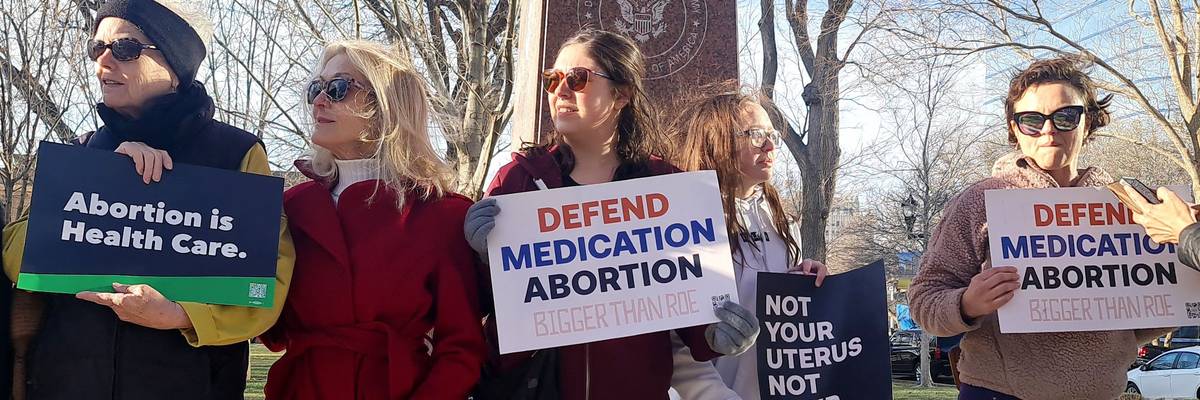
Abortion rights advocates gather in front of the J. Marvin Jones Federal Building and Courthouse in Amarillo, Texas, on March 15, 2023.
"While this is a positive short-term development, no one can rest easy when our ability to get this safe, effective medication for abortion and miscarriage care still hangs in the balance," stressed an ACLU attorney.
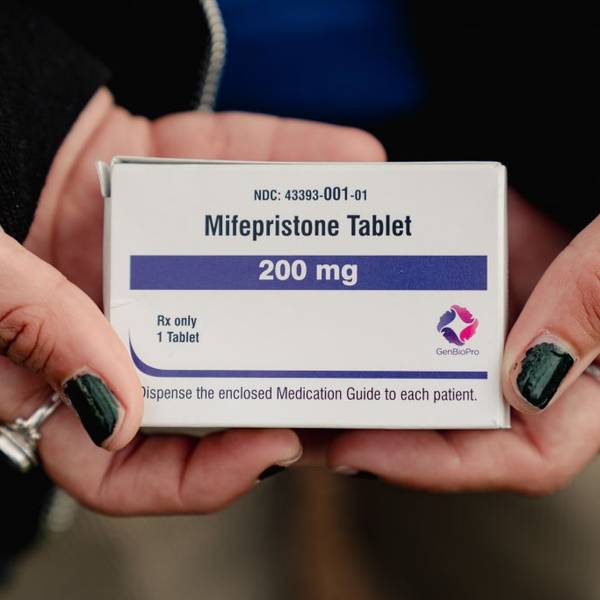
The US Supreme Court on Monday temporarily restored access to mifepristone, a medication commonly used for abortion and early miscarriage care, through the mail while the justices review a decision requiring it to be dispensed in person by a medical provider.
Justice Samuel Alito, who is part of the high court's right-wing supermajority, oversees the US Court of Appeals for the 5th Circuit. He issued a one-week stay for the appellate court's Friday dispensing decision, which critics had condemned as "sweeping and dangerous."
"This is not particularly surprising from Alito. He's the circuit justice here, acting—in essence—until the full court can act," explained Law Dork's Chris Geidner. He noted that both Alito and Justice Clarence Thomas, another right-winger, "have issued administrative stays in the past until the full court can rule in similar circumstances, regardless of their ultimate votes on the matters."
The drug companies Danco Laboratories, which makes the brand-name version of mifepristone, Mifeprex, and GenBioPro, which makes the generic pill, asked the country's top court to intervene following Friday's ruling, which threatened patients nationwide.
"Even this Supreme Court can see that this 5th Circuit decision is reckless," declared Alexis McGill Johnson, president and CEO of Planned Parenthood Action Fund, on Monday. "While mifepristone access returns to where it was on Friday morning, the whiplash and chaos that patients and providers are navigating have already had real consequences for real people's lives and futures."
Brittany Fonteno, president and CEO of the National Abortion Federation, similarly highlighted how "this back-and-forth has created confusion and chaos," but welcomed that the high court's "decision provides critical, if temporary, relief for patients and providers and ensures that people can continue to access this essential medication through telehealth while the court considers the case."
"The lower court's ruling disregards the well-established safety and efficacy of the use of mifepristone via telehealth, and any future restriction will create medically unnecessary barriers to care for patients across the country," Fonteno added. "Mifepristone has been safely used for more than 25 years, and is essential to abortion care and miscarriage management in the United States. For many patients, especially those in rural areas or facing financial and logistical barriers, access to telehealth is a critical component of holistic reproductive healthcare."
Since the Supreme Court reversed Roe v. Wade in June 2022, the anti-choice movement and right-wing politicians have ramped up attacks on reproductive freedom at the state level. Meanwhile, the Biden administration's Food and Drug Administration (FDA) permanently lifted mifepristone's in-person dispensing requirement in early 2023, allowing doctors in pro-choice states to serve patients across the country via telehealth and the mail, regardless of local laws.
Louisiana responded to the eased restrictions on mifepristone—which is generally taken with another drug, misoprostol, for abortions—by suing, which led to the battle that has now reached the Supreme Court. Prior to Friday's decision by the infamously far-right 5th Circuit, a district judge in the state paused the case due to what the ACLU on Monday called "a sham FDA review announced by the Trump administration," which is ongoing.
"While this is a positive short-term development, no one can rest easy when our ability to get this safe, effective medication for abortion and miscarriage care still hangs in the balance," Julia Kaye, senior staff attorney for the ACLU's Reproductive Freedom Project, stressed Monday. "The Supreme Court needs to put an end to this baseless attack on our reproductive freedom, once and for all."
This article has been updated with comment from the National Abortion Federation.
Dear Common Dreams reader, It’s been nearly 30 years since I co-founded Common Dreams with my late wife, Lina Newhouser. We had the radical notion that journalism should serve the public good, not corporate profits. It was clear to us from the outset what it would take to build such a project. No paid advertisements. No corporate sponsors. No millionaire publisher telling us what to think or do. Many people said we wouldn't last a year, but we proved those doubters wrong. Together with a tremendous team of journalists and dedicated staff, we built an independent media outlet free from the constraints of profits and corporate control. Our mission has always been simple: To inform. To inspire. To ignite change for the common good. Building Common Dreams was not easy. Our survival was never guaranteed. When you take on the most powerful forces—Wall Street greed, fossil fuel industry destruction, Big Tech lobbyists, and uber-rich oligarchs who have spent billions upon billions rigging the economy and democracy in their favor—the only bulwark you have is supporters who believe in your work. But here’s the urgent message from me today. It's never been this bad out there. And it's never been this hard to keep us going. At the very moment Common Dreams is most needed, the threats we face are intensifying. We need your support now more than ever. We don't accept corporate advertising and never will. We don't have a paywall because we don't think people should be blocked from critical news based on their ability to pay. Everything we do is funded by the donations of readers like you. When everyone does the little they can afford, we are strong. But if that support retreats or dries up, so do we. Will you donate now to make sure Common Dreams not only survives but thrives? —Craig Brown, Co-founder |
The US Supreme Court on Monday temporarily restored access to mifepristone, a medication commonly used for abortion and early miscarriage care, through the mail while the justices review a decision requiring it to be dispensed in person by a medical provider.
Justice Samuel Alito, who is part of the high court's right-wing supermajority, oversees the US Court of Appeals for the 5th Circuit. He issued a one-week stay for the appellate court's Friday dispensing decision, which critics had condemned as "sweeping and dangerous."
"This is not particularly surprising from Alito. He's the circuit justice here, acting—in essence—until the full court can act," explained Law Dork's Chris Geidner. He noted that both Alito and Justice Clarence Thomas, another right-winger, "have issued administrative stays in the past until the full court can rule in similar circumstances, regardless of their ultimate votes on the matters."
The drug companies Danco Laboratories, which makes the brand-name version of mifepristone, Mifeprex, and GenBioPro, which makes the generic pill, asked the country's top court to intervene following Friday's ruling, which threatened patients nationwide.
"Even this Supreme Court can see that this 5th Circuit decision is reckless," declared Alexis McGill Johnson, president and CEO of Planned Parenthood Action Fund, on Monday. "While mifepristone access returns to where it was on Friday morning, the whiplash and chaos that patients and providers are navigating have already had real consequences for real people's lives and futures."
Brittany Fonteno, president and CEO of the National Abortion Federation, similarly highlighted how "this back-and-forth has created confusion and chaos," but welcomed that the high court's "decision provides critical, if temporary, relief for patients and providers and ensures that people can continue to access this essential medication through telehealth while the court considers the case."
"The lower court's ruling disregards the well-established safety and efficacy of the use of mifepristone via telehealth, and any future restriction will create medically unnecessary barriers to care for patients across the country," Fonteno added. "Mifepristone has been safely used for more than 25 years, and is essential to abortion care and miscarriage management in the United States. For many patients, especially those in rural areas or facing financial and logistical barriers, access to telehealth is a critical component of holistic reproductive healthcare."
Since the Supreme Court reversed Roe v. Wade in June 2022, the anti-choice movement and right-wing politicians have ramped up attacks on reproductive freedom at the state level. Meanwhile, the Biden administration's Food and Drug Administration (FDA) permanently lifted mifepristone's in-person dispensing requirement in early 2023, allowing doctors in pro-choice states to serve patients across the country via telehealth and the mail, regardless of local laws.
Louisiana responded to the eased restrictions on mifepristone—which is generally taken with another drug, misoprostol, for abortions—by suing, which led to the battle that has now reached the Supreme Court. Prior to Friday's decision by the infamously far-right 5th Circuit, a district judge in the state paused the case due to what the ACLU on Monday called "a sham FDA review announced by the Trump administration," which is ongoing.
"While this is a positive short-term development, no one can rest easy when our ability to get this safe, effective medication for abortion and miscarriage care still hangs in the balance," Julia Kaye, senior staff attorney for the ACLU's Reproductive Freedom Project, stressed Monday. "The Supreme Court needs to put an end to this baseless attack on our reproductive freedom, once and for all."
This article has been updated with comment from the National Abortion Federation.
The US Supreme Court on Monday temporarily restored access to mifepristone, a medication commonly used for abortion and early miscarriage care, through the mail while the justices review a decision requiring it to be dispensed in person by a medical provider.
Justice Samuel Alito, who is part of the high court's right-wing supermajority, oversees the US Court of Appeals for the 5th Circuit. He issued a one-week stay for the appellate court's Friday dispensing decision, which critics had condemned as "sweeping and dangerous."
"This is not particularly surprising from Alito. He's the circuit justice here, acting—in essence—until the full court can act," explained Law Dork's Chris Geidner. He noted that both Alito and Justice Clarence Thomas, another right-winger, "have issued administrative stays in the past until the full court can rule in similar circumstances, regardless of their ultimate votes on the matters."
The drug companies Danco Laboratories, which makes the brand-name version of mifepristone, Mifeprex, and GenBioPro, which makes the generic pill, asked the country's top court to intervene following Friday's ruling, which threatened patients nationwide.
"Even this Supreme Court can see that this 5th Circuit decision is reckless," declared Alexis McGill Johnson, president and CEO of Planned Parenthood Action Fund, on Monday. "While mifepristone access returns to where it was on Friday morning, the whiplash and chaos that patients and providers are navigating have already had real consequences for real people's lives and futures."
Brittany Fonteno, president and CEO of the National Abortion Federation, similarly highlighted how "this back-and-forth has created confusion and chaos," but welcomed that the high court's "decision provides critical, if temporary, relief for patients and providers and ensures that people can continue to access this essential medication through telehealth while the court considers the case."
"The lower court's ruling disregards the well-established safety and efficacy of the use of mifepristone via telehealth, and any future restriction will create medically unnecessary barriers to care for patients across the country," Fonteno added. "Mifepristone has been safely used for more than 25 years, and is essential to abortion care and miscarriage management in the United States. For many patients, especially those in rural areas or facing financial and logistical barriers, access to telehealth is a critical component of holistic reproductive healthcare."
Since the Supreme Court reversed Roe v. Wade in June 2022, the anti-choice movement and right-wing politicians have ramped up attacks on reproductive freedom at the state level. Meanwhile, the Biden administration's Food and Drug Administration (FDA) permanently lifted mifepristone's in-person dispensing requirement in early 2023, allowing doctors in pro-choice states to serve patients across the country via telehealth and the mail, regardless of local laws.
Louisiana responded to the eased restrictions on mifepristone—which is generally taken with another drug, misoprostol, for abortions—by suing, which led to the battle that has now reached the Supreme Court. Prior to Friday's decision by the infamously far-right 5th Circuit, a district judge in the state paused the case due to what the ACLU on Monday called "a sham FDA review announced by the Trump administration," which is ongoing.
"While this is a positive short-term development, no one can rest easy when our ability to get this safe, effective medication for abortion and miscarriage care still hangs in the balance," Julia Kaye, senior staff attorney for the ACLU's Reproductive Freedom Project, stressed Monday. "The Supreme Court needs to put an end to this baseless attack on our reproductive freedom, once and for all."
This article has been updated with comment from the National Abortion Federation.