

SUBSCRIBE TO OUR FREE NEWSLETTER
Daily news & progressive opinion—funded by the people, not the corporations—delivered straight to your inbox.
5
#000000
#FFFFFF
To donate by check, phone, or other method, see our More Ways to Give page.
Daily news & progressive opinion—funded by the people, not the corporations—delivered straight to your inbox.

As scrutiny of censorship of federal scientists has grown -- including a feature in Sunday's The Washington Post Magazine -- a coalition of more than 50 sustainable agriculture, environmental, beekeeper, and public interest organizations is once again pressing the agency for overdue reforms.
As scrutiny of censorship of federal scientists has grown -- including a feature in Sunday's The Washington Post Magazine -- a coalition of more than 50 sustainable agriculture, environmental, beekeeper, and public interest organizations is once again pressing the agency for overdue reforms. The coalition sent a follow-up letter to the U.S. Department of Agriculture today expressing growing concerns over the alleged suppression, harassment, and censorship of agency scientists, particularly with regard to research showing harms to pollinators from certain pesticides -- a controversial topic in the agriculture community. As a result, the groups are urging the USDA to publicly investigate these allegations, and make immediate binding reforms to the agency's scientific integrity policy.
In October 2015, Dr. Jonathan Lundgren, a senior scientist at the USDA's Agricultural Research Service, filed a whistleblower complaint charging the agency with suppression of research findings that challenged the safety and efficacy of a widely used class of pesticides, neonicotinoids. In the letter sent today, the groups and their millions of members are calling on USDA to 1) conduct a thorough investigation into the matter, 2) make the investigation publicly available once it is complete, 3) take any necessary steps to ensure that the USDA maintains scientific integrity moving forward, and 4) request that an independent, third party conduct an investigation into this issue
The story in The Washington Post Magazine also highlights issues of the lack of scientific integrity at the agency, pointing to retaliation against other scientists, most whom have remained anonymous fearing reprisal. One former USDA scientist now speaking out, Jeffrey Pettis, says he was told by a member of Congress that he "hadn't followed the script" at a congressional hearing meant to focus on mites without bringing up issues of pesticides.
In contrast, an internal scientific integrity review panel at the USDA recently rejected the complaint of scientific suppression by Lundgren, claiming that agency had not violated its scientific integrity policies. In February 2016, USDA Inspector General Phyllis Fong said the USDA will open a broad investigation into the issue of scientific censorship, but did not specify whether the investigation would be made publicly available.
Earlier last year, the Public Employees for Environmental Responsibility filed a citizen petition requesting that the USDA adopt new policies that would further protect the ability of government scientists to evaluate and communicate freely about the safety of agricultural chemicals without political interference or fear of retaliation. PEER reported that more than ten USDA scientists have faced consequences or investigations when their work called into question the health and safety of agricultural chemicals. The global neonicotinoid insecticide industry sells more than $2.6 billion annually.
"The USDA has a responsibility to protect the health and safety of the American public and to ensure the long-term viability and sustainability of the environment and our natural resources. It is imperative that we are able to trust that our government and its employees serve the public interest rather than private corporations," said the groups.
Lundgren and Pettis are not alone in their experiences of research suppression. "The challenges are significant for scientists just trying to do their jobs," said Evaeggelos Vallianatos, PhD, a former scientist for the EPA and the author of the book Poison Spring: The Secret History of Pollution and the EPA. He also documented the challenges federal agency scientists face standing up for their research and speaking out, in the face of political pressure. "Senior managers have expectations and scientists know the consequences of not being a good 'team player', despite the undermining of scientific integrity."
Groups submitting today's letter continue to urge federal agencies to strengthen scientific integritiy policies -- and follow the science to protect bees and other pollinators. The White House Task Force on Pollinator Health was established as part of a Presidential Memorandum, issued by President Obama in June 2014; it called for a federal strategy to protect pollinators and mandated the EPA and the USDA, as co-chairs of the Task Force, to assess the effect of pesticides, including neonicotinoids, on bees and other pollinators and take action where necessary. Recent allegations of the USDA's censorship and suppression of scientific research on pesticides calls into question the agency's ability to co-chair this task force and develop a meaningful federal strategy that will truly protect bees, birds, monarchs, and other critical pollinators.
Friends of the Earth fights for a more healthy and just world. Together we speak truth to power and expose those who endanger the health of people and the planet for corporate profit. We organize to build long-term political power and campaign to change the rules of our economic and political systems that create injustice and destroy nature.
(202) 783-7400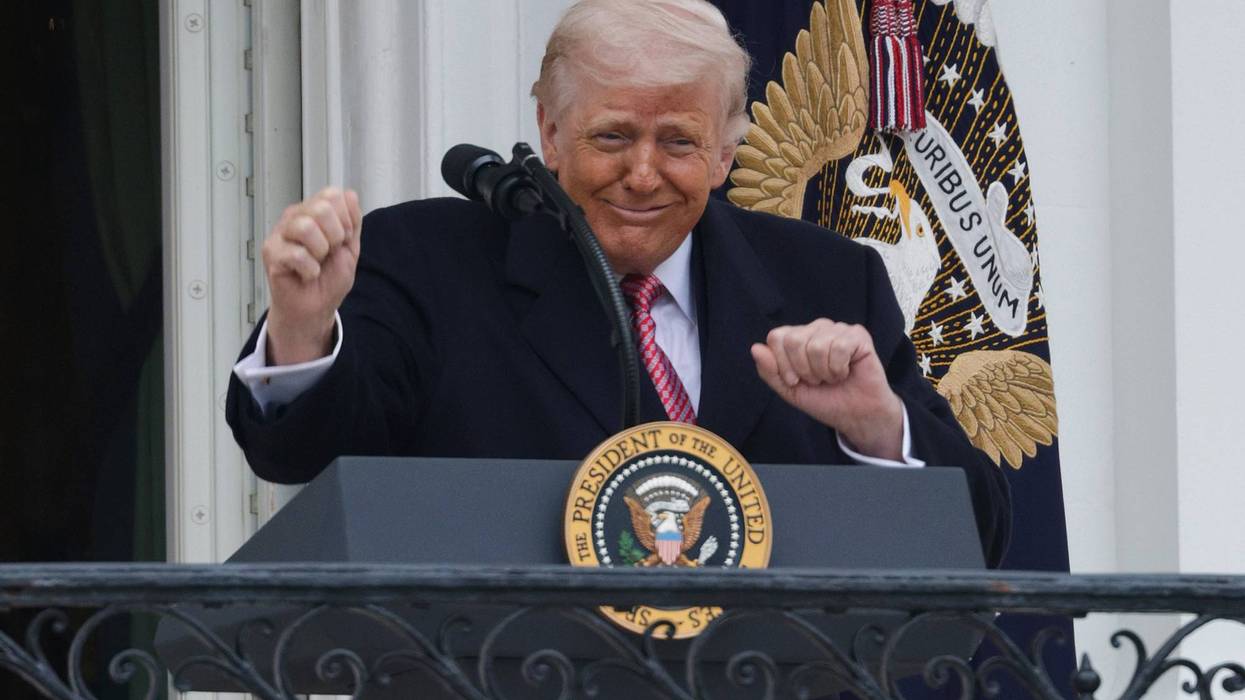
One campaigner urged the administration to "focus on real solutions to support more transparent and diverse supply sources and make targeted investments for the supply of key medicines."
On Thursday, the one-year anniversary of President Donald Trump's so-called Liberation Day, US advocacy groups sounded the alarm about his new tariffs targeting "patented pharmaceuticals and their ingredients under Section 232 of the Trade Expansion Act of 1962 to bolster American national security and public health."
The administration announced a year ago that the US Department of Commerce would conduct a related investigation under that law. The resulting report was recently sent to the president, and although the findings have not been made public, Trump's executive order summarizes key takeaways and Secretary Howard Lutnick's recommended actions.
According to the order, the secretary's recommendations included "continuing to negotiate onshoring agreements related to most favored nation (MFN) pharmaceutical pricing agreements; imposing significant tariffs on pharmaceuticals and pharmaceutical ingredients, so that such imports will not threaten to impair the national security of the United States; and granting preferential treatment to those companies that commit to onshore production of pharmaceuticals and pharmaceutical ingredients."
Citing an unnamed Trump administration official, The Washington Post reported Thursday that "the White House has reached agreements with 13 drugmakers and expects to soon conclude an additional four." As part of these deals, companies are planning to invest at least $400 billion in new US plants.
The Post also pointed out that "some imported drugs will face much lower tariffs under trade deals Trump negotiated with five US trading partners. Goods from the European Union, Japan, South Korea, and Switzerland will face 15% levies, while drugs from the United Kingdom, which was the first to sign a deal with Trump, will be hit with a 10% tariff."
Thanks to Trump's new order, brand-name pharmaceuticals made in other countries could be hit with tariffs as high as 100%.
Merith Basey, CEO of Patients for Affordable Drugs, warned in a statement that "while these tariffs aim to pressure pharmaceutical corporations into US manufacturing and most favored nation agreements, the current MFN deals remain opaque and voluntary, and have not delivered meaningful savings for the vast majority of American patients. There's a real risk these tariffs will drive up costs and create more uncertainty for millions of patients already struggling to afford their medications."
Experts at Public Citizen, another advocacy group that has sued to expose the secretive MFN agreements, were similarly critical.
"By announcing these tariffs without even producing the evidence from the investigation that supposedly justifies them, Trump is continuing his pattern of grabbing headlines by using the word 'tariff' while engaging in secretive ongoing negotiations and opaque exemptions processes that are ripe for corporate corruption," said Public Citizen Global Trade Watch director Melinda St. Louis—who also wrote a broader takedown of Trump's trade policy published Thursday by Common Dreams.
"While strategic tariffs can be used to support domestic manufacturing and good jobs, they must be paired with real public investments and support for workers' rights, which Trump has systematically undermined," she said. "Instead, he's bullying other countries like the UK into paying more for medicines, which will lead to windfall profits for Big Pharma and do nothing to reduce US prices."
Peter Maybarduk, director of Access to Medicines at Public Citizen, stressed that "Trump's tariffs will be either ineffective or harmful for what people need, which is a reliable, plentiful, affordable supply of medicine."
Also taking aim at the "secretive arrangements that allow Trump to claim specious victories on manufacturing and high drug prices," Maybarduk explained that "in reality, many manufacturing commitments claimed under the deals were part of previously planned projects and the drug pricing commitments appear designed to largely spare drug company profits rather than earnestly address affordability concerns."
"Meanwhile the administration has given drugmakers perks like lucrative vouchers to accelerate FDA review of their medicines and a promise from the Trump administration that it will bully other countries into adopting higher prescription drug prices, using tariffs as leverage," he continued, referring to the Food and Drug administration.
"If the administration wants to fix problems like medicines shortages and fragile supply chains," he argued, "it should focus on real solutions to support more transparent and diverse supply sources and make targeted investments for the supply of key medicines."
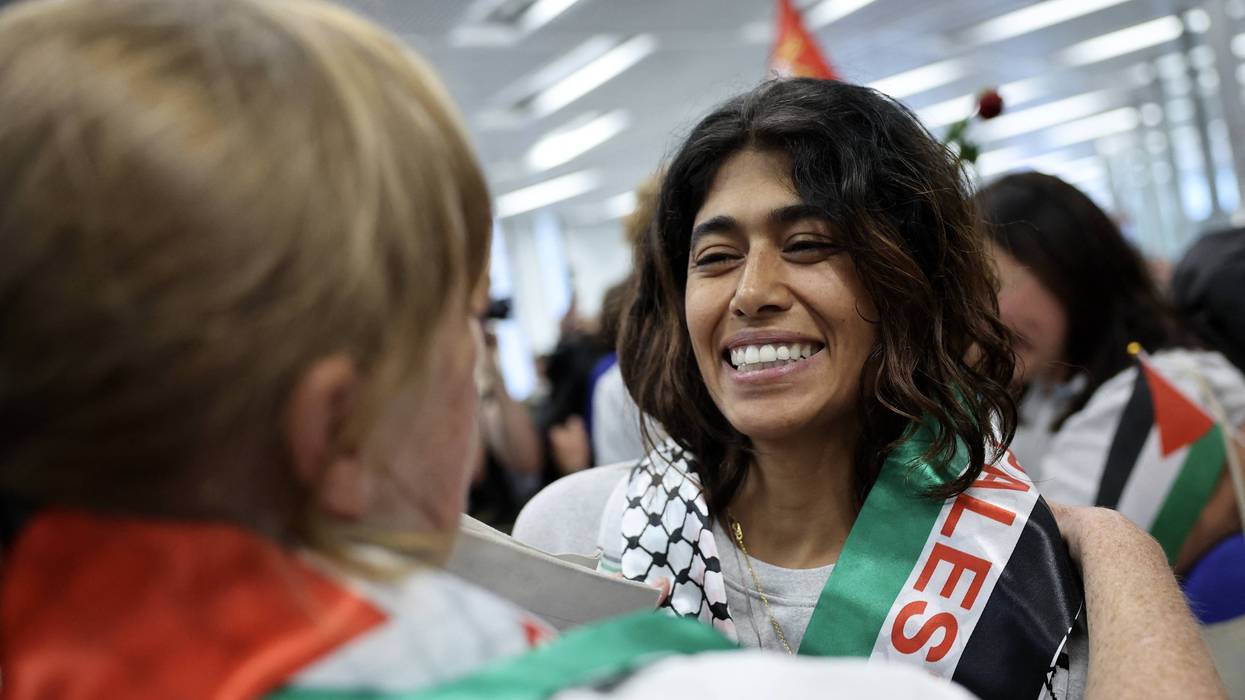
Police in Paris apprehended and briefly detained European Parliament Member Rima Hassan Thursday on suspicion of "apology for terrorism"—an allegation critics slammed as "judicial harassment" aimed at silencing her outspoken criticism of Israel's genocidal war on Gaza and the French government's support for it.
Hassan, who represents the leftist La France Insoumise (LFI, or France Unbowed in English) party in the European Parliament, was summoned as part of an investigation by the National Center for Combating Online Hate (PNLH), Le Parisiene first reported.
The newspaper also reported that "a few grams" of a synthetic drug—possibly 3-MMC—were found on Hassan, allegations that sparked skeptical reactions.
PNLH is probing a since-deleted March 26 post on the social media site X in which Hassan referred to Kōzō Okamoto, a member of the Japanese Red Army who, along with two others, killed 26 people and wounded 80 more in the name of Palestinian liberation during a 1972 massacre at Lod Airport in Israel.
Hassan, a descendant of Palestinians ethnically cleansed from their homeland during the foundation of the modern Israeli state, was born in a refugee camp in Syria and emigrated to France as a child.
The Sorbonne-educated jurist was one of the leaders of the June 2025 Gaza Freedom Flotilla Madleen mission, along with climate campaigner Greta Thunberg and others. Hassan and others aboard the Madleen were intercepted by Israeli forces and arrested in international waters as they attempted to deliver food, children’s prosthetics, and other desperately needed supplies to Gaza’s besieged and starving people. Hassan said that she was beaten in Israeli custody.
While far-right and pro-Israel French lawmakers celebrated Hassan's detention and called for her to be stripped of parliamentary immunity, Palestine defenders condemned the arrest.
"Once again, the offense of glorifying terrorism is being used to repress a Palestinian activist known worldwide for her fight against genocide," said leftist lawyer Elsa Marcel. "While Israel bombs Iran and Lebanon and colonization accelerates in the West Bank, the French state continues to repress the voices fighting for the liberation of Palestine. Immediate release!"
LFI French National Assembly Member Gabrielle Cathala voiced her "full support for Rima Hassan" in a post on X.
"In violation of her parliamentary immunity, she is currently being held in custody for a simple tweet that had nothing to do with 'apology for terrorism,'" she wrote. "This judicial harassment must stop."
"If this is already happening, just imagine what would occur in the event of a vote on the Yadan Law," Cathala added, referring to a highly controversial bill critics say would criminalize anti-Zionism by conflating opposition to Israel with animus toward Jewish people, aligning with the dubious International Holocaust Remembrance Alliance Working Definition of Antisemitism.
Soutien à ma camarade et collègue Rima Hassan, en garde à vue pour un tweet, alors que le génocide à Gaza se poursuit et que les palestinien•nes subissent désormais un apartheid par le gouvernement d’extrême droite israélien.
[image or embed]
— François Piquemal (@francoispiquemal.bsky.social) April 2, 2026 at 6:51 AM
Jean-Luc Mélenchon, the de facto LFI leader and a former European Parliament member, said on Bluesky: "The political police have once again summoned Rima Hassan for questioning regarding a retweet from March. Parliamentary immunity, then, no longer exists in France."
"It is intolerable," he added. "The Yadan Law was not passed—yet is it already being enforced?"
Hassan was previously summoned by authorities following a December 2024 complaint over social media posts, including one in which she asserted, “If Franco-Israelis are allowed to serve in the Israeli army while enjoying the gains of dual citizenship, every Franco-Palestinian must be able to join the Palestinian armed resistance, the legitimacy of which is recognized by [United Nations] resolutions on the right to self-determination of peoples."
Since she started speaking out against the Gaza genocide, Hasan has been subjected to online bullying, including death and rape threats and doxing.
Last week, Hassan was denied entry into Canada—where she was scheduled to speak at multiple conferences in Montréal and meet with left-wing pro-Palestine members of Québec's National Assembly—following concerns from the pro-Israel groups B’nai Brith Canada and the Center for Israel and Jewish Affairs. Hassan attended the conferences remotely.
“The revocation of [Hassan's] travel authorization is part of a worrying trend of restricting freedom of expression and movement of political representatives," LFI said in a statement, "as well as part of a broader pattern of censorship affecting democratic debate."
Other Palestine defenders have been targeted by the French government, including Olivia Zemor, president of the advocacy group Europalestine, who last week was hit with a 24-month suspended sentence for "apology for terrorism" due to her support for Palestinian rights.
"The president of the United States would like everyone to know that he is acting with criminal intent, in case there was any ambiguity," a US law professor said of his social media post with bridge bombing footage.
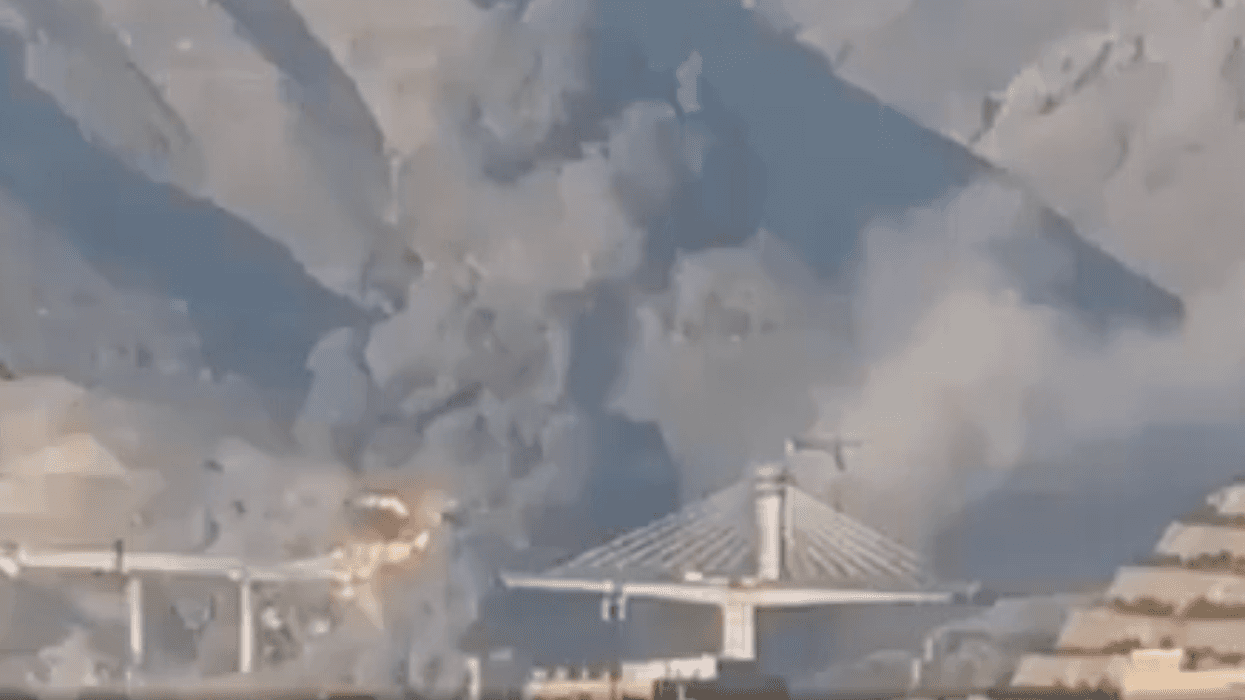
After pledging in a prime-time address that the United States and Israel would bomb Iran "back to the Stone Ages where they belong," President Donald Trump on Thursday shared a video of the US blowing up an Iranian bridge and promised, "Much more to follow!"
"The biggest bridge in Iran comes tumbling down, never to be used again," Trump wrote on his Truth Social platform, sharing footage of an attack on the B1 highway bridge that connects Iran's capital, Tehran, to the city of Karaj.
Trump added a message to the Middle East nation's government, writing, "IT IS TIME FOR IRAN TO MAKE A DEAL BEFORE IT IS TOO LATE, AND THERE IS NOTHING LEFT OF WHAT STILL COULD BECOME A GREAT COUNTRY!"
Citing an unnamed source, Israel's i24NEWS reported that the bridge's "destruction was intended to cut off supply routes that bring drone parts and missiles to Iranian firing units that launch them at US and Israeli forces."
According to Reuters national security correspondent Idrees Ali, "Iranian state media says eight people were killed and 95 wounded in the attack."
While war cheerleader Sen. Lindsey Graham (R-SC) welcomed Trump's social media post, anti-war activists, journalists, and legal experts called out the US president for not only engaging in war crimes, but promoting them with his "atrocity propaganda."
Progressive US-Middle East policy analyst Omar Baddar said that Trump was "openly bragging about destroying civilian infrastructure to force the Iranian government to meet his political demands."
Rutgers University law professor Adil Haque said in a series of social media posts that "the president of the United States would like everyone to know that he is acting with criminal intent, in case there was any ambiguity."
"Attacking civilian infrastructure—to create political pressure or punish civilians—is both illegal and stupid," Haque added, blasting Trump's post as "obscene," and stressing that "states must act now to end this lawless war."
British writer Owen Jones declared that "Donald Trump is openly flaunting his war crimes. Journalists who won't call them that are complicit."
Zeteo editor-in-chief Mehdi Hasan said that "this is what terrorism looks like, state terrorism, we do it to others, and then we act shocked when others do it back to us."
Drop Site News co-founder Ryan Grim described Trump's post as, "An extremist group in Washington, DC has claimed credit for the terrorist attack on the Iranian bridge."
Earlier Thursday, Grim noted that Iran has shut down the Strait of Hormuz, a waterway between the Persian Gulf and the Gulf of Oman that's a key shipping route for fossil fuels. Oil prices have surged, as Americans have already seen at the gasoline pump.
"The more civilian infrastructure we destroy in Iran and the more we set back their economy, the more determined Iran will be to extract the maximum possible toll from oil passing through what is now their strait," Grim wrote. "That toll will be paid by us and the rest of the world through a higher cost of living. So just be aware that every video of a bridge being blown up, a pharmaceutical [plant] destroyed, a medical clinic flattened, is a video of something *you* are going to pay to rebuild."
As Common Dreams reported earlier Thursday, online retailer Amazon is planning to add 3.5% fuel and logistics surcharge for vendors that use its fulfillment service in the United States and Canada, and fresh food distributors have been adding such fees to deliveries, due to increased fuel costs caused by the Iran war.
Responding to the bridge attack, Iran's foreign minister, Seyed Abbas Araghchi, said that "striking civilian structures, including unfinished bridges, will not compel Iranians to surrender. It only conveys the defeat and moral collapse of an enemy in disarray. Every bridge and building will be built back stronger. What will never recover: damage to America's standing."
Since launching the war in late February, the US and Israel have also bombed at least tens of thousands of other civilian locations, including homes, schools, medical facilities, energy installations, courthouses, and UN Educational, Scientific, and Cultural Organization World Heritage sites.