SUBSCRIBE TO OUR FREE NEWSLETTER
Daily news & progressive opinion—funded by the people, not the corporations—delivered straight to your inbox.
5
#000000
#FFFFFF
To donate by check, phone, or other method, see our More Ways to Give page.
Daily news & progressive opinion—funded by the people, not the corporations—delivered straight to your inbox.
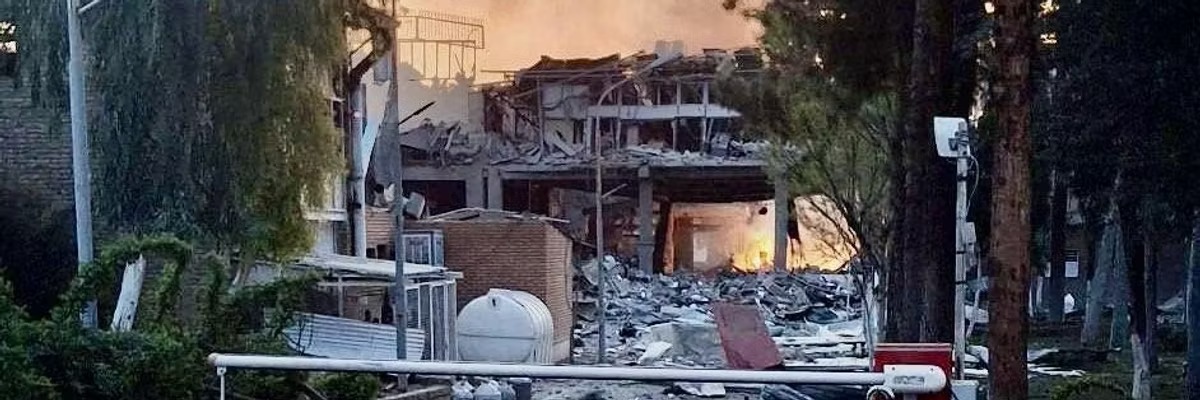
A photo shows severe damage to the Pasteur Institute of Iran following an alleged US-Israeli airstrike on April 2, 2026.
"Heartbreaking, cruel, despicable, and utterly outrageous," a spokesperson for Iran's Foreign Ministry said of the attack on the Pasteur Institute of Iran.
The Iranian Ministry of Health said Thursday that a US-Israeli airstrike hit and severely damaged the Pasteur Institute of Iran, a century-old medical research center that has played a key role in combating and preventing infectious diseases in the country.
Photos posted to social media by a spokesperson for Iran's Health Ministry, Hossein Kermanpour, showed flames and smoke amid the rubble of a devastated building. Kermanpour called the attack on the Pasteur Institute of Iran "a direct assault on international health security" and a violation of international law.
Esmaeil Baqaei, a spokesperson for Iran's Foreign Ministry, also condemned the attack on social media, blaming "the American-Israeli aggressors."
"Heartbreaking, cruel, despicable, and utterly outrageous," Baqaei wrote. "This is not merely another war crime committed as part of an illegal war; it is a barbaric assault on basic human core values."
Heartbreaking, cruel, despicable, and utterly outrageous: the American-Israeli aggressors have attacked the Pasteur Institute of Iran — the oldest and most prestigious research and public health center in Iran and the entire Middle East, founded in 1920 through an agreement… pic.twitter.com/DQvyiuxIw6
— Esmaeil Baqaei (@IRIMFA_SPOX) April 2, 2026
News of the attack on the medical research center, which was founded in 1920, came hours after US President Donald Trump threatened in a primetime speech Wednesday night to bomb Iran "back to the Stone Ages."
Vali Nasr, an Iranian American academic and professor of International Affairs and Middle East Studies at the Johns Hopkins School of Advanced International Studies, wrote Thursday that the Pasteur Institute "has been an icon of Iran's healthcare system, a symbol of modern Iran, established a century ago along with foundational health and education institutions."
"Destroying it," Nasr wrote, "could have no other purpose than assaulting Iran’s history, erasing the history of its modernization and development—take Iranians back to the Stone Age."
The attack on the Pasteur Institute comes days after the head of the World Health Organization, Tedros Adhanom Ghebreyesus, said that airstrikes hit "near WHO's office in the Iranian capital, Tehran, shattering windows."
"Strikes impacting the operations and damaging the premises of WHO and other UN agencies, the locations of which have been clearly identified, cannot be tolerated and must be avoided at all costs," Tedros said in a statement.
Since the start of the deadly US-Israeli bombing onslaught on February 28, the WHO has documented more than two dozen attacks on healthcare infrastructure and personnel in Iran—part of a broader assault on healthcare that Trump's Iran War has unleashed throughout the Middle East.
Dear Common Dreams reader, It’s been nearly 30 years since I co-founded Common Dreams with my late wife, Lina Newhouser. We had the radical notion that journalism should serve the public good, not corporate profits. It was clear to us from the outset what it would take to build such a project. No paid advertisements. No corporate sponsors. No millionaire publisher telling us what to think or do. Many people said we wouldn't last a year, but we proved those doubters wrong. Together with a tremendous team of journalists and dedicated staff, we built an independent media outlet free from the constraints of profits and corporate control. Our mission has always been simple: To inform. To inspire. To ignite change for the common good. Building Common Dreams was not easy. Our survival was never guaranteed. When you take on the most powerful forces—Wall Street greed, fossil fuel industry destruction, Big Tech lobbyists, and uber-rich oligarchs who have spent billions upon billions rigging the economy and democracy in their favor—the only bulwark you have is supporters who believe in your work. But here’s the urgent message from me today. It's never been this bad out there. And it's never been this hard to keep us going. At the very moment Common Dreams is most needed, the threats we face are intensifying. We need your support now more than ever. We don't accept corporate advertising and never will. We don't have a paywall because we don't think people should be blocked from critical news based on their ability to pay. Everything we do is funded by the donations of readers like you. When everyone does the little they can afford, we are strong. But if that support retreats or dries up, so do we. Will you donate now to make sure Common Dreams not only survives but thrives? —Craig Brown, Co-founder |
The Iranian Ministry of Health said Thursday that a US-Israeli airstrike hit and severely damaged the Pasteur Institute of Iran, a century-old medical research center that has played a key role in combating and preventing infectious diseases in the country.
Photos posted to social media by a spokesperson for Iran's Health Ministry, Hossein Kermanpour, showed flames and smoke amid the rubble of a devastated building. Kermanpour called the attack on the Pasteur Institute of Iran "a direct assault on international health security" and a violation of international law.
Esmaeil Baqaei, a spokesperson for Iran's Foreign Ministry, also condemned the attack on social media, blaming "the American-Israeli aggressors."
"Heartbreaking, cruel, despicable, and utterly outrageous," Baqaei wrote. "This is not merely another war crime committed as part of an illegal war; it is a barbaric assault on basic human core values."
Heartbreaking, cruel, despicable, and utterly outrageous: the American-Israeli aggressors have attacked the Pasteur Institute of Iran — the oldest and most prestigious research and public health center in Iran and the entire Middle East, founded in 1920 through an agreement… pic.twitter.com/DQvyiuxIw6
— Esmaeil Baqaei (@IRIMFA_SPOX) April 2, 2026
News of the attack on the medical research center, which was founded in 1920, came hours after US President Donald Trump threatened in a primetime speech Wednesday night to bomb Iran "back to the Stone Ages."
Vali Nasr, an Iranian American academic and professor of International Affairs and Middle East Studies at the Johns Hopkins School of Advanced International Studies, wrote Thursday that the Pasteur Institute "has been an icon of Iran's healthcare system, a symbol of modern Iran, established a century ago along with foundational health and education institutions."
"Destroying it," Nasr wrote, "could have no other purpose than assaulting Iran’s history, erasing the history of its modernization and development—take Iranians back to the Stone Age."
The attack on the Pasteur Institute comes days after the head of the World Health Organization, Tedros Adhanom Ghebreyesus, said that airstrikes hit "near WHO's office in the Iranian capital, Tehran, shattering windows."
"Strikes impacting the operations and damaging the premises of WHO and other UN agencies, the locations of which have been clearly identified, cannot be tolerated and must be avoided at all costs," Tedros said in a statement.
Since the start of the deadly US-Israeli bombing onslaught on February 28, the WHO has documented more than two dozen attacks on healthcare infrastructure and personnel in Iran—part of a broader assault on healthcare that Trump's Iran War has unleashed throughout the Middle East.
The Iranian Ministry of Health said Thursday that a US-Israeli airstrike hit and severely damaged the Pasteur Institute of Iran, a century-old medical research center that has played a key role in combating and preventing infectious diseases in the country.
Photos posted to social media by a spokesperson for Iran's Health Ministry, Hossein Kermanpour, showed flames and smoke amid the rubble of a devastated building. Kermanpour called the attack on the Pasteur Institute of Iran "a direct assault on international health security" and a violation of international law.
Esmaeil Baqaei, a spokesperson for Iran's Foreign Ministry, also condemned the attack on social media, blaming "the American-Israeli aggressors."
"Heartbreaking, cruel, despicable, and utterly outrageous," Baqaei wrote. "This is not merely another war crime committed as part of an illegal war; it is a barbaric assault on basic human core values."
Heartbreaking, cruel, despicable, and utterly outrageous: the American-Israeli aggressors have attacked the Pasteur Institute of Iran — the oldest and most prestigious research and public health center in Iran and the entire Middle East, founded in 1920 through an agreement… pic.twitter.com/DQvyiuxIw6
— Esmaeil Baqaei (@IRIMFA_SPOX) April 2, 2026
News of the attack on the medical research center, which was founded in 1920, came hours after US President Donald Trump threatened in a primetime speech Wednesday night to bomb Iran "back to the Stone Ages."
Vali Nasr, an Iranian American academic and professor of International Affairs and Middle East Studies at the Johns Hopkins School of Advanced International Studies, wrote Thursday that the Pasteur Institute "has been an icon of Iran's healthcare system, a symbol of modern Iran, established a century ago along with foundational health and education institutions."
"Destroying it," Nasr wrote, "could have no other purpose than assaulting Iran’s history, erasing the history of its modernization and development—take Iranians back to the Stone Age."
The attack on the Pasteur Institute comes days after the head of the World Health Organization, Tedros Adhanom Ghebreyesus, said that airstrikes hit "near WHO's office in the Iranian capital, Tehran, shattering windows."
"Strikes impacting the operations and damaging the premises of WHO and other UN agencies, the locations of which have been clearly identified, cannot be tolerated and must be avoided at all costs," Tedros said in a statement.
Since the start of the deadly US-Israeli bombing onslaught on February 28, the WHO has documented more than two dozen attacks on healthcare infrastructure and personnel in Iran—part of a broader assault on healthcare that Trump's Iran War has unleashed throughout the Middle East.