SUBSCRIBE TO OUR FREE NEWSLETTER
Daily news & progressive opinion—funded by the people, not the corporations—delivered straight to your inbox.
5
#000000
#FFFFFF
To donate by check, phone, or other method, see our More Ways to Give page.
Daily news & progressive opinion—funded by the people, not the corporations—delivered straight to your inbox.
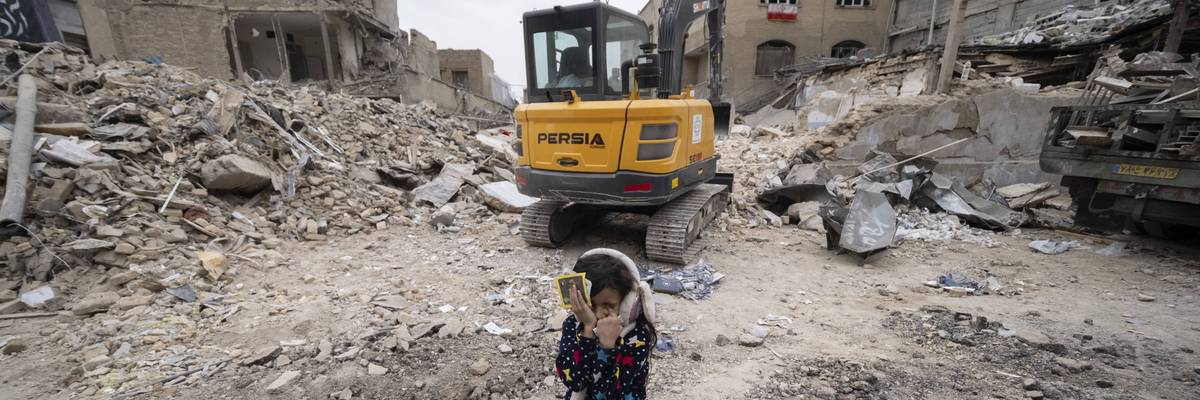
A young Iranian girl closes her eyes near a loader working on the ruins of buildings destroyed during the US-Israel assault in a residential area of Tehran, Iran, on March 15, 2026.
"To pull the region back from the brink and prevent the further loss of civilian life and destruction of vital public infrastructure, renewed diplomatic efforts are critical."
United Nations High Commissioner for Human Rights Volker Türk renewed his call for achieving peace through diplomacy on Thursday, highlighting how the US-Israeli war on Iran is having a disproportionate impact on civilians across the Middle East.
"The human cost of this reckless war is alarming. Hostilities are being waged without regard to the immediate and long-term consequences for civilians across the entire region," Türk said in a statement as the US and Israel bombed Iran, retaliatory Iranian strikes hit fossil fuel facilities throughout the region, and Israeli forces attacked alleged Hezbollah targets in Lebanon.
"Attacks on energy infrastructure—including South Pars in Iran and Ras Laffan in Qatar—will only compound hardship," the UN official warned. "Disastrous humanitarian, economic, and environmental consequences will be triggered if such attacks continue, resulting in deep harm to civilians—potentially for years to come."
On Wednesday, Israel struck Iran's South Pars gas field and Qatar said that Iranian missiles caused "extensive damage" to the world's largest liquefied natural gas export facility. US President Donald Trump then threatened to "massively blow up the entirety" of the Iranian site if attacks on Qatari energy infrastructure continued.
According to the Iranian Red Crescent Society, US and Israeli attacks over the past few weeks have already damaged at least 67,414 civilian locations, including homes, schools, medical facilities, energy installations, courthouses, and UN Educational, Scientific, and Cultural Organization World Heritage sites.
"All parties to this conflict are bound by their obligations—irrespective of the conduct of any other party—and must take all feasible measures to avoid harm to civilians and damage to civilian objects," Türk stressed. "In times of war, the rule of law, due process, and other human rights obligations continue to apply. The ugly reality of war is not a carte blanche to violate human rights."
The high commissioner declared that "to pull the region back from the brink and prevent the further loss of civilian life and destruction of vital public infrastructure, renewed diplomatic efforts are critical."
He also acknowledged an upcoming Muslim holiday: "Many across the region and beyond will be observing Eid al-Fitr this weekend in circumstances of hardship, uncertainty, and fear. I extend my Eid wishes to all those who observe it, and my heartfelt solidarity to all those enduring the hardships of conflict and instability."
Citing the Iranian Health Ministry, Drop Site News reported Thursday that "at least 1,444 people have been killed and 18,551 injured" across Iran. Reuters noted that as of Wednesday, the US-based Human Rights Activists News Agency put the death toll in Iran even higher, at 3,134. The Lebanese Ministry of Public Health said Thursday that Israeli attacks this month have killed 1,001 people and wounded 2,584 across Lebanon.
Additionally, Iranian missiles have killed at least 15 Israeli civilians and four Palestinian women in the illegally occupied West Bank, according to Reuters. The Israeli military has confirmed the deaths of two soldiers in Lebanon, and the Pentagon has verified that 13 US service members are dead, and another 200 have been wounded.
Despite the rising body count, and polling that shows the war is unpopular with the US public, including Trump voters, the president is seeking another $200 billion dollars from Congress, which has not authorized the war on Iran.
Responding to that request, US Sen. Chris Van Hollen (D-Md.) said that "the best way to end this war, protect our troops, save civilian lives, and rein in a lawless administration is to cut off funding. I'm a hell no."
Dear Common Dreams reader, It’s been nearly 30 years since I co-founded Common Dreams with my late wife, Lina Newhouser. We had the radical notion that journalism should serve the public good, not corporate profits. It was clear to us from the outset what it would take to build such a project. No paid advertisements. No corporate sponsors. No millionaire publisher telling us what to think or do. Many people said we wouldn't last a year, but we proved those doubters wrong. Together with a tremendous team of journalists and dedicated staff, we built an independent media outlet free from the constraints of profits and corporate control. Our mission has always been simple: To inform. To inspire. To ignite change for the common good. Building Common Dreams was not easy. Our survival was never guaranteed. When you take on the most powerful forces—Wall Street greed, fossil fuel industry destruction, Big Tech lobbyists, and uber-rich oligarchs who have spent billions upon billions rigging the economy and democracy in their favor—the only bulwark you have is supporters who believe in your work. But here’s the urgent message from me today. It's never been this bad out there. And it's never been this hard to keep us going. At the very moment Common Dreams is most needed, the threats we face are intensifying. We need your support now more than ever. We don't accept corporate advertising and never will. We don't have a paywall because we don't think people should be blocked from critical news based on their ability to pay. Everything we do is funded by the donations of readers like you. When everyone does the little they can afford, we are strong. But if that support retreats or dries up, so do we. Will you donate now to make sure Common Dreams not only survives but thrives? —Craig Brown, Co-founder |
United Nations High Commissioner for Human Rights Volker Türk renewed his call for achieving peace through diplomacy on Thursday, highlighting how the US-Israeli war on Iran is having a disproportionate impact on civilians across the Middle East.
"The human cost of this reckless war is alarming. Hostilities are being waged without regard to the immediate and long-term consequences for civilians across the entire region," Türk said in a statement as the US and Israel bombed Iran, retaliatory Iranian strikes hit fossil fuel facilities throughout the region, and Israeli forces attacked alleged Hezbollah targets in Lebanon.
"Attacks on energy infrastructure—including South Pars in Iran and Ras Laffan in Qatar—will only compound hardship," the UN official warned. "Disastrous humanitarian, economic, and environmental consequences will be triggered if such attacks continue, resulting in deep harm to civilians—potentially for years to come."
On Wednesday, Israel struck Iran's South Pars gas field and Qatar said that Iranian missiles caused "extensive damage" to the world's largest liquefied natural gas export facility. US President Donald Trump then threatened to "massively blow up the entirety" of the Iranian site if attacks on Qatari energy infrastructure continued.
According to the Iranian Red Crescent Society, US and Israeli attacks over the past few weeks have already damaged at least 67,414 civilian locations, including homes, schools, medical facilities, energy installations, courthouses, and UN Educational, Scientific, and Cultural Organization World Heritage sites.
"All parties to this conflict are bound by their obligations—irrespective of the conduct of any other party—and must take all feasible measures to avoid harm to civilians and damage to civilian objects," Türk stressed. "In times of war, the rule of law, due process, and other human rights obligations continue to apply. The ugly reality of war is not a carte blanche to violate human rights."
The high commissioner declared that "to pull the region back from the brink and prevent the further loss of civilian life and destruction of vital public infrastructure, renewed diplomatic efforts are critical."
He also acknowledged an upcoming Muslim holiday: "Many across the region and beyond will be observing Eid al-Fitr this weekend in circumstances of hardship, uncertainty, and fear. I extend my Eid wishes to all those who observe it, and my heartfelt solidarity to all those enduring the hardships of conflict and instability."
Citing the Iranian Health Ministry, Drop Site News reported Thursday that "at least 1,444 people have been killed and 18,551 injured" across Iran. Reuters noted that as of Wednesday, the US-based Human Rights Activists News Agency put the death toll in Iran even higher, at 3,134. The Lebanese Ministry of Public Health said Thursday that Israeli attacks this month have killed 1,001 people and wounded 2,584 across Lebanon.
Additionally, Iranian missiles have killed at least 15 Israeli civilians and four Palestinian women in the illegally occupied West Bank, according to Reuters. The Israeli military has confirmed the deaths of two soldiers in Lebanon, and the Pentagon has verified that 13 US service members are dead, and another 200 have been wounded.
Despite the rising body count, and polling that shows the war is unpopular with the US public, including Trump voters, the president is seeking another $200 billion dollars from Congress, which has not authorized the war on Iran.
Responding to that request, US Sen. Chris Van Hollen (D-Md.) said that "the best way to end this war, protect our troops, save civilian lives, and rein in a lawless administration is to cut off funding. I'm a hell no."
United Nations High Commissioner for Human Rights Volker Türk renewed his call for achieving peace through diplomacy on Thursday, highlighting how the US-Israeli war on Iran is having a disproportionate impact on civilians across the Middle East.
"The human cost of this reckless war is alarming. Hostilities are being waged without regard to the immediate and long-term consequences for civilians across the entire region," Türk said in a statement as the US and Israel bombed Iran, retaliatory Iranian strikes hit fossil fuel facilities throughout the region, and Israeli forces attacked alleged Hezbollah targets in Lebanon.
"Attacks on energy infrastructure—including South Pars in Iran and Ras Laffan in Qatar—will only compound hardship," the UN official warned. "Disastrous humanitarian, economic, and environmental consequences will be triggered if such attacks continue, resulting in deep harm to civilians—potentially for years to come."
On Wednesday, Israel struck Iran's South Pars gas field and Qatar said that Iranian missiles caused "extensive damage" to the world's largest liquefied natural gas export facility. US President Donald Trump then threatened to "massively blow up the entirety" of the Iranian site if attacks on Qatari energy infrastructure continued.
According to the Iranian Red Crescent Society, US and Israeli attacks over the past few weeks have already damaged at least 67,414 civilian locations, including homes, schools, medical facilities, energy installations, courthouses, and UN Educational, Scientific, and Cultural Organization World Heritage sites.
"All parties to this conflict are bound by their obligations—irrespective of the conduct of any other party—and must take all feasible measures to avoid harm to civilians and damage to civilian objects," Türk stressed. "In times of war, the rule of law, due process, and other human rights obligations continue to apply. The ugly reality of war is not a carte blanche to violate human rights."
The high commissioner declared that "to pull the region back from the brink and prevent the further loss of civilian life and destruction of vital public infrastructure, renewed diplomatic efforts are critical."
He also acknowledged an upcoming Muslim holiday: "Many across the region and beyond will be observing Eid al-Fitr this weekend in circumstances of hardship, uncertainty, and fear. I extend my Eid wishes to all those who observe it, and my heartfelt solidarity to all those enduring the hardships of conflict and instability."
Citing the Iranian Health Ministry, Drop Site News reported Thursday that "at least 1,444 people have been killed and 18,551 injured" across Iran. Reuters noted that as of Wednesday, the US-based Human Rights Activists News Agency put the death toll in Iran even higher, at 3,134. The Lebanese Ministry of Public Health said Thursday that Israeli attacks this month have killed 1,001 people and wounded 2,584 across Lebanon.
Additionally, Iranian missiles have killed at least 15 Israeli civilians and four Palestinian women in the illegally occupied West Bank, according to Reuters. The Israeli military has confirmed the deaths of two soldiers in Lebanon, and the Pentagon has verified that 13 US service members are dead, and another 200 have been wounded.
Despite the rising body count, and polling that shows the war is unpopular with the US public, including Trump voters, the president is seeking another $200 billion dollars from Congress, which has not authorized the war on Iran.
Responding to that request, US Sen. Chris Van Hollen (D-Md.) said that "the best way to end this war, protect our troops, save civilian lives, and rein in a lawless administration is to cut off funding. I'm a hell no."