
SUBSCRIBE TO OUR FREE NEWSLETTER
Daily news & progressive opinion—funded by the people, not the corporations—delivered straight to your inbox.
5
#000000
#FFFFFF
To donate by check, phone, or other method, see our More Ways to Give page.


Daily news & progressive opinion—funded by the people, not the corporations—delivered straight to your inbox.
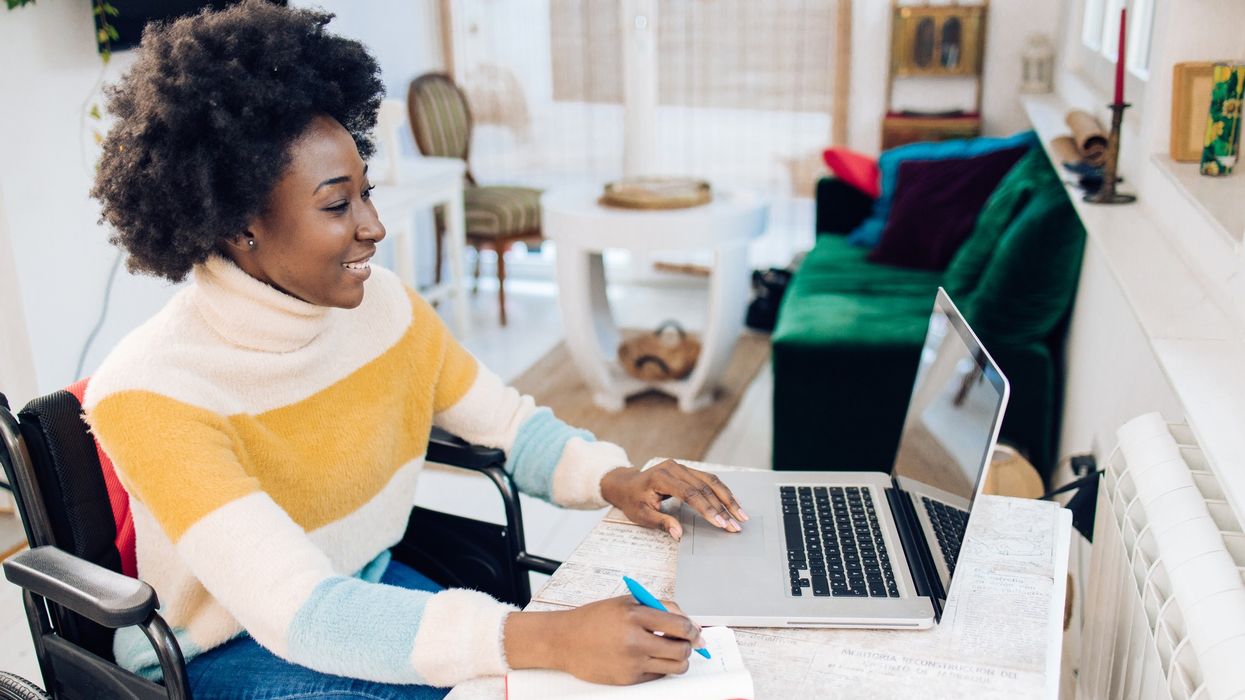
Disabled workers are a growing portion of the labor force and a vital asset to our economy, but pandemic-era accesibility gains could end up being temporary if we’re not careful.
This Labor Day, it’s time to talk about disabled workers.
This issue is personal for me. I debated for years about whether to disclose my disability status to potential employers.
I have rheumatoid arthritis, which is largely managed thanks to medication. I’m extremely lucky—I get to choose whether and how to disclose my disability, instead of needing to disclose it to get access to tools I need to succeed on the job. Usually, the only visible evidence of my disability at work is when an occasional flare-up gives me pain.
We’re at a crossroads: We can either continue to build on this progress that has opened doors for an entire section of the labor force—and for improved labor policies in general—or we can undo those great strides and shut disabled workers out.
At least 1 out of every 4 Americans has a disability, and conditions like long Covid may have bumped that number even further. Millions of disabled American workers rely on a variety of visible and invisible workplace accommodations to help them do their jobs and do them well.
As the U.S. Department of Labor explains on their website, workplace accommodations “may include specialized equipment, modifications to the work environment, or adjustments to work schedules or responsibilities.” That can mean anything from adaptive technology to ergonomic office furniture to a hybrid or fully remote work schedule.
We still have a long way to go to make American workplaces around our country more accessible, inclusive, and more likely to hire and retain disabled workers. Labor Day is the perfect time to talk about how to raise the standard across the country when it comes to disability accommodations in the workplace.
Three years into the pandemic, changes in remote and hybrid work policies have transformed the job market for disabled workers, vastly expanding opportunities for employment and making it more feasible for disabled workers not only to survive but to thrive. Workplaces in turn benefit from disabled workers’ talents, perspectives, and adaptiveness.
Disabled workers are a growing portion of the labor force and a vital asset to our economy. But with a growing employer pushback against remote work and other basic accommodations, these pandemic-era gains could end up being temporary if we’re not careful.
We’re at a crossroads: We can either continue to build on this progress that has opened doors for an entire section of the labor force—and for improved labor policies in general—or we can undo those great strides and shut disabled workers out.
Despite some protections under the Americans with Disabilities Act, which just turned 33, disabled workers still face stigma when it comes to hiring, employment, and navigating workplace environments that require accommodations.
Although a lot of progress has occurred over the past several decades, workers like me can still face an uphill battle when trying to access workplace accommodations to fulfill our job duties. Doctors’ notes, medical records, complicated human resources processes, and other hurdles can be a barrier to getting even the most basic requests accommodated.
The cost for employers tends to be pretty small. A May survey of employers by the Job Accommodation Network found that fulfilling an accommodation request cost half of them nothing at all. Of those that did incur an expense, the median cost was just $300.
Meanwhile, staff-wide workplace measures like flexible scheduling, paid sick leave, intermittent breaks, or ergonomic office furniture tend to benefit everyone, not just disabled employees.
Let’s raise the standard this year. Let’s treat disability accommodations like we treat safety standards or anti-discrimination statutes—as common-sense measures that help employers retain great employees and ensure their full potential, for the benefit of everyone.

"How many more children must die?" asked the leader of the AFL-CIO. "Any lawmaker who wants to undermine child labor laws, in 2023, is a disgrace."
The recent death of a minor from injuries sustained while working at a poultry plant in Mississippi has elicited fresh outrage about the dangerous implications of the current assault on child labor protections across the United States.
Authorities confirmed Tuesday that Duvan Pérez, a 16-year-old boy from Guatemala, died last Friday at the Mar-Jac Poultry plant in Hattiesburg.
Pushing back against the framing of Pérez's death as an unexpected mishap, Terri Gerstein, director of the Project on State and Local Enforcement at the Harvard Law School Center for Labor and a Just Economy, stressed that it was predictable and a crime.
"It's not an unforeseeable accident," Gerstein wrote on social media. "Employers aren't allowed to hire kids in terribly dangerous workplaces for a reason."
Pérez, a middle school student, appears to have been unlawfully employed as a sanitation worker at Mar-Jac Poultry.
The federal Fair Labor Standards Act, approved in 1938, prohibits employers from hiring anyone under the age of 18 to work in meat slaughtering, processing, and packing facilities—with limited exemptions for apprentices and student-learners who are at least 16 years old and enrolled in approved programs—due to the inherently hazardous nature of such jobs. All workers under 18 are barred from operating and cleaning power-driven meat processing machines.
CBS News reported Wednesday that Pérez died from injuries sustained while cleaning equipment.
A worker on duty at the time told NBC News that by the time they heard the boy screaming for help, it was already too late.
"Two times he began to scream, 'Help! Help!'" the worker said. "I knew he had died."
The U.S. Occupational Safety and Health Administration and the U.S. Department of Labor's (DOL) Wage and Hour Division have opened investigations into the fatal incident at the Mar-Jac Poultry plant—the facility's second in two years.
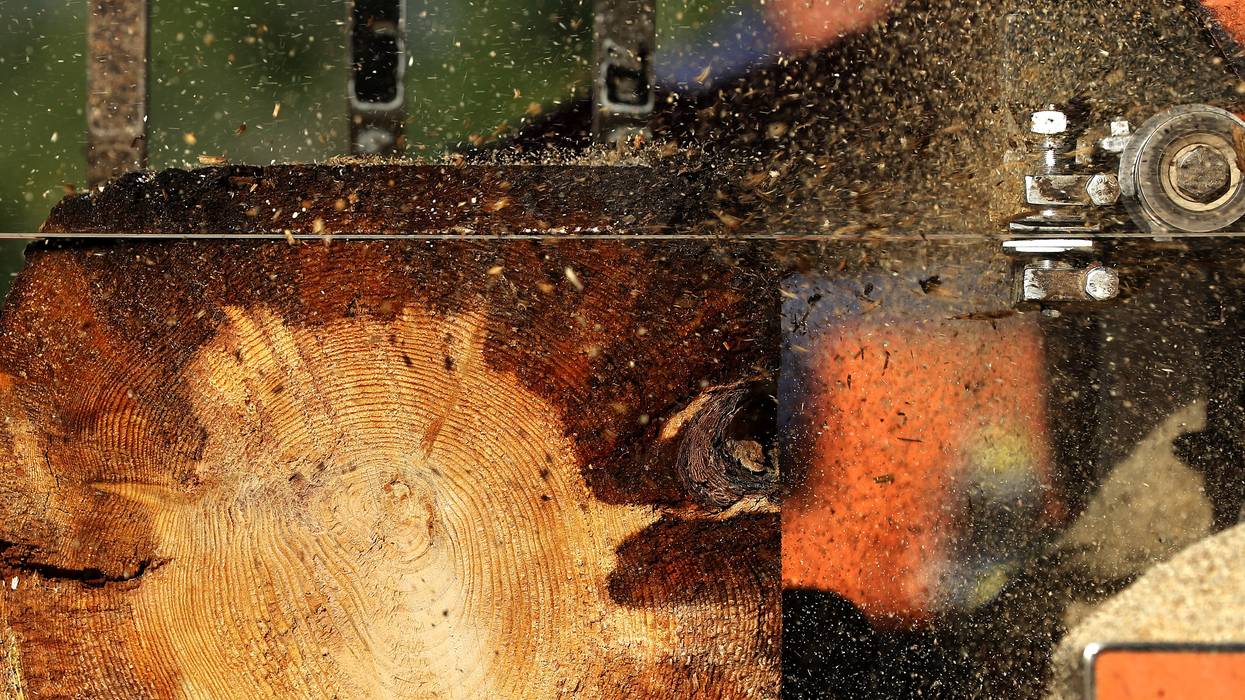
Pérez's death came less than two weeks after a 16-year-old boy died while working at a sawmill in northern Wisconsin in violation of state and national child labor regulations.
"How many more children must die?" AFL-CIO president Liz Shuler asked Wednesday. "Any lawmaker who wants to undermine child labor laws, in 2023, is a disgrace."
Since 2021, lawmakers in 14 states have introduced bills to weaken rules governing what kinds of workplace tasks minors are allowed to perform and for what wages. The Economic Policy Institute (EPI) has argued that this deregulatory attack is driven by corporations' desire to ramp up exploitation.
"The trend reflects a coordinated multi-industry push to expand employer access to low-wage labor and weaken state child labor laws in ways that contradict federal protections," EPI researchers Jennifer Sherer and Nina Mast wrote earlier this year. "And the recent uptick in state legislative activity is linked to longer-term industry-backed goals to rewrite federal child labor laws and other worker protections for the whole country."
As of June, legislators have proposed at least 19 child labor rollbacks over the past two years. Of those, seven have been signed into law in five states (Arkansas, Iowa, Michigan, New Hampshire, and New Jersey). Most of the legislation has been authored and advanced by Republican lawmakers. However, Democrats in New Jersey played an integral role in passing a 2022 law that increases the number of hours children can work, and Democratic Michigan Gov. Gretchen Whitmer declined to veto a pair of laws enacted in 2022—one to lower the minimum age for working at a liquor store and another the age to serve alcohol.
According to EPI, a GOP-approved Iowa law that took effect on July 1:
"Multiple provisions in the new state law conflict with federal Fair Labor Standards Act (FLSA) prohibitions on "oppressive child labor" involving hazardous conditions or excessive hours that interfere with teens' schooling or health and well-being," EPI pointed out.
State officials are moving to dilute child labor laws even as this month's preventable tragedies at the Wisconsin sawmill and the Mississippi poultry plant serve as heartbreaking reminders that existing state and federal protections are already inadequate and not being enforced consistently—with lethal consequences.
According to DOL data, the number of minors employed in violation of child labor laws increased by 283% from fiscal year 2015 to fiscal year 2022. Over that same time period, the number of minors employed in violation of hazardous occupation orders rose 94%.
While the agency is investigating hundreds of child labor cases, they constitute "just a tiny fraction of violations, most of which go unreported and uninvestigated," EPI lamented.
Earlier this month, Gerstein told The Guardian that "to stop violations of child labor laws, we need more funding for enforcement, higher penalties, and clear, attainable ways to hold lead corporations accountable for violations in their supply chains."
On April 12, U.S. Department of Agriculture Secretary Thomas Vilsack sent a letter imploring the nation's 18 largest meat processors to "take important precautionary steps" to help eliminate "illegal child labor in your supply chains."
"The use of illegal child labor—particularly requiring that children undertake dangerous tasks—is inexcusable, and companies must consider both their legal and moral responsibilities to ensure they and their suppliers, subcontractors, and vendors fully comply with child labor laws," the letter states. "Companies in food manufacturing—particularly those with significant market power—need to be vigilant about the standards of their suppliers to help reduce systemic violations and abuses."
NBC News reported last month that a federal probe into Guatemalan children working in the U.S. in violation of child labor laws "has expanded to include meatpacking and produce firms that have allegedly hired underage migrants in at least 11 states."
The current effort to weaken child labor laws across the United States "reflects a coordinated multi-industry push to expand employer access to low-wage" workers, says the Economic Policy Institute.
The recent death of a 16-year-old boy from injuries sustained while working at a sawmill in northern Wisconsin has drawn renewed attention to the dangerous implications of the ongoing assault on child labor protections across the United States.
The Florence County Sheriff's Office responded last Thursday morning to a 911 call for an unresponsive teenager at the Florence Hardwoods logging company. Police said the boy was taken to a local hospital before being transferred to Children's Wisconsin in Milwaukee, where he died on Saturday.
The U.S. Occupational Safety and Health Administration (OSHA) is investigating the fatal industrial accident. OSHA has made a referral to the U.S. Department of Labor's Wage and Hour Division for potential child labor violations relating to hazardous jobs.
The deceased victim was unlawfully employed. As Wisconsin Public Radio reported Monday: "In Wisconsin, minors are prohibited from working in many occupations in logging and sawmills. According to the state Department of Workforce Development, children under 18 are prohibited from entering a sawmill building. They are also not allowed to work felling or bucking timber, collect[ing] or transporting logs, operating or assisting in operating power-driven machinery, handling or using explosives, working on trestles, working on portable sawmills, working in lumberyards used for storing green lumber or using a chainsaw."
"State officials say child labor complaints more than quadrupled from 2018 to 2022. The Wisconsin Department of Workforce Development's Equal Rights Division received 18 minor employment complaints in 2018 and 86 complaints last year," the outlet noted. "Over the same period, the U.S. Labor Department says it's seen a 69% increase nationally in cases of children being illegally employed during the same period."
Wisconsin is one of 14 states where lawmakers have introduced or approved bills since 2021 to loosen rules governing what kinds of workplace duties minors are allowed to perform and for what wages. The Economic Policy Institute (EPI) has argued that this deregulatory blitz is driven by corporations' desire to increase exploitation.
"The trend reflects a coordinated multi-industry push to expand employer access to low-wage labor and weaken state child labor laws in ways that contradict federal protections," EPI researchers Jennifer Sherer and Nina Mast wrote earlier this year. "And the recent uptick in state legislative activity is linked to longer-term industry-backed goals to rewrite federal child labor laws and other worker protections for the whole country."
Of the 19 child labor rollbacks proposed over the past two years, seven have been signed into law in five states (Arkansas, Iowa, Michigan, New Hampshire, and New Jersey). Most of the legislation has been unveiled and advanced by Republican lawmakers, but not all of the blame can be placed on the GOP's shoulders. For instance, a 2022 New Jersey law to extend work hours and postpone breaks has Democrats' fingerprints all over it. In addition, Democratic Michigan Gov. Gretchen Whitmer chose not to veto a pair of laws enacted in 2022—one to lower the minimum age for working at a liquor store and another the age to serve alcohol.
Last year, Democratic Wisconsin Gov. Tony Evers vetoed a bill passed by the state's Republican-controlled House and Senate that would have increased the number of hours minors are allowed to work. Even if the Wisconsin teen's sawmill death cannot be attributed to recent attacks on child labor laws, it underscores the lethal consequences that could result from attempts to put kids back in factories.
In neighboring Iowa, for example, GOP-passed legislation rubber-stamped by Republican Gov. Kim Reynolds does the following, according to EPI:
"Multiple provisions in the new state law conflict with federal Fair Labor Standards Act (FLSA) prohibitions on "oppressive child labor" involving hazardous conditions or excessive hours that interfere with teens' schooling or health and well-being," EPI pointed out.
The law went into effect last Saturday, the same day the 16-year-old succumbed to his sawmill injuries in Wisconsin.
The tragedy in Wisconsin is also a reminder that existing state and federal laws are already inadequate.
Skip Mark, a University of Rhode Island professor specializing in labor and human rights, told The Guardian on Thursday that the nation's agricultural industry remains a hotbed of child labor.
"The U.S. Fair Labor Standards Act of 1938 helped limit child labor in many ways. However, it did and still does not apply to the agricultural sector, where most child labor in the U.S. and most child injuries and deaths occur," Mark explained. "Child labor is most common in agriculture where children are maimed, killed, exposed to dangerous chemicals, underpaid, and we've known about these issues for decades."
"Child labor is hard to measure, and most estimates are terrible and should not be taken at face value. Governments don't want to report how bad child labor is because it makes them look bad," said Mark. "Businesses don't want to report that they have hired children because then they would have to pay fines. Children and their parents don't want to report child labor because they need the job to support themselves and would lose their job if it was reported."
Terri Gerstein, the director of the Project on State and Local Enforcement at the Harvard Law School Center for Labor and a Just Economy, shared similar concerns.
"To stop violations of child labor laws, we need more funding for enforcement, higher penalties, and clear, attainable ways to hold lead corporations accountable for violations in their supply chains," Gerstein told the newspaper.
Big business lawyers are "going to be furious with this decision," said one legal expert.
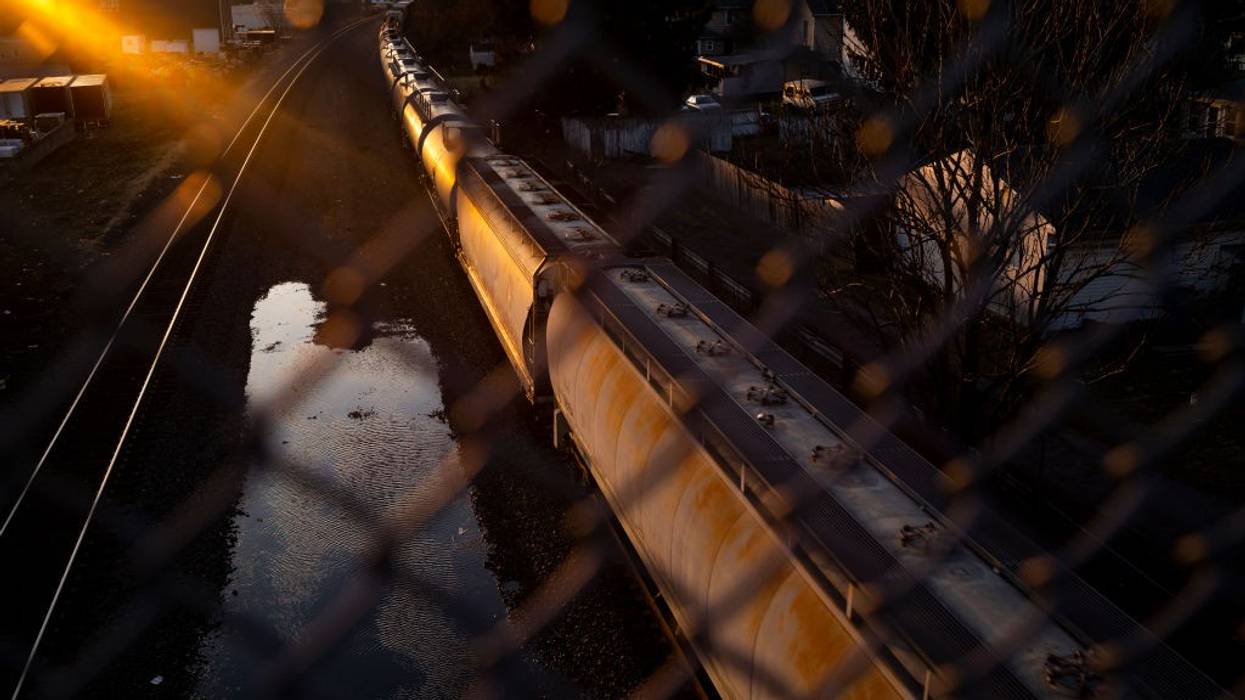
Opponents of unmitigated corporate power celebrated Tuesday when the U.S. Supreme Court rejected Norfolk Southern's attempt to limit where companies can be sued.
In a 5-4 opinion written by Justice Neil Gorsuch and joined by Justices Clarence Thomas, Samuel Alito, Sonja Sotomayor, and Ketanji Brown Jackson, the high court ruled that Pennsylvania's "consent-by-registration" law "requiring an out-of-state firm to answer in the commonwealth any suits against it in exchange for status as a registered foreign corporation and the benefits that entails" does not violate the due process clause of the 14th Amendment.
The decision vacates an earlier judgment by the Pennsylvania Supreme Court and remands the case.
"This is really big," Slate's Mark Joseph Stern tweeted. Big business lawyers are "going to be furious with this decision."
"This is big—and, in my view, good—because it allows states to exercise personal jurisdiction over corporations that do business within the state but are incorporated elsewhere, often in a jurisdiction that they deem more favorable to their interests," Stern continued.
"Pennsylvania requires out-of-state corporations to file paperwork consenting to appear in Pennsylvania courts as a condition of doing business within the state," Stern added. "Gorsuch says: Nothing about that scheme violates due process."
Matt Stoller, director of research at the American Economic Liberties Project, also applauded the decision.
In 2017, months after being diagnosed with colon cancer, former Norfolk Southern worker Robert Mallory filed a lawsuit alleging that his illness stemmed from workplace exposure to asbestos and other hazardous materials and that the rail carrier failed to provide safety equipment and other resources to ensure he was sufficiently protected on the job.
Although he had never worked in Pennsylvania, Mallory filed his lawsuit in the Philadelphia County Court of Common Pleas because his attorneys were from the state and "he thought he would get the fairest access to justice there," Ashley Keller, the lawyer representing him before the U.S. Supreme Court, told The Lever in February.
As Rebecca Burns and Julia Rock, two of the investigative outlet's reporters, explained at the time:
Norfolk Southern asserts that being forced to defend the case in Pennsylvania would pose an undue burden, thereby violating its constitutional right to due process.
Even though Norfolk Southern owns thousands of miles of track in the Keystone State, the Philadelphia county court sided with the railroad and dismissed the case. Mallory appealed, and the case wound its way through state and federal courts before landing at the U.S. Supreme Court last year.
Norfolk Southern asked the U.S. Supreme Court "to uphold the lower court ruling, overturn Pennsylvania's law, and restrict where corporations can be sued, upending centuries of precedent," the journalists noted.
The American Association of Railroads (AAR), the rail industry's largest lobby, filed a brief last September on behalf of Norfolk Southern. AAR and other powerful corporate lobbying groups such as the U.S. Chamber of Commerce, the National Association of Manufacturers, and the American Trucking Association sought to undermine the ability of workers and consumers to file lawsuits in the venue of their choosing.
President Joe Biden's administration, meanwhile, came under fire earlier this year when The Lever revealed that the U.S. Department of Justice had also filed a brief siding with the railroad giant behind the toxic derailment in East Palestine, Ohio.
If Norfolk Southern had prevailed, it could have been easier for the profitable rail carrier to thwart pending and future lawsuits "on the grounds that they're filed in the wrong venue," The Lever reported, citing Scott Nelson, an attorney with the Public Citizen Litigation Group, which filed a brief backing Mallory. At particular risk would have been "lawsuits filed by residents exposed to hazardous chemicals as the result of accidents in other states," including victims of air or water pollution stemming from the disaster in East Palestine, five miles west of the Pennsylvania state border.
“[Norfolk Southern] might say, 'You can only sue us in Ohio or Virginia [where Norfolk Southern is headquartered],' even if you were injured at your home in Pennsylvania from an accident that took place five miles away in Ohio," Nelson warned.
A ruling in the rail giant's favor could have also established "a national precedent limiting where workers and consumers can bring cases against corporations," Burns and Rock pointed out.
However, workers and consumers are not out of the woods yet. As Bloomberg Law reported Tuesday, "Alito seemed to invite a future challenge against the [Pennsylvania] law in his concurrence," where he suggested that "Norfolk Southern could win when the case goes back to the lower court."
"In my view, there is a good prospect that Pennsylvania's assertion of jurisdiction here—over an out-of-state company in a suit brought by an out-of-state plaintiff on claims wholly unrelated to Pennsylvania—violates the commerce clause," Alito argued.
Sean Marotta, a partner at Hogan Lovells, which filed a brief on behalf of a law professor in support of Norfolk Southern, "is telling his clients not to panic but to 'stay on guard,'" according to Bloomberg Law. "Under this ruling, he said state legislatures could amend their registration statutes to impose consent-by-registration. They could basically copy and paste the Pennsylvania law because the court is saying it's okay under the Constitution's due process clause, he said."
"There's still a dormant commerce clause fight to have," Marotta told the outlet.
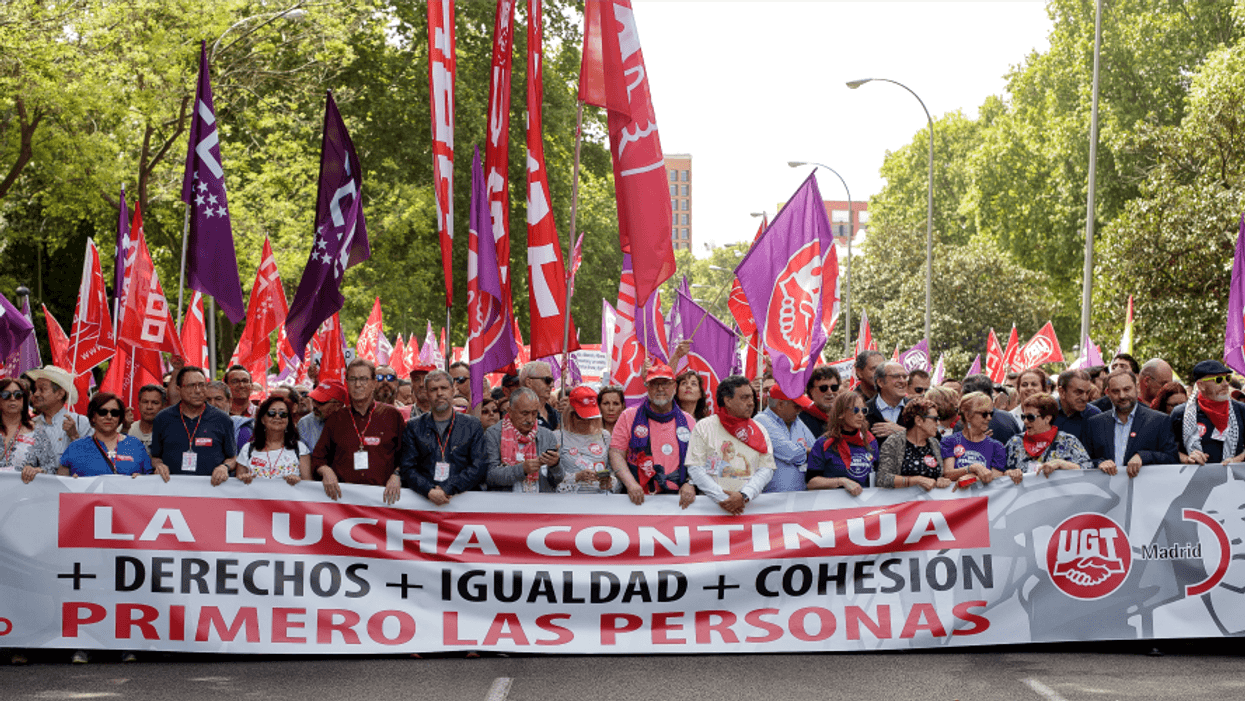
Workers in countries all over the world joined marches and rallies on Wednesday to mark International Workers' Day, or May Day, with progressive political leaders joining some events and other protests being quashed by law enforcement.
The Industrial Workers of the World (IWW) was among the organizations that promoted the international event on social media, tweeting, "A fighting workers' union is the answer" to workplace injustice.
Demonstrations in Paris on Wednesday were among the rallies that have grown violent through the years.
Police fired tear gas at protesters as the French government warned the demonstration may be overtaken by vandals.
Other rallies across Europe and around the world remained peaceful, with hundreds of thousands of demonstrators calling on governments to push for family leave laws, fair living wages, and an end to workplace discrimination, particularly against immigrants.
London
Madrid
Dhaka, Bangladesh
South Carolina
Orkney, South Africa
*********
In the U.S., a number of other labor organizations tweeted about the day's significance.
Progressive lawmakers from around the world, including Sen. Elizabeth Warren and Rep. Barbara Lee in the U.S. and British Labour Party leader Jeremy Corbyn, tweeted support for workers who were protesting Wednesday.
May Day's roots date back to the late 19th century in the Chicago, where workers went on strike to protest their long, grueling working hours in unsafe factories, construction sites, and other environments. The protests are credited with beginning the labor movement in the United States.
The labor celebration is now an official holiday in 66 countries.