

SUBSCRIBE TO OUR FREE NEWSLETTER
Daily news & progressive opinion—funded by the people, not the corporations—delivered straight to your inbox.
5
#000000
#FFFFFF
To donate by check, phone, or other method, see our More Ways to Give page.
Daily news & progressive opinion—funded by the people, not the corporations—delivered straight to your inbox.
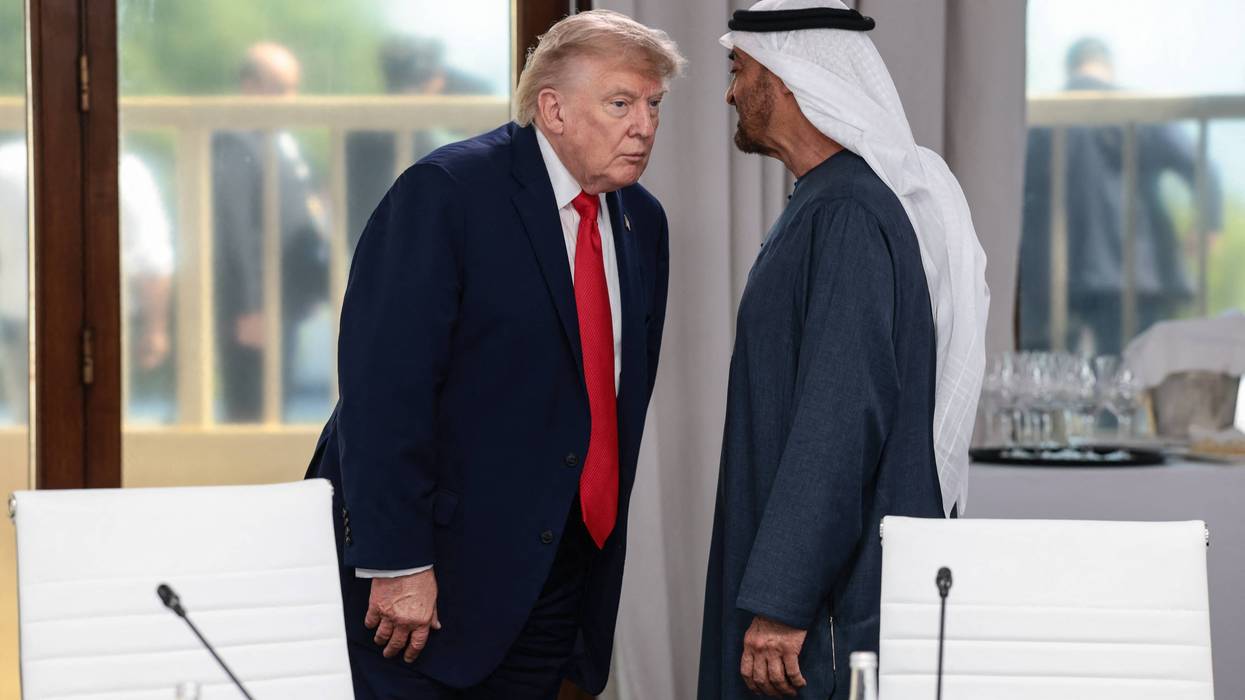
"Trump’s good friend and staunch US ally, the United Arab Emirates dictatorship, run by one of the wealthiest families in the world—has financed and enabled this genocide for years."
As the world fears another massacre by the Rapid Support Forces in Sudan, Sen. Bernie Sanders emphasized that the rebel group’s string of atrocities is being funded by a nation with deep financial ties to President Donald Trump—the United Arab Emirates—and urged an end to US military support.
"In the midst of the wars in Gaza and Iran, we cannot forget the atrocities in Sudan," Sanders (I-Vt.) said Monday in a post to social media. "As many as 150,000 killed since 2023, 14 million driven from their homes, 30 million need humanitarian aid."
"All of this is fueled by the UAE—one of Trump's closest allies," the senator continued. "We cannot be complicit in genocide."
The warning came as RSF encircles El Obeid, a city of half a million people, including hundreds of thousands who have been displaced.
For weeks, the RSF has launched drone attacks that have killed dozens of civilians and damaged critical infrastructure including water facilities, markets, and hospitals. Food, water, and fuel supplies have been disrupted. Some civilians have begun to flee as many entry points to the city have been cut off.
The United Nations Security Council warned last month that there was an "imminent risk of mass atrocities" and demanded that the RSF halt its assault.
Human Rights Chief Volker Türk stressed that the siege tactics followed a familiar "playbook" to the RSF's October attack on El-Fasher in which at least 6,000 people were killed in just three days as part of a campaign that UN human rights experts said bore the "hallmarks of genocide," including ethnically targeted killings and sexual violence.
While the US State Department and other governments have similarly warned that the RSF could be on the verge of committing atrocities, Nicholas Kristof argued in a New York Times column this weekend that "officials won’t say openly... that the power behind the RSF is the United Arab Emirates."
Despite denials from Abu Dhabi, the UAE has been extensively documented as supporting the RSF through weapons shipments routed via Chad, financing the militia, and recruiting, training, and transporting mercenaries to fight alongside the group.
Kristof pointed out that the UAE "has particularly close financial ties to the Trump family," most notably the $2 billion investment by an Emirati firm last year that benefited his family's cryptocurrency venture, World Liberty Financial (WLF), which has been a major source for the unprecedented growth of the president's wealth during his second term.
Recent financial disclosures reported this month by the Wall Street Journal show that Trump received $263 million from selling half his stake in WLF to a fund backed by Sheikh Tahnoon bin Zayed Al Nahyan, one of the UAE's most powerful royals and the brother of its president.
During his second term, Trump has rewarded the UAE with more than a billion dollars in weapons sales that were fast-tracked to get around holds imposed by Congress, and made an agreement giving the Emirates unprecedented access to hundreds of thousands of advanced computer chips per year.
“Trump’s good friend and staunch US ally, the United Arab Emirates dictatorship, run by one of the wealthiest families in the world—has financed and enabled this genocide for years,” Sanders said in a statement last week. "And why is this happening? Billions of dollars of looted gold from Sudan is flowing straight into the pockets of Emirati oligarchs—making a multibillionaire family even richer."He added that "Congress must demand that the UAE cease its military support for the RSF and work with the international community and the Sudanese people to bring an end to this horrific conflict and provide the humanitarian aid that is desperately needed there."
As warnings about a brutal new RSF offensive have piled up, there has been a push in Congress led by Sen. Chris Van Hollen (D-Md.) and Rep. Sara Jacobs (D-Calif.) for restrictions on the United States' ability to provide weapons to the UAE.
Last month, with help from some Democrats, the GOP-controlled Senate Foreign Relations Committee blocked two amendments aimed at halting US weapons shipments to the UAE unless it stops supporting the RSF.
The committee has passed a weaker bill that allows the president to impose optional sanctions on individuals who supply weapons to Sudan's armed factions, which now awaits a full Senate vote. But the committee rejected Van Hollen's amendment prohibiting arms sales to the UAE.
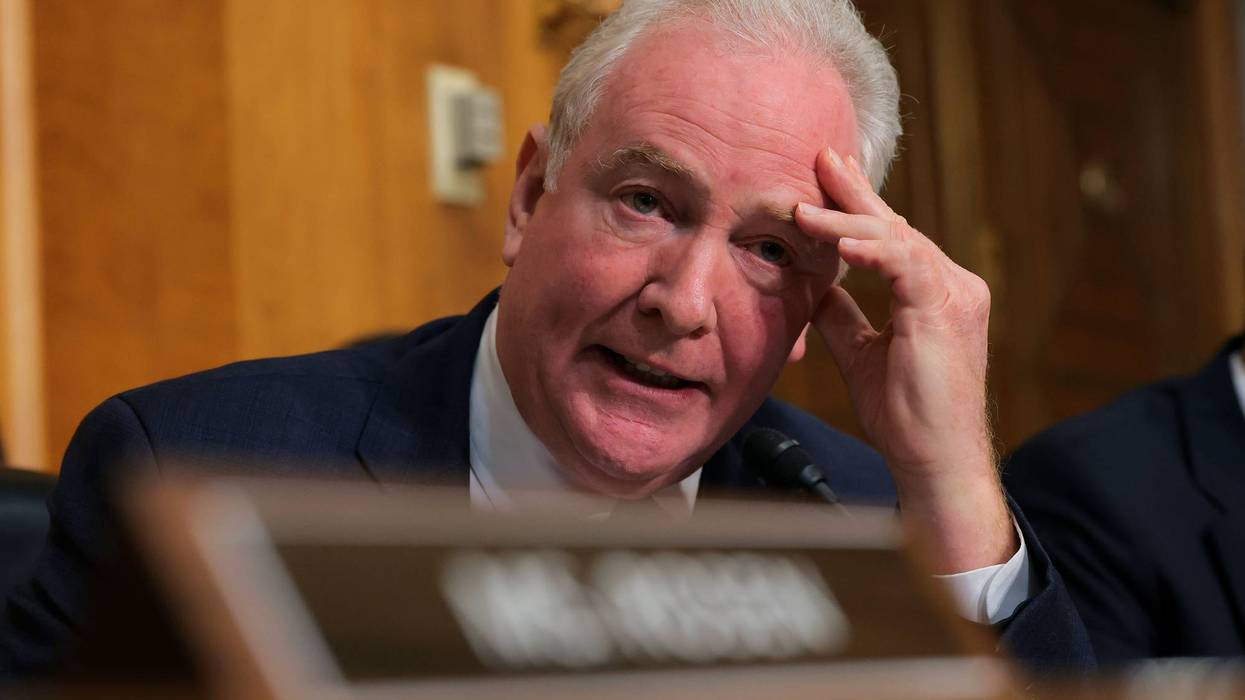
"The United States shouldn't just be talking about ending the slaughter in Sudan," the senator said. "We should actually be using our leverage."
After the US State Department warned earlier this week of imminent “atrocities” by Sudan’s Rapid Support Forces, Sen. Chris Van Hollen on Tuesday criticized the US Senate for missing a recent opportunity to cut off weapons to the United Arab Emirates, which has supplied the genocidal paramilitary group.
On Monday, the State Department warned that RSF forces were massing near the city of El-Obeid and could commit “mass atrocities” against civilians if allowed to take the city.
"The belligerents must uphold their obligations under international humanitarian law to protect civilians and ensure that those seeking safety can do so without fear or obstruction," the department said.
The statement echoed concerns expressed last week by a coalition of states at the United Nations Human Rights Council (UNHRC), which said that roughly 500,000 civilians, including more than 100,000 displaced people, could be at risk of violence if RSF escalated its assault.
UN human rights experts have said RSF's October offensive in Darfur bore the "hallmarks of genocide," with more than 6,000 people killed and numerous civilians tortured, raped, and starved during a three-day rampage across the city of El-Fasher.
But while Trump's State Department has sanctioned some entities accused of supplying fighters for the RSF, the Monday statement made no mention of the UAE, which rights groups point out is the group’s principal foreign backer.
A report issued last year by Van Hollen (D-Md.) and Rep. Sara Jacobs (D-Calif.) found that the UAE was continuing to provide weapons to the RSF despite telling the US that it was not.
Following previous failed attempts at pushing Congress to impose an arms embargo on Sudan through standalone legislation, Van Hollen attempted to do so again last week by tacking a pair of amendments onto the bipartisan PEACE in Sudan Act, which requires the State Department to assess designating armed Sudanese groups as terrorists and allows Trump to impose optional sanctions on foreign actors funding the war, but stopped short of introducing any hard leverage.
At a markup session for the Senate Foreign Relations Committee last week, Van Hollen introduced an amendment banning the US from selling or transferring military equipment to the UAE as long as it continues supporting the RSF. The amendment failed in a 15-7 vote, with four Democrats—Sens. Jeanne Shaheen (NH), Chris Coons (Del.), Tammy Duckworth (Ill.), and Jacky Rosen (Nev.)—joining every Republican on the committee, aside from Sen. Rand Paul (Ky.), in opposition.
A second amendment, which did not single out the UAE specifically but restricted arms sales to any country arming either side of the conflict, also failed 13-9, but received support from Shaheen and Rosen.
Coons said he'd have "enthusiastically" supported the amendment, but voted no because he believed it would "bring down" the broader Sudan bill in a GOP-controlled Senate. Duckworth did not explain her reasoning for voting no.
In light of the State Department's warning this week about RSF's march toward El-Obeid, Van Hollen told a Drop Site News reporter on Tuesday that he believed the no vote on his amendments "was a missed opportunity."
"The United States shouldn't just be talking about ending the slaughter in Sudan. We should actually be using our leverage," he said.
Noting that Trump likely would not support a restriction on arms to the UAE given his extensive financial entanglements with the Emiratis and his previous policy of fast-tracking weapons to the country without any strings attached, Van Hollen said his goal was simply to "keep the pressure on."
He said, "We need to keep showing the hypocrisy of the Trump administration policy, where they claim they want to do something but refuse to take some of the basic actions we can take as a country."