

SUBSCRIBE TO OUR FREE NEWSLETTER
Daily news & progressive opinion—funded by the people, not the corporations—delivered straight to your inbox.
5
#000000
#FFFFFF
To donate by check, phone, or other method, see our More Ways to Give page.
Daily news & progressive opinion—funded by the people, not the corporations—delivered straight to your inbox.
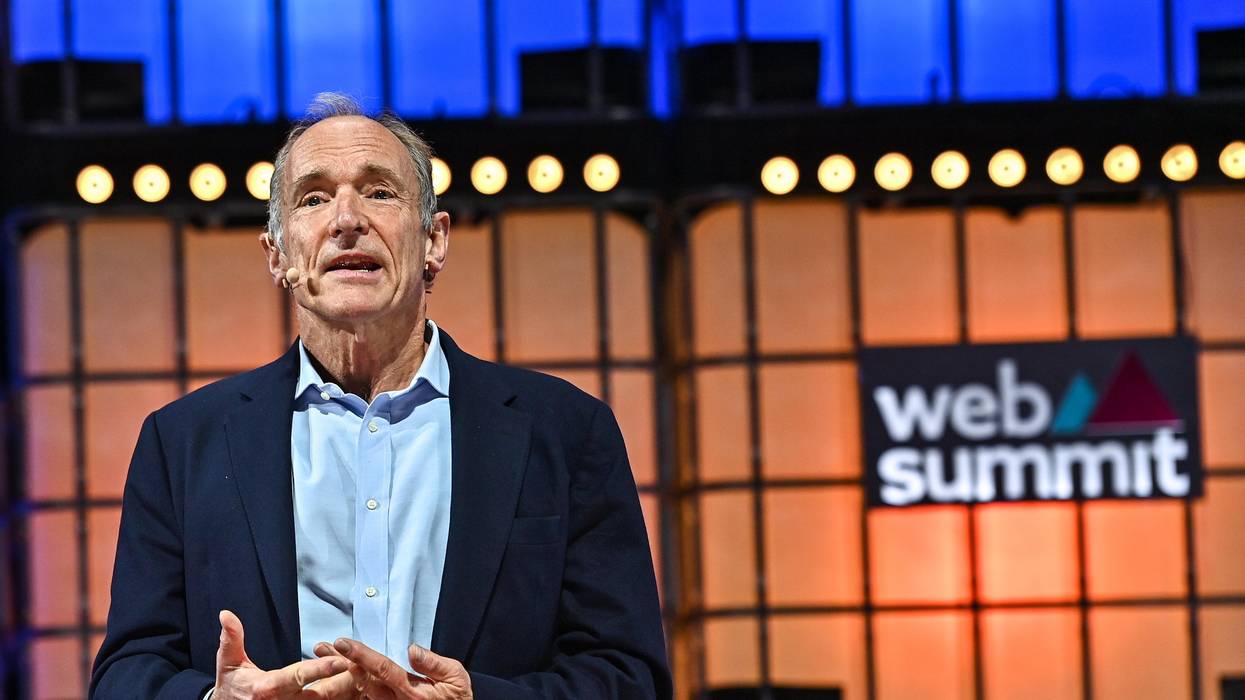
The creator of the World Wide Web is on a mission to reinvent it and protect personal data from Big Tech.
"I think the public has been concerned about privacy--the fact that these platforms have a huge amount of data, and they abuse it," Tim Berners-Lee, who developed the concept of the web in 1989, told CNN on Friday. "But I think what they're missing sometimes is the lack of empowerment. You need to get back to a situation where you have autonomy, you have control of all your data."
As the news outlet reported:
Through their startup Inrupt, Berners-Lee and CEO John Bruce have created the "Solid Pod"--or Personal Online Data Store. It allows people to keep their data in one central place and control which people and applications can access it, rather than having it stored by apps or sites all over the web.
Users can get a pod from a handful of providers, hosted by web services such as Amazon, or run their own server, if they have they the technical know-how. The main attraction to self-hosting is control and privacy, says Berners-Lee.
Thirty-three years after he invented the web, Berners-Lee--a longtime advocate of giving people power over their personal data online--believes that tech giants currently "control the world and manipulate people by providing information."
In an interview with Euronews Next at the Web Summit conference in Lisbon last month, Berners-Lee said that "some people thought that tech people would save the world then. Now, we're in a situation where there are a lot of things wrong with the web."
He has proposed "a mid-course correction to take it back," which he calls Web3.0.
The earliest iteration of the internet already existed in the 1970s, but few people knew how to access it. Everything changed when Berners-Lee, then a consultant at the European Organization for Nuclear Research (CERN), wrote the code for a web server that allows browsers to view hypertext documents. CERN put the software for the World Wide Web into the public domain in 1993.
As Euronews Next explained:
We then saw the emergence of the first stage of the internet, Web1.0. Despite it being available to everyone, it was a read-only type of web and only the few who knew the ins and outs of coding could publish anything.
This led to the development of Web2.0, which now allows us to interact more with the web and become creators so we can publish what we like under big platforms such as Google, Facebook, and so on.
But it does not come for free. In return, many of these companies can take our data which can be used for targeted advertising.
Berners-Lee's "solution to the dysfunctions of Web2.0 is the third layer of protocols, giving a person the ability to log into something with their own personal ID," the news outlet reported.
While working in his lab at the Massachusetts Institute of Technology, Berners-Lee came up with the "Solid Pod" idea and launched Inrupt in 2017. The company reportedly raised $30 million last December, which Berners-Lee says will help bring the project to fruition.
"Berners-Lee's platform can be accessed from your browser," Euronews Next noted. "But it is not an app; he calls it a 'pod,' where you can store your private data and access it very easily. In simpler terms, it can be thought of as your key or a digital ID that is kept secure."
"He said this is his vision for Web3.0, emphasizing that it is not Web3 which uses the Ethereum blockchain system and promises to be decentralized," the news outlet added. "Many cryptocurrency and metaverse companies wave the word Web3 around as the future of the internet. But Inrupt disagrees."
Bruce, the co-founder and CEO of Inrupt, said that "we're talking Web3.0 which is the real thing... not a marketing hijack if you like."
"Tim explained to me over dinner one night that the web as it's rolling out isn't the web we imagined," Bruce continued. "But we could get it to a place as long as we bumped it in the right way."
According to CNN, Inrupt's platform is being tested by the United Kingdom's National Health Service and by the government of Flanders, the Flemish-speaking northern region of Belgium. The latter intends to use pods to provide social services while allowing people to choose how to share their personal data. Berners-Lee said Flanders' 6.5 million citizens will be able to use the technology by the end of 2022.
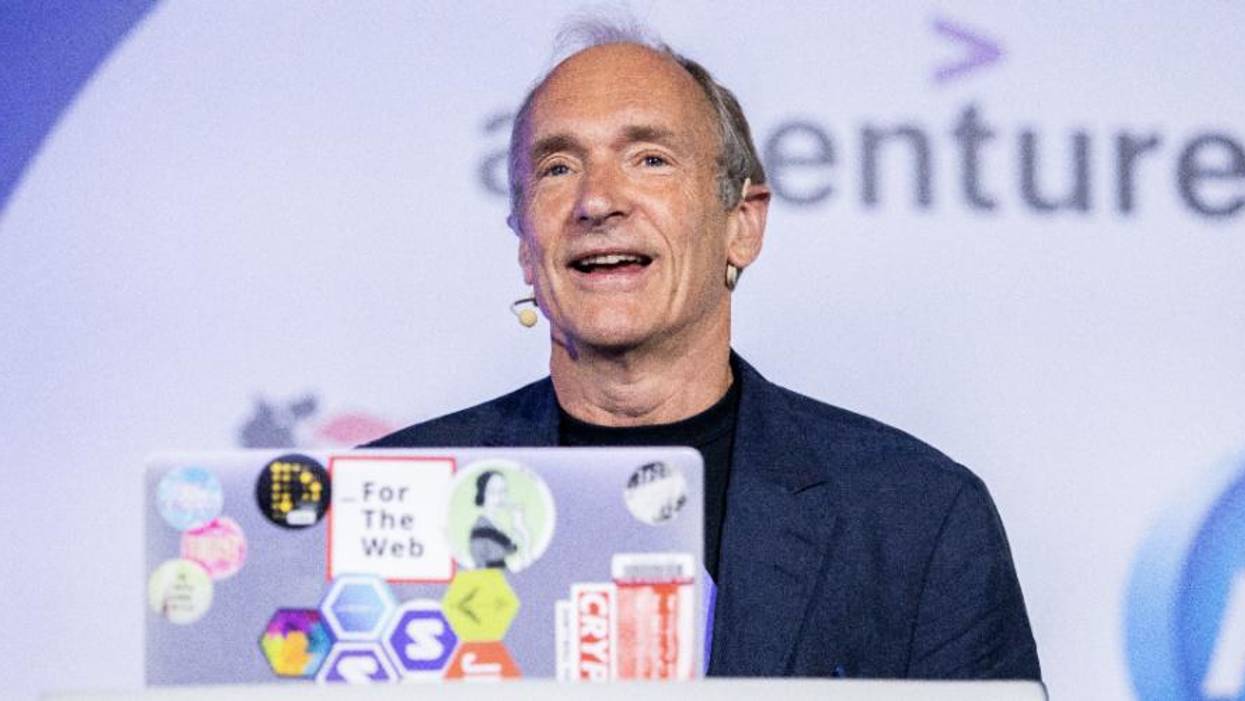
World Wide Web creator Tim Berners-Lee on Friday marked the 32nd birthday his digital innovation by arguing that "we must recognize internet access as a basic right and we must work to make sure all young people can connect to a web that gives them the power to shape their world."
Noting that the milestone comes a day after the one-year anniversary of health experts declaring the coronavirus outbreak a pandemic, Berners-Lee and World Wide Web Foundation co-founder Rosemary Leith wrote in a blog post that "as we repair and rebuild, we have an opportunity to reimagine our world and create something better. The web's power to catalyze change can and must help shape the world we want."
"Through funding for network infrastructure, subsidies, and support for community networks, we can get the web into the hands of every young person on Earth."
--Tim Berners-Lee and Rosemary Leith, World Wide Web Foundation
A critic of Big Tech firms and the global digital divide, Berners-Lee has long advocated for internet practices and policies that serve "humanity, science, knowledge, and democracy." To that end, the computer scientist unveiled in 2018 what he described as a "Magna Carta for the web."
Berners-Lee and Leith noted that the foundation is establishing a Tech Policy Design Lab to help realize the vision laid out in that "Contract for the Web," beginning with bringing together tech companies and women's rights groups to address online gender-based violence and abuse, particular against young women.
The pair also celebrated young people who are "using the web to create a better, fairer future," highlighting nine examples of individuals whose work "demonstrates this incredible potential" and "show how, in the hands of this generation, the web can help to overcome some of humanity's great challenges."
"The influence of these young people is felt across their communities and online networks," they wrote. "But today we're seeing just a fraction of what's possible. Because while we talk about a generation of 'digital natives,' far too many young people remain excluded and unable to use the web to share their talents and ideas."
As Berners-Lee and Leith detailed:
A third of young people have no internet access at all. Many more lack the data, devices, and reliable connection they need to make the most of the web. In fact, only the top third of under-25s have a home internet connection, according to UNICEF, leaving 2.2 billion young people without the stable access they need to learn online, which has helped so many others continue their education during the pandemic.
When young people do get online, too often they are confronted with abuse, misinformation, and other dangerous content, which threatens their participation and can force them from platforms altogether. This is especially true for those disproportionately targeted on the basis of their race, religion, sexuality, abilities, and gender.
The consequences of this exclusion affects everyone. How many brilliant young minds fall on the wrong side of the digital divide? How many voices of would-be leaders are being silenced by a toxic internet?
"Every young person who can't connect represents a lost opportunity for new ideas and innovations that could serve humanity," they added, specifically calling for massive investment in infrastructure as well as improvements in technology to promote access to the internet while making "users' rights and well-being a top priority."
"Through funding for network infrastructure, subsidies, and support for community networks, we can get the web into the hands of every young person on Earth," they wrote, citing an estimate from the foundation's Alliance for Affordable Internet (A4AI) that a $428 billion investment over a decade would provide everyone around the world with a quality broadband connection.
"While we work to get all young people connected, we must also make sure technology is helpful, not harmful; inclusive, not exclusive," the pair emphasized. "Tech companies must understand the unique experiences and needs of young people and work with them to co-create products and services that respect their rights. And governments need to pass effective laws that govern technology and hold companies to account for creating responsible products and services."
The importance of universal access to high-quality, affordable broadband has increased over the past year, as many jobs, services, and educational programs have shifted online in response to the coronavirus pandemic--which has bolstered the case for treating the internet as a public utility across the globe.
In the United States, the Federal Communications Commission recently established a program to help low-income households get and stay online during the pandemic, and a pair of congressional Democrats on Thursday introduced a bill that would invest $94 billion in broadband infrastructure to close the digital divide nationwide.
The inventor of the World Wide Web is warning that global inequality is being exacerbated by a lack of access to the internet for the poor and urging world leaders to act to close the gap and ensure equity of opportunity for those in developing countries.
"This inequality is a barrier to wider equality, and we know it most affects those who are already marginalized," Tim Berners-Lee said during remarks at the launch of U.N. Secretary General Antonio Guterres' Roadmap for Digital Cooperation Thursday.
The roadmap aims to help communities around the world access the internet, reducing inequalities of connectivity in poorer countries. Berners-Lee noted that those inequities have become more pronounced during the coronavirus pandemic which has left 3.5 billion people without the "lifeline" of connectivity provided by the internet for work and socialization.
"Our number one focus must be to close the digital divide," said Berners-Lee.
In his remarks to the forum, Guterres stressed the importance of internet connectivity to international cooperation and the need to resolve inequities in access in the age of the coronavirus.
"Digital technology is central to almost every aspect of the response to the pandemic, from vaccine research to online learning models, e-commerce, and tools that are enabling hundreds of millions of people to work and study from home," said Guterres. "But the digital divide is now a matter of life and death for people who are unable to access essential healthcare information."
The roadmap intends to provide a path to universal connectivity worldwide by 2030.
"We cannot reap the full benefits of the digital age without mobilizing global cooperation to close digital gaps and reduce potential harms," said Guterres. "We urgently need global vision and leadership for our digitally interdependent world."
Efforts are underway in the U.S. to ensure the richest country in the world is providing internet connectivity to the public.
"There's no excuse for our failure to bring every household online," tweeted Rep. Ro Khanna Thursday. "Affordable internet access is a basic right."
As Common Dreams reported in March, social distancing restrictions brought on by the coronavirus crisis sparked renewed demands for universal broadband access across the U.S. as the inequities in the system to rural and marginaized communities developed into a crisis while Americans shifted work and school to online spaces.
FCC commissioner Jessica Rosenworcel tweeted Thursday that equality of connectivity must be a priority for the country beore the beginning of the next school year.
"Millions of kids couldn't go to school this year because they don't have internet at home," said Rosenworcel. "If next year brings more of the same, shame on us."

Along with allies from across the globe, Sir Tim Berners-Lee--the computer engineer credited with inventing the world wide web--has unveiled a new global plan designed to restore and enshrine some of the key principles of the revolutionary technology that he and his colleagues believe have been subsumed by government censorship and surveillance as well as a rapacious corporate appetite for endless data, monetization, and profit.
"Only through real commitment and concrete action from all members of the internet community--especially governments and companies--will we make the necessary reforms to put people and rights back at the center of the internet."
--Brett Solomon, Access NowCalled the 'Contract for the Web,' the project sets out a bold set of principles designed to save the web from the forces that have stolen its potential and in many cases turned the technology's powers against the very people and institutions it was intended to serve.
"The Web was designed to bring people together and make knowledge freely available. It has changed the world for good and improved the lives of billions," reads a statement on the project's homepage. "Yet, many people are still unable to access its benefits and, for others, the Web comes with too many unacceptable costs."
A vision put forth by 80 organizations, representing governments, companies and civil society from around the world, explained Berners-Lee in a New York Times op-ed that the Contract for the Web is "a global plan of action created over the past year by activists, academics, companies, governments and citizens from across the world to make sure our online world is safe, empowering and genuinely for everyone."
In the Times, he wrote:
I had hoped that 30 years from its creation, we would be using the web foremost for the purpose of serving humanity. Projects like Wikipedia, OpenStreetMap and the world of open source software are the kinds of constructive tools that I hoped would flow from the web.
However, the reality is much more complex. Communities are being ripped apart as prejudice, hate and disinformation are peddled online. Scammers use the web to steal identities, stalkers use it to harass and intimidate their victims, and bad actors subvert democracy using clever digital tactics. The use of targeted political ads in the United States' 2020 presidential campaign and in elections elsewhere threatens once again to undermine voters' understanding and choices.
If it is to be saved, he warned, the web "needs radical intervention from all those who have power over its future."
"We're at a tipping point," he continued. "How we respond to this abuse will determine whether the web lives up to its potential as a global force for good or leads us into a digital dystopia."
In a statement announcing the project's launch, Berners-Lee said: "The power of the web to transform people's lives, enrich society and reduce inequality is one of the defining opportunities of our time. But if we don't act now--and act together--to prevent the web being misused by those who want to exploit, divide and undermine, we are at risk of squandering that potential."
The Contract itself is based on 9 core principles--3 aimed at governments; 3 at companies; and 3 at citizens--which are:
Governments
1. Ensure everyone can connect to the internet
2. Keep all of the internet available, all of the time
3. Respect and protect peoples fundamental online privacy and data rights
Companies
4. Make the internet affordable and accessible to everyone
5. Respect and protect people's privacy and personal data to build online trust
6. Develop technologies that support the best in humanity and challenge the worst
Citizens
7. Be creators and collaborators on the Web
8. Build strong communities that respect civil discourse and human dignity
9. Fight for the Web
"Only through real commitment and concrete action from all members of the internet community--especially governments and companies--will we make the necessary reforms to put people and rights back at the center of the internet," said Brett Solomon, executive director of the international digital rights group Access Now, which participated in the project.
While the website allows both individuals and organizations to endorse the set of principles, the Contract for the Web--led by Berners-Lee's World Wide Web Foundation--confirmed that the project launched with the backing of over 160 organizations and companies from around the world, including Microsoft, Google, Electronic Frontier Foundation, DuckDuckGo, CIPESA, Access Now, Reddit, Facebook, Reporters Without Borders and Ranking Digital Rights. In addition, thousands of individuals, hundreds of organizations and the governments of Germany, France and Ghana all signed up to endorse its founding principles.
"The contract is already being used to inform policy decisions, as a best-practice guide for government and company officials, and as a tool to help civil society advocate change, measure progress and hold governments and companies accountable," wrote Berners-Lee in his Times op-ed.
While a positive sign, he added, simply endorsing the principles will not be enough.
"Our World Wide Web Foundation, together with its global partners, will work to mobilize people around the world," he said. "As elections approach, raise these issues with your political representatives and candidates. The best way to change the priorities and actions of those in power is to speak up."

"You should have complete control of your data. It's not oil. It's not a commodity," Sir Tim Berners-Lee charged ahead of an event celebrating the 30th birthday of the World Wide Web--his invention that created the internet as we know it.
"The web is for everyone and collectively we hold the power to change it. It won't be easy. But if we dream a little and work a lot, we can get the web we want."
--Tim Berners-Lee, World Wide Web founderBerners-Lee has long advocated for strong digital rights, an open internet, and breaking up corporate tech giants. At the Web@30 conference, hosted by the European Organization for Nuclear Research (CERN) in Switzerland on Tuesday, he shared his ideas for reforming the web on a global scale.
A major aspect of his vision for the future of the web requires rethinking personal data. "You should not be able to sell it for money," Berners-Lee told reporters at CERN, according to Agence France-Presse, "because it's a right."
Personal data essentially has become a form of currency that internet users turn over--sometimes unintentionally--to major tech corporations such as Amazon, Facebook, and Google in exchange for using their services. Through a variety of initiatives, Berners-Lee is working to change that.
The British computer scientist created the web at CERN in 1989. As The Associated Press reports, "Berners-Lee has since become a sort of father figure for the internet community, been knighted by Queen Elizabeth II, and named as one of the 100 most important people of the 20th century by Time magazine."
Today, Berners-Lee is the director of the World Wide Web Consortium (W3C) and founding director of the World Wide Web Foundation, which is working to build a Contract for the Web. The aim of the contract is to bring together governments, companies, and citizens to negotiate rights and responsibilities, with the end goal of ensuring the web is "a human right and built for the public good."
"The Contract for the Web must not be a list of quick fixes but a process that signals a shift in how we understand our relationship with our online community," Berners-Lee wrote in an open letter on Monday. "It must be clear enough to act as a guiding star for the way forward but flexible enough to adapt to the rapid pace of change in technology. It's our journey from digital adolescence to a more mature, responsible, and inclusive future."
Berners-Lee, in the letter, identifies "three sources of dysfunction affecting today's web" that must be addressed:
While, as Berners-Lee notes, no one person, corporation, or government is solely at fault for the web's current problems, resistance to what he and many others see as necessary systemic reforms has come from powerful companies and political actors.
In the United States, for example, the Federal Communication Commission (FCC) repealed net neutrality protections in 2017, serving big cable companies at the expense of the public interest--a move Berners-Lee strongly opposed. The web's 30th birthday comes as U.S. lawmakers are considering The Save the Internet Act, which would overturn the FCC rollback and restore the 2015 Open Internet Order.
"The fight for the web is one of the most important causes of our time. Today, half of the world is online," Berners-Lee concludes in his open letter. "The web is for everyone and collectively we hold the power to change it. It won't be easy. But if we dream a little and work a lot, we can get the web we want."
Watch the full CERN celebration, featuring a panel discussion with Berners-Lee and other web pioneers and experts:
Former U.S. Vice President Al Gore on Tuesday said that Edward Snowden's revelations showed the NSA's "threat to democracy" and revealed violations by the agency "way more serious" than any crime committed by the whistleblower.
Gore made the comments at the Southland Conference in Nashville where he was a speaker.
Asked about his reaction when the revelations of vast NSA surveillance began to come out, Gore said he felt "dismay that it had gone as far as it had," and said the overreach was a "threat to democracy."
"If any of us are put in a position where we have to self-censor and think twice about what we write in an email, or what we click on for fear that somebody reading a record of this may misunderstand the reason why we looked up some disease or something. . . that kills democracy," he said.
Snowden emphasized this point as well, saying in a live Q&A in January, "Under observation, we act less free, which means we effectively are less free."
"We need to restore the freedom of the internet, give the national security authorities the right to guard against legitimate threats," Gore continued.
But "if you're looking for a needle in a haystack," Gore said, referencing the metaphor from NSA expert James Bamford, "your best option is not to go out and collect a lot more hay and pile it on top of the haystack." Common sense can be used to prioritize, he said, rather than using the collect-it-all approach currently taken.
Asked the oft-repeated question, "Is Edward Snowden a traitor or a hero?" Gore said he, like most people, doesn't put the former NSA worker in either category.
"We need to restore the freedom of the internet."
--Al GoreBut "if you set up a spectrum, I would push it more away from the traitor side and I'll tell you why. He clearly violated the law, so you can't say, 'OK, what he did is alright.' It's not. But what he revealed in the course of violating important laws, included violations of the United States Constitution that were way more serious than the crimes that he committed."
"In the course of violating important laws, he also provided an important service," Gore said. "We did need to know how far this has gone," he said, referring to the NSA's vast surveillance.
Like World Wide Web creator Tim Berners-Lee, Gore called for an online Magna Carta.
"Back in the history of our freedoms, before the United States of America was founded, the Magna Carta was one of the great milestones, and business leaders--merchants--were right at the center of drawing up the Magna Carta. I believe that some of the most important digital businesses ought to be in a position to work with 'we the people' in asserting a digital Magna Carta that does provide protection for a form of net neutrality that's not simplistic but really does work and guarantees our freedoms."
"But in order for businesses to play the role they should play," he continued, "they need to pay attention to correcting some of these gross abuses of individual privacy that are ongoing in the business-sphere."
Gore's comments were first reported by PandoDaily, which also co-sponsored the conference. Pando uploaded these videos of Gore making the comments:
At Southland, Al Gore weighs in on the NSAAl Gore comes out strong against the controversial NSA practices revealed last year by Edward Showden.
Al Gore at Southland: Snowden revealed far bigger violations than the one he committedEveryone always asks, "Is Snowden a hero or a traitor?" The truth is much more complicated, but in any case, Al Gore thinks the ...