

SUBSCRIBE TO OUR FREE NEWSLETTER
Daily news & progressive opinion—funded by the people, not the corporations—delivered straight to your inbox.
5
#000000
#FFFFFF
To donate by check, phone, or other method, see our More Ways to Give page.
Daily news & progressive opinion—funded by the people, not the corporations—delivered straight to your inbox.
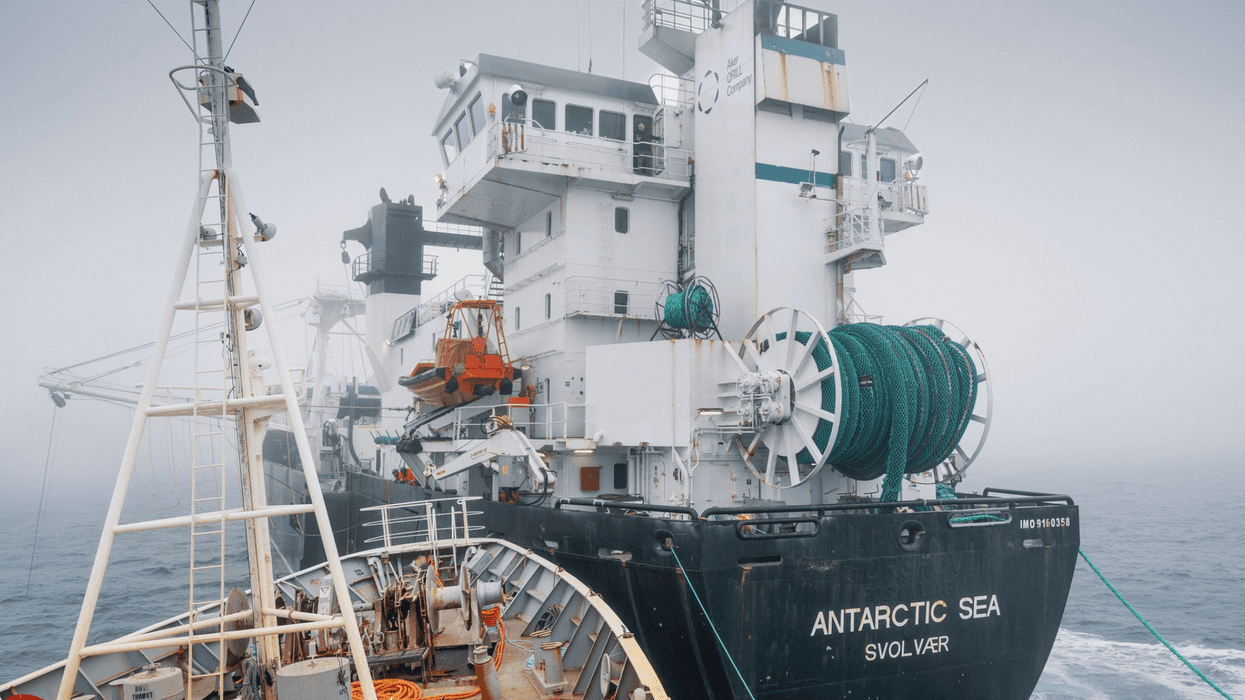
"The Bandero delivered a gentle but deliberate nudge to the stern of the Antarctic Sea, accompanied by a message: Stop despoiling the ecological integrity of the Southern Ocean," said activists aboard the ship.
An ocean conservation ship operated by anti-whaling campaigner Paul Watson collided Tuesday with a commercial krill trawler off Antarctica in what the fishing vessel's owner described as a "deliberate attack," but activists called "a David-and-Goliath battle against an industrial giant."
The Captain Paul Watson Foundation (CPWF) said on Facebook that, as part of its Operation Krill Wars campaign, the Bandero is currently targeting "two of the largest Norwegian trawlers operating in Antarctic waters, the Antarctic Endurance and the Antarctic Sea,"—both of which are owned by Aker QRILL Company of Lysaker, Norway.
"Earlier today, both trawlers released lines into the water to move the Bandero, a dangerous maneuver that could have disabled our ship," the foundation alleged. "In response, the Bandero delivered a gentle but deliberate nudge to the stern of the Antarctic Sea, accompanied by a message: Stop despoiling the ecological integrity of the Southern Ocean."
Aker QRILL is owned by New York City-based American Industrial Partners and Norwegian billionaire Kjell Inge Røkke, and calls itself "the world's leading krill company."
Company CEO Webjørn Barstad responded to the incident by claiming in an interview with Reuters that "our crew were put at risk in some of the most remote waters on Earth, and only luck avoided potential environmental damage."
"If the steel plates... had ruptured, it could have caused a spill," Barstad added. "It was probably just luck that it didn't cause more damage."
CPWF scoffed at the company's claims of danger, saying on Facebook that "I understand your need to play the victim while you scoop life from the sea."
As the Operation Krill Wars campaign explains:
Krill is the keystone species of the ecosystem in Antarctica. The majority of Antarctic species are reliant on krill as their primary food source or krilI is the the food source of their prey. From the great whales down to the penguins, seals, and seabirds, all rely on an abundance of krill to survive.
Currently the quota set by the Convention for the Conservation of Antarctic Marine Living Resources is 620,000 tons which is said to represent 1% of the total biomass of krill. However the fishing of krill is in concentrated areas, meaning that the likelihood of ecological collapse in those areas is far more likely.
After the near extinction of several large whale species in the 19th and 20th centuries, conservation efforts in the later half of the 20th century and 21st century have seen whale populations recovering. Though not back to their pre-commercial whaling numbers, this increase in whale populations obviously requires a greater amount of krill for food. Yet what we are seeing is a greater extraction of krill by human commercial enterprises.
“If the ocean dies, we die,” Paul Watson said in a statement. “Krill are the blood of the sea. Without them, the whales, penguins, fish, and birds will starve, and the ocean will fall silent.”
Watson is best known as the co-founder of Greenpeace and, later, the Sea Shepherd Conservation Society. He has dedicated his life to defending marine wildlife—especially mammals like whales—from harm. A controversial figure, Watson was arrested and jailed in Greenland in 2024 on an international warrant issued by Japan over his anti-whaling activism. However, he was freed after Denmark—which controls Greenland's foreign affairs—refused Japan's extradition request.
CPWF said that the issue of ocean exploitation must be "confronted legally and brought to global attention."
"We are here in the Southern Ocean to oppose a crime against nature and humanity—aggressively, but nonviolently," the group said Wednesday. "We welcome the opportunity to defend our actions in court and expose the true cost of krill fishing to the world."
The Bob Brown Foundation, an Australian green group, defended CPWF in a statement Wednesday calling "for the complete end to krill fishing in Antarctica."
"The krill fishing industry is fully aware of the damage they cause, such as killing whales in their nets, yet they do all they can to greenwash krill products," said Bob Brown Foundation Antarctic and marine campaigner Alistair Allan. "We applaud the brave actions of the Captain Paul Watson Foundation, who are ensuring that the plunder of krill does not go unchallenged.”
“Krill is violently sucked out of Antarctica’s fragile wilderness all for products we don’t need, such as fish farm feed, pet food, and supposed health products," Allan added. "It’s time for the world to boycott all products with krill in them."

"My arrest has focused international attention on Japan's continuing illegal whaling operations and their intent to go back to the Southern Ocean," said Watson. "So, in fact, these five months have been an extension of the campaign."
The prominent anti-whaling activist Paul Watson was released Tuesday from prison in Greenland after Danish officials rejected a request by Japan to extradite him.
Watson was arrested in Greenland, an autonomous territory of Denmark, in July due to a warrant issued by Japan in 2012, which alleged that Watson had interfered with a Japanese whaling vessel and caused injury to a crew member in 2010, according to The New York Times. He could have faced up to 15 years in jail if convicted.
"I am certainly relieved as this means I get to see my two little boys. That's really been my only concern this entire time. I understand the risks of what we do and sometimes you get arrested—although I am proud of the fact that I have never been convicted of a crime," Watson told the Guardian. Watson's two sons are aged three and eight.
To the outlet AFP, he said: "My arrest has focused international attention on Japan's continuing illegal whaling operations and their intent to go back to the Southern Ocean... So, in fact, these five months have been an extension of the campaign."
Watson, a Canadian American who co-founded Greenpeace and founded Sea Shepherd—a group that uses direct action to protect marine wildlife and oceans—was traveling in July with 25 volunteers on a mission to the North Pacific for the Captain Paul Watson Foundation (CPWF), which he started after leaving Sea Shepherd in 2022. When the vessel arrived in Nuuk, Greenland to refuel, Danish police arrested him.
The CPWF denounced the surprise arrest, which came as Watson planned to intercept a new Japanese factory whaling ship.
Watson was also featured in the Animal Planet television show Whale Wars that ran from 2008 until 2015, in which he led efforts to disrupt Japanese whaling on the high seas.
Japan has a long, complicated history with whaling. Whale meat was seen as an important protein for the country after World War II. Japan joined the International Whaling Commission, an international body that placed a moratorium on commercial whaling in the 1980s, in 1951. In 2019, Japan left the body and began catching whales commercially the same year, according to the International Whaling Commission.
In 2014, the International Court of Justice ruled against Japan in a case involving charges that Japan was using a scientific research program as a front for a commercial whaling venture in the Antarctic.
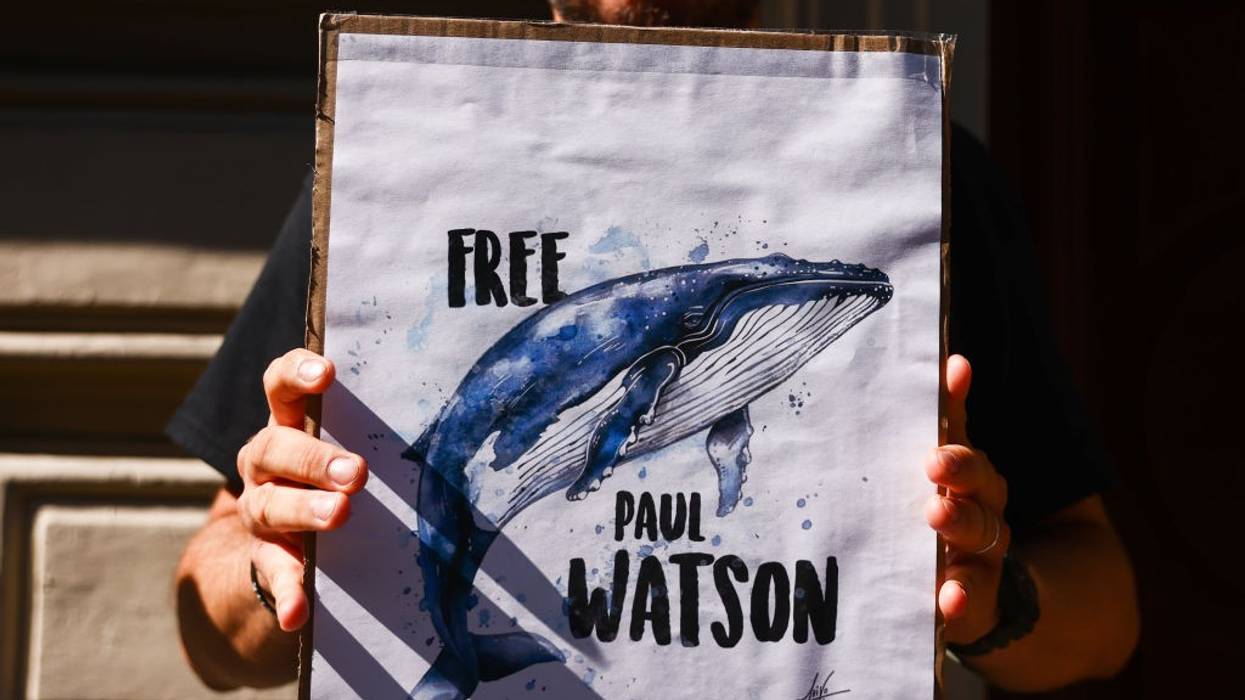
Whaling, it turns out, has very little to do with whaling and much more to with how powerful nations want to dominate the world's oceans.
In early August, the crew on Japan’s new whaling factory ship dismembered a male fin whale, the first commercial catch of the species in several decades. A few days earlier, Paul Watson was arrested in Nuuk, Greenland. He sits in a Danish prison, waiting a decision on his extradition to Japan. Given the Japanese courts’ record of 99.9% conviction rate for criminal cases, and issues with Japanese justice system, if extradited, he will probably spend the rest of his life imprisoned.
A few months ago, a paper led by Norwegian government scientists showed that there are around 50,000 fin whales in just one small part of the Southern Ocean. Also in Antarctic waters, the Japanese Institute of Cetacean Research has been running a research program which, as the the Institute states, is the “aimed at the sustainable use of whale resources in the Antarctic Ocean.” A new era of commercial whaling in the Antarctic looms.
Forty years ago, the International Whaling Commission introduced the whaling moratorium—a pause in slaughter, to allow whale populations to recover. At the time, the belief by most in the whale conservation community was that by the time that whale populations finally recovered, those still engaged in whaling would have given up, making the moratorium permanent. That’s not what’s happened. Three nations—Japan, Norway, and Iceland—still engage in commercial whaling.
There are many arguments against whaling: it’s cruel, it has to be subsidized, most people in whaling nations don’t care about it, it’s traditional in very few places in Japan, whales don’t eat all the fish, instead they’re ecosystem engineers that contribute to carbon sequestration. These points have been made for many years, and have never had the slightest impact on the Japanese whaling bureaucracy. They’re not only irrelevant, they’ve proven pointless.
Whaling, it turns out, isn’t about whales at all. Japan’s primary interest in commercial whaling is to maintain their geopolitical clout to exploit other marine wildlife (“living marine resources”) internationally. Tuna, for example. This point’s been made recently in a couple of forums. For the Japanese government, whaling’s a thin-edge-of-the-wedge problem. The moratorium was a big win for marine conservation that couldn’t be repeated with other international fisheries.
Given this framing, the actions of the Japanese whaling industry over the past forty years are rational. Whaling is primarily about asserting dominance in international negotiations over access to marine wildlife, so whether or not Japanese people eat much whale meat is irrelevant. What matters is access to other fisheries by Japan’s pelagic fishing fleets. Subsidizing whaling is a minuscule price to pay. The primary role of Japan’s new floating factory, the Kangei Maru, is as a flagship, a symbol of Japanese hegemony in international maritime negotiations. So its $48 million price tag is trivial. A Ford class US aircraft carrier, with a build cost of around $13 billion and an annual upkeep of $700 million, puts that in perspective. The Kangei Maru’s costs are a rounding error.
Despite Japan leaving the International Whaling Commission (IWC) in late 2018, the Japanese fisheries bureaucracy still controls the activities of the pro-whaling bloc. This September, the IWC meets again. One rumor currently swirling is that the Japanese will rejoin the IWC with a reservation to commercial whaling, one way to demolish the whaling moratorium. Another appeared a couple of weeks ago, when the prestigious scientific journal Nature published an opinion piece calling for the IWC to be dismantled. The article’s first author is a former chair of the IWC, who with his coauthors, argue that the IWC is now a “zombie” organization that has outlived its usefulness and should be dismantled.
Interesting timing.
Once, the threat of US sanctions in response to “diminishing the effectiveness” of the IWC regulated the manner in which the whaling bloc engaged there. That threat—obviously—no longer exists. How have the whalers brought the U.S. to heel on whaling? What’s their lever?
There was a belief in the NGO community that the threat of withholding IWC quotas on U.S. Inuit bowhead whaling was driving U.S. acquiescence. The pro-whaling bloc engaged in brinkmanship on this several times in the past. But the “Aboriginal Subsistence” whaling issues at the IWC have been resolved, removing this threat. Besides, ending the IWC would put bowhead whaling management back entirely with the U.S., internally. It can’t be that.
It’s here the military comes in. The U.S. has around 55,000 military personnel based in Japan. This is, for example, almost the size of the Australia’s active duty defense forces. Their weaponry includes some the most advanced in the U.S. arsenal. Most of those personnel are based in Okinawa, where there were over 6,000 criminal cases involving U.S. military personnel in the 50 years since the island was handed back to Japan in 1972. That’s a couple of crimes a week. And they include reported 134 rapes, or two to three reported rapes per year, including recent charges of the sexual assault of a child. Understandably, there is a vocal anti-US-base movement in Okinawa that regularly engages in mass protest.
These put Paul Watson’s “accomplice to assault” and “ship trespass” charges in context.
At the same time, the U.S. is reconstituting its forces in Japan, a buildup in response to the perceived threat to U.S. hegemony now posed by China. The Japanese government has leverage. Getting its way on whaling is Japan’s price for U.S. bases.
What could happen? Possibilities include Japan rejoining the IWC with a reservation that allows it to conduct commercial whaling wherever it wants. Perhaps the IWC will collapse. The recent Nature article shows that destroying the IWC is being considered. Returning the management of whaling to whaling nations? We know how that worked. And allowing Japan’s return to the IWC with a reservation will return the IWC’s role to that of a toothless body overseeing mass slaughter.
The huge U.S. military presence in Japan matters to the national security apparatus of the United States. The bureaucracy has worked with the Japanese government to see commercial whaling return. The return of commercial whaling is the U.S. military's quid pro quo for its regional dominance in the Pacific—not to mention its rapists in Okinawa.

The famed campaigner was en route to intercept a new 370-foot Japanese factory whaling ship in the North Pacific when Danish police in Greenland made the surprise arrest, citing an international warrant issued by Japan.
Danish police on Sunday arrested prominent anti-whaling activist Paul Watson when his vessel came to port in Greenland, citing a warrant issued by Japan, a whaling nation that seeks his extradition.
Watson, a 73-year-old Canadian American who co-founded Greenpeace and founded Sea Shepherd, was traveling with 25 volunteers aboard the 236-foot M/Y John Paul DeJoria on a mission to the North Pacific for the Captain Paul Watson Foundation (CPWF), which he started after leaving Sea Shepherd in 2022.
When the vessel arrived in Nuuk, Greenland to refuel, the Danish police immediately boarded and arrested Watson.
The CPWF denounced the surprise arrest, which came as Watson planned to intercept a new Japanese factory whaling ship.
"We implore the Danish government to release Captain Watson and not entertain this politically-motivated request," Locky MacLean, CPWF's ship operations director, said in a statement.
This morning, Captain Paul Watson was arrested in Nuuk, Greenland by Danish federal police, who boarded the M/Y John Paul DeJoria as soon as it docked.
The crew had stopped to refuel while en route to the Northwest Passage as part of #OpKangeiMaru, our campaign aimed at… pic.twitter.com/ANWoRFiR42
— Captain Paul Watson Foundation 🐋🏴☠️ (@CaptPaulWatson) July 21, 2024
Sunday's arrest came as the M/Y John Paul DeJoria was making its way to the North Pacific via the Northwest Passage after setting off from Dublin. The CPWF team aimed to intercept the Kangei Maru, a new 370-foot, $48 million Japanese factory whaling ship that's equipped with state-of-the-art drones that expedite the killing of whales.
CPWF argues that the launch of the new vessel signals Japan's ambitions to restart commercial whaling on the high seas—international waters—in the North Pacific and the Southern Ocean as early as 2025. Japan long whaled the high seas in defiance of international law, under the guise of scientific research, but in recent years it has shifted to whaling in its own territorial waters, which extend 200 nautical miles from its shores.
Watson, who is known for confrontational tactics, was the star of the Animal Planet television show Whale Wars that ran from 2008 until 2015, in which he lead efforts to disrupt Japanese whaling on the high seas.
Over a dozen police and SWAT team members took part in Watson's arrest in Greenland, an autonomous territory of Denmark. He was handcuffed and taken to local detention. A judge denied him bail on the grounds that he was a flight risk, citing a 2012 case from Germany in which he fled house arrest; he will be held in Nuuk until August 15 as authorities assess his possible extradition to Japan, where he could face up to 15 years in jail, The New York Times reported.
The nature of Japan's charges against Watson was not specified in media reports. The Interpol arrest warrant cited by Danish police may be an old one, according to CPWF. MacLean said the warrant had "disappeared" from public view a few months ago and may have been made confidential, possibly as a tactic to lull Watson into a false sense of security when traveling internationally.
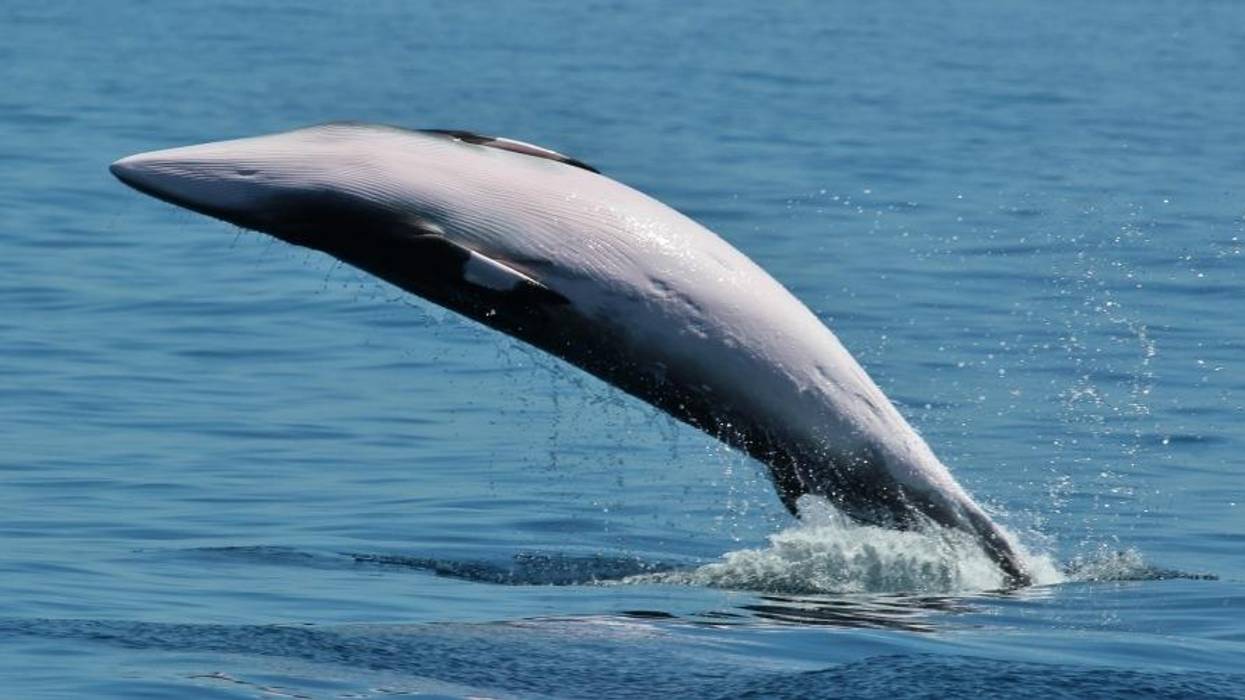
After denying for several days reports that they were planning to leave the International Whaling Commission (IWC), Japanese officials said Wednesday that the country would withdraw from the 89-member panel in order to defy its ban on commercial whaling.
The move will eliminate the country's long-held "pretense" of hunting whales only for research purposes, said the conservation group Sea Shepherd, as Japan officially declares itself a "pirate whaling nation."
"This means that Japan is now openly declaring their illegal whaling activities," Paul Watson, founder of the group, told the New York Times.
"It's clear that the government is trying to sneak in this announcement at the end of year away from the spotlight of international media, but the world sees this for what it is. The declaration today is out of step with the international community." --Sam Annesley, Greenpeace Japan
Since the IWC introduced its ban on commercial whaling in 1986, Japan has used regular so-called "research whaling" trips off the coasts of Antarctica as a loophole to continue its whale-hunting. The country has killed an average of 333 minke whales on its expeditions, including more than 120 pregnant female whales last year.
Instead of traveling to the Southern Ocean every year, Japanese whalers will now resume hunting in Japan's territories and exclusive economic zone beginning in July 2019, selling whale meat on the open market.
Greenpeace Japan noted that the country's timing of the announcement would not stop green groups from condemning its plan to openly slaughter whales for profit.
"It's clear that the government is trying to sneak in this announcement at the end of year away from the spotlight of international media, but the world sees this for what it is," said Sam Annesley, the group's executive director. "The declaration today is out of step with the international community, let alone the protection needed to safeguard the future of our oceans and these majestic creatures."
Following Iceland and Norway, which have also defied the IWC's ban on commercial whaling, Japan's withdrawal from the international body will mark the end of its participation in the global effort to save the world's whales from human activity.
"The Commission is the pre-eminent global body responsible for the conservation and management of whales and leads international efforts to tackle the growing range of threats to whales globally, including by-catch, ship strikes, entanglement, noise, and whaling," said Australia's environment minister, Melissa Price, in a statement. "Their decision to withdraw is regrettable and Australia urges Japan to return to the Convention and Commission as a matter of priority."
As Common Dreams reported last week, Japan first denied rumors of its plans to leave the IWC. Chief cabinet secretary Yoshihide Suga admitted in a statement that the government is putting its own " life and culture of using whales" ahead of conservation efforts.
"In its long history, Japan has used whales not only as a source of protein but also for a variety of other purposes," Suga said.
In fact, demand for whale meat in Japan has plummeted in recent years, with the industry depending on government subsidies to survive.
Commercial whaling represents the exact opposite direction Japan should be headed in regarding marine activity, Greenpeace Japan said.
"The world's oceans face multiple threats such as acidification and plastic pollution, in addition to overfishing," Annesley said. "As a country surrounded by oceans where people's lives have been heavily reliant on marine resources, it is essential for Japan to work towards healthy oceans. Japan's government has so far failed to resolve these problems.
"As the chair of the G20 in 2019, the Japanese government needs to recommit to the IWC and prioritize new measures for marine conservation," he concluded.
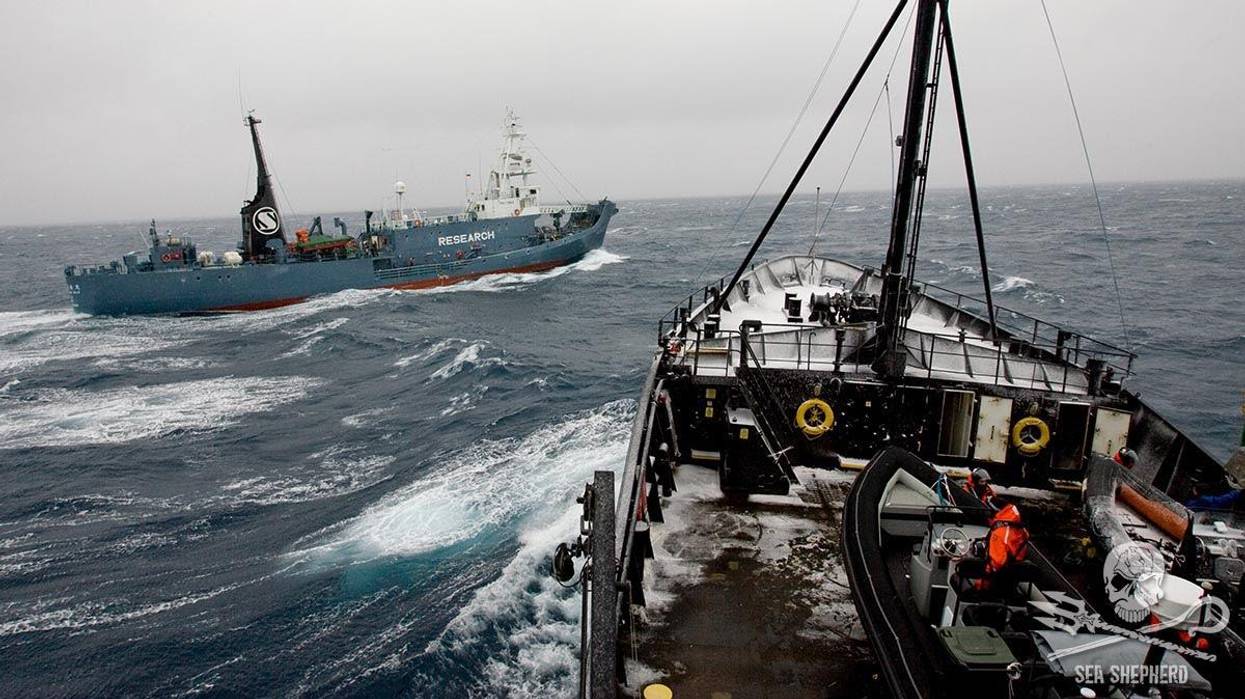
Sea Shepherd has accomplished something absolutely remarkable over the last 12 years.
In 2005 we set out to tackle the world's largest and most destructive whaling fleet. We were told it was impossible by some governments and a few NGO's.
Hardly anyone even knew about Japan's illegal slaughter in the Southern Ocean. It was out of sight and out of mind. They were targeting 1,035 whales a year including a yearly quota of 50 endangered Humpbacks and 50 endangered Fin whales.
We had few resources but we took our one battered and slow vessel, the Farley Mowat and we chased the whalers across the Southern Ocean, catching them only for a few hours at a time until they sped away from us.
In 2006 we were able to purchase the Steve Irwin and the tables began to turn as each year we became stronger and more effective. We brought in the Bob Barker, the Sam Simon, the Brigitte Bardot and the Ocean Warrior.
Sea Shepherd was relentless in reducing the yearly quotas significantly and in 2012/2013 the Japanese whalers went home with only about 10% of their intended kills. We did this at the same time the U.S. Federal Court put significant legal obstacles in our path.
The results speak for themselves. Over 6,000 whales saved. Not a single endangered Humpback killed and only 10 endangered Fin whales killed in a decade where 500 were slated to die. In addition, the Japanese whalers lost tens of millions of dollars.
We exposed Japan's illegal activities to the world with our TV show Whale Wars and our documentation.
We helped to push Australia into taking Japan to the International Court of Justice where their operations were ruled to be unlawful. Japan was ordered by the ICJ to cease and desist.
They did so for a year and then returned with a new program (also illegal) that reduced their bogus self-allocated kill quota to 333 each year. This means that since 2015 another 1400 whales were spared the lethal harpoons. This means that 702 whales will continue to be saved every year.
Unfortunately, in an effort to prevent Sea Shepherd interventions, they doubled their killing grounds which means that they have more time and more area to kill their lowered quota.
Despite that, Sea Shepherd sent the Steve Irwin and the Ocean Warrior in pursuit of the whalers in 2016/2017 and although it took them longer and cost them much more, the Japanese whalers managed to get their quota.
What we discovered is that Japan is now employing military surveillance to watch Sea Shepherd ship movements in real time by satellite and if they know where our ships are at any given moment, they can easily avoid us. During Operation Nemesis, the Sea Shepherd ships did get close and our helicopter even managed to get evidence of their illegal whaling operations but we could not physically close the gap. We cannot compete with their military grade technology.
This year Japan escalated their resistance with the passing of new anti-terrorism laws, some of which are specifically designed to condemn Sea Shepherd tactics. For the first time ever, they have stated they may send their military to defend their illegal whaling activities.
The Japanese whalers not only have all the resources and subsidies their government can provide, they also have the powerful political backing of a major economic super-power. Sea Shepherd however is limited in resources and we have hostile governments against us in Australia, New Zealand and the United States.
The decision we have had to face is: do we spend our limited resources on another campaign to the Southern Ocean that will have little chance of a successful intervention OR do we regroup with different strategies and tactics? If something is not working the only recourse is to look for a better plan, because when a plan no longer works, the only alternative is an improved course of action.
We need to formulate this new plan and we will.
We will not be sending ships to the Southern Ocean this year, but are not abandoning the Southern Ocean Whale Sanctuary. We need to cultivate the resources, the tactics and the ability to significantly shut down the illegal whaling operations of the Japanese whaling fleet. In the meantime, it's time for the Australian government to live up to their promises. Sea Shepherd has been down in the Southern Ocean doing what the Australian government has the responsibility to do but have refused to do, and that is upholding international and Australian conservation law. Instead of supporting Sea Shepherd the Australian government has been supporting the Japanese whalers by harassing Sea Shepherd and obstructing Sea Shepherd's ability to raise funds by denying our charitable status.
What Sea Shepherd has accomplished over the last 12 years demonstrates what people of passion can accomplish with few resources despite heavy multi-government opposition.
The Japanese whalers have been exposed, humiliated and most importantly have been denied thousands of lives that we have spared from their deadly harpoons. Thousands of whales are now swimming and reproducing, that would now be dead if not for our interventions,
And perhaps more significantly than anything else, there are now voices in the Japanese government opposing the continuation of whaling. Our efforts have been like acupuncture needles stuck into Japanese society, probing and provoking responses. We have exposed the incredible waste of money, the corruption and the shame this dirty business has brought to all the Japanese people. Our efforts have been so significant that one Japanese official said that Japan has two enemies - China and Sea Shepherd!
Sea Shepherd's continuing efforts to go after and shut down whalers will continue, and not only against Japanese whaling, but also against Norwegian, Danish, and Icelandic whaling. This is what we have been doing for forty years. We will never quit until the abomination of whaling is abolished forever by anyone, anywhere, for any reason.
Sea Shepherd is doing incredible things on the Ocean with limited resources, in addition to tackling illegal whaling activities. The endangered Vaquita would now be extinct if not for our intervention. We shut down the entire Southern Ocean pirate toothfish fleet. We have intercepted and stopped poachers off West Africa, in the marine reserves of the Galapagos, Sicily and Panama. We have removed hundreds of tons of ghost nets and plastics from the sea, and most importantly we have shown the world what a few passionate and courageous people can do.
Our objective is to continue to serve and protect all life in the Ocean from illegal and greedy exploitation by destructive humans.
Sea Shepherd is guided by this one reality: If the Ocean dies, we die!
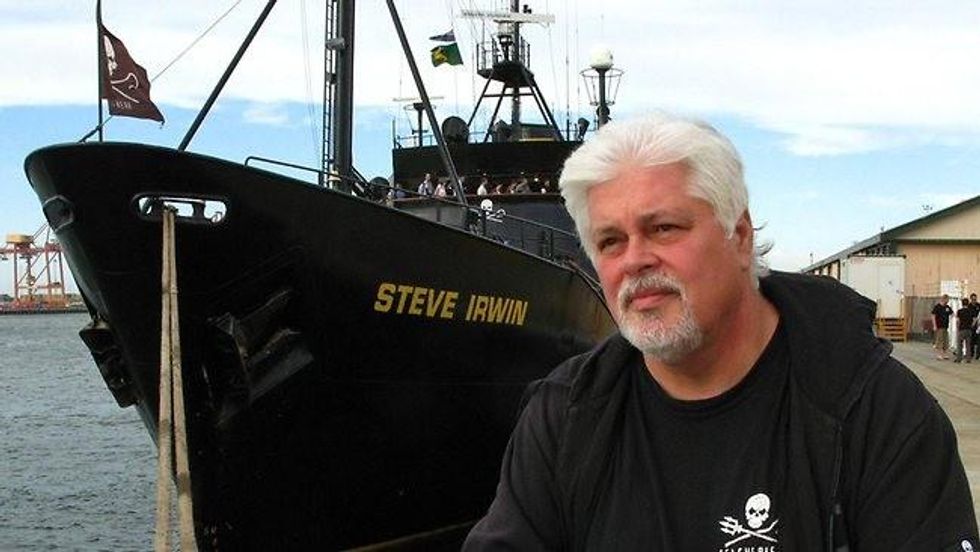
The 62-year-old Canadian, known as "The Captain," arrived in Los Angeles without being arrested, organizers with Sea Shepherd, a direct-action wildlife conservation organization that Watson founded in 1977, announced Thursday.
"I have returned to the United States," he declared Thursday on his Facebook page.
"Heading to Seattle to defend Sea Shepherd and myself from the SLAPP civil suit launched by the Japanese whalers," he added. "We carry on with our efforts to save the oceans, undeterred and undaunted."
He stated that he believes the Interpol "red notice" has been dropped.
Watson was arrested last year by Frankfurt authorities, who picked him up on a warrant from Costa Rica, where he staged a marine protest against shark finning over ten years ago. After being released on bail, he did not appear at his court-ordered meetings with police and instead skipped town, taking to the sea where he has been until his recent disembarkation in the United States.
Last winter, while on his marine journey, he participated in a blockade to protest Japanese whaling ships in the Antarctic.
Watson has slammed the Japanese government for politically targeting him due to his efforts to protect the oceans.
_____________________
A US federal court of appeals on Monday has branded the anti-whaling activist group Sea Shepherd as "pirates," ordering them to cease interfering with Japanese whaling operations in the Southern Ocean and clearing the way for whalers to pursue legal actions against the animal rights group.
"You don't need a peg leg or an eye patch" to be a pirate, declared Chief Judge Alex Kozinski of the Ninth Circuit US Court of Appeals, as he overturned a lower court's ruling against Japanese whalers, adding, "No matter how high-minded you believe your purpose to be."
Sea Shepherd founder Paul Watson responded to the ruling, saying it was "entirely devoid of real evidence."
"We are called many names," he said, "but the real question is whether Sea Shepherd is breaking the law." Watson emphasized that the Sea Shepherd crew has not "nor do they intend to injure Japanese whalers."
"[The judge] didn't mention anything in there about the fact that the Japanese have destroyed one of our ships (the Ady Gil in 2010), they've thrown concussion grenades at us, hit us with water cannons and laser beams," he told AAP.
Watson added that the group has "fully complied with the injunction" and that the US Court has no jurisdiction over Australians and other non-U.S. citizens currently manning the fleet on internationally flagged vessels operating in Australian waters.
The Shepherds are trying to prevent the slaughter of whales off the coast of Antarctica, an area which the International Whaling Commission considers a sanctuary for the large mammals. Australia is currently taking legal action against the country for its whaling activities.
According to AFP, the ruling allows the Japanese whalers to pursue legal action in the US against the Sea Shepherd's activism.
Upholding a false designation that excuses the illegal hunting practice, Kozinski declared the plaintiffs "Japanese researchers who hunt whales in the Southern Ocean."
Previously, Japanese whalers, under the guise of the Institute of Cetacean Research, filed legal action in the US to prevent the Sea Shepherds from interfering with their hunts. District Judge Richard Jones sided with the activists, but the 9th Circuit's three-judge panel reversed that decision on Monday.
The ruling comes weeks into a high-sea standoff between the Japanse whaling vessel, the Nisshin Maru, and the Sea Shepherd's fleet--the Bob Barker and the Steve Irwin--during which, the Shepherds report, the whalers have rammed both their vessels and have been using water cannons and stun grenades against them, even going to so far as to threaten them with a military icebreaker.
The fight to protect endangered whales in the Antarctic reached a boiling point over the weekend when Japanese whalers bombarded high-seas activists from the group Sea Shepherd as they tried to thwart the fleet from hauling in a dead whale.
"We blocked it for nine attempts, but then their harpoon ship attempted to try and come across and hit us, so we ducked away, and that's when they were able to make the transfer of that whale," Sea Shepherd Australia's Jeff Hansen said.
The whalers are illegally operating in Australian waters, so the group urged Australian authorities to intervene—but to no avail.
"The Japanese whalers are slaughtering protected, threatened, and endangered species of whales within this sanctuary in violation of a global moratorium on commercial whaling," founder and president of Sea Shepherd Paul Watson writes at the Guardian today. "They are also in contempt of an Australian federal court ruling from 2008 that specifically forbade them from killing whales in the waters of the Australian Antarctic territory."
"Is this Australian territory or not? If it is, then come down and exert some kind of authority," Hansen said.
Since the confrontation, Sea Shepherd boats have successfully blockaded further catches and resumed their showdown with the Japanese whaling fleet. The group also maintains that the whaling fleet has spilled oil into the pristine waters.
Watson adds:
Three days ago the Japanese harpoon vessel Yushin Maru #2 killed a minke whale within the Australian Antarctic Territory, only 50 miles from the Australian Davis Research base on the Antarctic coast.
This is the first time since 2009 that they have killed a whale in front of us and they did so deliberately to test our resolve. [...]
The Sea Shepherd crews are committed to blocking the illegal whaling operations, and it appears the whalers are under orders to kill as many whales as possible. This is gearing up for a major showdown, and the challenge for the Sea Shepherd volunteers is to save as many whales as possible while ensuring that no one is injured by an increasingly hostile and aggressive crew of whalers, made all the more dangerous by the extreme remoteness and intense weather and sea conditions.
The group, who have now campaigned against Japanese whalers in the Antarctic for nine years, originally set out this year with Operation Zero Tolerance to "send the whalers home without them killing a single whale." They will now forge on to prevent as many whale deaths as possible--hoping to drive the industry into financial collapse.
I don't think there is a more isolated, remote, or forbidding place on this planet than where we find ourselves now.
Draw a line due south from Sri Lanka for 4,404 nautical miles, bringing you to Prdyz Bay, deep in the Cooperation Sea, close to the massive Amory ice shelf.
Perth, Western Australia, is 2,632 nautical miles northeast, and Cape Town, South Africa, is 2,632 nautical miles northwest.
In contrast, we are only 1,380 miles from the South Pole.
It is summertime in Antarctica and outside on the deck, the wind is blowing at 30 knots and the temperature has dropped to -10C.
On our port beam at a quarter of a kilometer, and just barely discernible through the misty swirling snow is the Sea Shepherd ship Bob Barker. I can see her taking white water over her bow and hoar frost clinging like bleached algae on her blue, grey, and black-mottled hull.
Ahead of us, another quarter of a kilometer, a massive black hull plunges and bucks in a frothing sea. And as if the sea spray was not enough, the ship fires six high-powered streams of sea water in different directions. Briny icicles hang from her rails.
I can see the stern slipway, that awful maw that literally swallows whales whole, wasting nothing, they say, except for the whales themselves.
The beautiful creatures get dragged onto the flensing deck to be mutilated and cut into pieces, to be frozen and boxed below deck as streams of steaming blood pour into the sea from the scuppers.
The Sea Shepherd Crew calls that floating mechanized abattoir the cetacean Death Star. It is the Japanese whale-processing factory ship the Nisshin Maru, and for nine long years we have hunted her down in these waters with the single objective of interfering with her primary activity - the slaughtering of whales.
I suppose in a way, I am the mirror image of the fictional Captain Ahab. Instead of a white whale, it is a whale-killing death ship that I have been obsessed with stopping.
Nine voyages I have spent in these hellish cold waters, totaling near 30 months. This voyage is now in its 105th day, a voyage that began in Melbourne, went north to American Samoa, then south again to New Zealand, and further south still, to the Ross Sea; and for the last 18 days a pursuit of some 2,500 miles westward to this forsaken place.
Forsaken yet incredibly beautiful. The seas are bejeweled with thousands of icebergs, ranging in size from that of a small building to massive tabletops larger than major cities. And it is not all white on blue, the icebergs boast a spectrum of blues, indigos, and greens; and the ever-present sun splatters the horizon twice a day with the spectrum of reds, orange and yellows.
In the sea and flying through the air are the great living treasures of these waters - the birds, whales, seals, and penguins; and beneath the surface the great schools of fishes and the vast plumes of plankton and krill.
What brings us down here year after year is the simple fact that the international community of nations has designated these waters as the Southern Ocean whale sanctuary, and we are here to defend the integrity and the sanctity of this legal sanctuary for whales.
The Japanese whalers are slaughtering protected, threatened, and endangered species of whales within this sanctuary in violation of a global moratorium on commercial whaling. They are also in contempt of an Australian federal court ruling from 2008 that specifically forbade them from killing whales in the waters of the Australian Antarctic territory.
Three days ago the Japanese harpoon vessel Yushin Maru #2 killed a minke whale within the Australian Antarctic Territory, only 50 miles from the Australian Davis Research base on the Antarctic coast.
This is the first time since 2009 that they have killed a whale in front of us and they did so deliberately to test our resolve.
In December 2012, the US 9th District Court granted a temporary injunction to the Japanese whalers that ordered the Sea Shepherd Conservation Society USA not to approach within 500 yards of the whaling vessels.
Sea Shepherd USA immediately complied with the injunction. Since its founding in August 1977, Sea Shepherd USA has never broken an American law. In compliance, Sea Shepherd USA stopped funding Operation Zero Tolerance and withdrew all support, leaving the campaign in the hands of Sea Shepherd Australia, led by Bob Brown, the former Australian Federal Senator and Leader of the Greens.
Bob Brown had previously led a Sea Shepherd campaign with Steve Irwin to protect whales in Western Australia. Since 2005, the Southern Ocean campaigns have been staged outside Australia.
The Japanese whalers, however, mistakenly thought that the US courts could exercise jurisdiction over Dutch- and Australian-flagged and owned vessels under the command of Australian, French, Indian and Swedish captains operating out of Australian and New Zealand ports into international and Australian territorial waters.
Thus we had the strange situation of Japanese whalers operating in contempt of an Australian federal court ruling, killing a whale inside the Australian Antarctic Territorial waters, and warning a Swedish captain of a Dutch-flagged ship that they would be in contempt of a US court should they interfere with their unlawful activities in an internationally established sanctuary for whales.
Captain Peter Hammarstedt was not about to watch the poachers transfer a dead whale to the factory ship without interference. He blocked the transfer. The factory ship and the harpoon vessels deployed prop fouling lines to stop him, but the Bob Barker crew took him to small boats and cut the lines.
It took 12 attempts and most of the day before they could transfer the poached whale.
They finally managed to do so by making an extremely dangerous lunge at the Bob Barker with the Nisshin Maru. Five times the size of the Bob Barker, the ramming would have breached the hull. Thus, Captain Hammarstedt had no choice but to dodge the collision. The move allowed the harpoon vessel to dash in front of the Bob Barker and behind the Nisshin Maru. A cable was quickly attached to the whale's corpse, and it was hoisted up the slipway onto the flensing deck.
The next morning the Steve Irwin arrived, and with two ships on the stern of the Nisshin Maru, the whaling operations were shut down.
Three days later, whaling operations had not resumed. The harpoon vessels had all disappeared, leaving the Steve Irwin and the Bob Barker chasing the Nisshin Maru ever further west.
Since 2005, Sea Shepherd has returned to these waters, and the campaign has become stronger and more efficient each year. Last season, the whalers took only 26% of their kill quota, compared to 17% the previous season.
This season, with four ships, the campaign is stronger but facing more challenges. The injunction imposed on Sea Shepherd USA weakened the campaign's finances, but it did something even more threatening to the crews of these four ships. It has emboldened the Japanese whalers.
The Japanese whalers have never before been more recklessly aggressive. The Sea Shepherd ships have been forced to yield to uphold our primary operational concern and that is not to cause any injuries to either side.
The whalers destroyed the Ady Gil in 2010 and did not have to answer for it. They were not even questioned. They have interpreted the US court injunction as de facto permission to be more aggressive. They have the total support of the Japanese government, and although Australia and New Zealand are taking Japan to the international court in the Hague this year, both countries have not done anything actually to stop the slaughter of whales.
Thus it has been left to a small band of international volunteers to protect and defend the whale sanctuary, despite being marginalised and given labels ranging from extremists to eco-terrorists.
Yet after nine year of confrontations Sea Shepherd have not caused a single injury or inflicted any damage on the Japanese ships; whereas they have injured Sea Shepherd crew, damaged Sea Shepherd ships, and destroyed one vessel.
These whalers are poachers and no different than elephant and rhino poachers in Africa, except for the fact that the African poachers are generally black and poor and they are shot for their crimes.
The whale poachers on the other hand are encouraged by their own government to continue their crimes.
This is a strange battle down here in the Southern Seas. Within two days we expect that the three harpoon vessels, armed government vessel Shonan Maru #2 and the Korean tanker Sun Laurel, will catch up with the Nisshin Maru. That will pit a whaling fleet of six against three Sea Shepherd ships.
The Sea Shepherd crews are committed to blocking the illegal whaling operations, and it appears the whalers are under orders to kill as many whales as possible. This is gearing up for a major showdown, and the challenge for the Sea Shepherd volunteers is to save as many whales as possible while ensuring that no one is injured by an increasingly hostile and aggressive crew of whalers, made all the more dangerous by the extreme remoteness and intense weather and sea conditions.
The Japanese Fishery Agency issued themselves a permit to kill 935 protected minke whales, 50 endangered fin whales, and 50 endangered humpback whales.
The Sea Shepherd Crew is confident that the whalers will take only a small fraction of this list of condemned people, and they will once again lose millions of dollars in profits.
And if they return next year, so will the Sea Shepherd Crew, and the year after that if need be. What is the point of declaring and establishing a sanctuary for whales if whales can be allowed to be killed there?