SUBSCRIBE TO OUR FREE NEWSLETTER
Daily news & progressive opinion—funded by the people, not the corporations—delivered straight to your inbox.
5
#000000
#FFFFFF
To donate by check, phone, or other method, see our More Ways to Give page.
Daily news & progressive opinion—funded by the people, not the corporations—delivered straight to your inbox.
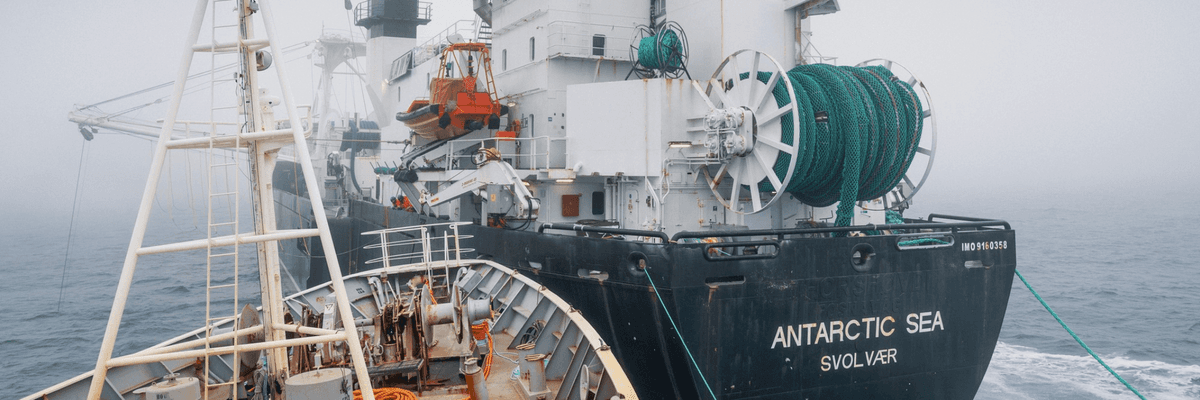
The Bandero, a Captain Paul Watson Foundation activist vessel, collides with a krill supertrawler off the coast of Antarctica on March 31, 2026.
"The Bandero delivered a gentle but deliberate nudge to the stern of the Antarctic Sea, accompanied by a message: Stop despoiling the ecological integrity of the Southern Ocean," said activists aboard the ship.
An ocean conservation ship operated by anti-whaling campaigner Paul Watson collided Tuesday with a commercial krill trawler off Antarctica in what the fishing vessel's owner described as a "deliberate attack," but activists called "a David-and-Goliath battle against an industrial giant."
The Captain Paul Watson Foundation (CPWF) said on Facebook that, as part of its Operation Krill Wars campaign, the Bandero is currently targeting "two of the largest Norwegian trawlers operating in Antarctic waters, the Antarctic Endurance and the Antarctic Sea,"—both of which are owned by Aker QRILL Company of Lysaker, Norway.
"Earlier today, both trawlers released lines into the water to move the Bandero, a dangerous maneuver that could have disabled our ship," the foundation alleged. "In response, the Bandero delivered a gentle but deliberate nudge to the stern of the Antarctic Sea, accompanied by a message: Stop despoiling the ecological integrity of the Southern Ocean."
Aker QRILL is owned by New York City-based American Industrial Partners and Norwegian billionaire Kjell Inge Røkke, and calls itself "the world's leading krill company."
Company CEO Webjørn Barstad responded to the incident by claiming in an interview with Reuters that "our crew were put at risk in some of the most remote waters on Earth, and only luck avoided potential environmental damage."
"If the steel plates... had ruptured, it could have caused a spill," Barstad added. "It was probably just luck that it didn't cause more damage."
CPWF scoffed at the company's claims of danger, saying on Facebook that "I understand your need to play the victim while you scoop life from the sea."
As the Operation Krill Wars campaign explains:
Krill is the keystone species of the ecosystem in Antarctica. The majority of Antarctic species are reliant on krill as their primary food source or krilI is the the food source of their prey. From the great whales down to the penguins, seals, and seabirds, all rely on an abundance of krill to survive.
Currently the quota set by the Convention for the Conservation of Antarctic Marine Living Resources is 620,000 tons which is said to represent 1% of the total biomass of krill. However the fishing of krill is in concentrated areas, meaning that the likelihood of ecological collapse in those areas is far more likely.
After the near extinction of several large whale species in the 19th and 20th centuries, conservation efforts in the later half of the 20th century and 21st century have seen whale populations recovering. Though not back to their pre-commercial whaling numbers, this increase in whale populations obviously requires a greater amount of krill for food. Yet what we are seeing is a greater extraction of krill by human commercial enterprises.
“If the ocean dies, we die,” Paul Watson said in a statement. “Krill are the blood of the sea. Without them, the whales, penguins, fish, and birds will starve, and the ocean will fall silent.”
Watson is best known as the co-founder of Greenpeace and, later, the Sea Shepherd Conservation Society. He has dedicated his life to defending marine wildlife—especially mammals like whales—from harm. A controversial figure, Watson was arrested and jailed in Greenland in 2024 on an international warrant issued by Japan over his anti-whaling activism. However, he was freed after Denmark—which controls Greenland's foreign affairs—refused Japan's extradition request.
CPWF said that the issue of ocean exploitation must be "confronted legally and brought to global attention."
"We are here in the Southern Ocean to oppose a crime against nature and humanity—aggressively, but nonviolently," the group said Wednesday. "We welcome the opportunity to defend our actions in court and expose the true cost of krill fishing to the world."
The Bob Brown Foundation, an Australian green group, defended CPWF in a statement Wednesday calling "for the complete end to krill fishing in Antarctica."
"The krill fishing industry is fully aware of the damage they cause, such as killing whales in their nets, yet they do all they can to greenwash krill products," said Bob Brown Foundation Antarctic and marine campaigner Alistair Allan. "We applaud the brave actions of the Captain Paul Watson Foundation, who are ensuring that the plunder of krill does not go unchallenged.”
“Krill is violently sucked out of Antarctica’s fragile wilderness all for products we don’t need, such as fish farm feed, pet food, and supposed health products," Allan added. "It’s time for the world to boycott all products with krill in them."
Dear Common Dreams reader, It’s been nearly 30 years since I co-founded Common Dreams with my late wife, Lina Newhouser. We had the radical notion that journalism should serve the public good, not corporate profits. It was clear to us from the outset what it would take to build such a project. No paid advertisements. No corporate sponsors. No millionaire publisher telling us what to think or do. Many people said we wouldn't last a year, but we proved those doubters wrong. Together with a tremendous team of journalists and dedicated staff, we built an independent media outlet free from the constraints of profits and corporate control. Our mission has always been simple: To inform. To inspire. To ignite change for the common good. Building Common Dreams was not easy. Our survival was never guaranteed. When you take on the most powerful forces—Wall Street greed, fossil fuel industry destruction, Big Tech lobbyists, and uber-rich oligarchs who have spent billions upon billions rigging the economy and democracy in their favor—the only bulwark you have is supporters who believe in your work. But here’s the urgent message from me today. It's never been this bad out there. And it's never been this hard to keep us going. At the very moment Common Dreams is most needed, the threats we face are intensifying. We need your support now more than ever. We don't accept corporate advertising and never will. We don't have a paywall because we don't think people should be blocked from critical news based on their ability to pay. Everything we do is funded by the donations of readers like you. When everyone does the little they can afford, we are strong. But if that support retreats or dries up, so do we. Will you donate now to make sure Common Dreams not only survives but thrives? —Craig Brown, Co-founder |
An ocean conservation ship operated by anti-whaling campaigner Paul Watson collided Tuesday with a commercial krill trawler off Antarctica in what the fishing vessel's owner described as a "deliberate attack," but activists called "a David-and-Goliath battle against an industrial giant."
The Captain Paul Watson Foundation (CPWF) said on Facebook that, as part of its Operation Krill Wars campaign, the Bandero is currently targeting "two of the largest Norwegian trawlers operating in Antarctic waters, the Antarctic Endurance and the Antarctic Sea,"—both of which are owned by Aker QRILL Company of Lysaker, Norway.
"Earlier today, both trawlers released lines into the water to move the Bandero, a dangerous maneuver that could have disabled our ship," the foundation alleged. "In response, the Bandero delivered a gentle but deliberate nudge to the stern of the Antarctic Sea, accompanied by a message: Stop despoiling the ecological integrity of the Southern Ocean."
Aker QRILL is owned by New York City-based American Industrial Partners and Norwegian billionaire Kjell Inge Røkke, and calls itself "the world's leading krill company."
Company CEO Webjørn Barstad responded to the incident by claiming in an interview with Reuters that "our crew were put at risk in some of the most remote waters on Earth, and only luck avoided potential environmental damage."
"If the steel plates... had ruptured, it could have caused a spill," Barstad added. "It was probably just luck that it didn't cause more damage."
CPWF scoffed at the company's claims of danger, saying on Facebook that "I understand your need to play the victim while you scoop life from the sea."
As the Operation Krill Wars campaign explains:
Krill is the keystone species of the ecosystem in Antarctica. The majority of Antarctic species are reliant on krill as their primary food source or krilI is the the food source of their prey. From the great whales down to the penguins, seals, and seabirds, all rely on an abundance of krill to survive.
Currently the quota set by the Convention for the Conservation of Antarctic Marine Living Resources is 620,000 tons which is said to represent 1% of the total biomass of krill. However the fishing of krill is in concentrated areas, meaning that the likelihood of ecological collapse in those areas is far more likely.
After the near extinction of several large whale species in the 19th and 20th centuries, conservation efforts in the later half of the 20th century and 21st century have seen whale populations recovering. Though not back to their pre-commercial whaling numbers, this increase in whale populations obviously requires a greater amount of krill for food. Yet what we are seeing is a greater extraction of krill by human commercial enterprises.
“If the ocean dies, we die,” Paul Watson said in a statement. “Krill are the blood of the sea. Without them, the whales, penguins, fish, and birds will starve, and the ocean will fall silent.”
Watson is best known as the co-founder of Greenpeace and, later, the Sea Shepherd Conservation Society. He has dedicated his life to defending marine wildlife—especially mammals like whales—from harm. A controversial figure, Watson was arrested and jailed in Greenland in 2024 on an international warrant issued by Japan over his anti-whaling activism. However, he was freed after Denmark—which controls Greenland's foreign affairs—refused Japan's extradition request.
CPWF said that the issue of ocean exploitation must be "confronted legally and brought to global attention."
"We are here in the Southern Ocean to oppose a crime against nature and humanity—aggressively, but nonviolently," the group said Wednesday. "We welcome the opportunity to defend our actions in court and expose the true cost of krill fishing to the world."
The Bob Brown Foundation, an Australian green group, defended CPWF in a statement Wednesday calling "for the complete end to krill fishing in Antarctica."
"The krill fishing industry is fully aware of the damage they cause, such as killing whales in their nets, yet they do all they can to greenwash krill products," said Bob Brown Foundation Antarctic and marine campaigner Alistair Allan. "We applaud the brave actions of the Captain Paul Watson Foundation, who are ensuring that the plunder of krill does not go unchallenged.”
“Krill is violently sucked out of Antarctica’s fragile wilderness all for products we don’t need, such as fish farm feed, pet food, and supposed health products," Allan added. "It’s time for the world to boycott all products with krill in them."
An ocean conservation ship operated by anti-whaling campaigner Paul Watson collided Tuesday with a commercial krill trawler off Antarctica in what the fishing vessel's owner described as a "deliberate attack," but activists called "a David-and-Goliath battle against an industrial giant."
The Captain Paul Watson Foundation (CPWF) said on Facebook that, as part of its Operation Krill Wars campaign, the Bandero is currently targeting "two of the largest Norwegian trawlers operating in Antarctic waters, the Antarctic Endurance and the Antarctic Sea,"—both of which are owned by Aker QRILL Company of Lysaker, Norway.
"Earlier today, both trawlers released lines into the water to move the Bandero, a dangerous maneuver that could have disabled our ship," the foundation alleged. "In response, the Bandero delivered a gentle but deliberate nudge to the stern of the Antarctic Sea, accompanied by a message: Stop despoiling the ecological integrity of the Southern Ocean."
Aker QRILL is owned by New York City-based American Industrial Partners and Norwegian billionaire Kjell Inge Røkke, and calls itself "the world's leading krill company."
Company CEO Webjørn Barstad responded to the incident by claiming in an interview with Reuters that "our crew were put at risk in some of the most remote waters on Earth, and only luck avoided potential environmental damage."
"If the steel plates... had ruptured, it could have caused a spill," Barstad added. "It was probably just luck that it didn't cause more damage."
CPWF scoffed at the company's claims of danger, saying on Facebook that "I understand your need to play the victim while you scoop life from the sea."
As the Operation Krill Wars campaign explains:
Krill is the keystone species of the ecosystem in Antarctica. The majority of Antarctic species are reliant on krill as their primary food source or krilI is the the food source of their prey. From the great whales down to the penguins, seals, and seabirds, all rely on an abundance of krill to survive.
Currently the quota set by the Convention for the Conservation of Antarctic Marine Living Resources is 620,000 tons which is said to represent 1% of the total biomass of krill. However the fishing of krill is in concentrated areas, meaning that the likelihood of ecological collapse in those areas is far more likely.
After the near extinction of several large whale species in the 19th and 20th centuries, conservation efforts in the later half of the 20th century and 21st century have seen whale populations recovering. Though not back to their pre-commercial whaling numbers, this increase in whale populations obviously requires a greater amount of krill for food. Yet what we are seeing is a greater extraction of krill by human commercial enterprises.
“If the ocean dies, we die,” Paul Watson said in a statement. “Krill are the blood of the sea. Without them, the whales, penguins, fish, and birds will starve, and the ocean will fall silent.”
Watson is best known as the co-founder of Greenpeace and, later, the Sea Shepherd Conservation Society. He has dedicated his life to defending marine wildlife—especially mammals like whales—from harm. A controversial figure, Watson was arrested and jailed in Greenland in 2024 on an international warrant issued by Japan over his anti-whaling activism. However, he was freed after Denmark—which controls Greenland's foreign affairs—refused Japan's extradition request.
CPWF said that the issue of ocean exploitation must be "confronted legally and brought to global attention."
"We are here in the Southern Ocean to oppose a crime against nature and humanity—aggressively, but nonviolently," the group said Wednesday. "We welcome the opportunity to defend our actions in court and expose the true cost of krill fishing to the world."
The Bob Brown Foundation, an Australian green group, defended CPWF in a statement Wednesday calling "for the complete end to krill fishing in Antarctica."
"The krill fishing industry is fully aware of the damage they cause, such as killing whales in their nets, yet they do all they can to greenwash krill products," said Bob Brown Foundation Antarctic and marine campaigner Alistair Allan. "We applaud the brave actions of the Captain Paul Watson Foundation, who are ensuring that the plunder of krill does not go unchallenged.”
“Krill is violently sucked out of Antarctica’s fragile wilderness all for products we don’t need, such as fish farm feed, pet food, and supposed health products," Allan added. "It’s time for the world to boycott all products with krill in them."