

SUBSCRIBE TO OUR FREE NEWSLETTER
Daily news & progressive opinion—funded by the people, not the corporations—delivered straight to your inbox.
5
#000000
#FFFFFF
To donate by check, phone, or other method, see our More Ways to Give page.
Daily news & progressive opinion—funded by the people, not the corporations—delivered straight to your inbox.
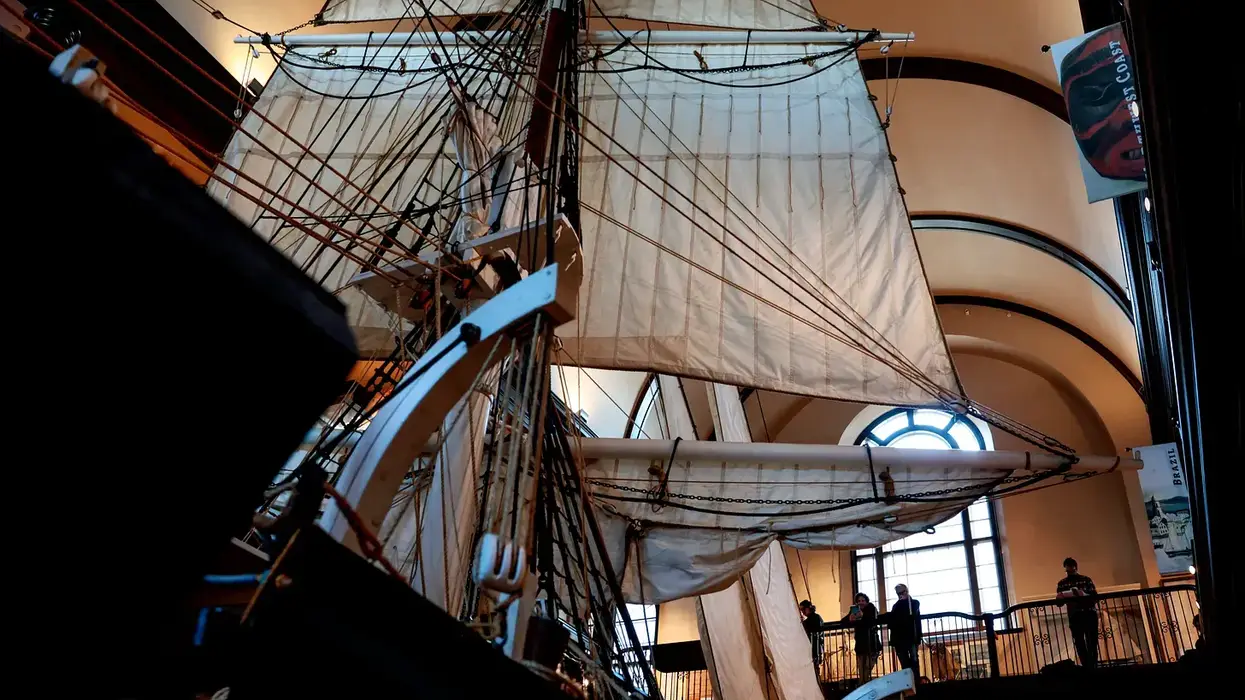
The actual whalers gave ground just in time to save many of the species they’d been hunting from extinction. Would that their spiritual heirs in the fossil fuel industry recognized the even greater tragedy stalking the planet at present.
I was invited to give a talk at the New Bedford Lyceum last weekend, a long-running forum that has hosted among others Frederick Douglass, Abraham Lincoln, and Herman Melville. I have no idea how well I did (I’m no Douglass and no Lincoln and no Melville), but I do know that the main beneficiary of the trip was me. That’s because I arrived at the venue—the New Bedford Whaling Museum—a few hours early, and got to study the truly remarkable exhibits.
The museum is both crammed full (not one scrimshaw cane, not 10, but closer to 100) and incredibly shipshape, with everything neatly in its place, including a half-size model of a whaling ship (see picture above). Since I’ve been writing recently on the rise of renewable energy, I was fascinated to reflect on the story of how whale oil grew into a huge 19th century energy source—it included the same kind of iterative technological developments (an African-American blacksmith in New Bedford came up with a new kind of swivel harpoon much harder for the whale to shake) and real breakthroughs (imagine even imagining that you could figure out how to build a big firepit for melting blubber into oil in the bottom of a wooden ship).
The most interesting part of the story, however, may have been what happened as the whale oil era expired. In the late 1850s Edwin Drake, drilling in Titusville, Pennsylvania, struck oil—it started a rush into what was originally called "rock oil" to distinguish it from the more familiar stuff coming from harpooned cetaceans. It was clear quite quickly that simply in terms of volume and price, the new stuff was going to win out. (Apparently the Pennsylvanians sent some early examples of their product up to New Bedford for analysis).
So what did the whaling industry do? Did it pool all its (considerable) resources and try to elect a president who would ban oil drilling on land? Did it get one of its own appointed secretary of the interior so he could shut down all hydrocarbon exploration on public lands? Did they persuade the White House to use coercive tariffs to insure a foreign market for their product? Did they print up a lot of government posters showing strong and manly whalemen in an effort to sway public opinion?
Had he been around in the 19th century, Wright would doubtless have been the spokesman for Big Whale.
Not so much. They appear, for better for worse, to have been capitalists. Which is to say, they took the capital they’d made sending out whaling vessels and used it instead to finance new ventures which took advantage of the novel and plentiful fuel sources now coming online. Whaling obviously continued, but not so much in New Bedford. Indeed, one whole wing of the museum documents the enormous textile mills and glass factories that sustained New Bedford’s prosperity well into the 20th century. (Once you’re done with the Whaling Museum, you can also visit the New Bedford Glass Museum).
This is all especially poignant right now, because New Bedford—fallen on harder times in recent decades—seemed poised to become a crucial port for the development of the new offshore wind industry, bringing the kind of economic stability that communities along the European coast have enjoyed in recent years. But… As the local paper (the wonderfully named New Bedford Light) observed recently:
By sight, the offshore wind industry seems to be moving forward on the East Coast. Gargantuan, bright white turbine towers stand tall against New Bedford’s busy waterfront, and poke above I-95 as cars whiz by over the Thames River in New London. But the future of the industry beyond these active projects is uncertain at best under a hostile Trump administration.
Trump’s energy team has shut down one renewable project after another—including an 80% complete windfarm off the coast of New England. Work has since resumed under a court order—but who knows for how long? And who would ever invest in this industry given the animus that the administration daily displays? Their effort to derail all clean energy is a gift to the fossil fuel industry. As former fracking exec and current Secretary of Energy Christopher Wright insists, “There is no climate crisis, and we’re not in the midst of an energy transition either.”
Had he been around in the 19th century, Wright would doubtless have been the spokesman for Big Whale. The irony is that the actual whalers gave ground just in time to save many of the species they’d been hunting from extinction. Would that their spiritual heirs in the fossil fuel industry recognized the even greater tragedy stalking the planet at present. Oh, and just in case you’re wondering, the Trump administration is now actively sabotaging our marine reserves. My these are bad people.

"My arrest has focused international attention on Japan's continuing illegal whaling operations and their intent to go back to the Southern Ocean," said Watson. "So, in fact, these five months have been an extension of the campaign."
The prominent anti-whaling activist Paul Watson was released Tuesday from prison in Greenland after Danish officials rejected a request by Japan to extradite him.
Watson was arrested in Greenland, an autonomous territory of Denmark, in July due to a warrant issued by Japan in 2012, which alleged that Watson had interfered with a Japanese whaling vessel and caused injury to a crew member in 2010, according to The New York Times. He could have faced up to 15 years in jail if convicted.
"I am certainly relieved as this means I get to see my two little boys. That's really been my only concern this entire time. I understand the risks of what we do and sometimes you get arrested—although I am proud of the fact that I have never been convicted of a crime," Watson told the Guardian. Watson's two sons are aged three and eight.
To the outlet AFP, he said: "My arrest has focused international attention on Japan's continuing illegal whaling operations and their intent to go back to the Southern Ocean... So, in fact, these five months have been an extension of the campaign."
Watson, a Canadian American who co-founded Greenpeace and founded Sea Shepherd—a group that uses direct action to protect marine wildlife and oceans—was traveling in July with 25 volunteers on a mission to the North Pacific for the Captain Paul Watson Foundation (CPWF), which he started after leaving Sea Shepherd in 2022. When the vessel arrived in Nuuk, Greenland to refuel, Danish police arrested him.
The CPWF denounced the surprise arrest, which came as Watson planned to intercept a new Japanese factory whaling ship.
Watson was also featured in the Animal Planet television show Whale Wars that ran from 2008 until 2015, in which he led efforts to disrupt Japanese whaling on the high seas.
Japan has a long, complicated history with whaling. Whale meat was seen as an important protein for the country after World War II. Japan joined the International Whaling Commission, an international body that placed a moratorium on commercial whaling in the 1980s, in 1951. In 2019, Japan left the body and began catching whales commercially the same year, according to the International Whaling Commission.
In 2014, the International Court of Justice ruled against Japan in a case involving charges that Japan was using a scientific research program as a front for a commercial whaling venture in the Antarctic.
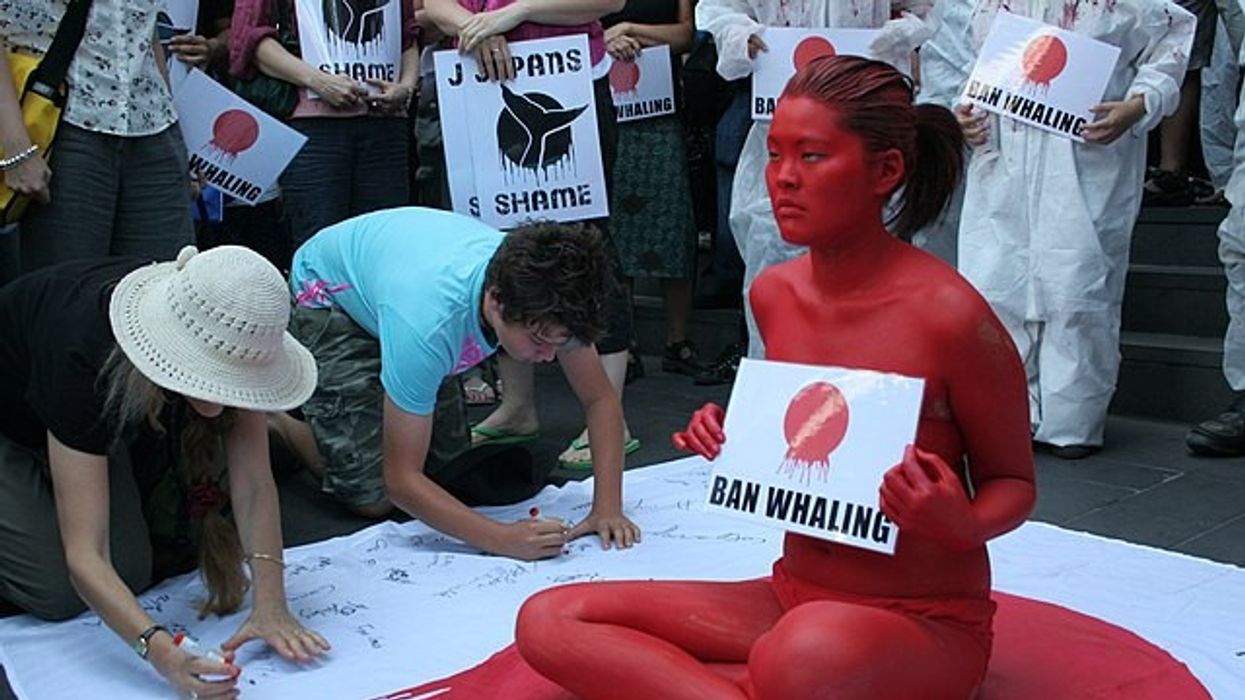
The anti-whaling movement has failed to address the issues underpinning international negotiations over whaling, and now faces its greatest defeat.
Save the Whales. Perhaps the first famous conservation slogan. The end of pelagic commercial whaling was one of the original successes of the conservation movement in international diplomacy. The movement started in the USA, yet now, the two species of whale that are critically endangered are both found in U.S. waters. And we’re about to see the resumption of Antarctic commercial whaling, supported by the U.S. military-industrial-security complex. Crunch time is the meeting of the International Whaling Commission, or IWC later this month. “Lose the whales” is looking more realistic.
To understand how we’ve arrived here, we need to go back to 2010. The year Apple unveiled the first iPad. Taylor Swift released Speak Now. Wikileaks put out the “Collateral Murder” video. U.S. President Barack Obama declared the end of combat operations in Iraq, and Secretary of State Hillary Clinton announced the beginning of the USA’s re-engagement with East Asia. In November 2010, President Obama attended the meeting in Japan of APEC, the Asia-Pacific Economic Cooperation forum.
While there he had individual meetings with the (then) Prime Ministers of Japan, Naoto Kan, and Australia, Julia Gillard, the USA’s most important allies in the region. At the time, Japan and Australia were at loggerheads over whaling. A few months earlier Australia had started proceedings against Japan at the International Court of Justice that it was, with its “scientific whaling,” in breach of its obligations under the International Convention for the Regulation of Whaling (ICRW), the treaty underpinning the IWC. Australia won the case a few years later.
The return of pelagic commercial whaling is imminent.
As part of the movement against whaling, on November 5 2010, conservationists organized the “World Wide Anti-Whaling Day.” In Sydney, Australia, a protest was held at the Japanese Consulate. For the media coverage it received, it may as well not have happened. Concerns about Japanese whaling in Australia’s Antarctic whale sanctuary were running high, so this lack of media interest was unusual. However, the press had just covered another whaling “protest.”
On the evening before, the International Fund for Animal Welfare (IFAW) organized a different action. The video remains available. They set up a fake whale in Sydney Harbor with a generic “stop whaling” message. As the video celebrates, this garnered huge coverage in the Australian media, so the action at the consulate the following day got none. Evidence of the conflict over whaling, between these two major U.S. alliesevaporated just in time for the presidential trip to Asia. Instead, the generic, unfocused “stop whaling” message occupied the airwaves. Organizers of the action at the consulate were livid.
Founded in 1969, IFAW was originally a small and effective NGO. It helped establish non-lethal studies as the way to do science on whales. In 1997 IFAW’s founder passed the organization on to a couple of former government officials, ex-senior managers of Peace Corps programs in Eastern Europe and the Middle East. Under their direction, IFAW grew rapidly, including by taking over smaller NGOs internationally. Most conservation NGOs are short of money, and IFAW, suddenly rich, absorbed them.
The person who was heading IFAW’s whale program at the time of the stunt in Sydney Harbor has an unusual background for an employee of a conservation NGO. He was originally a German and Russian linguist with U.S. Army intelligence, enlisting in the early 1980s. After the army he moved to Mongoven, Biscoe, and Duchin (MBD), a company that specialized at infiltrating environmental NGOs for corporate clients, as detailed in an academic paper on their work for the tobacco industry. The title—“ [MBD]: Destroying Tobacco ControlActivism From the Inside”—tells the story. In a move that was the most radical conversion since Paul on the road to Damascus, he then immediately got the job as head of GLOBE USA, a collaborative of global politicians working on environmental issues. He moved to IFAW in 1996, immediately prior to the leadership changeover there. In 2007, coinciding with a U.S. government decision to come up with a process to “solve” issues in the IWC, he was appointed to IFAW’s new position of Global Whale Program Manager. Unlike other IFAW staff, he had little prior experience with the IWC.
The Sydney stunt is just one example, demonstrating how easy it is to direct media stories. IFAW remains the go-to organization for much of the mainstream media on whaling, and other whale conservation issues. IFAW’s messaging controls the anti-whaling narrative.
The anti-whaling movement has been operating under a set of assumptions over the past couple of decades. These include: whaling is a dying industry running on subsidies; acting forcefully against whaling will encourage a backlash in whaling nations; whaling can be replaced with whale-watching as an economic use of whales; and recently, that the Japanese withdrawal from the IWC was an “elegantly Japanese solution” that meant Japanese whalers would never again engage in pelagic whaling. Note that all but one of these links quote IFAW.
Given the new Japanese quotas for killing fin whales, the new ice-strengthened Japanese whaling factory ship, and the call to shut down the IWC, these assumptions are mistaken. Whaling is just one part of much bigger geopolitical machinations that revolve around the U.S. military maintaining its Japanese bases in the face of pubic anger there at the appalling behavior of some service personnel. And then the Japanese government uses access to bases as leverage to winning on whaling, in order to maintain their control over management of other, more important, pelagic fisheries.
Further, the anti-whaling movement has failed to heed warnings of problems in their midst. These were clear after Wikileaks released documents revealing the dealings between the U.S. IWC commissioner, and the Japanese government in 2009. Also clear from the Wikileaks cables is the way in which Australia and Japan’s relationships were impacted by whaling, and how this was a concern for the U.S. government. The NGO community treat this as irrelevant.
That U.S. IWC commissioner? Prior to her return to government, Monica Medina, also ex-military, also worked at IFAW.
On the Wikileaks documents, IFAW’s whale program leader wrote a blog post back in 2011. It includes: “...as I stare back at his face on the WikiLeaks homepage, that Julian Assange—who doesn’t look so well—is on a one-man mission, that the job he is tryin’ to do on us is about something other than saving whales or even promoting transparency in government, and that he really doesn’t much like us—as in U.S.”
The return of pelagic commercial whaling is imminent. The anti-whaling movement has failed to address the issues underpinning international negotiations over whaling, and now faces its greatest defeat. A major NGO focusing on whaling—one to whom many media outlets turn to for comment—has a track record of employing former U.S. military, and military intelligence, staffers. (And not just for whaling). Have these intelligence professionals failed to comprehend the geopolitical issues driving negotiations over whaling?
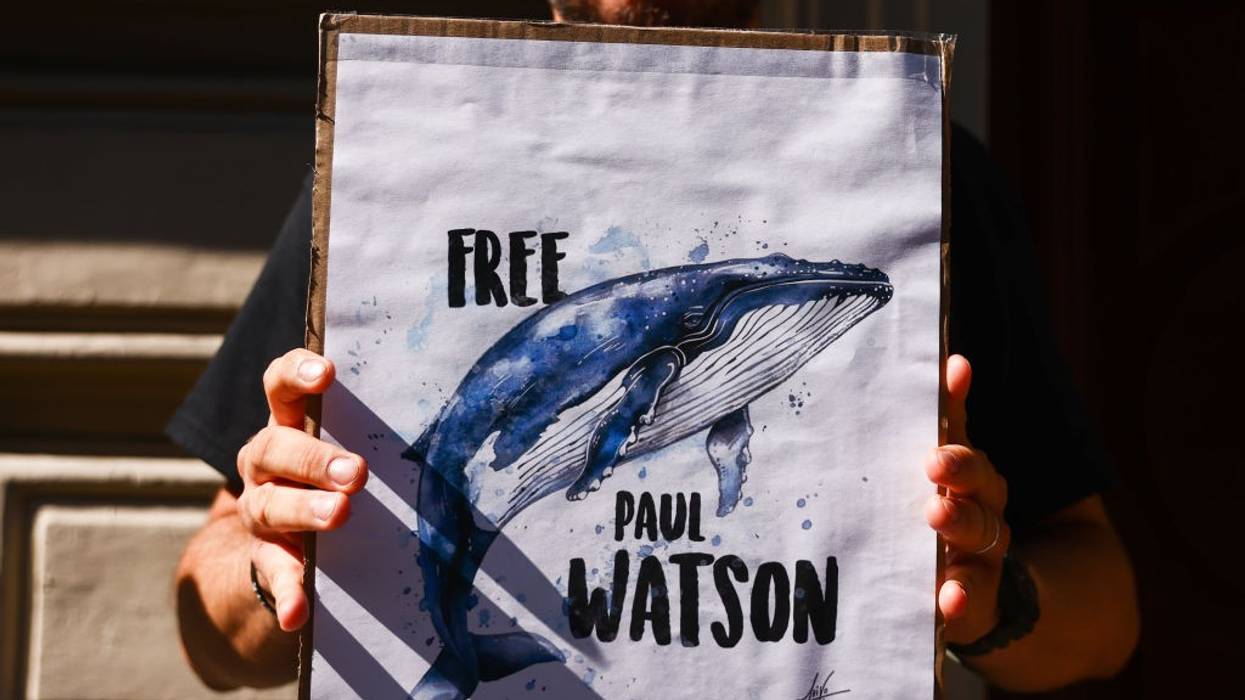
Whaling, it turns out, has very little to do with whaling and much more to with how powerful nations want to dominate the world's oceans.
In early August, the crew on Japan’s new whaling factory ship dismembered a male fin whale, the first commercial catch of the species in several decades. A few days earlier, Paul Watson was arrested in Nuuk, Greenland. He sits in a Danish prison, waiting a decision on his extradition to Japan. Given the Japanese courts’ record of 99.9% conviction rate for criminal cases, and issues with Japanese justice system, if extradited, he will probably spend the rest of his life imprisoned.
A few months ago, a paper led by Norwegian government scientists showed that there are around 50,000 fin whales in just one small part of the Southern Ocean. Also in Antarctic waters, the Japanese Institute of Cetacean Research has been running a research program which, as the the Institute states, is the “aimed at the sustainable use of whale resources in the Antarctic Ocean.” A new era of commercial whaling in the Antarctic looms.
Forty years ago, the International Whaling Commission introduced the whaling moratorium—a pause in slaughter, to allow whale populations to recover. At the time, the belief by most in the whale conservation community was that by the time that whale populations finally recovered, those still engaged in whaling would have given up, making the moratorium permanent. That’s not what’s happened. Three nations—Japan, Norway, and Iceland—still engage in commercial whaling.
There are many arguments against whaling: it’s cruel, it has to be subsidized, most people in whaling nations don’t care about it, it’s traditional in very few places in Japan, whales don’t eat all the fish, instead they’re ecosystem engineers that contribute to carbon sequestration. These points have been made for many years, and have never had the slightest impact on the Japanese whaling bureaucracy. They’re not only irrelevant, they’ve proven pointless.
Whaling, it turns out, isn’t about whales at all. Japan’s primary interest in commercial whaling is to maintain their geopolitical clout to exploit other marine wildlife (“living marine resources”) internationally. Tuna, for example. This point’s been made recently in a couple of forums. For the Japanese government, whaling’s a thin-edge-of-the-wedge problem. The moratorium was a big win for marine conservation that couldn’t be repeated with other international fisheries.
Given this framing, the actions of the Japanese whaling industry over the past forty years are rational. Whaling is primarily about asserting dominance in international negotiations over access to marine wildlife, so whether or not Japanese people eat much whale meat is irrelevant. What matters is access to other fisheries by Japan’s pelagic fishing fleets. Subsidizing whaling is a minuscule price to pay. The primary role of Japan’s new floating factory, the Kangei Maru, is as a flagship, a symbol of Japanese hegemony in international maritime negotiations. So its $48 million price tag is trivial. A Ford class US aircraft carrier, with a build cost of around $13 billion and an annual upkeep of $700 million, puts that in perspective. The Kangei Maru’s costs are a rounding error.
Despite Japan leaving the International Whaling Commission (IWC) in late 2018, the Japanese fisheries bureaucracy still controls the activities of the pro-whaling bloc. This September, the IWC meets again. One rumor currently swirling is that the Japanese will rejoin the IWC with a reservation to commercial whaling, one way to demolish the whaling moratorium. Another appeared a couple of weeks ago, when the prestigious scientific journal Nature published an opinion piece calling for the IWC to be dismantled. The article’s first author is a former chair of the IWC, who with his coauthors, argue that the IWC is now a “zombie” organization that has outlived its usefulness and should be dismantled.
Interesting timing.
Once, the threat of US sanctions in response to “diminishing the effectiveness” of the IWC regulated the manner in which the whaling bloc engaged there. That threat—obviously—no longer exists. How have the whalers brought the U.S. to heel on whaling? What’s their lever?
There was a belief in the NGO community that the threat of withholding IWC quotas on U.S. Inuit bowhead whaling was driving U.S. acquiescence. The pro-whaling bloc engaged in brinkmanship on this several times in the past. But the “Aboriginal Subsistence” whaling issues at the IWC have been resolved, removing this threat. Besides, ending the IWC would put bowhead whaling management back entirely with the U.S., internally. It can’t be that.
It’s here the military comes in. The U.S. has around 55,000 military personnel based in Japan. This is, for example, almost the size of the Australia’s active duty defense forces. Their weaponry includes some the most advanced in the U.S. arsenal. Most of those personnel are based in Okinawa, where there were over 6,000 criminal cases involving U.S. military personnel in the 50 years since the island was handed back to Japan in 1972. That’s a couple of crimes a week. And they include reported 134 rapes, or two to three reported rapes per year, including recent charges of the sexual assault of a child. Understandably, there is a vocal anti-US-base movement in Okinawa that regularly engages in mass protest.
These put Paul Watson’s “accomplice to assault” and “ship trespass” charges in context.
At the same time, the U.S. is reconstituting its forces in Japan, a buildup in response to the perceived threat to U.S. hegemony now posed by China. The Japanese government has leverage. Getting its way on whaling is Japan’s price for U.S. bases.
What could happen? Possibilities include Japan rejoining the IWC with a reservation that allows it to conduct commercial whaling wherever it wants. Perhaps the IWC will collapse. The recent Nature article shows that destroying the IWC is being considered. Returning the management of whaling to whaling nations? We know how that worked. And allowing Japan’s return to the IWC with a reservation will return the IWC’s role to that of a toothless body overseeing mass slaughter.
The huge U.S. military presence in Japan matters to the national security apparatus of the United States. The bureaucracy has worked with the Japanese government to see commercial whaling return. The return of commercial whaling is the U.S. military's quid pro quo for its regional dominance in the Pacific—not to mention its rapists in Okinawa.

The famed campaigner was en route to intercept a new 370-foot Japanese factory whaling ship in the North Pacific when Danish police in Greenland made the surprise arrest, citing an international warrant issued by Japan.
Danish police on Sunday arrested prominent anti-whaling activist Paul Watson when his vessel came to port in Greenland, citing a warrant issued by Japan, a whaling nation that seeks his extradition.
Watson, a 73-year-old Canadian American who co-founded Greenpeace and founded Sea Shepherd, was traveling with 25 volunteers aboard the 236-foot M/Y John Paul DeJoria on a mission to the North Pacific for the Captain Paul Watson Foundation (CPWF), which he started after leaving Sea Shepherd in 2022.
When the vessel arrived in Nuuk, Greenland to refuel, the Danish police immediately boarded and arrested Watson.
The CPWF denounced the surprise arrest, which came as Watson planned to intercept a new Japanese factory whaling ship.
"We implore the Danish government to release Captain Watson and not entertain this politically-motivated request," Locky MacLean, CPWF's ship operations director, said in a statement.
This morning, Captain Paul Watson was arrested in Nuuk, Greenland by Danish federal police, who boarded the M/Y John Paul DeJoria as soon as it docked.
The crew had stopped to refuel while en route to the Northwest Passage as part of #OpKangeiMaru, our campaign aimed at… pic.twitter.com/ANWoRFiR42
— Captain Paul Watson Foundation 🐋🏴☠️ (@CaptPaulWatson) July 21, 2024
Sunday's arrest came as the M/Y John Paul DeJoria was making its way to the North Pacific via the Northwest Passage after setting off from Dublin. The CPWF team aimed to intercept the Kangei Maru, a new 370-foot, $48 million Japanese factory whaling ship that's equipped with state-of-the-art drones that expedite the killing of whales.
CPWF argues that the launch of the new vessel signals Japan's ambitions to restart commercial whaling on the high seas—international waters—in the North Pacific and the Southern Ocean as early as 2025. Japan long whaled the high seas in defiance of international law, under the guise of scientific research, but in recent years it has shifted to whaling in its own territorial waters, which extend 200 nautical miles from its shores.
Watson, who is known for confrontational tactics, was the star of the Animal Planet television show Whale Wars that ran from 2008 until 2015, in which he lead efforts to disrupt Japanese whaling on the high seas.
Over a dozen police and SWAT team members took part in Watson's arrest in Greenland, an autonomous territory of Denmark. He was handcuffed and taken to local detention. A judge denied him bail on the grounds that he was a flight risk, citing a 2012 case from Germany in which he fled house arrest; he will be held in Nuuk until August 15 as authorities assess his possible extradition to Japan, where he could face up to 15 years in jail, The New York Times reported.
The nature of Japan's charges against Watson was not specified in media reports. The Interpol arrest warrant cited by Danish police may be an old one, according to CPWF. MacLean said the warrant had "disappeared" from public view a few months ago and may have been made confidential, possibly as a tactic to lull Watson into a false sense of security when traveling internationally.
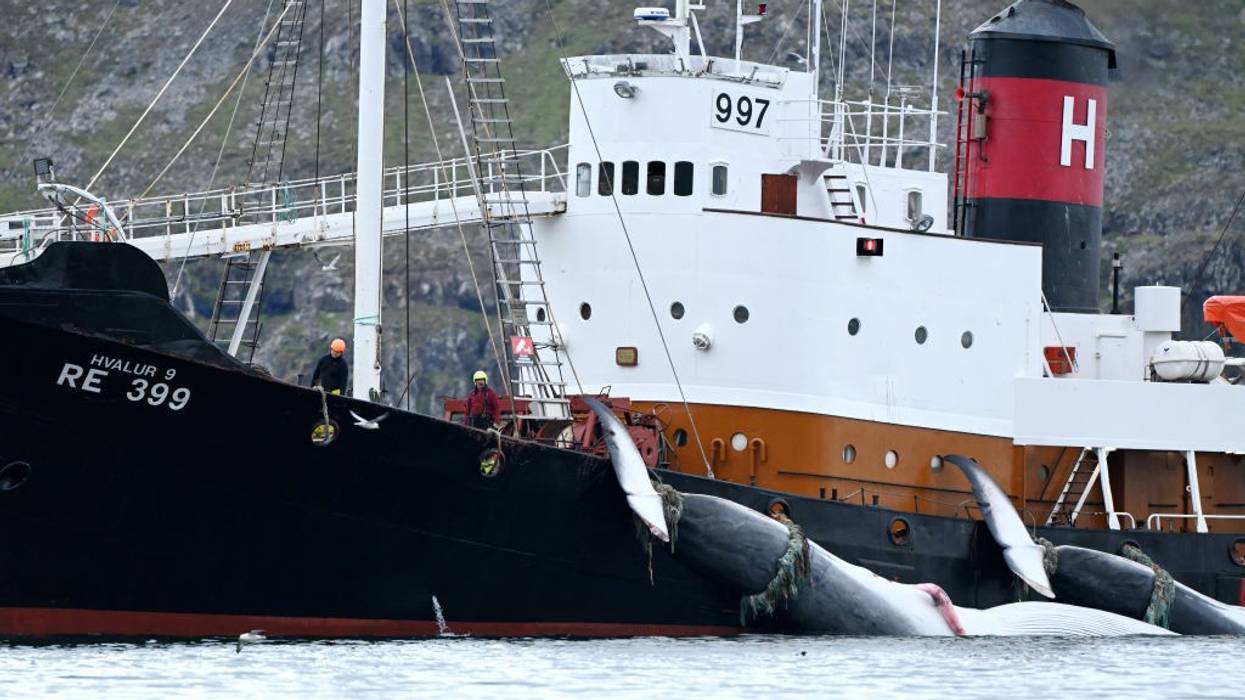
The industry is on the cusp of winning a major victory over the global conservation movement that has fought for decades to bring this murderous practice to an end once and for all.
Whaling is seen as an evil of the past, memorialized in events like ritual recitations of Moby Dick. Or invented as a metaphor for the worst of humanity’s greed—the Tulkun hunts in Avatar: The Way of Water. But commercial whaling hasn’t actually stopped, it’s merely scaled back. Japan, Iceland, and Norway still engage in commercial whaling.
On May 9th, a spokesperson for the Japanese government announced that they were intending to set a hunting quota for fin whales. A week earlier, the Kangei Maru, a brand new, state of the art whaling factory ship, was launched. It’s almost four decades since the Japanese whaling industry felt the need for a new whaling mothership, and this one’s specifications will allow whalers to butcher fin whales on it. Plus, the Kangei Maru has the range and construction to work in Antarctic waters. Coincidentally, on exactly the same day as the Kangei Maru’s launch, a scientific paper was published, presenting the results of surveys conducted in one area of the Southern Ocean. The results suggest that there are around 50,000 fin whales in just that one site.
If the only way to regulate whaling internationally is under some gentlefolks’ non-binding agreements, how did commercial whaling almost disappear?
Then, on June 11th, the council of the Japanese Fisheries Agency announced a quota of 59 fin whales within the Japanese EEZ. On the same day, the Icelandic Minister of Fisheries issued a permit for a hunt of 128 fin whales by Hvalur, the Icelandic whaling company.
Fin whales are known—if they’re known at all—as being the second-largest of the great whales. Only blue whales are larger. Less well known is that they were also the whales hunted in the greatest numbers during industrial commercial whaling through the 20th Century. About 900,000 fin whales were killed across all ocean basins, nearly as many as the sum of all blue (~380,000), humpback (~250,000) and sei whales (~300,000) combined. Given their abundance and individual size, fins were where the real money was in high seas whaling.
This history is lost.
Most fin whales lived in the Southern Ocean, but they’re found throughout the polar and temperate regions of the world. Unlike humpback or right whales, they don’t engage in clearly defined annual migrations from feeding to breeding areas. They’re mostly offshore, beyond the reach of whale-watching operations. And they’re nowhere near as acrobatic as humpbacks. Fins don’t create their own PR value, the way that more visible and demonstrative whales do.
Currently, fin whales worldwide are categorized in the IUCN’s Red List as Vulnerable, one step down from Endangered, based on a review from 2018. However, a more recent (2023) IUCN review of fin whales in European waters listed them as being of Least Concern there. For the few places where data are available, most fin whale populations are increasing. Apart from the recent work showing about 50,000 whales in one small(ish) area of the Antarctic, the International Whaling Commission (IWC) lists about 40,000 fins in one part of the central North Atlantic (for 2015, so the estimate is almost a decade old). The US National Oceanic and Atmospheric Administration (NOAA) provides estimates of around 7,000 off the east coast of North America, and 8,000 in the waters of California and Oregon. Added together, that’s over 100,000 fin whales—and it excludes most of the Southern Ocean, where fins are likely to be most abundant, and where other observations indicate that their numbers are on the rebound.
So, what about the Japanese whalers hunting fin whales? How can this happen? There are two international bodies primarily responsible for managing whaling internationally. The International Whaling Commission (IWC), oversees setting quotas for whaling, and the ways in which whaling is managed. At present, the IWC has quotas for commercial whaling set at zero, a moratorium that’s been in place since the mid-1980s. The other organization is the Convention on International Trade in Endangered Species (CITES) which regulates—as the name suggests—international trade in endangered species. Fin whales are listed under CITES Appendix I, meaning that they are judged to be threatened with extinction, so international trade in their products is prohibited. This is (more or less) based on the Red Listing of fin whales internationally as Vulnerable. Were that status to change, their CITES listing may well change in response.
Japan left the IWC at the end of 2018 and so is no longer bound by IWC regulations. There’s nothing stopping Japan from doing this under IWC rules. What about CITES? Japan has a reservation to the listing of fin whales, as do Iceland and Norway. So these nations are not bound by CITES provisions regarding fin whales, and are free to trade in their products. That’s why Hvalur hf., the Icelandic whaling company, has exported fin whale meat to Japan from the almost 1000 fin whales they’ve killed over the past 15 years.
So, if the only way to regulate whaling internationally is under some gentlefolks’ non-binding agreements, how did commercial whaling almost disappear? Whalers wiped out almost all populations of large whales, which played an important role. There wasn’t much left to hunt. But previously, the threat of US sanctions was also a factor. Under the Pelly Amendment of the US Fishermen's Protective Act, the Secretary of Commerce and/or the Secretary of the Interior, are required to let the President know if “nationals of a foreign country, directly or indirectly, are engaging in trade or taking which diminishes the effectiveness of any international program for endangered or threatened species.” This is supposedly an obligation, and it’s also meant to lead to a ban on importation of fisheries and wildlife products from that country. Needless to say, despite Japanese nationals obviously diminishing the effectiveness of the functioning of both the IWC and CITES, Japan has not been certified. Geopolitics trumps marine conservation.
There was rejoicing back in early 2019 when Japan appeared to be giving up on pelagic whaling. But Japan leaving the IWC was never “good news for whales,” as stated at the time by Patrick Ramage of the International Fund for Animal Welfare. Japanese whalers now get to ignore IWC-based rules on how many whales can be killed, where they can be killed, and who observes that the killing takes place in the manner that is claimed—something that has always been a problem with whaling.
There is nothing to stop Japanese whalers returning to much larger-scale commercial whaling. They are on the cusp of their comprehensive victory over the conservation movement.
Correction: An earlier version of this piece misstated the date of the Japanese Fisheries Agency's June announcement.
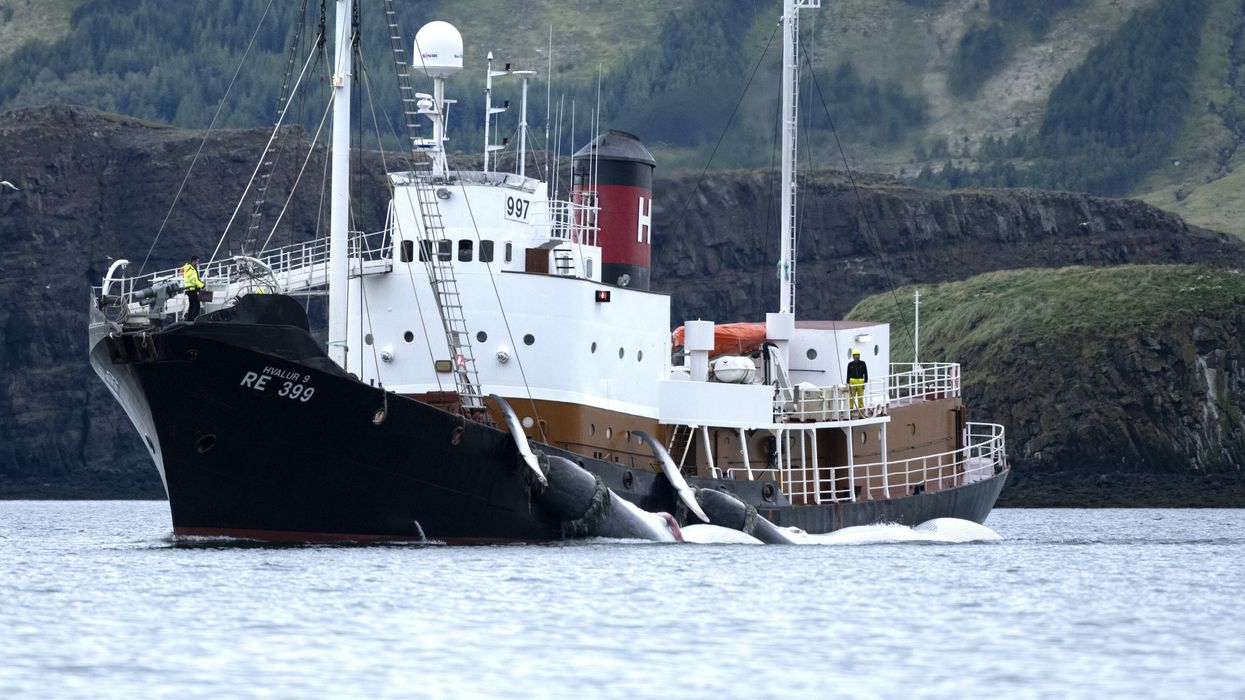
"There is no humane way to kill a whale at sea, and so we urge the minister to make this a permanent ban," said Humane Society International's Europe director.
Citing animal welfare concerns, Iceland's government is suspending this summer's whale hunt through the end of August, a move cheered by marine conservationists—who are pressing for a permanent whaling ban.
Icelandic Minister of Food, Agriculture, and Fisheries Svandís Svavarsdóttir—a member of the Left-Green Movement, which leads a three-party ruling coalition—explained Tuesday that "I have made the decision to temporarily stop whaling in light of the unequivocal opinion of the council of animal welfare specialists," according to a translation by Iceland Review.
"The conditions of the Act on Animal Welfare are inescapable in my mind: If the government and license-holders cannot guarantee welfare requirements, this activity does not have a future," she added, raising whaling opponents' hopes for a permanent ban.
Svavarsdóttir's decision follows the publication this week of a report by the country's Food and Veterinary Authority (MAST) that called last season's whale hunt illegal because it did not meet the standards required by the Icelandic Animal Welfare Act.
"This is a major milestone in compassionate whale conservation. Humane Society International is thrilled at this news and praises Minister Svavarsdóttir for ending the senseless whale killing which will spare hundreds of minke and imperiled fin whales from agonizing and protracted deaths," the advocacy group's Europe executive director Rudd Tombrock said in a statement.
"There is no humane way to kill a whale at sea, and so we urge the minister to make this a permanent ban," Tombrock added. "Whales already face so many serious threats in the oceans from pollution, climate change, entanglement in fish nets, and ship strikes, that ending cruel commercial whaling is the only ethical conclusion."
Speaking after last year's Icelandic whaling season, Sharon Livermore, the director for marine conservation at the Massachusetts-based International Fund for Animal Welfare (IFAW) noted that "studies have shown that it can take up to 25 minutes for a whale to die after being shot with an explosive harpoon."
"This summer, one fin whale was landed with four harpoons in its body. This tragic example indicates that many whales suffer a slow and agonizing death because of whaling," she added. "It is unbearable to imagine how these animals must suffer."
Danny Groves of the U.K.-based group Whale and Dolphin Conservation wrote on Tuesday:
Aside from the issues with the killing methods, the MAST report's expert panel also concluded that it is not possible to determine the sex of a whale from the ship or whether they are about to kill a pregnant female or a lactating mother with a calf. The chances of surviving for motherless whale calves are negligible. Hunting is also not possible without following the whales for some time before shooting, which causes stress and fear, and killing them is not possible in a quick and painless manner.
Referring to Iceland, Robert Read, who heads the U.K. branch of the direct action group Sea Shepherd, said that "if whaling can't be done humanely here... it can't be done humanely anywhere."
"Whales are architects for the ocean," Read added. "They help boost biodiversity, they help fight climate change by affecting the carbon cycling process."
Last summer, Hvalur—the only whaling company still operating in Iceland—slaughtered 148 fin whales in the frigid Atlantic waters around the island nation. This, despite the International Union for Conservation of Nature (IUCN) classifying fin whales as "vulnerable."
The Icelandic government allows the annual slaughter of up to 209 fin whales and 217 minke whales. While the International Whaling Commission (IWC) agreed to a global moratorium on all commercial whaling in 1986, Iceland—which is an IWC member—formally objects to the policy.
IUCN credits bans on whaling—only Iceland, Japan, and Norway allow commercial hunts—for improving the fin whale's status from "endangered" to "vulnerable" in 2018.
Hvalur previously announced that this would be its last whaling season in business, citing a decline in profits, according to Euronews Green.
"Justification is required if whaling is to be allowed," Svavarsdóttir wrote in February 2022. "It must be demonstrated that it is economically justified to renew hunting permits."
"Justification is required if whaling is to be allowed."
The minister asserted that it is "indisputable" that whaling has "not had much economic significance for the national economy in recent years."
"There is little evidence that there is any economic benefit to doing this fishing, as the companies that have a license to do so have been able to catch whales in recent years but have not done it," she continued. "There may be several reasons for this, but perhaps the simplest explanation is that sustained losses from these fisheries are the most likely."
When Japan temporarily stopped hunting whales amid international activist pressure, the country imported whale meat from Iceland. However, Svavarsdóttir noted that "the Japanese now hunt their own whale meat."
"Why, she asked, "should Iceland take the risk of maintaining fisheries that have not produced economic benefits in order to sell a product for which there is little demand?"
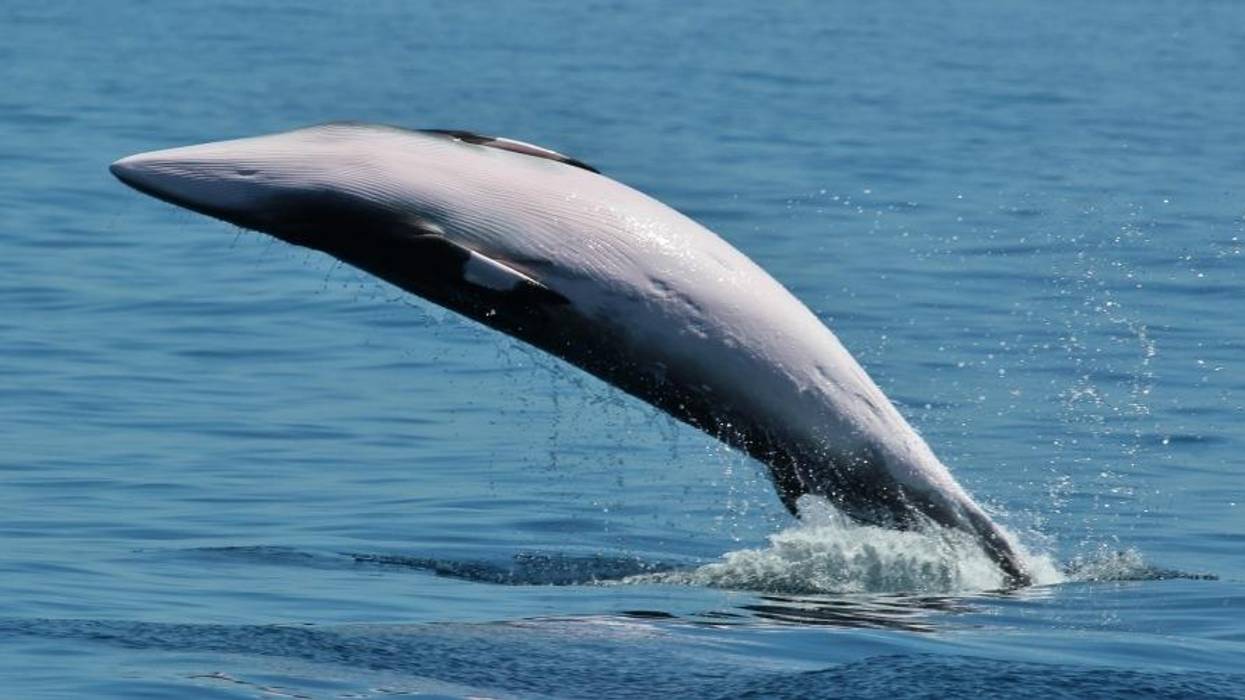
After denying for several days reports that they were planning to leave the International Whaling Commission (IWC), Japanese officials said Wednesday that the country would withdraw from the 89-member panel in order to defy its ban on commercial whaling.
The move will eliminate the country's long-held "pretense" of hunting whales only for research purposes, said the conservation group Sea Shepherd, as Japan officially declares itself a "pirate whaling nation."
"This means that Japan is now openly declaring their illegal whaling activities," Paul Watson, founder of the group, told the New York Times.
"It's clear that the government is trying to sneak in this announcement at the end of year away from the spotlight of international media, but the world sees this for what it is. The declaration today is out of step with the international community." --Sam Annesley, Greenpeace Japan
Since the IWC introduced its ban on commercial whaling in 1986, Japan has used regular so-called "research whaling" trips off the coasts of Antarctica as a loophole to continue its whale-hunting. The country has killed an average of 333 minke whales on its expeditions, including more than 120 pregnant female whales last year.
Instead of traveling to the Southern Ocean every year, Japanese whalers will now resume hunting in Japan's territories and exclusive economic zone beginning in July 2019, selling whale meat on the open market.
Greenpeace Japan noted that the country's timing of the announcement would not stop green groups from condemning its plan to openly slaughter whales for profit.
"It's clear that the government is trying to sneak in this announcement at the end of year away from the spotlight of international media, but the world sees this for what it is," said Sam Annesley, the group's executive director. "The declaration today is out of step with the international community, let alone the protection needed to safeguard the future of our oceans and these majestic creatures."
Following Iceland and Norway, which have also defied the IWC's ban on commercial whaling, Japan's withdrawal from the international body will mark the end of its participation in the global effort to save the world's whales from human activity.
"The Commission is the pre-eminent global body responsible for the conservation and management of whales and leads international efforts to tackle the growing range of threats to whales globally, including by-catch, ship strikes, entanglement, noise, and whaling," said Australia's environment minister, Melissa Price, in a statement. "Their decision to withdraw is regrettable and Australia urges Japan to return to the Convention and Commission as a matter of priority."
As Common Dreams reported last week, Japan first denied rumors of its plans to leave the IWC. Chief cabinet secretary Yoshihide Suga admitted in a statement that the government is putting its own " life and culture of using whales" ahead of conservation efforts.
"In its long history, Japan has used whales not only as a source of protein but also for a variety of other purposes," Suga said.
In fact, demand for whale meat in Japan has plummeted in recent years, with the industry depending on government subsidies to survive.
Commercial whaling represents the exact opposite direction Japan should be headed in regarding marine activity, Greenpeace Japan said.
"The world's oceans face multiple threats such as acidification and plastic pollution, in addition to overfishing," Annesley said. "As a country surrounded by oceans where people's lives have been heavily reliant on marine resources, it is essential for Japan to work towards healthy oceans. Japan's government has so far failed to resolve these problems.
"As the chair of the G20 in 2019, the Japanese government needs to recommit to the IWC and prioritize new measures for marine conservation," he concluded.
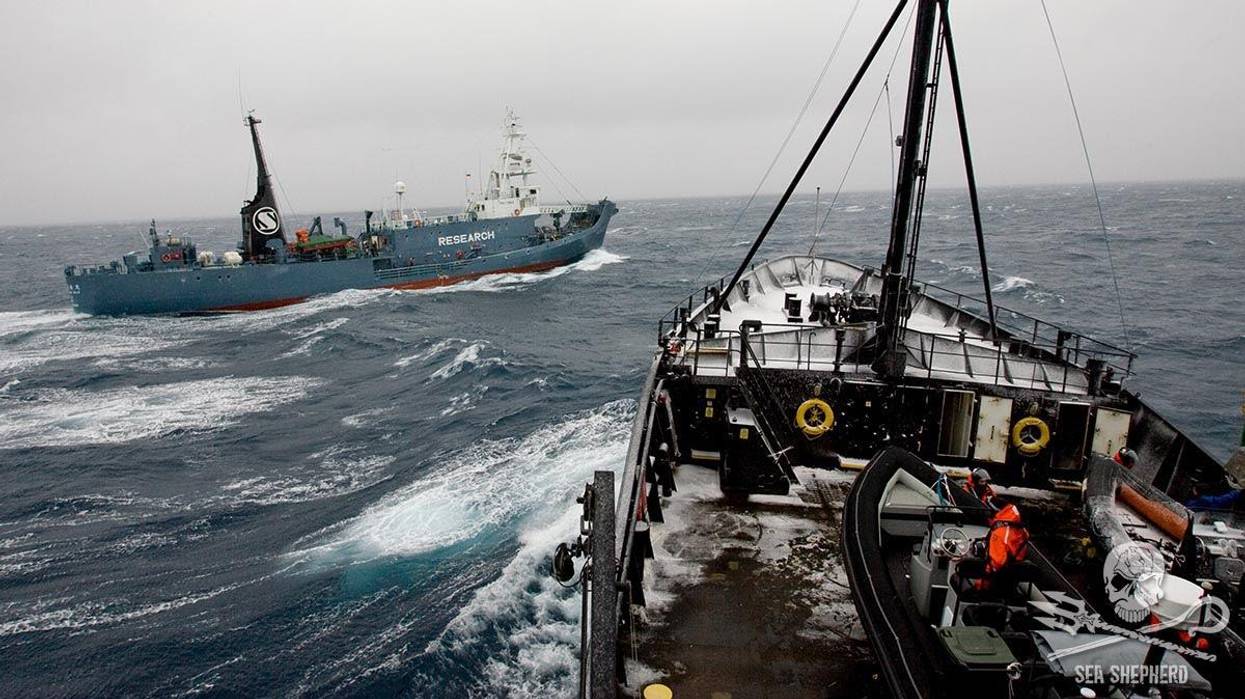
Sea Shepherd has accomplished something absolutely remarkable over the last 12 years.
In 2005 we set out to tackle the world's largest and most destructive whaling fleet. We were told it was impossible by some governments and a few NGO's.
Hardly anyone even knew about Japan's illegal slaughter in the Southern Ocean. It was out of sight and out of mind. They were targeting 1,035 whales a year including a yearly quota of 50 endangered Humpbacks and 50 endangered Fin whales.
We had few resources but we took our one battered and slow vessel, the Farley Mowat and we chased the whalers across the Southern Ocean, catching them only for a few hours at a time until they sped away from us.
In 2006 we were able to purchase the Steve Irwin and the tables began to turn as each year we became stronger and more effective. We brought in the Bob Barker, the Sam Simon, the Brigitte Bardot and the Ocean Warrior.
Sea Shepherd was relentless in reducing the yearly quotas significantly and in 2012/2013 the Japanese whalers went home with only about 10% of their intended kills. We did this at the same time the U.S. Federal Court put significant legal obstacles in our path.
The results speak for themselves. Over 6,000 whales saved. Not a single endangered Humpback killed and only 10 endangered Fin whales killed in a decade where 500 were slated to die. In addition, the Japanese whalers lost tens of millions of dollars.
We exposed Japan's illegal activities to the world with our TV show Whale Wars and our documentation.
We helped to push Australia into taking Japan to the International Court of Justice where their operations were ruled to be unlawful. Japan was ordered by the ICJ to cease and desist.
They did so for a year and then returned with a new program (also illegal) that reduced their bogus self-allocated kill quota to 333 each year. This means that since 2015 another 1400 whales were spared the lethal harpoons. This means that 702 whales will continue to be saved every year.
Unfortunately, in an effort to prevent Sea Shepherd interventions, they doubled their killing grounds which means that they have more time and more area to kill their lowered quota.
Despite that, Sea Shepherd sent the Steve Irwin and the Ocean Warrior in pursuit of the whalers in 2016/2017 and although it took them longer and cost them much more, the Japanese whalers managed to get their quota.
What we discovered is that Japan is now employing military surveillance to watch Sea Shepherd ship movements in real time by satellite and if they know where our ships are at any given moment, they can easily avoid us. During Operation Nemesis, the Sea Shepherd ships did get close and our helicopter even managed to get evidence of their illegal whaling operations but we could not physically close the gap. We cannot compete with their military grade technology.
This year Japan escalated their resistance with the passing of new anti-terrorism laws, some of which are specifically designed to condemn Sea Shepherd tactics. For the first time ever, they have stated they may send their military to defend their illegal whaling activities.
The Japanese whalers not only have all the resources and subsidies their government can provide, they also have the powerful political backing of a major economic super-power. Sea Shepherd however is limited in resources and we have hostile governments against us in Australia, New Zealand and the United States.
The decision we have had to face is: do we spend our limited resources on another campaign to the Southern Ocean that will have little chance of a successful intervention OR do we regroup with different strategies and tactics? If something is not working the only recourse is to look for a better plan, because when a plan no longer works, the only alternative is an improved course of action.
We need to formulate this new plan and we will.
We will not be sending ships to the Southern Ocean this year, but are not abandoning the Southern Ocean Whale Sanctuary. We need to cultivate the resources, the tactics and the ability to significantly shut down the illegal whaling operations of the Japanese whaling fleet. In the meantime, it's time for the Australian government to live up to their promises. Sea Shepherd has been down in the Southern Ocean doing what the Australian government has the responsibility to do but have refused to do, and that is upholding international and Australian conservation law. Instead of supporting Sea Shepherd the Australian government has been supporting the Japanese whalers by harassing Sea Shepherd and obstructing Sea Shepherd's ability to raise funds by denying our charitable status.
What Sea Shepherd has accomplished over the last 12 years demonstrates what people of passion can accomplish with few resources despite heavy multi-government opposition.
The Japanese whalers have been exposed, humiliated and most importantly have been denied thousands of lives that we have spared from their deadly harpoons. Thousands of whales are now swimming and reproducing, that would now be dead if not for our interventions,
And perhaps more significantly than anything else, there are now voices in the Japanese government opposing the continuation of whaling. Our efforts have been like acupuncture needles stuck into Japanese society, probing and provoking responses. We have exposed the incredible waste of money, the corruption and the shame this dirty business has brought to all the Japanese people. Our efforts have been so significant that one Japanese official said that Japan has two enemies - China and Sea Shepherd!
Sea Shepherd's continuing efforts to go after and shut down whalers will continue, and not only against Japanese whaling, but also against Norwegian, Danish, and Icelandic whaling. This is what we have been doing for forty years. We will never quit until the abomination of whaling is abolished forever by anyone, anywhere, for any reason.
Sea Shepherd is doing incredible things on the Ocean with limited resources, in addition to tackling illegal whaling activities. The endangered Vaquita would now be extinct if not for our intervention. We shut down the entire Southern Ocean pirate toothfish fleet. We have intercepted and stopped poachers off West Africa, in the marine reserves of the Galapagos, Sicily and Panama. We have removed hundreds of tons of ghost nets and plastics from the sea, and most importantly we have shown the world what a few passionate and courageous people can do.
Our objective is to continue to serve and protect all life in the Ocean from illegal and greedy exploitation by destructive humans.
Sea Shepherd is guided by this one reality: If the Ocean dies, we die!
Environmental activist group Sea Shepherd warned Japan against resuming "research" whaling in the Antarctic in defiance of an International Court of Justice ruling that it cease the practice and called on the Australian government to intervene.
After a decade of activism by Sea Shepherd and other groups, Japan was forced to abandon its 2014-15 Southern Ocean hunt after the International Court of Justice said the annual expedition was a commercial activity masquerading as research. But on Saturday, Japanese media reported it would start again soon, despite global regulators calling for more evidence that the expeditions have a scientific purpose. Japan's Yomiuri Shimbun and other media said the Japanese fleet could depart possibly by the end of December.
Despite international disapproval, Japan has hunted whales in the Southern Ocean under an exemption in the global whaling moratorium that allows for lethal research.
Japan's fisheries agency has told the International Whaling Commission that it would resume whaling in the Antarctic Ocean by killing 333 minke whales this season and kill almost 4,000 minke whales in the Antarctic over the next 12 years.
CEO of Sea Shepherd Global, Captain Alex Cornelissen, has condemned Japan's plans to return to the Southern Ocean to slaughter whales.
"The pristine waters of the Southern Ocean are once again under threat from poachers," said Cornelissen. "We would like to remind the Japanese government that the whales of the Southern Ocean are protected by international law, by Australian law and by Sea Shepherd. As such, any violation of the sanctity of the Southern Ocean Whale Sanctuary or the Australian Whale Sanctuary will be regarded as a criminal act."
On Saturday, the Japanese Fisheries Agency officially notified the International Whaling Commission (IWC) that it is readying its whaling fleet's harpoons to return to Antarctica's waters.
Sea Shepherd has again called on Australian Prime Minister Malcolm Turnbull to intervene to ensure that the whale poachers do not depart from Japan and prevent whale poachers from departing
"Prime Minister Turnbull has a duty to ensure that the dire matter of Japan's whale poaching operations is at the top of the agenda when he visits Japan in December," said Sea Shepherd Australia Managing Director Jeff Hansen. "It must be made clear to Japan that whaling in the Australian Whale Sanctuary is a criminal act and that Australia has the international responsibility to intervene and arrest criminals operating in our waters," he continued.
On March 31, 2014, the International Court of Justice (ICJ) declared Japan's whaling program to be commercial and illegal and ordered that it immediately cease.
Initially, Japan's government said it would abide by the ruling. However, within months, Japan had unveiled its plans for a new whaling program titled NEWREP-A, under which a further 4,000 protected Minke whales would be slaughtered over a 12-year period.
The Sea Shepherd ship Steve Irwin, currently docked in Melbourne, Australia, has been undergoing preparations for the organization's second campaign to target illegal toothfish operators in the Southern Ocean.
"Sea Shepherd is an anti-poaching organization. We are ready to find, document, report on, and, where possible, intervene against poaching operations that threaten the precious balance of life in the Southern Ocean; whatever form those poachers might take, whatever life they threaten," said Cornelissen. "If Sea Shepherd comes across criminal activity, then our history speaks for itself. We will, as always, directly intervene to prevent that crime from taking place," he concluded.
In April 2013, Japan announced its whaling haul from the Southern Ocean was at a record low because of "unforgivable sabotage" by activists from Sea Shepherd.