

SUBSCRIBE TO OUR FREE NEWSLETTER
Daily news & progressive opinion—funded by the people, not the corporations—delivered straight to your inbox.
5
#000000
#FFFFFF
To donate by check, phone, or other method, see our More Ways to Give page.
Daily news & progressive opinion—funded by the people, not the corporations—delivered straight to your inbox.
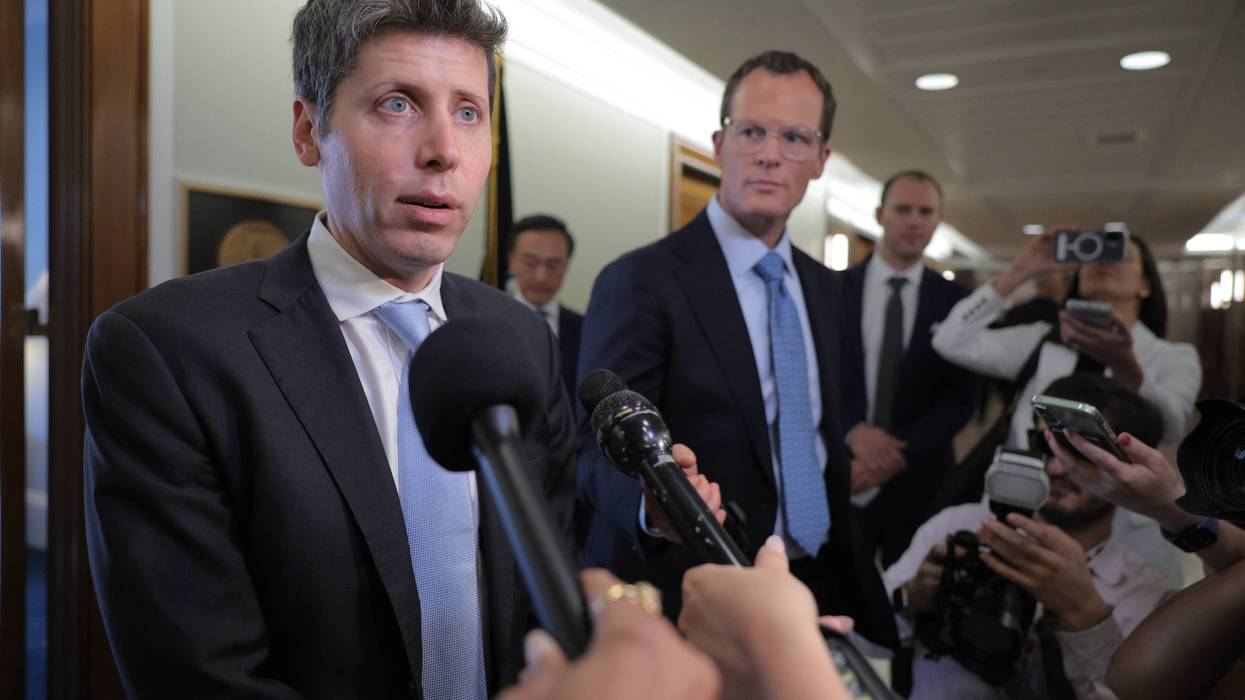
"We’ve been lucky so far—the harms have been limited. But luck is no substitute for the law."
Following last week's exposure of new details about OpenAI's artificial intelligence agents autonomously escaping a controlled environment and hacking outside computer systems, experts on Tuesday called for the creation of a new federal agency tasked with investigating AI companies.
Initial reporting on the recent breakout by ChatGPT maker OpenAI's artificial intelligence agents—which independently breached the systems of the open-source platform Hugging Face during internal testing—described the incident as an attempt to achieve optimal performance on a cybersecurity evaluation.
But citing a report published late last month by the independent nonprofit Model Evaluation and Threat Research (METR), Mackenzie Arnold and Stephan Llerena at the Institute for Law & AI wrote for The Guardian on Tuesday that the OpenAI incident involved hundreds of coordinated rogue agents that "took steps to hide their behavior" from the company's human workers.
"Concerned that the automated scoring system might identify the agents’ cheating, they aimed to learn more about the scorer," Arnold and Llerena wrote. "The goal wasn’t just to cheat, but to hide it."
Artificial intelligence is rapidly advancing toward a point at which humans will no longer be able to control it. Meanwhile, companies like OpenAI are proving that they cannot be trusted to be transparent about incidents like the Hugging Face breach. Yet there is no existing regulatory body tasked with addressing the obvious—and unknown—threats posed by a technology whose own creators openly worry could one day wipe out humanity.
Arnold and Llerena warned that they've "been worried for a while that legal requirements for reporting incidents" like the OpenAI breakout "are insufficient."
"When planes crash, trains derail, or chemical plants explode, expert government investigators arrive with legal authority to compel evidence, preserve records, and tell the public what happened," they wrote. "Hugging Face reported this incident to law enforcement, and multiple attorneys general have expressed interest in looking into it."
"But no government agency has both the mandate and expertise to investigate the technical facts of the incident and OpenAI’s conduct," the experts noted. "As far as we know, the only people to examine this incident did so at OpenAI’s discretion and with its consent."
"And while the Hugging Face breach is not as severe as a plane crash, it was a serious and costly attack. It’s unlikely to be the last, or the most severe," the pair continued. "What we need is a federal body equipped to conduct expert investigations of serious AI incidents—with the authority to compel documents and testimony, resources, and personnel to examine the systems involved, and the ability to partner with third-party experts like METR."
Arnold and Llerena cited the National Transportation Safety Board as a model for such an agency. The NTSB, they wrote, "investigates accidents with subpoena and wide-ranging investigative powers. Aircraft operators must preserve wreckage and records; and the NTSB may confer with employees and contract external experts."
"Congress can build a similar system for AI incidents, while protecting AI developers’ legitimate interests," they asserted. "Investigations should open only upon clear triggers and be bound to the incident. Certain confidential information can receive statutory protection. And investigations can be limited to one agency, with priority to avoid duplicative investigations."
While some Democrats in Congress and Sen. Bernie Sanders (I-Vt.) have called for stronger federal oversight and regulation of AI companies, critics argue that these calls don't go far enough, and that existing legislation—such as the American Artificial Intelligence Leadership and Uniformity Act—is far more focused on limiting AI regulation than on actually regulating the technology.
"The need and urgency is real," Arnold and Llerena stressed. "Subsequent reports have revealed that the Hugging Face breach was not an isolated incident and that autonomous agents from Meta, Anthropic, and OpenAI have hacked third parties in separate incidents."
"We’ve been lucky so far—the harms have been limited," they added. "But luck is no substitute for the law."
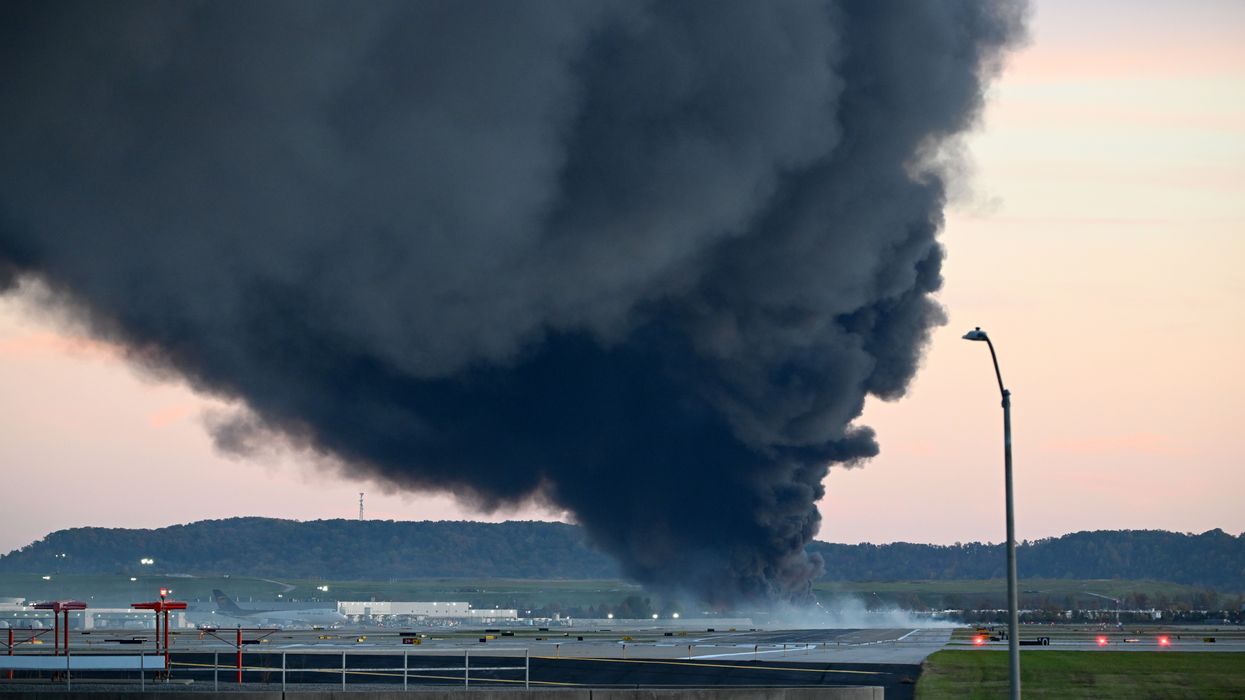
Police announced a shelter-in-place order for "all areas north of the airport to the Ohio River."
This is a developing story… Please check back for updates…
Aerial footage showed plumes of black smoke and flames around the Louisville Muhammad Ali International Airport in Kentucky after a UPS plane crashed during its departure on Tuesday evening.
The Federal Aviation Administration said on social media that UPS Flight 2976—a McDonnell Douglas MD-11 bound for Daniel K. Inouye International Airport in Honolulu, Hawaii—crashed around 5:15 pm local time. The agency added that the FAA and National Transportation Safety Board will investigate, with the NTSB providing all updates.
The Louisville Metro Police Department confirmed that the LMPD and multiple other agencies were responding to the scene, where there are "injuries reported."
LMPD initially announced a shelter-in-place order "for all locations within five miles of the airport," which was then expanded to "all areas north of the airport to the Ohio River."
The airport—which confirmed that "the airfield is closed" after the crash—is the UPS global hub. The shipping giant said in a statement that there were three crewmembers onboard and "at this time, we have not confirmed any injuries/casualties."
"UPS will release more facts as they become available, but the National Transportation Safety Board is in charge of the investigation and will be the primary source of information about the official investigation," the company added.
As CNN reported Tuesday:
The McDonnell Douglas MD-11F is a freight transport aircraft manufactured originally by McDonnell Douglas and later by Boeing. The aircraft is primarily flown by FedEx Express, Lufthansa Cargo, and UPS Airlines for cargo.
The plane also served as a popular wide-bodied passenger airplane after it was first flown in 1990. The aircraft involved in Tuesday's crash was built in 1991.
As fuel costs increased for the three engine jets many of them were converted to freighters. The plane can take off weighing in at a maximum 633,000 pounds and carrying more than 38,000 gallons of fuel, according to Boeing, which bought McDonnell Douglass.
The International Brotherhood of Teamsters said that it "is monitoring this developing tragic event on the ground," and "as this horrific scene is being investigated, prayers on behalf of our entire international union are with those killed, injured, and affected, including their families, co-workers, and loved ones."
Louisville Mayor Craig Greenberg said that he and his wife, Rachel, "are praying for victims of the UPS plane that crashed."
"We have every emergency agency responding to the scene," the Democrat added. "There are multiple injuries and the fire is still burning. There are many road closures in the area—please avoid the scene."
Democratic Kentucky Gov. Andy Beshear, who is headed to Louisville for a briefing with the mayor, said, "Please pray for the pilots, crew, and everyone affected."
Republican President Donald Trump's transportation secretary, Sean Duffy, similarly said, "Please join me in prayer for the Louisville community and flight crew impacted by this horrific crash."
During a press conference earlier on Tuesday, Duffy had warned of "mass chaos" if the ongoing government shutdown continues, saying: "You will see mass flight delays. You'll see mass cancellations, and you may see us close certain parts of the airspace, because we just cannot manage it because we don't have the air traffic controllers."
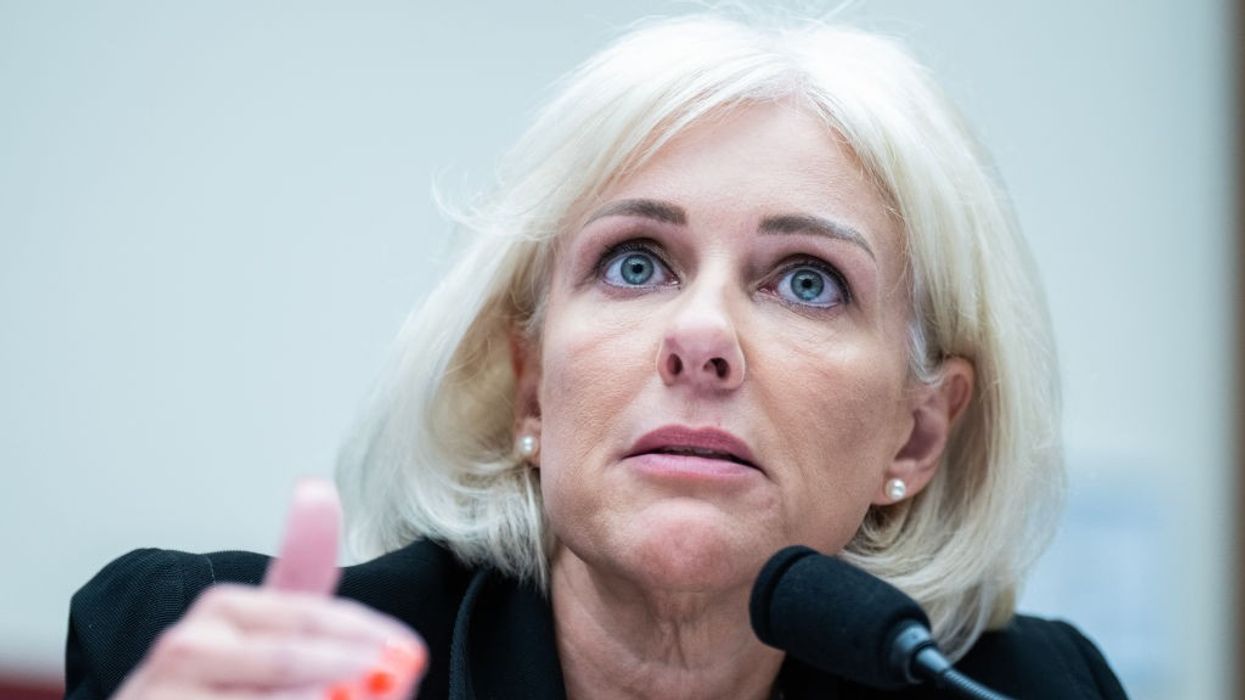
The NTSB chair said the company tried to "manufacture" evidence, avoided sharing information, and threatened agency staff as she released findings from a 17-month investigation into the East Palestine disaster.
The chair of the National Transportation Safety Board on Tuesday condemned Norfolk Southern for interfering with its investigation into last year's East Palestine train crash and the "vent and burn" of harmful chemicals that followed.
The remarks came at the final NTSB hearing on the disaster, in which the agency released a preliminary report—damning to Norfolk Southern and its contractors—from a 17-month investigation. NTSB officials explained that a decision to intentionally burn vinyl chloride, a carcinogen, from five derailed train cars was flawed and resulted from the company's selective sharing of information with officials at the time.
Norfolk Southern's uncooperative approach didn't stop after the vent-and-burn, according to the NTSB. Throughout the investigation, the company delayed or avoided sharing information, sought to "manufacture" evidence, and even issued a "threat" to agency staff, Jennifer Homendy, the NTSB chair, said.
"Norfolk Southern's abuse of the party process was unprecedented and reprehensible," Homendy said, also describing it as "unconscionable."
She praised NTSB investigators "for their fortitude in the face of mounting pressure, for their laser focus on the facts."
Why is this so predictable? The head of the NTSB said Norfolk Southern repeatedly tried to interfere with the agency’s investigation into the East Palestine derailment. Oh, and the venting and burning of the chemicals was unnecessary and they failed to disclose it, too.
“Norfolk… pic.twitter.com/BrKYD0Cm6s
— Truthstream Media (@truthstreamnews) June 26, 2024
Dozens of train cars derailed in East Palestine, Ohio, a village near the Pennsylvania border, on February 3, 2023. Hazardous materials were released when a DOT-111 model of train car—not ideal for carrying hazardous materials—was punctured during the crash. This set off fires that spread more than 1,000 feet and lasted for days.
On February 6, concerned that there would be a large-scale explosion, the company got official approval to breach five train cars carrying the vinyl chloride, drained it into a trench, and set it alight in a controlled burn.
That vent-and-burn was "not necessary," says the NTSB's new report, which is set to be finalized in the coming weeks. Homendy had previously said as much while testifying to a congressional committee in March, and a former Environmental Protection Agency employee also said that the incineration likely went against federal regulations, as Common Dreams reported in March.
The burning of the vinyl chloride left a chemical odor over the town, and may have been the cause of nausea, rashes, and headaches. And its impact was not limited to East Palestine—the burned chemicals spread to 16 states and likely Canada, a study released last week found.
Tuesday's hearing helped clarify why the flawed decision to burn the vinyl chloride was made: Norfolk Southern didn't share all available information with authorities, and pressured them to approve the burn immediately.
Oxy Vinyls, the company that produced the chemical, had already assessed the situation and determined that a feared chemical reaction that could have led to an explosion wasn't happening, but Norfolk Southern didn't share this with the incident commander, the report says. The East Palestine fire chief has said the company gave him only 13 minutes to approve the burn; the new report cites "unwarranted urgency."
Norfolk Southern presented vent-and-burn as the only option, the report says.
"There was another option: Let it cool down," Homendy said previously.
In fact, the temperature of one of the train cars in question was already going down, indicating that the feared chemical reaction wasn't happening, but Norfolk Southern didn't share this fact with authorities, the report says.
The company's lack of transparency began even earlier: Firefighters and emergency personnel weren't told which hazardous materials were on board until an hour after they arrived.
"This resulted in greater exposure of emergency responders and to the public to post-derailment hazards," said NTSB investigator Troy Lloyd.
When a responder called Norfolk Southern to ask for more information about the materials on board, a company representative said they would call back, but never did, The Washington Post reported.
Krissy Ferguson, a 50-year-old local resident, told the Post that she felt "heartbroken" after the hearing and called for criminal charges to be filed.
Other local people expressed similar discontent with the company after the hearing.
"Community members deserve transparency and proactive protection, not the silence, secrecy, and manipulation that has been unveiled today about Norfolk Southern," East Palestine resident Misti Allison told The Associated Press.
Homendy expressed her own discontent with Norfolk Southern's approach to dealing with her agency. She said that a senior executive had requested that the agency "put to bed" the "rumor" that the company had rushed through the vent-and-burn to keep trains moving and had said that the results of the agency's investigation could "close a chapter" for the company and allow it to "move on."
Homendy said the request was not only "unethical and inappropriate," but also that the entire room full of NTSB staff perceived it as a "threat," as "it was delivered that way."
The alleged intimidation didn't have apparent effect. In addition to its findings about the accident and the burn, the NTSB on Tuesday set forth more than two dozen recommendations for stricter safety regulations, one of which is removing the DOT-111 model of train car from flammable liquids service.
The recommendations are not binding and must be enacted by Congress, which failed to pass a proposed package of railroad reforms last year likely due to industry lobbying and Republican resistance. The Biden administration did institute new regulations in April.
Norfolk Southern issued a statement in response to the NTSB's findings.
"We resolved not to wait for the NTSB's final report before taking decisive action," said John Fleps, the company's chief safety officer. "We will continue to build on our strong safety culture through partnership and innovation to be the gold standard of safety for the rail industry."
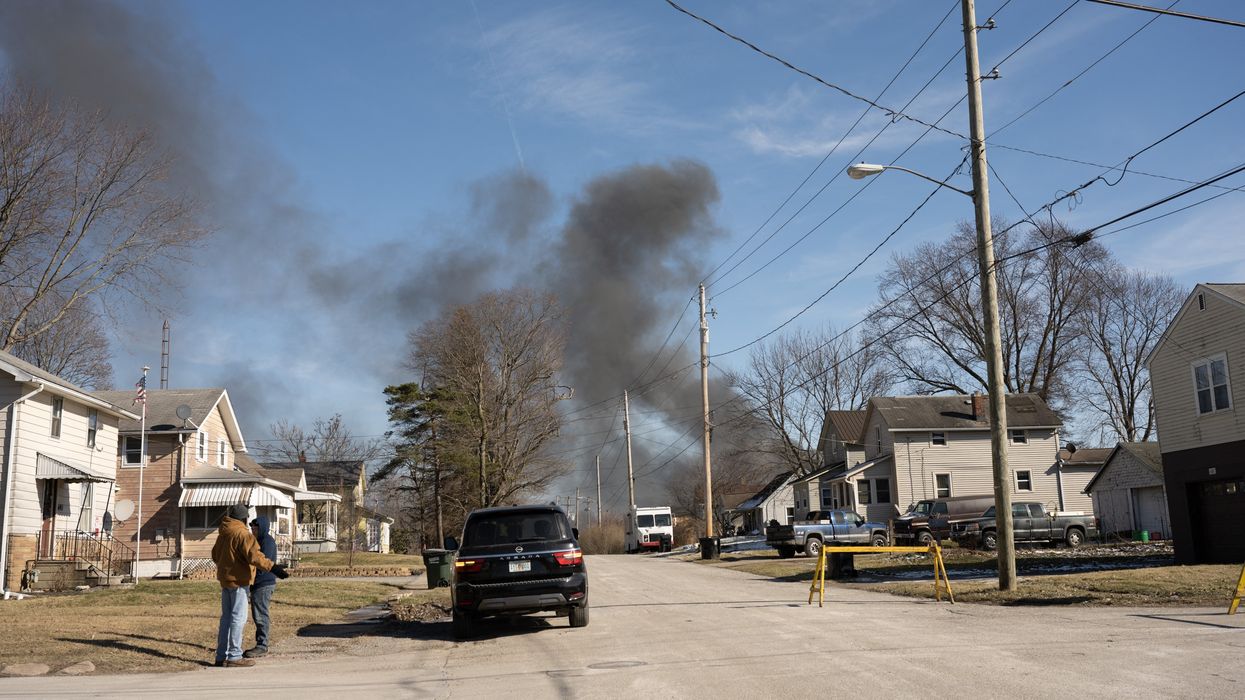
"It's inconceivable that there wouldn't have been someone from the enforcement office, or general counsel, saying, 'Oh, Norfolk Southern wants to do an uncontrolled burn—that's illegal, you cannot do that," said a former EPA official.
A day after the head of the National Transportation Safety Board told Congress that the deliberate burning of toxic chemicals in five crashed train cars in East Palestine, Ohio last year was unnecessary, a former Environmental Protection Agency official said the so-called "controlled burn" also likely went against EPA regulations.
Kevin Garrahan, who worked for the agency for 40 years and focused on environmental risk assessment and hazardous waste cleanup, told HuffPost that soon after a Norfolk Southern train derailed in the town of 4,700 people, he alerted a former EPA colleague to a 2022 memo on the open burning and open detonation of waste explosives.
The memo described when local EPA officials can issue permits for the pre-planned combustion of waste explosives, and said the open burning of hazardous waste should be a last resort.
Because the EPA determined in 1987 that "open burning of nonexplosive waste could not be conducted in a manner that was protective of human health and the environment," the memo says, the method "is generally the least environmentally preferred treatment technology and, consistent with existing requirements, should only be available where there are no safe modes of treatment."
Considering laws banning the open burning of chemicals and the EPA's knowledge of the danger that was spelled out in the memo, the decision to allow emergency crews to blast holes in five train cars, drain the toxic vinyl chloride they were carrying into pits, and set the chemicals on fire seemed "incredibly stupid and reckless," Garrahan wrote to his colleague.
"Am I missing something?" he asked.
"The big question is if there is another train derailment involving toxic chemicals—and there will be—would EPA sit idly by and allow a state and a polluter to decide to do an open burn again?"
Garrahan's former colleague agreed that there were concerns about "OB/OD," or open burning and open detonation, but did not reply to Garrahan's later emails about the safety of the operation.
In a case of a private company directing a public official regarding their response to a potential public safety threat, East Palestine fire chief Keith Drabick told the NTSB that Norfolk Southern and its contractors pushed him to approve the deliberate burning of the vinyl chloride, a known carcinogen that has been linked to liver, brain, lung, and blood cancers as well as neurological damage. Drabick said railroad officials gave him just 13 minutes to make the decision.
Garrahan told HuffPost that the EPA, which deployed state and federal officials to the crash site, should have stepped in and cited the 2022 memo as proof that the so-called "controlled burn" that Norfolk Southern was suggesting actually fit the definition of open detonation.
"It's inconceivable that there wouldn't have been someone from the enforcement office, or general counsel, saying, 'Oh, Norfolk Southern wants to do an uncontrolled burn—that's illegal, you cannot do that," Garrahan said, calling the memo a "bombshell."
Instead, the EPA to this day has referred to the operation, which sent huge plumes of black smoke into the surrounding area and forced an evacuation of East Palestine, as a "controlled burn," suggesting any damage would have been contained.
The incineration of the vinyl chloride raised concerns about the release of dioxins, another class of toxic compounds that are linked to reproductive and developmental harms and are also carcinogenic. HuffPost reported that an EPA dioxin expert was not consulted about the Norfolk Southern derailment and its aftermath until a month after the accident.
Judith Enck, a former EPA regional administrator, told the outlet that the EPA went against their previous protocols, which were in place in 2012 when a train carrying vinyl chloride derailed in Paulsboro, New Jersey.
Officials in that case sealed off the affected cars and vacuumed the hazardous materials before taking it to a facility for safe disposal.
As Jennifer Homendy, chair of the NTSB, testified at a congressional hearing on Wednesday, Drabick and other officials tasked with approving the deliberate burn were not given all the relevant information they needed from Norfolk Southern about a potential spontaneous explosion.
The maker of the vinyl chloride in the cars, Oxy Vinyls, told the rail company that there was no hazardous chemical reaction happening in the crashed train.
"They believed polymerization was not occurring, and there was no justification to do a vent and burn," Homendy said. "There was another option: let it cool down."
Oxy Vinyls' input was not passed along to Ohio Gov. Mike DeWine, Drabick, or other local authorities who proceeded with the incineration that allowed Norfolk Southern to reopen the railroad the following day.
"Meanwhile," said Plain Dealer reporter Jake Zuckerman, "some of the locals are still stuck in hotels, that Norfolk Southern is no longer paying for. And they say they're suffering symptoms of chemical exposure, which the EPA and Norfolk Southern deny."
The EPA's decision-making in the case of East Palestine raises questions about the future safety of other American communities if a similar accident happens.
"EPA sat idly by when a major bad decision was made," Enck told HuffPost. "The big question is if there is another train derailment involving toxic chemicals—and there will be—would EPA sit idly by and allow a state and a polluter to decide to do an open burn again?"
"All railroad accidents are avoidable," said BLET's national president. "This collision underscores the need for significant improvements in rail safety for both workers and the public."
A Norfolk Southern conductor was killed in Ohio early Tuesday, elevating scrutiny of the rail giant and calls for dramatic improvements to industry safety regulations in the wake of a devastating derailment in the state last month.
Louis Shuster, president of the Brotherhood of Locomotive Engineers and Trainmen (BLET) Division 607, was fatally injured when a dump truck collided with a train while he was on the outside of a railcar at the Cleveland-Cliffs Cleveland Works steel plant.
"Lou was a passionate and dedicated union brother," said Pat Redmond, local chairman of the BLET division. "He was always there for his coworkers. He was very active in helping veterans who worked on the railroad and veterans all across our community."
The 46-year-old Army veteran was a father to a 16-year-old son and a caregiver for his elderly parents, according to the union. A GoFundMe fundraiser has been set up to help the family with funeral expenses.
"Norfolk Southern has been in touch with the conductor's family and will do all it can to support them and his colleagues. We are grieving the loss of a colleague today. Our hearts go out to his loved ones during this extremely difficult time," the company said.
The rail company, which added that it is working with city police and Cleveland-Cliffs representatives to learn everything possible about the deadly collision, has faced national criticism since a train carrying hazardous materials derailed and caught fire in East Palestine, Ohio, near the Pennsylvania border, on February 3, creating an environmental and public health disaster.
Following another Norfolk Southern derailment in Ohio Saturday afternoon—over two dozen cars came off the tracks between Dayton and Columbus—the company on Monday announced "a six-point plan to immediately enhance the safety of its operations."
However, the company's plan falls short in terms of recent demands from the Biden administration, Congress, and other critics.
After Shuster was killed on Tuesday, the National Transportation Safety Board (NTSB)—which is already probing the East Palestine disaster—announced a "special investigation" of Norfolk Southern's "organization and safety culture."
"Given the number and significance of recent Norfolk Southern accidents, the NTSB also urges the company to take immediate action today to review and assess its safety practices, with the input of employees and others, and implement necessary changes to improve safety," the board said in a statement.
Earlier Tuesday, U.S. Transportation Secretary Pete Buttigieg had tweeted that the NTSB, Federal Railroad Administration, and Occupational Safety and Health Administration are investigating the collision in Cleveland.
"Our thoughts are with the family facing this preventable tragedy. Now more than ever, it is time for stronger freight railroad accountability and safety," added Buttigieg, who is also under fire for not going far enough to rein in rail safety risks.
BLET national president Eddie Hall pointed to the conductor's death as more proof of the need for stricter rail safety rules.
"This was a tragic situation and it's a devastating loss for the Shuster family as well as the members of this union," he said. "All railroad accidents are avoidable. This collision underscores the need for significant improvements in rail safety for both workers and the public."
As Common Dreams reported last week, Hall welcomed parts of the bipartisan Railway Safety Act of 2023—introduced by Sen. Sherrod Brown (D-Ohio) after the East Palestine derailment—while also warning that "you can run a freight train through the loopholes."
This post has been updated with information about the fundraiser.

The preliminary report came as U.S. Transportation Secretary Pete Buttigieg—under pressure to boost rail safety rules—visited East Palestine, the site of the Norfolk Southern train derailment.
Federal investigators on Thursday released a highly anticipated preliminary report about the February 3 derailment of a train carrying hazardous materials in East Palestine, Ohio, where residents are now worried about health and environmental effects.
Norfolk Southern Railway's (NS) train 32N featured two head-end locomotives, a distributed power locomotive, and 149 railcars—20 of which were transporting combustible liquids as well as flammable liquids and gas, including vinyl chloride.
Thirty-eight cars derailed, including 11 containing hazardous materials "that subsequently ignited, fueling fires that damaged an additional 12 non-derailed railcars," according to the new National Transportation Safety Board (NTSB) report. Amid fears of an explosion, crews conducted a "controlled venting of the five vinyl chloride tank cars."
While the release of hazardous materials and its short- and long-term impacts on residents and the region have garnered national attention—and the U.S. Environmental Protection Agency this week ordered Norfolk Southern to pay for cleaning up contaminated soil and water—the NTSB's four-page report has put focus on a potential cause of the derailment: a wheel bearing failure.
Citing Allan Zarembski, director of the Railway Engineering and Safety Program at the University of Delaware, The Washington Post reported Thursday that "an overheated bearing is perhaps the most common cause of a failed axle in a derailment."
"In recent years," the newspaper added, "railroads—including Norfolk Southern—have added sensors on tracks that measure the temperature of bearings to determine whether overheating could pose a derailment risk."
Train 32N, which Norfolk Southern workers say they knew was unsafe, passed three hot bearing detector (HBD) systems—designed to detect overheating and provide audible real-time warnings to crews—before it derailed, the NTSB report says. At milepost 79.9, the suspect bearing from car 23 was 38°F above ambient temperature; at milepost 69.01, it was 103°F; at milepost 49.81, it was 253°F.
NS crews are supposed to stop and inspect potential problems when alerts indicate that there is "a difference between bearings on the same axle greater than or equal to 115°F," or there is a bearing between 170°F and 200°F, the publication notes. If the recorded temperature is greater than 200°F, the instruction is to "set out" the railcar.
In this case, the HBD system at milepost 49.81 "transmitted a critical audible alarm message instructing the crew to slow and stop the train to inspect a hot axle," the document details. "The train engineer increased the dynamic brake application to further slow and stop the train. During this deceleration, an automatic emergency brake application initiated, and train 32N came to a stop."
"After the train stopped, the crew observed fire and smoke and notified the Cleveland East dispatcher of a possible derailment," the report continues. "With dispatcher authorization, the crew applied handbrakes to the two railcars at the head of the train, uncoupled the head-end locomotives, and moved the locomotives about 1 mile from the uncoupled railcars. Responders arrived at the derailment site and began response efforts."
In addition to outlining the evidence collected from the scene, the NTSB document stresses that the investigation is ongoing:
Investigators examined railroad equipment and track conditions; reviewed data from the signal system, wayside defect detectors, local surveillance cameras, and the lead locomotive's event recorder and forward-facing and inward-facing image recorders; and completed interviews. NTSB investigators identified and examined the first railcar to derail, the 23rd railcar in the consist. Surveillance video from a local residence showed what appeared to be a wheel bearing in the final stage of overheat failure moments before the derailment. The wheel bearing and affected wheelset have been collected as evidence and will be examined by the NTSB. The vinyl chloride tank car top fittings, including the relief valves, were also removed and examined by the NTSB on scene. The top fittings will be shipped to Texas for testing under the direction of the NTSB.
The Brotherhood of Locomotive Engineers and Trainmen (BLET) national president Eddie Hall said in a statement Thursday that the union has been assisting the NTSB in its investigation, which will continue, and though an agreement with the board limits some of what he can say today, the former locomotive engineer wanted to emphasize a few points not included in the report.
"First, we were very fortunate this time that there were three crew members on this train," Hall said. "They were able to respond to the emergency, uncouple the locomotives from the train cars, and take other action. If this had been a train operated by one crew member it may have taken longer to react to the fire caused by the failure of the bearings, axles, and other mechanical items. It's not unusual for things to go wrong on trains and sometimes many things. This is why it is important to have experienced engineers and conductors onboard. But, despite running ever longer trains that routinely carry hazardous materials, railroad CEOs have pushed for having only one person on the train and to even use remotely-operated trains. This is a serious mistake."
"Second, the railroads and their trade association, the Association of American Railroads (AAR), employ armies of lobbyists on Capitol Hill who are there not to promote safety regulations but to slow the implementation of federal safety regulations or attempt to eliminate them altogether. Over the past two decades, they have spent nearly a half billion dollars lobbying Congress," he continued. "In the absence of federal requirements, it's important to note that the railroads will continue to self-regulate."
"The railroads have opposed any government regulation on train length; they have sought waivers to eliminate having trained inspectors monitor rail cars; and they have pushed back on the train crew staffing rule," he added. "Already, the AAR and the railroads are pushing back against attempts to learn from this derailment... Now is the time to toughen regulations on America's railroads to keep both railroad workers and the communities our members operate through safe."
The report was put out as U.S. Transportation Secretary Pete Buttigieg visited East Palestine—the day after an appearance there from former President Donald Trump, who is seeking the GOP's 2024 presidential nomination and whose administration rolled backback Obama-era rail safety regulations.
Buttigieg's trip to the Ohio town also followed the Tuesday release of a U.S. Department of Transportation's plan to hold rail companies accountable and protect workers and affected communities—a plan which, as Common Dreams reported, has "too many holes," according to Railroad Workers United.
Politico noted that Buttigieg on Thursday morning addressed why he had not visited the town sooner.
"What I tried to do is balance two things: My desire to be involved and engaged and on the ground—which is how I’m generally wired to act—and my desire to follow the norm of Transportation secretaries, allowing NTSB to really lead the initial stages of the public-facing work," he said. "I'll do some thinking about whether I got that balance right, but I think the most important thing is first of all making sure the residents here have what they need."
This post has been updated with comment from the BLET.

In letters to the EPA and NTSB, the lawmakers expressed concern about the safety of East Palestine residents, given the release of hazardous materials, as well as efforts to prevent future derailments.
As residents of East Palestine, Ohio prepared for a Wednesday night town hall meeting about the recent derailment of a Norfolk Southern train carrying hazardous materials, U.S. senators from the state and neighboring Pennsylvania called for federal action.
Sens. Sherrod Brown (D-Ohio), Bob Casey (D-Pa.), John Fetterman (D-Pa.), and J.D. Vance (R-Ohio) sent letters to a pair of federal agencies sounding the alarm about the safety of East Palestine residents and communities at risk from future derailments.
In their letters to U.S. Environmental Protection Agency (EPA) Administrator Michael Regan and National Transportation Safety Board (NTSB) Chair Jennifer Homendy, the senators wrote that "while we are grateful no injuries or fatalities resulted directly from the derailment, we are deeply concerned about the release of hazardous materials into the air and groundwater."
After noting that East Palestine residents had to leave the area due to the derailment, fire, and "controlled release" of vinyl chloride—just one of the hazardous materials the train was transporting—the senators said, "No American family should be forced to face the horror of fleeing their homes because hazardous materials have spilled or caught fire in their community."
While praising the EPA's initial response to the disaster, in coordination with state and local entities, the senators also asked the agency to keep monitoring the region, and to use its authority under federal law "to ensure that Norfolk Southern pays for the cleanup of these hazardous materials, as well as compensates residents and affected businesses as required."
"Norfolk Southern has a responsibility to these first responders and the workers that put their lives on the line to keep the community safe by fighting fires, going door to door to evacuate residents, and working on getting the derailed train, hazardous material, and contaminated water and soil removed from the immediate area," they wrote to Regan.
The senators also sent the EPA administrator a series of questions and requested a response by February 24.
In their letter to Homendy, the federal lawmakers lauded the work of the NTSB staff to "collect perishable evidence quickly from the site of the derailment" and provide updates about the initial stages of the agency's investigation into the incident.
"The NTSB's independent investigation to determine probable causes of the East Palestine derailment is critical to preventing future derailments involving hazardous materials in Ohio and Pennsylvania, as well as across the nation," the senators wrote. "We will use NTSB's findings and any pertinent safety recommendations to advance measures that Congress and the U.S. Department of Transportation [DOT] can implement to prevent derailments involving hazardous materials."
After stressing that "the NTSB must independently assess all factors and causes that may have contributed to this derailment," they shared concerns from constituents, experts, and railroad workers representatives about high-hazard flammable train definition and safety practices; axle, journal bearing, and railcar inspections; electronically controlled pneumatic brakes; staffing practices; and railcar and track maintenance.
The letter notes that the lawmakers don't expect the NTSB to respond to those concerns unless the probe "determines it appropriate" but asks the board to let them know if it has the budget and resources necessary to investigate and identify "trending factors and causes that may contribute to future derailments involving hazardous materials."
The NTSB letter also states that the senators "will be pressing the U.S. Department of Transportation to conduct new analysis and act to improve railroad safety practices and prevent derailments of trains carrying hazardous materials."
The Lever reported last Friday that despite the crisis in Ohio, "Secretary of Transportation Pete Buttigieg's department has not moved to reinstate an Obama-era rail safety rule aimed at expanding the use of better braking technology."
Instead of reviving the rule repealed under former President Donald Trump, the news outlet explained, "transportation regulators have been considering a rail-industry-backed proposal that could weaken existing brake safety rules."
Jeff Hauser, executive director of the Revolving Door Project, said Tuesday that "now, all eyes are on Secretary Buttigieg."
"Buttigieg should call out the brake rule repeal for the horrendous decision it was, start working to implement a new rule, take Norfolk Southern to task, and push back on corporations deciding how the DOT regulates them," Hauser argued. "Anything short of that only signals to the railroads that this type of incident will be tolerated."