

SUBSCRIBE TO OUR FREE NEWSLETTER
Daily news & progressive opinion—funded by the people, not the corporations—delivered straight to your inbox.
5
#000000
#FFFFFF
To donate by check, phone, or other method, see our More Ways to Give page.
Daily news & progressive opinion—funded by the people, not the corporations—delivered straight to your inbox.
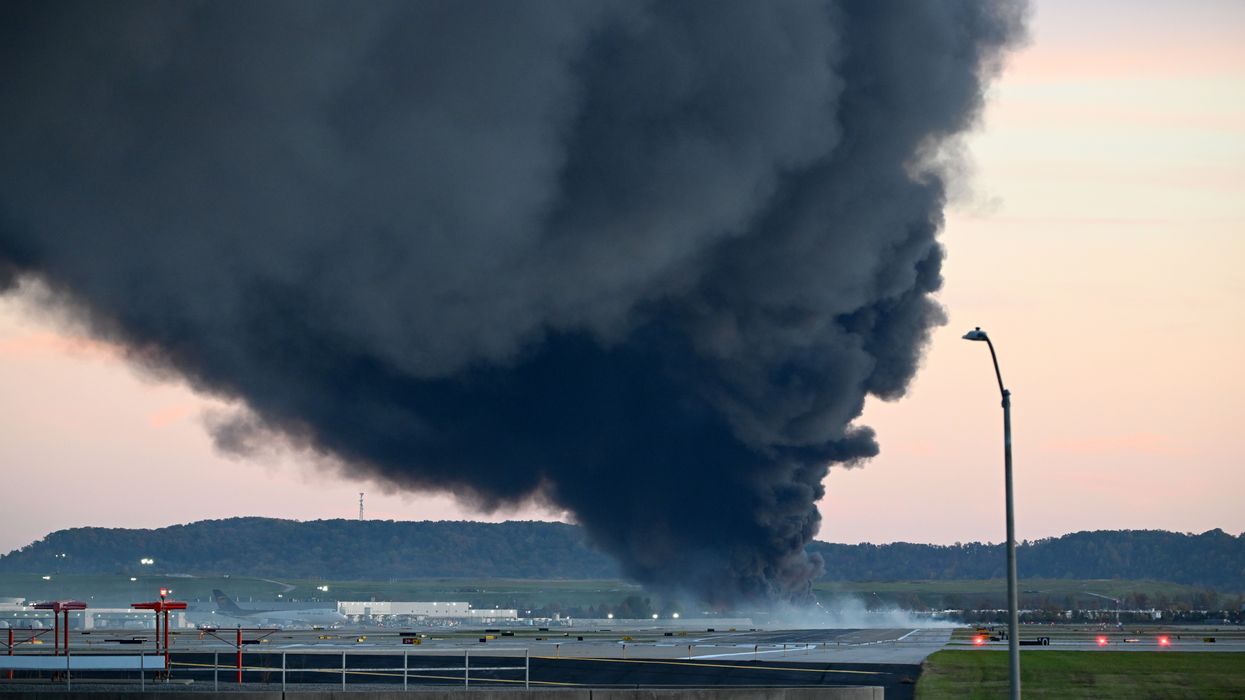
Police announced a shelter-in-place order for "all areas north of the airport to the Ohio River."
This is a developing story… Please check back for updates…
Aerial footage showed plumes of black smoke and flames around the Louisville Muhammad Ali International Airport in Kentucky after a UPS plane crashed during its departure on Tuesday evening.
The Federal Aviation Administration said on social media that UPS Flight 2976—a McDonnell Douglas MD-11 bound for Daniel K. Inouye International Airport in Honolulu, Hawaii—crashed around 5:15 pm local time. The agency added that the FAA and National Transportation Safety Board will investigate, with the NTSB providing all updates.
The Louisville Metro Police Department confirmed that the LMPD and multiple other agencies were responding to the scene, where there are "injuries reported."
LMPD initially announced a shelter-in-place order "for all locations within five miles of the airport," which was then expanded to "all areas north of the airport to the Ohio River."
The airport—which confirmed that "the airfield is closed" after the crash—is the UPS global hub. The shipping giant said in a statement that there were three crewmembers onboard and "at this time, we have not confirmed any injuries/casualties."
"UPS will release more facts as they become available, but the National Transportation Safety Board is in charge of the investigation and will be the primary source of information about the official investigation," the company added.
As CNN reported Tuesday:
The McDonnell Douglas MD-11F is a freight transport aircraft manufactured originally by McDonnell Douglas and later by Boeing. The aircraft is primarily flown by FedEx Express, Lufthansa Cargo, and UPS Airlines for cargo.
The plane also served as a popular wide-bodied passenger airplane after it was first flown in 1990. The aircraft involved in Tuesday's crash was built in 1991.
As fuel costs increased for the three engine jets many of them were converted to freighters. The plane can take off weighing in at a maximum 633,000 pounds and carrying more than 38,000 gallons of fuel, according to Boeing, which bought McDonnell Douglass.
The International Brotherhood of Teamsters said that it "is monitoring this developing tragic event on the ground," and "as this horrific scene is being investigated, prayers on behalf of our entire international union are with those killed, injured, and affected, including their families, co-workers, and loved ones."
Louisville Mayor Craig Greenberg said that he and his wife, Rachel, "are praying for victims of the UPS plane that crashed."
"We have every emergency agency responding to the scene," the Democrat added. "There are multiple injuries and the fire is still burning. There are many road closures in the area—please avoid the scene."
Democratic Kentucky Gov. Andy Beshear, who is headed to Louisville for a briefing with the mayor, said, "Please pray for the pilots, crew, and everyone affected."
Republican President Donald Trump's transportation secretary, Sean Duffy, similarly said, "Please join me in prayer for the Louisville community and flight crew impacted by this horrific crash."
During a press conference earlier on Tuesday, Duffy had warned of "mass chaos" if the ongoing government shutdown continues, saying: "You will see mass flight delays. You'll see mass cancellations, and you may see us close certain parts of the airspace, because we just cannot manage it because we don't have the air traffic controllers."
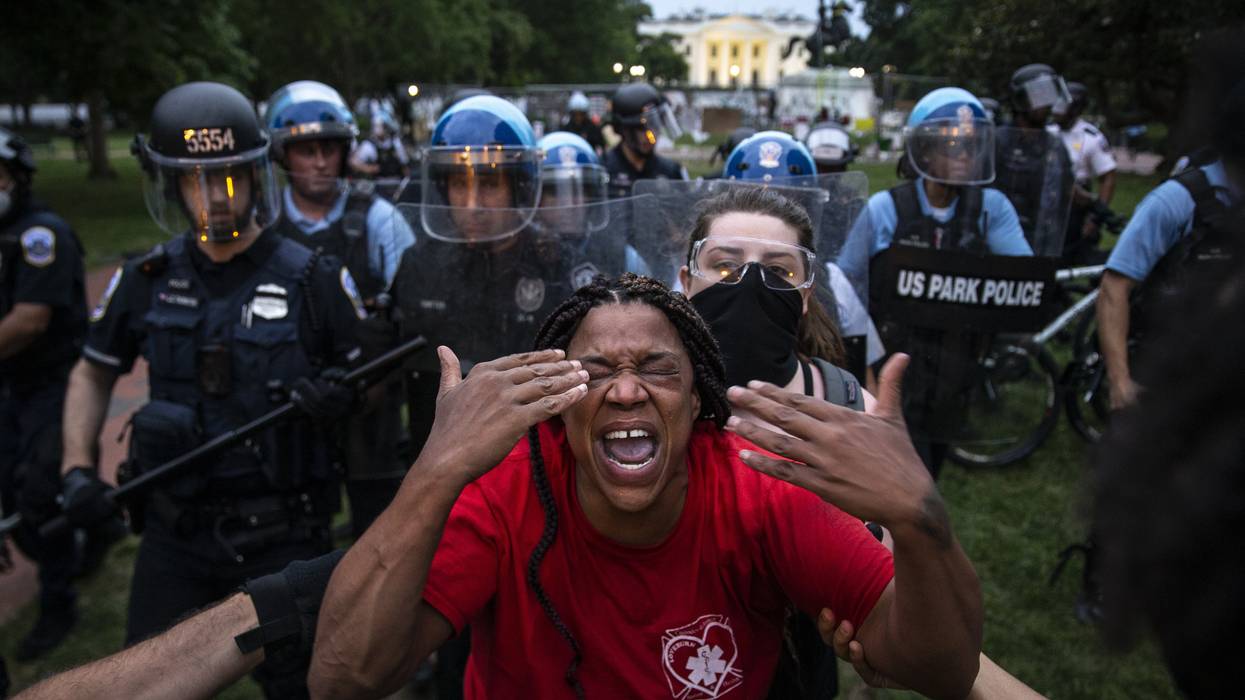
One critic called the move "an unprecedented abandonment of the Department of Justice's responsibility to enforce civil rights laws and protect communities from unlawful police abuse."
Racial justice advocates decried Wednesday's announcement by the U.S. Department of Justice that it will end law enforcement reform and accountability efforts, including the Biden administration's agreements with the cities of Minneapolis and Louisville—a move that came just days before the fifth anniversary of George Floyd's murder by a Minneapolis cop.
The Department of Justice's (DOJ) Civil Rights Division said it is dropping lawsuits against the Minneapolis and Louisville police departments and ending pending consent decrees—court-enforceable agreements under which law enforcement agencies commit to reform—with the two cities. The deals, which have been submitted to judges for approval, have been held up in federal court as the Trump administration has sought to block their implementation.
The Civil Rights Division said it "will also be closing its investigations into, and retracting the Biden administration's findings of constitutional violations on the part of," the Louisiana State Police and police departments in Phoenix; Memphis; Oklahoma City; Trenton, New Jersey; and Mount Vernon, New York.
To “disappear” DOJ findings like this is the most disturbing and disgraceful part. A key advantage of DOJ pattern & practice investigations is that DOJ has the resources to absorb the cost of generating the findings that indiv civ rights groups suing police depts find onerous & often prohibitive.
[image or embed]
— Sherrilyn Ifill ( @sifill.bsky.social) May 21, 2025 at 8:02 AM
Civil rights lawyer Benjamin Crump, who represents the families of George Floyd—murdered by then-Minneapolis police officer Derek Chauvin on May 25, 2020—and Breoanna Taylor, who was killed earlier that year by Louisville police, called the DOJ announcement a "slap in the face."
"Just days before the fifth anniversary of George Floyd's murder—a moment that galvanized a global movement for justice—the U.S. Department of Justice has chosen to turn its back on the very communities it pledged to protect," Crump said in a statement Wednesday.
"By walking away from consent decrees in Minneapolis and Louisville, and closing its investigation into the Memphis Police Department while retracting findings of serious constitutional violations, the DOJ is not just rolling back reform, it is attempting to erase truth and contradicting the very principles for which justice stands," he asserted.
"These consent decrees and investigations were not symbolic gestures, they were lifelines for communities crying out for change, rooted in years of organizing, suffering, and advocacy," Crump continued, adding that the DOJ's moves "will only deepen the divide between law enforcement and the people they are sworn to protect and serve."
Congresswoman Jasmine Crockett (D-Texas) lamented the DOJ move and accused the Trump administration of acting "like Breonna Taylor and George Floyd's lives didn't mean a damn thing."
Democratic Minneapolis Mayor Jacob Frey said his city would proceed with reforms despite the DOJ's announcement, while questioning the move's timing.
"The Trump administration is a mess. It is predictable that they would move for a dismissal the very same week that George Floyd was murdered five years ago," he said. "What this shows is that all [President] Donald Trump really cares about is political theater."
The DOJ claimed the Biden administration falsely accused the Minneapolis and Louisville police departments of "widespread patterns of unconstitutional policing practices by wrongly equating statistical disparities with intentional discrimination and heavily relying on flawed methodologies and incomplete data."
"These sweeping consent decrees would have imposed years of micromanagement of local police departments by federal courts and expensive independent monitors, and potentially hundreds of millions of dollars of compliance costs, without a legally or factually adequate basis for doing so," the agency argued.
Assistant Attorney General Harmeet Dhillon—the conspiracy theorist who heads the Civil Rights Division despite, or perhaps because of, her troubled history of working against voting, reproductive, LGBTQ+, and other civil rights—said in a statement Wednesday that her agency is ending the Biden administration's "failed experiment of handcuffing local leaders and police departments with factually unjustified consent decrees."
"Overbroad police consent decrees divest local control of policing from communities where it belongs, turning that power over to unelected and unaccountable bureaucrats, often with an anti-police agenda," Dhillon added.
"DOJ's actions today amount to a public declaration that law enforcement agencies are above the law."
Legal Defense Fund director of strategic initiatives Jin Hee Lee called the DOJ announcement "an unprecedented abandonment of the Department of Justice's responsibility to enforce civil rights laws and protect communities from unlawful police abuse."
Lee said the DOJ investigations that led to the consent decrees "revealed a litany of systemic harms to community members, whom officers are sworn to protect—from wanton violence and sexual misconduct to unlawful stops, searches, and arrests, and racially discriminatory policing."
"By abandoning its obligation to pursue legal remedies that would stem this unlawful conduct, DOJ necessarily condones it," Lee added. "DOJ's actions today amount to a public declaration that law enforcement agencies are above the law."
NAACP president Derrick Johnson said on social media, "It's no surprise that Trump's Department of Coverups and Vengeance isn't seeking justice."
"It's been five years, and police reform legislation still hasn't passed in Congress, and police departments still haven't been held accountable," Johnson added, referring to Floyd's murder. "Five years."
Furthermore, speculation is growing over the prospect of Trump pardoning Chauvin. Addressing the possibility, Democratic Minnesota Gov. Tim Walzsaid earlier this week that "if Chauvin's federal conviction is pardoned, he will still have to serve the remainder of his 22-and-a-half-year state prison sentence for murder and manslaughter."
Opponents vowed to fight the Trump administration's civil rights pushback.
"Let me be clear: We will not give up," Crump said. "This movement will not be swayed or deterred by fickle politics. It is anchored in the irrefutable truth that Black lives matter, and that justice should not depend on who is in power."
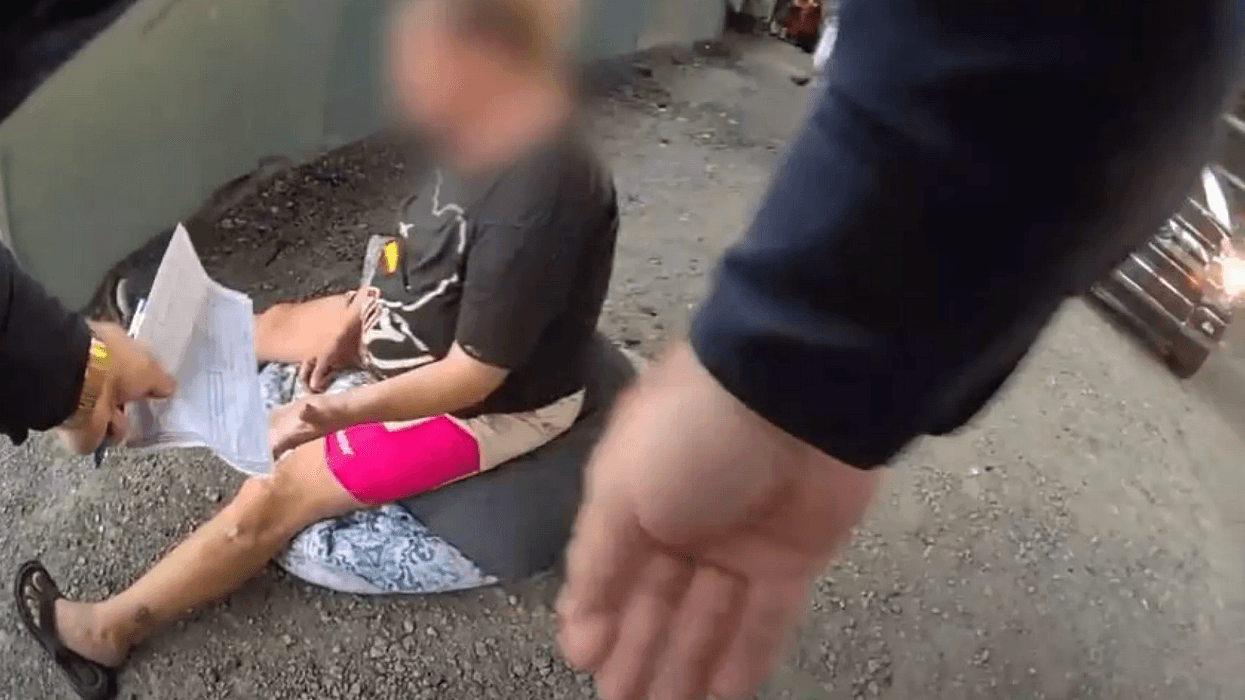
One advocate called out "the politicians who paved the way for this tragedy."
"I've got to go to the hospital," a pregnant woman filmed by the Louisville Metro Police Department's body cameras in late September told officers, standing near a mattress beneath a busy overpass. "What am I doing wrong?"
The woman was in labor and had told the police as they approached her that she thought her water had broken, but that didn't stop the officers from giving her a ticket for violating a new Kentucky law that bans all street camping—one of dozens of laws criminalizing homelessness that were passed this year.
Lt. Caleb Stewart, who cited the woman in Louisville, told her that he would call an ambulance for her, but when she began moving toward the street to wait for the emergency workers, he yelled at her to stop.
"Am I being detained?" she asked.
"Yes, you're being detained," he replied. "You're being detained because you're unlawfully camping."
Stewart was later heard on the body camera's audio saying he didn't believe the woman was in labor; a public defender representing her told Kentucky Public Radio that she had in fact given birth later that day and the family was living in a shelter while waiting for a January trial date regarding her citation.
The upcoming trial and the video underscore "both the absurdity and cruelty of anti-camping laws in KY and those cropping up nationwide," said Jesse Rabinowitz of the National Homelessness Law Center. "This is an extreme incident, but unfortunately, it is not an isolated one. Instead of addressing the cause of homelessness—the fact that more and more people struggle to afford rent—politicians are passing laws that kick people when they are down and make homelessness worse. The solution to homelessness is housing and help, not tickets or fines."
The U.S. Supreme Court ruled in July that officials can ban sleeping and camping in public places. Since then, said Rabinowitz, nearly 150 cities across the U.S. have passed anti-camping bills.
The video was also publicized days after Republican elected officials celebrated "the person who murdered Jordan Neely, a homeless New Yorker," said Rabinowitz. "And [President-elect] Donald Trump and his billionaire cronies want to round up homeless people and put them in detention camps. All of these things make homelessness worse."
Shameka Parrish-Wright, director of advocacy group VOCAL-KY, said that "the disregard and disrespect of these two lives is the direct result of the so-called 'Safer Kentucky Act' that was enacted this year."
"People experiencing homelessness are fighting for their lives across the country and right here in Louisville. Investing in immediate, affordable housing and healthcare is the only way to stop this from happening again—not by handing out more tickets that won't house a single person," said Parrish-Wright. "Shame on the politicians who paved the way for this tragedy.”
"If politicians actually cared about homeless Kentuckians," she added, "they would focus on getting them the housing and support they need."
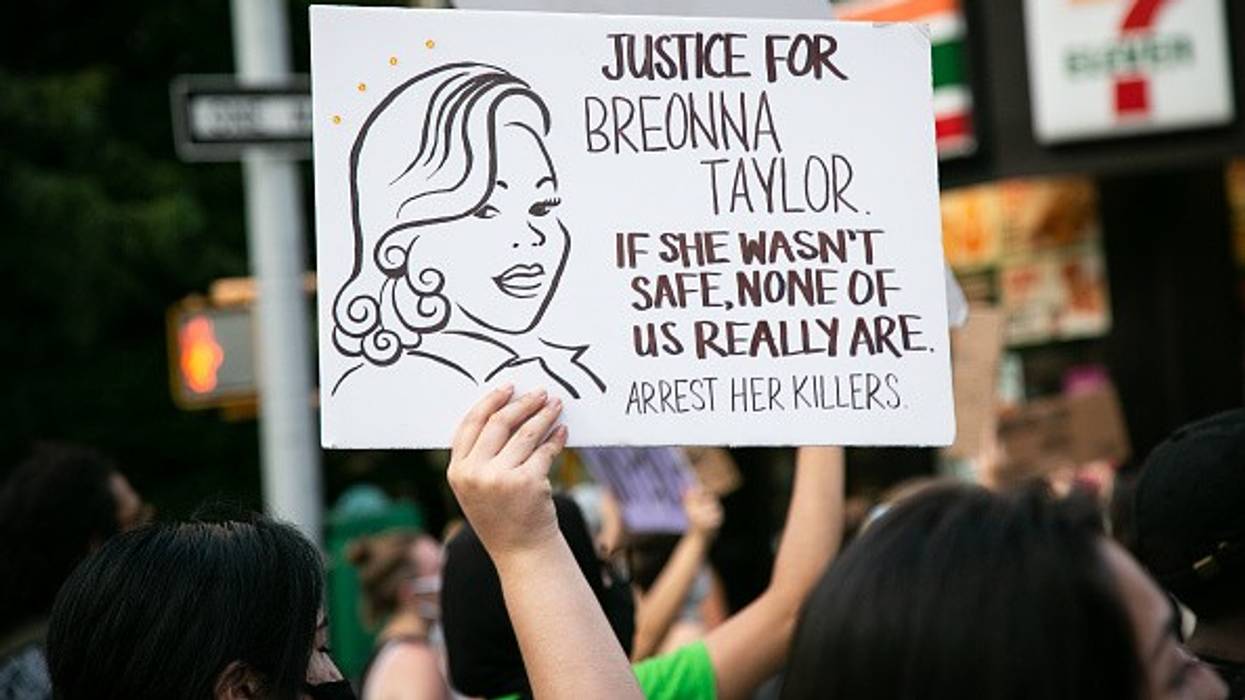
"We know it was Breonna Taylor's dream to save lives," said one rights advocate, "and this proposed legislation would do just that."
Rights advocates on Monday applauded U.S. Rep. Morgan McGarvey for taking a "bold step toward healing and justice" by introducing the Justice for Breonna Taylor Act, which would ban nationwide the kind of no-knock warrants that led to the 26-year-old woman's death in 2020.
Nearly four years to the day after Taylor was killed by police officers who forcibly entered her home in Louisville, Kentucky without warning, after allegedly lying to obtain the no-knock warrant, McGarvey (D-Ky.) joined Sens. Rand Paul (R-Ky.) and Cory Booker (D-N.J.) in proposing the bill.
Louisville and Kentucky policymakers have both prohibited or severely restricted no-knock warrants since Taylor's killing.
"Louisvillians remember Breonna Taylor and are still grieving the tragedy of her inexcusable killing by police. After Breonna's death, we passed a ban on no-knock warrants at the state and local level—if we can do this in Kentucky, we can do this nationally," said McGarvey. "The Justice for Breonna Taylor Act is going to protect people and keep our communities safe."
Under the proposal, federal law enforcement and state and local police departments that receive federal funding would be prohibited from executing no-knock warrants.
"After Breonna's death, we passed a ban on no-knock warrants at the state and local level—if we can do this in Kentucky, we can do this nationally."
Amber Duke, executive director of the ACLU of Kentucky, denounced no-knock warrants as "legalized home invasions that put lives at risk on either side of a door."
In Taylor's case, police officers used a battering ram to break down the door to the Louisville apartment shortly after midnight on March 13, 2020.
They had been investigating two men for suspected drug dealing, including one who had previously been romantically involved with Taylor and who they believed had used Taylor's apartment to receive packages.
"We know it was Breonna Taylor's dream to save lives," Duke said of the emergency room technician, "and this proposed legislation would do just that. We applaud Congressman McGarvey and the bill's co-sponsors for taking this bold step toward healing and justice."
The legislation was introduced as federal authorities announced former Officer Brett Hankison will face a jury for a third time in the case.
None of the officers involved in the shooting have ever been charged with killing Taylor, but Hankison was charged by the state of Kentucky for endangering Taylor's neighbors. He was acquitted in March 2022 and the U.S. Justice Department then charged him with civil rights violations. A federal jury deadlocked in that trial.
"He shouldn't be the only one charged," attorney Lonita Baker, who represents Taylor's mother and sister, told The Washington Post. "But the reality is that's where we stand and that's better than nothing."

"We're horrified and sickened," said March for Our Lives. "Power and peace to those that lost their lives. We'll fight like hell in their memory. This makes 146 mass shootings this year."
This is a developing story… Please check back for possible updates...
Amid national demands for stricter gun laws, at least four people were killed and eight more were injured and transported to the hospital Monday morning in a mass shooting at Old National Bank in Louisville, Kentucky.
Louisville Metro Police Department (LMPD) Deputy Chief Paul Humphrey told reporters that two officers were shot and the suspect was dead. Interim Chief Jacquelyn Gwinn-Villaroel later confirmed that the shooter was fatally shot by police.
Authorities ultimately identified the shooter as 23-year-old Connor Sturgeon. Citing an unnamed law enforcement source, CNN reported that Sturgeon was notified that he was going to be fired from his job at the bank, and that he wrote a note for his parents and a friend.
Louisville Mayor Craig Greenberg and Gov. Andy Beshear, both Democrats, joined Humphrey at a morning press conference. Choking back tears, the governor said he uses this bank personally and had friends who were killed and injured.
The latest mass shooting in Kentucky comes as the nation also watches neighboring Tennessee, where Republicans in the state Legislature last week expelled a pair of young, Black Democratic lawmakers for supporting protests for gun control on the House floor after the deadly Covenant School shooting in Nashville.
The carnage in Louisville sparked yet another wave of demands for stricter gun laws.
"This is America," tweeted March for Our Lives, which was formed by students after the 2018 massacre at Marjory Stoneman Douglas High School in Parkland, Florida.
"We're horrified and sickened. Power and peace to those that lost their lives. We'll fight like hell in their memory. This makes 146 mass shootings this year," the group continued, citing figures from the Gun Violence Archive.
Everytown for Gun Safety declared: "More lives stolen by senseless, preventable gun violence. We shouldn't have to accept this. No other country does."
"Our hearts are with the victims, survivors, their loved ones, and the entire Louisville community," the group added. "Tonight there will be more empty seats at dinner tables and more families grieving loved ones who should still be here."
A federal law enforcement source confirmed to CNN that an AR-15-style rifle was used in the Louisville shooting.
"This horrific shooting is exactly why AR-15-style weapons and assault weapons have no place in our communities," said Kris Brown, president of Brady, the oldest national gun violence prevention group. "These weapons of war were designed for the battlefield and to kill as many people as quickly as possible, which is why they are the weapon of choice for mass shooters. Preventable tragedies like this are why other developed countries, including the United Kingdom and Australia, have banned these weapons for civilian use."
"Whether it's a bank, a school, a supermarket, or a church, Americans no longer feel safe in their communities. And Americans are increasingly tired of living in fear of being a victim of a mass shooting," Brown stressed. "It does not have to be this way. But until the gun industry no longer has a vice grip on our elected officials, this will continue to be our daily reality."