

SUBSCRIBE TO OUR FREE NEWSLETTER
Daily news & progressive opinion—funded by the people, not the corporations—delivered straight to your inbox.
5
#000000
#FFFFFF
To donate by check, phone, or other method, see our More Ways to Give page.
Daily news & progressive opinion—funded by the people, not the corporations—delivered straight to your inbox.
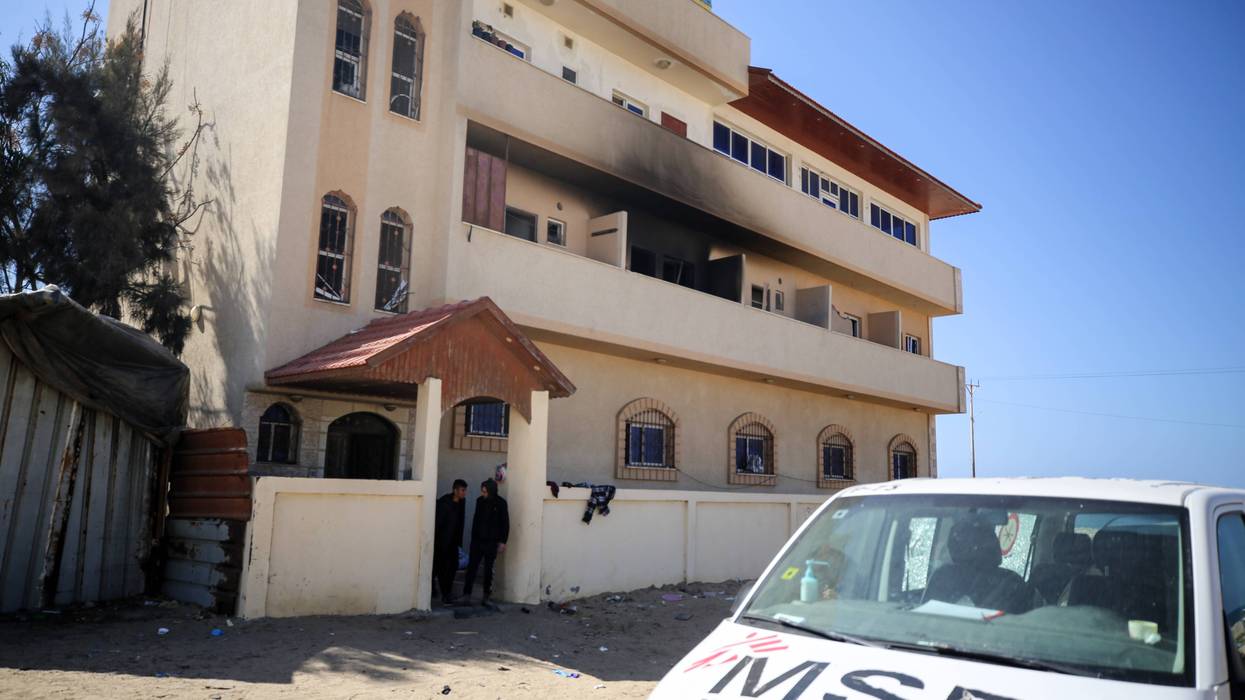
"This is not justice," said the healthcare charity. "Two years of silence, followed by closures that raise more questions than they answer, is unacceptable."
The international healthcare charity Médecins Sans Frontières on Thursday joined the humanitarian group World Central Kitchen in demanding that an "impartial investigative body" examine deadly Israeli attacks on its staffers in Gaza, following the Israeli military's announcement that it was closing the cases without opening a criminal investigation.
MSF, also known in English as Doctors Without Borders, noted that the decision by the Israeli military advocate general (MAG) did "not come as a surprise" and was "the predictable output of a military apparatus investigating itself."
The Israel Defense Forces and Prime Minister Benjamin Netanyahu's government, said the France-based organization, have proven themselves "unwilling to respond to the extent of violations that may amount to war crimes emerging from Gaza," with Israeli officials continuing to insist that the IDF has been targeting Hamas with its bombardment of Gaza—despite the fact that the death toll of more than 73,000 Palestinians includes at least 22,000 women and 20,000 children and that healthcare facilities, schools, and at least 92% of residential buildings have been destroyed or damaged in attacks.
In addition, said MSF, 15 staff members of the healthcare organization have been killed by Israeli forces since they began bombarding Gaza in retaliation for a Hamas-led attack in October 2023, including two who were killed in multiple attacks on an aid convoy in Gaza City in November 2023 and two who were killed in a strike on an MSF shelter in Khan Younis in February 2024.
"There is no military objective that justifies the wholesale sacrifice of civilians. And there is no internal military review that can substitute for genuine, independent, and impartial accountability."
MSF submitted those cases to the MAG for review, but along with an attack that killed seven World Central Kitchen (WCK) aid workers in April 2024, the military said there was no suspicion of criminal conduct in the assaults on MSF workers.
"This is not justice," said MSF. "Two years of silence, followed by closures that raise more questions than they answer, is unacceptable."
"MSF staff and their family members are dead. Their names are known," the group continued. "Their locations were shared. Their vehicles were identified. We have always maintained that all elements point to a clear responsibility of the Israeli army for the deadly attacks. And yet, those responsible for their deaths have declined to pursue any criminal investigation."
The decision by the MAG makes clear, said the group, that "there is no prospect of accountability within the Israeli legal system for the killing of our staff, just as there has been no accountability for Israel's ongoing genocide against Palestinians."
Following the MAG's announcement on Wednesday, World Central Kitchen issued a statement condemning Israel's "account of the deaths of our seven colleagues on April 1, 2024."
"We fundamentally disagree with their decision about criminal investigations into the IDF airstrikes that killed our team," said WCK. "There has never been any excuse or justification for the attacks, and there is nothing in this account that does so. The decision is inconsistent with the full truth and deeply offensive."
Israeli authorities did not issue a warning to WCK before it attacked the aid organization's convoy, which was traveling through what was supposed to be a deconflicted zone when it was struck.
"At the time of the lethal attacks, the IDF knew that our team in Gaza was unarmed and posing a threat to nobody. It had full visual clarity on our clearly marked humanitarian vehicles during the extended, multiple airstrikes. It knew our team’s movements, identities, and activities in advance," said WCK. "We continue to demand truth and justice for our team and their families. We continue to demand an independent commission to investigate the airstrikes because the IDF cannot credibly investigate its own conduct. And we continue to grieve the loss of our friends."
MSF stressed that Israel's decision to "close" the cases of the attacks "must be understood in their proper context: In Gaza, tens of thousands of Palestinians have been killed. Healthcare facilities have been destroyed. Humanitarian convoys have been struck. Journalists, medical personnel, UN personnel, and aid workers have been killed in numbers unprecedented in any recent conflict."
"MSF reaffirms what we have stated since the beginning of this violence: There is no military objective that justifies the wholesale sacrifice of civilians," said the group. "And there is no internal military review that can substitute for genuine, independent, and impartial accountability."
"To our colleagues we have lost," MSF added, "and to the countless civilians and humanitarian workers who have perished in Gaza: We will not let your deaths be filed away as procedural inevitabilities. You deserved protection. You deserve justice."
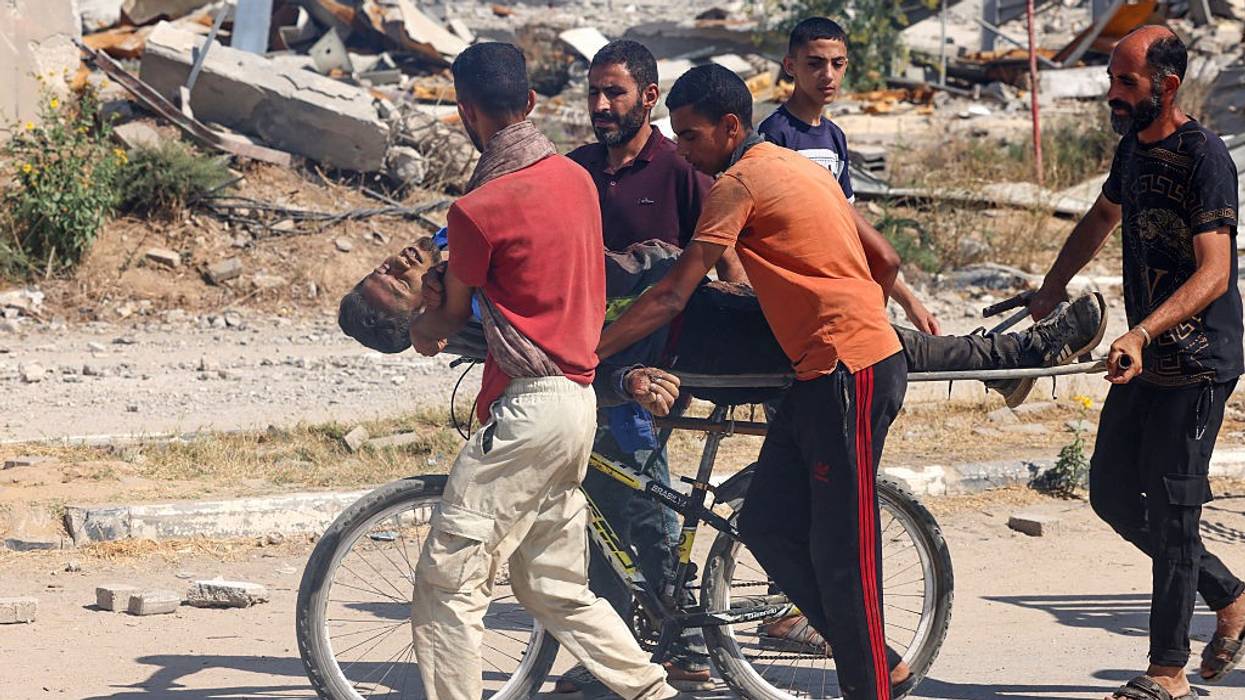
"In MSF's nearly 54 years of operations, rarely have we seen such levels of systematic violence against unarmed civilians."
The international medical aid group Médecins Sans Frontières on Thursday called for the immediate shuttering of the Israel-U.S.-backed Gaza Humanitarian Foundation, denouncing the distribution sites it operates as "essentially death traps."
Backing up its condemnation, MSF released a new analysis—titled, "This is not aid. This is orchestrated killing"—which "documents the horrors witnessed" by the group's staff over recent weeks and the deadly failures of GHF, a group conceived of by the Israeli government with the backing of the Trump administration and staffed by private U.S. contractors after the United Nations-run distribution infrastructure, powered by hundreds of cooperating NGOs, was eviscerated by Israel earlier this year.
" Children shot in the chest while reaching for food. People crushed or suffocated in stampedes. Entire crowds gunned down at distribution points," said MSF's general director Raquel Ayora in a statement. "In MSF's nearly 54 years of operations, rarely have we seen such levels of systematic violence against unarmed civilians."
"The GHF distribution sites masquerading as 'aid' have morphed into a laboratory of cruelty," says Ayora. "This must stop now."
According to the report:
MSF operates two primary healthcare centres in southern Gaza located in close proximity to the GHF distribution sites. Between 7 June and 24 July 2025, these health centres received 1,380 injured people, including 28 dead bodies from the GHF sites. This represents only a fraction of the total number of people killed and injured at the distribution sites. MSF's two health centres—due to their sheer proximity to the GHF sites—now place biweekly orders for body bags.
Over a seven-week period in June and July 2025, MSF staff treated 174 people for gunshot wounds originating from the GHF sites. The vast majority of those injured—96 percent—were young men. This reflects a grim survival strategy: families are sending the youngest and fittest to retrieve food.
The report includes testimony from Palestinians who survived the carnage they experienced at the GHF-run sites.
"We're being slaughtered," said Mohammed Riad Tabasi, a patient treated at the MSF Al-Mawasi clinic in southern Gaza. "I've been injured maybe 10 times. I saw it with my own eyes, about 20 corpses around me. All of them shot in the head, in the stomach."
Joining an international chorus condemning the U.S.-Israeli aid effort—which was criticized loudly by humanitarian aid experts from the moment of its conception—MSF called "for the immediate dismantling of the GHF scheme; the restoration of the U.N.-coordinated aid delivery mechanism" and called on governments worldwide—but "especially the United States"—as well as private donors to "suspend all financial and political support for the GHF, whose sites are essentially death traps."
As war continues to rage uninterrupted in Yemen, a humanitarian pause is badly needed as the country spirals down to chaos, leaving the majority of the population in urgent need of medical care. Restrictions on access to medical supplies and care are key impediments to improving the situation of people in need. A five-day humanitarian pause would allow supplies and care to reach those people and relieve their dire health situation.
At the same time, attacks on health facilities continue. Last October, the World Health Organization (WHO) condemned the bombing of a Medecins Sans Frontieres' (MSF) supported hospital in Saada province in northern Yemen. MSF believes that, as a consequence, 200,000 people were left without medical care. That attack, which violated International Humanitarian Law, was the second one on an MSF-run facility in a month.
Since the beginning of Saudi Arabia's attacks on Yemen, conducted with U.S. support, more than 5,700 have died (almost half of them civilians) -including hundreds of women and children- and 28,753 injuries have been reported. Several health workers have also been killed, and 47 health facilities in 11 governorates have been damaged or closed as a result of the continuous violence.
Healthcare services in all public hospitals have been reduced, especially operating theaters and intensive care units. At the same time, disrupted immunization activities have increased the risks for measles and poliomyelitis, even though Yemen is presently free of polio. The breakdown of the water supply and sanitation systems has facilitated the spread of diseases such as malaria and dengue fever, as well as acute diarrheal diseases, particularly affecting children. Also, the early warning alert system for diseases has been seriously affected because of limited communication possibilities.
The country has one of the highest rates of chronic malnutrition in the world. According to UNICEF, 1.3 million Yemeni children younger than five years now suffer from acute malnutrition, compared to 850.000 before the war started. 320.000 are severely malnourished, twice the amount before the crisis. The little cash people have is to pay for food and gas -at greatly increased prices- leaving no money to afford health care.
The Lancet reports that approximately a quarter of the country's healthcare facilities are no longer functional. To make matters worse, Ronald Kremer from MSF says, "People do not dare to go to hospitals because they are afraid that they are targeted, and even if they want to go,, they may not have the means—even where public transport does exist, it is very expensive because of the fuel problems."
Fuel problems have increased the difficulty of obtaining clean water. The lack of a proper water supply and dire sanitation and hygiene have led to outbreaks of dengue and malaria. Many Yemenis store water in open containers, which becomes an ideal breeding ground for disease-transmitting mosquitoes.
So far, there are more than 2.5 million people who have become internally displaced persons (IDPs). To compound an already difficult situation, disrupted immunization campaigns have led to an increasing number of children affected with measles and rubella, particularly among IDPs living in overcrowded conditions. As a result of the conflict, many hospitals, laboratories, health warehouses, and administrative offices have closed. Primary care facilities have minimum access to medicines, supplies, and equipment. The fuel shortage has affected the proper operations of ambulances.
In this situation, a humanitarian pause is urgently needed. As proposed by the World Health Organization, a five-day pause would allow humanitarian organizations to respond to some of the most life-threatening needs of the people, particularly women and children caught in the middle of the conflict. An MSF doctor taking care of a badly hurt child in Syria realized that the child was desperately trying to tell him something. When he asked his translator what the child was saying, the translator responded, "Don't they realize that we are children?" A similar question could be asked in Yemen today.
In a decision that promises to displace thousands of refugees, including hundreds of unaccompanied children, a French judge on Thursday upheld a regional official's approval for a plan to bulldoze the southern portion of the sprawling refugee camp in Calais, France. The judge's decision rejected an emergency appeal filed by a group of charities that sought to have the plan overturned.
The Guardian reported that the groups "filed an urgent appeal to a tribunal asking it to suspend the planned evacuation and demolition until safe and appropriate alternatives had been found for its residents, particularly unaccompanied minors."
However, a Pas-de-Calais prefect's office spokesman said that "[t]he order is applicable, except for common social areas," according to France 24. There are no details on when precisely demolition is set to begin.
Help Refugees, one of the charities behind the emergency appeal, said that it understood the judge's decision to mean that "churches, mosques, schools, the library, the women and children's center, and the youth center" will be spared demolition.
The humanitarian group noted that its "concerns particularly remain with the 305 unaccompanied children who will be evicted from their living quarters without proper assessment, safeguarding or suitable alternative provisions."
Help Refugees promised to appeal this most recent ruling immediately.
The Calais prefecture estimated that up to 1,000 would be displaced by their plan to raze part of the camp, but Help Refugees, which works directly with residents of the camp, says that the government's action will evict 3,455.
Dr. Philip McCarthy, CEO of the Catholic Social Action Network (CSAN), told Christian Today that if the camp is destroyed, "Some [people] will be forced into the arms of people traffickers, some will attempt the risky crossing of the Channel. Some will be dispersed only to come back. We're urging our government to intervene. No one should be living in the mud."
The Pas-de-Calais region where the camp is located has attempted several times in recent weeks to destroy large portions of "the Jungle," as the camp has become known. Residents met an earlier effort to destroy a third of the camp in January with promises of peaceful resistance, as Common Dreams reported.
Local officials' antagonism toward the camp has held firm despite those efforts. "We are pleased," Philippe Mignonet, Calais's deputy mayor, told the Washington Post regarding Thursday's court's decision. "We've been asking for that for ages."
Destruction of the camp is one of many pressing threats to refugees' lives in Calais, say humanitarian groups working in the camp.
A recent report by Medecins sans Frontieres (MSF) lamented that "[t]hese are tough days for migrants in the Calais area; they are scared of many things. Not just of the police, or of the possibility that the camp might be razed. They are also scared of the locals. Civilians have beaten some people in the city or on the highway. They are afraid of everyone now, even those who are trying to help. And many believe that the French police condone such attacks, and so they don't feel like there is anyone there to protect them."
There is "strong" evidence that the U.S. military attack on a Doctors Without Borders/Medecins Sans Frontieres (MSF) hospital in Kunduz, Afghanistan two months ago constituted a criminal act, and should be investigated as such, Human Rights Watch said Monday in a letter to Defense Secretary Ashton Carter (pdf).
"The attack on the MSF hospital in Kunduz involved possible war crimes," said the advocacy group's Washington director Sarah Margon. "The ongoing U.S. inquiry will not be credible unless it considers criminal liability and is protected from improper command influence."
The 30-minute airstrike on October 3 killed at least 42 patients and staff and wounded several others. In November, the Pentagon released the summary of its internal inquiry into the bombing, which blamed the attack on "human error," a conclusion that human rights groups rejected and which MSF said provided "more questions than answers."
The Pentagon's report, as well as the military's "poor record prosecuting alleged war crimes in Afghanistan and Iraq," demonstrates the urgent need for an investigation conducted by an independent source rather than the government or the army, HRW said.
"It is essential that you publicly and explicitly clarify that ongoing investigations into the Kunduz attack include a thorough inquiry that considers the possible criminal liability of U.S. personnel, including at the command level," the letter to Carter states. "We believe there is a strong basis for determining criminal liability exists... We also call on you to take all necessary steps to ensure the investigation is independent and not subject to undue command influence."
Carter said the Pentagon's inquiry was "thorough and unbiased," but numerous critics questioned the legitimacy of the government investigating itself for possible war crimes.
"U.S. military commanders who oversaw the Kunduz military operation shouldn't be deciding who gets prosecuted for the MSF hospital attack," Margon said Monday. "The U.S. government should recognize that its resolution of this horrific incident will have repercussions for U.S. military operations far beyond Afghanistan."
MSF has also repeatedly called for the U.S. government to submit to an inquiry conducted by the International Humanitarian Fact-Finding Commission, which was created under the Geneva Conventions in 1991. The commission has said it was ready to carry out an investigation but could only do so with the U.S. government's consent.
Update 5:15 PM Eastern Standard Time:
Doctors Without Borders/Medecins Sans Frontieres confirmed Tuesday afternoon that one of its small hospitals, located in the Haydan district in Saada Province, "was hit by several airstrikes beginning at 10:30 p.m. last night."
"Hospital staff and two patients managed to escape before subsequent airstrikes occurred over two hours," the organization said in a statement. "One staff member was slightly injured while escaping. With the hospital destroyed, at least 200,000 people now have no access to lifesaving medical care."
Hassan Boucenine, MSF head of mission in Yemen, denounced the attack as "another illustration of a complete disregard for civilians in Yemen, where bombings have become a daily routine."
Earlier:
A Doctors Without Borders/Medecins sans Frontieres (MSF) hospital in northern Yemen was bombed Monday night by the Saudi Arabia-led military coalition.
Tim Shenk, press officer for MSF, confirmed to Common Dreams that the active medical facility, based in the Saada governorate, has been hit. The strike was initially reported by the aid agency's Yemen bureau, which noted that there were several patients and staff members in the facility at the time of the attack.
"Our hospital in the Heedan district of Saada governorate was hit several times. Fortunately, the first hit damaged the operations theater while it was empty, and the staff were busy with people in the emergency room. They just had time to run off as another missile hit the maternity ward," MSF country director Hassan Boucenine told Reuters.
"It could be a mistake, but the fact is it's a war crime. There's no reason to target a hospital," Boucenine continued. "We provided (the coalition) with all of our GPS coordinates about two weeks ago."
The bureau also released images of the facility following the bombing:
This is not the first such attack. Since the Saudi-led and U.S.-backed military campaign began over six months ago, the coalition has bombed medical facilities, markets, schools, power plants, refugee camps, factories, and warehouses storing humanitarian supplies. In addition, the Saudi-led naval blockade has left 80 percent of Yemen's population in dire need of food, water, and medical assistance, according to aid agencies.
The World Health Organization estimates that the conflict has so far killed roughly 5,600 people, the majority of them civilian. According to a recent report by Action On Armed Violence and the United Nations Office for the Coordination of Humanitarian Affairs, in 2015, 93 percent of people killed or wounded in populated areas as a result of "air-launched explosive weapons" were civilians.
The Saudi-led coalition is responsible for the vast majority of these killings. The office of the United Nations High Commissioner for Human Rightsreported last month that "almost two-thirds of reported civilian deaths had allegedly been caused by coalition airstrikes, which were also responsible for almost two-thirds of damaged or destroyed civilian public buildings."
Monday's bombing comes just over three weeks after the U.S. military bombed a functioning MSF hospital in Kunduz, Afghanistan, killing at least 30 people.
The Associated Press provided new evidence Monday that the U.S. military knew that the Doctors Without Borders (MSF) hospital in Kunduz, Afghanistan, was an active medical facility before they bombed it, bolstering the aid agency's charge that the attack--which killed at least 30 people--amounted to a war crime.
"A day before an American AC130 gunship attacked the hospital, a senior officer in the Green Beret unit wrote in a report that U.S. forces had discussed the hospital with the country director of the medical charity group, presumably in Kabul, according to two people who have seen the document," reports journalist Ken Dilanian.
In addition, MSF spokesperson Tim Shenk told the AP that in the days leading up to the bombing, a U.S. official asked the aid agency whether their Kunduz hospital "had a large group of Taliban fighters in it." According to Shenk, the group "replied that this was not the case. We also stated that we were very clear with both sides to the conflict about the need to respect medical structures."
"Taken together, the revelations add to the growing possibility that U.S. forces destroyed what they knew was a functioning hospital, which would be a violation of the international rules of war," notes Dilanian.
MSF executive director Jason Cone argued in a strongly-worded op-ed published Friday in the New York Times: "Assertions that armed Taliban combatants were on the grounds of our hospital have been discredited, both in this newspaper and elsewhere. Neither our staff members nor Kunduz residents reported seeing armed combatants or any fighting within the hospital compound before the airstrikes."
"Even if there had been 'enemy' activity within the compound," Cone continued, "the warring parties would still have been obligated to uphold basic tenets of the laws of war, including respecting the protected status of hospitals, understanding the nature of targeted structures, and factoring in the potential toll on civilians of any intended attack."
What's more, MSF says that it informed coalition and Afghan officials of its GPS coordinates before and during the attack--to no avail.
Therefore, MSF has charged that the bombing of the hospital--a protected space under humanitarian law--amounts to a war crime, and only an independent probe can be trusted to reveal the truth about the attack. While the U.S., NATO, and Afghan authorities have launched their investigations, MSF argues, "it is impossible to expect parties involved in the conflict to carry out independent and impartial investigations of military actions in which they are themselves implicated."
Earlier this month, the group launched a petition asking the U.S. to consent to "an independent international investigation into the events of October 3 by the International Humanitarian Fact-Finding Commission (IHFFC), the only permanent body set up specifically to investigate violations of international humanitarian law." The petition has attracted nearly 325,000 signatures so far.
The AP reporting comes just days after MSF announced that the death toll from the attack "is still rising," with the number of known dead including 10 patients, 13 staff, and seven unrecognizable bodies.
Doctors Without Borders/Medecins Sans Frontieres (MSF) on Wednesday are waiting for a response from the U.S. and Afghanistan to approve a formal investigation into the bombing of its charity hospital earlier this month.
MSF announced that a formal request had been made to the International Humanitarian Fact-Finding Commission (IHFFC) to investigate the U.S. military airstrike in Kunduz, Afghanistan, marking the first time the Commission has been activated since its inception in 1991 under the Geneva Conventions.
"The IHFFC stands ready to undertake an investigation but can only do so based on the consent of the concerned State or States," the commission wrote in a statement Wednesday.
It is unclear if the U.S. or Afghanistan will permit the investigation. MSF has consistently said it cannot rely on internal investigations by the U.S. Department of Defense, Afghan officials, or the North Atlantic Treaty Organization (NATO), which are currently underway and previously called on both governments to allow for an independent probe of the October 3 bombing that killed 22 people, including patients and staff.
President Obama formally apologized to the medical charity, and the Pentagon has said it plans to give "condolence payments" to victims' families. Still, MSF international president Dr. Joanne Liu has maintained that the organization's biggest priority is an impartial inquiry into the airstrike.
"We have received apologies and condolences, but this is not enough. We are still in the dark about why a well-known hospital full of patients and medical staff was repeatedly bombarded for over an hour," Liu said Wednesday. "We need to understand what happened and why."
"We need to know if the rules of war have changed, not just for Kunduz, but for the safety of our teams working in frontline hospitals all over the world," Liu said.
While ignoring repeated calls for an independent inquiry, the U.S. Department of Defense announced it would make "condolence payments" to the families of victims of a U.S. airstrike on a Doctors Without Borders/Medecins Sans Frontieres (MSF) hospital in Kunduz, Afghanistan, earlier this month, which killed 22 people.
The Pentagon made its announcement Saturday after two weeks of scrambling to solidify its narrative on the bombing. MSF has labeled the attack a war crime and consistently stated that the airstrike deliberately targeted the hospital, even after the medical charity circulated its coordinates to fighters on both sides.
As the New York Times explained in an article published Sunday, condolence payments are "a way for the United States, without admitting any wrongdoing, to compensate civilians who have been injured, lost a loved one or suffered property damage at the hands of the military."
Though the Pentagon refuses to make available a catalog or record of how often it makes such payments, the Times used public records and media reports to provide a few examples from recent years.
"The Department of Defense believes it is important to address the consequences of the tragic incident at the Doctors Without Borders hospital in Kunduz, Afghanistan," said Pentagon spokesperson Peter Cook. He added that the department would also pay to fix the hospital, although MSF staff withdrew from Kunduz following the bombing.
MSF has not directly responded to the Pentagon's announcement. However, on Monday, the medical charity released a "photo story" of its hospital under attack, which included a series of images from MSF staff around the world holding up messages calling for an independent investigation into the bombing.
Currently, three probes are underway by the U.S. military, Afghan officials, and the North Atlantic Treaty Organization (NATO).
However, following the attack, Doctors Without Borders international president Dr. Joanne Liu said that "given the inconsistencies in the U.S. and Afghan accounts.... We cannot rely on only internal military investigations by the U.S., NATO, and Afghan forces."
President Barack Obama called MSF officials last week to apologize personally for the airstrike, a rare move by a commander-in-chief. However, MSF rebuffed his statement and called again for the U.S. to consent to an investigation led by the International Humanitarian Fact-Finding Commission (IHFFC).
Doctors Without Borders (MSF) officials signaled on Wednesday that they are not satisfied with President Barack Obama's apology for his military's deadly bombing of their hospital in Kunduz, Afghanistan, and reiterated their demand for the U.S. to "consent" to a global, independent investigation.
In a sharply-worded statement, MSF International president Dr. Joanne Liu said, "We received President Obama's apology today for the attack against our trauma hospital in Afghanistan."
"However," Liu continued, "we reiterate our ask that the U.S. government consent to an independent investigation led by the International Humanitarian Fact-Finding Commission [IHFFC] to establish what happened in Kunduz, how it happened, and why it happened."
"Whatever apology or excuse Obama has prepared he can save it because, at the end of the day, what counts here is accountability."
--Suraia Sahar, Afghans United for Justice
Obama's rare phone call from the Oval Office came five days after the deadly attack and followed reluctance from the White House to issue a formal apology. It followed at least four changes in the U.S. military's official story about how and why its forces carried out the bombing that killed 22 people--three of them children--and wounded 37.
According to a statement from the White House, the president "assured Dr. Liu of his expectation that the Department of Defense investigation currently underway would provide a transparent, thorough, and objective accounting of the facts and circumstances of the incident and pledged full cooperation with the joint investigations being conducted with NATO and the Afghan Government."
However, the pledge falls far short of what MSF is asking for: an independent investigation by the International Humanitarian Fact-Finding Commission, created in 1991 under the Geneva Conventions. The humanitarian organization declared, "The IHFFC is set up for precisely this purpose: to independently investigate humanitarian law violations, such as attacks on hospitals, which are protected in conflict zones. "
In a less publicized development on Wednesday, the president also called Afghan President Ashraf Ghani to express "his condolences for the Afghan civilians killed and injured" in the attack on the MSF hospital.
However, the U.S. bombing of the MSF-run hospital was by no means unique. As Jon Schwarz pointed out at The Intercept on Wednesday, the United States has a long history of bombing civilian facilities and infrastructure, from the Al Jazeera office in Kabul, Afghanistan (November 13, 2001) to the Palestine Hotel in Baghdad, Iraq (April 8, 2003).
"Whatever apology or excuse Obama has prepared, he can save it because, at the end of the day, what counts here is accountability," Suraia Sahar, an organizer with Afghans United for Justice, told Common Dreams. MSF's status as a well-known foreign organization is "the only reason this even got attention," Sahar said.
"If we were to collect the number of times they killed Afghans," she added, "Obama should have given countless apologies."
Meanwhile, General John Campbell, who oversees U.S. troops in Afghanistan, is using the bombing to bolster his argument to prolong the war in Afghanistan, which entered its 15th year on Wednesday.