

SUBSCRIBE TO OUR FREE NEWSLETTER
Daily news & progressive opinion—funded by the people, not the corporations—delivered straight to your inbox.
5
#000000
#FFFFFF
To donate by check, phone, or other method, see our More Ways to Give page.
Daily news & progressive opinion—funded by the people, not the corporations—delivered straight to your inbox.
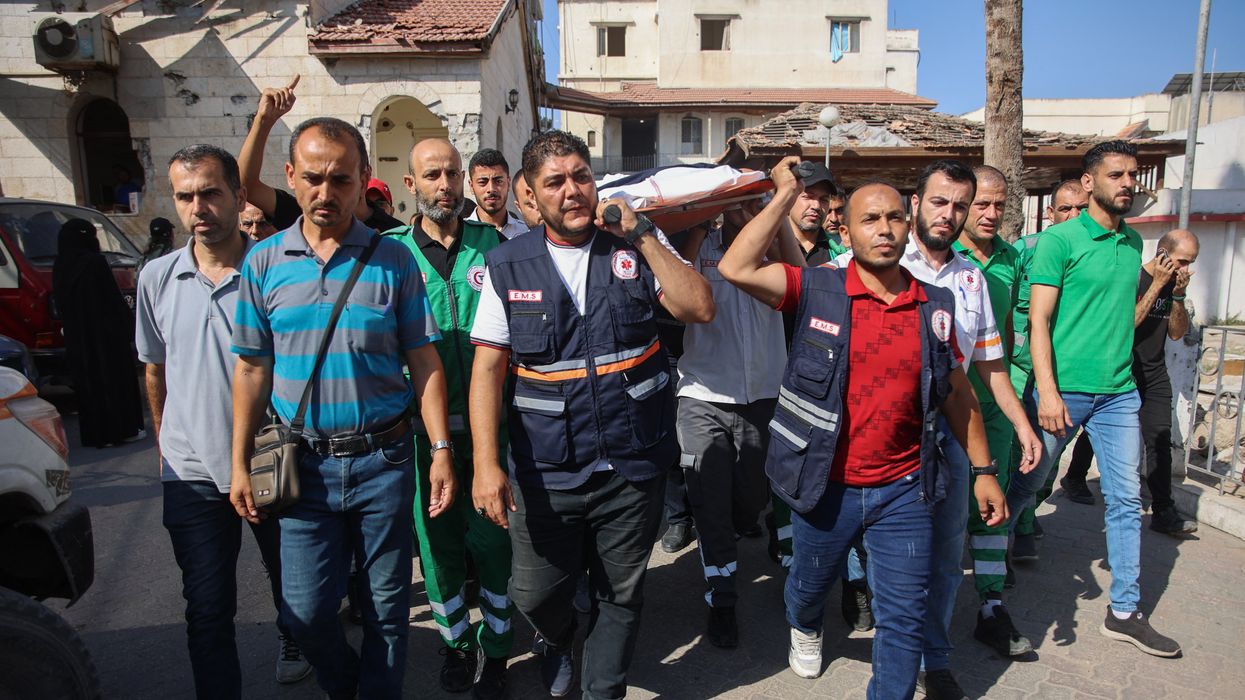
"This cannot be allowed to continue any longer," said one advocate. "Every potential serious violation must be independently investigated and those responsible brought to justice."
Doctors and humanitarian organizations demanded international investigations and action on Wednesday after the United Nations announced that Israel's military has now killed 500 healthcare workers in Gaza—roughly
two per day on average—during its nearly nine-month assault on the besieged Palestinian enclave.
The U.N. Human Rights Office said in a statement Tuesday that Israeli forces' killing of hundreds of healthcare workers has "occurred against the backdrop of systematic attacks on hospitals and other medical facilities in violation of the laws of war." The World Health Organization has documented more than 460 attacks on healthcare workers and infrastructure in Gaza since October 7.
"The latest health worker reportedly killed was Mr. Hani Al Ja'afarwi, head of Emergency and Ambulance Services at a health clinic in Gaza City on 23 June 2024," said the U.N. Human Rights Office. "Many health workers have also died with their family members when residential buildings were struck by the Israel Defense Forces (IDF)."
The U.N.'s latest tally did not include Fadi Al-Wadiya, a 33-year-old Médecins Sans Frontières (MSF) staffer who was killed along with five other people Tuesday in an attack in Gaza City. MSF did not explicitly assign blame for the attack, which the group described as "yet another brutal example of the senseless killing of Palestinian civilians and healthcare workers in Gaza."
Rohan Talbot, director of advocacy and campaigns at Medical Aid for Palestinians (MAP), said Wednesday that "hospitals, medical staff, and civilians all have protected status under international law, law that the Israel military has flagrantly ignored every day through its repeated targeting of healthcare facilities and staff."
"Though now happening at an unprecedented rate in Gaza, attacks on Palestinian healthcare by the Israeli military have recurred over many years, ever-worsening because of chronic impunity," said Talbot. "This cannot be allowed to continue any longer. Every potential serious violation must be independently investigated and those responsible brought to justice."
🚨An Israeli military airstrike has killed Hani al-Jaafarawi, the director of Gaza’s Ambulance and Emergency Department during a strike on a clinic in Gaza City.
500 healthcare workers have now been killed in #Gaza since October.
⁰ https://t.co/AKDVyVP7jL
— Medical Aid for Palestinians (@MedicalAidPal) June 25, 2024
Not a single hospital is fully functioning in the Gaza Strip after months of relentless Israeli bombing, and medical workers have been forced to treat airstrike victims and other patients in overwhelmed facilities without necessary equipment and medications, including anesthesia.
As Israel's blockade leaves the occupied territory's population without sufficient access to clean water and other essentials, infectious diseases have been spreading rapidly as the health crisis spirals out of control, starvation proliferates, and the death toll mounts.
"Systematic attacks on healthcare by Israeli forces are exacerbating the worst humanitarian crisis ever seen in Gaza," MAP said Wednesday. "More than 37,000 Palestinians have been killed and at least 86,000 injured since Israel's assault began, with an estimated 10,000 still trapped under rubble, most presumed dead. Instead of being able to safely provide medical care for those in urgent need, Palestinian healthcare workers have themselves come under both indiscriminate and apparent targeted attack by the Israeli military."
Tanya Haj-Hassan, a doctor who volunteered in a hospital with MAP earlier this year, said that "Palestinian healthcare workers have told me that when they leave the hospital, civilians give them civilian clothing because wearing scrubs is putting a target sticker on their back."
"This is how systematically healthcare has been targeted in Gaza," Haj-Hassan added.
Haider Al-Qudra, executive director of the Palestine Red Crescent Society (PRCS) in Gaza, told MAP that "as long as the international community does not take any measures against Israeli forces that continue to violate international humanitarian law, we will lose more personnel working to meet the health and humanitarian needs of citizens on the frontline."
"Because of this systematic targeting from Israeli forces," said Al-Qudra, "34 PRCS staff have lost their lives, most of them emergency medical services staff, including 19 while they tried to respond to emergency calls from citizens."
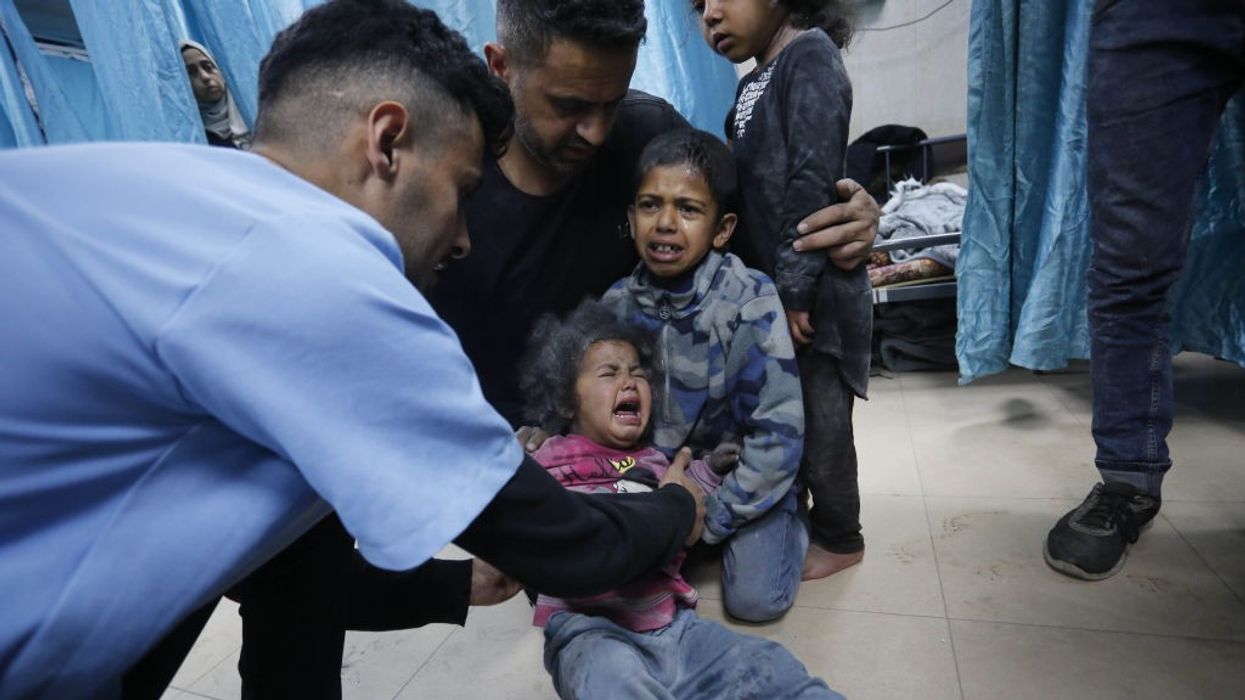
"The medical community bears a moral obligation to safeguard life and enhance health universally."
The following is an interview with Dr. Karameh Hawash-Kuemmerle, a pediatric neurologist in Boston, Massachusetts, and Dr. Nidal Jboor, an internist in Dearborn, Michigan, who co-founded of Doctors Against Genocide (DAG).
What was the impetus for forming Doctors Against Genocide?
“In pursuit of peace, the Palestinians co-founders of DAG, Dr. Nidal Jboor and Dr. Karameh Hawash, who attended the same medical school in Jordan, confronted despair and feared we were witnesses to the genocide of our own people in our native land. The language of dehumanization, the normalization of the violence against Palestinians in their native homeland, the ghettoization, the frequent pogroms, the segregation, and the apartheid system imposed on the Palestinians by Israel raised the alarms for us a few years back starting in 2021 and led to a journey of discovery of what makes a genocide happen. Although we discovered that it is possible to predict a genocide by identifying its different stages, we also found that preventing it from happening raises unsurmountable challenges despite the presence of international laws meant to put a swift end to a genocide once it is identified. This led to the creation of Doctors Against Genocide as an organization aiming to fill the gap between the oath to do no harm that doctors pledge and their inability to prevent the harm from being perpetrated. Doctors Against Genocide is driven by global concern over injustices, wars, racism, war crimes, crimes against humanity, and genocides, with a focus on Palestine.
Dr. Jboor and Dr. Hawash are acutely conscious of how injustice deteriorates both physical and mental health. We successfully launched the organization, garnering the support of thousands and uniting the medical community against atrocities. The warm reception from healthcare professionals reaffirmed our belief that the medical field is inherently committed to enhancing life for all. "Never again for everyone" emerged as a guiding principle, advocating the extension of universal values to all communities and races.”
Why is it important to organize health professionals to call for a cease-fire?
“The medical community bears a moral obligation to safeguard life and enhance health universally. Most medical professionals have pledged an oath to do no harm, positioning them as a vital support for individuals in distress. Whether confronting a physical illness or mental health challenges, people turn to a diverse array of healthcare providers, including doctors, nurses, EMTs, acupuncturists, and therapists. It is both a duty and a moral imperative for these professionals to prioritize the sanctity of life. This foundational principle should amplify their voices and ensure they are taken with the utmost seriousness, especially when they speak up against supporting a genocide with weapons and political cover as the United States has been going when it comes to the genocide in Gaza.”
What type of response have you gotten from the public and from elected officials?
“The public, especially within the medical community, has shown strong support for DAG's mission, reflecting a commitment to ending war crimes, genocide, and crimes against humanity. This response has been heartwarming, highlighting a shared desire among healthcare professionals to prioritize life and health universally. Conversations with Congressional staffers have been positive, focusing on humanitarian aspects and the need for ceasefire, steering clear of political debates and concentrating on the goal of saving lives and preventing further harm.
DAG emphasizes the critical role of medical professionals in advocating against genocide and war crimes. It calls for universal support among healthcare workers to demand cease-fires and the end of hostilities, aligning with their professional commitment to healing and care. Justifying war crimes is fundamentally incompatible with the ethos of the medical profession. DAG's efforts are driven by the belief in the power of medical voices to effect change and promote peace, reinforcing the principle that "never again" should apply universally, extending protection and care to all people, regardless of race or nationality.”
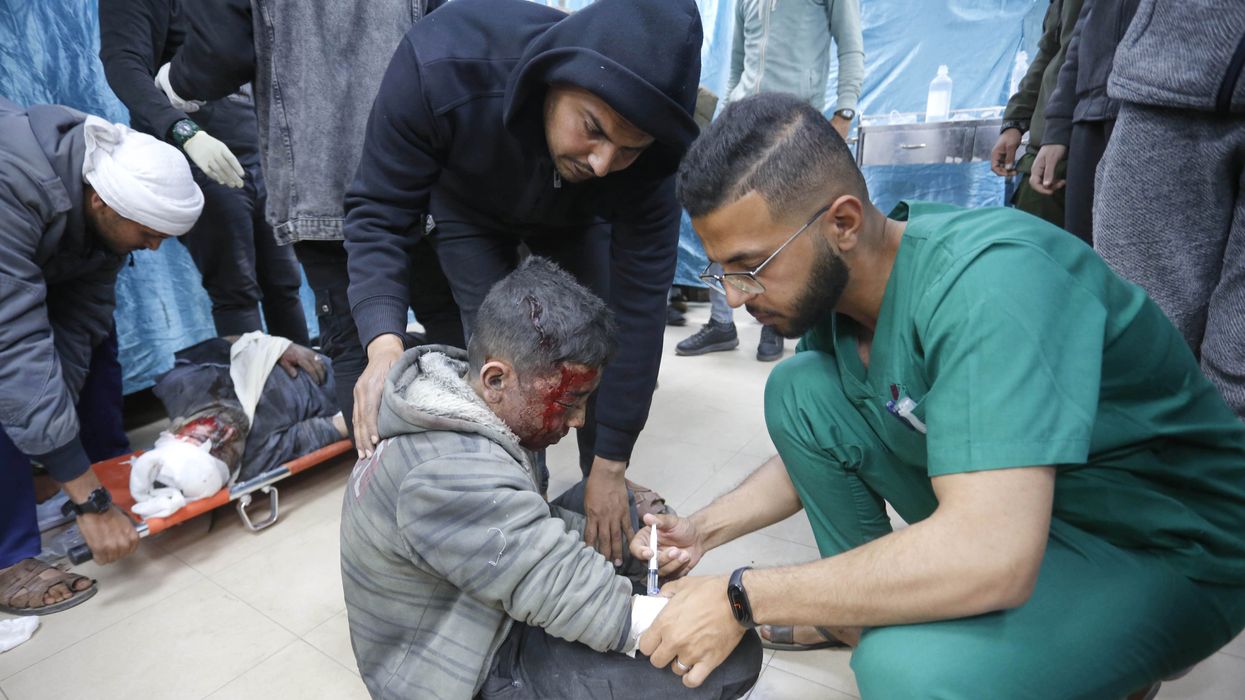
"We're doing everything we can, navigating through critical shortages and working with very limited resources, to save lives amidst this dire situation."
Members of an emergency medical team that has treated patients at a hospital in southern Gaza in recent weeks said Monday that the horrors they've witnessed there are "unimaginable," from worsening malnutrition to deadly infections stemming from lack of healthcare equipment.
The team formed by Medical Aid for Palestinians (MAP), the International Rescue Committee (IRC), and the Palestine Children's Relief Fund (PCRF) has been working at the European Hospital near Khan Younis, a city decimated by Israeli bombing. At least two hospitals in the city are currently under siege by Israeli forces, which have killed more than 32,000 Gazans and injured tens of thousands more in less than six months.
"The situation we're facing is beyond comprehension," said Arvind Das, IRC's Gaza team lead. "Continuous Israeli military operations near hospitals are making an already tense situation even worse for those seeking shelter or medical help, pushing the healthcare system to the brink of collapse."
"Despite the relentless efforts of our medical teams, the infrastructure necessary to deliver optimal medical care has been severely compromised by bombing, stringent restrictions on the entry of aid including medical supplies, and the overwhelming surge in needs," Das added. "We're doing everything we can, navigating through critical shortages and working with very limited resources, to save lives amidst this dire situation."
Not a single hospital in the Gaza Strip is fully functional after months of Israeli attacks, and the dozen that are partially operating are well beyond capacity, with patients and displaced people filling the hallways and outskirts of the facilities. The United Nations' special rapporteur on the right to health has accused Israel's military of waging an "unrelenting war" on Gaza's medical system.
Dr. Konstantina Ilia Karydi, an anesthetist with the emergency medical team, said Monday that the European Hospital "had an original capacity of just 200 beds, and at the moment it has expanded to 1,000 beds."
"There are around 22,000 people that have been displaced from other parts of Gaza sheltering in the corridors and in tents inside the hospital, because people feel that it's safer to be here than anywhere else," said Karydi.
"We worked around the challenges we faced and managed in a different way, but the staff here are overwhelmed."
MAP said in a statement that the medical team's surgeons "completed successful complex vascular and orthopedic surgeries on patients" at the hospital, but some "later died due to infections in the hospitals and the inability to provide post-operative care."
"This is due to the intense security situation that forced healthcare workers to evacuate hospitals and hindered their access," said MAP. "Moreover, significant damage to hospital infrastructure and facilities, coupled with a complete shortage of equipment and medicine—largely due to Israel's restrictions on medical aid entry into Gaza—severely impacted the ability to provide necessary care."
Dr. Husam Basheer, an orthopedic surgeon with the emergency medical team, stressed that healthcare workers in the territory are "managing with the bare minimum of resources," lacking even basic supplies such as gauze.
"We worked around the challenges we faced and managed in a different way," said Basheer, "but the staff here are overwhelmed."
The medical team's report added to the abundance of harrowing accounts from healthcare personnel on the devastating conditions inside Gaza's hospitals, many of which have been shelled and raided—in some cases repeatedly—by Israeli forces.
Al Jazeera reported Monday that the Israeli military has "surrounded the al-Amal and Nasser hospitals in southern Gaza, while pressing on with their siege of Gaza City's al-Shifa Hospital, the largest medical complex in the strip."
"Military vehicles, tanks, and attack drones are encircling these two facilities," Al Jazeera's Hani Mahmoud reported. "They're also blocking the entrance with piles of sand, preventing medical staff, patients, and injured people inside from leaving safely and constantly failing to provide a safe corridor for people and evacuees trapped inside the hospital."
Tedros Adhanom Ghebreyesus, director-general of the World Health Organization, responded with alarm Monday to reports that Israeli forces killed a Palestinian Red Crescent Society volunteer and a displaced person sheltering at al-Amal Hospital in Khan Younis.
"Another reported attack on al-Amal hospital in Gaza, another situation where patients and health workers are in great jeopardy," Tedros wrote on social media. "We appeal for their immediate protection, and repeat our call for a cease-fire."

The AMA has a responsibility to uphold the well-being of healthcare workers and minimize human suffering, and it is clear that these values are not being upheld," said Healthcare Workers for Palestine.
"Shame on the American Medical Association."
That was one American nurse's response to the news on Sunday that the powerful medical lobbying organization had shut down members' call for a public statement that would declare the AMA's support for "a cease-fire in Israel and Palestine in order to protect civilian lives and healthcare personnel."
As the news about the state of Gaza's hospitals grew increasingly dire over the weekend—with premature babies relying on incubators beginning to die due to Israel's blockade of the enclave's electricity and fuel supplies, and hospitals in northern Gaza forced to shut down completely—Dr. Hussein Antar spoke at the AMA's House of Delegates interim meeting on behalf of other medical residents and fellows who support a cease-fire.
Antar said he and other supporters of the resolution strongly backed the statement the AMA made last week calling on "all parties" in the conflict to "minimize the health costs of war on civilian populations" and condemning "the military targeting of healthcare facilities."
"But we believe the largest physician group in the United States can and should do more than that. This issue is too vital for us to evade discussion," said Antar.
Since the finalization of the statement and the meeting, MedPage Today reported, at least 60 medical workers had been killed by Israel's bombardment, which targeted at least six hospitals in that period.
In recent weeks, doctors and nurses who have refused to leave their posts despite the repeated airstrikes and Israel's ground attacks have resorted to performing Caesarean sections on pregnant women and other major surgeries without anesthesia, have been unable to properly sterilize medical instruments, and have been buying laundry detergent and vinegar to clean wounds due to the lack of supplies and electricity.
Despite the fact that Israel's onslaught has seriously endangered doctors and nurses and left them unable to perform their duties, the AMA's Resolution Committee recommended the statement not be reconsidered and said it did not meet the organization's criteria for speaking out about an issue affecting the healthcare community.
Those criteria, noted a U.S.-based nurse who uses the handle @travelingnurse on TikTok, include "advocacy, ethical considerations, and urgency."
"I reject any notion that calling for a cease-fire in Gaza—the most densely population piece of land on the planet, where half the population is under 15 years old, where the death toll has now reached 12,000 people, where there are tanks firing on hospitals—I reject that that is not advocacy, I reject that that is not urgent, and I reject that that is not an ethical consideration," said the healthcare worker.
Dr. Lisa Bohman Egbert, speaker of the AMA's House of Delegates, reportedly called on Dr. Luis Seija to stop giving his statement in support of the cease-fire resolution, as he reminded those at the meeting that "there are people in the room who have had friends and family killed both on the Israeli and Palestinian sides of this violence."
Former AMA president Dr. Andrew Gurman also opposed the resolution, claiming that since it dealt "with a geopolitical issue," making a formal statement was "in no way the purview of this house"—despite the fact that the AMA spoke out last week to condemn the targeting of hospitals in Gaza.
"There was a coordinated effort at the national meeting to shut the resolution down, with the speaker not allowing delegates their allotted 90 seconds to speak about the resolution," said Healthcare Workers for Palestine. "The largest medical group in the country actively silenced voices of healthcare workers supporting a cease-fire, saying 'it's not relevant to advocacy.' The AMA has a responsibility to uphold the well-being of healthcare workers and minimize human suffering, and it is clear that these values are not being upheld by some of the most influential physicians in the country, nor is the democratic process being respected."
Public health writer Abdullah Shihipar said the lobbying group silenced the discussion on the resolution, which failed to pass in a vote of 136-458, because leaders "know [the AMA's position] is wrong."
Shihipar shared an interview featuring Dr. Hammam Alloh, who worked at al-Shifa Hospital and was killed Saturday in an airstrike. Before he was killed, Alloh had explained to Democracy Now! that he would not abandon his patients to flee to southern Gaza with his family.
"This," said Shihipar, "is who the American medical and public health community refuses to stand with."

"It is unacceptable that millions of Americans throughout our country do not have access to affordable, high-quality primary care and are unable to get the healthcare they need when they need it."
After weeks of negotiations, Independent Sen. Bernie Sanders of Vermont and Republican Sen. Roger Marshall of Kansas announced Thursday that they have reached an agreement on a bill to confront the United States' primary care crisis, which has left millions of people across the nation without access to critical healthcare.
Sanders, the chair of the Senate Health, Education, Labor, and Pensions (HELP) Committee, said in a statement that the new legislation marks a "historic" effort "to expand primary care and to reduce the massive shortage of nurses and primary care doctors in America."
According to a report released earlier this year by the National Association of Community Health Centers, more than 100 million people in the U.S. face difficulty accessing primary care, which is often the initial point of contact for patients seeking care.
The U.S. underinvests in primary care compared to other wealthy nations, despite spending more on healthcare overall.
"It is unacceptable that millions of Americans throughout our country do not have access to affordable, high-quality primary care and are unable to get the healthcare they need when they need it," the Vermont senator said. "Every major medical organization understands that our investment in primary care is woefully inadequate. They understand that focusing on disease prevention and providing more Americans with a medical home instead of relying on expensive emergency rooms for primary care will not only save lives and human suffering, it will save money."
The new bipartisan legislation includes nearly $6 billion in mandatory annual funding for community health centers over the next three years, according to a summary of the measure. If Congress doesn't act by the end of the month, community health centers—which provide primary care to tens of millions of vulnerable Americans—will face steep funding cuts.
The Sanders-Marshall legislation also includes funding that would support an estimated 2,000 primary care physicians over the next decade.
Additionally, the measure would boost funding for the National Health Service Corps to support scholarships and debt relief for doctors, nurses, and other healthcare professionals.
Recent data suggests the U.S. could see a shortage of up to 124,000 physicians over the next decade. Elisabeth Rosenthal of KFF Health News noted last week that "the percentage of U.S. doctors in adult primary care has been declining for years and is now about 25%—a tipping point beyond which many Americans won't be able to find a family doctor at all."
The nursing shortage is also severe and could soon get much worse. One study released earlier this year estimated that around 100,000 registered nurses in the U.S. left their jobs over the past two years—often due to pandemic-related stress—and more than 610,000 more intend to leave over the next four years.
Sanders and Marshall's legislation, which is set to be marked up in the Senate HELP Committee on September 21, would provide $1.2 billion in grants to state universities and community colleges with the goal of boosting the number of students enrolled in registered nursing programs.
Marshall, the top Republican on HELP's Subcommittee on Primary Health and Retirement Security, said in a statement that the new bill "recognizes and addresses the challenges our healthcare industry is facing, like the shortage of nurses and primary care doctors, and includes programs to bolster the workforce in a fiscally responsible way."
According to Sanders' office, the legislation would be "fully paid for by combating the enormous waste, fraud, and abuse in the healthcare system, making it easier for patients to access low-cost generic drugs, and holding pharmacy benefit managers accountable, among other provisions."
In remarks on the Senate floor on Thursday, Sanders noted that "in Vermont and all over this country, our people often have to wait months in order to get an appointment with a doctor and, in some cases, they have to travel very long distances to get the healthcare they need."
"It is literally insane," said Sanders, "that millions of Americans with nonemergency healthcare needs get their primary care in a hospital emergency room."
Doctors in the United Kingdom are warning that passage of the Transatlantic Trade and Investment Partnership (TTIP) will mean certain death for the country's public healthcare system, opening the door for privatization and lawsuits from the United States' for-profit medical industry.
Speaking at the annual meeting of the British Medical Association (BMA) in Liverpool on Tuesday, Dr. Henry McKee of Belfast warned members that "if there is anything resembling an [National Health Service] by the time this treaty is in negotiation, it won't survive this treaty."
"The correct motion is to kill this treaty dead, not to tolerate it sneaking in and mugging us," he added.
McKee's comments came as BMA members voted in favor of lobbying the UK government against the trade agreement, advocating for a provision that would remove healthcare from the contentious pact. In a vote earlier this month, the European Parliament backed a similar recommendation though it is up to the official European trade negotiators to demand such exclusions.
The TTIP and other pending global trade deals--the Trans-Pacific Partnership (TPP) and the Trade in Services Agreement (TISA)--have come under fire for their corporate-friendly provisions, which many warn will promote business interests above the environment, workers rights, and public health. Particularly, the investor-state dispute settlement (ISDS) provision would allow multinationals to sue governments for alleged loss of profits due to industry regulations.
In an address during the BMA meeting, Edinburgh physician Gregor Venters also warned that the "introduction of private providers into public services" will "allow the big American corporations to interfere with the NHS."
Europeans are concerned that the United States' lax rules and regulation of genetically engineered, or GMO, crops and other lower health standards will allow for a "race to the bottom" in global food and health standards.
"Private corporations could use the process to bully governments into dropping legislation to improve food standards," he explained.
In a related development, recently leaked sections of the TPP revealed how the deal would give big pharmaceutical companies more power over public access to medicine by undermining government efforts to subsidize pharmaceuticals and medical devices, effectively crippling public healthcare programs worldwide.
Earlier this month, faced with growing public and internal opposition, European Parliament President Martin Schulz canceled a vote on the Parliament's recommendations for the treaty. Negotiations are set to continue in July.
Meanwhile, on Tuesday, the U.S. Senate voted to back Fast Track trade promotion authority, which enables President Obama to ratify international trade deals with only an up or down vote by the U.S. Congress, essentially guaranteeing the passage of the TPP and TTIP.