

SUBSCRIBE TO OUR FREE NEWSLETTER
Daily news & progressive opinion—funded by the people, not the corporations—delivered straight to your inbox.
5
#000000
#FFFFFF
To donate by check, phone, or other method, see our More Ways to Give page.
Daily news & progressive opinion—funded by the people, not the corporations—delivered straight to your inbox.

There is something fundamentally wrong when young people have to sue their government for the right to a clean and healthful environment.
It’s official: 2023 was the hottest year on record. There is surprisingly little about it in the news, but lawyers are gearing up for a hot new year in court to do what they can to protect a livable climate. Climate litigation is the new game in town. The first big case was won by Urgenda in the Netherlands in 2019. Formed out of the words urgent and agenda, the Urgenda foundation and 900 Dutch citizens demanded that their government act according to the science. It took six years to win.
In 2021, Neubauer v. Germany resulted in the German government being forced to revise its 2019 climate law and tighten its targets for decarbonization. The German case was unique in that the highest court affirmed the government’s responsibility not only to its current citizens, but also to future generations.
In the U.S., recent successes in climate litigation are encouraging. Early this year, a judge in Oregon denied the Justice Department’s motion to dismiss a complaint agains the federal government by 21 young plaintiffs.
What will our grandchildren think, both of the young people in court and those opposing them?
It was reminiscent of last summer, when 16 young plaintiffs convinced a judge in Held v. State of Montana that their government must take the climate crisis much more seriously. The Washington Post called the decision “one of the strongest decisions on climate change ever issued by a court.” Of course, there is something fundamentally wrong when young people have to sue their government for the right to a clean and healthful environment. It should be any government’s priority and desire to protect the young.
Future generations devastated by climate impacts will look back on this period and see mostly elderly politicians mostly ignoring climate science—or worse, deliberately banning climate science from being considered. The fact that the Montana state prosecutor appealed the ruling within weeks underscored how much damage climate denial has done. What will our grandchildren think, both of the young people in court and those opposing them?
Now that 2023 has been declared the hottest on record, and possibly the warmest in over 100,000 years, you’d think even the most stubborn climate deniers would come to their senses. But of course, it’s not really the deniers we need to worry about. After all, even the well-funded machine that invented climate denial was never really based in denial; in fact, quite the contrary.
As Harvard historian of science Naomi Oreskes and others have been revealing for years (just watch the film Merchants of Doubt), fossil fuel giants found out decades ago—from the scientists they had hired—that their products were going to heat the planet. They knew their own scientists’ findings would require regulations and incentives that would favor renewable energies like solar and wind. So they simply invented the myth of climate change denial so they could keep raking in the dough.

They also found willing amplifiers of their myth by telling them that any regulation was a communist ploy that would ultimately not only hurt the economy but curtail all the freedoms Americans hold dear. They are not coming to their senses. They are running for office. They are exporting their ideology to Germany, to the U.K., the European Union, and beyond, even though they have started losing.
It is not just elected officials and fossil fuel executives who should be paying attention. Last summer, lawyers from Client Earth wrote a letter to the Global Public Policy Committee (GPPC) representing senior leaders of the world’s largest accounting firms—BDO, Deloitte, EY, Grant Thornton, KPMG, and PwC—pointing out that they are not doing what they pledged to do with regards to transparency around climate risk, neglectful omissions that could potentially expose them to lawsuits as well.
To be sure, climate litigation is only one tool in the toolbox, and its results can be mixed, as BBC reporter Isabella Kaminski recently concluded.
But we have long known that Exxon and other fossil fuel companies lied about what they knew about the danger of climate change, and they have rightly been facing increasing legal trouble. The fact that they keep lying and are even exporting their methods is particularly devastating at a time of mounting climate disruption and a rising death toll from extreme weather events.
The myth of climate denial and the rejection of climate protection measures are sold to voters everywhere under the guise of freedom. But they only protect the freedom of fossil fuel billionaires and polluting industries to keep profiting from harming us all. The truth shines brightly through the fog of deliberate misinformation when climate wins in court.

"Despite significant concessions made to the opponents of the impactful Nature Restoration Law, the provisional agreement includes several positive elements," said one advocate.
Biodiversity advocacy groups in Europe on Friday applauded policymakers' reaching of a landmark deal to restore nature, finalized after painstaking negotiations between the European Parliament, Commission, and Council—but warned that the bloc's largest party, the right-wing European People's Party, had succeeded in securing numerous concessions that watered down the agreement.
The Nature Restoration Law, part of the European Union's Green Deal to protect the environment and reduce planetary heating, will establish measures to restore at least 20% of the bloc's land and 20% of its marine environments by 2030.
Currently, about 80% of natural habitats in Europe are in need of restoration. At least 30% of degraded habitats must be restored by the end of the decade under the law, rising to 60% by 2040 and 90% by 2050.
The agreement still needs to be passed by the European Parliament's Environment, Public Health, and Food Safety (ENVI) Committee in a vote that's scheduled for November 29, and then proceed to a "rubber-stamp vote" in parliament's plenary session in December.
"The true litmus test lies in whether this law will really address the staggering repercussions of the climate and nature crisis. And that will only be seen if and when member states properly implement the law."
Lead negotiator César Luena, a Spanish member representing the center-left Socialists & Democrats Party, said he was confident the measure would pass but admitted the agreement reached late Thursday night was only "the first brick" to ensuring biodiversity is restored in Europe.
"I wanted more, of course, but this is a deal," Luena told Politico.
Advocates including the environmental law group ClientEarth celebrated key victories, including strict requirements to restore and increase nature on farmlands and peatlands.
"But the reintroduction of the article came at a high cost, with significant concessions being made," said ClientEarth.
The deal requires E.U. countries to prioritize the restoration of sites that are protected by the bloc's Natura 2000 program, which includes Europe's most threatened species and habitats.
But after lobbying by the European People's Party (EPP), countries will be under no legal obligation to implement the protection measures in other areas until 2030.
The peatland protection clause is also "voluntary" for farmers and private landowners, and the EPP removed a requirement for 10% of farmland to have landscape features including hedgerows and flower strips.
Advocates also lamented an "emergency brake" provision included in the deal, which allows E.U. countries to pause implementation for agricultural land if there is a food security crisis.
Sofie Ruysschaert, nature restoration policy officer for BirdLife Europe, said the remaining restoration targets for farmlands and peatlands mean "the negotiators have not completely failed European citizens."
"But the true litmus test lies in whether this law will really address the staggering repercussions of the climate and nature crisis," said Ruysschaert. "And that will only be seen if and when member states properly implement the law."
Sergiy Moroz, policy manager for water and biodiversity at the European Environmental Bureau, credited negotiators with ensuring targets to reverse pollinator decline and restoring free-flowing rivers were retained in the agreement.
"Despite significant concessions made to the opponents of the impactful Nature Restoration Law, the provisional agreement includes several positive elements," said Moroz. "It is imperative that the law is now formally adopted by the co-legislators before the E.U. elections in 2024, and its implementation starts without delay to also enable E.U. to fulfill its global commitments on climate and biodiversity."
Progressive lawmakers in the Left group in European Parliament said the negotiators' ability to reach an agreement, considering fierce opposition from right-wing policymakers, was "a relief" and that the deal "remains a very important and necessary legal framework for national nature restoration plans."
The Left warned that conservatives and liberals on the ENVI Committee "may try to undermine the law once more" before the agreement is passed.

"We are confident that international courts and tribunals will not allow this injustice to continue unchecked," the prime minister of Tuvalu said.
Do greenhouse gas emissions from the burning of fossil fuels count as ocean pollution under the Law of the Sea?
That's the question that nine small island states that are low emitting but extremely vulnerable to the climate crisis have asked the International Tribunal for the Law of the Sea (ITLOS) in a landmark hearing that began Monday in Hamburg, Germany.
"We come here seeking urgent help, in the strong belief that international law is an essential mechanism for correcting the manifest injustice that our people are suffering as a result of climate change," Tuvalu's Prime Minister Kausea Natano said in a statement shared by Eureporter. "We are confident that international courts and tribunals will not allow this injustice to continue unchecked."
The 1982 United Nations Convention on the Law of the Sea governs the shared use and protection of the ocean. A total of 168 countries—the U.S. not among them—have ratified it.
Under Article 194(1), those 168 states have agreed to "take, individually or jointly as appropriate, all measures consistent with this convention that are necessary to prevent, reduce, and control pollution of the marine environment from any source." Yet, despite the fact that 25% of carbon dioxide emissions and 90% of global heating end up in the oceans, leading to threats like marine heatwaves, coral bleaching, ocean acidification, and more extreme tropical storms, it's still not clear what duties nations have to prevent climate pollution under international maritime law.
"What's the difference between having a toxic chimney spewing across a border to carbon dioxide emissions?" Payam Akhavan, lead counsel and chair of the committee of legal experts advising the nations that brought the question, asked The Guardian. "Some of these states will become uninhabitable in a generation and many will be submerged under the sea. This is an attempt to use all the tools available to force major polluters to change course while they still can."
"A positive advisory opinion could be essential to the global fight against climate change."
The island nations—organized as the Commission of Small Island States on Climate Change and International Law (COSIS)—first requested an advisory opinion from the tribunal in December 2022. COSIS formed in 2021 during the COP26 U.N. climate talks in Glasgow, Scotland, and its members include Antigua and Barbuda, Tuvalu, Palau, Niue, Vanuatu, Saint Lucia, Saint Vincent and the Grenadines, Saint Kitts and Nevis, and the Bahamas, according to ClientEarth.
These nations say they have only contributed 1% of global greenhouse gas emissions but contend with disproportionate climate impacts, from sea-level rise and saltwater intrusion to coastal erosion, The New York Times reported.
"Despite our negligible emission of greenhouse gases, COSIS's members have suffered and continue to suffer the overwhelming burden of climate change's adverse impacts," Antigua and Barbuda Prime Minister Gaston Alfonso Browne said in a statement shared by Eureporter. "Without rapid and ambitious action, climate change may prevent my children and grandchildren from living on the island of their ancestors, the island that we call home. We cannot remain silent in the face of such injustice."
The ITLOS hearing is scheduled to last through September 25. In addition to the members of COSIS, more than 50 nations will weigh in with written or oral arguments, according to The New York Times. Among them will be major greenhouse gas emitters like China, India, and European Union member states. A ruling is expected within months.
While COSIS is only asking for an advisory opinion for now, legal experts say the decision could have a major impact on climate litigation going forward, especially if ITLOS rules that signatories do have an obligation to protect the ocean from climate pollution.
"The islands could hold major emitters of greenhouse gases responsible for damage by their failure to implement the Paris climate accord," University of Edinburgh emeritus international law professor Alan Boyle told The New York Times.
That is the outcome that legal climate advocates like ClientEarth are hoping for.
"A positive advisory opinion could be essential to the global fight against climate change," the group wrote. "A legal interpretation by the tribunal that the Law of the Sea requires states all over the world mitigate their greenhouse gas emissions to prevent harm to the marine environment opens up the possibility that climate commitments such as those made under the Paris agreement may need to be enforced to protect the world's oceans."
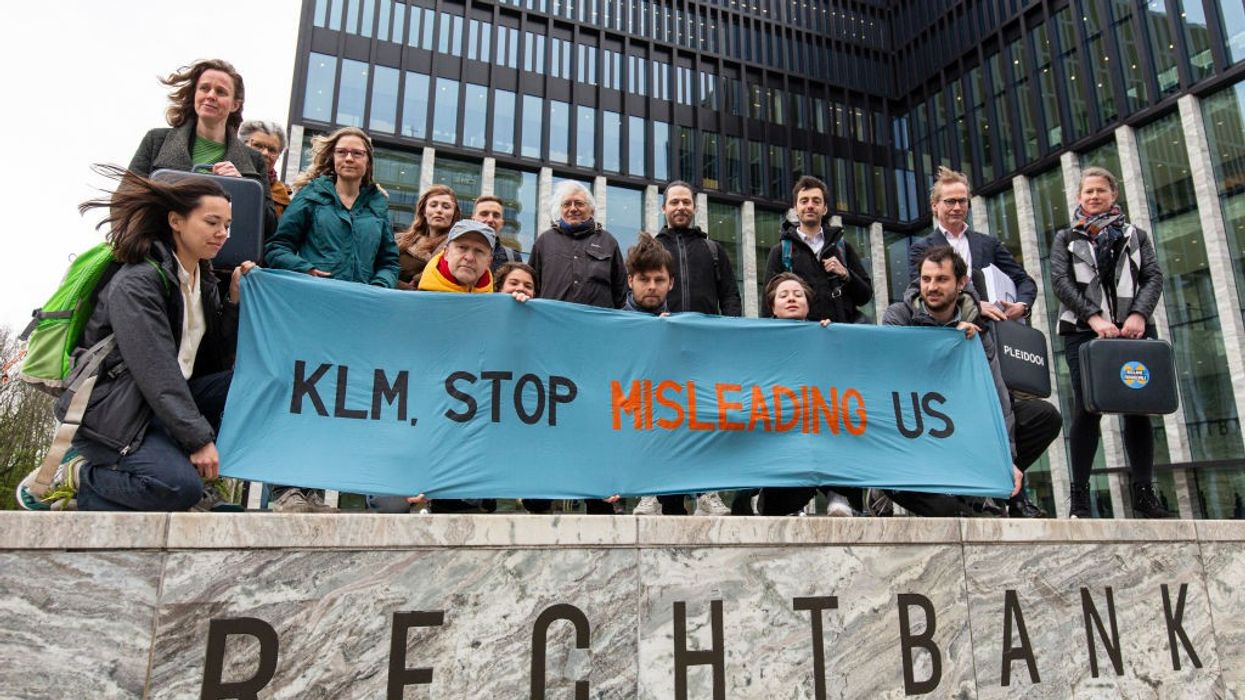
“We need a more complete policy solution, something like a prohibition on fossil fuel advertising,” one expert said.
A young man goes up a mountain to study the terrain and collect data on his laptop, while epic, orchestral violins play in the background. He’s an ExxonMobil scientist in a company ad that also shows other scientists in a high-tech lab working to develop “low-carbon technologies.” The tagline reads “Advancing Climate Solutions.”
The ad uses natural landscapes, futuristic-looking environments, and emotional music to evoke a positive feeling in viewers and to promote the idea that ExxonMobil is not only associated with sustainable business choices but also supporting climate solutions, rather than producing polluting fossil fuels and investing in high-carbon activities that cause climate change. To top it all off, the claim in the tagline promotes the perception that ExxonMobil, and fossil fuel companies more generally, are “part of the solution.”
This is what experts refer to as a prime example of corporate greenwashing.
Basically, polluting companies increasingly need to present themselves as green to avoid accountability for their contributions to the climate crisis.
The TV ad, which aired in 2021, was shown to the participants of a recent study, published in May 2023. The study found that a one-time exposure to two 30-second fossil fuel ads containing greenwashing was enough to positively influence individuals’ opinions of the industry’s efforts around transitioning to renewable energy.
The study also found that this greenwashing had disturbingly persistent effects: Presenting accurate data on the companies’ actual investments in renewable energy sources, compared to their claims about it in the ads, did not fully reverse or correct the greenwashed ads’ initial impact.
Corporate greenwashing is not only effective, it’s also increasing. According to Johnathan White, lawyer and expert on corporate climate accountability at environmental law charity ClientEarth, this is because sustainability communication has “gone through the roof,” especially over the past five years.
Basically, polluting companies increasingly need to present themselves as green to avoid accountability for their contributions to the climate crisis. To do so, they turn to greenwashing. But activists and campaigners have started pushing back, leading to a flurry of lawsuits.
In France, environmental groups took TotalEnergies to court over greenwashing advertising; in the Netherlands, a lawsuit was filed against KLM airline in the first claim against the industry’s greenwashing; in the United States, Delta Air Lines faces a class action lawsuit over a carbon neutrality claim; and in Australia, the Australian Securities and Investments Commission sued corporate pension fund Mercer Superannuation for greenwashing. All over the world, carbon-intensive industries and corporations are being challenged over their greenwashing strategies, and the number of relative cases in litigation is multiplying.
“The highly polluting sectors that face substantial change to their existing business models under decarbonization pathways are the ones who are massively overrepresented in greenwash litigation,” said White. “They have a much more sophisticated marketing strategy. It’s basically an attempt to solve the problem that they face. That’s how PR strategies work.”
From a legal perspective, greenwashing falls under the umbrella of misleading advertising, which is covered by consumer protection laws in the E.U., U.K., and other countries around the world. While countries have varying legal definitions for misleading advertising, it can be broadly defined as advertising that is either factually incorrect or otherwise deceives the consumer, and is liable to influence the consumer’s behavior, explained Clemens Kaupa, assistant professor in the Faculty of Law at Vrije University in Amsterdam.
Greenwashing isn’t a new strategy. In the mid-1980s, the “People Do” ad campaign showed Chevron employees protecting wildlife. It diverted attention from the company’s environmental impact and misled the public by portraying Chevron as caring for the environment. The series of ads are considered an infamous and early example of Big Oil’s greenwashing.
Today, the same tactics are still in use. Over an uplifting music soundtrack, an advertisement by Shell shows images of beautiful forests and natural landscapes and says that the company is “harnessing nature” and “supports reforestation projects.” This is despite the fact that, according to ClientEarth, the company’s offsetting projects account for less than one-tenth of its emissions.
“If you are a fossil fuel company or a similarly highly polluting industry, you’re going to struggle to make a sustainability advert that complies with the law and regulation.”
Another ad by TotalEnergies makes claims that the company is “storing carbon” in “natural carbon sinks” and also shows trees, plants, and other natural elements. Again, the claims amount to greenwashing, says ClientEarth, because the company’s planned expenditure on these projects is only 2% of its $16 billion budget.
Greenwashing isn’t only about lies or visual cues. Like in the Shell and TotalEnergies ads referenced above, a misleading claim may be true but still deceptive.
“It’s true that Exxon spent a few hundred million on having an algae biofuel research project, but what they omitted to mention [in their ads] was the relevance of this set against their business and what else they were doing,” White explained. “It’s both true and misleading and, fundamentally, advertising tends to work through that sort of misdirection a lot of the time.”
Companies also misdirect by making offsetting claims, such as pledges to plant trees or carbon capture and storage projects. Recently, a court in Sweden banned European dairy major Arla Foods from using the term “net-zero climate footprint” in the marketing of its products on the grounds that it was misleading.
“I consider this a clarification from a court that offsetting claims are unlawful,” said White.
Greenwashing may also hinge on association. For instance, as Kaupa explained in a 2021 paper published in the Journal of European Consumer and Market Law, the phrase “cleaner burning” is incessantly linked to gas, thereby promoting the false connection between “gas” and “clean.”
This tactic of greenwashing-by-association harkens back to the 1940s and ’50s tobacco industry ad campaign that proclaimed that “more doctors smoke Camels than any other cigarette.” It not only aimed to establish an “associative link” between cigarette smoking and the doctor as a scientific and social authority, Kaupa argues in his paper, but also of normalizing tobacco ads and, in turn, smoking as a healthy practice.
This goes for communication by fossil fuel and other carbon-intensive companies as well. Greenwashing has the aim of “normalizing harmful commodities,” Kaupa writes.
But the issue is intrinsic: Experts argue that polluting industries cannot advertise the positive environmental impacts of their activities without it being inherently misleading. This means that all sustainability communication by fossil fuel companies, to name one industry, is unlawful, White said.
“If you are a fossil fuel company or a similarly highly polluting industry, you’re going to struggle to make a sustainability advert that complies with the law and regulation. And the reason for that is that you have to start substantiating that claim against the environmental evidence, but the environmental evidence is damning,” he said. “You’ve got an inherent tension, and previously this tension has been dealt with by companies basically just knowing that they won’t face any accountability.”
One reason companies are often able to get away with greenwashing is a concept called “information asymmetry.” In short, they have more information about products or their operations than the average consumer does, and can use that information to their advantage.
“A company deals with its own products all the time. They have good knowledge about their products and about the potential effects, for example, on the environment,” Kaupa said. “In contrast, consumers have to make many consumption choices every day. They also have limited time and resources and can therefore not be as well informed about each product and each service as the corporation that sells it can.”
Informational asymmetry not only makes it easier for companies to greenwash, it also makes it more important to push back when they do. The idea that it would be up to consumers “to weed out unsustainable products” through their own choices is “completely unrealistic,” Kaupa added.
Trust is declining to the point that “people aren’t [even] going to believe the good stuff.”
If consumers have little knowledge of environmental issues, they can be even more vulnerable to deception. A 2015 study published in the International Journal of Advertising found that ads using imagery associated with nature, such as beautiful landscapes, plants, or trees, misled consumers and altered their perception of the brand’s “ecological image,” a strategy called “executional greenwashing.” Similarly to the 2023 study—which found that countering greenwashing with facts didn’t totally reverse the impact—the 2015 study also concluded that figures about the company’s negative environmental performance weren’t sufficient to help non-expert consumers correct this deception.
White argues that another concerning consequence of strategic greenwashing by polluting industries is the public’s loss of trust toward producers’ claims and behavior. Trust is declining to the point that “people aren’t [even] going to believe the good stuff,” he said.
According to a study published in March 2023, more research is needed into consumer trust and other consumer “attitudes” towards corporate greenwashing. The study also proposes further research into the effects of greenwashing on other stakeholders, including company employees and suppliers, as well as measuring different types of greenwashing activities.
Not all greenwashing claims are consumer-facing. Last September in Australia, the Environmental Defenders Office, on behalf of The Plains Clan of the Wonnarua People (PCWP) and Lock the Gate Alliance, filed a complaint against coal giant Glencore for allegedly misleading investors, as well as the public, over its net-zero claims and climate strategy.
Companies can engage in greenwashing in their internal communications too, such as to shareholders through corporate reporting, financial accounts, and website pages for investors. Both White and Kaupa agree that laws protecting consumers and shareholders from greenwashing claims for the most part already exist, and they all function in a similar way, White says.
“These laws require that any kind of claim made in commercial communication be backed up by the evidence. So when you are making an environmental claim about your product, or your business, or even the world, then that environmental claim needs to be consistent with the environmental evidence. It’s not enough to point to market practice or what your peers are doing as a business,” said White.
The idea of pushing gas as a clean energy source crucial to the energy transition amounts to greenwashing, experts say, and results in gas lock-in.
Messaging used in public advertising and shareholder communication is also seen in lobbying, White explained, which means that greenwashing has the potential to seep through policy-making contexts and directly or indirectly influence legislation.
Shell, ExxonMobil, BP, and TotalEnergies, for example, all lobbied the European Union to promote fossil gas’s inclusion in policies designed for the energy transition, instead of advocating for renewables and electrification, according to a report by independent think tank InfluenceMap. The idea of pushing gas as a clean energy source crucial to the energy transition amounts to greenwashing, experts say, and results in gas lock-in.
Although sustainability communication is regulated by law, there is a structural enforcement gap which is just now starting to be addressed through greenwashing litigation.
“A lot of these claims were initially being brought by concerned citizens to regulators or by NGOs to regulators and courts. But increasingly it’s becoming a general dispute area because you have competitors bringing claims, you have class action claims, which are really claims in order to recoup damages for wronged consumers, and we also see governments just generally looking to overhaul the rules,” White explained, adding that as this process develops, the enforcement gap is gradually closing.
Progress in greenwashing litigation is crucial because cases can have a “big deterrent effect” and “send a signal” to people and companies but, according to White, it’s necessary to also move beyond greenwashing litigation.
“We need a more complete policy solution, something like a prohibition on fossil fuel advertising,” he said. “It’s absurd that we want to decarbonize but still have fossil fuel producers advertising all over the place.”

"The shift to a low-carbon economy is not just inevitable, it's already happening. Yet the board is persisting with a transition strategy that is fundamentally flawed."
A group of activist investors sued Shell's board of directors on Wednesday for failing to "deliver the reduction in emissions that is needed to keep global climate goals within reach."
ClientEarth, an environmental law charity and institutional investor in Shell, described the case as the first time a company board is facing a shareholder lawsuit for inadequately preparing to transition away from fossil fuels.
"Shell may be making record profits now due to the turmoil of the global energy market, but the writing is on the wall for fossil fuels long term," Paul Benson, a senior lawyer at ClientEarth, said in a statement. "The shift to a low-carbon economy is not just inevitable, it's already happening. Yet the board is persisting with a transition strategy that is fundamentally flawed, leaving the company seriously exposed to the risks that climate change poses to Shell's future success—despite the board's legal duty to manage those risks."
The lawsuit, which is backed by large institutional investors that collectively hold 12 million shares of Shell, alleges that the oil giant's 11 directors are violating the Companies Act, a U.K. law that requires corporate boards to "promote the success" of the business.
By failing to sufficiently manage climate risks and implement "an energy transition strategy that aligns with the Paris Agreement," Shell is flouting its legal obligations, the lawsuit contends.
"Shell's Board on the other hand maintains that its 'Energy Transition Strategy'—including its plan to be a net-zero emissions business by 2050—is consistent with the 1.5°C temperature goal of the Paris Agreement," ClientEarth notes. "It also claims that its plan to halve emissions from its global operations by 2030 is 'industry-leading,' however this covers less than 10% of its overall emissions."
"It is in the best interests of the company, its employees, and its shareholders—as well as the planet—for Shell to reduce its emissions harder and faster than the board is currently planning."
ClientEarth and its backers are asking the High Court of Justice in London to force Shell's board to "adopt a strategy to manage climate risk in line with its duties under the Companies Act" and in compliance with a 2021 Dutch court ruling ordering the oil giant to cut its total carbon emissions by 45% by 2030.
"Long term, it is in the best interests of the company, its employees, and its shareholders—as well as the planet—for Shell to reduce its emissions harder and faster than the board is currently planning," Benson said.
Jacqueline Amy Jackson, the head of responsible investment at London CIV—one of the institutional backers of ClientEarth's lawsuit—said that "we do not believe the board has adopted a reasonable or effective strategy to manage the risks associated with climate change affecting Shell."
"In our view," Jackson added, "a board of directors of a high-emitting company has a fiduciary duty to manage climate risk, and in so doing, consider the impacts of its decisions on climate change, and to reduce its contribution to it."
Shell said in response that ClientEarth's suit "has no merit."
ClientEarth filed its complaint a week after Shell announced that its profits doubled in 2022, surging to a record $40 billion as households across Europe and around the world struggled with high energy costs. The company said it returned $26 billion to shareholders last year through dividends and stock buybacks.
Earlier this month, the advocacy group Global Witness filed a complaint with the U.S. Securities and Exchange Commission accusing Shell of "lumping together some of its gas-related investments with its spending on renewables to inflate its overall investment in renewable sources of energy," misleading investors and authorities.
"Shell's so-called renewable and energy solutions category is pure fiction," said Zorka Milin, a senior adviser at Global Witness. "The company is living in fantasy land if it thinks fossil gas has any place in the much-needed energy transition. Shell's business model has always been, and continues to be, overwhelmingly based on climate-polluting fossil fuels."
Shell is also facing lawsuits from nearly 14,000 Nigerians whose communities have been devastated by the company's pollution and oil spills.