

SUBSCRIBE TO OUR FREE NEWSLETTER
Daily news & progressive opinion—funded by the people, not the corporations—delivered straight to your inbox.
5
#000000
#FFFFFF
To donate by check, phone, or other method, see our More Ways to Give page.
Daily news & progressive opinion—funded by the people, not the corporations—delivered straight to your inbox.
Musk indulges in the kind of fantasy that drove Berry to distraction (and to work)—all about control and domination, all done by the few to the many, utterly ignorant of context. Immodest in every way.
Wendell Berry, who died Monday at the age of 92, was such a great man that I hardly know where to start. He was on the very short list of the best writers of our time: His essays on rural America were the words that launched 10,000 farmers markets; his poems, the staple of many happy weddings (and I’ve peed in a dozen different bathrooms where the Manifesto of the Mad Farmer’s Liberation Front was framed above the toilet). If you’ve never read his short stories of the Port William Membership, or his finest novel, Jayber Crow, you can count yourself lucky that you’ll get to encounter them for the first time.
Berry was also, of course, politically engaged. I remember standing with him 20 years ago, at a protest against the Capitol Hill power plant that I’d asked him to attend. It was a bitterly cold day, and at one point he turned to me and smiled and said, "Do you think maybe they’ll arrest us soon?" He didn’t particularly like movements, but he understood the power of moral witness; he occupied the Kentucky governor’s office, in a protest against mountaintop removal coal mining, with a toothbrush and volume of Shakespeare in his pocket.
And, perhaps above all, his life was a work of both art and politics—his decision to give up a New York lit’ry career and to return instead to the Kentucky of his boyhood, settling along the Ohio River where he and his wife Tanya farmed and he wrote, embodying the commitment to place and community that animated his writing. (His family is asking that in lieu of flowers people might send a donation to the Berry Center that is carrying on his agrarian work).
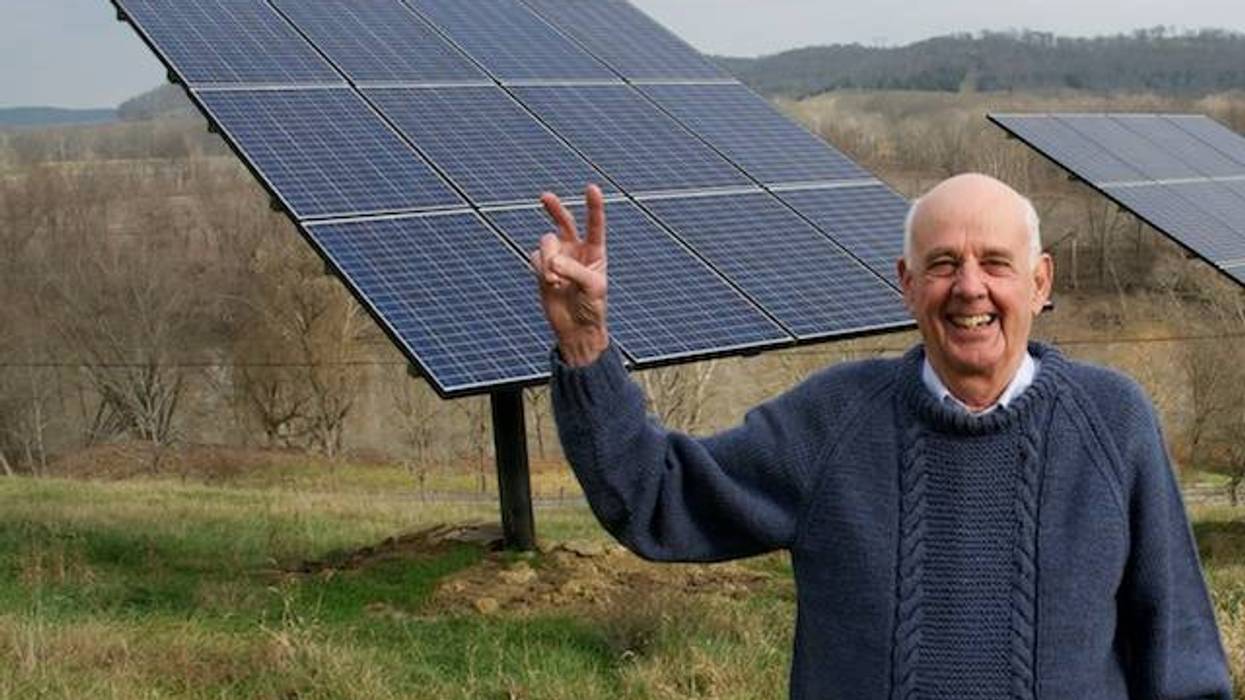
I was very lucky that my wife handed me a copy of his essay collection Home Economics about 40 years ago, when we were still courting. If I hadn’t fallen under his spell I’m not sure I would have spent my life in rural America, red state and blue; I know that he taught me how to see my town and my county, and my country and my species, in new-old ways that have undergirded all my work. And I’m very glad that we became friends, visiting and writing back and forth. His droll good humor rarely faltered, in my experience. I did not agree with him at all times, nor he with me—though he had solar panels behind his house, for instance, he didn’t think they belonged on farmland, while I think they’re a boon to both farmer and planet. But we agreed on most things of real dimension, and I was always delighted to see in the mailbox a letter with the return address of Port Royal Kentucky. He was one of the last people with whom I had a true written, as opposed to electronic, correspondence. Sometimes he’d tap things out on a manual typewriter, but more often it would be in pencil, on lined yellow paper.
The most recent arrived in July, and after news about grandsons and granddaughters it contained his newest discovery, a 1940 volume titled Stops, A Handbook for Those Who Know Their Punctuation and Those Who Aren’t Quite Sure. He was recommending it to me on the grounds that it is the “only book of my acquaintance that makes grammar delightful,” but also because he’d noted that it was published by the press (now defunct) at Middlebury College, where I teach. So while the rest of us were figuring out how to enlist Claude to help with our composition, one of the best writers of our age was still enjoying sharpening his prose, just as he enjoyed sharpening the tools of his work in field and forest. “I’m writing this on the porch of the ‘camp house,’ still unwired, built, I think, in 1964, in the woods between the river and the road.” He died on that farm on Monday, surrounded by family.
I got the news about his passing even as I was trying to grapple with the latest from a man who will attract more notice when he dies, but less affection. Elon Musk is always advancing his own vision of the world, of course—in fact, he’s just pledged to spend $100 million helping Republicans this fall. Or maybe $200 million—neither would be a noticeable sum to a trillionaire, of course. Whatever good he did with his early advocacy for electric vehicles has now been undone 100 times over with his advocacy for the people who hate EVs and all the other things we need. (He’s, as of last week, building gas turbines to make more electricity for his right-wing Grok AI project, already polluting the air of Black neighborhoods in Memphis).
He offers the Nazi salute; we are at his behest settling thousands of refugees from white South Africa (and no others) in our country; his rancid racism has destroyed Twitter. It would be a pleasure never to think of him again, but because he’s the richest man in the world, one has to monitor what he says. And here’s Monday’s installment, from of course his own social media site:
Extremely severe extinction events happen every 100M years or so and just switching to sustainable energy will not be enough to stop them.
Space satellites to control temperature and massive geo-engineering will be needed or it will be game over.
The disingenuousness of this is remarkable. Extremely severe extinction events have indeed happened just five times in the last half-billion years, which means it would be extremely unlikely we’d spontaneously come across one any time soon: Human civilization is, after all, just 10,000 years old. And yet of course we face one, not because of anything nature has done, but because we’ve filled the air with carbon dioxide from burning fossil fuel, which his allies wish to continue indefinitely. “Just switching to sustainable energy” is in fact the one good, scalable weapon we have to fight that, but since he’s a part of the political movement against this idea, he is now backing an alternative: “space satellites to control temperature,” which he further explains will be accomplished by a “super-intelligent swarm” of “sentient satellites, launched into Earth-Sun Lagrange points by mass drivers on the Moon.”
This is the kind of fantasy that drove Berry to distraction (and to work)—all about control and domination, all done by the few to the many, utterly ignorant of context. Immodest in every way.
But in Musk’s case it was accompanied by another revelation that began to emerge over the weekend. It turns out that the human toll of the horrific rampaging floods on the Nepal-Tibet border may well have been exacerbated by Musk’s decision to destroy the US Agency for International Development early in the DOGE assault on our government. USAID, in collaboration with NASA, helped maintain a network of monitors high in the Himalayas and Hindu Kush. Musk, in February 2025, “spent the weekend feeding USAID into the wood chipper. Could gone to some great parties. Did that instead.” One casualty was apparently this network. As Jeremy Konyndyk, who oversaw America’s response to the 2015 Nepal earthquake, wrote this weekend on (ironically) X:
DOGE famously used keyword searches for terms like "climate" to terminate federal grants. Among the victims: a collab between USAID and NASA for flood prediction, early warning, disaster readiness, glacier inventories, and mapping dangerous glacial lakes in Nepal.
As Konyndyk added:
Could these programs have helped foresee or mitigate this week's glacial flooding catastrophe? Hard to say with an outlier event like this. But that was their purpose.
Sadly, it's hard to anticipate or mitigate climate hazards which your ideology has decreed do not exist.
Musk’s victims already number in the millions—a Lancet study predicts 14 million by 2030 as the indirect results of shutting down America’s humanitarian work, which puts him up there in the Stalin-Mao category, and almost certainly the most deadly human of this millennium. So maybe a few thousand more people hardly matter.
But contrast what Musk did with the actions of a principal at a school along the river. When a friend upstream phoned one of his teachers a blurted warning, he immediately evacuated the entire student body, saving at least 900 lives. Given a warning, he acted (precisely what the world has not done with climate change). “I thought that even if the warning turned out to be wrong, the worst it would cost us was one day of study,” Rajendra Dawadi said. “But taking it lightly could mean the loss of hundreds of lives.”
Principal Dawadi will spend the rest of his life going to the weddings of the students whose lives he saved, and I imagine there will be no small number of babies named in his honor. Elon Musk’s name will be cursed—the richest man in human history, who used his wealth and power to kill the most vulnerable people on the planet.
Here is a recent poem of Wendell Berry’s, published in The New Yorker less than a year ago and titled "The Loved Ones":
The loved ones we call the dead
depart from us and for a while
are absent. And then as if
called back by our love, they come
near us again. They enter our dreams.
We feel they have been near us
when we have not thought of them.
They are simply here, simply waiting
while we are distracted among
our obligations. At last
it comes to us: They live now
in the permanent world.
We are the absent ones.
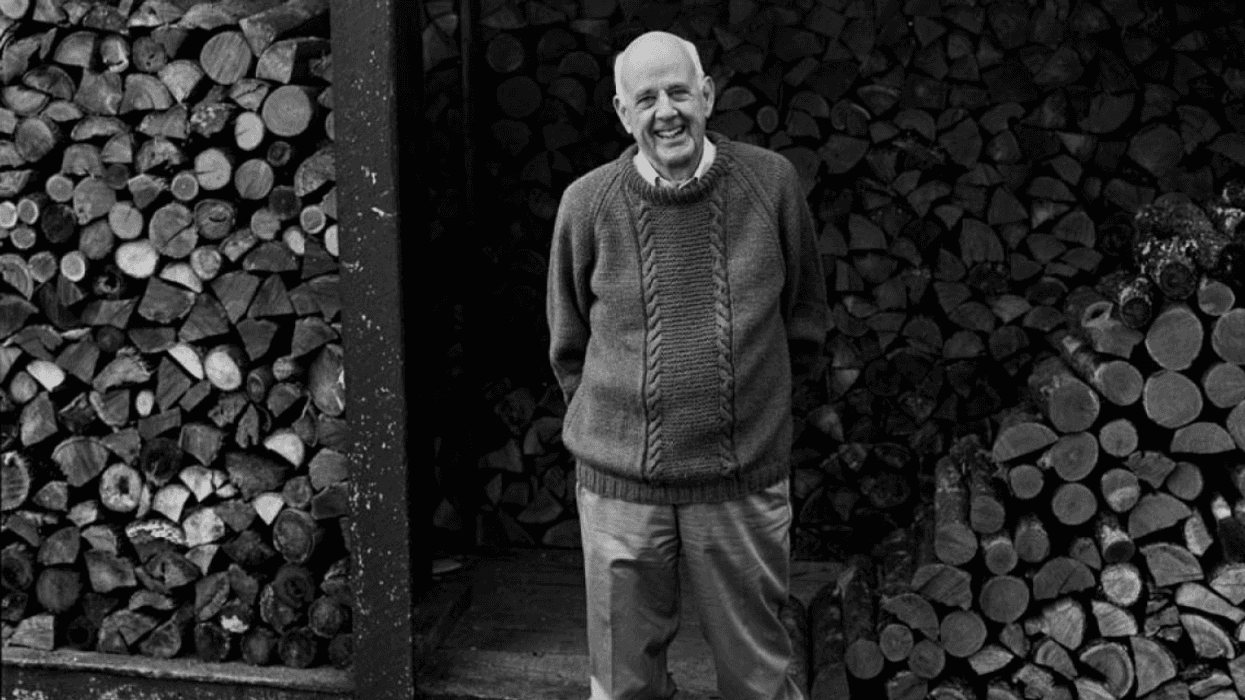
“I was taught that taking care of land was one of the primary human responsibilities,” Berry said in 2009.
The death of poet, activist, and conservationist Wendell Berry on Monday was called by one labor organizer "a loss of morality and clarity and compassion," as admirers of Berry's lifelong crusade to defend the environment honored his memory by sharing favorite poems and other works.
Berry died at the age of 92 at his home in Port Royal, Kentucky, where he spent decades writing about his farming the land, teaching, and writing about the need to fight "the concentration of farmland into larger and larger holdings and fewer and fewer hands," as he wrote in one of his best-known works, The Unsettling of America: Culture and Agriculture.
"The true measure of agriculture is not the sophistication of its equipment, the size of its income, or even the statistics of its productivity, but the good health of the land," wrote Berry in the essay collection, published in 1977.
He stressed that the "increase in overhead, debt, and dependence on machines" in the agricultural sector "is a matter of complex significance, and its agricultural significance cannot be disentangled from its cultural significance."
The Unsettling of America was one of more than 50 works published by Berry, whose commitment to interdependent community-building, small farms, and the protection of nature was woven into his fiction, poems, and essays alike.
In America magazine in 2021, Jon Sweeney wrote in a review of What I Stand On, a collection of Berry's writing, that "he writes about what he has experienced, what he has learned, and always with humility for what he does not know."
"The natural world is his primary teacher: its rhythms, its largesse, its mysteries,” Sweeney wrote. “And in the essays, the natural world often reflects how change in humans is also natural, inexplicable, and possible. I think this is what many who love his writing appreciate most about Berry, whether they realize it or not."
Berry traveled and taught briefly at New York University as a young man before returning to his Kentucky roots, remaining there for six decades. He told The New York Times in 2018 that writing and working in rural Kentucky "made a permanent connection between me and my native place, and with its landscape. The landscape was there to check me if I was wrong. I could never go away and make up stuff at cocktail parties about the backwoods of Kentucky. I worked with people here in all walks of life and learned from them."
In his 1969 essay "The Long-Legged House," named for the two-room cabin his ancestors had lived in, to which Berry returned to write his books and other works, he offered an early warning about the harm humans and their industries—agribusiness and fossil fuels—were doing to the Earth.
“We have lived our lives by the assumption that what was good for us would be good for the world," wrote Berry. "We have been wrong. We must change our lives so that it will be possible to live by the contrary assumption, that what is good for the world will be good for us. And that requires that we make the effort to know the world and learn what is good for it.”
The writer Joyce Carol Oates said on social media on Monday that "long before it became a more familiar subject, Wendell Berry was conscious of the endangered natural environment; indeed, Berry helped to raise this consciousness."
In addition to making his views on the environment and corporate control over the natural world known through his writing, Berry took part in direct actions to protest mining, war, and capital punishment.
He rallied against the US war in Vietnam, saying, "Peace is more important than victory," and was arrested in 1979 for protesting the Marble Hill Nuclear Power Plant in Madison, Indiana. Thirty years later he was one of thousands who marched on Washington against the Capitol Power Plant, and two years after that, in 2011, Berry spent the night at a sit-in in the Kentucky governor's office to protest mountaintop removal mining.
In 2009 he also withdrew his writings from the collection of University of Kentucky, his alma mater, to express opposition to the university's $7 million donation from a coal producer; the school then named a dormitory Wildcat Coal Lodge.
“I was taught that taking care of land was one of the primary human responsibilities,” Berry told the student newspaper, the Kentucky Kernel, at the time. “In the long run, the top soil, the forests, and the woodland of this state will be more valuable than the coal deposits.”
Silas House, another writer who hailed from Kentucky, said that with Berry's death, "another great light" had gone out.
House described the writer as "complex. Brilliant. Revolutionary."
Will there be a popular uprising against AI and the vast AI-based robotic machinery that’s taking over both the means of production and the means of information?
Ted Gioia has a popular Substack called “The Honest Broker.” Although, as an author, his books tend to focus on music and popular culture, he writes eloquently about a wide range of topics and offers insightful commentary about the global forced march toward technocratic lifestyle and governance that we’re now immersed in. In one posting, “25 Propositions about the New Romanticism,” Gioia posits that there is a new movement afoot mimicking (or, better, reflecting) the Romantic Period of the 18th century. This movement coincided with the first industrial revolution and, as a counterweight to that trend, saw a great shift toward impulses to re-enchant the world via poetry, art, and music, and reconnecting to nature. Gioia writes:
More than two years ago, I predicted the rise of a New Romanticism—a movement to counter the intense rationalization and expanding technological control of society. Rationalist and algorithmic models were dominating every sphere of life at that midpoint in the Industrial Revolution—and people started resisting the forces of progress. Companies grew more powerful, promising productivity and prosperity. But Blake called them “dark Satanic mills” and Luddites started burning down factories—a drastic and futile step, almost the equivalent of throwing away your smartphone. Even as science and technology produced amazing results, dysfunctional behaviors sprang up everywhere. The pathbreaking literary works from the late 1700s reveal the dark side of the pervasive techno-optimism—Goethe’s novel about Werther’s suicide, the Marquis de Sade’s nasty stories, and all those gloomy Gothic novels. What happened to the Enlightenment? As the new century dawned, the creative class (as we would call it today) increasingly attacked rationalist currents that had somehow morphed into violent, intrusive forces in their lives—an 180° shift in the culture. For Blake and others, the name Newton became a term of abuse. Artists, especially poets and musicians, took the lead in this revolt. They celebrated human feeling and emotional attachments—embracing them as more trustworthy, more flexible, more desirable than technology, profits, and cold calculation.
He goes on to posit that we’re poised for a return to that modality and points out that the notion of a New Romanticism has spread “like a wildfire,” citing influencers such as Ross Barkan, Santiago Ramos, and Kate Alexandra. Gioia sees what he describes as cultural trends at the leading edge of this transformation citing popular TV series such as Pluribus and Yellowstone. But is this really happening or has Gioia just stumbled on a pocket of cultural resistance and pushback against technocracy that’s primarily a pocket of unified self-expression rather than something representing deep and substantive cultural and societal change?
Let’s be clear about what’s happening here: robots and AI are taking over our culture, our politics, our way of life, and our relationships to each other as social beings. They’re becoming the advance guard for a new and unprecedented technocratic form of governance—the apotheosis of Western scientific materialism. Further, these new forms of governance are being carried out by unelected Big Tech overlords operating behind the scenes and in the backrooms of a mediated society well out of public view.
The tech takeover is such a massive appropriation of our social, political, and cultural life—and indeed our own biological substrate—that stoic acceptance might not be the way to go this time around.
I certainly hope that Gioia is right about a major cultural rejection of technocracy. There are indeed hopeful signs. The fundamental human values that make societies work and cohere have gotten steadily shunted aside by the technocracy takeover of culture and education—essentially becoming a new value system. This behind-the-scenes power shift has been amplified and compounded by an over-emphasis in education on STEM, corporate modalities, neo-Darwinian utilitarianism, and the continuing erosion of the humanities that began decades ago. So yes, without a doubt, we need to get “back to the garden” and return to a wider and deeper set of the kind of core values that ultimately hold societies together. Without positive shared values, societies become rudderless and fall into a kind of benighted chaos. All we need to do is look around.
All of that said, in his Substack post, Gioia missed an important component of this transition—if indeed it is coming to pass (and we can only hope). Throwing off technocracy and emerging from our involuntary digital cages also means reconnecting with the natural world, a fundamental human relationship that’s now increasingly mediated by digital devices. The need for this reconnection, this existential about-face, was a key aspect of the romanticism of the 18th century. In literature, for example, the Romantic poets were rather obsessed with it as poet Robert Bly points out in his stellar book News of the Universe (I highly recommend it.) In allowing our daily life to be shifted into an increasingly claustrophobic and self-reinforcing digital cage, we have abandoned not only our connection to the natural world but also to each other. Connecting to nature also lets us tap into the mystery of the universe, which despite human folly remains nonetheless fully intact even if absurdly rationalized by scientific reductionism. Carl Sagan and Albert Einstein were both scientists who could appreciate this. We need more like them.
In the 80s and 90s, science fiction movies and literature commonly offered themes of “robot wars” where humans were pitted against the dominance of an ugly dystopian society. Will this be our future courtesy of Elon Musk and his cohorts? Or, alternatively, will there be a mass uprising against AI and the vast AI-based robotic machinery that’s taking over both the means of production and the means of information? We humans are known for our adaptability and stoicism in difficult situations such as world wars and major disasters. That stoicism and sense of “accepting what can’t be changed” seems to be part of our psychological and perhaps even biological makeup. But the tech takeover is such a massive appropriation of our social, political, and cultural life—and indeed our own biological substrate—that stoic acceptance might not be the way to go this time around.
In the next few years, it most certainly will have finally dawned on the mass of humanity, especially in advanced Western nations, that something is badly amiss. Many will realize at a visceral level that their everyday lives are trapped in a claustrophobia-inducing closed-circuit technocratic system and control grid that robs them of autonomy and freedom while purporting to do the opposite.
I totally agree that a new romanticism is a very necessary sea change at this strange time in human history but am perhaps a bit less optimistic that it will happen—at least over the next few years. The forces of technocracy seem too powerful at the moment to be countered because so many of the necessities of everyday life depend on our attachment to this digital realm. This includes paying bills, financial maintenance, government-related necessities such as getting a license renewed, and so much more. Further, technological dependency keeps getting ratcheted up by the self-appointed masters of the universe represented by Big Tech’s unchallenged and ever-growing power. That said, I sincerely hope I’m wrong about this and Gioia is right. Time will tell.

"Biodiversity finance remains stalled after a deafening absence of credible finance pledges from wealthy governments and unprecedented corporate lobbying," said one campaigner.
Officials at the international biodiversity conference that began in October were forced on Saturday to suspend talks without reaching an agreement on a key issue of the summit—a detailed finance plan for a dedicated biodiversity fund—after the meeting went into overtime and delegates began leaving.
The failure to reach an agreement on biodiversity finance was denounced by the head of environmental group Greenpeace's delegation at the 16th Conference of Parties (COP16) to the United Nations Convention on Biological Diversity (CBD), which took place over two weeks in Cali, Colombia.
"Governments in Cali put forward plans to protect nature but were unable to mobilize the money to actually do it," said An Lambrechts. "Biodiversity finance remains stalled after a deafening absence of credible finance pledges from wealthy governments and unprecedented corporate lobbying... Closing the finance gap was not merely some moral obligation but necessary to the protection of people and nature that grows more urgent each day."
Lambrechts added that with international leaders now preparing to attend the 2024 U.N. Climate Change Conference, or COP29, in Baku, Azerbaijan this month, "the non-decision on a fund damages trust between Global South and North countries."
The conference was aimed at ramping up progress toward meeting goals set by the Kunming-Montreal Global Biodiversity Framework in Canada in 2022. That framework calls for the protection of 30% of land and sea areas and the restoration of 30% of degraded ecosystems by 2030.
In Canada, delegations also agreed to phase out subsidies that are harmful to nature and to provide $200 billion per year for the protection of biodiversity by 2030, including $30 billion per year that would be transferred from rich to poor countries. A larger goal of ultimately generating $700 billion to protect nature was also part of the agreement.
About $15 billion was transferred in 2022, according to the Organization for Economic Cooperation and Development (OECD), and nations have pledged about $400 million to a Global Biodiversity Framework Fund.
But in Cali in recent days, Colombian environment minister Susana Muhamad offered a draft proposal for the establishment of a dedicated biodiversity fund—a priority for developing nations at the conference—only to have delegations including those from the European Union, Switzerland, and Japan reject the proposal.
"Two years ago, we made a commitment to do better and be better," said Jiwoh Abdulai, minister of environment and climate change for Sierra Leone. "This COP has neither delivered that additional funding nor given us confidence that governments will work together to deliver it in a transparent and urgent manner."
The Forests & Finance Coalition—which includes Amazon Watch, Rainforest Action Network (RAN), and Friends of the Earth U.S., among others—called the result of finance discussions at the meeting "disappointing."
"This latest development makes it all the more critical that banks and investors are stopped from financing destructive sectors that continue to drive nature loss and human rights abuses," said Tom Picken, RAN's forests and finance director.
Lambrechts acknowledged that "big pharma and big agribusiness failed to block a game-changing deal on corporate responsibility to pay up for nature protections."
COP16 delegates devised a plan to create a fund that would share the profits generated from digitally sequenced genetic data taken from plants and animals with the communities—mostly in the Global South—that the species come from.
Companies that make money from cosmetics, medicines, and other products that use digitally sequenced genetic data would pay into the fund, but the final agreement made participation voluntary, saying only that companies "should" contribute.
Indigenous delegates celebrated the creation of a permanent body within the CBD to represent the interests of Indigenous groups—a "historic victory," according to Leila Salazar-López, executive director of the nonprofit Amazon Watch.
A work plan was approved by the convention to expand the role of Indigenous people, local communities, and Afro-descendant people in the protection of biodiversity.
"Thanks to this new body and work plan approval, future COPs will work, amongst many other important issues, on land tenure, traditional knowledge and governance by Indigenous Peoples," said Isaac Rojas, forests and biodiversity coordinator for Friends of the Earth International (FOE). "It's a milestone in the struggle of Indigenous peoples for their rights. We congratulate them and share their joy following this win. But we have to remain vigilant, because these achievements may turn out to be empty words in view of the push for several false solutions."
FOE warned that false solutions, particularly biodiversity offsetting, were pushed heavily by corporations at the conference.
Corporate interests called for biodiversity credits—"tradeable assets intended to represent 'measurable outcomes'—such as protecting or restoring certain species or ecosystems, or parts of them," according to FOE. "Similar to carbon credits, they allow corporations to buy and sell these, to meet regulations or voluntary sustainability claims."
Nele Marien, forests and biodiversity co-coordinator for FOE, said Saturday that "corporations were here pushing very hard for all kinds of false solutions, for example on biodiversity offsetting, which had a lot of traction."
"They argue that they can keep pushing into new territories, and destroying these ecosystems, promising that they will compensate for this," said Marien. "This is simply impossible, because we don't have space in the world to compensate for these losses. Biodiversity offsetting is a mechanism that further perpetuates destruction, undermines human rights, and damages environmental justice."
A spokesperson for the CBD, David Ainsworth, told reporters that the conference would resume at a later date.
Estefania Gonzalez, deputy campaign director for Greenpeace Andino, said delegates were "able to take advantage of COP16 to bring much of the priority agenda of the Global South to the center of the negotiations, fighting to the last minute to reach agreements on financing."
But she added that "the resource mobilization committed by developed countries must be fulfilled immediately without further excuses."
"It is unacceptable that rich countries, besides failing to meet the $20 billion commitment," she said, "were unwilling to seek consensus on one of the most crucial issues: financing."
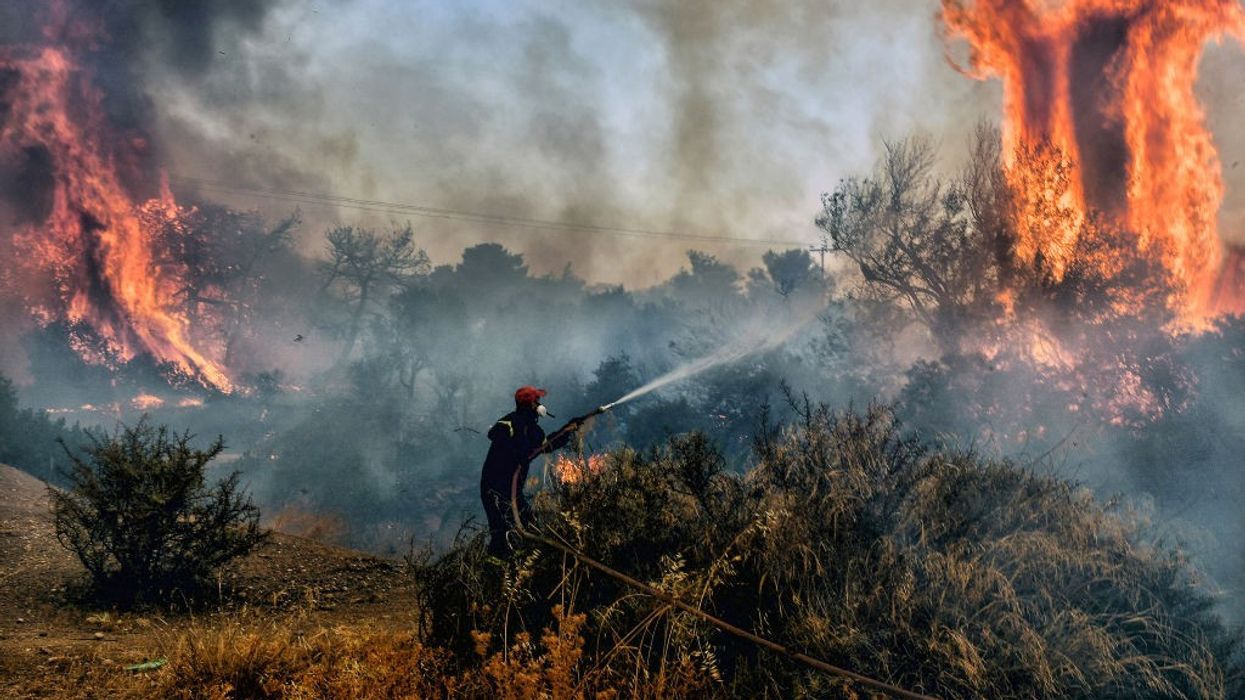
Why there is no viable techno-fix to climate change, and why trees, soil, and biodiversity are our real lifelines.
Climate change is a huge, complicated problem. Therefore, many people have an understandable tendency to mentally simplify it by focusing on just one cause (carbon emissions) and just one solution (alternative energy). Sustainability scholar Jan Konietzko has called this “carbon tunnel vision.” Oversimplifying the problem this way leads to techno-fixes that actually fix nothing. Despite trillions of dollars already spent on low-carbon technologies, carbon emissions are still increasing, and the climate is being destabilized faster than ever.
Understanding climate change requires us to embrace complexity: not only are greenhouse gases trapping heat, but we are undermining natural systems that cool the planet’s surface and sequester atmospheric carbon—systems of ice, soil, forest, and ocean. Grasping this complexity leads to new ways of thinking about climate change and viable responses to it.
Almost everything we’re doing to cause climate change involves technology—from cars to cement kilns to chainsaws. We humans love technology: it yields profits, jobs, comfort, and convenience (for some, anyway; it also tends to worsen overall economic inequality). So, predictably, we’re looking to alternative technologies to solve what is arguably the biggest dilemma humanity has ever created for itself. But what if that’s the wrong approach? What if more technology will actually worsen the problem in the long run?
Unlike technology, nature constantly repairs itself. It tends to clean up pollution, rather than spreading toxins.
In this article, we will see why there is no viable techno-fix to climate change, and why trees, soil, and biodiversity are our real lifelines.
Before discussing natural solutions, let’s explore whether technology has a role to play. What machines are touted as our main climate solutions, and what are their strengths and drawbacks? There are four broad categories.
The first climate-tech category consists of low-carbon energy generating machines, including solar panels, wind turbines, and nuclear power plants. These energy sources produce electrical power with minimal carbon emissions. However, they are not problem-free or risk-free. Wind and solar power are intermittent, requiring energy storage (e.g., batteries) and a major grid overhaul. Building these energy sources at sufficient scale to replace our current energy usage from fossil fuels would require enormous amounts of materials, some of them rare, and mining those materials destroys habitat and pollutes the environment. Recycling could eventually minimize materials requirements, but recycling has limits. Nuclear power likewise suffers from the dilemma of scale (to make a significant difference, we’d need to build an enormous number of nuclear plants, and quickly), but adds problems associated with fuel scarcity, waste containment and disposal, and the risks of accidents and nuclear weapons proliferation.
The second tech category includes energy-using technologies for running the modern industrial world—machines for manufacturing, heating, mining, farming, shipping, and transportation. In many cases, low-emissions versions of these machines are not yet marketed, and many may not work as cheaply as current technologies (cement making and aviation are two industries that will be hard to decarbonize). And again, there is the dilemma of scale, and the requirement for more materials. We have built our current industrial infrastructure over a period of decades; replacing huge portions of it quickly in order to minimize climate change will require an unprecedented burst of resource extraction and energy usage.
A third category of technologies for fighting climate change consists of machines for capturing carbon from the atmosphere so it can be safely stored for long periods. “Direct air capture” (or DAC) technologies have been developed, and are starting to be installed. However, a recent meta-study concluded that these machines suffer from problems of scale, cost, materials requirements, and high energy usage. The study’s authors say that policy makers’ prioritization of mechanical carbon capture has so far yielded a “track record of failure.”
Climate change reduces biodiversity by making environments inhospitable to some of the species that inhabit them.
If none of our other mechanical methods for tackling climate change work, there is one last resort: technologies for cooling the planet via solar radiation management. This “solar geoengineering” solution would entail dispersing large quantities of tiny reflective particles in Earth’s atmosphere (this is known as stratospheric aerosol injection), or building a space parasol to shade the planet. Critics point out that these technologies might have unintended consequences as bad as, or worse than the problem they are trying to solve.
It’s hard to argue against implementing at least some of these technologies at a modest scale. Humanity has become systemically dependent on energy from coal, oil, and gas to meet basic needs—including housing, food, and health care. Eliminating fossil fuels quickly and entirely, without having deployed alternative sources of energy, would result in immiseration for millions or billions of people. A similar argument could be made regarding low-carbon manufacturing, agricultural, and transport machines: we need alternative ways to make things, produce food, and get around. But our need for such machines does not erase their inherent environmental costs, including resource depletion, pollution, and habitat loss.
A review of available techno-fixes leads to two unavoidable conclusions. First, our problem is not just carbon emissions per se; it’s also how we humans inhabit our planet (too many of us using too much stuff too fast). And second, we need non-technological ways of addressing the climate crisis.
Throughout hundreds of millions of years, nature has developed cooling cycles that keep the planet’s surface temperature within certain bounds (though Earth’s climate does oscillate significantly). Chief among these is the water cycle, which operates on both a large and a small scale. On the large scale, ocean currents move enormous amounts of water around the planet, shifting more water onto land via precipitation than evaporates from it. On the small scale, water falls as rain or other forms of precipitation, is absorbed by soil, is drawn up into plants, and transpires or evaporates back into the atmosphere. This dual water cycle has a net cooling effect.
We industrial humans have been destabilizing the planetary water cycle. Industrial agriculture degrades soil, so that it holds less water. Expanding cities cover soil and channel rainwater via storm drains out to sea, rather than keeping water on the land. Pavement and buildings create the well-known urban “heat island” effect, which can raise temperatures by many degrees compared to natural landscapes. Industrial agriculture, urbanization, and destructive forestry practices reduce overall vegetation, and therefore also reduce evapotranspiration. Result: even if we weren’t loading the atmosphere with excess carbon dioxide, we’d still be warming the planet. Combine a diminished water cycle with land heating from urban sprawl, a couple of hundred billion square meters of pavement, and degraded soil; then add those ingredients to the main dish of overabundant emissions, and you have a recipe for hell on Earth.
The obvious solution: restore nature’s cooling cycles. Re-vegetate the planet, thereby increasing evapotranspiration. Restore soils so they hold more water. And get rid of pavement wherever possible.
There are depaving advocates in nearly every community. Unfortunately, their voices are drowned out by powerful road-building and construction interests, and by motorists who want to drive in comfort anywhere and everywhere. Permeable pavement options exist; but most municipalities, when faced with complaints from motorists about crumbling roads, opt simply to cover old streets with a fresh coat of black asphalt (made from oil) that heats the environment, prevents water from reaching the soil underneath, and gives off toxic fumes. If humanity is serious about halting climate change, then it should put the depavers in charge.
Re-vegetating the planet is a huge project that can only be undertaken in bite-sized chunks at the local scale. The biggest contributors to the small water cycle are intact forests; therefore, our first order of business should be to protect existing old-growth forests (you can plant a tree in a few minutes, but an old-growth forest requires centuries to mature). At the same time, we can plant millions more trees—but they must be the right kinds of trees in the right places. We must anticipate climate change and assist forests to migrate to suitable climate zones.
If humanity is serious about halting climate change, then it should put the depavers in charge.
Soil can be restored by covering it with leaf litter, mulch, and vegetation, by keeping living roots in it as long as possible (mainly by planting more perennial crops and fewer annuals), and by adding compost and biochar to aerate soil and boost biological activity. First, however, we have to stop doing all the things we’re currently doing that harm soils—including annual tillage and application of herbicides and pesticides. Permaculture practitioners and organic farmers have been fighting this battle for decades, and they’ve developed many effective techniques for maximizing food production while building healthy soil.
Climate change reduces biodiversity by making environments inhospitable to some of the species that inhabit them. Moreover, everything we’re doing to cause climate change (industrial agriculture, urbanization, cattle ranching, and road building) is also directly contributing to biodiversity loss. But restoring biodiversity can mitigate climate change. For example, restoring soils requires making them more biologically diverse (in terms of fungi, bacteria, nematodes, and worms). And restored soils support other organisms (more vegetation and hence more wildlife, all the way up to buffalo and elephants) that also help maintain nature’s cooling cycles. In effect, virtually all nature conservation efforts are also climate change mitigation efforts.
If solar, wind, and nuclear electricity generators won’t solve the climate problem, and fossil fuels have to be quickly phased out, where will we get our energy? That’s a tough question, and addressing it requires, first and foremost, a discussion of demand.
The scale of energy usage in industrialized countries today is simply unsustainable. Regardless which energy sources we choose (including fanciful ones such as fusion power), using this much energy results in environmental harms such as resource depletion and toxic pollution. If we want our species to be around for the long haul, we must reduce energy demand. The best ways to do that are to encourage a smaller population and to establish economies that aim for increased human happiness rather than growth of resource extraction, manufacturing, and transport.
As energy demand recedes, humanity will have better supply options. Before we started using fossil fuels in enormous quantities, we got much of our energy from burning wood. We can’t do that now, at a time when we use far more energy and also need to increase the planet’s tree cover. Instead, we can use energy from sunlight, wind, and flowing water, not just in high-tech ways—via photovoltaics, wind turbines, and hydroelectric dams—but in low-tech ways that entail less usage of mined materials. Low-Tech Magazine explores these options, including human-powered air compressors, sailing ships, practical household bike generators, and low-tech solar panels, among many others.
If we need to conserve energy, the same is true of materials (which require energy for mining, smelting, and manufacturing). Currently many of the materials we use are toxic plastics made from fossil fuels.
Can we get all of the materials we need from nature, without depleting and polluting? In an absolute sense, the answer is probably no, unless we eventually return to hunting and gathering as a way of life. But we can dramatically reduce depletion and toxicity, first by applying the familiar ecologists’ mantra of “reduce, reuse, and recycle,” and then by substituting plant-based materials for plastics and metals wherever possible.
By partially combusting plant wastes, it is possible to produce versatile materials for buildings, roads, and manufactured goods. Thousands of small, regional pyrolysis plants, using a range of feedstocks, most now considered waste, could make both biochar (to increase soil fertility) and “parolysates” (carbon-based materials that could be incorporated into products). In many instances added carbon would improve the performance of materials, making this shift in manufacturing methods profitable.
Suppose we do all these things. Still, we’ve already emitted an enormous surplus of carbon into the atmosphere—about 1,000 billion tons of it. As a result, even with nature’s cooling cycles restored, there will continue to be a dangerous warming effect. To minimize that, we will have to remove and sequester a lot of atmospheric carbon, and fast. As we’ve seen, DAC machines aren’t working. What will?
Nature already removes and sequesters about half the carbon emitted by humanity’s burning of fossil fuels. You can see that effect in graphs of the annual atmospheric greenhouse gas concentration: during summer months in the northern hemisphere, when plants are flourishing on Earth’s largest land masses, the atmospheric CO2 concentration declines significantly. Then, in the winter, it rebounds and rises even further due to continually increasing emissions. Oceans absorb far more CO2 than land. We need to assist nature in absorbing a lot more than it already is (while, of course, reducing emissions dramatically and fast, rather than continuing to increase them)
Globally, soils contain about 1,500 billion metric tons of carbon; they’re the the second largest active store of carbon after the oceans (40,000 billion tons). Currently, humanity is forcing soils to give up their carbon to the atmosphere through annual tillage, erosion, and salinization. However, by adopting different practices, we could restore soils and thereby significantly increase their carbon content. The practices that would help most go by the names regenerative agriculture and carbon farming. Estimating how much carbon soil could capture if we adopted these practices at scale is difficult, but some experts suggest the quantity could exceed 20 billion tons by 2050 (of course, that assumes dramatic, coordinated efforts supported by governments and farmers).
The widespread use of biochar and parolysate materials could also capture significant amounts of carbon. In their book Burn: Igniting a New Carbon Drawdown Economy to End the Climate Crisis, authors Albert Bates and Kathleen Draper suggest that the amount of carbon that could theoretically be sequestered in buildings, roads, and consumer products is in the range of hundreds of billions of tons.
Trees and other types of vegetation already store a great deal of carbon, but current agricultural and forestry practices are reducing that amount annually. By some estimates, forests alone could capture and store over 200 billion tons of atmospheric carbon if we started adding trees in an ecologically sensitive way, rather than subtracting trees on a net basis.
The sheer scale of the ocean and its existing carbon content means that the theoretical potential for ocean-based carbon capture exceeds that of other options. However, tapping that potential at scale (for example, by microalgal cultivation or ocean alkalinity enhancement) would require massive technological interventions. Some researchers suggest that encouraging the growth of kelp, a straightforward intervention, could capture and store up to 200 million tons of carbon per year. Wetlands such as marshes and swamps cover only 3 per cent of the world’s land, but contain twice as much carbon as all forests; if restored, they could capture and store a significant amount of carbon (though estimates vary widely). Overfishing, shipping, fertilizer runoff, destruction of coastal wetlands, and plastics pollution are currently devastating ocean ecosystems, causing them to lose much of their carbon capturing capacity. Mining the ocean floor for minerals to build large-scale renewable energy systems would only worsen an already grim situation. It seems that, in the case of the ocean, the most important thing we could do is just to stop the ongoing damage.
If we did these things, could we eliminate all the excess carbon in the atmosphere and thereby stop climate change? Halting global warming altogether is likely not possible, because there is already more heating on the way due to the momentum of feedbacks that have already been set in motion—including the melting of glaciers and sea ice. Further, actually doing all of these things rapidly (say, in the next two or three decades) would require an unprecedented level of international coordination and effort. Nevertheless, the numbers add up: it is possible to draw down excess atmospheric carbon on a scale commensurate with the problem using nature-restoring methods rather than machines. Which is hopeful, because doing it with machines simply isn’t working.
Unlike technology, nature constantly repairs itself. It tends to clean up pollution, rather than spreading toxins. It creates resources rather than depleting them. But to meet all human needs and solve problems using nature’s way, we will have to think entirely differently. It’s not just a matter of gradually setting aside harmful, overly complex technologies, but of shifting subtle societal incentives and disincentives that cause us to turn first to machines, even when unintended consequences are easy to spot.
A more nature-based society will feature fewer people living closer to the land, with a throughput of energy and materials far smaller than is the case in industrialized nations today. We will be less urbanized, more rural. We will rely less on money, and more on community-based cooperation.
This is how Indigenous people have lived for millennia, and so it should be no surprise that some of the most successful nature-based climate mitigation efforts are being led by Indigenous communities.
Fortunately, it is possible for individuals and households to make a difference by promoting biodiversity in their homes, gardens and communities, and to reduce energy and materials usage through their daily choices of what to purchase (or not purchase), what to eat, and how (and how much) to travel.
Unfortunately, circumstances require us to make a decisive shift in how we think and live at a time when as we also face an enormous threat. Since more warming is now inevitable, it is almost certain that the remainder of this century will see mass migrations and political instability. These social challenges will make it harder for nations and communities to mount large-scale, coherent efforts to restore ecosystems.
Nevertheless, whatever we do to try slowing or halting climate change will be most effective if it is aimed at helping nature do more of what it already does. Restoring nature isn’t just our best climate solution, it’s our only solution.
Thanks to Bio4Climate and Christopher Haines for inspiration and help with this article.
Please join us on July 2 for an online Deep Dive panel discussion on climate change, featuring Timothy Lenton, Chair in Climate Change and Earth System Science at the University of Exeter, and Isabel Cavelier Adarve, former climate negotiator and winner of the prestigious Climate Breakthrough Award.
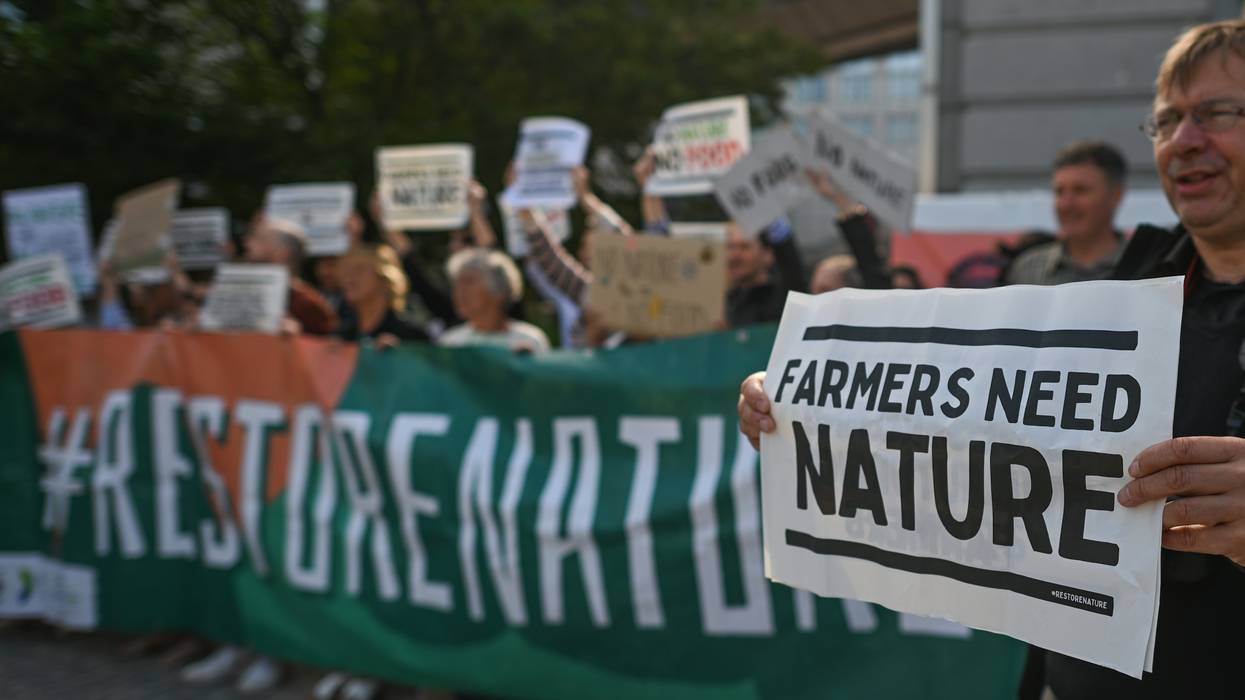
"To let this go now means we go into European elections saying the European system is not working, we do not protect nature, we do not take climate seriously," said Ireland's environmental minister. "That would be an absolute shame."
Environmental ministers in the European Union on Monday warned that the bloc's credibility on heading off the global biodiversity and climate emergencies is in peril following the European Council's decision to remove the historic Nature Restoration Law from its agenda after the proposal lost key support.
"We inspired others, yet now we risk arriving empty handed at COP16 [the 2024 UN Biodiversity Conference]," Virginijus Sinkevičius, E.U. commissioner for environment, oceans, and fisheries, said in a statement. "Backtracking now is... very difficult for me to accept."
The law, first introduced in 2022 and approved by European Parliament last month, faced one final hurdle to passage with the planned Council vote, but recent protests by farmers over the new nature restoration requirements helped push some previous supporters to reverse their positions on Monday.
The Nature Restoration Law, which supporters said they still intend to try to pass before E.U. elections in June, would require member states to adopt measures to restore at least 30% of habitats by 2030, working up to 90% by 2050. Member states would be required to take action to reverse pollinator populations, restore organic soils in agricultural use, increase development of urban green areas, and take other steps to protect biodiversity.
Since the farmer protests began in France and started spreading to other countries including Spain, Belgium, and Italy, policymakers have offered concessions including delayed implementation of another set of biodiversity rules calling for the agriculture industry to keep 4% of farming land free of crop production to regenerate healthy soil. The European Commission also shelved an anti-pesticide law in February in response to the protests.
As countries announced their new opposition to the Nature Restoration Law in recent days, some ministers suggested the demonstrations contributed to their decision.
Anikó Raisz, Hungary's minister of state for environmental affairs, said the law would "overburden the economy" and cited concerns about the "sensitive situation" in the agriculture sector. Italy also said it was concerned about the biodiversity rules' impact on farmers.
The World Wide Fund For Nature (WWF) accused far-right Hungarian President Viktor Orbán, who has dismissed European climate policies, of being behind the "unexpected and clearly politically motivated change in Hungary's position."
Hungary's opposition "was left unchallenged by Sweden, Poland, Finland, the Netherlands, Belgium, Austria, and Italy—who continue to either abstain or oppose," and "has now put the [Nature Restoration Law] in jeopardy again, giving Hungary's President Viktor Orbán the green light to further his own agenda and hold E.U. decision-making hostage," said WWF.
Eamon Ryan, Irish minister for the environment, accused other policymakers in the bloc of "buckling" before the farmer protests, which continued Tuesday, ahead of June elections.
"The biggest risk is the collapse of political ambition and will," Ryan said. "To let this go now means we go into European elections saying the European system is not working, we do not protect nature, we do not take climate seriously. That would be an absolute shame."
BirdLife Europe called on the E.U. the continue its efforts to pass the Nature Restoration Law before the session ends this summer.
"The E.U.'s reputation hangs in the balance in this critical year of E.U. elections," said the group. "Failure to make the law a reality also undermines the E.U.'s credibility and leadership on its international commitments to tackle the biodiversity and climate crises."
"This is definitely not the end of the story," Alain Maron, Belgium's minister for climate change, environment, energy, and participative democracy, told reporters at a press conference Monday. He added that the Belgian presidency of the European Council "will work hard in the next few weeks to find possible ways out of this deadlock, and get the file back on the agenda for adoption in another council."
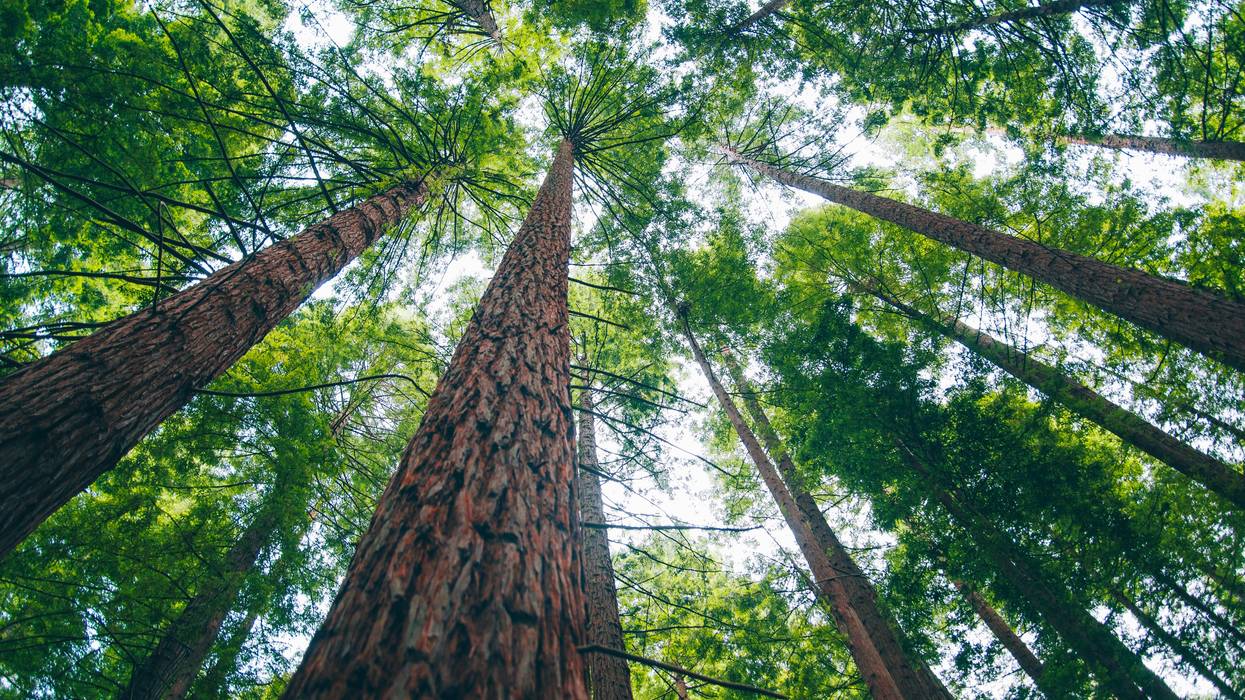
One campaigner said it is "a meaningful step towards averting climate catastrophe, safeguarding vulnerable ecosystems, and fulfilling President Biden's commitment to preserve old-growth and mature trees."
Conservationists on Tuesday applauded the Biden administration's first-of-its-kind proposal to conserve and restore old-growth trees across national forests and grasslands with limits on logging, "so nature can continue to be a key climate solution."
The plan would protect the nation's most ancient forests from commercial logging on approximately 25 million acres of public lands, though it would allow some cutting of trees under stricter conditions than currently exist.
The United States is a top contributor to planet-heating pollution, largely from fossil fuels. White House Council on Environmental Quality Chair Brenda Mallory noted in a statement that "our forests absorb carbon dioxide equivalent to more than 10% of our nation's annual greenhouse gas emissions."
The proposal to amend all 128 forest land management plans in line with an executive order issued last year by President Joe Biden comes from the U.S. Department of Agriculture (USDA). Agriculture Secretary Tom Vilsack said that "climate change is presenting new threats like historic droughts and catastrophic wildfire. This clear direction will help our old-growth forests thrive across our shared landscape."
Many campaigners agreed—including Earthjustice's Blaine Miller-McFeeley, who praised the proposal "an important milestone," and Ellen Montgomery of Environment America, who called it "unprecedented."
"Protecting our old-growth trees from logging is an important first step to ensure these giants continue to store vast amounts of carbon, but other older forests also need protection."
Sierra Club forests campaign manager Alex Craven stressed that "our ancient forests are some of the most powerful resources we have for taking on the climate crisis and preserving ecosystems."
"We are pleased to see that the Biden administration continues to embrace forest conservation as the critical opportunity that it is," he added. "This amendment is a meaningful step towards averting climate catastrophe, safeguarding vulnerable ecosystems, and fulfilling President Biden's commitment to preserve old-growth and mature trees across federal lands."
Oregon Wild's Lauren Anderson declared that "President Biden is taking a major step forward in protecting these national treasures."
While welcoming the administration's plan, conservationists also pushed for further action from the USDA's Forest Service—which, along with the U.S. Department of the Interior's Bureau of Land Management, manages approximately 32 million acres of old-growth forests and 80 million acres of mature forests nationwide.
"Protecting our old-growth trees from logging is an important first step to ensure these giants continue to store vast amounts of carbon, but other older forests also need protection," explained Randi Spivak of the Center for Biological Diversity. "To fulfill President Biden's executive order and address the magnitude of the climate crisis, the Forest Service also needs to protect our mature forests, which if allowed to grow will become the old growth of tomorrow."
Standing Trees executive director Zack Porter pointed out that "more than 99.9% of old-growth forests in New England have already been cut down."
"For the climate and biodiversity, the Forest Service must put an end to destructive mature forest logging that prevents the recovery and expansion of old-growth forests across the U.S.," he said. "We are buoyed by today's announcement, and remain optimistic that the Forest Service will take further action to secure protections for America's future old-growth forests."
The Washington Post reported that "some environmental advocates also questioned whether the policy will last, as a future administration could easily undo it," considering that the changes "won't be finalized until the agency has completed an environmental impact statement, which it expects to finish in early 2025."
Campaigners have also long argued that protecting the carbon storage capacity of U.S. forests cannot be considered a real climate solution unless paired with other key actions. As Food & Water Watch's Thomas Meyer put it last year, "Protecting forests without addressing the root cause of the climate crisis, namely the continued extraction and burning of fossil fuels, will do very little to slow global warming."
The global phaseout of fossil fuels was a primary focus of the recent United Nations climate talks, which wrapped up in Dubai earlier this month with a deal that scientists decried as "a tragedy for the planet" because it failed to explicitly demand ending the era of oil, gas, and coal. The United States was represented at COP28 by John Kerry, Biden's climate envoy, as the president skipped the summit.
Biden, who is seeking reelection next year, has been blasted by experts, frontline communities, and younger voters for refusing to declare a national climate emergency, continuing fossil fuel lease sales for public lands and waters, enabling the Willow oil project and Mountain Valley Pipeline, and supporting the expansion of liquefied natural gas exports.
For his part, former President Donald Trump, the leading contender for the Republican Party's nomination, has vowed to "drill, drill, drill" if he wins back the White House in 2024.
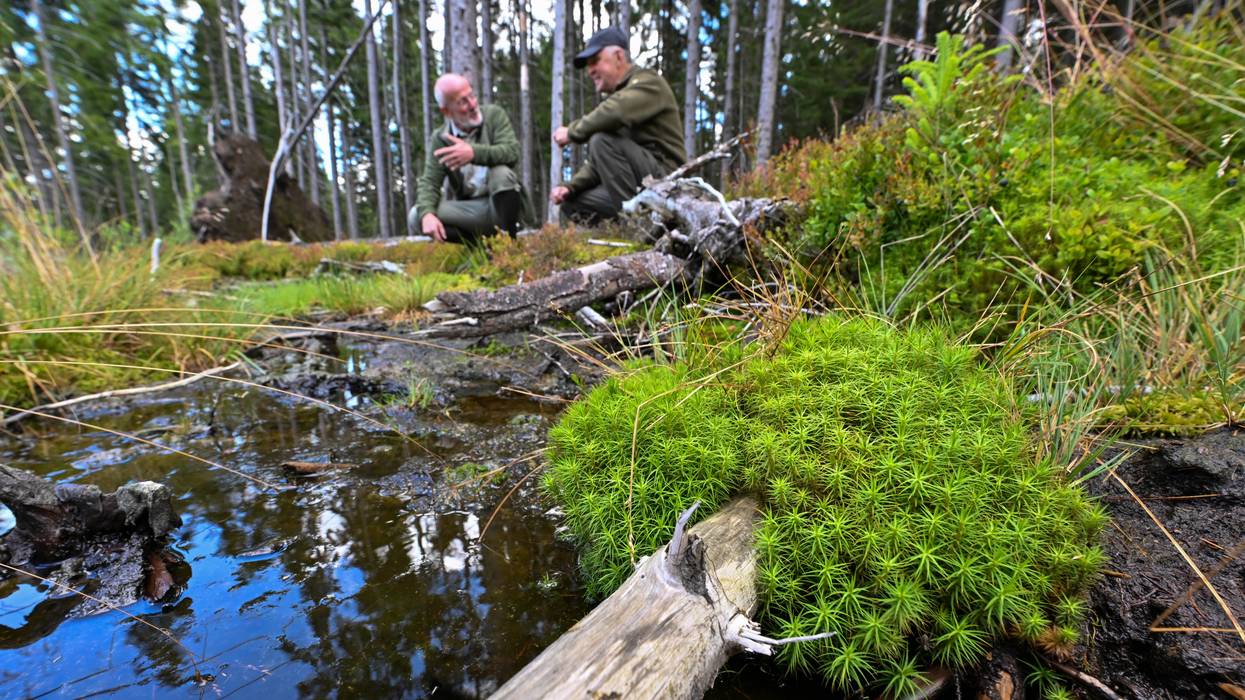
"Despite significant concessions made to the opponents of the impactful Nature Restoration Law, the provisional agreement includes several positive elements," said one advocate.
Biodiversity advocacy groups in Europe on Friday applauded policymakers' reaching of a landmark deal to restore nature, finalized after painstaking negotiations between the European Parliament, Commission, and Council—but warned that the bloc's largest party, the right-wing European People's Party, had succeeded in securing numerous concessions that watered down the agreement.
The Nature Restoration Law, part of the European Union's Green Deal to protect the environment and reduce planetary heating, will establish measures to restore at least 20% of the bloc's land and 20% of its marine environments by 2030.
Currently, about 80% of natural habitats in Europe are in need of restoration. At least 30% of degraded habitats must be restored by the end of the decade under the law, rising to 60% by 2040 and 90% by 2050.
The agreement still needs to be passed by the European Parliament's Environment, Public Health, and Food Safety (ENVI) Committee in a vote that's scheduled for November 29, and then proceed to a "rubber-stamp vote" in parliament's plenary session in December.
"The true litmus test lies in whether this law will really address the staggering repercussions of the climate and nature crisis. And that will only be seen if and when member states properly implement the law."
Lead negotiator César Luena, a Spanish member representing the center-left Socialists & Democrats Party, said he was confident the measure would pass but admitted the agreement reached late Thursday night was only "the first brick" to ensuring biodiversity is restored in Europe.
"I wanted more, of course, but this is a deal," Luena told Politico.
Advocates including the environmental law group ClientEarth celebrated key victories, including strict requirements to restore and increase nature on farmlands and peatlands.
"But the reintroduction of the article came at a high cost, with significant concessions being made," said ClientEarth.
The deal requires E.U. countries to prioritize the restoration of sites that are protected by the bloc's Natura 2000 program, which includes Europe's most threatened species and habitats.
But after lobbying by the European People's Party (EPP), countries will be under no legal obligation to implement the protection measures in other areas until 2030.
The peatland protection clause is also "voluntary" for farmers and private landowners, and the EPP removed a requirement for 10% of farmland to have landscape features including hedgerows and flower strips.
Advocates also lamented an "emergency brake" provision included in the deal, which allows E.U. countries to pause implementation for agricultural land if there is a food security crisis.
Sofie Ruysschaert, nature restoration policy officer for BirdLife Europe, said the remaining restoration targets for farmlands and peatlands mean "the negotiators have not completely failed European citizens."
"But the true litmus test lies in whether this law will really address the staggering repercussions of the climate and nature crisis," said Ruysschaert. "And that will only be seen if and when member states properly implement the law."
Sergiy Moroz, policy manager for water and biodiversity at the European Environmental Bureau, credited negotiators with ensuring targets to reverse pollinator decline and restoring free-flowing rivers were retained in the agreement.
"Despite significant concessions made to the opponents of the impactful Nature Restoration Law, the provisional agreement includes several positive elements," said Moroz. "It is imperative that the law is now formally adopted by the co-legislators before the E.U. elections in 2024, and its implementation starts without delay to also enable E.U. to fulfill its global commitments on climate and biodiversity."
Progressive lawmakers in the Left group in European Parliament said the negotiators' ability to reach an agreement, considering fierce opposition from right-wing policymakers, was "a relief" and that the deal "remains a very important and necessary legal framework for national nature restoration plans."
The Left warned that conservatives and liberals on the ENVI Committee "may try to undermine the law once more" before the agreement is passed.

"Effectively managing the plants and fungi that form the building blocks of our habitable planet is key to halting wider biodiversity loss and restoring Earth's ecosystems to full function," says a scientific report.
Global scientists warned Tuesday that 45% of known flowering plant species could be at risk of disappearing, underscoring the need for urgent international action to tackle the planet's sixth mass extinction—the first driven by human activity.
That figure is among the key findings from State of the World's Plants and Fungi, the fifth annual report from the U.K.'s Royal Botanic Gardens (RBG), Kew about such species amid the intertwined biodiversity crisis and climate emergency.
"The resources and services that nature provides—from food to fresh water—have arisen through eons of ecosystem-building by microbes (including fungi), plants, and animals, and their interactions with geochemical processes," says the report. "Because we are currently degrading ecosystems, releasing greenhouse gases into the air, and polluting water resources at such a rapid rate, we risk destabilizing the global equilibrium that these evolutionary processes have established."
"Effectively managing the plants and fungi that form the building blocks of our habitable planet is key to halting wider biodiversity loss and restoring Earth's ecosystems to full function," the publication stresses.
"Every species we lose is a species that we don't know what opportunities we're losing... It could be a cancer-fighting drug, it could be the solution to hunger."
The report "relies on two major advances," said Alexandre Antonelli, director of science at RBG Kew. "Firstly, the recent release of the first geographically complete World Checklist of Vascular Plants—a landmark achievement after more than 35 years of meticulous and highly collaborative work. Secondly, the wealth of information on fungal diversity newly harnessed from the analyses of environmental DNA in soil samples across the world, integrated with other morphological and molecular evidence from fungarium specimens."
"In 11 chapters, we present compelling stories of what we can learn from these and related sources of data, and how these learnings can help us foster future research and conservation. This report is based on groundbreaking original research papers and reviews from many international teams of scientists," he added. Specifically, it draws on the expertise of 200 researchers at 102 institutions across 30 countries.
The checklist features 350,386 species of known vascular plants—but as many as 100,000 more have not yet been formally identified, and experts estimate that 3 in 4 undescribed vascular plants are likely already at risk. Given that, Kew scientists are calling for all newly described species to be treated as threatened unless proven otherwise.
"Ideally, partnerships between taxonomists and experienced conservation assessors would aim to describe and assess species simultaneously, to maximize opportunities for effective conservation action," said Matilda Brown, a researcher in conservation assessment and analysis at RBG Kew. "In the meantime, if accepted, our recommendation could aid in the protection of many tens of thousands of undescribed threatened species, by treating them as threatened as soon as they become known to us."
The fungi section of the report points out that "only 155,000 species have been formally named, while estimates of the total diversity have ranged from 250,000 in the 1800s to as many as 19 million species in recent decades." Now, scientists estimate that there are 2.5 million fungal species on the planet—meaning that over 90% remain unnamed.
However, the effort to identify species continues. Since just 2020, scientists have named more than 8,600 plant species and over 10,200 fungal species.
"Naming and describing a species is the vital first step in documenting life on Earth," said former Kew scientist Tuula Niskanen, now at the University of Helsinki in Finland. "Without knowing what species there are and having names for them, we won't be able to share information on the key aspects of species' diversity, make any assessments of species' conservation status to know whether they are at risk from extinction, or explore their potential to benefit people and society."
"It is essential to know what species of fungi we have here on Earth and what we need to do for them," she added, "so that we don't lose them."
Brown issued a similar warning about plant losses, telling the BBC that "when we consider that 9 out of 10 of our medicines come from our plants, what we are potentially staring down the barrel at is losing half of all of our future medicines."
"Every species we lose is a species that we don't know what opportunities we're losing," she added. "It could be a cancer-fighting drug, it could be the solution to hunger... And so to lose that, before we get a chance to study it would be a tragedy."
The new publication joins a series of alarming reports this year, from February NatureServe research that found 34% of plants species and 40% of animal species in the United States are at risk of extinction while 41% of U.S. ecosystems could collapse, to a September study that revealed dozens of genera—the next thickest branch from species on tree of life—have been lost since A.D. 1500 due to human activity.
The Kew report also comes after last December's Kunming-Montreal Biodiversity Framework—a historic pact to safeguard and restore nature that followed years of negotiations but which some global advocates warned is nowhere near strong enough.

"Limitless" is a dangerous word. And not only must we respect limits, we should celebrate and work in harmony with them.
Recent news articles about a breakthrough in nuclear fusion research heralded the potential for “limitless” energy. Whenever I read that word limitless I wince, because I’ve learned to view it as a subtle instruction to readers to “please stop thinking now.” After decades of false promises to deliver limitless energy, we need to start thinking instead, and search for limits both obvious and hidden. Doing so usually leads to a better understanding of how things really work.
Fortunately, several other writers have successfully refuted “limitless energy” claims regarding fusion, so it’s not necessary for me to do that here. However, it may be useful to explain more generally why the promise of limitlessness is misleading and sometimes deadly—and why limits are lovable after all.
Limits exist everywhere in nature. Physics, chemistry, biology, geology, astronomy—pick your field, dig into the literature, and you’ll soon be struck by how everything in the universe is defined by limits of temperature, weight, volume, density, number, power, frequency, speed, and more. Limits enable the functioning of systems at scales from the subatomic realm all the way up to galaxy clusters. If there is any physical thing that could credibly be claimed to be infinite, it is the universe itself. But not all cosmologists believe the universe is infinite, and proving whether it is or not may be impossible in principle. Leaving the totality of the cosmos to one side (an action possible only within the human brain—which does, most assuredly, have its own limits), everything else we encounter in life has boundaries.
So, why have many people become obsessed with either denying or overcoming limits, to the point where they appear to feel that life can have meaning only if it’s tied to some limitless thing, quality, or substance? Humanity’s obsession with limitlessness probably began with the origin of language, which enables the asking of questions. People tens of thousands of years ago began to ask, “What happens to our essential sense of self when we die?” Their efforts to manage existential terror likely led them to tell stories about a boundless otherworld in which the dead live forever. Looking up at the night sky, they saw a realm of blackness punctuated by moving points of light; upon this screen they projected their wants, needs, and fears. Our lives and those of all the creatures around us may be brief, these early people must have thought, but there is another dimension that lies beyond—a dimension without endings. We’ve been searching for a path to infinity ever since.
In practical terms, ancient peoples confronted limits every day. In addition to personal limits on muscular strength and endurance, there were also limits to environmental capacity that constrained whole groups. Overhunt game or overharvest wild plants this season, and starvation could follow in the next.
One solution to scarcity was to move to new habitats, a strategy greatly facilitated by the adoption of fire and clothing. By migrating, people escaped the confines of familiar places, but the benefit was temporary. For example, migrations from Asia to the Americas ten or twenty thousand years ago opened vast new human habitats; but, certainly by 500 years ago and likely much earlier, North and South America were fully peopled.
Migrants to previously human-free places seemed to believe that these environments possessed endless opportunity. The first migrants to Australia hunted megafauna like the giant kangaroo to extinction; ditto the first Pacific Islanders, who killed the very last members of about 1,000 different bird species. Altogether, human migration altered environments and reduced biodiversity across the planet.
However, people who stayed in one place long enough learned the limits to their bioregion’s capacity for regeneration. Through a long series of tough lessons, people discovered how many plants of each kind they could harvest, and how many of each kind of animal they could hunt, and when. In doing this, they were emulating other predatory animals, which typically evolve to avoid extinguishing all their prey. In short, even if they sometimes thought about infinity, Indigenous peoples who stayed put for many generations adopted a worldview and a variety of behaviors that were overwhelmingly oriented toward successful adaptation to the finite.
That changed for some people, starting just a few thousand years ago. These were people with agriculture, writing, and metal weapons.
If language cracked open the door to thoughts about the infinite, writing kicked it wide. Writing enabled the development of mathematics, which led to geometry (invented for surveying land), which in turn paved the way to the discovery of irrational numbers, the relevance of which will be clear in a moment.
Imagine a square with each side one unit in length. How long is that square’s diagonal? Answer: the square root of two. But what, exactly is the square root of two? Well, it’s 1.41421356…, those final three dots indicating an infinite series of numerals. That’s right, infinite. As an irrational number, the square root of two cannot be expressed precisely as the ratio of any two whole numbers. Irrational numbers are implicit in nature, but they endlessly resist efforts—even using modern supercomputers—to express them fully with decimals.
Mathematicians like to think of their field of study as an ethereal, universal realm containing infinity. Indeed, pure mathematics (i.e., study of mathematical concepts independent of any real-world application) may be as close to infinity as humans can get, and many mathematicians throughout history have thought of it in those exact terms. But that’s not the same as limitlessness in a practical sense. In theory there may be an infinite number of integers, prime numbers, irrational numbers, and imaginary numbers, but we never encounter infinity in physical life. Even if essential mathematical truths live forever in principle, mathematicians die just like the rest of us, and math textbooks eventually turn to dust.
Mathematics provided a logical basis for the belief in infinity. But it did far more than that. People in early civilizations used math mostly to keep track of livestock, land, money, and debt. Countable money then facilitated the expansion of trade and civilization itself. Math also helped in the invention and refinement of technologies via, for example, metallurgy, ballistics, and navigation. Technological developments in these fields subsequently assisted in the conquest of Indigenous peoples throughout the world. The conquerors felt superior in that they had developed a way of living that could overleap previous constraints on the scale and wealth of human societies. While they often attributed this assumed superiority to their religion (our god is more infinite than yours!), it was guns, germs, and steel that made the crucial difference.
Still, there were practical bounds to the energy sources then available—which consisted primarily of food crops and firewood. Agriculture enabled population growth and social complexity, but it gradually robbed soils of nutrients. Sailing ships guided with clocks and navigational charts could increase the scope of trade, but building wooden ships (and making charcoal for forging steel) was leading to the deforestation of whole continents. A reckoning with limits seemed to be in store.
Then a miracle happened. People who lived in some key centers of global trade started using fossil fuels—energy sources capable of delivering power in previously unimaginable and seemingly endless quantities. Coal, oil, and natural gas enabled the development of transport technologies (steamships, railroads, cars, trucks, and airplanes) that overcame prior limits to the speed of travel and trade, so that products and resources that were abundant in one place could be transported to places where they were scarce. Fossil fuels could be used to increase the rates of resource extraction via powered mining machinery, and to process lower grades of ores as more concentrated ores were depleted. They could be fashioned into plastics and chemicals to substitute for some natural materials that were getting scarce, such as hardwoods and whale oil. And they could be made into artificial fertilizers, which could replace soil nutrients lost due to unsustainable agricultural practices.
All these developments together enabled population growth at rates that far outstripped historic trends: human numbers expanded from one billion to eight billion in a mere two centuries. We were, in effect, stretching existing constraints on population and consumption to the point that it was difficult for many people to see that boundaries still existed at all.
A relatively new field of study, economics, saw the expansion of production, trade, and population as inherently beneficial, attributed it to human ingenuity (rather than to fossil fuels), and declared that it could and should go on forever. After all, the economists gushed, there are no limits to human ingenuity! (Actually, there are.)
Eventually, math was accelerated to warp speed by the development of electricity systems (generators, transformers, motors, etc.) and computers—which enabled space exploration. Today, we take for granted the ability to bounce radio signals between thousands of satellites in orbit and billions of computers back on terra firma, thereby making trillions of items of information available in the palms of our hands.
It’s understandable that many people think we humans are just getting started, and that in few more centuries we’ll be able to know everything, control everything, and move at infinite speed. This “Star Trek” mentality consists of a widely held conviction that it is our duty and destiny as humans to take over not just the entire Earth, but increasing swathes of cosmic habitat—even if we have to subdue some unruly Klingons along the way.
Meanwhile, here on planet Earth problems are brewing.
It turns out that fossil fuels suffer from a couple of serious drawbacks: depletion and pollution. Coal, oil, and natural gas are finite substances we extract from the Earth’s crust using the low-hanging fruit principle. While we’re not about to run out of these fuels in an absolute sense, the effort required to get them is increasing. We’ve already extracted all the easy stuff, and beyond a certain point it will take more energy to obtain the remaining fuels than they will yield when burned. We haven’t arrived at that point yet, but years before we get to fossil-fuel energy break-even the global industrial system will begin to shudder and shake. And, yes, we may already be at that stage according to some analysts.
Pollution, the other drawback to fossil fuels, was recognized as a problem many decades ago when coal smoke began to cloud industrial cities like London and Pittsburgh. But it turns out that an invisible and odorless pollutant, carbon dioxide, will have much greater long-term impact than smoke. By burning tens of millions of years’ worth of ancient plant matter in just a couple of centuries, we are releasing hundreds of billions of tons of CO2, changing the chemical composition of the planet’s atmosphere and oceans, causing climate patterns to become more chaotic, and thereby threatening not just global agriculture but the ecological cycles that support myriads of other creatures in addition to ourselves.
If the energy-climate conundrum were all we had to worry about, the obvious answer would be to transition industrial society to operate on other, less problematic energy sources. Unfortunately, it turns out that a full energy transition to renewable alternatives like solar and wind power won’t be easy (for reasons I’ve discussed here, here, and here). But there’s even worse news: the energy-climate problem isn’t our only survival-level ecological dilemma.
As we’ve grown our population and our per capita consumption rates, we’ve been taking habitat away from other organisms. As a result, nature is in full retreat. Vertebrate and invertebrate animal species have suffered average population declines of 70 percent in the past 50 years, and thousands of plant species are endangered as well.
Not only are most people apparently willing to ignore the loss of Earth’s biodiversity as long as the industrial economy can continue to keep them fed, clothed, housed, and entertained, but they are also largely unaware of the exhaustion of the materials that feed the industrial machine. As high-grade ores deplete, miners are forced to dig deeper and process more ore in order to produce the same amounts of copper, iron, aluminum, and dozens of other critical materials. Yet merely the same amounts won’t do: we need to double these amounts every 25 years to enable economic growth at recent rates—and we need loads more materials to build vast numbers of solar panels, wind turbines, and batteries that will be needed to substitute for fossil fuels.
Some scientists use math to determine how close we are to planetary limits. One such effort goes by the name “planetary boundaries”; its main proponents, scientists at the Stockholm Resilience Centre, calculate that, of nine critical global ecological thresholds that might lead to collapse, humanity has already crossed six. A related effort is being undertaken by the Global Footprint Network, which tracks our “ecological footprint”—how much of Earth’s biological regenerative capacity is being used by human society. Our footprint scorecard currently shows humanity using resources as if we lived on 1.75 Earths—which it is only possible to do temporarily by, in effect, robbing future generations.
Altogether, civilization’s survival dilemma in the 21st century is best described by a concept from population ecology—overshoot. This refers to the situation where a crucial resource temporarily becomes more abundant, thereby enabling a group of organisms to grow its population beyond levels that can be sustained over the long run. For a population of field mice in overshoot, the critical resource might consist of small plants whose unusually robust growth has been triggered by high levels of rainfall. For humanity currently, the critical resource is fossil energy. Temporary energy abundance has led to many good things (for some of us, anyway): more food, more people, more commercial products, more knowledge, more comfort, and more convenience. But we are about to become victims of our own success.
Indeed, humanity’s confrontation with limits will make this century pivotal. Whether it’s the rate of emission of greenhouse gases, the proliferation of “forever chemicals,” the depletion of soils and minerals, or the destruction of habitat for other species, in each case we see industrial society plunging headlong over the guardrails. Our collective survival will depend on whether we can restrain population growth, resource extraction, and waste dumping so that we can get onto a path that can be sustained for centuries or millennia. That means de-growing economies, starting with the wealthiest ones like that of the United States.
But culturally we are ill-equipped for this necessary re-adaptation process. Indigenous wisdom, which should be our guide, persists in traditional societies fighting for cultural survival. Everywhere else, the dominant industrial worldview holds that talk of limits is dreary, scary, unimaginative, and uninspiring. Where limits are undeniable, as with carbon emissions and climate change, we try to finesse them with clever math (carbon credits, anyone?) and sophisticated technology.
Further, worsening economic inequality is undermining the social cohesion needed for a cooperative human about-face. Indeed, the people who are empowered to decide what direction society takes are in almost all cases ones who tend to benefit most from overexploitation of resources. They’re the very people least likely to propose measures that would pull us back from the precipice.
We have flown so far from safe boundaries that our only possible landing path entails a crash: the policies required to fully align our industrial system with nature’s sustainable productive capacity would themselves trigger enormous economic and political problems. Imagine the response of American citizens if new regulations required them to cut back on energy and material usage by, say, 50 percent. What would happen to the economy in that scenario? There’s no easy answer to overshoot, when it’s gone to such lengths. This is not to say that activists should stop protesting new fossil fuel production projects, or that planning agencies should stop advocating more energy efficiency and solar panels, or that conservationists should stop protecting creatures and ecosystems. We must do what we can, even if it’s not enough to avert all the environmental, social, and economic crises that we’ve been fomenting with decades of over-consumption.
However, in addition to such worthy efforts, at least some of us can adopt an attitude fundamentally different from the dominant “Star Trek” mindset—an attitude geared to help us find an equitable way through the Great Unraveling that’s already begun, while laying the conceptual and cultural foundation for a truly sustainable society. The key will be a new(ish) attitude toward limits—a willingness to view them not as restrictions always to be fought against, but as boundaries that enable systems to work.
Sure, limits can sometimes be a straitjacket. Few of us like arbitrary strictures of outmoded custom. But far too little is said about the benefits of nature’s limits—including the starkest limit of all, mortality. It’s sad when loved ones die, and few of us look forward to our own demise; hence the perennial quest for an elixir of eternal life, or at least a cure for cancer. But if nobody died, the planet would quickly fill with humans and empty of all the things that feed and provision us. Death clears space for new life; it is the non-negotiable price of admission to the great banquet of existence.
Denying and fighting limits is hard work. We can afford to relax a bit and learn to better appreciate the immense beauty of the masterpiece that nature creates out of finite resources and lifespans.
In addition to Indigenous thinkers, some ancient Greek and Chinese philosophers understood the value of limits. Stoics like Seneca and Epictetus taught that we should view apparent obstacles as opportunities. They said things like, “You have power over your mind—not outside events. Realize this, and you will find strength.” In China, at roughly the same time, Taoist sages proclaimed, “Life is a series of natural and spontaneous changes. Don't resist them; that only creates sorrow. Let reality be reality. Let things flow naturally forward in whatever way they like.” Don’t just respect limits; celebrate them and work in harmony with them.
This is a philosophy grounded in nature’s way. Mortality, loss, beauty, and wisdom all arrive in the same package; sadly, many of us stop unwrapping it before we get to the wisdom at the center. Wisdom says: embrace limits even as they snap back, knowing that, in the long run, everything moves toward balance.
It’s a philosophy that’s especially relevant in difficult times, such as ones we are entering, when it may be helpful to remember: this too shall pass. Even the craze for limitlessness has its limits.