

SUBSCRIBE TO OUR FREE NEWSLETTER
Daily news & progressive opinion—funded by the people, not the corporations—delivered straight to your inbox.
5
#000000
#FFFFFF
To donate by check, phone, or other method, see our More Ways to Give page.
Daily news & progressive opinion—funded by the people, not the corporations—delivered straight to your inbox.
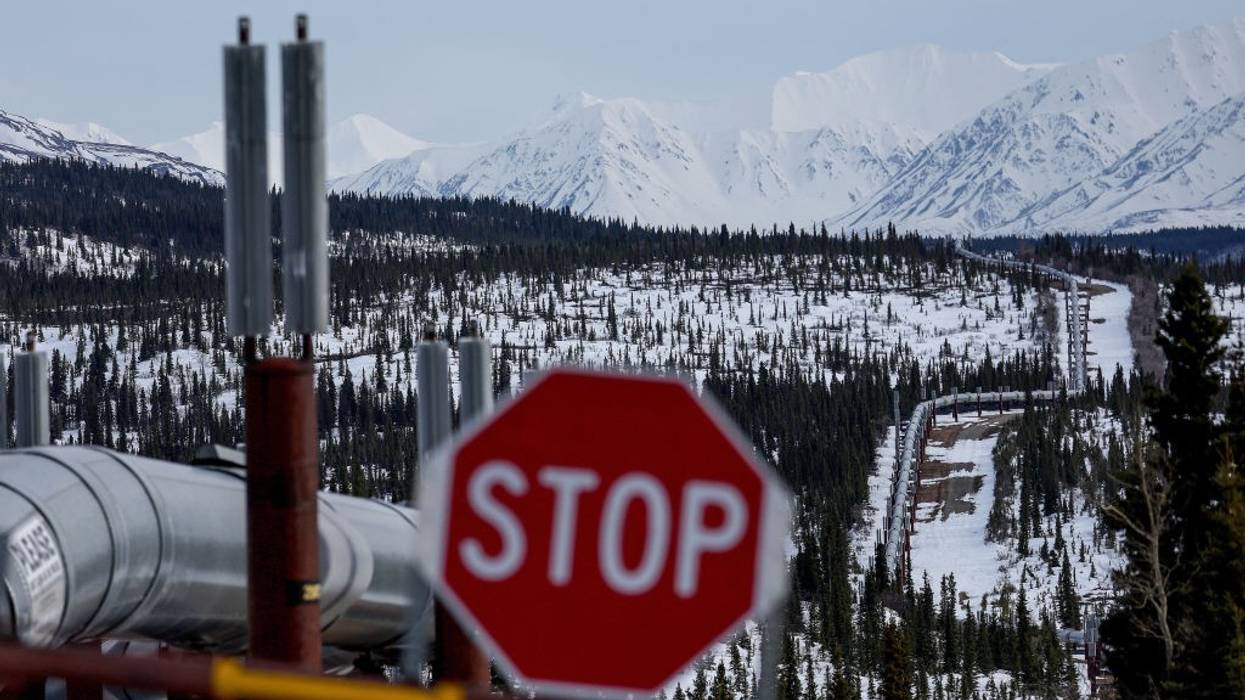
Pacific Environment and other green groups filed a legal petition this week asking the Department of the Interior for a new analysis of the climate damage and other harms related to the Trans-Alaska Pipeline System.
Recent technology breakthroughs have unlocked the potential production of many billions of barrels of Alaska’s high viscosity heavy oil, a development not yet accounted for in U.S. climate strategy. Federal intervention is needed now to keep this heavy oil carbon bomb in the ground.
Pacific Environment, alongside other environmental groups, filed a legal petition this week asking the Department of the Interior for a new analysis of the climate damage and other harms related to the Trans-Alaska Pipeline System (TAPS). The petition was filed by the Center for Biological Diversity, Pacific Environment, Sovereign Iñupiat for a Living Arctic, Alaska Community Action on Toxics, Fairbanks Climate Action Coalition, and Public Employees for Environmental Responsibility.
Right now, more than 5 billion barrels of previously unrecoverable Alaska North Slope (ANS) heavy oil appear commercially feasible to produce using polymer flooding technology. For comparison, the sprawling, massive Willow field—development approval of which by the Biden administration last year sparked widespread objection because of the impacts to the climate, communities, and wildlife—is estimated to have 576 million barrels of recoverable oil reserves. The potential and incentive to produce the massive, viscous, and heavy oil accumulation larger than Willow is a huge, dangerous development for the climate.
It’s time for the Department of the Interior to review the nearly 50-year-old aging TAPS infrastructure and put a plan in place to decommission it.
The ANS heavy oil accumulation is enormous—large enough to qualify as a “carbon bomb” (greater than 1 gigaton of CO2 equivalent) with roughly 3 gigatons of CO2 emissions—and is Alaska’s largest prospective oil development. The accumulation contains an estimated 20 to 25 billion barrels, with more than 5 billion now commercially feasible to produce.
Although the international scientific consensus urges a rapid transition away from fossil fuels, Alaska crude oil production is projected to nearly double between 2024 and 2048, according to the U.S. Department of Energy’s (DOE) Energy Information Administration’s Annual Energy Outlook 2023.
The increase in Alaska production is driven by a combination of Willow, Pika, enhanced oil recovery in aging existing oil fields, and new enhanced oil recovery in previously uneconomic viscous and heavy oil formations using new polymer flooding technologies adapted for the Alaska North Slope. In contrast, the entire Lower 48 crude oil production is projected to be flat over the long run, growing by only one-twelfth of 1% (12.29 million barrels per day to 12.30 million b/d) from 2024 to 2048.
The heavy oil accumulation overlays deeper reservoirs on state-owned land in production for decades, including the Prudhoe Bay, Kuparuk River, and Milne Point units. ANS heavy oil, with a consistency ranging from molasses to tar, is extremely carbon intensive and is driving the greenhouse gas emissions intensity of ANS oil upward from already high levels, which have increased by 25% since 2012, according to California Air Resources Board greenhouse gas emissions estimates.
Polymer flooding technology for enhanced oil recovery was field tested and validated at the Milne Point Unit in a DOE-funded, four-year study that concluded in 2022, which dramatically improved the outlook for production of ANS heavy oil. The study was conducted by the University of Alaska, Fairbanks’ petroleum engineering department, with technical support from Hilcorp.
Because of the enormous climate impacts more heavy oil production would unleash, the Biden administration should act now to start a new environmental analysis that will evaluate and lead to implementation of remedial actions addressing climate impacts.
The existing environmental analysis of TAPS, now more than two decades old, fails to examine the climate harms of the extraction and burning of oil moving through the pipeline.
A Supplemental Environmental Impact Statement (EIS) process for TAPS should be initiated immediately to examine existing and potential climate impacts and the effects of using the heavy oil that could be transported through the nearly 50-year-old aging pipeline, among other issues.
During the past 45 years, TAPS has undergone two environmental assessments required by the National Environmental Policy Act (NEPA): the initial pre-construction EIS in 1972 and the Reauthorization EIS in 2002. NEPA requires that an existing EIS must be supplemented whenever there is new information or circumstances relevant to environmental concerns, or if there are significant environmental impacts that were not evaluated.
A lot has changed since 2002—more than 20 years of science have increased understanding of the causes, impacts, and necessary actions to address the climate emergency. The contributions of fossil fuels to greenhouse gas emissions have been irrefutably documented. Global climate change has accelerated with dramatically observable effects including the increase in the frequency and severity of climate disasters and disruptions and storms eroding the rapidly melting Arctic.
The prior EIS assessments did not sufficiently address climate impacts nor the impact TAPS will have as the infrastructure that delivers Alaska’s heavy oil to market.
The 2002 EIS contains this dubious prediction: “Carbon dioxide (CO2) emissions from TAPS would add little to the global CO2 concentration level.”
Neither outdated EIS discussed the fact that the 18.5 billion barrels of crude oil transported through TAPS already has contributed 9 billion metric tons of CO2 equivalent to the global atmosphere, including methane through leaks, venting, and flaring. The stale 2002 pipeline renewal EIS estimates refer only to emissions from the pipeline system itself (the pump stations, generators, etc.) and do not include the 92 million metric tons of CO2 per year currently associated with the crude oil that TAPS transports after it gets refined and burned.
Ironically, the physical stability of TAPS is threatened by thawing permafrost caused by fossil fuel-driven warming. The combination of advanced age and unstable land caused by thawing permafrost potentially jeopardizes the integrity of the pipeline and substantially increases environmental risk, including the increased potential for leaks and spills.
Under the current authorization the TAPS EIS will be reviewed again in 2032; however, changing circumstances and new information require that the Biden administration immediately reevaluate the TAPS authorization by initiating a Supplemental EIS process. New information since 2002 includes the commercialization of heavy oil and the listing of species as endangered including polar bears and ringed and bearded seals.
As the Trans Alaska Pipeline System approaches the end of its life, climate change is impacting Alaska and the Arctic region significantly. Alaska is warming faster than any other state and nearly four times faster than the global average.
By transitioning beyond fossil fuels, Alaska can build a thriving economy based on its abundant renewable energy resources, reduce energy costs for families and businesses, and increase the state’s energy security.
It’s time for the Department of the Interior to review the nearly 50-year-old aging TAPS infrastructure and put a plan in place to decommission it. How the TAPS is managed is key to America’s climate future.
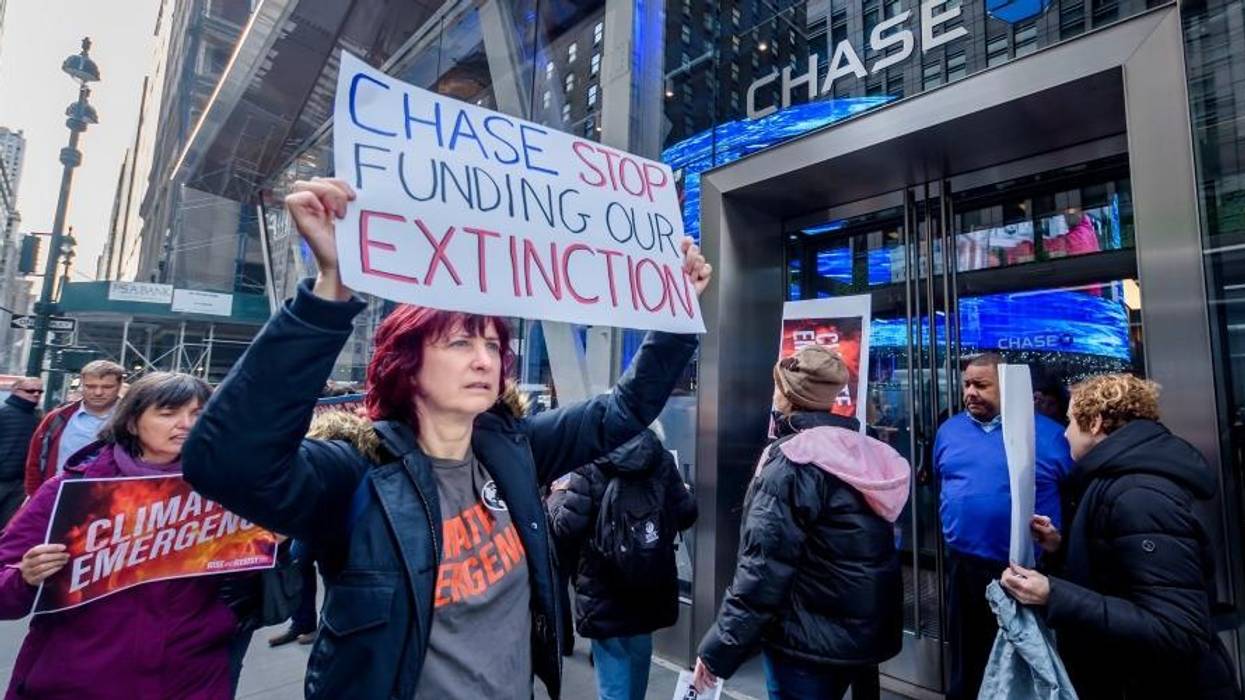
JPMorgan Chase led the pack with more than $141 billion invested between 2016 and 2022, followed by Citi with $119 billion, and Bank of America with $92 billion.
Major banks funneled more than $150 billion in 2022 toward "carbon bomb" fossil fuel projects that would blow through the world's chances of limiting global heating to 1.5°C above pre-industrial levels.
The data, published by The Guardian Tuesday, shows that major banks in the U.S., Europe, and China funded the companies behind these projects with a total of $1.8 trillion between 2016 and 2022, with U.S. banks contributing more than half a trillion of that total.
"Criminal," Nuclear Consulting Group chair Paul Dorfman tweeted in response to the news.
"We need to rapidly decline our production of fossil fuels and support for fossil fuels, whether that's regulatory or financial."
The "carbon bombs" are 425 fossil fuel extraction projects identified by The Guardian and other nonprofit and media organizations and compiled in an online database in 2022. Each bomb has the potential to release more than a gigaton of carbon dioxide over its lifetime. At first, it was calculated that igniting all 425 bombs would release emissions more than double the remaining carbon budget that scientists say humans can spend and still have a 50% chance of limiting warming to 1.5°C. However, research published Monday calculated that the remaining carbon budget is actually around 250 gigatons of carbon dioxide, not the 500 previously believed. The carbon bombs would release a combined total of more than 1,000 gigatons, or four times the revised number.
"The budget is so small, and the urgency of meaningful action for limiting warming is so high, [that] the message from [the carbon budget] is dire," study co-author Joeri Rogelj of Imperial College London told The Guardian Monday.
That narrowing window makes it all the more urgent that banks stop financing fossil fuels, yet that is not what they are doing, according to the analysis of the carbon bomb data completed by French nonprofits Data for Good and Éclaircies, along with European media partners.
The data includes a list of the top ten financial backers of companies operating carbon bombs.
JPMorgan Chase led the pack with more than $141 billion invested between 2016 and 2022, followed by Citi with $119 billion, Bank of America with $92 billion, the Chinese ICBC with $92.2 billion, and BNP Paribas with $71.9 billion. Last year alone, the banks directly or indirectly funded the projects with around $161 billion. This comes despite greenwashing rhetoric from financial institutions pledging to act on climate.
For example, JPMorgan has promised to set goals to reduce the emission intensity of its portfolios for key sectors, including oil and gas, electricity, and auto making.
"We provide financing all across the energy sector: supporting energy security, helping clients accelerate their low-carbon transitions, and increasing clean energy financing with a target of $1 trillion for green initiatives by 2030," a JPMorgan Chase spokesperson told The Guardian. "We are taking pragmatic steps to meet our 2030 emission intensity reduction targets in the six sectors that account for the majority of global emissions, while helping the world meet its energy needs securely and affordably."
The data suggests these institutions need to do more and faster.
"We need to rapidly decline our production of fossil fuels and support for fossil fuels, whether that's regulatory or financial," Shruti Shukla, a National Resources Defense Council energy campaigner who was not involved with the research, told The Guardian.
In a worse-case scenario, nothing will be done to limit emissions, these carbon bombs will be exploited and burned, and weather will turn ever more extreme. However, if world leaders do succeed in rapidly phasing out fossil fuels, these projects could become stranded assets for the companies and banks that invested in them, and if this happens all at once, it could trigger a financial crash, University of Witten-Herdecke sustainable finance research fellow Jan Fichtner told The Guardian.
To avoid this, the world must work to make fossil fuels less profitable, Fichtner said.
"In a capitalist system, profitability is the most important current," Fichtner told The Guardian. "You can try to swim against the current, it's possible, but it's very, very difficult."
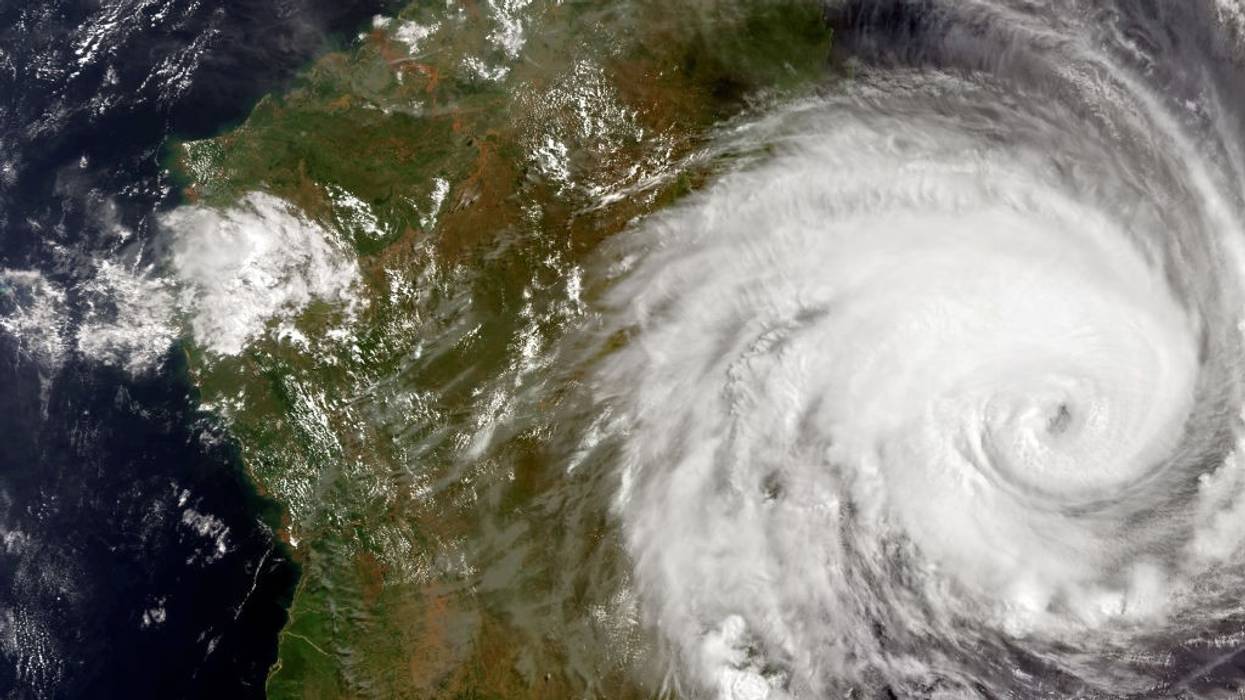
The devastation of Cyclone Freddy serves as a stark illustration of the warnings included in the new IPCC report.
“Your people can’t take it anymore, Lord
In exchange for oil and gas they sell our country.”
These lines, translated from Portuguese, are from the song “Vendem o Pais,” “They Sell the Country,” by the late, great Mozambican hip hop artist Azagaia. Born Edson da Luz, he died on March 9th at the age of 38. He was a movement artist, empowering millions with songs challenging the elite and inspiring grassroots action. A frequent theme in his lyrics is the exploitation of Mozambique by extractive industries like oil and gas. Thousands poured into the streets on the news of his death, to honor his life and to protest the power structures he so consistently and eloquently criticized. The Mozambican government responded with a brutal crackdown, unleashing tear gas, rubber bullets, and beating and arresting protesters.
Azagaia’s death coincided with two events that reinforce central themes of his music. First, Cyclone Freddy, a world-record-breaking extreme storm, slammed Southern Africa not once but twice, wreaking devastation, killing over 500 people in Malawi, Mozambique, and Madagascar and displacing over one million people. And second, the United Nations Intergovernmental Panel on Climate Change, or IPCC, released its Sixth Synthesis Report, summarizing almost a decade of global scientific research on climate change and issuing its direst warnings yet on the urgency of immediate, concerted global climate action.
Cyclone Freddy was the longest-lived and highest-energy tropical cyclone in recorded history. The storm was named on February 6th, as it developed off the northwest coast of Australia. Freddy headed west over the Pacific Ocean, building force from the historically high ocean surface temperatures, slamming into the island nation of Madagascar on February 21st. After then spending five days inundating Mozambique, Freddy retreated to the waters offshore, again building strength. As police were suppressing the Azagaia protests, Freddy arrived again, pummeling Mozambique and southern Malawi for four days before dissipating. The World Food Program and other aid agencies are scrambling to reach people cut off by the torrential rain, flooding and mudslides.
Cyclone Freddy serves as a stark illustration of the warnings included in the new IPCC report. “The rate of temperature rise in the last half-century is the highest in 2,000 years,” UN Secretary-General Antonio Guterres said as the report was released. “Concentrations of carbon dioxide are at their highest in at least 2 million years. The climate time bomb is ticking.” The science is unequivocal: humans are causing a climate catastrophe, and our window to avoid irreversible damage is closing rapidly. Most importantly, people in poor nations, in the Global South, bear the brunt of climate disasters, but have contributed the least to global carbon emissions. This is the ongoing legacy of colonialism and resource extraction embedded in the lyrics of Azagaia.
“So many people within our countries, especially in Africa, are invisible, evoking pity when a deadly cyclone hits, forgotten the week after,” Dipti Bhatnagar, climate justice activist based in Mozambique, wrote in a piece eulogizing Azagaia. “As the crises deepen, people are going to get more and more incensed,” she said on the Democracy Now! news hour. “The youth are going to get more and more incensed. We need cultural icons like Azagaia. We need space. We need constructive ways for people to get involved, to be able to organize, to oppose the injustices that are happening. And the powerful know that.”
A new front to challenge entrenched power is being opened in the United States. Founded by author and climate activist Bill McKibben, Third Act seeks to inspire people 60 years and older to take action against climate change.
“Third Act recognizes that young people have been providing the climate leadership, young people and people from frontline communities, Indigenous communities,” McKibben said on Democracy Now! “What they lack sometimes is the structural power to force change at the pace that we need. Older people have structural power…There are 70 million Americans over the age of 60. That is a sleeping giant.”
This week, Third Act launched a National Day of Action to Stop Dirty Banks. Protests were held in at least 30 states, at major banks like Chase, Citibank, Wells Fargo and Bank of America demanding they stop funding fossil fuel projects. “Here in D.C., for instance, the banks are going to be blockaded with people in rocking chairs,” McKibben explained. “Older people are sitting down today, but they’re also standing up in a way that they haven’t before.”
This latest IPCC report, Secretary General Guterres says, is “a how-to guide to defuse the climate time-bomb. It is a survival guide for humanity.” For a just and equitable transition away from fossil fuels, it will take grassroots organizing and action. As Azagaia often declared, “POVO NO PODER! (Put the People in Power!)”
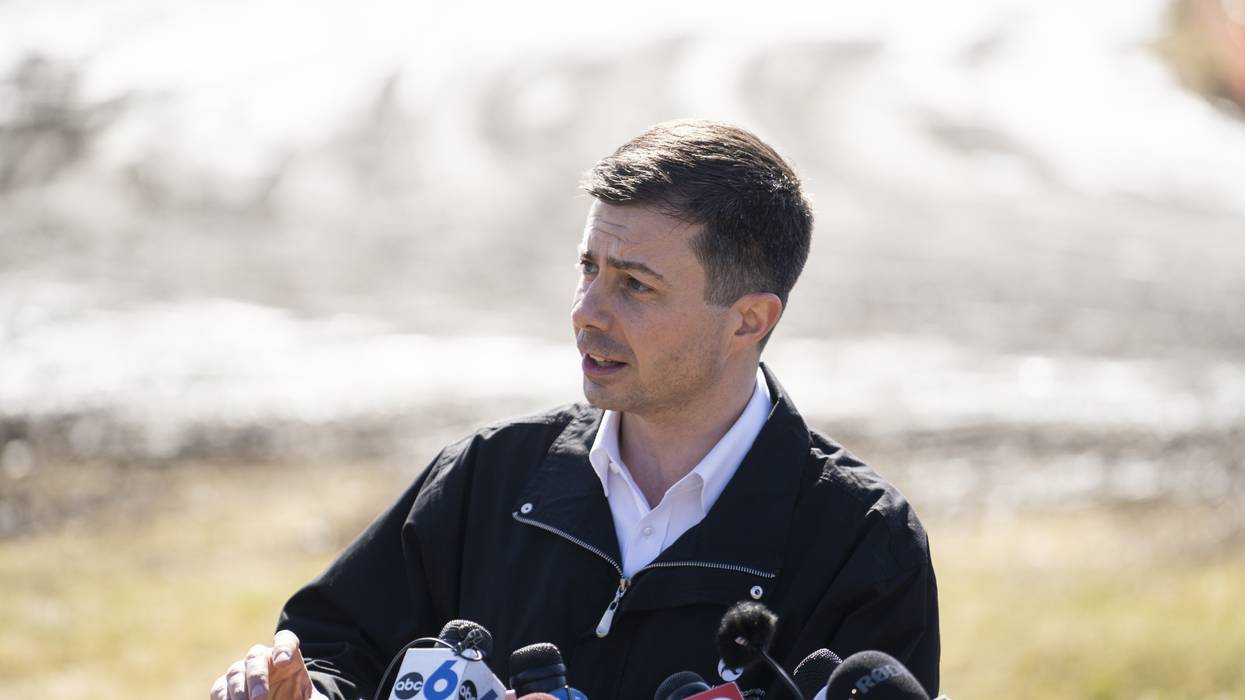
"The project could result in as many as five, two-mile-long crude-oil trains running over 100 miles directly alongside the headwaters of the Colorado River each day," Colorado Democrats warned.
With the toxic train derailment in eastern Ohio still in the national spotlight, Democratic members of Colorado's congressional delegation are imploring U.S. Transportation Secretary Pete Buttigieg to do everything he can to head off another potential railway disaster—one that could impact a river that supplies drinking water to 40 million Americans.
In a letter to Buttiegieg on Thursday, Sens. Michael Bennet, John Hickenlooper, and Rep. Joe Neguse warned the secretary against approving a key federal funding mechanism for the Uinta Basin Railway, a project that aims to connect eastern Utah's oil-rich Uinta Basin with the national rail system in order to massively expand fossil fuel production in the region.
"The additional risks posed by this project—including those raised by Colorado communities concerned by the potential for a train derailment along the headwaters of the Colorado River—give cause for caution in using taxpayer funds to support the project, and have gained new urgency in the wake of the East Palestine disaster," the lawmakers wrote.
"If successful, the project could result in as many as five, two-mile-long crude-oil trains running over 100 miles directly alongside the headwaters of the Colorado River each day. Many Colorado communities have raised concerns about the potential harm of railway accidents to water quality, wildlife, and wildfire risk," they continued. "However, our review of the project found no plan to mitigate the harm of a potential accident or derailment in Colorado, which could be particularly difficult to address given our state’s mountainous terrain."
The Colorado Democrats sent the letter a day after a CSX train derailed in West Virginia, dumping a yet-to-be-determined amount of diesel fuel into one of North America's oldest rivers. More than 1,000 trains derail each year in the U.S., where powerful rail giants have used their vast resources to fight off and weaken safety regulations.
In their letter, the lawmakers specifically urged Buttigieg to deny the Uinta Basin Railway project access to tax-exempt private activity bonds (PABs). On Thursday, Utah's Seven County Infrastructure Coalition—part of the public-private alliance that controls the project—formally approved a request asking the Transportation Department to authorize up to $2 billion worth of PABs, without which the project may struggle to advance as its costs balloon.
The PABs could cover an estimated 70% of the project's expenses.
"The Department of Transportation has generally issued PABs for passenger rail and highway improvements: projects that provide a clear public transportation benefit," the Colorado Democrats noted in their letter. "There is no precedent for using PABs to fund a rail project solely to transport crude oil."
If Buttigieg ignores the warnings of lawmakers, local residents, and environmentalists and approves issuance of the bonds, the Democratic congressmen wrote, "this would not only constitute the largest PAB the DOT has ever issued; it would also irretrievably sink taxpayer dollars into a project that has proven unable to contain its own costs."
"The fact that we continue to have disasters like East Palestine and near misses over and over again is a regulatory failure that demonstrates the absolute power of railroad industry lobbying."
On top of the potential costs to taxpayers, climate advocates have been arguing for more than a year that the Uinta Basin Railway poses a major threat to U.S. efforts to combat the climate crisis. The Center for Biological Diversity has dubbed the project "one of the nation's biggest carbon bombs," noting that it could quadruple oil production in Utah's Uinta Basin.
"The railway will spur an increase of up to 350,000 barrels a day, amounting to up to 53 million tons of annual carbon pollution—as much or more than what’s produced by the nation’s three largest power plants," the group said last June. "Sending tens of millions of barrels of crude oil each year from Utah to the Houston area for refining would be equivalent to adding a new refinery to the region, which already exceeds national pollution standards."
The Surface Transportation Board, an independent federal agency, approved construction of the new rail line for the Uinta Basin project in December 2021. Months later, the U.S. Forest Service gave its approval, drawing legal action from a coalition of environmental organizations.
Kristen Boyles, a managing attorney at Earthjustice, told The Guardian on Thursday that "it will be a triumph of corporate greed" if the project is ultimately allowed to move forward.
"The fact that we continue to have disasters like East Palestine and near misses over and over again is a regulatory failure that demonstrates the absolute power of railroad industry lobbying," Boyles said.
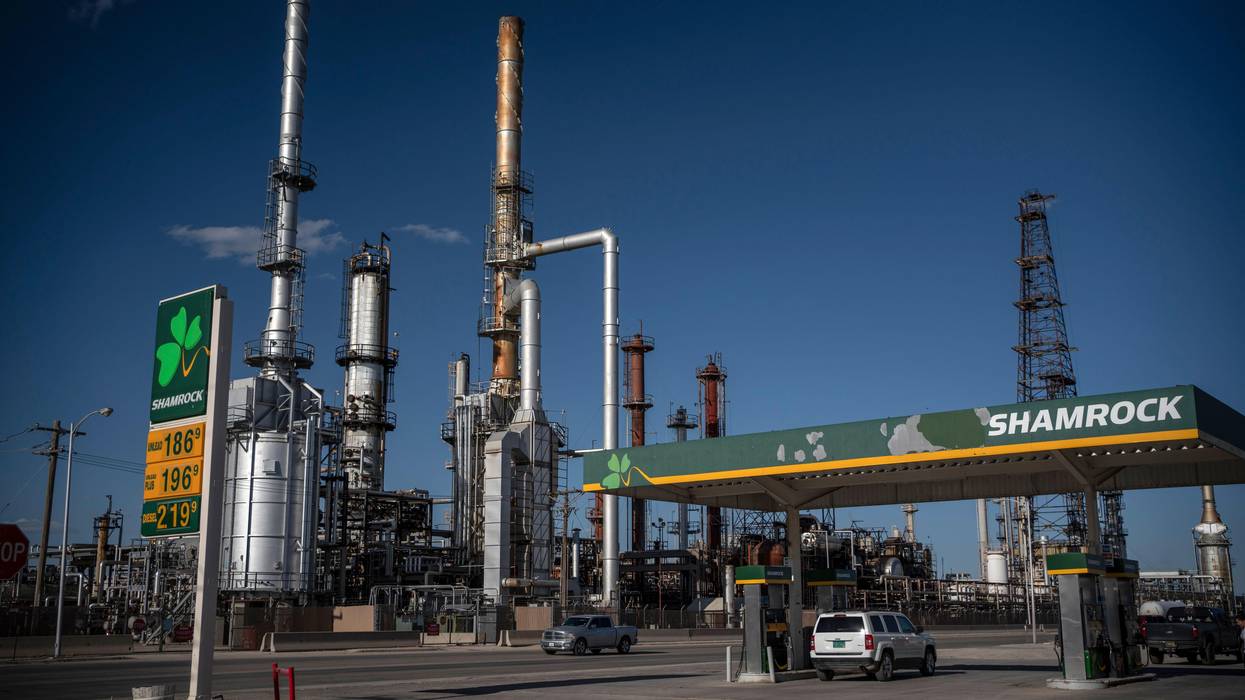
"The oil and gas industry has lit a fuse on the Permian Basin carbon bomb that threatens to blow up any hope of a livable future," said one campaigner. "It's time for Presidents Biden and López Obrador to commit to ending the exploitation and destruction of our communities."
Ahead of U.S. President Joe Biden's Tuesday meeting with Mexican President Andrés Manuel López Obrador, Greenpeace implored the two men to commit to ending all new oil and gas development in the Permian Basin, increasing clean energy investments, and securing a just transition for fossil fuel workers.
As detailed in a recent multimedia report, the Permian Basin—home to two million people in West Texas and southeast New Mexico—was transformed into "the world's single most prolific oil and gas field" during last decade's drilling and fracking boom.
If fossil fuel executives' plans to expand extraction in the basin and boost exports from the Gulf Coast are allowed to go forward, experts estimate that nearly 40 billion tons of carbon dioxide would be emitted by 2050—equivalent to 10% of the world's remaining "carbon budget," or the amount of pollution compatible with limiting global warming to 1.5°C above preindustrial levels by the century's end. Meanwhile, a recent study found that the basin's pipelines are currently leaking 14 times more methane than previously thought.
"Mexico's updated climate goals can only be attained if both Mexico and the U.S. put an end to exploitation of the Permian Basin," Gustavo Ampugnani, executive director of Greenpeace Mexico, said Tuesday in a statement. "Greenpeace offices in the two countries will campaign on all fronts until Presidents López Obrador and Biden put their money where their mouths are."
According to Greenpeace:
As both nations face increased threats from the climate crisis, leaders from the U.S. and Mexico continue to incentivize the fossil fuel industry to ramp up oil and gas production in the Permian Basin and greenlight polluting fossil fuel infrastructure projects that will lock us into decades of emissions. From drilling and refining operations in Texas, to pipelines carrying Permian oil and gas through Mexico, the fossil fuel industry jeopardizes the health and safety of communities at each stage of the fossil fuel production process.
Last year, the U.S. became the world's top exporter of liquefied natural gas. "Around 70% of Mexico's natural gas supply is being met by U.S. pipeline imports," Greenpeace noted. "This is not what climate leadership looks like."
"From drought and record heatwaves to stronger, more frequent storms and flooding, we are living in a climate emergency."
Prior to last November's COP27 climate conference—which ended, like the 26 meetings before it, with no blueprint for rapidly cutting off planet-wrecking fossil fuels—the United Nations published reports warning that due to woefully inadequate emissions reductions targets and policies, there is "no credible path to 1.5°C in place," and only "urgent system-wide transformation" can prevent a cataclysmic temperature rise of nearly 3°C by 2100.
According to the latest data, atmospheric concentrations of carbon dioxide, methane, and nitrous oxide—the three main heat-trapping gases pushing temperatures upward—reached an all-time high in 2021, and greenhouse gas emissions only continued to climb in 2022.
Despite ample evidence that new fossil fuel projects will worsen deadly climate chaos, oil and gas corporations—supported by trillions of dollars in public subsidies each year—are still planning to expand dirty energy production in the coming years, including in the Permian Basin.
"The oil and gas industry has lit a fuse on the Permian Basin carbon bomb that threatens to blow up any hope of a livable future," John Noel, senior climate campaigner at Greenpeace USA, said Tuesday. "The technology to address the climate crisis already exists. It's time for Presidents Biden and López Obrador to commit to ending the exploitation and destruction of our communities at the hands of the oil and gas industry."
"From drought and record heatwaves to stronger, more frequent storms and flooding, we are living in a climate emergency," Noel added. "Last year, President Biden said that he will treat it as such. It's time for him to make good on those words by kickstarting a fossil fuel phaseout and declaring a climate emergency."
Greenpeace's intervention came as Biden and López Obrador prepared to engage in bilateral talks as part of the so-called "Tres Amigos" summit in Mexico City, which also features Canadian Prime Minister Justin Trudeau.
In the lead-up to the meeting, more than 100 progressive advocacy groups from around North America urged the continent's heads of government to cooperate on mitigating the climate crisis, ensuring the just treatment of migrants, and reducing gun violence.