

SUBSCRIBE TO OUR FREE NEWSLETTER
Daily news & progressive opinion—funded by the people, not the corporations—delivered straight to your inbox.
5
#000000
#FFFFFF
To donate by check, phone, or other method, see our More Ways to Give page.
Daily news & progressive opinion—funded by the people, not the corporations—delivered straight to your inbox.
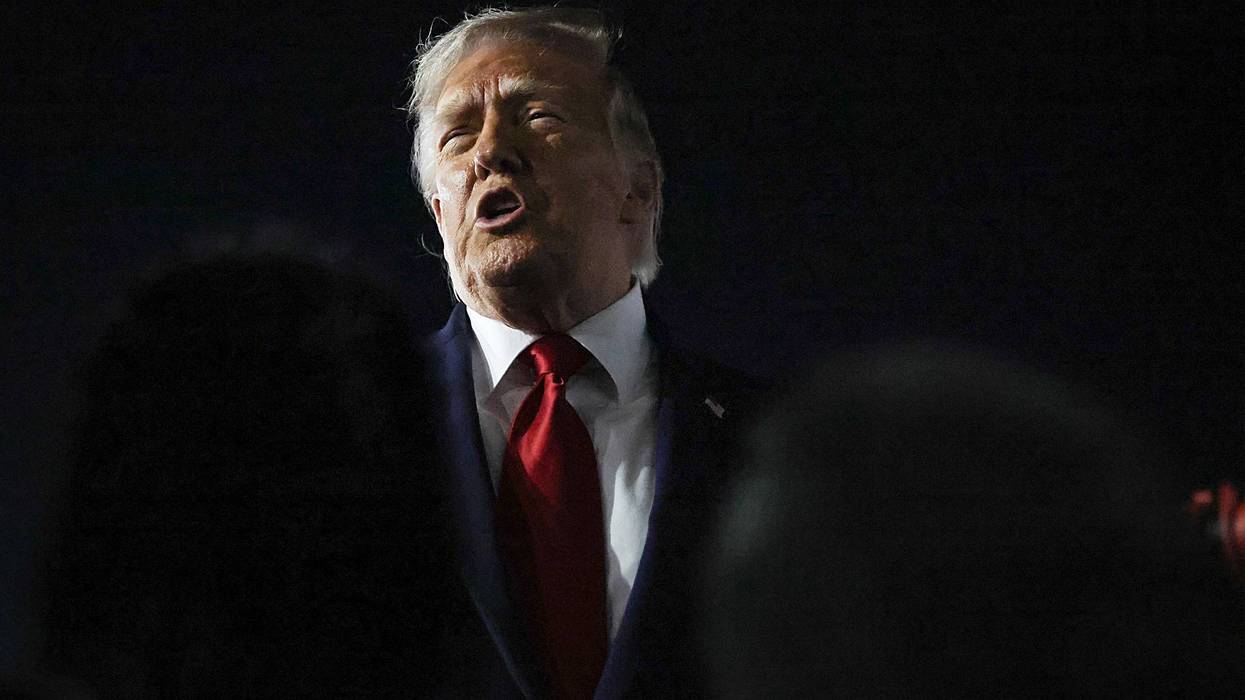
This is now the second time Trump has derailed renewal of FISA’s Section 702, which US intelligence agencies have widely abused to spy on Americans without a warrant.
President Donald Trump threw a wrench into bipartisan efforts to renew the federal government's widely abused warrantless spying powers on Wednesday by demanding it be paired with the passage of Republicans' voter suppression legislation.
In a Truth Social post, Trump announced that he would not approve the renewal of Section 702 of the Foreign Intelligence Surveillance Act (FISA) "without THE SAVE AMERICA ACT going along with it," a reference to Republican-backed legislation that would create nationwide voter ID and proof-of-citizenship requirements.
Passing the SAVE America Act, which critics have warned could be used to disenfranchise millions of eligible voters, would require scrapping the filibuster in the US Senate, and Senate Majority Leader John Thune (R-SD) has said that there are not enough votes in his caucus to make this happen.
This is now the second time Trump has derailed renewal of FISA's Section 702, which allows for warrantless spying on noncitizens located outside the US. Intelligence agencies have routinely used the authority, which lapsed over the weekend, to collect Americans’ data without a warrant.
Earlier this month, Trump appointed Federal Housing Finance Agency Director Bill Pulte to be his acting director of national intelligence (DNI). Many critics expressed horror at Pulte's appointment, given that he has no experience working in intelligence and has been instrumental in pushing the US Department of Justice to prosecute the president's political enemies.
This led many Senate Democrats, including Senate Intelligence Committee vice-chairperson Mark Warner (D-Va.), to withdraw their support for a FISA extension until the president nominated a more acceptable permanent replacement for outgoing DNI Tulsi Gabbard.
FISA renewal appeared to be back on track last week after Trump nominated Jay Clayton, former chairman of the Securities and Exchange Commission, to be DNI.
However, in the same Truth Social post where Trump announced his intent to veto a FISA extension without the SAVE America Act, the president said that he was "canceling" Clayton's scheduled Wednesday Senate hearing.
Senate Intelligence Committee Chair Tom Cotton (R-Ark.) announced shortly after Trump's post that the hearing for Clayton would still take place unless the president formally pulled the nominee.
"Jay Clayton is a pending nominee before the Intelligence Committee," Cotton wrote in a social media post. "We will proceed with his hearing as scheduled unless the president directs him not to appear or withdraws his nomination."
According to The New York Times, the latest chaos and drama caused by Trump "all but guarantee that Mr. Pulte... would take the job at the end of this week as the acting director of national intelligence."
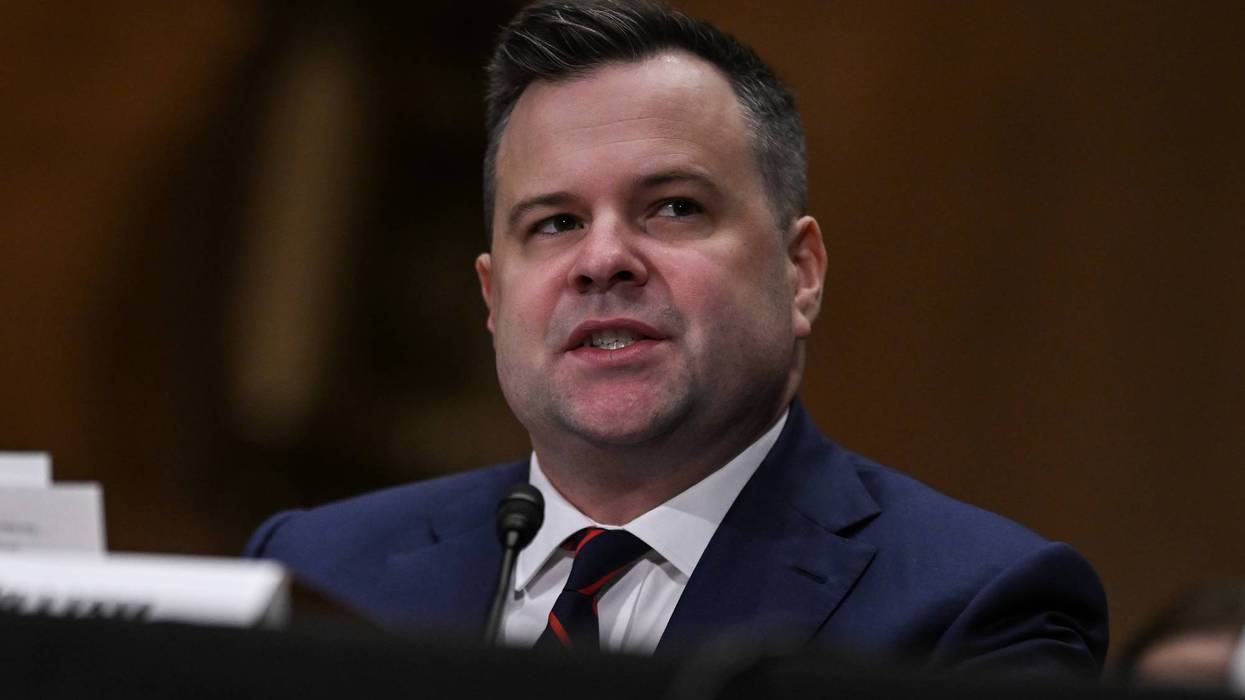
"There is a path to reauthorizing FISA, but it will require enacting meaningful reforms," said House Democratic leaders.
After privacy advocates in Congress blocked proposed extensions of an expiring federal spying power on Thursday over a lack of reforms and concerns about newly appointed acting Director of National Intelligence Bill Pulte, President Donald Trump announced a different man as his official nominee for the post.
"I am pleased to announce the Nomination of very Highly Respected Jay Clayton, former Chairman of the Securities and Exchange Commission, the former Head of Sullivan & Cromwell, one of the most prominent and successful Law Firms anywhere in the World, and the current United States Attorney for the Southern District of New York, to be the next Director of National Intelligence and, importantly, to serve in my Cabinet," Trump wrote on Truth Social. "Few people anywhere in the Legal Community are respected at the level of Jay. I encourage the United States Senate to confirm Jay as soon as possible."
Trump's announcement came shortly after Senate Republicans' unsuccessful requests for unanimous consent to extend Section 702 of the Foreign Intelligence Surveillance Act (FISA)—which lets the US government spy on electronic communications of noncitizens located outside the country without a warrant—and a failed vote in the GOP-controlled House of Representatives.
"If Trump had announced this last night, or even this morning, it could've helped avoid a FISA/702 lapse," Punchbowl News reporter Andrew Desiderio said of Clayton's nomination. "Now the House is gone (and out next week) and the Senate is holding its final vote of the week right now—but most senators have already voted and dashed to the airport."
House Democratic leaders who opposed the extension pointed to Trump's appointment of Pulte following Tulsi Gabbard's recent announcement that she's resigning from the Office of the Director of National Intelligence (ODNI). As Federal Housing Finance Agency director, Pulte has sent criminal referrals to the US Department of Justice, alleging mortgage fraud by four of the president's political foes.
The Senate is due back on Monday, but Minority Leader Chuck Schumer (D-NY) told reporters after the Clayton announcement that it "doesn't matter what else they do, Pulte's got to be gone. He's still in that role."
Meanwhile, the top Democrats on the intelligence panels in both chambers of Congress, Vice Chair Mark Warner (Va.) and Ranking Member Jim Himes (Conn.), praised Clayton. Sean Vitka, executive director at Demand Progress—a leader in the massive coalition of civil society groups demanding FISA reforms—said that "no Democrat should find solace in the fact that Trump has once again named a partisan hatchet man to be the nation's top spy."
"Just as Trump asked Bill Pulte to investigate Letitia James and Adam Schiff, he also has asked Jay Clayton to investigate Democrats' ties to Jeffrey Epstein," Vitka noted. "The fact that Sen. Warner and Rep. Himes would gush so effusively over Clayton shows their clear desire to sabotage a deal on FISA privacy reforms and hand President Trump the unfettered surveillance powers that he is asking for."
"Both Pulte and Clayton have already shown that they will carry out Trump’s directive to weaponize the government against his political enemies," he added. "Putting either of them at ODNI at a time when Trump is asking for warrantless surveillance powers through FISA is too big of a risk."
With both the House recess and Section 702's Friday expiration looming, Speaker Mike Johnson (R-La.) had tried to get two-thirds majority support for an extension on Thursday. He secured support from seven Democrats—Reps. Henry Cuellar (Texas), Don Davis (NC), Jared Golden (Maine), Vicente Gonzalez (Texas), Josh Gottheimer (NJ), Susie Lee (Nev.), and Marie Gluesenkamp Perez (Wash.)—but 19 Republicans joined the rest of the Democratic members present for the 198-218 vote.
"Section 702 is a critical foreign intelligence authority, but we cannot in good conscience vote for reauthorization without significant reforms to protect both national security and the constitutional privacy rights of Americans," said House Minority Leader Hakeem Jeffries (D-NY), Democratic Whip Katherine Clark (D-Mass.), Caucus Chair Pete Aguilar (D-Calif.), Judiciary Committee Ranking Member Jamie Raskin (D-Md.), and Himes.
"Bill Pulte has no relevant national security experience. Consequently, his appointment is in defiance of the law that requires the director of national intelligence to have 'extensive' national security experience. The apparent motivation for his elevation is the demonstrated willingness of Bill Pulte to search government databases for alleged dirt on President Trump's chosen political enemies," they continued. "There is a path to reauthorizing FISA, but it will require enacting meaningful reforms. We oppose this bill to kick the can further down the road."
Explaining her vote against "this sham extension of FISA that would allow continued spying on the American people," Rep. Pramila Jayapal (D-Wash.), a key progressive leader in the chamber, said that "a warrant requirement would pass today if Republican leadership put it up for a vote."
"However, Trump is doubling down on his appointment of Bill Pulte, closing any pathways for negotiation," she said before Clayton was announced. "I voted no today, and will continue to vote no until a warrant requirement is in place to protect our civil liberties."
Hajar Hammado, senior policy adviser at Demand Progress, said in a statement that "Speaker Johnson keeps trying and failing to jam through a no-reform FISA reauthorization, expecting different results—this time without even getting a simple majority of the House."
"If Johnson wants a FISA deal, all he has to do is allow amendment votes on privacy reforms," Hammado continued. "Adding warrant requirements to FISA is a path forward that has clear, bipartisan support. The only reason we're up against the deadline now is that congressional leaders and the White House keep ignoring this obvious reality and obstructing privacy reforms from getting a fair vote."
Elizabeth Goitein, co-director of the Brennan Center for Justice's Liberty and National Security Program, similarly said on social media that "Section 702 was in trouble well before Trump announced the appointment of Pulte as acting DNI (and by the way, Pulte could still be in that role through the midterm elections). The 702 renewal hit a wall because Republican leaders wouldn't allow votes on widely supported reforms."
After Johnson complained to reporters about the vote and said that "I pray that we do not have a serious calamity on our shores over the next few weeks," Jake Laperruque at the Center for Democracy & Technology said: "I'm sorry, you cannot demand the high ground claiming to be distraught about our national security when you are treating FISA as less important than blocking all reform votes. You sure as hell can't claim the high ground when treating it as less important than going on vacation."
While national security hawks have tried to use the deadline to force an extension, suggesting that a lapse would cause "a potential significant gap in foreign intelligence collection," privacy advocates such as Laperruque have emphasized that "the text of the law makes clear that this threat of collection suddenly going dark... is fearmongering and not a genuine possibility."
As Laperruque explained earlier this week: "So long as an approved FISA 702 certification is active, collection from communications providers based on directives stemming from that certification will continue. Because the FISA Court approved the most recent annual certifications this March, this lapse would not occur until 2027."
The House and Senate GOP's failures to extend Section 702 on Thursday came a day after Sen. John Cornyn (R-Texas) objected to a proposal from Sen. Ron Wyden (D-Ore.)—a leading privacy advocate—to pass by unanimous consent a nine-month renewal with warrant requirements. The Republican also opposed a five-week offer.
Calling out Cornyn's moves, Hammado said Wednesday that "surveillance hawks have spent all day screaming about how important it is to renew FISA, but then they just objected to a good faith deal that would reauthorize Section 702 with popular, bipartisan privacy reforms. The only thing stopping FISA from being renewed is congressional leadership's unexplained, persistent opposition to making the government get a warrant when it tries to access the private communications of Americans."
"Clear majorities in both parties, and of Americans in general, want a warrant requirement before renewing FISA," the Demand Progress campaigner added. "Why does congressional leadership prefer sunset over privacy?"
This article has been updated with additional comment from Sean Vitka of Demand Progress and Elizabeth Goitein of the Brennan Center for Justice.
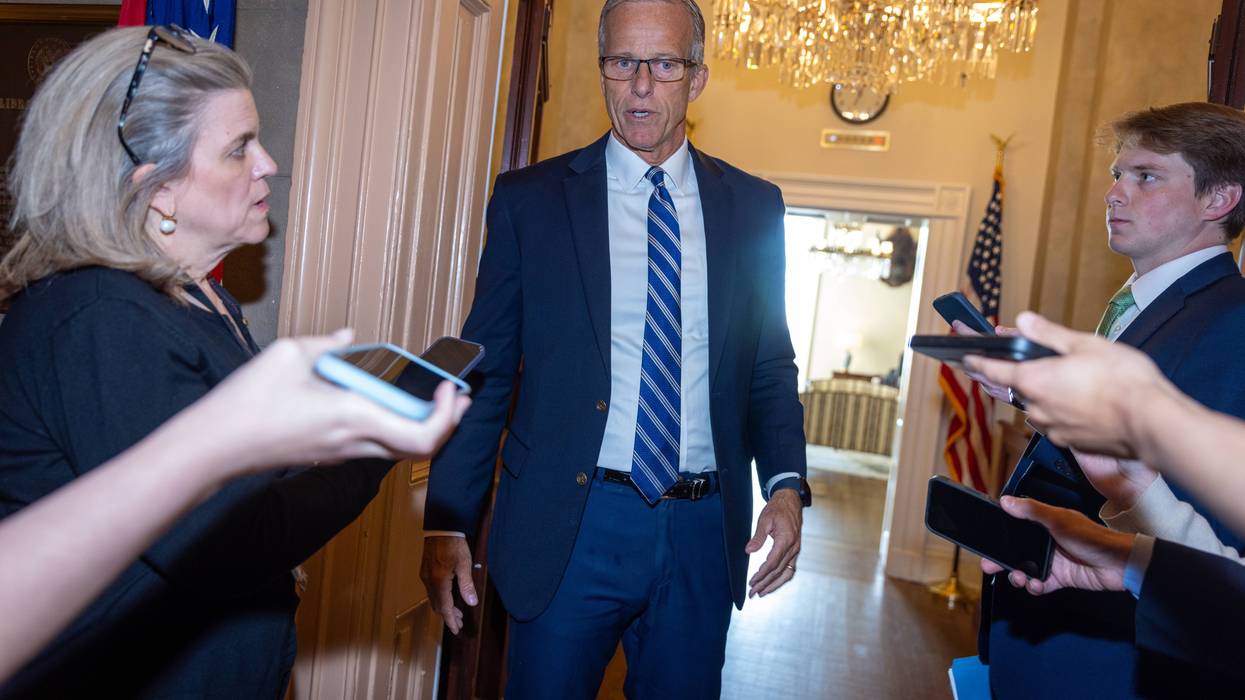
"Clear majorities of Americans across the nation, and in Congress, do not want the government bypassing the courts to hoover up our private, personal data."
Privacy advocates celebrated Friday after a Republican-led effort to extend warrantless spying powers failed to advance in the US Senate in the early hours of the morning, with seven GOP lawmakers joining every Democrat except Sen. John Fetterman in opposition.
The failed vote was another stumble for supporters of renewing Section 702 of the Foreign Intelligence Surveillance Act (FISA), which lets the federal government surveil the electronic communications of noncitizens located outside the US. The authority is set to lapse next Friday.
Advocates have long demanded reforms to the law, noting that US intelligence agencies have relentlessly abused it to spy on Americans.
Sean Vitka, executive director of Demand Progress, called Friday's vote a "resounding defeat for opponents of privacy," arguing it "shows that there is no path forward for FISA without a warrant requirement."
"Clear majorities of Americans across the nation, and in Congress, do not want the government bypassing the courts to hoover up our private, personal data," said Vitka. "If the White House and congressional leadership want to renew FISA, they have to stop ignoring this obvious fact and allow votes on real privacy reforms."
Elizabeth Goitein, co-director of the Liberty and National Security Program at the Brennan Center for Justice, called the vote "an interim victory" but warned that some senators "who would have voted to advance the bill changed their vote" due to President Donald Trump's selection of loyalist Bill Pulte to serve as acting director of national intelligence—a choice that drew bipartisan backlash.
Sen. Mark Warner (D-Va.), who supports extending Section 702 spying powers, voted against advancing the FISA legislation on Friday after decrying Pulte as an "enormously bad choice" who is "grossly unqualified."
Goitein noted that Pulte, who currently heads the Federal Housing Finance Agency (FHFA), is currently "under investigation by the nonpartisan Government Accountability Office for misusing his position and his access to government records to trigger dubious charges of mortgage fraud against Trump’s perceived political enemies."
"If Pulte can do that with the limited access to Americans’ information he has as head of the [FHFA], imagine what he could do with all the authorities and capabilities of the intelligence community—including, of course, Section 702," she added. "What wouldn’t make sense? Handing Section 702 to whomever Trump could nominate in Pulte’s place without ensuring that they can’t use it as a tool for domestic spying."
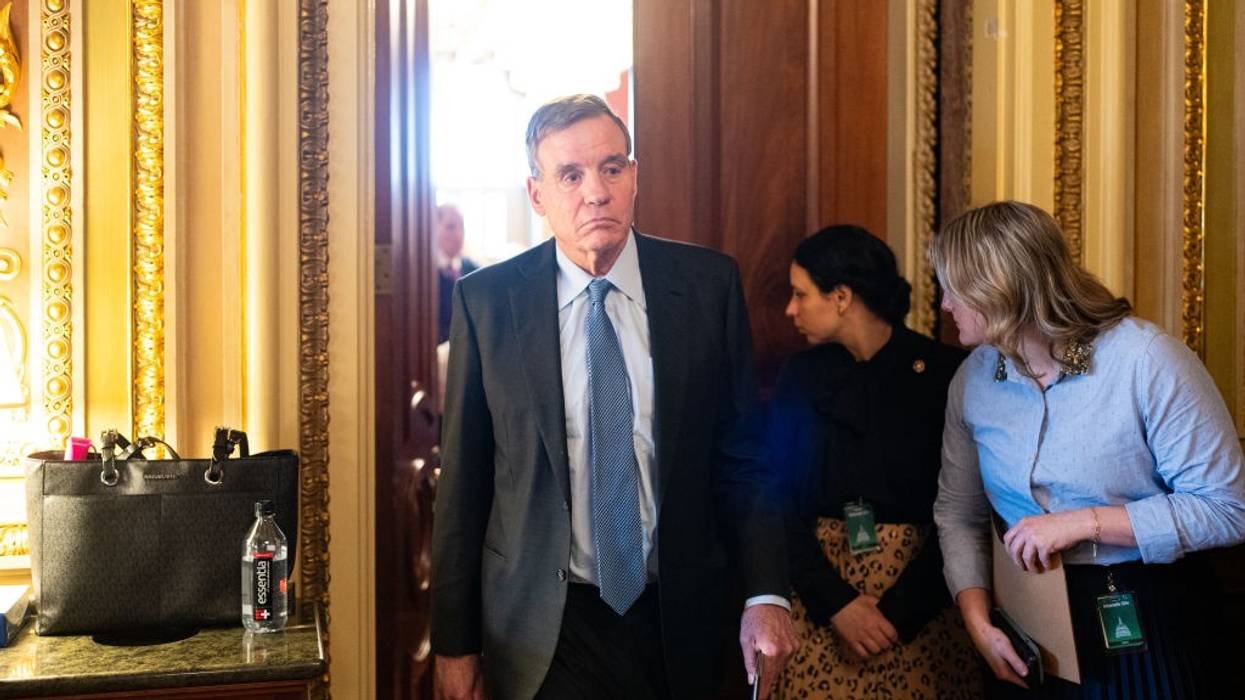
“Warner’s opposition to Bill Pulte masks the fact that he is still the Democrats’ chief advocate for handing over unchecked spying powers to the Trump administration," said one progressive campaigner.
The watchdog group Demand Progress on Thursday warned that the Senate Intelligence Committee's top Democrat is attacking civil liberties by collaborating with Republicans and the Trump administration to renew warrantless spying powers—even as he sounds the alarm over President Donald Trump's appointment of unqualified loyalist Bill Pulte as acting director of national intelligence.
Sen. Mark Warner (D-Va.) is pressing Senate Majority Leader John Thune (R-SD) to use his influence to persuade Trump to reconsider appointing Pulte—a private equity firm founder and homebuilder who is currently director of the Federal Housing Finance Agency (FHFA) and chairman of Fannie Mae and Freddie Mac—to the top intel post, which current Director of National Intelligence (DNI) Tulsi Gabbard will officially vacate on June 30.
Warner this week called out Pulte's lack of relevant experience, as well as his "eagerness to use the authorities of government to pursue political retribution" against a number of Trump’s political foes for politically motivated mortgage fraud investigations.
However, critics including Demand Progress have pointed out Warner's critical role in whipping Democratic support for renewing Section 702 of the Foreign Intelligence Surveillance Act (FISA), which allows the US government to collect electronic communications of noncitizens located outside the United States without a warrant. Experts note that Americans’ data is also swept up during such surveillance, and civil society groups and some lawmakers from both parties have demanded reforms to prevent further abuse by federal agencies.
Section 702, which was reauthorized for two years in 2024, is set to expire next week. There is a legislative battle between lawmakers and intelligence officials who want to extend Section 702 largely intact—the so-called "clean" reauthorization backed by Trump and his allies—and privacy-focused legislators from both parties who want reforms, especially a requirement for warrants before searching Americans' communications.
A three-year proposal passed by House lawmakers in April did not include a warrantless requirement.
“Sen. Warner’s opposition to Bill Pulte masks the fact that he is still the Democrats’ chief advocate for handing over unchecked spying powers to the Trump administration," Demand Progress executive director Sean Vitka said Thursday. "Pulte obviously must go, but he’s also proof that this administration is eager and willing to use the Office of the Director of National Intelligence as a weapon."
"If Trump pulls Pulte, he can easily appoint another eager goon to fill the slot," Vitkaco stressed. "By focusing on Pulte and not broader reforms, Sen. Warner is not standing up for Americans or the Constitution, he is disguising his work to engineer warrantless mass surveillance against us."
"We know this because he’s been doing it publicly for months," he added. "An unprecedented, bipartisan movement is demanding privacy reforms, but Sen. Warner’s machinations threaten to derail this progress and hand Trump the surveillance powers he needs to threaten Americans and democracy itself for the rest of his administration.”
Demand Progress said that Warner "has conspicuously failed to join the chorus of Democrats and Republicans calling for reforms to FISA that would protect privacy and democracy itself."
"Warner, who is negotiating with Republicans and the Trump administration to renew FISA, has only commented on how bad Pulte is and notably stopped short of saying anything about FISA reform," the group continued. "This is particularly telling considering Warner’s history of promising future reforms to get FISA renewed and failing to deliver."
Demand Progress contrasted Warner's actions with those of his fellow Democrats, including Catherine Cortez Masto of Nevada, who explicitly called for “reforms to ensure Americans’ privacy and rights are protected.”
Senate lawmakers could hold an initial procedural vote on extending Section 702 as soon as Thursday, with just a simple majority needed for the measure to advance. Future votes would require the support of 60 senators in order to avoid a Republican filibuster.
Elizabeth Goitein, co-director of the Liberty and National Security Program at the Brennan Center for Justice, warned Wednesday in a social media thread that the Section 702 extension supported by Trump, his Republican allies in Congress, and Warner "doesn’t just fail to curb warrantless domestic spying, it actually expands the government's ability to use 702 against Americans."
"Trump’s allies and Warner have produced a bill that purports to include reforms, but that makes no change whatsoever to existing standards and procedures for conducting backdoor searches, let alone a warrant requirement," she continued.
A "backdoor search" occurs when the government collects information about a US citizen when the surveillance was originally authorized for foreign targets and the government did not obtain a warrant before collecting the communications.
"These 'backdoor searches' are an affront to the Fourth Amendment," Goitein asserted. "They have led to widespread abuses, including FBI searches for the communications of members of Congress, campaign donors, journalists, and protesters across the political spectrum."
"There is broad bipartisan support in Congress for requiring the government to get a warrant before accessing Americans’ communications obtained under Section 702," she continued. "This reform has twice passed the House, and 76% of Americans support it."
"Unsurprisingly, Trump and his allies in Congress oppose this reform," Goitein wrote. "What’s more surprising is that key Democratic surveillance hawks, including Mark Warner and [Rep.] Jim Himes [D-Conn.], have teamed up with the Trump camp to ensure that his administration has continued warrantless access."
"Even more disturbing is the provision titled 'Restriction on Use of United States Person Information Acquired Under Section 702 in Criminal Prosecutions,'" she said. "Notwithstanding the Orwellian title, this provision actually *removes* existing restrictions on such use.
"Any member who is concerned with Pulte’s appointment should be aghast at the prospect of handing this administration warrantless access to Americans’ private communications and expanding its power to use those communications against Americans in court," Goitein added. "There is only one way senators can force leadership to permit amendment votes or otherwise negotiate: vote NO on the procedural motion that will take place in the coming days. Senators who support reform are the majority; they have real leverage. They must use it."
The Brennan Center for Justice and Demand Progress were among dozens of civil society groups that on Monday sent a letter to congressional leaders urging them to "not abandon Americans' constitutional rights" and "reject any extension that does not include key bipartisan reforms that would protect Americans' privacy and civil rights and liberties."
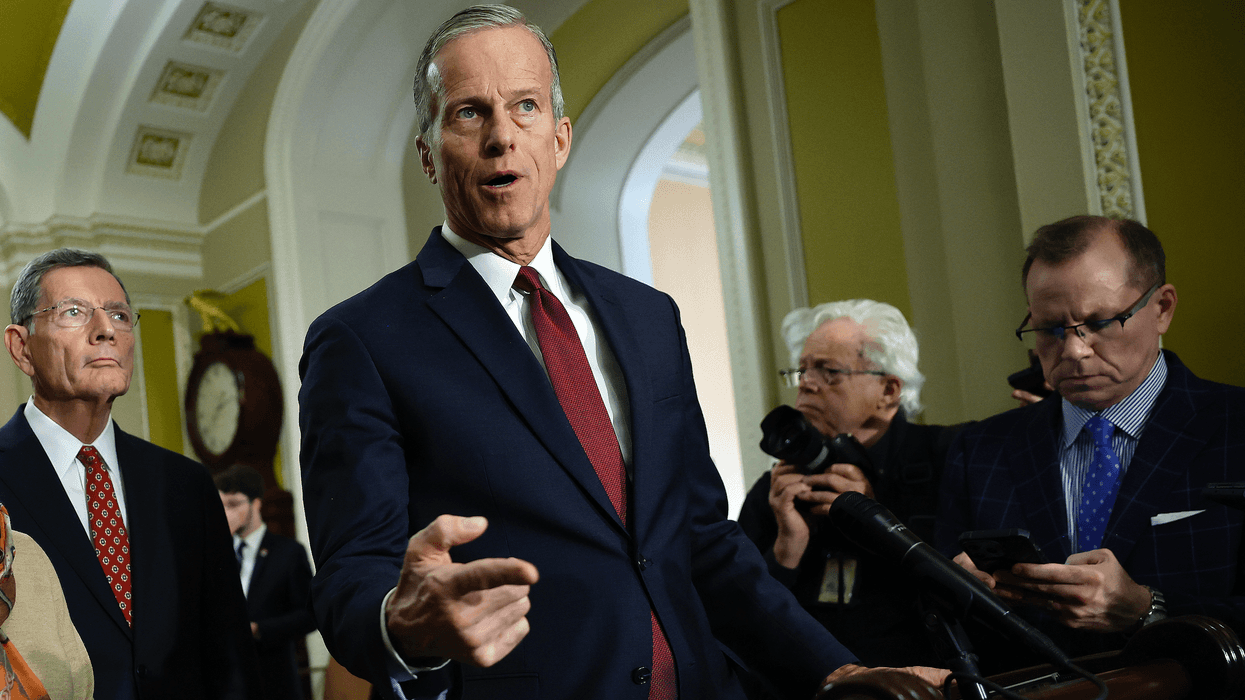
“We don’t need a weaponized DNI; we need professionals there," said Senate Majority Leader John Thune.
Republican US senators including Majority Leader John Thune on Tuesday joined a growing chorus of criticism in response to President Donald Trump's appointment of loyalist Bill Pulte as acting director of national intelligence, despite an utter lack of relevant experience or expertise.
Thune (SD) was asked by a reporter what he thought of Trump's appointment of the private equity firm founder and homebuilder—who is currently director of the Federal Housing Finance Agency (FHFA) and chairman of Fannie Mae and Freddie Mac—to the top intel post, which current Director of National Intelligence (DNI) Tulsi Gabbard will officially vacate on June 30.
“We don’t need a weaponized DNI; we need professionals there," Thune said, according to The Hill. “If they nominate him to take the position permanently, he’ll have to go through a confirmation process and hearings and everything else, so we’ll see."
Thune added that Pulte would have "a lengthy road ahead of him" if Trump sought to make him the permanent DNI.
The majority leader wasn't the only Senate Republican who voiced opposition to Trump's move.
"The best I can tell you is he’s not qualified, but I don’t know anything about him other than that," said outgoing Sen. Bill Cassidy of Louisiana, who last month lost a primary to Trump-backed Republican challenger Rep. Julia Letlow.
Sen. John Cornyn—who also lost his recent primary runoff in Texas after Trump backed his opponent, state Attorney General Ken Paxton—told reporters that “I see no evidence of any qualifications for that job" for Pulte, "but I’m willing to listen.”
Common Dreams reported earlier Tuesday on Democratic opposition to Pulte's appointment, mostly over allegations that he's used his position at FHFA to target Trump's political foes for politically motivated mortgage fraud investigations.
Targeted individuals include two figures involved in Trump's two impeachments: Sen. Adam Schiff (D-Calif.) and former Congressman Eric Swalwell (D-Calif.); former FBI Director James Comey, who oversaw an investigation into alleged Russian interference in the 2016 election; New York Attorney General Letitia James, who won a $450 million judgment against the president and his business in a civil fraud case; and Federal Reserve Gov. Lisa Cook, whom the president has been attempting to oust so that he can fill the US central bank with loyalists.
Last November, a federal judge dismissed the cases against Comey and James, ruling that Trump's handpicked prosecutor was illegally installed. The following month, the nonpartisan Government Accountability Office agreed to investigate whether Pulte and other FHFA employees "potentially misused federal authority and resources to publicly accuse prominent Democrats and President Donald Trump’s perceived political enemies of mortgage fraud."
Even more Democrats piled on Pulte later on Tuesday.
Sen. Elissa Slotkin of Michigan said on X: "As someone who helped set up the Office of the Director of National Intelligence, I oppose elevating Bill Pulte to acting director. He has no experience. Zero. And he is the wrong choice to help keep us safe."
"Mr. Pulte has weaponized his current agency against the president's critics, he's fired federal watchdogs looking into his allies, and he is under active investigation by the Government Accountability Office," she continued. "This all makes him an incredibly dangerous choice to be in charge of ODNI and have access to the tools of this office."
"As someone who has had the government weaponized against me, I cannot in good conscience support his elevation to such a sensitive post," added Slotkin, who drew Trump's ire and a federal probe with a video reminding US troops of their duty to not follow illegal orders. "The president should choose a serious nominee."
Sen. Mark Kelly of Arizona—a retired Navy captain who was investigated by the Pentagon for comments similar to Slotkin's until a federal judge blocked the baseless probe—quipped, “If you’re good at drywall, you must be good at national intelligence."
"I don’t get it," he added. "This is an important job, you know. This is about the safety of all Americans.”
Advocacy groups also rejected Pulte's appointment, with the co-chairs of the Not Above the Law coalition issuing a statement reading, “This appointment is a reward, and has nothing to do with qualifications."
"At FHFA, Bill Pulte did one thing: hunt Trump’s perceived enemies," the statement by Public Citizen's Lisa Gilbert, Constitutional Accountability Center's Praveen Fernandes, MoveOn's Kelsey Herbert, and Stand Up America's Brett Edkins continued. "He ginned up mortgage fraud allegations against sitting officials, which federal investigators found baseless, and weaponized a housing regulator to punish those who tried to hold Trump accountable."
“If past is prologue, he will now do the same with the vast resources of the US intelligence community," the co-chairs asserted. "The agencies built to protect Americans, including our troops at home and abroad, will be turned into instruments of political retribution, betraying the men and women who serve those agencies and every American whose safety depends on them."
“Trump doesn’t staff his government with people who uphold the law," the statement adds. "He installs people willing to break it for him, and now he’s handing one of them the keys to our nation’s most sensitive information.”
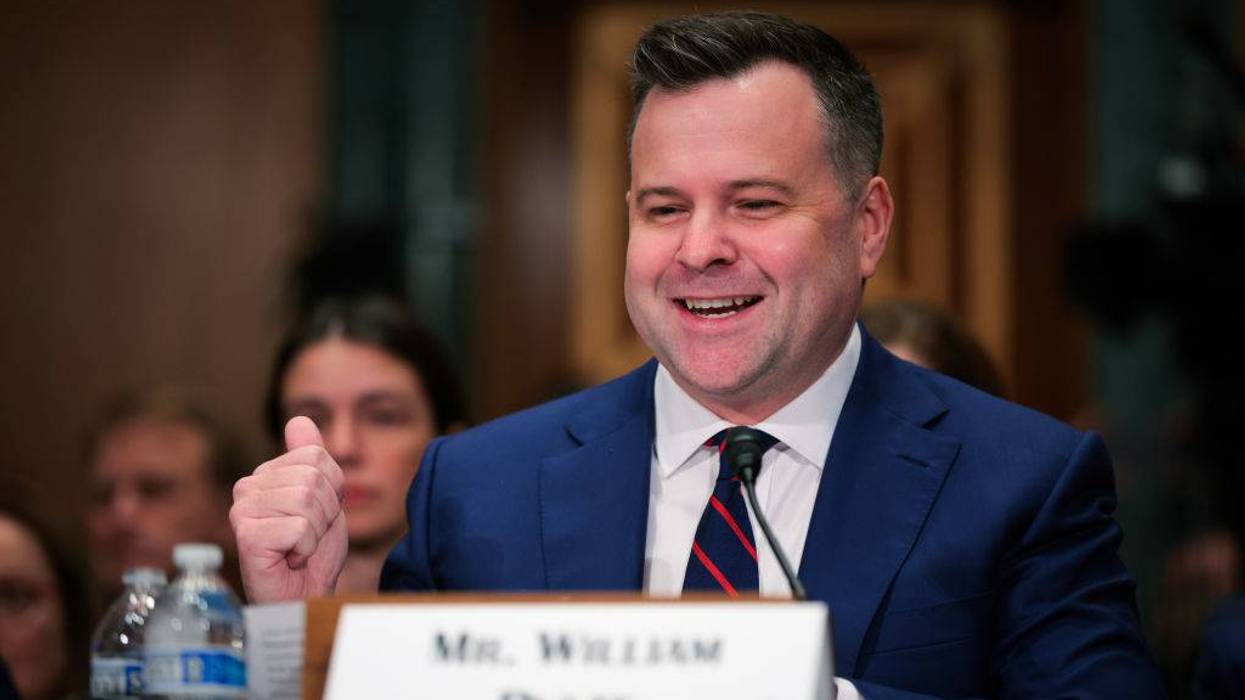
"The president has chosen an official who has demonstrated not just willingness but eagerness to use the authorities of government to pursue political retribution," said US Sen. Mark Warner.
President Donald Trump shocked many observers on Tuesday when he appointed Federal Housing Finance Agency Director Bill Pulte to be his acting director of national intelligence, weeks after Tulsi Gabbard stepped down from the role.
In a Tuesday morning social media post, Trump announced that Pulte would be taking over as DNI while also remaining at his current post at the FHFA, which regulates government-sponsored housing enterprises Fannie Mae and Freddie Mac.
As noted by a Tuesday CNBC report, Pulte "has no prior experience in an intelligence role. His tenure at FHFA has been marked by his criminal referrals for mortgage fraud against Trump's political foes, including New York Attorney General Letitia James and Federal Reserve Governor Lisa Cook, whom the president has been trying to fire in an effort to stack the US central bank with political loyalists.
James was targeted for prosecution after she won a $450 million judgment against the president and his business in a civil fraud case.
Sen. Mark Warner (D-Va.), vice chairperson of the Senate Committee on Intelligence, delivered a scathing response to Trump's announcement.
"This appointment speaks volumes about what this president expects from the nation's top intelligence official," he said. "Rather than selecting a respected national security professional capable of delivering independent judgments, the president has chosen an official who has demonstrated not just willingness but eagerness to use the authorities of government to pursue political retribution."
Sen. Catherine Cortez Masto (D-Nev.) also denounced the president's decision.
"Bill Pulte led Donald Trump’s efforts to charge and jail his political enemies, now he’s being rewarded with a job he has no business doing," Cortez Masto said. "Putting Pulte at the helm of the intelligence community risks American lives just so Trump can keep going after his political opponents."
Sean Vitka, executive director of Demand Progress, argued that Pulte's appointment was yet another reason for Democrats to oppose further extension of warrantless spying powers under Section 702 of the Foreign Intelligence Surveillance Act (FISA).
"Congress must not sign away unchecked spying powers to the government," said Vitka, "when Donald Trump’s top spy is a man whose primary qualification is his willingness to weaponize sensitive information held by the government against the president’s political enemies."
Vitka specifically urged Warner to change course on his push to renew Section 702, particularly in light of Pulte's appointment.
"By supporting a FISA extension without any independent checks like warrant protections, Sen. Warner is putting the entire country at serious risk and enabling perhaps the greatest threat to American democracy we have seen in modern history," he said.
Journalist James Surowiecki expressed horror at Pulte's elevation to acting DNI.
"Even for Trump, this is nuts," Surowiecki wrote. "Bill Pulte, who's a [private equity] guy/real-estate developer with exactly zero intelligence experience, is going to be the new Director of National Intelligence—while also continuing to run FHFA and Fannie Mae/Fredde Mac!"
Don Moynihan, a professor of public policy at the University of Michigan, issued a dire warning about Pulte potentially abusing US intelligence services to target Trump opponents.
"Fuck me, this is Bill Pulte," Moynihan wrote. "The guy who was using mortgage data to launch DOJ investigations against Lisa Cook, Letitia James, and [US Sen.] Adam Schiff (D-Calif.). He is being put in charge of national intelligence because of his track record of being willing to manufacture false allegations to target Trump's enemies."
Political commentator Keith Boykin described Pulte as Trump's "personal henchman" who "abused his position as chairman of Fannie Mae and Freddie Mac to send baseless criminal referrals against Letitia James and Lisa Cook."
National security attorney Bradley Moss, meanwhile, could not hide his disgust at Pulte's appointment in an all-caps social media post.
"WHAT THE... I QUIT," Moss wrote. "I GIVE UP. BILL PULTE??"