

SUBSCRIBE TO OUR FREE NEWSLETTER
Daily news & progressive opinion—funded by the people, not the corporations—delivered straight to your inbox.
5
#000000
#FFFFFF
To donate by check, phone, or other method, see our More Ways to Give page.
Daily news & progressive opinion—funded by the people, not the corporations—delivered straight to your inbox.
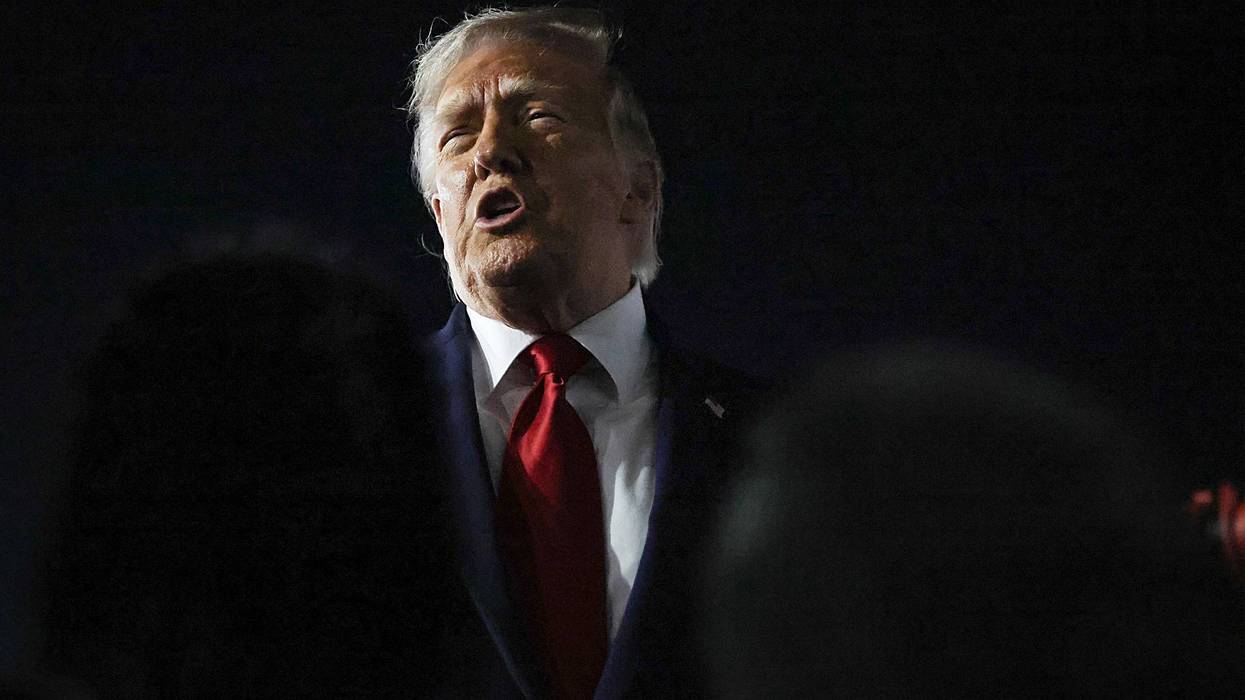
This is now the second time Trump has derailed renewal of FISA’s Section 702, which US intelligence agencies have widely abused to spy on Americans without a warrant.
President Donald Trump threw a wrench into bipartisan efforts to renew the federal government's widely abused warrantless spying powers on Wednesday by demanding it be paired with the passage of Republicans' voter suppression legislation.
In a Truth Social post, Trump announced that he would not approve the renewal of Section 702 of the Foreign Intelligence Surveillance Act (FISA) "without THE SAVE AMERICA ACT going along with it," a reference to Republican-backed legislation that would create nationwide voter ID and proof-of-citizenship requirements.
Passing the SAVE America Act, which critics have warned could be used to disenfranchise millions of eligible voters, would require scrapping the filibuster in the US Senate, and Senate Majority Leader John Thune (R-SD) has said that there are not enough votes in his caucus to make this happen.
This is now the second time Trump has derailed renewal of FISA's Section 702, which allows for warrantless spying on noncitizens located outside the US. Intelligence agencies have routinely used the authority, which lapsed over the weekend, to collect Americans’ data without a warrant.
Earlier this month, Trump appointed Federal Housing Finance Agency Director Bill Pulte to be his acting director of national intelligence (DNI). Many critics expressed horror at Pulte's appointment, given that he has no experience working in intelligence and has been instrumental in pushing the US Department of Justice to prosecute the president's political enemies.
This led many Senate Democrats, including Senate Intelligence Committee vice-chairperson Mark Warner (D-Va.), to withdraw their support for a FISA extension until the president nominated a more acceptable permanent replacement for outgoing DNI Tulsi Gabbard.
FISA renewal appeared to be back on track last week after Trump nominated Jay Clayton, former chairman of the Securities and Exchange Commission, to be DNI.
However, in the same Truth Social post where Trump announced his intent to veto a FISA extension without the SAVE America Act, the president said that he was "canceling" Clayton's scheduled Wednesday Senate hearing.
Senate Intelligence Committee Chair Tom Cotton (R-Ark.) announced shortly after Trump's post that the hearing for Clayton would still take place unless the president formally pulled the nominee.
"Jay Clayton is a pending nominee before the Intelligence Committee," Cotton wrote in a social media post. "We will proceed with his hearing as scheduled unless the president directs him not to appear or withdraws his nomination."
According to The New York Times, the latest chaos and drama caused by Trump "all but guarantee that Mr. Pulte... would take the job at the end of this week as the acting director of national intelligence."
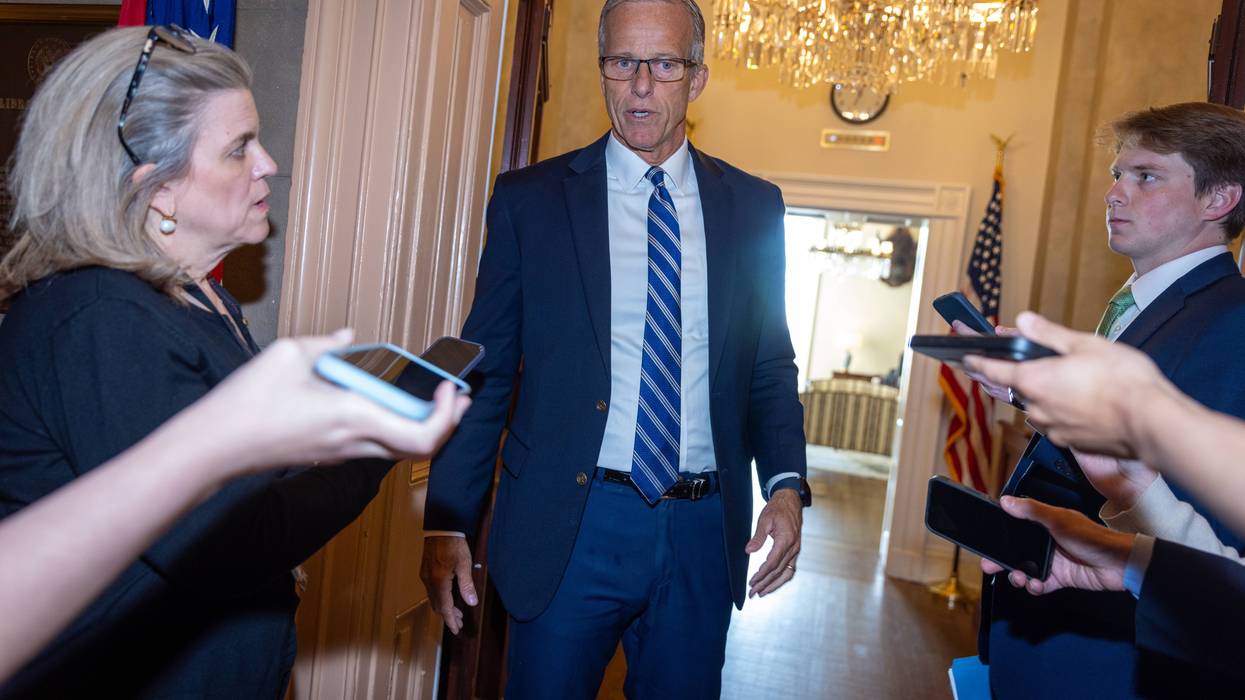
"Clear majorities of Americans across the nation, and in Congress, do not want the government bypassing the courts to hoover up our private, personal data."
Privacy advocates celebrated Friday after a Republican-led effort to extend warrantless spying powers failed to advance in the US Senate in the early hours of the morning, with seven GOP lawmakers joining every Democrat except Sen. John Fetterman in opposition.
The failed vote was another stumble for supporters of renewing Section 702 of the Foreign Intelligence Surveillance Act (FISA), which lets the federal government surveil the electronic communications of noncitizens located outside the US. The authority is set to lapse next Friday.
Advocates have long demanded reforms to the law, noting that US intelligence agencies have relentlessly abused it to spy on Americans.
Sean Vitka, executive director of Demand Progress, called Friday's vote a "resounding defeat for opponents of privacy," arguing it "shows that there is no path forward for FISA without a warrant requirement."
"Clear majorities of Americans across the nation, and in Congress, do not want the government bypassing the courts to hoover up our private, personal data," said Vitka. "If the White House and congressional leadership want to renew FISA, they have to stop ignoring this obvious fact and allow votes on real privacy reforms."
Elizabeth Goitein, co-director of the Liberty and National Security Program at the Brennan Center for Justice, called the vote "an interim victory" but warned that some senators "who would have voted to advance the bill changed their vote" due to President Donald Trump's selection of loyalist Bill Pulte to serve as acting director of national intelligence—a choice that drew bipartisan backlash.
Sen. Mark Warner (D-Va.), who supports extending Section 702 spying powers, voted against advancing the FISA legislation on Friday after decrying Pulte as an "enormously bad choice" who is "grossly unqualified."
Goitein noted that Pulte, who currently heads the Federal Housing Finance Agency (FHFA), is currently "under investigation by the nonpartisan Government Accountability Office for misusing his position and his access to government records to trigger dubious charges of mortgage fraud against Trump’s perceived political enemies."
"If Pulte can do that with the limited access to Americans’ information he has as head of the [FHFA], imagine what he could do with all the authorities and capabilities of the intelligence community—including, of course, Section 702," she added. "What wouldn’t make sense? Handing Section 702 to whomever Trump could nominate in Pulte’s place without ensuring that they can’t use it as a tool for domestic spying."
Trump is more than willing to risk your rights and privileges for the sake of the America he desires. For a petty narcissist obsessed with revenge, section 702 of FISA is another dangerous and powerful tool for furthering his authoritarian agenda.
On April 17, Congress voted to pass a brief 10-day extension of section 702 of the Foreign Intelligence Surveillance Act, or FISA. This sets the new expiration date for April 30, 2026.
Section 702 was added to FISA in 2008 with a provision that requires Congress to periodically reauthorize it. The measure allows national security agencies like the National Security Agency (NSA), Federal Bureau of Investigation (FBI), and Central Intelligence Agency (CIA) to collect and monitor—without a warrant—any electronic communications sent to and from non-US persons “reasonably believed to be located” outside the US. Notably, Americans who send messages to people abroad may likewise have their data surveilled.
Law enforcement agencies have consistently abused this loophole to spy on US citizens in clear violation of their Fourth Amendment rights. The Brennan Center for Justice reports that, in recent years, the government has conducted warrantless “searches for the communications of 141 Black Lives Matter protesters; 19,000 donors to a congressional campaign; members of Congress; multiple US government officials, political commentators, and journalists; and tens of thousands of Americans engaged in ‘civil unrest.’”
Even President Donald Trump alleges being a victim of these “backdoor searches.” Ahead of the last renewal vote in April 2024, Trump posted on Truth Social, “KILL FISA, IT WAS ILLEGALLY USED AGAINST ME, AND MANY OTHERS. THEY SPIED ON MY CAMPAIGN!!! DJT.”
The Trump administration perfectly encapsulates the dangers that section 702 presents to the American public and the wider international community. Far from preventing terrorism, section 702 enables it.
Since returning to the White House, however, his tone has notably shifted. On April 15, Trump posted that Republicans must “UNIFY” to pass a “clean extension of FISA 702.” He continues, “While parts of FISA were illegally and unfortunately used against me in the Democrats’ disgraceful Witch Hunt and Attack in the RUSSIA, RUSSIA, RUSSIA Hoax, and perhaps would be used against me in the future, I am willing to risk the giving up of my Rights and Privileges as a Citizen for our Great Military and Country!”
Trump’s strong endorsement of section 702 is unsurprising. His administration has actively worked to undermine the rights and protections the Constitution guarantees. This includes: (i) subpoenaing social media sites to turn over the personal data of users who have criticized Immigration and Customs Enforcement; (ii) actively exploring a proposal to detain US citizens and deport them to prisons in El Salvador; (iii) violating states’ rights by threatening to cut funding to sanctuary cities as well as commandeering state and local officials to do the federal government’s bidding; (iv) working to disenfranchise voters via the election-rigging SAVE America Act; and (v) his administration’s efforts to restrict birthright citizenship, among many other examples.
Trump is more than willing to risk your rights and privileges for the sake of the America he desires. For a petty narcissist obsessed with revenge, section 702 is another dangerous and powerful tool for furthering his authoritarian agenda.
Already, Trump is actively exploiting section 702 to advance his illegal wars. On April 14, he posted, “Our Military desperately needs FISA 702, and it is one of the reasons we have had such tremendous SUCCESS on the battlefield, both in Venezuela and Iran.” These ‘successes’—or more accurately, war crimes and violations of international law—include kidnapping Venezuelan President Nicolás Maduro; assassinating Iran’s Ayatollah Ali Khamenei; and inciting a reckless war of choice that has seen the US and Israel deliberately target schools, hospitals, and residential buildings.
The Trump administration perfectly encapsulates the dangers that section 702 presents to the American public and the wider international community. Far from preventing terrorism, section 702 enables it.
To be clear, however, the reasons for ending section 702 go beyond the Trump administration. First, the measure undermines the very rationale for FISA. FISA was enacted in 1978 following the revelations of widespread warrantless surveillance under the Nixon administration. This included not only the infamous Watergate scandal, but also spying on anti-war protesters and civil rights activists under the guise that they were linked to foreign communist groups. FISA requires intelligence agencies to obtain authorization for electronic surveillance and other investigative actions. It also establishes the FISA court to oversee requests for surveillance warrants.
Section 702 bypasses these safeguards. Once the government collects a target’s data, the FBI and other agencies can search through it to find Americans’ phone calls, text messages, and emails without a warrant or approval from the FISA court. Section 702 allows the government to engage in the very kinds of Nixonian abuses FISA was designed to prevent.
Keeping in line with Trump’s interests, Johnson’s proposal would permit the federal government to continue its assault against the American public and the global community unimpeded.
In fact, section 702 originally grew out of a secret warrantless surveillance program authorized by the Bush administration following the 9/11 attacks. The New York Times exposed the Terrorism Surveillance Program (TSP) to the public in 2005, triggering a wave of lawsuits. In 2006, Judge Anna Diggs Taylor ruled that TSP violated FISA and the Constitution. Despite this, as the American Civil Liberties Union notes, “Congress weakened FISA in 2007 and then again in 2008 to permit the warrantless wiretapping that the law had previously prohibited.” Instead of shutting down Bush’s unconstitutional program, Congress effectively codified it.
Second, and relatedly, section 702 cannot be meaningfully reformed precisely because the measure is antithetical to FISA itself. In 2023, amid another FISA renewal debate, then-FBI director Christopher Wray told Congress that he was “especially concerned” about a proposal that would require the government to obtain a warrant or court order before accessing information obtained using section 702. He remarked that, “A warrant requirement would amount to a de facto ban, because query applications either would not meet the legal standard to win court approval; or because, when the standard could be met, it would be so only after the expenditure of scarce resources, the submission and review of a lengthy legal filing, and the passage of significant time.”
This makes sense. After all, the entire point of section 702 is to authorize a warrantless surveillance program. A warrant requirement would effectively render it useless.
More modest attempts at reform have been proposed and even implemented. The 2024 Reforming Intelligence and Securing America Act (RISAA), for instance, introduced a few provisions aimed at restricting backdoor searches. Yet, within a few months, the FBI was already violating those new requirements. While the Office of the Director of National Intelligence (ODNI) contends that RISAA has led to a steep decline in backdoor searches, the reality is that the FBI failed to track all such queries in 2024 and 2025. Whether RISAA has had any real impact is thus unknown. That said, even if a decline occurred, RISAA—and similar proposals—would still have failed at solving the fundamental problem: prohibiting warrantless government surveillance and mass data collection.
This is the dilemma reformists face: A warrant requirement is a “de facto ban,” but any other form of restrictions will, at best, only lessen the number of people whose constitutional rights are violated.
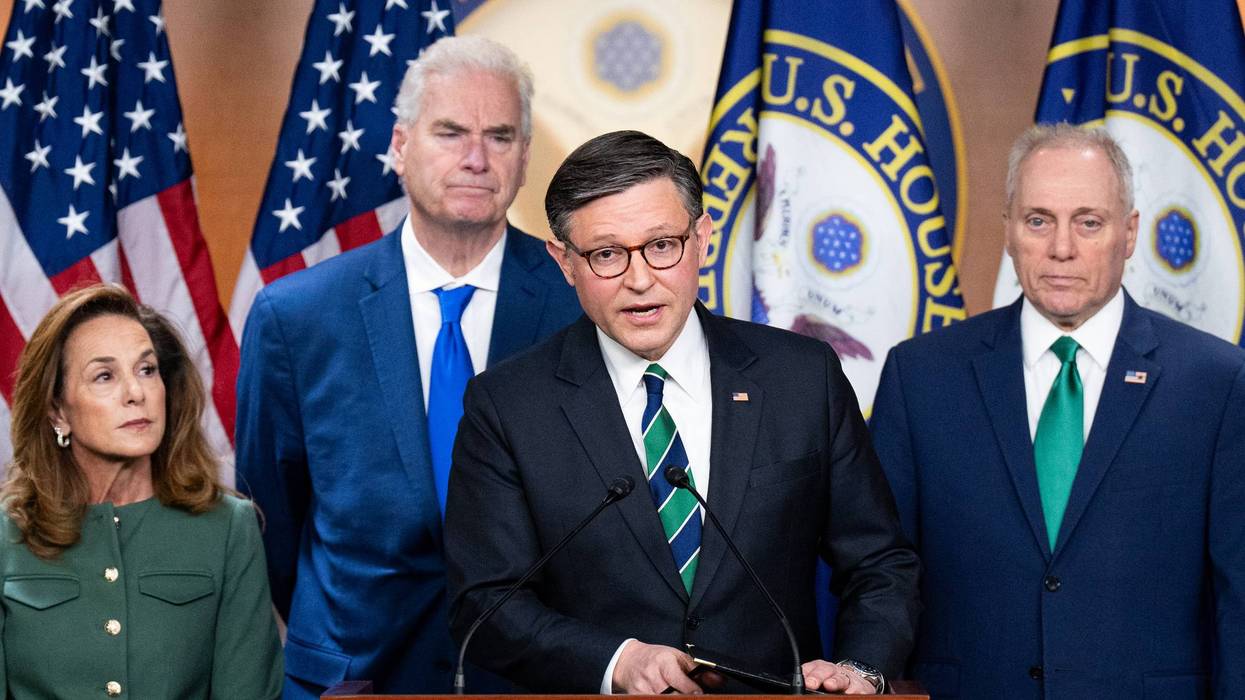
The proposed three-year extension unveiled by Speaker of the House Mike Johnson (R-La.) on April 23 is no better. It includes minimal new oversight and penalties for abusing the spy program, but no warrant requirements. As Senator Ron Wyden (D-Ore.) remarked: “Instead of ending warrantless surveillance or creating more transparency about government spying, this bill only requires a few more Trump administration officials to check a box. That always leads to more abuses, not less.” Keeping in line with Trump’s interests, Johnson’s proposal would permit the federal government to continue its assault against the American public and the global community unimpeded.
Third, while Trump and the CIA make sweeping claims about the terror attacks that section 702 has prevented, there is little publicly available evidence to support this. According to the Cato Institute, there is only one well-documented, independently corroborated case of section 702 preventing a terrorist attack on American soil: the 2009 New York subway bombing plot. In that case, section 702 was used by the NSA to track an exchange between an al-Qaeda courier and Najibullah Zazi, who was living in the US. The NSA passed this information to the FBI, which identified Zazi and disrupted the attack before it took place. Importantly, however, the NSA allegedly received the courier’s foreign email address from the government’s British Intelligence partners. At best then, this success was a byproduct of productive intelligence sharing between allies. Rather than proving the necessity of section 702, this incident underscores how Trump’s inane attacks against key US allies undermine our national security.
Congress should end section 702 and shift their focus to implementing more meaningful guardrails and oversight to FISA. At a time when constitutional rights are under unprecedented threat, Congress must act in the best interest of the public. While there’s still time, I urge everyone to contact their representatives and express their opposition to extending section 702.
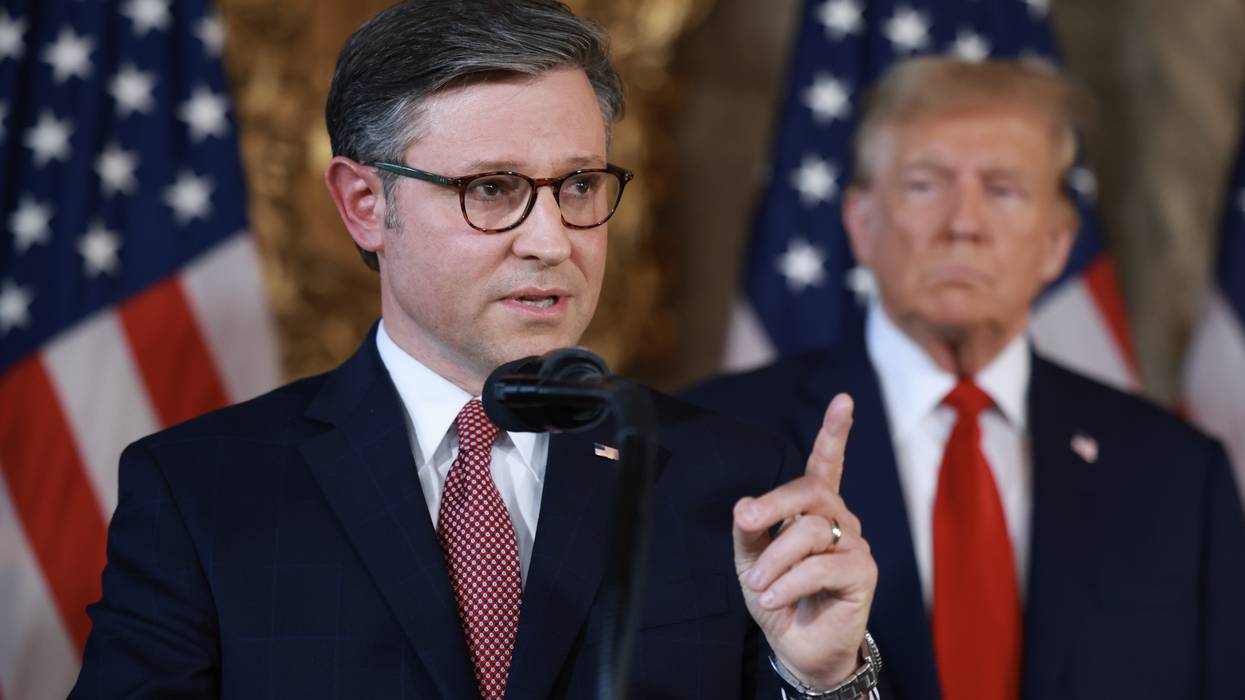
The president and GOP House speaker wanted a 5-year extension of a despised domestic spying bill. Instead, they got just two weeks. "Now, they will have to fight in daylight tomorrow!" said one Democratic lawmaker
A dramatic series of votes in the US House of Representatives resulted in a dead-of-night extension of what critics describe as a "deceitful proposal" to continue a controversial domestic spying program, known as Section 702, that allows federal agencies to spy on the communications of Americans without a warrant.
While US President Donald Trump and his allies on the issue have pushed aggressively for a longer agreement to continue the controversial provision of the Foreign Intelligence Surveillance Act, or FISA, most of the Democratic caucus and a band of renegade, more libertarian-leaning Republicans have resisted.
In the 228-197 final vote, a total of four Democrats—Reps. Jared Golden of Maine, Josh Gottheimer of New Jersey, Marie Gluesenkamp Perez of Washington, and Thomas R. Suozzi of New York—joined with all but 25 Republicans who voted to pass a 10-day extension. Twenty GOP members voted against it, while five did not vote.
Ahead of the votes—including on separate versions asking for a 5-year and then 18-month extensions of Section 702—opponents of any clean extension, including Rep. Ro Khanna (D-Calif.), said anyone opposed to warrantless spying on Americans must vote no.
"They have called us back at midnight to cast a secret vote to reauthorize FISA while America sleeps," said Khanna in a late-night social media post. "A yes vote gives Trump more power to surveil Americans. Every Democrat must vote no. Everyone who loves the constitution must vote no."
They have called us back at midnight to cast a secret vote to reauthorize FISA while America sleeps. A yes vote gives Trump more power to surveil Americans.
Every Democrat must vote no. Everyone who loves the constitution must vote no. pic.twitter.com/kJGQm5EWW3
— Ro Khanna (@RoKhanna) April 17, 2026
The bloc of 20 Republicans who voted against the shorter extension also refused to budge on the push, despite heavy lobbying from the Trump White House and pressure from House Speaker Mike Johnson, for the 18-month and 5-year versions.
The holdouts on both sides of the aisle, meanwhile, have been demanding privacy reforms to make sure the communications of US citizens are not swept up in the surveillance of noncitizens targeted abroad by the nation's spy agencies and law enforcement.
"Let me be clear," said Rep. Pramila Jayapal (D-Wash.) explaining her no vote in a statement. "There is no new warrant requirement in tonight's amendment to FISA reauthorization. It does absolutely nothing to fix the massive loopholes in 702 collection that allow the government to spy on Americans without a warrant. It does nothing to fix the data broker loophole. And it slaps a 5-year extension on this bill so that this White House can continue to spy on Americans and violate our privacy rights for an even longer time."
Speaker Johnson, she charged, "is trying to pass it in the middle of the night—like so many of other pieces of his agenda—because he knows it is not what the American people want. Don't be fooled: this bill simply continues to the spying and surveillance of the American people."
Outside critics of the clean extension effort have criticized Democratic lawmakers, including Reps. Gregory Meeks of New York and Jim Hines of Connecticut—the latter of whom was reportedly conferring with the Republican whip team on the floor of the House late Thursday night—with sabotaging efforts to get a bill with stronger protections.
Sean Vitka, executive director of Demand Progress, which has led a bipartisan coalition against a clean extension of the FISA provision, said serious questions must be asked about the role some Democrats are playing in the current fight to win significant reforms.
“Speaker Johnson’s failure to ram through an 18-month FISA extension creates time for Congress to vote on critical privacy protections, namely closing the backdoor search and data broker loopholes," Vitka said after the short-term extension was passed overnight. "This failure of Himes and House Republican leaders is a testament to the good-faith, bipartisan movement fighting tirelessly for Americans’ privacy rights. This is a major opportunity to protect Americans’ civil liberties, and the Republicans who withstood this pressure should be celebrated for putting privacy over party.
"Extraordinarily, four Democrats chose to back Speaker Johnson over Leader Jeffries on this critical privacy vote," Vitka added. "Given that top Intelligence Democrat Jim Himes was caught speaking with Speaker Johnson before the vote, reporters should be asking whether he engineered these defections in an effort to sabotage the mere chance for the House to enact key, broadly bipartisan civil liberties protections. It would be unconscionable for someone with a critical oversight role like Himes to do so."
For his part, Khanna said the battle for meaningful reforms to the FISA law continues.
"We just defeated Johnson's efforts to sneak through a 5-year FISA authorization tonight," said Khanna. "Now, they will have to fight in daylight tomorrow!"
Vitka said that from now until the end of the month, when the short-term extension expires, lawmakers "fighting against privacy reform to face reality: the American people don’t want FISA to continue as-is and are watching like hawks."
"If you want to renew FISA," he added, "you must come to the table and agree to real privacy reforms that stop the government from bypassing the courts to collect private information on Americans.”
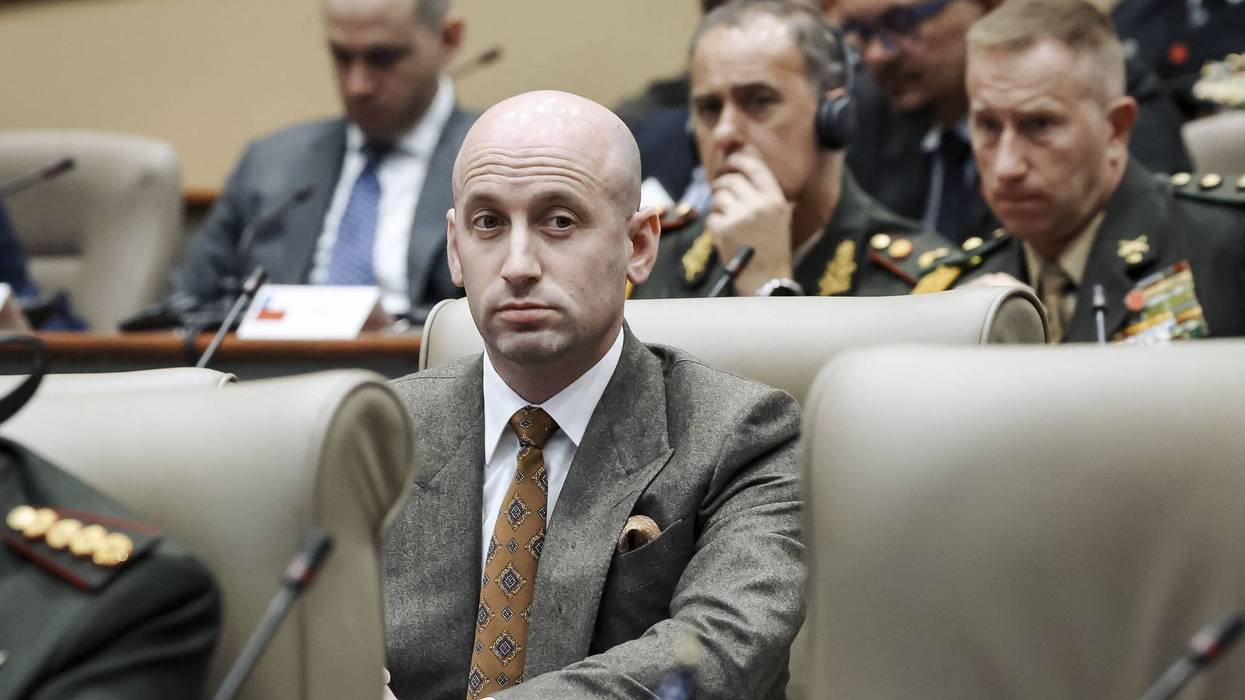
“Supporting Stephen Miller’s warrantless surveillance agenda would be a massive detriment to the privacy and civil rights and liberties of people in the United States."
More than 90 civil society groups on Thursday urged congressional Democrats to "stand firm against White House efforts to extend government surveillance powers" by renewing "without new safeguards" a highly controversial surveillance authorization historically abused by federal agencies.
Free Press Action and Demand Progress are leading the call to senior Democratic lawmakers to not reauthorize Section 702 of the Foreign Intelligence Surveillance Act (FISA)—a controversial law that has been abused hundreds of thousands of times—without first enacting privacy reforms.
“Section 702 has been used to conduct millions of warrantless ‘backdoor’ searches for the phone calls, text messages, and emails of people in the United States,” the groups said in a letter to six senior Democrats including Senate Minority Leader Chuck Schumer and House Minority Leader Hakeem Jeffries, both of New York.
Free Press Action & 90 civil-society groups call on Democratic leaders to stand firm against White House efforts to extend government surveillance powers under Section 702 of the Foreign Intelligence Surveillance Act (FISA) without new safeguards.Our statement: www.freepress.net/news/massive...
[image or embed]
— Free Press (@freepress.bsky.social) March 12, 2026 at 11:32 AM
The groups—which include the ACLU, Center for Biological Diversity, Color of Change, Electronic Frontier Foundation, Indivisible, National Immigrant Justice Center, Public Citizen, and UltraViolet Action—cited recent reporting from Politico stating that Stephen Miller, President Donald Trump's xenophobic deputy chief of staff, supports extending the program that empowers federal agencies to surveil and collect the data of noncitizens abroad without a warrant.
As Free Press Action explained Thursday:
Congress has until April 20 to reauthorize Section 702. Stephen Miller is a leading advocate for extending Section 702 without any reforms, and President Trump is now openly supporting this approach. The groups urge Democratic members of Congress to refuse to reauthorize these powers without key reforms, including reforms to the government’s warrantless querying of communications of people in the United States without prior court approval. Such surveillance allows government officials to conduct sweeping backdoor searches, accessing the private communications of millions of people.
“Supporting Stephen Miller’s warrantless surveillance agenda would be a massive detriment to the privacy and civil rights and liberties of people in the United States,” the letter adds. "These surveillance authorities have long jeopardized privacy, and efforts by Miller to continue them without meaningful reforms and sufficient oversight are deeply troubling.”
The groups emphasize the imperative to close the so-called backdoor search loophole—via which domestic law enforcement agencies can access Americans’ communications without a warrant—and the data broker loophole, which lets the government to buy its way around Fourth Amendment proscriptions on warrantless search and seizure by purchasing sensitive information from private vendors.
I've long been sounding the alarm on Section 702 of FISA, and secret, legal loopholes the government uses to spy on Americans. The program is up for reauthorization in April and I'll be fighting like hell to make sure the current program doesn’t get rubber stamped.
[image or embed]
— Senator Ron Wyden (@wyden.senate.gov) March 11, 2026 at 10:41 AM
Earlier this month, more than 70 congressional Democrats demanded a new investigation into warrantless purchases of Americans’ location data by Department of Homeland Security agencies, including Immigration and Customs Enforcement.
Last month, Sens. Dick Durbin (D-Ill.) and Mike Lee (R-Utah) introduced the Security and Freedom Enhancement (SAFE) Act, which would protect Americans from warrantless government surveillance by requiring authorities to obtain a FISA Title I order or a warrant before accessing Americans’ communications.
The civil society groups that signed the letter are also urging lawmakers to fix the "overbroad" expansion of electronic communication service providers and remove barrier to the FISA legal process.
"There are terrifying risks to reauthorizing government surveillance powers that have been abused to spy on protesters, immigrants, journalists, and even political candidates under any presidential administration," said Jenna Ruddock, advocacy director at Free Press Action. "People across the country and on both sides of the aisle agree, and overwhelmingly support urgently needed reforms to FISA."
“This White House in particular has relentlessly labelled perceived political opponents as ‘domestic terrorists,’ justifying in their minds the relentless surveillance and persecution of those who oppose the administration’s agenda," Ruddock added. "Congress must insist on these common-sense reforms and put the civil and constitutional rights of Americans above the authoritarian desires of Miller and others in the Trump administration.”
Demand Progress senior policy adviser Hajar Hammado said that “Democrats do not want this or any administration to have the power to trawl through Americans’ private emails and texts without warrants. Democratic leaders need to listen to the people and not just rubber-stamp the spy powers that Miller is asking for."
"This extends beyond partisan politics," Hammado continued. "No president should have the powers to hoover up Americans’ private communications, force janitors and security guards to spy on other Americans for them, or circumvent court orders by purchasing sensitive information about people in the United States from data brokers."
"As the government’s plans to supercharge surveillance with AI come into view," she added, "Congress must enact real reforms to curb invasive government spying.”
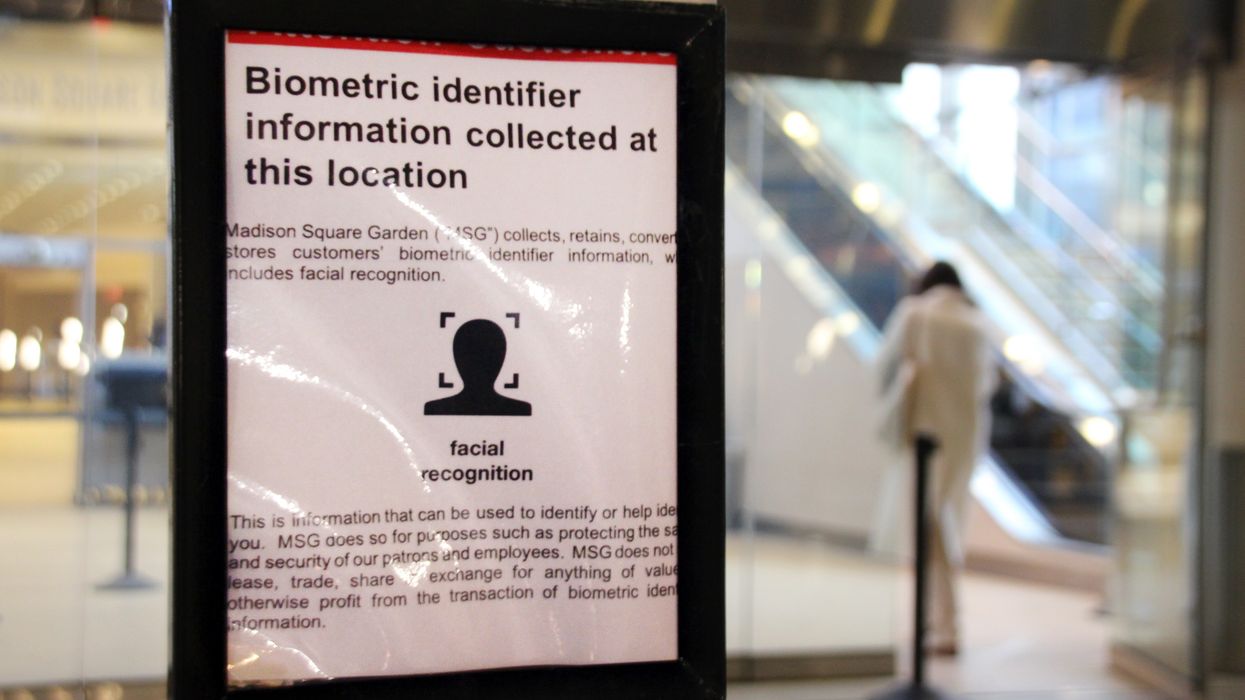
"AI tools have the potential to expand the NSA's surveillance dragnet more than ever before," the civil liberties group warned.
The ACLU on Thursday sued the National Security Agency in an effort to uncover how the federal body is integrating rapidly advancing artificial intelligence technology into its mass spying operations—information that the agency has kept under wraps despite the dire implications for civil liberties.
Filed in a federal court in New York, the lawsuit comes over a month after the ACLU submitted a Freedom of Information Act (FOIA) request seeking details on the kinds of AI tools the NSA is using and whether it is taking any steps to prevent large-scale privacy abuses of the kind the agency is notorious for.
The ACLU said in its new complaint that the NSA and other federal agencies have yet to release "any responsive records, notwithstanding the FOIA's requirement that agencies respond to requests within twenty working days."
"Timely disclosure of the requested records [is] vitally necessary to an informed debate about the NSA's rapid deployment of novel AI systems in its surveillance activities and the safeguards for privacy, civil rights, and civil liberties that should apply," the complaint states, asking the court for an injunction requiring the NSA to immediately process the ACLU's FOIA request.
In a blog post on Thursday, the ACLU's Shaiba Rather and Patrick Toomey noted that AI "has transformed many of the NSA's daily operations" in recent years, with the agency utilizing AI tools to "help gather information on foreign governments, augment human language processing, comb through networks for cybersecurity threats, and even monitor its own analysts as they do their jobs."
"Unfortunately, that's about all we know," the pair wrote. "As the NSA integrates AI into some of its most profound decisions, it's left us in the dark about how it uses AI and what safeguards, if any, are in place to protect everyday Americans and others around the globe whose privacy hangs in the balance."
"That's why we're suing to find out what the NSA is hiding," they added.
BREAKING: We just filed a FOIA lawsuit to find out how the NSA — one of America's biggest spy agencies — is using artificial intelligence.
These are dangerous, powerful tools and the public deserves to know how the government is using them.
— ACLU (@ACLU) April 25, 2024
The ACLU filed its lawsuit less than a week after Congress approved a massive expansion of Section 702 of the Foreign Intelligence Surveillance Act (FISA), warrantless spying authority that the NSA has heavily abused to sweep up the communications of American journalists, activists, and lawmakers.
With their newly broadened authority, the NSA and other intelligence agencies will have the power to enlist a wide range of businesses and individuals to participate in their warrantless spying operations—a potential catastrophe for privacy rights.
Rather and Toomey warned Thursday that the growing, secretive use of artificial intelligence tools has "the potential to expand the NSA's surveillance dragnet more than ever before, expose private facts about our lives through vast data-mining activities, and automate decisions that once relied on human expertise and judgment."
"The government's lack of transparency is especially concerning given the dangers that AI systems pose for people's civil rights and civil liberties," Rather and Toomey wrote. "As we've already seen in areas like law enforcement and employment, using algorithmic systems to gather and analyze intelligence can compound privacy intrusions and perpetuate discrimination."
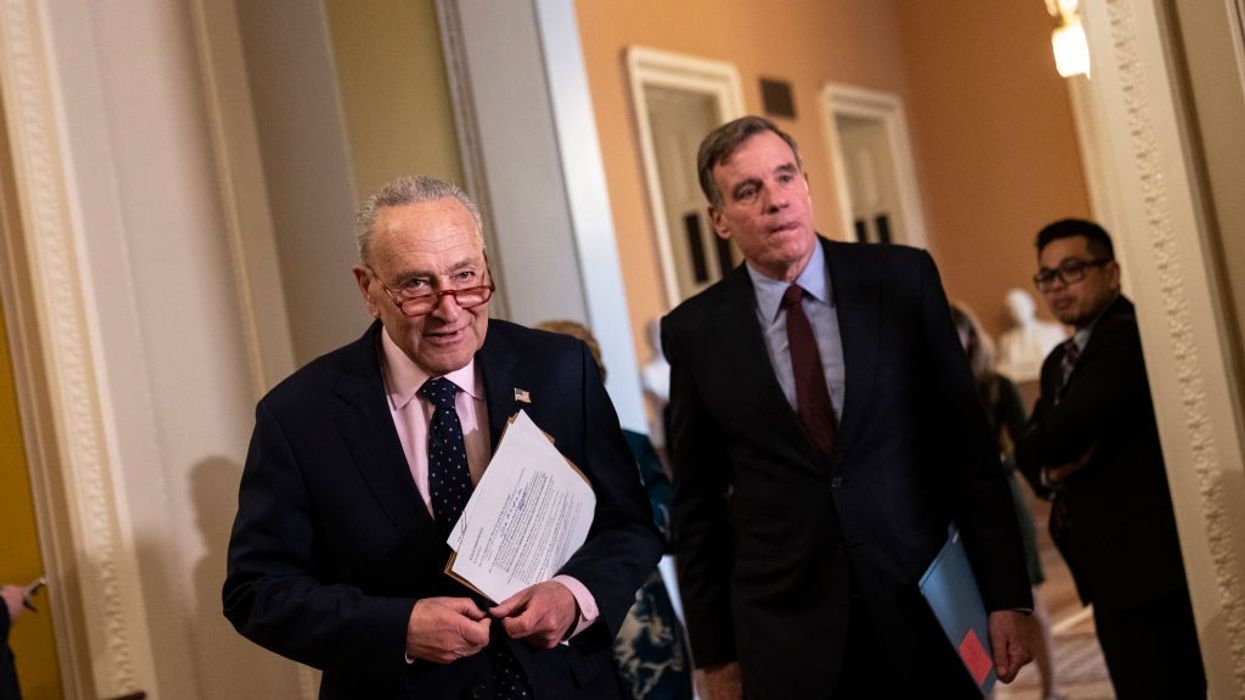
"It's not about who RISAA allows the government to spy on, it's about who RISAA allows the government to force to spy," explained one critic.
Civil liberties defenders on Thursday decried the U.S. Senate's advancement of the Reforming Intelligence and Securing America Act, which critics say lawmakers are trying to ram through without protection against warrantless surveillance and with a provision that would effectively make every American a spy whether they like it or not.
Senators voted 67-32 in favor of a cloture motion to begin voting on RISAA, a bill to reauthorize Section 702 of the Foreign Intelligence Surveillance Act (FISA), which expires on Friday. FISA—a highly controversial law that has been abused hundreds of thousands of times—allows warrantless surveillance of non-U.S. citizens but also often sweeps up Americans' communication data in the process.
In a 273-147 vote last week, House lawmakers passed RISAA, including an amendment critics say dramatically expands the government's unchecked surveillance authority by compelling a wide range of individuals and organizations—including businesses and the media—to cooperate in government spying operations.
This so-called "Make Everyone a Spy" clause would allow the attorney general or director of national intelligence to force electronic communication service providers to "immediately provide... all information, facilities, or assistance" the government deems necessary.
"This bill would basically allow the government to institute a spy draft," Seth Stern, director of advocacy at Freedom of the Press Foundation, warned Thursday. "It will lead to significant distrust between journalists and sources, not to mention everyone else."
"It's not about who RISAA allows the government to spy on, it's about who RISAA allows the government to force to spy," he added. "Regardless of whether the end target of the surveillance is a foreigner, it's indisputable that the people the government can enlist to conduct the surveillance are Americans. And what's more, these civilians ordered to spy would be gagged and sworn to secrecy under the law."
In addition to the "Make Everyone a Spy" provision, civil libertarians have sounded the alarm over the House lawmakers' rejection of an amendment that would have added a warrant requirement to the legislation.
Critics accuse Senate Majority Leader Chuck Schumer (D-N.Y.) and colleagues including Senate Intelligence Committee Chair Mark Warner (D-Va.) of trying to rush a vote on RISAA while disingenuously claiming Section 702's powers will expire with the law on Friday. That's a misleading claim, as a national security court earlier this month approved the government's request to continue a disputed surveillance program even if Section 702 lapses.
"There is simply no defense of Majority Leader Schumer and Sen. Warner's duplicity," Sean Vitka, policy director at the progressive advocacy group Demand Progress, said in a statement. "House Intelligence Committee leaders poisoned this bill with one of the most repugnant surveillance expansions in history, and apparently the administration was too busy attacking commonsense privacy protections to notice. They know it, we know it, and now the American people know it."
"There can be no mistake: Sens. Schumer and Warner just helped hand the next president an unspeakably dangerous weapon that will be used against their own constituents," Vitka added. "And there is only one vote left to stop it."
Sen. Ron Wyden (D-Ore.)—who
said earlier this week that the bill would dragoon the American people into becoming "an agent for Big Brother"—on Thursday argued that "this issue demands a debate about meaningful reforms, not a rushed vote to rubber-stamp more warrantless government surveillance powers."
In an attempt to tackle the warrantless surveillance issue, Senate Judiciary Chair Dick Durbin (D-Ill.) and Sen. Kevin Cramer (R-N.D.) on Thursday proposed a RISAA amendment that would require the government to obtain a warrant from the Foreign Intelligence Surveillance Court before accessing Americans' private communications.
However, the amendment contains exceptions to the warrant requirement in the event of unspecified emergencies and cyberattacks.
"If the government wants to spy on the private communications of Americans, they should be required to get approval from a judge—just as our Founders intended," Durbin said in a statement. "Congress has a responsibility to the American people to get this right."
The Biden administration and U.S. intelligence agencies vehemently oppose the Durbin-Cramer amendment. The White House called the measure "a reckless policy choice contrary to the key lessons of 9/11 and not grounded in any constitutional requirement or statute."
"The amendment outright bars the government from gaining access to lawfully collected information using terms associated with U.S. persons," the administration added. "Exceptions to that prohibition are narrow and unworkable. They are insufficient to protect our national security."
On Wednesday, the House also passed the Fourth Amendment Is Not for Sale Act, which would prohibit the government from buying Americans' information from data brokers if it would otherwise need a warrant to obtain the data, which includes location and internet records. The Senate will now take up FANFSA.
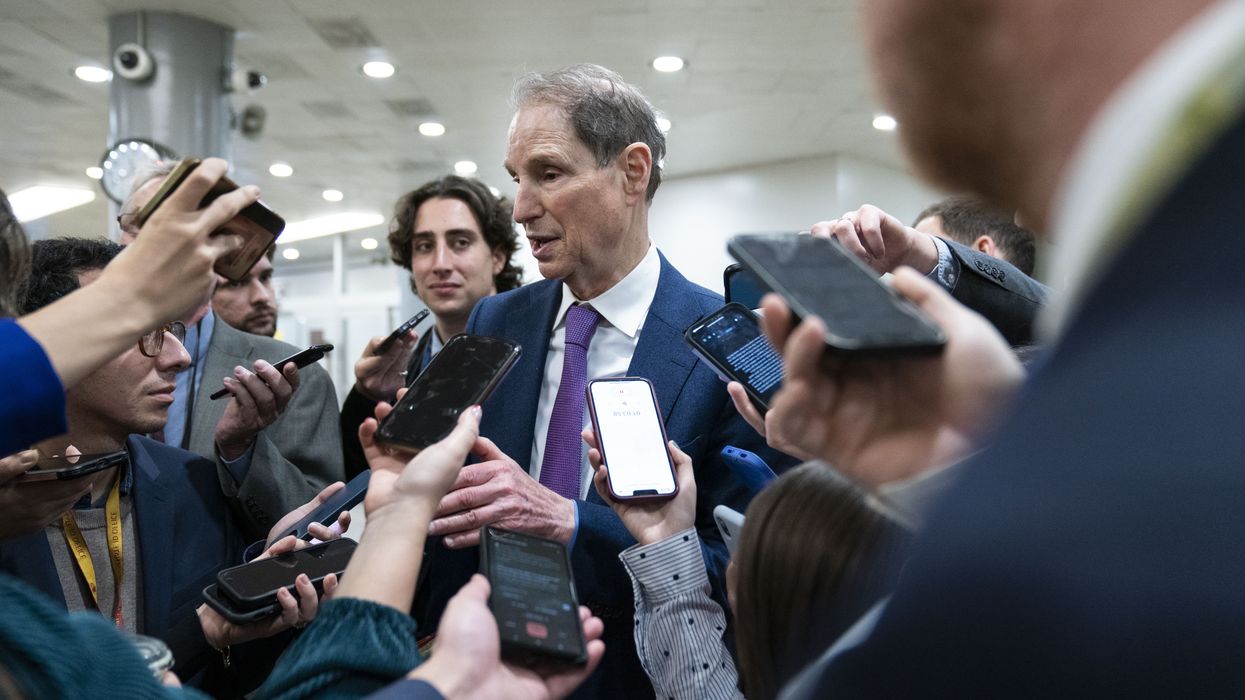
"If you have access to any communications, the government can force you to help it spy," said Sen. Ron Wyden.
Democratic Sen. Ron Wyden took to the floor of the U.S. Senate on Tuesday to speak out against a chilling mass surveillance bill that lawmakers are working to rush through the upper chamber and send to President Joe Biden's desk by the end of the week.
The measure in question would reauthorize Section 702 of the Foreign Intelligence Surveillance Act (FISA) for two years and massively expand the federal government's warrantless surveillance power by requiring a wide range of businesses and individuals to cooperate with spying efforts.
"If you have access to any communications, the government can force you to help it spy," said Wyden (Ore.), referring to an amendment that was tacked on to the legislation by the U.S. House last week with bipartisan support. "That means anyone with access to a server, a wire, a cable box, a Wi-Fi router, a phone, or a computer. So think for a moment about the millions of Americans who work in buildings and offices in which communications are stored or pass through."
"After all, every office building in America has data cables running through it," the senator continued. "The people are not just the engineers who install, maintain, and repair our communications infrastructure; there are countless others who could be forced to help the government spy, including those who clean offices and guard buildings. If this provision is enacted, the government can deputize any of these people against their will, and force them in effect to become what amounts to an agent for Big Brother—for example, by forcing an employee to insert a USB thumb drive into a server at an office they clean or guard at night."
Wyden said the process "can all happen without any oversight whatsoever: The FISA Court won't know about it, Congress won't know about it. Americans who are handed these directives will be forbidden from talking about it. Unless they can afford high-priced lawyers with security clearances who know their way around the FISA Court, they will have no recourse at all."
Wyden's remarks came after the Senate narrowly approved a motion Tuesday to proceed to the FISA reauthorization bill ahead of Section 702's expiration at the end of the week. The Oregon senator, an outspoken privacy advocate, was among the seven members of the Democratic caucus who voted against the procedural motion.
Despite its grave implications for civil liberties, the bill has drawn relatively little vocal opposition in the Senate. A final vote could come as soon as Thursday.
Titled Reforming Intelligence and Securing America Act (RISAA), the legislation passed the Republican-controlled House last week after lawmakers voted down an amendment that would have added a search warrant requirement to Section 702.
The authority allows U.S. agencies to spy on non-citizens located outside of the country, but it has been abused extensively by the Federal Bureau of Investigation and National Security Agency to collect the communications of American lawmakers, activists, journalists, and others without a warrant.
Privacy advocates warn RISAA would dramatically expand the scope of Section 702 by broadening the kinds of individuals and businesses required to participate in government spying. A key provision of the bill would mandate cooperation from "electronic communications service providers" such as Google, Verizon, and AT&T as well as "any other service provider who has access to equipment that is being or may be used" to transmit or store electronic communications.
That would mean U.S. intelligence agencies could, without a warrant, compel gyms, grocery stores, barber shops, and other businesses to hand over communications data.
"In the face of the pervasive past misuse of Section 702, the last thing Americans need is a large expansion of government surveillance," Caitlin Vogus, deputy director of advocacy at Freedom of the Press Foundation, wrote in an op-ed for The Guardian on Tuesday. "The Senate should reject the House bill and refuse to reauthorize Section 702 without a warrant requirement. Lawmakers must demand reforms to put a stop to unjustified government spying on Americans."
Wyden said during his floor speech Tuesday that some of his colleagues "say they aren't worried about President Biden abusing these authorities."
"In that case, how about [former President Donald] Trump? Imagine these authorities in his hands," said Wyden. "If you're worried about having a president who lives to target vulnerable Americans, to pit Americans against each other, to find every conceivable way to punish perceived enemies, you ought to find this bill terrifying."
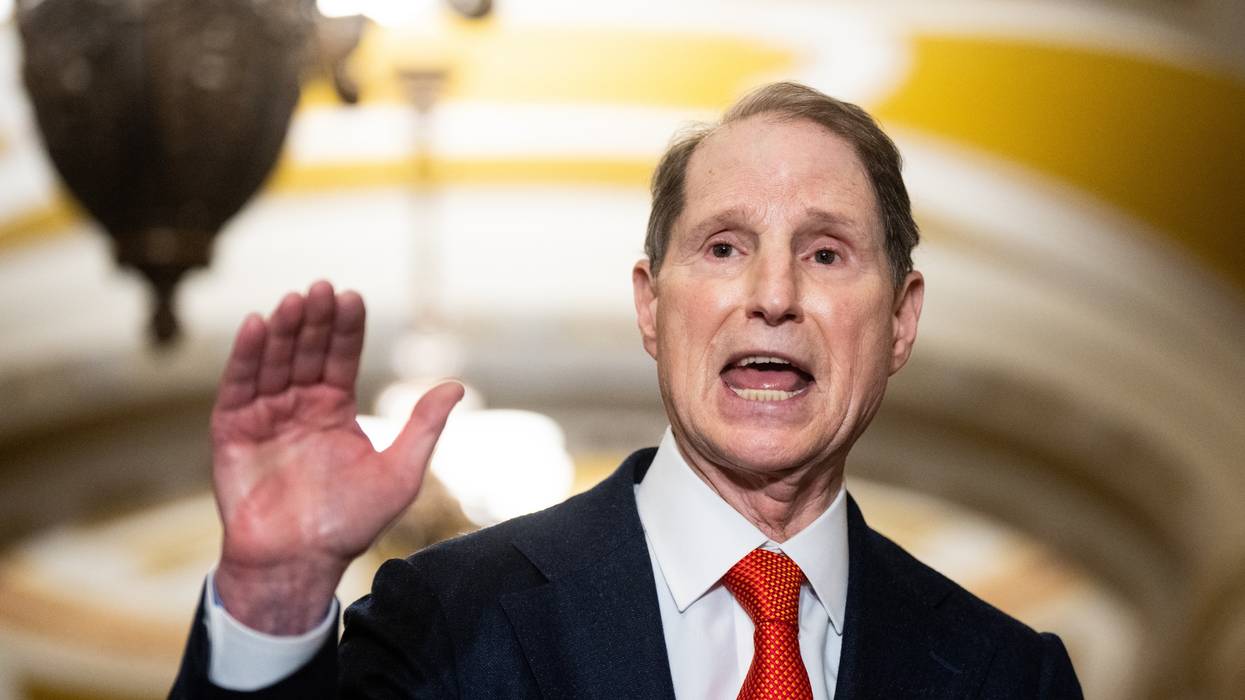
"Make no mistake," said one expert, "the day will come when there is a president in the White House who will not hesitate to make full use of the Orwellian power this bill provides."
With the U.S. Senate poised to vote later this week on legislation to reauthorize a heavily abused warrantless surveillance authority, privacy advocates are ramping up pressure on lawmakers to remove a provision that would force a wide range of businesses and individuals to take part in government spying operations.
Dubbed the "Make Everyone a Spy" provision by one advocacy group, the language was tucked into a House-passed bill that would extend Section 702 of the Foreign Intelligence Surveillance Act (FISA), which allows U.S. agencies to spy on non-citizens located outside of the country without a warrant. Americans' communications have frequently been collected under the spying authority.
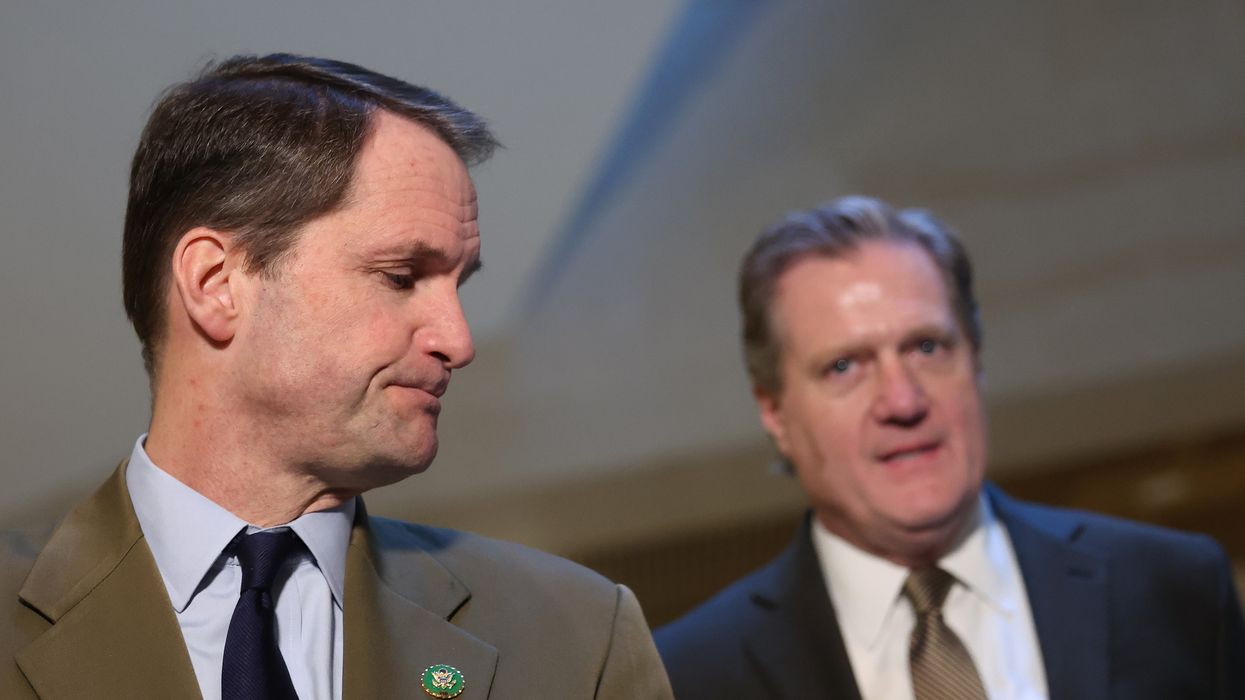
The provision that has sparked grave warnings from privacy advocates was spearheaded by the chair of the House Permanent Select Committee on Intelligence, Rep. Mike Turner (R-Ohio), and the panel's ranking member, Rep. Jim Himes (D-Conn.).
While supporters of the provision, including the Biden White House, claim the proposed change to existing law is narrow, civil liberties defenders say it's anything but.
Currently, U.S. agencies can use Section 702 authority to collect the data of non-citizens abroad from electronic communications service providers such as Google, Verizon, and AT&T without a warrant.
The Turner-Himes amendment would significantly expand who could be ordered to cooperate with government surveillance efforts, broadening Section 702 language to encompass "any other service provider who has access to equipment that is being or may be used" to transmit or store electronic communications.
That change, privacy advocates say, would mean grocery stores, laundromats, gyms, barber shops, and other businesses would potentially be conscripted to serve as government spies.
"The Make Everyone a Spy provision is recklessly broad and a threat to democracy itself," Sean Vitka, policy director of Demand Progress, said in a statement Tuesday. "It is simply stunning that the administration and House Intelligence Committee do not have a single answer for how frighteningly broad this provision is."
"You can't create a surveillance state and just hope the government won't take advantage."
The New York Times explained Tuesday that after the FISA Court "approves the government's annual requests seeking to renew the program and setting rules for it, the administration sends directives to 'electronic communications service providers' that require them to participate."
In 2022, the Times noted, the FISA Court "sided with an unidentified company that had objected to being compelled to participate in the program because it believed one of its services did not fit the necessary criteria." Unnamed people familiar with the matter told the newspaper that "the judges found that a data center service does not fit the legal definition of an 'electronic communications service provider'"—prompting the bipartisan effort to expand the reach of Section 702.
"While the Department of Justice wants us to believe that this is simply about addressing data centers, that is no justification for exposing cleaning crews, security guards, and untold scores of other Americans to secret Section 702 directives, which are issued without any court review," Vitka said Tuesday. "Receiving one can be a life-changing event, and Jim Himes appears not to have any sense of that. The Senate must stop this provision from advancing."
Elizabeth Goitein, co-director of the Liberty and National Security Program at the Brennan Center for Justice, wrote on social media Tuesday that "it's critical to stop this bill."
"The administration claims it has no intent to use this provision so broadly—and who knows, maybe it doesn't. But the plain language of the bill allows involuntary conscription of much of the private sector for [National Security Agency] surveillance purposes," Goitein wrote. "Make no mistake, the day will come when there is a president in the White House who will not hesitate to make full use of the Orwellian power this bill provides. You can't create a surveillance state and just hope the government won't take advantage."
URGENT: Please read thread below. We have just days to convince the Senate NOT to pass a “terrifying” law (@RonWyden) that will force U.S. businesses to serve as NSA spies. CALL YOUR SENATOR NOW using this call tool (click below or call 202-899-8938). 1/25 https://t.co/HAOHURZoJQ
— Elizabeth Goitein (@LizaGoitein) April 15, 2024
With Section 702 set to expire Friday, Senate Majority Leader Chuck Schumer (D-N.Y.) said in a floor speech Tuesday that he has placed the House-passed FISA legislation on the chamber's calendar and will soon "file cloture on the motion to proceed" to the bill, which is titled the Reforming Intelligence and Securing America Act (RISAA).
"We don't have much time to act," said Schumer. "Democrats and Republicans are going to have to work together to meet the April 19th deadline. If we don't cooperate, FISA will expire, so we must be ready to cooperate."
Sen. Ron Wyden (D-Ore.), a member of the Senate Select Committee on Intelligence and outspoken privacy advocate, has called RISAA's proposed expansion of government surveillance "terrifying" and warned it would "force any American who installs, maintains, or repairs anything that transmits or stores communications to spy on the government's behalf."
According to the Times, Wyden's office has in recent days been circulating "a warning that the provision could be used to conscript someone with access to a journalist's laptop to extract communications between that journalist and a hypothetical foreign source who was targeted for intelligence."
In a social media post on Tuesday, Wyden echoed campaigners in urging people to contact their senators.
"Congress wants to make it easier for the government to spy on you without a warrant," Wyden wrote. "Scared? Me too. Call your senator at (202) 224-3121 before April 19 and tell them to vote NO on expanding warrantless government surveillance under FISA."
"In my opinion no country that has something like this to enter into force can still be considered to be free," said Edward Snowden.
NSA whistleblower Edward Snowden is among the privacy advocates sounding the alarm over a major expansion of mass surveillance that the U.S. House approved in a bipartisan vote last week, a step toward handing the federal government—and a potential second Trump administration—even more power to spy on Americans' communications without a warrant.
Sean Vitka, policy director of Demand Progress, used social media to press the top Democrat on the House Permanent Select Committee on Intelligence (HPSCI) on the implications of an amendment that the lower chamber approved as part of a bill to reauthorize Section 702 of the Foreign Intelligence Surveillance Act (FISA).
"Did you know your FISA [electronic communications service provider] amendment facilitates Stasi-like powers, very plausibly for [former President Donald] Trump? I asked your staff if you were lied to about it or if you knew. Can you confirm?" Vitka asked Rep. Jim Himes (D-Conn.) on X, the platform formerly known as Twitter. (Trump, the presumptive 2024 GOP nominee, has postured as a FISA opponent, but as president he signed an extension of Section 702 authority.)
Vitka noted Sunday that Himes repeatedly characterized the amendment—which was led by HPSCI Chair Rep. Mike Turner (R-Ohio)—as narrow, even though it would dramatically expand the kinds of businesses that can be forced to help the government conduct surveillance operations under Section 702, possibly handing a would-be authoritarian chilling surveillance powers.
As the Brennan Center for Justice explained, "Although the amendment exempts hotels, libraries, restaurants, and a handful of other types of establishments, an enormous range of businesses could still be conscripted into service, including grocery stores, department stores, hardware stores, laundromats, barber shops, fitness centers, and countless other locations Americans frequent—even the offices in which they work."
"Moreover, although the targets would still have to be non-U.S. persons overseas, many of these businesses would lack the technical ability to turn over specific communications, so they would be forced to give the NSA access to entire communications streams—trusting the government to retain only the communications of approved targets," the group added.
Section 702 permits U.S. agencies to spy on non-citizens located outside of the country, but the communications of Americans—including activists, journalists, and lawmakers—have
frequently been swept up under the surveillance authority, sparking a bipartisan reform push.
Himes, an
opponent of reform efforts, responded dismissively to Vitka's question on Sunday, writing that "life is really too short to engage with people who need to use bombastic absurdities like 'Stasi-like.'"
"Yes I know exactly what is in there," Himes added, referring to the Turner-led amendment. "Some of it is classified. And none of it is remotely 'Stasi-like.' Sell your nonsense elsewhere."
Snowden, who in 2013 exposed the NSA's
illegal mass surveillance program, said in response that "the 'it's classified' dodge" by Himes "is a bright red flag."
"This amendment radically—and I repeat radically—expands the range of who the gov't can force to spy on their behalf. It may be law in DAYS!" Snowden wrote on social media.
Snowden went on to argue that Vitka's "invocation of 'Stasi-like' is not only a fair characterization" of the amendment, "it's probably generous."
"Frankly, it's hard to imagine any modern communication beyond the reach of this thing—which is, of course, the true reason they're trying to sneak it into law so quietly," he added. "It is unbelievably overbroad, and in my opinion no country that has something like this to enter into force can still be considered to be free."
"The House bill represents one of the most dramatic and terrifying expansions of government surveillance authority in history."
Elizabeth Goitein, co-director of the Brennan Center's Liberty and National Security Program,
said the "disregard for Americans' civil liberties" in Himes' reply to Vitka "is staggering."
"This provision allows the NSA to force a huge range of ordinary U.S. businesses to assist the NSA in Section 702 surveillance," Goitein added. "That's not 'nonsense,' that's a fact. And this is your response?"
URGENT: Please read thread below. We have just days to convince the Senate NOT to pass a “terrifying” law (@RonWyden) that will force U.S. businesses to serve as NSA spies. CALL YOUR SENATOR NOW using this call tool (click below or call 202-899-8938). 1/25 https://t.co/HAOHURZoJQ
— Elizabeth Goitein (@LizaGoitein) April 15, 2024
The Reforming Intelligence and Securing America Act (RISAA), described by some as "Patriot Act 2.0," passed the House in an overwhelming bipartisan vote last week after mass spying supporters—including the Biden White House—defeated an effort to add a search warrant requirement to the bill.
But the legislation still has to clear a procedural hurdle to reach the Senate. Later Monday, the House is expected to vote on whether to table a motion to reconsider RISAA's passage.
If the bill does reach the closely divided Senate, privacy advocates are expected to continue their fight for meaningful reforms.
"The House bill represents one of the most dramatic and terrifying expansions of government surveillance authority in history," Sen. Ron Wyden (D-Ore.) said in a statement following Friday's House vote. "It allows the government to force any American who installs, maintains, or repairs anything that transmits or stores communications to spy on the government's behalf. That means anyone with access to a server, a wire, a cable box, a Wi-Fi router, or a phone."
"It would be secret: The Americans receiving the government directives would be bound to silence, and there would be no court oversight," he added. "I will do everything in my power to stop this bill."