

SUBSCRIBE TO OUR FREE NEWSLETTER
Daily news & progressive opinion—funded by the people, not the corporations—delivered straight to your inbox.
5
#000000
#FFFFFF
To donate by check, phone, or other method, see our More Ways to Give page.
Daily news & progressive opinion—funded by the people, not the corporations—delivered straight to your inbox.
The International Energy Agency has released its first net-zero report outlining a full-fledged scenario that charts the course of reducing emissions from the energy sector in alignment with the Paris Agreement. The report is remarkable because the IEA is viewed as a relatively conservative organization that has, in the past, consistently undermined the potential of renewable energy. IEA reports are often pivotal in shaping world government and industry decisions.
With this report, the IEA finally acknowledges there is no room for new fossil fuel projects within their pathway to 1.5C. However, their scenario depends heavily on "net zero" projects which have seen polluting governments and corporations shifting the burden, disguising climate inaction and maintaining a business as usual scenario.
Anna Vickerstaff, UK team lead at 350.org said;
"In the past, the International Energy Agency has been hesitant to call time on the fossil fuel industry - not anymore. When this conservative institution is demanding an end to fossil fuels it really is time for governments to ditch the net-zero rhetoric and take immediate action to cut their support for polluting corporations
We won't stand by and let the UK government use this year to grandstand themselves by loudly celebrating empty net-zero promises. The growing call for concrete action is impossible to ignore. It's time to end fossil fuels"
We demand that the richest countries own up to their climate debt, support countries least responsible and hardest hit by the climate crisis through massive and unconditional climate finance, and deliver a rapid transition to a fairer and more sustainable economy that works for all."
Landry Nintereste Africa Managing Director
"There is a growing risk that reports such as these are shifting the narrative away from the rapid and 'real' emissions reductions that climate justice requires. Net-zero is being used by the world's biggest polluters and governments as a facade to evade responsibility and disguise their inaction or harmful action on the climate crisis. We are seeing a lot of net-zero projects for example by fossil fuel companies like Shell and BP where carbon offsetting through tree planting is being championed as the answer to the climate crisis.
There are also massive implications for communities in the global south living on the land where these carbon offsetting projects are being planted, putting pressure on food systems and generating land conflicts even though these countries have done little to cause the climate crisis. We have seen violent evictions of indigenous people, for example, the Sengwer people in Kenya, to make way for tree plantations. Net-zero is a dangerous trap that constitutes a new form of climate colonialism. It needs to be resisted."
350 is building a future that's just, prosperous, equitable and safe from the effects of the climate crisis. We're an international movement of ordinary people working to end the age of fossil fuels and build a world of community-led renewable energy for all.

"Over 305,000 Missouri voters, Republicans, Democrats, and Independents, took action to block this political power grab last fall."
A high-stakes legal fight over Missouri's congressional map was engulfed in chaos late Tuesday after the US Supreme Court and a lower federal court issued conflicting decisions on whether the state can use aggressively gerrymandered district lines that Republicans drew last year at the behest of President Donald Trump.
US Supreme Court Justice Brett Kavanaugh, a Trump nominee, issued an order rejecting Missouri's emergency effort to uphold the GOP-drawn map, which was used during the state's primary but has faced challenges from advocacy organizations and voters who say it is an "unconstitutional power grab." But in a parallel case, Trump-appointed District Judge Stephen Clark ruled that Missouri cannot revert to its old maps for the November midterms, a win for state Republicans who sued to keep the gerrymandered districts in place.
"Missourians deserve better than this Republican chaos. Plain and simple," the Missouri Democratic Party said in response to the court rulings. Clark's decision has been appealed to the 8th Circuit.
Late last year, more than 300,000 Missouri voters signed a petition aimed at forcing a November ballot referendum on the new gerrymandered map, which carved up the Kansas City district of Democratic Rep. Emanuel Cleaver. Missouri's Republican Secretary of State Denny Hoskins refused to add the referendum to the ballot, but the Missouri Supreme Court ruled last week that the referendum push was legal, retroactively freezing the new maps until voters get a say in November.
"Here's what we know right now: The referendum where voters get to decide the fate of this map IS on your ballot," said local reporter Mark Maxwell. "What we still don't know for sure: which district you vote in. Watch the appeals court tonight/tomorrow."
Richard von Glahn, executive director of People Not Politicians Missouri, said in a statement late Tuesday that "the Missouri constitution is clear, as was the Missouri Supreme Court."
"Over 305,000 Missouri voters, Republicans, Democrats, and Independents, took action to block this political power grab last fall," he added.
People Not Politicians, which sponsored the referendum petition, "filed a request Tuesday night with the state Supreme Court to hold Hoskins in contempt for attempting to use the new map," The Associated Press reported.
"An individual federal judge cannot overrule the Missouri Supreme Court,” attorney Chuck Hatfield, who represents People Not Politicians, told AP.
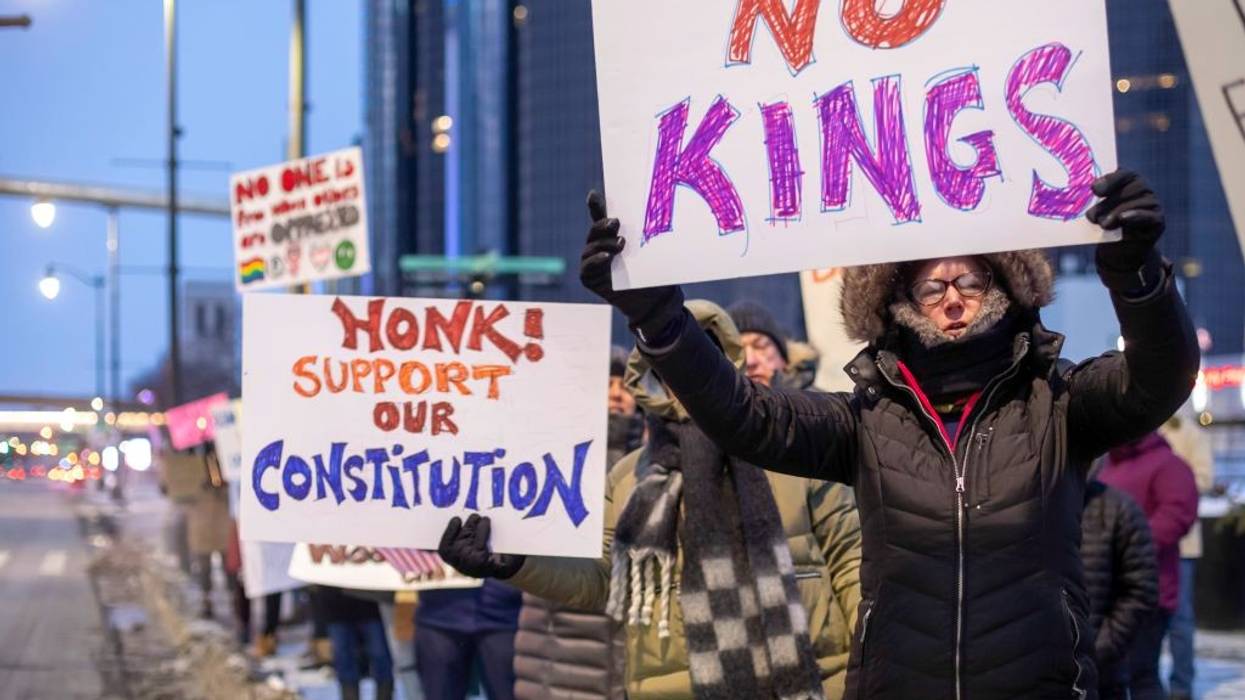
"The cost of our groceries, our utility bills, our healthcare—all of it is shaped by the people we elect and the decisions they make, which is why our participation matters," said two coalition members.
"On October 17th, No Kings: Vote Early will show the billionaire elites attempting to destroy our country that We the People have the power by mobilizing turnout to make our elections too big for the evils of fascism and oligarchy to rig," according to Sarah Parker, a spokesperson for the 50501 movement.
The movement is part of the No Kings Coalition that has held a trio of protests across the United States since President Donald Trump returned to power last year.
Now, with the midterm elections less than two months away, the coalition is planning a fourth day of action. Parker, who's also executive director of Voices of Florida Fund, declared Tuesday that "the people, united, will never be defeated."
The first round of protests was held in June 2025, on Trump's birthday. The ACLU's chief political and advocacy officer, Deirdre Schifeling, said at the time that "No Kings is really about standing up for democracy, standing up for people's rights and liberties in this country, and against the gross abuse of power that we've seen consistently from the Trump administration."
As with those first demonstrations, millions of people took to US streets again last October. Then, Lisa Gilbert, co-president of the consumer advocacy group Public Citizen, told Common Dreams that "what we're seeing from this administration is authoritarian slip. We are seeing them attack judges, attack nonprofits, trying to attack the media, stifle First Amendment protected speech, and arrest sitting members of Congress for doing their oversight" of US Immigration and Customs Enforcement (ICE).
The third action, in March, followed ICE's deadly invasion of Minnesota's Twin Cities, and Trump launching his illegal war on Iran. The three themes of those demonstrations, said Indivisible co-executive director Leah Greenberg, were "no kings, no ICE, no war."
Her co-executive director, Ezra Levin, said Tuesday that "since the first No Kings in June of last year, millions of people have demonstrated they are not afraid and they will not bow to any would-be American king. We've sent that message loud and clear—but we're not just sending a message with this next No Kings."
"We're taking back power for the people using our constitutional right to organize and our constitutional right to vote," Levin stressed. "While corrupt politicians and elected officials line their pockets, families across America are struggling to put food on the table and gas in the car. No Kings: Vote Early is about making sure every eligible voter has a plan to vote, knows their options, and is ready to make their voice heard."
Schifeling, from the ACLU, noted that "this year, voters are facing coordinated efforts from their own government to make it harder for eligible voters to vote and have their vote counted. That's why this next chapter of No Kings is focused on encouraging all voters to make a plan to vote as early as possible."
"In a democracy, elected officials are supposed to be accountable to their constituents; voting is one of the best ways to ensure they are," she continued. "No Kings will be on the ground in communities across the country making sure that all eligible voters can and do vote."
Public Citizen's Gilbert said that "the importance of as many people as possible voting early cannot be overstated."
"Early voting can make the difference between voting and not voting for people who are traveling, who are working on Election Day, who need options for childcare while voting, and more," she highlighted. "Voting is democracy in action at a time when authoritarianism and oligarchy are looming large, and standing together to cast our vote is one of the most patriotic things we can do right now."
In addition to Trump's authoritarian policies, US voters are contending with high prices tied to the president's policies, from the Iran War to his legally dubious tariffs. Cliff Albright and LaTosha Brown, co-founders of Black Voters Matter Fund, noted that "the cost of our groceries, our utility bills, our healthcare—all of it is shaped by the people we elect and the decisions they make, which is why our participation matters."
"America belongs to the people—not to kings, billionaires, or politicians," Albright and Brown emphasized.
Other coalition members include the American Federation of Teachers, MoveOn, State Voices, and Voto Latino, whose executive director, Beatriz Lopez, vowed that "on October 17th, we will show up, vote early, and vote like our future depends on it because American democracy has no kings."
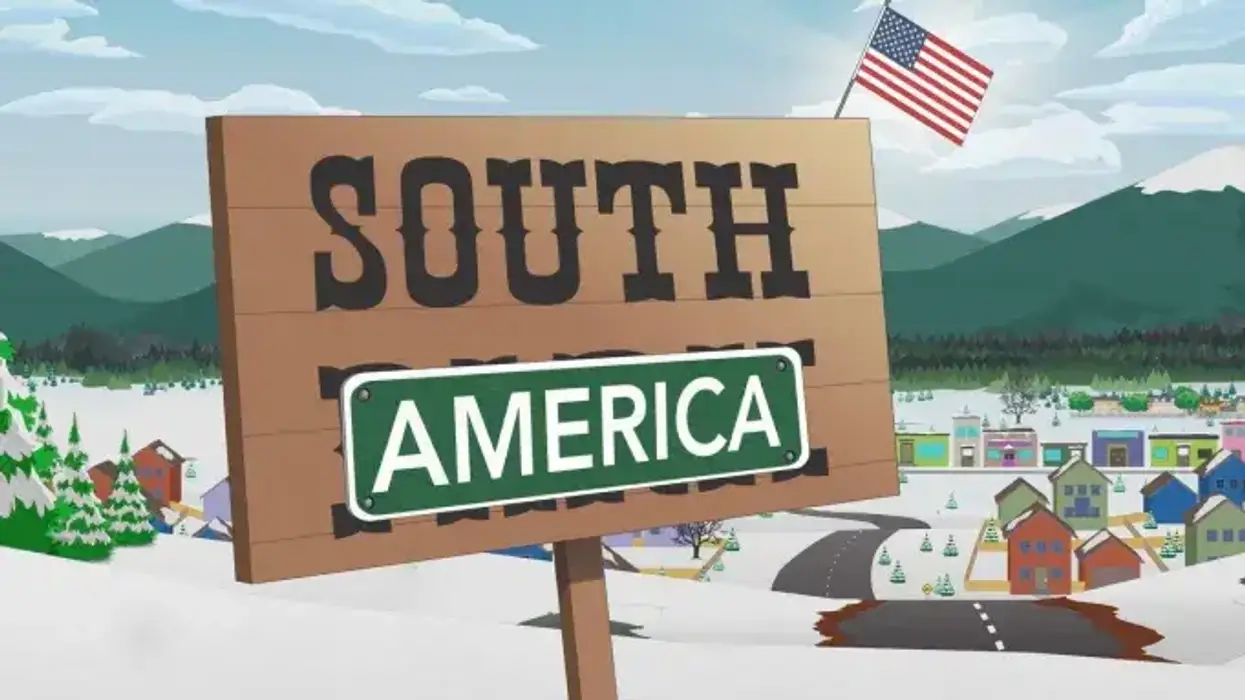
The creators of the long-running animated show quipped that the move was "inspired by the bravery and patriotism of Apple and Google," which complied with the president's renaming requests.
For 28 seasons, viewers of one of history's most iconic animated television shows were greeted with the twangy, dissonant strains of a Primus-penned theme song with lyrics beginning, "Going down to South Park, gonna have myself a time." But that might be about to change.
That's because "South Park" creators Matt Stone and Trey Parker announced Tuesday that, for the Comedy Central series' 29th season, the show will be renamed "South America" in a dig at US President Donald Trump's unauthorized rechristening spree—in which the Gulf of Mexico is now the Gulf of America and Lake Ontario is Lake America—as well as the complicity of tech titans like Google and Apple that comply with the changes.
“Inspired by the bravery and patriotism of Apple and Google, we are changing the name of South Park to SOUTH AMERICA,” Parker and Stone said in a statement. "We especially want to thank our parent company Paramount—a Skydance Capitulation.”
In addition to renaming the Gulf of Mexico and Lake Ontario, Trump has floated changing the name of New Mexico to New America, a curious proposal given that both old and New Mexico—as well as everywhere from Greenland to Tierra del Fuego—are part of the Americas. He has also proposed rechristening the Strait of Hormuz the Trump Strait, even as Iran continues to control the vital waterway amid an increasingly protracted US-Israeli war of choice.
Apple and Google have adopted Trump's preferred geographic terminology on their mapping platforms, giving Parker and Stone an irresistible opportunity to lampoon both the president and the companies' obsequiousness.
It's far from the first time that "South Park" has turned Trump into a punch line. Recent episodes have reportedly incensed the president and some of his senior officials, including the Emmy-winning “Sermon on the Mount,” in which a comically under-endowed Trump has a romantic affair with Satan.
Last year, "South Park" went after both Trump and its own corporate parent after Paramount agreed to a $1.5 billion streaming deal with Parker and Stone. The season premiere depicted Trump suing South Park residents over protests, while the episode also mocked media organizations and corporations cowering in fear of presidential retaliation.
Paramount Skydance—whose CEO David Ellison is a Trump ally—could become an even larger media conglomerate if its Federal Communications Commission-approved $111 billion merger with Warner Bros. Discovery moves forward. A trial is scheduled for March.

"In utter defiance of the Constitution, President Trump is attempting to use the Postal Service to decide who can and cannot receive a ballot just days before mail-in voting begins in some of the states," said Rep. Jamie Raskin.
With the midterm elections less than two months away, more than 250 current and former Members of Congress came together on Tuesday to pressure the US Supreme Court to block Republican President Donald Trump's March executive order on voting and its resulting United States Postal Service rule.
All 47 members of the Senate Democratic Caucus, over 90% of the party's members in the House of Representatives, and 15 former GOP lawmakers submitted an amicus brief to the nation's top court—whose right-wing supermajority includes three Trump appointees—just two days after the administration asked the justices to pause a judge's ruling that blocks parts of the USPS rule.
The 261 Americans behind the brief "took an oath to uphold and defend the Constitution of the United States—including its guarantee of the separation of powers," and they "have a particular interest in defending the institutional role of the legislative branch under Article I of the Constitution and in vindicating the long-settled principle that the Constitution commits ultimate regulatory authority over federal elections to Congress," the filing states.
"The Constitution does not contemplate the executive branch acting unilaterally to assert power over federal elections," the document continues. "Yet that is what the order and final rule do. The district court correctly concluded that respondents are likely to succeed on the merits of their claims that USPS lacked authority to issue the final rule, that the final rule unconstitutionally imposes mail-ballot requirements on the states, and that the final rule unconstitutionally bars noncompliant state and local election officials from using USPS to mail ballots at all."
"The order and final rule unconstitutionally infringe on Congress' authority under the elections clause and the postal clause and unlawfully direct federal agencies to act beyond—and in conflict with—what Congress has clearly authorized by law," the filing asserts, urging the high court to deny Trump's request to allow the new USPS policy for the midterms.
The Supreme Court last month cleared the way for Trump's order by concluding that the Democratic state attorneys general—just one of the coalitions challenging the order—had sued too early. However, the justices did not weigh in on the legality of the order or the rule, and in the wake of USPS publishing its policy, the legal battles have continued.
The lawmakers' brief came a day before Justice Ketanji Brown Jackson's deadline for new filings and as the Department of Justice—which is fighting District Judge Indira Talwani's preliminary injunction that blocks USPS from enforcing the rule—argued to the US Court of Appeals for the 1st Circuit that the policy is "modest" and lawful.
In a statement announcing the brief, Senate Minority Leader Chuck Schumer (D-NY) pointed to the drawn-out legal battles over the order and related rule, saying that "Donald Trump is once again asking the highest court in the land to silence voters and destroy the precious integrity of the American electoral process."
"Mail-in voting is proven safe and secure, and Trump's continued efforts to obstruct America's free and fair elections are blatant, unconstitutional attempts at interfering with the November midterms," he declared. "Trump's message to the American people is clear: He isn't worried about voter fraud, he's afraid of voter accountability. I urge the court to uphold the Constitution and reject Trump's baseless attempt at poisoning our democracy."
On the Senate side, in addition to Schumer, the brief is led by the ranking members of three key panels: Sens. Alex Padilla (D-Calif.) of the Committee on Rules and Administration, Dick Durbin (D-Ill.) of the Judiciary Committee, and Gary Peters (D-Mich.) of the Homeland Security and Governmental Affairs Committee.
“The law is clear: States and Congress have authority over our elections—not the president and certainly not the Postal Service. Protecting the right to vote-by-mail is critical to ensure every eligible voter can make their voices heard in the November midterm elections and in future elections," said Padilla.
"Despite the Trump administration's attempts to eliminate vote-by-mail and suppress voter participation, voting by mail remains one of the safest and most secure ways to vote, especially for service members, rural voters, and Americans living abroad," he noted. In fact, despite trying to strip millions of Americans of the right to mail their ballots, even Trump has repeatedly voted this way, including in Florida's August Republican primary.
In the lower chamber, the brief was spearheaded by Committee on House Administration Ranking Member Joe Morelle (D-NY) along with the co-chairs of Democrats' Litigation Task Force: Assistant Leader Joe Neguse (D-Colo.), Judiciary Committee Ranking Member Jamie Raskin (D-Md.), and Oversight Committee Ranking Member Robert Garcia (D-Calif.).
Like his colleagues, Raskin—a constitutional scholar who led Trump's historic second impeachment after the president's supporters stormed the US Capitol on January 6, 2021—stressed that "the Constitution is clear that the states and Congress make the rules for federal elections, not the president."
"Yet, in utter defiance of the Constitution, President Trump is attempting to use the Postal Service to decide who can and cannot receive a ballot just days before mail-in voting begins in some of the states," he said. "This is a naked power grab by a historically unpopular president—who himself regularly votes by mail—to inject confusion and chaos into our elections in a last-ditch effort to keep his party in power."
"It will not work," Raskin added. "I'm proud to stand with a strong bipartisan, bicameral group of current and former colleagues in urging the court to continue rejecting this lawless election interference."
"Trump and his regime have made corruption impossible to ignore, so Democrats should connect the administration’s self-dealing and abuses of power to the economic pressures voters are feeling."
Two leading progressive organizers on Tuesday argued that Democratic candidates don't need to choose between campaigning on affordability issues or against President Donald Trump's unprecedented corruption.
Ezra Levin and Leah Greenberg, co-executive directors of Indivisible, wrote in an op-ed published by The Guardian that a recent survey conducted with Lake Research Partners finds that the issues of affordability and government corruption are deeply intertwined.
"Affordability is essential," wrote Levin and Greenberg, "but our polling shows that the case for lowering costs becomes more compelling when paired with a clear commitment to take on corruption and special interests."
The reason for this, the organizers said, is that majorities of Americans are concerned about politicians rigging the political system to benefit themselves and about corruption costing taxpayers money.
Additionally, wrote Levin and Greenberg, vows to lower costs are more credible with voters when they come with concrete plans to take on corrupt corporate interests that are blamed for gouging consumers.
On top of that, they argued, "Trump and his regime have made corruption impossible to ignore, so Democrats should connect the administration’s self-dealing and abuses of power to the economic pressures voters are feeling."
In sum, the organizers emphasized that combining messages about affordability and corruption is "more persuasive than either message alone."
The Indivisible leaders' arguments echo those made by Dustin Guastella, director of operations for Teamsters Local 623 in Philadelphia, and Erica Etelson, president of the Rural Urban Bridge Initiative, who advocated for what they described as "kitchen-table populism" in an op-ed published in The Guardian last month.
Like Indivisible, Guastella and Etelson's organizations commissioned a poll conducted by Verasight testing progressive messages for the 2026 midterms, and came away with similar conclusions.
"The top-performing messages we tested have a simple formula," they wrote. "They promise to bring costs down, make the biggest corporations pay their fair share, and crack down on the people who game the system. Ultimately, they tell a simple story: Hard work should pay off."
With midterm elections less than two months away, there are signs of wide dissatisfaction with the state of the US economy.
Elections analyst Charlie Cook told The New Republic in an interview published Tuesday that he's seeing data indicating that worries about the economy are giving Democrats openings in places that would have once been solidly Republican.
The biggest driver of this economic anxiety, said Cook, appears to be Trump's illegal war with Iran, both because it broke a key 2024 campaign promise about no new wars in the Middle East, and because it has raised the price of countless consumer goods, including diesel fuel and fertilizer, which are both vitally important for US farmers.
“I mean, you take Iran—after promising no more wars and all that—but fuel, fertilizer, no more wars, you take tariffs,” Cook said, “and all this goes to the heart of his base, of, you know, small-town, rural, farm, all of that.”
“To have the people that are generally the most enthusiastic for you uniquely hurt,” Cook added, “now, that’s new territory.”

One group said that the proposal "puts poor and working families that rely on HUD assistance at greater risk of danger, displacement, and homelessness."
Housing and environmental advocates on Tuesday condemned the Trump administration’s planned rollback of flood protections for federally funded housing, warning that the move will leave low-income households exposed to increasingly severe climate-driven flooding while shifting more costs to taxpayers.
In July, the US Department of Housing and Urban Development (HUD) proposed rescinding key portions of the Federal Flood Risk Management Standard (FFRMS), a Biden-era policy that required federally financed projects in areas prone to flooding to account for current and future inundation risks.
Proponents of the move, which would strip a layer of federal flood requirements, argue that local governments know their flood conditions better than Washington bureaucrats.
However, the National Housing Law Project (NHLP), a San Francisco-based advocacy group, warned Tuesday that the proposal "puts poor and working families that rely on HUD assistance at greater risk of danger, displacement, and homelessness by reducing notification and mitigation requirements for homes that are vulnerable to flooding."
NHLP called the move "part of the Trump administration’s attempt to dismantle the government programs that keep people housed, safe, and healthy."
On Tuesday, NHLP submitted a comment to HUD noting that “flooding events have become more frequent and widespread, and put the health, safety, and livelihood of low-income families at risk."
"Tenants displaced from federally subsidized housing face an even more acute crisis, because they often endure temporary or permanent loss of their housing assistance,” the group added. “Due to the personal and societal harm of extreme flooding events, HUD should work toward increasing the resilience of HUD-assisted properties. This proposed rule does the opposite.”
The proposed FFRMS rescission is part of the broader regulatory rollback that began during President Donald Trump's first term. In 2017, Trump repealed Obama-era executive orders that had updated the federal flood standard for the first time since the Carter administration and established regulations meant to ensure that federally funded infrastructure projects were climate-resilient.
In March, Trump issued an executive order directing federal agencies to identify and eliminate regulations deemed unnecessarily costly or burdensome to housing construction.
Responding to HUD's proposed FFRMS rollback, Liz Zepeda, federal regulatory director at the Virginia-based legal advocacy group Southern Environmental Law Center, said in July that “it’s discouraging to see the federal government ignore climate science and put some of our most vulnerable communities at greater risk, especially as we head into hurricane season."
"Reckless deregulation like this is why we need Congress to step up and pass reasonable emergency management policies,” Zepeda added.
In 2021, an NPR investigation revealed that, dating back to at least the Obama administration, the federal government sold homes it had previously purchased after repeated flooding to new buyers—often without adequately informing them about the properties’ flood histories and risks.
Historical data compiled by the National Oceanic and Atmospheric Administration show 45 billion-dollar flooding disasters between 1980-2024 that caused an estimated $215 billion in combined damages, adjusted for inflation. As the climate emergency worsens, the frequency and severity of such flooding have increased dramatically, from an average of 3.3 billion-dollar disasters in the 1980s, to 6.7 in the 2000s, to 23 in the 2020s.
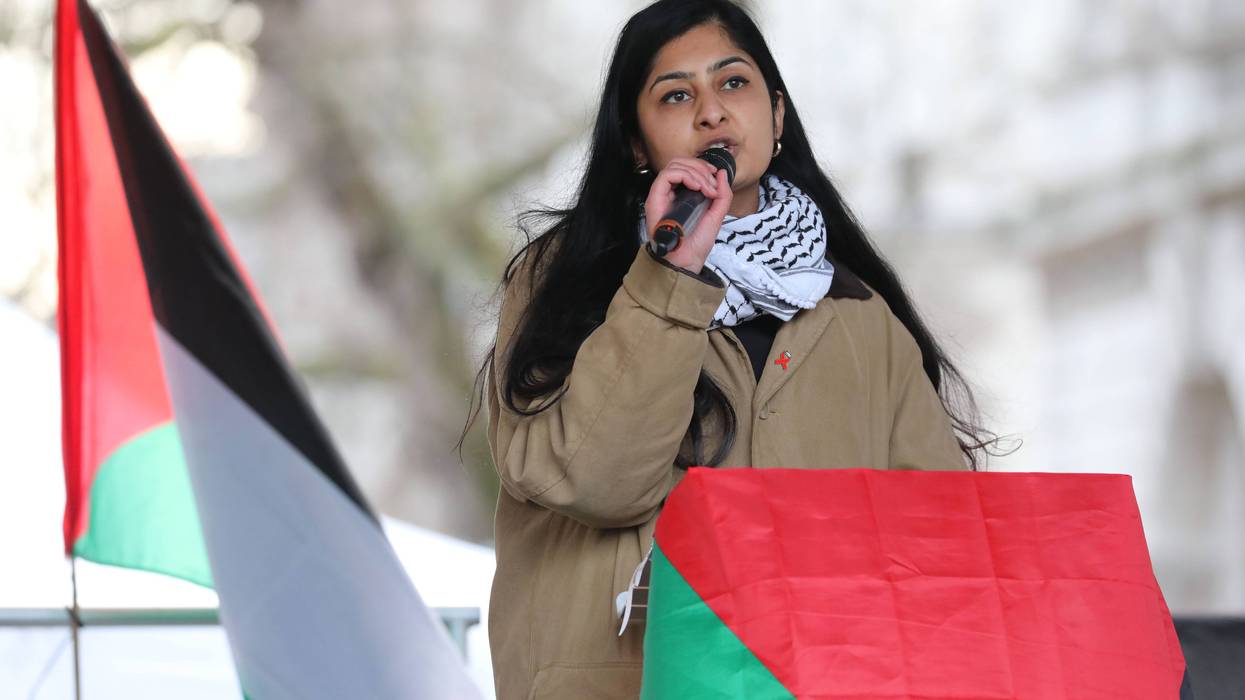
"I will not be intimidated into silence," said MP Zarah Sultana. "If anything, this ban only strengthens my resolve to keep speaking out."
Zarah Sultana, a member of the UK Parliament, said she won't stop speaking about the rights of Palestinians after Israel banned her from entering the country on Tuesday.
"Given that this is a fascist government presiding over genocide, apartheid and an illegal occupation, I’ll wear it as a badge of honor," she said in a post to X. "I will not be intimidated into silence. I will continue to speak out against Israel’s genocide and against the UK’s complicity. If anything, this ban only strengthens my resolve to keep speaking out."
Sultana, who represents Coventry South and is a co-founder of the left-wing Your Party, was one of 11 members of Parliament whom Israel announced it was blocking from entry in retaliation after the UK joined Canada, France, and other nations to announce an import ban on goods from Israeli settlements in the West Bank, which are considered illegal under international law.
Following a year of record violence against Palestinians in the territory, UK Foreign Secretary Ed Miliband said the import ban was in response to the "ethnic cleansing of Palestinians in areas of the West Bank—perpetrated by settler terrorists."
Israel has reacted with fury at the move, closing the British consulate in East Jerusalem, which handles relations with Palestinians in East Jerusalem, the West Bank, and Gaza.
Also banned from the country are UK Labour MPs Diane Abbott, Richard Burgon, John McDonnell, and Naz Shah; Green MPs Siân Berry, Ellie Chowns, Carla Denyer, Adrian Ramsay, and Hannah Spencer; as well as Jeremy Corbyn, who led the Labour Party from 2015-20 before co-founding Your Party with Sultana in 2025.
Remarking on his and his colleagues' ban from the country, Corbyn said Israel's treatment of Palestinians was "the real scandal."
"I have visited all parts of Palestine on several occasions, where I have witnessed the horrors of occupation, as well as the resilience and humanity of the Palestinian people," Corbyn wrote on X. "They are the ones who suffer from Israel's apartheid. It is their freedom which is egregiously curtailed, alongside thousands of Palestinian refugees who are denied the right of return."
He added: "As the world wakes up to the genocide in Gaza, it is shocking that Israel continues to deny entry to UN investigators and international journalists. Israel doesn't want the world to see what it is doing—but we can never give up in our attempts to expose the truth."
Israel also banned Fahad Ansari, a lawyer who has represented Hamas’ political wing in court in the UK and—like Sultana—said on X, “I am neither British nor an MP but do take this as a badge of honor (although pretty sure I’m already a persona non grata in the apartheid state).”

"He created a fictitious event featuring himself, who did nothing, as the hero of 9/11."
While Republicans express "offense" at plans for New York City Mayor Zohran Mamdani to attend September 11 remembrances this week due to his Muslim faith, President Donald Trump provoked outrage on Tuesday when he told what seems to be a fabricated story about his heroism following the terrorist attack.
Before a crowd that included over 100 first responders, Trump described being at ground zero with a construction crew he said he'd deployed to help with the aftermath of the attack. He described walking beneath the US Steel building, now known as One Liberty Plaza, which was believed to be at risk of collapsing.
“The United States Steel Building was creaking, really creaking, and we thought it was going to fall down. The truth is, it creaked a lot. It creaked. It still creaks, but it never came down,” Trump recalled. “And I'll never forget two firemen. We thought it was coming down on top of us, and two firemen, big, strong guys—and I'm not the smallest guy in the world—they grabbed me under the arm, said, ‘Got to get out of here!’ And they literally lifted me up."
“This is not easy to do. I'm big," Trump continued. "They lifted me up, and they started running with me. I said, ‘Fellas, I can run myself,’ but they were amazing. But they thought it was coming down. It didn't come down."
Trump has claimed on multiple occasions to have been present in the immediate aftermath of the attacks and has told a version of the same story before, including on the 2016 campaign trail.
But many aspects of the tale are in doubt or contradicted by both the public record and others known to be involved in the recovery.
Trump said he saw the attacks happen from his office in Trump Tower, about four miles away from the World Trade Center. In an interview with WWOR-TV that day, he infamously boasted (incorrectly) that he now had the tallest building in downtown Manhattan after the collapse of the World Trade Center.
While Trump himself was documented on September 13 to have been a few blocks from ground zero and said he'd visited the site, his claim to have sent over 100 of his construction workers in the immediate aftermath of the attack and to have "helped a little" himself has been disputed.
In 2019, Richard Alles, a New York City Fire Department battalion chief on the day of the attack, who said he was on the scene about 20 minutes after the second tower collapsed, told PolitiFact that he had no knowledge of Trump sending a crew of men to help with the wreckage.
“I was there for several months—I have no knowledge of his being down there," Alles said, adding that if Trump had sent a crew of 100 workers, "there would be a record of it. Everybody worked under the direct supervision of the police and fire department and the joint commander for emergency services. Is there a chance he was ever down there by himself and I didn’t know it? It’s possible, but I know of no one who ever witnessed him there.”
Other outlets, including The Associated Press and The Washington Post, said they contacted Trump's 2016 campaign to ask for details about his activity following the attacks, but received no response.
Neither of the two firefighters who supposedly carried Trump to safety has ever publicly come forward to discuss their run-in with the famous New York developer, and Trump did not mention the incident during interviews at the time.
Trump has a history of lies surrounding 9/11, including that he saw "thousands" of Muslims "cheering" in Jersey City as the towers fell and that he personally "predicted" the attacks in one of his books.
He has also been found to have misled the public about his philanthropy related to the tragedy: In 2001, he pledged to donate $10,000 to a recovery fund for victims and first responders, which the city comptroller's office ultimately found was never delivered. More than 15 years later, his foundation gave $100,000 to the National September 11 Memorial and Museum.
His business empire also received $150,000 from a post-9/11 recovery program meant for businesses affected by the attacks, which Trump has claimed was reimbursement for allowing victims to use his building at 40 Wall Street to take shelter. But the application made no mention of shelter and instead stated that the request was for compensation for lost rent, cleanup, and repairs following the attacks, according to a 2016 investigation by the New York Daily News.
Journalist Ron Filipkowski described Trump's tale about the firefighters as yet another instance of what he's called "stolen valor," but was astonished by its specificity.
"I know he's lied about his non-role in 9/11 rescue and recovery before, but never this level of detail," he said. "Trump could have made the ceremony with 9/11 first responders today about the many heroes who died attempting to rescue people and others who risked their lives and long-term health. But instead, he created a fictitious event featuring himself, who did nothing, as the hero of 9/11."
Making it more offensive, other commentators said, was the double standard from Republicans, like former New York City Mayor Rudy Giuliani, who have claimed "offense" at the fact that Mamdani, as a Muslim, was planning to attend 9/11 memorials on Friday.
"The people mad about the Mayor of New York attending the 9/11 event must be ENRAGED that Trump just lied about being at ground zero on 9/11," wrote Tim Fullerton, a former digital strategist for the Obama administration, on X. "This is all about honoring the victims and not just to score points. Right???"
Mamdani on Tuesday released around 170,000 pages of records indicating that Giuliani's administration had misled New Yorkers about the severity of air quality risks near ground zero after the attacks.

"Come on down! All this could be yours... except the price is WRONG because of Trump's tariffs."
Modeled on the familiar logo of a long-running daytime game show, US Senate candidate Abdul El-Sayed displayed a hand-drawn picture of a dollar sign along with the words "The Price Is Wrong" in a video posted to his official social media accounts Tuesday—and offered Michigan voters the chance to play his version of the game, inspired by President Donald Trump's policies.
"This is probably true of everything you're buying right now," said El-Sayed, who is running against former Republican Rep. Mike Rogers after winning the Democratic primary election last month, as he pointed to the handmade sign. "We're going to ask Michiganders about just how much everything has gotten more expensive over the last year because of Trump's tariffs and his war in Iran."
First up, a voter learned that a container of 100 Tide detergent pods, which now costs nearly $30, cost just under $22 a year ago at this time—before Trump joined Israel in attacking Iran, leading to the retaliatory measure of Iran's closure of the Strait of Hormuz and the resulting spike in oil and gas prices.
"That's almost a 30% increase in price for the same Tide pods," said El-Sayed.
A package of Target brand toilet paper cost $6 last year, and another voter guessed it's currently marked at $8.50—off by 50 cents, said El-Sayed, who revealed the package would now cost $9 at a Target store in Michigan.
Target-branded protein powder cost $40 last year, and Trump's policies have raised the price to $54 this year, said El-Sayed, while a one-pound bag of coffee beans from Tim Hortons is nearly a dollar more than it was last year, priced now at $9.32.
El-Sayed released the video as Canada imposed its new retaliatory tariffs targeting about $20 billion in US imports, in response to the 50% tariffs Trump announced late last month on a range of Canadian goods including dairy products, paper, and cement.
According to a June poll by Epic-MRA, 63% of Michiganders—including 35% of Republicans—opposed Trump's tariffs on Canadian goods, which he first announced last year along with levies on numerous other countries that he said had treated the US unfairly in trade.
About three-quarters of voters in that poll said they thought Trump's tariff policy was fueling higher prices for everyday goods.
The Midwest Economic Policy Institute found in July that due to Michigan's shared border with Canada and the close ties shared between the auto industries in Michigan and Ontario, Michigan households were paying as much as $3,200 in extra costs due to Trump's tariffs—about 142% more than the rest of the US.
“Donald Trump is launching this trade war for his own vanity, and he’s asking Michigan families to pay the price,” El-Sayed said in a statement last month. “Trump has been failing Michigan through these chaotic tariffs and bad trade deals for far too long, and Mike Rogers won’t do anything but rubber-stamp them.”
At Michigan Advance, columnist Rick Haglund warned last month that Michigan would likely "pay a steep price for Trump’s reckless actions."
"Canada is Michigan’s largest trading partner with about $70 billion in goods flowing across their borders in 2024, the latest available data," said Haglund. "Thousands of jobs are connected to Michigan auto parts manufacturers, farmers, and others who export goods to Canada."
Trump's unprovoked war on Iran has also been linked to spiking diesel prices, which is driving up transportation costs—and as a result, consumer prices—for many everyday goods like those featured in El-Sayed's mock game show.
"Americans are paying way more for everyday goods they have to buy at the grocery store, all because of this insane war that is spiking the price of gas, spiking the price of diesel, spiking the price of your everyday goods," said El-Sayed. "And now, a trade war that's expanded with Canada."
"Americans are sick and tired of playing 'The Price Is Wrong,'" he added. "I think it's time for us to play 'The Price Is Right.'"
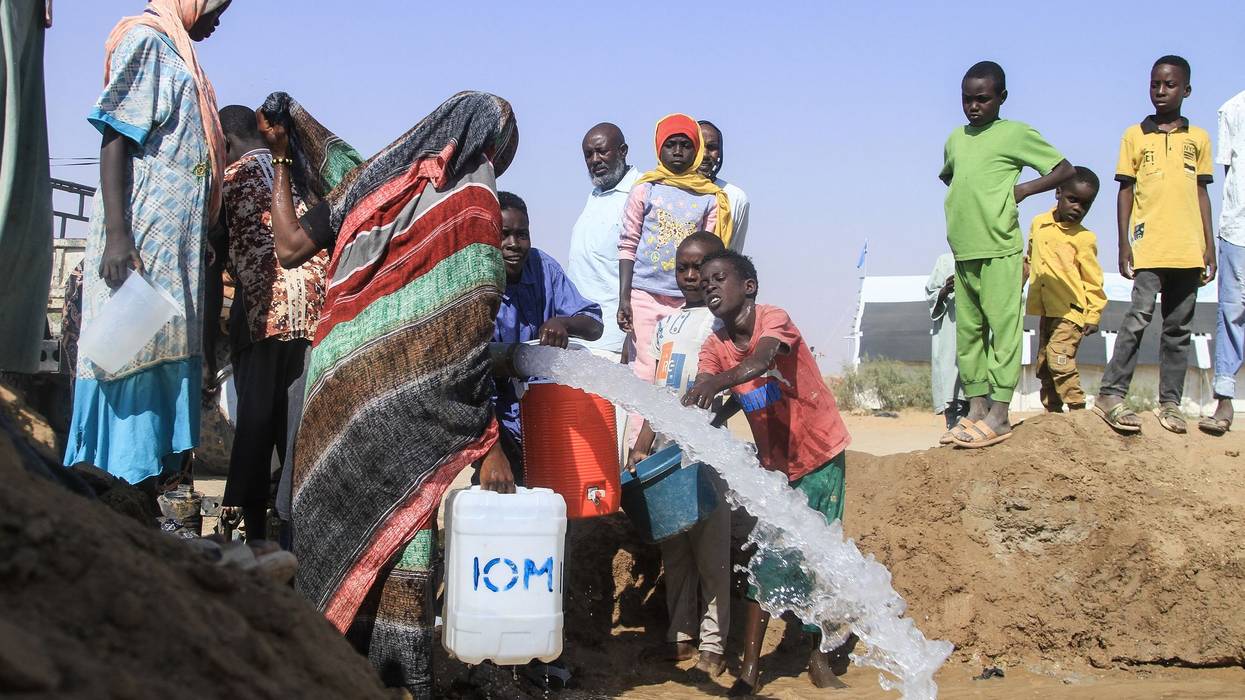
"War is driving Sudan’s needs; funding cuts are shrinking the response."
The renowned humanitarian group Doctors Without Borders said Tuesday that the Trump administration's destruction of the US Agency for International Development has contributed to the collapse of the war-torn nation's healthcare system, forcing clinics to close and leaving millions of people without access to lifesaving treatment.
The organization, known internationally as Médecins Sans Frontières (MSF), said the closure of USAID last year at the behest of President Donald Trump and the world's richest man, Elon Musk, left many healthcare providers in Sudan "unable to find alternative funding to continue providing services," leaving facilities with no option but to shut down in the midst of a worsening humanitarian catastrophe.
"War is driving Sudan’s needs; funding cuts are shrinking the response,” Muhammad Ibrahim, MSF's head of mission in Sudan, said in a statement on Tuesday. “MSF’s work in Sudan is privately funded. But when funding disappears from other health services, clinics close, patients have fewer places to go, and pressure shifts to the facilities that remain, including ours.”
MSF said its hospital in Um Rakuba, a refugee camp in eastern Sudan, is now "the only lifeline left" for locals and refugees.
"The cuts here go well beyond healthcare," emphasized Fabrizio Locuratolo, MSF humanitarian affairs manager. "Food rations are shrinking and protection programs are being dismantled, pulling away the last safety nets and leaving refugees completely exposed.”
The dismantling of USAID by Musk's wrecking crew at the so-called US Department of Government Efficiency has already killed hundreds of thousands of people—most of them children—according to experts tracking the impacts on humanitarian aid around the world. Musk and the Trump administration have continued to deny that the aid cuts have killed any children.
A study published in The Lancet earlier this year estimated that the gutting of USAID—whose surviving programs were mostly transferred to the US State Department—could result in more than 14 million additional deaths by the end of the decade. The US Department of Agriculture took over USAID's Food for Peace program—and subsequently omitted Sudan from the list of countries that would receive shipments of US grain.
MSF said Tuesday that "just as health providers faced the impending removal of US support, many European governments also reduced their assistance to people in Sudan."
The results have been horrific. MSF said that "malaria and malnutrition cases are already rising despite limited rainfall, ahead of the peak of the rainy season—and we expect numbers to increase as the rain intensifies."
"In August, our teams admitted 191 children under five with severe malnutrition to our inpatient feeding center, and nearly 22% also tested positive for malaria," the group said Tuesday. "The UN reports that 825,000 children under five are expected to suffer severe acute malnutrition and 19.5 million people faced crisis-level hunger earlier this year. Yet the UN’s $2.87 billion response plan is barely 41 per cent funded, and 37 per cent of Sudan’s health facilities are estimated to be completely out of service."
"As world leaders gather at the UN General Assembly, governments and institutional donors must protect funding for essential health services in Sudan and provide flexible transitional financing where facilities are at risk of closure," the organization pleaded.