SUBSCRIBE TO OUR FREE NEWSLETTER
Daily news & progressive opinion—funded by the people, not the corporations—delivered straight to your inbox.
5
#000000
#FFFFFF
To donate by check, phone, or other method, see our More Ways to Give page.
Daily news & progressive opinion—funded by the people, not the corporations—delivered straight to your inbox.
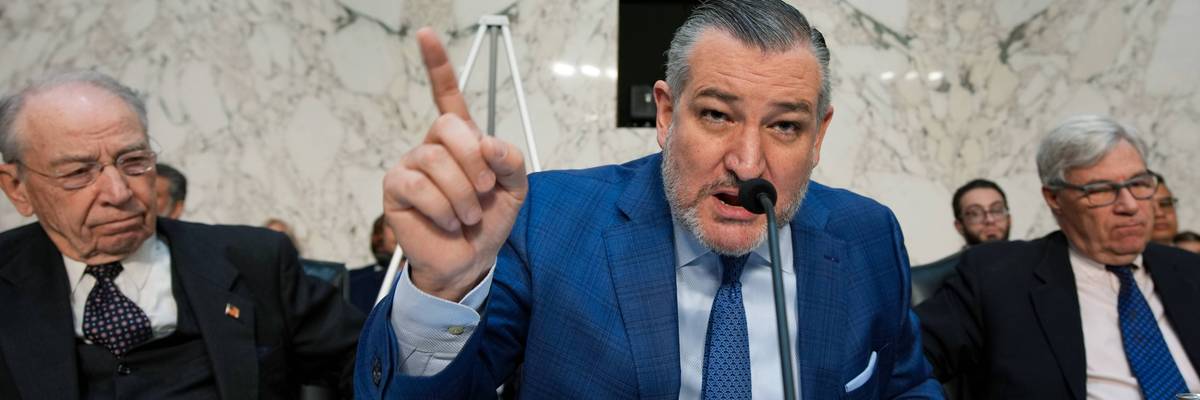
US Sen. Ted Cruz (R-Texas) speaks during a March 24, 2026 Senate Judiciary Committee hearing in Washington, DC.
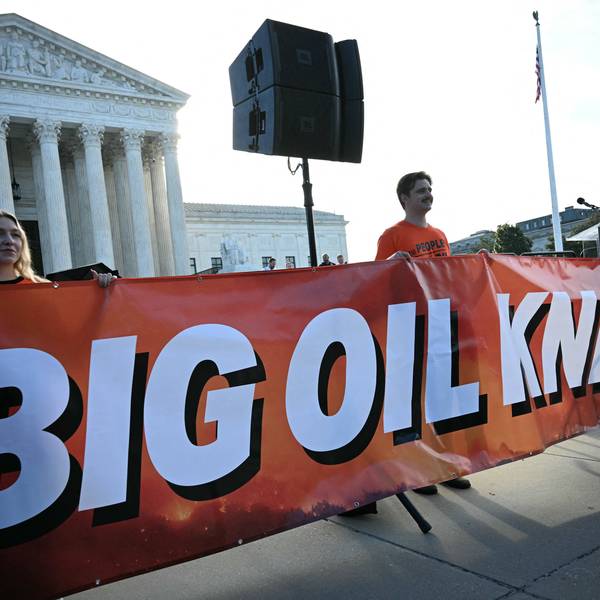
“Such corporate impunity would twist the knife of the climate crisis that is already directly harming people across the country," said one campaigner.
Green groups warned Friday that Big Oil-backed Republican legislation would give fossil fuel companies immunity from laws or lawsuits aimed at holding them accountable for their role in causing the climate emergency.
On Thursday, Sen. Ted Cruz (R-Texas) introduced a bill co-sponsored by Sens. Ted Budd (R-NC), Tom Cotton (R-Ark.), and Mike Lee (R-Utah) that, if passed, would "prohibit liability against those engaged in the mining, extraction, production, refinement, transportation, distribution, marketing, manufacture, or sale of energy for damages or injunctive or other relief from the use of their products, and for other purposes."
Congresswoman Harriet Hageman (R-Wyo.) on Friday introduced the House version of the legislation, dubbed the Stop Climate Shakedowns Act of 2026, "to protect American energy from leftist legal crusades punishing lawful activity," as her office put it.
🚨After months of fossil fuel industry lobbying, Republican lawmakers have introduced federal legislation that would give oil and gas companies immunity from any laws or lawsuits that aim to hold them accountable for their role in the climate crisis. Time to get loud: 📣 NO IMMUNITY FOR BIG OIL 📣
[image or embed]
— Center for Climate Integrity (@climateintegrity.org) April 17, 2026 at 12:30 PM
If passed, the legislation would ban retroactive climate liability lawsuits, dismiss any such litigation pending upon the law's enactment, void all state energy penalty laws, and affirm that the federal government maintains exclusive authority and jurisdiction over the regulation of greenhouse gas emissions and other interstate environmental standards.
Other Republican-controlled states including Tennesseee and Utah have recently passed such legislation, and others—including Iowa, Louisiana, and Oklahoma—have introduced similar bills.
“This blatant championing of some of the world’s largest polluters shows how far certain elected officials will go to undermine democratic policymaking and deny people and communities access to justice," Kathy Mulvey, climate accountability campaign director at the Union of Concerned Scientists, said Friday.
"No company should be above the law, especially those that planned, funded, and continue to engage in a coordinated decadeslong campaign to protect their profits by deceiving the public and blocking climate action," Mulvey continued.
"Such corporate impunity would twist the knife of the climate crisis that is already directly harming people across the country," she added. "Congress must not capitulate to wealthy special interests. Communities deserve the right to hold polluters accountable for the deadly and costly harms they are causing.”
Former Democratic Washington Gov. Jay Inslee said in a statement that “every elected official who cares about the interests of their constituents more than those of corporate polluters should oppose this disgraceful proposal."
"Juries are a fundamental bastion of democracy, and it’s beyond dangerous to allow powerful and wealthy corporations to shield themselves from ever having to face jurors’ judgment," he added.
The Center for Climate Integrity said the bill "would put Big Oil above the law."
“Big Oil companies have raked in massive profits at the pump while lying to the American people about the catastrophic harm of their products, and now they want to deny Americans their rightful day in court and stick taxpayers with the bill for the mess they made," Center for Climate Integrity president Richard Wiles said Friday. "If fossil fuel companies have done nothing wrong, why do they need immunity?”
While these and other climate advocates denounced the bill, their congressional sponsors—and those lawmakers' fossil fuel industry campaign donors—applauded its introduction.
“Energy security is national security, and we will not self-sabotage our critical industries with a cascade of costly lawsuits and extreme penalties that jeopardize American drilling,” Hageman said in a statement. “America’s energy producers should be protected from the dangerous legal precedent that would be set by the retroactive punishment of lawful activity.”
American Fuel & Petrochemical Manufacturers president and CEO Chet Thompson and American Petroleum Institute president and CEO Mike Sommers said in a joint statement, "We thank Sen. Cruz and Rep. Hageman for introducing legislation to stop a growing patchwork of state laws and lawsuits that threaten American energy and risk raising costs for consumers.”
“These efforts to retroactively penalize companies for lawfully meeting consumer demand are misguided and counterproductive," the lobbyists added. "Congress should act decisively to reaffirm federal authority over national energy policy and end this activist-driven state overreach.”
Eleven states—California, Connecticut, Delaware, Hawaii, Maine, Massachusetts, Michigan, Minnesota, New Jersey, Rhode Island, and Vermont—along with the District of Columbia and dozens of city, county, and tribal governments have ongoing lawsuits seeking to hold fossil fuel companies accountable for lying to the public about their products’ role in causing and worsening climate change.
On Friday, the right-wing US Supreme Court unanimously issued an important procedural ruling that certain environmental damage lawsuits—in this case, one challenging Chevron's destruction of coastal wetlands in Louisiana—can be moved from state to generally friendlier federal courts. This, after a jury in Plaquemines Parish ordered Chevron and two other companies to pay $744 million in damages for harming coastal wetlands, a verdict that was appealed.
The US Supreme Court's decision came as its justices prepare to hear Suncor Energy Inc. v. County Commissioners of Boulder County, a case in which the plaintiffs—three Suncor entities and ExxonMobil—are seeking to relocate a climate damages lawsuit from Colorado to federal court.
Big Oil-backed efforts to relocate cases to friendlier forums come amid wins for climate defenders, most notably Held v. Montana, a historic 2024 state court ruling in favor of youth-led plaintiffs based on the Montana Constitution's right to "a clean and healthful environment."
Dear Common Dreams reader, It’s been nearly 30 years since I co-founded Common Dreams with my late wife, Lina Newhouser. We had the radical notion that journalism should serve the public good, not corporate profits. It was clear to us from the outset what it would take to build such a project. No paid advertisements. No corporate sponsors. No millionaire publisher telling us what to think or do. Many people said we wouldn't last a year, but we proved those doubters wrong. Together with a tremendous team of journalists and dedicated staff, we built an independent media outlet free from the constraints of profits and corporate control. Our mission has always been simple: To inform. To inspire. To ignite change for the common good. Building Common Dreams was not easy. Our survival was never guaranteed. When you take on the most powerful forces—Wall Street greed, fossil fuel industry destruction, Big Tech lobbyists, and uber-rich oligarchs who have spent billions upon billions rigging the economy and democracy in their favor—the only bulwark you have is supporters who believe in your work. But here’s the urgent message from me today. It's never been this bad out there. And it's never been this hard to keep us going. At the very moment Common Dreams is most needed, the threats we face are intensifying. We need your support now more than ever. We don't accept corporate advertising and never will. We don't have a paywall because we don't think people should be blocked from critical news based on their ability to pay. Everything we do is funded by the donations of readers like you. When everyone does the little they can afford, we are strong. But if that support retreats or dries up, so do we. Will you donate now to make sure Common Dreams not only survives but thrives? —Craig Brown, Co-founder |
Green groups warned Friday that Big Oil-backed Republican legislation would give fossil fuel companies immunity from laws or lawsuits aimed at holding them accountable for their role in causing the climate emergency.
On Thursday, Sen. Ted Cruz (R-Texas) introduced a bill co-sponsored by Sens. Ted Budd (R-NC), Tom Cotton (R-Ark.), and Mike Lee (R-Utah) that, if passed, would "prohibit liability against those engaged in the mining, extraction, production, refinement, transportation, distribution, marketing, manufacture, or sale of energy for damages or injunctive or other relief from the use of their products, and for other purposes."
Congresswoman Harriet Hageman (R-Wyo.) on Friday introduced the House version of the legislation, dubbed the Stop Climate Shakedowns Act of 2026, "to protect American energy from leftist legal crusades punishing lawful activity," as her office put it.
🚨After months of fossil fuel industry lobbying, Republican lawmakers have introduced federal legislation that would give oil and gas companies immunity from any laws or lawsuits that aim to hold them accountable for their role in the climate crisis. Time to get loud: 📣 NO IMMUNITY FOR BIG OIL 📣
[image or embed]
— Center for Climate Integrity (@climateintegrity.org) April 17, 2026 at 12:30 PM
If passed, the legislation would ban retroactive climate liability lawsuits, dismiss any such litigation pending upon the law's enactment, void all state energy penalty laws, and affirm that the federal government maintains exclusive authority and jurisdiction over the regulation of greenhouse gas emissions and other interstate environmental standards.
Other Republican-controlled states including Tennesseee and Utah have recently passed such legislation, and others—including Iowa, Louisiana, and Oklahoma—have introduced similar bills.
“This blatant championing of some of the world’s largest polluters shows how far certain elected officials will go to undermine democratic policymaking and deny people and communities access to justice," Kathy Mulvey, climate accountability campaign director at the Union of Concerned Scientists, said Friday.
"No company should be above the law, especially those that planned, funded, and continue to engage in a coordinated decadeslong campaign to protect their profits by deceiving the public and blocking climate action," Mulvey continued.
"Such corporate impunity would twist the knife of the climate crisis that is already directly harming people across the country," she added. "Congress must not capitulate to wealthy special interests. Communities deserve the right to hold polluters accountable for the deadly and costly harms they are causing.”
Former Democratic Washington Gov. Jay Inslee said in a statement that “every elected official who cares about the interests of their constituents more than those of corporate polluters should oppose this disgraceful proposal."
"Juries are a fundamental bastion of democracy, and it’s beyond dangerous to allow powerful and wealthy corporations to shield themselves from ever having to face jurors’ judgment," he added.
The Center for Climate Integrity said the bill "would put Big Oil above the law."
“Big Oil companies have raked in massive profits at the pump while lying to the American people about the catastrophic harm of their products, and now they want to deny Americans their rightful day in court and stick taxpayers with the bill for the mess they made," Center for Climate Integrity president Richard Wiles said Friday. "If fossil fuel companies have done nothing wrong, why do they need immunity?”
While these and other climate advocates denounced the bill, their congressional sponsors—and those lawmakers' fossil fuel industry campaign donors—applauded its introduction.
“Energy security is national security, and we will not self-sabotage our critical industries with a cascade of costly lawsuits and extreme penalties that jeopardize American drilling,” Hageman said in a statement. “America’s energy producers should be protected from the dangerous legal precedent that would be set by the retroactive punishment of lawful activity.”
American Fuel & Petrochemical Manufacturers president and CEO Chet Thompson and American Petroleum Institute president and CEO Mike Sommers said in a joint statement, "We thank Sen. Cruz and Rep. Hageman for introducing legislation to stop a growing patchwork of state laws and lawsuits that threaten American energy and risk raising costs for consumers.”
“These efforts to retroactively penalize companies for lawfully meeting consumer demand are misguided and counterproductive," the lobbyists added. "Congress should act decisively to reaffirm federal authority over national energy policy and end this activist-driven state overreach.”
Eleven states—California, Connecticut, Delaware, Hawaii, Maine, Massachusetts, Michigan, Minnesota, New Jersey, Rhode Island, and Vermont—along with the District of Columbia and dozens of city, county, and tribal governments have ongoing lawsuits seeking to hold fossil fuel companies accountable for lying to the public about their products’ role in causing and worsening climate change.
On Friday, the right-wing US Supreme Court unanimously issued an important procedural ruling that certain environmental damage lawsuits—in this case, one challenging Chevron's destruction of coastal wetlands in Louisiana—can be moved from state to generally friendlier federal courts. This, after a jury in Plaquemines Parish ordered Chevron and two other companies to pay $744 million in damages for harming coastal wetlands, a verdict that was appealed.
The US Supreme Court's decision came as its justices prepare to hear Suncor Energy Inc. v. County Commissioners of Boulder County, a case in which the plaintiffs—three Suncor entities and ExxonMobil—are seeking to relocate a climate damages lawsuit from Colorado to federal court.
Big Oil-backed efforts to relocate cases to friendlier forums come amid wins for climate defenders, most notably Held v. Montana, a historic 2024 state court ruling in favor of youth-led plaintiffs based on the Montana Constitution's right to "a clean and healthful environment."
Green groups warned Friday that Big Oil-backed Republican legislation would give fossil fuel companies immunity from laws or lawsuits aimed at holding them accountable for their role in causing the climate emergency.
On Thursday, Sen. Ted Cruz (R-Texas) introduced a bill co-sponsored by Sens. Ted Budd (R-NC), Tom Cotton (R-Ark.), and Mike Lee (R-Utah) that, if passed, would "prohibit liability against those engaged in the mining, extraction, production, refinement, transportation, distribution, marketing, manufacture, or sale of energy for damages or injunctive or other relief from the use of their products, and for other purposes."
Congresswoman Harriet Hageman (R-Wyo.) on Friday introduced the House version of the legislation, dubbed the Stop Climate Shakedowns Act of 2026, "to protect American energy from leftist legal crusades punishing lawful activity," as her office put it.
🚨After months of fossil fuel industry lobbying, Republican lawmakers have introduced federal legislation that would give oil and gas companies immunity from any laws or lawsuits that aim to hold them accountable for their role in the climate crisis. Time to get loud: 📣 NO IMMUNITY FOR BIG OIL 📣
[image or embed]
— Center for Climate Integrity (@climateintegrity.org) April 17, 2026 at 12:30 PM
If passed, the legislation would ban retroactive climate liability lawsuits, dismiss any such litigation pending upon the law's enactment, void all state energy penalty laws, and affirm that the federal government maintains exclusive authority and jurisdiction over the regulation of greenhouse gas emissions and other interstate environmental standards.
Other Republican-controlled states including Tennesseee and Utah have recently passed such legislation, and others—including Iowa, Louisiana, and Oklahoma—have introduced similar bills.
“This blatant championing of some of the world’s largest polluters shows how far certain elected officials will go to undermine democratic policymaking and deny people and communities access to justice," Kathy Mulvey, climate accountability campaign director at the Union of Concerned Scientists, said Friday.
"No company should be above the law, especially those that planned, funded, and continue to engage in a coordinated decadeslong campaign to protect their profits by deceiving the public and blocking climate action," Mulvey continued.
"Such corporate impunity would twist the knife of the climate crisis that is already directly harming people across the country," she added. "Congress must not capitulate to wealthy special interests. Communities deserve the right to hold polluters accountable for the deadly and costly harms they are causing.”
Former Democratic Washington Gov. Jay Inslee said in a statement that “every elected official who cares about the interests of their constituents more than those of corporate polluters should oppose this disgraceful proposal."
"Juries are a fundamental bastion of democracy, and it’s beyond dangerous to allow powerful and wealthy corporations to shield themselves from ever having to face jurors’ judgment," he added.
The Center for Climate Integrity said the bill "would put Big Oil above the law."
“Big Oil companies have raked in massive profits at the pump while lying to the American people about the catastrophic harm of their products, and now they want to deny Americans their rightful day in court and stick taxpayers with the bill for the mess they made," Center for Climate Integrity president Richard Wiles said Friday. "If fossil fuel companies have done nothing wrong, why do they need immunity?”
While these and other climate advocates denounced the bill, their congressional sponsors—and those lawmakers' fossil fuel industry campaign donors—applauded its introduction.
“Energy security is national security, and we will not self-sabotage our critical industries with a cascade of costly lawsuits and extreme penalties that jeopardize American drilling,” Hageman said in a statement. “America’s energy producers should be protected from the dangerous legal precedent that would be set by the retroactive punishment of lawful activity.”
American Fuel & Petrochemical Manufacturers president and CEO Chet Thompson and American Petroleum Institute president and CEO Mike Sommers said in a joint statement, "We thank Sen. Cruz and Rep. Hageman for introducing legislation to stop a growing patchwork of state laws and lawsuits that threaten American energy and risk raising costs for consumers.”
“These efforts to retroactively penalize companies for lawfully meeting consumer demand are misguided and counterproductive," the lobbyists added. "Congress should act decisively to reaffirm federal authority over national energy policy and end this activist-driven state overreach.”
Eleven states—California, Connecticut, Delaware, Hawaii, Maine, Massachusetts, Michigan, Minnesota, New Jersey, Rhode Island, and Vermont—along with the District of Columbia and dozens of city, county, and tribal governments have ongoing lawsuits seeking to hold fossil fuel companies accountable for lying to the public about their products’ role in causing and worsening climate change.
On Friday, the right-wing US Supreme Court unanimously issued an important procedural ruling that certain environmental damage lawsuits—in this case, one challenging Chevron's destruction of coastal wetlands in Louisiana—can be moved from state to generally friendlier federal courts. This, after a jury in Plaquemines Parish ordered Chevron and two other companies to pay $744 million in damages for harming coastal wetlands, a verdict that was appealed.
The US Supreme Court's decision came as its justices prepare to hear Suncor Energy Inc. v. County Commissioners of Boulder County, a case in which the plaintiffs—three Suncor entities and ExxonMobil—are seeking to relocate a climate damages lawsuit from Colorado to federal court.
Big Oil-backed efforts to relocate cases to friendlier forums come amid wins for climate defenders, most notably Held v. Montana, a historic 2024 state court ruling in favor of youth-led plaintiffs based on the Montana Constitution's right to "a clean and healthful environment."