
SUBSCRIBE TO OUR FREE NEWSLETTER
Daily news & progressive opinion—funded by the people, not the corporations—delivered straight to your inbox.
5
#000000
#FFFFFF
To donate by check, phone, or other method, see our More Ways to Give page.


Daily news & progressive opinion—funded by the people, not the corporations—delivered straight to your inbox.
"Let us understand that reality and not play along with this charade," the Senate HELP committee ranking member said before a vote on the labor secretary nominee.
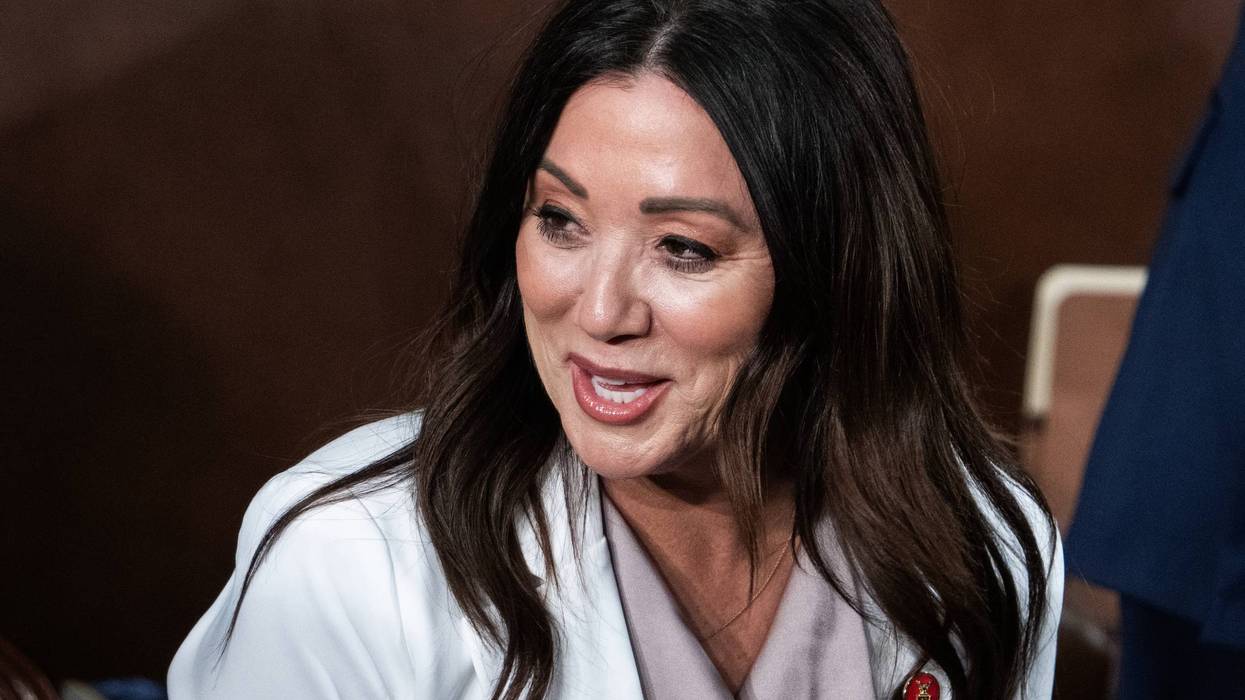
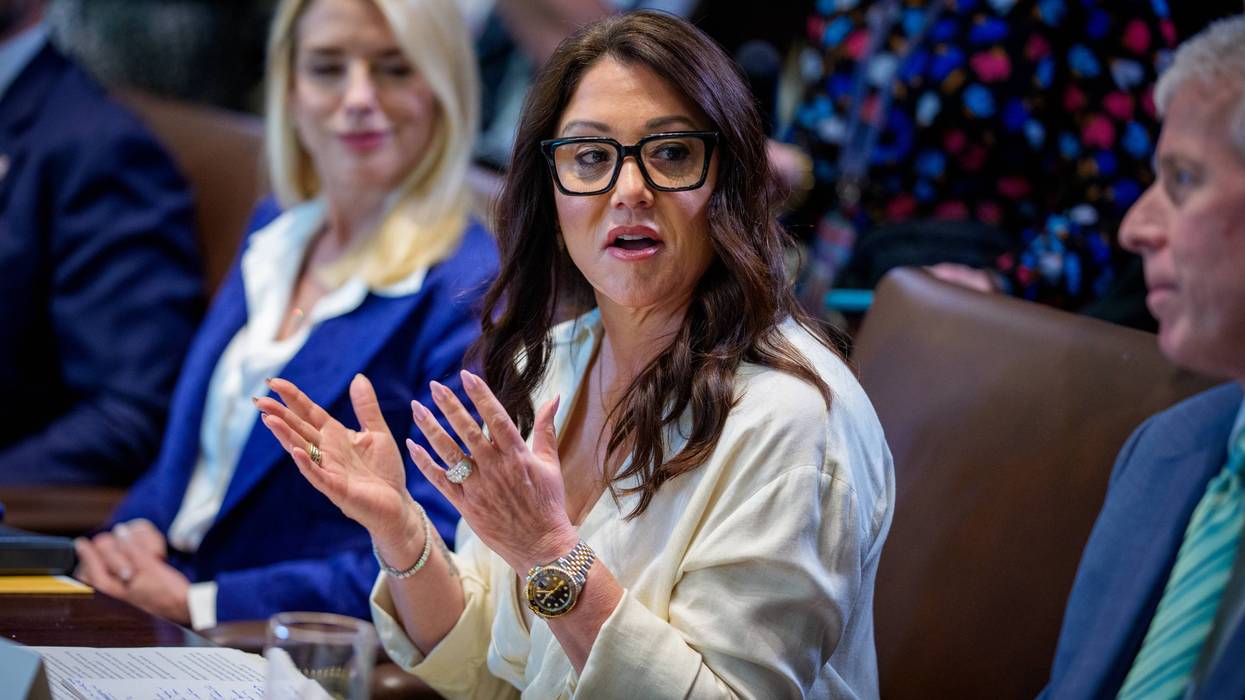
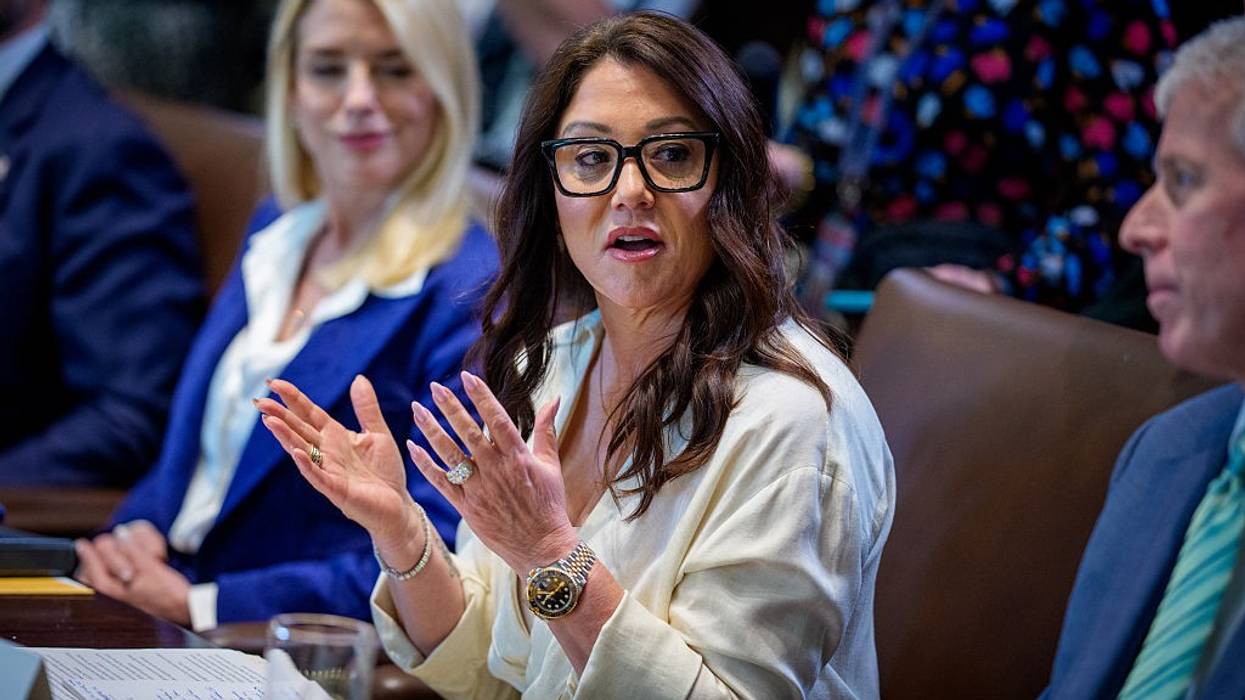
U.S. Sen. Bernie Sanders on Thursday urged colleagues to reject Lori Chavez-DeRemer, President Donald Trump's nominee for labor secretary, and hold hearings to examine Department of Government Efficiency chief Elon Musk's outsized role in the Republican president's administration.
Chavez-DeRemer, a former GOP U.S. congresswoman from Oregon was
approved by a 14-9 Senate vote by members of the Senate Health, Education, Labor and Pensions (HELP) Committee.
"Let us understand that reality and not play along with this charade," said Sanders (I-Vt.), the ranking HELP member.
Sanders used the occasion of the panel's vote, however, to make the broader point about key members of Trump's cabinet and the absurdity of the amount of power that has been bestowed on Musk.
"Today, we are not voting on who the next secretary of labor is," Sanders said. "The next secretary of labor, the next secretary of education, the next secretary of housing, the next secretary of the treasury is Elon Musk. Let us understand that reality and not play along with this charade."
Sanders continued:
We have a situation where people all over this country understand that joining a trade union is a way to get better wages and working conditions. Millions of workers all over this country say, "I want to join a union." And yet we have large corporations acting illegally to deny workers the right to join unions, which is why one of my major priorities and the priority of many members on this side of the aisle is to pass the :[Richard L. Trumka] Protecting the Right to Organize PRO Act.
Last year, Sanders led the reintroduction of the PRO Act, legislation which would give unionswhich would, give unions and employers the ability to override state-level so-called "right to work" laws, enhance strike protections, ban anti-union "captive audience" meetings, and empower the National Labor Relations Board to impose monetary penalties on companies that violate workers' rights.
"Today, tens of millions of American workers are earning starvation wages, $12, $13 an hour," Sanders noted. "Nobody in any part of this country can survive on $12, $13 dollars an hour. And yet the minimum wage—the federal minimum wage of $7.25—has not been raised in a very, very long time."
"So what we need is a secretary of labor who is going to stand up and say we are going to take on powerful special interests," the senator continued. "We are going to stand with the working class of this country. Unfortunately... Chavez-DeRemer is not that person."
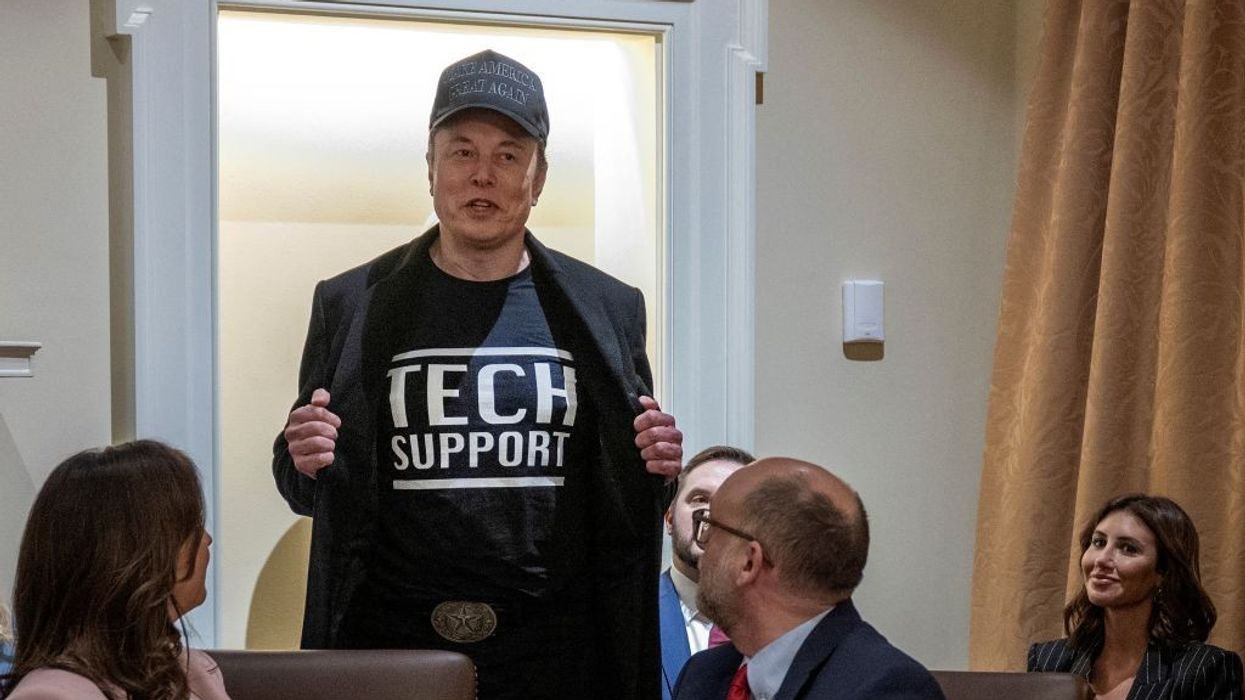
"Just yesterday, the president held a meeting with his cabinet," Sanders noted. "And who was the star of the meeting? Was it the secretary of the defense? Was it secretary of state? No, it was an unelected official who happens to be the wealthiest person on Earth. It was Elon Musk."
"If any cabinet official has courage to stand up to Mr. Musk and disobey his edicts, they are gone," the senator added. "So... my request to you is a simple one. Let's be honest. The American people understand it, and it’s time that we understood it as well."
"If you want to discuss policies in the Department of Labor," Sanders said, "let's bring in the real secretary. Mr. Chairman, I respectfully request that this committee bring Elon Musk before this committee so that we can really hear what's going on with the government."
One labor journalist called his comments regarding right-to-work "shameful" and "embarrassing."
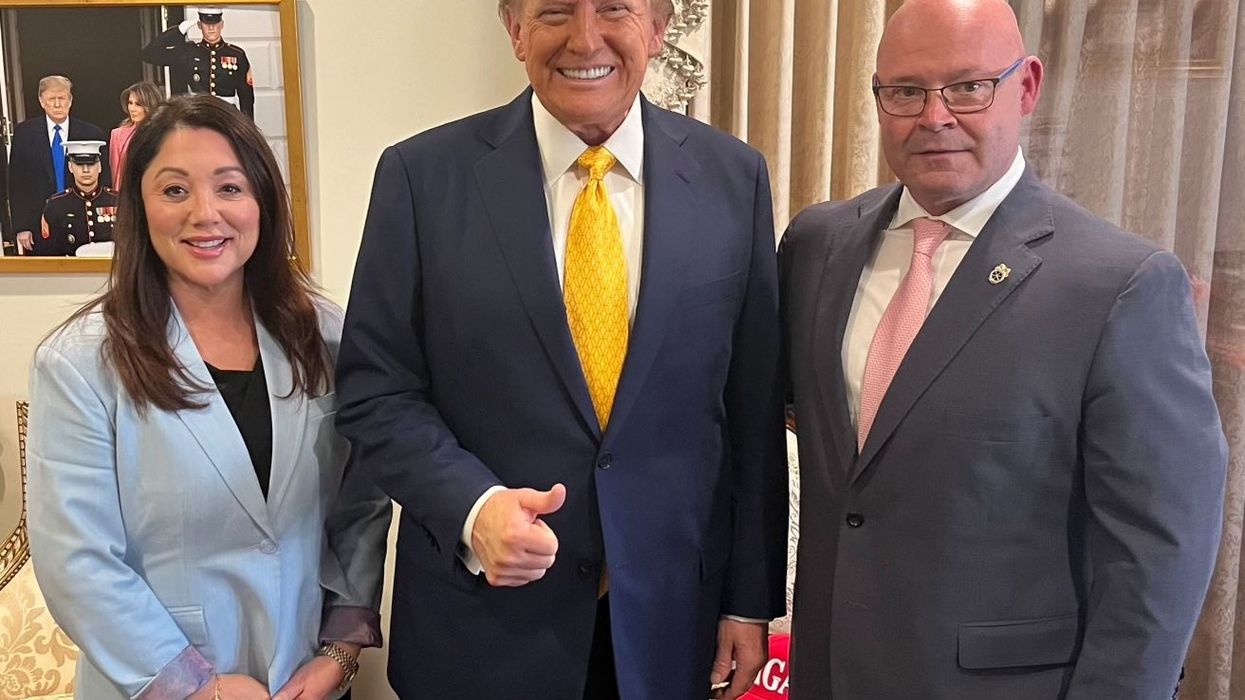
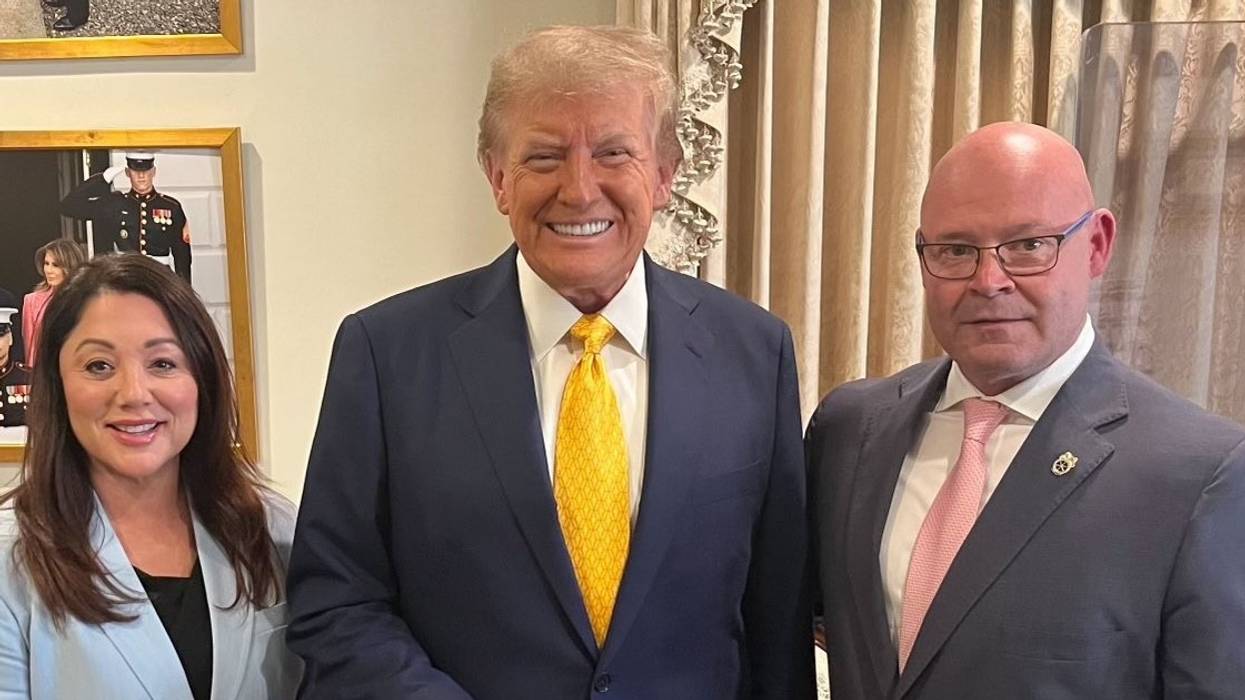
International Brotherhood of Teamsters president Sean O'Brien faced backlash from labor movement voices on Wednesday for expressing his support for U.S. President Donald Trump's pick to lead the Department of Labor and for appearing to take a softer stance on so-called "right-to-work" laws—policies generally decried by organized labor because they allow employees to opt out of union expenses while working at a unionized establishment.
Labor journalist Alex Press called his comments regarding right-to-work "shameful" and "embarrassing."
Over the summer, Press spoke with rank-and-file Teamsters members about recent actions from O'Brien that signal a rightward shift, such as his decision to headline the first night of the 2024 Republican National Convention. "Some are undoubtedly thrilled," wrote Press, though "a growing number of members believe their president is offering a straightforward, if not always explicit, endorsement of a political party that wants to destroy them."
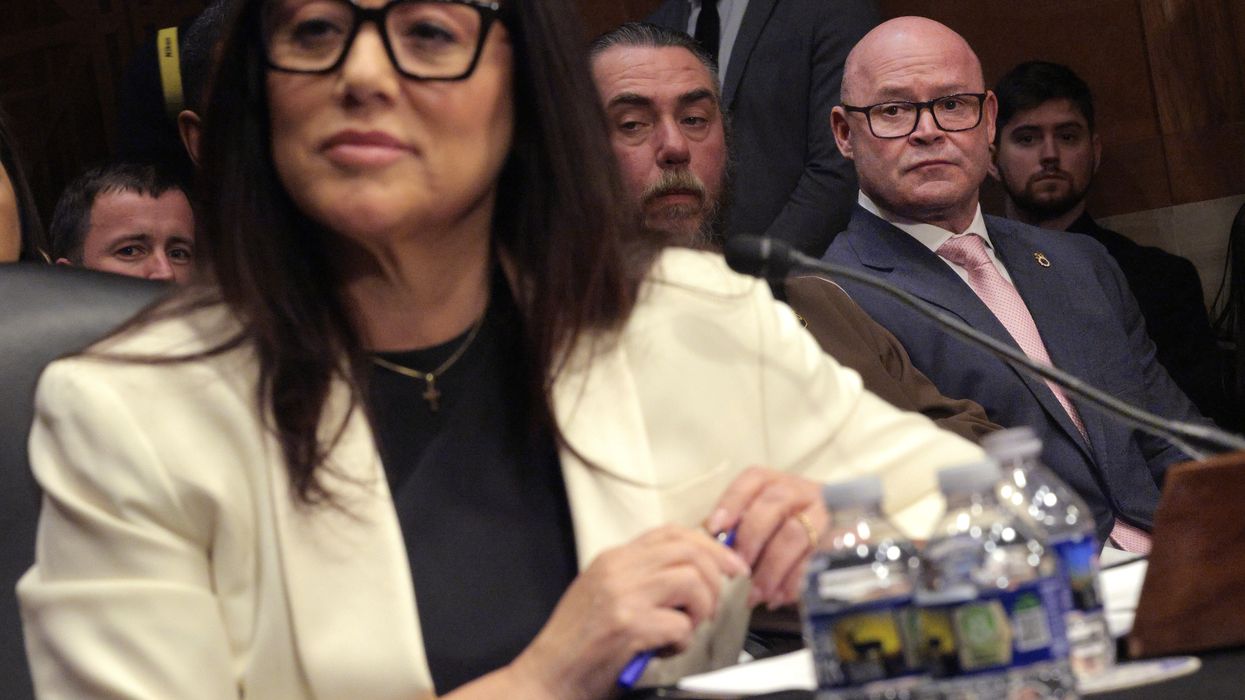
On Wednesday, O'Brien attended the Senate confirmation hearing of Oregon Republican Lori Chavez-DeRemer, Trump's labor pick, during which Chavez-DeRemer said she would support Trump's agenda, according to The New York Times. Chavez-DeRemer also told senators that she no longer supports a section of the Protecting the Right to Organize (PRO) Act—sweeping Democratic labor legislation that was introduced in Congress but never passed—which would have weakened state right-to-work laws.
Speaking later Wednesday on Fox News, O'Brien said of Chavez-DeRemer, "Not only do we support her appointment, we are going to the mat to make sure that she gets confirmed."
When asked about Chavez-DeRemer's stance on the right-to-work section of the PRO Act, O'Brien said that he is working with senators such as Sen. Josh Hawley (R-Mo.) to come up with a version of the PRO Act that "may not include that."
"That's the beauty of having conversations with people from the other side, where you can collaborate and actually find out what works for that state, what doesn't work for it—but more importantly, what's going to work for the American worker," O'Brien said.
A clip of these comments was reposted by the National Right to Work Committee, a group dedicated to "combating the evils of compulsory unionism," according to its website.
"The Teamsters union is as decentralized as the country. Like the median voter, most Teamsters aren't closely following what Sean O'Brien is saying," wrote labor journalist Luis Feliz Leon in response. "The press should ensure they know how he's selling out members to cozy up to anti-worker politicos and bolstering the power of bosses."
In the same Fox News interview, O'Brien also said the Teamsters do not want to see anyone losing their job, but that "[Trump] thinks he's within his right," when asked about the personnel-slashing Department of Government Efficiency and the Trump administration's widely decried deferred resignation program for nearly all federal employees. Multiple federal employees unions are currently battling the Trump administration in court over its actions targeting federal workers and federal agencies.
"What a shame. Teamsters deserve better than this," wrote Rep. Alexandria Ocasio-Cortez (D-N.Y.) in response on Bluesky.
Another labor journalist, Kim Kelly, denounced a video posted Wednesday by Sen. Markwayne Mullin (R-Okla.)—whom O'Brien nearly physically fought during a Senate hearing last year—in which Mullin and O'Brien chum it up and both express support for Chavez-DeRemer.
Also in response to the video, an observer on X with username katy, who indicates they are a part UFCW Local 371, wrote, "class traitor."
"I was raised in a Teamsters household, survived because of union benefits, and still do. I'd rather starve than lick a boot," katy wrote. "We're the union."
"How very not pro-worker of you," the Philadelphia Council AFL-CIO said in response to Lori Chavez-DeRemer's remarks.
U.S. President Donald Trump's pick to lead the Department of Labor made clear during her Senate confirmation hearing on Wednesday that she no longer supports legislation known as the PRO Act, which would bolster worker organizing and dramatically weaken anti-union "right-to-work" laws currently in place in over two dozen states.
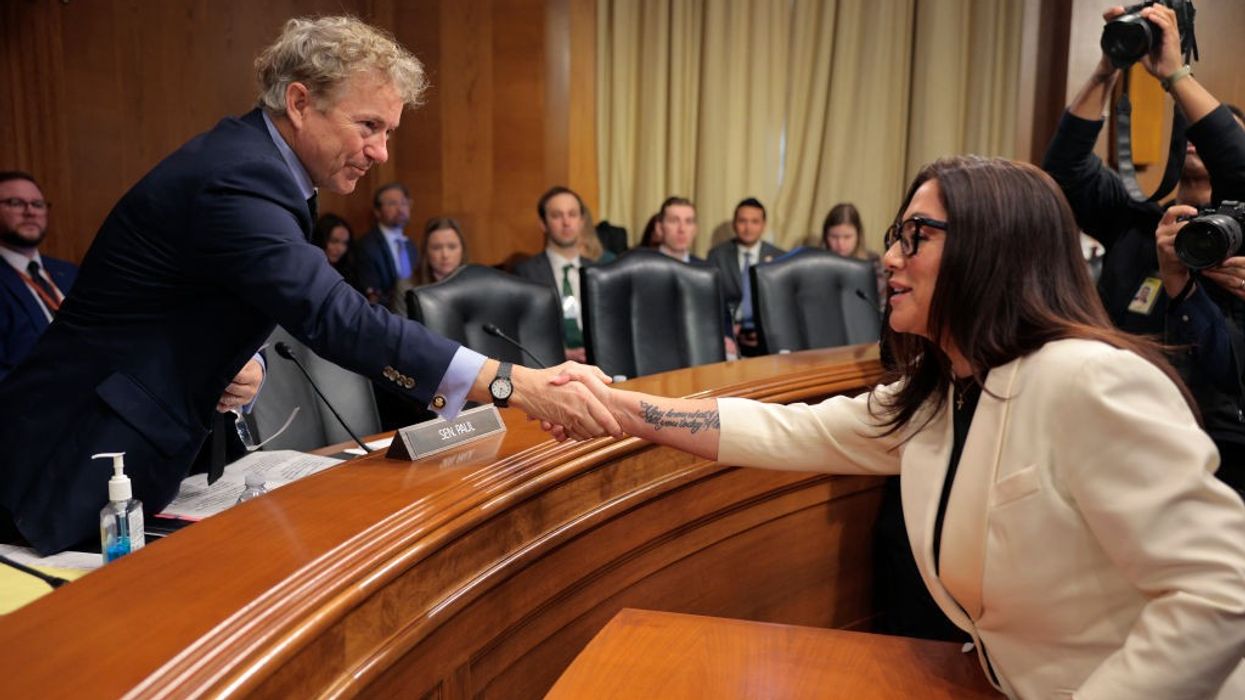
Asked by Sen. Rand Paul (R-Ky.) whether she still supports the Protecting the Right to Organize Act—a bill she co-sponsored while in Congress—former Rep. Lori Chavez-DeRemer (R-Ore.) said she signed onto the bill because she "wanted to be at that table," not because she was fully supportive of its provisions.
Chavez-DeRemer answered "yes" when Paul—the lead sponsor of the National Right to Work Act—specifically asked her to confirm that she no longer supports "the aspect of the PRO Act that would have overturned state right-to-work laws."
"The right to work is a fundamental tenet of labor laws, where states have a right to choose if they want to be a right-to-work states," said Chavez-DeRemer.
"How very not pro-worker of you, Lori," the Philadelphia Council AFL-CIO wrote in response.
Watch the exchange:
Rand Paul: "You no longer support the aspect of the PRO Act that would have overturned state right to work laws?"
Trump Labor Secretary Nominee Lori Chavez-DeRemer: "Yes, sir." pic.twitter.com/L5v9StcEhD
— More Perfect Union (@MorePerfectUS) February 19, 2025
In so-called right-to-work (RTW) states, employees in unionized workplaces can opt out of paying union dues while still benefiting from the union's collective bargaining efforts.
An Economic Policy Institute study published last year found that RTW states "have lower unionization rates, wages, and benefits compared with non-RTW states."
"RTW laws are designed to diminish workers' collective power by prohibiting unions and employers from negotiating union security agreements into collective bargaining agreements, making it harder for workers to form, join, and sustain unions," the study noted. "Consequently, workers in states with RTW laws have lower wages, reduced access to health and retirement benefits, and higher workplace fatality rates. On average, workers in RTW states are paid 3.2% less than workers with similar characteristics in non-RTW states, which translates to $1,670 less per year for a full-time worker."
In her opening remarks to the Senate Health, Education, Labor, and Pensions Committee on Wednesday, Chavez-DeRemer said her job if confirmed "will be to implement President Trump's policy vision"—which has thus far been glaringly anti-worker.
"In his first few weeks back in office, Trump fired the [National Labor Relations Board's] acting chairperson, leaving the board without a quorum to enforce laws that protect workers' right to unionize," Steven Greenhouse, a senior fellow at The Century Foundation, wrote Tuesday. "Trump has designated [Elon] Musk, a vehemently anti-union billionaire, to launch an all-out war against the federal bureaucracy and workforce, and Trump and Musk have essentially treated the nation's 2 million-plus federal employees as if they were disposable, low-quality widgets."
Trump also removed former NLRB General Counsel Jennifer Abruzzo, who was strongly pro-labor. The president's acting replacement has moved quickly to roll back NLRB guidance issued during Abruzzo's tenure, including a memo declaring that anti-union "captive audience meetings" amount to an "unlawful threat" aimed at deterring union organizing.
During Wednesday's hearing, Sen. Bernie Sanders (I-Vt.) raised Trump's termination of former NLRB member Gwynne Wilcox, who argues her dismissal was illegal and is suing Trump in federal court.
Sanders said he also views Wilcox's firing as unlawful and asked Chavez-DeRemer if she agrees.
In response, Chavez-DeRemer said that Trump "has a right to exercise his executive power."