

SUBSCRIBE TO OUR FREE NEWSLETTER
Daily news & progressive opinion—funded by the people, not the corporations—delivered straight to your inbox.
5
#000000
#FFFFFF
To donate by check, phone, or other method, see our More Ways to Give page.
Daily news & progressive opinion—funded by the people, not the corporations—delivered straight to your inbox.

Evan Greer, 978-852-6457, press@fightforthefuture.org
Digital rights group Fight for the Future, known for organizing many of the largest online protests in history, has launched
Digital rights group Fight for the Future, known for organizing many of the largest online protests in history, has launched BanFacialRecognition.com, becoming the first national organization to call for a complete Federal ban on government use of facial recognition surveillance.
The page features an eerie and dystopian face scanning animation, and allows Internet users to easily contact their local, state, and federal lawmakers. It reads: "Silicon Valley lobbyists are disingenuously calling for light "regulation" of facial recognition so they can continue to profit by rapidly spreading this surveillance dragnet. They're trying to avoid the real debate: whether technology this dangerous should even exist. Industry and government friendly oversight will not fix the dangers inherent in law enforcement use of facial recognition: we need an all out ban."
An infographic further down the page drives the argument home: "Facial recognition is unlike any other form of surveillance. It enables automated and ubiquitous monitoring of an entire population, and is nearly impossible to avoid. If we don't stop it from spreading, it will become the hallmark of authoritarian states, used not to keep us safe, but to control and oppress us."
"Imagine if we could go back in time and prevent governments around the world from ever building nuclear or biological weapons. That's the moment in history we're in right now with facial recognition," said Evan Greer, deputy director of Fight for the Future (pronouns: she/her), "This surveillance technology poses such a profound threat to the future of human society and basic liberty that its dangers far outweigh any potential benefits. We don't need to regulate it, we need to ban it entirely."
Momentum against facial recognition is growing. This weekend, we learned that ICE and the FBI use facial recognition on millions of Americans' drivers license photos, getting access to our personal information with no consent. Both Democrat and Republican legislators were outraged--both Alexandria Ocasio-Cortez and Jim Jordan, polar opposites in Congress, agree that the use of facial recognition poses a huge threat to civil liberties.
Cities are involved too: San Francisco and Somerville, Massachusetts, have both banned facial recognition. Even Axon, which makes tasers and body cams for police officers, said it would not commercialize facial recognition because it cannot currently "ethically justify" its use.
We're joining this outcry to call for a complete ban on facial recognition. It's time the federal government take a stand now to prevent this technology from proliferating across the country.
Fight for the Future is a group of artists, engineers, activists, and technologists who have been behind the largest online protests in human history, channeling Internet outrage into political power to win public interest victories previously thought to be impossible. We fight for a future where technology liberates -- not oppresses -- us.
(508) 368-3026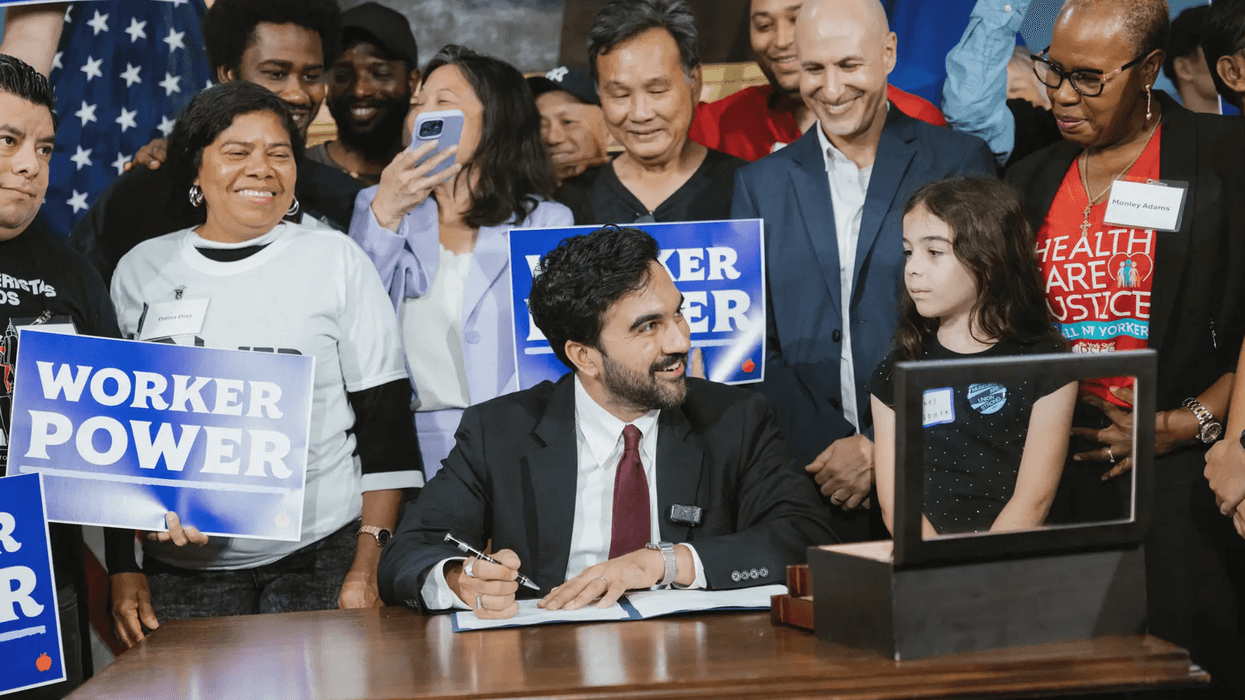
"We’re setting it up to help workers organize in an economy where more and more is stacked against them."
New York City Mayor Zohran Mamdani marked Labor Day on Monday by announcing a new Office of Worker Power, an initiative aimed at bolstering union organizing at a time when wage growth is being swallowed by inflation and corporations are fighting as aggressively as ever to prevent employees from wielding their collective strength.
"This is a first-of-its-kind office in the country, and we’re setting it up to help workers organize in an economy where more and more is stacked against them," Mamdani said of the new project, which will "utilize city government to help workers organize themselves and build power to improve their working conditions and their lives."
"We created the first-in-the-nation Office of Worker Power to put the full weight of City Hall behind the people who keep New York running," said Mamdani. "The nurse working a double shift. The teacher working a second job. The warehouse workers organizing for a union. Every New Yorker working hard to build a life and support a family. On Labor Day, we honor the workers who came before us by fighting for the workers who come next."
Julie Su, the former acting US Labor Secretary who now serves as New York City's deputy mayor for economic justice, will oversee the new office, which will be led by longtime union organizer Tony Perlstein.
"When workers can organize, everything changes," said Su. "When they can build lasting, durable power, power that lets them transform their work experience, and by extension their lives, everything changes."
The office's website, debuted amid the Trump administration's assault on labor unions at the national level, includes a "get help" section that contains information on how workers interested in organizing can contact city officials, who will "share what you need to know and connect you with organizations that support workers like you."
"Someone might come to this office because they’re a worker and they want to better their own conditions, or the conditions of those around them, and they’re not sure where to go next," Mamdani told Jacobin in an interview. "In New York City, it’s very hard to know who you should call about any of these issues. Now we’re saying you will soon be able to go to nyc.gov/workerpower and finally get the kind of information you need, so that you know what rights you already have available to you and what rights you can win."
BREAKING: Mayor Zohran Mamdani announces a first-of-its-kind office focused on organizing workers in New York City.
The Mayor’s Office of Worker Power will provide workers with resources needed to organize their workplaces, hold public hearings on major worker issues, and more. pic.twitter.com/tkOg3s3fpn
— Jacobin (@jacobin) September 7, 2026
A recent report by the City University of New York School of Labor and Urban Studies found that "while union density remains strong in New York, membership rates remain largely unchanged, despite renewed organizing, successful strikes, and strong public support for labor."
"Union density stands at 20.5% in New York City and 20.9% statewide, more than double the national rate of 10%, yet well below levels recorded two decades ago," the report notes.
Perlstein, the leader of the new Office of Worker Power who previously served as an organizing director at the United Auto Workers, told reporters that "there is a huge gap between what workers want and what workers have." Perlstein pointed to a recent Gallup survey showing that more than 70% of Americans approve of labor unions—a figure far higher than the unionization rate.
“We’re going to be looking to provide opportunities to working-class New Yorkers to get educated on their rights to form unions and what it means to build power,” said Perlstein. “We’re going to work to connect workers to organizations that can help them build that power.”

"The far-right rampage is not slowing down, but accelerating instead."
The far-right Alternative for Germany party thanked the world's richest man, Elon Musk, after decisively winning a key regional election on Sunday, sparking alarm across Europe and around the globe.
Ulrich Siegmund, AfD's lead candidate in the eastern state of Saxony-Anhalt, praised Musk—who has openly advocated for the far-right, xenophobic party—for his support and "clear and highly important perspective on the political developments of our time—including here in Germany." Siegmund wrote that if AfD ends up leading the state government, the party "would very much welcome the opportunity for strong and constructive cooperation," adding that "Germany would once again be a place worth investing in."
Siegmund's post on the social media platform X, which Musk owns, came after AfD won just over 44% of the vote in the Saxony-Anhalt election, trouncing the Christian Democratic Union (CDU), led by Chancellor Friedrich Merz. CDU finished a distant second with 17.1% of the vote.
"Well done!" Musk wrote, in German, following AfD's election win. The mega-billionaire has called AfD "the only hope for Germany."
US President Donald Trump, a political ally of Musk, posted to Truth Social a screenshot of exit polls showing AfD leading the regional election on Sunday afternoon.
"Leave it to Trump to celebrate the victory of a far-right German party that shows sympathy for the Nazis, downplays the Holocaust, and flirts with Putin," Kenneth Roth, the former executive director of Human Rights Watch, wrote on social media in response to the US president.
The Associated Press noted that "to win an absolute majority, AfD needed to clinch 42 of the 83 seats in the state parliament, but the party appeared on track to win 39. Depending on the ultimate make-up of parliament, it could still end up leading the state government." Siegmund would be the first far-right leader to govern a German state since 1945.
But other German parties have refused to work with AfD, raising doubts about its ability to form a government in Saxony-Anhalt, which has a population of around 2.1 million people.
David Adler, co-general coordinator of the Progressive International, wrote that the election "sent a clear message, to Germany as to all of Europe, that the far-right rampage is not slowing down, but accelerating instead."
AfD focuses heavily on immigration, vowing "deportation from minute one" and calling for abolition of "the fundamental right to asylum."
"In addition to deporting immigrants, the party has proposed cutting funding for public broadcasters, banning gay pride flags in schools, and teaching more Russian, as well as tax breaks for large families and free childcare," The New York Times reported. The newspaper noted that Siegmund declined to condemn supporters who "chanted his surname... in the style of the Nazi salute, 'Sieg Heil.'"
European officials voiced deep concern about AfD's surge in the regional election, with France's Europe minister calling the results "a serious moment."
"Nationalism and xenophobia will never be a solution," said Benjamin Haddad. "We must listen with humility to the anger, the concerns, the fears, and respond to them. We cannot forget our history. That is the meaning behind the choices made by France and Germany.”
Spanish Julen Bollain wrote on social media that "the far-right is managing to turn discontent, economic insecurity, and disaffection into votes."
"AfD is doing something that should especially worry the left: transforming precarity, frustration, and disaffection into political identity and votes," Bollain added. "And if we don't manage to give a collective response to the existing social discontent, someone always shows up ready to turn it into fear, hate, and scapegoats. And there they beat us, because they move like fish in water."

"We know that they are trying to get rid of a huge number of people's jobs."
The chair of the Congressional Progressive Caucus on Sunday urged Americans to push back on the vision of the future being presented by the oligarchs who run the artificial intelligence industry.
In an interview with MeidasTouch, Rep. Greg Casar (D-Texas) addressed the backlash against Big Tech, which has included a nationwide movement to oppose the construction of AI data centers.
"Everyday folks right now, they're pissed," said Casar, who last week joined with Sen. Bernie Sanders (I-Vt.) to introduce legislation to ban AI models capable of surpassing human cognition. "They know [OpenAI CEO] Sam Altman is not actually out there to help you... We know that they are trying to get rid of a huge number of people's jobs."
Casar: And then in Silicon Valley, basically their policy proposal is that they will give out a little bit of UBI to make that high unemployment rate more tolerable. I see that as a bad idea. Going towards 10 or 20% unemployment, just so these guys could be super rich, is… pic.twitter.com/AUIezlGZK3
— Acyn (@Acyn) September 6, 2026
Casar then mocked the remedy to mass joblessness being pitched by tech titans like SpaceX CEO Elon Musk, who has proposed a universal basic income (UBI) program.
"In Silicon Valley, basically their policy proposal... is that they will give out a little bit of UBI to make that high unemployment rate more tolerable," he said. "I see that as a bad idea. Of course, everybody getting a little bit of money could be a good thing. Yeah, people being able to work fewer hours is, of course, a good thing. But going toward 10%, 20% unemployment just so these guys can be super rich is completely dystopic."
Casar emphasized that, despite tech industry claims, there is nothing inevitable about their plans to profit by putting millions of people out of work.
"We don't have to let it happen," he said. "Just look at our history from over 100 years ago: You had the Gilded Age, you had a few of these robber barons who tried to get all the money, capture the government, buy the presidency... And then people woke up, fought back."
"We have to be headed on a path," Casar continued, "where we reclaim our power, as a democracy, as people."
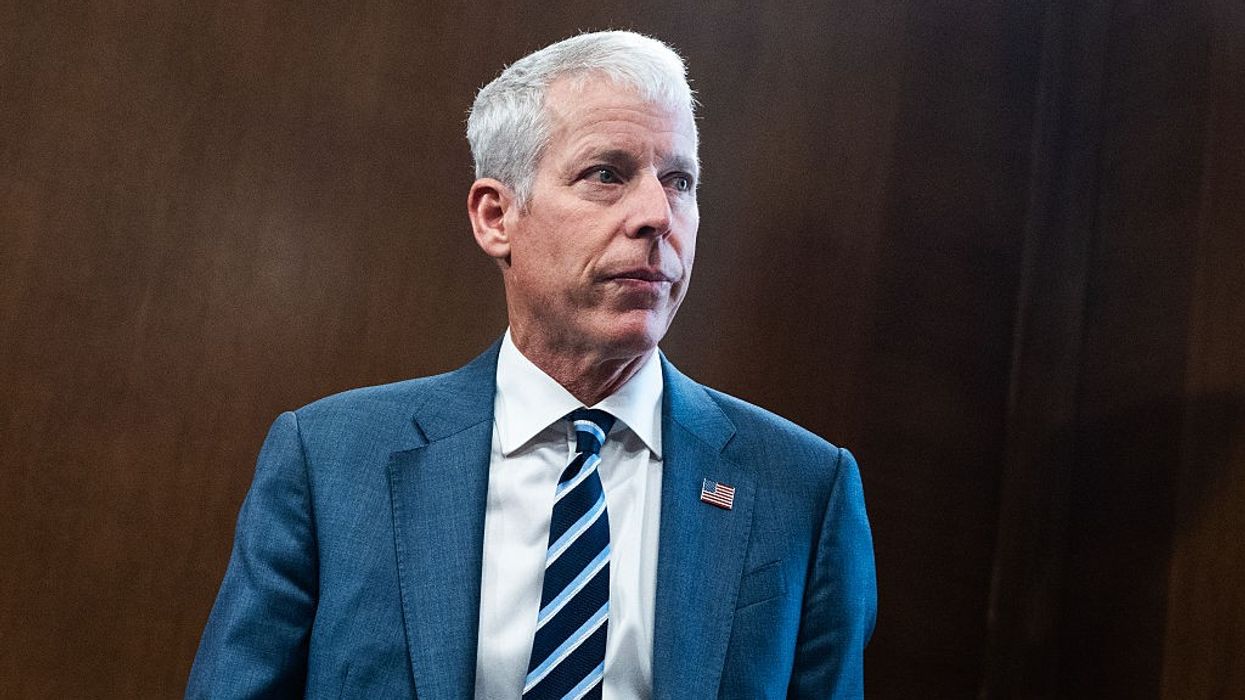
"We have a lot of leverage over Venezuela. We control the sale of oil outside of their country," said US Energy Secretary Chris Wright.
US Energy Secretary Chris Wright on Sunday denied that the Trump administration was stealing Venezuela's oil just one hour after boasting that the country is being "forced to work" with the United States.
During a Sunday morning interview on ABC News, Wright was asked why he trusted interim Venezuelan President Delcy Rodriguez, given that she was previously the vice president of Venezuelan President Nicolás Maduro, who was abducted by the American military earlier this year and brought to the US to face narco-terrorism, drug trafficking, and weapons charges.
"We have a lot of leverage over Venezuela," Wright explained. "We control the sale of oil outside of their country. So right now, they are forced to work in partnership with us, and they are working in partnership with us."
RADDATZ: You attacked the Maduro regime as a "socialist dictatorship." Delcy Rodriguez was the VP of that regime. Why do you trust her?
CHRIS WRIGHT: We have a lot of leverage over Venezuela. We control the sale of oil outside of their country. Right now they are forced to work… pic.twitter.com/FV5eUhsRed
— Aaron Rupar (@atrupar) September 6, 2026
Shortly after, during an interview on Fox News, Wright grew indignant at the suggestion that the US was forcing Venezuela to give up its oil through threats of military force and other coercive measures.
"This is a home run!" Wright said of the Trump administration's arrangements with the Venezuelan government. "These senators saying we're stealing their oil at gunpoint, nothing could be further from the truth. In fact, the more oil that's produced in Venezuela, including with the deal with the US government, the more royalties and tax revenues go to the Venezuelan government and the Venezuelan people."
Chris Wright on Venezuela: "These senators saying we're stealing their oil at gunpoint -- nothing could be further from the truth" pic.twitter.com/idsdl025q9
— Aaron Rupar (@atrupar) September 6, 2026
Venezuelan opposition leader María Corina Machado, who was supportive of the US abducting Maduro, last week criticized the Trump administration for cutting a deal with what she said was still a corrupt and oppressive government in Caracas.
"The wealth of our land does not belong to an illegitimate regime," Machado said in a video posted on social media, "it belongs to the Venezuelan people."
In an analysis published last week, economist Paul Krugman accused the Trump administration of concocting a "plot to steal Venezuela's oil," which he described as equal parts "vile and deeply stupid."
The deal is vile, Krugman said, because it validates " everything the Latin American left has ever said about US imperialism" in the region.
And it is simultaneously stupid, he argued, because the investments required to improve Venezuela's oil infrastructure will be so great that its benefits are unlikely to materialize in the near future, if at all.
"Venezuelan oil currently sells for around $70 a barrel on world markets," Krugman wrote. "But as I said, getting that oil out will require huge investments in infrastructure. Nor does Venezuela oil come gushing out when you drill a well: As one expert put it, 'it comes out of the ground with the consistency of cold peanut butter.'"
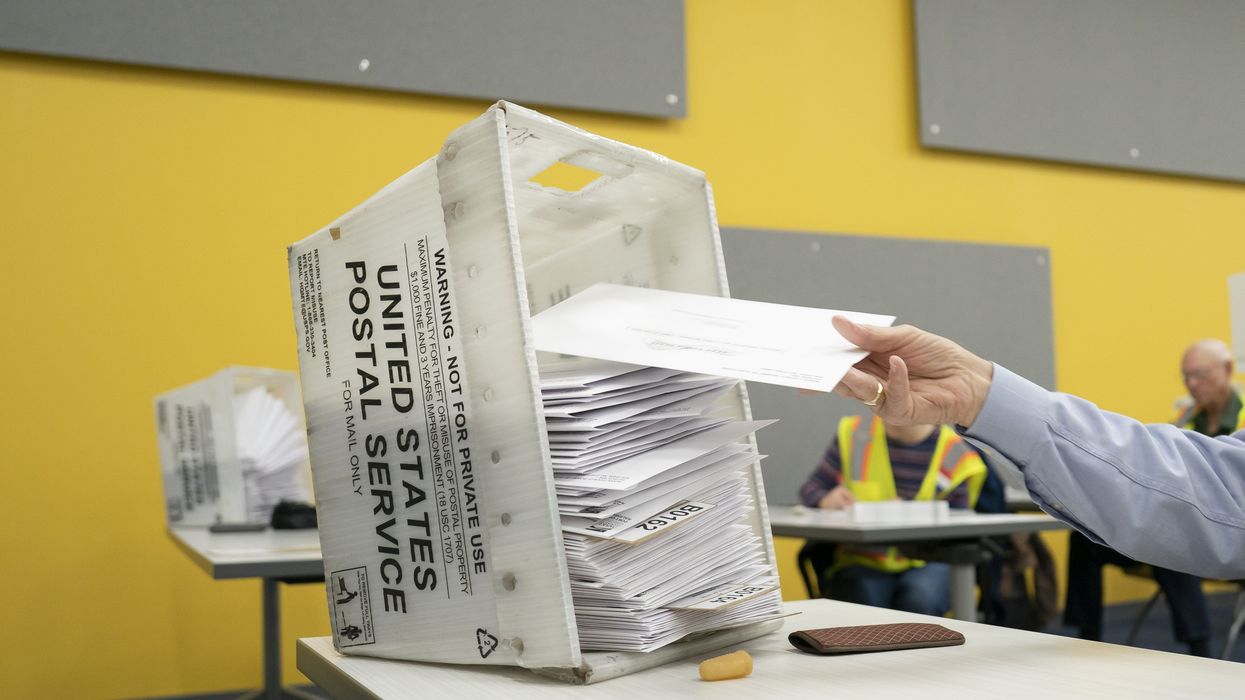
Allowing Trump's mail-in voting restrictions to take effect "would be a break-glass moment for our democracy," said one critic.
President Donald Trump's crusade against mail-in voting is running into a brick wall, although many critics are warning that the dangers to democracy are far from over.
The Washington Post reported on Sunday that Trump is "running out of options" to change mail-in voting rules that "don't involve significant upheaval," as states have already started sending out ballots to voters.
In March, Trump signed an executive order that instructed the United States Postal Service to not deliver ballots in any states that have not given the federal government access to its voter lists.
However, that order is currently tied up in court, and both Wisconsin and North Carolina last week began mailing out ballots to voters, the Post reported.
Don Millis, a Republican who chairs the Wisconsin Elections Commission, told the Post that "there's no practical way for Wisconsin clerks to comply" with Trump's orders, adding that the president's schemes targeting mail-in voting are likely to "hurt the Republican turnout more than the Democratic turnout."
The Trump administration has been pushing the US Supreme Court to intervene to allow the president's executive order to take effect.
However, as noted in a Politico report published on Friday, nine other states are set to send ballots to voters over the next two weeks, which would make a last-minute ruling by the court an unprecedented disruption in the democratic process.
"It would be so outrageous to try to let this go into effect," Ben Hovland, senior fellow for democracy at the Center for American Progress, told Politico. "It's hard to even imagine... It would be a break-glass moment for our democracy."
However, Hovland said that Trump's election meddling effort could still do real damage to the country because it can "dissuade people from participating or coming out to vote" and "establish a pretext to make bad faith claims about election results."
Hovland's concerns about the president's intentions were echoed in a Sunday report in The New York Times, which found voters across the country expressing confusion about the voting process and anxiety over whether their votes will be counted this year.
Pima County, Arizona Recorder Gabriella Cázares-Kelly told the Times that her office has received a flood of calls from worried voters, and she said that the president's relentless push to restrict voting by mail has left her unable to provide reassuring answers.
"I wish that I could tell my constituents to not worry," said Cázares-Kelly, "and I can’t."
Rich Cooper, elections manager in Clark County, Washington, similarly told the Times he has been unable to ease voters' worries about what rules will govern this year's elections.
“The biggest thing they want to know is if things are going to change,” Cooper said of voters expressing concerns. “We have to tell them we just don’t know yet.”

Canadians' disdain toward the US is driven almost completely by Trump, with 64% saying their opinions of the country would likely change if he were no longer president.
A survey released Saturday by polling firm Leger finds that a plurality of Canadians now view the US as an "enemy" nation thanks to President Donald Trump's repeated attacks on their economy and national sovereignty.
In all, the poll finds that 41% of Canadians now consider the US enemy, compared with 22% who say the US is an ally, and 22% who say the US is a neutral country.
In a similar poll conducted in June 2025, Leger noted, only 26% of Canadians said the US was an enemy.
Trump's trade war is a major driver of negative opinion among Canadians, as 63% of those surveyed say they expect the president's tariffs to have either a moderate or major impact on their personal financial situations.
Additionally, 74% of Canadians say they agree with their government's decision to retaliate against Trump's tariffs, even while acknowledging such retaliation will hurt the economy.
Canadians are also resentful of Trump's demands that Canada become the 51st US state, with 85% saying they do not want to become part of America.
The disdain toward the US is driven almost entirely by Trump, the survey finds, with 64% of Canadians saying their opinions of the country would likely change if he were no longer president.
In an interview with The National Post, Leger vice president Andrew Enns emphasized the centrality of Trump in Canadians' deteriorating views of their neighbor to the south, arguing that the US president "can move public opinion like nobody’s business."
Brian Rathbun, professor of international relations and political science at the University of Toronto’s Munk School of Global Affairs and Public Policy, told The National Post that while Canadians aren't letting their dislike of Trump tarnish their opinions of Americans as a whole, that could change in the coming years.
"At some point, I think Canadians will start to get frustrated if this persists, even if it’s not what the American public wants," said Rathbun. "They can say, ‘Why is it that no one’s standing up to this particular bully?’ Then I think that you could get into something like a deeper problem that couldn’t be fixed by kicking this guy out."

US Transportation Secretary Sean Duffy said President Donald Trump is "trying to drive these prices down," even though the president's war has been the primary reason they've been going up.
The price of diesel fuel in the US hit another record high on Saturday, as data published by the American Automobile Association showed the average cost for a gallon of diesel now stands at $5.88.
According to a Saturday report from Axios, incumbent Republicans are fretting about the impact that skyrocketing gasoline and diesel prices will have on the 2026 midterm elections, particularly since their own internal polling shows voters are placing blame for the price hikes on President Donald Trump's illegal war with Iran.
"Diesel's at an all-time high," one GOP operative told Axios. "Gas is about $4 a gallon. We can't message that away."
Another Republican source told Axios that GOP candidates don't even have the option of distancing themselves from the president and his unpopular war given the iron grip he has on voters they will need to turn out in crucial races.
"We have no choice," said the source. "We're stuck on the boat with him whether we like it or not."
US Secretary of Transportation Sean Duffy tried to spin the record-high diesel prices as something outside the president's control during a Saturday interview on Fox News.
"When you look at diesel, you have to look at Russia and Ukraine," Duffy said. "Russia was a major exporter, the second-biggest exporter in the world, on diesel. They stopped their exports, so that puts pressure on the global market. But President Trump has pushed American energy dominance, we are producing more energy now than in the past."
Duffy added that "it's only President Trump who's trying to drive these prices down," even though the president's war has been the primary reason they've been going up.
Fox & Friends weekend host Charlie Hurt gives Trump credit for record high diesel prices: "Uhhh, they'd be a lot higher if it wasn't for the efforts of the administration"
"When you look at diesel, you have to look at Russia and Ukraine," Duffy replies 🥴 pic.twitter.com/Wm5bLJ6exA
— Aaron Rupar (@atrupar) September 5, 2026
As a report published Friday by The Associated Press explained, the cost of diesel has a particularly strong impact on the price of food since the fuel is used to power both farm equipment and the trucks used to deliver food to grocery stores.
"Fuel accounts for roughly 15% to 30% of the total cost of food, according to the Independent Grocers Alliance, a grouping of 7,500 global supermarkets," reported the AP. "So higher diesel costs often result in more expensive groceries, although it can take a while for energy shocks to wind their way through the supply chain."
The rising cost of groceries has been a major source of stress for US consumers for years, and Trump during the 2024 presidential campaign vowed that prices on groceries would come down starting on his very first day in office.

Dozens of officers were grilled on whether they leaked classified information about the Iran War leaving the US with critical shortages in key munitions, The New York Times reported.
The US Department of Defense last month forced roughly 50 members of the military's Joint Staff to undergo polygraph exams as part of an effort to discover who leaked damaging information about President Donald Trump's illegal war with Iran, The New York Times reported on Friday.
According to the Times' sources, dozens of officers were strapped into polygraph machines and grilled on whether they leaked classified information about the war leaving the US with critical shortages in key munitions, including long-range missiles and Patriot interceptors.
The polygraph campaign "appeared aimed at not just ferreting out anyone who may have shared information, but intimidating others who might do so in the future," the Times reported.
The Times reported that the hunt for leakers has "intensified an atmosphere of deep distrust and paranoia inside the Pentagon" under the leadership of Defense Secretary Pete Hegseth, who has purged multiple top military officials during his tenure leading the department.
Ret. Rear Adm. Donald J. Guter told the Times that he has "never seen polygraphs employed this broadly or at this seniority level," adding that "in my experience, it’s unprecedented."
In a separate report published Friday, the Times revealed that a recent US intelligence assessment has determined that Iran is digging in for a long conflict with the American military, as it feels confident it can "exacerbate President Trump’s political problems ahead of the US midterm elections."
In fact, the intelligence indicates that Iran could be planning to escalate its campaign against the US in the coming weeks by attacking American bases in the Middle East and targeting ships in the Strait of Hormuz.
Trump unlawfully attacked Iran more than six months ago without any authorization from the US Congress. The war sent energy prices surging after Iran shut down shipping traffic in the Strait of Hormuz, through which roughly 20% of the world’s oil supply travels.
High gas prices have become a major political headache for Trump, and a recent analysis estimated that Americans have paid $71.5 billion more to fill up their cars thanks to the president’s war.
The cost of diesel fuel has also spiked since the start of the war, and data published by the American Automobile Association on Saturday showed the average price for diesel in the US now stands at a record $5.88 per gallon.
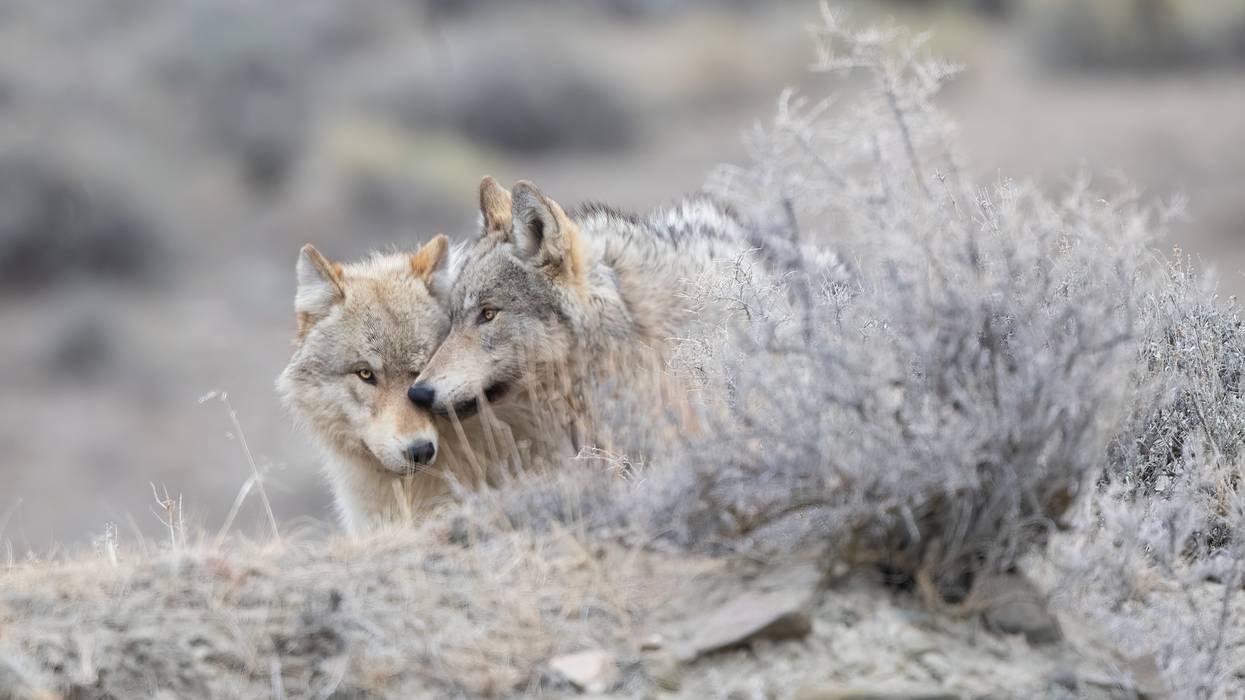
One conservation advocate said the impact of wolves on livestock pales in comparison to that of "recent trade agreements and the reality of ranching in the arid West under changing climate conditions."
Although President Donald Trump was surrounded by farmers and ranchers while signing a pair of beef-related executive orders in the Oval Office on Friday, some critics cast doubt on their effectiveness—plus highlighted how one proposal could prove lethal for protected wolves.
Trump is facing high beef prices and the looming midterm elections. After meeting with Brazilian billionaire Joesley Batista, a key shareholder for JBS, the world's largest meatpacker, the president last month paused tariffs on 300,000 metric tons of beef for 90 days to be sold at a discount. While signing the new orders on Friday, Trump signaled that the cheaper beef will be imported from Argentina, Brazil, and "a couple of other places."
Trump's latest orders are intended to appease the US cattle industry, which was angry about the August proclamation, by "cracking down on major meatpackers' dominance of the industry and seeking to implement new labeling standards," Politico explained. However, "it's not clear whether any of the steps announced Friday will assuage ranchers' concerns or have any impact in the short term, given that most of them would require regulatory changes or congressional action."
Food & Water Watch (FWW) food policy director Rebecca Wolf said in a statement that "President Trump is on an apology tour after his deal to flood US markets with foreign-imported beef—it's not working. Today's executive orders will do nothing to reverse the last two years of Trump's disastrous food policy."
"Under his watch, consumer beef prices are at record highs, and ranchers can't make ends meet, all while the multinational meat monopolies profit hand over fist," she stressed. FWW found last month that while JBS reported $131.7 billion in revenue and $2.4 billion in profit, and fellow industry giant Tyson reported $82.65 billion in revenue and $681 million in profit, "prices are up 23% for choice beef, 24.2% for ground beef, 24.7% for ground chuck, and 25.2% for chuck roast."
Wolf noted that "US agencies charged with protecting market competition sit on the sidelines, made toothless by Trump's reckless job cuts," pointing to thousands of staff reductions across the Agricultural Marketing Service, Department of Justice, the Federal Trade Commission, and threats to slash funding for the Department of Agriculture (USDA) Packers and Stockyards Division.
Since Congress repealed mandatory country-of-origin labeling (MCOOL) for beef and pork in 2015, FWW has been among those pushing for its restoration. Trump's order directs Secretary of Agriculture Brooke Rollins, in consultation with the United States Trade Representative Jamieson Greer, to "review all statutory and regulatory authorities that may permit the establishment" of MCOOL for beef products, then issue or amend regulations, as permitted by law, and develop legislative recommendations.
"Consumers deserve to know where their food comes from. There is no excuse for keeping consumers in the dark."Tell the #WhiteHouse and #Congress, restore mandatory country-of-origin labeling for #Beef.#MCOOLSign & Share: form.jotform.com/262434091212...
[image or embed]
— Consumer Federation of America (@consumerfed.bsky.social) September 3, 2026 at 8:52 AM
As a diverse coalition that includes FWW circulates a "Label Our Beef" petition, Wolf said Friday that "it is clearer than ever that Congress must heed popular demand and restore mandatory country-of-origin labeling to give American producers an even playing field. And Trump must put his money where his mouth is and fund antitrust and fair trade enforcement to truly help American families and ranchers."
While FWW declared that "Trump's beef executive orders won't help consumers or ranchers," Angela Huffman, president and CEO of Farm Action, was more diplomatic, welcoming the language on MCOOL, meat processing, and Packers and Stockyards Act enforcement.
"These actions show the administration is listening to problems farmers and ranchers have raised for years, and we appreciate that," Huffman said. "They move in the right direction, but stop short of the stronger reforms independent producers need."
Farm Action supports legislation to restore MCOOL for beef, as well as Packers and Stockyards Act enforcement, but has argued that the latter "should be paired with stronger producer protections" and urged USDA "to reverse its planned rescission of the Inclusive Competition and Market Integrity rule, which would protect producers against undue prejudice, unjust discrimination, retaliation, and deceptive practices."
As for the harm that Trump's orders could do, one directs Secretary of the Interior Doug Burgum to "make a determination as to whether the gray wolf and the Mexican wolf have met the recovery criteria for delisting or downlisting under the Endangered Species Act (ESA) and, if he determines that the recovery criteria has been met," begin the process to end protections.
In addition to working with other officials on a legislative recommendation to strip federal protections from wolves, Trump told Burgum to "engage with states to encourage them to delist gray wolves and Mexican wolves from any state-specific lists of protected species and to revise their standards" for killing the animals "to assist ranchers in combating predation."
During an exchange in the Oval Office, Trump falsely suggested that ranchers can now shoot protected wolves.
Trump’s audience uncomfortably laughs as he makes a premature announcement that ranchers can now kill wolves who are on the endangered species list
[image or embed]
— Aaron Rupar (@atrupar.com) September 4, 2026 at 2:41 PM
Kitty Block, president and CEO of Humane World for Animals, responded Friday that "the war on wolves needs to end, not escalate. They remain absent from much of their historic range and vulnerable to the same cruel trophy hunting, recreational trapping, bounties, and other relentless killing that nearly wiped them out of the lower 48 states. Rolling back federal protections now—or setting that process in motion—would jeopardize decades of recovery and open the door for brutal killing."
"Gray wolves are essential to healthy ecosystems, and decisions about their survival should be based on science, not political favors to farmers and ranchers whose livelihoods are threatened not by wolves but by tone-deaf global trade policies," she added.
Advocates at the Center for Biological Diversity, Grand Canyon Wolf Recovery Project, Sierra Club Grand Canyon Chapter, Western Watersheds Project, WildEarth Guardians, Wildlife for All, and Wolf Conservation Center also ripped the order's wolf language.
"This is a huge distraction to placate a handful of ranchers and make them believe that wolves are a greater threat than President Trump's own policies," said Greta Anderson, deputy director of Western Watersheds Project. "The impact of wolves on the livestock industry [pales] in comparison to the impacts of recent trade agreements and the reality of ranching in the arid West under changing climate conditions."
Claire Musser, executive director of the Grand Canyon Wolf Recovery Project, emphasized that "the Mexican gray wolf is not recovered simply because the population has grown... With just 317 wolves in the wild and a population still facing serious genetic challenges, weakening federal protections now would put decades of recovery work at risk. Decisions about the future of lobos must be based on the best available science and what these wolves need for long-term recovery, not political pressure."
Arguing the wolves "desperately need more care and less persecution," Michael Robinson, a senior conservation advocate at the Center for Biological Diversity, promised that "we’re prepared to prove in court that downlisting Mexican wolves and a steep increase in killings would not only be cruel but also deeply unwise and illegal."
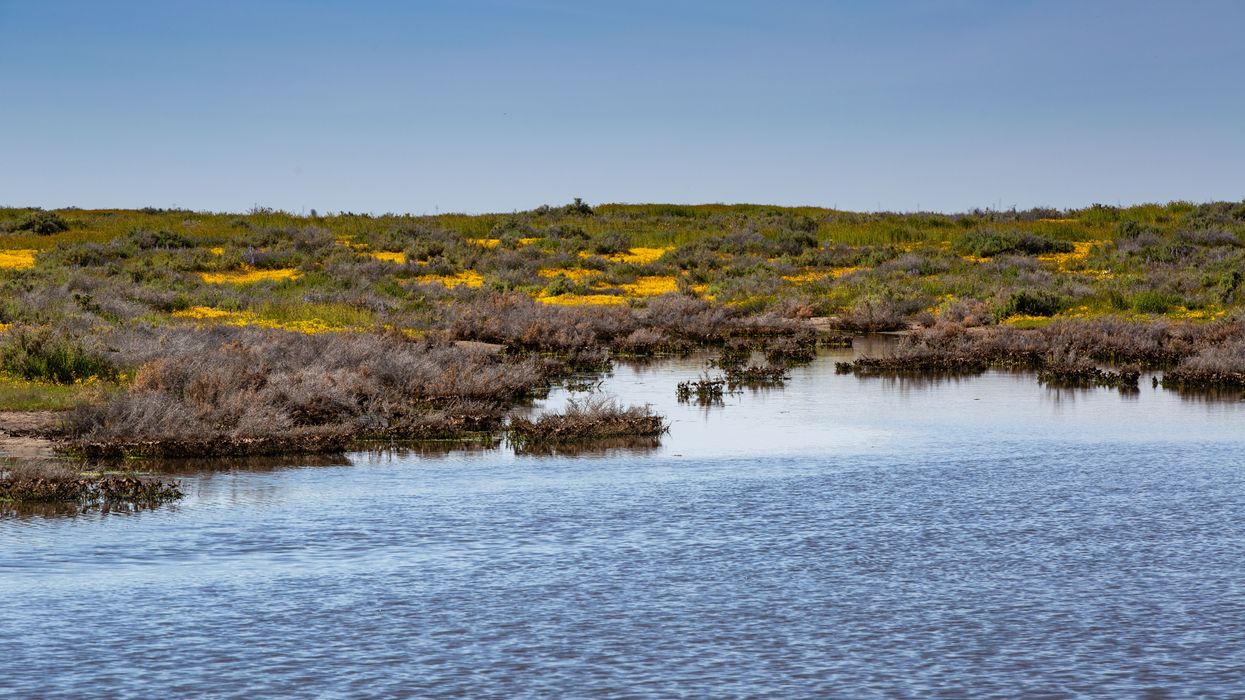
"This proposal declares open season on the nation's waterways," one critic charged.
President Donald Trump's administration sparked fresh fury on Friday when it proposed a supplemental rule to further gut Clean Water Act protections for streams and wetlands in the wake of a "catastrophic" US Supreme Court ruling three years ago.
The supplemental proposal from the Department of the Army and Environmental Protection Agency builds on their widely criticized proposed rule from November for defining "waters of the United States" (WOTUS)—both of which go further than the high court did with its 2023 decision in Sackett v. EPA.
While the American Petroleum Institute and some Republicans in Congress joined Assistant Secretary of the Army for Civil Works Adam Telle and EPA Administrator Lee Zeldin in promoting the new proposal, environmental and public health advocates sounded the alarm.
"What the Supreme Court did in its Sackett decision was an inexcusable assault on clean water," Jon Devine, director of freshwater ecosystems at the Natural Resources Defense Council, said in a Friday statement. "Communities and wildlife will pay the price until Congress fixes it. The Trump administration's answer has been to make a bad situation worse."
"This proposal declares open season on the nation's waterways. It denies federal protection to virtually all wetlands and more than three-quarters of our streams, endangering drinking water supplies and flood-prone communities—and the agencies admit it themselves," he noted. "The proposal would virtually eliminate protection for freshwater wetlands. Their own analysis says most streams would lose protection, with the West hit hardest."
Food & Water Watch legal director Tarah Heinzen declared that "Trump is taking yet another sledgehammer to our bedrock Clean Water Act, shamelessly doubling down on his initial terrible proposal to strip protections from countless streams and wetlands."
"Make no mistake: This unlawful proposal gives bad actors the green light to fill, drain, and poison sensitive waterways from coast to coast," she warned. "The result will be dirtier water for everyone. The administration must reverse course on this dangerous proposal."
Gary Belan, senior director of American Rivers' Clean Water Program, stressed that "our nation's water resources are precious and increasingly at risk. This is not the moment to be jeopardizing the nation's water security by narrowing the safeguards of the Clean Water Act."
The public comment period for the initial proposal has closed but, as Belan noted, the publication of the supplemental rule in the Federal Register kicks off a new 30-day period. He said that "while we appreciate EPA's effort to seek more public comment, the proposed changes will have consequences that will impact communities across the nation if finalized."
"The proposed definitions do not reflect the established science on how rivers function and would significantly reduce the scope of the Clean Water Act," he continued. "When headwater and intermittent streams and wetlands lose protection, downstream flooding worsens, the costs of drinking water treatment rises, and water supplies become less reliable."
Jim Murphy, the National Wildlife Federation’s associate vice president for legal advocacy, pointed out that "this is now the fifth effort to define the scope of the waters protected by the Clean Water Act in the past decade. We need Congress' help to get off this merry-go-round at a place that protects our waters, our wildlife, and our way of life."
"The administration is clearly struggling to craft a rule that will hold up in court while satisfying their donors' desire to effectively scrap these protections wherever possible," he added. "One thing is clear: If we don’t protect our streams and wetlands, the cost of dirtier drinking water and increased flooding will flow downstream to households at a time when most Americans are living paycheck to paycheck."