SUBSCRIBE TO OUR FREE NEWSLETTER
Daily news & progressive opinion—funded by the people, not the corporations—delivered straight to your inbox.
5
#000000
#FFFFFF
To donate by check, phone, or other method, see our More Ways to Give page.
Daily news & progressive opinion—funded by the people, not the corporations—delivered straight to your inbox.
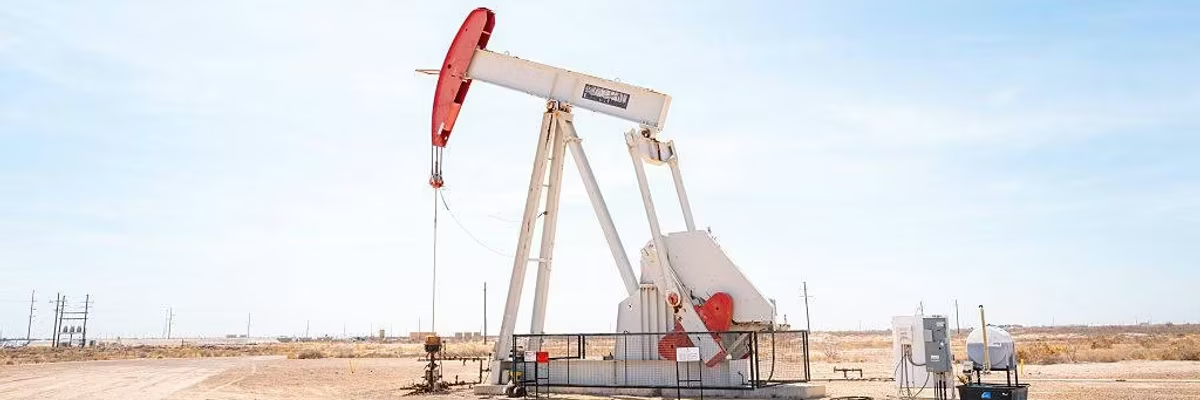
A pump jack is seen in a field on March 18, 2026 in Pecos, Texas.
"The Iran war is exposing the deadly consequences of global fossil fuel dependence."
With the price of oil surging and showing no signs of coming down anytime soon thanks to President Donald Trump's illegal war in Iran, renewable energy advocacy organization 350.org renewed its previous call to slap fossil fuel companies with a windfall profits tax.
In a Friday statement, 350.org noted that the oil supply shortage caused by the Iran war is growing so acute that it's leading to a "global surge" in coal production to meet energy demands.
Specifically, 350.org pointed to both Japan and South Korea lifting their coal consumption limits, as well as Thailand firing up old coal plants that had previously been shut down.
Additionally, the group found that "Indonesia, the world’s largest coal exporter, has reversed planned cuts to production," while "Australia, South Africa, Turkey, and the Philippines are also increasing exports to meet soaring demand."
The group said it expects the increased demand in coal to be a temporary byproduct of the Iran crisis, but warned "it will still impose heavy costs: increased deaths from air pollution, more climate chaos, and a transfer of wealth from consumers to coal producers in the form of windfall profits."
Given this, 350.org executive director Anne Jellema said it was time to impose a windfall profits tax on fossil fuel companies to help fund the continued development of renewable energy sources and provide real long-term relief to global consumers.
"The Iran war is exposing the deadly consequences of global fossil fuel dependence," said Jellema. "Coal producers are making massive profits while governments delay the clean energy transition. It’s a stark reminder why windfall taxes on fossil fuel companies are more relevant than ever."
Jellema added that Trump's Iran war "shows what we have long warned: fossil fuel dependence creates crises, profits for polluters, and suffering for ordinary people," and promoted windfall taxes and accelerated deployment of renewables as "urgent tools to turn this around."
Nations including Germany and Australia are weighing windfall oil taxes during the Iran crisis, and US Sen. Sheldon Whitehouse (D-RI) and Rep. Ro Khanna (D-Calif.) last month reintroduced their the Big Oil Windfall Profits Tax Act, a bill whose stated aim is "to curb profiteering by oil companies and provide Americans relief at the gas pump."
US consumers have been getting hit hard at the gas pump in recent weeks, and Democratic members of the Joint Economic Committee on Thursday released a report showing that Americans have collectively spent $8.4 billion more on gas than they otherwise would have since the beginning of the war.
Dear Common Dreams reader, It’s been nearly 30 years since I co-founded Common Dreams with my late wife, Lina Newhouser. We had the radical notion that journalism should serve the public good, not corporate profits. It was clear to us from the outset what it would take to build such a project. No paid advertisements. No corporate sponsors. No millionaire publisher telling us what to think or do. Many people said we wouldn't last a year, but we proved those doubters wrong. Together with a tremendous team of journalists and dedicated staff, we built an independent media outlet free from the constraints of profits and corporate control. Our mission has always been simple: To inform. To inspire. To ignite change for the common good. Building Common Dreams was not easy. Our survival was never guaranteed. When you take on the most powerful forces—Wall Street greed, fossil fuel industry destruction, Big Tech lobbyists, and uber-rich oligarchs who have spent billions upon billions rigging the economy and democracy in their favor—the only bulwark you have is supporters who believe in your work. But here’s the urgent message from me today. It's never been this bad out there. And it's never been this hard to keep us going. At the very moment Common Dreams is most needed, the threats we face are intensifying. We need your support now more than ever. We don't accept corporate advertising and never will. We don't have a paywall because we don't think people should be blocked from critical news based on their ability to pay. Everything we do is funded by the donations of readers like you. When everyone does the little they can afford, we are strong. But if that support retreats or dries up, so do we. Will you donate now to make sure Common Dreams not only survives but thrives? —Craig Brown, Co-founder |
With the price of oil surging and showing no signs of coming down anytime soon thanks to President Donald Trump's illegal war in Iran, renewable energy advocacy organization 350.org renewed its previous call to slap fossil fuel companies with a windfall profits tax.
In a Friday statement, 350.org noted that the oil supply shortage caused by the Iran war is growing so acute that it's leading to a "global surge" in coal production to meet energy demands.
Specifically, 350.org pointed to both Japan and South Korea lifting their coal consumption limits, as well as Thailand firing up old coal plants that had previously been shut down.
Additionally, the group found that "Indonesia, the world’s largest coal exporter, has reversed planned cuts to production," while "Australia, South Africa, Turkey, and the Philippines are also increasing exports to meet soaring demand."
The group said it expects the increased demand in coal to be a temporary byproduct of the Iran crisis, but warned "it will still impose heavy costs: increased deaths from air pollution, more climate chaos, and a transfer of wealth from consumers to coal producers in the form of windfall profits."
Given this, 350.org executive director Anne Jellema said it was time to impose a windfall profits tax on fossil fuel companies to help fund the continued development of renewable energy sources and provide real long-term relief to global consumers.
"The Iran war is exposing the deadly consequences of global fossil fuel dependence," said Jellema. "Coal producers are making massive profits while governments delay the clean energy transition. It’s a stark reminder why windfall taxes on fossil fuel companies are more relevant than ever."
Jellema added that Trump's Iran war "shows what we have long warned: fossil fuel dependence creates crises, profits for polluters, and suffering for ordinary people," and promoted windfall taxes and accelerated deployment of renewables as "urgent tools to turn this around."
Nations including Germany and Australia are weighing windfall oil taxes during the Iran crisis, and US Sen. Sheldon Whitehouse (D-RI) and Rep. Ro Khanna (D-Calif.) last month reintroduced their the Big Oil Windfall Profits Tax Act, a bill whose stated aim is "to curb profiteering by oil companies and provide Americans relief at the gas pump."
US consumers have been getting hit hard at the gas pump in recent weeks, and Democratic members of the Joint Economic Committee on Thursday released a report showing that Americans have collectively spent $8.4 billion more on gas than they otherwise would have since the beginning of the war.
With the price of oil surging and showing no signs of coming down anytime soon thanks to President Donald Trump's illegal war in Iran, renewable energy advocacy organization 350.org renewed its previous call to slap fossil fuel companies with a windfall profits tax.
In a Friday statement, 350.org noted that the oil supply shortage caused by the Iran war is growing so acute that it's leading to a "global surge" in coal production to meet energy demands.
Specifically, 350.org pointed to both Japan and South Korea lifting their coal consumption limits, as well as Thailand firing up old coal plants that had previously been shut down.
Additionally, the group found that "Indonesia, the world’s largest coal exporter, has reversed planned cuts to production," while "Australia, South Africa, Turkey, and the Philippines are also increasing exports to meet soaring demand."
The group said it expects the increased demand in coal to be a temporary byproduct of the Iran crisis, but warned "it will still impose heavy costs: increased deaths from air pollution, more climate chaos, and a transfer of wealth from consumers to coal producers in the form of windfall profits."
Given this, 350.org executive director Anne Jellema said it was time to impose a windfall profits tax on fossil fuel companies to help fund the continued development of renewable energy sources and provide real long-term relief to global consumers.
"The Iran war is exposing the deadly consequences of global fossil fuel dependence," said Jellema. "Coal producers are making massive profits while governments delay the clean energy transition. It’s a stark reminder why windfall taxes on fossil fuel companies are more relevant than ever."
Jellema added that Trump's Iran war "shows what we have long warned: fossil fuel dependence creates crises, profits for polluters, and suffering for ordinary people," and promoted windfall taxes and accelerated deployment of renewables as "urgent tools to turn this around."
Nations including Germany and Australia are weighing windfall oil taxes during the Iran crisis, and US Sen. Sheldon Whitehouse (D-RI) and Rep. Ro Khanna (D-Calif.) last month reintroduced their the Big Oil Windfall Profits Tax Act, a bill whose stated aim is "to curb profiteering by oil companies and provide Americans relief at the gas pump."
US consumers have been getting hit hard at the gas pump in recent weeks, and Democratic members of the Joint Economic Committee on Thursday released a report showing that Americans have collectively spent $8.4 billion more on gas than they otherwise would have since the beginning of the war.