December, 21 2015, 10:30am EDT

For Immediate Release
Contact:
Nick Cady, Cascadia Wildlands, 314-482-3746, nick@cascwild.org
Timothy Coleman, Kettle Range Conservation Group, 509-675-3556, tcoleman@kettlerange.org
Bethany Cotton, WildEarth Guardians, 406-414-7227, bcotton@wildearthguardians.org
John Mellgren, Western Environmental Law Center, 541-525-5087, mellgren@westernlaw.org
Conservationists Deal Blow to Wildlife Services in Landmark Wolf Case
Court rejects indiscriminate wolf killing
OLYMPIA
In response to a challenge brought by a coalition of conservation organizations, a federal court rejected plans to escalate cruel wolf killing in Washington state by the secretive federal program dubbed "Wildlife Services." Federal District Judge Robert Bryan held that Wildlife Services should have prepared a more in-depth environmental analysis of the impacts of its proposed wolf killing activities, finding the program's cursory environmental assessment faulty because the proposed actions would have significant cumulative impacts that are highly controversial and highly uncertain.
Wildlife Services is a controversial program within the U.S. Department of Agriculture's Animal Plant Health Inspection Service responsible for killing millions of wild animals every year, including wolves, grizzly bears, otters, foxes, coyotes and birds, with almost no oversight or accountability.
Judge Bryan vacated the program's analysis, stating "Wildlife Services shall not take any further wolf management actions in Washington under the proposed action alternative, but shall observe the status quo in place prior to the environmental assessment and [finding of no significant impact]."
"Wildlife Services has long asserted that it need not comply with our nations' federal environmental laws, such as the National Environmental Policy Act, but this decision rejects those arguments and requires Wildlife Services to comply with all federal laws, not just those it finds convenient to comply with," said Western Environmental Law Center Attorney John Mellgren.
A 2013 internal audit revealed that Wildlife Services' accounting practices lacked transparency and violated state and federal laws. The program employs incredibly cruel tools to kill wildlife including aerial gunning, leghold traps, snares and poisons.
"It is long past time that we base wildlife management decisions on the best available science, not on antiquated anti-wolf rhetoric and myth," said Bethany Cotton, wildlife program director for WildEarth Guardians. "Wildlife Services needs to come out of the shadows, update its analyses and adopt practices in keeping with modern science and values about the ethical treatment of animals."
The environmental assessment prepared by Wildlife Services failed to provide data to support several of its core assertions. For example, Wildlife Services claimed that killing wolves reduced wolf-caused losses of livestock, yet recent peer-reviewed research from Washington State University directly contradicts this conclusion, finding that killing wolves actually leads to an increase in wolf-livestock conflicts. The environmental assessment also fails to address the ecological effects of killing wolves in Washington, including impacts on wolf populations in neighboring states and on non-target animals, including federally protected grizzly bears and Canada lynx.
"This decision is so incredibly encouraging," said Nick Cady, legal director of Cascadia Wildlands. "We have been working for over a decade to hold Wildlife Services accountable for its blind, reckless lethal control programs. This decision paves the way for meaningful analysis of the program's impacts and hopefully a meaningful look at whether or not this wolf killing is worth it."
Washington has experienced Wildlife Services' wolf killing program firsthand. In August 2014, Wildlife Services snipers shot and killed the Huckleberry wolf pack's alpha female during a helicopter gunning operation. The death of the Huckleberry pack's breeding female threatens the future of the entire pack.
Wildlife Services also "advised" the Washington Department of Fish and Wildlife in the contentious 2012 killing of Washington's Wedge wolf pack. In that instance, WDFW killed seven wolves after predation of livestock on public lands, despite the rancher's failure to take sufficient action to protect his cattle.
"The Court made a wise and prudent decision that safeguards the legal right of citizens to know what their government is doing in their name," said Timothy Coleman, executive director of Kettle Range Conservation Group. "The so-called Wildlife Services cannot just grant itself authority to execute an endangered species absent the public interest or best available science."
Wolves were driven to extinction in Washington in the early 1900s by a government-sponsored eradication program on behalf of the livestock industry. The species began to return to Washington from neighboring Idaho and British Columbia in the early 2000s and the wolf population in the state has grown to 13 confirmed packs. Despite this growth, wolves in the state are far from recovered and face ongoing threats. According to WDFW, Washington currently has at least 68 wolves in 16 packs.
The organizations, Cascadia Wildlands, WildEarth Guardians, Kettle Range Conservation Group, Predator Defense and the Lands Council were represented by the Western Environmental Law Center.
A copy of the decision is available here.
A copy of the original complaint is available here.
Read more about WELC's work to rein in Wildlife Services and protect wolves here.
The Western Environmental Law Center uses the power of the law to safeguard the public lands, wildlife, and communities of the American West in the face of a changing climate. We envision a thriving, resilient West, abundant with protected public lands and wildlife, powered by clean energy, and defended by communities rooted in an ethic of conservation.
(541) 485-2471LATEST NEWS
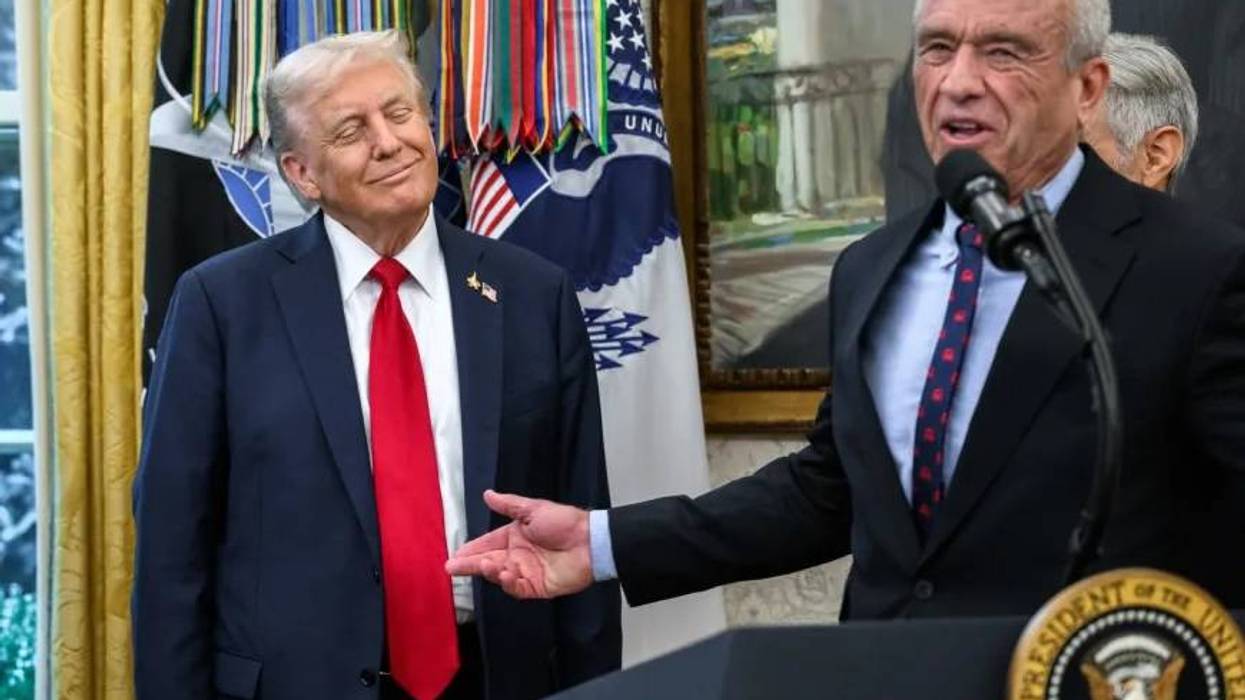
Trump Pharma Deals Called Distraction From 'Failed Plan to Lower US Drug Prices'
"Lasting relief requires transparent, enforceable measures that lower drug prices and hold big drug companies accountable," said one critic.
Aug 31, 2026
US President Donald Trump on Monday announced nine more agreements with pharmaceutical manufacturers intended to lower prescription drug prices nationwide, bringing the total to 26, but patient advocates responded skeptically.
The administration previously struck "most favored nation" (MFN) deals with 17 large drug manufacturers. The new ones with midsized companies—Alcon, Astellas Pharma, BeOne Medicines, BridgeBio, CSL, Kyowa Kirin, Sun Pharma, Teva Pharmaceuticals, and UCB—mean that 89% of the branded drug market is subject to an agreement, according to a White House fact sheet.
"It has been nearly a year since Trump announced his first secret MFN deal with Pfizer, and he has almost nothing to show for it," Peter Maybarduk, Access to Medicines director at the watchdog group Public Citizen, said in a Monday statement. "The new deals are a distraction from the administration's failed plan to lower US drug prices to the levels paid in other wealthy countries."
Earlier this month, Public Citizen released an analysis of Trump's policies to cut drug costs, including MFN deals. Maybarduk said at the time that "Trump has three kinds of drug pricing policy: fake, exaggerated, and not-real-yet, probably-won't-happen."
Following Monday's agreements, the campaigner argued that "a more serious approach would build international reference pricing into Medicare drug price negotiation. Instead, Trump is cozying up to Big Pharma and keeping American drug prices high."
"There still is no evidence that any pharma company has followed through on prior commitments to the Trump administration to launch new drugs at MFN price points," he explained. "Uptake of TrumpRx, which may cause consumers to overpay on medicines, has been lackluster."
TrumpRx is a government-operated website that helps patients find discounted prices and coupons for certain medications—and, as the Public Citizen analysis highlighted, the only part of the president's MFN program that is fully underway.
"The Centers for Medicare and Medicaid Services (CMS) has not announced any state participants in a pilot to test MFN-based prices in Medicaid," Maybarduk noted. "And CMS has failed to issue final rules to test MFN-pricing in Medicare, while simultaneously excluding almost all drug companies from these programs."
Public Citizen said it plans to immediately file a Freedom of Information Act request to obtain the texts of these "farce" deals—a pledge that came just days after US Sen. Elizabeth Warren (D-Mass.) highlighted that Health and Human Services Secretary Robert F. Kennedy Jr. has failed to publicize initial 17 agreements, despite agreeing to do so during an April hearing.
Like Public Citizen, the advocacy group Patients for Affordable Drugs was critical of the new deals, with CEO Merith Basey pointing out that "for decades, drug companies have been charging Americans at least four times more for brand-name medicines than people in other high-income nations."
"Patients need systemic reforms that will lower drug prices, rather than short-term, voluntary agreements whose terms remain secret," she asserted. "The deals announced today focus on Medicaid, where steep discounts already exist, and even then, states can choose whether to participate. Lasting relief requires transparent, enforceable measures that lower drug prices and hold big drug companies accountable."
As the industry trade publication Fierce Pharma reported, the large companies behind the initial deals "made a combination of drug pricing commitments and domestic investment pledges to win temporary immunity from the Trump administration's drug import tariffs," and "individual company press releases Monday, like UCB's, suggest that tariff immunity is still very much part of the MFN equation."
Although Trump's tried taking credit for a recent drop in medication costs, with the White House X account claiming Monday that he's "leveled the playing field, and made prescription drugs more affordable than ever for the American people," as Common Dreams reported earlier this month, experts have cited the Biden administration's policy allowing Medicare to directly negotiate some prices.
As Trump has touted his MFN deals, critics of the United States' for-profit healthcare system have in recent months renewed calls for shifting to Medicare for All—which new research shows would save over 114,000 lives and $1 trillion each year—and other healthcare reforms, including breaking up industry giants, capping drug prices, strengthening antitrust enforcement, and expanding the sector's workforce.
Keep ReadingShow Less

Split Supreme Court Allows Trump Ballroom Construction That Chief Justice Calls 'Likely Unlawful'
"The White House belongs to the people, but Trump consistently acts like it belongs to him alone," said one watchdog, calling out the court's majority for allowing construction on "this illegal project."
Aug 31, 2026
US Supreme Court Chief Justice John Roberts recently let construction on President Donald Trump's White House ballroom continue in a temporary solo decision, but on Monday he sided with the three liberals against the five right-wingers who allowed the project to proceed during a legal battle.
The Trump administration sought intervention from the nation's top court after the US Court of Appeals for the District of Columbia upheld a district judge's ruling that halted above-ground construction but permitted work on an underground bunker and other "national security facilities." Roberts then paused the appellate decision but also sought a review from all justices.
The five justices behind the majority's Monday decision, including Trump's three appointees, concluded the administration "is likely to prevail" in showing that the National Trust for Historic Preservation—which is challenging parts of the widely contested project that's already destroyed the East Wing of the White House—lacks standing.
"This court has not found standing in circumstances like these before. To the contrary, we have repeatedly held that mere offense, disagreement, or distaste does not qualify as a concrete and particularized injury under Article III," the majority wrote, referring to the portion of the US Constitution that addresses the judicial system.
"The government has also established that it will likely suffer irreparable harm from the district court's injunction and that the balance of the equities tips in its favor," the majority added in its unsigned order, which signaled that the merits of the case should continue to be examined by lower courts.
Meanwhile, writing for himself and the liberal justices, Roberts said that the construction "is likely unlawful," given that Congress has not passed legislation authorizing the project, and pointed to the trust's executive committee member Alison K. Hoagland.
"As a Capitol Hill resident, Hoagland regularly visits the White House to take in the historic building's beauty and to appreciate its symbolism. By overshadowing the traditional White House, Hoagland explains, the new ballroom will detract from the building's
message of republican simplicity and thereby worsen her viewing experience," he wrote. "Hoagland's injury suffices for standing."
The high court's majority "misconceives the plaintiff's injury, allowing the executive's likely infringement of the legislature's power of the purse and authority to regulate federal property in the District of Columbia to continue," Roberts added. "Today's decision is no victory for the separation of powers."
The president cheered the majority's decision, writing on his Truth Social platform:
I am pleased to report that the United States Supreme Court has just ruled in favor of the Ballroom/Military Complex being built without any further contingency, doubt, or threat. We are living in the Golden Age of America, and this Building will be one of the Greatest ever constructed in Washington, D.C. When completed in the Summer of 2028, the magnificent Ballroom and Military Complex will be something that the entire Country is very proud of. The Project, despite the baseless lawsuit brought by the so-called National Trust for Historic Preservation of the United States, which is not in any way affiliated with the United States Government, is under budget and ahead of schedule. The Ballroom is totally funded by Great Patriots and Corporations and, therefore, is a Gift — At no cost to the American Taxpayer.
Critics continued to condemn the project after the decision, with US Sen. John Hickenlooper (D-Colo.) stressing on Bluesky that "the president's vanity project does nothing to benefit anyone but Donald J. Trump himself."
"Not a penny to lower your costs," the senator reminded Americans. "This has been a ridiculous waste of taxpayer dollars from the start."
Jon Golinger, democracy advocate at the watchdog group Public Citizen, said in a statement that "in light of this disappointing decision by the court, the next Congress must make investigating Trump's illegal ballroom project and everyone involved with funding and facilitating it a top priority."
Both chambers of Congress are narrowly controlled by Trump's Republican Party, and some GOP lawmakers even tried to boost the project. However, Democrats are aiming to reclaim majorities in the Senate and House of Representatives in the November midterm elections—and if they succeed, they could probe the ballroom and various other concerns from his second presidency.
"Trump suffers from a crippling case of 'palace-envy' and who knows what national treasure he'll demolish next to try to build himself another gold-plated monument," warned Golinger. "For now, we will keep digging into and exposing Trump's ballroom funding schemes, through which he raked in millions from corporations with billions in government contracts and anonymous donors with unknown agendas."
Keep ReadingShow Less
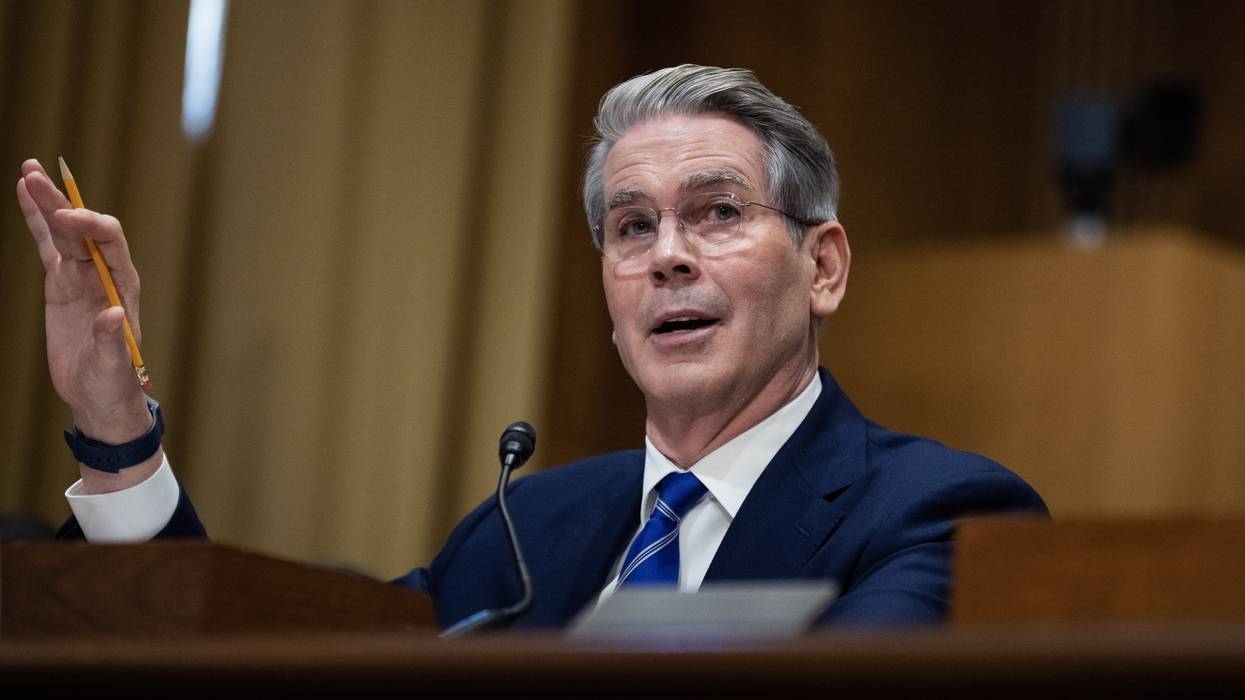
'There Is Absolutely No Justification': Bessent, Rubio Urged to End Sanctions Impacting Iranian Students
"There is no world in which the US preventing young Iranians from taking English proficiency tests leads to the opening of the Strait of Hormuz, and yet that appears to be the rationale for this cruel new policy.”
Aug 31, 2026
A leading grassroots advocacy group for the rights of Iranian Americans called on the Trump administration Monday to rescind the recent message it sent when it announced new sanctions against ordinary Iranians—"that the US is at war with the Iranian people"—and to ensure that "humanitarian, educational, and cultural" entities are exempt from the sanctions.
The National Iranian American Council (NIAC) wrote to Treasury Secretary Scott Bessent and Secretary of State Marco Rubio, warning of the "escalating harm caused by the imminent suspension of long-standing general licenses that had enabled American universities, educational testing and assessment organizations, and other entities to provide educational opportunities to Iranian nationals."
The group appealed to Bessent and Rubio following reports that the Education Testing Service, which administers the Test of English as a Foreign Language (TOEFL) and the Graduate Record Examination (GRE), has suspended testing in Iran following the sanctions. The Duolingo English Test, developed by the language course platform Duolingo, has also been made unavailable in Iran and for students with Iranian IDs.
Despite the fact that President Donald Trump's new sanctions, called "Operation Economic Outcast," are purported to target the Iranian government as it restricts access to the Strait of Hormuz in retaliation for the US-Israeli war against Iran, the policy changes have "no conceivable impact on the Iranian government," wrote NIAC president Jamal Abdi.
"Instead, it is already being felt by American entities and Iranian students," Abdi wrote. "Iranian students have been barred from taking key exams required for academic studies by US organizations."
Abdi called on the administration to immediately reinstate 31 CFR § 560.544, which authorizes "certain educational activities by US persons in third countries," and Iran General License G, which authorizes educational exchanges.
“The Trump administration would be wise to bolster the limited educational, humanitarian, and cultural channels that exist between ordinary Iranians and the United States, rather than send a message that the US is at war with the Iranian people.”
"For years, Iran was among the nations with the highest demand for TOEFL examinations," he wrote. "Regrettably, the severing of these key global educational testing platforms will create major hurdles for Iranian nationals pursuing international education."
The administration's policy changes leave Iranian students facing "overlapping barriers to studying in the United States: a travel ban preventing Iranians from securing US visas, alongside sanctions restricting access to English proficiency exams, educational services, and enrollment in US universities," said NIAC.
“There is no world in which the US preventing young Iranians from taking English proficiency tests leads to the opening of the Strait of Hormuz and yet that appears to be the rationale for this cruel new policy,” said Abdi in a statement. “The Trump administration would be wise to bolster the limited educational, humanitarian, and cultural channels that exist between ordinary Iranians and the United States, rather than send a message that the US is at war with the Iranian people.”
Abdi also urged Bessent and Rubio to reverse the suspension of licenses for Iranian Americans to send remittances to family members in Iran and those that allow sports matches between Iran and the US. The latter suspension, he wrote, "carries significant risk of complicating the 2028 Olympic Games in Los Angeles and reflects poorly on the US as a host nation while yielding no discernible benefit."
The exemptions that have been suspended by the White House, said Abdi, "were first established over a decade ago to resolve harmful unintended consequences of US sanctions, such as cutting ordinary Iranians off from academic opportunities."
"Now, it appears that these have become very much intended consequences aimed at the Iranian people, which is a self-defeating message for the US to send to Iranians and the world,” Abdi continued. “There is absolutely no justification for this."
Keep ReadingShow Less
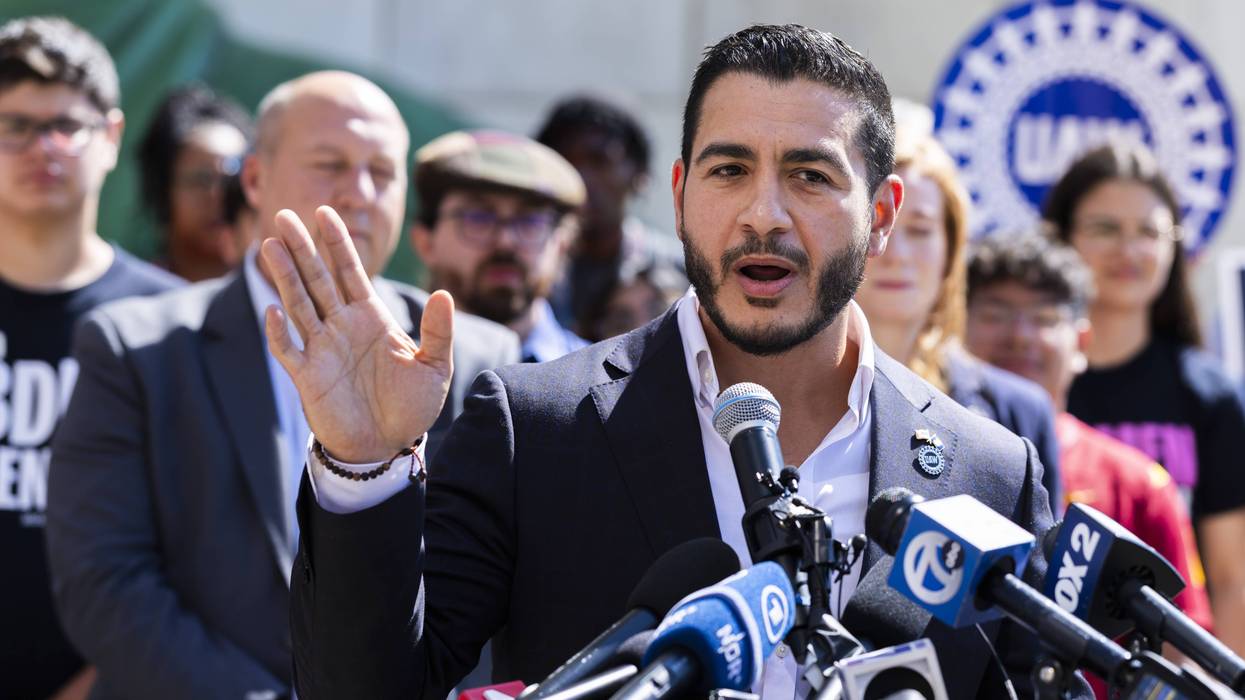
Lawmakers, Journalists Rip CBS News Over 'Insane, Blatantly Racist Headline' on Abdul El-Sayed
"The Bari Weiss project... is to revive post-9/11 Islamophobia in mainstream politics," said one critic.
Aug 31, 2026
Several Democratic lawmakers on Monday slammed CBS News for publishing a news analysis linking Democratic US Senate candidate Abdul El-Sayed to the September 11 terrorist attacks.
The CBS story claimed that El-Sayed "may be facing the risk of renewed scrutiny and fresh political attack" ahead of the 25th anniversary of the 9/11 attacks, which killed over 3,000 people in New York, Pennsylvania, and Virginia.
The piece cited two deleted El-Sayed social media posts to make its case: One in which he called on Americans to unite in a common purpose to combat the Covid-19 pandemic just as they came together after the 2001 attacks, and another where he drew attention not just to the victims who died on 9/11, but to all the people who died afterward as a result of the US War on Terror.
El-Sayed defended the latter post in an interview with CBS News.
"My point is just to say that what happened on 9/11 is a disaster," El-Sayed said. "It was a terrible attack on our country and our responsibility is also to think about how do we build an America where we are protecting our servicemen and women from being asked to fight wars we have no business fighting that ultimately end up doing harm to people. And we're seeing that right now."
Critics slammed the CBS analysis, which they said unfairly tarred El-Sayed—a Muslim and son of Egyptian immigrants who has repeatedly faced Islamophobic and racist attacks—as a terrorist sympathizer even as he has consistently denounced the 9/11 attacks.
"What an insane, blatantly racist headline," wrote Rep. Yassamin Ansari (D-Ariz.) in a social media post. "Unreal."
Rep. Rashida Tlaib (D-Mich.) also slammed the CBS story as "racist," adding that "targeting Abdul like this is intentional and coordinated."
The Nation's Jeet Heer argued that the CBS News piece reflected the change in management the network has undergone ever since owner David Ellison put Bari Weiss in charge of it.
"To be clear the Bari Weiss project... is to revive post-9/11 Islamophobia in mainstream politics," wrote Heer. "These are profoundly illiberal people, who should be combated not just by the left and progressives but anyone committed to civil equality."
Responding to the network's post promoting the article on the platform X, Zeteo editor-in-chief Mehdi Hasan asked CBS News if it ever considered that "it's super offensive and disgusting and Islamophobic to do a tweet about the potential first-ever Muslim Democratic senator which begins by referencing 9/11?"
Adam Johnson, host of the Citations Needed podcast, highlighted the El-Sayed social media posts flagged by CBS and argued that the network is trying "to scandalize perfectly sensible and humane comments."
Progressive commentator Wajahat Ali said that he's seen a lot of mainstream media articles attacking El-Sayed, but concluded that "this one takes the cake for being so exquisitely racist."
According to Zeteo media columnist Justin Baragona, one anonymous CBS News staffer is also raising concerns about the El-Sayed story, which they called "trash" and "horribly Islamophobic."
Keep ReadingShow Less

Court Lets US Abortion Pill Access Continue—Until Trump FDA Finishes Review Condemned as 'Sham'
A federal judge opted not to rule on a lawsuit seeking to overturn FDA approval of mifepristone until the FDA completes a review that has been described as a political pretext to restrict abortion.
Aug 31, 2026
Access to the abortion drug mifepristone will remain unchanged in the US for now after a federal district judge on Sunday paused a lawsuit aimed at overturning the Food and Drug Administration's approval of the medication. But he left the door open for the Trump administration to restrict access to the drug.
US District Judge Reed O'Connor of the Northern District of Texas refused the manufacturer's motion to dismiss a lawsuit brought by Texas and Florida seeking to overturn FDA approval of mifepristone altogether. But the judge accepted the US Department of Justice's (DOJ) motion to stay the case until December 1, or until the FDA completes a "review" of the drug that it will use to determine whether access to it should be tightened.
That FDA review, spearheaded by Health and Human Services Secretary Robert F. Kennedy Jr., has been criticized as a politicized effort to create a pretext for the anti-abortion Trump administration to restrict abortion pill access, including in states where the procedure is legal.
Nearly 700,000 people use mifepristone per year, according to the Guttmacher Institute, which has found it to be the method for the majority of US abortions in recent years.
Receiving it through the mail via out-of-state telehealth providers has become a go-to method for those in states with bans on terminating a pregnancy. The drug has been used by around 7.5 million people since it was first approved in 2000.
The FDA's own current webpage states that its periodic reviews of mifepristone have “not identified any new safety concerns” and that the drug is safe when used as directed. Prior FDA reviews have found that hospitalization occurs in only 0.04-0.6% of all medication abortions.
Despite the lack of any clearly identified risk, the Trump FDA has said that the ongoing review could lead to “substantive changes" to the Risk Evaluation and Mitigation Strategy for the drug, leading some to argue that it is a "sham" meant to create a scientific justification for the administration's goal of restricting abortion.
"Ensuring legal access to mifepristone in the long term is vital to women’s healthcare and reproductive freedom," said Evan Masingill, the CEO of GenBioPro, which manufactures generic mifepristone and sued to defend the FDA's approval of its product.
"We expect the FDA’s review of mifepristone to not contradict the decision they made in 2023 that reaffirmed our product is safe and effective," Masingill said.
The US Supreme Court ruled earlier this year that lower courts could not block the FDA's 2023 decision, under the Biden administration, to lift in-person dispensing requirements for mifepristone following the overturning of Roe v. Wade the previous year. The in-person requirement was lifted following a 2021 FDA review that deemed the rules unnecessary.
The Supreme Court has previously blocked individual anti-abortion doctors from bringing lawsuits against the FDA, ruling that they did not have standing to claim personal injury.
But Texas and Florida have sought to get around this by suing as states, and so far, courts have allowed them to do so. The conservative 5th Circuit accepted a similar argument from Louisiana earlier this year.
However, O'Connor—an appointee of former President George W. Bush—did not rule on the merits of whether the states' claims against the FDA were correct.
But even if that lawsuit fails, the Trump administration could dramatically curtail access to mifepristone by reinstating in-person dispensing requirements, placing new limits on which pharmacies can dispense the drug, and adding new requirements for prescribers and patients.
“The FDA has affirmed time and again that mifepristone is safe and effective,” said Skye Perryman, President and CEO of Democracy Forward, which is representing the drugmaker. “Far-right, anti-science extremists may be pressuring the Trump-Vance administration to reach a different, ideologically-driven outcome, but we will continue to represent our clients to hold the FDA to the same science-based standards it has long applied to protect people’s ability to access effective, evidence-based healthcare, including protecting access to medication abortion.”
Keep ReadingShow Less

As Ocean Temperatures Rise, Coral Reefs Face Closing Window for Recovery From Climate Damage
Persistent marine heatwaves are causing a "staircase of decline that becomes harder to reverse with every bleaching event," said one scientist.
Aug 31, 2026
The destruction of coral reef cover, cataloged in the largest global assessment of the reefs ever completed, was distressing to scientists, with the world's reefs declining by nearly 10% between 2020-24, compared with 1980-2009.
The authors of the report released Monday by Global Coral Reef Monitoring Network (GCRMN), however, emphasized that coral bleaching events driven by ocean heating was not the most worrisome finding of the analysis—but rather, the fact oceans have become so warm that stressed reefs have less and less time to recover.
Historically, coral bleaching events—in which changes in conditions such as ocean temperatures and pollution cause coral to expel its symbiotic algae and become completely white and more vulnerable to mortality—have taken place about once in a decade, giving the reefs years to recover.
Now, the reefs are “lucky to get five or six years,” as water temperatures are remaining high and making it more difficult to regain hard coral cover, explained Manuel González Rivero of the Australian Institute of Marine Science, the lead author of the report, titled “Status of Coral Reefs of the World: 2025.”
“After decades of studying coral reefs, what concerns me most isn’t the current loss of hard coral cover; it’s that we’re steadily eroding the conditions they need to recover,” said González Rivero. “Climate change is driving more frequent and severe marine heatwaves, but local pressures such as poor water quality, overfishing, and coastal development are making reefs even less able to withstand them."
The study compiled 21.1 million observations from 36,886 reef sites across 124 countries and territories, drawing on more than 40 years of data from across the globe.
But scientists cautioned that because the research did not include the most recent and intense global bleaching event, which lasted from 2023-25, it may not provide a full picture of the danger coral reefs are in—as well as the coastal communities they help protect and the thousands of marine species they serve as a habitat for.
Carlos Duarte, a marine scientist at the Coral Research and Development Accelerator Platform, told The New York Times that this year's El Niño warming trend is likely to cause another global bleaching event next year, which reefs will likely struggle to recover from as ocean temperatures have been recorded as getting hotter and hotter in recent years.
The Intergovernmental Panel on Climate Change has projected that the Earth will lose 70-90% of its coral reef cover if the planet gets 1.5°C hotter than its preindustrial level.
"For many reefs affected by the unprecedented marine heatwaves in 2024, this year’s El Niño likely means they’ll have had little more than a year to begin recovering before being hit again," said González Rivero. "This is creating a staircase of decline that becomes harder to reverse with every bleaching event.“
The report emphasizes that reefs have maintained their ability to regain hard coral cover "when disturbances are reduced and sufficient recovery time is available," such as after the third major global coral bleaching event since 1998, which took place from 2016-17 and saw a 6.6% decline in coral.
After the event, scientists observed a "relative increase of approximately 6% between 2017 and 2019," said the GCRMN.
"That recovery matters because the benefits coral reefs provide extend far beyond the reef itself. Coral reefs cover less than 0.2% of the ocean floor," said the organization. "Yet, they support at least 25% of all marine species and underpin food security, livelihoods, coastal protection, tourism, and cultural heritage of close to one billion people worldwide."
Scientists including Terry Hughes, a former director of coral reef studies at James Cook University in Australia, who was not involved in the analysis, emphasized that reducing planet-heating emissions is the top solution to the crisis of coral reef recovery, as the pollution from fossil fuel extraction is linked to increasingly hot oceans.
Allowing coral reefs to recover from bleaching events "really depends on how much more greenhouse gases go into the atmosphere and the amount of warming that causes," Hughes told the Times, while local solutions including reducing water pollution are also crucial for maintaining reef health.
David Obura, chair of the Intergovernmental Science-Policy Platform on Biodiversity and Ecosystem Services, expressed hope that the report will "shake us out of our persistent inertia."
The long-term monitoring by GCRMN, said Obura, "tracks not just the pulse of coral reefs, but of our planet too. It shows which regions are under the greatest pressure, that actions to date have not been sufficient, and warns where reefs will be under increasing threat in years to come."
"We must act now to halt this decline and invest in solutions that reduce pressures and build resilience, while sustaining the monitoring that turns good intentions into effective policy," he said. "The 40 years of data in this report provide a strident warning that delayed action risks locking in irreversible losses—not just to reefs, but also to the economies and people that depend on them.”
Keep ReadingShow Less

Trump Hammered Over Iran War That Drove Gas Prices Above $4 Per Gallon Every Day in August for First Time Ever
"Donald Trump started a deadly and costly war with Iran that has driven gas prices through the roof, and Americans are breaking the bank to fill up at the pump."
Aug 31, 2026
President Donald Trump's illegal war with Iran has achieved a significant milestone, but it's not one that many US voters will likely appreciate.
Data published by the American Automobile Association (AAA) on Monday show that the average price for gas in the US now stands at $4.08 per gallon, or $0.90 per gallon more than the average price one year ago.
Gas prices typically decline throughout summer months, but the spike in oil prices caused by the Iran War has kept prices elevated in August beyond anything seen in prior years.
"For the first time ever, the national average in August has been above $4 per gallon every day," explained AAA. "This month is poised to set a new record as the most expensive August at the pump, surpassing the previous August record set in 2022."
Kendall Witmer, rapid response director for the Democratic National Committee, slammed Trump in a Monday statement where she accused the president of making policy to benefit his fossil fuel industry donors while leaving working-class Americans holding the bag.
"Donald Trump started a deadly and costly war with Iran that has driven gas prices through the roof, and Americans are breaking the bank to fill up at the pump," said Witmer. "Meanwhile, Trump and Big Oil executives who donated to his campaign are profiting off his war, cashing in at the expense of hardworking Americans. In Trump’s world, the rich and powerful come first, while everyday Americans get left in the dust."
High gas prices have become a major political headache for Trump, as a recent analysis estimated that Americans have paid $71.5 billion more to fill up their cars thanks to the president's war.
Meanwhile, a mandated ethics filing released last week shows Trump made more than 1,000 stock transactions in June, including thousands of dollars invested in energy companies profiting off of his war.
CNBC reported on Monday that the president is scheduled to meet with US refiners and fuel distributors as part of an effort to lower gas prices ahead of the midterm elections in November.
Keep ReadingShow Less

Dems Call for Cancellation of $17 Million Contract to Equip ICE Agents With Electric Shock Gloves
"Introducing low-visibility electric shock weapons into our immigration enforcement system is an unacceptable escalation."
Aug 31, 2026
A group of House Democrats on Monday demanded the immediate cancellation of a nearly $17 million federal contract to provide electric shock gloves to Immigration and Customs Enforcement agents, who have been unleashed on American cities under the second Trump administration and enabled to commit horrific—and, in some cases, deadly—abuses against undocumented immigrants and American citizens.
The Democratic lawmakers, led by Rep. Delia Ramirez of Illinois, expressed "profound alarm" over the contract in a new letter to Department of Homeland Security (DHS) Secretary Markwayne Mullin, whose agency oversees ICE. The letter's 50 signatories wrote that the devices, known as Generated Low Output Voltage Emitters (GLOVE), are "designed to inflict severe pain without leaving physical evidence or visible optics," making them "a uniquely dangerous tool for unaccountable abuse."
"We demand the immediate cancellation of this contract and a total ban on the deployment of these abusive devices across all immigration enforcement and detention operations," the lawmakers continued. "The rollout of these weapons to thousands of field agents across ICE’s Enforcement and Removal Operations and Homeland Security Investigations contributes to a DHS environment already under widespread scrutiny for state-sanctioned abuse, torture, and arbitrary cruelty."
The Democrats sent their letter days after ICE granted a $16.7 million no-bid contract to the Kentucky-based firm Compliant Technologies for 6,000 pairs of electric shock gloves, ignoring the protests of lawmakers and human rights groups.
The ACLU, Physicians for Human Rights, and the Center for Victims of Torture (CVT) are among the advocacy organizations that have decried ICE plans to equip its agents with the gloves. CVT has described the devices as "inherently abusive equipment that facilitates torture."
In their Monday letter, the group of House Democrats warned that the "dangers of these 'less-lethal' weapons are not theoretical," pointing to the case of a 43-year-old man in Kentucky who died after corrections officers shocked him dozens of times with electric gloves.
More than 50 people have died in ICE custody during President Donald Trump's second term.
"This administration continues to outfit ICE and [Customs and Border Protection] with the tools of an occupying paramilitary force—despite widespread human rights violations carried out by its agents during immigration enforcement actions," the lawmakers wrote. "Introducing low-visibility electric shock weapons into our immigration enforcement system is an unacceptable escalation that prioritizes physical intimidation and unaccountable force over human safety and administrative accountability.
On top of calling for cancellation of the contract, the House Democrats demanded information on any threat assessments ICE conducted before awarding the contract, whether the agency has trained its officers with electric shock gloves, and whether DHS intends to implement any productions to "prevent officers from using them for punitive measures, retaliation, or against non-threatening individuals."
"We reiterate our demand that you immediately halt the acquisition and deployment of electric shock gloves, cancel the contract, and refocus the Department’s resources on accountability and humanitarian standards rather than expanding a paramilitary apparatus," the lawmakers wrote.
Keep ReadingShow Less

‘Unconscionable, Immoral, and Illegal’: Lawsuit Targets Trump Approval of Cancer-Causing Forever Chemical
“While everyone’s distracted by the Trump administration’s erratic actions on the world stage, it keeps approving dangerous forever pesticides right here on our own soil."
Aug 31, 2026
Environmental groups have sued the Trump administration, alleging the Environmental Protection Agency approved a potentially cancer-causing "forever chemical" for use as an herbicide without fully assessing the risk.
The petition was filed Friday in the US Court of Appeals for the 9th Circuit by the Center for Food Safety, the Center for Biological Diversity, and Pesticide Action & Agroecology Network North America, who asked the court to throw out the EPA's June 30 approval of trifludimoxazin and six products containing it for use on a wide range of crops including corn, wheat, soybeans, and apples.
Trifludimoxazin is part of the family of per- and polyfluoroalkyl substances, synthetic chemicals with strong carbon-fluorine bonds that can take years to fully break down, earning them the nickname "forever chemicals."
The trifludimoxazin was initially approved in 2021 during the Biden administration. But the company agreed to stop selling the product the following year after environmental groups sued, citing its potential to cause cancer and harm to threatened and endangered fish. But the Trump EPA last year proposed registering it again for widespread use and issued a final approval in June.
The groups argue that the EPA approved the use of trifludimoxazin without accounting for evidence that the pesticide could cause cancer and harm wildlife and ecosystems.
The EPA itself has acknowledged that the chemical could harm many endangered and threatened species, including posing chronic risks to bees and other invertebrates. Meanwhile, rodent studies have found that at high doses, the chemical can cause thyroid tumors and adverse effects on the liver and reproductive systems.
The chemical, which blocks an enzyme in plants needed for growth, has been described as 10 times as potent as dicamba, another weedkiller used on soybeans and cotton, whose products have caused millions of acres of unintended crop damage since its approval in 2017.
But though the EPA's own guidance states that carcinogenic effects in animals could point to human risk, the agency stated that its final risk assessment found “no human health risks of concern."
The plaintiffs argue that the EPA did not take all the proper steps to reach this conclusion, having failed to quantify the chemical's danger, especially when combined with exposure to other approved chemicals.
“Trifludimoxazin is a likely human carcinogen that belongs to a family of weedkillers that also causes reproductive harm, birth defects, and neurological deficits in animal studies,” said Bill Freese, science director at the Center for Food Safety. “As if the health threats weren’t enough, this incredibly potent herbicide can drift to stunt crops and wild plants hundreds of yards from a sprayed field, while runoff threatens wetland plants. Potent biocides like this have no business on the American landscape.”
The lawsuit also notes that two of the approved trifludimoxazin products combine it with another toxic herbicide called saflufenacil, meaning that farmworkers who apply the chemicals could be exposed to the effects of both at once. The plaintiffs said the EPA did not evaluate the risk that would be posed to farmworkers who are exposed to these chemicals.
“While everyone’s distracted by the Trump administration’s erratic actions on the world stage, it keeps approving dangerous forever pesticides right here on our own soil,” said Nathan Donley, environmental health science director at the Center for Biological Diversity. “It’s unconscionable, immoral, and illegal. Our kids and grandkids deserve better than to be saddled with pollution that never goes away.”
Keep ReadingShow Less
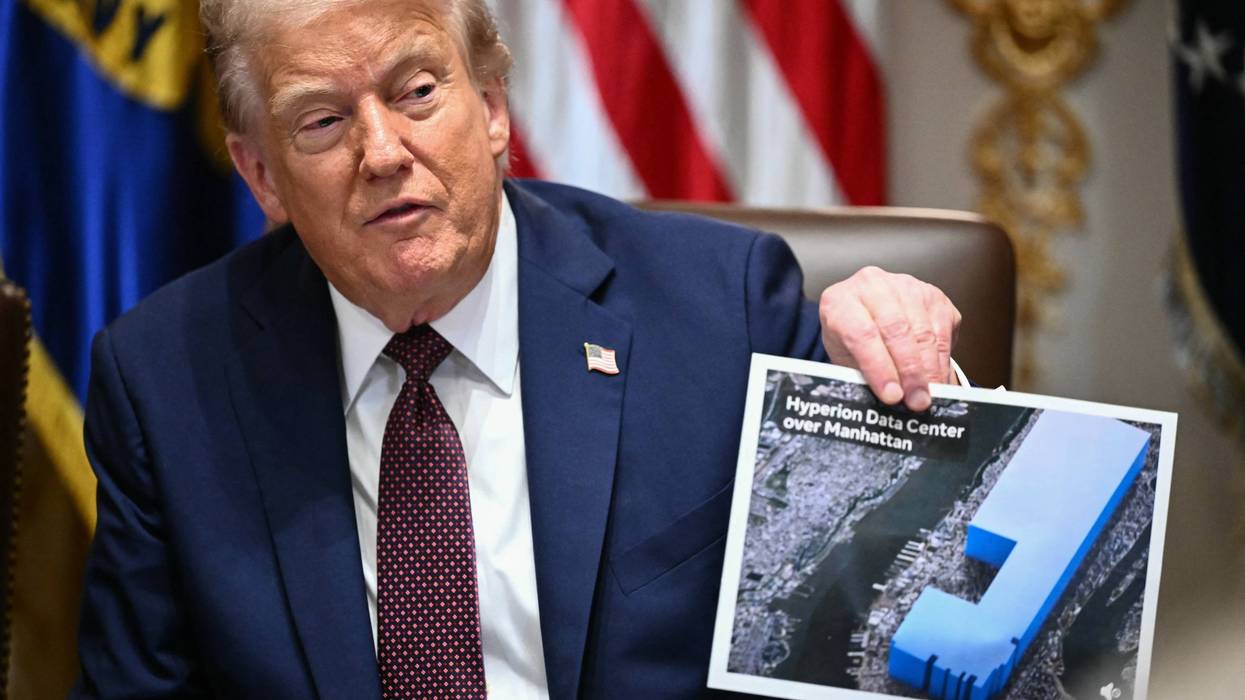
Out-of-Touch Trump Says Communities That Reject AI Data Centers Will Be 'Backwards and Poor'
"Donald Trump is actively trying to help as many Democratic senators as possible get elected," said one polling expert.
Aug 31, 2026
President Donald Trump on Monday warned Americans that they risk becoming "backwards and poor" unless they allow Big Tech companies to build artificial intelligence data centers in their communities.
In a social media post, the president expressed indignation that any town or city wouldn't welcome data centers, which have drawn nationwide opposition for generating pollution and jacking up utility bills.
"The only reason that communities throughout the USA should not want Data Centers is if they want to end up being backwards and poor," Trump wrote. "If they want to be successful and rich, with far lower taxes and jobs all over the place, let Data Reign."
In reality, AI data centers create very few jobs once they are completed, as most of their functions are fully automated.
Trump then said that Americans "will only have yourselves to blame" if they "kill the Golden Goose" that is AI data centers.
"China could not be happier with this anti Data Center movement," Trump wrote. "Actually, they can't believe it is happening!"
Building AI data centers has become massively unpopular throughout the US.
A poll conducted by Embold Research and published by Heatmap Pro earlier this month shows that 75% of Americans now oppose building AI data centers in their area, including 61% registering strong opposition.
While Republicans polled in the survey were more supportive of data centers than Democrats and independent voters, it nonetheless found that opposition among Republicans outweighed support by 43 points.
Polling analyst G. Elliott Morris marveled at how politically tone deaf the president sounds when it comes to data centers, commenting that "Donald Trump is actively trying to help as many Democratic senators as possible get elected."
Longtime GOP operative Frank Luntz similarly noted data centers' unpopularity, citing a recent Gallup poll showing 63% of Republican voters oppose having one of the facilities built in their communities.
"We’re about to see whether President Trump can sway those voters to support them, as he’s done on many issues before," Luntz remarked.
Democratic US Senate hopeful Abdul El-Sayed wasted no time tying the president's position on data centers to his opponent, Republican Mike Rogers.
"Make no mistake—this is Mike Rogers' position on data centers," wrote El-Sayed. "He's got up to $2.6 million invested in companies cashing in on the data center boom, all while Michiganders watch their utility bills soar. You can't trust a word out of Mike's mouth because he's only out for himself, for Donald Trump, and for Big Tech—not Michigan."
Faiz Shakir, a longtime adviser to US Sen. Bernie Sanders (I-Vt.), observed that Trump is merely "sharing the perspective of Wall Street and Big Tech" and is showing "no interest... in grappling with the mass revolt across American communities, or to learn anything from them."
Screenwriter David Simon, creator of the acclaimed television series The Wire, accused Trump of brazenly lying about data centers' economic benefits.
"If data centers are a geographic benefit to communities, you can be sure they'd be siting and building them in affluent and politically connected environs," wrote Simon. "Curiously, they're dumped in poorer, less influential places. Go fucking figure."
Republican Kentucky state Rep. Savannah Maddox took issue with the president disparaging communities opposed to data centers, which include many of the rural communities that voted for him in three presidential elections.
"Rural doesn’t mean 'backwards and poor' and development doesn’t always equate to being 'successful and rich,'" wrote Maddox. "President Trump wouldn't be president without the rural voters who inhabit America’s heartland. It is not wrong of us to question the sudden and wide-scale effort to convert arable land into data centers. We are not stupid for wanting to protect our rural way of life."
Keep ReadingShow Less
See More
Most Popular