

SUBSCRIBE TO OUR FREE NEWSLETTER
Daily news & progressive opinion—funded by the people, not the corporations—delivered straight to your inbox.
5
#000000
#FFFFFF
To donate by check, phone, or other method, see our More Ways to Give page.
Daily news & progressive opinion—funded by the people, not the corporations—delivered straight to your inbox.
Josie Shields-Stromsness (510) 548-0542/ meca@mecaforpeace.org
The Shoruq organization, based in the West Bank, has been selected as one of only 20 organizations from around the world to be awarded inaugural funding from the With and For Girls Awards for their work with Palestinian refugee girls. Shoruq, meaning 'sunrise' in Arabic, was created by and for Palestinian refugees in 2012.
The Shoruq organization, based in the West Bank, has been selected as one of only 20 organizations from around the world to be awarded inaugural funding from the With and For Girls Awards for their work with Palestinian refugee girls. Shoruq, meaning 'sunrise' in Arabic, was created by and for Palestinian refugees in 2012.
Shoruq's programs are geared towards political, social, cultural and economic prosperity and dignified life for all refugees in Occupied Palestine and the Diaspora. They focus on empowering Palestinian refugees in shaping a just solution and a better future for themselves and future generations.
"Palestinian women and girls bear a heavier burden living under Israeli occupation and ongoing violence," stated Barbara Lubin, MECA's Executive Director and Founder. "I have been visiting Palestine for almost 30 years, and the situation continues to worsen for many, especially those living in refugee camps. This demands special focus and attention to the situation of young women, and we celebrate that The With and For Girls Awards recognize this reality." MECA has supported Shoruq since its inception, and provides ongoing resources for training in journalism and human rights for youth, summer camps, art activities, and lessons in traditional debka dance.
Dalia Ramadan, a teenage member of Shoruq, stated "We started our group two and a half years ago to use art and music to tell the world about our lives as Palestinians and as young girls. I'm so privileged to have Shoruq as a second home. They helped me to develop my skills and gave me tools to find a way through art to reflect what is inside of me."
The With and For Girls Collective was convened by the Stars Foundation and consists of EMpower (the Emerging Markets Foundation), Mama Cash, the Nike Foundation, NoVo Foundation, Plan UK, The Global Fund for Children and the Malala Fund.
Sophia Alaysa, another young member of Shoruq who takes part in their music and dance program, explained her participation, stating "There are nine girls in our group between ages 12 and 14. We write all our songs together. We have a song about the dreams of children in refugee camps, another about children with special needs, and one about child soldiers that we are working on right now."
The Middle East Children's Alliance is a nonprofit organization working for the rights and the well-being of children in the Middle East. MECA supports dozens of community projects for Palestinian children and refugees from Syria. Since 1988 we have delivered $27 million in food and medical aid to Palestine, Iraq, and Lebanon. MECA welcomes the support of all people who care about children and their future.

"Another day, another Trump policy to make voting harder. His new target? Nursing homes."
The Trump administration's far-reaching assault on voting rights has extended to nursing homes, a group of Democratic senators warned on Thursday, pointing to federal guidance recently issued by the Center for Medicare and Medicaid Services.
The guidance, released in July, removes previous recommendations on how nursing home staff can assist residents in exercising their constitutional rights and warns facility employees against violating "federal or state voting laws." The guidance points to a highly dubious Texas case in which a social worker was charged with orchestrating an election fraud scheme, even though no improper votes were cast.
In a letter sent earlier this week to CMS Administrator Mehmet Oz, Sens. Alex Padilla (D-Calif.), Elizabeth Warren (D-Mass.), and 11 other Democrats argued that the agency's July guidance "may intimidate nursing home staff from helping residents exercise their constitutional right to vote and ultimately prevent nursing home residents from voting."
"The nation’s 1.2 million nursing home residents face unique problems in obtaining access to the voting booth," the lawmakers added, "and must not be denied their rights because they are disabled, elderly, lack transit, or face difficulties in obtaining a ballot or voting in person."
The senators emphasized that the new CMS memo breaks with guidance issued during President Donald Trump's first term in the White House. That guidance, issued in October 2020, states that "nursing homes should have a plan to ensure residents can exercise their right to vote, whether in person, by mail, absentee, or other authorized process."
Such language is entirely absent from the new guidance, which focuses heavily on preventing voter fraud—an obsession of Trump's, despite it being extremely rare in the US.
"CMS's release of this memo is just the latest in a series of actions the Trump administration has taken to restrict vote by mail and undermine the right to vote based on unfounded allegations of voter fraud tied to the president’s denial of prior valid election results," the Democratic senators wrote in their letter. "We are concerned that by highlighting examples of prior voter fraud investigations and threatening criminal penalties on nursing home staff—many of whom are legal immigrants who have already been targeted by Trump’s immigration policies—CMS’s July 2026 guidance may intimidate nursing home staff from helping residents with the voting process."
"And the removal of guidance on vote by mail procedures, combined with specific threats to investigate nursing home staff for assisting residents who are exercising their right to vote, may deter nursing homes from assisting residents with voting by mail," they added. "Ultimately, we are concerned that the changes to CMS’s guidance will result in the disenfranchisement of nursing home residents."
Another day, another Trump policy to make voting harder.
His new target? Nursing homes.
Dr. Oz issued a memo that seems designed to intimidate nursing home staff from helping residents vote.
I’m calling on Dr. Oz to withdraw this guidance and stop impeding the right to… https://t.co/Fg4LA4pH9p
— Elizabeth Warren (@SenWarren) August 13, 2026
The Houston Chronicle, in its coverage of the new CMS guidance, spotlights the Trump administration's decision to cite the Texas case, which involved social worker Kelly Brunner.
"When Kelly Brunner was tasked in 2020 with getting the State Supported Living Center in Mexia ready to vote, she was excited to assist the residents with intellectual and developmental disorders prepare for a big election. Instead, her work as the assistant voter registrar at the facility east of Waco spiraled into a nightmare," the outlet noted. "Brunner admitted making technical errors in the complicated registration system, which were all quickly caught; no resident cast an improper vote. Yet, pushed by Attorney General Ken Paxton—who at the time was promoting President Donald Trump’s false claims of a rigged presidential election—she was criminally charged with orchestrating one of the largest election fraud cases ever in Texas."
"Brunner spent $50,000 on lawyers, pleaded guilty to minor charges to put it behind her, lost her teacher’s license and nearly her social worker’s license," the Chronicle added. "Still, she thought the episode was finally over—until... [CMS] cited Brunner as the reason it needed to officially place employees of long-term care facilities on notice that they should be on the lookout for voter fraud in the upcoming midterm elections."
Richard Mollot, executive director of the New York-based Long Term Care Community Coalition, told the Chronicle that the Trump administration's heavy focus on preventing voter fraud "will have a chilling effect" on nursing home resident voting.
"The language is important,” said Mollot. “Most nursing homes will do as little as possible; if you’re not affirmatively telling them what to do, they won’t do it."
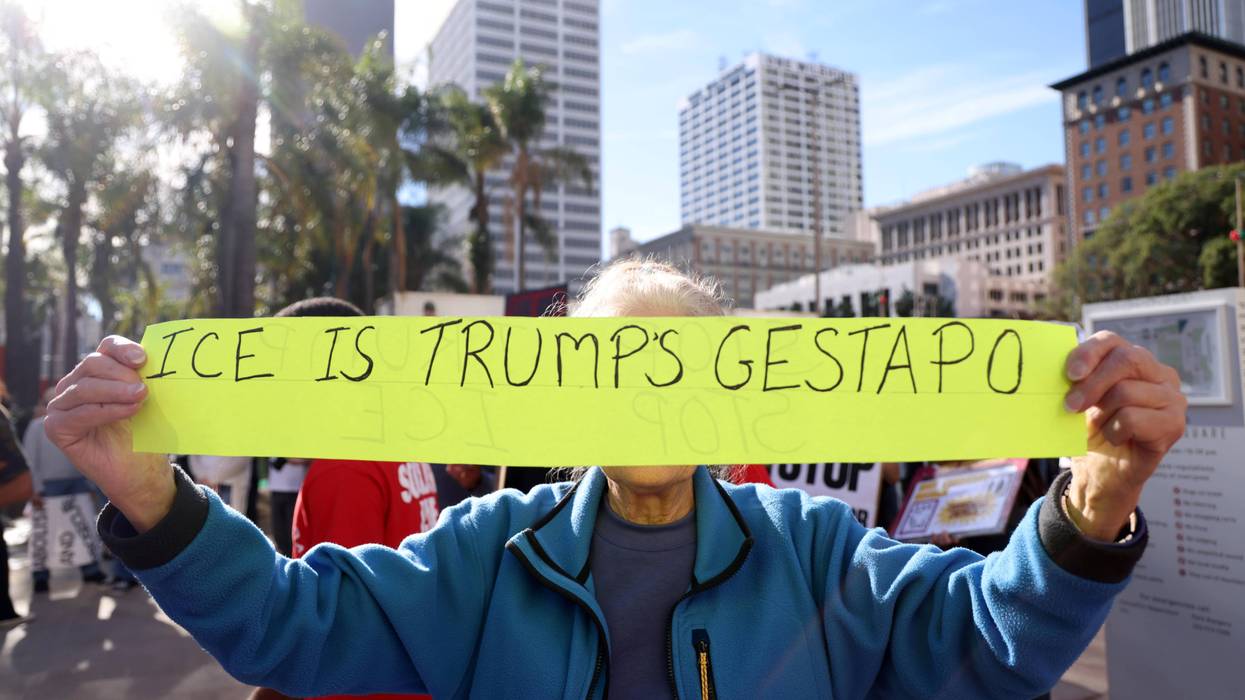
"This is what happens when you have an out-of-control agency that has been given billions in a bottomless slush fund by Trump and the Republican Congress," said one House Democrat.
Democrats in both chambers of Congress this week have joined rights advocates in forcefully denouncing plans for US Immigration and Customs Enforcement to spend up to $20 million on "gloves that can deliver painful electric shocks."
The Department of Homeland Security (DHS) on Monday published a notice about buying thousands of Generated Low Output Voltage Emitter (GLOVE) devices from Kentucky-based Compliant Technologies, drawing media coverage and condemnation.
"$20 million of taxpayer money for electric shock gloves?! This is horrifying and infuriating," said Sen. Jacky Rosen (D-Nev.). "It's exactly why so many... Democrats voted against billions of dollars in additional funding for ICE. This rogue agency uses cruel tactics like these and hasn't demonstrated any willingness to de-escalate—and the Trump administration refuses to rein them in."
Sen. Adam Schiff (D-Calif.) similarly ripped Republican lawmakers who narrowly control the Senate and House of Representatives, stressing that they "had the opportunity to rein in" ICE and Customs and Border Protection (CBP) but "refused."
"Instead they handed DHS BILLIONS more of your tax dollars without any constraint after the shooting and killing [of] individuals in the streets," Schiff said, referring to legislation passed in June. "Now, ICE is looking to purchase electrical shock gloves to continue terrorizing our communities. How soon will they be used to inflict further cruelty?"
Sharing a report about the planned purchase on social media, Sen. John Hickenlooper (D-Colo.) wrote: "Beyond cruel. This is appalling and inhumane."
President Donald Trump's "secret police force needs to be stopped," he added. "Not a single penny for ICE."
Since returning to office last year, Trump has flooded various cities with federal immigration agents, resulting in numerous deaths and rights violations. January polling by YouGov shows that 58% of Americans describe Immigration and Customs Enforcement tactics as "too forceful," 57% don't approve of how ICE is handling its job, and 46%—a plurality—support abolishing the agency.
Sen. Chris Murphy (D-Conn.) nodded to such findings in his response to the GLOVE notice, emphasizing that "this is just not the government people want. A government so sadistic and cruel that it delights in using your hard-earned tax dollars to buy gloves that shock people upon contact."
House Democrats also spoke out against the agency's plans, with Florida Congressman Maxwell Frost saying: "As if assaulting people and shooting people in the streets wasn't enough. Now, they're spending $20 million of YOUR taxpayer dollars on painful electric shock gloves for their masked, lawless goons. ICE must be stopped."
Describing ICE's plans as "absolutely appalling," Rep. Shontel Brown (D-Ohio) said that "this is what happens when you have an out-of-control agency that has been given billions in a bottomless slush fund by Trump and the Republican Congress."
Congresswoman Zoe Lofgren (D-Calif.) also called out the GOP: "This is what House Republicans voted for. Instead of spending your taxpayer dollars on healthcare or education, they spent it on shock gloves for masked, out-of-control ICE agents."
Rep. Pramila Jayapal (D-Wash.), who is an immigrant, said: "Let's be clear about what's happening. This is an agency that has already killed more than 50 people in its custody. An agency accused of racial profiling, of blocking members of Congress from oversight visits, of terrorizing communities under the guise of enforcement. And now they want new tools to hurt people, tools designed to disrupt someone's ability to even respond."
"We are not going to look away from this," Jayapal pledged. "I will keep fighting for oversight, for accountability, and for an immigration system that treats people with dignity, not one that arms itself against them."
Noting that the agency is "known to torture and kill our neighbors," Rep. Seth Moulton (D-Mass.) said, "Abolish and prosecute ICE."
Rep. Diana DeGette (D-Colo.) concurred, declaring: "This is shameful! People have suffered enough from these violent ICE agents. This rogue agency must be abolished, not given more ways to hurt our neighbors and terrorize our communities."
So did Rep. Ayanna Pressley (D-Mass.). Calling the GLOVE proposal "terrifying, cruel, and inhumane," she said that "ICE is a rogue agency that moves with disregard for public safety, constitutional rights, and basic human dignity. If agents have gloves that electrocute anyone they touch, we're all in danger. We must abolish ICE, end qualified immunity, and protect our neighbors."
Democratic Congresswomen Delia Ramirez (Ill.) and Yvette Clarke (NY) introduced a related bill in January: the Melt ICE Act.
"Under no circumstances can DHS be trusted with electric shock gloves and the power to inflict 'sudden' death!" Ramirez, the daughter of immigrants, said Wednesday. "The cruelty of the Trump administration knows no bounds. Congress must act! Let’s pass my Melt ICE Act and dismantle DHS."
Elected Democrats' outrage over the agency's intentions came as a Democratic National Committee panel on Thursday advanced a resolution calling to abolish ICE, and New York Times reporting revealed that DHS investigated left-wing groups after CBP agents killed Alex Pretti in Minnesota.
Democrats aim to reclaim majorities in both chambers in the November midterm elections.

“Transforming an exceptionally dangerous mass surveillance system into one that is fully protective of civil rights and civil liberties is a difficult, if not impossible task.”
The ACLU on Thursday largely dismissed new privacy measures announced by surveillance tech company Flock Safety, arguing the changes do little to address mounting concerns about the company’s sprawling automated license plate reader network and abuses of its technology by law enforcement agencies and other malicious actors.
Flock on Thursday unveiled new guardrails for its law enforcement customers, including a reduction in default license plate data retention from 30 days to seven, mandatory auditing tools designed to flag suspicious searches, and requirements that officers associate searches with case numbers.
The ACLU said the changes "seem to be a thinly veiled PR attempt to counter communities’ genuine privacy concerns with its mass surveillance system with largely hollow security promises, rather than an earnest effort to address them."
ACLU senior policy counsel Chad Marlow asserted that “transforming an exceptionally dangerous mass surveillance system into one that is fully protective of civil rights and civil liberties is a difficult, if not impossible task."
"That is even more the case with a company like Flock, whose nearly $1 billion in venture capitalist funding has locked it into an operational model that seeks to trade our privacy for massive profits," he continued. “Given that Flock’s latest announcement still appears more focused on addressing a PR problem than the significant privacy and other harms its products create, we will continue to analyze the company’s proposals fairly and honestly."
Flock Safety's new guardrails come amid growing nationwide backlash against automated license plate readers (ALPRs). As more and more instances of alleged police abuse emerge—including use of Flock cameras to stalk exes, track abortion patients, target undocumented immigrants, and spy on protesters—an increasing number of law enforcement agencies are canceling or not renewing contracts with the company.
"Abuse of Flock technology, at any level, is unacceptable," Flock Safety said in its statement Thursday. "We have strengthened safeguards over the past nine years, from basic audit logs to proactive monitoring. Sixteen weeks ago, we introduced audit assistance, which detects abnormal activity and flags it for administrator review. In recent weeks, those reviews have been associated with arrests of several law enforcement officers who allegedly abused the system."
"We will now require all law enforcement customers to adopt this feature by the end of this year," the company continued. "In addition, we will institute proactive lockout. When a user’s activity meets defined criteria for abnormal behavior, Flock will automatically suspend access pending administrator review. The goal is to intervene before misuse becomes recurring or widespread."
"In July 2025, we introduced an optional case code requirement for searches," Flock noted. "Results from participating agencies have been promising, so we will now require case codes for all law enforcement searches by the end of the year. Agencies may bypass the requirement in emergencies, but every exigent search will be flagged for administrator review."
"We are not perfect," the firm added, "so we will keep listening, improving, and building a better standard for public safety technology together."
However, the ACLU analyzed Flock's announced changes and found that "the devil will be in the details":
For example, an exception to the data retention policy is something called evidence mode, which is “when a search is tied to a case number, that data is preserved instead of aging out after seven days.”... “If ‘evidence mode’ only retains hit result data that police determine may be evidence in an active investigation of a specific case, then the change may be a positive one. But if evidence mode triggers the retention of any ALPR data that is searched, then the new mode could indefinitely retain all the ALPR data Flock collects and shares nationally.”
Another “change” the company is implementing is that local police will be able to decide what types of offenses other Flock customers can search their data for... Flock has attempted this before, and the security measure failed because police were easily able to circumvent the system’s requirement that they input the purpose of their search.
Finally, Flock announced that in response to the reports of police abuse, they will now require reasons for a search, and that they plan to universally roll out its audit assistance tool to detect police misuse. Flock’s announcement fails to note how easily users have circumvented “search reason” security measures in the past or how its new policy improves the quality of the feature.
"Change may still come as Flock faces this ever-growing threat to its corporate viability," the ACLU said, "but we certainly won’t be holding our breath."
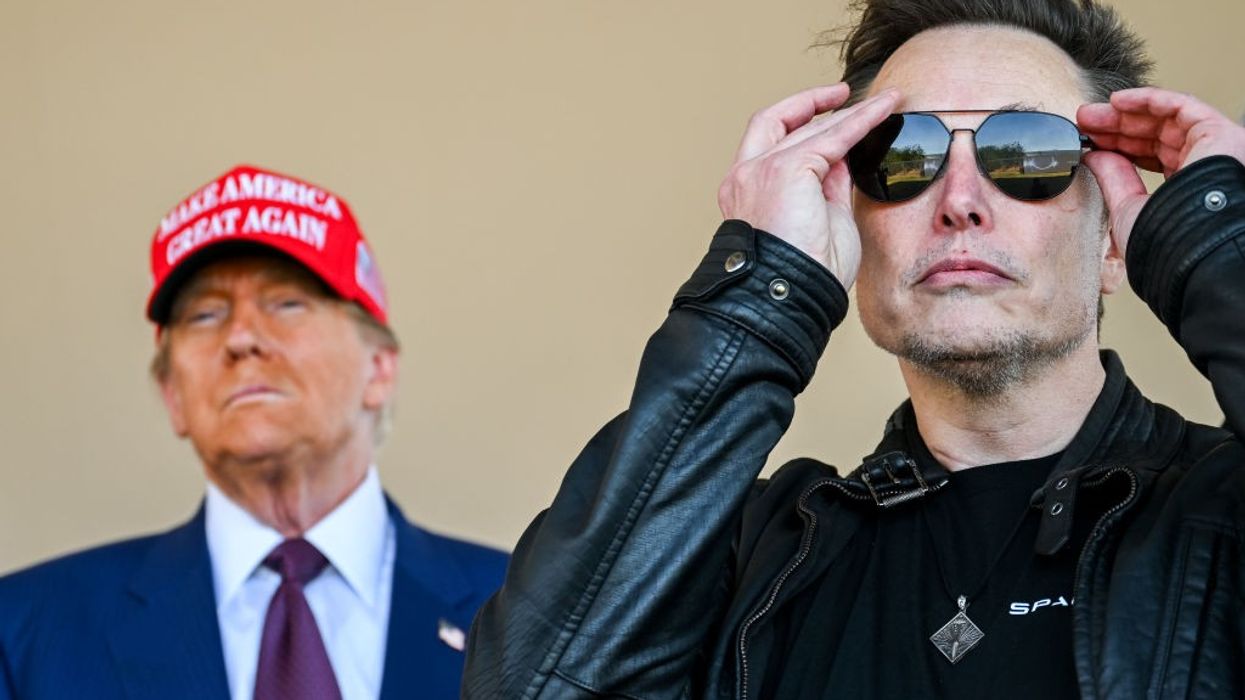
The AFL-CIO report also points out that "a majority of S&P 500 CEOs made more in one day than the median US worker made in one year."
"Failed trillionaire" Elon Musk's $158 billion pay package at Tesla was so high that it "broke the CEO pay curve," as the nation's largest federation of labor unions underscored on Thursday in its annual report about chief executive pay.
"Including Musk, S&P 500 CEOs received $340.1 million on average in 2025, about a 1,700% increase over the previous year," explains the AFL-CIO's latest "Executive Paywatch" report. "Excluding Musk's Tesla pay package, the average CEO pay at S&P 500 companies increased 21%, from $18.9 million in 2024 to $22.8 million in 2025."
"The average CEO-to-worker pay ratio across S&P 500 Index companies was 5,387-to-1 in 2025. Musk's total compensation at Tesla was 2,522,203 times the median Tesla employee's pay in 2025," the publication continues. "Excluding Musk, the average pay ratio of S&P 500 companies increased from 285-to-1 in 2024 to 312-to-1 in 2025."
Musk became the world's first trillionaire in June, after another company for which he serves as CEO, SpaceX, went public—but as of Thursday afternoon, his net worth was estimated at around $880 billion, according to the Bloomberg and Forbes billionaire lists.
The AFL-CIO report spotlights the wealth of the world's richest man, noting that last year "Elon Musk received the median Tesla worker's pay every 4.23 seconds—less time than it takes to read this sentence," but it also stresses that he's far from alone in making exorbitant amounts of money compared with the wages of workers at the companies he leads.
"As shown in our latest Paywatch report, executive compensation has reached a new, shameful high," said AFL-CIO secretary-treasurer Fred Redmond in a statement. The report points out that "a majority of S&P 500 CEOs made more in one day than the median US worker made in one year."
"Excessive CEO compensation contributes to growing economic inequality," the document says. "It creates the risk that CEOs will make short-term decisions to maximize their pay, even if it hurts the company's long-term health. And it's simply unfair to the workers whose labor generates the profit these CEOs capitalize on."
Our new Executive Paywatch report is here, and - spoiler alert - greedy CEOs are making even MORE.Top CEOs made 312x what workers make and took home an average of $22.8 MILLION per YEAR in total compensation.Read our full Paywatch report here: Aflcio.org/paywatch
[image or embed]
— AFL-CIO (@aflcio.org) August 13, 2026 at 12:35 PM
AFL-CIO found that the biggest ratio for executive v. worker pay was in manufacturing: Average executive compensation—which often includes not only a salary but also a bonus, stock, a retirement plan, and more—topped $696 million a year, while the typical worker made just over $93,000.
By sector, the second-highest was in arts, entertainment, and recreation, where executives were paid over $24 million while the median worker got just $24,850 annually. In educational services, average executive pay was around $50 million while workers were paid under $58,000.
The report emphasizes that like the CEOs, "2025 also was a very good year" for President Donald Trump, who returned to office in January and, according to recent federal disclosure forms, pocketed at least $2.2 billion last year—which, as the AFL-CIO found, was "a nearly 254% increase from what he received in 2024."
"Trump's 2025 receipts included $1.4 billion from the sale of $TRUMP memecoins and World Liberty Financial, his family's cryptocurrency business," the report says. "The median US worker would need to work 43,154 years to earn what Trump received in 2025."
16% of adults can’t pay all their bills in full.26% skipped medical care due to cost.23% of renters fell behind on rent in the last year.Meanwhile, CEO pay is exploding. Let’s call this what it is: greed.Learn more in our Executive Paywatch report: Aflcio.org/paywatch
[image or embed]
— AFL-CIO (@aflcio.org) August 13, 2026 at 2:15 PM
While gutting the federal government with help from Musk, Trump last year signed the GOP's so-called One Big Beautiful Bill Act, cutting programs for working people to give billionaires more tax breaks—and Wednesday's release of the latest inflation figures highlighted how Americans continue to struggle with the cost of gasoline, groceries, healthcare, housing, and more.
Redmond said that "Elon Musk became the world's first trillionaire. Donald Trump raked in over $2 billion since the 2024 election. Meanwhile, working Americans are struggling to feed their kids and pay their electric bills. But there's a better economy we can build for working people."
"That's why the labor movement will continue to fight for every worker to have a union contract that begins to level the playing field and ensures they take home the share of the profit they create," he added. "And it's why we are spending every day until November organizing and mobilizing 16 million union voters to elect pro-worker politicians who will work for us, not wealthy CEOs."

“Approval of the resolutions... point the way for the Democratic Party to move in directions consistent with what voters want."
As the war for the future of the Democratic Party rages on, progressives took steps toward a pair of key victories at the Democratic National Committee on Thursday, advancing one resolution calling to abolish the US Immigration and Customs Enforcement agency and another in support of barring US military aid for Israel.
The resolutions, which were both introduced by Louisiana DNC member Michele Johnson, were approved during a meeting in Austin by the DNC Resolutions Committee and are expected to be put before the full committee for a vote by Saturday.
Though resolutions passed through the DNC do not bind lawmakers or presidents to take particular actions, they play an important role in legitimizing positions once confined to the margins but which are fast becoming a consensus among Democratic voters.
"While it may not actually push Congress to do something, it sends a message that we believe these things," Johnson said during an interview last week. "Ultimately, these resolutions can be used in the creation of a platform... to guide Democrats for the next four years."
The first resolution “urges Democratic members of Congress to craft legislation abolishing ICE and enacting immigration reform that provides pathways to citizenship, protects workers, and ensures dignity for all impacted people.”
If passed, it would put the party in line with the majority of its voters, 73% of whom said in an Economist/YouGov poll last month that they believe ICE should be abolished.
It's a position that has been adopted by increasing numbers of lawmakers in the party's progressive wing, like Rep. Alexandria Ocasio-Cortez (D-NY) and Sen. Ed Markey (D-Mass.), but has been resisted by party leaders, including Senate Minority Leader Chuck Schumer (D-NY) and House Minority Leader Hakeem Jeffries (D-NY).
As part of the “mass deportation” crusade during President Donald Trump’s second term, which has resulted in individuals being detained nationwide with little due process, ICE has increasingly relied on indiscriminate raids, warrantless arrests, and racial profiling while setting up a vast network of opaque detention camps with squalid conditions. Most of those rounded up have had no criminal convictions.
As of Thursday, more than 50 people have died in ICE custody since Trump retook office in January 2025, and several more, including multiple US citizens, have been shot during enforcement operations without clear justification.
The resolution "urges Democratic members of Congress to pursue civil and criminal accountability for any federal agent, attorney, or official who lied under oath, misrepresented evidence, or gave false testimony regarding DHS conduct, and to remove qualified immunity and other protections shielding DHS and ICE personnel and subcontractors who have injured protesters or journalists, fired into moving vehicles, or caused deaths in custody, whether of detained individuals, US citizens, or immigrants regardless of nationality or documentation status.“
The other resolution advanced on Thursday states that the DNC supports the "full, consistent, and impartial enforcement" of the so-called "Leahy Laws" to prevent military aid to Israel or any other countries that violate US human rights law.
These laws, named after their sponsor, former Sen. Patrick Leahy (D-Vt.), state that the US cannot provide training, weapons, equipment, or other assistance to a foreign military unit when the government has credible information that it has committed a “gross violation of human rights.”
Critics have argued that former President Joe Biden violated the Leahy Laws by continuing to provide unrestricted military aid to Israel as it waged a genocidal war in Gaza and escalated its assaults on Palestinians in the West Bank during his presidency. Secretary of State Antony Blinken repeatedly balked at calls, including from within his own State Department, to enforce the Leahy Laws despite mounting evidence of atrocities.
A classified State Department report whose findings were publicized in October 2025 found that the Israeli military had committed hundreds of human rights violations that may have warranted enforcement of the Leahy Laws, including many during the Biden administration.
The resolution advanced on Thursday “calls for strengthened vetting capacity, clear remediation standards," referring to the process by which a military that violates human rights can restore eligibility for US funding, "and regular public reporting on the implementation of the Leahy Laws by the Department of State and the Department of Defense."
The resolution also "encourages Democratic members of Congress to conduct robust oversight of Leahy Law implementation and to support legislative measures that close documented enforcement gaps."
Like with ICE, a growing number of Democratic lawmakers are calling for the US to cut off support for Israel, but party leadership has been resistant. This is despite nearly three-quarters of Democratic voters saying in a May 2026 New York Times/Siena poll that they are opposed to sending more funding.
The passage of the Leahy Law resolution shows how the ground has shifted beneath the Democratic establishment since last August, when the Resolutions Committee blocked a resolution that would call for an arms embargo against Israel in favor of a more limited one pushed by DNC chair Ken Martin, calling for unrestricted aid to Gaza and a two-state solution. Martin later withdrew his resolution, leaving neither as the party's adopted position.
In April, more resolutions, which called for the conditioning of military aid to Israel and the recognition of a Palestinian state, were deferred to a working group. Another resolution condemning the influence of the American Israel Public Affairs Committee (AIPAC) was also killed by the resolutions panel.
Sam Rosenthal, the political director of the progressive advocacy group RootsAction, attended the committee meeting on Thursday. His group promoted both resolutions, including by sponsoring a mobile billboard that circled outside the conference, which read, “HEY DNC, UPHOLD THE LEAHY LAWS. SUPPORT HUMAN RIGHTS!”
"These were twin victories for human rights, at home and abroad,” Rosenthal said of the votes on Thursday. “Approval of the resolutions for abolishing ICE and upholding the Leahy Law point the way for the Democratic Party to move in directions consistent with what voters want."
"Getting sufficient turnout from the party’s base at election time," he added, "will require a change in the approach of the party’s national leadership so that it is clearly responsive to the views of Democrats nationwide.”
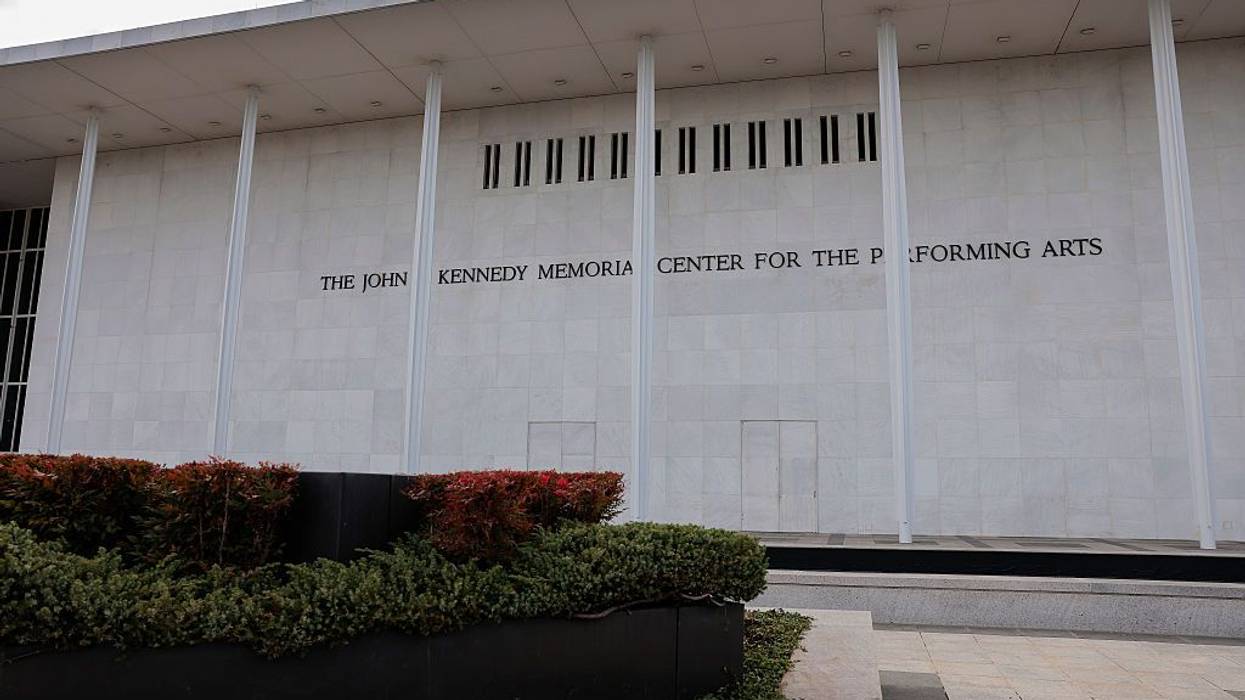
"This latest development is a transparent effort to circumvent the court's ruling, and flies in the face of the statutes that Congress passed," said US Rep. Joyce Beatty.
President Donald Trump's name is going back on the John F. Kennedy Center for the Performing Arts, despite a court order that mandated its removal.
Trump-appointed members of the Kennedy Center board on Thursday voted to add an inscription underneath the building's main signage that reads, "Restored and Renovated by President Donald J. Trump." The board also voted to rename the site outside the building as "the President Donald J. Trump Plaza."
In December, the board voted to rename the building the "Donald J. Trump and John F. Kennedy Center for the Performing Arts," despite having no congressional authorization to do so.
Six months later, US District Judge Christopher Cooper ruled that the board lacked power to rename the building without congressional approval and ordered the president's name taken down from the building.
Rep. Joyce Beatty (D-Ohio), an ex-officio Kennedy Center board member who filed a lawsuit to stop the building from being renamed, vowed to challenge the latest gambit to slap the president's name on a historic building.
"This latest development is a transparent effort to circumvent the court's ruling, and flies in the face of the statutes that Congress passed," Beatty said. "I will continued to fight for this treasured national monument."
Democracy Defenders Action co-founder Norm Eisen, who served as co-counsel in the previous lawsuit against the board, said that the Trump-appointed members defied the judge's ruling by putting Trump's name back on the building, and vowed that "they'll answer for it in court, again."
Rep. Ted Lieu (D-Calif.) said the Kennedy Center board's latest actions made it imperative to cleanse the nation's capital of Trump's name in the next Democratic administration.
"My bright lines for who I will endorse for president in 2028," wrote Lieu in a social media post. "1. Candidate must put in writing that all references to Trump’s name will be removed from the Kennedy Center and federal buildings. 2. Must do this at a public ceremony with fireworks."
CNN senior political reporter Aaron Blake questioned the political wisdom of forcing Trump's name back on the Kennedy Center given his current low approval ratings.
"Just a reminder that between 7 in 10 and 8 in 10 Americans think Trump is neglecting important issues like affordability, per recent polls," wrote Blake. "And apparently nobody will convince him that stuff like this isn’t helping."
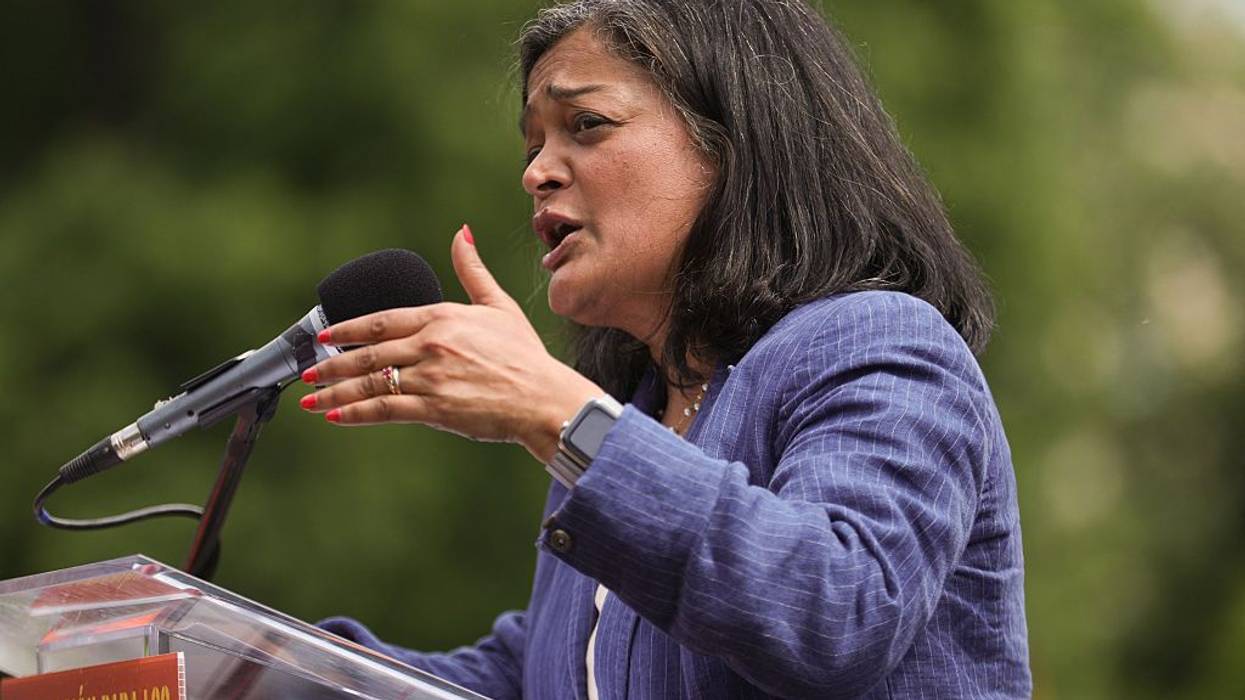
"Free speech is a constitutional right that we must all stand up and protect," the progressive congresswoman said.
US Rep. Pramila Jayapal on Wednesday joined First Amendment defenders in condemning the University of Washington’s cancellation of a planned lecture by controversial socialist streamer Hasan Piker and implored all Americans to stand up for free speech.
The University of Washington (UW) vaguely explained earlier this week that Piker's scheduled January 2027 appearance as part of the school's Speaker Series was canceled after "it was determined that the process for organizing this event did not meet the necessary level of rigor for university-hosted events."
"Going forward, procedures will be updated to ensure the standards we have for university-hosted events like the Speaker Series are met, particularly so that we can help elevate the level of dialogue on divisive topics during a polarized time in our country," the school added.
Japayal (D-Wash.), a UW alumna, said on social media: "As a member of the Judiciary Committee, I have been absolutely clear that free speech is a constitutional right that we must all stand up and protect. I have been communicating my concerns about the cancellation of the Hasan Piker event directly to the university, and they have informed me that they are doing an internal review to ensure this never happens again."
As a Member of the Judiciary Committee, I have been absolutely clear that free speech is a Constitutional right that we must all stand up and protect. I have been communicating my concerns about the cancellation of the Hasan Piker event directly to the University... (1/2)
[image or embed]
— Congresswoman Pramila Jayapal (@jayapal.house.gov) August 13, 2026 at 11:22 AM
Piker—who has millions of subscribers and followers on Twitch and other platforms—responded to the cancellation by accusing UW officials of caving to a "barrage of botted emails" from Israel supporters.
"If this had happened to Charlie Kirk or if this had happened to Ben Shapiro, this would be the number one news story on Fox News for a month," he said, referring to the assassinated Turning Point USA (TPUSA) co-founder and the co-founder of the right-wing Daily Wire.
In fact, TPUSA spokesperson and Charlie Kirk Show producer Andrew Kolvet opposed Piker's cancellation, writing on X: “Let the radical Mao-loving communist Hasan Piker speak, so long as he can resist the urge to call for the death of his political opponents. Universities do this to TPUSA often and blame some admin error etc. It’s wrong.”
The Anti-Defamation League—which has faced heavy criticism for conflating opposition to Israel's wars, illegal occupation and settler colonization, ethnic cleansing, and apartheid with hatred of Jewish people—accuses Piker of "a history of rhetoric that sanitizes violence and denigrates Jewish people."
Piker's most controversial statements include calling some ultra-Orthodox Jews "inbred psychopaths," calling Zionism a "mental illness," dismissing sexual violence perpetrated by Hamas against Israelis on and after the October 7, 2023 attack, calling Hamas "a thousand times better than Israel," and saying the United States "deserved" the al-Qaeda attacks carried out on September 11, 2001 in response to decades of US militant imperialism in Muslim nations. Piker subsequently apologized for his "inbred" comment; he also called his 9/11 remarks "inappropriate."
Piker and his uncle, The Young Turks founder Cenk Uygur, were recently banned from entering the United Kingdom, whose Labour government declared that their presence in the country “may not be conducive to the public good.”
The UW cancellation came four months after the US Department of Justice launched an investigation into the school's handling of alleged antisemitism on campus, which saw a crackdown on pro-Palestine protests during Israel's annihilation of Gaza—described by a United Nations commission of inquiry, international experts, nearly 20 national governments, and people around the world as a genocide.
Ironically, UW officials in 2024 dismantled a sukkah—a temporary outdoor hut built during the annual Sukkot festival—erected by Jewish students opposing Israel's onslaught.
The nonprofit civil liberties group Foundation for Individual Rights and Expression (FIRE) also condemned UW's decision to cancel Piker's speech, arguing on X that "if the decision was based on process—and not public backlash or criticism—UW should be transparent about what standards were not met and how they were applied."
"Public universities can set standards for events," FIRE added. "But they can’t use those standards as cover for canceling a speaker because of their views."
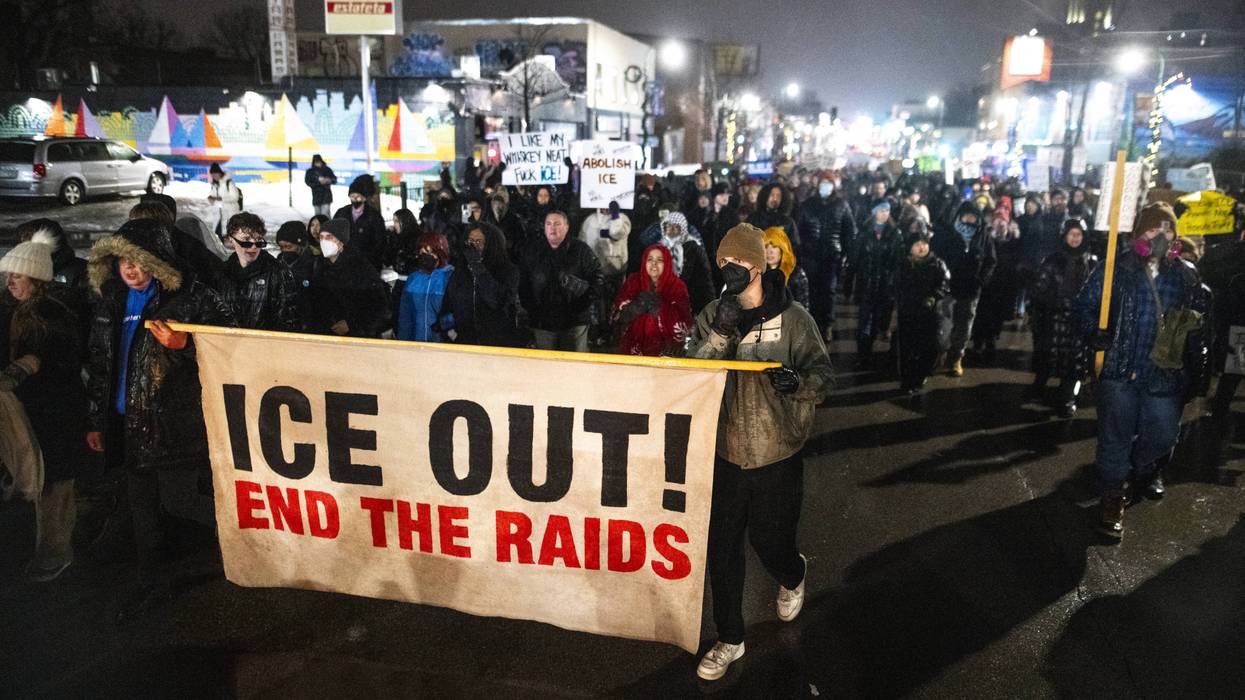
One First Amendment advocacy group called the investigation a "disturbing, invasive, and utterly unjustifiable attack on freedom of expression and political dissent."
"These are the actions of an authoritarian state," said US Sen. Chris Van Hollen on Thursday regarding new reports of a broad investigation by the Department of Homeland Security into numerous left-wing groups in Minnesota earlier this year, in the wake of Border Patrol agents' fatal shooting of Alex Pretti at a protest against the agency's anti-immigration crackdown.
As The New York Times reported, days after Pretti was killed in the street as he tried to help a woman who had been violently pushed by the agents, the DHS office in St. Paul opened an investigation into groups including the climate-focused Sunrise Movement, major labor groups like the AFL-CIO and the Service Employees International Union (SEIU), the Democratic Socialists of America, and a collective called Direct Action Minnesota (DAMN).
The Trump administration began the probe under the auspices of investigating whether the groups had provided "help and money," as the Times reported, to people who had participated in protests across the Minneapolis-St. Paul area, where tens of thousands of residents rallied against US Immigration and Customs Enforcement (ICE) and defended their neighbors from immigration raids last winter.
Newly released government documents, which were uncovered after an attorney filed a motion with the federal District Court in Minnesota demanding information about the DHS investigation, show that the agency characterized the protesters who opposed ICE as "violent opportunists and agitators."
The investigation included DHS' use of administrative subpoenas to obtain financial records from Sunrise Movement, Communications Workers of America, and the SEIU, scrutinizing what the agency called "domestic terrorist financing."
Undercover agents also infiltrated Signal chats and meetings at libraries and churches, recording attendees' comments criticizing ICE and calling for the agency to be abolished—a view held by roughly 50% of Americans, according to a recent poll by YouGov—as well as their names and license plate numbers. They also scoured the individuals' social media accounts for images and information.
“None of these individuals did anything other than engage in protected First Amendment speech in a church meeting room,” wrote Kevin Riach, the lawyer who filed the motion. “Yet now their personal information is memorialized in a DHS dossier.”
The investigation "concluded, with no evidence (but obvious political animus), that numerous Twin Cities unions and nonprofit organizations were involved in a widespread conspiracy," said Riach. “It surveilled and surreptitiously gathered financial records generated by these organizations despite the lack of any connection between those organizations and criminal conduct.”
As the Times reported, the indictment in June of 15 organizers who led direct actions against federal agents, announced by US Attorney Daniel Rosen, came out of the sprawling DHS investigation.
When Rosen announced the indictments, he cited National Security Presidential Memorandum 7 (NSPM-7), a memo issued last September and mandated a "national strategy to investigate and disrupt networks, entities, and organizations that foment political violence so that law enforcement can intervene in criminal conspiracies before they result in violent political acts"—with an exclusive focus on left-wing groups.
Before the indictment, the Times reported, investigators showed a PowerPoint slide to grand jurors linking 18 groups including the AFL-CIO, Vets for Peace, and a local teachers union to a "conspiracy" against ICE agents.
The news of the indictment, said Paul Blest of the labor rights media organization More Perfect Union, "should be the biggest story in America."
"Just so everyone clearly understands, the Trump administration's approach to dissent is to exhaust every avenue to put dissenters in federal prison," said Blest.
The First Amendment advocacy group Defending Rights and Dissent called the investigation a "disturbing, invasive, and utterly unjustifiable attack on freedom of expression and political dissent."
"The inquiry comes amid President Trump’s escalating crackdown on freedom of speech across the United States," Defending Rights and Dissent added. "Last year, Trump issued NSPM-7, a directive which tramples the First Amendment in weaponizing the federal government to root out his political adversaries and cast all activism against the administration as 'domestic extremism.'"
"Defending Rights and Dissent calls for this investigation to be dropped immediately," said the group, "and strongly condemns all attempts by the Trump administration to intimidate ordinary Americans exercising their freedom of speech."

“It begs the question about why you would need to do this. What would be the purpose of the secrecy?” said a former US government official.
The Washington Post reported on Thursday that recent mysterious attacks on Ecuadoran fishing boats were carried out as part of a covert CIA operation.
According to the Post, the strikes on the fishing boats, which took place in multiple instances near the Galápagos Islands earlier this year, are separate from the US Department of Defense's bombing campaign against purported drug-trafficking boats that was launched in September 2025 and has so far killed at least 220 people.
Survivors of a boat attack that occurred in March told the Post they remember coming under fire from small quadcopter drones that either dropped munitions on their vessels or directly crashed into them.
After being shipwrecked, the survivors said they were picked up by a nearby vessel, where they were taken aboard, and "hooded and cuffed by armed men, and transported to El Salvador—only to be returned later without explanation to Ecuador."
The Post noted that "no evidence has publicly emerged that the crew members were involved in drug trafficking," adding that "the Galápagos Islands have increasingly become a hub for drug traffickers, where local fishermen are known to pick up jobs delivering gas to smugglers heading to the United States."
Some former US officials with experience working in Latin America told the Post that they were bewildered about the need for a covert CIA boat strike campaign given that the Trump administration has openly boasted about its other attacks on vessels, which many human rights groups and international law experts have called acts of murder.
“It begs the question about why you would need to do this,” one former official said. “What would be the purpose of the secrecy?”
The covert boat strikes were also reported on Wednesday by The New York Times, which presented evidence that they originated in the US without naming their specific source.
Amnesty International last month raised suspicions of US involvement in the January disappearance of Ecuadoran fishing boat called Fiorella.
Amnesty's investigation of the Fiorella's disappearance found that the vessel, in the days before its disappearance, was "allegedly subjected to sustained monitoring by aircraft, patrol boats, and drones bearing United States markings," as the boat's captain sent "daily satellite messages to his family expressing his growing concern about the surveillance."
The ship vanished on January 20.
Two crew members who had departed the ship earlier in the day on a skiff to lay out fishing lines reported seeing "a large column of smoke in the distance in the direction of the Fiorella, but were unable to determine with certainty whether it was from a fire on board," wrote Amnesty.
The two crew members aboard the skiff are the only confirmed survivors of the incident, as the eight other men aboard the Fiorella are still missing.
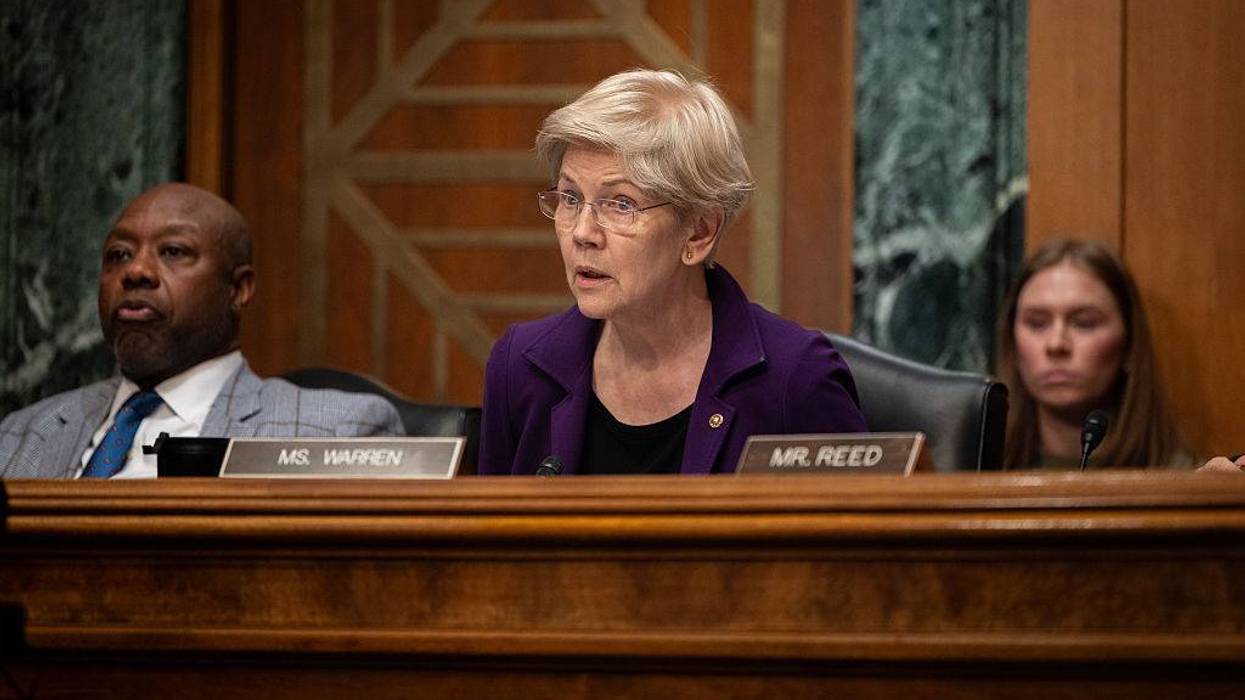
"Your stock trading in 2025—reportedly more than 14,000 stock trades worth up to $1.06 billion—was more than all 535 members of Congress last year combined."
Sen. Elizabeth Warren and Rep. Robert Garcia, the top Democrat on the House Oversight Committee, pressed President Donald Trump on Thursday for information on the "unprecedented" volume of stock trades he or his representatives executed during just the first three months of 2026.
In a letter to the president, Warren (D-Mass.) and Garcia (D-Calif.) noted that Trump reported more than 3,500 stock trades in the first quarter of the year, "made by you or someone on your behalf." The lawmakers pointed to one finance industry executive who expressed astonishment at the president's trades, saying, "In the 40-plus years of my time on Wall Street, this is an unusual amount of trading by any standards."
Trump's recent stock transactions have been publicly listed in disclosure reports released in May and June by the US Office of Government Ethics. The disclosures show that Trump reported more than 14,000 trades worth over $1 billion during his first year back in the White House.
"The sheer volume of this trading activity, and the timing of a number of transactions, raise questions about whether you are using your knowledge of government activities, your official authority, or the vast megaphone provided by the presidency to make investments or move markets to your personal benefit—and about whether you have been making decisions that boost your portfolio at the expense of taxpayers, the economy, and national security," Warren and Garcia wrote.
The lawmakers listed dozens of examples of stock trades that Trump executed prior to a "favorable official government announcement" or "favorable presidential statements."
"On March 2, 2026, you purchased up to $5 million of Apple stock," the Democrats wrote in their letter. "Just over one week later, on March 11, you purchased up to $500,000 of Apple stock. That same day, you singled out and promoted Apple, calling it a 'great company' and highlighting the company’s $650 billion investments in new plants across the country."
Warren and Garcia demanded that Trump answer a detailed list of questions pertaining to his suspiciously timed stock trades, including whether he personally directed them and the extend of his knowledge of the transactions.
"We all support a ban on members of Congress trading individual stocks in order to avoid conflicts of interest—or even the appearance of conflicts," the lawmakers wrote to Trump. "Your stock trading in 2025—reportedly more than 14,000 stock trades worth up to $1.06 billion—was more than all 535 members of Congress last year combined. Moreover, the value of virtually every one of the stocks you traded can be directly affected by your official actions and public statements."
Donald Trump reported more than 14,000 stock trades worth up to $1.06 BILLION in his first year back in office.
The President should be working for YOU—not his stock portfolio.
It’s time to BAN Congress, the Vice President, and the President from owning stocks. Period. https://t.co/SSCx7WYJ2M
— Elizabeth Warren (@SenWarren) August 13, 2026
Last week, the Groundwork Collaborative released a report warning that Trump's "blatant corruption is putting American retirement savings at risk."
"Markets only work when everyone plays by the same rules. Right now, the most consequential individual market participant in the country is also the person writing (and ignoring) the rules," the report noted. "President Trump has built a personal trading strategy around having the one advantage ordinary investors can never obtain: knowing what he’ll do next."