March, 04 2015, 01:15pm EDT

For Immediate Release
Contact:
Media Contacts:
Abigail Seiler, Center for Food Safety, 202-547-9359, aseiler@centerforfoodsafety.org
Kate Colwell, Friends of the Earth, 202-222-0744, kcolwell@foe.org
Paul Towers, Pesticide Action Network, 916.588.3100, ptowers@panna.org
Expert Contacts:
Bryan McGannon, American Sustainable Business Council, 202-650-7678, bmcgannon@asbcouncil.org
Fran Teplitz, Green America, 202-872-5326, fteplitz@greenamerica.org
Roger Williams, Central Maryland Beekeepers Association, 802-355-9933, rogerw@nordlink.com
Jay Feldman, Beyond Pesticides, 202-543-5450, jfeldman@beyondpesticides.org
Over 4 Million People Press Obama to Protect Bees
WASHINGTON
A coalition of beekeepers, farmers, business leaders, environmental and food safety advocates rallied in front of the White House and delivered more than 4 million petition signatures today calling on the Obama administration to put forth strong protections for bees and other pollinators. This action anticipates the Pollinator Health Task Force recommendations, expected later this month. The task force, announced by the White House this past June, is charged with improving pollinator health through new agency regulations and partnerships. The assembled groups demand that the recommendations include decisive action on rampant use of neonicotinoids, a class of systemic insecticides scientists say are a driving factor in bee declines.
The rally coincided with both a D.C. metro ad campaign and Representatives Earl Blumenauer (D-OR) and John Conyers's (D-MI) reintroduction of the Saving America's Pollinators Act, which would suspend the use of four of the most toxic neonicotinoids until the Environmental Protection Agency (EPA) conducts a full review of their safety.
Representative Blumenauer, said, "Pollinators are not only vital to a sustainable environment, but key to a stable food supply. In fact, one out of every three bites of food we eat is from a crop pollinated by bees. It is imperative that we take a step back to make sure we understand all the factors involved in bee population decline and move swiftly to protect our pollinators."
"The EPA plans to wait until 2018 before reviewing the registration of neonicotinoids. But America's bees cannot wait three more years. Neither can the thousands of farmers that rely on pollinators," said Representative Conyers. "Our honeybees are critical to ecological sustainability and to our economy. I am urging all of my colleagues to please protect our pollinators and support the Saving America's Pollinators Act."
"America's beekeepers cannot easily survive in the toxic environment the EPA has supported," said Roger Williams, president of the Central Maryland Beekeepers Association, and a speaker at today's rally. "On top of many other stresses, bee-toxic pesticides, whether used to coat seeds or as sprays, are weakening and killing our bees and threatening the livelihood of the beekeepers who are so intimately tied to our nation's food supply."
In a letter on Monday, more than 125 conservation, beekeeping, food safety, religious, ethnic and farming advocacy groups urged President Obama and the EPA to take swift and meaningful action to address the impacts of toxic pesticides on pollinator species. The European Union passed a two-year moratorium on three of the most widely used neonicotinoids, yet the EPA has approached the issue with little urgency.
"Business leaders nationally recognize the importance of pollinators to the well-being of the economy, people, and ecosystems," said Fran Teplitz, Co-Executive Director, Green Business Network and Bryan McGannon, Deputy Director, American Sustainable Business Council. "Businesses committed to sustainability support strong federal action to protect pollinators from pesticides linked to their decline; now is the time to act."
While advocates remain hopeful, they also made it clear that voluntary, enforceable proposals from the task force are unacceptable. Federal agencies have hinted at continued efforts to promote more of the same -- voluntary farming management practices, insignificant pesticide label changes, and weak state pollinator plans. And advocates contend that without new, meaningful protections, the Task Force may actually do more harm than good.
"Given the historic decline in the population of pollinators -- bees, butterflies and birds -- it is critical that the President and White House Task Force show forceful leadership in addressing all factors contributing to the crisis, with the suspension of neonicotinoid insecticides being a critically necessary action," said Jay Feldman, executive director of Beyond Pesticides and who spoke at today's rally.
Neonicotinoids are a class of pesticides known to have acute and chronic effects on honey bees and other pollinator species and are considered a major factor in overall population declines. A growing body of independent science links a class of pesticides called neonicotinoids to bee declines, both alone and in combination with other factors like disease and malnutrition. Twenty-nine independent scientists conducted a global review of 1,121 independent studies and found overwhelming evidence of pesticides linked to bee declines. Neonicotinoids are also slow to break down, causing them to build up in the environment and endangering a whole range of beneficial species that inhabit these ecosystems.
The 4 million signatures were collected by Avaaz, Beyond Pesticides, the Center for Biological Diversity, Center for Food Safety, CREDO, Earthjustice, Environment America, Food and Water Watch, Food Democracy Now!, Friends of the Earth U.S., Green America, MoveOn, Organic Consumers Association, Pesticide Action Network, Save Our Environment, TakePart, and Toxic Free North Carolina.
Center for Food Safety's mission is to empower people, support farmers, and protect the earth from the harmful impacts of industrial agriculture. Through groundbreaking legal, scientific, and grassroots action, we protect and promote your right to safe food and the environment. CFS's successful legal cases collectively represent a landmark body of case law on food and agricultural issues.
(202) 547-9359LATEST NEWS
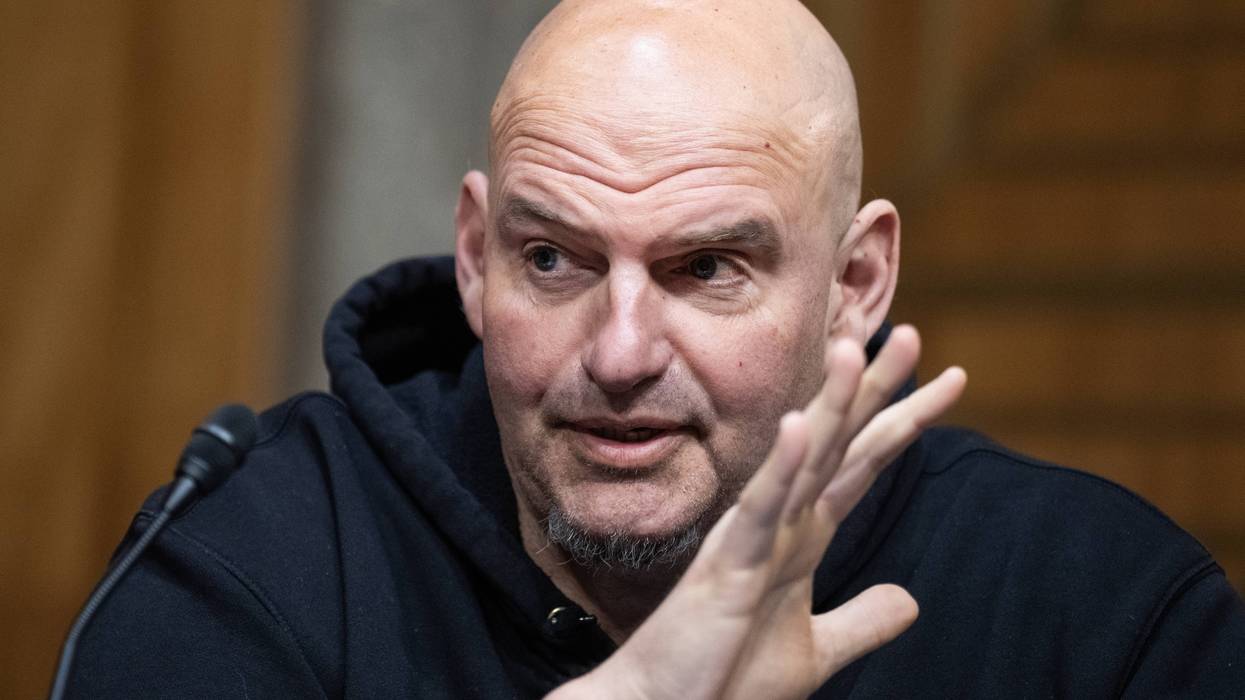
Fetterman Helps GOP Senators Sink Democrat Effort to Block Trump War on Cuba
"The last thing working Americans need right now is another war," said the Senate's top Democrat.
Apr 28, 2026
The US Senate on Tuesday defeated a Democrat-led bid to stop President Donald Trump from following through on his threat to wage war on Cuba, whose long-suffering people are reeling from the American administration's tightened economic stranglehold.
Upper chamber lawmakers voted 51-47 on a procedural motion to block further debate Sen. Tim Kaine's (D-Va.) SJ Res. 124, "a joint resolution to direct the removal of United States armed forces from hostilities within or against the republic of Cuba that have not been authorized by Congress."
Republican Sens. Susan Collins of Maine and Rand Paul of Kentucky voted to advance the resolution, while John Fetterman of Pennsylvania joined his GOP colleagues in voting to sink the measure.
The vote effectively sidelines the measure, one of many failed attempts to curb Trump's ability to wage war on countries including Iran and Venezuela, as well as rein in his high seas boat bombing spree.
“The American people are not asking for another war," Sen. Ruben Gallego (D-Ariz.)—one of SJ Res. 124's dozen co-sponsors—said following Tuesday's vote. "They want us focused on building housing in Arizona, not bombing housing in Havana. They want us to lower the cost of healthcare not condemn a generation of veterans to a lifetime of hospital visits. They want us to make their lives more affordable, not spend their tax dollars on unnecessary wars."
Kaine called the GOP move "purely a regime change effort."
"Why do they want it? You'll have to ask them," he added. "What we're doing with respect to Cuba, if somebody was doing it to us, we would consider it an act of war. But because they don't pose a security threat to the United States, it's clearly an effort to change the regime."
Senate Minority Leader Chuck Schumer (D-NY), who also co-sponsored the resolution, said, "The last thing working Americans need right now is another war—let alone one that’s 90 miles south of the US."
Resolution co-sponsor Sen. Angela Alsobrooks (D-Md.) said on Bluesky after the vote, "A conflict with Cuba would cost hardworking Americans billions of dollars, deepen the humanitarian crisis in Cuba, and put American service members in harm’s way."
"The Constitution is clear: Only Congress has the authority to declare war," Alsobrooks added.
Trump has attacked seven countries since returning to office and 10 since the start of his first term—more than any other president.
The situation in Cuba is dire, as a result of both the 65-year US economic chokehold on the island and mismanaged central planning by its socialist rulers.
Trump has been ramping up military threats and economic pressure on Cuba, whose people were already suffering from generations of US sanctions. His administration's tightened embargo has severely restricted fuel imports, worsening an energy emergency in which blackouts have become the norm, threatening the lives of vulnerable Cubans—especially sick people and children.
The US president said that “we may stop by Cuba after we’re finished" with the illegal US-Israeli war of choice on Iran that’s killed thousands of people, including hundreds of children. Trump has also said that he believes he’ll “be having the honor of taking Cuba."
The United States already took Cuba once, during an 1898 war waged against Spain under highly dubious pretenses that ended with the US also acquiring Puerto Rico, the Philippines, and Guam—with Hawaii also annexed that year under the guise of security.
American presidents have been trying to force out Cuba's socialist government since shortly after the revolution that overthrew a US-backed dictatorship in 1959. US efforts have included carrying out or backing an armed invasion, terrorist attacks, assassination attempts, and other acts of aggression.
Cuba commits no such acts against the United States or anyone else, yet Trump added the country to the US State Sponsors of Terrorism list.
Following Tuesday's vote, Sen. Ed Markey (D-Mass.) said that "Trump should learn the law of holes: If you find yourself in one, stop digging."
"Instead of threatening that ‘Cuba is next,’ President Trump should remove his blockade against Cuba, which has devastated Havana’s economy and healthcare system, and has created a deepening humanitarian crisis," Markey added.
The United Nations General Assembly has overwhelmingly condemned the blockade 33 times since 1992.
“With its catastrophic Iran war of choice, the Trump administration has lost all credibility on issues of war and peace," Markey asserted. "The American people do not want yet another endless war that will only costs more lives and more taxpayer dollars, and undermine US security.”
Progressive International co-general coordinator David Adler warned Tuesday that "Trump is preparing military action against Cuba," calling the Senate vote possibly "the last chance for US Congress to stop it."
Keep ReadingShow Less
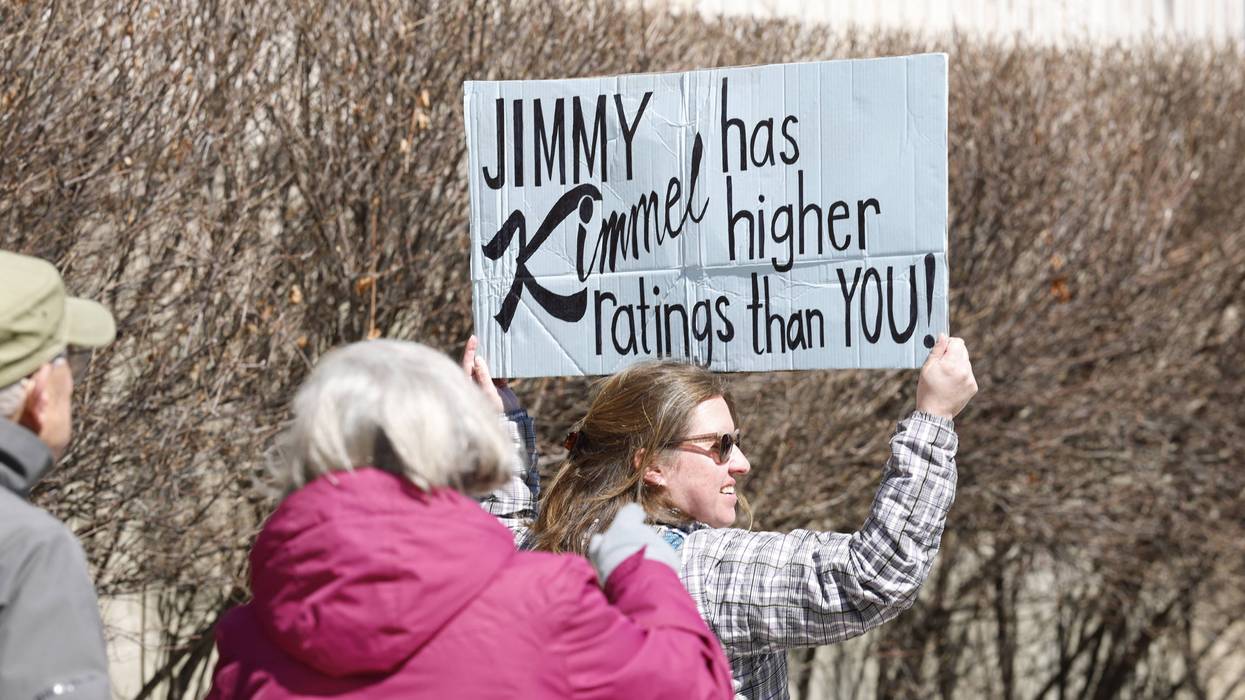
FCC Moves to Yank Disney Broadcast Licenses as Trumps Demand ABC Fire Kimmel
"This is a clear attack on the First Amendment and a political stunt designed to intimidate critics, retaliate against a comedian practicing free speech through satire, and send a message to anyone who dares to speak out."
Apr 28, 2026
Press freedom advocates on Tuesday forcefully condemned the Republican-dominated Federal Communications Commission—and FCC Chair Brendan Carr in particular—for moving to challenge Disney-owned ABC's broadcast licenses as President Donald Trump again pressures to network to fire late-night television host Jimmy Kimmel.
"The First Amendment and the FCC's mandate do not permit the agency to use broadcast licenses as weapons to punish broadcasters for constitutionally protected content they air," declared Freedom of the Press Foundation chief of advocacy Seth Stern.
"Brendan Carr was once a serious communications lawyer, and has repeatedly and correctly said that the FCC has no role in policing content, whether news reporting or comedians’ late night jokes," Stern pointed out. "Carr's decision to abandon his principles to kiss up to Trump to advance his career does not change the law that Carr knows full well applies."
"The FCC is neither the journalism police nor the humor police," he added. "This is nothing but illegal jawboning intended to intimidate ABC into kissing the ring."
Kimmel—whom ABC briefly suspended last year amid pressure from Carr over comments the comedian made about assassinated right-wing activist Charlie Kirk—joked last Thursday that the first lady, Melania Trump, had "a glow like an expectant widow." Two days later, a gunman attempted to enter the White House Correspondents' Dinner—and on Monday, he was charged with trying to assassinate the president.
Also on Monday, both Donald and Melania Trump separately took to social media, calling for Kimmel to be fired. The comedian, meanwhile, opened his Monday night monologue to crowd chants of "Jimmy" and defended his joke, highlighting the Trumps' age gap.
On Tuesday, Semafor reported the FCC's plans to challenge the ABC licenses, which weren't slated for review until at least 2028. Other outlets began confirming the reporting, citing unnamed sources, and the agency ultimately issued the anticipated order—which says that "the FCC has been investigating Disney's ABC stations for possible violations of the Communications Act of 1934 and the FCC’s rules, including the agency's prohibition on unlawful discrimination."
The order, signed by David J. Brown, chief of the Video Division, directs ABC to "file license renewals for all of their licensed TV stations within 30 days—in other words, by May 28, 2026." Those stations are WABC-TV (New York), KABC-TV (Los Angeles), WLS-TV (Chicago), WPVI-TV (Philadelphia), KTRK-TV (Houston), KGO-TV (San Francisco), WTVD-TV (Raleigh-Durham), and KFSN-TV (Fresno).
As CNN chief media analyst Brian Stelter explained: "The order will not affect the local stations right away. It is just the start of a protracted legal process, and ABC has broad legal protections. Nevertheless, the FCC order is an extraordinary escalation by the Trump administration."
"The FCC had not filed an early-renewal order in decades, according to a source familiar with the matter, until Monday, when the agency took action against a small station license holder called Bridge News," Stelter noted. "Both Bridge and Disney will now go through a lengthy hearing process, giving the stations multiple chances to respond."
Disney said in a statement that "we have received the Federal Communications Commission's order initiating an accelerated review of the licenses held by ABC's owned television stations. ABC and its stations have a long record of operating in full compliance with FCC rules and serving their local communities with trusted news, emergency information, and public‑interest programming."
"We are confident that record demonstrates our continued qualifications as licensees under the Communications Act and the First Amendment, and are prepared to show that through the appropriate legal channels," the company continued. "Our focus remains, as always, on serving viewers in the local communities where our stations operate."
Commissioner Anna Gomez—currently the FCC's only Democratic appointee—said that "the effort to challenge the licenses of ABC/Disney-owned stations is the FCC's most egregious attack on the First Amendment to date. But it will fail. This should be a lesson to media companies that no amount of capitulation to this administration will buy them protection."
Jessica J. González, co-CEO of the advocacy group Free Press, was similarly optimistic. She said that "Carr will try to dress up this latest attack like a legitimate FCC procedure, but his motivations are clear. He is using his position of power to silence dissent at the president's beck and call. This extraordinary and unconstitutional attack on the media is nothing more than another favor to the most fragile president in U.S. history."
"The FCC’s ongoing attack on lawful and important diversity, equity, and inclusion programs is immoral," she argued. "The timing of this move suggests unconstitutional retribution for a joke Donald Trump didn't like. Either way, this dangerous attack on free speech won’t stand up to any First Amendment test. We've seen Carr violate his oath to uphold the Constitution again and again. It's time for Congress to impeach him."
González added that "for its part, ABC and Disney leadership need to stand strong on behalf of their First Amendment right to air content without government intrusion and censorship. Buckling in advance to pressure by this administration and its obsequious FCC chairman didn't work for the broadcaster when it suspended Kimmel last year. It would be a grave mistake to buckle in advance again to these kinds of chilling government threats from Trump's censorship czar."
The organization MoveOn has launched a petition in support of Kimmel, which already has over 257,000 signatures.
"The Trump administration's targeting of ABC's broadcast licenses sends a chilling message: Fall in line or face consequences," said MoveOn Civic Action chief communications officer Joel Payne. "This is a clear attack on the First Amendment and a political stunt designed to intimidate critics, retaliate against a comedian practicing free speech through satire, and send a message to anyone who dares to speak out."
"ABC and Disney must not back down to Donald Trump or any bureaucrat in his administration doing his bidding," Payne stressed. "This is bigger than just an attempt to bully Jimmy Kimmel—this is about telling the American people what to think, what to laugh at, what to say, and what to criticize. Our members will fight any efforts to weaponize the government to punish speech and will hold corporations who bow to this pressure accountable."
Keep ReadingShow Less
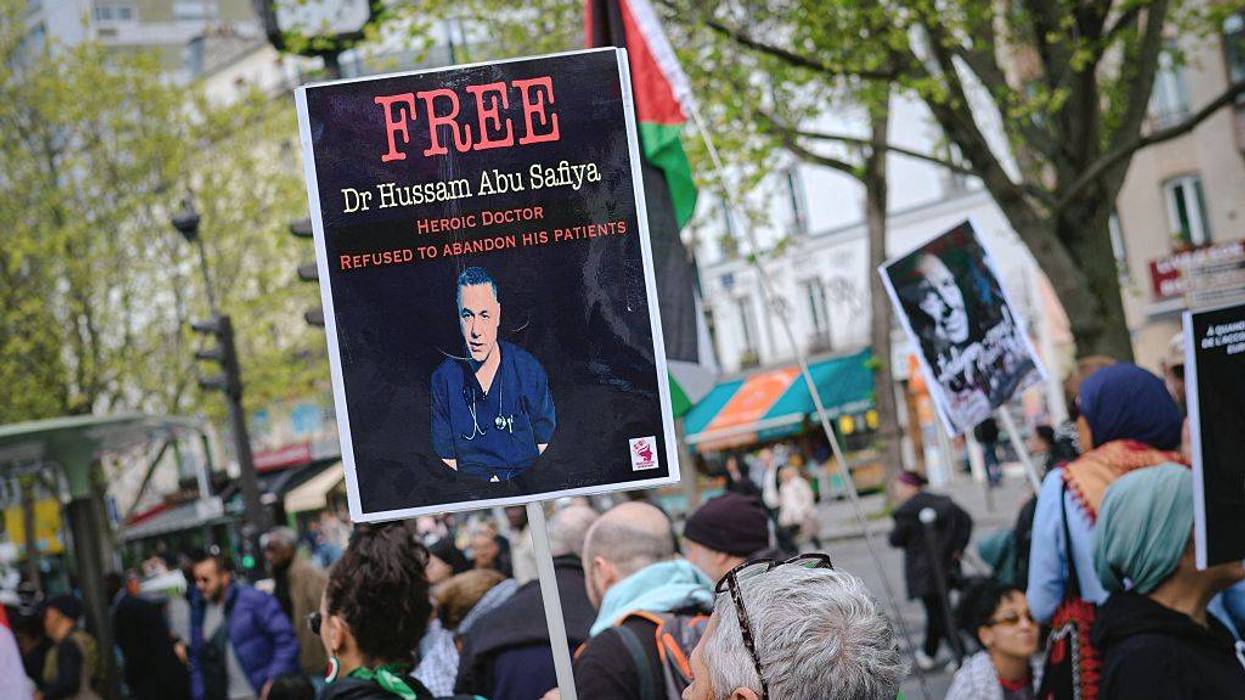
Rights Group Demands Release of Gaza's Dr. Abu Safiya After Israeli Court Extends Detention
“Dr. Abu Safiya is currently held in Negev Prison under harsh conditions, without access to his medication or receiving medical treatment, despite the deterioration of his health," said the Israeli-based Physicians for Human Rights Israel.
Apr 28, 2026
An Israeli human rights group is demanding the release of Dr. Hussam Abu Safiya, director of the Kamal Adwan Hospital in Gaza, after a court ordered his detention extended.
Physicians for Human Rights Israel on Tuesday blasted the Beersheba District Court for extending the detention of Abu Safiya, who has been held in prison since December 27, 2024, without being charged with any criminal offenses.
The court justified keeping Abu Saifya detained under Israel's Unlawful Combatants Law, which allows for the detention of Palestinians for long periods without trial.
“The court upheld the detention despite arguments that detaining a doctor while performing his medical duties constitutes unlawful detention,” said Physicians for Human Rights Israel. “Dr. Abu Safiya is currently held in Negev Prison under harsh conditions, without access to his medication or receiving medical treatment, despite the deterioration of his health."
The group added that it is demanding "the immediate release of Dr. Abu Safiya along with 13 other detained doctors, as well as all medical personnel currently held in Israel. We call on the international community to intervene and put an end to this abuse."
The US-based Council on American-Islamic Relations (CAIR) also slammed the court ruling, calling Abu Safiya's detention "a grave injustice and a blatant violation of fundamental human rights and due process."
"As a physician and hospital director, Dr. Abu Safiya dedicated his life to saving others," CAIR added, "yet he now faces indefinite imprisonment under conditions that credible reports indicate include torture, denial of medical care, and severe mistreatment."
A 2025 report from Amnesty International, which has also called for Abu Safiya's release, said that the Gaza-based physician "was detained in the course of caring for his patients and carrying out his medical duties."
Amnesty also noted that, prior to his detention, Abu Safiya and other colleagues at the Kamal Adwan Hospital had "provided human rights and humanitarian organizations with reliable information about the health situation" in Gaza, which has been left devastated by years of Israeli attacks that have killed at least 72,000 Palestinians.
Keep ReadingShow Less
Most Popular