

SUBSCRIBE TO OUR FREE NEWSLETTER
Daily news & progressive opinion—funded by the people, not the corporations—delivered straight to your inbox.
5
#000000
#FFFFFF
To donate by check, phone, or other method, see our More Ways to Give page.

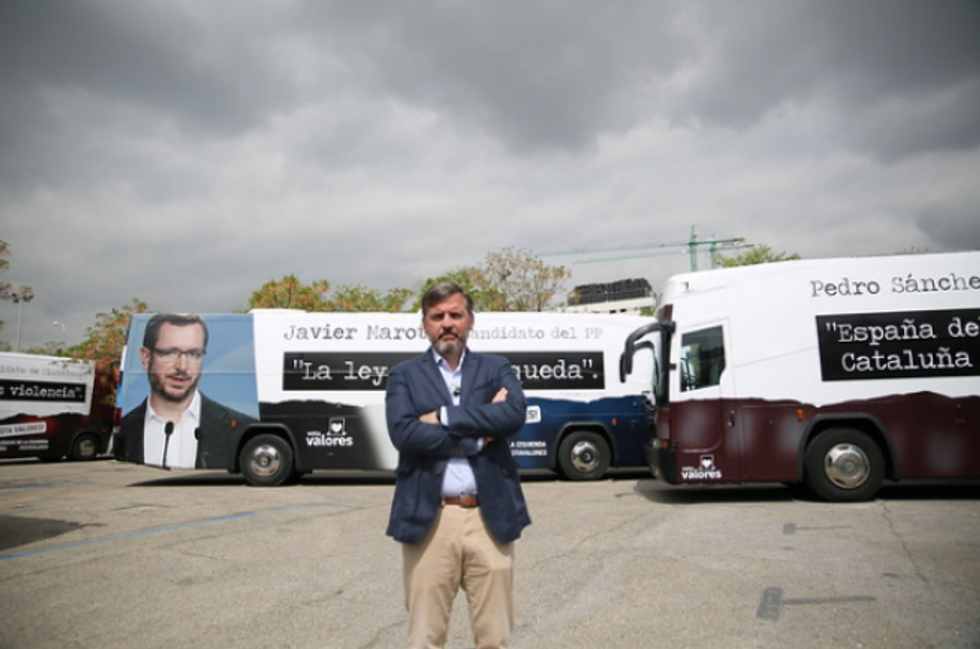
The Madrid-based campaign group CitizenGo is best known for its online petitions against same-sex marriage, sex education and abortion - and for driving buses across cities with slogans against LGBT rights and "feminazis".
But now openDemocracy can reveal new evidence of "extraordinary coordination" between this group and far-right parties across Europe - from Spain to Italy, Germany and Hungary.
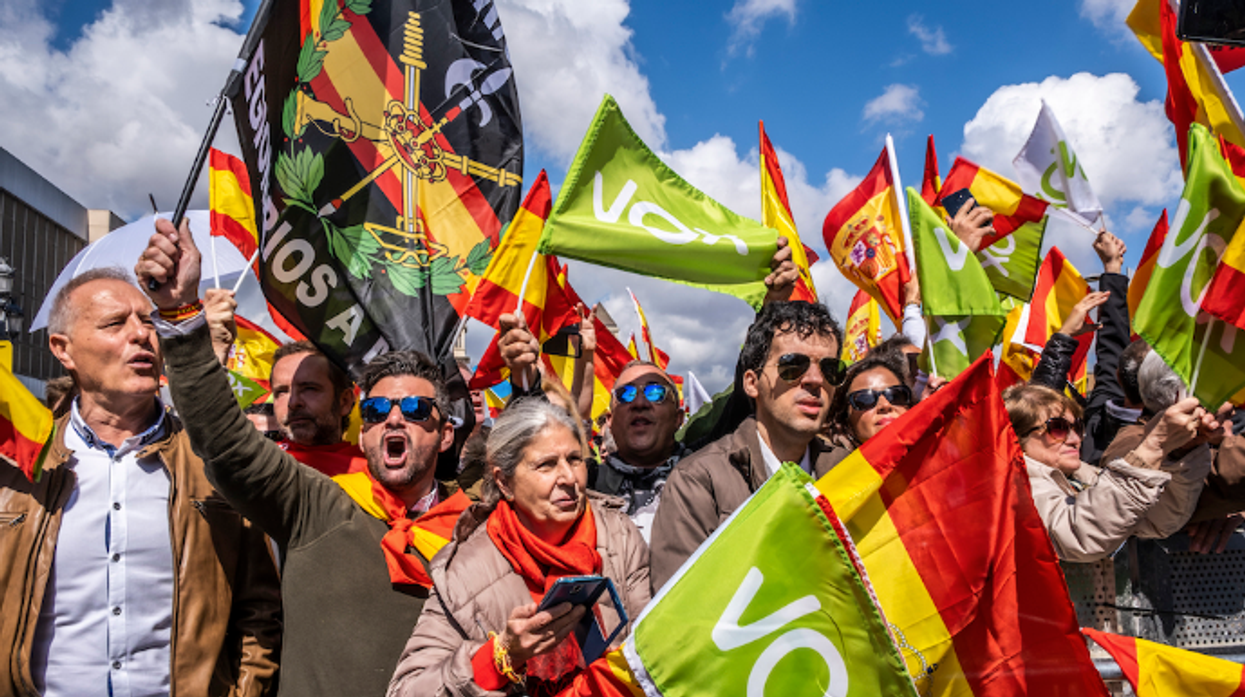
In Spain, CitizenGo is supporting the far-right party Vox that is expected to make big gains this weekend, winning seats in the country's parliament for the first time and potentially forming part of the new government.
Speaking to our undercover reporter posing as a potential donor, CitizenGo's director described plans to run attack ads against Vox's political opponents, and talked about how to get around campaign finance laws.
Meanwhile a senior Vox official compared CitizenGo to a "Super PAC" in the US, referring to the controversial groups that can spend unlimited sums influencing elections in America - and which are known for aggressive, negative campaigning.
openDemocracy can further reveal today how CitizenGo has been supported by an experienced American political fundraiser and tech consultant linked to the Trump campaign, the Republican Party and the Tea Party movement, who boasted of being able to use controversial technology to collect personal data about potential voters.
Former US Democratic Senator Russ Feingold described our findings as "frightening" and called on European leaders to act to protect the democratic process.
"Europe has an opportunity to get ahead of this and not make the same mistakes that were made here in the United States", said Feingold, who worked alongside Republican senator John McCain for reform of electoral finance in the US.
CitizenGo's board also includes a close business associate of the "Orthodox Oligarch" Konstantin Malofeev - who has been targeted by US and European sanctions for allegedly propping up the pro-Russian breakaway republic in eastern Ukraine - and an Italian politician, Luca Volonte, currently on trial in Milan facing corruption charges.
European lawmakers have described openDemocracy's findings as "explosive" and have called for "urgent action" to "maintain the integrity" of upcoming elections.
In a letter to the European Commission's transparency tsar Frans Timmermans, MPs, MEPs and Senators from six European countries said these findings "merit urgent and high level investigation by the European Commission and relevant national authorities".
"We have all seen how democracy can easily be eroded if we remain complacent about the activities of anti-democratic actors... [who oppose] European fundamental rights, European values and liberal democracy", they warned.
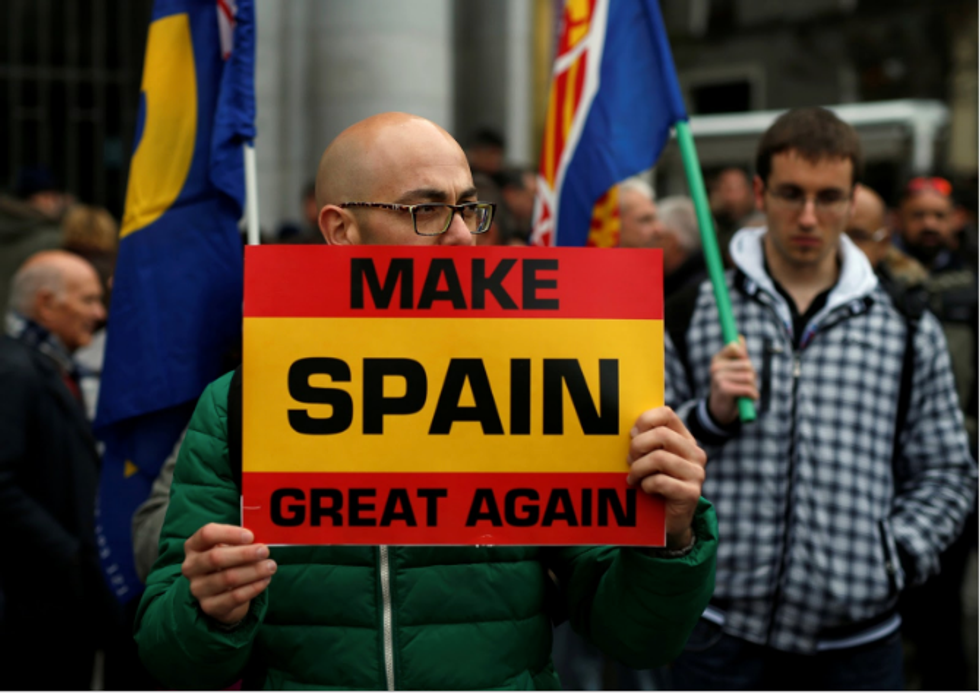
The Spanish far-right party Vox has pledged to build walls around Spanish enclaves in North Africa, jail Catalan independence leaders, loosen gun control laws and "make Spain great again". The party also opposes "political correctness", marriage equality for gay people and laws against gender-based violence.
CitizenGo's leader, Ignacio Arsuaga, has publicly supported Vox, as has the group's Spanish language partner organisation, HazteOir - which recently lost the equivalent of charity status after campaigns the government said "denigrate or devalue" LGBT people.
But our research reveals new evidence of the close relationship between CitizenGo, HazteOir and Vox.
"We're never going to ask people to vote for Vox... but the campaign is going to help Vox indirectly"
Describing Vox as "my friends", Arsuaga said they've met with its senior officials to share their campaign plans and described how they 'indirectly' support the party.
Our undercover reporter specifically asked Arsuaga how to get around Spanish campaign finance laws rules - donating more to Vox than the legal limit - and about doing so anonymously, which is against the law.
Arsuaga explained that there are no such limits on donations to groups like CitizenGo, and "if you give privately to a non-profit there is no need to disclose that". He said CitizenGo would not channel money to Vox itself but "you could give to any foundation that doesn't mind to give, to forward the money, to Vox... that would be a good option".
"This is something we haven't made public", Arsuaga continued, "but, in Spain, we're going to launch a campaign before the general elections... where we are going to show bad things that have been said" by the leaders of parties that Vox is running against, for example "in favour of abortion or in favour of LGBT laws" - describing since-released posters and adverts against candidates from other parties.
The Vox official that Arsuaga put our undercover reporter in touch with confirmed that supporting CitizenGo could help the party, "indirectly", describing them as independent but that "we are actually currently totally aligned".
He told our reporter that while there is a limit on the size of individual donations to parties, "there is not a limit on the number of donors, okay, it can be split among several donors... and they only have to register [their first] name, last name and the origin".
"There are other ways of making support", he added, describing "a lack of regulation in terms of the equivalent of Super PACs in the United States, those institutions or organisations that give airtime or advertising in support of causes or candidates or political parties. I understand that that is outside of the limitations of the actual political parties which is very, very regulated".
Super PACs don't officially exist in Europe but he said "there are movements to create those and I think they are unregulated" and "Ignacio's organisation, that's kind of that".
Vox has been hit by several financial scandals, including the late 2018 supreme court condemnation of its then vice-president for "accounting irregularities" in one of his companies, disqualifying him from overseeing other accounts for three years.
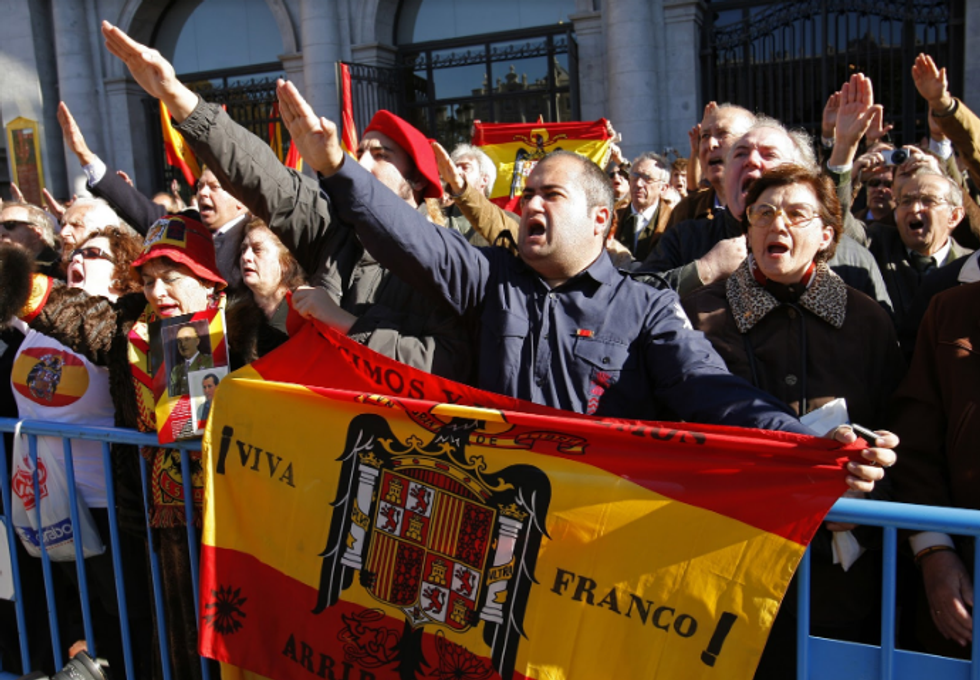
It also received EUR800,000 in donations from an extremist Iranian opposition group for its 2014 European elections campaigns - and has been linked to a controversial foundation that glorifies Francisco Franco, Spain's former dictator.
Arsuaga also told our reporter that Vox's General Secretary Javier Ortega Smith, simultaneously the lawyer leading Vox's private prosecution of Catalan independence supporters, "comes, I would say, from the hard right, like Falangists... Franco's movement - but nobody knows, it's a kind of private thing".
Neither Ortega Smith nor the Vox party responded to openDemocracy's requests for comment on Arsuaga's claim.
Responding to openDemocracy's request for comments before publication, Arsuaga said: "It is self-evident that supporting HazteOir.org or CitizenGO means indirectly supporting the parties that defend (in some way) the principles we defend".
It is "public knowledge that we work to influence and put pressure on political parties", he said, saying that this is done "by no means 'behind the scenes'". He also disputed the characterisation of parties that CitizenGo aligns with as "far right".

CitizenGo was set up in 2013 - the same year as Vox - as an ultra-conservative version of the progressive campaign platforms Avaaz.org and MoveOn.org. It has run powerful campaigns globally, including in Kenya where last year it helped get the reproductive health charity Marie Stopes temporarily banned from providing abortion services.
CitizenGo also has some very powerful international backers and partners. As previously mentioned, Alexey Komov, a close associate of the "Orthodox Oligarch" Konstantin Malofeev, and Luca Volonte, the Italian politician currently on trial in Milan facing corruption charges, both serve on the group's board of trustees.
Bank statements from Volonte's Novae Terrae Foundation in Italy, seen by openDemocracy, show that it paid CitizenGo EUR12,000 in 2014 - at the same time as the foundation was receiving money from entities later identified as part of a 'laundromat' pumping illicit cash into Europe from Azerbaijan and Russia. There is no evidence to suggest that the money paid to CitizenGo came from these illicit sources.
Meanwhile, Arsuaga told our undercover reporter that Patrick Slim, son of the Mexican oligarch Carlos Slim, gave his group EUR40,000, which "for him is just a very small amount", Arsuaga noted - although it is close to the maximum individual donation to a political party permitted under Spanish law (and four times election campaign limits).
It was not clear whether this donation was for CitizenGo or HazteOir, neither of which are political parties. At the time of publication, Patrick Slim had not replied to openDemocracy's request for comment.
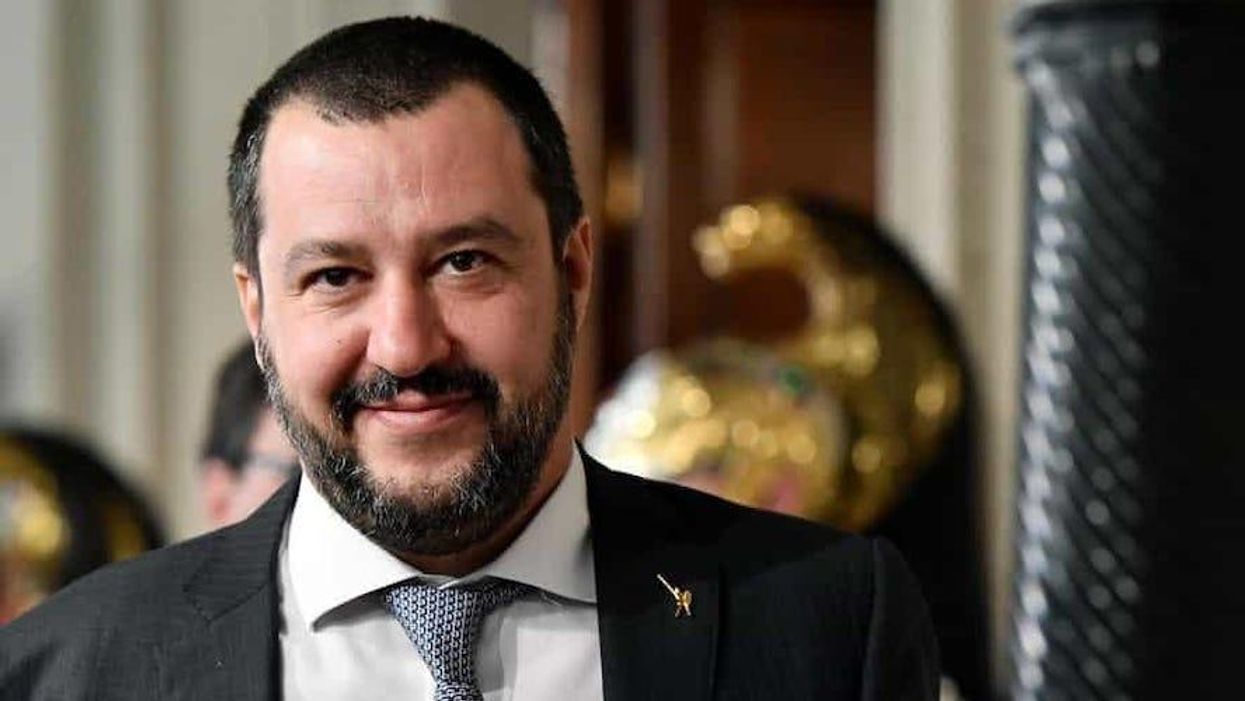
Another CitizenGo board member is Brian Brown, a prominent US anti-LGBT activist who leads the World Congress of Families (WCF) network that recently met in Italy, with deputy prime minister Matteo Salvini from the far-right Lega party among its speakers.
Arsuaga told our reporter that he met Brown at a WCF meeting in Madrid in 2012 and that CitizenGo gets advice "every couple of months or so" from a "senior expert" in fundraising and technology who is "paid by Brian Brown".
This expert is Darian Rafie, Brown's partner at an American organisation called ActRight, which describes itself online as a "clearinghouse for conservative action".
Previously, CitizenGo has presented itself in the logo on its website as a "member of the ActRight family" and openDemocracy understands that ActRight paid for a CitizenGo staff member in 2013, a claim that Rafie did not deny in emailed comments.
ActRight is currently encouraging people to "thank president Trump for stopping transgender insanity in the military". On Facebook, its recent posts include those supporting Trump; those mocking the appearances of left-wing women; and asking "How much do you think Barack Obama paid Harvard to admit his pot-head daughter?"
ActRight's Rafie is an experienced political consultant in the US who has played key roles in a number of companies that have worked for the Republican National Committee and the Republican party in Ohio and Michigan; received payments from a Super PAC supporting Texas Republican Ted Cruz (as did ActRight in 2015); and worked with the Tea Party group Think Freely Media.
Speaking to our undercover reporter, Rafie said he "did a lot of fundraising politically with Trump", through political action committees (PACs) but also "directly with the campaign... [and] directly with the party", and that he expects one of his companies to be working "in the majority of states" in the 2020 election campaigns.
"There is a lot of stuff to be done with mobile phones and geo-fencing areas", Rafie told our reporter. He explained: "Say there's a rally somewhere, one of these big Trump campaign rallies. What we'll do is we'll draw a Polygon around that event and then we'll register all the phones that were there".
"Then we follow those phones home, then we know who they are, and what they do, and now I know what your Netflix unique ID is, and I've got your Facebook unique ID, so then I can communicate with you through a whole variety of ways".
Rafie said "you can do that in Europe" too, though "it's a little more limited... because the privacy laws are better, for the consumer".
He said: "It's actually really scary, when you peek beneath the covers, and realise that this phone that you're carrying around with you is leaking everywhere all of your information" which can be correlated with personal data "very quickly". In the US, he explained, "all of the data is routinely collated and correlated and available for sale".
"We follow those phones home. Then we know who they are, and what they do, and now I know what your Netflix unique ID is, and I've got your Facebook unique ID, so then I can communicate with you through a whole variety of ways." --Darian Rafie
Over email, Rafie clarified to openDemocracy that this company uses "ad networks" as do "many political campaigns and businesses in the United States... to delineate an area and identify unique device IDs and their associated advertising profiles".
"We should all be frightened by the amount of data routinely collected, collated and sold by ad networks (such as Google and Facebook)", he added.

On stage at the World Congress of Families meeting in Verona, Italy, in late March, CitizenGo's Arsuaga urged European and other international ultra-conservatives to pursue an indirect, "less understood, practised path to power" that he summarised as: "By controlling [politicians'] environment... you also control them".
'By controlling [politicians'] environment... you also control them' --Ignacio Arsuaga, CitizenGo
Speaking to our undercover reporter at this event, Arsuaga revealed that CitizenGo also has "a lot of contact" with the Fidesz and Lega far-right parties in Hungary and Italy, along with "some contact" with the far-right AfD in Germany.
Asked if he discussed his group's campaign strategies with these parties, Arsuaga told our undercover reporter "yeah, yeah... we inform them about what we are going to do".
He also offered to introduce us to Lega party senator Simone Pillon and an AfD official believed to be Maximilian Krah, who was photographed with Salvini at the Verona event.
In Germany, CitizenGo's events have attracted Princess Gloria von Thurn und Taxis - another World Congress of Families speaker, patron of conservative Christian causes and a friend of Steve Bannon - along with the AfD's Benjamin Nolte.
In Italy, CitizenGo was one of the organisers of the WCF event in Verona along with the ProVita anti-abortion campaign that has ties to the neo-fascist party, Forza Nuova.
CitizenGo has also been involved in training Italian activists including via a four-day workshop in 2018 with the Leadership Institute - a US conservative group that counts Vice President Mike Pence among the alumni of its trainings in America.
openDemocracy contacted the Lega, AfD and Fidesz parties but they did not respond to requests for comment on their relationships with CitizenGo.
Lawmakers from across Europe have expressed alarm at openDemocracy's findings about CitizenGo and its international networks.
German MEP Terry Reintke, Greens/EFA spokesperson for gender equality and social policy in the European Parliament, said: "It is shocking how close and deep-running the ties between right-wing, nationalistic populists are - even spanning over the Atlantic. Especially with the European elections ahead, this is extremely worrying".
She added that this "needs to be a loud and clear wake-up call... This is an attack on fundamental rights and freedoms of all of us".
British MEP Molly Scott Cato called for "tough and immediate action... to protect the integrity of the democratic process". CitizenGo is an example, she added, of how "the extreme right often... presents themselves as protectors of life, liberty and family" - while "behind this thin veneer there so often lurks a sinister political agenda".
Scottish National Party MP Alyn Smith reiterated his concern that "these [European] elections will face a concerted effort to manipulate the outcome" and called for "more investigations, particularly in the UK after the activities of the Leave campaigns, so legislators can tackle these in the future".
Petra Bayr, an MP from Austria and Vice-President of the European Parliamentary Forum for Sexual and Reproductive Rights, expressed her concern about European groups "trying to import a controversial US-style 'Super PAC' model of political campaigning to Europe, which can allow large amounts of dark money to flow unregulated into elections and referenda, often in support of extremist parties and financing controversial, negative campaigning".
Commenting on openDemocracy's findings, former Wisconsin Democratic senator Russ Feingold warned of a "downward spiral effect on democracy".
"There is a great irony in this. [Far-right parties] are trying to appeal to ultra nationalist sentiments but they are using tactics that are completely contrary to the sovereignty of those countries. These are international actors, oligarchs and others who are trying to control the political processes of these countries. Even if you are a nationalist, one would think you would be a little bit concerned about that", Feingold said.
Speaking from Washington DC, Adav Noti, a US election lawyer with the Campaign Legal Center, also warned that Super PACs have been "destructive" in the US, with "horrible effects" for American democracy.
"The last eight years since the invention of this Super PAC vehicle have seen a real sharp increase in the extent to which our elections are dominated by a small number of ultra wealthy individuals and corporations", said Noti.
"A federal election in the US is supposed to be decided by 150m voters and yet the policy preferences are being determined by literally 20 people, 20 major donors".
In emailed comments to openDemocracy, CitizenGo's Ignacio Arsuaga said his groups do report donors to Spain's Ministry of Interior and that "according to the current Data Protection legislation, we cannot tell the press who is our donor".
He said "all the donations we have received are legal", and that "the destination of our funds has always been legal and public".
This article was produced by openDemocracy in partnership with the Independent Media Institute.


