

SUBSCRIBE TO OUR FREE NEWSLETTER
Daily news & progressive opinion—funded by the people, not the corporations—delivered straight to your inbox.
5
#000000
#FFFFFF
To donate by check, phone, or other method, see our More Ways to Give page.
Daily news & progressive opinion—funded by the people, not the corporations—delivered straight to your inbox.

Michael Crocker, Media Director, mcrocker@greenpeace.org, 202-215-8989
Lindsey Allen, Forest Campaigner, lindsey.allen@greenpeace.org, 415-710-5601
Today, Nike announced a new policy that ensures
the leather used in Nike shoes will not contribute to global warming
caused by Amazon deforestation.
The Greenpeace report "Slaughtering the Amazon" released last month was
the culmination of a three-year investigation that tracked beef,
leather and other cattle products from ranches involved in
deforestation at the heart of the Amazon rainforest, as well as the
invasion of indigenous lands and slavery, back to the supply chains of
top brands like Adidas, Reebok and Timberland.
Every eight seconds, an acre of Amazon rainforest is destroyed for
Brazilian cattle ranching, which is the biggest single driver of
deforestation in the world. Forest destruction accounts for almost 20
percent of global emissions, more climate pollution than all the
world's cars, trucks, trains, planes, and ships combined.
Working directly with Greenpeace, Nike created a new policy that
requires leather suppliers to certify in writing that leather supplied
for Nike products is not coming from cattle raised in the Amazon
biome. The cattle industry is Brazil's top source of CO2 emissions and
the largest driver of deforestation in the world.
"We applaud the leadership that Nike is taking on the critical issue of
Amazon deforestation," says Greenpeace National Campaigns Director Lisa
Finaldi. "Deforestation in the Amazon rainforest is why Brazil is now
ranked as the world's fourth largest C02 polluter. Nike's actions
demonstrate the measures that other major players in the footwear
sector-like Reebok, Adidas and Timberland-need to take to protect the
Amazon. By taking responsibility for their part of the problem and by
working together with the Brazilian people and their government, we
will see real, effective solutions to combat climate change."
Slaughterhouses in the Amazon region ship cattle hides to facilities in
the south of Brazil, where they are further processed before export.
Greenpeace is calling for greater transparency in this supply chain so
that cattle from deforested areas in the Amazon are not being
"laundered" through these methods, and then provided to companies like
Nike, eventually ending up in everyday American products. Nike's
commitment to require full traceability and transparency from their
suppliers by 2010 is an important first step, changing the industry
from the inside out.
Nike's agreement also includes commitments to review contracts with
suppliers that been found to use slave labor and suppliers that have
infringed on Indian land or other protected areas.
"Slaughtering the Amazon" tracked leather, beef, and other cattle
products as they made their way from cattle ranches in the Amazon
rainforest to processing plants, manufacturers, and ultimately products
we buy every day. The report highlights the need to end deforestation
in the Amazon for cattle and the importance of having people, industry,
and governments work together to halt deforestation for cattle
expansion and the need to implement a global solution that includes
forest protection as part of a strong climate deal from the UN
Copenhagen Climate Summit in December 2009.
"Slaughtering the Amazon" is available at https://www.greenpeace.org/usa/press-center/reports4/slaughtering-the-amazon
Nike's statement and policy are available at https://www.nikebiz.com/media/pr/2009/07/22_AmazonLeatherPolicy.html
Greenpeace is a global, independent campaigning organization that uses peaceful protest and creative communication to expose global environmental problems and promote solutions that are essential to a green and peaceful future.
+31 20 718 2000
"Every country with a single ounce of decency should do the same," said one academic.
Doubling down on its commitment to saying, "No to war" as Israel and the US bombard Iran in a widening conflict of choice that has also included Israeli attacks on Lebanon, the Spanish government on Wednesday formally withdrew its ambassador to Israel, Ana María Sálomon Pérez.
“At the proposal of the minister for foreign affairs, the European Union, and cooperation, and following deliberation by the Council of Ministers at its meeting on March 10, 2026, I hereby order the termination of Ms. Ana María Sálomon Pérez’s appointment as ambassador of Spain to the state of Israel,” a communication from Spanish Prime Minister Pedro Sánchez in the official state gazette read Wednesday morning.
The Foreign Ministry told Reuters that the Spanish Embassy in Tel Aviv will be led by a charge d'affaires.
"Every country with a single ounce of decency should do the same," said UK-based researcher Philip Proudfoot.
The decision to terminate the appointment of Sálomon Pérez comes more than a week after Sánchez denounced the United States' and Israel's assault on Iran as "unjustified, dangerous, and outside international law," and said the countries would be barred from using Spanish military bases to launch attacks on Iran.
Spain has also been outspoken in its condemnation of Israel's US-backed war on Gaza, which began in October 2023 in retaliation for a Hamas-led attack.
Last September, the prime minister announced an arms embargo on Israel, noting that its attacks on Gaza—which have now killed more than 75,000 Palestinians, according to peer-reviewed studies—has been described as a "genocide" by experts, including the United Nations special rapporteur on the occupied Palestinian territories.
Sánchez also announced Spain would formally recognize Palestinian statehood in May 2024, angering Israel and prompting the country to recall its ambassador to Spain.
Last week, Sánchez gave a 10-minute address saying he was not intimidated by President Donald Trump's threat to impose a trade embargo on Spain in retaliation for its refusal to allow the US and Israel use its military bases. He reiterated that Spain's view on Iran is, "No to war."
"Spain stands with the founding principles of the European Union. It stands with the charter of the United Nations. It stands with international law and therefore with peace and peaceful coexistence between countries," said the prime minister.
In an interview with El Diario on Tuesday, Sánchez called on other European countries to "raise the rules-based international order and the defense of renewed multilateralism."
The war against Iran "has been a war unilaterally driven by two nations," he said. "We are consistent with the foreign policy we have maintained during these almost eight years of government. We will not resolve the situation of instability in the Middle East with such flagrant illegality."
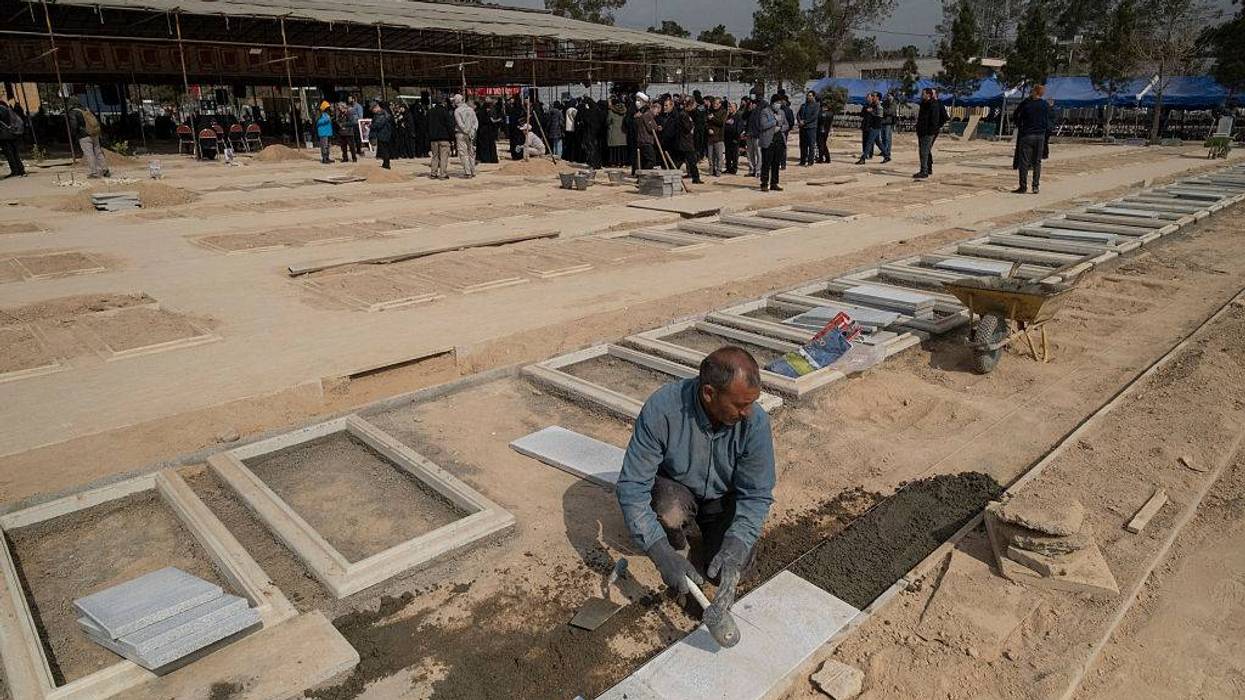
The estimated spending on the Iran war in just over a week amounts to over 1% of the 2026 US defense budget.
The cost of President Donald Trump's unprovoked and unconstitutional war with Iran has already cost US taxpayers billions of dollars, and will cost billions more if the conflict drags on.
Anadolu Ajansı on Monday published an estimate that the Iran war cost $10.35 billion over its first 10 days, or more than 1% of the entire 2026 US defense budget.
The US spent an estimated $779 million in the war's first 24 hours alone, and Anadolu noted that daily costs have gone up since then.
Specifically, Anadolu found that as "the campaign has expanded, operational spending has climbed into the billions, based on estimated flight hours, maintenance costs, and munitions expenditures derived from the US Department of Defense’s 2025 and 2026 budget requests."
In the days since Anadolu published its estimate, the estimated cost of the war has soared past $11 billion, according to a tracker that assumes the assault is costing the US $1 billion per day, based on preliminary figures from the Pentagon.
The Washington Post reported on Monday that the US Department of Defense estimated that it burned through $5.6 billion worth of munitions in the initial strikes on Iran, raising questions about whether the war has seriously eroded US military readiness.
Due to the conflict's rapidly escalating costs, the Trump administration is expected to ask US Congress for a $50 billion supplemental funding bill to keep the war going.
Bobby Kogan, senior director of federal budget policy at the Center for American Progress, and Damian Murphy, senior vice president of national security and international policy at the Center for American Progress, released a memo on Monday explaining why Congress should not agree to any White House requests for supplemental funding.
First, the memo notes that polling shows that the Iran war is unprecedentedly unpopular, being the first US war ever to have a net negative approval rating at the outset of the conflict.
"Lawmakers in Congress have the upper hand both morally and politically in opposing the war in Iran," the memo states. "The public does not want to be drawn into another forever war that threatens American lives, kills children, destabilizes the Middle East, and whose costs could easily balloon to hundreds of billions or even trillions of dollars."
The memo then argues that the massive increase in defense spending contained in the One Big Beautiful Bill Act, which was passed by Republicans in last year and signed into law by Trump, should be more than enough to cover the cost of replacing munitions.
"The 'Big Beautiful Bill' provided an additional $153 billion for defense just eight months ago," the memo explains, "on top of the annual defense budget of around $900 billion. The annual defense appropriations bill, also approved only a few months ago, grants the White House the legal authority and flexibility to move around billions of dollars within the Department of Defense to achieve their goals, known as transfer authority."
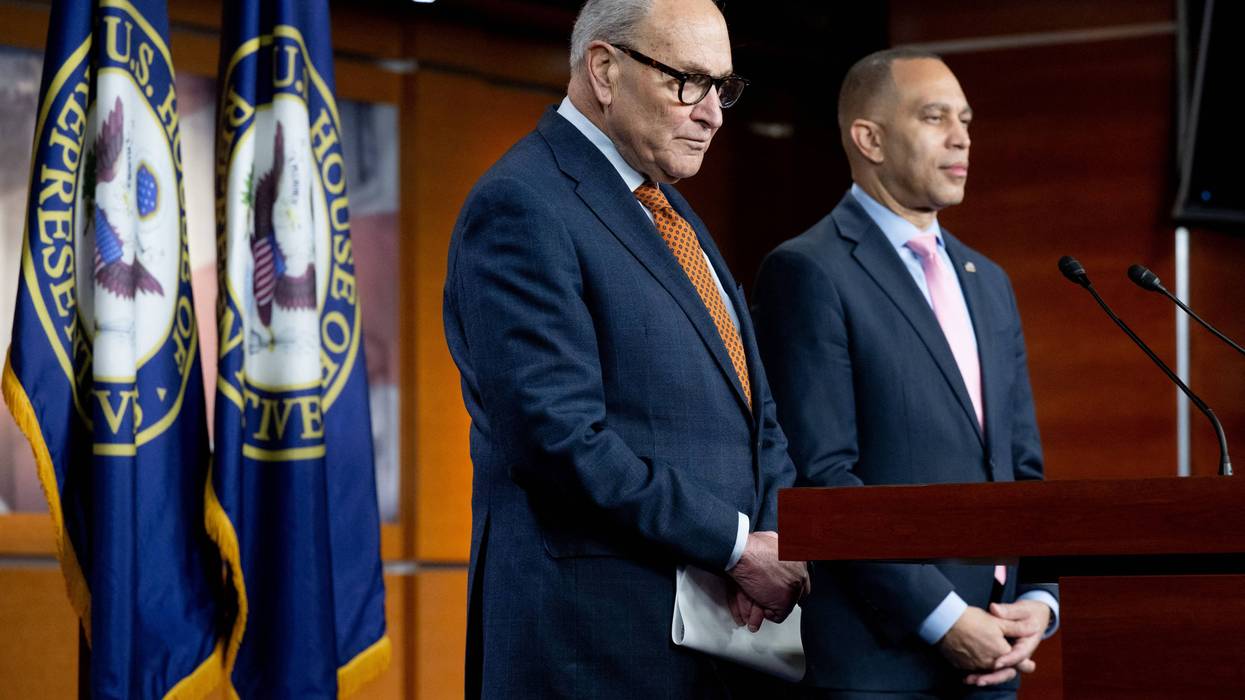
"Schumer and Jeffries have shown that they cannot be trusted to prevent more wars, more threats of wars, or the transfer of another half a trillion dollars a year into the war machine."
A coalition of peace groups on Wednesday launched a new national campaign calling for the top Democrats in Congress—Senate Minority Leader Chuck Schumer and House Minority Leader Hakeem Jeffries—to resign from their leadership roles, citing their failure to sufficiently fight back "against a war-crazed Trump administration."
The coalition, which includes Peace Action and RootsAction, launched a petition declaring that it is "time for congressional Democrats to replace Schumer and Jeffries with leaders who are willing and able to challenge the runaway militarism that has dragged our country into launching yet another insanely destructive war," this time against Iran.
"Sen. Chuck Schumer and Rep. Hakeem Jeffries have not acted to prevent war on Venezuela or the current war on Iran," the petition reads. "They worked to delay a vote on Iran until after the war had started, while failing to clearly oppose it before or after the launch of the war. Schumer and Jeffries have shown that they cannot be trusted to prevent more wars, more threats of wars, or the transfer of another half a trillion dollars a year into the war machine."
Kevin Martin, president of Peace Action—the largest grassroots peace network in the US—said in a statement that he doubts "at this point whether many people look to Chuck Schumer and Hakeem Jeffries for ‘leadership’ in Congress, but we would settle for them getting with the program and representing their base, and the majority of Americans, who want them to stand strongly against Trump’s illegal wars and domestic terror campaigns against the American people."
"They need to speak out loudly and clearly, and get their caucuses in line, to oppose the upcoming $50 billion or more for Trump’s illegal war of aggression on Iran, and to cut off US weapons to Israel," said Martin. "Failing to do so will only increase calls for them to step down or be replaced by colleagues who understand where the American people are on these and other critical issues."
Since the start of the illegal US-Israeli assault on Iran, Schumer and Jeffries have focused largely on procedural objections to the war, the Trump administration's incompetence, and the president's failure to clearly articulate his objectives, rather than explicitly opposing the military onslaught.
In an appearance on NBC's "Meet the Press" on Sunday, Jeffries declined to say whether he would oppose the Trump administration's expected push for $50 billion in new funding for the unauthorized war on Iran.
"We’ll cross that bridge when we get to it," Jeffries said, chiding the administration for failing to "make its case as to the rationale or justification for this war of choice in the Middle East."
Sarah Lazare and Adam Johnson wrote for The Nation last week that "it’s not enough to check the box, to do the bare minimum, to reinforce every argument for war only to balk at the process and ask whether there’s a 'plan' for after the myriad war crimes have already been committed."
"The only way to read this half-hearted response from the Democratic Party leadership," they argued, "is de facto support."