

SUBSCRIBE TO OUR FREE NEWSLETTER
Daily news & progressive opinion—funded by the people, not the corporations—delivered straight to your inbox.
5
#000000
#FFFFFF
To donate by check, phone, or other method, see our More Ways to Give page.
Daily news & progressive opinion—funded by the people, not the corporations—delivered straight to your inbox.
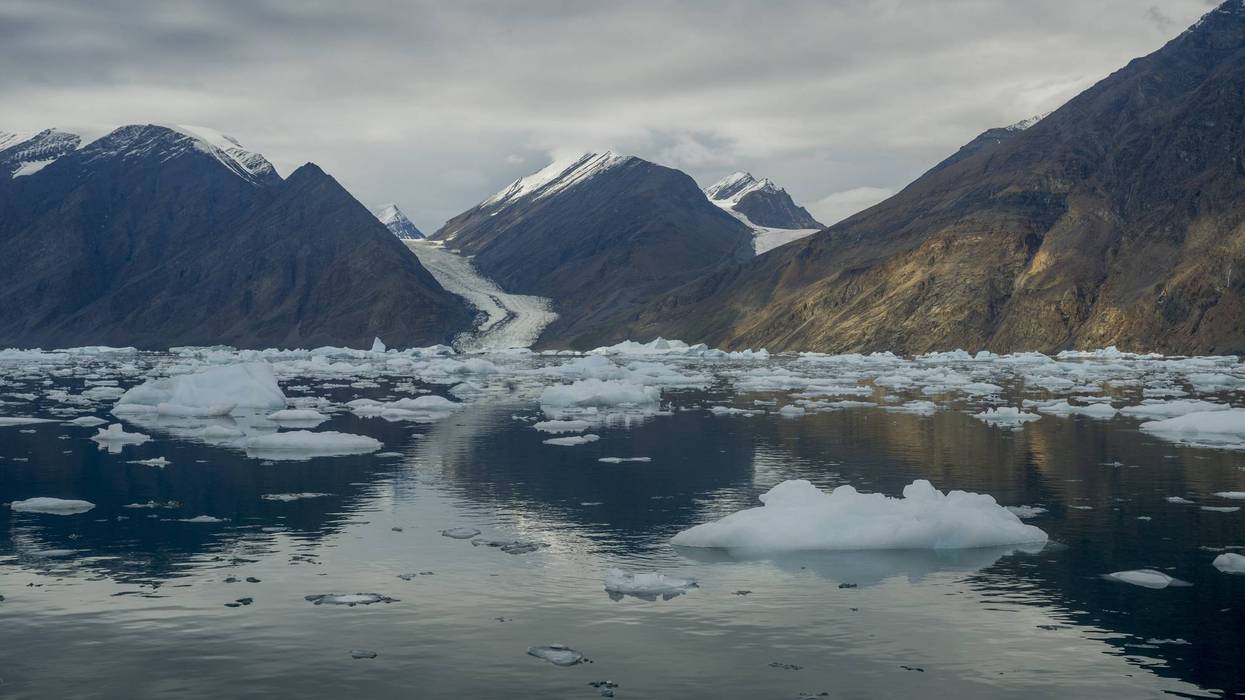
"For two decades," said one of the report's authors, "it has documented conditions across the Arctic system, bringing together physical and social sciences with real-world observations/data and consistent updates."
The Trump administration has reportedly decided to yank federal funding from an annual National Oceanic and Atmospheric Administration report that examined the state of the Arctic, which is warming significantly faster than other regions of the world as continued fossil fuel extraction and use drive up global temperatures.
Politico, which first reported the decision, noted that the move "jeopardizes public dissemination of the report that NOAA has published since 2006. It has previously been available on the agency’s website, requires NOAA staff for its production, and pools data from NOAA scientists for many of its findings."
Zack Labe, a climate scientist who has been an author on NOAA’s peer-reviewed Arctic Report Card since 2020, wrote on social media that the Trump administration's decision "is truly devastating."
"The Arctic Report Card has been one of my favorite scientific endeavors," Labe wrote. "For two decades, it has documented conditions across the Arctic system, bringing together physical and social sciences with real-world observations/data and consistent updates."
Speaking to the science news outlet EOS, Labe warned that "the loss of the Arctic Report Card would be significant not only for the scientific community, but also for decision-makers and the public."
"Written for a broad audience and developed by more than 100 scientists from around the world, the report is an important resource for consistently documenting changes in one of the fastest warming regions on our planet," Labe added. "Discontinuing it would create a significant gap in our ability to track and connect these changes from year to year, with implications for people and communities around the world."
Last year's edition of the report card found that "surface air temperatures across the Arctic from October 2024 through September 2025 were the warmest recorded since 1900."
"The last 10 years are the 10 warmest on record in the Arctic," the report observed.
The Trump administration, packed with fossil fuel industry allies and headed by a climate denier, has worked aggressively to gut federal initiatives designed to track the worsening impact of the global climate emergency. Since taking power last year, the administration has dismissed government scientists, scrubbed climate information from federal websites, stopped updating a database that tracked the country's costliest weather disasters, and picked a climate denier to oversee the federal government's flagship climate report.
Rick Thoman, an Arctic climate specialist, called the Trump administration's latest move "devastating news for Arctic environmental monitoring."

“By safeguarding these deep-sea ecosystems within a global network of ocean sanctuaries and establishing a moratorium on deep sea mining, we can create a resilient safety net for marine life, and protect the health of our global oceans for generations to come."
Aided by a sophisticated underwater submersible, activists with Greenpeace on Wednesday set a world record for the deepest protest ever by displaying a banner 1.4 miles beneath the surface of the Arctic Ocean to oppose industrial deep-sea mining and urging protection of the world's oceans.
According to the international environmental group, the message "LISTEN TO THE SCIENCE!" was displayed 2,315 meters below sea level using a remotely operated vehicle called ‘ROV Holly.’
Executed during a deep-water survey expedition between Iceland and the island of Svalbard, the robotic hand of the submersible held up the sign in front of a hydrothermal vent field known as Loki’s Castle, which is located along the Arctic Mid-Ocean Ridge that separates the Arctic Ocean's Greenland Sea from the Norwegian Sea.
"This marks the deepest banner protest in history, to speak for ecosystems that have no voice of their own," said Dr. Sandra Schöttner, chief scientist for the Deep Arctic Expedition at Greenpeace International. "World leaders have already promised to protect 30 percent of the oceans, now they must listen to the science and actually do it. We cannot meet our global goals if we also allow industrial exploitation of unexplored and vulnerable ecosystems in the deep sea. It is high time that leaders keep their promises and give the oceans a chance to recover.”
The Arctic Mid Ocean Arctic Ridge—which the group characterized as "one of Earth's least known wildernesses"—goes down to depths of up to 3000 meters. The expedition and historic protest is part of a Greenpeace campaign that is calling for the deep-sea world of hydrothermal vents like Loki's Castle and others, as well as seamounts and the "extraordinary creatures" that live in such ecosystems to be protected with the establishment of a network of marine sanctuaries.
“By safeguarding these deep-sea ecosystems within a global network of ocean sanctuaries and establishing a moratorium on deep sea mining," said Dr. Schöttner, "we can create a resilient safety net for marine life, and protect the health of our global oceans for generations to come."
Efforts to ban deep-sea mining by environmentalists, ocean stewards, and conservationists were stymied in the US with an executive order last year issued by President Donald Trump which seeks to bolster and expand the practice by the mining industry.
Trump was condemned for the move, which Greenpeace at the time called "an insult to multilateralism" due to its sidestepping of a UN-backed process designed to protect the oceans, and "a slap in the face to all the countries and millions of people around the world who oppose this dangerous industry.”
Trump's failures, however, have been counteracted at some level by other nations who have paused or put stronger protections in place when it comes to deep-sea mining. In December, Norway paused controversial plans to issue a fresh round of drilling and mining license beneath undersea areas it controls.
As part of its ongoing campaign to curb the destructive practice, Greenpeace is calling on world leaders to honor existing global climate targets, implement the UN Ocean Treaty to protect 30% of the global ocean by 2030, and establish an immediate moratorium on deep-sea mining.
“There is no version of seabed mining that is sustainable or safe,” Greenpeace Aotearoa campaigner Juressa Lee said last year. “Alongside our allies who want to protect the ocean for future generations, we will continue to say a loud and bold no to miners who want to strip the seafloor for their profit.”
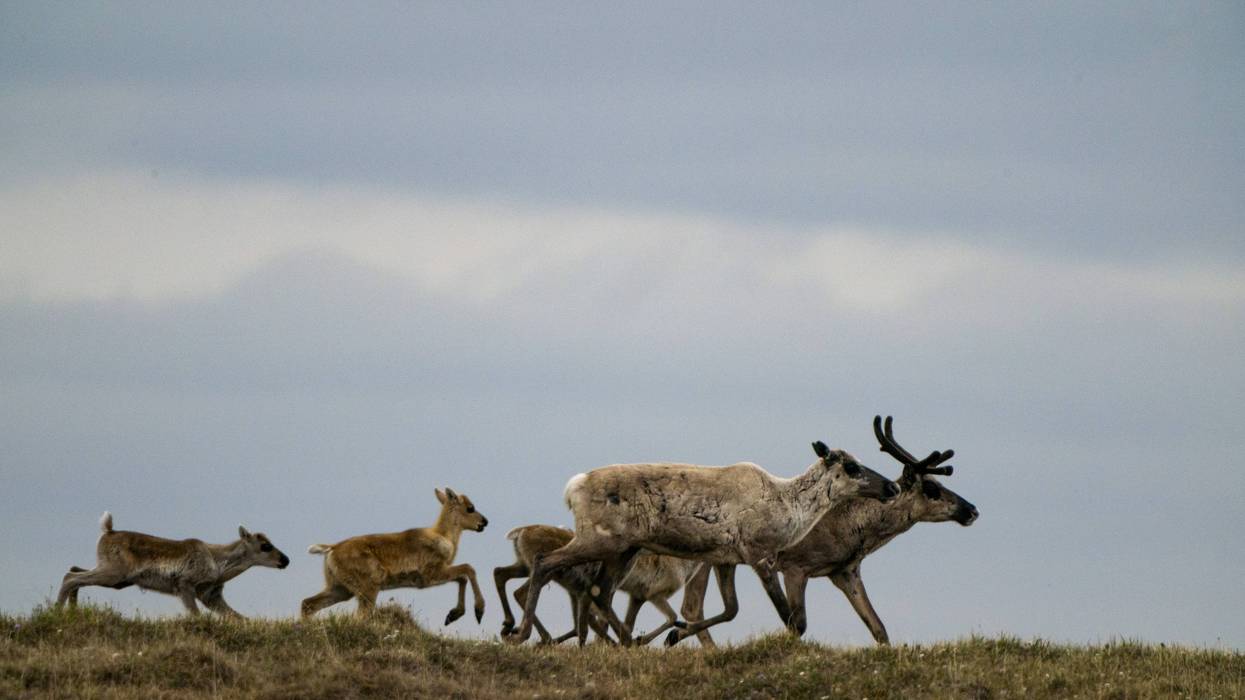
"The oil industry's allies in Congress are ignoring public opinion and the undeniable realities of the climate crisis by moving to drill on the sacred Coastal Plain and endanger the freedom of local communities."
Indigenous leaders joined with climate and wildlife defenders on Friday to blast President Donald Trump's administration and Republicans in Congress over the newly announced fossil fuel lease sale for the Arctic National Wildlife Refuge's Coastal Plain in Alaska.
The US Department of the Interior's Bureau of Land Management revealed Friday that it will hold the first of four legally mandated lease sales on June 5. The so-called One Big Beautiful Bill Act—which congressional Republicans passed and Trump signed last summer—requires BLM to hold the other three sales by 2035.
ANWR's Coastal Plain spans over 1.5 million acres and is known for its biodiversity. As a BLM webpage details, it is also believed to contain 4.25-11.8 billion barrels of "technically recoverable oil," according to US Geological Survey estimates.
Trump returned to the White House last year backed by Big Oil's campaign cash, and his deputy interior secretary, Kate MacGregor, said Friday that "after three acts of Congress and several successful lawsuits making it abundantly clear that oil and gas leasing in this area of Alaska is lawful, it is a great honor to once again announce another Coastal Plain lease sale."
MacGregor framed the forthcoming sale as just one piece of the administration's pro-fossil fuel agenda, adding that "President Trump has long supported Alaska's important contribution to American energy dominance, and Interior is proud to take the necessary and durable steps to unleash these important resources on behalf of the American people."
Earlier attempts to open up ANWR to drilling suggest that the sale may not draw much industry interest. Taxpayers for Common Sense pointed out Friday that two previous ones required by the Trump GOP's Tax Cut and Jobs Act "were originally estimated to bring taxpayers almost $1 billion in revenue but fell far short of this projection. The first lease sale, held in January 2021, brought in just $16.5 million. The second lease sale, held in January 2025, attracted no bidders and generated no revenue."
However, as the Anchorage Daily News reported, the plan for the next sale "comes on the heels of another recent lease sale, in the National Petroleum Reserve-Alaska to the west of the refuge, that drew heavy interest from oil companies," which "raises questions about how much bidding might occur in the refuge," particularly as Trump's war on Iran has driven up global oil prices.
Still, critics highlighted the previous ANWR sales—including the Wilderness Society's Alaska senior manager, Meda DeWitt, who said: "Once again, the oil industry's allies in Congress are ignoring public opinion and the undeniable realities of the climate crisis by moving to drill on the sacred Coastal Plain and endanger the freedom of local communities to sustain their cultures and lifestyles for generations to come."
"Two previous lease sales have already been economic failures, proving that the absurd Arctic Refuge leasing program should be eliminated and permanent protection must be provided for the calving grounds of the Porcupine Caribou herd," DeWitt argued.
The Arctic Refuge is the crown jewel of the American National Wildlife Refuge System – opening it up to drilling endangers the wildlife and the indigenous communities who have called the refuge their home for thousands of years.
— Senate Energy Dems (@energydems.senate.gov) April 17, 2026 at 1:24 PM
America Fitzpatrick of the League of Conservation Voters (LCV) similarly said that "time and again, the American people have said that they oppose drilling in the Arctic Refuge. The last lease sale in 2024 yielded no bids. Drilling here is not only bad economic—it's reckless and wildly unpopular. Instead of further handcuffing us to be more dependent on fossil fuels, the administration should focus on prioritizing cleaner, more affordable, and more reliable energy sources like clean energy."
"We simply cannot drill our way out of high energy costs," declared Fitzpatrick, the group's conservation program director. "The US is already producing more oil and gas than ever before, but when Trump forced a global energy crisis, prices skyrocketed once again. LCV stands with the Gwich'in people in their fight to ensure there is no drilling in the Arctic Refuge. Not now, not ever."
The Gwich'in, Indigenous people who live in Alaska and Canada, have long defended the refuge from fossil fuel intrusion, and are currently engaged in litigation over the Trump Interior Department's leasing program for the Coastal Plain.
"The Neets'ąįį Gwich'in have made our position clear that any development on the Coastal Plain would have irreversible, adverse effects on our people, our culture, and our way of life," Raeann Garnett, first chief of the Native Village of Venetie Tribal Government, said Friday. "This lease sale, once again, disregards our sovereignty and is a direct threat to the sacred land that sustains our people."
Karlas Norman, first chief of the Venetie Village Council, stressed that "no amount of money will make this land any less sacred to our people or any less vital to our way of life. The Trump administration's most recent actions to advance oil and gas development on the Coastal Plain does not change the fact that this land is sacred, that industry has walked away, and that the Gwich'in people will never stop fighting to protect it."
Galen Gilbert, first chief of the Arctic Village Council, charged that "the Trump administration's relentless push to auction off this sacred land despite overwhelming public opposition and industry that has already signaled they are not interested, makes clear that this administration values corporate interests over the rights and lives of Indigenous peoples."
Gilbert also vowed that "we will continue to fight with every tool available to protect the Coastal Plain for our children and all future generations."
Kristen Moreland, executive director of the Gwich'in Steering Committee, also pledged that "the Gwich’in Nation remains committed to be a voice for the caribou, and to fight oil and gas development in the Arctic Refuge."
"We condemn these efforts by the Trump administration to exploit the calving grounds of the Porcupine Caribou herd for short-term gain, and we know that the majority of Americans stand beside us in opposing development in this cherished and irreplaceable landscape," Moreland continued. "We have been raising our voices and fight[ing] for the protection of this sacred land and our way of life for decades—and we are not backing down now."
Also noting the US public's position, Andy Moderow, senior director of policy at Alaska Wilderness League, put pressure on the industry to stay away from the lease sale later this spring.
"For decades, the American people have recognized that the Arctic Refuge is not an industrial zone for oil development, and this sale simply runs counter to common sense," said Moderow. "Any oil and gas company that is even thinking about buying these leases should know that, if they do, they will be sending a clear message to the American people—that no place in Alaska is too sacred to drill in a quest for corporate profits. We urge companies to take a pass on the Arctic Refuge lease sale, and we look forward to rightfully restoring protections for this landscape in the years to come."
According to the Anchorage Daily News, "Elizabeth Manning, a spokesperson with Earthjustice, said in an email Friday that any new leases will be subject to a lawsuit brought by Natural Resources Defense Council, Center for Biological Diversity, and Friends of the Earth."
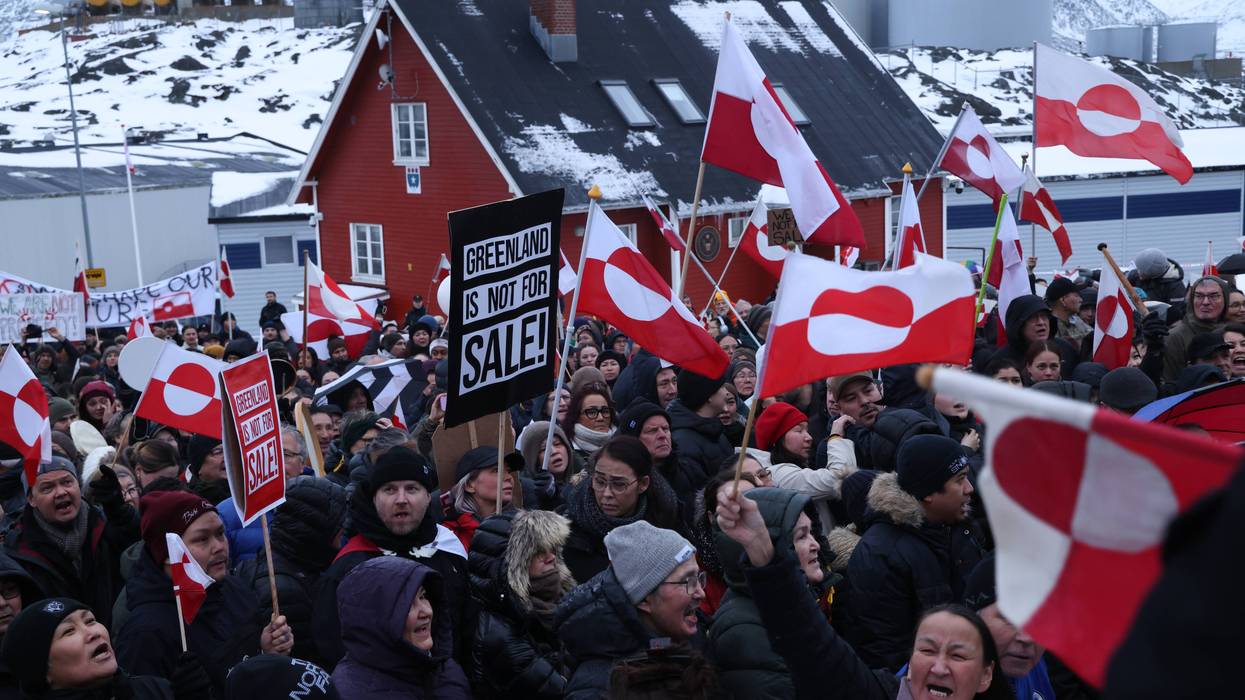
"Trump's energy and climate policies, including his heedless preoccupation with exploiting Greenland and the rest of the Arctic for oil and gas resources, risk a far more rapid meltdown of the Arctic."
As warnings about the dangers of President Donald Trump's Greenland threats mount, experts are sounding the alarm over what his takeover of the self-governing Danish territory that straddles the Arctic Circle would mean for a world that is already heating up due to humanity's continued reliance on fossil fuels.
Since returning to office last January—in part thanks to campaign cash from fossil fuel giants—Trump has called climate change "the greatest con job ever perpetrated on the world" in a UN speech and constantly prioritized big polluters over working people and the planet, including by ditching dozens of international organizations and treaties, such as the Paris Agreement. The president's first year back in power was also among the hottest on record, according to his own government and various scientific institutions.
"His fixation on Greenland is an admission that climate change is real," John Conger, a former Pentagon official in the Obama administration who is now an adviser to the Center for Climate and Security, a research institute, told the New York Times earlier this month.
The Arctic is warming 2-4 times faster than most of the Earth. As reflective sea ice melts and is replaced by darker land or water, more heat from the sun is absorbed, causing a temperature increase that further accelerates melting. Atlantic Council distinguished fellow Sherri Goodman recently told the Washington Post that "it's partly the melting of sea ice making it more attractive for the economic development that he'd pursue in Greenland."
"It's partly the melting of sea ice making it more attractive for the economic development that he'd pursue in Greenland."
Regional warming is opening up potential shipping routes and access to natural resources, from minerals needed for renewable energy technologies to oil. While the Trump administration is now engaged in talks with Greenland and Denmark, the president has said he wants the island—whose people don't want to join the United States—because of "national security" concerns, claiming that if he doesn't take it over, China or Russia will.
"Climate change is a significant national security risk," said Goodman, who was deputy undersecretary of defense for environmental security during the Clinton administration. "The openings of sea lanes, the changing ice conditions, are contributing to the intense geopolitical situations we're experiencing."
Fears eased a bit last week, when Trump backed off threats to impose tariffs on European countries opposed to his Greenland takeover and potentially use US military force to seize the territory. While in Switzerland for the Davos summit, he also announced the "framework of a future deal with respect to Greenland and, in fact, the entire Arctic Region."
Danish Foreign Minister Lars Løkke Rasmussen told reporters in Brussels on Thursday that negotiations between his country, Greenland, and the United States the previous day had a "very constructive atmosphere and tone, and new meetings are planned," according to CNBC.
"It's not that things are solved, but it is good because now we are back to what we agreed in Washington exactly two weeks and a day ago. After that, there was a major detour. Things were escalating, but now we are back on track," Rasmussen said. "It's not that we can conclude anything, but I am slightly more optimistic today than a week ago."
Even so, Trump has made clear that the plans to deliver on his campaign pledge to "drill, baby, drill," and as Politico detailed:According to an assessment by the US Geological Survey, Greenland "contains approximately 31,400 million barrels oil equivalent (MMBOE) of oil" and other fuel products, including around 148 trillion cubic feet of natural gas.
"That's the kind of reserves that if they were discovered in Saudi Arabia or Qatar, businesses would be jumping for joy," said Ajay Parmar, a senior crude markets analyst with commodities intelligence firm ICIS.
"Of course, given it's in Greenland, there would be technical challenges putting in place the piping to extract it and get it around the world," he said. "But there's still a major commercial opportunity there, even if it would require a lot of time and effort to make it work."
However, in 2021, Greenland introduced a moratorium on oil and gas exploitation after the socialist, pro-independence Inuit Ataqatigiit party took power, vowing to "take the climate crisis seriously."
It's unclear whether that ban will survive current negotiations, or if Trump will return to threats of taking Greenland by force.
Paul Bledsoe a lecturer at American University’s Center for Environmental Policy who held various roles in the Clinton administration, wrote in a Thursday opinion piece for the Hill that "Trump's energy and climate policies, including his heedless preoccupation with exploiting Greenland and the rest of the Arctic for oil and gas resources, risk a far more rapid meltdown of the Arctic, with disastrous consequences for nations and people around the world."
"More than half of the Arctic's reflective ice has melted in the last 50 years, and a recent study in the journal Nature found that the Arctic will be free of sea ice entirely for at least a day before 2030," he noted. "Should Arctic sea ice be allowed to melt, which may happen within just two decades or even sooner, absorption of the sun's heat by the newly open northern ocean will add the equivalent of 25 years of worldwide carbon dioxide emissions, pushing already dangerous global temperatures of 2.7°F above preindustrial levels toward climatic instability."
"This loss of Arctic sea ice is just one of more than a dozen temperature-sensitive tipping points scientists have now identified, including in ocean currents and the Amazon rainforest, that risk unleashing super-heating around the globe," Bledsoe continued. He also highlighted that "huge new shipping traffic in the Arctic and industrial development of oil and gas in the region will greatly increase the amount of climate pollution, including from carbon dioxide, methane, and especially black carbon soot, which is already washing out onto Arctic ice and increasing melting rates tremendously."
"Huge new shipping traffic in the Arctic and industrial development of oil and gas in the region will greatly increase the amount of climate pollution, including from carbon dioxide, methane, and especially black carbon soot."
US planet-heating emissions "are now rising again under Trump," thanks to him abandoning key climate agreements and imposing policies on close coal-fired power plants, methane regulations, carbon dioxide standards, and more, the expert added. Given that the president's "anti-climate policies have already been damaging to the Arctic and global climate protection," Bledsoe warned against letting his quest for Greenland "increase the chances of disastrous, runaway climate change."
Bledsoe's warning coincided with a Thursday letter from over 120 civil society groups—including Friends of the Earth, Greenpeace International, Oil Change International, Public Citizen, and Zero Hour—urging European Union leaders to resist Trump's "fossil-fueled imperialism" in solidarity with Latin America and Greenland.
The coalition called on the bloc's leaders to introduce a United Nations motion condemning Trump's violations of international law, cancel the US-EU trade deal, renew the European Green Deal, end contracts for importing or financing US liquefied natural gas, create a roadmap to phase out gas, defend EU methane rules, and support for the First International Conference on the Just Transition Away from Fossil Fuels.
"As long as the EU accedes to Trump's demands," the coalition wrote, "it will be switching one dangerous dependency for another, giving up its sovereignty bit by bit, losing the competitiveness battle, deepening the climate crisis which will be putting its own people's lives at even higher risk from extreme weather, and jeopardizing its ambitions to be seen as a global climate leader."
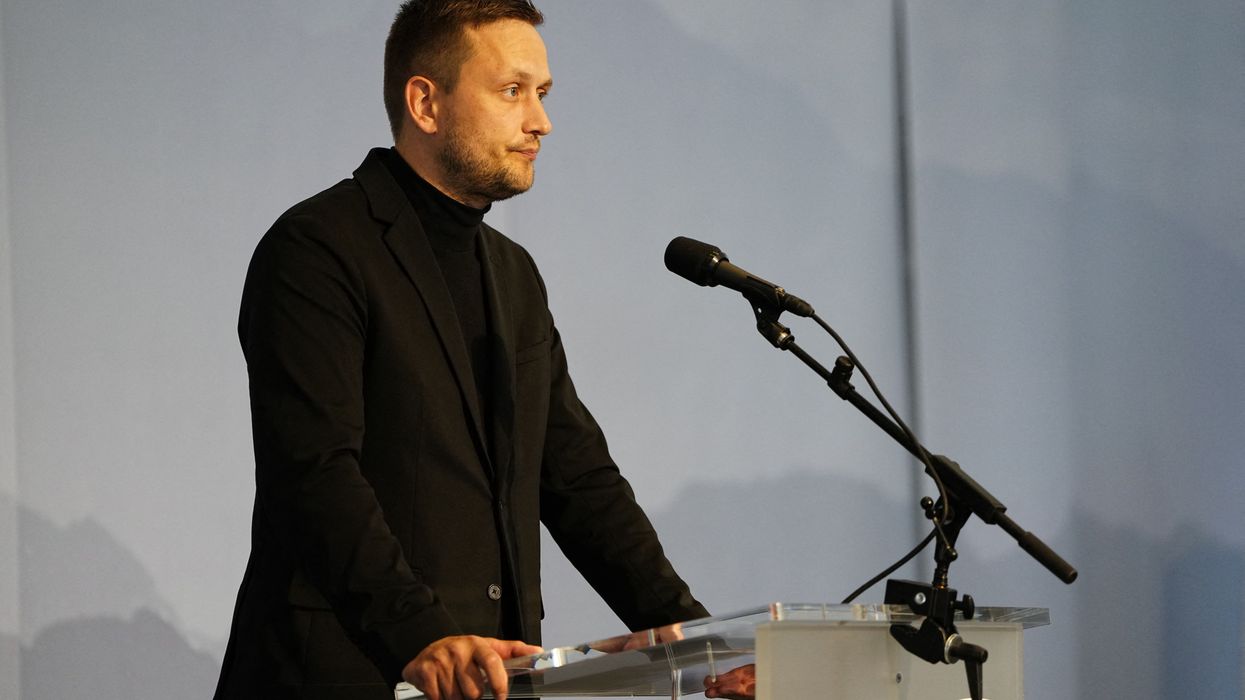
Louisiana Gov. Jeff Landry's new title "changes nothing for us at home," said the leader of Greenland. "We decide our future ourselves."
The leaders of Denmark and Greenland have rejected President Donald Trump's plans to take control of the latter country "very clearly before," said Danish Prime Minister Mette Frederiksen and Greenlandic Premier Jens-Frederik Nielsen on Monday, but they were forced to make their resolve even more explicit after the US leader appointed a new special envoy to the autonomous Arctic island territory.
"National borders and the sovereignty of states are rooted in international law," said Frederiksen and Nielsen in a joint statement Monday. "You cannot annex other countries... Greenland belongs to the Greenlanders, and the US should not take over Greenland. We expect respect for our common territorial integrity.”
The two leaders spoke out after Trump announced his appointment of Republican Louisiana Gov. Jeff Landry as envoy to Greenland, with both men referencing plans to take control of the country of 57,000 people, which is part of the Danish kingdom.
"Jeff understands how essential Greenland is to our National Security, and will strongly advance our Country’s Interests for the Safety, Security, and Survival of our Allies, and indeed, the World," said the president Sunday evening.
Landry replied that it is "an honor to serve you in this volunteer position to make Greenland a part of the US."
While joining Frederiksen in forcefully rejecting any plans for an annexation of Greenland, Nielsen also dismissed Landry's new role in another statement.
“It may sound big," said Nielsen of the Trump administration's latest overtures. "But it changes nothing for us at home... We decide our future ourselves."
Trump has pushed for a takeover of Greenland since his first term in the White House, and he has ramped up efforts this year since returning to office. In August, Danish Foreign Minister Lars Løkke Rasmussen summoned Mark Stroh, the US chargé d'affaires in Denmark, after the country's public broadcaster reported that the Trump administration had launched a covert "influence" campaign to sew discord between Denmark and Greenland.
Earlier this year, polling showed that 85% of Greenlanders opposed joining the US. Hundreds of people protested in Greenland's capital, Nuuk, in March, ahead of US Vice President JD Vance's visit to the country.
Greenlandic photographer Orla Joelsen said Monday that should Landry come to the country, "he will be welcomed by a massive demonstration—larger than the one we held back in March this year."
The White House has said the US should take control of the mineral-rich island for "national security and even international security." According to the US Geological Survey, the Arctic holds 13% of undiscovered oil resources and 30% of undiscovered gas. The climate emergency and melting Arctic ice has also expanded the use of the northern ocean for trade shipping routes, and controlling Greenland would give the US a greater claim in the region.
Trump has threatened to use military action to seize Greenland, saying in March that the White House would "go as far as we have to” to take ownership of the island.
On Monday, Rasmussen told the press he plans to summon the US ambassador to Denmark, Ken Howery, to the European country to demand "an explanation" of Landry's appointment.
Rasmussen said Landry's statement about Greenland was "completely unacceptable."
“As long as we have a kingdom in Denmark that consists of Denmark, the Faroe Islands, and Greenland, we cannot accept that there are those who undermine our sovereignty," he said.
European Commission chief Ursula von der Leyen and European Council President Antonio Costa expressed "full solidarity" with Denmark and Greenland on Monday, calling territorial sovereignty "fundamental principles of international law."
"These principles are essential not only for the European Union," they said, "but for nations around the world."
"After 20 years of continuous reporting, the Report Card stands as a chronicle of change and a caution for what the future will bring," report contributors said.
The Arctic just experienced its warmest air temperatures on record between October 2024 and September 2025 as the climate crisis dramatically alters the region, the National Oceanic and Atmospheric Administration found in its 20th Arctic Report Card.
The annual report, released Tuesday, also notes the Arctic's lowest maximum sea-ice extent and its wettest year on record. The past 10 years have been the warmest recorded in a region that is heating at two to four times the global average.
"After 20 years of continuous reporting, the Report Card stands as a chronicle of change and a caution for what the future will bring," report editors Matthew Langdon Druckenmiller, Rick Thoman, and Twila A. Moon wrote in the executive summary. "Transformations over the next 20 years will reshape Arctic environments and ecosystems, impact the well-being of Arctic residents, and influence the trajectory of the global climate system itself, which we all depend on."
Arctic warming is not confined to the spring and summer months, but marks a full-year transformation, with fall 2024 being the warmest Arctic fall on record and winter 2025 the second-warmest winter. While snow levels do remain high in the winter months, they consistently drop by June, with snow cover during that month now about half of 1960s levels. Precipitation in the winter months is also not limited to snow.
"We can point to the Arctic as a far away place but the changes there affect the rest of the world.”
At sea, ice extent is also shrinking in the winter, with March 2025 seeing the lowest maximum sea-ice extent in nearly 50 years of satellite data. The oldest, thickest ice has shrunk by over 95% since the 1980s, and its domain has constricted to areas north of Greenland and the Canadian archipelago.
“There’s been a steady decline in sea ice and unfortunately we are seeing rain now even in winter,” Druckenmiller told the Guardian. “We are seeing changes in the heart of winter, when we expect the Arctic to be cold. The whole concept of winter is being redefined in the Arctic.”
Warming temperatures are also driving changes in ecosystems, with more southern species and conditions shifting northward both on land and at sea. On land, this happens via the "greening" of the tundra and the spread of boreal species into the Arctic. At sea, warmer, saltier water is shifting north, driving the "Atlantification" of the Arctic, which exacerbates ice melt and threatens to destabilize ocean circulation patterns.
Changes are also occurring on the Pacific side of the Arctic Ocean, with Arctic species declining by two-thirds in the northern Bering Sea and one-half in the Chukchi Sea.
“We are no longer just documenting warming—we are witnessing an entire marine ecosystem transform within a single generation,” Hannah-Marie Ladd, director of the Indigenous Sentinels Network on the Aleut community of Saint Paul Island, said at a conference unveiling the report.
Ocean warming, the melting of glaciers, and melting permafrost are increasing weather hazards and other dangers for Arctic communities. For example, warm ocean temperatures fueled ex-Typhoon Halong in October 2025, which forced over 1,500 people to evacuate from Alaska's southwestern coast and nearly destroyed two villages.
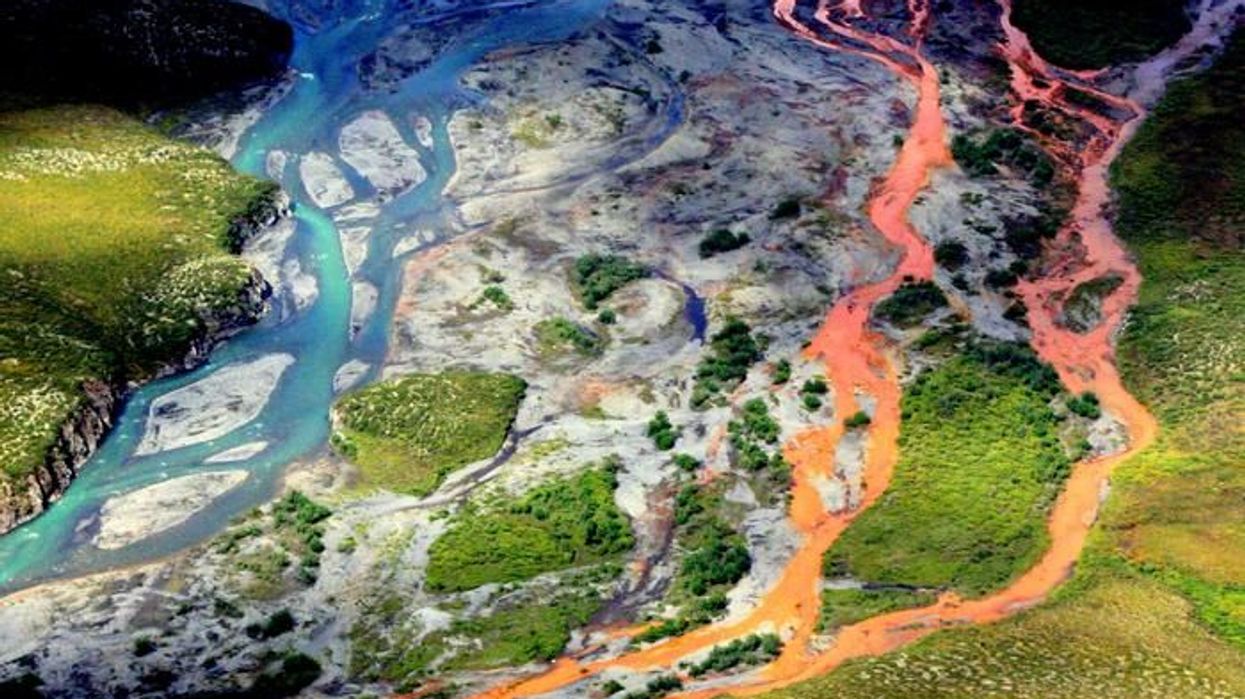
Glacier melt has increased the risk of sudden flooding and landslides, while the melting of permafrost is leading to the phenomenon of "rusting rivers," as oxidized iron from melting permafrost enters the water and degrades water quality.
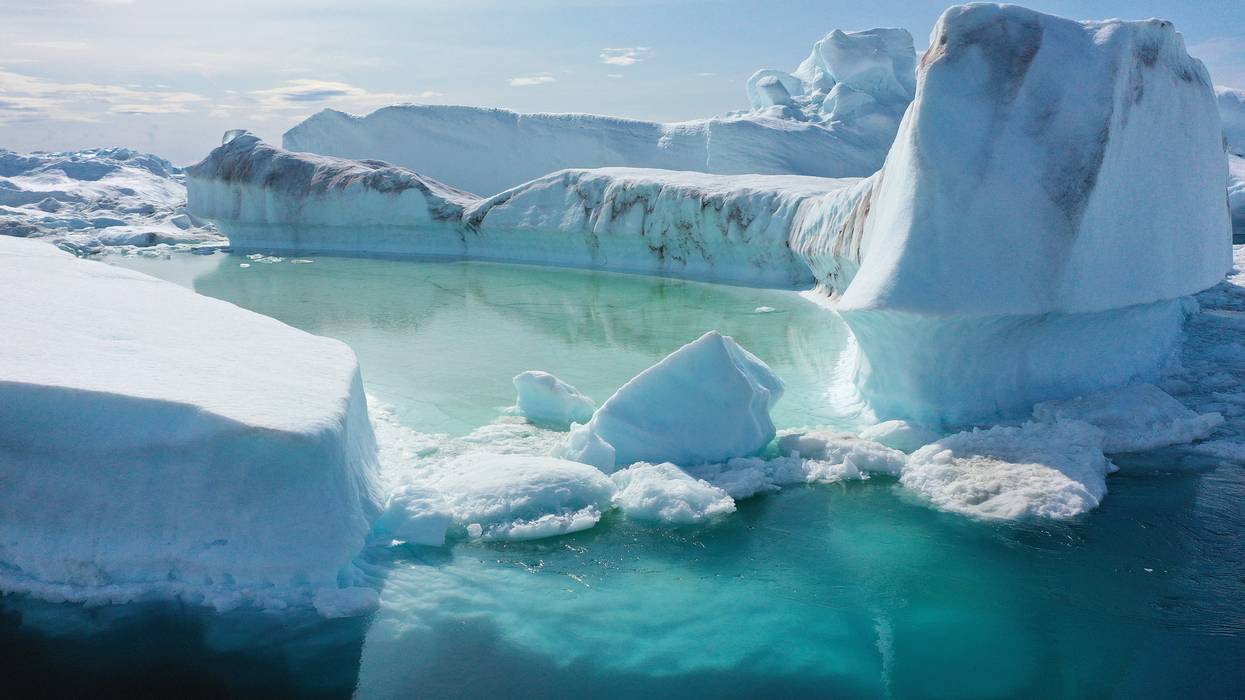
These impacts aren't limited to the Arctic. The Greenland ice sheet, for example, lost 129 billion tons of sea ice, which contributes to global sea-level rise.
“We are seeing cascading impacts from a warming Arctic,” Climate Central scientist Zack Labe told the Guardian. “Coastal cities aren’t ready for the rising sea levels, we have completely changed the fisheries in the Arctic, which leads to rising food bills for seafood. We can point to the Arctic as a far away place but the changes there affect the rest of the world.”
The report comes as the Trump administration has moved to censure federal climate scientists and cut staffing and funding for government science.
Outside researchers noted that the administration did not seem to have significantly altered the content of the 2025 Arctic Report Card.
“I honestly did not see much of a tone shift in comparison to previous Arctic report cards in years past, which was great to see,” Climate Central media director Tom Di Liberto told NBC News. “The implications of their findings are the same as past Arctic report cards. The Arctic is the canary in the coal mine.”
"The Trump administration’s cuts to budgets, staffing, and resources for science are already affecting data and research related to the Arctic."
Druckenmiller also told reporters that the team “did not receive any political interference with our results.”
However, the 2024 Arctic Report Card urged a "global reductions of fossil fuel pollution," in its subhead, an exhortation missing from the 2025 version.
The 2025 report did refer to the impacts of federal funding cuts, discussing "vulnerabilities and risks facing nationally and internationally coordinated observing programs, especially amid risks of diminishing US investments in climate and environmental observations," as Druckenmiller, Thoman, and Moon wrote.
"The Trump administration’s cuts to budgets, staffing, and resources for science are already affecting data and research related to the Arctic," the Union of Concerned Scientists (UCS) posted on social media in response to the release.
However, even if the report did not highlight the causes of the climate emergency, it's ultimate message was unmistakable, UCS said: "It’s clear that fossil fueled climate change is having an alarming effect on the vital signs of this unique, crucial region of the world."

"Requiring governments to assess the global climate consequences of oil and gas combustion before approving new fossil projects is common sense, and long overdue," said one campaigner.
Although the European Court of Human Rights on Tuesday sided with the Norwegian government over six young adults and a pair of climate groups, the plaintiffs still welcomed the tribunal's ruling as "a major step forward," in the words of Frode Pleym, head of Greenpeace Norway.
The case stems from the Norwegian Ministry of Petroleum and Energy granting 10 exploration licenses to 13 companies for fossil fuel production in the Arctic Barents Sea in 2016. The plaintiffs argued that doing so violated Article 8 of the European Convention on Human Rights, or the right to respect for private and family life.
The court unanimously held that "there had been no violation" of Article 8, but it also affirmed that the government must conduct a full environmental impact assessment, including greenhouse gas emissions from combustion, for any new petroleum production.
"It's a relief to see the court recognize what science has told us for years—that new oil and gas fields threaten our most basic human rights," Pleym said in a statement. "Requiring governments to assess the global climate consequences of oil and gas combustion before approving new fossil projects is common sense, and long overdue."
Young Friends of the Earth Norway, which sued alongside Greenpeace and the six individuals, also praised the ruling as progress.
"This decision is a quantum leap for climate accountability," said the group's leader, Sigrid Hoddevik Losnegård. "The government can no longer continue its oil and gas policy as if climate change doesn't exist. This judgment will have ripple effects far beyond Norway."
I can think of at least seven ways fossil fuel producers could wiggle out of this, but still: holy shit this is huge.
[image or embed]
— Dr. Genevieve Guenther (she/they) (@doctorvive.bsky.social) October 28, 2025 at 7:17 AM
The plaintiffs noted in a joint statement that the ruling "builds on" recent decisions from the International Court of Justice and the UK Supreme Court. The ICJ said in a landmark advisory opinion in July that countries have a legal obligation to take cooperative action to address the fossil fuel-driven climate emergency. At the time, Danilo Garrido, legal counsel at Greenpeace International, hailed the development as "the start of a new era of climate accountability at a global level."
That decision came roughly a year after the UK's top court ruled that Surrey authorities' approval of the Horse Hill drilling project "was unlawful" because they didn't consider "emissions that will occur when the oil produced is burnt as fuel," as required by law. Friends of the Earth UK called the ruling "a heavy blow for the fossil fuel industry" that could impact other projects.
The European court's Tuesday decision came less than two weeks away from the start of the 30th United Nations Climate Change Conference in Belém, Brazil. In preparation for COP30, the UN on Tuesday released a report warning that governments' climate plans would reduce fossil fuel emissions by just 10% by 2035 compared to 2019 levels, far short of what is needed to meet the Paris Agreement goal of limiting temperature rise this century to 1.5°C above preindustrial levels.
As Oil Change International pointed out in a June report, Norway and three other wealthy nations—Australia, Canada, and the United States—account for the majority of planned oil and gas expansion over the next decade. This month, the group commissioned a poll that found a majority of Norwegians believe their country should either stop exploring for new oil and gas or slow down the pace.
"The data show that Norwegians increasingly want political leadership that aligns the country's oil policy with its climate goals," Oil Change's North Sea campaign manager, Silje Lundberg, said Monday. "People are calling time on endless oil expansion—it's the government that's stuck in the past. The public clearly wants a plan to phase down oil and gas and deliver real climate leadership, not more empty talk from ministers protecting the industry."
It is of course possible that further melting will lead to increased tensions in which Arctic territory becomes an especially valued possession. But other threats are far more urgent, including the one causing the melting.
Greenland does not, on the face of it, seem to be the kind of place that a superpower like the United States would regard as a vital component of its security. With fewer than 60,000 inhabitants in an area roughly one-quarter the size of the contiguous United States, it is the least densely populated nation on Earth. Its only industries of note are fishing and, to some extent, tourism, and its northernmost point is as close to the North Pole as Los Angeles is to Denver.
Yet President Donald Trump insists the United States needs Greenland “very badly,” to the extent that he won’t “rule out” using force to attain it.
Such covetousness almost certainly owes at least something to the prospect of access to the mineral resources, including lithium, that Greenland is believed to harbor. But Trump himself has suggested a different motivation, musing in an interview about “Russian boats and… Chinese boats, gunships all over the place… going up and down the coast of Greenland.”
A world that has warmed enough for the Arctic Ocean to be truly ice-free is a world that will be experiencing even more droughts, heatwaves, wildfires, and other extreme weather events, at the potential cost of millions upon millions of dollars in damage and extensive loss of life.
Trump’s obsession with annexing Greenland is a confounding solution to a problem that doesn’t even exist.
Moscow and Beijing undeniably have an increasing number of vessels operating year-round in Arctic waters. In Russia’s case, that’s hardly surprising: Russia accounts for 53% of the region’s coastline. But its interests, and indeed those of China’s, have little to do with Greenland and a lot to do with its own Arctic waters, specifically the seaway along its north coast that Russia refers to as the Northern Sea Route (NSR). As sea ice decreases in thickness and extent as a result of climate change, the NSR is slowly opening up. As a result, Moscow sees this passageway as a potential source of riches and national pride and even a way to reorder international trade.
Russian President Vladimir Putin has declared that the NSR will ultimately “replace the Suez Canal” as the favored transit route between Atlantic and Pacific. It is presently a long way short of that: Just under 40 million tons of goods shipped through the NSR in 2024, almost exclusively on Russian and Chinese vessels, compared to 525 million tons that transited Suez. But it is far more than the 7 million tons that traveled the passage in 1987.
The Northwest Passage—the frequently narrow, shallow, and twisting pathway through the islands of Canada’s High Arctic—tells a similar story on a smaller scale. From the 16th through the 19th centuries, multiple expeditions perished in the ice of the Northwest Passage; after it was finally navigated for the first time in 1906, there were just 67 further transits over the course of the 20th century. Thanks to melting sea ice, there were 41 transits of the Northwest Passage in 2023 alone.
While both the Northwest Passage and NSR are more navigable than in the past, both are still challenging to sail through during all but the very warmest weeks of the year. Even as the Arctic heats up four times faster than the rest of the globe, its seas are unlikely to be consistently ice-free during summer before mid-century at the earliest. The anticipation of such an eventuality, however, has led to a jockeying for position and influence, and a rumbling discord among Arctic powers.
Canada and Russia regard the Northwest Passage and NSR respectively as their national waters, and they intend to dictate who can use them and when. Moscow requires any vessel that wants to transit the NSR to apply for permission up to four months in advance and mandates icebreaker escorts for most ships—often at a cost of several hundred thousand dollars.
The United States chafes at such restrictions, arguing that both waterways are international straits, open to vessels from all nations.
“We’re concerned about Russia’s claims to the international waters of the Northern Sea Route,” said then-Secretary of State Mike Pompeo in 2019, adding with a swipe at Canada that “we recognize Russia is not the only nation making illegitimate claims.”
Interestingly, China is broadly in accord with the U.S. position; but, as is its wont, the country is playing the long game. Notwithstanding Trump’s talk of Chinese gunships off Greenland, Beijing’s interest in the Arctic thus far appears to be entirely mercantilist. Particularly since Russia’s invasion of Ukraine, China is the only country whose commercial vessels transit the NSR with some regularity. In 2012 the Chinese icebreaker Xue Long even explored the feasibility of crossing from Atlantic to Pacific across the Arctic Ocean via the North Pole.
It is of course possible that further melting will lead to increased tensions in which Arctic territory becomes an especially valued possession. But other threats are far more urgent. While the rest of the world is not heating up as rapidly as the Arctic, it is still warming. And a world that has warmed enough for the Arctic Ocean to be truly ice-free is a world that will be experiencing even more droughts, heatwaves, wildfires, and other extreme weather events, at the potential cost of millions upon millions of dollars in damage and extensive loss of life.
It is, to put it mildly, unfortunate that Donald Trump continues to insist that climate change is a “hoax.” Because reducing emissions rapidly is a far better way to protect Americans than idle threats to invade an ice-covered island.
"The environment does not care about politics. Keep spewing greenhouse gases and face the consequences."
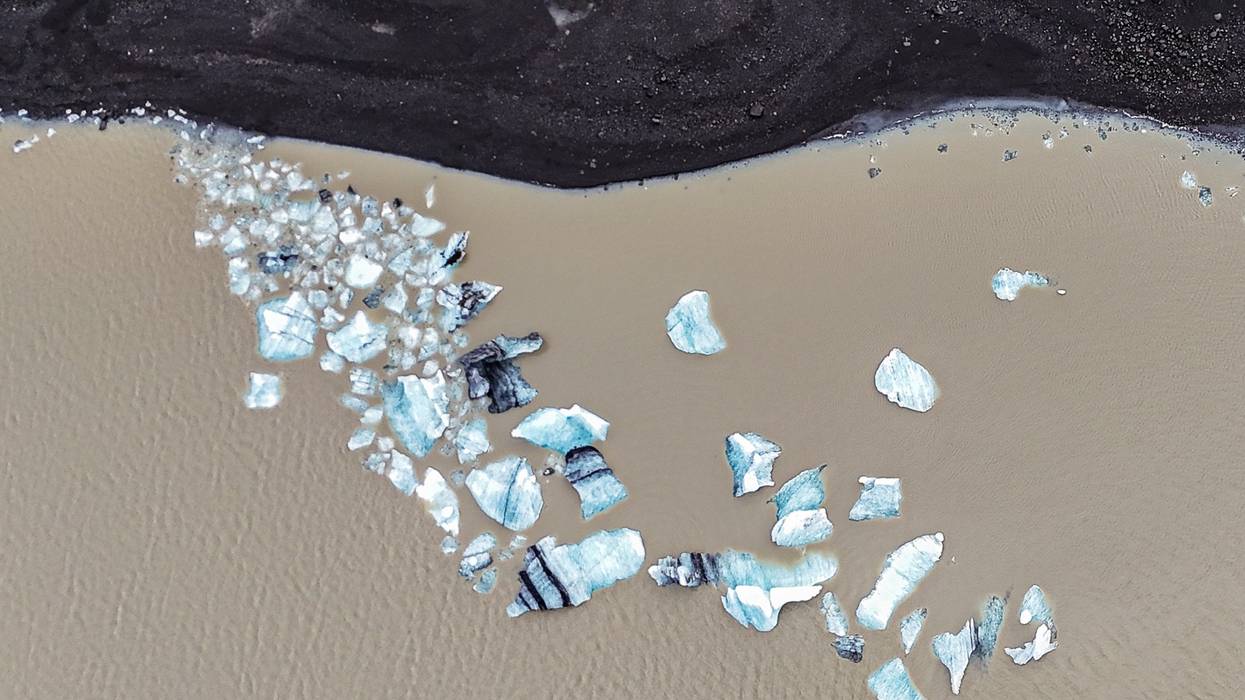
European Union officials said the Copernicus Climate Change Service had issued its latest "stark reminder of why climate action is urgent" when the bloc's program announced that it observed less sea ice covering the Earth's oceans last month than at any other point in recorded history.
In the Arctic, sea ice reached its lowest monthly extent on record, at 8% below average, in early February, and it remained below the previous record for the rest of the month.
The oceans were missing an area of ice roughly the size of the United Kingdom last month, according to Copernicus (C3S), and the finding was not an anomaly in recent sea ice observations.
February marked the third consecutive month in which record low sea ice levels for the corresponding month were observed in the Arctic.
C3S reported that in the Antarctic, sea ice levels have rapidly declined in 2025 after appearing to recover to near-record levels in December 2024.
Last month, sea ice near the South Pole reached its fourth-lowest monthly extent, at 26% below average.
C3S said the daily sea ice extent in the Antarctic may have also reached its annual minimum toward the end of the month, which will be confirmed later in March; if confirmed, it would be the second-lowest annual minimum in the satellite record.
"February 2025 continues the streak of record or near-record temperatures observed throughout the last two years," said Samanatha Burgess, strategic lead for climate at the European Center for Medium-Range Weather Forecasts. "One of the consequences of a warmer world is melting sea ice, and the record or near-record low sea ice cover at both poles has pushed global sea ice cover to an all-time minimum."
The melting sea ice was recorded as global average temperatures rose 1.59°C (2.8°F) above the pre-industrial average last month, making it the third-warmest February on record.
In Europe, the temperatures that most exceeded averages were recorded last month in parts of Scandinavia, Iceland, and the Alps. Outside of Europe, "temperatures were most above average over large parts of the Arctic."
The low extent of sea ice will lead to "more solar heat absorbed by the darker oceans," and "faster warming," said Simon Oldridge, a climate campaigner.
The loss of sea ice can also lead to the collapse of ocean currents that are crucial for marine life to thrive.
C3S reported on the record-low sea ice levels as campaigners in the U.S. and around the world condemned recent anti-climate actions taken by U.S. President Donald Trump and the Republican Party, including the country's exit from the Paris climate agreement, the GOP's passing of a bill to end a federal program aimed at reducing planet-heating methane emissions, and Trump's push to fast-track fossil fuel projects—as scientists warn that new extractive projects have no place on a pathway to limiting planetary heating and avoiding its worst impacts.
"The environment does not care about politics," said public health expert Ali Khan. "Keep spewing greenhouse gases and face the consequences."

A parliamentary document says the legislation "must be seen in light of the geopolitical interests in Greenland and the current situation where representatives of an allied great power have expressed interest in taking over" the territory.
Faced with repeated threats from U.S. President Donald Trump, who wants to take over resource-rich Greenland, the Danish territory's parliament on Tuesday enacted a ban on foreign political donations, ahead of its March 11 elections.
The new measure—which also bars political parties in the self-governing territory from accepting domestic donations above 200,000 Danish kroner (about $27,700) or 20,000 kroner (about $2,770) from a single contributor—is intended to protect "Greenland's political integrity," The Associated Press reported, citing a parliamentary document translated from Danish.
The document states that the legislation "must be seen in light of the geopolitical interests in Greenland and the current situation where representatives of an allied great power have expressed interest in taking over and controlling Greenland."
According to the AP:
A senior legal officer at Greenland's parliament, Kent Fridberg, told The Associated Press he did not know whether any foreign donors had contributed to Greenland's political parties and the idea for the bill was "basically a preventative measure."
Fridberg noted that some Russian politicians had voiced a similar interest—and that political parties in Greenland are generally funded by public means.
Even before returning to the White House last month, Trump revived his first-term interest in making Greenland part of the United States. In early January, he even refused to rule out using military force to seize both the autonomous island nation and the Panama Canal.
Danish and Greenlandic leaders have forcefully pushed back against Trump's remarks, and polling published last week by a pair of newspapers—Denmark's Berlingske and Greenland's Sermitsiaq—shows that 85% of Greenlanders oppose joining the U.S.
Public opinion polling conducted in Greenland in 2018 has also received fresh attention recently, including from Trump himself. Gustav Agneman, an associate professor of economics at the Norwegian University of Science and Technology, was part of the team that conducted those older surveys, which he discussed in a Tuesday piece for The Conversation.
"Two-thirds of the participants thought that 'Greenland should become an independent country at some point in the future,'" he noted. "Opinions were more divergent regarding the timing of independence. When asked how they would vote in an independence referendum if it were held today, respondents who stated a preference were evenly split between 'yes' and 'no' to independence."
As Agneman detailed:
Each year, Denmark sends a block grant that covers approximately half of Greenland's budget. This supports a welfare system that is more extensive than what is available to most Americans. In addition, Denmark administers many costly public services, including national defense.
This backdrop presents a dilemma for many Greenlanders who aspire to independence, as they weigh welfare concerns against political sovereignty. This was also evident from my study, which revealed that economic considerations influence independence preferences.
For many Greenlanders, the island nation’s rich natural resources present a potential bridge between economic self-sufficiency and full sovereignty. Foreign investments and the associated tax revenues from resource extraction are seen as key to reducing economic dependence on Denmark. Presumably, these natural resources, which include rare earths and other strategic minerals, also help explain Trump's interest in Greenland.
During a January appearance on Fox News, Trump's national security adviser, Mike Waltz, made clear why the Republican has renewed interest in the takeover of the nearby territory, saying: "It's oil and gas. It's our national security. It's critical minerals."
One of the most outspoken critics of Trump's plan is leftist Greenlandic Prime Minister Múte Egede, who supports independence and has said: "Greenland is ours. We are not for sale and will never be for sale. We must not lose our long struggle for freedom."
Announcing the elections for Greenland's parliament, the Inatsisartut, Egede said on Facebook Tuesday that "we are facing an unprecedented and challenging time," and stressed the need "for cooperation and unity" among the island's roughly 60,000 residents.