

SUBSCRIBE TO OUR FREE NEWSLETTER
Daily news & progressive opinion—funded by the people, not the corporations—delivered straight to your inbox.
5
#000000
#FFFFFF
To donate by check, phone, or other method, see our More Ways to Give page.
Daily news & progressive opinion—funded by the people, not the corporations—delivered straight to your inbox.

"We cannot live this way," wrote one journalist in response to President Donald Trump's ominous threat to start another new war.
US President Donald Trump said late Wednesday that the American military is already looking ahead to its "next conquest" as the Middle East remains embroiled in a deadly military conflict that Trump and his ally, Israeli Prime Minister Benjamin Netanyahu, unleashed six weeks ago.
In a late-night post on his Truth Social platform, Trump said US forces will remain "in place" and "around" Iran until a "real agreement" is reached to end the war, as the two-week ceasefire the president and Iranian leaders announced late Tuesday hangs by a thread due to Israel's massive bombardment of Lebanon.
After threatening a "bigger, and better, and stronger" assault on Iran if peace talks collapse, Trump said the US military is "Loading Up and Resting, looking forward, actually, to its next Conquest"—even as senior administration officials expressed concerns that the president's declarations of victory in Iran were premature.
Branislav Slantchev, an international relations expert who teaches political science at the University of California San Diego, wrote in response to Trump's post that "this depraved idiot is out of control."
"We cannot live this way," added journalist Marisa Kabas.
Trump, who has bombed more countries than any other president in modern US history despite campaigning on "no new wars," did not name any potential targets of the American military's "next conquest" in his Wednesday night post. But the president has lobbed threats against Cuba and Greenland repeatedly in recent months, threatening to seize both island nations by force. Last week, Trump asked Congress to approve a $1.5 trillion military budget for the coming fiscal year—a request that included tens of billions for new battleships and fighter jets.
During a speech at a Saudi-backed investment summit in Miami last month, Trump touted the US military's illegal attacks on Venezuela and Iran before declaring, "Cuba is next."
"Pretend I didn't say that," the president added.
In a separate Truth Social post Wednesday night, Trump hit out at NATO and characterized Greenland, in all-caps, as a "BIG, POORLY RUN, PIECE OF ICE."
Brian Finucane, senior adviser to the US Program at the International Crisis Group, argued that Trump is "lashing out because his war on a whim did not result in the hoped-for ‘Venezuela’ in Iran but a historic debacle instead."
The Intercept's Nick Turse reported last month that amid the Iran war, a top Pentagon official "revealed that US wars in the Western Hemisphere are also expanding, unveiling an effort dubbed 'Operation Total Extermination.'"
Joseph Humire, the Pentagon's acting assistant secretary for homeland defense and Americas security affairs, told lawmakers that the US military "supported 'bilateral kinetic actions against cartel targets along the Colombia-Ecuador border'" in early March, according to Turse.
"The US–Ecuadorian campaign has already strayed into Colombia after a farm was bombed or hit by 'ricochet effect' on March 3, leaving an unexploded 500-pound bomb lying in Colombia’s border region," Turse reported. "In addition to his wars in the Western hemisphere, Trump has also launched attacks on Iran, Iraq, Nigeria, Somalia, Syria, and Yemen during his second term—most of them sites of US conflicts during the war on terror."

"It will be a no thanks from here," said the Greenlandic prime minister. "We have a public health service where treatment is free for citizens... It is not like that in the USA, where it costs money to go to the doctor."
Shortly after the Danish military evacuated a crew member of a US submarine off the Greenlandic coast for urgent medical care on Saturday, President Donald Trump pledged to send a "hospital boat" to the self-governing Danish territory—but officials from Greenland and Denmark declared it unnecessary, given the island's publicly funded universal healthcare system.
"Working with the fantastic Governor of Louisiana, Jeff Landry, we are going to send a great hospital boat to Greenland to take care of the many people who are sick, and not being taken care of there. It's on the way!!!" said Trump, who in December named the Republican governor as his envoy to Greenland while threatening to take over the island.
Trump has called the fossil fuel-driven climate emergency a "con," but global warming is opening up potential shipping routes and access to natural resources in and around Greenland. He has claimed that if he doesn't seize the island, China or Russia will do so—though last month he announced a "framework of a future deal" for security, temporarily easing fears of a US invasion.
In his Truth Social post late Saturday, Trump shared an illustration of a Navy hospital ship, the USNS Mercy.
"As of late January, the 1,000-bed hospital ship was firmly in drydock at Alabama Shipyard in Mobile, where it has been undergoing scheduled maintenance since July 2025," according to the maritime industry news website gCaptain. "The USNS Mercy, commissioned in 1986, departed San Diego last July for a one-year scheduled maintenance period at Alabama Shipyard under an $18.7 million firm-fixed-price contract for a 153-calendar day mid-term availability, including drydocking."
Responding to the US leader on social media Sunday, Greenlandic Prime Minister Jens-Frederik Nielsen said: "It will be a no thanks from here. President Trump's idea of sending an American hospital ship here to Greenland has been noted. But we have a public health service where treatment is free for citizens. It is a conscious choice. And a fundamental part of our society."
"It is not like that in the USA, where it costs money to go to the doctor," he added. "We are always open to dialogue and cooperation. Also with the USA. But now talk to us instead of just making more or less random outbursts on social media. Dialogue and cooperation require respect for decisions about our country being made here at home."
Danish Prime Minister Mette Frederiksen somewhat indirectly pushed back against Trump with a social media post, saying that she is "happy to live in a country where there is free and equal access to health for all. Where it's not insurances and wealth that determine whether you get proper treatment. You have the same approach in Greenland. Happy Sunday to you all."
Denmark's defense minister, Troels Lund Poulsen, similarly told Danish broadcaster DR: "The Greenlandic population receives the healthcare it needs. They receive it either in Greenland, or, if they require specialized treatment, they receive it in Denmark."
"It's not as if there's a need for a special healthcare initiative in Greenland," he added.
The Nordic Council and the Nordic Council of Ministers website states that in "a number of services are provided, which are free at point of use to everyone with permanent residence in Greenland. If a doctor has prescribed treatment, and the service is not available nearby, you have the right to have the transport covered to the nearest hospital."
The site also notes that island's health service is "challenged by a shortage of staff, particularly in the most sparsely populated areas."
Aaja Chemnitz, one of the two Greenlandic politicians in the Danish Parliament, said on social media: "Another day. Another crazy news story. Donald Trump wants to send a poorly maintained hospital ship to Greenland. It seems rather desperate and does not contribute to the permanent and sustainable strengthening of the healthcare system that we need."
"Since the last election, where I campaigned for closer healthcare cooperation... we have succeeded in allocating DKK 35 million annually, and this year an additional DKK 185 million, for treatment of Greenlanders in Denmark," she continued. Those figures in US dollars are roughly $5.5 million and $29 million, respectively.
Chemnitz added:
I believe there is one thing we are missing in our understanding of health and welfare in Greenland. We should have equal access to doctors, cancer treatment pathways, and healthcare assistance like those available in Denmark. Our healthcare system is deeply challenged—more so than what is seen in Denmark.
And this is best solved together with Denmark, as one of the richest and most highly educated countries, for example in the healthcare sector. Not the United States, which has its own problems with healthcare.
This requires closer and more committed efforts from Denmark in the field of healthcare in Greenland.
More doctors from the Danish regions taking a turn in Greenland. Faster access to treatment in Denmark. And a crystal-clear prioritization of children and young people, cancer and heart diseases, and a significant improvement in psychiatry.
Is Denmark ready for that?
The United States has often ranked dead last among peer nations on metrics such as access to care and health outcomes, fueling Americans' demands for a transition from the current for-profit healthcare system to one that is publicly funded and universal.
Massive cuts to the social safety net in the so-called One Big Beautiful Bill Act signed by Trump last July and federal Republicans' failure to extend Affordable Care Act subsidies that helped tens of millions of people afford health insurance premiums—before they expired at the end of December—have further fueled calls for Medicare for All.
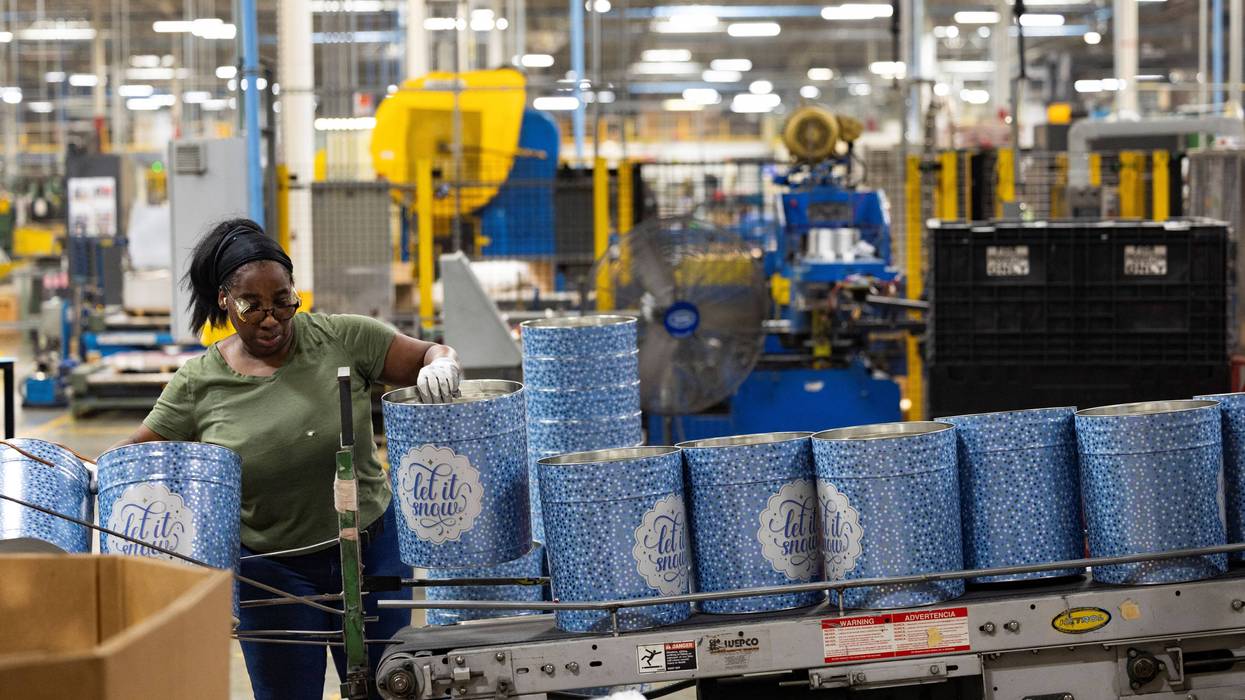
“There’s very little in our product portfolio that has benefited from tariffs,” said the CEO of one North Carolina-based steel product company.
US President Donald Trump pledged that the manufacturing industry would come "roaring back into our country" after what he called "Liberation Day" last April, which was marked by the announcement of sweeping tariffs on imported goods—a policy that has shifted constantly in the past 10 months as Trump has changed rates, canceled tariffs, and threatened new ones.
But after promising to turn around economic trends that have developed over decades—the shipping of jobs overseas, automation, and the obliteration of towns and cities that had once been manufacturing centers—Trump's trade policy appears to have put any progress achieved in the sector in recent years "in reverse," as the Wall Street Journal reported on Monday.
Federal data shows that in each of the eight months that followed Trump's Liberation Day tariffs, manufacturing companies reduced their workforce, with a total of 72,000 jobs in the industry lost since April 2025.
The Census Bureau also estimates that construction spending in the manufacturing industry contracted in the first nine months of Trump's second term, after surging during the Biden administration due to investments in renewable energy and semiconductor chips.
"But the tariffs haven’t helped," said Hanson.
Trump has insisted that his tariff policy would force companies to manufacture goods domestically to avoid paying more for foreign materials—just as he has claimed consumers would see lower prices.
But numerous analyses have shown American families are paying more, not less, for essentials like groceries as companies have passed on their higher operating costs to consumers, and federal data has made clear that companies are also avoiding investing in labor since Trump introduced the tariffs—while the trade war the president has kicked off hasn't changed the realities faced by many manufacturing sectors.
"While tariffs do reduce import competition, they can also increase the cost of key components for domestic manufacturers," wrote Emma Ockerman at Yahoo Finance. "Take US electric vehicle plants that rely on batteries made with rare earth elements imported from overseas, for instance. Some parts simply aren’t made in the United States."
At the National Interest, Ryan Mulholland of the Center for American Progress wrote that Trump's tariffs have created "three overlapping challenges" for US businesses.
"The imported components and materials needed to produce goods domestically now cost more—in some cases, a lot more," wrote Mulholland. "Foreign buyers are now looking elsewhere, often to protest Trump’s global belligerence, costing US firms market share abroad that will be difficult to win back. And if bad policy wasn’t enough, US manufacturers must also contend with the Trump administration’s unpredictability, which has made long-term investment decisions nearly impossible. Perhaps it’s no surprise, then, that small business bankruptcies have surged to their highest level in years."
Trump's unpredictable threats of new tariffs and his retreats on the policy, as with European countries in recent weeks when he said he would impose new levies on countries that didn't support his push to take control of Greenland, have also led to "a lost year for investment" for many firms, along with the possibility that the US Supreme Court could soon rule against the president's tariffs.
“If Trump just picked a number—whatever it was, 10% or 15% to 20%—we might all say it’s bad, I’d say it’s bad, I think most economists would say it’s bad,” Dean Baker, senior economist at the Center for Economic and Policy Research, told Yahoo Finance. “But the worst thing is there’s no certainty about it.”
Constantly changing tariff rates make it "very difficult for businesses... to plan," said Baker. “I think you’ve had a lot of businesses curtail investment plans because they just don’t know whether the plans will make sense.”
While US manufacturers have struggled to compete globally, China and other countries have continued exporting their goods.
“There’s very little in our product portfolio that has benefited from tariffs,” H.O. Woltz III, chief executive of North Carolina-based Insteel Industries, told the Wall Street Journal.
US Rep. Marcy Kaptur (D-Ohio) noted Monday that the data on manufacturing job losses comes a week after Vice President JD Vance visited his home state to tout "record job growth."
"Here’s the reality: Families face higher costs, tariffs are costing manufacturing jobs, and over $200 million in approved federal infrastructure and manufacturing investments here were cut by this administration," said Kaptur. "Ohio deserves better."