SUBSCRIBE TO OUR FREE NEWSLETTER
Daily news & progressive opinion—funded by the people, not the corporations—delivered straight to your inbox.
5
#000000
#FFFFFF
To donate by check, phone, or other method, see our More Ways to Give page.
Daily news & progressive opinion—funded by the people, not the corporations—delivered straight to your inbox.
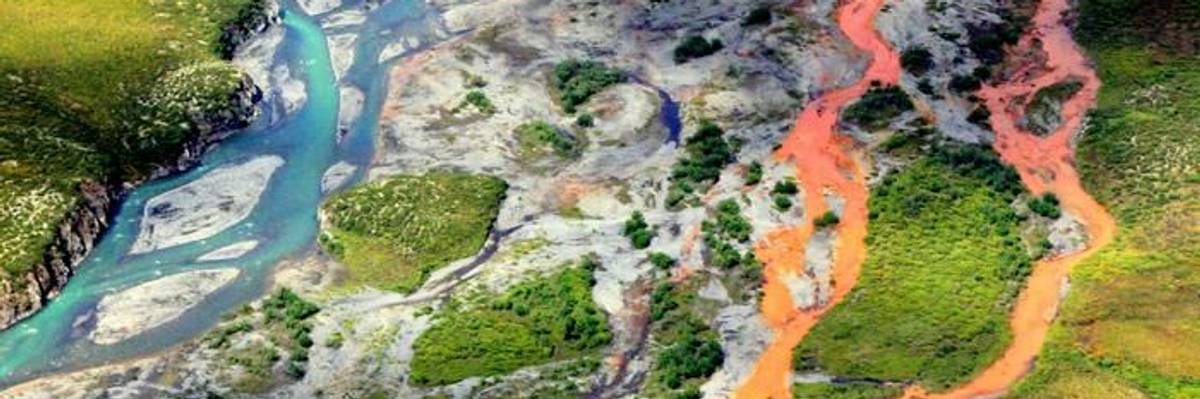
An aerial view shows the rust-colored Kutuk River in Gates of the Arctic National Park in Alaska.
"After 20 years of continuous reporting, the Report Card stands as a chronicle of change and a caution for what the future will bring," report contributors said.
The Arctic just experienced its warmest air temperatures on record between October 2024 and September 2025 as the climate crisis dramatically alters the region, the National Oceanic and Atmospheric Administration found in its 20th Arctic Report Card.
The annual report, released Tuesday, also notes the Arctic's lowest maximum sea-ice extent and its wettest year on record. The past 10 years have been the warmest recorded in a region that is heating at two to four times the global average.
"After 20 years of continuous reporting, the Report Card stands as a chronicle of change and a caution for what the future will bring," report editors Matthew Langdon Druckenmiller, Rick Thoman, and Twila A. Moon wrote in the executive summary. "Transformations over the next 20 years will reshape Arctic environments and ecosystems, impact the well-being of Arctic residents, and influence the trajectory of the global climate system itself, which we all depend on."
Arctic warming is not confined to the spring and summer months, but marks a full-year transformation, with fall 2024 being the warmest Arctic fall on record and winter 2025 the second-warmest winter. While snow levels do remain high in the winter months, they consistently drop by June, with snow cover during that month now about half of 1960s levels. Precipitation in the winter months is also not limited to snow.
"We can point to the Arctic as a far away place but the changes there affect the rest of the world.”
At sea, ice extent is also shrinking in the winter, with March 2025 seeing the lowest maximum sea-ice extent in nearly 50 years of satellite data. The oldest, thickest ice has shrunk by over 95% since the 1980s, and its domain has constricted to areas north of Greenland and the Canadian archipelago.
“There’s been a steady decline in sea ice and unfortunately we are seeing rain now even in winter,” Druckenmiller told the Guardian. “We are seeing changes in the heart of winter, when we expect the Arctic to be cold. The whole concept of winter is being redefined in the Arctic.”
Warming temperatures are also driving changes in ecosystems, with more southern species and conditions shifting northward both on land and at sea. On land, this happens via the "greening" of the tundra and the spread of boreal species into the Arctic. At sea, warmer, saltier water is shifting north, driving the "Atlantification" of the Arctic, which exacerbates ice melt and threatens to destabilize ocean circulation patterns.
Changes are also occurring on the Pacific side of the Arctic Ocean, with Arctic species declining by two-thirds in the northern Bering Sea and one-half in the Chukchi Sea.
“We are no longer just documenting warming—we are witnessing an entire marine ecosystem transform within a single generation,” Hannah-Marie Ladd, director of the Indigenous Sentinels Network on the Aleut community of Saint Paul Island, said at a conference unveiling the report.
Ocean warming, the melting of glaciers, and melting permafrost are increasing weather hazards and other dangers for Arctic communities. For example, warm ocean temperatures fueled ex-Typhoon Halong in October 2025, which forced over 1,500 people to evacuate from Alaska's southwestern coast and nearly destroyed two villages.
Glacier melt has increased the risk of sudden flooding and landslides, while the melting of permafrost is leading to the phenomenon of "rusting rivers," as oxidized iron from melting permafrost enters the water and degrades water quality.
These impacts aren't limited to the Arctic. The Greenland ice sheet, for example, lost 129 billion tons of sea ice, which contributes to global sea-level rise.
“We are seeing cascading impacts from a warming Arctic,” Climate Central scientist Zack Labe told the Guardian. “Coastal cities aren’t ready for the rising sea levels, we have completely changed the fisheries in the Arctic, which leads to rising food bills for seafood. We can point to the Arctic as a far away place but the changes there affect the rest of the world.”
The report comes as the Trump administration has moved to censure federal climate scientists and cut staffing and funding for government science.
Outside researchers noted that the administration did not seem to have significantly altered the content of the 2025 Arctic Report Card.
“I honestly did not see much of a tone shift in comparison to previous Arctic report cards in years past, which was great to see,” Climate Central media director Tom Di Liberto told NBC News. “The implications of their findings are the same as past Arctic report cards. The Arctic is the canary in the coal mine.”
"The Trump administration’s cuts to budgets, staffing, and resources for science are already affecting data and research related to the Arctic."
Druckenmiller also told reporters that the team “did not receive any political interference with our results.”
However, the 2024 Arctic Report Card urged a "global reductions of fossil fuel pollution," in its subhead, an exhortation missing from the 2025 version.
The 2025 report did refer to the impacts of federal funding cuts, discussing "vulnerabilities and risks facing nationally and internationally coordinated observing programs, especially amid risks of diminishing US investments in climate and environmental observations," as Druckenmiller, Thoman, and Moon wrote.
"The Trump administration’s cuts to budgets, staffing, and resources for science are already affecting data and research related to the Arctic," the Union of Concerned Scientists (UCS) posted on social media in response to the release.
However, even if the report did not highlight the causes of the climate emergency, it's ultimate message was unmistakable, UCS said: "It’s clear that fossil fueled climate change is having an alarming effect on the vital signs of this unique, crucial region of the world."
Dear Common Dreams reader, It’s been nearly 30 years since I co-founded Common Dreams with my late wife, Lina Newhouser. We had the radical notion that journalism should serve the public good, not corporate profits. It was clear to us from the outset what it would take to build such a project. No paid advertisements. No corporate sponsors. No millionaire publisher telling us what to think or do. Many people said we wouldn't last a year, but we proved those doubters wrong. Together with a tremendous team of journalists and dedicated staff, we built an independent media outlet free from the constraints of profits and corporate control. Our mission has always been simple: To inform. To inspire. To ignite change for the common good. Building Common Dreams was not easy. Our survival was never guaranteed. When you take on the most powerful forces—Wall Street greed, fossil fuel industry destruction, Big Tech lobbyists, and uber-rich oligarchs who have spent billions upon billions rigging the economy and democracy in their favor—the only bulwark you have is supporters who believe in your work. But here’s the urgent message from me today. It's never been this bad out there. And it's never been this hard to keep us going. At the very moment Common Dreams is most needed, the threats we face are intensifying. We need your support now more than ever. We don't accept corporate advertising and never will. We don't have a paywall because we don't think people should be blocked from critical news based on their ability to pay. Everything we do is funded by the donations of readers like you. When everyone does the little they can afford, we are strong. But if that support retreats or dries up, so do we. Will you donate now to make sure Common Dreams not only survives but thrives? —Craig Brown, Co-founder |
The Arctic just experienced its warmest air temperatures on record between October 2024 and September 2025 as the climate crisis dramatically alters the region, the National Oceanic and Atmospheric Administration found in its 20th Arctic Report Card.
The annual report, released Tuesday, also notes the Arctic's lowest maximum sea-ice extent and its wettest year on record. The past 10 years have been the warmest recorded in a region that is heating at two to four times the global average.
"After 20 years of continuous reporting, the Report Card stands as a chronicle of change and a caution for what the future will bring," report editors Matthew Langdon Druckenmiller, Rick Thoman, and Twila A. Moon wrote in the executive summary. "Transformations over the next 20 years will reshape Arctic environments and ecosystems, impact the well-being of Arctic residents, and influence the trajectory of the global climate system itself, which we all depend on."
Arctic warming is not confined to the spring and summer months, but marks a full-year transformation, with fall 2024 being the warmest Arctic fall on record and winter 2025 the second-warmest winter. While snow levels do remain high in the winter months, they consistently drop by June, with snow cover during that month now about half of 1960s levels. Precipitation in the winter months is also not limited to snow.
"We can point to the Arctic as a far away place but the changes there affect the rest of the world.”
At sea, ice extent is also shrinking in the winter, with March 2025 seeing the lowest maximum sea-ice extent in nearly 50 years of satellite data. The oldest, thickest ice has shrunk by over 95% since the 1980s, and its domain has constricted to areas north of Greenland and the Canadian archipelago.
“There’s been a steady decline in sea ice and unfortunately we are seeing rain now even in winter,” Druckenmiller told the Guardian. “We are seeing changes in the heart of winter, when we expect the Arctic to be cold. The whole concept of winter is being redefined in the Arctic.”
Warming temperatures are also driving changes in ecosystems, with more southern species and conditions shifting northward both on land and at sea. On land, this happens via the "greening" of the tundra and the spread of boreal species into the Arctic. At sea, warmer, saltier water is shifting north, driving the "Atlantification" of the Arctic, which exacerbates ice melt and threatens to destabilize ocean circulation patterns.
Changes are also occurring on the Pacific side of the Arctic Ocean, with Arctic species declining by two-thirds in the northern Bering Sea and one-half in the Chukchi Sea.
“We are no longer just documenting warming—we are witnessing an entire marine ecosystem transform within a single generation,” Hannah-Marie Ladd, director of the Indigenous Sentinels Network on the Aleut community of Saint Paul Island, said at a conference unveiling the report.
Ocean warming, the melting of glaciers, and melting permafrost are increasing weather hazards and other dangers for Arctic communities. For example, warm ocean temperatures fueled ex-Typhoon Halong in October 2025, which forced over 1,500 people to evacuate from Alaska's southwestern coast and nearly destroyed two villages.
Glacier melt has increased the risk of sudden flooding and landslides, while the melting of permafrost is leading to the phenomenon of "rusting rivers," as oxidized iron from melting permafrost enters the water and degrades water quality.
These impacts aren't limited to the Arctic. The Greenland ice sheet, for example, lost 129 billion tons of sea ice, which contributes to global sea-level rise.
“We are seeing cascading impacts from a warming Arctic,” Climate Central scientist Zack Labe told the Guardian. “Coastal cities aren’t ready for the rising sea levels, we have completely changed the fisheries in the Arctic, which leads to rising food bills for seafood. We can point to the Arctic as a far away place but the changes there affect the rest of the world.”
The report comes as the Trump administration has moved to censure federal climate scientists and cut staffing and funding for government science.
Outside researchers noted that the administration did not seem to have significantly altered the content of the 2025 Arctic Report Card.
“I honestly did not see much of a tone shift in comparison to previous Arctic report cards in years past, which was great to see,” Climate Central media director Tom Di Liberto told NBC News. “The implications of their findings are the same as past Arctic report cards. The Arctic is the canary in the coal mine.”
"The Trump administration’s cuts to budgets, staffing, and resources for science are already affecting data and research related to the Arctic."
Druckenmiller also told reporters that the team “did not receive any political interference with our results.”
However, the 2024 Arctic Report Card urged a "global reductions of fossil fuel pollution," in its subhead, an exhortation missing from the 2025 version.
The 2025 report did refer to the impacts of federal funding cuts, discussing "vulnerabilities and risks facing nationally and internationally coordinated observing programs, especially amid risks of diminishing US investments in climate and environmental observations," as Druckenmiller, Thoman, and Moon wrote.
"The Trump administration’s cuts to budgets, staffing, and resources for science are already affecting data and research related to the Arctic," the Union of Concerned Scientists (UCS) posted on social media in response to the release.
However, even if the report did not highlight the causes of the climate emergency, it's ultimate message was unmistakable, UCS said: "It’s clear that fossil fueled climate change is having an alarming effect on the vital signs of this unique, crucial region of the world."
The Arctic just experienced its warmest air temperatures on record between October 2024 and September 2025 as the climate crisis dramatically alters the region, the National Oceanic and Atmospheric Administration found in its 20th Arctic Report Card.
The annual report, released Tuesday, also notes the Arctic's lowest maximum sea-ice extent and its wettest year on record. The past 10 years have been the warmest recorded in a region that is heating at two to four times the global average.
"After 20 years of continuous reporting, the Report Card stands as a chronicle of change and a caution for what the future will bring," report editors Matthew Langdon Druckenmiller, Rick Thoman, and Twila A. Moon wrote in the executive summary. "Transformations over the next 20 years will reshape Arctic environments and ecosystems, impact the well-being of Arctic residents, and influence the trajectory of the global climate system itself, which we all depend on."
Arctic warming is not confined to the spring and summer months, but marks a full-year transformation, with fall 2024 being the warmest Arctic fall on record and winter 2025 the second-warmest winter. While snow levels do remain high in the winter months, they consistently drop by June, with snow cover during that month now about half of 1960s levels. Precipitation in the winter months is also not limited to snow.
"We can point to the Arctic as a far away place but the changes there affect the rest of the world.”
At sea, ice extent is also shrinking in the winter, with March 2025 seeing the lowest maximum sea-ice extent in nearly 50 years of satellite data. The oldest, thickest ice has shrunk by over 95% since the 1980s, and its domain has constricted to areas north of Greenland and the Canadian archipelago.
“There’s been a steady decline in sea ice and unfortunately we are seeing rain now even in winter,” Druckenmiller told the Guardian. “We are seeing changes in the heart of winter, when we expect the Arctic to be cold. The whole concept of winter is being redefined in the Arctic.”
Warming temperatures are also driving changes in ecosystems, with more southern species and conditions shifting northward both on land and at sea. On land, this happens via the "greening" of the tundra and the spread of boreal species into the Arctic. At sea, warmer, saltier water is shifting north, driving the "Atlantification" of the Arctic, which exacerbates ice melt and threatens to destabilize ocean circulation patterns.
Changes are also occurring on the Pacific side of the Arctic Ocean, with Arctic species declining by two-thirds in the northern Bering Sea and one-half in the Chukchi Sea.
“We are no longer just documenting warming—we are witnessing an entire marine ecosystem transform within a single generation,” Hannah-Marie Ladd, director of the Indigenous Sentinels Network on the Aleut community of Saint Paul Island, said at a conference unveiling the report.
Ocean warming, the melting of glaciers, and melting permafrost are increasing weather hazards and other dangers for Arctic communities. For example, warm ocean temperatures fueled ex-Typhoon Halong in October 2025, which forced over 1,500 people to evacuate from Alaska's southwestern coast and nearly destroyed two villages.
Glacier melt has increased the risk of sudden flooding and landslides, while the melting of permafrost is leading to the phenomenon of "rusting rivers," as oxidized iron from melting permafrost enters the water and degrades water quality.
These impacts aren't limited to the Arctic. The Greenland ice sheet, for example, lost 129 billion tons of sea ice, which contributes to global sea-level rise.
“We are seeing cascading impacts from a warming Arctic,” Climate Central scientist Zack Labe told the Guardian. “Coastal cities aren’t ready for the rising sea levels, we have completely changed the fisheries in the Arctic, which leads to rising food bills for seafood. We can point to the Arctic as a far away place but the changes there affect the rest of the world.”
The report comes as the Trump administration has moved to censure federal climate scientists and cut staffing and funding for government science.
Outside researchers noted that the administration did not seem to have significantly altered the content of the 2025 Arctic Report Card.
“I honestly did not see much of a tone shift in comparison to previous Arctic report cards in years past, which was great to see,” Climate Central media director Tom Di Liberto told NBC News. “The implications of their findings are the same as past Arctic report cards. The Arctic is the canary in the coal mine.”
"The Trump administration’s cuts to budgets, staffing, and resources for science are already affecting data and research related to the Arctic."
Druckenmiller also told reporters that the team “did not receive any political interference with our results.”
However, the 2024 Arctic Report Card urged a "global reductions of fossil fuel pollution," in its subhead, an exhortation missing from the 2025 version.
The 2025 report did refer to the impacts of federal funding cuts, discussing "vulnerabilities and risks facing nationally and internationally coordinated observing programs, especially amid risks of diminishing US investments in climate and environmental observations," as Druckenmiller, Thoman, and Moon wrote.
"The Trump administration’s cuts to budgets, staffing, and resources for science are already affecting data and research related to the Arctic," the Union of Concerned Scientists (UCS) posted on social media in response to the release.
However, even if the report did not highlight the causes of the climate emergency, it's ultimate message was unmistakable, UCS said: "It’s clear that fossil fueled climate change is having an alarming effect on the vital signs of this unique, crucial region of the world."