SUBSCRIBE TO OUR FREE NEWSLETTER
Daily news & progressive opinion—funded by the people, not the corporations—delivered straight to your inbox.
5
#000000
#FFFFFF
To donate by check, phone, or other method, see our More Ways to Give page.


Daily news & progressive opinion—funded by the people, not the corporations—delivered straight to your inbox.

Jared Margolis, Center for Biological Diversity, (971) 717-6404
Michael Lang, Friends of the Columbia Gorge, (503) 490-3979
In response to inadequate federal proposals for regulating transport of volatile crude oil by rail, the Center for Biological Diversity ("Center"), Adirondack Mountain Club ("ADK") and Friends of the Columbia Gorge ("Friends") filed comments today calling for an immediate ban on puncture-prone tank cars involved in several explosive accidents.
The legacy DOT-111 tank cars remain in widespread use despite the National Transportation Safety Board's acknowledgment that they're likely to breach in derailments. The new rules proposed by the Pipeline and Hazardous Materials Safety Administration allow for the dangerous tank cars to continue in service over a five-year phase-out period. The groups also filed a petition for an emergency order, asking the Department of Transportation to immediately require comprehensive oil-spill response plans for oil trains.
"Allowing these dangerously deficient tank cars to remain in service is playing Russian roulette with public safety," said Jared Margolis, an attorney at the Center who focuses on the impacts of energy development on endangered species. "These tank cars put our health and the environment at risk, so allowing their continued use is unacceptable."
The proposed regulations are intended to address the risks associated with the recent rapid increase in oil train traffic, which has grown from virtually nothing in 2008 to more than 400,000 rail cars of oil in 2013, moving billions of gallons of oil through towns and cities ill-equipped to respond to the kind of fiery explosions and spills that have occurred across the country in recent years.
"The proposed rules just don't go far enough to protect people from these bomb trains," says Margolis. "These regulations simply sanction business-as-usual, ensuring the ongoing transport of billions of gallons of crude oil through our cities and sensitive wildlife habitats at unsafe speeds, in unsafe tanks."
The groups' call for updated oil-spill response plans was spurred by grossly inadequate existing regulations that do not require oil shippers to ensure that sufficient equipment and personnel will be available to respond to a worst-case spill event. This puts the burden on state and local responders, rather than those profiting from shipping the toxic, flammable liquids.
"Increased traffic of dangerous oil trains puts our communities and the Columbia River Gorge at risks of accidents and oil spills," said Michael Lang, Friends' conservation director. "The new federal rules must ensure that our communities and the iconic resources of the Columbia River Gorge National Scenic Area are protected from oil train accidents. Ultimately, oil trains don't belong in the Gorge, and we are calling for an analysis of the threats and specific means for avoiding impacts to public safety and fish and wildlife habitat."
Along with the comments, more than 18,000 members of the Center have submitted letters to the Department of Transportation calling for a ban on the DOT-111 bomb cars.
A U.S. Government Accountability Office report released last week echoes the groups' concerns. It states that "without timely action to address safety risks posed by increased transport of oil and gas by pipeline and rail, additional accidents that could have been prevented or mitigated may endanger the public and call into question the readiness of transportation networks in the new oil and gas environment."
Background
Oil transport, especially by rail, has dramatically increased in recent years. A series of fiery oil-train derailments has occurred in the United States and Canada, resulting in hundreds of thousands of gallons of crude oil being spilled into waterways. The worst was a derailment in Quebec that killed 47 people, forced the evacuation of 2,000 people, and incinerated portions of a popular tourist town. The most recent explosive derailment, occurred in April in downtown Lynchburg, Va., resulting in crude oil leaking out of punctured tank cars and setting the James River on fire.
Most of this oil is being transported in older DOT-111 tank cars, which have been known for decades to be puncture-prone.
"Given the unprecedented recent increase in rail transport of oil throughout North America, and new knowledge concerning the risks of transporting oil by rail, there is a far greater risk for impacts to people and the environment from a derailment and oil spill than was the case just a few years ago," the groups' comments state. "This new information serves to heighten the immediate need for a ban on the use of DOT-111 tank cars, and the promulgation of rules that ensure sufficient protections for people and the environment. More must be done to prevent fiery derailments and spills that will continue to endanger Americans in their homes and wild animals and ecosystem along busy rail corridors."
The unprecedented boom in oil-train traffic has caught responders unaware, and there is a lack of sufficient personnel and equipment to respond to a spill event. Since many oil trains travel through densely populated areas and along waterways where there are protected species and critical habitat, the lack of comprehensive plans for responding to oil spills puts people and species at risk. Requiring comprehensive plans would ensure that sufficient resources will be available for a worst-case spill event.
The groups contend the proposed rules must be accompanied by an analysis of the potential impacts to the environment and endangered species pursuant to the National Environmental Policy Act and Endangered Species Act. The government has failed to provide a thorough analysis of the environmental impacts of the proposed rules, and has not even considered reasonable alternatives, such as an immediate ban on the use of the legacy DOT-111 tank cars. It has also failed to initiate consultation pursuant to the Endangered Species Act, ignoring the continuing harm that oil trains pose to our most imperiled species.
"These spills continue to pose completely unacceptable threats to people and drinking water supplies as well as to wildlife, including endangered species," said Margolis. "Regulators have known for decades that these outdated tank cars are prone to puncture in derailments. Waiting another five years to get them off the tracks is nothing short of reckless."
At the Center for Biological Diversity, we believe that the welfare of human beings is deeply linked to nature — to the existence in our world of a vast diversity of wild animals and plants. Because diversity has intrinsic value, and because its loss impoverishes society, we work to secure a future for all species, great and small, hovering on the brink of extinction. We do so through science, law and creative media, with a focus on protecting the lands, waters and climate that species need to survive.
(520) 623-5252“From the Pacific to the world, this vote is a recognition that those who did the least to fuel this crisis should not be left to carry its heaviest burdens."
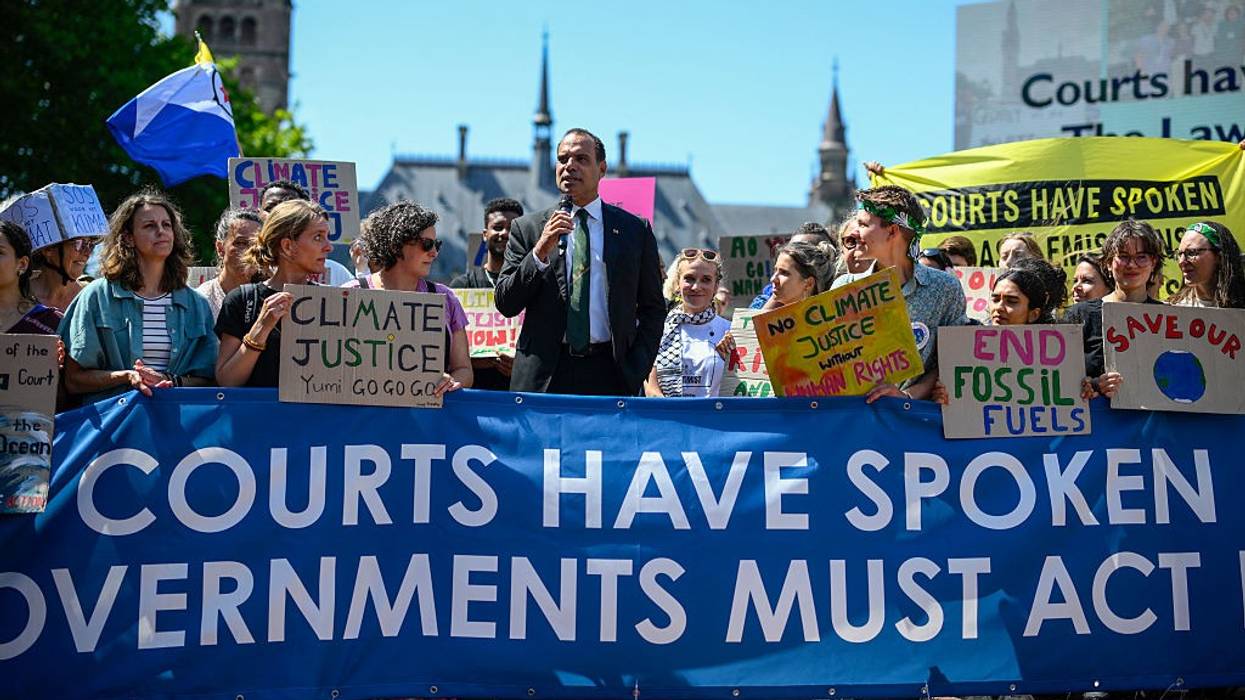
Despite efforts by the United States government to block and water down the effort, the United Nations, on Wednesday, in a 141-8 vote, backed a resolution that confirms member states have a legal obligation to address the planetary climate crisis by mitigating greenhouse gas emissions.
With nearly two-thirds of the global body voting in favor, the eight countries that voted against the resolution were: Belarus, Iran, Israel, Liberia, Russia, Saudi Arabia, the US, and Yemen. Twenty-eight nations abstained.
The adopted resolution, brought to the UN by the low-lying island nation of Vanuatu, codifies the Advisory Opinion of the International Court of Justice on the Obligations of States in Respect of Climate Change, which the ICJ issued last year. As UN News reports:
The resolution calls on all UN Member States to take all possible steps to avoid causing significant damage to the climate and environment, including emissions produced within their borders, and to follow through on their existing climate pledges under the Paris Agreement.
Governments are urged to cooperate in good faith and continuously coordinate efforts to tackle climate change globally and ensure that climate policies safeguard the rights to life, health, and an adequate standard of living.
Rebecca Brown, CEO and president of the Center for International Environmental Law (CIEL), was among those celebrating the vote as a significant win.
"The science is clear: fossil fuels are the principal driver of the climate crisis. The path to climate justice runs through a rapid, just, and equitable transition away from fossil fuels towards renewable energy."
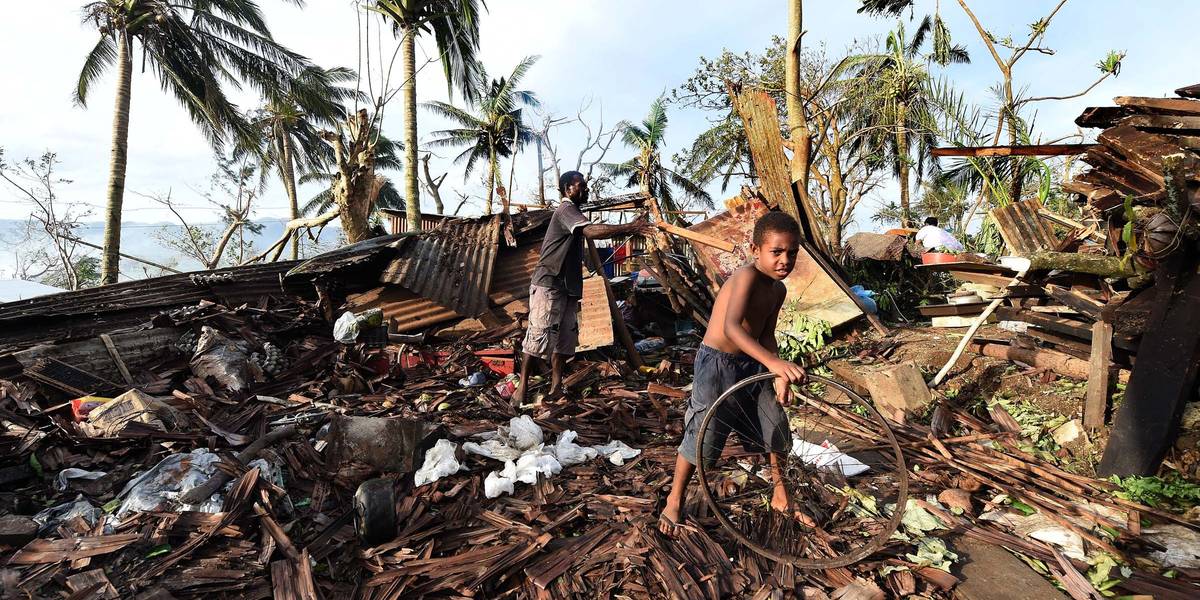
“Today, the UN General Assembly affirmed what the International Court of Justice made clear — that climate action is a legal obligation," Brown said. "With this resolution, countries carry the ICJ’s historic ruling forward as a roadmap for climate action and accountability in the years to come. This resolution demonstrates that multilateralism works, and that the global majority stands resolute in defense of the rule of law, demands meaningful accountability, and real climate action. By acting together, we can prevent further climate harm, in line with science and the law, by speeding up a just and equitable transition away from fossil fuels, protecting climate-vulnerable communities, and advancing climate justice."
In a statement following the vote, UN Secretary-General António Guterres welcomed the outcome as the passage of the resolution "a powerful affirmation of international law, climate justice, science, and the responsibility of states to protect people from the escalating climate crisis."
Guterres thanked the leadership of Vanuatu and the broader coalition of island nations and others who led the fight for the resolution and demonstrated "moral clarity" on the issue for all the world to see.
"Those least responsible for climate change are paying the highest price. That injustice must end," he said. "The science is clear: fossil fuels are the principal driver of the climate crisis. The path to climate justice runs through a rapid, just, and equitable transition away from fossil fuels towards renewable energy."

As Guterres championed the need for a redoubled effort to supplant fossil fuels with cleaner, more renewable forms of energy, environmental and human rights groups also championed the resolution's passage—especially in the face of opposition from the fossil fuel lobby and governments taking their side, like the US, Russia, Israel, and others.
In February, the Associated Press reported that the Trump administration—which has pulled out of the international Paris Agreement established in 2015 and continues to act overtly in the interests of the fossil fuel industry, which helped bankroll his 2024 campaign—was pushing members at the UN to mount a pressure campaign against Vanuatu to drop the resolution.
While US deputy ambassador to the UN Tammy Bruce claimed this week that the resolution included "inappropriate political demands relating to fossil fuels," groups like Amnesty International, 350.org, the Pacific Islands Climate Action Network (PICAN), and many others heralded its passage precisely because of the pressure it rightly places on the oil, gas, and coal industries.
“At a time when fragmentation between nations feels more visible than ever, the UN resolution endorsing the ICJ climate ruling offers a renewed path for international cooperation," said Amnesty's Camile Cortez, a senior climate justice campaigner for Amnesty. "Political and authoritarian choices by some world leaders, like rolling back climate protections or revoking phase-out regulations, have weakened global progress just when we need stronger climate action. Fossil fuel infrastructure alone poses risks for the health and livelihoods of at least 2 billion people globally, roughly a quarter of the world’s population."
"Today, the international community has affirmed that climate justice is not charity but is anchored in accountability."
Fenton Lutunatabua, the Pacific and Caribbean lead for 350.org, said the UN vote represents a "critical next stage" for the ICJ's landmark ruling that "was not meant to sit on a shelf," but instead lead to action in line with international law and the obligations of member states.
"This vote shows the vast majority agreed there is an absolute obligation to stop runaway climate change," said Lutunatabua. "Today, we get closer to that goal, and our children get closer to a safer, more secure future. Our communities also get closer to receiving justice for the suffering the fossil fuel industry has caused, and the havoc wreaked upon our shorelines as we pay with our lives and our pockets to rebuild after yet another cyclone, yet another flood."
PICAN director Dr. Rufino Varea said the victory at the UN on Wednesday "belongs to every community that refused to let their future be written off" by those who have disregarded the damage caused by the climate crisis driven by the fossil fuel industry and broader corporate greed.
“From the Pacific to the world, this vote is a recognition that those who did the least to fuel this crisis should not be left to carry its heaviest burdens," said Varea. "For generations, Pacific peoples have protected our oceans, our lands, and our cultures while facing rising seas, loss, and displacement caused by others. Today, the international community has affirmed that climate justice is not charity but is anchored in accountability. Accountability to frontline communities, to future generations, and to the shared responsibility we hold to protect life, dignity, the environment, and our collective future. This moment belongs to every community that refused to let their future be written off.”
After the president made clear he doesn't "think about" Americans' financial struggles, a report highlights rising costs of beef, produce, and other supplies for backyard barbecues due to Trump's policies.
With the US-Israeli war on Iran pushing gas prices up past $4.50 per gallon and American households already having spent nearly $300 that they wouldn't have otherwise on fuel, some families may opt to stay home this coming Memorial Day weekend—but a new analysis released Thursday shows that even without travel expenses, celebrations are likely to be more costly than they were last year thanks to President Donald Trump's policies.
Both Trump's assault on Iran—and the predictable result of the Iranians closing the Strait of Hormuz, a key trade waterway, in retaliation—and his tariff and trade policies are likely to make the holiday more expensive, with prices for barbecue classics up 13% on average since last year, more than four times the inflation rate, according to two think tanks, Groundwork Collaborative and The Century Foundation (TCF).
Ground beef for hamburgers is up 20%, while Johnsonville bratwursts are up 28%, Kraft hot dogs are up 12%, and Martin's rolls are 19% more expensive than they were in 2025.
Those shopping for produce won't fare much better, with the average price of a head of iceberg lettuce up 19% over last year, seedless watermelon costing 17% more, and six ears of yellow corn costing a whopping 98% more than it did in 2025.
"Higher fresh-produce prices in particular reflect Trump’s mishandling of the economy," reads the report. "Last year, the number of farmers filing for bankruptcy rose 46%, as Trump’s tariffs unleashed chaos and uncertainty in the industry. Fertilizer is an essential component for growing every item of produce and tariffs in place for much of 2025 drove fertilizer prices ever higher; these prices have remained elevated even after the Trump administration was forced to roll them back due to backlash."
"From the ticket counter to the cookout, consumers are scaling back and going without in the face of Trump’s summer sticker shock."
Janelle Jones, senior fellow at TCF, emphasized that both the tariffs and the war are "two decisions the president made and can undo whenever he wants but by his own admission he doesn’t spend any time thinking about Americans’ financial situation."
"Families are getting squeezed on the price of everything, and leaders in Washington don’t seem to be paying attention," said Jones.
Higher tomato costs—which are up 22% over last year—come after Trump ended the US-Mexico tomato trade agreement that had been in place for decades. Instead, he imposed a 17% tariff on tomatoes that come from the country's southern neighbor.
Even the act of serving food and packing it up as leftovers will be more expensive this year, with heavy-duty aluminum foil costing 18% more—also thanks to the tariffs—and disposable plasticware up 20%.
"The Middle East is a major producer of oil and petrochemicals, which is used to produce plastic," reads the report. "Increases in the price of plastic will ripple across grocery bills for months to come as packaging gets more expensive as well."
Less than two weeks after the president—who campaigned on reducing the cost of living—proudly stated that he doesn't "think about Americans’ financial situation" when it comes to the unprovoked Iran conflict, Groundwork and TCF also highlighted the impact the war of choice has had on jet fuel prices, and in turn, air travel.
"Jet fuel has soared to record highs and companies are passing these costs on to consumers," the report states. "The average domestic airfare ticket is now 31% more expensive than in January, according to industry data. For a family of four, this equates to an extra $360 on plane tickets for a typical flight."
Fuel prices contributed to Spirit Airlines' decision to shut down entirely, leaving larger carriers with no budget airline to compete with.
“Trump’s senseless tariffs and illegal war are robbing American families of their relaxing summer vacation," said Breyon Williams, chief economist for Groundwork. "From the ticket counter to the cookout, consumers are scaling back and going without in the face of Trump’s summer sticker shock.”
“The plan was supposed to bring relief. Instead, Palestinians in Gaza are still hungry, still cannot reach medical care, and civilians are still being killed."
Six months in, US President Donald Trump's so-called "Board of Peace" has failed to deliver on its promise of a "secure and prosperous future" for Palestinians in Gaza, who are still being killed, maimed, and deprived of food and other crucial supplies by Israel's ongoing genocide.
"The humanitarian infrastructure sustaining life in Gaza remains in peril over six months after the ceasefire agreement in October 2025," Human Rights Watch said on Tuesday.
"As the Board of Peace prepares to brief the United Nations Security Council on May 21 on its newly-issued six-month progress report, Israeli authorities are undermining humanitarian lifelines," HRW continued.
"Continuing Israeli attacks have killed at least 856 Palestinians and wounded 2,463 others, according to Gaza Health Ministry," the group said.
"Aid volumes remain far below required levels and critical humanitarian access routes have been repeatedly obstructed, according to the UN Office for the Coordination of Humanitarian Affairs (OCHA)," HRW noted.
HRW continued:
In its May 15 report, the Board of Peace said that aid distributed by UN agencies and partners increased by over 70% during the reporting period compared to pre-ceasefire levels, and that "basic food needs have been stabilized for the first time since 2023." The Board's headline figures leave out that aid volumes have fallen since early 2026, have not recovered to where they were before the US and Israel-Iran war began in late February, and have never reached the minimum the UN says is needed. Four UN agencies warned in December 2025 that famine, pushed back only weeks earlier through the ceasefire, could rapidly return without sustained access and supplies.
“The plan was supposed to bring relief. Instead, Palestinians in Gaza are still hungry, still cannot reach medical care, and civilians are still being killed,” HRW Middle East deputy director Adam Coogle said in a statement. “Whatever the Board of Peace tells the Security Council, that is what life looks like six months in.”
HRW said that while "commercial trucks have started entering Gaza again in larger numbers," total aid deliveries—which were dramatically curtailed following the launch of the illegal US-Israeli war of choice on Iran—are "far short of what Gaza’s population needs."
Furthermore, "none of Gaza’s 37 hospitals were fully operational, and only 19 were even partially functioning, according to OCHA."
"Over 43,000 people have suffered life-changing injuries, 1 in 4 of them children, and more than 50,000 need long-term rehabilitation care, the World Health Organization (WHO) estimates," HRW said. "No rehabilitation facility is fully running. Israeli delays in approving specialized surgical equipment are limiting complex care, and at least 46% of essential medicines are out of stock, according to WHO."
"According to the Gaza Health Ministry, more than 1,400 patients have died waiting for medical evacuation since the Rafah crossing was seized in May 2024, and over 18,500 patients, including 4,000 children, still await evacuation," the publication reported.
"Israeli restrictions on bringing in generators, engine oil, and spare parts are causing breakdowns across healthcare, sanitation, debris removal, and humanitarian work," HRW said.
"Rodents and insects are spreading across displacement camps, and skin infections and other diseases are on the rise, OCHA reported," the publication noted. "UN agencies and aid groups working on water and sanitation warn that severe shortages of lubricant oil and spare parts are causing generators to fail."
Israeli forces are still killing and wounding humanitarian workers in Gaza.
"As of late April, OCHA had recorded the killing of at least 593 aid workers in Gaza since October 2023, including 8 since the ceasefire," HRW said.
Funding pledges have also fallen far short of what's needed.
"At the Board of Peace’s inaugural meeting in February, 10 Board member states and observers pledged a total of $17 billion for reconstruction against UN estimates of $70 billion needed," HRW said. "As of April, the Board had received less than $1 billion of the pledged amount, with only three contributors having delivered funds, according to Reuters."
“When the Board of Peace briefs the Security Council, members should weigh what they hear against what UN agencies are reporting from the ground,” Coogle said. “No spin can hide the fact that aid is not entering at the needed scale, patients do not have access to adequate medical care, and crossings to Gaza remain limited.”
The HRW report came a day after the UN Human Rights Office urged Israel to prevent further "acts of genocide" in Gaza, while raising concerns about escalating "ethnic cleansing" in the illegally occupied West Bank of Palestine.
A panel of UN human rights experts found last year that Israel was committing genocide in Gaza. South Africa filed a genocide case against Israel at the International Court of Justice that's now backed by nearly 20 nations.
Israeli Prime Minister Benjamin Netanyahu and former Defense Minister Yoav Gallant are wanted by the International Criminal Court for war crimes and crimes against humanity, including murder and forced starvation. The ICC is also reportedly seeking to arrest Israeli National Security Minister Itamar Ben-Gvir and Finance Minister Bezalel Smotrich over the illegal settler colonization and ethnic cleansing of the West Bank.
More than 250,000 Palestinians have been killed or wounded in Gaza since the Hamas-led attack of October 2023. Nearly all of the coastal strip's approximately 2.1 million people have also been forcibly displaced, starved, or sickened during that period. Through it all, the Biden and Trump administrations have provided Israel with more than $20 billion in armed aid and diplomatic cover, including vetoes of several UN Security Council ceasefire resolutions.