

SUBSCRIBE TO OUR FREE NEWSLETTER
Daily news & progressive opinion—funded by the people, not the corporations—delivered straight to your inbox.
5
#000000
#FFFFFF
To donate by check, phone, or other method, see our More Ways to Give page.
Daily news & progressive opinion—funded by the people, not the corporations—delivered straight to your inbox.
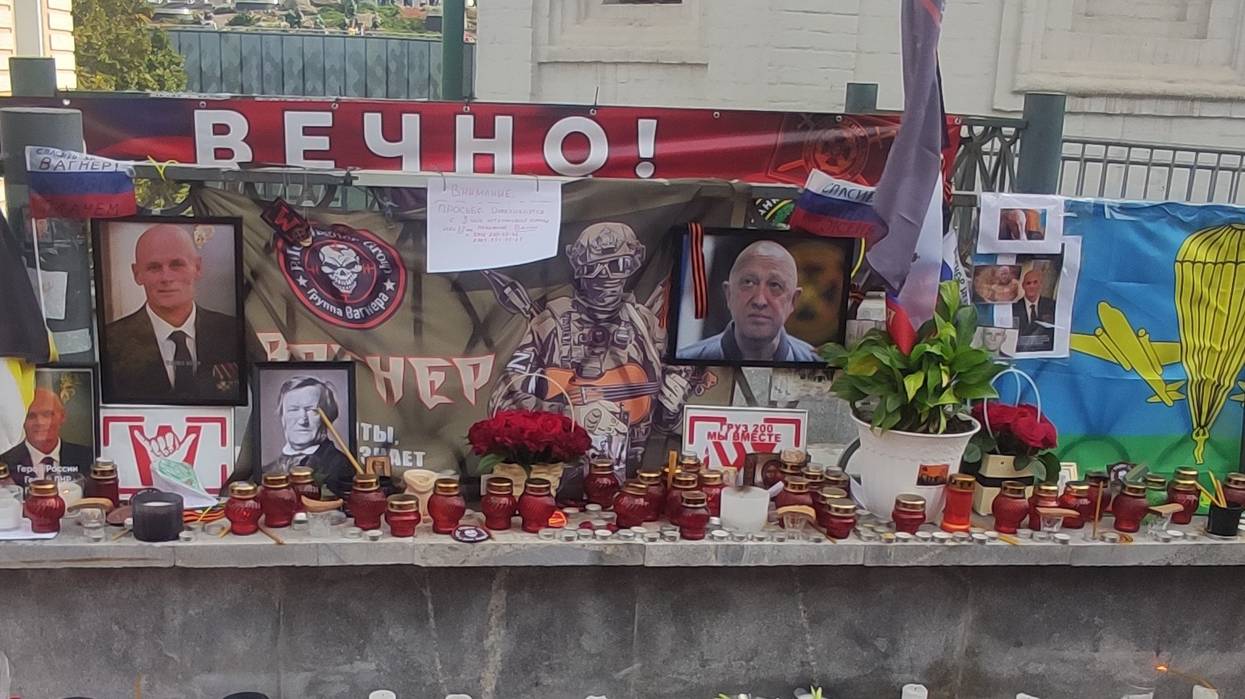
Yevgeny Prigozhin was one of those quixotic, improbable adventurers who, over the past two centuries, have served as the vanguards of new forms of empire.
One of modern history’s major empires is falling apart right now, right before our eyes. Yet precious few in the media have reported on this extraordinary event, much less offered any analysis of its implications for the fast-changing shape of global power.
Over the past 60 years, France has used every possible diplomatic device, overt and covert, fair and foul, to incorporate some 14 African nations into a neocolonial imperium called “Françafrique”—a vast region covering a quarter of Africa and stretching for nearly 3,000 miles from Senegal on the Atlantic coast to Chad in the continent’s center.
While the rest of that continent frequently suffered from wars, coups, and chronic instability, Françafrique long enjoyed comparative peace. By dispatching paratroopers from its many African bases (or secret agents for the occasional assassination), Paris provided a rough version of stability—even if at the price of endemic corruption, entrenched autocratic rule, and deep economic exploitation. Recently, however, a rising nationalist consciousness in many of those relatively new countries has begun chafing against that European land’s repeated transgressions of their sovereignty. As French colonial and postcolonial dominance over this vast region moved ever deeper into its second century, unease bordering on open hostility against that country’s presence began to build.
Should this process continue successfully into the near future, Moscow will have flanked Europe (and so the U.S. as well) by forming a geopolitical arc of influence sweeping south through the Middle East and extending west across the whole of the Sahel that stretches from the Red Sea to the Atlantic Ocean.
In less than a year, in fact, the sudden withdrawal of French troops from individual African nations has turned into a full-blown retreat from much of the region. As terrorists affiliated with ISIS first became active in 2014, France deployed some 5,000 elite troops for Operation Barkhane in collaboration with six nations of Africa’s arid Sahel region, the strip of territory extending across the continent, largely south of the Sahara Desert.
Yet just last December, French troops left the Central African Republic after Paris decided that the local government there was “complicit in an anti-French campaign allegedly steered by Russia.” In February, Burkino Faso’s new military government simply expelled French forces and hailed its new “strategic partnership” with Russia. And in August, following back-to-back coups in Mali, that country’s ruling junta grew resentful of the 2,400 French troops stationed there and forced them to withdraw into neighboring Niger, which became the new main base for their operations in the Sahel region. Then, last month, French President Emmanuel Macron was forced to announce that he was pulling his troops and his ambassador out of Niger as well. After seizing power in July, that country’s new military junta had demanded just such a French departure and, to drive the point home, closed its airspace to France. “Imperialist and neocolonialist forces are no longer welcome on our national territory,” the junta announced.
Amid such geopolitical upheaval, a most unlikely man from Moscow appeared on the spot in 2017. His name—now all too well known—was Yevgeny Prigozhin, founder and commander of a notorious mercenary army, the Wagner Group. As the French retreated slowly and exceedingly reluctantly from their postcolonial imperium, Wagner began moving in, becoming Moscow’s surrogate in an ongoing great-power contest for influence and control in Africa.
By the time in late 2022 that France’s failing nine-year effort to secure the Sahel was drawing down, Wagner’s forces were already operating secret gold mines in Sudan, running the largest gold mine in the Central African Republic with projected revenues of $100 million annually, and had earned $200 million since 2021 providing security for Mali, a land roiled by Islamist rebels. In March, Washington warned Chad’s president that Wagner mercenaries were plotting to assassinate him and were also preparing Chadian rebels to attack from their bases in the Central African Republic. After the July coup in Niger, cheering crowds were seen waving (as well as wearing) Russian flags. And as 1,500 French troops and that country’s ambassador were being withdrawn, Niger’s new military leaders promptly contacted Wagner for support, expanding Russia’s sphere of influence in the French imperium it was fast supplanting.
The strategic implications of this shift, should it continue, are potentially profound. As the NATO alliance moved ever closer to Russia’s sensitive western border in the 1990s, Moscow reacted early in this century (prior to the invasion of 2022) with repeated interventions in Ukraine, launched special operations to secure its allies in Central Asia, and, above all, engaged in a little understood geopolitical flanking maneuver across two continents.
The thrust of that move started in 2015 when Moscow leapfrogged over the NATO barrier of Turkey to open a massive air base at Latakia in northern Syria. Soon, Russian planes had reduced rebel-held cities like Aleppo to rubble. In 2021, leapfrogging again, this time over the close American ally Israel, Russia began supplying Egypt with two dozen of its advanced Sukhoi-35 jet fighters so its airmen could compete with Israelis flying advanced American F-35 fighter planes, which Washington refused to supply to Cairo. Completing Moscow’s southern push in the region, Russian President Vladimir Putin began building upon their shared interests as oil exporters to try to befriend Saudi Arabia’s functional leader, Prince Mohammed bin Salman, becoming so close by late last year that Western observers began to express concern about the possible loss of a key ally.
The final geopolitical pivot in Russia’s recent maneuvering proved particularly controversial and so initially remained significantly covert: The Wagner Group was used to extend Russia’s influence country by country, deal by dirty deal, across the Sahel. Should this process continue successfully into the near future, Moscow will have flanked Europe (and so the U.S. as well) by forming a geopolitical arc of influence sweeping south through the Middle East and extending west across the whole of the Sahel that stretches from the Red Sea to the Atlantic Ocean.
For this maneuver to succeed, however, the end of French neocolonialism proved crucial. To appreciate the historical significance of the impending fall of Paris’s postcolonial empire, it’s important to understand something of its tangled history—otherwise it would be hard to grasp the full import of Yevgeny Prigozhin’s extraordinary role as the man on the spot in extending Russia’s influence into Africa for the first time since the Cold War.
As the bitter, bloody French colonial war in Algeria was winding down to defeat in 1960, President Charles de Gaulle realized that the age of empire was ending and used his enormous prestige to grant independence to 14 West African nations. Yet his move was far from altruistic. As part of his vision of France as an independent global power, he began working to create a postcolonial sphere of influence by subsuming the new nations into an exclusive French zone called Françafrique.
While de Gaulle’s visionary rhetoric inspired an independent foreign policy, his “man of the shadows,” presidential adviser Jacques Foccart, built a full-scale covert apparatus for a postcolonial imperium that became the dark underside of the grand Gaullist state. During his service under Gaullist governments from 1960 to 1997, the shadowy Foccart used the state’s clandestine agency, Service de Documentation Extérieure et de Contre-Espionnage, to maintain a deft, delicate synergy between metropolitan power in France and covert control of Francophone Africa. As head of de Gaulle’s political party and architect of its secret services, he would become the key link between the French executive and Françafrique’s African leaders, whom he personally selected, befriended, and defended with covert action.
At the moment of independence in 1960, Foccart bound all of those former colonies (except Guinea) to Paris by defense agreements that granted France military bases and the right of armed intervention in each country. In the process, he also developed treaties meant to secure strategic materials (cobalt, copper, oil, and uranium) from those countries, as well as a common currency pegged to the French franc that would ensure control of their economies.
With its lucrative oil concessions and its full integration into Foccart’s network, the exemplary state in Françafrique was undoubtedly Gabon.
Under this postcolonial iteration of informal empire, French troops shuttled in and out of West Africa, conducting more than 40 military interventions between 1960 and 2002, while maintaining a permanent presence at a half-dozen military bases on the continent. Although the rest of Africa suffered 188 coup attempts from 1956 to 2001, the readiness of the French military to quash any such effort provided Françafrique with what political scientist Crawford Young called an “effective inoculation against conspiracies” and so minimized and even controlled coups. Despite vivid personality cults, systemic corruption, and state terror, French complicity in all of the above assured its African allies of an extraordinary political longevity—exemplified by Omar Bongo who ruled Gabon for more than four decades.
With its lucrative oil concessions and its full integration into Foccart’s network, the exemplary state in Françafrique was undoubtedly Gabon—an unbearably poor country of 500,000 people that was surprisingly rich in natural resources. Three years after independence in 1960, as the country’s president lay dying of cancer in a Paris hospital, Foccart picked Omar Bongo, a veteran of French intelligence with no political base, as the ailing president’s running mate in the next election. That ticket then captured 99.5% of the vote, assuring that Bongo, though still just 31 years old, would succeed the president at his death six months later.
As Gabon’s political opposition revived in 1971, Foccart’s office dispatched the infamous mercenary Bob Denard as a “technical adviser” to President Bongo. Not surprisingly, when an influential opposition leader arrived home one night from the movies, an assassin stepped from the shadows and killed him, also wounding his wife and child. His body was never recovered.
During the long years of his rule, French officials enabled Bongo’s graft, making him a principal shareholder in that country’s lucrative Elf-Total oil company and facilitating illicit payments to him—estimated at $111 million a year—that were only exposed at the 2003 corruption trial of the company’s chief executive.
When he died in 2009 after a rule of 42 years, London’s Telegraph reported that he had looted revenues from the nation’s 2.5 billion barrel oil reserve to “become one of the world’s richest men,” while elevating “corruption to a method of government.” His son Ali-Ben Bongo succeeded him as president, inheriting, along with his siblings, 39 luxury properties in France worth $190 million and a country with a third of its population living on two dollars a day.
The son continued many of his father’s policies, including ruthlessly rigging the 2016 election by enforcing a 99% turnout in key districts. In August, however, after one too many rigged elections and amid an eruption of coups across the region that marked the fading of France’s postcolonial power, Ali Bongo was finally toppled by a military coup, ending a dynasty that had lasted nearly six decades.
To challenge that French postcolonial imperium built by cunning, corruption, and covert skullduggery, Moscow needed an operative who could match Jacques Foccart’s legendary mastery of the dirty business of empire, measure for measure. And it found him in the person of Yevgeny Prigozhin, one of those quixotic, improbable adventurers who, over the past two centuries, have served as the vanguards of new forms of empire.
Who was that extraordinary individual whose personal initiative shook up the world order in Africa, establishing a Russian mercenary troop presence and ties to governments in at least seven African countries? Emerging from Soviet prisons after a 10-year term for a teenage mugging spree, Prigozhin rose, through Vladimir Putin’s patronage, from a hot-dog vendor on the streets of St. Petersburg to a millionaire caterer for Russian schools and troops.
In 2014, his Wagner group of mercenaries first appeared as the shadowy “little green men” during the Russian seizure of Crimea and then moved on to Syria where they engaged in a war of atrocities. Between conflicts, his troll army fired off disinformation barrages meant to influence the 2016 presidential elections in the United States. As French influence in the Sahel was challenged by terrorist groups, Prigozhin inserted his Wagner mercenaries into the fissures being opened by the ending of Paris’ postcolonial empire and turned those cracks into gaping holes.
Despite the oft-cited role of military power in creating and maintaining them, individuals have often emerged from the covert realm to play surprisingly significant parts in the making of the postmodern version of empire.
When in 2022, as the first year of the Ukraine war was ending with Russian troops suffering demoralizing defeats at Kharkiv and Kherson, Prigozhin expanded his Wagner Syrian and African franchises to Ukraine, fielding some 50,000 convicts as troops for Putin’s military, a force that took heavy casualties while winning the battle for the devastated Ukrainian city of Bakhmut. Instead of celebrating his victory, Progozhin was growing ever more dissatisfied with Russia’s military chiefs.
“These are Wagner lads who died today,” he shouted on camera while pointing at a pile of corpses. “Those bastards who don’t give us ammunition, we will fucking eat their guts in fucking hell!” Within weeks his war of words had escalated into open conflict in Russia itself. In late June, Wagner’s troops were suddenly on the road to Moscow—smashing through barriers, shooting down Russian aircraft, and raising doubts about Vladimir Putin’s grip on power.
Flailing desperately to survive after defying Putin and halting the advance of his troops on Moscow, Prigozhin returned to Africa, landing in his private jet at Bangui, the capital of the Central African Republic where his Wagner Group has gold mines and a security contract. After a private meeting with that country’s president on August 18, he flew on to Mali and drove out into the desert where he produced what would turn out to be his last video ever. Holding an assault rifle, he proclaimed: “The Wagner PMC [private military company] makes Russia even greater on all continents, and Africa more free.” Five days later, his private jet crashed on a flight from Moscow, killing Prigozhin and everyone else on board.
Even though Prigozhin was undoubtedly assassinated (like so many of Putin’s critics), his extraordinary relationship with Africa highlights an overlooked aspect of modern empires in what still passes for the post-imperial age. Despite the oft-cited role of military power in creating and maintaining them, individuals have often emerged from the covert realm to play surprisingly significant parts in the making of the postmodern version of empire.
Instead of the gentlemen adventurers of the British imperial age, our modern analogues are usually, like Prigozhin, covert operatives, often from anything but gentlemanly backgrounds. And count on one thing: As the struggle to shape and control northern Africa continues through what will undoubtedly be countless new chapters, Prigozhin will not be the last of those extraordinary secret agents, those men on the spot, who leave their fingerprints on the crime scenes of world history.
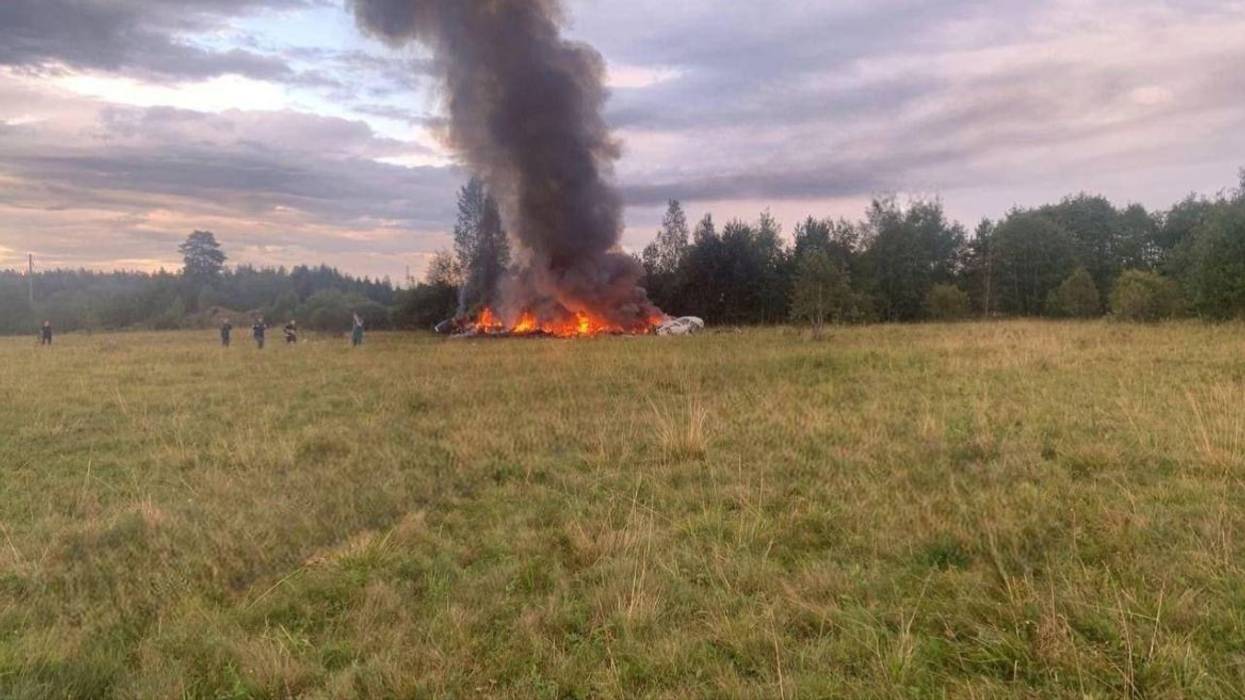
Suspicions quickly turned to Russian President Vladimir Putin, with U.S. President Joe Biden saying that "there's not much that happens in Russia" without his involvement.
Yevgeny Prigozhin, the billionaire head of the Wagner Group mercenary firm who recently led an aborted rebellion against Russian President Vladimir Putin—an erstwhile close ally—was on the passenger list of a plane that crashed on Wednesday north of Moscow, according to Russian officials and media.
The Russian Emergencies Ministry said there were no survivors among the 10 passengers aboard the Embraer Legacy 600 private business jet, which reportedly belonged to Prigozhin and was en route from St. Petersburg to Moscow when it crashed in the Tver region more than 60 miles north of Moscow.
Rosaviation, Russia's civil aviation regulator, confirmed that Prigozhin was on the passenger list—but it remains unclear whether he was actually aboard the doomed jet.
The fate of the 61-year-old oligarch—once known as "Putin's chef" because the Russian president ate at his restaurants and contracted his catering business—has confounded observers since he led his Wagner mercenaries in a short-lived mutiny in which they captured and briefly occupied the city of Rostov-on-Don in June.
Prigozhin then ordered his men to march on Moscow to seek "revenge," accusing Russian military leaders of killing his troops during the ongoing invasion of Ukraine. Wagner forces played a critical role in Russia's battlefield successes and suffered heavy losses—especially among prisoners who volunteered to fight in exchange for their freedom.
In a deal brokered by Belarusian President Alexander Lukashenko—a close Putin ally who has allowed Russian troops to invade Ukraine from his country—Prigozhin called off his coup attempt in exchange for safe passage to Belarus. However, Lukashenko said last month that Prigozhin and thousands of his fighters were still in Russia, while brushing off speculation that Putin would try to assassinate him.
"If you think Putin is so malicious and vindictive that he will wipe him out tomorrow... no, this will not happen," Lukashenko said at the time.
Earlier this week, Prigozhin published his first recruitment video since the mutiny, seeking soldiers of fortune to fight in African conflicts, including in Mali—where Wagner fighters, along with U.S.-backed government forces, are accused of committing widespread atrocities.
While the cause of Wednesday's plane crash remains unknown for now, speculation and suspicion of Putin's involvement came quickly, as the president vowed to severely punish what he called Wagner's "internal betrayal" and a "stab in the back of our country and our people."
U.S. President Joe Biden—a staunch supporter of Ukraine's defense against Russia's invasion—told reporters after the crash that "there's not much that happens in Russia that Putin's not behind."
"But I don't know enough to know the answer," he added. "I've been working out for the last hour-and-a-half."
Numerous prominent Putin opponents have suffered mysterious and usually fatal poisonings, falls, and shootings over the years.
In a 2018 interview, Putin was asked if he knew how to forgive. "Yes, but not everything," the Russian leader replied. When asked what he could not forgive, Putin answered with one word: "Betrayal."
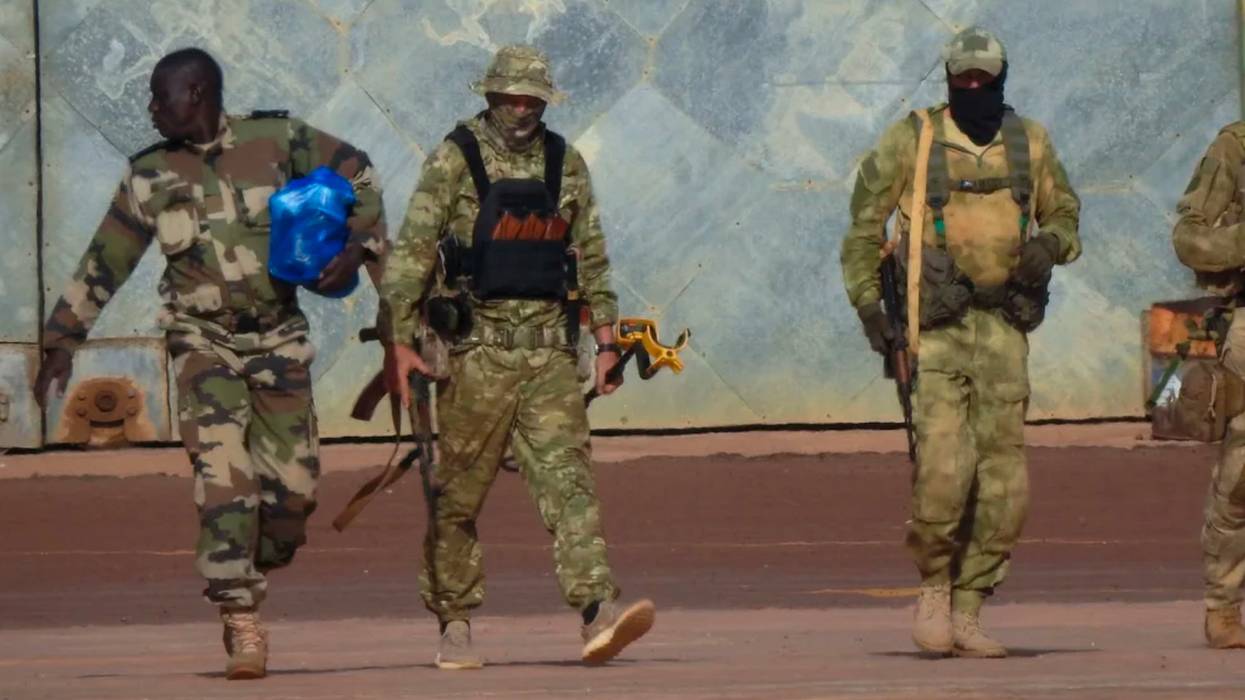
"Here we have the AFRICOM/Wagner overlap," said journalist Nick Turse, referring to U.S. troops and Russian hired guns in the African nation.
Mali's U.S.-backed army and foreign fighters apparently from the Russian mercenary firm Wagner Group have forcibly disappeared and murdered dozens of civilians in the African nation's central region since last December, Human Rights Watch said Monday.
HRW interviewed 40 people including 20 eyewitnesses to atrocities perpetrated by Malian forces in the villages of Ouenkoro, Séguéla, Sossobé, and Thioffol, as well as numerous victims' relatives, community leaders, activists, and representatives of international organizations.
A 45-year-old mother of seven from Thioffol who was shot in the foot described a December 18, 2022 raid by Malian troops.
"One [soldier] asked us: 'Where are the men?' We said they were out grazing animals," she told HRW. "He replied: 'If we found your men, we would have massacred them.' He ordered us out, while other soldiers stole our silver bracelets, kitchen utensils, and water cans... As soldiers started leaving, one turned back, stood on the doorstep, and opened fire. Four of us died on the spot, including a girl."
Mali's army and mercenaries have been waging a U.S.-backed war against al-Qaeda-affiliated Jamaa Nusrat al-Islam wal-Muslimin (JNIM) and rival Islamic State in the Greater Sahara (ISGS) in the Mopti and Ségou regions. The Pentagon's U.S. Africa Command (AFRICOM) is present and conducts operations in Mali.
As Nick Turse noted at The Intercept on Monday:
The U.S. has poured billions of dollars in military assistance into Mali and its neighbors over roughly two decades—enabling human rights abuses by providing weapons and training to militaries that have terrorized civilians, according to the United Nations, human rights advocacy groups, and the U.S. State Department. U.S.-trained military officers have also repeatedly conducted coups, including the putsch leader who toppled Mali's governments in 2020 and 2021. While the coups triggered restrictions on U.S. aid, Pentagon officials have pointed to Wagner's growing influence across Africa as a reason to keep the money flowing.
While Mali's military government, led by Interim President Col. Assimi Goïta since May 2021, has said that Russian military trainers are in the country as part of a bilateral agreement, it denies the presence of Wagner mercenaries.
"However," says HRW, "there is growing evidence of activities and abuses in Mali by [the] private military security company run by Yevgeny Prigozhin, a close ally of Russian President Vladimir Putin until tensions between the Russian defense ministry and Wagner Group escalated in Russia on June 24."
Survivors and witnesses in Ouenkoro, Séguéla, and Sossobé reported the participation of foreign, non-French-speaking fighters in the raids. These men were described as "white," "Russian," and "Wagner" and, according to HRW, committed just a fraction of the reported abuses.
Residents of Séguéla described how foreign fighters in three helicopters attacked the village on February 3, going door-to-door and rounding up men.
"There were almost only white Wagner soldiers, they led the whole operation," one man said. "They were heavily armed, masked, and wore camouflage uniforms and spoke a language we did not understand, but which was not French."
"They took random people, including very old men."
Another man claimed that "two white soldiers broke into my house, searched it, and took away all my wife's jewelry."
The invaders arrested 17 men between the age of 27 and 82, almost all of them members of the Fulani ethnic group.
"They selected 17 men whom they suspected were jihadists or their accomplices," one eyewitness said. "They took random people, including very old men."
More than three weeks later, a group of Séguéla villagers found the bodies of 13 men—including eight of those arrested on February 3—in a deserted area outside a nearby village. All of the victims were bound and appeared to have been shot; four also had their throats slit "to the point where the heads were almost completely cut off," according to one witness.
People interviewed by HRW also said that Malian and foreign forces tortured detainees to force confessions regarding their membership in Islamist groups. HRW has previously documented alleged summary executions, enforced disappearances, and incommunicado detentions by Malian forces in the region.
The apparent presence of Wagner mercenaries in Mali comes as the country's military government has expelled both the United Nations Multidimensional Integrated Stabilization Mission in Mali (MINUSMA) and the thousands of French troops who had occupied parts of the country for nearly a decade, sometimes harming civilians, like in the January 2021 airstrike on a wedding party that killed 19 people.
The U.N. says 187 peacekeepers died during the 10-year Mali operation, which is set to fully wind down by the end of the year following Mali's request to leave.
According to the Armed Conflict Location & Event Data Project (ACLED), a data collection, analysis, and crisis mapping project, at least 5,750 people have been killed in over 1,740 incidents across Mali between January 2022 and March 2023. The conflict has spilled over into neighboring Sahel countries including Burkina Faso and has worsened a humanitarian crisis in which hundreds of thousands of people have been displaced and nearly 9 million people require humanitarian assistance.
The United States, United Kingdom, and European Union have sanctioned Ivan Maslov, who commands Wagner Group forces in Mali.
HRW, meanwhile, is calling on African transnational organizations to act against human rights violators in Mali.
"The U.N. peacekeepers' impending withdrawal makes it more crucial than ever for the Malian authorities to protect civilians and prevent further abuses during military operations," Carine Kaneza Nantulya, HRW's deputy Africa director, said in a statement Monday.
"The African Union and the Economic Community of West African States should express their concerns about grave abuses by the Malian armed forces and allied apparent Wagner Group fighters," she added, "and increase pressure on the Malian authorities to end these violations and hold those responsible to account."
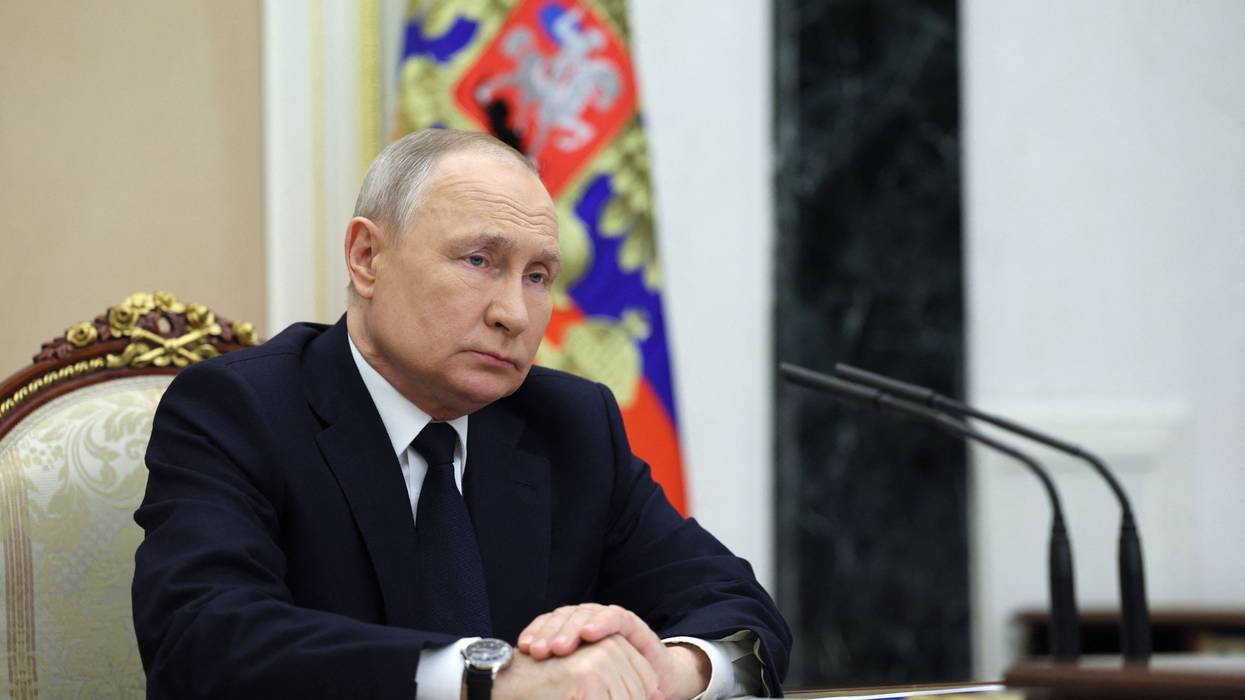
Putin is scrambling to reassert his power and rescue his image, but the future is anything but assured.
The former hotdog salesman rose about as high as he could. He became a caterer to the Russian elite and a confidante of the president. He led his country’s premier paramilitary force. He was one of Russia’s wealthiest oligarchs.
And then he overreached.
Yevgeny Prigozhin now says that he had no intention of overthrowing Russian President Vladimir Putin. That’s a surprise.
Here’s a man who made no secret of his disgust for the Russian military leadership and, by extension, the Russian government. Last weekend, he gathered several thousand of his Wagner Group mercenaries, plus a minor army’s worth of heavy-duty equipment, and took effective control of two major Russian cities: Rostov and Voronezh. On his march to Moscow, his forces shot down six helicopters and a plane, but otherwise encountered few obstacles.
Surely, Prigozhin didn’t expect to seize control of the Kremlin with such a relatively small force. According to his telling, he just wanted to force a shake-up in the Russian military, starting with the ouster of Defense Minister Sergei Shoigu.
More likely, he expected that enough members of the political and military elite would side with him against Putin that he could orchestrate a bloodless coup. He had reason to believe that people were on his side. Ordinary residents of Rostov cheered his presence. Russian soldiers at various points on the way to Moscow let the Wagner units pass unhindered. The reports that Sergei Surovikin, a senior Russian general, might have helped plan the coup are probably not accurate, given that Surovikin early on condemned Prigozhin’s moves and ordered air strikes against the approaching column of Wagner troops.
Indeed, as the example of Surovikin demonstrates, the big boys did not abandon Putin, even though Putin himself apparently abandoned Moscow at the first signs of a fight. Without support from the inside and still a good way from Moscow, Prigozhin realized that he and his troops would soon be dangerously exposed. Taking the Kremlin would not be like taking Rostov.
Meanwhile, Putin was negotiating with fellow despot Aleksandr Lukashenko, the leader of neighboring Belarus, to craft a deal. If Prigozhin called off his coup, the Russian government would withdraw criminal charges against him, allow him to decamp to Belarus, and absorb all willing members of the Wagner Group into the Russian army. Prigozhin seized on this opportunity to recast his putsch as a patriotic effort to save Russia from its incompetent military. This, after all, was a theme he’d been pushing for months.
History does not look kindly on the hesitant usurper. For his part, Putin has punished lesser cases of treason with extrajudicial murder, so Prigozhin is probably wondering right now whether this deal is going to endure.
But it is Putin who must now be worrying about the future. Uneasy indeed lies the head that wears a crown, especially when there are other potential Macbeths afoot.
Prigozhin was backed into a corner. Earlier in June, Shoigu announced that all paramilitary formations like the Wagner Group would have to sign direct contracts with the Russian military beginning July 1. That would have put Prigozhin under the thumb of the man he detested most. Even when Putin pushed the new regulation, the head of the Wagner Group continued to push back.
That’s when, according to Prigozhin, the Russian military ordered a missile strike against the Wagner Group. “We were ready to make concessions to the defense ministry, to surrender our weapons, to find a solution on how we would continue to defend the country. But these scumbags did not calm down,” Prigozhin said in a video. “We have 25,000 (soldiers), and we’re going to figure out why there’s chaos in the country. Everyone, who is willing, join us.”
The alleged missile strike was only the latest provocation. Earlier in the year, Prigozhin had to deal with the replacement of Surovikin, a close ally, as the top commander in charge of operations in Ukraine. Then he faced a cut-off in his chief supply of recruits when he no longer could tap into the Russian prison system. His lucrative military catering contracts—worth a cool billion dollars over the last year alone— were also at risk because of new supplier regulations. And Prigozhin believed that his Wagner Group had been undersupplied in its effort to seize the ravaged Ukrainian city of Bakhmut.
To call Prigozhin unpredictable and impulsive would be an understatement. This is a guy who, according to the Discord leaks, was willing to give Ukraine the locations of Russian military positions if Ukrainian commanders pulled out of Bakhmut, where the Wagner Group was fighting and dying for the tiniest scraps of territory. It’s extraordinary that he maintained better relations with Ukrainian intelligence during the war than with the Russian military.
But Prigozhin is also a canny operator. He couldn’t have risen so high in the informal hierarchy around Putin if he didn’t know how to negotiate the turbulent tides of power. Given how he was being boxed in, he must have felt that he had to go big or go home. And Prigozhin is no homebody.
After the Shoigu announcement, Prigozhin began to stockpile weapons. His first plan was reportedly to kidnap top Russian military officials on their visit to southern Russia. When that plan was leaked, Prigozhin developed the alternative of seizing Rostov and marching on Moscow.
Even though the Kremlin knew of the initial kidnapping plan, it failed to anticipate Prigozhin’s next moves. According to CNN:
Multiple sources told CNN that US and Western officials believe that Putin was simply caught off guard by Prigozhin’s actions and did not have time to array his forces against the Wagner mercenaries before they managed to seize control of the military headquarters in Rostov. Putin also likely did not want to divert significant resources away from Ukraine, officials said.
In other words, the same miscalculations that plagued the Russian invasion of Ukraine last year have continued. Putin the autocrat is making decisions based on limited information and wishful thinking, and no one is courageous enough to contradict him. Only someone as crazy as Prigozhin was willing to speak his mind, and now he’s presumably on his way to Belarus. After this latest coup attempt, Putin will only be more paranoid and imperious.
Putin is scrambling to reassert his power and rescue his image. In a speech this week after the mutiny fizzled, he emphasized the defense of the Fatherland, blamed the West, didn’t mention Prigozhin, and offered Wagner troops a choice of returning home, joining the Russian army, or relocating to Belarus.
What future does Putin face? Here are three possible scenarios:
The Status Quo Holds
Putin is 70 years old. He seems in good shape. He could hang onto power for another decade. He commands the loyalty of the siloviki, the “hard men” of the intelligence services that have formed the core of his support for decades. He has destroyed all left-wing or centrist challenges to his authority. Critics are in jail or in exile.
In this scenario, the economy falters but doesn’t collapse. The war in Ukraine grinds to a virtual halt, and Putin consolidates his territorial gains, even if the incorporation of the Donbas, Crimea, and the lands in between fails to win international recognition. He eventually passes on the scepter to a loyal lieutenant, like former Prime Minister Dmitry Medvedev. His other trusted advisors, like intelligence chiefs Nikolai Patrushev and Alexander Bortnikov, are also in their early 70s. The best strategy in this situation: wait until this “Putin generation” passes away.
Ukraine Wins, Putin Loses
Ukraine’s ongoing counteroffensive has run up against Russian fortifications, particularly landmines. But perhaps, after finding a couple weaknesses in the Russian defenses, the Ukrainian army manages to break through. Meanwhile, anti-Putin forces escalate their attacks within Russia itself. Russian occupation forces, caught in the middle, turn tail.
That’s when history repeats and Russian soldiers stream back into the country, as they did in 1917, and demand accountability and change. Putin tries to put a positive spin on the obvious defeat of Russian forces—“We need all hands on deck to defend the Fatherland against the immoral West.” But like the boy who cried “Wolf!” Putin has cried “West!” too many times to be effective. His formerly loyal advisors decide that he is a liability. Putin goes down in what amounts to a palace coup.
Cue the Milosevic tape: Medvedev or someone like him abruptly pivots to put all the blame on Putin. The new Russian government delivers the former president to the International Criminal Court in exchange for the lifting of sanctions. The West pretends that the new nationalists in charge were not also responsible for war crimes.
Military Stalemate, Putin Overthrown
Only in this last case does the Wagner mutiny have any lasting impact. Here, the war in Ukraine turns into a stalemate, and Russia’s political and economic elite continues to question Putin’s ability to lead the nation.
But the loudest critics come from the far right, groups like the Club of Angry Patriots. One of the most prominent figures associated with the Club is former security operative and current military blogger Igor Girkin, who predicted some weeks ago that the Wagner Group would try to overthrow Putin. These far-right voices demand that Putin wage all-out war against Ukraine. If he doesn’t, they want him to step aside. “He’s never seen a tank except in a parade, what’s wrong with his head?” Girkin said of Putin. “He’s really acting not even like an old man, but like a child.”
Russia’s far right is not exactly unified. But it could fill the role of the Bolsheviks in a successful 2023 coup that mobilizes insider support with enough street violence to send Putin packing (perhaps to Belarus where he can collaborate once again with Prigozhin on a new catering business).
Girkin plays Prigozhin in this sequel to The Wagner Mutiny. But his performance is more convincing. Russia goes from crypto-fascist to overtly fascist. Girkin with nuclear weapons? Perish the thought; perish the world.
Putin has been in charge of Russia for more than two decades. He has made himself into the country’s indispensable leader by eliminating all potential challengers. But just as Prigozhin overreached with his thwarted mutiny, Putin overreached with his thwarted invasion of Ukraine. That ghastly mistake, an attack that has somehow landed the ball in Putin’s own net, has set into motion developments that Putin cannot entirely control. He could manage to hang on, but at a huge cost. Indeed, the current Russian leader seems determined to win his long-shot bet that he can revive the Russian empire—or, failing that, bring the entire country down with him.
Regime collapse? No one, least of all the U.S. government, wants a Russian civil war that puts all those nuclear weapons up for grabs.
Regime change? Not with options like Yevgeny Prigozhin and Igor Girkin waiting in the wings.
Regime continuity? The best scenario would be a relatively stable Russia that is so preoccupied with its own domestic problems that it no longer has the bandwidth to project power abroad. Ideally, such a government wouldn’t be saddled with Putin. But there are, unfortunately, worse options.
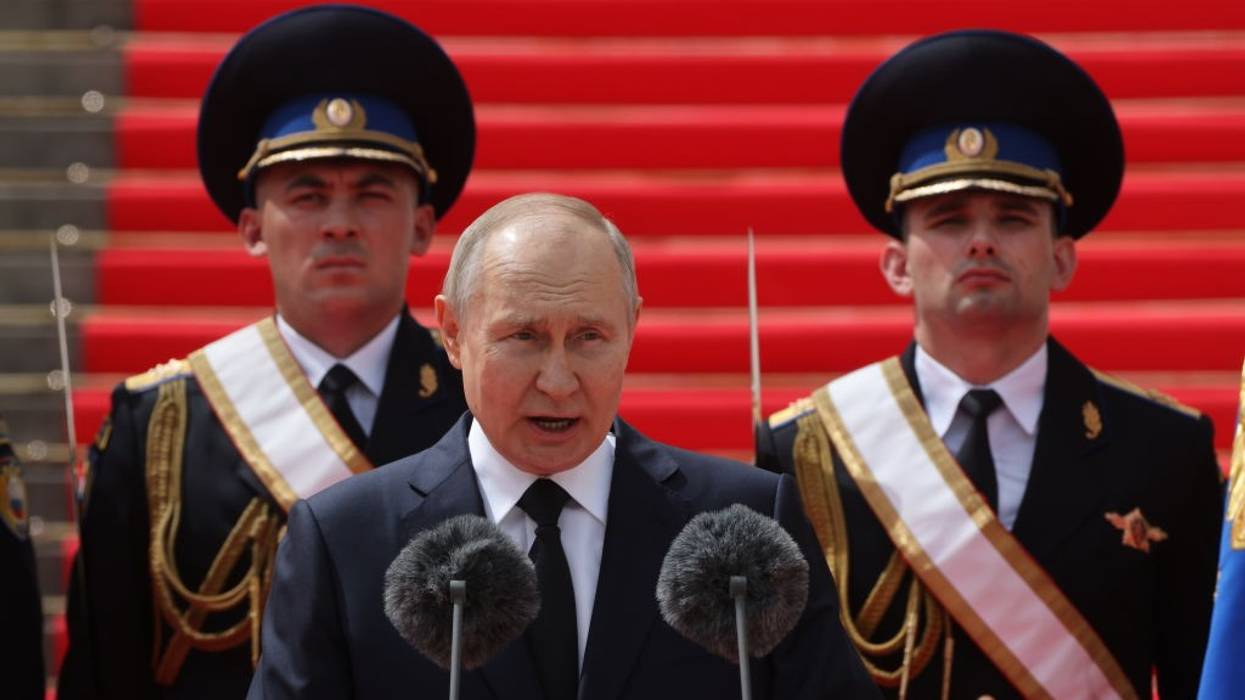
Putin has no one to blame but himself for the crisis. Prigozhin’s Wagner group was created with his blessing and promoted by the Russian president.
Less than 24 hours after the mutiny began, it was over.
As the rebelling Wagner column bore down on Moscow, Belarusian President Alexander Lukashenko brokered a deal under which Russian President Vladimir Putin promised to drop criminal charges against the mercenary leader Yevgeny Prigozhin and allow him to seek asylum in Belarus. The departing Wagner troops were given a heroes’ send-off by some residents of Rostov-on-Don – the southern Russian town they had taken control over without firing a shot earlier in the day.
Prigozhin gambled and lost. But he lives to fight another day – for now at least.
The events of June 24, 2023, had observers searching for the right term to describe what was going on: Was this a coup attempt, a mutiny, an insurrection?
Did Prigozhin seriously think that he would be able to enter Moscow? Perhaps he genuinely believed that Putin would accede to his demand to fire Defense Minister Sergei Shoigu and Chief of General Staff Valery Gerasimov – two men that the Wagner group head has previously harshly criticized for their conduct of the war.
More radically, Prigozhin may have hoped that he would receive support from elements in the Russian military. Indeed, that seemed to be the case – his group encountered no resistance in taking over Rostov-on-Don or heading north for some 350 miles (600 kilometers) through Voronezh and Lipetsk provinces – though they were reportedly attacked by a helicopter gunship, which they shot down. Prigozhin claimed to command 25,000 troops, though the actual number may be half that figure.
But while the mutiny was short-lived and its goals unclear, it will have lasting effects – exposing the fragility of Putin’s grip on power and his ability to lead Russia to victory over Ukraine.Prigozhin’s abortive insurrection has punctured the “strongman” image of Putin, both for world leaders and for ordinary Russians.
He was unable to do anything to stop Prigozhin’s rogue military unit as it seized Rostov-on-Don – where the Russian Southern Military Command is headquartered – and then sent a column of armored vehicles up the M4 highway toward Moscow. Putin was forced to make a televised address at 10 a.m. local time on June 24 describing the revolt as a “stab in the back” and calling for harsh punishment of the mutineers. But it was the intervention of Belarus President Lukashenko that brought about an end to the mutiny, not any words or actions from Putin. Somewhat uncharacteristically, both Prigozhin and Putin exercised restraint and stepped back from the brink of civil war by agreeing on the compromise deal that allowed Prigozhin to escape punishment.
Exiled Russian political scientist Kirill Rogov has argued that the most challenging development to Russia’s leaders may not be the mutiny itself, but the rhetoric that Prigozhin used to justify his actions. In an interview released on social media a day before taking control of Rostov-on-Don, Prigozhin argued that the Ukraine war was a mistake from the beginning, launched to benefit the personal interests of Defense Minister Shoigu and an inner circle of oligarchs. Prigozhin brushed aside all the ideological claims Putin has made about the war – the need to denazify Ukraine, the threat of NATO expansion – as just cover for self-interest. “Our holy war has turned into a racket,” he said.
Prigozhin’s words and actions have exposed the vulnerability of Putin’s grip on power and the hollowness of his ideological framing of the war in Ukraine and Russia’s place in the world.
Putin’s constant refrain is that any opposition to his rule – whether it be from the Kyiv government or from protesters at home – is part of a Western plot to weaken Russia. It is hard to imagine that his propagandists will be able to argue that Prigozhin is also a tool of the West.
Over the past 10 years, and especially since the February 2022 invasion of Ukraine, Putin has ruthlessly deployed the coercive apparatus of the state to crush any liberal opposition. At the same time, radical ultra-nationalists – not only Prigozhin but also the military bloggers and correspondents reporting from the war zone – have been given a relatively free hand.
For the most part, they were kept out of state-controlled television broadcasts, but they have reached a wider Russian audience through social media channels such as Telegram, VKontakte and YouTube.
Prigozhin, a former convict who went on to provide catering for the Kremlin before founding the Wagner group, has seen his profile and popularity in Russia rise during the war in Ukraine. In May 2023 polling, he was cited among the top 10 trusted political figures.
It is unclear why Putin was tolerating the nationalists, Prigozhin included, as they increasingly questioned Russia’s war performance. It may be because the Russian president is ideologically aligned with them, or saw them as useful in balancing the power of the generals. Perhaps, also, Putin had come to believe his own propaganda – that nobody could be more nationalist than Putin himself and that Russia and Putin were one and the same thing – echoing presidential aide Vyacheslav Volodin’s 2014 comment: “No Putin, no Russia”.
Certainly prior to the Wagner mutiny, there were growing winds of discontent among nationalists. On April 1, 2023, one group of prominent bloggers, including Igor Girkin and Pavel Gubarev, announced the formation of a “Club of Angry Patriots.” As Wagner soldiers marched toward Moscow on June 24, the club issued a statement of indirect support for Prigozhin.
Prigozhin might now be in the Belarusian capital, Minsk, where – theoretically at least – he can do less damage to Putin. But there are other discontents still in Moscow, and politically active.
Security services in Russia have begun raiding Wagner group offices, but it remains unclear what will happen to Prigozhin’s extensive business operations around the world. Wagner soldiers will be offered the chance to sign contracts with the defense ministry – if they did not take direct part in the insurrection.
Putin has no one to blame but himself for the crisis. Prigozhin’s Wagner group was created with his blessing and promoted by the Russian president. It was a tool that Putin could use to further Russia’s military and economic objectives without direct political or legal accountability – initially in the Donbas in eastern Ukraine in 2014, then in Syria, Libya and elsewhere in Africa.
It was not until July 2022 that Wagner was officially acknowledged to be fighting in the Ukraine war. But over the past six months, they have played an increasingly prominent role and have been rewarded with praise in the Russian media.
But as his prestige grew, so too did Prigozhin’s criticism of those around Putin. Starting in December 2022, he began openly challenging Shoigu. He avoided direct criticism of Putin, though in an expletive-laced tirade on May 9 – the day Russia commemorates the end of World War II – he complained about the lack of ammunition for Wagner fighters and talked about “a happy asshole Grandfather,” in what has been taken to be a clear reference to Putin.
It remains a mystery why Putin did not move to get rid of Prigozhin before now – one of the many mysteries of Russian politics over the past century.
Prigozhin has inflicted significant damage on his once all-powerful benefactor. Exiled Russian journalist Mikhail Zygar goes so far as to argue that the failed mutiny has exposed Putin as a “lame-duck” president; likewise, sociologist Vladislav Inozemtsev asserts that “Putin is finished.”
Such definitive judgments are premature, I feel. Putin is a tough and resilient politician who has faced down the most serious challenge to his authority since he came to power in 2000. But there can be no doubt that the aborted mutiny has exposed profound structural flaws in the Russian system of rule.

Although suppressed, millions oppose Putin and hope for change. The head of the Wagner mercenary group is no "man of the people," but the aborted rebellion open the door for wider dissent in the country.
Russian dictator Vladimir Putin’s war against Ukraine has, as wars often do, come home. A rebellion broke out last week led by the rightwing and authoritarian Yevgeny Prigozhin, leader of the Russian Wagner Group, who sent his little army from the war in Ukraine to take over the Russian city of Rostov. Then he launched them on a northward march to threaten Moscow and perhaps overthrow Putin. Just 120 miles from the Russian capital, Prigozhin stopped and turned his army around, perhaps because he had not received the support he hoped for from insiders.
The authoritarian leader of Belarus, Aleksandr Lukashenko, an ally of Putin, negotiated a deal between Putin and Prigozhin that provided that Prigozhin would retire to Belarus and all charges would be dropped against him and his soldiers, who would return to fighting against Ukraine.
There is little chance that Prigozhin’s little army of a few thousand could have taken power, but the rebellion has repercussions that Putin may find it hard to overcome. The attempted coup has shattered Putin’s image as the imperturbable dictator of an impervious regime who manages the elite and presides over a quiescent Russian society, assassinating serious rivals and critics with impunity and imprisoning protestors. The Russian elite and the Russian people can see now that Putin is vulnerable. And Putin has lost the Wagner Group’s extensive contacts and contracts in Africa and the Middle East, which have been central to Russia’s imperialist expansion of mining, arms exports and military alliances.
The events have also altered the relationship between Putin and Lukashenko. The Belarusian strongman had become dependent on the Russian dictator, but the balance of forces has now changed, even been reversed. This time it was Putin who needed Lukashenko to help prevent the rebellion, not the way it was when Putin helped the Belarusian suppress a pro-democracy movement.
Prigozhin’s rebellion was too brief to offer the Ukrainians an attempt to break through on the Eastern Front and follow him to Rostov-on-Don and then on to Moscow. But the rebellion has nevertheless encouraged the Ukrainians and demoralized the Russians.
Prigozhin has presumably gone to Belarus, but he will not simply disappear—unless Putin assassinates him, which may be impossible now without Lukashenko’s tacit approval. Prigozhin has plenty of money and a loyal army, and he remains popular with many Russians who cheered him and his forces.
Prigozhin’s rebellion was too brief to offer the Ukrainians an attempt to break through on the Eastern Front and follow him to Rostov-on-Don and then on to Moscow. But the rebellion has nevertheless encouraged the Ukrainians and demoralized the Russians. These events may still present an opportunity for Ukrainians to regain territory while Russian forces are divided and distracted.
Two important questions remain. Can this struggle between Putin and Prigozhin open up space for the Russian people and particularly the Russian working class to act? Second, does the rebellion that arose out of Prigozhin’s criticism of the Russian generals “corruption and incompetence” weaken further the Russian Army and increase the chances of a Ukrainian victory in the war?
War has come home to Russia before on at least three occasions. After losing the war with Japan of 1904-95, a revolutionary movement developed among returning soldiers, workers, and peasants that threatened to overthrow Tsar Nicholas II.
The Tsar unleashed the army on the revolution and encouraged anti-Semitic pogroms throughout the empire, and succeeded in holding onto power.
Toward the end of World War I, as the armies of the Great Powers slaughtered millions of soldiers and civilians, the Russian Army collapsed and in early 1917 the soldiers mutinied and began to march home as peasants and workers rebelled as well. In February the revolution drove the Tsar from the throne and a liberal government was established. But when this new liberal government failed to end the war, distribute land to the peasants, or recognize the labor unions, the revolution deepened. The Bolshevik Party (later called the Communist Party).led a coup in October that thrust power into the hands of the workers’ councils or soviets, a short-lived experiment in democracy and workers’ power.
In 1941, however, when Hitler’s Nazi Germany invaded the Soviet Union, the result was altogether different. Communist dictator Joseph Stalin united the population in the Great Patriotic War and at the same time took advantage of the crisis to strengthen his stranglehold on the Soviet people. Stalin not only survived but after the war extended his rule and the Communist system to the Baltic States and Eastern Europe. The war did not come home to overthrow either Stalin or the bureaucratic Communist state.
Today, the circumstances are very different from those cases. Although Russia in 1917 had had 30 years of revolutionary organizing by anarchists and socialists who had constructed a base among the country’s working people, today in Russia the movement for reform has been intimidated and the revolutionary left is tiny. Every critical thinker or activist has either been imprisoned or fled the country. Few if any public demonstrations have yet taken place against Putin in the wake of this attempted coup. There is also a danger that a sector of the society, disgusted with Putin, might turn to the vile Prigozhin and his murderous Wagner mercenaries.
Unlike Stalin’s rule in 1941, Putin’s has not been preceded by 20 years of severe repression in which at least 100,000 died and hundreds of thousands of others went to the Gulags. Although suppressed, millions oppose Putin and hope for change. Perhaps the recent crisis will inspire the Russian liberal and leftist opposition, and activists of the many non-Russian nationalities of the Russian Federation, to take action.

Can this regime and this form of government continue? Everything still depends on what happens on the battlefield in Ukraine.
President Putin has emerged strengthened from whatever it was exactly that may or may not have happened in Russia this weekend; strengthened, that is, compared to his situation of ten days ago – which is not saying a great deal. For months now, the open public dispute between Yevgeny Prigozhin, leader of the Wagner Group, and the leadership of the Russian Defense Ministry had escalated to the point where Putin’s inability or unwillingness to end it was undermining his authority.
Three weeks ago, Prigozhin began to extend his criticism from Defense Minister Sergei Shoigu and Chief of the General Staff Valery Gerasimov to the regime and the elites in general; and, although he was careful not to attack Putin himself, the implications of his remarks were clear enough. Prigozhin’s attacks were so damaging to the regime both because of the prestige that Wagner amassed in Russia as a result of its fighting record in Ukraine, and because his criticisms have been essentially true.
Not only did Shoigu and Gerasimov plan and conduct the invasion of Ukraine with monstrous incompetence, recklessness and indifference to civilian deaths and suffering, but since they have both held their present positions since 2012, they bear direct personal responsibility for the logistical chaos, lack of coordination, and generally lamentable condition of the Russian armed forces. Equally true have been Prigozhin’s attacks on elite corruption, the evasion of taxes and military service by the rich, and finally – and most strikingly of all – the lies about Ukraine told by the regime (and above all by Putin himself) to justify the invasion.
While Putin is regarded in the West and is presented in his own domestic propaganda as an absolutist autocrat, he has in fact often functioned more like the chairman of a squabbling collection of state oligarchs.
Prigozhin’s abortive rebellion this weekend seems likely to have been what is called in German a Flucht nach vorn – an “escape forwards,” driven not by considered hope of success but fear of the alternatives and the existing situation. Prigozhin had good reason to fear that unless he acted first, Shoigu and Gerasimov would use the vastly superior power of the Russian armed forces to destroy him; or perhaps just to have him assassinated, something that is always easier on a battlefield. Above all, the precipitating factor may have been Putin’s announcement on June 14 that Wagner was to be brought under the full control of the Defense Ministry. This indicated that Putin was finally coming off the fence and siding with Shoigu and Gerasimov against Prigozhin.
Given the extent to which Wagner is outnumbered and outgunned by the Russian military, Prigozhin had only two (overlapping) chances of success: that enough of the Russian regular army itself would mutiny and join Wagner, and that Putin’s own nerve would crack and that he would surrender to Prigozhin’s demands or even resign. Neither occurred.
From the point of view of Russian military loyalties, a key moment came Saturday when General Sergei Surovikin condemned the rebellion and called on Russian soldiers to resist it and Wagner fighters to return to their duty:
“The enemy is eagerly awaiting a worsening of our internal disputes. In these difficult times for our country, you must not play into the hands of our enemies. Before it is too late, it is urgently necessary to obey the orders of the elected President of the Russian Federation.”
This was important both because of Surovikin’s personal stature as the former commander in Syria and the only really successful Russian general in Ukraine; and because in remarks three weeks ago, Prigozhin had called for him to be appointed to replace Gerasimov. Prigozhin must have assumed that Surovikin’s removal as commander-in-chief in Ukraine by Shoigu and Gerasimov in January would have inclined him to support Wagner (to which he was believed to have been close since his time as commander in Syria). Once he refused, it was very unlikely that any other Russian generals would do so.
As to Putin, his nerve seems as strong as ever. If his address on Saturday condemning the rebellion as treason lacked the rhetorical and moral force of de Gaulle’s in response to the coup of French generals in Algeria in April 1961, it was still sufficiently tough and resolute to show his determination to remain in power, rally the doubtful, and re-establish a measure of personal authority:
“We are fighting for the lives and security of our people, for our sovereignty and independence, for the right to remain Russia, a state with a thousand-year history,” he said.
However, the background (and perhaps also the solution) to the Wagner revolt have displayed some key features of Putin’s approach to the exercise of power. By training and instinct he is a secret serviceman, not a soldier. His preference has always been when possible to opt for ruthless but indirect, semi-covert and quasi-deniable methods over direct military force. Hence his hesitation to invade Ukraine, something long urged on him by hardliners within his regime. Hence, too, his sponsorship of Wagner, which as a “private military company” could pursue Russian goals in the Donbas, Syria and Africa while allowing the Russian government to maintain official distance from its actions.
Secondly, while Putin is regarded in the West and is presented in his own domestic propaganda as an absolutist autocrat, he has in fact often functioned more like the chairman of a squabbling collection of state oligarchs. He has even encouraged their feuds as part of a strategy of “divide and rule,” and he has only stepped in to resolve them—in this case, very belatedly—when they have risked breaking out in public and threatening his own authority. Putin has also been a master in the distribution of state patronage, making sure that as long as they remain loyal to him, the losers in intra-regime disputes have still been compensated with considerable wealth.
If Putin was instrumental in the rise of Wagner to the point that it became a menace to the Russian state, it also seems likely that only he could have brought the Wagner revolt to an end quickly and without bloodshed and possible civil war.
Can this regime and this form of government continue? Everything still depends on what happens on the battlefield in Ukraine. If the Russians can hold their present line, Putin’s rule will most probably survive. Another major defeat would probably finish it. Concerning his personal authority, an early question will be whether having suppressed Prigozhin, Putin can now act to replace Shoigu and Gerasimov, as so many Russian soldiers would wish—or whether he is still inextricably bound to these and other cronies (of whom Prigozhin was previously one), irrespective of their manifest failures and crimes. For a key factor in the disastrous decision to invade Ukraine and the general decline of the Putin regime’s competence has been his increasing tendency to surround himself with an ever-smaller group of close associates and rely exclusively on them for advice.
Finally, the Wagner revolt, however brief and unsuccessful, will inevitably renew speculation about whether Putin’s prestige has been so badly damaged that he will decide not to stand again for president in the elections due (according to the constitution) early next year, and instead hand over to a chosen successor (as President Yeltsin handed over to him in 1999). However, while the revolt has been a bad blow to Putin, it may also have underlined once again his vital personal importance to the political system that he has created—which could lead his associates in that system to beg him to stay on, for fear that without him they would be incapable of peacefully mediating their own rivalries.
For if Putin was instrumental in the rise of Wagner to the point that it became a menace to the Russian state, it also seems likely that only he could have brought the Wagner revolt to an end quickly and without bloodshed and possible civil war. At the start of the Cold War, George Kennan wrote presciently that if Communist Party authority faltered, “Russia might be changed overnight from one of the strongest to one of the weakest and most pitiable of national societies.” It is possible to wonder whether that may be true today of Putin’s authority, however diminished.
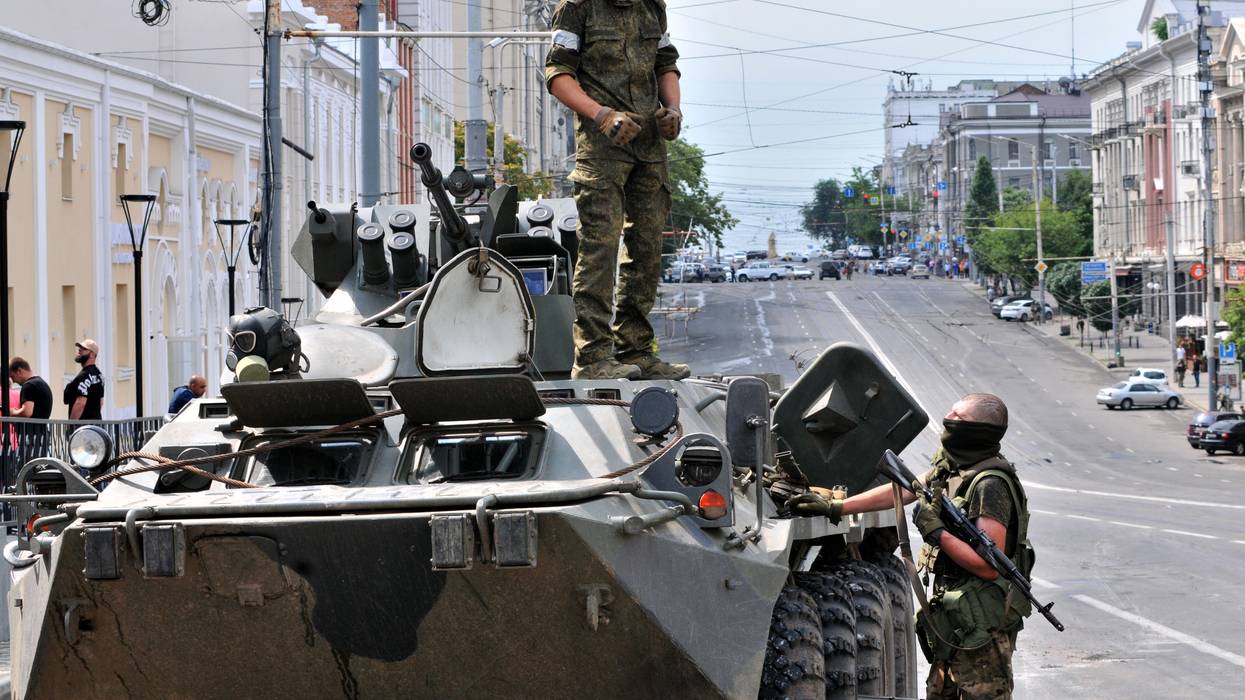
"Russia's weakness is obvious," said Ukrainian President Volodymyr Zelenskyy as events unfolded in Russia. "And the longer Russia keeps its troops and mercenaries on our land, the more chaos, pain, and problems it will have for itself later."
(Update: 9:00 am, Sunday, June 25)
Wagner Group leader Yevgeny Prigozhin left Rostov-on-Don, Russia late Saturday after announcing abruptly that he had called off his forces' march to Moscow and ordered them to leave the southern city, a key strategic location in Russia's war against Ukraine.
Prigozhin agreed to leave Russia go to Belarus under a deal reportedly brokered by Belarusian President Alexander Lukashenko, whose government is strongly allied with Russian President Vladimir Putin. Belarus has allowed Russian troops to station there since Russia's invasion of Ukraine in February 2022 and Putin said earlier this month that Russia has begun deploying "tactical" nuclear weapons in the former Soviet state.
Under the deal, Prigozhin and his forces will not face charges for taking over military facilities in Rostov-on-Don on Saturday, which Putin had said amounted to treason.
Earlier:
Ukrainian officials on Saturday said the takeover of a key strategic Russian city by the Wagner Group, a private mercenary force with close ties to Russian President Vladimir Putin, was a sign of a burgeoning civil war in the country that invaded Ukraine 16 months ago.
The group's seizure of military facilities in Rostov-on-Don in southern Russia was a sign of Putin's "weakness," said Ukrainian President Volodymyr Zelenskyy as many in his country kept a close watch on the chaos unfolding in the country whose invasion has killed more than 9,000 civilians, injured more than 15,000, and forced more than six million people to flee Ukraine.
"Anyone who chooses the path of evil destroys himself," said Zelenskyy on social media. "Sends columns of soldiers to destroy the lives of another country—and cannot stop them from fleeing and betraying when life resists... [Putin] despises people and throws hundreds of thousands into the war—in order to eventually barricade himself in the Moscow region from those whom he himself armed."
"Russia's weakness is obvious," Zelenskyy added. "Full-scale weakness. And the longer Russia keeps its troops and mercenaries on our land, the more chaos, pain, and problems it will have for itself later."
The Wagner Group is headed by Yevgeny Prigozhin, a member of the Russian elite who in the past secured lucrative construction and catering contracts from the government, the latter of which earned him the nickname "Putin's chef." He was one of 13 Russians indicted by a federal grand jury in the United States in 2018 for interfering in the 2016 U.S. presidential election.
Prigozhin's mercenary army first began exerting influence during Russia's illegal annexation of Crimea in 2014, and has since been deployed to further Russian interests in countries including Syria, Libya, Central African Republic, Sudan, and Mozambique.
"Today we are actually witnessing the beginning of a civil war."
"There's a trend or pattern around what happens when Wagner is involved in an armed conflict," Sorcha MacLeod, chair of the United Nations Working Group on mercenary groups, told The New York Times last year. "The conflict is prolonged, involves heavy weaponry, civilians are impacted in a substantial way, human rights violations and war crimes increase substantially, and there's no access to justice for victims."
Prigozhin has in recent months rebuked the military leadership of Putin's war on Ukraine, saying generals have not provided his forces with enough resources.
On Friday he accused Putin's military of attacking his fighters' encampments and called the Ukraine invasion a "racket" before announcing that the Wagner Group had taken control of Rostov-on-Don.
The Times verified footage showing Prigozhin entering a military complex in the city.
The mercenary group was headed toward Moscow on Saturday as Russian officials accused Prigozhin of attempting to mount a coup against Putin. The state news agency, TASS, reported that the Russian prosecutor general had charged Prigozhin with armed mutiny.
Putin accused Prigozhin of treason in an address to Russians and said he "will do everything to defend the country."
Mykhailo Podolyak, an adviser to Zelenskyy, said the turmoil between Putin and the Wagner Group signifies that "the start of the Ukrainian counteroffensive finally destabilized the Russian elites, intensifying the internal split that arose after the defeat in Ukraine."
"Today we are actually witnessing the beginning of a civil war," he said.
The Wagner Group's actions are "a sign of the collapse of the ruling regime," Ukrainian military intelligence spokesperson Andriy Yusov told Suspilne, Ukraine's state news agency, "and such processes will intensify."