

SUBSCRIBE TO OUR FREE NEWSLETTER
Daily news & progressive opinion—funded by the people, not the corporations—delivered straight to your inbox.
5
#000000
#FFFFFF
To donate by check, phone, or other method, see our More Ways to Give page.
Daily news & progressive opinion—funded by the people, not the corporations—delivered straight to your inbox.
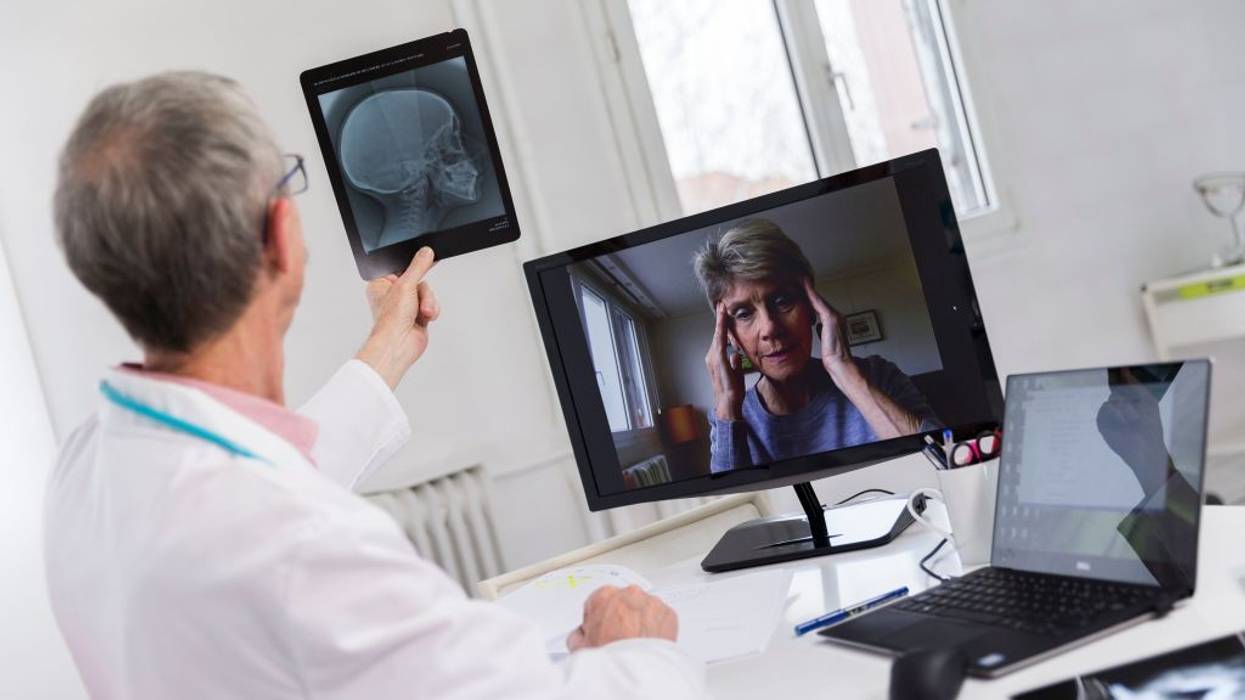
"We have trillions to spend on tax breaks for the rich and corporations," said one economic policy expert, "but we can't afford to cover telehealth visits for seniors?"
The announcement Thursday that Medicare will no longer cover many telehealth services starting April 1 prompted elder and telemedicine advocates to urge the Trump administration to continue the provision of vital remote care for millions of Americans.
According to the Medicare website, "you can get telehealth services at any location in the U.S., including your home" until March 31. Beginning April 1, "you must be in an office or medical facility located in a rural area... for most telehealth services. If you aren't in a rural healthcare setting, you can still get certain Medicare telehealth services on or after April 1."
These services include monthly kidney dialysis treatments; diagnosis, evaluation, or treatment of acute stroke symptoms; and mental and behavioral health services, including addiction treatment.
"What is the rationale for this, other than making life more difficult for many seniors?"
The announcement came as the White House signaled Republican U.S. President Donald Trump's openness to slashing Medicare's budget under the guise of the Department of Government Efficiency's (DOGE) mission of reducing "waste, fraud, and abuse."
"Unreal," economic policy expert Michael Linden
said on social media. "We have trillions to spend on tax breaks for the rich and corporations, but we can't afford to cover telehealth visits for seniors?"
One Trump supporter asked on social media: "Why is Medicare eliminating telemedicine? I'm a senior and find it very convenient. If it's fraud, figure out a way to prevent fraud. Have calls made over a government app! I want to know why!"
Congressman Ro Khanna (D-Calif.) asked, "What is the rationale for this, other than making life more difficult for many seniors?"
Campaign for New York Health executive director Melanie D'Arrigo accused Trump of "killing telehealth for seniors, because many seniors will skip seeing a doctor if they have to go in person."
"Patients skipping appointments saves money, but also leads to more preventable deaths," D'Arrigo added. "Guess which he cares about more?"
Dean Baker, senior economist at the Center for Economic and Policy Research, quipped: "Not sure who this is a handout to. I know Trump wants to burn as much fossil fuel as possible, so that is one motivation. Maybe people were getting fewer unnecessary tests with telemedicine, so the medical testing industry could also have been a factor. Any other explanations?"
Georges Benjamin, executive director of the American Public Health Association—an advocacy group for U.S. public health professionals—told Route Fifty's Kaitlyn Levinson Thursday that "the federal contribution is absolutely essential for [telemedicine] to be a seamless system."
However, Benjamin said that "it is unclear what the Trump administration's financial policies will be in terms of supporting telemedicine and incentivizing telemedicine."
Benjamin added that he hopes the Trump administration will "provide supplemental funding and support for states that want to beef up their telemedicine capacity."
The American Telemedicine Association (ATA), another advocacy group, last month praised Trump for temporarily expanding Medicare telehealth coverage during the Covid-19 pandemic.
"Trump can cement his legacy as the president to modernize the American healthcare system by permanently enabling omnichannel care delivery that leverages both in-person and virtual care," ATA senior vice president for public policy Kyle Zebley said in a statement.
"In doing so," Zebley added, "he will expand access to needed care for millions of patients, boost a beleaguered provider population, and create greater efficiencies and operational successes for struggling healthcare organizations."
American Medical Association president Dr. Bruce A. Scott said last month that "congressional action is required to prevent the severe limitations on telehealth that existed before the Covid-19 pandemic from being restored."
"We must make these flexibilities permanent and secure telehealth's future as an essential element of our patient toolbox, and ensure that all Americans—including rural, underserved, and historically marginalized populations—can receive full access to the care they need," Scott added.
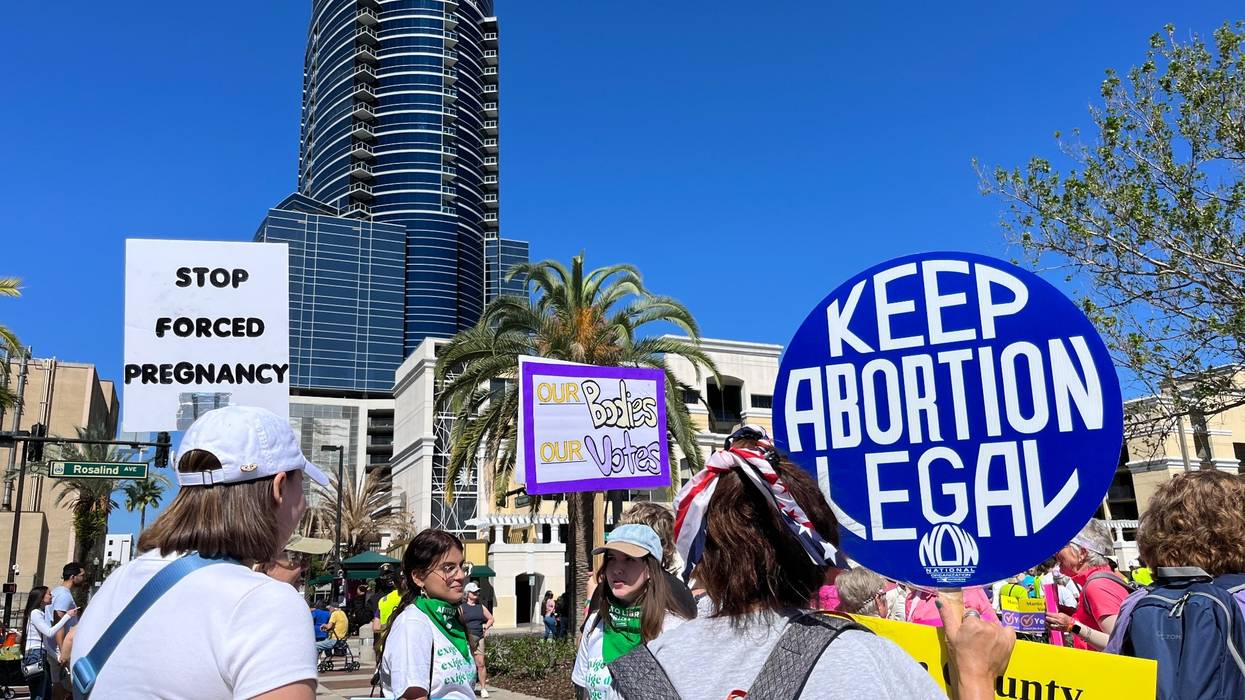
Before the ban, the average Florida resident lived 20 miles from a clinic and would need to wait five days to access an abortion; after the ban, the driving distance jumped to 590 miles and the wait time to almost 14 days.
Wait times have increased at 30% of the abortion clinics in the states closest to Florida after its draconian six-week abortion ban went into effect on May 1.
The data comes from a survey carried out by Middlebury University economics professor Caitlin Myers and her undergraduate students, which was reported by The Washington Post on Friday.
"Distance and wait times are up... but telehealth is helping meet demand," Myers wrote on social media, summarizing her findings.
Suspecting that the U.S. Supreme Court would overturn Roe v. Wade in the summer of 2022, Myers began to survey abortion clinics about their wait times starting in March of that year. In her new survey tracking the impact of the Florida ban, Myers and her students called 130 clinics in Florida, Georgia, South Carolina, North Carolina, Virginia, Maryland, and Washington, D.C. They made their first round of calls last month before Florida's ban went into effect, and the next round on May 13.
Before the ban, the average Florida resident lived 20 miles from a clinic and would need to wait five days to access an abortion. After the ban, the driving distance increased by nearly 30 times to 590 miles and the wait time expanded to almost 14 days.
The Post also conducted its own analysis and found that the ban has forced around 7 million reproductive-age women in Florida and nearby states to travel farther if they need an abortion after six weeks, with the average woman now needing to drive for over seven more hours than before. The paper also found that the ban impacted a larger proportion of Black and low-income women when compared with national demographics.
Further, the Post spoke to clinic workers who detailed some of the individual stories behind the data.
Fort Lauderdale clinic director Eileen Diamond recounted the story of one woman who had traveled from Houston to Florida in search of an abortion, only learning after an 18-hour drive that Florida had passed its six-week ban. The woman, who was nine-weeks pregnant, then had to drive at least another 12 hours to Virginia and another 17 home.
"This woman was desperate," Diamond told the Post. "She had used everything she had to come to us."
Sometimes, different state restrictions can interact to make life even more difficult for those in need of abortion care. North Carolina, the closest state to Florida where abortion is legal after six weeks, requires patients to wait 72 hours between an initial consultation with a physician and the actual procedure, which puts up additional barriers for out-of-state patients. As the Post explained:
One Florida patient recently traveled 23 hours on a Greyhound bus for a consultation appointment at A Woman's Choice in Charlotte, according to Lakeynn Huffman, the clinic manager—returning home that night because she could not find childcare to cover the full 72 hours she had to wait between appointments.
The woman made the same trip two days later, Huffman said—traveling for a total of 92 hours to get an abortion.
While Florida's ban has put an additional burden on neighboring clinics, the rush has been less dramatic than after Texas passed its six-week ban in 2021. Myers explained that this is because more women are accessing abortion pills in the mail via telemedicine consultations.
However, the U.S. Supreme Court heard oral arguments last month in Food and Drug Administration v. Alliance for Hippocratic Medicine, a case brought by right-wing anti-abortion activists that seeks to restrict access to the widely used abortion pill mifepristone. The court is expected to issue a final ruling in June.
"Telehealth is really a game changer for abortion access," Myers told the Post. "But it might be a fragile one."
As a physician delivering telemedicine-based addiction care to rural and low-income communities, the program has been the essential linchpin for creating access to lifesaving medications for opioid use disorder.
In an ironic twist, people recovering from opioid addiction recently gained permanently expanded access to telemedicine services through a new federal policy—but many are likely to be among the 22 million low-income households losing access to affordable internet.
The Federal Communications Commission recently began to wind down the Affordable Connectivity Program, the country’s largest, most successful internet affordability program. This government-sponsored benefit program, introduced during the pandemic, provides low-income Americans with a one-time subsidy to purchase an internet-capable device and monthly subsidies for broadband services.
As a physician delivering telemedicine-based addiction care to rural and low-income communities, the Affordable Connectivity Program has been the essential linchpin for creating telemedicine access to lifesaving medications for opioid use disorder.
I urge Congress to renew funding for the Affordable Connectivity Program and pursue legislative pathways to permanently expand internet access to all.
Substance use disorders are life-threatening chronic conditions, but they’re treatable. More than 70% of people with substance use disorders transition into recovery. However, early recovery is fragile. When people are ready to engage in care, low-barrier, rapid access to care is vitally important to support treatment success, especially during reentry from incarceration when the overdose risk is up to 129 times greater than community-based populations. Nearly half of people using opioids in rural areas were recently incarcerated, emphasizing the need for expanded rural access to treatment.
Yet, in-person addiction care is disproportionately limited in rural communities, requiring long drive times to access care. This is simply not an option for most of my patients, particularly those in early recovery. Most are trying to rebuild their lives while confronting significant financial debts incurred during past periods of expensive, prolonged substance use and incarceration. Stigma locks them out of high-earning positions, effectively segregating them to low-wage positions with limited opportunities for advancement and usually no access to benefits like paid time off to engage in care.
Many of us can get a leg up during hard times from family or peers. However, most patients in early recovery are at the starting line of repairing social relationships weakened by trust lost during active substance use and prolonged absence during incarceration. Often, the social supports they can access are facing similar resource-limited circumstances, with minimal ability or bandwidth to help with transportation or finances.
Every day, my patients choose what they can afford from a menu of necessities.
What will you have today?
Rarely can they cover more than one or two at a time. How could expensive, time-intensive travel to distant healthcare ever compete?
It shouldn’t have to. And thanks to the relaxation of telemedicine rules and the Affordable Connectivity Program, it hasn’t had to.
While the Affordable Connectivity Program’s $30 monthly subsidy sounds inconsequential, the true value of costs saved is much higher, as the collateral costs (e.g., transportation, lost-wages) of in-person services are avoided. With reliable access to data plans, my patients attend their medical appointments from their worksites during their lunch breaks or easily negotiate alternative breaks with their bosses, who are more willing to be flexible because work can quickly resume when patients remain on-site. This has allowed patients to consistently receive addiction treatment without incurring lost wages and transportation costs during the two-to-four-hour long process of in-person care. With their financial distress tempered, my patients have more quickly transitioned from survival mode to future planning.
The Affordable Connectivity Program also enabled internet access to key social resources that promote health and stability. My patients have taken online classes, searched and prepared for jobs, and built healthy social connections with online recovery communities, the latter particularly key for rural patients with limited in-person social options.
Funding for the Affordable Connectivity Program is projected to run out in April unless Congress acts quickly to renew funding. Amidst the Affordable Connectivity Program’s wind down, my team has begun switching patients to the remaining alternative telecommunication benefits for low-income households, like the Lifeline program. However, this inferior program provides only $9.95 monthly toward internet service—insufficient to cover the entire cost of a plan—and limited options of qualifying service providers. For my patients battling homelessness living in tents, cars, and motel room rentals while working tireless hours to survive and endeavor toward stable thriving, a $20 increase in monthly expenses is insurmountable.
The communities with significantly limited internet access—rural, low-income, Black—are also disproportionately impacted by the opioid crisis and low access to in-person treatment. Their precarious internet access falsely positions the internet as a luxury, rather than an essential resource for healthcare, education, employment, transportation, and social belonging. Internet access is a health equity issue.
I urge Congress to renew funding for the Affordable Connectivity Program and pursue legislative pathways to permanently expand internet access to all. Without swift action, I fear that losing the Affordable Connectivity Program will lead to more lives lost to treatable substance use disorders.

We need more people who believe in abortion as a human right to stand up for telemedicine abortion and protect access to mifepristone.
To paraphrase Charles Dickens, 2023 has been the “best of times and the worst of times” for abortion rights in America. Where you live, how much money you have, and whether you’re more than six weeks pregnant determine whether you can access your human rights.
The best news this year is that telemedicine abortion shield laws came to full fruition in five states. These new laws provide medical providers with protection from criminal and civil charges or license revocation so they can provide abortion pills by telemedicine nationwide.
As a result, telemedicine from a licensed clinician is now available in all 50 states. After speaking to providers across the country, I learned that more than 6,000 women per month are using this method in the states where it’s the worst of times for abortion rights.
What’s at stake in the 2024 presidential election is the tiny abortion pill that makes a big difference.
Telemedicine abortion from shield states is a bright light that contrasts with the grim reality of abortion access.
Since Roe v. Wade was toppled in 2022, the majority of American women of reproductive age live in states that are hostile toward abortion rights. Fourteen states have banned abortion in almost all circumstances. Other states such as Georgia and South Carolina give the illusion of allowing early abortion before six weeks when in practice many women do not even know yet that they are pregnant.
When abortion is criminalized, even lifesaving exceptions are generally useless. In Texas, 22 women have come forward to sue after they were denied care when their lives were at risk. In a second Texas lawsuit, the state Supreme Court allowed a hospital to deny a woman an abortion after severe fetal anomalies threatened her health and future fertility.
We have seen that when abortion is banned, women in Ireland, Poland, El Salvador, Kenya, and elsewhere did not survive. Already the U.S. has one of the highest maternal mortality rates among wealthy nations in the world, particularly for women of color. The bans simply exacerbate this risk.
The good news is that the majority of people know this is just plain wrong.
More than 60% of Americans supported legal abortion before Roe was overturned, and that number has only grown since the Dobbs v. Jackson verdict that overturned it. Americans have consistently voted in favor of abortion rights such as on ballot initiatives in Ohio, Kansas, and Michigan. Voters also have turned out in droves to support Democratic candidates who prioritize abortion rights such as in Virginia’s general legislative election and Wisconsin’s Supreme Court race this year.
But what’s at stake in the 2024 presidential election is the tiny abortion pill that makes a big difference. Next year the Supreme Court is expected to rule to significantly restrict access to mifepristone, a key abortion medication. So, whoever the next president puts in charge of the Food and Drug Administration will either sink or save us.
Mifepristone is the first pill in medication abortion, a proven safe and effective way to terminate a pregnancy through the first 11 weeks or possibly even later. The pill has been used globally for decades.
It is as safe as surgical abortion, less expensive, and allows a woman to have her abortion at home. That’s why more than 50% of American women having legal abortions chose it before Dobbs—and anecdotal evidence is that many more are doing so now—and more than three-quarters do so in Europe. Mifepristone provides essential abortion access.
Yet, before this year, only women who lived in, or could travel to, abortion-friendly states were able to get pills; geography was destiny. Now five abortion-friendly states—Colorado, Massachusetts, New York, Vermont, Washington, and soon California—have telemedicine abortion shield laws that are leveling the playing field nationwide.
As a result, for only $150 women can receive certified medications from a licensed provider without having to travel hundreds of miles, make child care arrangements, miss work or school, or make excuses for leaving the state. Telemedicine’s safety, convenience and lower cost make it an extremely popular alternative—even in states where abortion clinics still exist.
I’ve long known telemedicine abortion is essential because I’ve seen women in Ireland, where abortion was once illegal, forced to travel abroad to access safe services on what was euphemistically called the “ Irish Journey.” That same kind of difficult, expensive, and isolating journey is now happening for women in America.
A woman from Mississippi whose advocate I spoke with fled domestic violence and was living in a motel with her toddler and a baby when she realized she was pregnant. By using telemedicine, she avoided leaving her children behind for a six-hour drive to pick up her abortion pills in a neighboring state. Telemedicine abortion offers an option for those who desperately need it, as well as for those who simply choose it.
But doctors in states with shield laws still need help operating under current conditions and amid the continued threats to their practices and mifepristone’s availability. They need affordable, comprehensive, medical malpractice insurance; legal defense support to navigate the novelty of these shield laws; and political support from additional states passing shield laws. Most of all, they need help covering the cost of the pills for the many patients who can’t afford $150 and are not eligible for Medicaid or traditional abortion fund support.
Telemedicine abortion is at the forefront of what modern abortion access could look like, and it’s an exciting moment. We need more people who believe in abortion as a human right to stand up for telemedicine abortion. And we must all vote and work to protect access to mifepristone regardless of how the Supreme Court rules next year.
SB 345 would protect healthcare workers like me who wish to continue offering abortion and gender affirming care via telemedicine without having to navigate and decipher complicated legal restrictions.
In May, in the middle of a typical workday, Florida Governor Ron DeSantis signed a ban on gender affirming care for teens, while also creating substantial obstacles for adults seeking care, kicking people off medication that some had relied on for decades.
At the Gender Affirming Care practice where I was working that day, it was suddenly illegal for the majority of our clinicians (nurse practitioners, physician assistants, and certified nurse midwives) to continue providing care for our adult patients in Florida, in person or via telehealth, abruptly ending care for our patients that day. Just a month earlier, DeSantis had signed a six-week abortion ban, effectively outlawing abortion care for the vast majority of Floridians and similarly throwing another essential medical service into crisis.
Dangerous restrictions like those in Florida have been signed into law in Alabama, Idaho, Missouri, North Dakota, Tennessee, Texas, and other states. As a licensed provider of both abortion and gender affirming care practicing across 20 states, these laws are catastrophic for my patients and for this country. The lasting public health impact is and will be irreparable for generations. In addition to the crises these laws create in the lives of real people, every new law and court order forces me to spend time deciphering politically-motivated, discriminatory legalese, rather than simply providing the evidence-based, life-saving care my patients urgently need.
Telemedicine has been a game-changer in expanding access to many kinds of care, and is becoming especially critical in the face of increasingly extremist bans on essential care.
Luckily my home state of California has a massive opportunity to change this if Governor Gavin Newsom signs SB 345, a “shield law” authored by Senator Nancy Skinner that would protect providers like me who wish to continue providing abortion and gender affirming care via telemedicine without having to navigate and decipher complicated legal restrictions that disregard medical best practices and seemingly change overnight on political whim.
When I practice at San Francisco General Hospital, care that is often stigmatized elsewhere—addiction treatment, abortion, and gender affirming care—is seen for the routine medical care that it is. But in other states, access to such care can be non-existent or extremely limited: Even before recent bans were in place, many people never truly had access to safe, compassionate abortion or gender affirming care. Telemedicine has been a game-changer in expanding access to many kinds of care, and is becoming especially critical in the face of increasingly extremist bans on essential care.
With telemedicine, my ability to provide care that can be otherwise inaccessible and stigmatized goes a lot farther. That is true even in states like California and Washington, where access to care in rural counties is very limited, despite the protective laws and progressive policies for which they are generally known. Using the same evidence-based protocols as I do with in-clinic care, I can offer high quality, direct care to my patients, like prescribing hormones and abortion pills without them ever needing to leave home, saving them time, money, and the mounting risks of stigmatization or criminalization. One of my first telehealth patients lived in a rural area of Texas and spent nearly 10 years trying to access gender affirming care through providers who, rather than providing the healthcare they sought, ridiculed and discriminated against them before turning them away. To access compassionate, non-discriminatory care from the comfort of their own home meant everything for this person.
The need for this care could not be more clear: Gender affirming care is life-saving. Gender dysphoria is a known cause for depression and suicidality, and we know access to care improves mental health and protects particularly young people from attempting suicide. That’s why I do this work, and why I navigate through these absurdly dizzying laws. When you are sitting with someone crying tears of joy that they are being seen for who they are and finally getting what they need to survive, that is everything.
Even as I and others work to expand access to care in states where abortion and gender affirming care are restricted or banned, the language written into these politically motivated bans puts me at significant risk. SB 345 would give me and my patients stability and peace of mind, so I can focus on providing the evidence-based, stigma-free care via telemedicine that my patients need. Governor Newsom signing SB 345 would make me feel exponentially more comfortable providing care to patients despite unjust laws like those in Florida, and thereby enable me to expand access for folks who have lost their bodily autonomy.