

SUBSCRIBE TO OUR FREE NEWSLETTER
Daily news & progressive opinion—funded by the people, not the corporations—delivered straight to your inbox.
5
#000000
#FFFFFF
To donate by check, phone, or other method, see our More Ways to Give page.
Daily news & progressive opinion—funded by the people, not the corporations—delivered straight to your inbox.
If our human intelligence has discerned over thousands of years which plants are edible and nutritious and healing, wouldn’t the evolutional ingenuity of plants which feed and sustain us and all life also constitute intelligence?
From the largest to the smallest and the oldest to the youngest creatures on Earth—Antarctic blue whales and coastal redwood trees, minute bacteria and human beings—we are all enmeshed in layers of relationships. We need each other, though some more than others.
Plants evolved hundreds of millions of years before the first humans and transformed the Earth—through their creativity in surviving predators—into a livable environment for all animals, including humans. We needed plants for our evolution and need them now for our survival from climate disaster. They, however, did not need us for their existence and would survive without us.
Putting humans at the top of the evolution chain as the crown of intelligent life, a Western worldview, is—as some keenly grasp—mistaken. The baleful consequences of this simplistic hierarchy are everywhere: out-of-control climate change; accelerating rates of animal and plant extinction; dead zones in the oceans and mass mortality of coral reefs; the vast pollution of land, air, and water; and the mounting likelihood of human extinction with nuclear war. All caused by humans, humans with financial and political power much more egregiously than others.
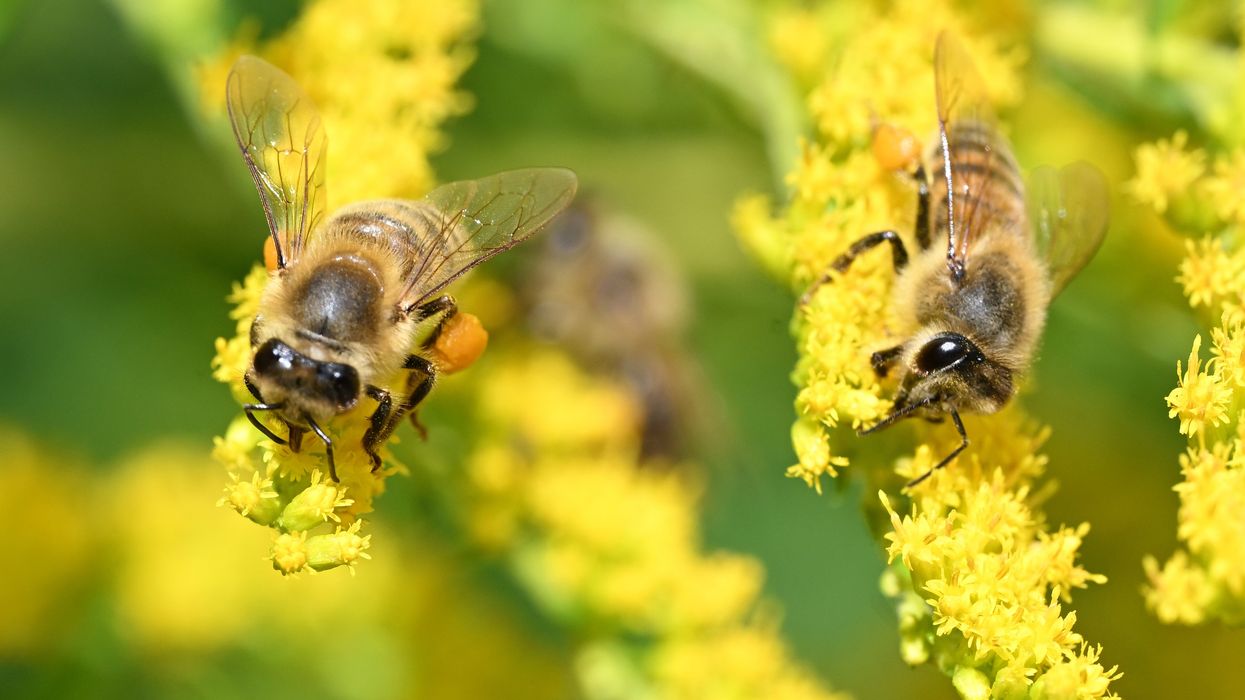
Perhaps you have you noticed that late summer asters and goldenrod tend to grow as companions. Why? Together—their combined beauty—attracts more pollinators.
Certain scientists who study plants—from the simplest to the exotic—are stirring controversy with their “ Are plants intelligent?” Consider that we humans owe our lives to plants for their food, medicines, and critical balance of 21% oxygen in the air we breathe. If our human intelligence has discerned over thousands of years which plants are edible and nutritious and healing, wouldn’t the evolutional ingenuity of plants which feed and sustain us and all life also constitute intelligence?
Studies have found that elephants recognize themselves in a mirror, crows create tools, dolphins demonstrate empathy and playfulness, and cats exhibit similar styles of attachment as human toddlers. The given explanation is that they have brains with neurological capacity for consciousness and intelligence.
But plants do not have a central brain. Could their mode of learning to evade insect predators and maximize their growth come from a diverse form of intelligence, possibly be distributed across their roots, stems, and leaves? Could the whole plant, then, function as a brain? Recent studies of plants have stirred the possibility that they are conscious and intelligent. Take communication, something we humans claim as our domain through language and more recently acknowledge that animals also possess.
Botanists have found that not only do alder and willow trees alter their leaf chemistry to defend themselves against an invasion of tent caterpillars, but that leaves of faraway trees also change their chemical composition similarly. Warned, as they are, by airborne plant chemicals released from the original trees under attack. Goldenrods signal an attack by a predator through strong chemical communication sent to all other goldenrod neighbors, just as humans warn their neighbors about a nearby fire or flood or crime.
Without any recognizable ears, plants sense sounds. The vibration of a predator insect chewing on its leaves causes a plant to make its own defensive pesticide. Beach evening primrose responds to the sound of honeybees in flight by increasing the sweetness of its nectar to attract them for pollination. Tree roots grow toward the sound of running water, including in pipes, where the roots often burst through causing great difficulties for municipalities. How do the various plants hear these stimulating sounds?
Plants have memory, some anticipating from past experience when a pollinator will show up for the plants’ pollen. Plants express social intelligence: Members of the pea family form relationships with bacteria living in their roots to have the bacteria supply beneficial nitrogen for the plants’ growth. Several kinds of plants provide a home and food for compatible ants who then attack the plants’ ant pests. Perhaps you have you noticed that late summer asters and goldenrod tend to grow as companions. Why? Together—their combined beauty—attracts more pollinators.
In finishing, I express my immense respect for the Indigenous worldview where wind, rocks, air, and rain are our kin, together with plants and nonhuman animals. We, humans, the most recent beings, depend on all of these elder kin; and this awareness, this worldview of connectivity among all beings, is our path back to Earth well-being.
It’s probably better to think of the geological moment of human techno-transformation and population explosion as an event—like a global conflagration—rather than a durable new regime.
Early this month it was reported that members of the Subcommission on Quaternary Stratigraphy (which is part of the International Union of Geological Sciences), who had been tasked with adopting or rejecting a proposal to declare that we are in a new geological epoch called the Anthropocene, declined the motion. This comes after years of lobbying by many Earth scientists to formally acknowledge that humanity is in the process of changing the planet in ways that any future geologist would find obvious and undeniable.
My first reaction to the news was disappointment. I’ve been using the term “Anthropocene” for years, and had the impression that the main opposition to its formal adoption came from those who believe that humanity is incapable of changing Earth systems in ways that will make a difference for thousands or millions of years to come. Assuming that humans are too puny to alter the planet significantly is a mental pathway habitually trodden by climate change deniers, and it’s an excuse for doing nothing to avert a hellish future.
However, it turns out that the dispute among the roughly 20 scholars on the subcommission was mainly about whether humanity’s impact on Earth should be viewed as an event—like a mass extinction or an asteroid impact—or as the start of a new epoch. The majority favored the former; and, even though the legitimacy of their decision is being questioned, I think they’re right.
We’re still in the midst of the transitory event that is driving the end of the Holocene and the beginning of something else.
Ripples from human actions during the last few decades will spread far into the future. However, the consequences of the activities that are currently having profound impacts on the climate, oceans, and biota will limit those activities, so that humanity’s industrial growth-based economy driven by fossil fuels will be mostly if not entirely gone by the end of this century. There will likely be fewer people on the planet then, and they will have far less power per capita. Earth simply doesn’t have enough resources to enable a continuation of population growth and economic expansion for much longer before a decline commences. We will have the opportunity to shape that decline somewhat—to make it more beneficial by sharing the burden of contraction, or to make it more painful by fighting over what’s left—but the techno-optimist vision of a future of ever-increasing human potency is a mere fantasy, and a dangerous one at that.
So, it’s probably better to think of the geological moment (a couple of centuries at most) of human techno-transformation and population explosion as an event—like a global conflagration—rather than a durable new regime (geological epochs tend to be several million years in duration). The results of human overshoot will persist: If there are people around 10,000 or even a million years from now, they will be able to discern residue from the 20th and 21st centuries in the stratigraphy of lake beds around the world. That’s when the Earth’s climate changed; when toxic chemicals suddenly proliferated through atmosphere, soil, and waters; when glaciers melted; when radioactive particles were dispersed by atomic weapons tests; when untold numbers of animals and plants went extinct; and when ocean currents shifted.
The generations to come will inhabit a different world indeed. Earth’s new regime, once it has stabilized, will surely be classifiable as a new geological epoch—but currently it’s too soon to name it. We’re still in the midst of the transitory event that is driving the end of the Holocene and the beginning of something else.
Perhaps it’s this event that we should be naming. I hereby nominate “The Anthropic Unraveling” or “The Great Burning” as suitable candidates for the title.
A Center for Biological Diversity found 27 anti-wildlife measures in FY 2024 appropriations bills, the most since the Endangered Species Act was passed 50 years ago.
U.S. Lawmakers, mostly Republicans, have inserted a record number of anti-wildlife measures into the appropriations bills for fiscal year 2024, the Center for Biological Diversityreported Tuesday.
The attack comes despite the fact that scientists warn human activity may be triggering a sixth mass extinction, as species disappear at unprecedented rates. A September study found that vertebrate species groups are dying off at a rate 35 times higher than it would be without anthropogenic pressure.
"Republicans have weaponized the appropriations process to launch a full-blown assault on our natural heritage," Center for Biological Diversity senior policy specialist Stephanie Kurose said in a statement. "These heartless attacks would strip away lifesaving protections from our most imperiled creatures—from wolves to whales to freshwater mussels. If passed, these bills would put multiple species on a direct path to extinction."
"I hope the white-nose syndrome wipes all of them out," Rep. Ralph Norman (R-S.C.) said during a hearing in July. "We won't have to worry about it."
The center's report, titled Paving the Road to Extinction, found that 26 of the 27 "poison pill riders" placed in the appropriations bills were put there by Republicans. The last was introduced by Senate Democrats in an agreement to preserve preexisting measures. The total number of riders is more than Congress has added since the Endangered Species Act was passed 50 years ago.
"Republican members of Congress are trying to kill the Endangered Species Act," the center's endangered species program director Noah Greenwald posted on social media.
The report noted that Republican lawmakers have expressed outright hostility to the survival of endangered species. One rider, for example targeted the recent decision to list northern long-eared bats under the Endangered Species Act. The species has declined by 99% in 20 years due to white-nose syndrome, and human activity puts greater pressure on the survivors. But Rep. Michael Simpson (R-Idaho) added a rider barring any funding from enforcing those protections.
"I hope the white-nose syndrome wipes all of them out," Rep. Ralph Norman (R-S.C.) said during a hearing in July. "We won't have to worry about it."
Six of the measures—the most aimed at any one animal—targeted two critically endangered species of whales: Rice's whales and North Atlantic right whales. There are only around 50 Rice's whales left, and they live only in U.S. waters, while right whales are dying off so quickly they could be functionally extinct by 2040. Despite this, one rider would prevent the National Oceanic and Atmospheric Administration from finalizing a rule that would protect right whales from ship strikes, while another prohibits protections for Rice's whales from both ship strikes and oil and gas activity.
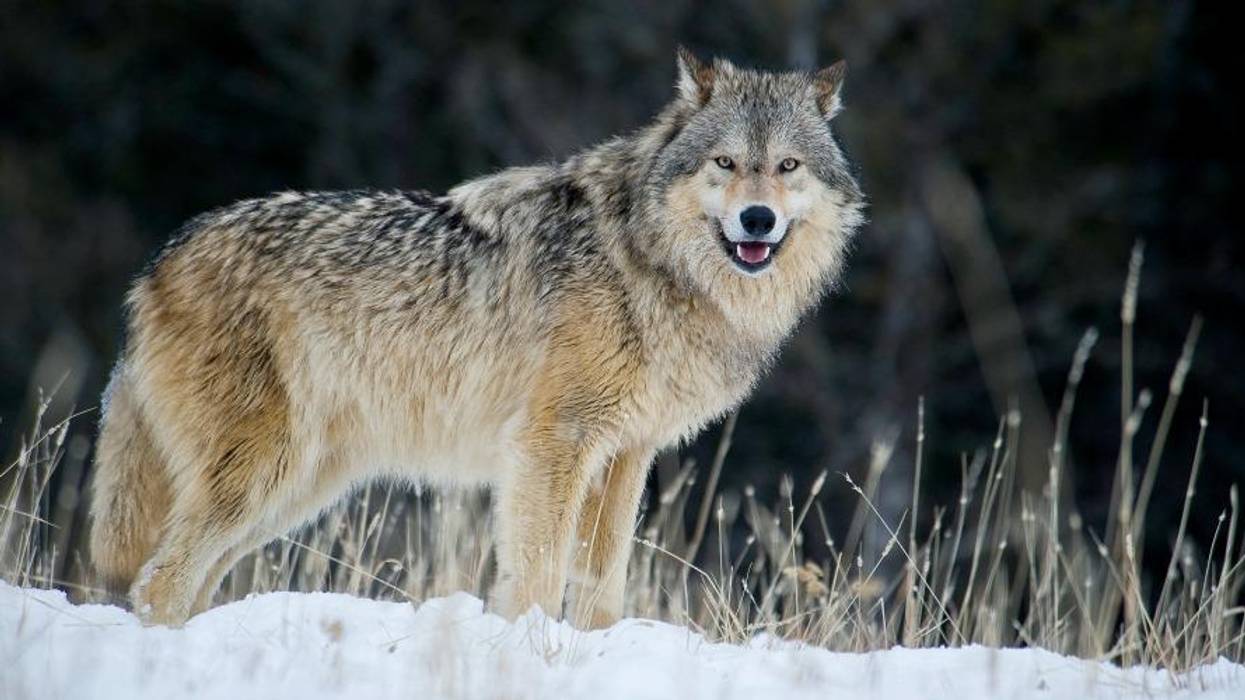
Another rider would effectively strip most gray wolves of Endangered Species Act protections in the Lower 48 states while a third would both end protections for Greater Yellowstone Ecosystem grizzly bears and prevent the courts from intervening.
The center noted that most anti-wildlife riders introduced in previous years were rejected before the bills passed. But it only takes a few to do real harm. To return to right whales, in 2022 Congress approved a measure that would postpone conservation efforts to protect the dwindling population from getting caught in fishing gear.
"With each successful rider, we're losing our ability to end extinction in the United States," Kurose said. "These attacks are deeply unpopular with the American public, who want to see our natural heritage protected for future generations to come."

We’re not in a Hollywood studio, helplessly in the hands of sadistic screenwriters. We can actively choose to change the ending of our story—and for that we should feel hopeful.
It’s nearly Halloween, which means costumes, candy, and scary movies. Fear turns to fun on October 31 because Halloween lets us seek scary thrills that can’t hurt us. When we feel like threats are closing in on us and things are getting truly scary, we just turn off the TV and turn on the lights. But there is one terror that we can’t escape, no matter the time of year.
We’re talking about climate change! Here are five of the scariest, most bone-chilling facts about climate change to get you in the mood for terror this season (and hopefully also scare you and your fellow trick-or-treaters into action to address it).
In its highly-anticipated Sixth Assessment Report in 2021, the United Nations Intergovernmental Panel on Climate Change (IPCC) stated that a certain amount of global warming is locked in and is irreversible. They reported that from 2011-2020, the global temperature had already reached 1.1°C Celsius above 1850-1900 levels.
It is also predicted that within the decade, global temperatures are over 50% likely to rise to 1.5°C above the pre-industrial levels, the so-called “tipping point” of climate change. This degree of warming is predicted to increase the frequency of wildfires by a magnitude of 8.6, kill 70-90% of coral reefs, and raise our sea levels globally by 0.3 meters.
In its 2018 special report, the IPCC warned that we only have until 2030 to prevent the worst impacts of climate change. Yet, little has changed since then to reduce greenhouse gas emissions. It’s like the movie Don’t Look Up; we know what’s happening, but we aren’t doing enough to change the outcome.
“We need to change policy and approaches in light of the latest evidence about the state of the climate system.”
In 2019, global carbon emissions from fossil fuels and industry reached a high of 36.44 billion metric tons. In 2020, emissions fell by 5.8% due to Covid-19 and the resulting economic crisis. Despite that year’s reverse trend, however, 2022 emissions were back up to 36.8 billion metric tons and 2023 emissions are actually expected to increase by 3%.
“We need to change policy and approaches in light of the latest evidence about the state of the climate system. Time is no longer on our side,” said Piers Forster, the director of the Priestley Centre for Climate Futures at the University of Leeds.
NASA recently announced that the summer of 2023 was the hottest summer on record globally, surpassing the intense heat experienced in 2016.
“The dog days of summer are not just barking, they are biting,” said António Guterres, U.N. Secretary-General, about the record-breaking heat of 2023. “Climate breakdown has begun.”
And not only are our food systems breaking down, so are our bodies. With the rising heat comes rising humidity to levels that are dangerous to human survival.
Are you scared for our future, yet? Well get ready cos it’s going to get even scarier.
Summer 2024 is already forecast to be another record-breaking summer, one that would rival the disastrous 2023 summer in terms of heat, humidity, and hazardous weather events.
“Whether one year is a record or not is not really that important—the important things are long-term trends,” said Goddard Institute for Space Studies Director Gavin Schmidt. The current long-term trend is that each summer is getting hotter and hotter.
Are you scared for our future, yet? Well get ready cos it’s going to get even scarier.
Imagine dressing up as a frog for Halloween and having to explain to younger generations what a frog was and why it’s gone. Almost half of all amphibians are at risk of extinction due to climate change—so this could be a reality if we don’t act soon.
Extinction is a natural phenomenon, claiming about five species per year. But some experts suggest we’re in the midst of the sixth mass extinction—one that is caused mostly by human activity.
According to a 2023 report, 48% of species are declining and on their way to extinction. It also revealed that 33% of species listed as non-threatened by the IUCN Red-List are actually decreasing. By mid-century, as many as 30 to 50% of the total species found on Earth will have disappeared because our extinction rate is currently 1,000 times the natural rate. In 2021, 23 species were declared extinct by the U.S. Fish & Wildlife Service, which tragically included the beloved ivory-billed woodpecker.
Species diversity is crucial for ecosystem resilience, and without it, ecological communities will not have the strength to withstand change—especially not the change we’re throwing at them.
Allowing this to continue is “a crime equivalent to tossing books from the Library of Alexandria thoughtlessly into a fire, erasing the shared inheritance of all mankind,” according to the National Institute of Environmental Health Science in a review from 2009.
Species diversity is crucial for ecosystem resilience, and without it, ecological communities will not have the strength to withstand change—especially not the change we’re throwing at them.
The impacts to human health are much scarier than any child-eating clown movie.
Rising temperatures—coupled with a growing number of people in cities and the increasing population of elderly—have increased heat-related deaths, according to a 2023 study in Nature Communications.
A 2018 report concluded that the lack of adaptive capacities and effort toward reducing emissions threaten human lives and the national health systems people rely on, by pushing services to their limit and disrupting core infrastructure. Vulnerable communities are already being hit first and worst.
Have you noticed that the Halloween season doesn’t feel the same either? If we can’t wear a full costume without sweating then something is wrong, right?
But hyperthermia is not the only risk climate change brings to human life. Higher temperatures worsen air quality, negatively affect crop production, increase the spread of infectious diseases, and threaten freshwater deposits.
A warming world also increases the intensity of natural disasters.
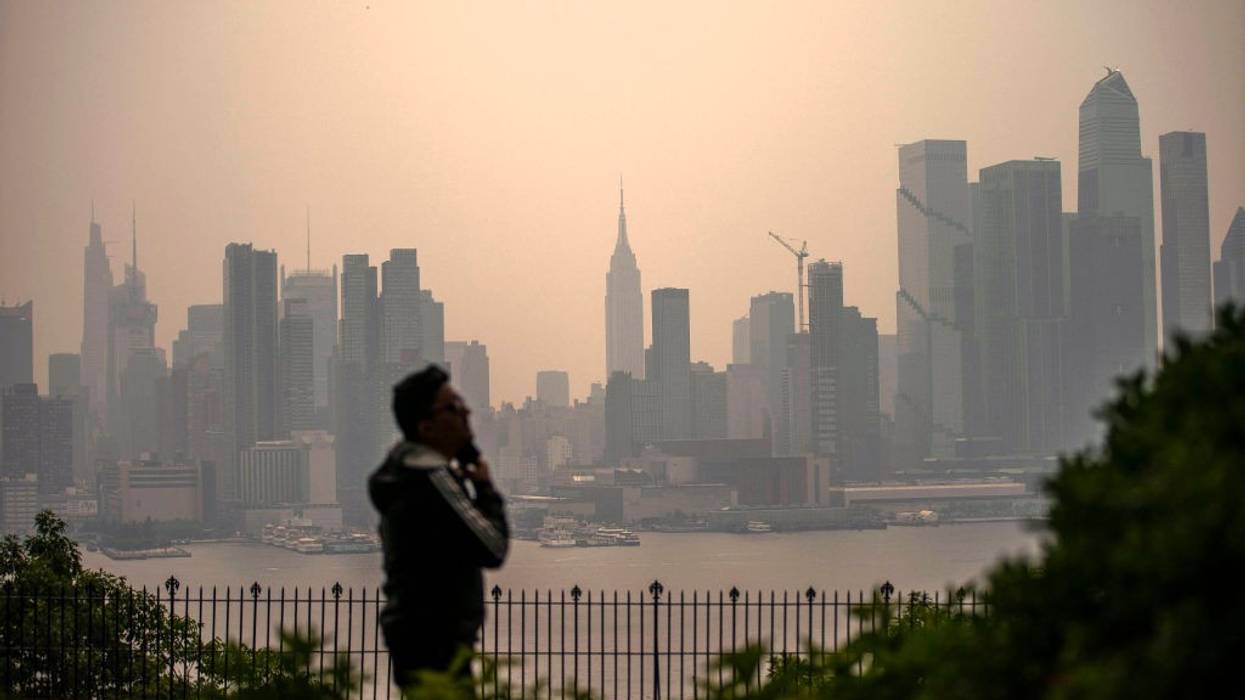
Instances of wildfires have increased over the years, according to the EPA, and the burn area and intensity of fires have increased. In 2023, there were two major fire events in North America. In August, an intense wildfire destroyed Maui, Hawaii, and claimed more than 100 lives. In Canada, from May continuing all the way into fall, forest fires have been raging. Forty-four million acres have been burned, affecting not just wildlife but also humans as the smoke chokes out cities in Canada and the northeast United States.
Hurricanes are reaching new extremes, too. The frequency of high intensity hurricanes—ranked as categories 4 and 5—has increased over the last 30 years. It has become immensely more difficult to escape these storms unscathed, and it will only get harder in the future.
Have you noticed that the Halloween season doesn’t feel the same either? If we can’t wear a full costume without sweating then something is wrong, right?
That’s because climate change is shifting the seasons. Falls, winters, and springs are growing shorter, while summer extends into the supposedly cooler months. North American winters are losing snow and ice as a result—making prime ski destinations, well, not prime.
This not only makes dressing up in a full-body werewolf costume uncomfortable but also disrupts the natural interactions between species, their habitats, and their migration patterns.
BOO!
The world has been aware of climate change at least since the IPCC formed in 1988. Scientists and the public rallied around environmental policy, but many global governments had a different idea.
They were going to ignore it.
Countries contributing the most to global emissions have the best chance of curbing climate change, but leaders are doing little to address it.
The human-made monster that is climate change won’t go anywhere if you just close your eyes or turn off the TV.
Although it has been seven years since the Paris agreement entered into force, none of the world’s major economies are on track to keep global warming below 1.5°C above pre-industrial levels.
To outline steps to achieve the goals of the Paris Agreement to reduce greenhouse gas emissions and build resilience to climate change, parties submit Nationally Determined Contributions (NDCs) every five years. While July 31 was the deadline to submit updated NDCs, many countries didn’t actually increase their climate pledges, and others missed the deadline entirely.
Climate literacy is among the climate goals that have missed the mark. Climate literacy (as supported by an integrated K-12 curricula) is needed to prepare youth with an understanding of the climate crisis and skills to create solutions, yet not one country has thoroughly addressed it within its NDC.
Everyone may die at the end of horror movies, but we don’t have to.
We’re not in a Hollywood studio, helplessly in the hands of sadistic screenwriters. We can actively choose to change the ending of our story—and for that we should feel hopeful.
Younger generations are taking matters into their own hands and striking for the climate. They’re skipping school completely to plead for an end to inaction toward climate change and demanding world leaders to undertake environmental reforms. A 2021 study revealed that 83% of people aged 16-25 feel that we have failed to take care of our planet and concluded that it is vital for governments to take “urgent” action against climate change.
The next U.N. Conference of Parties (COP28) will be held this November. In this international meeting of heads of state and governments and stakeholders, countries will have an opportunity to heighten their ambition on climate change.
“This is the critical decade for climate change. Decisions made now will have an impact on how much temperatures will rise and the degree and severity of impacts we will see as a result,” said Forster.
After decades of inaction on climate change, we don’t have any more time to spare before it’s too late. Join the movement and add your voice to this urgent call for change. You can become a Social Squad activist, sign the Global Plastics Treaty petition, and spread the word to your friends! Or, you can donate to our Canopy Project, which organizes tree plantings all over the world, and take the effort not to buy clothes that promote Fast Fashion.
This Halloween we must face our fears. The human-made monster that is climate change won’t go anywhere if you just close your eyes or turn off the TV. Action and advocacy are the only way to flip the script—and not wind up like your favorite victim at the end of the horror film.
"As the government continues to fan the flames of the climate and biodiversity crisis it's clear that only a collective effort can put it out," said the head of Greenpeace UK.
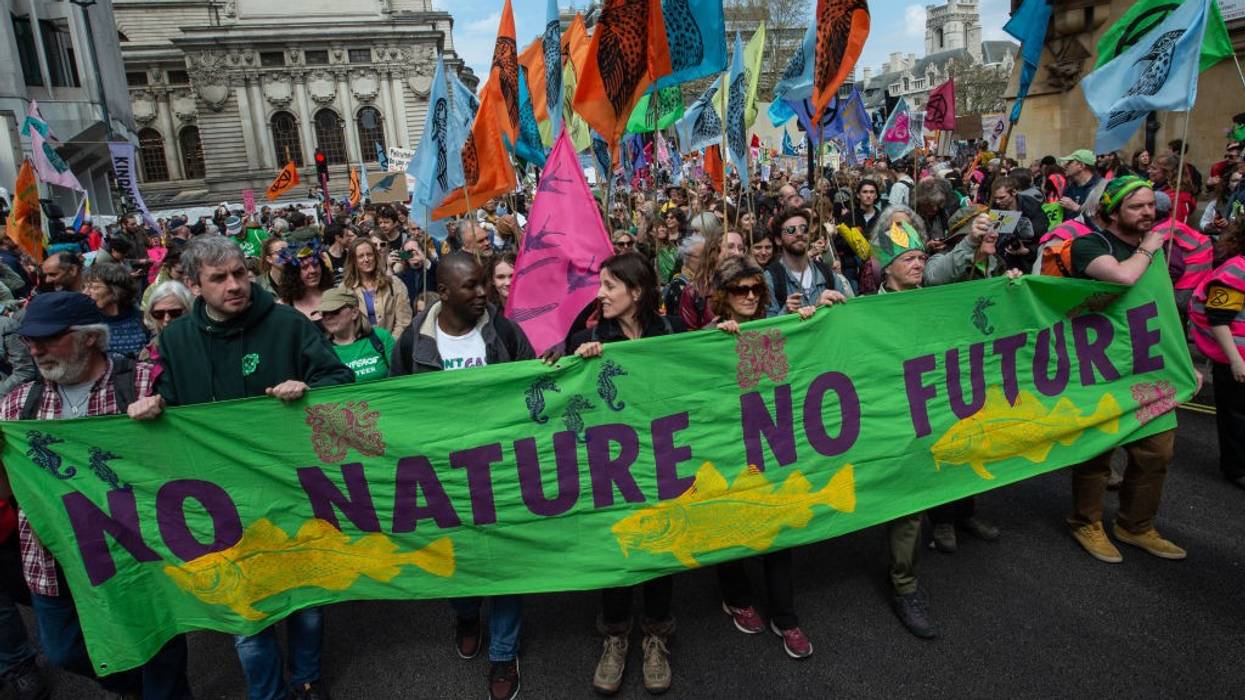
Tens of thousands demonstrated with a defiant yet jubilant spirit in London on Saturday to mark the second day of 'The Big One' climate protests aimed at getting the U.K. government to finally take bold action on the planetary emergency of greenhouse gas emissions.
A nonviolent die-in action was held outside Parliament, but the day of demonstration was billed as a "family-friendly" day of action meant to foster inclusion and participation as opposed to disruption or civil disobedience.
The coalition behind 'The Big One' events includes Extinction Rebellion UK (XR), Greenpeace UK, War Without Want, Global Justice Now, Women's Climate Strike, and dozens of others have warned that if the government does not respond to their urgent, collective set of demands, they will begin escalating their direct actions.
"As the government continues to fan the flames of the climate and biodiversity crisis it's clear that only a collective effort can put it out," said Areeba Hamid, Greenpeace UK's executive director, on Saturday.
"We will either win as a movement or lose as individual organizations," Hamid added. "And through bringing together groups from across civil society, The Big One will act as the catalyst of a new united fight against the vested interests putting profits over people and the planet."
In addition to unity across the movement, urgency was a main theme of the event.
"The climate and ecological crisis isn't something that is going to happen in the future, it is already here, we can see it with the noticeable lack of insects and wildlife every spring and summer," said Zoe Cohen, a spokesperson for Extinction Rebellion. "It's time that the government took this seriously and listened to the people here and the many not present who are represented by the organizations here."
On the ground in London, writer and activist James Marriot said the attendees—estimates ranged from 30,000 to 60,000 or more—came with diverse voices but shared a "vibrant" mood as they expressed extreme displeasure with the Tory-controlled government's refusal to act.
Saturday's event, said Marriot, is the "culmination of at least a year if not more of campaigning and preparation by XR and many other organizations across the UK to create a festival of climate resistance in London, the heart of government and bureaucracy—a festival that says, 'We are here. This is what we stand for.' It's not so much a protest, nor is it an obstruction, but a statement of existence. A statement that says we are here and we want action."
Marriott said those participating are demanding a "change to the structures of government and the structures of the energy system" and to "make them change as swiftly as possible."
In a Metro op-ed on Friday, Green MP Caroline Lucas, who is speaking at various 'Big One' events, said the driving purpose for the U.K. climate movement is to create the necessary momentum for the "wholesale, societal change" to adequately address the climate emergency unleashed by the burning of fossil fuels and other highly-polluting industrial processes of the 20th and 21st centuries.
"How did we end up here?" Lucas asks. "I believe it's because climate and nature crimes are being committed with impunity right across the country and the world. Fossil fuel giants like BP and Shell are drilling the North Sea, polluting our planet and reaping record profits. And private water companies are dumping sewage in our waterways on a daily basis, all while returning billions in profits to their shareholders."
But instead of taking action to avert the destruction, she continues, the Tory government led by U.K. Prime Minister Rishi Sunal is "aiding and abetting" it.
"Despite the stark warnings of 'act now, or it will be too late' from the global scientific community just this week," said Mel Evans, the climate lead for Greenpeace UK, the government refuses to act.
"The U.K. government is failing to deliver the kind of wholesale action needed to avoid full-blown climate breakdown," Evans said.
The coalition behind "The Big One"—which will continue into next week—is demanding that the U.K. government "end all new licenses, approvals, and funding for fossil fuel projects as we begin a transition to a fair society centered on reparatory justice for all life on earth."
"This is a transformative moment in history, and we will accept nothing less than immediate and decisive action from the U.K. government," the alliance wrote. "The people of this country have the courage and power, and it is our responsibility to safeguard our own future by taking action where politics has let us down with apathy and dangerous false solutions."
Extinction Rebellion's Cohen said, "So far the atmosphere has been amazing and it's been great to see so many people from different organizations come together for the first time. There is a very clear desire from the public to discuss climate solutions together and build something different."